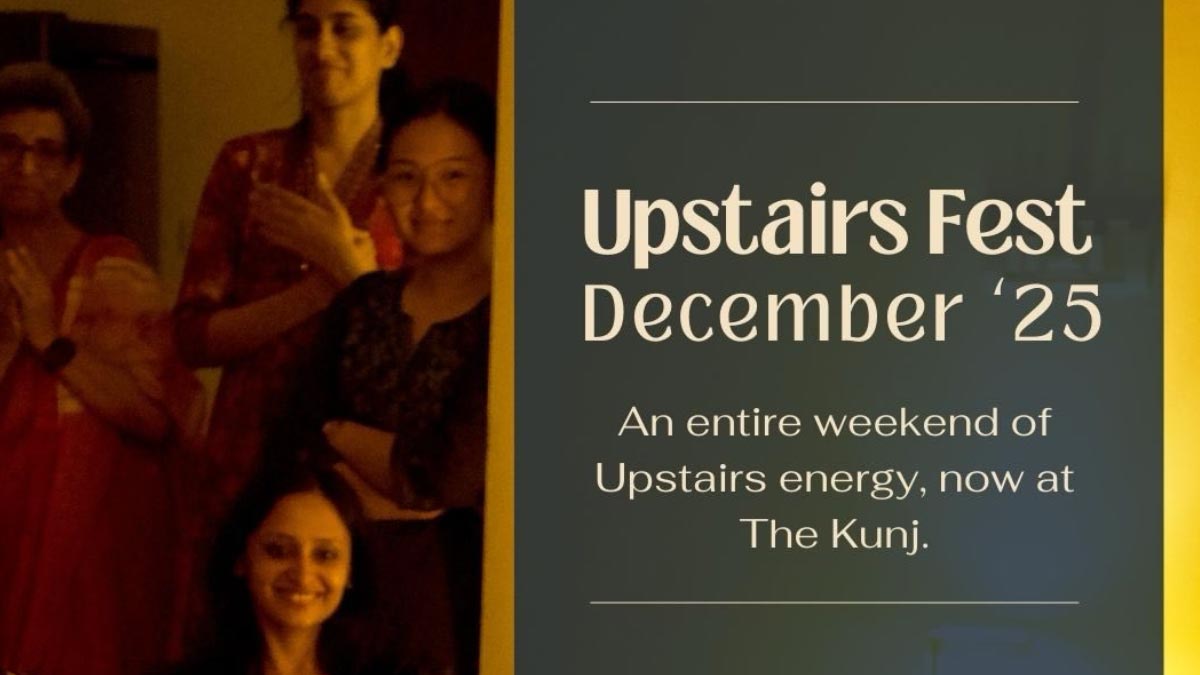
Over the weekend of 13–14 December 2025, music lovers in Delhi have been invited to experience something quite rare: the first edition of Upstairs Fest, presented by Upstairs with Us and hosted at The Kunj in Vasant Kunj. This fest presents a collection of performances and aims at building a deep, emotionally invested community centred around Indian classical music. Founded by Tejas Jaishankar and Sukanya Banerjee, Upstairs with Us was initiated through gatherings in their Vasant Kunj home in 2018. Their core mission is to sanitize the “elite” label off classical music and make it accessible to everyone. The model they adopted is hosting intimate baithaks where artists are paid their fair price, and audiences share a home-cooked meal. This model appeared to be successful and received a lot of praise, and has successfully sold out nearly every event since its formal launch. The Upstairs Fest is the aggregation of this philosophy and is transforming the same warmth into a concentrated two-day mega event, opening doors for more audience to hop in.
A Sneak Peek into The Schedule
This two-day music extravaganza is set to run on the weekends and is structured in a way that places equal emphasis on participatory learning workshops and the concert. This blend of events reflects the organizer’s ideology that true appreciation comes from the understanding and emotional investment in music, not just from passive listening.
The festival will begin on Saturday with the workshop christened as ‘Sam Pe Aana’ (11:30 AM to 1:00 PM). This session will be led by a Tabla artist, Saptak Sharma. This will be a beginner-friendly guide to finding and hearing tāla (rhythm) in classical music. This session is solely aimed at training the untrained ear to receive a better pulse of the concert.
Following this educational start, the afternoon presents a Hindustani Classical Concert (3:00 PM to 5:00 PM). This session is advertised as a “close, quiet concert” featuring Kartikeya Vashisht on the flute. This piece will unfold music at its own pace, infusing an experience of deep presence that contrasts with the contemporary, rushed musical tunes. In the evening, ‘Stories You Wish You Knew: The Uncles and Aunties Who Made Music’ (6:00 PM to 7:30 PM) is scheduled. This session drifts away from the musical aura and brings together the family members of the legendary musicians to share their memories. This humanizes the artists from famous performers to off-stage, real people who are as down-to-earth as ordinary men. This softens the distance between the listener and the tradition they are engaging with.
| Day & Date | Time | Event / Session Description |
|---|---|---|
| Saturday, 13 December | 11:30 AM – 1:00 PM | Workshop: Sam Pe Aana |
| Saturday, 13 December | 3:00 PM – 5:00 PM | Hindustani Classical Concert |
| Saturday, 13 December | 6:00 PM – 7:30 PM | “Stories You Wish You Knew: The Uncles and Aunties Who Made Music” |
A similar richness in activities can be traced on Sunday as well. The morning session, ‘Three Phrases to Know a Raag: Bhimpalasi’ (11:30 AM to 1:00 PM), led by co-founder Sukanya Banerjee, demystifies the structure of a rāga. This workshop focuses on viewing the rāga as a unique tune, using the soulful āga Bhimpalasi as a case study. The afternoon session puts a tinge of variety by dedicating the session to Carnatic Classical Concert (3:00 PM to 5:00 PM), ensuring that the festival covers both major traditions of Indian classical music. The festival concludes with ‘Behind Baithaks: Building a Listening Community’ (6:00 PM to 7:30 PM). The last segment will feature hosts from other Delhi-NCR community-focused initiatives like Naadyatra Baithak and Evenings Unplugged.
| Day & Date | Time | Event / Session Description |
|---|---|---|
| Sunday, 14 December | 11:30 AM – 1:00 PM | Three Phrases to Know a Raag: Bhimpalasi |
| Sunday, 14 December | 3:00 PM – 5:00 PM | Carnatic Classical Concert |
| Sunday, 14 December | 6:00 PM – 7:30 PM | “Behind Baithaks: Building a Listening Community” |
This fest sets the stage for a gradual drift from the hustle culture that dominates modern lives and the economy. By shifting the focus to intimacy, deep listening, and fair economic practices for the artists, Upstairs With Us is curating a culture based on ethics and purity.
| Important Points | Details |
|---|---|
| Event Name | The Upstairs Fest, December Edition |
| Organizers | Upstairs with Us (Tejas Jaishankar & Sukanya Banerjee) |
| Venue & Location | The Kunj, Vasant Kunj, New Delhi |
| Dates | Saturday, December 13th & Sunday, December 14th |
| Core Philosophy | Democratizing classical music access, ensuring fair pay for artists, and fostering a non-judgmental, deep listening audience |
| Event Type | Blend of classical concerts (Hindustani and Carnatic) and listener-centric workshops |
Key Highlights
- The Upstairs Fest isn’t just a festival; it’s a revival of the age-old “baithak,” where music resided in homes, loved and respected by a dedicated listening audience.
- The inclusion of workshops (e.g., “Sam Pe Aana”, “Three Phrases to Know a Raag: Bhimpalasi”) shows an emphasis on not just passive listening but active learning and appreciation.
- According to press coverage, Upstairs with Us aims to dismantle rigid, elitist notions around classical music concerts — where dress code, social standards, and etiquette often alienate newcomers. They offer accessibility, warmth, and shared meals after the gig.
- By charging ticket prices modestly and directing proceeds to artists, Upstairs challenges the conventional system of grants or elite patronage that often limits who gets to perform and who gets to listen.
- The fest is inclusive of multiple Indian classical traditions, offering both Hindustani and Carnatic concerts, a rare treat that recognizes India’s musical diversity.
Why It Matters – An Opinion
View this post on Instagram
The mainstream classical-music ecosystem has long struggled with financial sustainability, accessibility, and elitist norms. Upstairs with us aims to make amends right at this critical juncture. The “home concert” movement challenges all that by offering inclusive, paid, and globally accessible concerts. Also, by having a ticketed model and by channeling proceeds directly to artists, Upstairs is reimagining classical music’s economic foundations.
The scale of this event does not make it feel like just another weekend activity. It marks a subtle shift in how we experience and value classical music in India. It doesn’t just preserve tradition, it rejuvenates it. The organization combines education, performance, storytelling, and community essence, and elevates this genre beyond “entertainment” and honours it as a living heritage of our country.
This movement, built on empathy and ethical practice, offers a vital blueprint for the future of arts patronage. Of course, challenges remain. Sustaining consistent audience interest, ensuring enough revenue to support artists, and so forth. But if the organisers and community remain true to their ethos, Upstairs Fest could become a blueprint for cultural resurgence.