Unveiling “Emerging Voice of India”
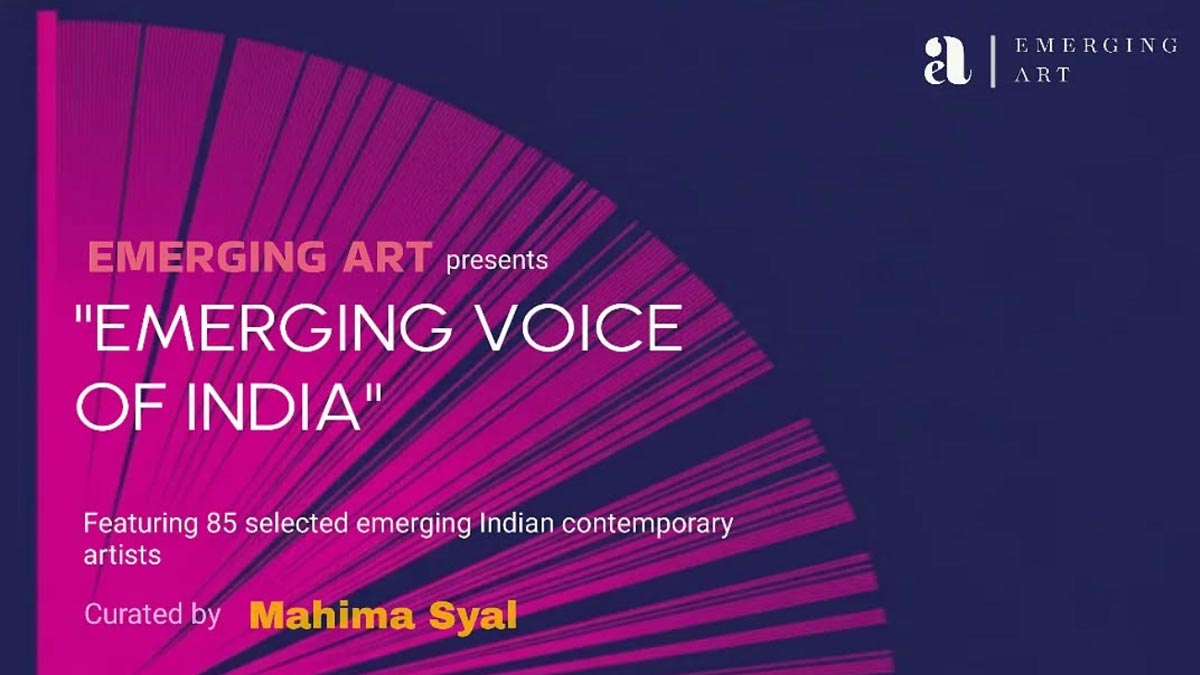
The artscape of India is undergoing a conscious paradigm shift, where many showcases are reflecting a recalcitrance towards getting featured in galleries or traditional spaces. The recent trend is shifting physically to a more “experiential” site, where a bigger and freer dialogue can be woven. New Delhi is also orchestrating an exhibition on similar lines on January 10, 2026, at 89 Central Avenue, Sainik Farms, titled “Emerging Voice of India.” This upcoming exhibition is presented by the collective “Emerging Art” (EA). This showcase is a pronunciamento of India’s next generation of creative practitioners.
This exhibition, curated by Mahima Syal, will exhibit a collection of 85 artworks of selected contemporary artists from India. Most parallel exhibitions focus on a small group of 5 to 10 artists; this exhibition has effectively decentralized its approach and looks forward to showcasing 85 voices. This resonates with the “state-of-the-nation” approach. This exhibition not only provides a much-needed platform to India’s emerging talents but also echoes the zeitgeist of the present through art. This artistic overhaul encompasses everything, ranging from traditional oil on canvas to humongous installations and digital media.
The venue, Sainik Farms, is known for its greenery, quietude, and warm ambience, which provides the perfect backdrop for a six-day art event. By nestling the exhibition in this locale, the organizers are recalibrating their focus towards a “destination art” episode. The organizers are inspired by the global trends seen in major art hubs like London and Basel, where the venue’s architecture and atmosphere are as much a part of the experience as the artwork itself. This is crucial in this case, as the organizers aim to highlight the shift from renowned mainstream art to the contemporary discourse of Indian art beyond established arenas.
Contextualising the Emerging Voice of India
View this post on Instagram
There are big artistic labels in India that organize such experiential art shows, but they mostly cooperate with established institutions and renowned artists from India and beyond. However, Emerging Voice of India situates itself differently: it prioritizes emergence over establishment and participation over market metrics. In India, the artscape finds itself oscillating between supporting grand experiments and responding to the commercial interests of people. However, this exhibition is part of a movement in India that emphasizes providing independent platforms for artists who are yet to be acknowledged as big names.
Recent market trends revealed a surge of 15-20% growth in interest from young, first-time investors in the Indian art market. Emerging Art is one of the platforms that has recognized the potential catalytic ability of this surge and is dashing into the sphere as a key player. They have branded their exhibition as “Future Unfolding,” which marks their intent to create something fresh, relevant, and socially-conscious. The artists they look forward to are mostly the practitioners of interdisciplinary forms that exist at the intersection of traditional art and contemporary notions. This suggests a clear delineation of diversity.
The Exhibition at a Glance
| Category | Details |
|---|---|
| Event Name | Emerging Voice of India |
| Organizer | Emerging Art (EA) |
| Curator | Mahima Syal |
| Artists Featured | 85 selected emerging contemporary artists |
| Opening Date | Saturday, January 10, 2026 |
| Focus | Contemporary works by new voices in Indian art |
| Duration | January 10 – January 16, 2026 |
| Venue | 89 Central Avenue, Sainik Farms, New Delhi |
| Daily Hours | 3:00 PM – 6:00 PM |
Key Highlights
- The exhibition is curated by Mahima Syal, who has deliberately emphasized emergence, selecting artists whose practices are evolving and experimental.
- With 85 artists, the show is expected to feature a range of media, from painting to sculpture, mixed media, and installation.
- Mahima Syal has established a reputation for identifying “raw” talent before they hit the mainstream market, making this a prime event for collectors looking for the next big name in Indian art.
- Hosting the show in Sainik Farms allows the curators to break from institutional confines and situate contemporary art in a community context.
- The choice of Sainik Farms suggests an exclusive, sophisticated viewing experience designed to foster high-level networking among art patrons, critics, and enthusiasts.
- The week-long duration creates space for a sustained public engagement with the works.
- With only six days for public viewing, the exhibition creates a sense of exclusivity within the Delhi social and cultural calendar.
- Emerging Art (EA) positions itself as a champion for grassroots artistic voices, aligning with broader efforts within India to decentralize art visibility.
- The inclusion of contact details for previews and inquiries (+91 8906158629) indicates a focus on commercial viability and supporting the artists’ professional growth.
Takeaway
The institutional will of the Emerging Voice of India is what makes it stand out in its niche. They have successfully projected the exhibition’s trajectory as raw, discoverable, and most importantly, reflective. It’s an enhanced emphasis on upcoming talents rather than the straightforward commodification of mainstream art. It is a filtered-out opportunity that escapes the ambit of big labels in the art world and vests a moral responsibility on it to continue its pedagogical philanthropy.
Initiatives like this will make sure that art in India never faces saturation and continues along the path of creative exploration. It also promotes the notion of “art for a cause.” People might presume that “85 artists” is too much, and the exhibition might be just another “clutter.” But in reality, it entails a plethora of “creative chaos” and offers them a spotlight to be visible in the public sphere. This is like a launchpad for these creative souls and amateur practitioners.
Mahima Syal’s curation is likely to be the catalyst that transitions several of these artists from “emerging” to “established.” If Emerging Art sustains this commitment beyond a single exhibition cycle, it could become one of the few platforms in India that meaningfully nurtures artistic emergence rather than merely branding it. This exhibition isn’t just showing art; it’s defining an era.