A Million Petals of Resilience
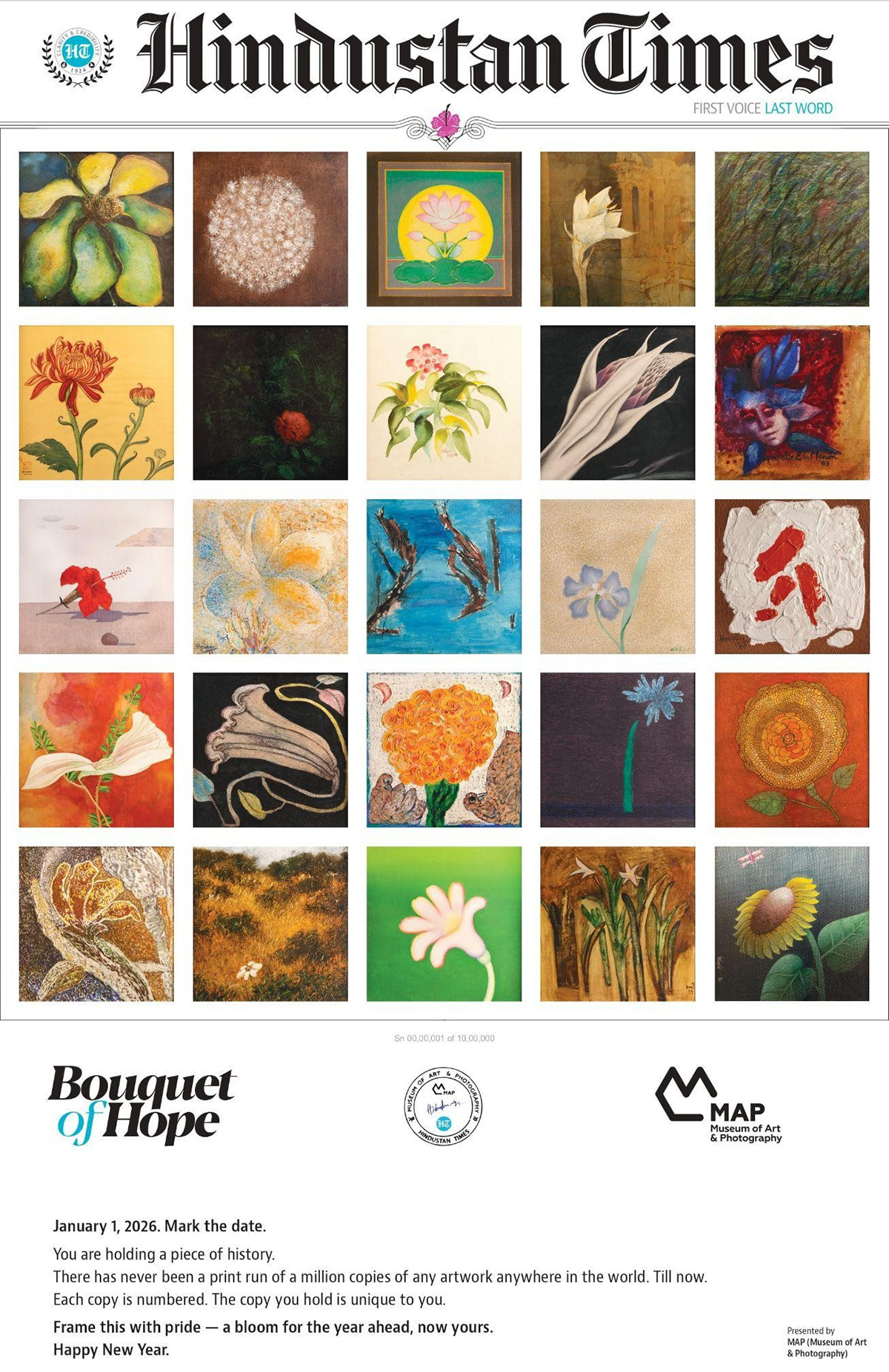
The Museum of Art & Photography (MAP), Bangalore, has recently unveiled one of the world’s largest art initiatives to date. This cultural milestone is titled “Bouquet of Hope.” This exhibition defies the traditional “white cube” encumbrances of enclosed gallery spaces. It aims to bring world-class Indian modernism directly into the homes of one million citizens.
Interestingly, Hindustan Times has partnered with MAP to make this experiment accessible to the masses by distributing a limited-edition, individually numbered collector’s art print to one million readers through a special New Year’s Day edition of the paper. This initiative shows a growing tendency of museums as they act as civic catalysts rather than just an abode of antiques. This initiative is conceived as an “exercise in accessibility rather than exclusivity.” In the opinion of Abhishek Poddar, the founder of MAP, “Art should belong to everyone, not just galleries or collectors.” Therefore, this initiative contests the presumed hierarchies of cultural custodianship.
Taking Art Beyond the Museum Walls
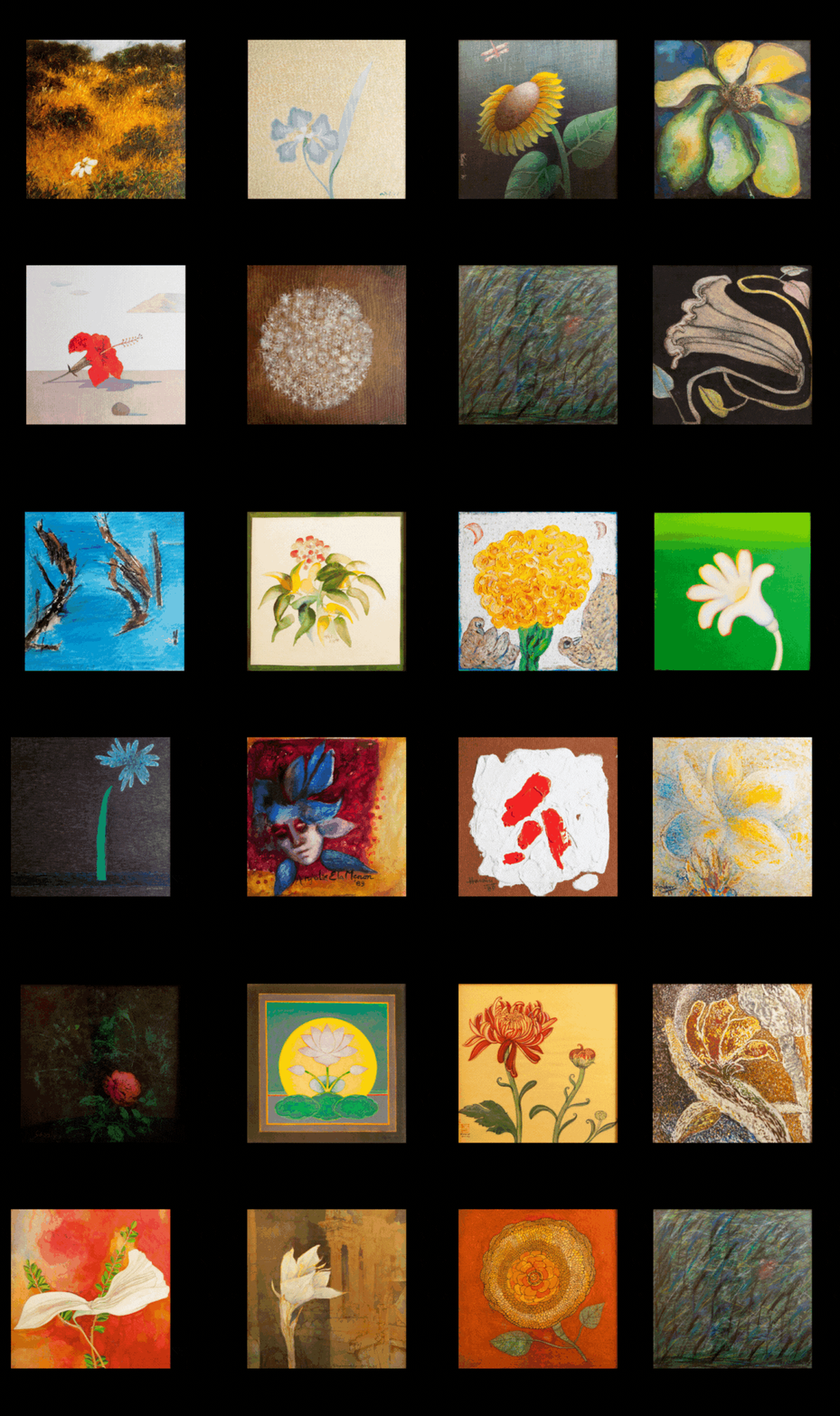
The Bouquet of Hope is also extended into the digital realm through a dedicated microsite. The core of the exhibition revolves around a singular, composite artwork featuring 25 Indian artists. The sequencing of the exhibition bridges the gap between established masters and contemporary voices.
Audiences will explore floral detailings and personalised digital bouquets, and share them with others, metamorphosing the viewers into co-creators. The prime showcases include the representation of Indian modernism through the paintings of M.F. Husain and K.G. Subramanyan. Alongside, Arpita Singh and Anjolie Ela Menon bring their unique figurative and symbolic languages. Ram Kumar, Bhupen Khakhar, and Manjit Bawa, whose works offer varied perspectives on color and form.
Glimpses of Bouquet of Hope 2026
| Aspects | Details |
|---|---|
| Primary Initiative | Bouquet of Hope Public Art Project |
| Key Partners | Museum of Art & Photography (MAP) & Hindustan Times |
| Media Partner | Hindustan Times |
| Reach | 1,000,000 individually numbered collector’s prints |
| Artist Count | 25 Indian Modern and Contemporary Artists |
| Digital Components | Interactive Microsite and Short Film by Naveed Mulki |
| Launch Date | January 1st, 2026 |
| Featured Artists | M.F. Husain, K.G. Subramanyan, Arpita Singh, Ram Kumar, Bhupen Khakhar, Manjit Bawa, Anjolie Ela Menon, among others |
| Digital Engagement | Dedicated microsite with interactive features and a documentary film |
| Core Objective | Democratisation and mass accessibility of art |
The Layers of Engagement
Each flower in the “bouquet” was either chosen or created to resemble the themes of renewal, resilience, and hope. These themes offer a visual representation of a nation stepping into a new era with new aspirations. This showcases MAP’s long-lasting commitment to online engagement, which began with the launch of its digital museum in 2020 and has since evolved into a significant platform for global audiences. The exhibition also hosts a short documentary by filmmaker Naveed Mulki, which documents the conceptualisation and making of the project.
The aim with which this initiative is put into place is diverse. Firstly, the institution believes in extracting art from the elite spaces and incorporating it into everyday life. Secondly, MAP has an inherent institutional will to surpass the physical and conceptual boundaries of what it means to be a museum and hold exhibitions in physical spaces. Thirdly, this initiative aligns MAP with its track of becoming a long-term cultural institution. Last but not least, MAP is willing to collaborate across disciplines and platforms to expand the reach and relevance of art.
Key Highlights
- Largest known mass distribution of art prints in global cultural history
- Integration of India’s modern masters with contemporary museum outreach strategies
- Individually numbered prints that blend collectibility with accessibility
- Interactive digital microsite for personalised engagement
- Documentary film by Naveed Mulki providing behind-the-scenes insights
- Moving art from institutional spaces into the “everyday public life” of a million individuals.
- Each print is uniquely numbered, granting the owner a sense of exclusivity and “my edition” provenance within a mass-produced medium.
- A dedicated microsite (bouquetofhope.in) allows users to create their own digital bouquets, fostering a living archive of community interaction.
- This project serves as a cornerstone for MAP’s broader 2026 calendar, which includes the upcoming permanent exhibition Beneath the Turning Sky on January 17th.
Situating “Bouquet of Hope” within MAP’s Institutional Vision
The physical museum of MAP was opened to the public in 2023. Since its conception, it has emerged as a promising institution in the socio-cultural aspect and defied being a mere enclosure. MAP, with its seven-storey building, houses galleries, learning centres, research, and conservation facilities, and a digital museum platform. MAP has judiciously constructed a model that prioritizes education, accessibility, and community engagement. With the initiation of the Bouquet of Hope, it has extended its philosophy and entailed art within quotidian routines. Moreover, with this meaningful collaboration, MAP and Hindustan Times have expanded the definition of “public art” itself. The project aligns with global museum discourses that advocate for participatory culture, yet it surpasses many such efforts in sheer demographic breadth.
Why “Bouquet of Hope” Matters
The significance of this initiative lies in its psychological core. Traditionally, the museum experience has been restricted by geography and social capital. This kind of experience is an ad nauseam in contemporary times. Thus, with this initiative in place, MAP has bypassed these barriers. This initiative proves that art does not lose its “aura” through reproduction; rather, it gains new meaning through shared ownership.
Currently, MAP houses a dynamic collection of over 100,000 artworks that represent India’s creative journey of its salient art and culture. MAP’s digital Museum was launched in 2020, and ever since its inception, it has curated online exhibitions, along with programming like artist talks, panel discussions, workshops for children, masterclasses, and more. This reflects MAP’s continued reliance and display of qualitative content that actively works at reaching and captivating new audiences, especially those who have had no previous exposure to the arts.
Takeaway
The Bouquet of Hope is more than a celebratory New Year gesture. It offered hope to millions by meeting the people exactly where they are. This initiative democratized the experience of viewing art and enhanced the ambit of relevance, inclusion, and audience diversity.MAP’s initiative offers a compelling blueprint. By collapsing the distance between gallery walls and breakfast tables, Bouquet of Hope restores art to its foundational role as a shared civic resource. If sustained and emulated, this model has the potential to transform not only how art is distributed, but also how cultural capital itself is imagined in contemporary India.