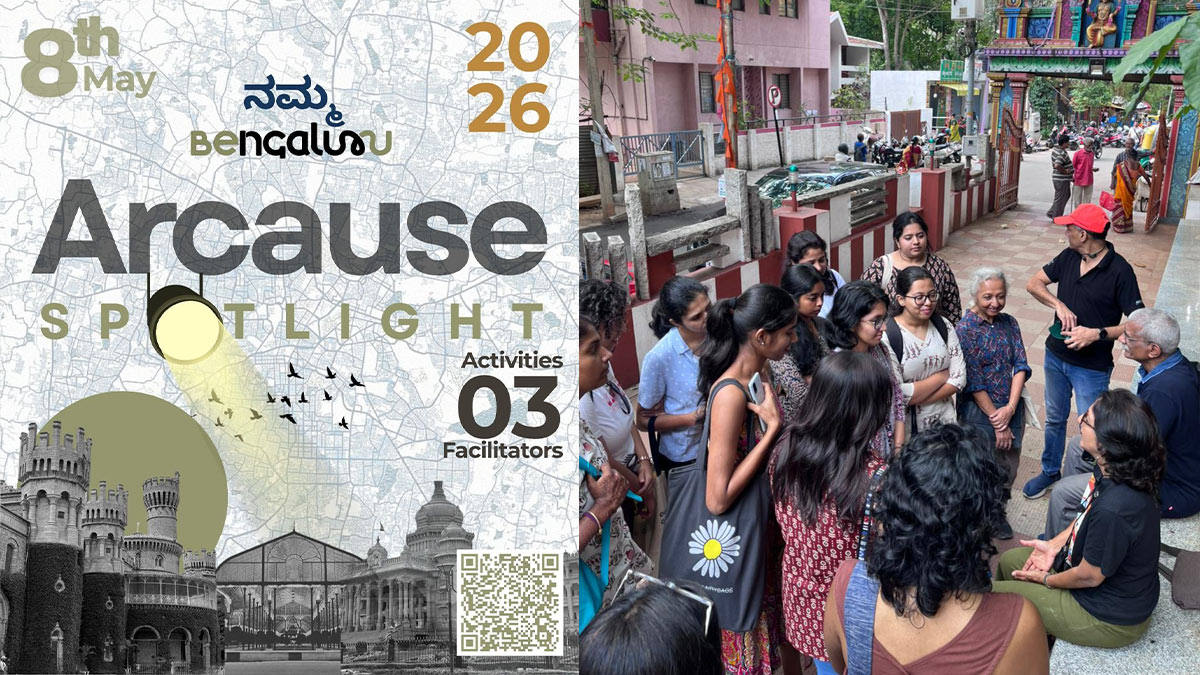
Arcause Spotlight 3.0 | Bengaluru Edition brought together architects, design students, researchers, faculty members and urban practitioners for a day of site-based learning and discussion focused on accessibility, inclusive design, walkability and heritage. Held on 8 May 2026, the programme unfolded across some of Bengaluru’s best-known public and cultural spaces, including the Museum of Art & Photography (MAP), Cubbon Park, Malleswaram and K R Market.
A Platform for Interdisciplinary Exchange
Organised by Arcause in association with the Rainmatter Foundation, the Spotlight series is designed to connect architectural education with real-world urban issues. The Bengaluru edition encouraged participants to engage directly with the city and consider how design decisions affect everyday life.
Accessibility Audit at MAP and Cubbon Park
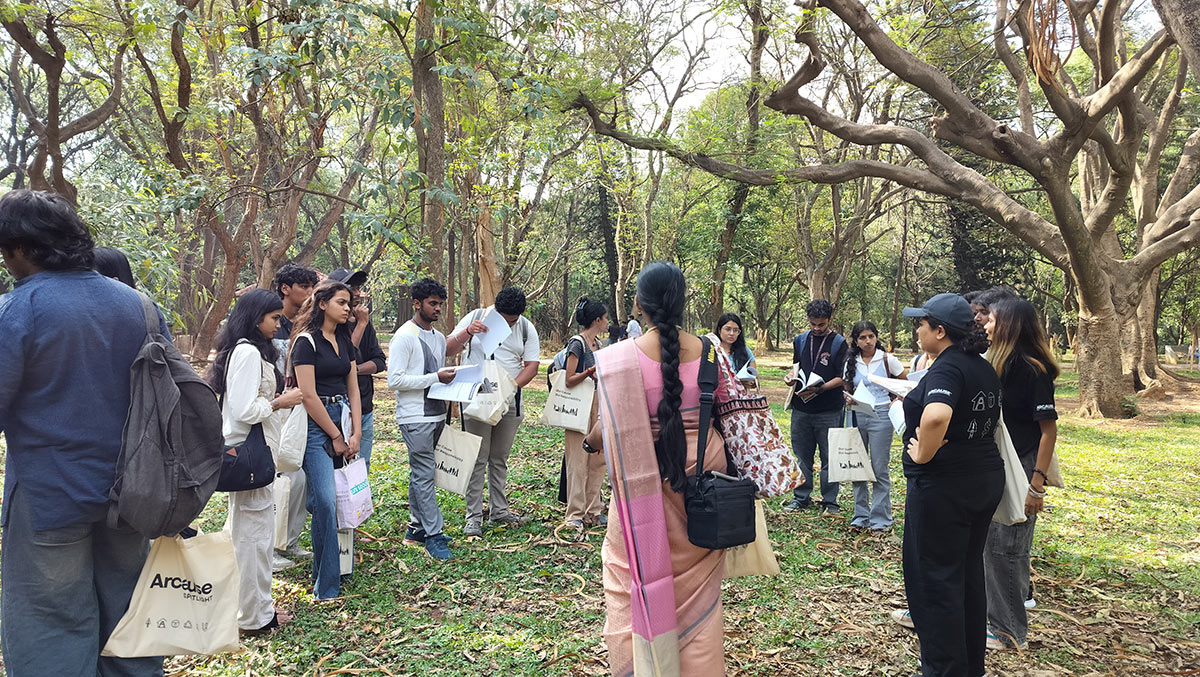
The first activity centred on accessibility and inclusive design. Participants conducted structured assessments at MAP, Cubbon Park and Cubbon Park Metro Station using observation and metric cards developed by Team Ethos.
The exercise focused on:
- Entrances and circulation systems
- Seating and rest zones
- Tactile pathways and signage
- Sensory comfort and independent movement
The session concluded at MAP with a reflection led by Rama Krishnamachari of the Diversity and Equal Opportunity Centre (DEOC). Discussions addressed the distinction between technical accessibility and the lived experience of navigating public space. MAP, founded by collector Abhishek Poddar, is known for integrating accessibility into its museum programming and public engagement.
Walkable Malleswaram and Citizen-Led Urbanism
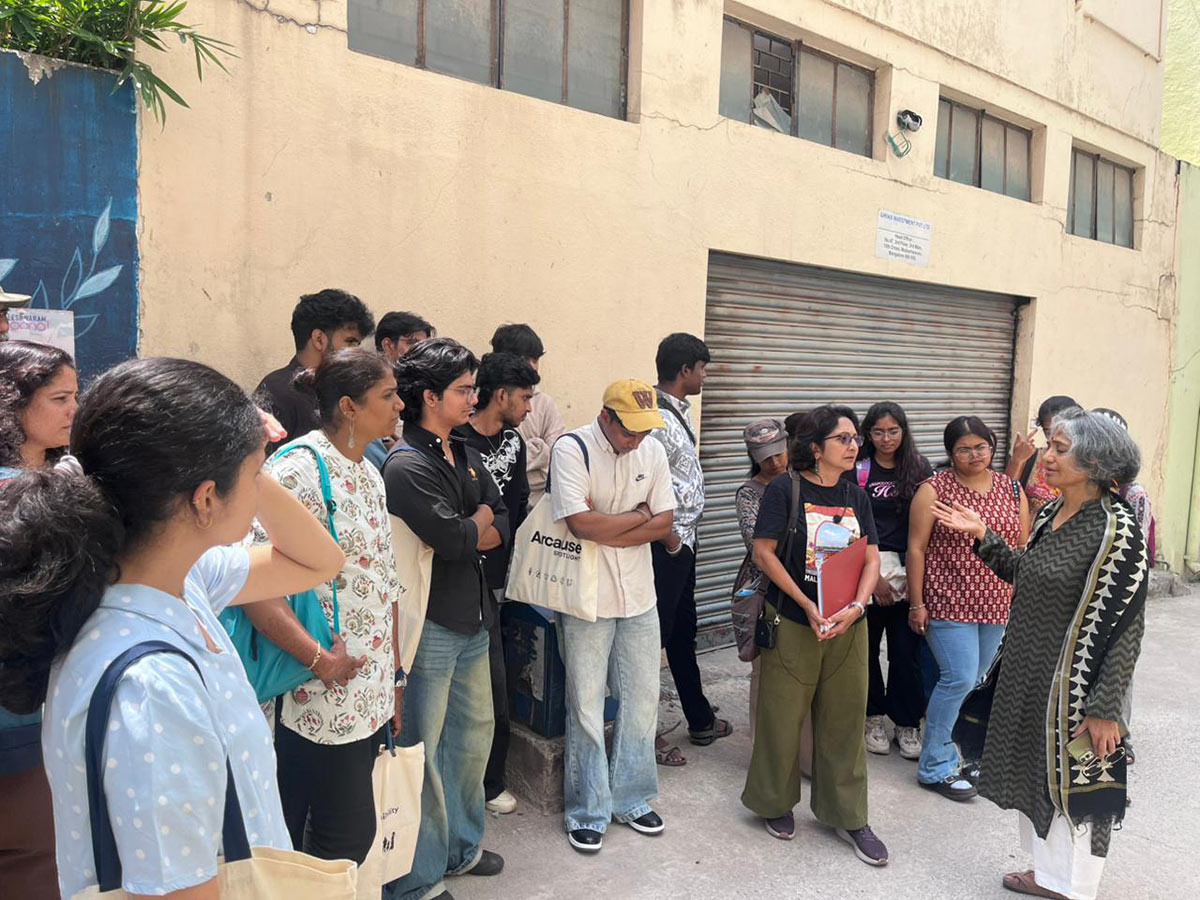
The second programme, Walkable Malleswaram, introduced participants to local efforts to improve pedestrian infrastructure through community participation. The session explored how former conservancy service lanes—historically linked to manual scavenging—have been transformed into pedestrian routes.
Participants joined a neighbourhood walk and a stakeholder roleplay exercise to examine how vendors, elderly residents, children and workers experience the same street differently. The activity generated memory maps, narratives and small-scale design proposals rooted in observation and empathy.
Heritage and Urban Continuity at K R Market
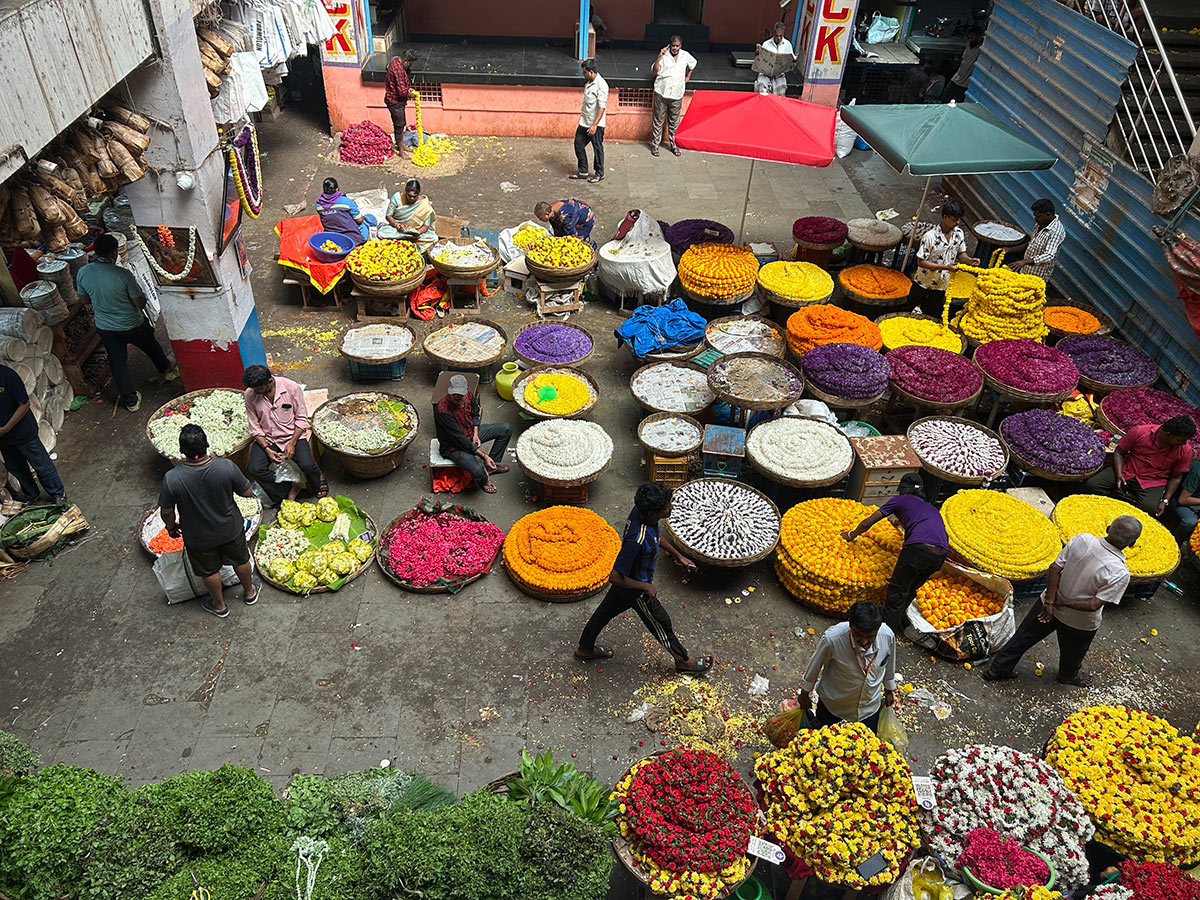
The final session was led by the INTACH Bengaluru Chapter, part of the Indian National Trust for Art and Cultural Heritage. The walk through K R Market considered the relationship between historic structures, contemporary development and everyday use.
Participants examined colonial-era market architecture alongside later additions and discussed how heritage sites can remain active parts of urban life. The walk concluded at a historic armoury, where participants proposed adaptive reuse ideas and debated how underused heritage spaces might serve surrounding communities.
Education Beyond the Studio
By moving discussions from classrooms to streets, museums and markets, Arcause Spotlight 3.0 encouraged participants to observe how urban spaces are shaped by design, policy and daily practice. The programme highlighted the value of interdisciplinary learning and on-site engagement in architecture and urban studies.