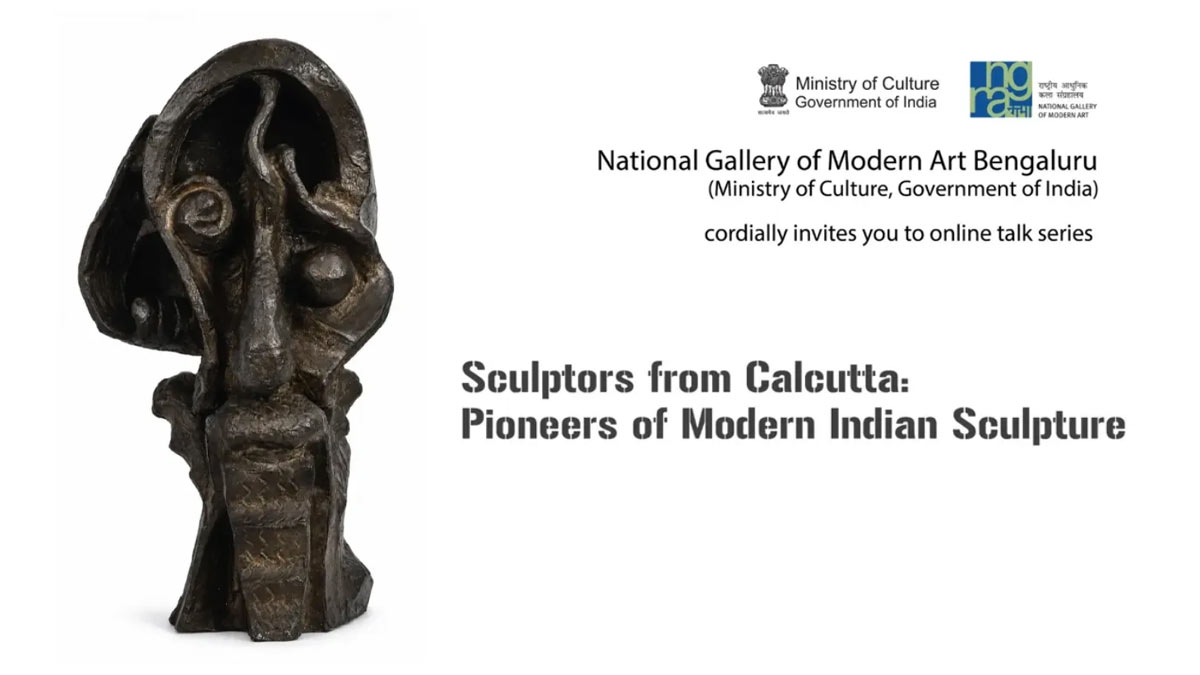
The National Gallery of Modern Art (NGMA), Bengaluru, will host an online Art Appreciation Talk titled “How Did Calcutta Become the Cradle of Modern Indian Sculpture?” on 27 June 2026. The session will be led by Yamini Telkar and will examine the role of Calcutta and its artistic institutions in shaping the development of modern Indian sculpture.
Discussion Overview
The talk will focus on the pioneering sculptors associated with the Calcutta School and their contribution to the evolution of modern sculptural practices in India. Participants will gain insight into how artists challenged established conventions and introduced new approaches to form, material, and artistic expression.
The session will also place these developments within the broader context of Indian art history, highlighting the cultural and educational environments that encouraged experimentation in sculpture during the twentieth century.
View this post on Instagram
What Participants Can Expect
Topics likely to be explored include:
- The emergence of modern sculpture in India
- The significance of Calcutta as an artistic centre
- Contributions of pioneering sculptors
- The legacy of Ramkinkar Baij
- Key developments in modern Indian art
- Historical and cultural contexts influencing sculptural practice
The discussion is designed for students, researchers, artists, and anyone interested in Indian art history and sculpture studies.
Event Details
| Event | Details |
| Name | How Did Calcutta Become the Cradle of Modern Indian Sculpture? |
| Format | Online Art Appreciation Talk |
| Speaker | Yamini Telkar |
| Date | 27 June 2026 (Saturday) |
| Time | 5:00 PM |
| Venue | Online |
| Organiser | NGMA Bengaluru |
| Registration | Please check NGMA Bengaluru’s official channels for registration details. |
Conclusion
This online art appreciation talk offers an opportunity to examine the historical developments that shaped modern Indian sculpture. Through a discussion of key artists, institutions, and artistic movements, the session will provide valuable context for understanding the evolution of sculptural practice in India. It is particularly relevant for students, researchers, artists, and enthusiasts interested in modern Indian art and art history.