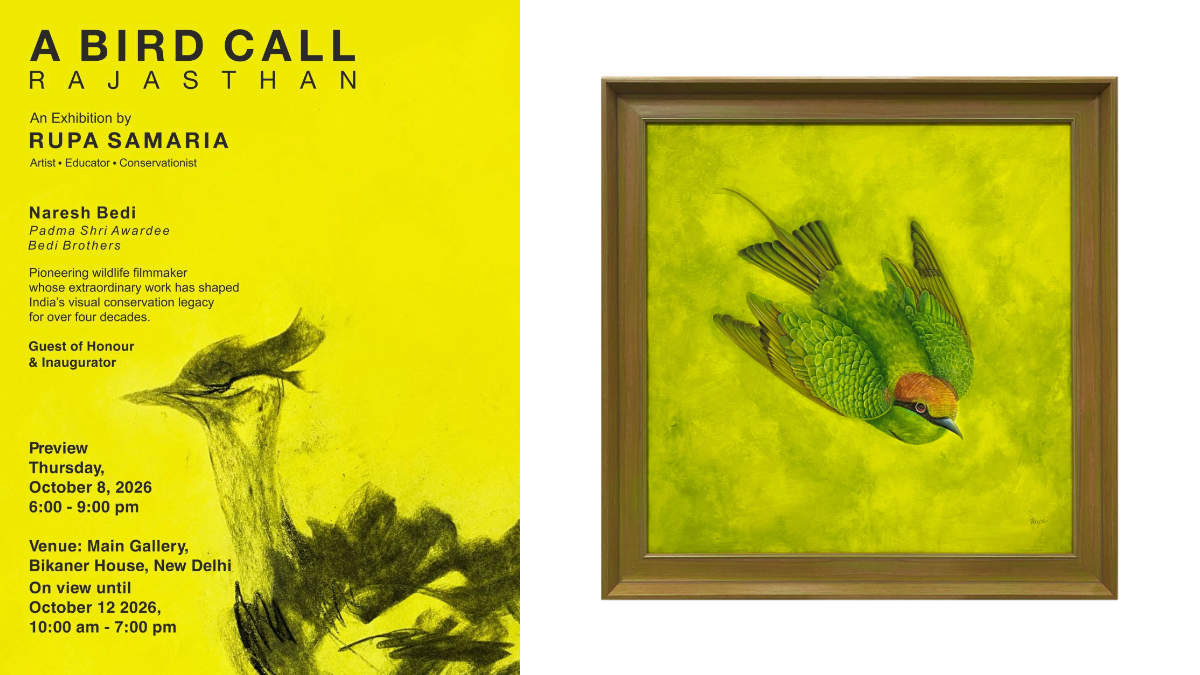
Artist, educator and conservationist Rupa Samaria will present her solo exhibition “A Bird Call – Rajasthan” at The Main Art Gallery, Bikaner House, New Delhi, from 8 to 12 October 2026. Featuring more than 60 canvases depicting resident, migratory, rare and threatened birds of Rajasthan, the exhibition examines the relationship between art, ecology and conservation while drawing attention to the changing habitats of bird species across India.
A Visual Exploration of Rajasthan’s Avian World
The exhibition focuses on Rajasthan’s diverse birdlife, ranging from species that inhabit the state year-round to migratory visitors that travel vast distances across continents. Through paintings, charcoal works and mixed-media compositions, Samaria documents birds that inhabit deserts, wetlands and grasslands, creating what she describes as both a celebration of biodiversity and a reminder of environmental fragility.
The exhibition title reflects the artist’s intention to encourage viewers to observe and engage with the natural world more closely. Many of the works are based on detailed observation and research into bird behaviour, habitats and conservation concerns.
The Great Indian Bustard at the Centre
One of the central themes of the exhibition is the Great Indian Bustard, also known as the Godawan, Rajasthan’s State Bird and one of India’s most critically endangered species. In a series of large-scale works, the bird is depicted against fluorescent backgrounds inspired by the bright colours traditionally worn in Rajasthan.
According to the artist, these vivid colours function as visual warning signals, highlighting the urgency of protecting species whose populations continue to decline. The contrast between the bird and its surroundings reflects broader concerns about visibility, disappearance and environmental loss.
Species Featured in the Exhibition
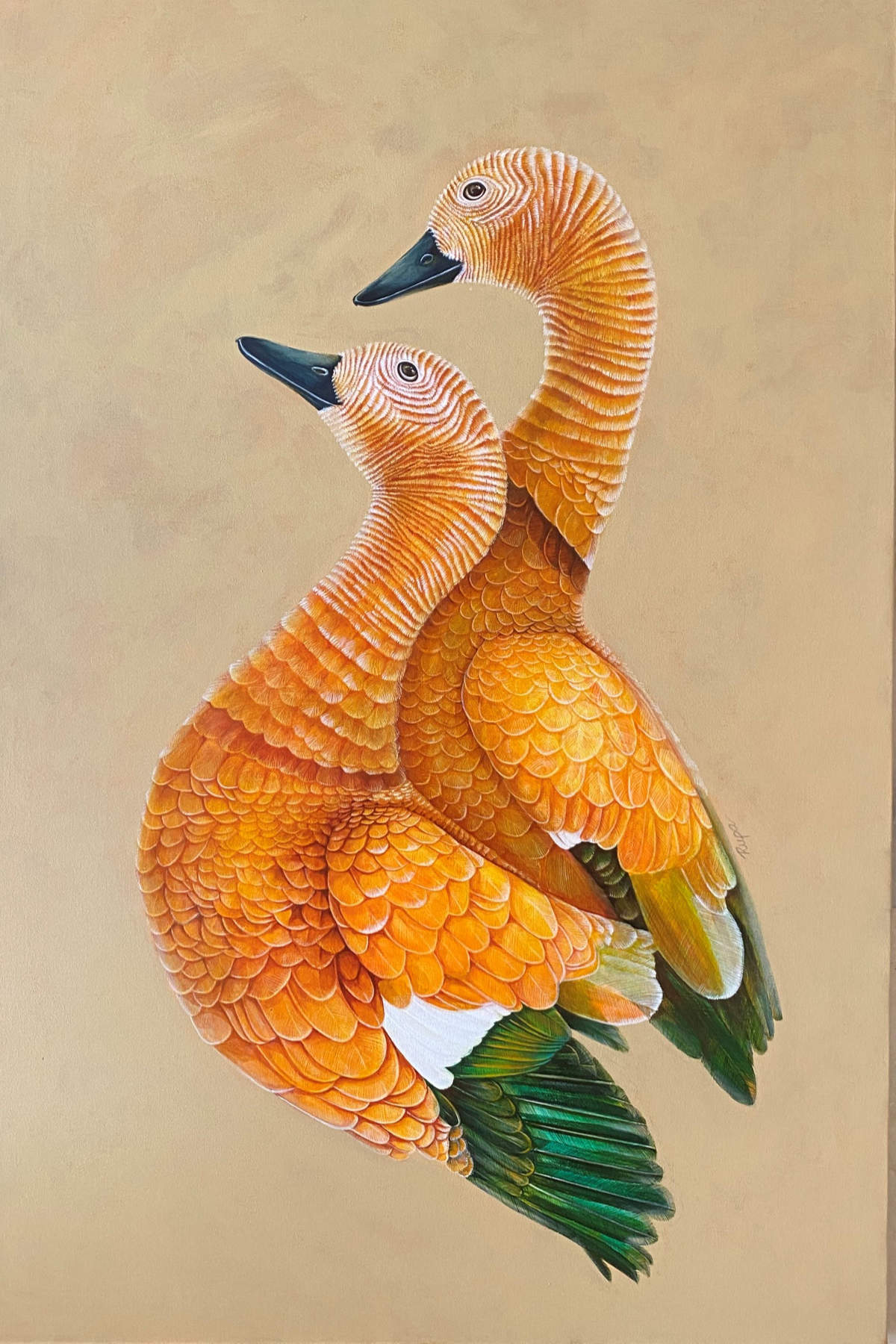
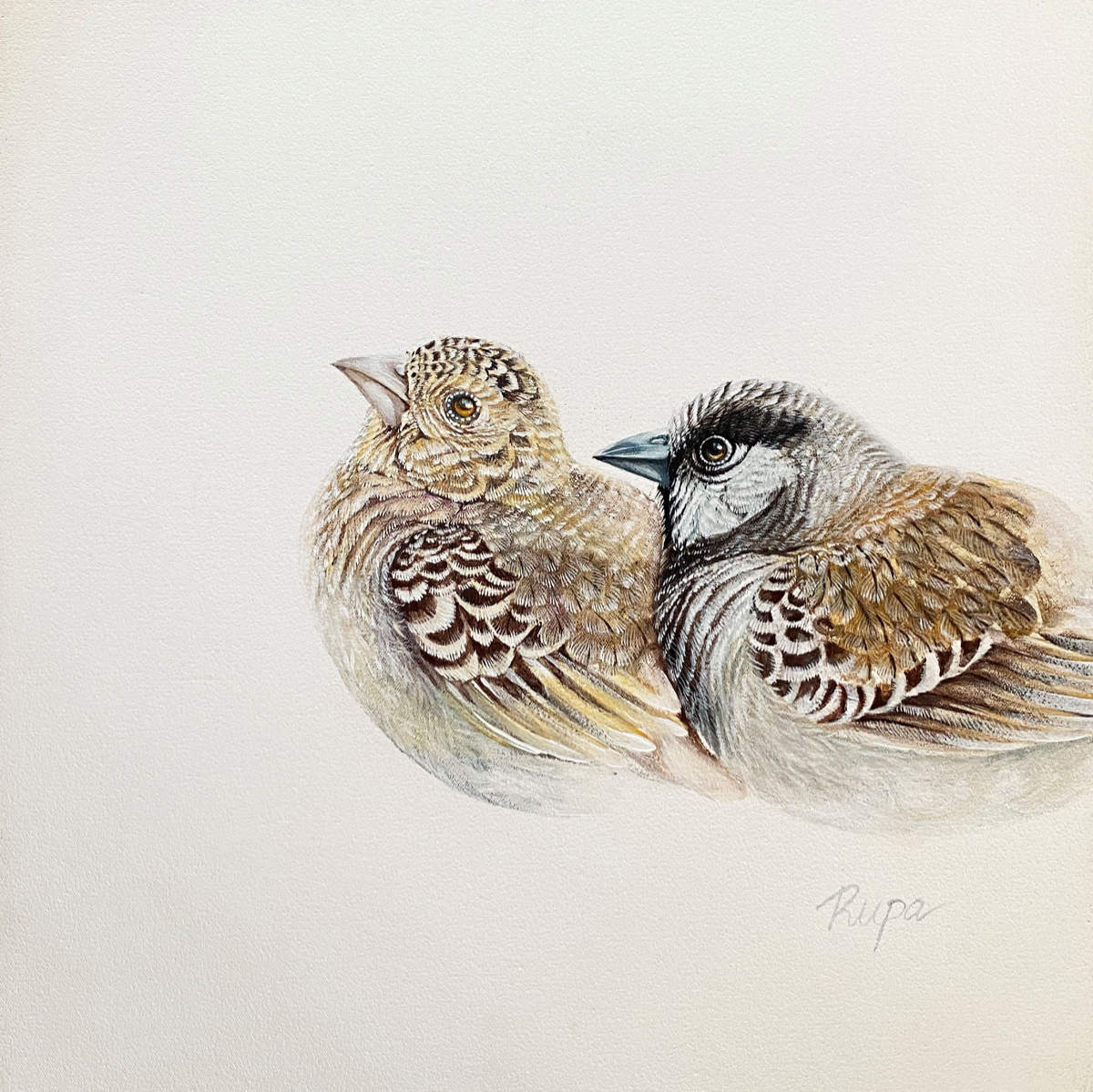
The exhibition brings together a wide range of birds associated with Rajasthan’s ecosystems.
Highlights include:
- Great Indian Bustard (Godawan)
- Egyptian Vulture
- Imperial Eagle
- Greater Flamingo
- Asian Houbara
- Sykes’s Nightjar
- Common Hoopoe
- Indian Paradise Flycatcher
- Asian Green Bee-eater
- Indian Eagle Owl
The migratory section also references the Siberian Crane, a species that was last recorded in India in 2001–2002, serving as a reminder of the long-term ecological changes affecting migratory routes.
An Artist Focused on Conservation
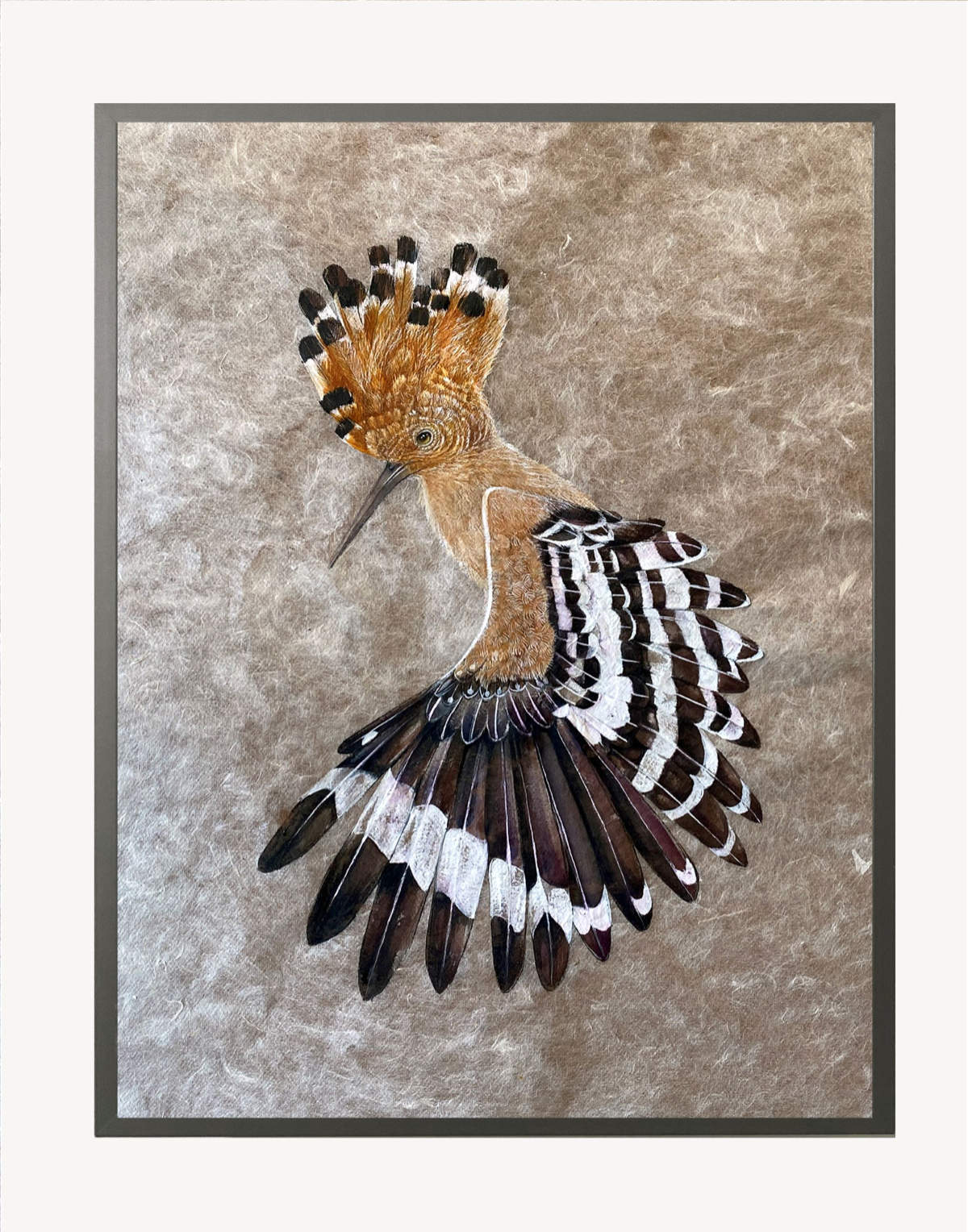
Born in Patna and now based in New Delhi, Rupa Samaria has developed a practice centred on ornithological art and environmental awareness. Over the years, she has painted more than 600 bird species from India and other parts of the world, creating a substantial visual archive of avian life. Her work spans painting, sculpture and installation, often combining artistic expression with educational and conservation-oriented themes. Previous exhibitions in her ongoing A Bird Call series have explored birdlife in different regions of India, including the Northeast.
Samaria’s interest in birds and conservation has been documented through several exhibitions and projects that examine the challenges facing bird populations due to habitat loss and environmental change.
Exhibition Details and Future Plans
| Event | Details |
| Title | A Bird Call — Rajasthan |
| Artist | Rupa Samaria |
| Venue | The Main Art Gallery, Bikaner House, New Delhi |
| Exhibition Dates | 8–12 October 2026 |
| Timings | 11:00 AM – 7:00 PM |
| Organiser | Bikaner House Management Society (Venue Host) |
| Future Venue | Bihar Museum, February 2027 |
| Website | https://bikanerhouse.rajasthan.gov.in/ |
Following its Delhi presentation, the exhibition is scheduled to travel to Bihar Museum in February 2027.
Final Thoughts
A Bird Call — Rajasthan brings together art, observation and environmental awareness through depictions of Rajasthan’s diverse birdlife. By focusing on species that are common, migratory, rare and threatened, the exhibition highlights the ecological significance of birds while encouraging audiences to reflect on conservation and habitat protection. In doing so, it positions art as a medium for dialogue about biodiversity and the shared responsibility of preserving natural heritage for future generations.