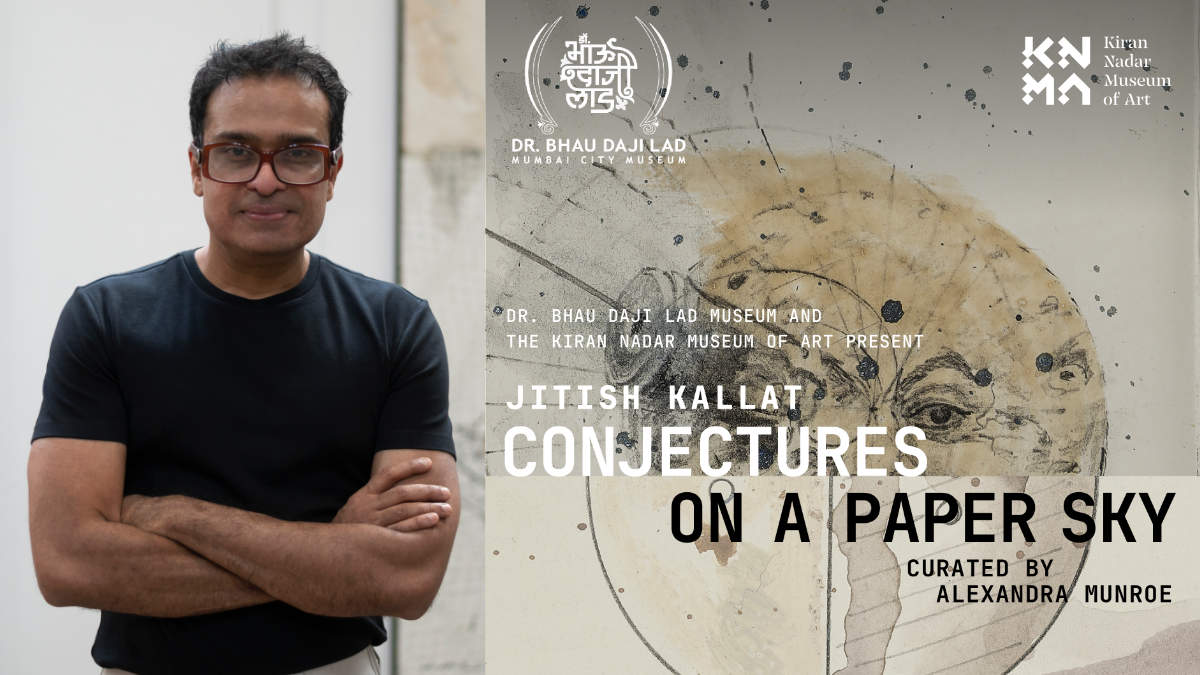
This November, Dr Bhau Daji Lad Museum is witnessing a prominent solo exhibition “Jitish Kallat: Conjectures on a Paper Sky”, bringing together paintings, drawings, sculptures, lenticular works and installations from the artist’s practice over the past decade. The Show is co-presented by the Dr Bhau Daji Lad Museum and the Kiran Nadar Museum of Art (KNMA), the exhibition will run from 14 November 2026 to 14 February 2027.
Curated by Dr Alexandra Munroe, Senior Curator at Large, Global Arts, Solomon R. Guggenheim Museum and Foundation, with Tasneem Zakaria Mehta as Curatorial Advisor, the exhibition will occupy the Museum’s historic galleries, Special Projects Spaces and outdoor plaza.
An Exhibition That Returns to the Museum
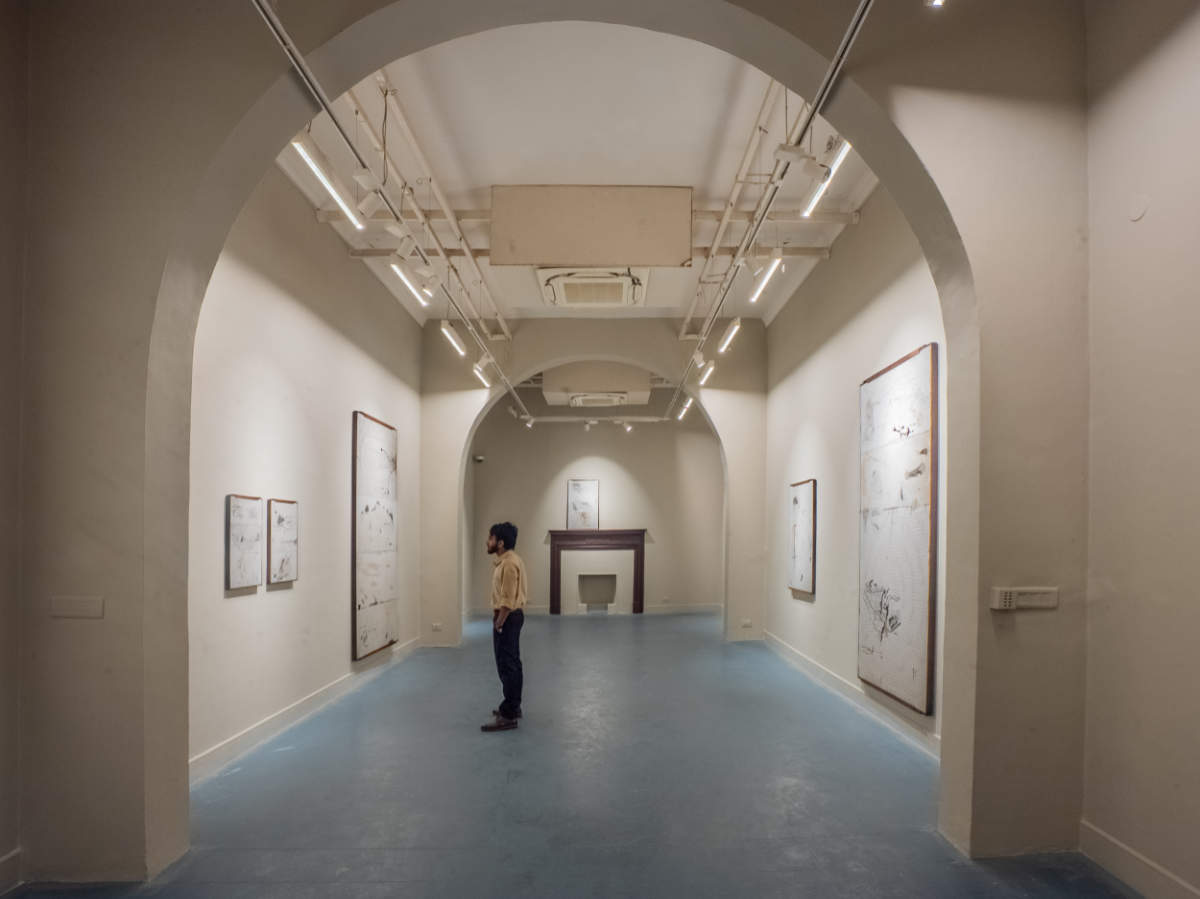
The exhibition marks Jitish Kallat’s return to the Dr Bhau Daji Lad Museum fifteen years after “Fieldnotes: Tomorrow Was Here Yesterday (2011)”, his previous major solo show at the institution, it was also curated by Tasneem Zakaria Mehta.
First presented at the Centre for Contemporary Art, Bikaner House, New Delhi, in February 2026, Conjectures on a Paper Sky reaches Mumbai in an extended and reimagined form. Conceived by Kallat and Munroe as an evolving exhibition, this iteration resonates to the architecture and spatial character of the Mumbai museum. The show’s presentation across different areas of the Museum and outdoor plaza is designed to establish connections between the artworks and their surroundings.
Exploring the Relationship Between Earth and the Cosmos
The exhibition brings together works that examine recurring questions around orientation, measurement and changing perspectives. Drawing on historical archives, scientific thought and observations of the natural world, Kallat’s practice moves between the microscopic and the telescopic, the everyday and the extraterrestrial.
Through these different scales, the artistic expression shows how human experiences and histories can be understood within larger planetary and cosmic contexts. Questions of political power, technological ambition and human vulnerability appear alongside ideas about space, time and the natural world.
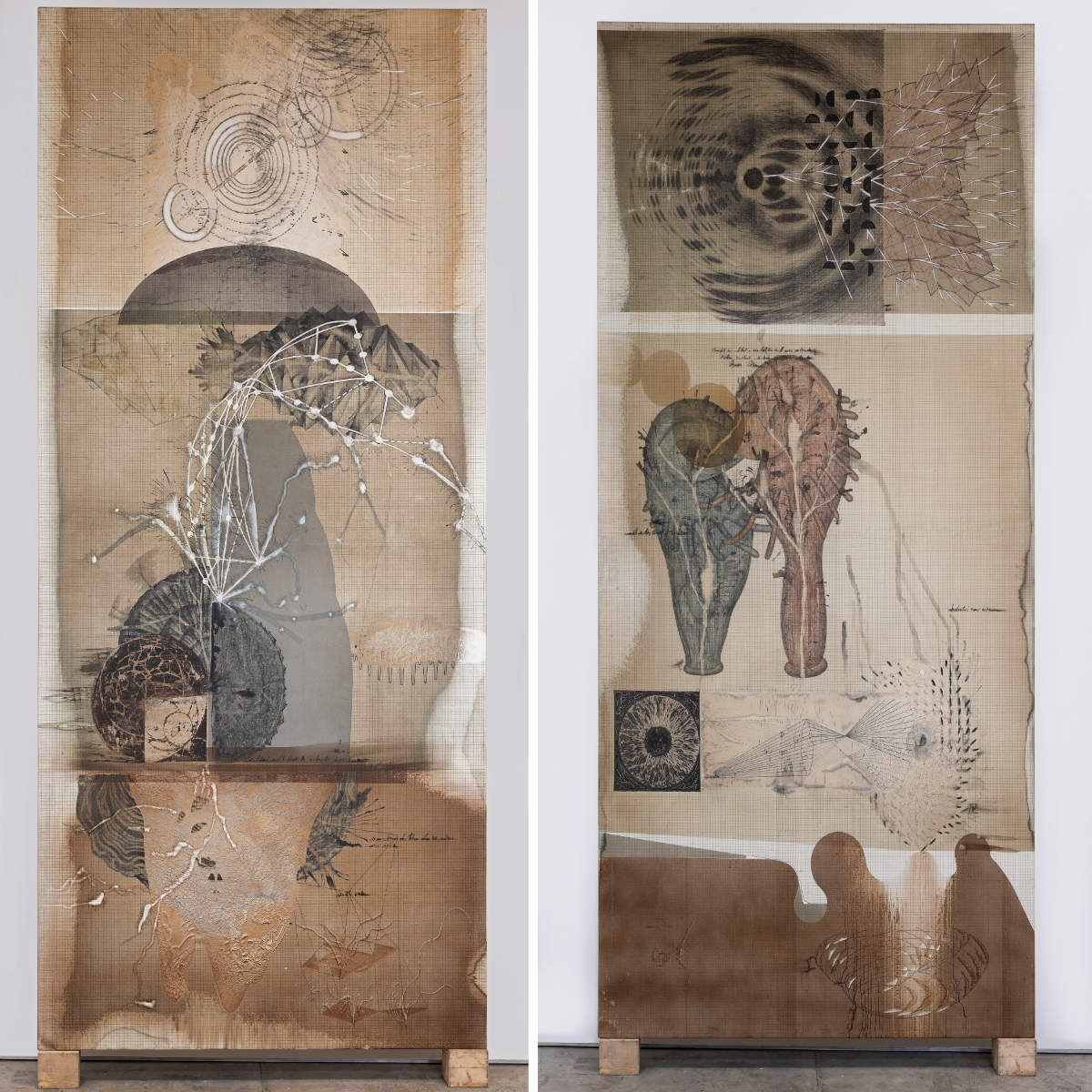
The exhibition’s title comes from Conjectures on a Paper Sky (2023–25), a ten-part suite of paintings developed through research into Project A119, a classified American proposal from the 1950s to detonate a nuclear device on the Moon. The paintings combine hand-drawn grids, ballistic trajectories and blast-like formations with botanical, geological, suboceanic and celestial forms, bringing historical fact and speculation into the same visual space.
Key Works and New Presentations
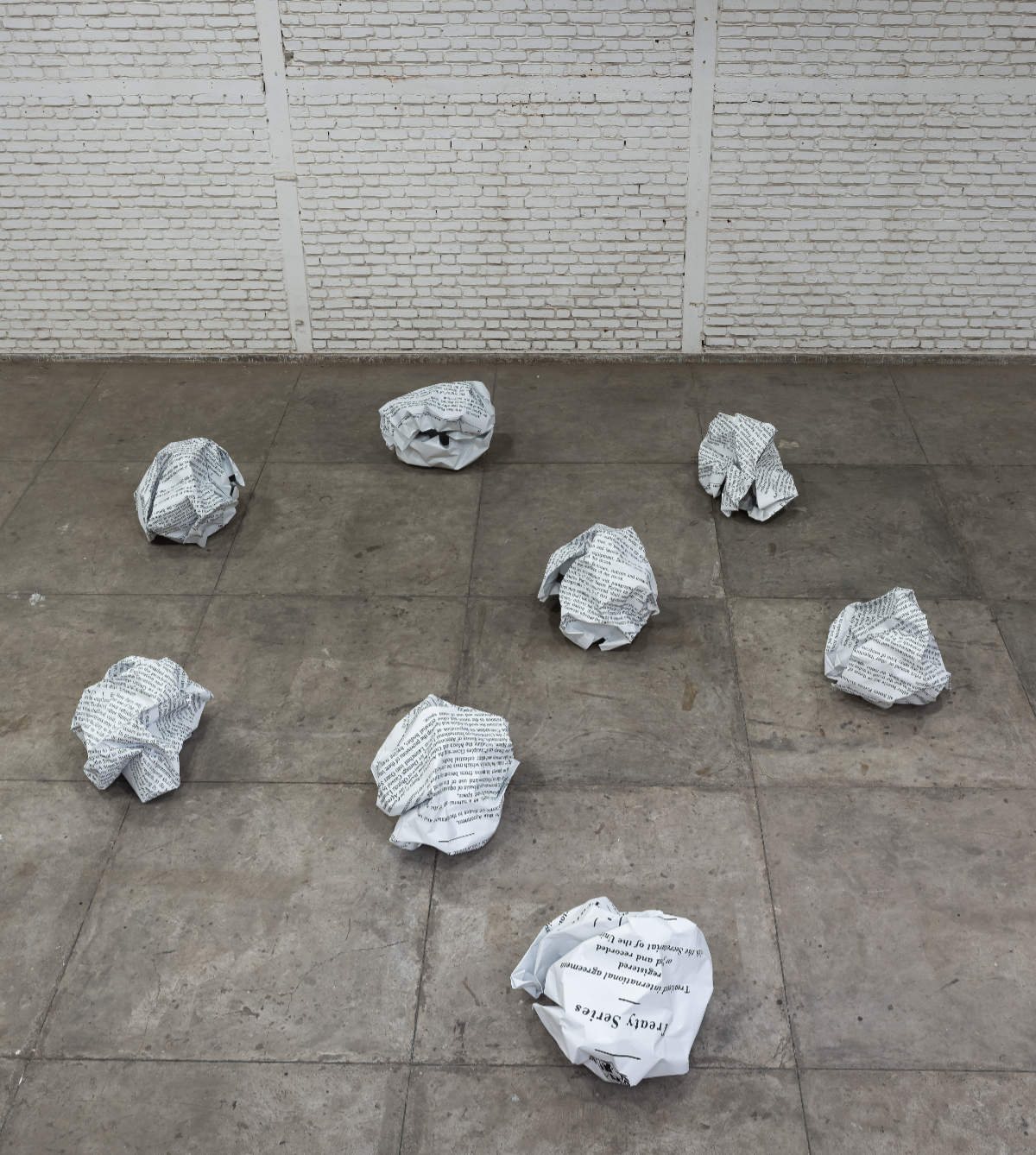
One of the central works is Moon Treaty (2025), presented in the Main Museum Hall. The installation comprises 54 sculptural forms taken from the 1979 United Nations Agreement Governing the Activities of States on the Moon and Other Celestial Bodies. Resembling crumpled treaty documents transformed into planetary shapes, the sculptures refer to an international agreement that sought to prevent national appropriation and military use of the Moon.
Other works featured in the Mumbai presentation include:
- Lunar Redux (2024–26), continuing the artist’s engagement with astronomical and scientific ideas.
- Epicycles (2021–25), exploring questions of movement and perspective.
- Albedo (Point of Incidence) paintings, examining light and points of encounter.
- New bronze sculptures that were not included in the exhibition’s Delhi presentation.
- Untitled (Two Minutes to Midnight) (2018), an outdoor installation bringing together forms based on prehistoric hand axes and a reference to the Doomsday Clock.
The latter work will be displayed in the Museum Plaza. Its enlarged forms, derived from Palaeolithic stone tools, are placed alongside a wedge-shaped plinth based on the distance between the hands of the Doomsday Clock when it stood at two minutes to midnight in 2018.
365 Drawings Presented Together for the First Time
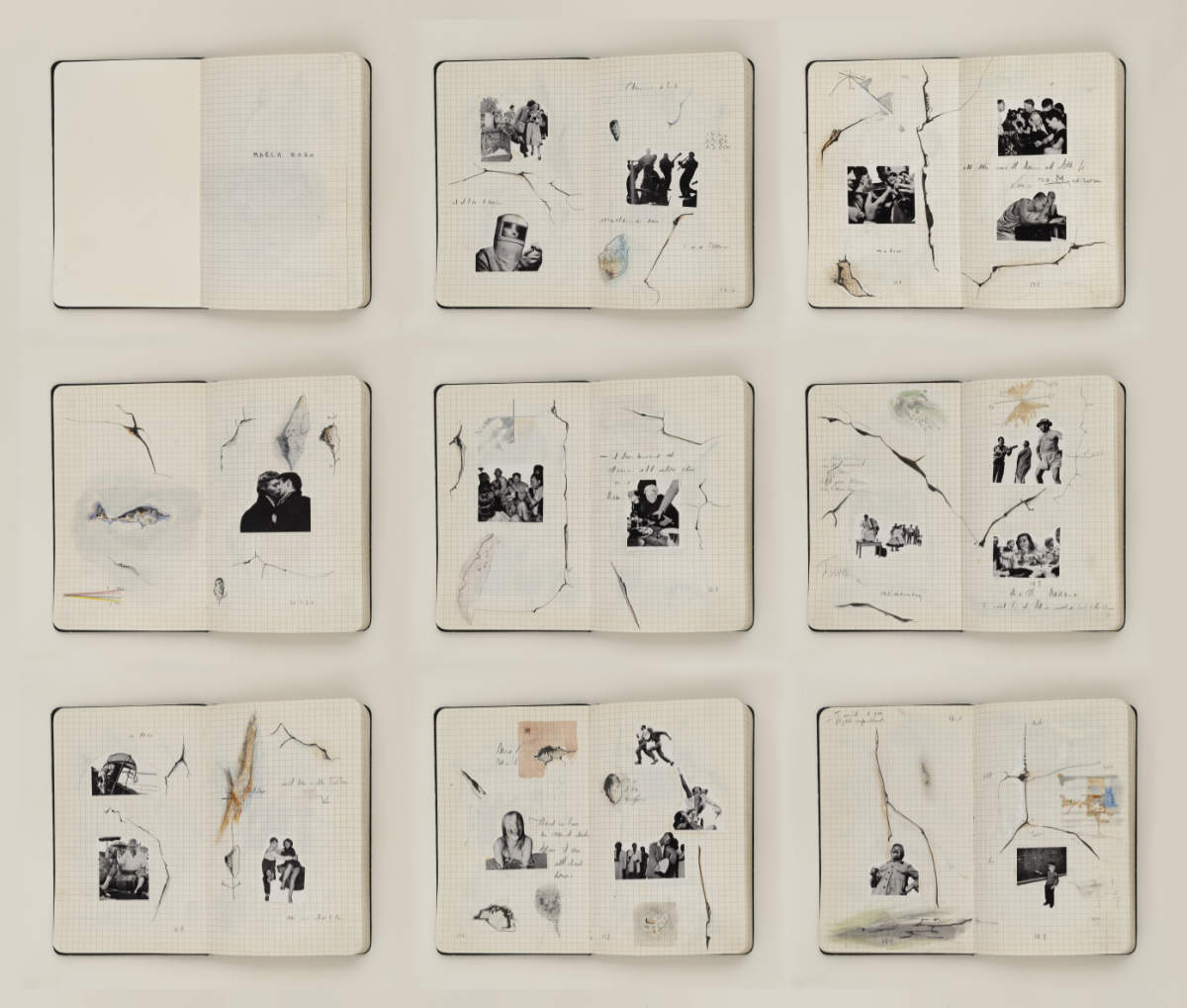
A significant feature of the Mumbai iteration will be the presentation of all 365 original drawings from Integer Study (drawing from life) (2021) together for the first time. Created daily throughout 2021, the drawings begin with three algorithmically estimated figures: the global human population at a particular moment and the number of births and deaths recorded up to that point in the day.
Each set of numbers, accompanied by a timestamp, generates an evolving visual form. Through this process, demographic information becomes a reflection on the passage of time, human life, birth and mortality.
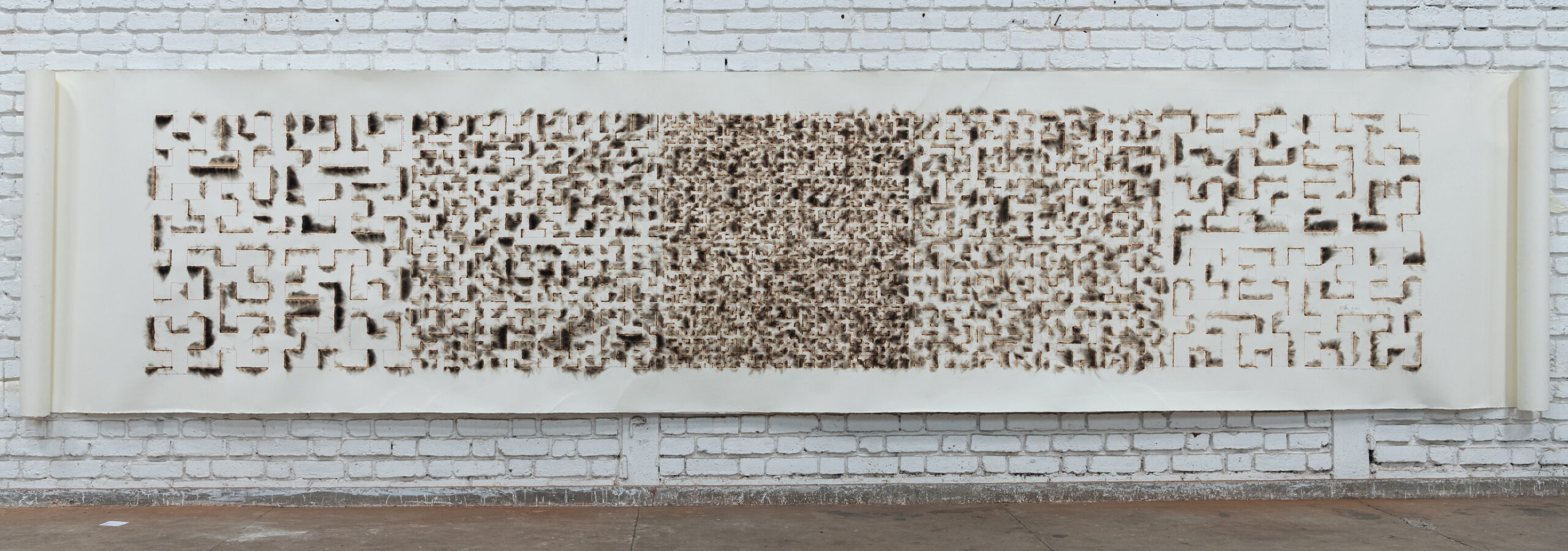
The Special Exhibition Space will also feature Wind Study (Hilbert Curve) (2022), another work exploring drawing as a durational and elemental process. The presentation will include an interactive drawing platform developed in collaboration with programmers at Google Arts & Culture Lab, allowing visitors to engage with the drawing process.
Artist, Curator and Institutional Collaboration
Born in Mumbai in 1974, Jitish Kallat works across painting, drawing, sculpture, photography, video and installation. His practice frequently examines the intersections of science, historical memory and existential inquiry. His exhibitions have been presented at institutions including the Art Institute of Chicago, Philadelphia Museum of Art, Art Gallery of New South Wales and National Gallery of Modern Art, New Delhi. He also served as Curator and Artistic Director of the Kochi-Muziris Biennale in 2014.
The exhibition is curated by Dr Alexandra Munroe, whose work focuses on modern and contemporary Asian art and its international contexts. At the Guggenheim, she founded the Asian Art Initiative in 2006 and has organised numerous exhibitions and scholarly projects examining Asian artists and art movements.
The collaboration brings together two institutions with distinct roles in India’s contemporary art landscape. The Dr Bhau Daji Lad Museum, established in 1857, is Mumbai’s oldest museum and has developed an exhibition programme connecting contemporary art with its collections and archives. The Kiran Nadar Museum of Art, founded in 2010, focuses on modern and contemporary art from India and South Asia through exhibitions, commissions, educational initiatives and public programmes.
Visitor Information
| Event Name | Details |
| Artist | Jitish Kallat |
| Venue | Dr Bhau Daji Lad Museum, Mumbai, Maharashtra, India |
| Exhibition Dates | 14 November 2026 – 14 February 2027 |
| Organiser | Dr Bhau Daji Lad Museum and Kiran Nadar Museum of Art |
| Curator | Dr Alexandra Munroe |
| Curatorial Advisor | Tasneem Zakaria Mehta |
| Supporting Organisations | Saat Saath Arts Foundation and Nature Morte |
| Website | https://www.bdlmuseum.org/ |
By bringing scientific research, historical references and artistic speculation into conversation, Jitish Kallat: Conjectures on a Paper Sky invites audiences to reconsider humanity’s place within larger systems of time and space. Its combination of large-scale installations, individual drawings and interactive elements offers different ways of engaging with contemporary art. The exhibition also contributes to Mumbai’s cultural landscape by creating a platform for conversations about technology, political responsibility, human existence and the relationship between society and the natural world.