If you want to visit a hill station this summer, Andhra Pradesh is the place to go. The state is known for its serene getaways, which are surrounded by the majestic Eastern Ghats and deep forests. The state includes various attractive sites to explore and plunge into the grandeur of nature, from the popular Araku to the newly found Vanjangi. These lovely hill stations in Andhra Pradesh are a boon to both tourists and local Andhra residents because they allow you to escape the scorching metropolitan heat.
The hill stations mentioned in this list offer visitors relaxing weather, beautiful surroundings, and a scenic experience.
Araku Valley is one of the most beautiful areas in what is regarded as the “Food Bowl of South India” and is about 120 kilometres from the coastal city of Visakhapatnam, commonly known as Vizag. Locals from neighbouring cities, such as Vizag, appreciate the location because of its accessibility and lack of commercialization. With features of vegetation, noises, waterfalls, caves, and locals selling home-grown organic coffee, the undisturbed landscapes at roughly 3000 feet quiet the rushed senses. The coffee plantations and the mists that linger over it have made Araku Valley proud of its principal occupation, and as a result, it has grown in popularity to the point where people travel from all over the world to see it. Not to mention the allure of surrounding natural attractions such as the Borra Caves, which are illuminated by multicoloured lights; walking inside and experiencing the careful methods in which Nature works in delicate-looking yet sturdy rock formations many metres beneath the earth’s surface.
Araku Valley is accessible via a road that passes through dense forest, which is an experience in and of itself. There are numerous points of interest, including the tribal museum and the government silk farm, which is known for its mulberry gardens. There are several tribes in the area, and tribal culture is abundant.
Lambasingi is a tiny village in Andhra Pradesh’s Visakhapatnam district, located in the Chintapalli Mandal. The hamlet is set amid the magnificent Eastern Ghats highlands. Lambasingi, located roughly 1,000 metres above sea level, provides guests with a pleasant environment, a view of deep forests, and a relaxing weekend vacation. Given that numerous sections of Andhra Pradesh experience extreme heat throughout the summer, a journey to Lambasingi can be a welcome respite. Lambasingi is the only spot in the southern region that experiences snowfall, thanks to its picturesque valleys and chilly weather.
Unlike other hill stations, Lambasingi is still relatively undeveloped. Unlike Ooty and Kodaikanal, where stores sell spices, tea, and coffee, the customary bustle of a hill station may be missing. This is welcome news for those seeking a peaceful retreat away from the bustle of city life. While tourists swarm here on weekends, Lambasingi reverts to being a quiet community during the week.
Horsley Hills is a hill station on Andhra Pradesh’s southwestern border with Karnataka. It’s a lovely mix of Andhra Pradesh’s charms and the grandeur of the hills. It is renowned as Andhra Pradesh’s Ooty. This natural wonder, which stands at an amazing height of 4312 metres, is known for its breathtaking landscape.
This location, also known as Yenugulla Mallamma Konda, is home to the world’s largest Banyan tree and the world’s oldest Eucalyptus tree, as well as deep woodland areas with 113 kinds of birds. Horsley Konda’s magnificent nature also serves as a backdrop for adventure sports and activities as a trampoline, shooting, bow and arrow, wall climbing, water walking, rappelling, swimming pool, fish bath, and a little zoo.
Eighty-seven kilometres from Rajahmundry lies Maredumilli, a prominent tourist destination in Andhra Pradesh. If you are a true nature lover with a desire to learn about traditional tribal life, this is a place you should visit. There are rivers, rapids, and waterfalls nearby, as well as some quite interesting camping sites, making it an excellent spot for weekend picnicking. When the valleys turn green and vibrant with fresh flora all around, the rainy seasons draw the most visitors. From Kakinada, Vizag, and Hyderabad, Maredumilli is easily accessible. Visitors arrive in the morning and depart in the evening for a day trip. It’s a four-hour drive from Visakhapatnam and a 225-kilometer journey.
Maredumilli is also a great destination to visit if you’re a foodie, especially if you love non vegetarian food. Bamboo chicken is a popular dish in Maredumilli.
Nagalapuram is a tiny historical town in Andhra Pradesh’s Chittoor District, approximately 87 kilometres from Chennai. Sri Vedanarayana Swamy Temple and Nagalapuram Falls Trekking (also known as Saddhi Koodu Madugu) are two of Nagalapuram’s most famous attractions. This is one of the most popular hiking destinations around Chennai, as well as one of the best weekend getaways in Chenani for a two-day excursion.
Nagalapuram Falls is a pristine gem that offers a nice one-day trek from Chennai with a stunning waterfall view. Natural environment provides a perfect blend of hard climbs for expert trekkers and moderate hikes for beginners, resulting in an unforgettable experience.
The 12-kilometer (two-way) journey is normally completed in a single day, though some people camp overnight. The hike to the waterfall takes roughly 2 to 2.5 hours one way via rocky terrain and a slippery trail. The dense vegetation along the path provides natural shade, making it easier to walk on hot summer days. Midway to the falls, there are various water ponds that are ideal for a quick stop. The main waterfall has a large pool with crystal clear water at the bottom. The pool’s centre is estimated to be roughly 40 feet deep, thus swimmers should exercise extreme caution.
Vanjangi
Vanjangi, located 3400 feet above sea level and about a 3-hour journey from Visakhapatnam, has become a tourist favourite thanks to the amazing sights on offer. Early in the morning, when you approach the vantage point at the location, scenes of dense clouds floating eternally amid the hills make a sight to behold. The most fortunate time to visit Vanjangi is at sunrise, when an orange twilight, visible beyond the cloud cover, proudly announces the sun’s arrival. While the village does not yet have any visitor accommodations, many people are choosing to camp in the open spaces.
The newly discovered hill station is affectionately referred to as ‘Megha Samudram’ by locals (ocean of clouds).
Nallamala Hills is spread throughout the regions of Nellore, Kurnool, Prakasam, Chittoor, and Kadapa, and is regarded as one of the most amazing mountainous places to visit in Andhra Pradesh. It has become a popular location for nature enthusiasts and photographers due to its captivating sceneries and lush green surrounds.
The hilly enclave also draws a big number of thrill seekers who want to ascend the magnificent routes that rise to a height of 4000 feet above sea level. With the Nagarjunasagar-Srisailam Tiger Reserve encompassing over half of its territory, it is not only a popular tourist destination but also a great place to visit for wildlife enthusiasts.
To top it all off, Nallamala has various religious sites where you can pray to the almighty while admiring the beautiful surroundings.
At an elevation of 1168 metres, the Ananthagiri Hills in the Ranga Reddy district, near Vikarabad, are thought to be the oldest location of wooded civilisation. It is a hiking heaven because the area has some of the best trekking routes. The city exudes a breathtaking and absolutely captivating elegance, infused with the aroma of coffee and the beauty of exotic vegetation. With surrealism in every element of the city, it is ideal for both honeymooners and family tourists.
Enthralling coffee plantations wash the entire slope in colours of light and dark green during the day. As the trek nears this Telangana hill town, the mesmerising image is mixed with the mists and haze hovering over the valley. The Musi River, which originates in Hyderabad and passes through the city, and the river’s waterfalls only add to the beauty.
Papi Kondalu is a breathtakingly beautiful hill range that stretches along the Godavari River in the Andhra Pradesh districts of East and West Godavari. The Papi Hills are a group of three hills in East and West Godavari districts that form a magnificent canyon on the Godavari River. The entire area of Papi Kondalu is covered by tropical rain forests, and it was recently designated as a protected National Park, making it one of the best destinations to visit in Andhra Pradesh for tourism. During the post-monsoon season, the boat service between Rajahmundry and Bhadrachalam is a terrific experience. Tourists can participate in activities such as camping and trekking in addition to admiring the views of the hills, valleys, and waterfalls. Papikondalu is 191 kilometres from Visakhapatnam, 159 kilometres from Visakhapatnam, and 439 kilometres from Hyderabad.
The Nagari Hills are a circular mountain range that rises to 1,050 metres above sea level. The “Nagari Nose” refers to the conspicuous and highest cliff of the hills, which protrude to one side in the shape of a human nose. Around and from the Chennai lighthouse, it can be seen for about 100 kilometres. This cliff, located about 7 kilometres north of Nagari, rises to an elevation of 855 metres above sea level and is known as the “Nagari Murkonda” During the mediaeval period, Nagari Nose acted as a lighthouse for guiding navigation in the Bay of Bengal, as the nose served as a marker for ships approaching Chennai. The cliff has recently been used for mountaineering and range practice. A 12-kilometer jeep track is available, and the area is also good for cycling and hill running. The grasslands surrounding the lake are suitable for camping. Food is provided by the temple priests, and there is also fresh water. The journey to the temple and falls takes about three hours; one can picnic there and return, or remain the night.
The hill stations of Andhra Pradesh will surely satisfy your wanderlust wants if you are desperate for a new area to explore. Pristine, unaffected by modernism, and appealing in their own way, these sites offer both serene and relaxing vacations and thrilling adventurous ones as well. The tranquil beauty of these hill stations will definitely entice you to keep coming back!
Artist Dharshana Bajaj has recently written and published her first book. Like her art, this book too explores the idea of living in harmony with Nature.
Titled Gaia’s Own: Every Child’s Guide To Living In Harmony With Nature, this book is primarily addressed to the as-yet-uninitiated in the concepts related to climate change, specifically children above the age of 12. As the preface to the book says, “Gaia’s Own: Every Child’s Guide To Living In Harmony With Nature is an invitation to every child to get back to the fold, bringing all of humanity with them. Gaia, Mother Earth, is calling. She is calling all her sons and daughters back. It’s time for each of us to rise to the occasion, reset priorities, and follow the way home.
“This book brings to your attention not only facts, but also insights of the wise, both ancient and contemporary, on the radical, deep, and sometimes even simple changes that are required of us. So simple as to be child’s play. And that is why this book is for children everywhere, and the little child in all of us. For we are all Gaia’s own.”
Here is a brief interview with the author.
Q. You are known as a visual artist. What made you write this book?
A. I felt a pressing need to share my concerns and insights on our current climate crisis. To reach more people, via words.
Q.And what do you say has gotten us here, to this present “climate crisis”?
A. The basic premise of the book is that the climate crisis is the result of the human race becoming estranged from its roots, from its connection with Earth and Mother Nature. In securing our comfort and safety, we have lost touch with what it means to be a part of the natural world, to be interconnected with it. We’ve become strangers in our own home. And when we get back to where we truly belong, to being one with Nature, feeling greater love for all it consists of, only then will we begin to find true solutions and ways of living that will be in harmony with the world around us.
Q. And how can children play a part in this? This book is for children, right?
A. This book is for the mature children, in their pre-teens or teens, as well as for the young adult readers. It shares concepts related to climate change and the environment in a personal and wholesome way, via an exchange of emails between a 12-year-old girl and her itinerant grandfather. My focus has been on children because they are still open to forming ideas about the world and the part they can play in it. The book hopes to spread awareness of the issues of the day, and inspire people to think of new solutions and approaches to life. And the book also explains how every single person, be they man, woman, or child, can positively make a difference. Like the Chaos theory mentions, “When a butterfly flaps its wings in the Amazonian rainforest, it can change the weather half a world away”.
Q. Can a 12-year-old understand these things? Children nowadays seem more interested in video games and movies.
A. Yes, I see that in my own child. But I believe its about striving for a healthy balance between what is fun and what is important. I don’t stop my child from his video games or screen time, I limit it, and ensure he gets enough time outdoors.
Q. Is Satvika, the 12-year-old in the book, based on your son?
A. To a certain extent, though not much. I’ve always loved the name ‘Satvika’, and the girl in the book can be considered my “spiritual” daughter. In some ways my own inner child peeks through from her. She stands for the innocence, the love, and the honesty that’s inside us all.
Q.And who is Grandpa Yogesh inspired by?
A. Grandpa Yogesh is an old soul, wisdom and patience personified. He is also a part of me, although the relationship depicted is inspired largely by the sense of family that my child, niece and nephews share with their grandparents.
Q. Lastly, what does the title Gaia’s Own mean?
A. Gaia is the mythical name of Mother Earth, from Greece. It is one of the many ways people have tried to address or talk about the great universal spirit. It’s a lovely name, bringing to mind a very maternal force, protective yet firm. There have been videos depicting that if humans don’t clean up their act, Nature will overcome her troubles my getting rid of us. My book believes that Nature or Gaia will never do that as we are a part of her, not apart from her. We are all an integral part of Nature. And she will find ways to guide us to correct false steps and honour her laws. This book and the wisdom it shares are one of her many, many ways.
Q. Thank you for sharing your views. Where can the readers buy this book?
A. Gaia’s Own is available in select book shops, like Odyssey in Adyar and The Book Shop in Anna Salai, Chennai. It can also be purchased online from sites like Amazon, Flipkart, Pothi, The Dog Ears Book Shop, and Barnes & Noble.
India has been the location of several of the world’s first civilizations. Whenever we browse through history, the country’s name appears in gold. It has witnessed several strong kingdoms, major emperors, spiritual gurus, cultural groups, etc. leave behind distinctive traces of heritage. Today India has many UNESCO World Heritage Sites due to its glorious history. In India, the interesting monuments and historical places stand tall today to tell visitors their narrative of joy, sadness, courage and sacrifice. India’s magnificent history and cultural variety provide a powerful blend of tourist attractions that attract millions of travellers each year. The rich heritage of India is sufficiently reflected throughout the country in the different temples, palaces, monuments, and forts.
UNESCO has conferred the title of UNESCO World Heritage Sites on such heritages and remains, that display outstanding creative art that illustrates major historical milestones, include enormous natural beauty, and represent exceptionally any culture or civilisation.
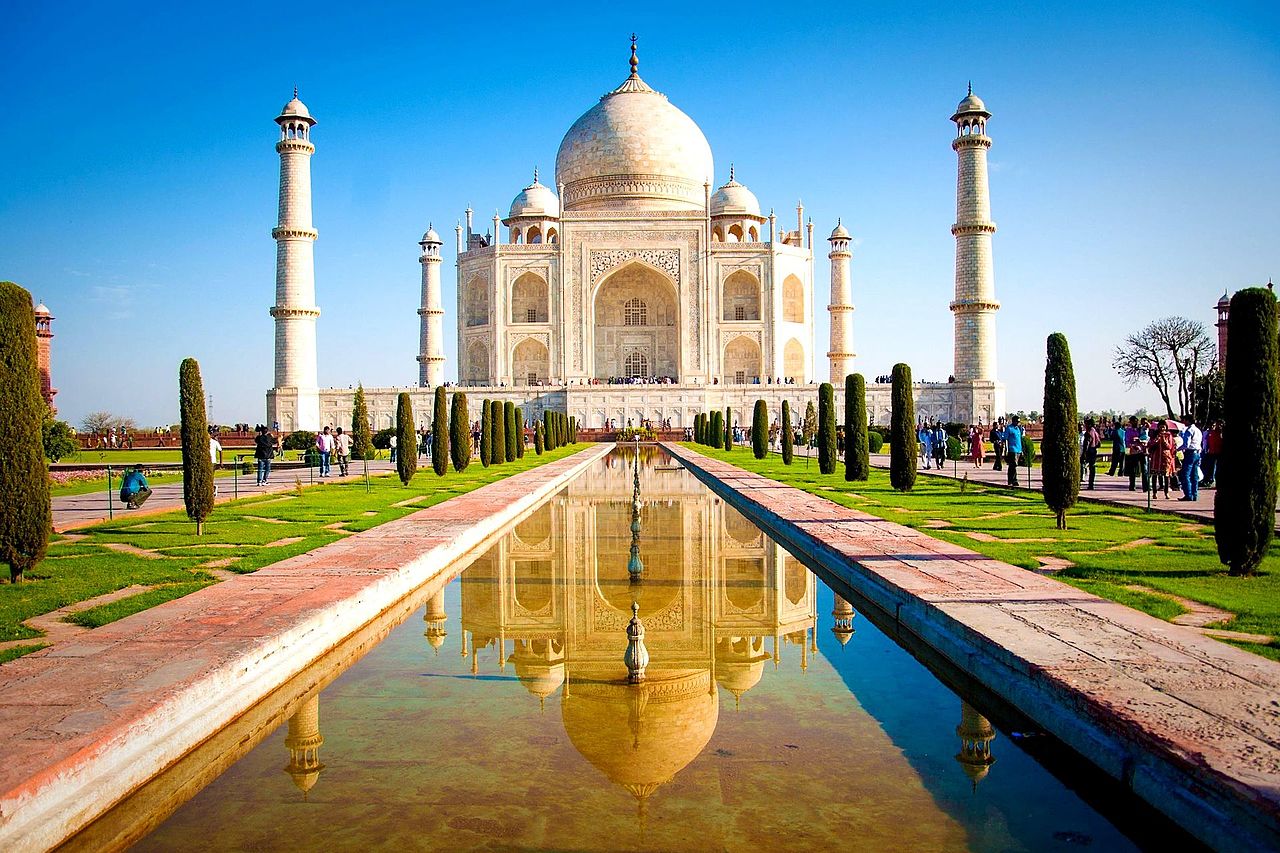
Taj Mahal is one of the ‘seven wonders of the world’ along with being a World Heritage site. In the former capital of the Mughal empire-Agra, this stunning monument is fashioned entirely out of white marble. It is located on the banks of the Yamuna River in the city.
It was created in the remembrance of his beloved wife, Mumtaz Mahal, by the Mughal Emperor, Shah Jahan; it stands as a symbol of pure and everlasting love. Taj Mahal, which is considered to be a masterpiece, combines the best architecture of several Mughal buildings. The wall of this masterwork reverberates her beauty. The path to this splendour is full of royal trees and a straight stretch of water leads up to this huge palace.
This charming beauty is more attractive at night, as the moonstones shine on his grave and make it look ethereal.
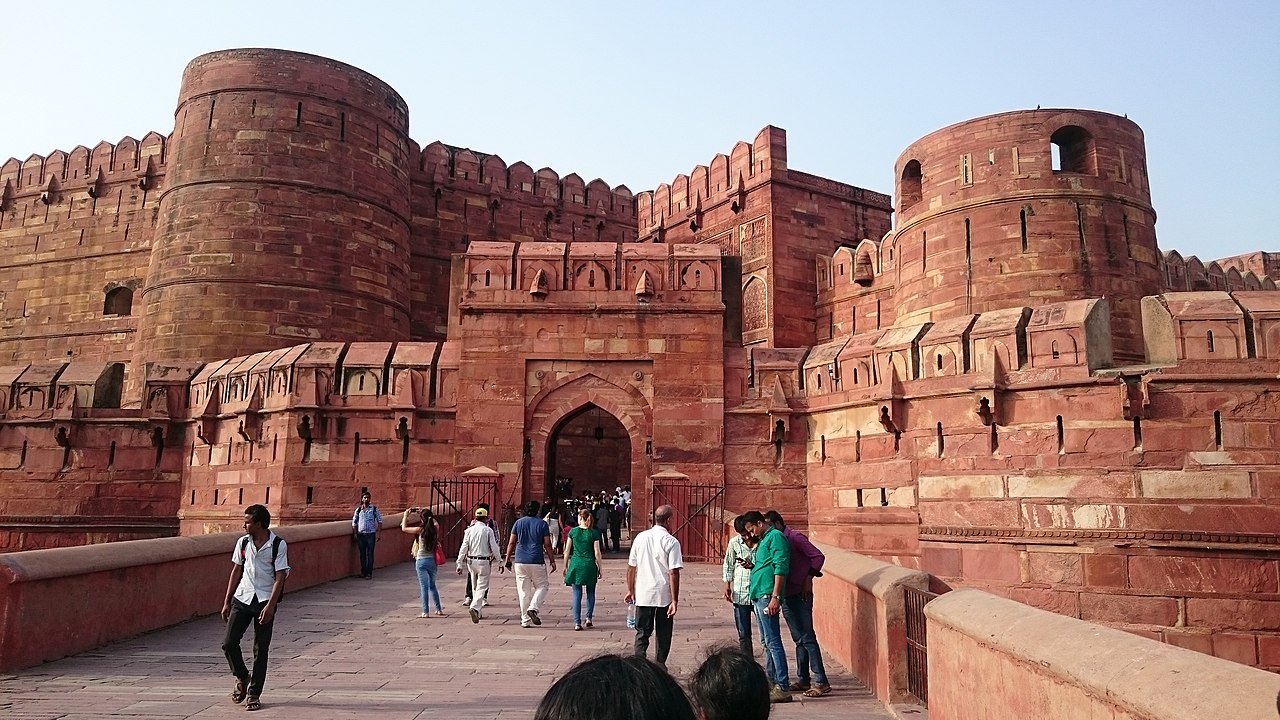
Agra Fort is located in the Mughal city of Agra just two and a half kilometres from the famed Taj Mahal. It was the Mughal dynasty’s primary residence until 1638, when the capital was moved to Delhi from Agra. Because of its outstanding Islamic architecture, it is recognised as a UNESCO World Heritage Site.
Akbar established the fort between 1565-1573 on the banks of the Yamuna. The wall is enclosed with red sandstone, which is 2.4 km long and 21 metres high. It consists of two large ornate gates, ornamented with lovely patterns in white marble with colourful glazing. These designs depict illustrations of living beings, not found in any other Islamic edifice in India.
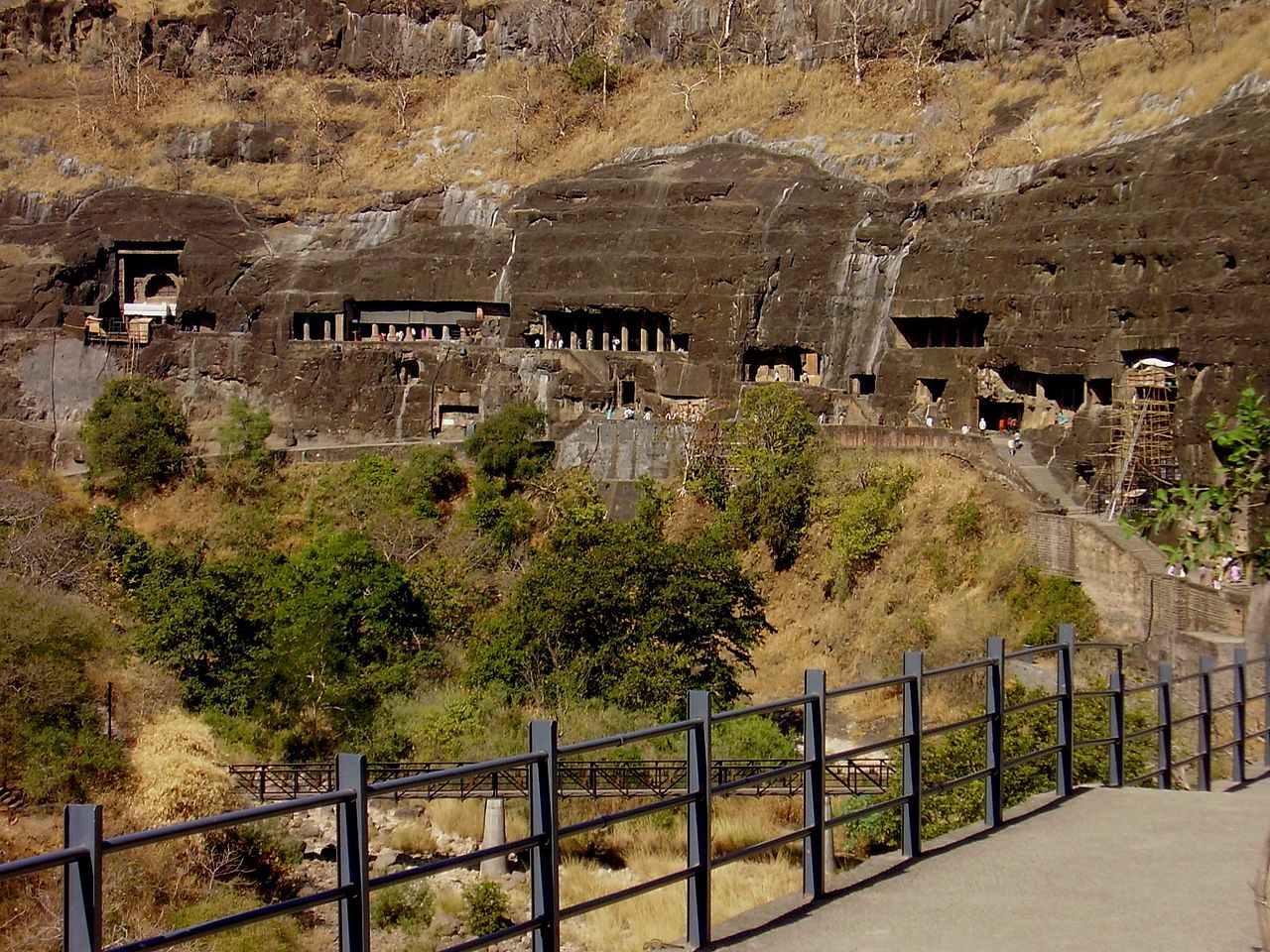
The Ajanta caves dating back from the Second Century BC are situated near Aurangabad in Maharashtra. These Buddhist caves are regarded as one of the most amazing arts of ancient times. About thirty of them remained for a good deal of time abandoned as they were concealed by impenetrable woods before a British officer rediscovered them. The fact that these caves were built from one piece of rock is very remarkable.
The craft of these caves are the finest and highest, and the beautiful sculptures are wonderful to gaze at. They were developed in two stages and each phase had its own artistic flair, making these caves even more charming. The life and teachings of Buddha are mostly depicted in the sculptures, designs and carvings.
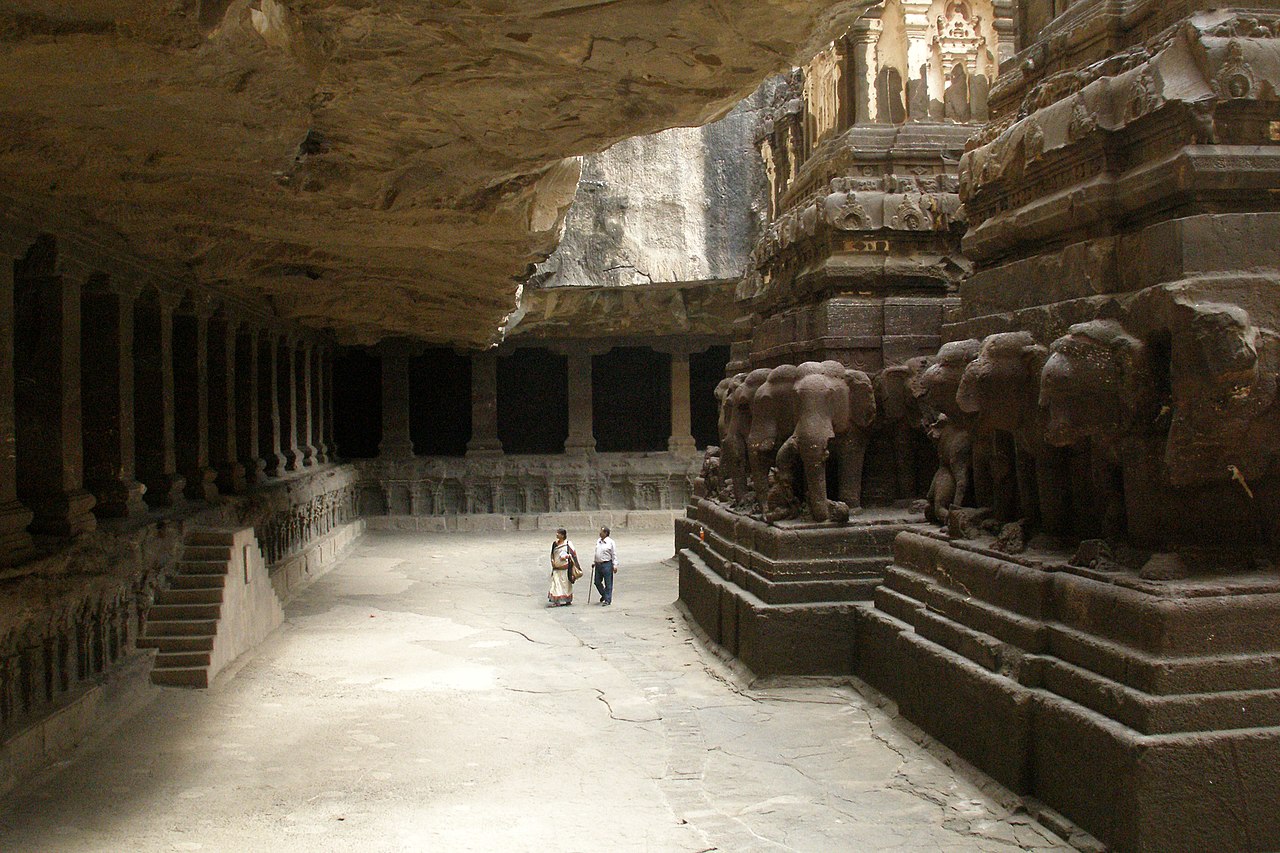
The Ellora Caves, which is in the northeast of Aurangabad, is a renowned world heritage site in India and an archaeological site. The Caves of Ellora are famous for their Indian rock-carved architecture. There are over 34 rock-cut temples and caves, dating back to 600 to 1000 AD, which is vital to comprehend the lives of these people. The presence of the temples and sculptures in Hindu, Buddhist and Jain depicts the tolerance extending to many beliefs and faiths in Indian Ancient History. The site explored is made up of the Charanandri Hills, the rock-cut Hindu Buddhist and Jain temples and the 5th and 10th Centuries Viharas and Maths. Built by the Rashtrakuta dynasty, these were listed by UNESCO for their cultural significance as World Heritage Sites.
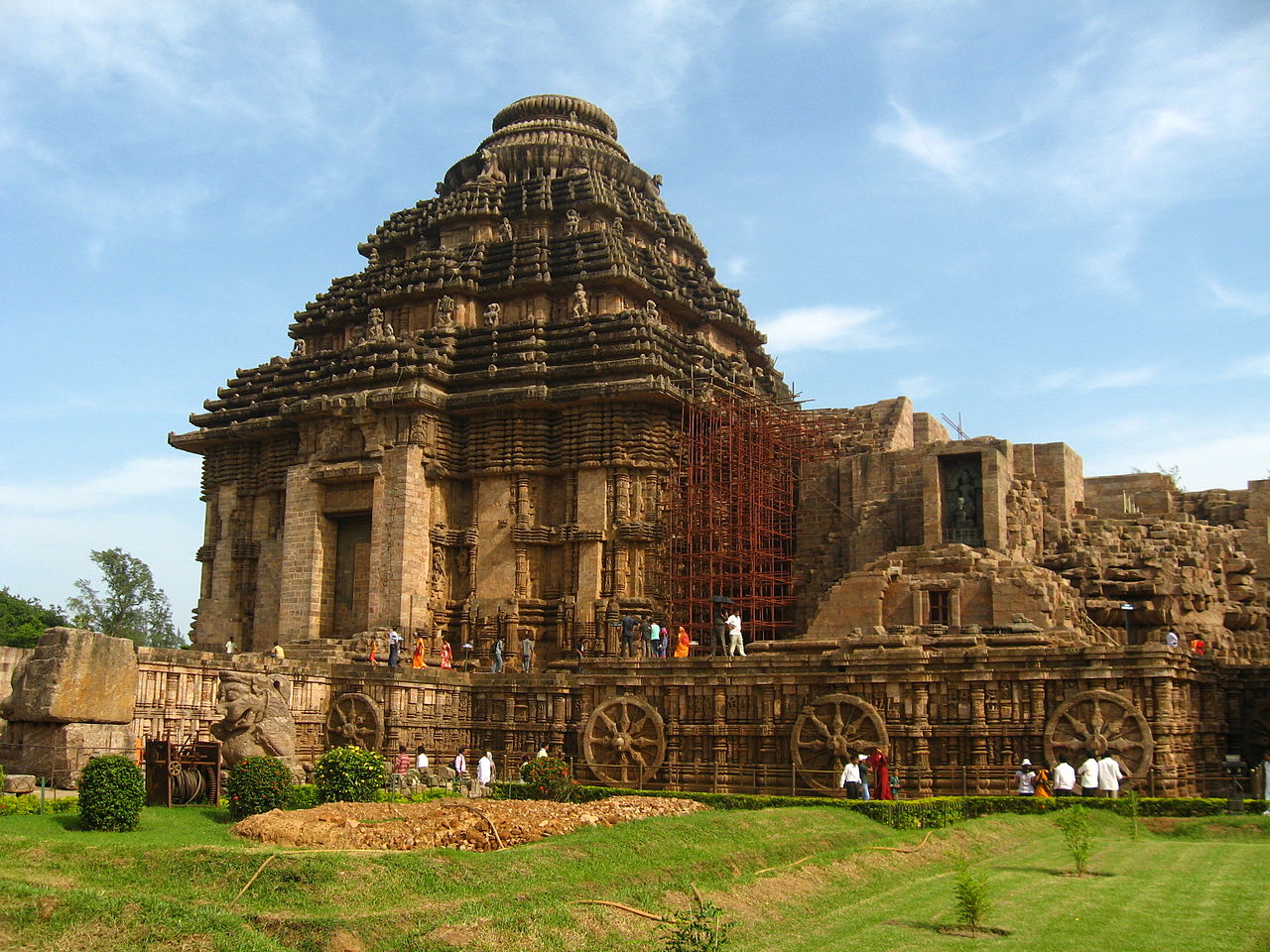
The Sun Temple at Konark is a temple from the 13th century located in Konark, Odisha, not so far from the famed Puri beach city. Built In the Eastern Ganga Dynasty by King Narasimhadeva I in about 1250, this temple was built in the form of a huge Ratha (a cart) and dedicated to the Sun God (as the name also suggests).
The Sun Temple is in the form of a huge chariot with a carved stone wheel, pillars and walls, which is led by six horses, magnificently sculpted. It is also regarded as one of India’s largest Brahman sanctuaries. The temple was built at the mouth of the Chandrabhaga river but since then the waterline has receded. In India, this World Heritage Site showcases Kalinga Architecture’s greatness that was once widespread in its traditional style.
It looks lovely and splendid, bearing magnificently crafted characteristics. Interestingly, the wheels actually are sundials, making them a place of interest for individuals interested in ancient astronomy.
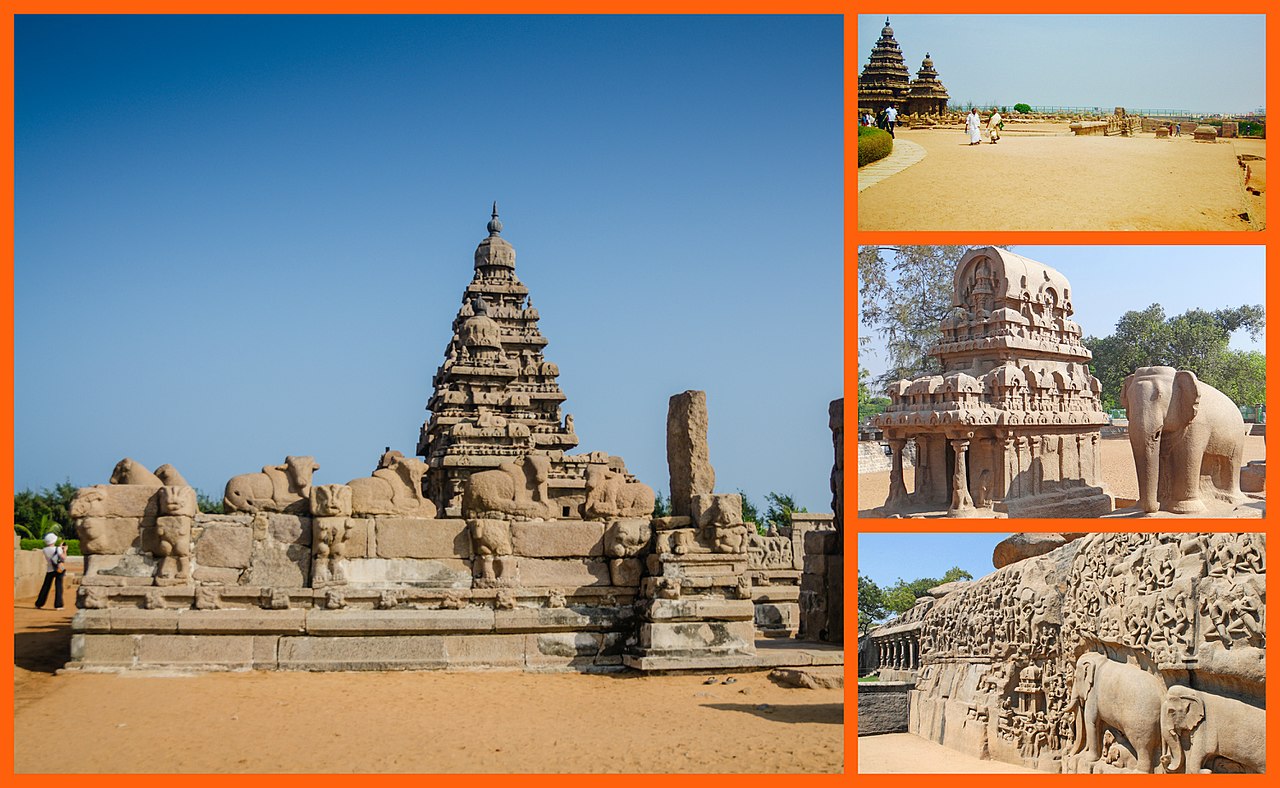
The Mahabalipuram Group of Monuments are a group of temples on the Bay of Bengal coast of Coromandel, approximately 60 km from Chennai. These temples were built under the reign of the monarchs of Pallava and all of them are carved out of rock.
The site comprises the main Mahabalipuram complex and forty sanctuaries with an open-air-bas-relief ( like the Ganga’s Descent). Some of the most popular are the Ratha Temples such as ArjunaRatha, DraupadiRatha, BhimaRatha that contain art of the Pallava Period, the famed cave temples as well as structural temples such as Shore temple, Olakkanesvara temple and other monuments. The site has gained prominence after Independence as a place of archaeology, tourism and pilgrimage.
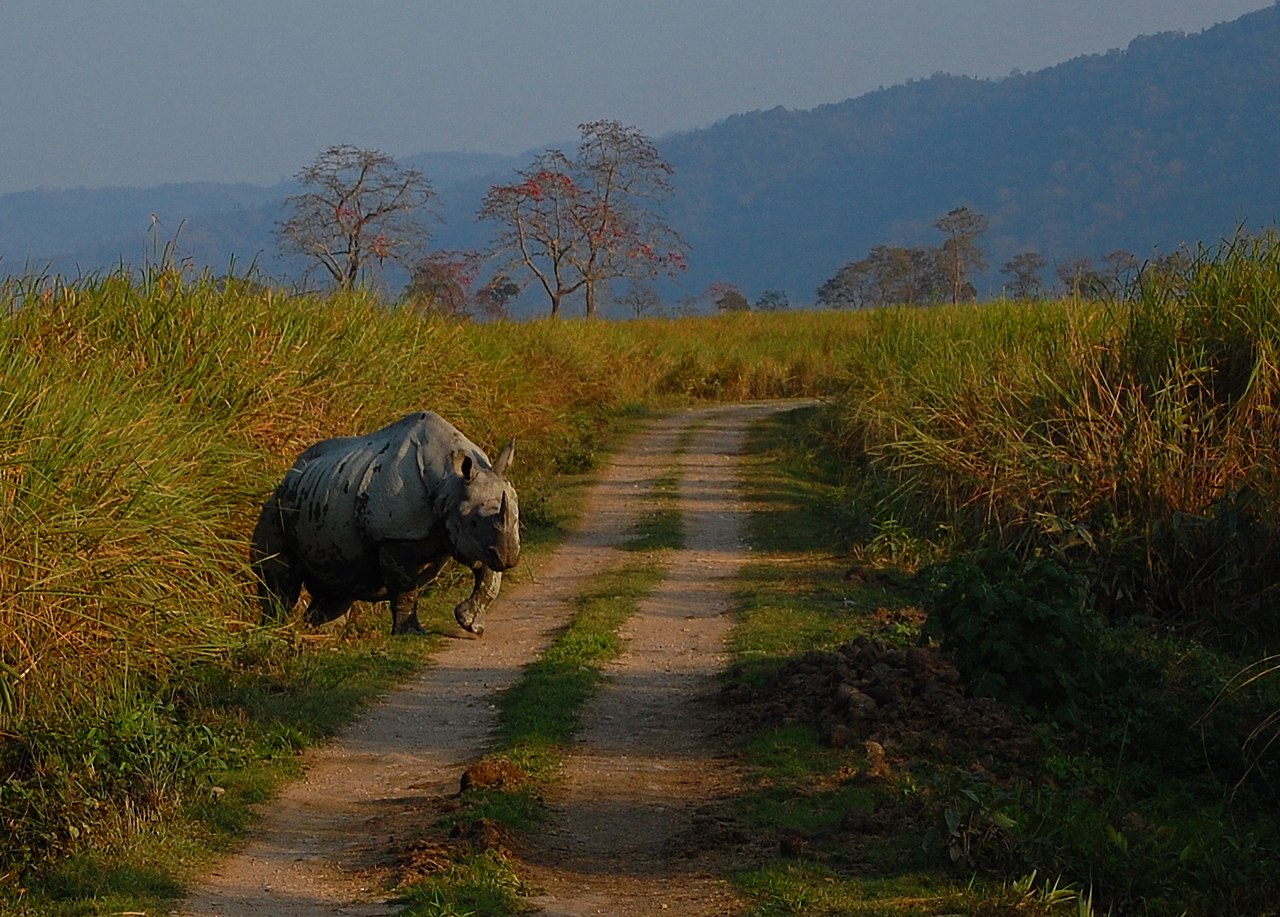
The Kaziranga Wildlife Sanctuary in Assam is well-known for its one-horned rhinoceroses. It is one of India’s most unspoilt natural locations. It is stated that Lord Curzon started this project in India after his wife could not see a single Rhinoceros in the region and she pushed her husband to take action in protecting the endangered animal. This park is located on the floodplains of the Brahmaputra River and mostly comprises dense wilderness and forests.
Kaziranga features approximately fifteen endangered Indian wildlife species, the most threatened of which is the Rhino. Additional creatures include a capped langur, hoolock gibbon, tiger, leopard, sloth bear, otter, wild boar, water buffalo, gaur, sambar, swamp deer, hog deer and Indian muntjac and the Ganges dolphin. Indian laws connected to wildlife conservation offer the highest level of protection to this national park. The National Park is a popular place for tourists who like to go on a natural heritage tour with its magnificent scenery and immaculate surroundings.
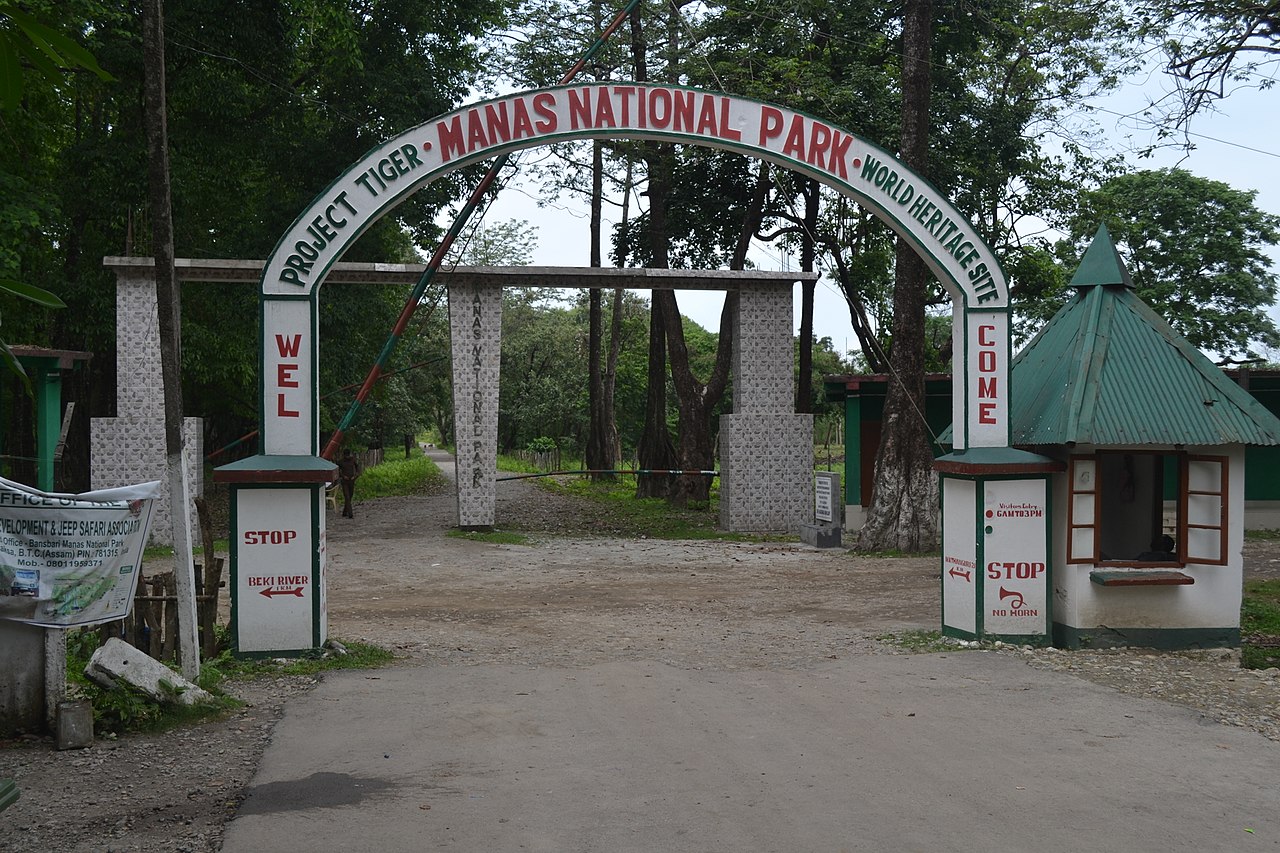
Manas Wildlife Sanctuary is a UNESCO World Heritage List protected wildlife reserve in India. It falls under the jurisdiction of seven Assam districts. The name of the place comes from the river Manas, which passes directly through the heart of the sanctuary.
The park is made up of two main biomes, grassland biomes and forest biomes. Pygmy hogs, Indian rhinoceros, Australian wild buffalos, capped langurs, giant Malayan squirrels, Pangolins, wild pigs etc. can be seen here. Its wealthy avifauna species also makes it one of the world’s richest regions of biodiversity.
It has been named a UNESCO World Heritage Site because of its rich and diversified flora and fauna and uncommon and endangered creatures. It is also known to be a Project Tiger and Elephant Reserve.
Keoladeo National Park, often called Bharatpur Bird Sanctuary, is a renowned avifauna sanctuary located near Bharatpur, Rajasthan. It has more than three hundred bird species, three hundred and seventy botanical species, fifty different types of fish and lizards, amphibians, snakes, turtles and so on. The park has more than four hundred fish species. It is also a popular place for studying ornithology.
Peter Scott, the founder of the World Wildlife Fund, has deemed it to be one of the world’s best bird areas. It was founded in 1982 and classified as a UNESCO World Heritage Site for its rare and endangered species habitat. It is about 29 sq km in area.
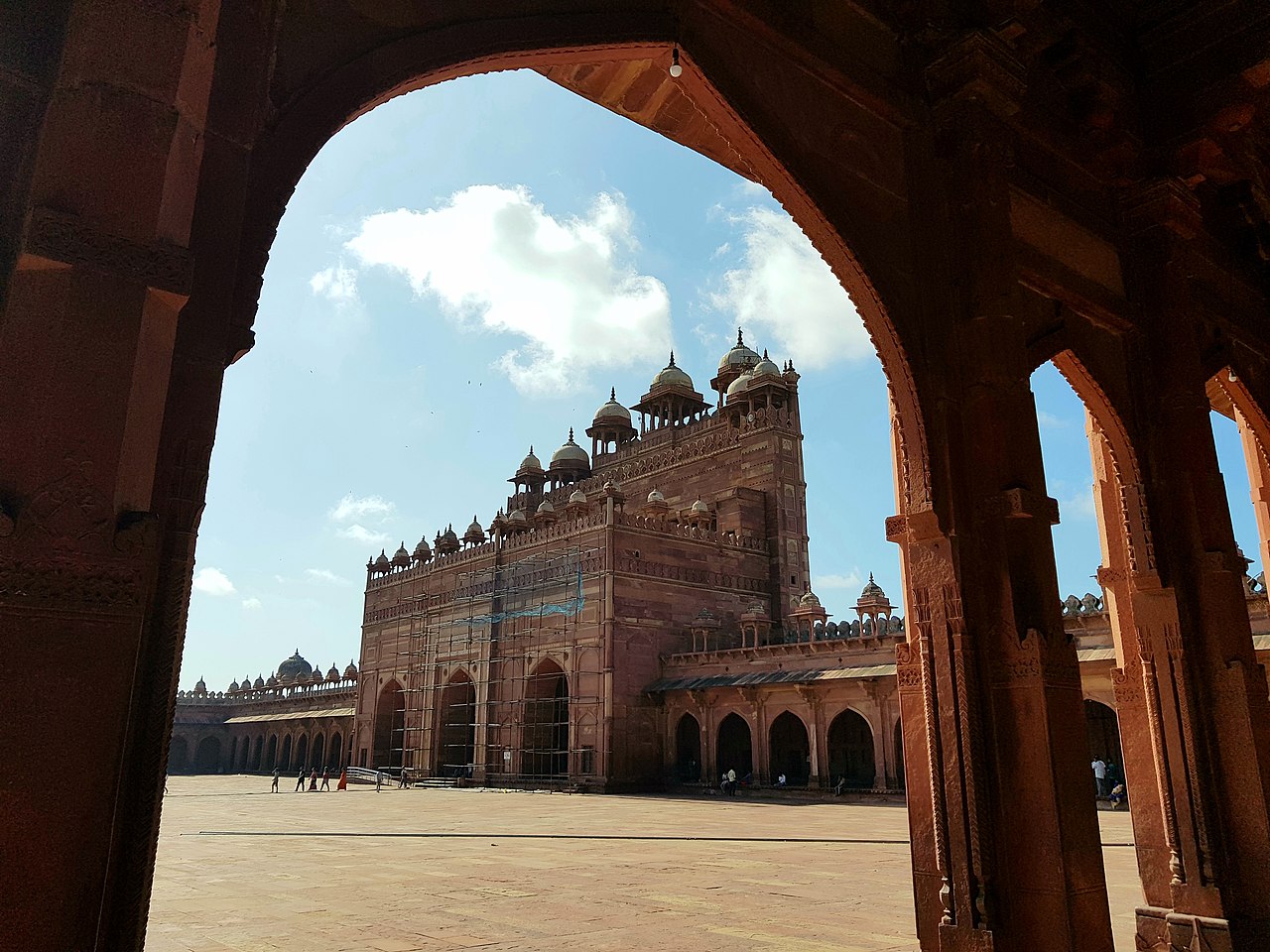
Before being abandoned by Akbar because of the total failure of the water delivery system, Fatehpur Sikri was the old capital of the Mughal dynasty. This was built by Akbar as a well-planned town when he decided to move his capital from Agra.
UNESCO has granted it the designation of World Heritage Site because it is one of the outstanding examples of Mughal architectural finesse. A historic visit to Fatehpur Sikri will enable you to discover some of the highly amazing characteristics of Diwan-e-Aam, Diwan-e-Khas, Jama Masjid etc. The complete complex is characterised by Buland Darwaza (literal sense: The big gate), as it is the largest gateway in the entire planet.
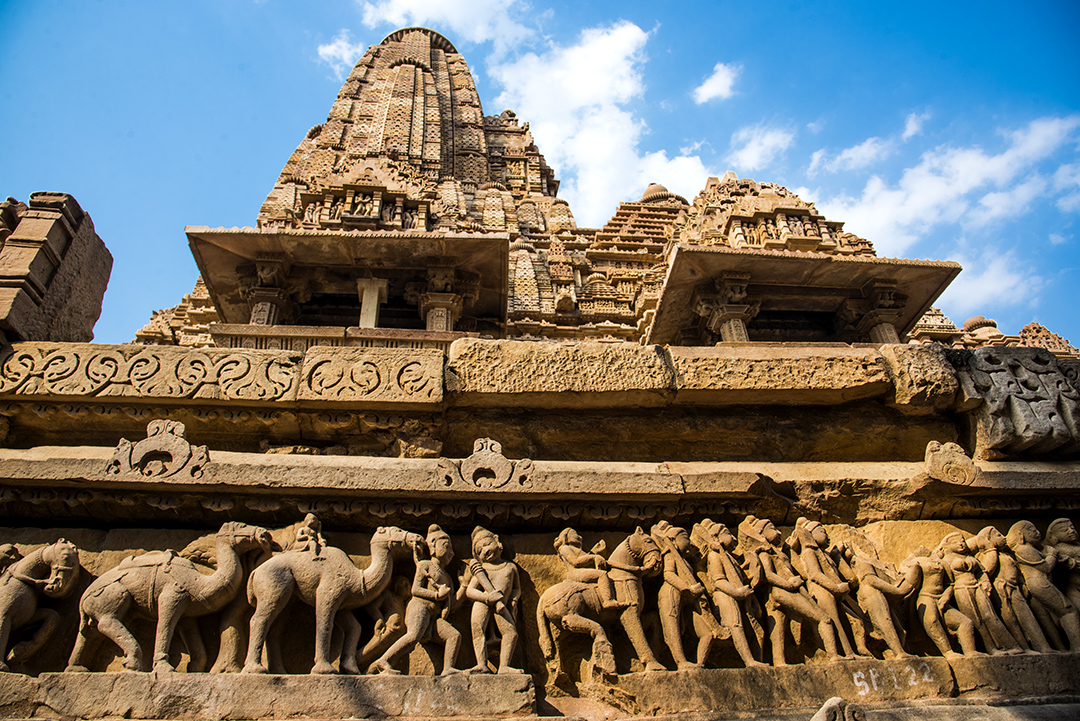
Khajuraho temples are an architectural achievement of the artisans of the Rajput Chandela Dynasty, located in central India – Madhya Pradesh. These were a group of 85 temples, only 20 of which survived successive efforts to demolish and neglect by rulers thereafter.
The external walls of these temples are one of the outstanding examples of the carving and are decorated with sensual works, sculptures that show everyday life and symbolic art portraying ancient Indian values. There will therefore be some great photographic prospects, which should never be missed on a heritage tour of the temples of Khajuraho.
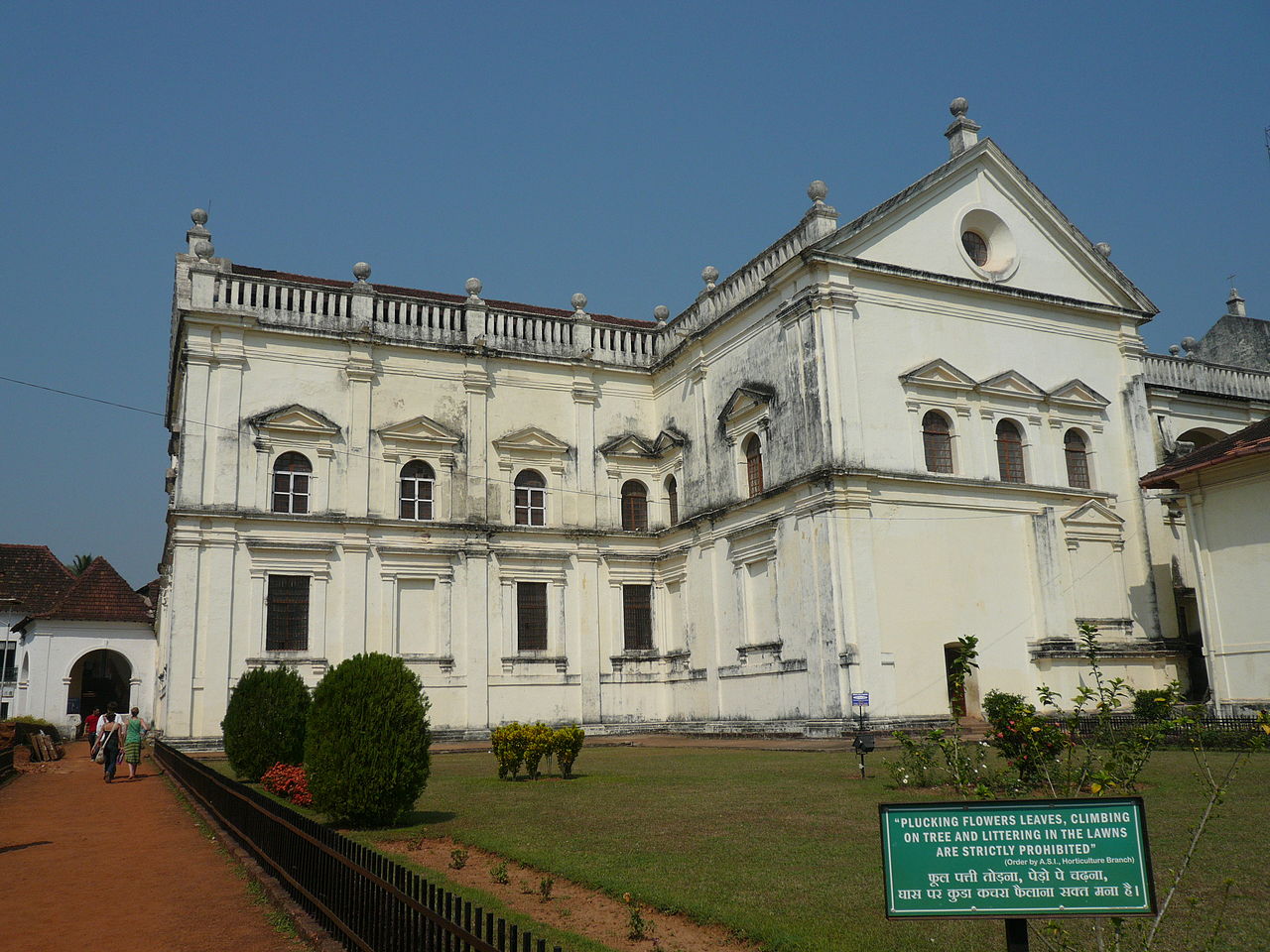
In December 1986, the churches and convents of Goa were awarded a UNESCO World Heritage Site. These are a group of religious monuments located in Old Goa. The monuments include Goan Churches and Convents, Sé Cathedral of Goa, Basilica of Bom Jesus, Church of St. Francis of Assisi, Ruins of the Church of St. Augustine, Chapel of Santa Catarina, and Church of Divine Providence.
For the following reasons the Site has been proclaimed a World Heritage Site:
They helped spread western art forms throughout Asia.
They depict the work of evangelization perfectly.
Francis Xavier’s tomb symbolises the Catholic religious influence in Asia.
In North Karnataka, Hampi is a UNESCO World Heritage Site. It stands among the ruins of Vijayanagar’s ancient and rich kingdom. The Hampi ruins represent the outstanding Dravidian style of art and architecture as well as a collection of historical locations. Virupaksha Temple, still an important religious centre for the Hindus, is the most important heritage monument on this site. There are several more monuments that make up the site, and collectively they are called Monuments of Hampi. Other notable ones are the complex of Krishna temples, including Narasimha, Ganesa, Hemakuta temple groups; the Achyutaraya shrine complex Pattabhirama temple complex,Vitthala temple complex, Lotus Mahal complex; numerous puras or bazaars circling the temple complex, and also living sections and residential spaces.
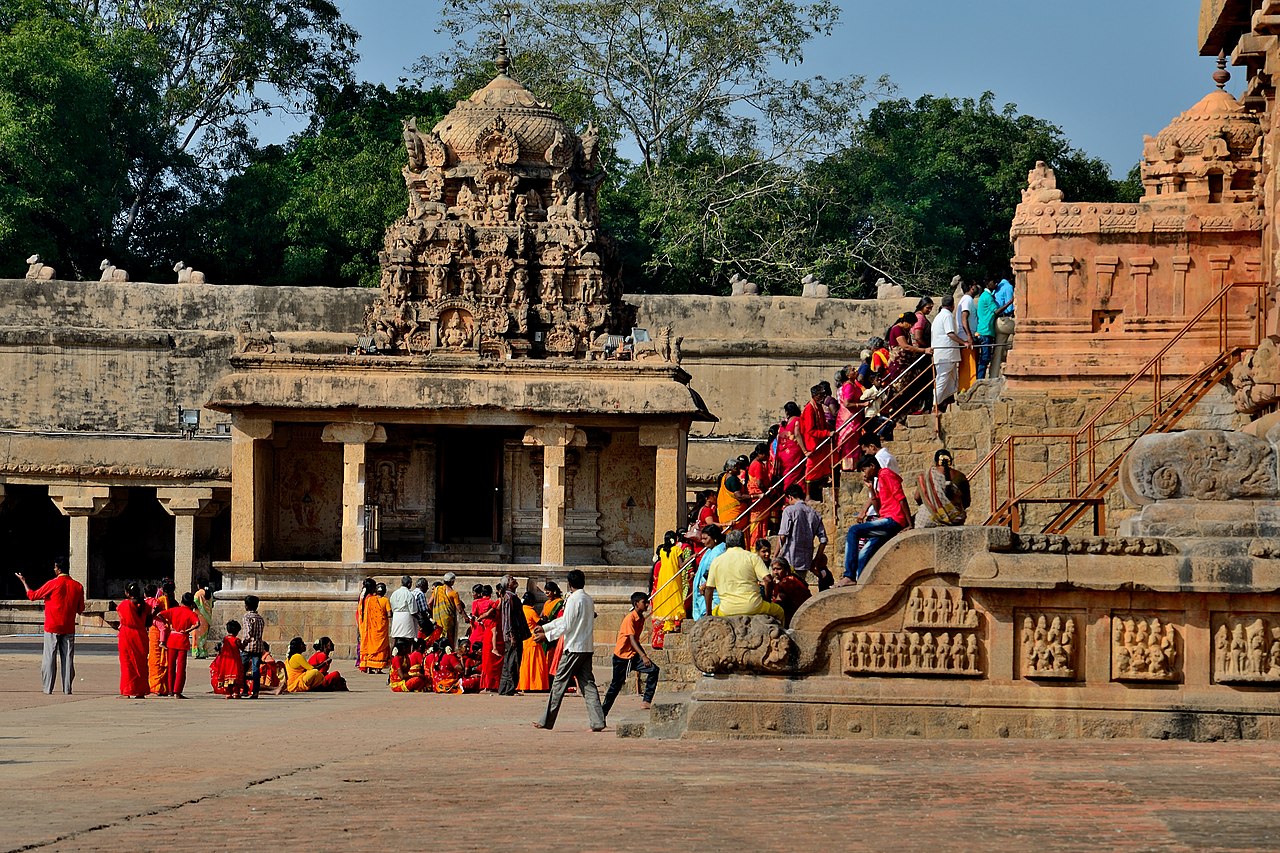
The Great Living Chola Temple is a set of three temples built in the Chola Dynasty. The temples were built under the Chola kingdom in the southern part of India. The most important of all these temples were the Brihadisvara Temple, the Gangaikonda Cholapuram Temple and the Airavatesvara Temple. Under Rajaraja 1’s reign, the temple of Brihadisvara was a landmark in the architecture of Chola. Rajendra 1 was the patron of Gangaikondacholapuram’s temple devoted to Lord Shiva. And when Rajaraja II came, the Airavatesvara temple was created which is why it differs from the other two.
The architecture of the Dravidian architecture is located in the state of Tamil Nadu. Tamil art and literature flourished as anything under the reigns of Cholas, and the Chola temples are a wonderful illustration. These three temples symbolise the Tamil people’s ancestral culture and traditions and form an indissoluble part of their ancient past.
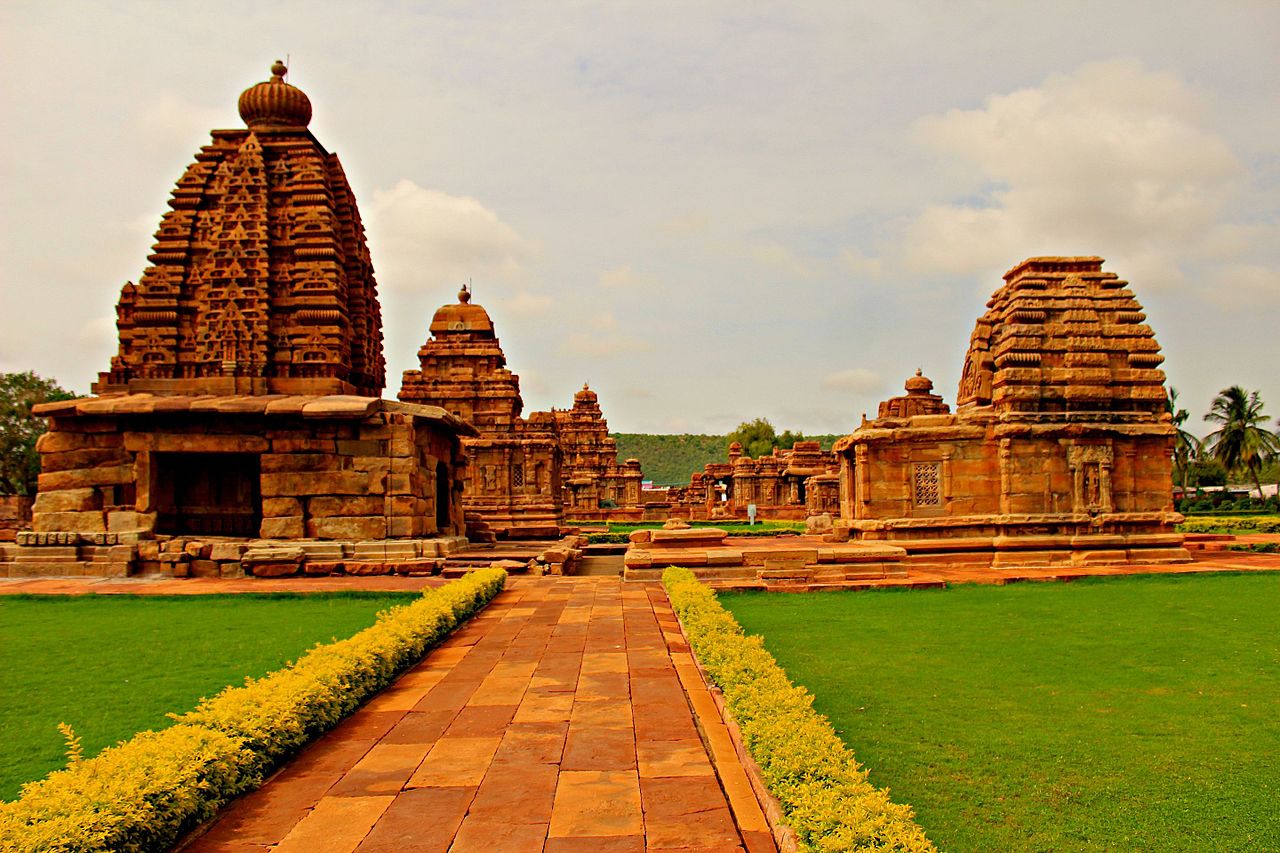
This Karnataka monument is a cluster of Hindu and Jain temples from the 7th and 8th centuries CE with the Hindu temples being dedicated to Lord Shiva. The architecture also contains components of characteristics of Vaishnavism and Shaktism.
In the temple inscriptions, Vedic and Puranic themes are shown together with Purana legends such as Ramayana, Mahabharata, and many more. A solitary Jina is a Jain temple. The temples of Papanatha and Virupaksha represent an unparalleled confluence of the styles North and South. Due to the beautiful combination of northern and Southern architecture, the Site was named a World Heritage Site by UNESCO.
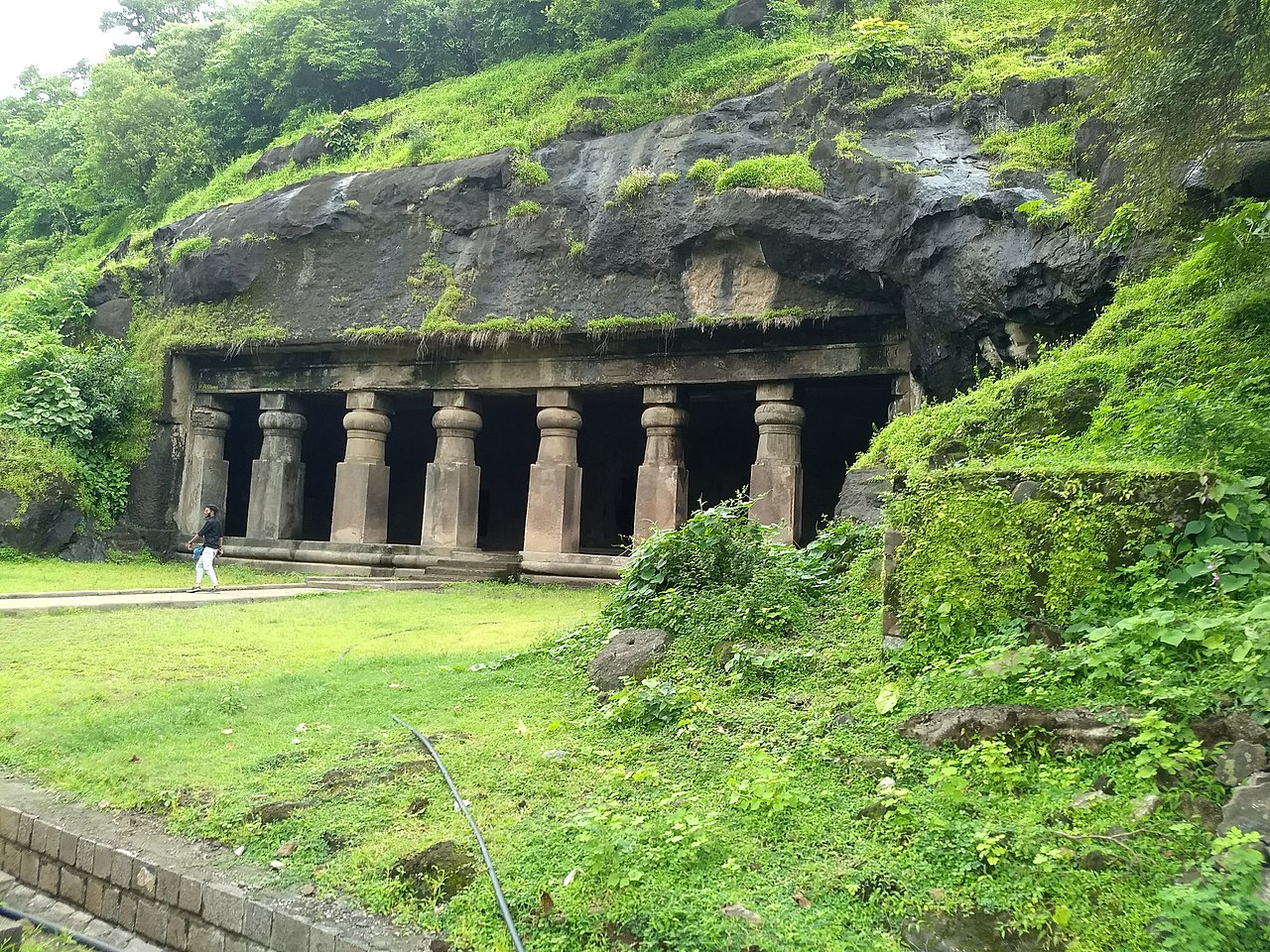
16. Elephanta Caves, Maharashtra
Image – Wikimedia
Listed Year: 1987
On an island in the Arabian sea, not so far from Mumbai City are the Elephanta Caves. Gharapuri is particularly notable for its system of sculpted caves on Elephanta Island. The rich cultural past of the Indian civilization may be seen through countless archaeological remnants. These caves are renowned for their rock-cut sculpture and carvings depicting Shiva as the Creator and the Destructor of the Universe. The most notable of the caves was Cave 1, where at the entrance of the cave, you can view the Sadashiva, representing the Creator, Preserver and Destroyer, the three facets of Shiva. The caves are fashioned from solid basalt rocks, located 10 km east of Mumbai city.
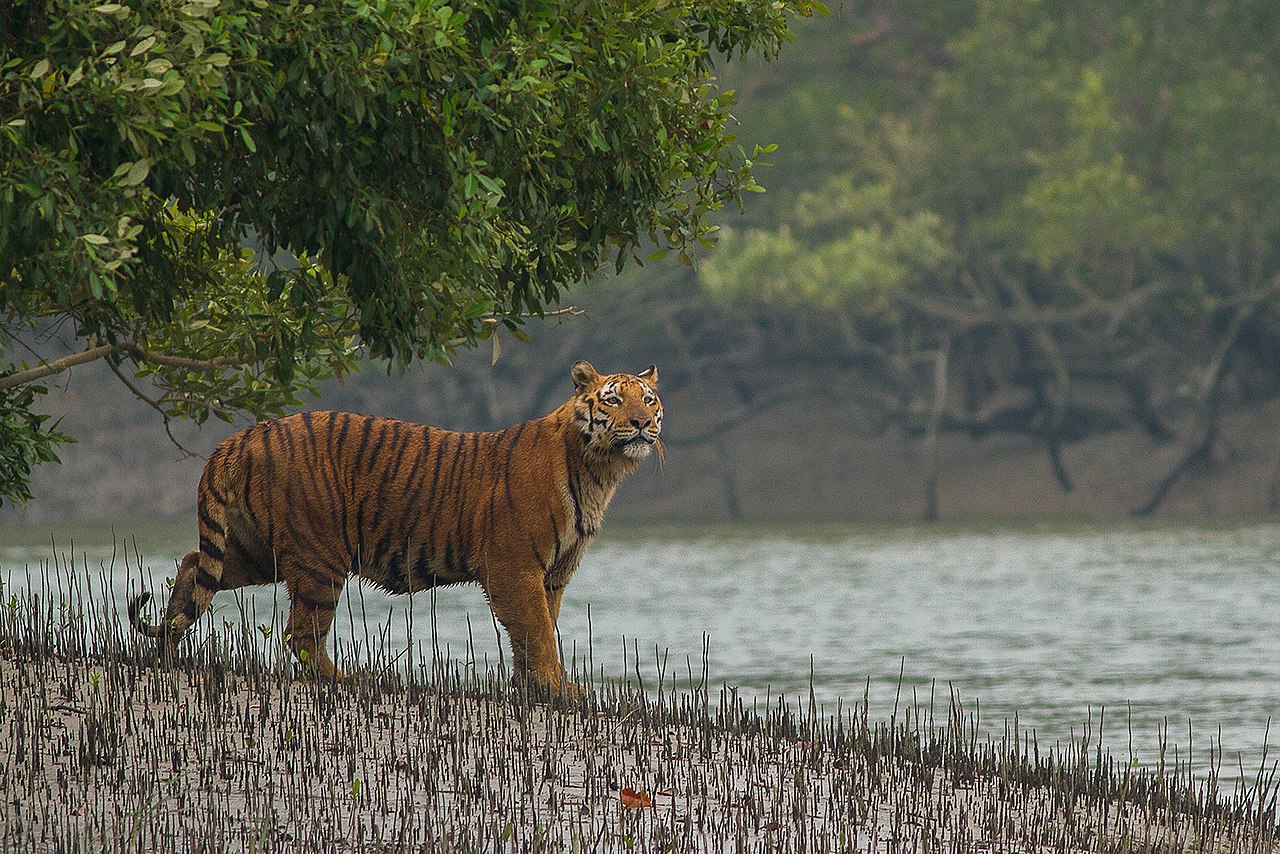
The Sunderban National Park, famous for its Royal Bengal Tigers, is a notable Tiger reserve and biosphere reserve in the state of West Bengal. It is located on the Bay of Bengal, on the Sunderban Deltas which was formed by the Ganges River. It is one of India’s largest reserves covered mainly by dense forests of mangroves. It is also the biggest forest reserve of mangroves in the world. There are also other animals including Gangetic dolphins, spotted deers, wild boar and other mammal and amphibian species along with being the home of the highly endangered Royal Bengal Tiger. Another attraction of this reserve is the unique saltwater crocodile. India’s tigers have the highest population in this place. This is one of the most significant Indian heritage sites for all these reasons.
18. Nanda Devi and Valley of Flowers National Parks
The Nanda Devi is Uttarakhand’s highest mountain and India’s highest peak because it is known that the Kanchenjunga shares part of its boundary with Nepal. There are two mountain summits with Sunanda Devi being the eastern peak. It was important from the age of Puranas and Upanishads, which was pointed out many times by the Hindus in their mythological work. It is 6400 metres high above sea level.
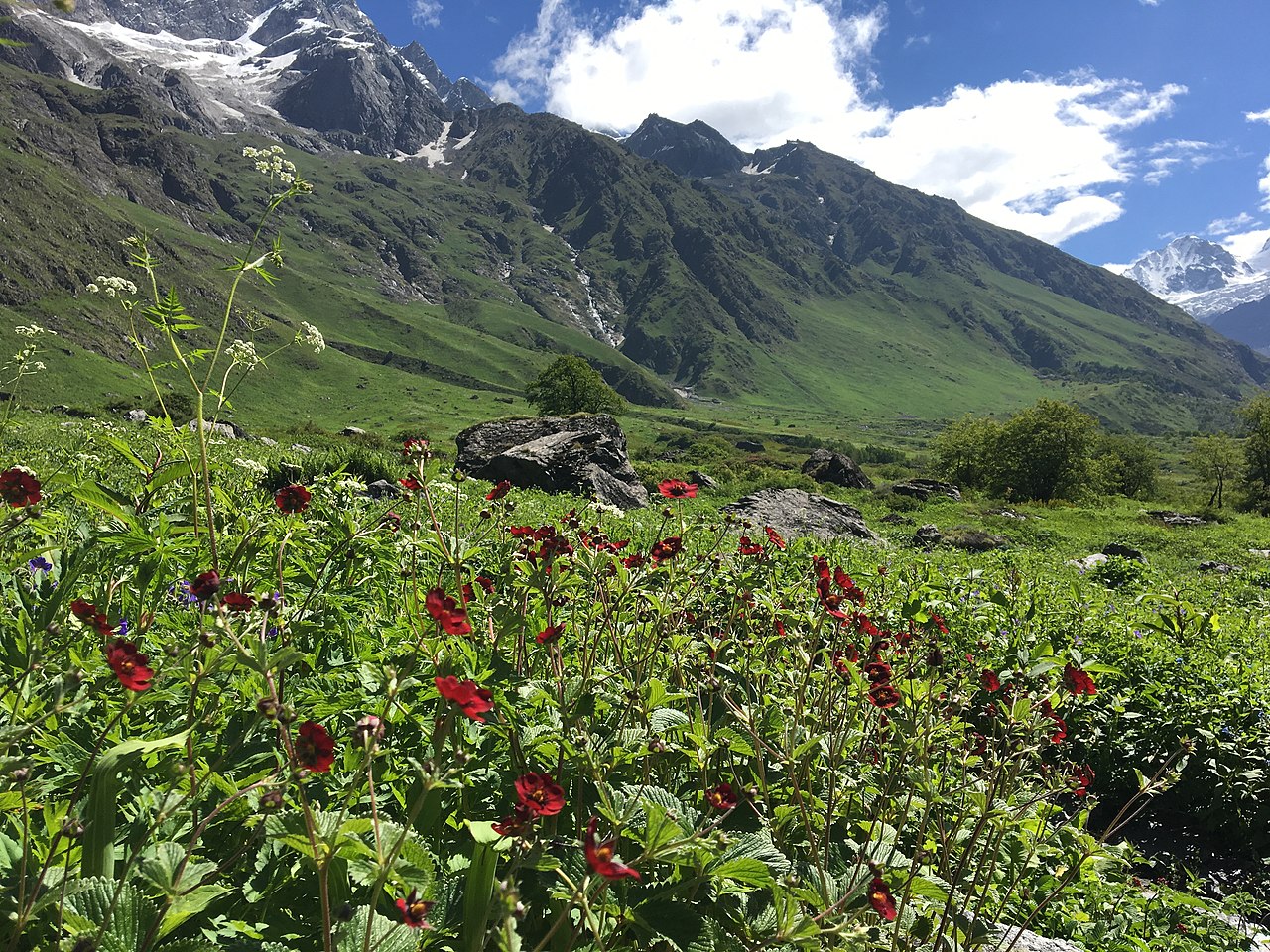
The Flowers Valley is a National Park close to Nanda Devi summit, up to 8 km long and 2 km wide. The variety of blooms that stretch the whole valley almost like a bedsheet is recognised and appreciated widely. Some unique endangered creatures such as Asian Black Bear, Snow Leopard, Brown Bear, Musk deer, Red Fox and Blue Sheep can also dwell here. More than 600 species of flora and more than 520 animal species are located in this World Heritage site in India.
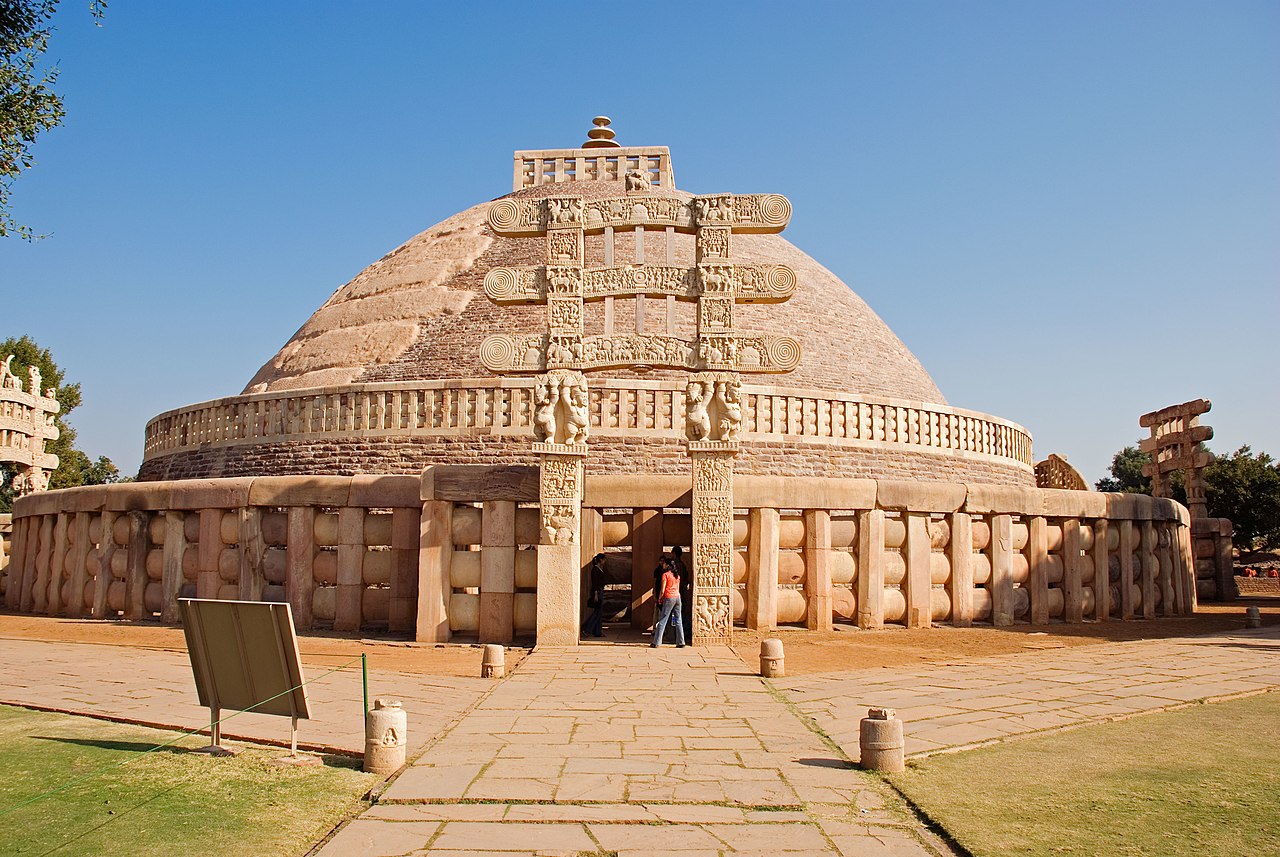
In 1989, the Sanchi Buddhist Monuments were named a World Heritage site by UNESCO. These include Stupas, monasteries, monolithic pillars of Ashokan, temples, monuments and sculptures. Lush gardens surround the refuge. The Stupas are built from the top of the hill and are mainly dedicated to Buddha’s teachings.
The Four Gateways to the Stupa are surrounded by beautiful architectural sculptures. A good example of the Greco-Buddhist architectural style is the Ashokan Pillar with its four lions. A museum with various artefacts utilised by the monks is also available.
20. Humayun’s Tomb, Delhi
Image – Wikimedia
Listed Year: 1993
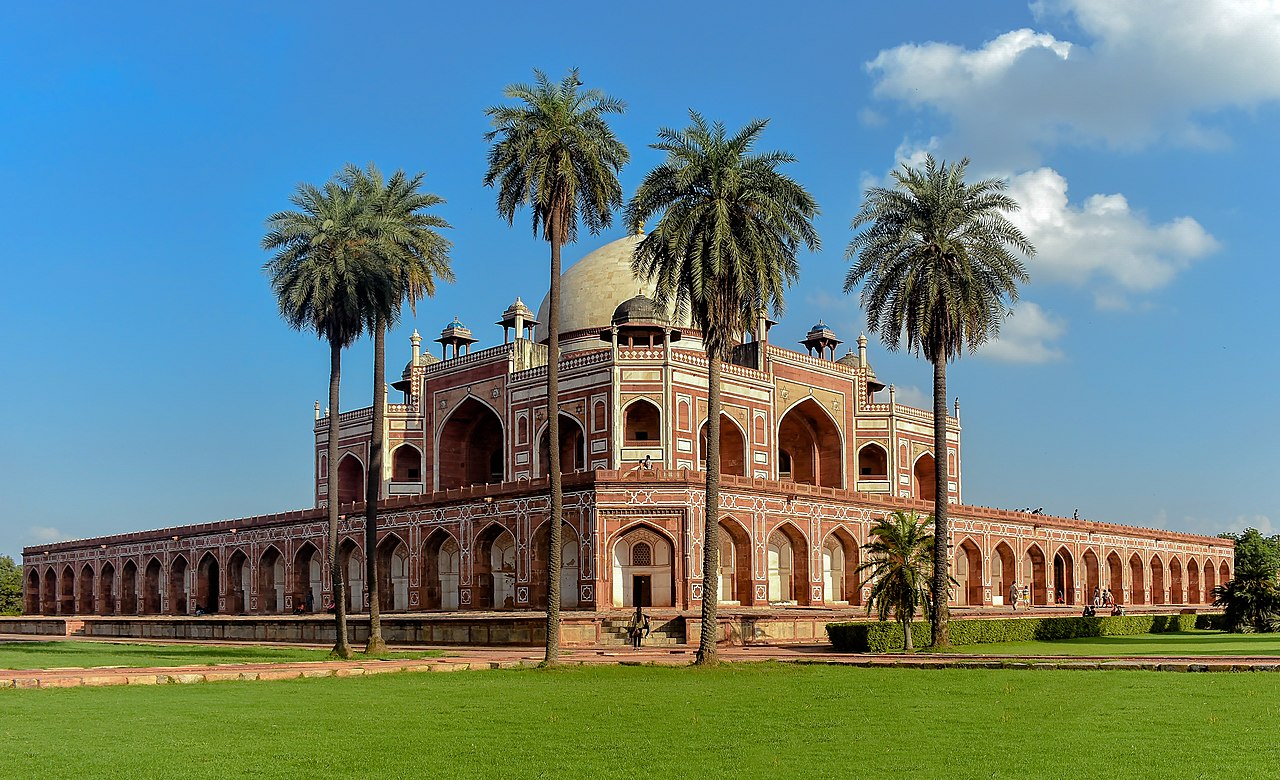
In 1993, Humayun’s Tomb, the first garden grave in India, was proclaimed a UNESCO World Heritage Site. Humayun’s Tomb is a magnificent fusion of Islamic architecture in Persian, Turkish and Indian styles. It’s a classic Bagh Char garden and has four gateways that divide the garden into four smaller portions.
At the centre of the garden on a 7m high stone platform sits the great building, fully symmetrical. The construction has a red support stand and a white marble dome. The tomb is 47 metres in height and 91 metres in width. Two double-storey arched doorways conduct the access to the tomb.
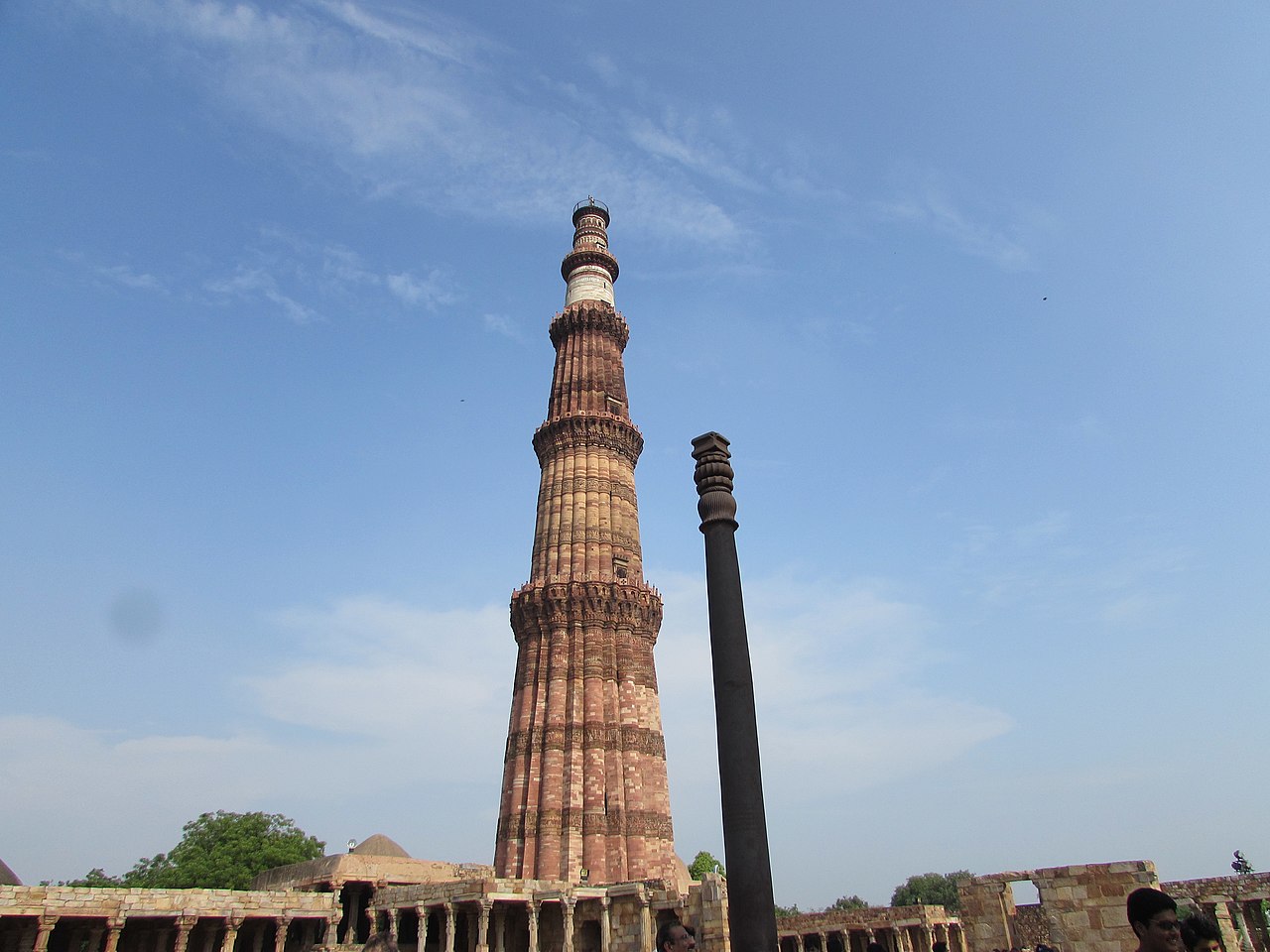
One of the world’s most famous sites in India, the Qutub Minar was built in 1193 in the wake of the defeat of Delhi’s final Hindu kingdom by the First Muslim monarch, Qutub-ud-din Aibak of the Mamluk Dynasty. One of many other buildings in the Qutub complex, the Qutub Minar occupies the centre stage mainly because of its height. It is 73 metres in height and has a base diameter of 15 m and a top diameter of 2.5 m. It was created by Aibak to honour Qutbuddin Bakhtiar Kaki, the famed Sufi. The Quwwat Ul Islam mosque, built upon Lal Kot, remains from the former Hindu kingdom, is near the Qutub Minar and is also renowned as one of the country’s first mosques. It is also known for its encircling brick minarets. The Qutub Minar Complex is one of the earliest emblems known to Islamic Architecture in India.
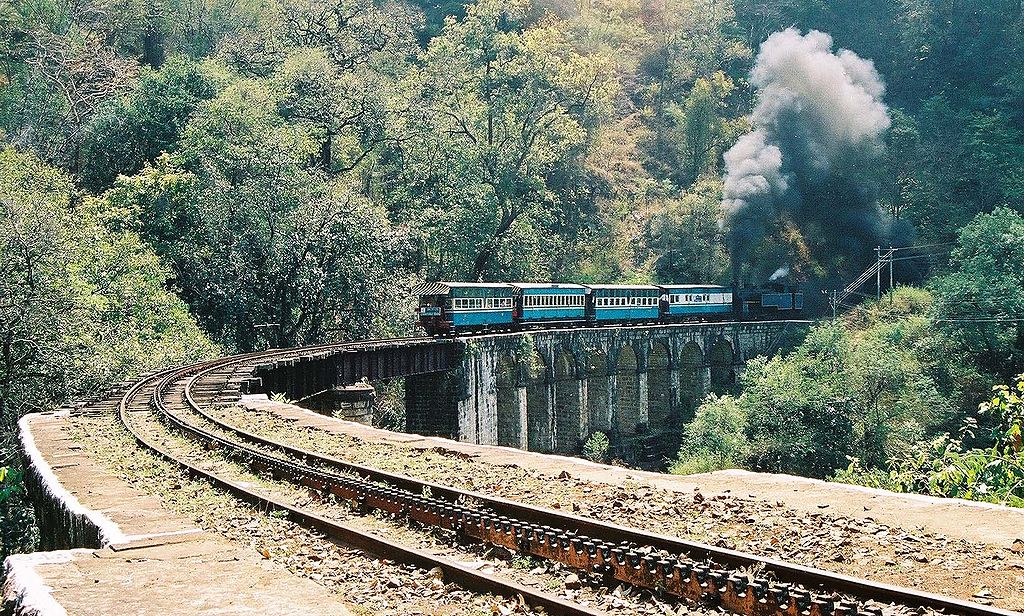
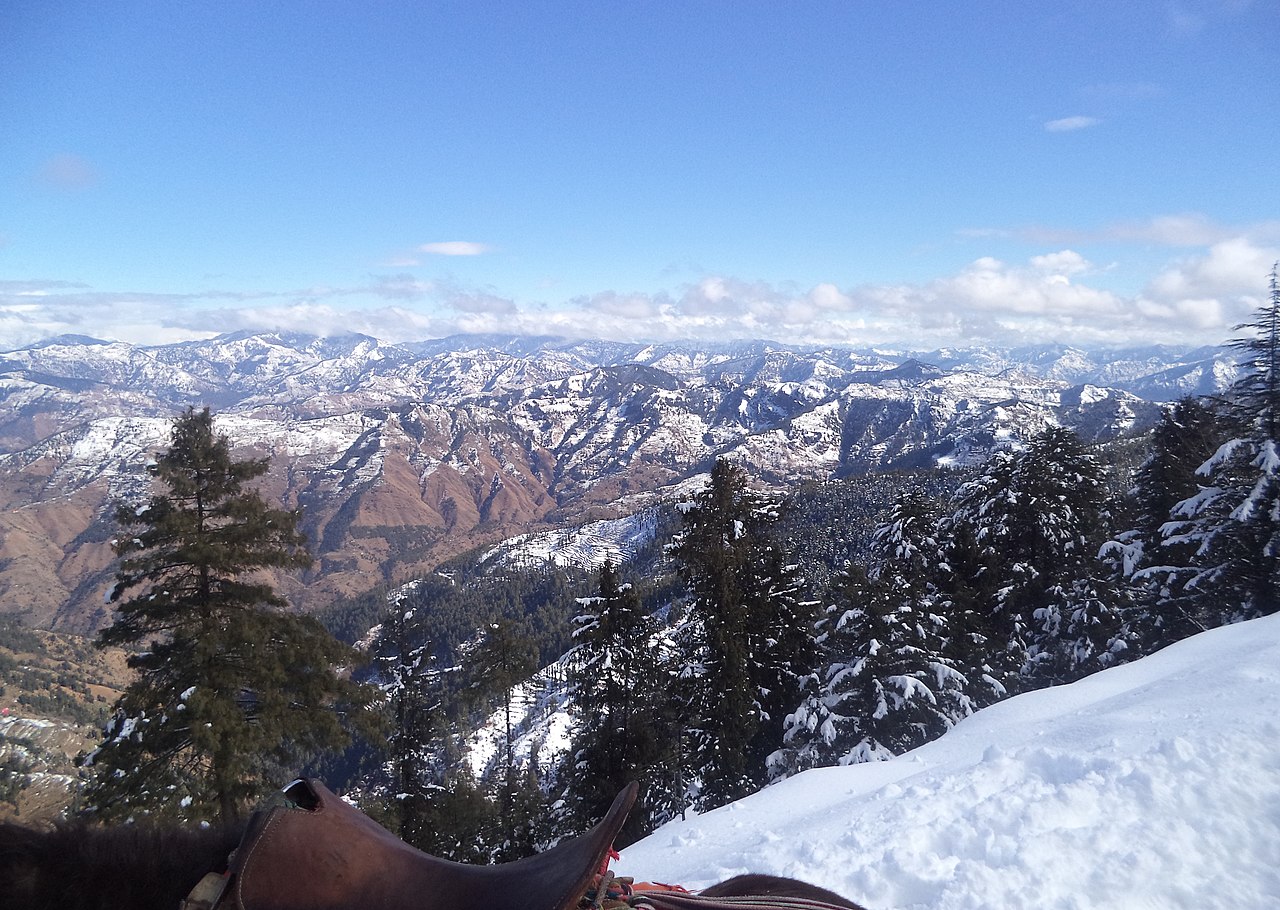
The UNESCO World Heritage Site of the Mountain Railways of India (1999), the Nilgiri Mountain Railway (2005) and the Kalka–Shimla Railway (2008) was recognised as UNESCO World Heritage Site in 1999, 2005 and 2008. . Darjeeling Himalayan Train is the first mountain passenger railway with indigenous engineering solutions. Modern technology was used on the Nilgiri Mountain Railway, which rose 326 metres to 2203 metres. A single-track, 96-kilometre-long operating rail in Shimla is called the Kalka Shimla Railway. North Bengal is one of Earth’s most magnificent scenic stations. One will enjoy the fun Toy Train, the lovely Tea plantations and long tunnels and tiger hills. They also traverse the most gorgeous scenery, and people love to go on a fun and romantic tour here.
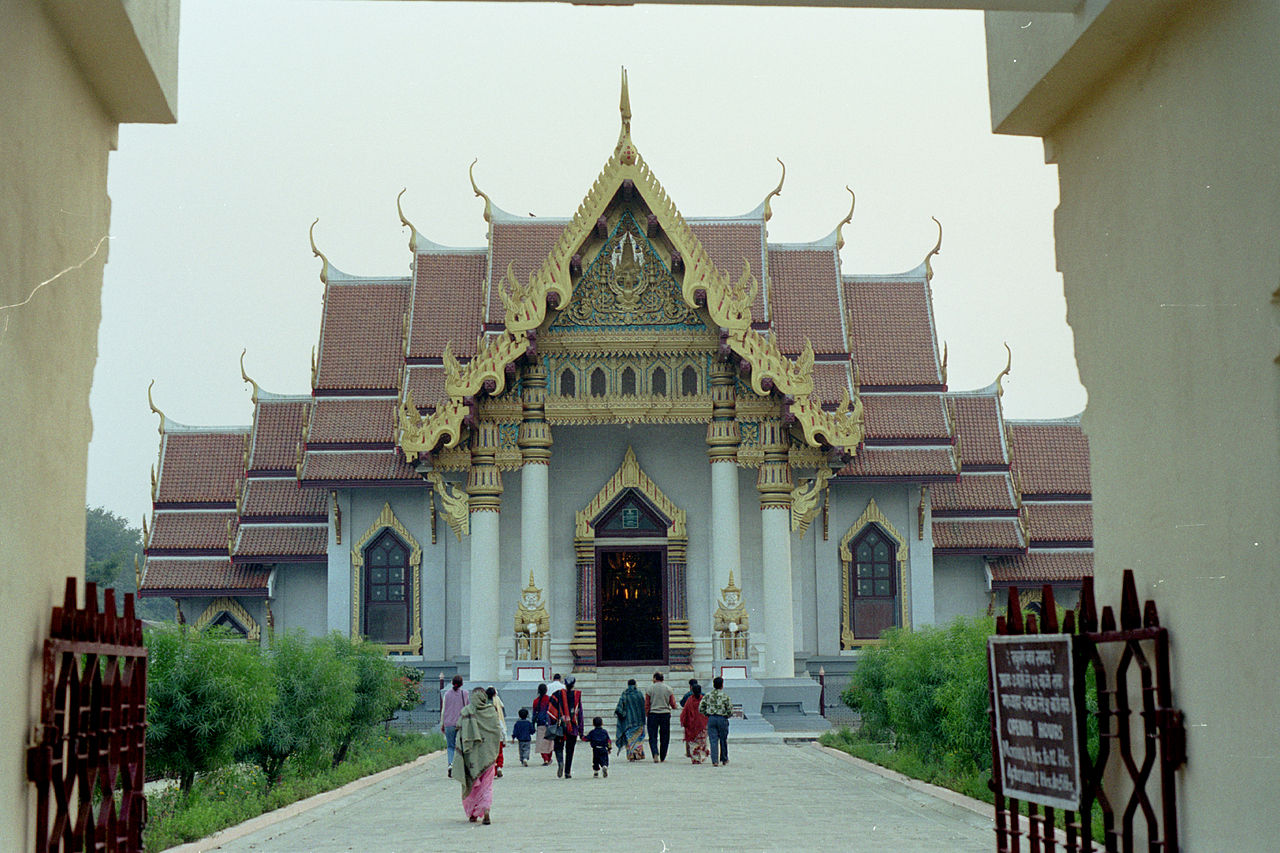
Bodh Gaya lies almost 96 km from Patna, Bihar and is a UNESCO recognised Indian heritage site. It is vital to the Buddhists for religious life, as it was the location for the enlightenment of Mahatma Buddha. Siddhartha became the Gautam Buddha and the sacred Bodhi Tree was a place for his enlightenment. During the reign of Ashoka the Great in 250 AD, the renowned Mahabodhi Temple was erected. This is one of the first temples of Buddhism. The Mahabodhi complex in Bodh Gaya currently features the Mahabodhi temples, 50 metres in height and is encircled by several old Votive Stupas and includes the Vajrasana, sacred Bodhi Tree and further six divine locations. Because of all this, Bodh Gaya is the most sacred place for Buddhists in pilgrimage.
Bhimbetka Rock Shelters was named a World Heritage Site by UNESCO in 2003. The Bhimbetka Rock Shelters is a palaeolithic, mesolithic and historic archaeological site. The area consists of 7 hills and 750 rock shelters, covering 10 km. One noteworthy element of the shelters enclosed by quartzite towers is the auditorium cave. There are several paintings in the shelters, some of which are thought to be over 1000 years old.
The Unesco World Heritage Site of Chhatrapati Shivaji Terminus was designated in 2004. It was created between 1878-1888 by taking inspiration fromVictorian Italianate Gothic Revival and traditional Mughal buildings by Frederick William Stevens, which made Bombay a commercial port of India. The plan of the terminal with Italian and Victorian components in some ways reminds us of the architecture of the Indian palace and is a remarkable example of the fusion of a western and Indian art style. It was titled formerly Queen Victoria and renamed Shivaji Terminus Chhatrapati in 1996 to recognise Shivaji Bhonsle I. There are 18 platforms in the terminus. Seven platforms are used by suburban trains while eleven platforms are used for long-distance trains.
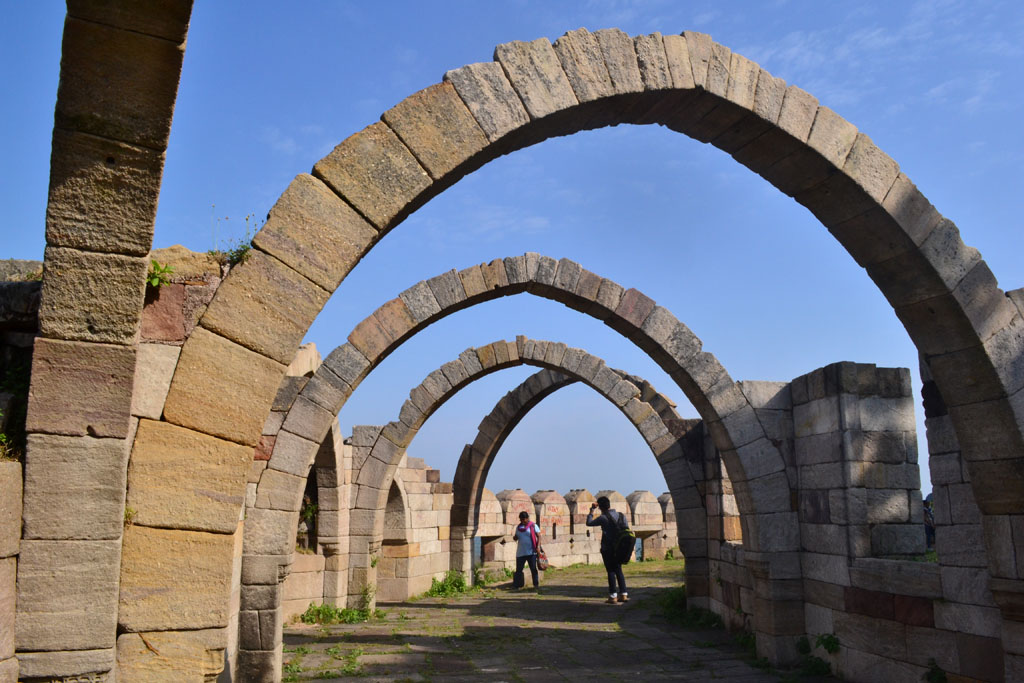
A World Heritage Site, located in the Panchmahal region of the Indian state of Gujarat is the Champaner-Pavagadh Archeological Park. It’s historically and culturally an important site centering around the town of Champaner or Muhammadabad founded by Sultan Mahmoud Begada of Gujarat. This site is the only Islamic pre-Mughal city that has not changed. A substantial chunk of Champaner-Pavagadh is also considered of legendary significance. It consists of 11 distinct types of structures, including mosques, temples, tombs, portals, fortresses and walls, palaces and pavilions, the Helical Wells and the 16th century Custom-house. The change from earlier Hindu architectural forms to Muslim culture and architectural style can be observed. Some of the old Chalcolithic Indian monuments from the Stone Age were also found in the park.
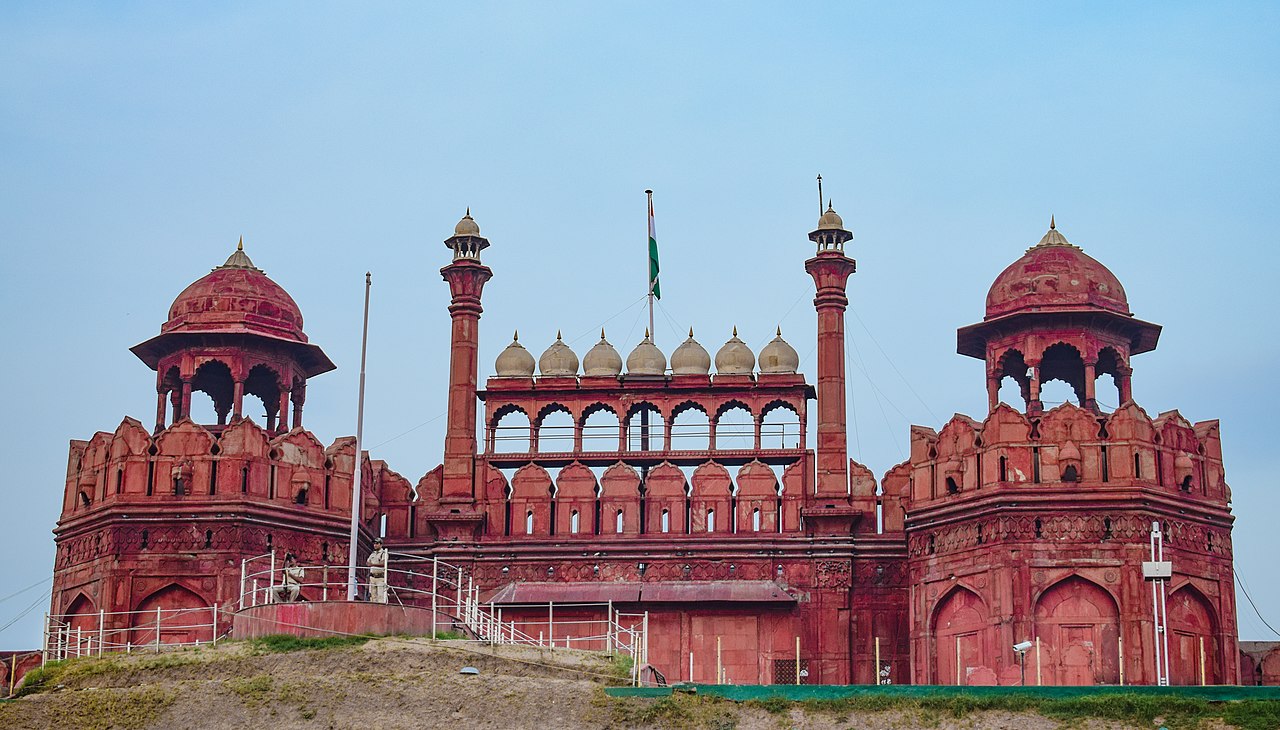
The Red Fort was built by emperor Shah Jahan when his capital moved from Agra to Delhi (or as Shahjahanabad was known at that time) in the centre of the ancient town of New Delhi. The fort was the Mughals’ political headquarters. Under Shah Jahan, the art and architecture of the Mughal reached great heights, as did the Red Fort. One can see the combination in the various elements of the Red Fort between Indo-Islamic, Timurid, Hindu and Persian forms of architecture. It consists of red sandstone, housing other buildings, such as the Diwan-i-Aam and the Diwan-i-Khas. One of the UNESCO World Heritage Sites in India, the Red Fort is controlled directly by the India Archeological Survey.
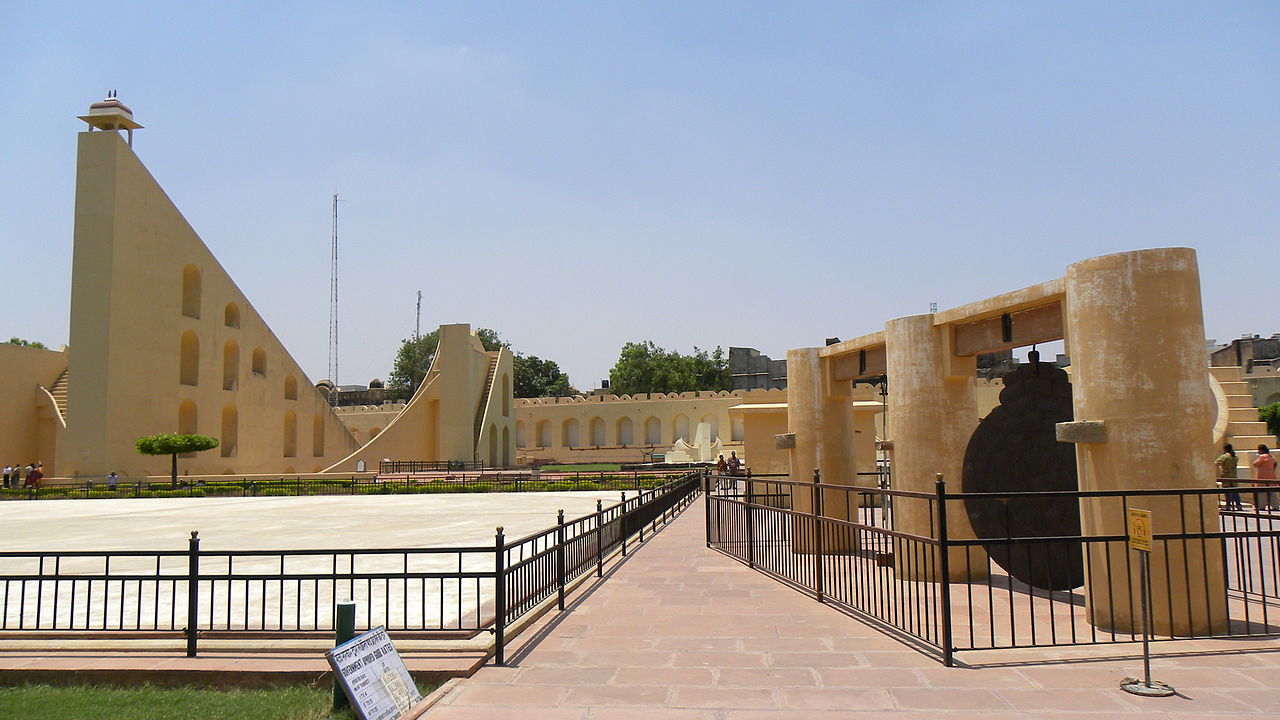
The Jantar Mantar was built in Rajasthan in the 18th century. The Rajput King Sawai Jai Singh from Rajasthan established it as an astronomical observatory in 1738. It is a collection of 19 astrological tools, including the largest stone Sundial in the globe. They are all man-made instruments. The observatory consists of tools used for calculating the celestial coordinate systems, the local horizon-zenith network, the ecliptic and the equatorial systems. This landmark is one of India’s best-preserved observatories and an outstanding representation of Indian scientific and cultural heritage.
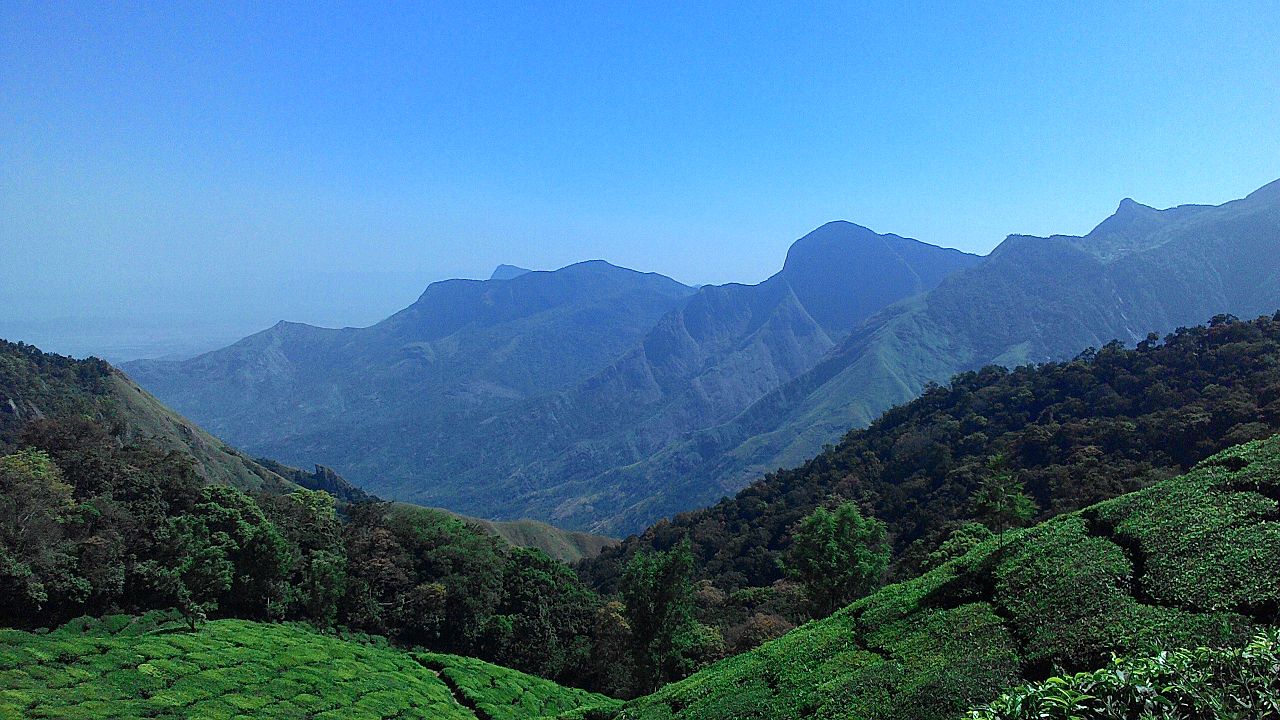
On the west bank of the Indian peninsula resides West Ghats or the Sahyadri Mountain Chain. The Range runs on the western bank of the Deccan Plateau north to south. It forms national parks, forest reserves and wildlife reserves of Kerala, Karnataka, Tamil Nadu and Maharashtra. The hills occupy 160,000 square km, cover 1600 km in length, 100 km in width, and 1200 metres in height. It is extremely diverse in its biological environment and ranks as one of the eight top 8 in the hot spot world. There are around 325 flora and animal species in the forests of the Western Ghats, including some rare species of plants and animals that have been critically endangered.
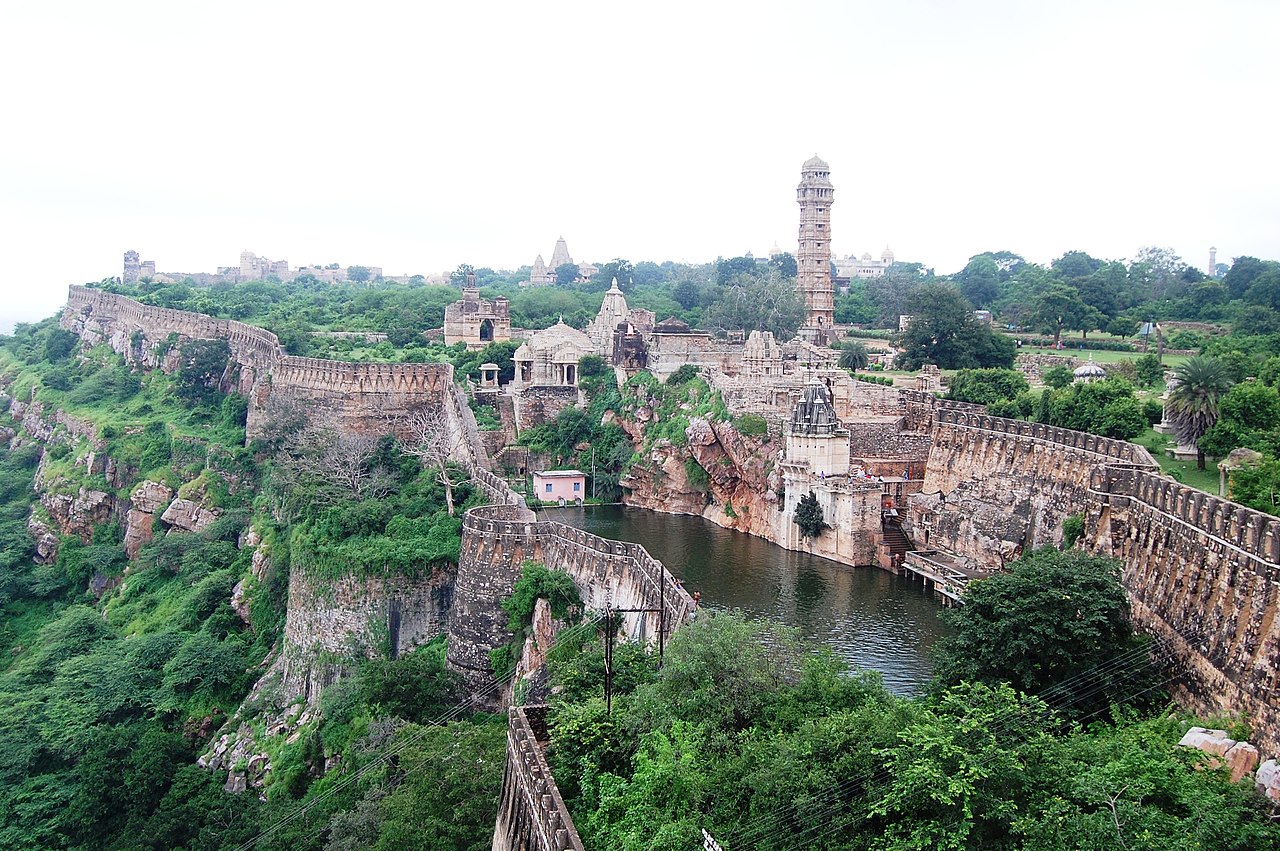
The Rajasthan Hill Forts are known for their unique Rajput architecture of military defence. There are six spectacular fortresses in Chittorgarh, Kumbhalgarh, Ranthambore Fort, Gagron Fort, Amber Fort, and Jaisalmer Fort. They are situated in Rajasthan on the stony Aravalli Mountains. The length and size of the forts are adequate to illustrate the authority and strength of the leaders and chiefs of the Rajputana. These forts have powerful defences. It was nearly like a mini-city within the walls of the fort. The markets, bases, palaces, temples, towns and centres of commerce were numerous. And we know that because some of them survived. In addition, these fortresses contained unique water storage and harvesting facilities that are still used today. It is also recognised to be the film’s location, The Dark Knight Rises, and a few movies including ‘Shonar Kella’ by Satyajit Ray.
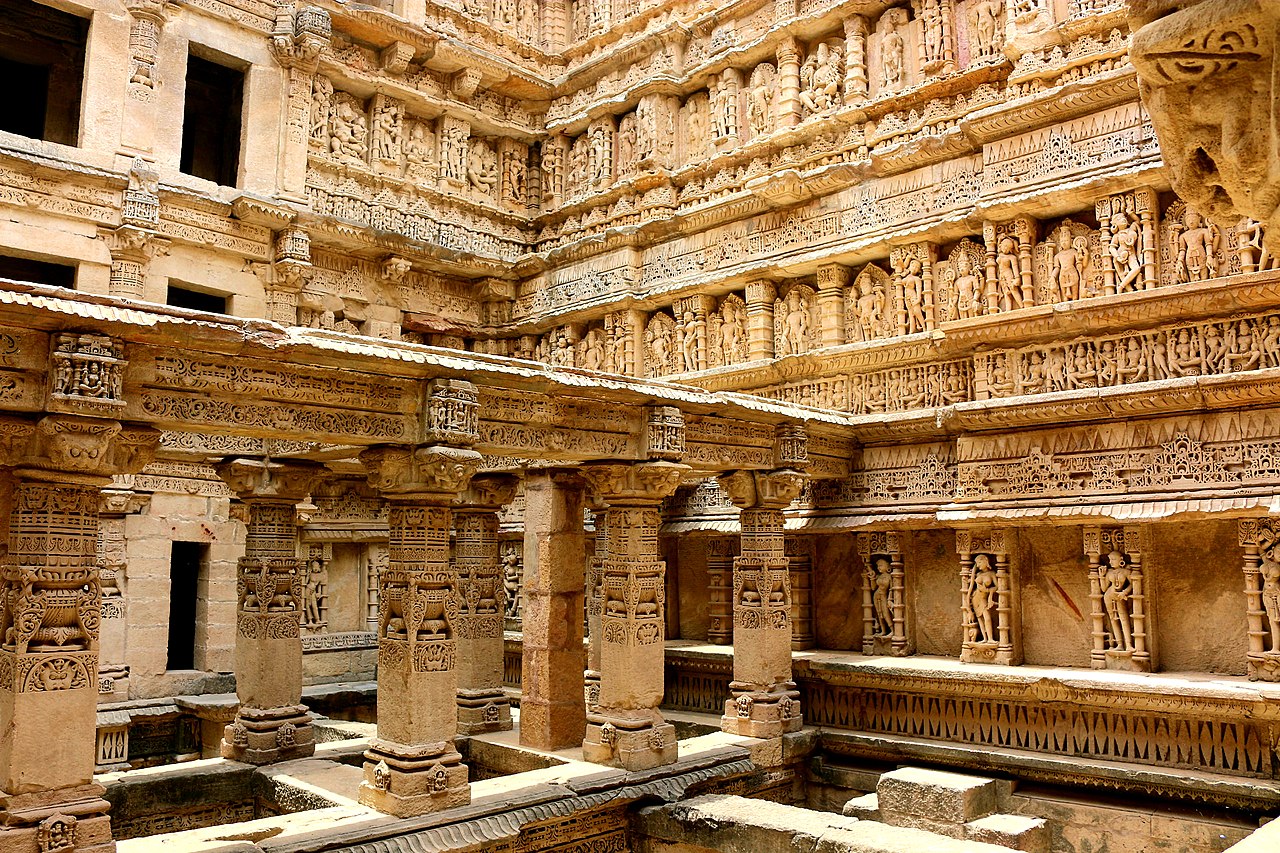
UNESCO declared Rani ki Vav as a World Heritage site in 2014. Rani ki Vav is a stepwell on the banks of the Saraswati River in the Paltan town of Gujarat. The stepwell is a temple that is designed as reversed. The stepwell was built in 1063 to memorialise her husband Bhimdev I by Rani Udayamati from the Chalukya Dynasty. It consists of seven stair levels. The building includes the architecture of Maru-Gurjara which demands complicated levels of technology and skill.
The well measures around 65m long, 20m wide and 28m deep. There are around 1500 big and minor sculptures with various mythological characters and other religious and secular symbols.
The Great Himalayan National Park was designated a UNESCO World Heritage Site in 2014. It is situated in Kullu, Pradesh in Himachal. It covers an area of approximately 1171 square km, where the diversity of animals is wealthy and plentiful. Together with other animal species, 31 species were registered of mammals, 181 species of birds, 9 amphibians, 11 annelids, 127 insects, and 17 molluscs. The park’s wide altitude supports a vast array of flora and fauna. The World Heritage Site is proclaimed by UNESCO for its remarkable importance for the preservation of biodiversity.
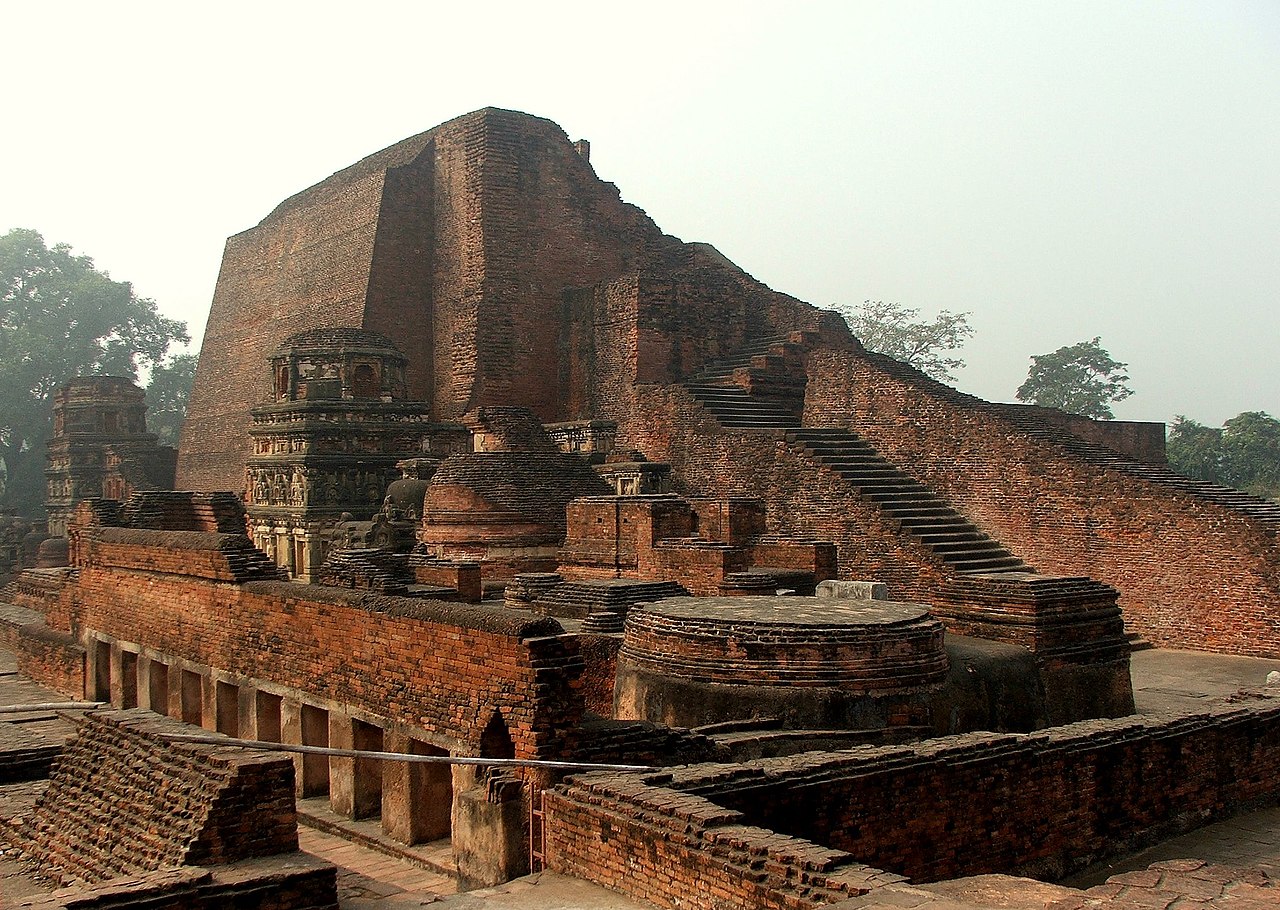
33. Archaeological Site of Nalanda Mahavihara, Bihar
Nalanda archaeological site in Bihar, from the 3rd century BCE to the 13th century CE, was a learning centre and a Buddhist monastery. When one wanders about campus, which is a manifestation of a glorious period, one can witness the remnants of stupas, shrines and viharas. Nalanda has promoted Buddhism’s progress as a religion and has remained a residence of knowledge for 800 years. Scholars from all over the world, known for their formalised Vedic study, previously attended the world’s first residential university. This is the second UNESCO World Heritage Site in Bihar that has made it even more visible in the Indian Tourism Map.
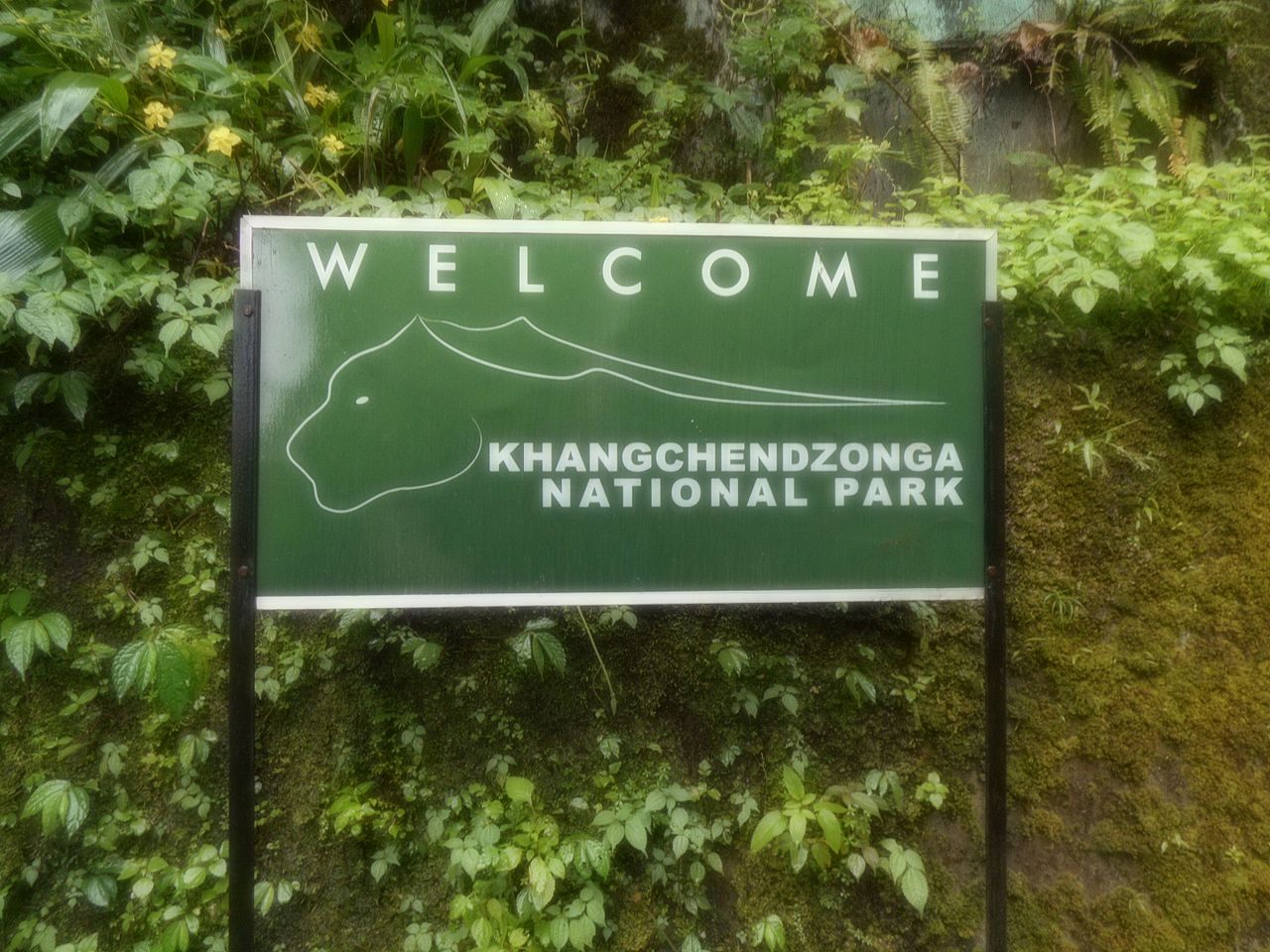
Khangchendzonga National Park was declared a World Heritage site in 2016 and accounts for a total of 35 world heritage sites in India located in the Himalayan districts North and West Sikkim in the lovely state of Sikkim in the North-East. It covers a wide area of over 850 sq. km and has an elevation of 1829m up to 8500m above sea level. Also known as the Kanchenjunga National Park (and Kanchenjunga’s biosphere reserve). National Park Khangchendzonga has the 3rd highest peak in the world, the Kanchenjunga Peak. The national park is well-known for its vegetation and animals with sometimes visible snow leopards. There are a few trekking paths for trekking lovers in this national park.
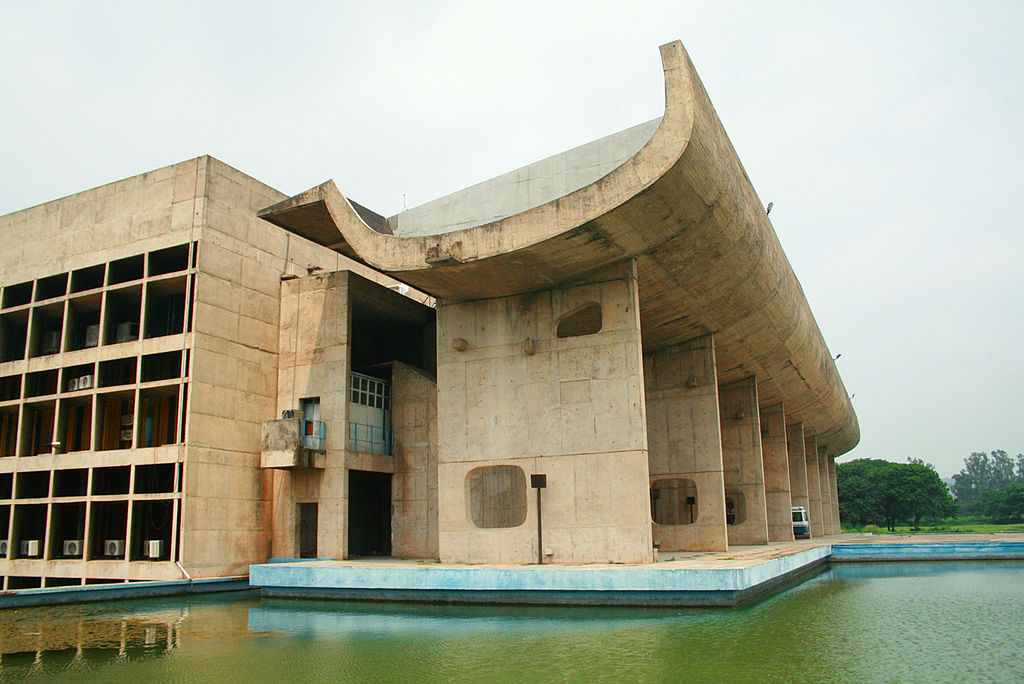
35. The Architectural Work of Le Corbusier, Chandigarh
In 2016, Le Corbusier’s architectural work was declared a UNESCO World Heritage site. The Chandigarh Capitol complex is a governmental facility located in Sector 1 in Chandigarh, Punjab. It consists of three buildings, three monuments and a lake, an architectural work of Le Corbusier Architecture. The buildings are made up of the Legislative Palace, a Secretariat building, an open-hand monument and a shadow tower.
36. Historic City of Ahmedabad
Image – Wikimedia
Listed Year: 2017
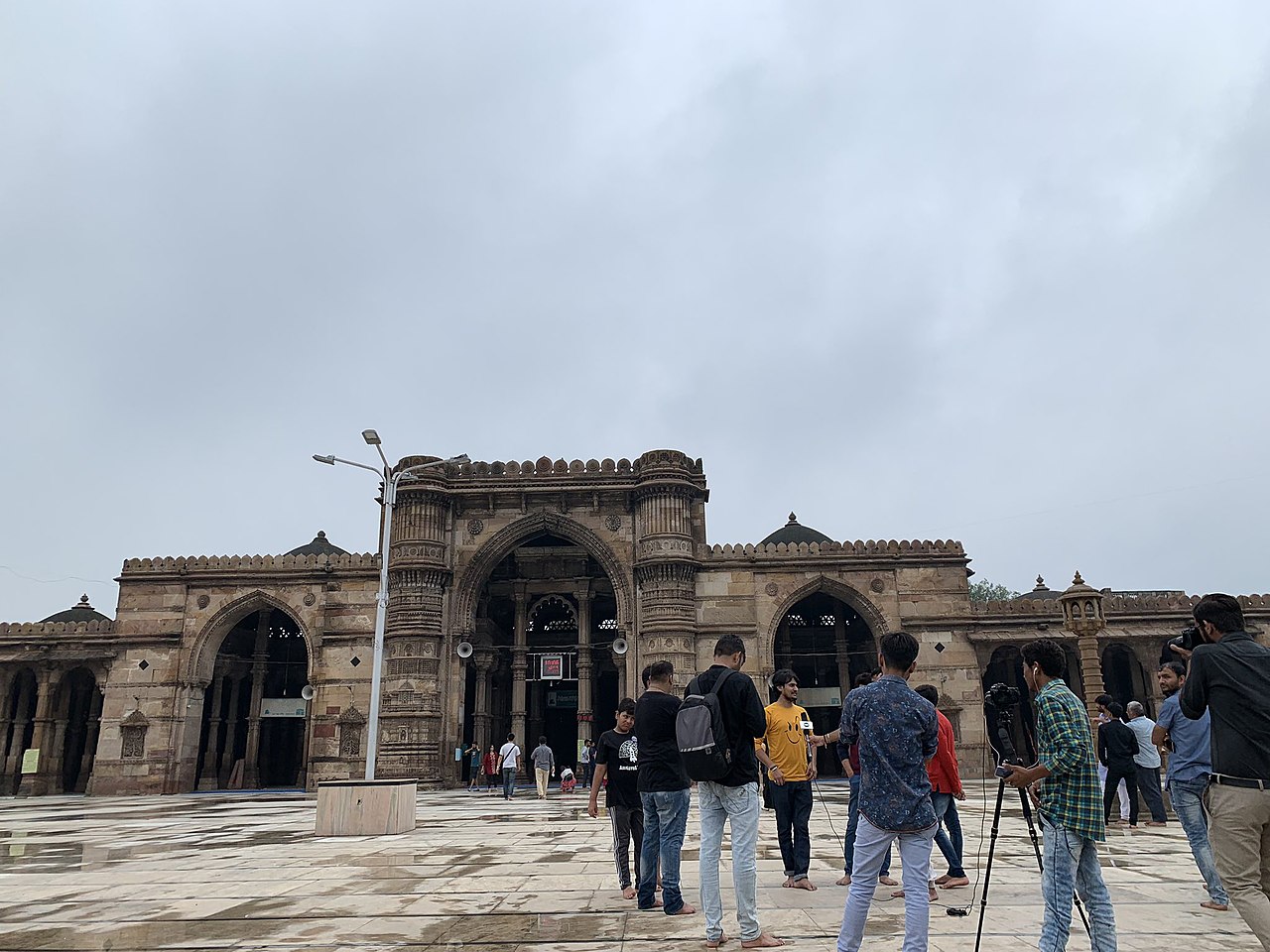
In 2017, the historic City of Ahmedabad, the first city of India to enter the list, was designated a UNESCO World Heritage Site. Often referred to as Old Ahmedabad, the capital of their kingdom, was founded by one of the rulers of the Sultanate of Gujarat. The city’s architecture, its old forts and gateways are located on the banks of the Sabarmati River and represents the rich architectural heritage of the sultanate era.
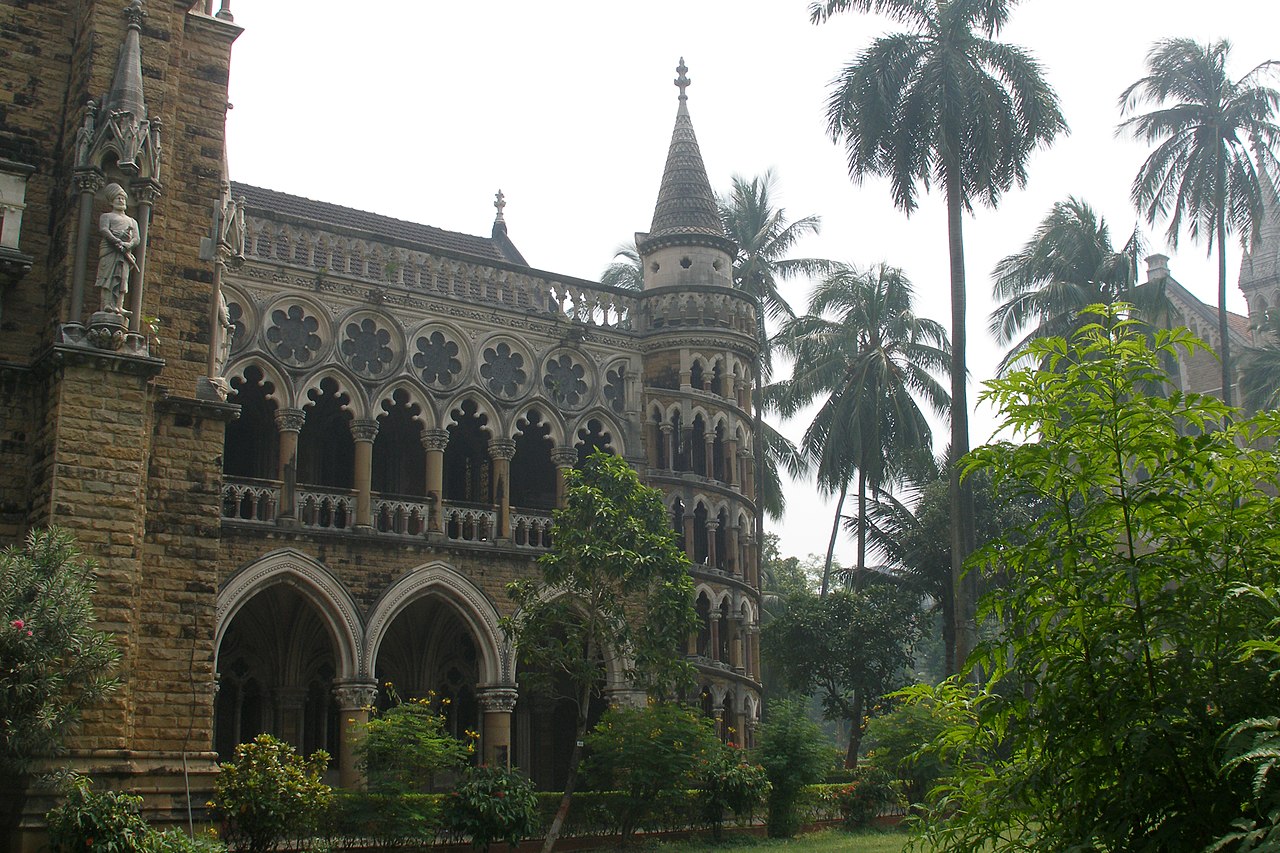
A collection of 94 structures of high cultural interest, which are situated in the Mumbai Fort Area, around the Maidan Oval, previously known as the Esplanade, has been added to the list of heritage sites in June 2018. The Oval is flanked on the east by Victorian neo-gothic buildings from the 19th century, among them the Bombay High Court, the University of Mumbai’s Fort Campus, the Old Secretary’s building. The Rajabai Clock Tower, together with the Watson’s Hotel, David Sassoon Library and the Elphinstone College, is also a notable landmark in the City of Dreams. The Art Deco structures of the 20th century stand right on the western side of the Arab Sea.
The latter consists mainly of residential structures in private ownership and the renowned Eros film – the building which kicked off the rehabilitation of Back Bay on the Marine Drive in 1935. The contrast in style of the two independent parts of the Mumbai Victorian and Art Deco Ensembles is a steady change in creative aspirations which gloriously shine over the metropolis and have thus acquired their position in the UNESCO World Heritage List.
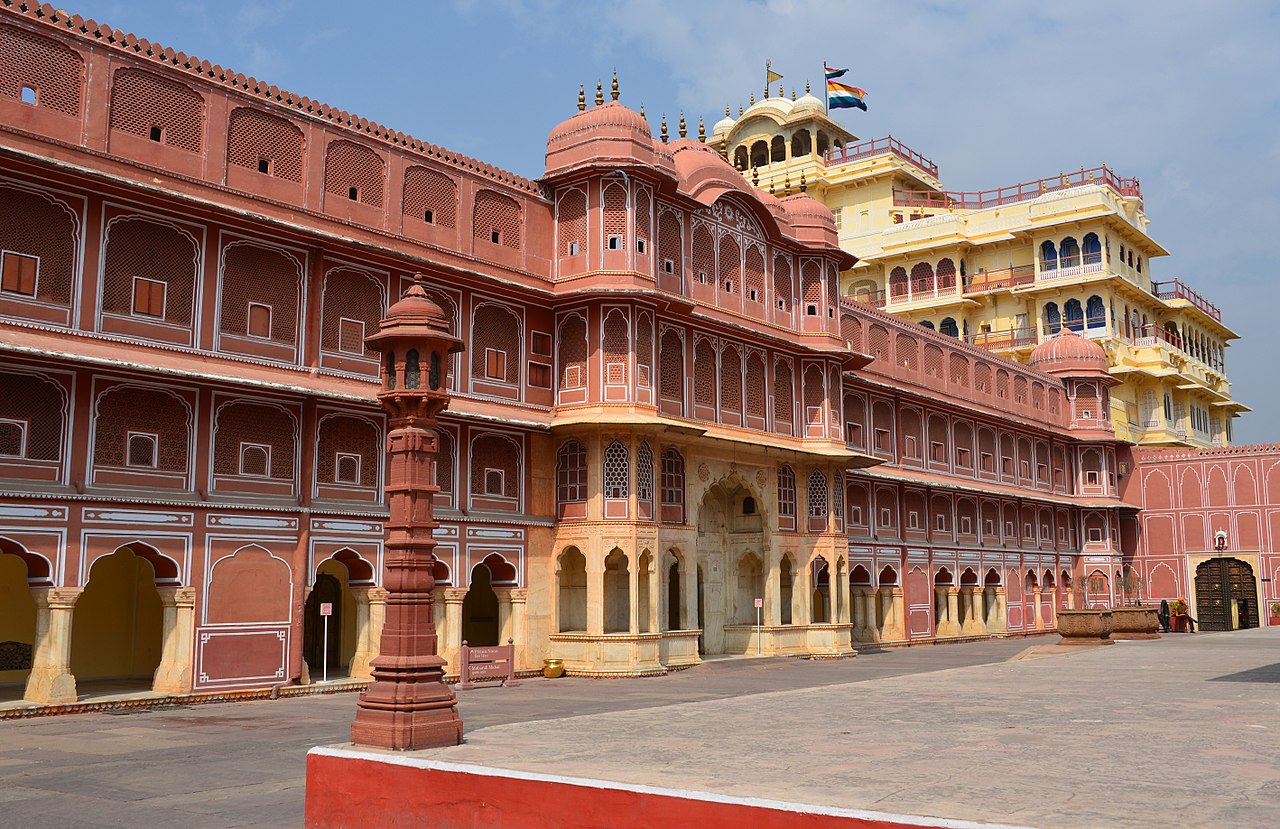
UNESCO declared the city of Jaipur as a World Heritage Site. Jaipur – The pink city in Rajasthan state, with its beautiful architecture, fortifications, monuments, palaces, art and crafts, culture, astrological significance and much more, distinguishes it from other Indian cities. The architectural plan for the city was taken from Western countries on the paradigm of the Grid Plan.
The major streets of all structures, such as markets, temples, stores, etc, have uniform façades. The city’s urban planning also takes elements from Hindu and Mughal civilizations. It is a big business town yet protects the interests of local craftsmen and traditions.
Our busy schedules, lifestyle, travels, and thinking are visible on our skin and hair. The skin and hair then take us to salons and doctors. The spas and treatments are upgraded instead of lowering in magnitude. It becomes a cycle and one tends to wonder how did our grandparents manage without these? Here comes the story of the routines which were traditionally meant for healthy skin, hair, and mind. Here are some I have understood and found true in my case.
Kajal
A thin layer of jet black kajal completes our look by elegantly defining our eyes. Kajal is traditionally made at home and never purchased. The soot made from sandalwood, ghee, and other few earthy sources with drops of castor oil as a lubricant is the best cure for dry eyes.
Staring at the screen for long, we tend to forget to blink our eyes as often as we should. Subsequently, our eyes hurt enough that keeping them open causes added headaches. We then resort to artificial tear drops for instant relief. Fun fact, artificial tear drops contain the oils that are used in natural homemade kajal. Kajal, which we buy from shops, does not help cure the dry eyes because they tend to clog the ducts of the tear line. This is logical as we apply eyeliners and pencils made of chemicals to ensure they last the whole day and never smudge. We coat these on the thinnest skin- our eyelids!
Home-made kajal tends to sometimes tickle in the eyes when applied the first few times. These sensations naturally fade away in a few seconds. The oils in the kajal tend to form a protective layer sometimes blurring the vision for a second or two. The best part, the materials in kajal tend to open the tear ducts and relieve the pain and burning through its natural cooling effect.
Oiling our hairs
There are enough articles on the pros and cons of oiling the hair. Some say it must be done hours or maybe overnight before washing our hair. Some articles say leaving the oil long on hair will block the follicles and attract dirt. Though I am not an expert, the honest biggest mistake I made was to let my hair dry without oil to avoid dandruff (dermatological advice it was!). The advice led to thinning of my hair and added ignorance to learning the right way of oiling from mom!
Different oils are supposed to be used depending on the situation. The light oils work well for everyday use, the heavy ones for pre-wash. The black seed oil for hair is good for improving immunity and promotes hair thickness. The correct way of oiling ensures keeping the scalp healthy, without dandruff, and hair moisturized. The best time to oil the hair is when the scalp is clean. The same is followed in Spa treatments too. Yet, we tend to let the scalp dry though clean for days until we have to wash. Depending on hair type and scenarios, regular oiling of hair and ensuring to avoid dryness goes a long way in keeping the strands strong, without splits, and avoiding graying.
Wooden combs
One of the best inventions with the simple logic of avoiding plastic comb’s static energy. The wooden combs do not hurt the scalp as the plastic combs do. I confidently tell this because I am not able to keep a plastic comb on my scalp ever since I shifted to wooden ones. The wooden comb ensures no hair breakage too.
Flower in our hair:
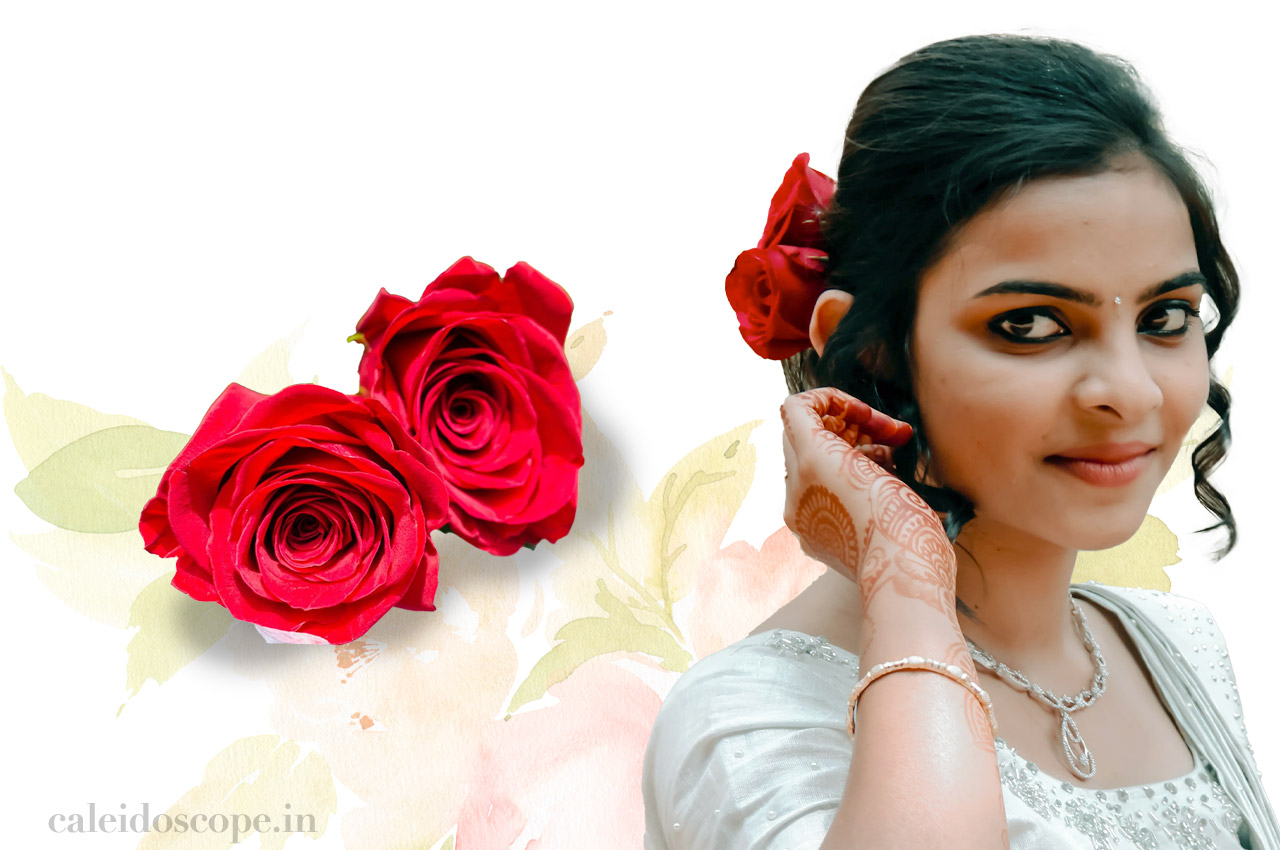
We Indians live in a tropical region that is hot and humid. Our scalps tend to clog up and have an unpleasant mild smell once the shampoo and conditional smell wears out. Jasmine flowers in the hair were one of the routines that not just helped avoid having a stinky scalp. It also was a way to enhance the mood with the fragrance.
While at fragrances, the earthy smell of sandalwood, vetiver, patchouli, saffron, and so on in our bath powders and tilaks were all means of pocket-friendly aroma therapy. If not for religious beliefs, the garlands, and intense sticks used for worshiping had the same effect of positive fragrances without needing luxurious essential oils!
Bindi or Pootu
Traditional perfect round pootus are achieved with a base made of ghee and turmeric. This base is followed by applying Kumkum. Kumkum is traditionally made with turmeric, lemon, and screw-pine juice – all the ingredients we look for in our face packs.
Moisturizer
The oil bath with no chemical soap was sufficient and there is no need for moisturizers after this. It has the added benefit of keeping the skin even-toned.
All this small stuff has kept our grandparents happy and hence they glow without cosmetics while we look like grandmas and grandpas.
#Didyouknow that in Thanjavur, India, a temple called ‘Big Temple’, over thousand years old, rich in sculpture, an architectural granite marvel is home to majestic murals as well? We are talking about the Brihadeeshwara Temple in Thanjavur dedicated to Lord Shiva of the Hindu trinity. Built by Rajaraja Chola I of the Chola dynasty, the temple is also called Rajarajeshwaram and Periya Kovil. It is located on the bank of River Kaveri in south India. The temple was built during 1003 and 1010 A.D. The structures included gopura (gateway), the main temple, the vimana or tower, inscriptions, sculptures and murals. Additional structures were added over the centuries, and the temple has faced some damage in its history as well. The temple has the largest Shiva linga in India and is the first place to commission the brass Nataraja or Lord Shiva as the Lord of Dance. There are separate shrines for Nandi, Goddess Parvathi as Brihannayaki, Kartikeya or Subramanya and Ganesha. It is a UNESCO World Heritage site. The Cholas were great followers of Shaivism. There are inscriptions on the temple walls; music and dance were an intrinsic part of the temple’s programmes. Tamil hymns of the Nayanmar were recited by the pidarars (priests). A southern branch of the Marathas was established in 1674 when Ekoji Bhonsle, half-brother of Chhatrapati Shivaji I seized Thanjavur from the Nayakas.
Brihadeeshwara Temple, 11th century, Thanjavur, Tamil Nadu. Wikimedia
Under Maratha rule in the 18th and 19th century, Thanjavur became the premier cultural centre in South India. Under Serfoji I the Big temple was renovated, his mural is in the 2nd mandapa of the Subramanya shrine, also the mural of Serfoji II. Starting with Shahji II (r. 1684-1712) they styled themselves as Cholanadus. The Marathas looked after the temple very well. Shahji wrote multilingual songs in praise of Shiva as Brihadeeshwara. Serfoji II contributed as well and renovations happened under him. He built a dhwajastambha, a flag pole and a masonry podium for dance by the devadasis. The temple is an imposing structure and is the largest Hindu sanctuary in Tamil Nadu, 59.82m tall. The Nayakas were successors to the Cholas followed by the Marathas. The main temple contains the linga sanctuary, ‘linga’ being the anionic form of Lord Shiva. This is surrounded on four sides by a narrow internal passageway that opens into a vestibule with side doorways and a mandapa, a pavilion to the east. There is a Nandi pavilion and a towered gopura set within a big walled compound. The compound is lined with a peripheral colonnade and contains a number of subsidiary shrines.
Story of the murals
The murals at the temple complex have a history of their own. The temple has a circumambulatory pathway with many frescoes along the walls from the floor to the ceiling. They were discovered in 1931 and restored in the 2000s by the Archaeological Survey of India. The frescoes/murals relate to Hindu mythology, especially Lord Shiva, though there are paintings of Lord Vishnu, Goddess Durga, Goddess Kali and images of the Chola kings as well. The images of the murals have been bit damaged by burning of camphor and soot from the lamps in the temple over a period of time. Around 16 Nayak period frescoes were superimposed on the Chola murals and they were restored by ASI by de-stucco process and displayed separately. The Thanjavur temple is a repository of stone carvings and reliefs, wall and ceiling paintings and thickly encrusted plasterwork. There used to be metal statuettes of deities inside the temple but the metal images have now vanished. The Nayakas and Marathas added further artistic dimensions. The Bronze Nataraja in the minor shrine from Rajaraja’s time is still there and worshipped. The murals from this period and are very interesting from the artistic viewpoint but are inaccessible to most visitors since access is restricted to the passageway around the linga sanctuary where they are located. However, they are available at the ‘’Interpretation Centre’’ in the South colonnade of the walled compound.
Themes of the murals
The murals were made 4 metres above floor level depicting Hindu deities, royals, attendants, sages, musicians and dancers in different ambiences. They also reflect the courtly culture of the period. The Chola murals survive in an incomplete and deteriorated condition and were discovered by in 1931 as already mentioned. The murals were partly visible, being partially concealed beneath Nayaka compositions. There is some similarity of the murals to Chola bronzes as well. The murals in the main temple include Lord Dakshinamurthy with Bhairava, Lord Shiva as Tripurantaka, story of Sundara-murti Nayanar, a poet-saint, Rajaraja worshipping at Chidambaram with his three queens and images of ascetics. Murals are there on the western and northern walls of the passageway that runs around the linga sanctuary. There are paintings on the Nandi pavilion and minor shrines too. The Nandi pavilion is the first structure one sees on entering the temple compound. It was added during the Nayaka period, it could possibly be a replacement of a Chola period feature. The pavilion houses a huge seated Nandi. The pavilion has a painted ceiling showing winged angels and fantastic birds., The Nayaka panels include Tripurantaka, courtly personages and bearded ascetics. The Brihannayaki shrine houses the principal Goddess of the Thanjavur complex, built during the 13th-17th century during Pandya, Nayaka period. It faces the raised podium in the middle of the temple compound and the ceiling paintings are over the central aisle, of the Devi Mahatmya narratives. The Nataraja shrine was made during the Nayaka time and has the Chola metal icon. The Chandikeshwara shrine is six metres from the main temple consecrated to one of Shiva’s most faithful devotees. The Subrahmanya shrine was built by Sevakka Nayakas, expanded in later Nayaka times. Shivaji II had this later mandapa walled in and embellished with a gallery of royal portrait murals. The Ganapati and Karuvar Devar (Guru of Rajajraja) shrines are in the western part of the walled compound. The Ganapati shrine has a stunning painting of Subramanya. The inner face of the walls of the temple are lined with a continuous colonnade. A Nandi is placed in the middle of south colonnade. Paintings on the rear walls of the west and north colonnade date from the period of Shivaji II. There exists a plethora of divinities, rishis, devotees and attendants. The west colonnade starts with Goddesses Lakshmi, Saraswati, Kali then Ganapati riding a blue rat, mooshaka or his vehicle, also called vahana. Shiva-Parvati, Subrahmanya with peacock with Valli and Devasena, an elephant and a courtly couple. The west colonnade also has the marriage of Lord Shiva and Parvati with a standard in the middle, dancing Shiva flanked by Vyaghrapadha and Patanjali, two demons flying through the air. There is also Yashoda with infant Krishna, Lord Rama and Sita, a moustachioed figure probably Ugra Pandya spearing fish in a river and a battle scene between two armed figures, most probably Lord Rama and Ravana. The north colonnade has narratives from the Tamil Tiruvilaiyadal Puranam, a ‘purana’ of Madurai. The scenes include a Maratha couple worshipping Shiva and Parvati among others. Another group of paintings include a bull and a cow, Maratha warriors riding horses, courtly women paying homage to a male figure, woman worshipping Shiva on the mountain. Some faded scenes include worship of Shiva, musicians, also duck and bird headed figures venerating a linga, rishis (sages), Parvati and a linga and warriors riding horses.
Glimpses of the murals
The murals are hundreds of years old. However, one can still marvel at the murals at the Big Temple and feel their majestic grandeur. As we have understood, the murals include, murals from the Chola, Nayaka and the Maratha times. Let us see a few of them.
Rajaraja I and his guru – This mural shows the king Rajaraja I with his guru, Karuvar Devar. This is a Chola period mural.
Rajaraja I and his guru, mural, 11th century. Wikimedia
Celestial dancers – A mural depicting celestial dancers is also from the Chola times. The dancers are well-coiffured and wearing pearl jewellery. Though faded over the years, the mural still fascinates with its vibrant colour scheme and is reminiscent of the Ajanta frescoes.
A ceiling fresco – The image shows a ceiling fresco at the Nandi pavilion with a lotus mandala in the centre, and four fantastic parrots in the corners around which is a vegetal scroll border. This was probably made under the Nayakas.
An ornate ceilingmural, Nandi pavilion, 13th-17th century.
Majestic Murals At The Big Temple in Thanjavur Nandi pavilion Wikimedia
Goddess Kali – The fresco in the west colonnade depicts Goddess Kali with all her weapons and two attendants waiting over her with flywhisks.
Goddess Kali with attendants, mural, 13th-17th century. Wikimedia
Goddess Saraswati – The goddess of learning is seen with Tamburu and Narada, celestial musicians in the west colonnade. She is holding her majestic veena seated against a bolster and is flanked by the musicians.
Marriage of Shiva and Parvati – The divine marriage of Lord Shiva and Goddess Parvathi is depicted with a standard in the middle. Mural in the west colonnade.
Marriage of Lord Shiva and Parvati, 13th-17th century. Wikimedia
Shiva-linga – An ekamukhashiva linga with an elephant paying obeisance.
King spearing fish – An interesting mural probably depicting Ugra Pandya spearing fish in a river, mural in the west colonnade.
A king with an arrow spearing fishes in a river, mural, 13th-17th century. Wikimedia
Lord Ganesha – A mural shows the elephant headed God on his vehicle, mooshaka flanked by two attendants. His consorts Riddhi and Siddhi are seated by his side. mural in the west colonnade.
The Trinity– A mural depicting a multi armed Lord Shiva dancing the urdhva tandava. He is depicted with the four-armed blue God, Lord Vishnu and four headed Lord Brahma.
A great speech is not only about the words you speak but also about how you speak, including the tone and body language. What about a great speech that warms the heart? That goes a step further. It gives birth to myriad emotions within you and is remembered always.
Here are the top ten heart warming speeches made by Indians. Don’t be surprised if some ‘famous speech by an Indian’ does not make it to the list, as we have new entrants. It is because the criterion here is that it needs to warm the heart. The list is as per the year in which it was delivered.
Swami Vivekananda
“Each must assimilate the spirit of the others and yet preserve his individuality…”
Swami Vivekananda gave this speech at the World Parliament of Religions at the Art Institute of Chicago in 1893. His initial salutation, “Sisters and brothers of America” got a standing ovation from the 7000 plus present there. Not only did this speech introduce Hinduism to North America but also sought to explain the reason for disagreement between different religions. He also said that for Indians, religion was not the need of the hour and that he sought aid for the impoverished people of the land. His lecture left a deep impact on the Americans.
“Freedom is my birthright. So long as it is awake within me, I am not old.”
In 1908, Bal Gangadhar Tilak was sentenced to six years imprisonment at Mandalay Jail in Burma for his rebellious writing. To revive the Nationalist Movement when he returned, he founded the Home Rule League in 1916. Together with Annie Besant, he toured the country telling people in simple language the meaning of home rule or Swaraj. Thus the nationalist spirit slowly began to see a re-awakening. Tilak gave this heartwarming speech, at the first anniversary of the formation of the Home Rule League, in 1917, at Nasik.
“We shall either free India or die in the attempt; we shall not live to see the perpetuation of our slavery.”
Mahatma Gandhi spoke these words on August 8, 1942 while addressing the A.I.C.C. at the Gowalia Tank Maidan (now August KrantiMaidan) in Bombay on the eve of Quit India movement. The words ‘do or die’ in the speech reinstates his strong belief in the fact that determined passive resistance was the best way to free the motherland from the British rule. The words were strong enough to make the people of the land rise up as one for freedom, causing uproar and eventual imprisonment of many. Read full speech here.
Netaji said these words in Burma in July 1944. He escaped his house arrest in Calcutta in 1941 and escaped to Germany to establish the India Legion. But when he began to face difficulties he moved to Singapore where he started the Azad Hind force. This army fought the British but the campaign failed. Bose, however, refused to give up hope. He strongly believed that the British were fast losing ground and India would surely taste freedom soon. Thus was delivered Bose’s best-known speech which inspired the youth and became their anthem during India’s struggle for independence. Read the full speech here.
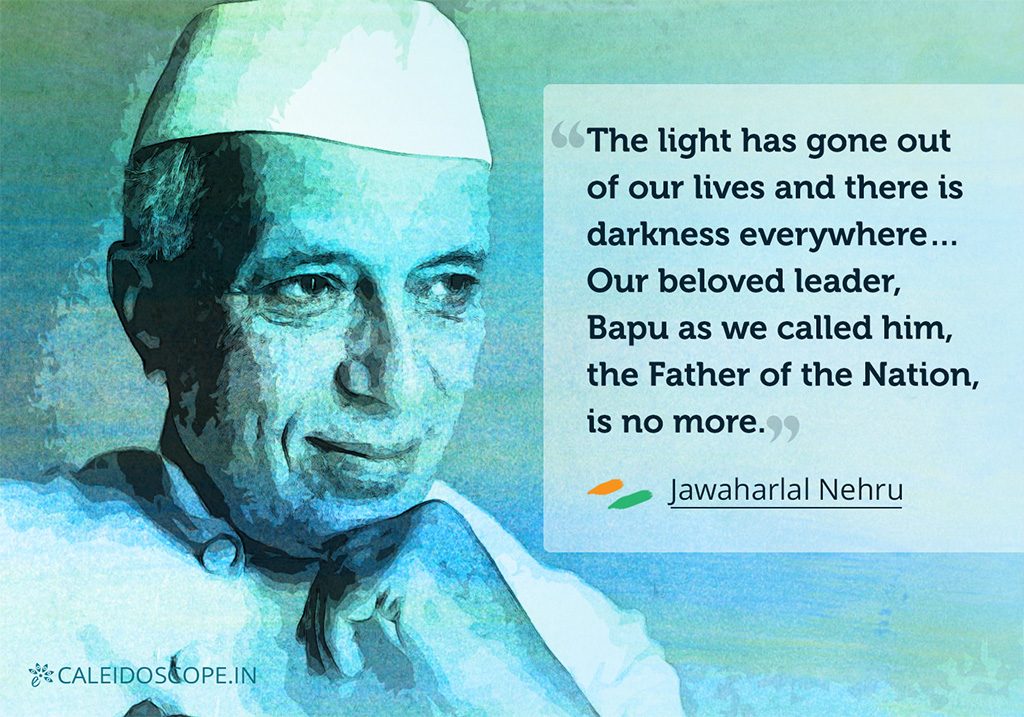
“The light has gone out of our lives and there is darkness everywhere…Our beloved leader, Bapu as we called him, the Father of the Nation, is no more.”
Jawaharlal Nehru delivered this moving speech extempore on 30th January 1948 following the assassination of Mahatma Gandhi. The helplessness and the sorrow of the masses was reflected in his voice too when he spoke unrehearsed over All India Radio. The good orator that he was, his choice of words and phrases brings out the poise that he maintained even during the hour of sorrow. He also made a plea against communalism while asking the people to remain calm. Read the full speech here.
“And if we accept that a mother can kill even her own child, how can we tell other people not to kill one another?”
In 1994, when Mother Teresa spoke at the U.S. National Prayer Breakfast, it startled many. Even though a nun, she didn’t shy away from offering definitive views on topics like abortion. In front of a gathering of over 3,000 people she criticized abortion even though two staunch supporters – President Bill Clinton and Vice President Al Gore – sat right there, uncomfortably. Robert Dugan, an official of the National Association of Evangelicals said that her speech was “as bold a prophetic confrontation as I’ve ever witnessed.” Watch the full speech here.
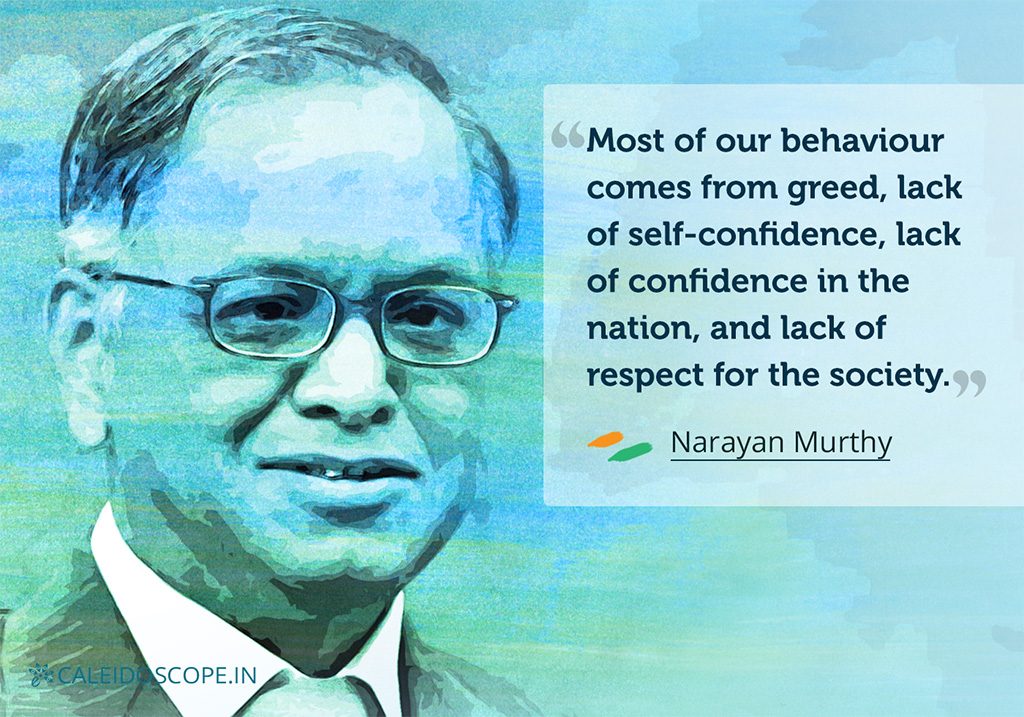
“Most of our behaviour comes from greed, lack of self-confidence, lack of confidence in the nation, and lack of respect for the society”
In 2002, Narayan Murthy delivered this speech on The Role of Western Values in Contemporary Indian Society at the Lal Bahadur Shastri Institute of Management in Delhi. By comparing Indian and Western cultures, Murthy eloquently tells how the former lacks in civic sense. Through a didactic tone he urges the Indians to bring about a social change. He uses witty remarks and allusions. The urgency in his voice will make anyone sit up and listen to him. The words were honest, factual and inspiring. Read the full speech here.
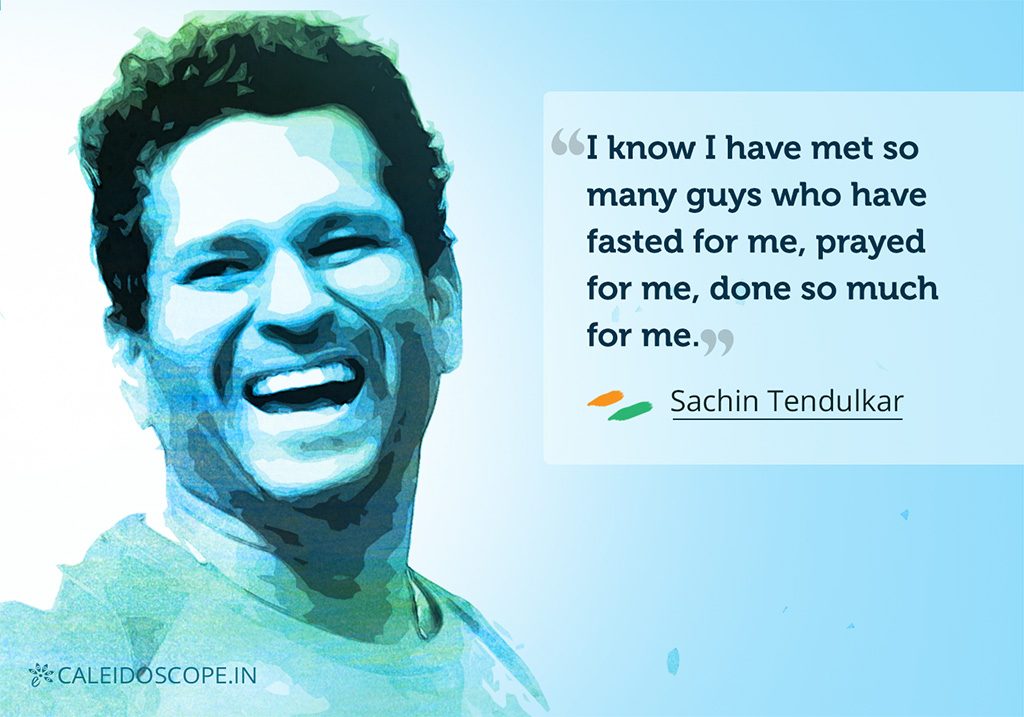
“I know I have met so many guys who have fasted for me, prayed for me, done so much for me.”
Sachin Tendulkar played his last day of international cricket at the Wankhede Stadium. And millions witnessed the farewell speech of the ‘master blaster’ in 2013 after India sealed the series against West Indies. Everyone present including his mother and former colleagues were left emotional and misty eyed including the man himself who rarely lets any emotion show on his face. Sachin had surely hit a straight six into every one’s heart with his speech. Watch the full speech here.
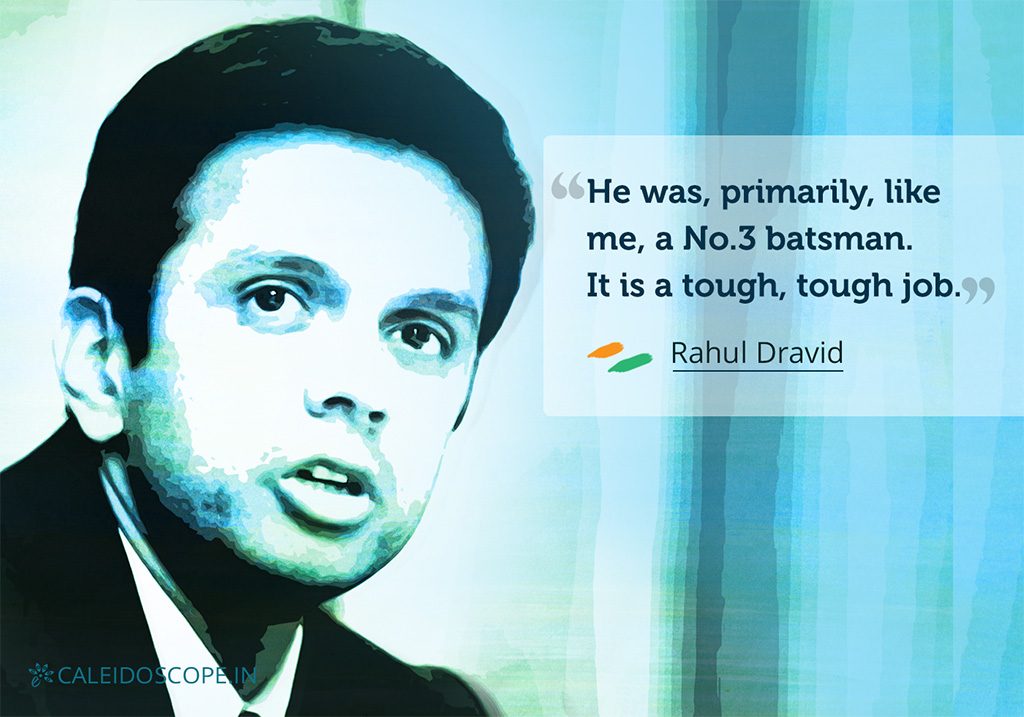
“He was, primarily, like me, a No.3 batsman. It is a tough, tough job”
When Rahul Dravid spoke at the Sir Don Bradman Oration in Canberra in 2011, he became the first non-Australian to do so. His speech reflected his character – precise, erudite, meticulous and thoughtful. It was indeed heartening to hear the gentleman of Indian cricket speak about the greatest legend that the sport has ever seen. And when the occasion was over, the nature of conversation had changed. Instead of talking about the grand venue, it centered more around the speech and the speaker. While many adjectives have been used to describe this speech, the oft-repeated one has been ‘insightful’. Listen to the full speechhere.
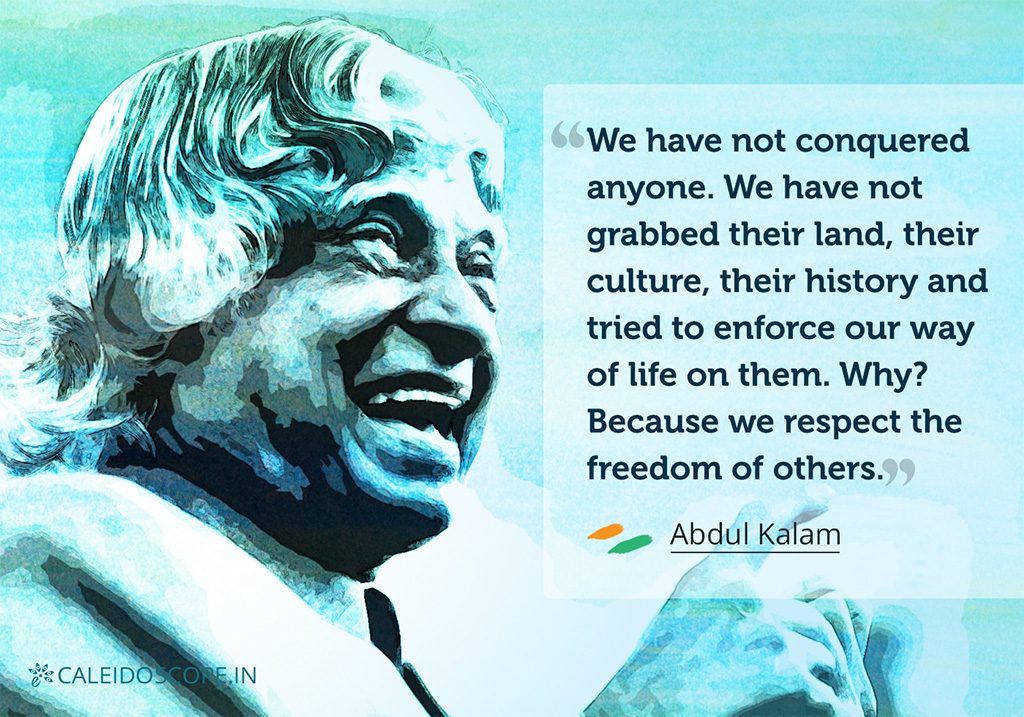
“We have not conquered anyone. We have not grabbed their land, their culture, their history and tried to enforce our way of life on them. Why? Because we respect the freedom of others.”
In the speech that Abdul Kalam delivered at the Indian Institute of Technology, Hyderabad in 2011, he outlined his visions for India. He pleads his countrymen to become more involved in the nation-building process. And his speech gains credibility because he speaks about his experiences at the Indian Space Research Organization. He manages to unite the listeners by using the term ‘we’ instead of ‘I’. It is definitely one of his finest speeches because not only is it dignified throughout, but the words also pull you out of your comfort zone by the sheer simplicity and hard truth of it. Read the full speech here.
Travel can be an enlightening and eye-opening experience for children of all ages, introducing them to new cuisines, activities, and perspectives, as well as providing excellent family time. Traveling with children may be a daunting prospect – irregular schedules, large packing lists, and irritable children are just a few of the difficulties you may face. But don’t get rid of your flight tickets just yet! Continue reading this post for some helpful hints on how to make traveling with your infant easy and enjoyable. After all, you and your children should enjoy every moment of exploring the world and making memories that will last a lifetime.
Travel with the least amount of time and as much ease and comfort as possible
Journeys by car or train to the selected location should be simple and straightforward. Hilly and undulating roads, for example, going to remote hill stations, serpentine trails, or jungle resorts are not recommended while traveling with babies. Even if you’re driving, remember that the infant is too small to navigate the twisting, hilly, and tough roads. Prolonged travel makes them grumpy and uneasy, so select a place that can be reached in the shortest amount of time.
Choose between a direct flight or one with a lengthier stopover
It is vital for a parent of a baby or young child to limit the number of connecting flights. Landing is usually what causes air pressure on a baby’s ears, causing pain and crying in the aircraft. Furthermore, less time spent on travel implies only fewer opportunities for a mid-flight tantrum.
If you must arrange a connecting flight, allow for additional time on the ground between flights. Unless your flight is considerably delayed, two to three hours should be enough. You don’t want to be rushing through the airport while carrying a baby, diaper bag, car seat, and other travel necessities.
Layovers are perfect for getting some non-airplane food, changing a dirty diaper, and, most importantly, letting your kid run about and burn off some energy! Consider planning a connection with an 8-hour+ overnight stopover for long-haul flights. This allows your family to relax in a hotel before continuing to your destination.
It may not always work, and your child may be too preoccupied to sleep, but scheduling flights around their nap time gives you a higher chance of a pleasant journey. If you can’t travel when they normally sleep, try to arrange the trip around times of day when you know they’ll be happy, which is generally in the morning for most newborns.
Bring double the baby necessities
Bring twice as much formula, diapers, bottles, baby food, and nutritious snacks as you think you’ll need on the aircraft. You’ll thank us if your flight is substantially delayed or canceled.
When flying, the last thing you want to deal with is a hungry, thirsty, messy infant. This is especially true if you are stranded on the runway, circling above a storm, or have to sleep in a hotel room for an unplanned overnight trip.
Protect your baby’s ears
Sucking or chewing relieves ear discomfort caused by fluctuations in cabin pressure. Bring along formula or pumped breast milk. Then, while the baby is properly secured, you may offer your infant a bottle throughout takeoff and landing.
Remember that breast milk and infant formula are exempt from the liquid restrictions. Bring sealed liquid formula or purchase a water bottle at the airport to combine with a powdered formula for formula-fed newborns.
If your youngster does not like bottles, a sippy cup or pacifier will suffice. Chewing on a cracker or cookie might also be beneficial to older babies and toddlers. You should also ask your physician to prescribe ear pain relievers before flying with your infant.
Keep any loose things in transparent bags
Bottles, bibs, burp cloths, diapers, clothes, and other baby necessities should all be put in zip locks of varying sizes so that you can readily obtain what you need. In this manner, even if anything from the outside, such as passports, documentation, or food trays, comes into contact with the contents of your essentials, they are still secured.
Consider a Light Itinerary
Infants are not well served by frantic travel arrangements and erratic tour itineraries. Going out every morning for a rigorous sight-seeing itinerary on a 5-day trip is not a good idea with babies. They are too young and fragile to handle the stress of travel. If you’re going on a beach vacation, plan to spend days there eating beach cuisine and creating sand castles. In short, plan your trip with minimal sightseeing and maximum leisure in mind.
Don’t forget entertainment
Bring a goody bag with some of your baby’s favorite toys and some surprises. Nesting toys, baby-proof mirrors, rattles, musical toys, soft animals, pop-up toys, plastic keys, and teething rings are all options. To make packing easier, only take a few. A portable play yard creates a quick, child-safe space that you can set up in relatives’ houses, motels, or other non-childproofed locations.
Choose hotels with kid-friendly amenities
When choosing a hotel, search for one with kid-friendly features such as a pool, playground, or Kids Club. This will assist to make everyone’s stay more pleasurable.
The majority of the establishments you’ll visit for the evening aren’t childproofed. That isn’t always an issue, but if you’re staying somewhere with easy access to chemicals or other potentially hazardous substances, it’s a good idea to have some locks on hand that you can quickly install. Kids might wake up at any time and you may not hear them open that one cupboard door! Corners, plugs, and other risks are almost everywhere – childproofing a hotel room simply takes a few minutes. If your room has windows, make sure they’re locked as well – especially if you’re above the first floor!
Maintain Simple Organizational Systems
Don’t let structure and regularity go simply because you’re on vacation. Routine is essential for newborns and for parents who need to keep the daily ship running smoothly. Feeding and sleeping patterns should be followed as much as possible during your trip. The daily check method is another organized approach that parents might use. Perform a daily supply check once a day. Know what you need, what you’re running low on, and where everything is. Spending 10 minutes on this means spending the next 23 hours and 50 minutes on pleasant activities!
Protect Valuables
When traveling with children, your mind will be in a million places at once. You’ll be worrying about if the diapers and wipes will last, if your kid will scream their head off mid-flight, where you put the backup pacifier, and a million other things that will divert your focus away from important details like where you kept the vehicle keys or other valuables. With all of the focus on the children, normal things like storing money and necessities slip by the wayside.
Pack Practical Baby Clothing Items
Resist the impulse to carry several newborn clothes for each day of your vacation. Yes, they’re all adorable and will look fantastic on your Instagram, but this is a baby, not Beyonce. Packing functional clothing items that are easy to wash, wrinkle, and may be interchanged with other apparel. Another great packing tip (for both babies and adults) is to roll clothing before packing. When compared to folded things, rolled clothing takes up less space in baggage and remains wrinkle-free. Don’t forget to include baby caps, swimsuits, sunscreen, and any other goods you may require depending on your destination.
Plan Ahead When You Can
Spontaneity can be tempting, but not when it comes to travel and infants. When traveling with little children, plan ahead of time as much as possible. Working ahead of time will save you a lot of worry and time once you go into holiday mode. Check in early for your trip, phone the hotel and ask them to store your baggage at the front desk if you will be arriving before check-in time, order an Uber before you leave the runway after landing; anything you can do ahead of time, do it!
While you may be nervous about traveling with a newborn, realize that you are capable of doing so. You and your child may now explore the world because you have the planning and organizing skills to help you get on the road or into the sky! As your child becomes used to the intricacies of travel, you may take regular vacations together and create lovely, lasting memories in the process.Make a plan, pack your belongings, and go have some fun!
When we are stuck with the dilemma of whether we would like to transition to a smartwatch, we often weigh the pros against the price. Early models of smartwatches, when they were just introduced to the masses, were priced higher than most analogue watches on the market. This has drastically changed since the models are now designed to be packed with features, fashionable and accessible to all. Therefore, you can easily invest in your smartwatch under 5000 today.
They have evolved from smart gadgets to a lifestyle essential in recent years. Apart from being able to pair to your smartphone, manage your phone calls, notifications and more, it can now look out for your health. One of the downsides of a modern, fast-paced, and stress-packed lifestyle is how it can detrimentally affect your health in the long run. They have built-in features that track your vitals and keep you in tune with your body. Therefore, if you want a smart companion that reminds you to get up and move and look out for yourself, the following options for a smartwatch under 5000 are the best place to start.
The Dual-Toned Wonder
When you are looking for a smartwatch under 5000, the Reflex 3.0 is one the best options on the market that money can buy. It is a budget option best suited for those debating making their first smartwatch purchase. This watch has an unconventional look, with its long-lined straight dial and futuristic edge. The watch comes with 10+ sports modes that you can choose from to suit your workout schedule or athletic activities. It has a Full-Touch colour display, which can help you scroll through several watch faces and your bodily vitals with the help of the BPM tracker, Sleep Tracker, Meditation alerts, Reminders and more.
Be Bold in Blue
This premium model has joined the ranks of the smartwatch under 5000, making it the perfect purchase for your fast-paced lifestyle. The Reflex Curv watch is named after its 2.5D Curved Display, which gives it a chic and luxurious finish. The seamless and stunning display makes for a great user interface that can make scrolling through the features even more fun. The watch is complete with an in-built Health Suite with a Sleep Tracker, SPO2 Tracker, a Body temperature monitor, a Heart Rate Monitor and more. It is designed to make your lifestyle more in tune with your body to balance work and fitness equally well. It also helps you take calls, texts, notifications, and reminders when you are away from your phone, making it a great smart companion.
Back in Black
The Reflex Smart is of the best options that you can go for when you are looking for a smartwatch under 5000. This watch comes with an Ultra VU display, giving it a futuristic and effortless edge over other watches. This smartwatch is great because it is designed to focus on your physical well-being with a Health Suite unmatched features and accuracy. It also comes with 11+ Sports Modes, making your workouts easier to keep track of. You will not have to worry about staying sedentary for too long, as the watch comes with a Pedometer which can help you track the amount of steps you walk in a day. The watch comes with several Watch Faces to choose from, where you can customise its look as per your liking or mood.
Retro Red
Another great option for a smartwatch under 5000, the Reflex Vox is the perfect companion to everything active and busy. The watch’s features are amply suited for every lifestyle, and the 1.69″ Display makes scrolling through these features even better. The 5ATM Water Resistance makes it extra durable, whereas the 10+ Sports Modes can help keep you active and updated regarding your fitness levels. The watch also has the quintessential Health Suite, which keeps track of your Heart Rate, SPO2 levels, Sleep and more. The smart virtual assistant, Alexa, is also enabled on this smartwatch to keep track of deadlines, reminders, and other notifications.
Buying a smartwatch under 5000 can be a great long-term investment you can make for the sake of your overall well-being in the foreseeable future. The prices of these smartwatches have become more and more affordable as the demand for these smart accessories keeps increasing. Hence you can invest in your smartwatch under 5000 and embark on a fitness-focused, stress-free life like never before.
Characterizing the eternal bond between siblings, Raksha Bandhan is one festive occasion that Indian families celebrate joyously. In the weeks leading to the festival, you can find streets lined with rakhi stalls. Buyers are usually finical about designs and patterns, but not all are concerned about what a rakhi is made up of, who has made it, or how it has been made; most, importantly, if the rakhi is eco-friendly or not.
Somewhere in the hidden corner of the market, you can find eco-friendly rakhis. Mostly, these are made by NGOs. One such organisation is Sampoorna Bamboo Kendra (SBK), which has been working for the last twenty-seven years. It has been on the mission of empowering remote populations with employment opportunities and propagating environmentalism by promoting bamboo craft.
Capitalizing on the natural wealth of bamboo in remote pockets of Vidarbha, Sunil and Nirupama Deshpande started this ambitious project in 1995. Beginning the work in the Pandharkawada area of Yavatmal district, subsequently, the couple moved to Melghat – one of India’s remotest regions – located in the Satpura mountain range, in the Amravati district of Maharashtra. Since then, artisans of the organisation have been churning out beautiful, attractive, and delicately crafted rakhis along with other pieces of craft from bamboo.
Today, if you visit the craft centre of SBK in Lawada village in Melghat, you can find artisans from Lawada, Chitri, Dharni, Kotha and other nearby villages assiduously engaged in creating beautiful rakhis. Some are grating bamboo, a few plaiting the grated pieces, the most senior ones examining design perfections, while the rest are occupied in supportive functions. This is how intricate designs and patchworks for rakhis come into being.
Deshpande talks about how the activity was started. Initially, her husband mooted the idea, and a few interested people came to join the handicraft work. The skills transferred across households, from one family to another, as people began seeing the economic viability of the occupation.
The entire craft-making activities go for around six months – from March to August. “Some even earn to the tune of fifty to sixty thousand on an average during this period,” noted Deshpande while highlighting how Sampoorna Bamboo Kendra has succeeded in offering the local populace a good employment source.
The improving prospect of these artisans is also due to rising awareness amongst people towards eco-friendly products. “Our export of bamboo rakhis as well as other bamboo articles to foreign countries has increased. This year, Indian Council of Cultural Relations (ICCR) exported our rakhis to around sixty countries, while we ourselves dispatched rakhis directly to the USA and Japan,” told Deshpande.
The artisans understand that a good rakhi is characterized by a good design. And so, before the operations commence for the new season, brainstorming sessions are conducted, where members put forward their design ideas. Filtering through these, finally, the best ones are chosen and a prototype is created. “This year, altogether, sixteen designs of rakhis have been conceptualized. Each rakhi mentions the name of the artisan who made it.”
When new members join the work, they are taken through training workshops. Also, to keep skills updated, refresher courses are carried out at regular intervals. The members of Sampoorna Bamboo Kendra also visit schools and conduct training workshops. Notably, there’s a huge demand for its rakhi-making kits from schools.
Despite the challenges of arranging funds for scaling up, SBK has been instrumental in successfully positioning these eco-friendly rakhis against unsustainable types in the market. “There’s a common misconception amongst people,” goes Deshpande, “that bamboo rakhis are costlier as compared to machine-made or Chinese rakhis. This is not true. Considering the efforts an artisan has to put in hand-making the articles, the price is always justified.” Her argument holds absolutely true if we compare bamboo rakhis with other types.
“Earlier quality has been an important concern for us, but with years of training, now we are making top-notch bamboo handicrafts.” Indeed, the export of these articles to international markets is enough to prove this fact.
Keeping up with the trend, the organisation has shifted from traditional marketing channels to modern channels. “This year, we launched our online store which will soon be operationalized,” informed Deshpande.
At present, people can buy bamboo rakhis made by Sampoorna Bamboo Kendra through WhatsApp. By adorning your sibling’s wrist with a bamboo rakhi, you can make the occasion more joyous and experience a sense of satisfaction that you have contributed to protecting nature. Finally, these are the rakhis that easily assimilate with nature when their lifecycle gets over.
You can place your order through WhatsApp on the mobile number +91 – 9545717614.
When it comes to dressing for special occasions, there is a natural inclination towards ethnic outfits. Indian ethnic dresses are beautiful, graceful and feminine. In fact, they resemble works of art. The fall and feel of the fabric, embellishments, cuts, patterns and colors are all so well done. If the dress is properly worn, any lady can look stunning.
Festivals are incomplete without the perfect outfit that suits you best and that you will absolutely love. What makes these festivals more festive is the variety of clothing options. In addition, comfort plays a major role in your style.
Traditional and ethnic wear has always been popular during festive occasions like Navratri- a festival you will come across where you will see women wearing beautiful chaniya cholis. Diwali, Dussehra – Pathani suit and Salwar suits, Karwa Chauth mainly sarees and lehengas and Eid mostly shararas and palazzo suits.
Asians living abroad also prefer to dress up in traditional attire with a touch of innovative style during the festive season to enjoy the occasion in its truest spirit. Even people from western culture are now liking to wear and prefer trendy ethnic outfits. Today we have Indian Ethnic Wear Brands like Apella, Biba, Meena Bazaar, Kalki Fashion, The Indian Ethnic Co. who are redefining ethnic fashion and taking it to a global level.
Beauty of Ethnic Wear
Flash back to the 90s and remember the moment in Kuch Kuch Hota Hai when Rahul describes the sight of his friend Anjali with her daughter, the scene where Anjali is getting dressed for her engagement, her old look , her clothes transformed into mesmerising beautiful Indian ethnic wear. The way she wears her oxidised jewellery, bangles and maang tikka, how the beautiful dupatta flies and flaunts on her back.
Just imagine yourself in her place. It seems to be nothing short of a dream. Ah! So for a moment you might have experienced and feel like you were in another universe right . This is what we say is the magic and real beauty of Indian ethnic wear. That suddenly takes you to another world.
Undeniable Comfort
The perfect combination of colour, style, class and comfort is the way forward to wear your true elegance. Even in the quiet environment of your home, you can treat yourself to a pleasant appearance.
Indian ethnic wear is as comfortable and soothing as it is known to have elegance and glamour. Apart from special or festive occasions, this dress is very comfortable to wear at home while you can do your normal household chores. It will give you a graceful look, and also improve your appearance significantly. Even in the cosy surroundings of your home, these dresses will add unwavering charm.
Some Must Have Ethnic Wear 2022
1. Gorgeous Anarkalis
With the upcoming wedding season, Indian women can’t wait to drape themselves in trendy ethnic wear soon. Whenever you think of wearing stylish Indian ethnic wear for a wedding or a festive event, the first name that comes to our mind is an elegant Anarkali for women. If you want to look stylish and relaxed at the same time, anarkali salwar suits can be your best choice. This gorgeous outfit looks great on all body types with its sheer charm and elegant elegance. This is why ladies like to wear these clothes to enhance their style.
2. Shimmering Sharara Suits
Sharara suits are very popular among millennial women today, especially in Indian ethnic wear. They are a testament to elegance, culture and aesthetics, class and pure beauty when combined in an entire ensemble. You can buy plus size Sharara Suits online in several designs, patterns, colors, embellishments and styles. Style your dream shararas into your bridal wardrobe and claim maintenance and safe style.
3. Stunning Salwar-Kameez
Women in India are spoiled for choice when it comes to traditional Indian wear. From Sarees to Anarkalis and Kurtis to Cholis, there are a plethora of options to choose from. But the one outfit that tops every woman’s list is the evergreen salwar kameez. This versatile outfit is perfect for any weather, occasion and age group. If you mention salwar kameez to an Indian woman today, she will have her own opinion about it. With the evolving fashion, salwar kameez designs have also undergone several transformations. They can be paired with dupattas, scarves or chunnis.
4. Elegant Kurtis
Kurti is a versatile piece of clothing that can be tailored to suit any season or occasion. During the harsh Indian years, Cotton Kurtis are on everyone’s must-have and wear list due to their simple style and comfort level. There is no end to the variety when we talk about the patterns, embellishments and fabrics that are used in making a kurta. They are available in all kinds of styles, from short to long, from hand printed to extremely embellished and casual one with solid colors or prints. Kurti is the garment in a woman’s life that makes her fashionable and comfortable at the same time.
5. Stylish Long Dresses
From proms to your best friend’s wedding, long dresses have always saved the day with the elegance and poise they offer. Long dresses are easy to wear, easy to flaunt and definitely easy to play in !. Ethnic party dresses are even better because they have a desi touch. Ethnic dresses also come in rich materials like silk, satin and velvet. You can also add a dupatta of a minimalistic nature or a heavily elaborated dupatta as per your wish to enhance the dress.
6. Fabulous Lehenga Choli
Lehenga choli is one of the most amazing clothes that Indian women wear on various occasions. One of the best choices for festivals and Indian weddings, ladies love to twist themselves in flowing skirts and shimmering blouses. You can shop online for lehenga choli in many colors, designs, sizes and price tags.
Ethnic wear has a certain appeal. Ethnic wear, apart from providing a diverse range of alternatives, has aspects that elevate fashion to a whole new level. You can look amazing even in a plain suit. If you prefer Indian costumes, you can grab attention by wearing a beautifully designed lehenga. Ethnic wear embraces your soul and also makes you feel secure.