Shivanand Shagoti – A National Award Winning Artist Exhibiting Realities Through His Artwork

2

Shivanand-Shagoti

Shivanand Shagoti was born and brought up in a small village of Gadag District in Shirahatti Taluk, Chikkasavanur Village. He, who grew up in a family of farmers and businessmen, found his interest flourishing in painting. In fact, he recalls all the instances when he was rebuked by his family for his passion. Instead of pulling him back, Shivanand was motivated to go down the risky road and fulfill his dream. Finally in 2022, he was bestowed with one of the prestigious art awards. 

We congratulate Shivanand Shagoti for the receipt of his National Award through this story crafted with the help of his beautifully sewn responses. In conversation with the Artist himself –

The Journey So Far

Shivanand-Shagoti-01A
APART MENTALITY, Acrylic on Canvas | 72 X 36 Inches

“Back in school, I started full-fledged painting under the aegis of my Hindi teacher Shri B M Yarakad sir who was also our drawing teacher. Once during the Hindi period, bored and unfocused, I started making an imagined portrait for which I was scolded by him. However, upon showing him the portrait, he was startled and suggested that if I was bored, I could go out and continue my visual creations. His belief and his acceptance of my talent was the reason why my passion took shape today. 

Fast forward to tenth standard, I failed that class in three subjects. I was petrified about my parents’ reaction, so I ran away to Bangalore without informing them. I began working as a sign board artist at SriDevi Arts in Bangalore where I was assisting people to do sign boards. Six months into it, I realized that I was not in the right place and wanted to return to my hometown. However, due to the lack of funds, it became difficult to journey back. Somehow, I returned home and was scolded badly. 

Since my father had no faith in me, he suggested I enroll myself to learn photography to set up a studio for wedding photography due to the lack of one in our village. He then took me to Lakkundi to learn photography. While learning photography, I got attracted to fine arts, started studying for my 10th there whilst simultaneously doing wedding and event photography. After successfully passing my 10th, I requested my brother-in-law Ramesh Alur, who was the owner of Shiva Photo Studio, to send me to Bangalore to study videography, but he did not buy my idea since I ran away previously. After several pleas, he finally trusted me and let me go to learn videography. 

Here comes the twist: the plan was not to study videography but fine arts. I packed all my high school documents as well as stole five thousand yet again without informing my family. With that money, I enrolled myself in the Chamarajendra Academy of Visual Arts (CAVA) in Mysore with the help of my friend Satish Badiger. In the middle of the year, I came home during the two months holiday to the same old scolding. I confessed my love for fine arts but for my father it was synonymous to becoming a sign board artist. However, I continued to follow my passion despite every possible odds. 

Shivanand-Shagoti-02A
INSIDE IMITATOR, Acrylic on Canvas | 71 X 47 Inches

Later on, when I returned to my art school, I thought about what I wanted to do in the future. Definitely, I decided to stay back as well as wanted to eliminate the familial problems around my career. So, I called my family and decided to part ways with them. I have not met them since then but have found family like friends in Madan, Vasu Dixit, Shivraj, and Nagaraj since we used to stay at our friend Vijayraj Ullagad room (our adda). My senior Madan Gowda even pledged his gold chain to pay for my college fees since I was not allowed to give exams until I paid my college fees. And finally, without a doubt, nothing would have ever been possible without the support of my wife Shobha, my daughter, Yogish BK, and my friends.

With minimal moral and financial support from my family, I have even spent days without food and survived on water. As someone who was at the brink of losing everything, I started selling lottery tickets, sold brand new soaps, wrote sign boards, and did commercial artwork to source my food and sponsor my education. I recall collecting a rupee from my classmates to source a 15 rupees lunch of dosa with a bucket full of chutney from Kamadhenu Hotel at CAVA. At times, my friends, who were locals of Mysore, shared their food with me. After completing my BFA I have worked as a graphic designer in few MNCs to earn my living as well as keep the artist alive in me. Later, I started doing small roles in movies. My previous role was in a movie titled Kattu Kathe as a CID officer, and I am presently working on two kannada movies.

This is my journey, and how I became who I am today.” 

Shivanand Shagoti – Man of Many Moods

Shivanand-Shagoti-Artworks
FAKE ME ! REAL REFLECTIONS… Acrylic on Canvas | 72 X 36 Inches

“For me, painting is a very intimate process. Before even starting to paint, I complete half of it in my mind, and then I focus on enjoying the process rather than on the final outcome. Final outcome is synonymous to the end. Therefore, personally, my best creation is in which I communicate with the surface rather than await its completion.

Talking of the paintings ‘Fake Me, Real Reflections’, ‘Inside Out’, ‘Inside Imitator’, and ‘Non-transparent’, I discovered the beauty of self-portraits. My belief is in showing myself in every possible mood, in every possible direction, and in every possible movement, so that my art consumer is also able to connect with the subject, that is me, of the painting.” 

Shivanand-Shagoti-02
INSIDE OUT, Acrylic on Canvas | 72 X 36 Inches

There is also a hidden message conveyed here – Transparent faces are non-transparent with a transparent cloth. Finally, I have been successful in bringing forth the rhythm of life to showcase the moment and excitement in the audience. (symbolic to The Last Supper of Leonardo da Vinci)

I Have A Dream

Shivanand-Shagoti-Artist
JOURNEY WITHOUT DESTINATION, Acrylic on Canvas | 72 X 36 Inches

 
“Back in 2007 in Mysore, while sipping tea with a few friends, I saw a vendor pull his cart of vegetables on an escalated road. I decided to lend a helping hand. While doing so, we conversed and I learnt about his family, his journey, and more about his livelihood to support his family. As soon as I returned to the tea stall, I quickly drew a rough sketch of what I just witnessed, with his cart, kids and family as subjects of my artwork. As a matter of fact, vegetable vendors faced a lot of difficulties during the pandemic. Therefore, I Have A Dream was most relevant during the pandemic and exposed our hard-hitting pandemic realities.” 

Reverse Evolution – The Reality of our Times

Shivanand-Shagoti-03
REVERSE EVOLUTION, Acrylic on Canvas | 72 X 36 Inches

“If you remember well, the pandemic was the time when we relied heavily on news. This was the time when I started observing the political mess, surrounded by their vague statements and promises as well as their flowery arguments. I saw a monkey in them, who was clueless about what to say. 

While speaking of politics, I tend to keep subjects universal. Even if a consumer finds my paintings outside India, they will be able to resonate with my creation. In fact while exhibiting at Dubai and Qatar shows, people tended to understand the political turmoil reflected in this painting. According to me, if a problem is universal, so is its representation. In fact, I am very soon coming up with another painting around the same subject where politicians are shouting in front of the media just for the sake of it, representing a righteous behavior behind an animal figure. 

Shivanand-Shagoti-03A
REVERSE EVOLUTION, Closer look

Talking about if I received any criticisms for this painting, I would say yes, although it was a silent one. I submitted this painting for the National Award but it did not get selected, clearly reflecting the reason why.” 

– Even though every human being has a disguise of dignified personality and social appearance, deep inside, every human has a monkey inside his head.

The Balcony Art 

Shivanand-Shagoti-04
IMITATE, Acrylic on Canvas | 48 X 36 Inches

“I am always on the lookout for stories, and my balcony was one place where I could observe all possible life moments, juggling between fiction and reality. Every floor, and every closed door shouts a different, distinct story. This creative scheme popped up in my head in 2007 when I was staying in Malleshwaram, Bengaluru, on the eighth floor in a small room. Across my balcony I could see a world of its own in the form of apartments with people tootling in and out. A balcony is the mini India where people come together to live, to celebrate, and to defend their harmony (Vasudhaiva Kutumbakam). 

My paintings around this concept are ‘Missing My Red Cheddi’, ‘Kahani Balcony Ki’, ‘A Story of the Balcony’, ‘and Apart Mentality’. There is a diversity that coexists in these paintings showcasing how we are one in a crowd with our own story, as someone in love, as someone navigating through life, as someone of a different age, and as someone lonely when the reality hits you. A balcony is the perfect place to connect with an identity, or many identities, independent of others around us. 

The Bibliophile Within Shivanand 

Shivanand-Shagoti-Painter
SEARCH WITHIN ONESELF, Acrylic on Canvas | 72 X 36 Inches

“I vaguely remember that in 2008-09, I visited a bookstore to purchase a book while hovering from one book section to another. That movement, that route I covered was meant to be deciphered on my canvas. When I came home, I immediately began working on it. This painting was then purchased by an art collector and is now displayed at Gallery Nature Morte, Gurgaon (during the ‘Five for the Future Artist’ show).

Additionally, yes, I am an avid reader and have been presently reading Poornachandra Tejaswi which my friend Nagaraj inspired me to read. It was a ritual to meet and discuss books, as well as exchange art books. Reading helps me greatly as it then sparks some ideas to create new concepts on the canvas. Indeed, paintings like ‘Search Never Ends’, ‘Midnight Reading’, and ‘Search Within Oneself’ were inspired from my list of readings.

In these paintings, I wish to showcase life’s never-ending search for hidden truth through a persona and a library as its central theme. Here, it is important to notice that using a single character, the artist is trying to assert the fact that even though people are different by nature and thoughts, the underlying truth and destinations about their lives are always the same.”

Shivanand Shagoti in Concentration

Shivanand-Shagoti-05
EASY, YET COMPLICATED, Acrylic on Canvas | 36 X 48 Inches

“It was quite a contrasting subject to the one I made previously when I showed myself in many forms. The paintings such as ‘A Never ending Story’, and ‘Easy, Yet Complicated’ were a product of my emotional turmoil and self-discovery in 2010 when my father had a knee-replacement operation. It was my turn to take onto responsibilities whilst handling everything – from painting, taking care of my father, to office work. After that, whenever I sat alone, an (un)conscious reading of myself began. As an artist, I have vision and I can show the visuals I imagine artistically, like a writer would do in words. Therefore, whatever I experience, I paint it, be it past, future, present, a dream, all that. 

It is in contrast to the many of me finding their synthesis as one person. Consequently, if you observe, you could say that these paintings were a succession to the previous ones where my search for myself finally concluded. That is the reason that wherever I am in a sitting position, I can be seen in deep meditation, in black and white hues, smiling throughout whilst analyzing myself.”

Realism over Abstract Art

Shivanand-Shagoti-06
NON-TRANSPARENT, Acrylic on Canvas | 216 X 72 Inches

“While studying the first and second foundation in CAVA, I created a number of realistic paintings such as ‘Pattadakal’, ‘Hampi Watercolor Painting’, and ‘Mallikarjuna Temple’ as a part of my learning process. We were also sent on a one-month study tour to stay in one or two places to do nature inspired paintings. I have also sculpted in college, besides graphic and painting, as we were taught art on both flat and 3D surfaces. 

Personally, I am not a fan of abstract paintings as paintings, for me, are a means of communication, not confusion. Although I cannot foresee the future, for now, I am certain that my paintings are easy to resonate with and can form a connection with their reader. My artwork is symbolic of a body to body touch, the heartfelt connection of skin to skin.”

Art Shows & Exhibitions 

Shivanand-Shagoti-Art-Shows
Work Exhibition in World Art Dubai

“My very first art exhibition was in 2012-13 at Gallery Nature Morte, Hotel Oberoi, Gurgaon. I was one of the five artists selected to exhibit my collection. In fact, I continue to maintain a friendly relationship with the organizers. Next, I displayed my work at the College of Art (now called Forum Art), then at Art District 13, New Delhi, followed by the World Art Dubai 2019. This year, I showcased at the CIMA Awards Show 2022 at the GEM Cinema, which is one of the oldest theaters in Kolkata.”

National Award Winner

Shivanand-Shagoti-07

“It was a startling experience – from being nominated for the International Artist Award at the World Art Dubai, 2018 to finally winning a National Award. It has inspired me to create more and more artworks. After four nominations, this award was my art validation that I had awaited for a long time. For the National Award, I reworked on the ‘I Have A Dream’ painting several times in order to strengthen its symbolism. This painting was then sold to a Mumbai client with the changed title ‘Journey Without Destination’.”

Shivanand, an Inspiration for Many 

Shivanand-Shagoti-08
With Father After Receiving The National Award

“Nowadays, I believe we must consider ourselves fortunate that we have so much exposure and that we save connection time through our smart devices. I would like to suggest to the budding artists that it is imperative to stop making art for their social media in the form of reels. In actual fact, they must commence enjoying the process rather than focus on finishing the artwork. In this way, anyone can create brilliant artwork.” 

Future Plans

“For now there are many thoughts as I plan to showcase my paintings next year in Bangalore. Next, I can do a preview show as I will be approaching galleries outside India. I am also coming with a new series which I won’t reveal right aways. Although I can tell that in this series, each and every painting is different from each other, yet there will be a connection, either subject-wise or the way I treat the surface.” 

Connect with Shivanand Shagoti through his following channels :
https://www.instagram.com/shivanand_shagoti/
http://shagoti.com/about.html 
https://www.saatchiart.com/account/profile/766074
https://www.youtube.com/watch?v=mUnJLRRCkRE

Public Transport in India – A Unique Platform of Culture and Color

2
Public-Transport-in-India
Image – Debraj

It has never been easier to get from one place to another. With tons of options and types of public transport in India available in our times, it is usually no problem traveling or commuting. Yet, in an age when even space travel is a possibility, the old world charm of travel is not too hard to recreate. 

In India, there is a stark existence of many worlds that interact and collide with each other. A lot of modes of public transportation ply within the country, yet they all manage to exist as unique entities. Modern travel entails the use of the airways, railways and several road transports, such as cars, bikes, buses etc. But in rural, as well as urban areas there still remain transportations that dates back to many years. Some have been retained due to their practical usage, whereas others are remainders of relics of eras gone by.

Is Connectivity the Key?

About Public Transport in India
Image – Ram Reddy/Flickr

Every country has its unique modes of transportation. They are an integral part of the economy, as well as the infrastructure of a city. Also, connectivity to different places along with the ease and speed of travel are important indicators of the efficiency of a town. Big metros are always well connected either through air, rail or road routes. Highways, railway stations and airports are signs of prosperity that make a destination accessible. On the other hand, a place least connected is often considered economically less viable. 

In India the metros and Tier 1 and 2 cities are often well connected. However, there are still many parts of the country that do not have a railway station, let alone an airport. There are towns and villages that are connected by roads or waterways only. In fact, there are thousands of villages that still do not have proper road or rail connectivity. Also, there are other areas that are connected by one form of transport and not the other. For example, Sikkim is the only state in India that is not connected by railroads. 

However, the remoteness of a destination often makes it a place of untouched beauty. A large number of natural wonders are difficult to get to. The limited crowd and reduced connectivity help retain its unadulterated natural splendor. 

Types of Public Transport in India – A Cultural Overview

Types of public transport in India
Image – Pixabay

In India there are a set of basic public modes of transport that are by and large the main mediums of connectivity across the country. The Indian Railways for example, is the fourth largest network in the world covering more than 67000 km in route. Similarly, the roadway system is a labyrinth of networks that veer into the different parts of the nation. The National Highways for instance, connect all the states but contribute to 2% of the entire road infrastructure. For water transport too, there are inland, ocean and coastal transportation. 

Yet, there are some distinct types of transports that are typical and representative of the Indian landscape. Railways are an important line that connects places intra and inter states, districts and even cities. One cannot forget the Mumbai Local trains when one thinks of trains. Neither can the cultural and social bonhomie that are attached to travel by Indian trains. 

Public transport in india essay
Image – Florent JmZ/Flickr

No matter the distances, the railways have always been a colorful experience. Whether it is the ‘chhuk chhuk’ that is synonymous with trains in rhymes and literature or the pantry that keeps sending its uniformed goodie men into compartments at regular intervals. The hustle at stations, the sound of announcements and beeps, the book stalls and snack counters or the juice and hot chai. Railways invoke memories of summer holidays or are the reality of commuting on a daily basis. Either way, rail travel is always a bit more than just a way of getting to another destination. 

Similarly, road travel conjures images of roadside dhabas. The sumptuous lip-smacking food that accompanies a good stretch of legs. The toll stations, the overcrowded buses with people on rooftops, the deliriously busy bus stations or the breezy, sometimes bumpy, sometimes dreamy ride all along. 

When one thinks of water travel, the ferry is an instant pop up. The tourist boat rides or the large ships that dock on the horizon. The houseboats of Kerala and Kashmir or the coracle and paddles. 

Every mode of transport that is an integral part of the economy and infrastructure, also carries with it social, cultural and regional nuances. 

Uniquely Special Public Transport in India

Unique Public Transport in India
Image – Kaushik Patel/Flickr

There are a few transport systems of the country that are special. They are special not necessarily because of their speed or technology driven inventions. But their uniqueness lies in their regional and cultural context. Here is taking a look at some of the transports that are distinctive to parts of India. 

1. Hand Rickshaws

Types of Public Transport in India, Hand-Rickshaws
Image – Nicolas Mirguet/Flickr

Hand rickshaws are pulled by a human and are still seen in parts of Kolkata. Though a lot of debate continues to be centered on whether this kind of transport is inhuman, the pullers see it as their means of survival. With a gamcha and their little round bells they run pulling the handle of the rickshaw as passengers sit on the chairs sheltered by a roof. 

2. Trams

Types of Public Transport in India, Trams
Image- juggadery / Flickr

Another old world nostalgia from Kolkata trams were quite popular several decades ago. But today, trams survive only in the City of Dreams and trudge along in quietude and traffic at its own peaceful pace. A wonderful mode of transport for those who are not in a hurry. 

3. Cycle Rickshaws

Types of Public Transport in India, Cycle Rickshaws
Image – Ram Reddy/Flickr

Cycle rickshaws are where the riders cycle the passengers from one place to another. The cycle rickshaws are structured differently in different parts of the country and may vary in shape and size. For example, the cycle rickshaws in Old City Hyderabad make passengers squat tight, whereas, in parts of UP, West Bengal etc. are higher in elevation. 

4. Tanga/horse Carts

Types of Public Transport in India, Tanga
Image –Wikimedia

Tonga, tanga or horse carts are horse driven and made iconic by Basanti in Sholay. However, the tanga is a mode of transport in many parts of India, such as MP, Rajasthan, Punjab, UP, West Bengal and more. 

5. Coracle/Ferry 

Types of Public Transport in India, Coracle or Ferry
Image –Wikimedia

Coracles are popular amongst tourists visiting South India. However, in places like Hampi, Tungabhadra it continues to be a mode of transport for the locals. Ferries are the best transports in cities that are divided by rivers or waterways. In Kerala and West Bengal the ferry is a cheap and fuel saving mode of transport for many. 

6. Auto Rickshaws

Types of Public Transport in India, Auto rickshaws
Image- Pixahive

Auto rickshaws ply in many other parts of the world too. Yet, in India it is one of the most convenient for local travels. Hugely helpful in traversing narrow lanes and zipping through traffic, the autos are spread across the country. Some have lights, some music. Some are shared, some private. But this three wheeled wonder is a packed cultural bonanza for sure. 

7. Chhakda

Types of Public Transport in India, Chhakda
Image – Wikimedia

The chhakda is most popular in Gujarat. A motorcycle driven vehicle the latter half of it is a carrier. Often called the ‘commercial lifeline of Gujarat’, the chhakda is seen within cities, as much as across city borders on highways. 

8. Toy Trains

Types of Public Transport in India, Toy trains
Image –Wikimedia

We of course, do not mean trains that children play with. But a toy train ride is a fabulous experience. Built during British time, some of these narrow gauge trains are still in use. The most famous toy train rides can be taken to or from Darjeeling, Matheran, and Kalka-Shimla. 

9. Tourist Rides

Types of Public Transport in India, Tourist Boats
Image –Wikimedia

There are several rides that tourists can enjoy. They don’t essentially always are considered as modes of travel or transport. But it is a great leisurely tour of constricted areas. Some of these include, the houseboats in Kashmir and Kerala, camel rides and hot air balloon rides in Rajasthan, the horse rides in Matheran, elephant rides in parts of Kerala and the Yak rides in Sikkim. 

Transport is far more than just a way of travel. The conversations with riders/drivers and fellow passengers, the sharing of food and topics, the understanding of the culture of the land are all a vital part of travel in India. 

Bridging The Gap Between You And Art, You.Art


0

You.Art-Gallery

“Art is for everyone”, says the tagline of India’s newly launched onine art gallery aptly named You.Art which went live on 15th April 2022, the World Art Day.

Founded by design entrepreneur Geeta Nallani and co-founded by Sudha Gattu, a banking professional- this art portal promises to be unlike any other. “We will be curating 100 new artworks, every 100 days!” says Geeta with a broad smile.

As an interior designer, Geeta knows that art has an immense power to transform spaces and even the people within that space. For the last 4-5 years, she has been on a journey of discovery, connecting with various artists, sculptors, creators, galleries and art lovers. “We believe that many contemporary Indian artists are yet to be introduced to the country and recognised for their work,” adds Sudha her financial acumen shining through.

You.Art promises to democratize and valuate art in a transparent manner. You.Art has on board 22 of India’s carefully selected contemporary artists and 100+ breath-taking artworks, across various styles and media like acrylic paintings, oil paintings and mixed media works for their maiden curation-‘YOU.BEGINNINGS’.

In a refreshing take, the newest art platform has created short videos to introduce and get up close and personal with the artists, their visions and their stories. Art is as much about its creator too. “We are bringing curated art to you, packaging it and delivering it to your doorstep. It doesn’t get any easier than this for an art lover or even someone looking to discover art!” Geeta also says that she is confident that India and Indians across the world will love the user experience of buying art at their fingertips with You.Art.

The website features a virtual gallery experience, which allows the visitor to view their favourite artworks in installation mode. The entire backend process – certifying the originality of the art work by the artist, its valuation, ease of payment and delivery at the buyer’s premise have all been meticulously streamline.

Emphasising the significance of Authenticity & Provenance, Geeta  affirms that You.Art is one of the first Indian galleries to be associated with Tagsmart, an internationally reputed digital records organisation. 

With love for the Art and for the Creativity of Artists, You.Art is here and sure to click.   

– Visit our website – You.Art

6 Must Have Ethnic Wear That Will Help You to Ace Your Fashion Game

2

Must-Have-Ethnic-Wear

Ethnic wear is something that each lady’s closet is brimming. It is a significant unquestionable necessity for us all that helps you look stylish. Though the style business is ending up being progressively additional current day consistently with enormous effects from the Indian ethnic wear really holds a deep rooted, strong spot in every Indian’s heart. No matter what the quantity of changes our plan sees consistently, no dress kind elements magnificence and class indistinct from that of Indian wear.

Different Types of Ethnic dresses for women is the best method for showing your friendship for the rich inheritance and culture of India. The 28 states in the country are a spilling over pot of social orders, each with their own specific understanding of clothing and embellishments. Particularly like tongues, standard outfit choices additionally contrast each two or three kilometers in India.

Today, we have for you the best 6 Ethnic Wear Outfits that will turn some eyes to you!

1. Blue Printed Cotton Dress With Mask

Must-Have-Ethnic-Wear-01

Libas has a wonderful assortment of ethnic dresses for women this year. The Blue Printed cotton dress that shows up with a veil is one of the most mind-blowing ethnic dresses for women to have. It is an A-line, flower kurta dress that accompanies a round neck and three quarter sleeves. The sleeves and the bended hemline are connected with white little fur balls to give it an in vogue look. Being maxi long, the dress is an ideal wear for a young lady’s outing or in any event, for a day out in summers!

2. Dark Black Solid Rayon Dress

Must-Have-Ethnic-Wear-02

Black is a variety that is of love to all. A variety completely transmits all the  skin tone and makes you look prepared for any event. Update your standard storeroom with this raised basic. This dim fit and ejected dress is featuring long sleeves and splendid square print circles planned all over the place. This piece is a cleaned decision for a fair family occasion or event when worked together with heels and splendid danglers. This ethnic dress for ladies will snare a few eyes on you women!

3. Anarkali with a Heavy Dupatta

Must-Have-Ethnic-Wear-03

I realize dealing with weighty ethnic dresses for women now and again is little tricky. However, having an Anarkali alongside a dupatta is an unquestionable necessity. It is perhaps the most agreeable ethnic dress for a lady. Libas has a lovely assortment of Anarkalis layered with inquisitive florals on a sublime reach. Made in a lavish silk surface and including a keyhole neck maxi Anarkali frame with three-quarter sleeves and a matching dupatta, this rich dress is obviously appropriate for night festivities. Decorate with a couple of heels, oxidized jhumkas and an embellished potli to complete the look.

4. Delightful Crochet/thread Work Suit

Must-Have-Ethnic-Wear-04

We’ve all known about and we likewise have a couple of kurtis that have been dealt with string. In any case, here’s a turn to your crochet ethnic dresses for women. A whole suit – kurti, palazzo and dupatta, brimming with crochet, which is additionally called Phulkari work, is the best ethnic dress. It may very well be worn for weighty events like a wedding or in any event, for occasions like family functions.

5. A Chanderi Dress with Dupatta

Must-Have-Ethnic-Wear-05A

Chanderi silk is a texture that is intended for wearing of significant events. Modified impeccably, get an anarkali dress highlighted in a telecom vibe that features an ejected end up around the base. Counting pink and splendid twofold molded self-plan zardozi work finished with unsettle trim and joined covering, goes with a pink solid net dupatta which has taping line is the best sort of ethnic dresses for women. A Chanderi silk dress and dupatta by Libas outlining a right on track combo, wear it with your valued splendid groups and heels for a raised look.

Ultimately,

6. A Red Lucknowi Kurti

Must-Have-Ethnic-Wear-06

Having lucknowi in the closet is an unquestionable requirement. Red tone, particularly, is considered as a propitious variety for events in India and subsequently, having one in your ethnic dresses for ladies closet, is fundamental. Match the kurti with a white palazzo or dark pants and wear weighty hoops with an insignificant oxidized neck-piece over it.

Have these 6 ethnic dresses for women in your wardrobe and be ready for any function at all.

The Importance of Flowers in Indian Culture and Tradition

0
Importance of Flowers in Indian Culture-01
Image – Bala Sivakumar/Flickr

“Just living is not enough…one must have sunshine, freedom, and a little flower.”

– Hans Christian Andersen

Flowers are one of the most cherished natural gifts. There is color, brightness and delicacy that are rarely found in combination in any other natural object. Ubiquitous, yet rare, flowers can instantly bring a smile on one’s face. They can grow in the wild, as well as tamed to perfection. They can say ‘sorry’, ‘thank you’, ‘I love you’, ‘I miss you’ and so much more. And yet, despite all their exuberance and nonchalance, flowers are also intricately woven in the Indian cultural panorama.

A Garland Called Culture

The Importance of Flowers in Indian Culture- A garland called culture
Image- huitze /Flickr

When one thinks of Indian culture there is really no beginning nor end. It’s a loop of traditions and heritages that seamlessly fit into each other across regions, religions and economies. Just like a garland the culture of the land is strewn together, disseminating its core and values like a soft fragrance being carried on the edge of a breeze. 

Flowers in Indian culture are placed almost delicately in all aspects. Whether it is in rituals, prayers, birth, death, matrimony or medicine, flowers carry the burden of being present and lending their vibrancy and calm. Their presence is, however, more than just physical. Floral motifs and cultural nuances related to flowers are even etched on stone. Their patterns and style are an architectural delight and have borne the testimony of time to survive as one of the most used favorites for structures all over the country. 

It is no secret that flowers play a huge role in the emotional capacity and lifespan of an individual. However, they are rarely an intriguing part of a country’s culture. Moreover, their requirement is not limited to one or few occasions, but flowers are an integral part of any cultural expression across the nation. 

Flowers, Prayers and Rituals

Flowers, Prayers and Rituals
Image – Siddharthav/Flickr

In many religions, including Hinduism flowers play a huge role in paying respect to the deities. In fact, particular flowers are offered to particular Gods and hence, hold a special significance. For example, Laxmi sits on a Lotus and Lord Vishnu is believed to be born from it. The Red Hibiscus is offered to Maa Kaali and is symbolic of her courage and rage. The Jasmine is required for prayers to Hanuman, whereas the Tulsi (both a leaf and flower) is closely connected to Lord Krishna. 

Marigold flowers are often seen during the Ganapati festivities, but are also a staple during many other deity prayers too. This orange flower is a symbol of the energy of the sun and thus used in many pujas and offerings to the Gods. 

Why are Flowers Offered in Prayer?

Importance of Flowers in Indian Culture
Image – Wikimedia

According to culture, mythology and belief, flowers please Gods. Just as they bring joy to mortals, Gods too cannot resist their charm. And by offering flowers, devotees find a way to make the deities happy. Also, flowers bring with them loads of positivity and since they are one of the most beautiful creations of nature, they are offered to Gods as well. In fact, the word puja is a combination of ‘pu’ meaning flowers and ‘ja’ which means chants and water. 

Flowers in prayers are not only important for Hindus but they are also used by many other religions. Muslims put the phool chadar (flower carpet) on tombs, for Christian the rose and its petals have spiritual significance and the lotus is a symbol of enlightenment and purity for Buddhists. 

Religious Culture and Flowers

The Importance of Flowers in Indian Culture- Religious culture and flowers
Image- Department of Foreign Affairs and Trade /Flickr

Though religious use of flowers is constant and universal, the Indian context is also cultural. Flowers are used by different religions; however their cultural connotation lies in their usage and acceptance as a way of societal understanding even if its main purpose is religious. Perhaps, that is why, flower sellers of different religions are seen outside temples, mosques or any religious gatherings. The sense of culture thus in many cases surpasses that of religion.

Flowers at Social Functions

The Importance of Flowers in Indian Culture-Flowers at social functions
Image –Wikimedia

Besides religion, another facet that identifies itself with the culture of the land is social functions. Birth, marriages, funerals etc. though a seemingly natural progression are celebrated or observed along with social and cultural norms. Again, the way the event is played out largely depends on the regional and religious beliefs of the individuals. But flowers, as always, play a fundamental role in equalizing. For example, putting a flower garland around the bride and bridegroom is a ceremony that is a cultural constant in India. Similarly, petals are showered on the families or on the bride when she enters her new home. The wedding decorations are incomplete without flowers, just as the expression of love. Similarly, for funerals too, flowers are an essential. 

Besides social functions, flowers are also used in many other cultural festivals. For example, rangolis are often made from flowers on Diwali or Onam. Rose petals are used in culinary delights, be it in sevai on Eid or the gulkand lassi in Holi. 

Flowers in Home and Self décor

The Importance of Flowers in Indian Culture- Flowers at social functions
Image –Wikimedia

Now we of course, use flowers as home décor objects. They lighten up our room in vases and pots and their fragrance brings in a whiff of freshness. The same holds true when special care is taken to decorate homes during festivals or family occasions. However, besides decorating spaces, flowers are also known for enhancing personal beauty. Women in India adorn a gajra or flower bunch around their hair. The gajra is a garland of flowers that is traditionally worn by women of South Asia, especially India. In fact, the gajra is a part of the attire for many classical dances across the nation. 

Women, especially in south India, wear a string of flowers, if not a bunch practically every day. It could be either jasmine, mogra, rose or any other, the lace of flowers or even a single flower looks regal and is a fashion statement that is in its own league. Studies have revealed that different flowers also have various benefits, such as reduced hair fall, scalp enrichment and also relief from headache, sore eyes and more. 

Flowers in Health, Food and Medicine

The Importance of Flowers in Indian Culture- Health, food and medicine
Image- Thangaraj Kumaravel /Flickr

The mystics of Ayurveda are now a world renowned practice. A lot of people follow Ayurveda to heal and cure from various ailments. Flowers play a big role here too. In fact, there are many medicinal flowers that are used traditionally over generations. Tulsi, Hibiscus, Jasmine, Marigold, Blue Pea and more are flowers known for their medicinal worth and also used in Ayurveda. 

Flowers-in-Indian-Culture-Ayurveda
Image – Wikimedia

Certain flowers are also known for their health benefits and are used in cooking as well. Hibiscus helps reduce bad cholesterol, rose petals help treat menstrual and digestive disorders, banana blossoms, a common food in southern India is known for its many health benefits. Edible flowers contain antioxidants, vitamins and minerals that bring health and taste into your diet. 

Flower in Art and Designs

The Importance of Flowers in Indian Culture- Art and designs
Image –Wikimedia

Floral patterns are an artistic hit everywhere in the world. Similarly, in Indian architecture, whether the structures are national, regional or created by dynasties of erstwhile eras, flower designs are used in various forms. In paintings, sculptures, sketches, motifs, stories, folklore and more, flowers are an innate part of cultural tales and history. 

The Flower Economy in India

Importance of Flowers in Indian Economy
Flower market at Chickpet, Bengaluru – Koshy Koshy/Flickr

Flowers by themselves are a vital wheel of the economy. In many European countries, for example, flower markets are a main attraction. In India too, flowers have a commercial angle as well. Besides the aesthetics, the flowers are a source of livelihood for many, either through direct or indirect employment. The chain begins from those growing the flowers and ends at the final consumers. But in the cultural milieu flowers hold a slightly special corner in our hearts when compared to any other products. Florists are usually the main outlets. But then there are decorators, stalls outside places of worship, funeral grounds etc. And then there are those hundreds of women who one sees on roadsides or on bus stops threading the white lilies or jasmines. Their deft hands move in speed as they create one after the other and then stall them up for sale. 

Flowers are so common and all around us, that we rarely stop and truly appreciate or understand their influence on our lives. Woven beautifully in a culture that is so varied in itself, flowers add the perfect allure to brighten up our societal sensibilities. So the next time you come across a wild or domesticated beauty, or pass by rows of vivid colors in fields, let a thought make a little place in your heart. These delicate beauties have a meaning and significance that is not only limited to natural environments. In fact, its presence adds magnificence to our emotions, cultures and heritages too. 

Kolkata – Rediscovering My Hometown in the Time of the Pandemic

1

Rediscovering-My-Hometown-Kolkata

The most exciting thing that can happen to a bong child staying outside of West Bengal, as we call it Probashi Bangali, is waiting for summer vacations and Durga Puja holidays when your parents take you to Kolkata. Since childhood itself, Kolkata had always fascinated me and I had found it interesting not just because it was my hometown. Rather because I had always found a personality in the city. Obsession with phuchka, love for art, music, communist ideologies, neighbourhood football match are just to name a few. If people were to ask me how I would describe the city’s pulse, I would sum it up with the movie title, mach, mishti and more. But all I knew of my parent’s hometown were in short pauses from my routine school life. Then came undergrad college where I lived in the city for 3 years, yet I never got the chance to explore the city and catch it by its breath.

Then the collective gloom dawned upon humankind as the pandemic turned our lives upside down. I returned to my hometown only to know it better on my terms, one day at a time. 

And, this two-year refuge in this oddball of a city, which I call my hometown, has given me a chance to rediscover it again at a period in my life where maybe this was what my young adult self needed to find a nest of familiarity and comfort. 

Exploring the history of Synagogues and Jewish Community

Rediscovering-My-Hometown-Kolkata-01
Synagogue, Kolkata

How little does one know of the history behind the beautiful things that you nonchalantly routinely pass off? I have passed a red-coloured European architectural tower resembling that of a Church in the Bara Bazar area many times. But little did I know of the historical significance behind it. 

Kolkata is a potpourri of culture. Among such cultural heritage in the city, lies that of Synagogues and the Jewish community. Magen David Synagogue, constructed in 1884, was the first synagogue established in Kolkata after the Baghdadi Jews settled in the city in return for business opportunities. As the Jewish community rose to prominence with their unforgettable contributions to society, they built Asia’s most ornate and largest synagogue in the Italian Renaissance style and it’s a treat to the eyes to look at. The floral pillars, stained Belgian glass, wooden sitting benches imported from Glasgow carved in it, are any architectural lover’s paradise.  

A slice of ‘Midnight in Paris’ in the old French colony of Chandannagar 

Rediscovering-My-Hometown-Kolkata-03
Chandannagar Strand

Lying at a one-and-a-half-hour car ride away from Kolkata, once a thriving French colony during British Rule, Chandannagar now lays back and enjoys the attention it gets from travelers and explorers, who visit it for a quaint escape from Calcutta’s cacophony. Hooghly flows by the city and a deck of colonial buildings who had passed the test of time adorns a long street called ‘Strand’. Walking in the strand glittering with antique street lights by the riverside reminds you nothing short of the iconic scenes from ‘Midnight In Paris’. The quaint alleys, the French-inspired bungalows, and mansion, iconic sweet shops are resplendent to experience. This elegant town is extremely slow-paced which soothes you like a lullaby. Time stands still by the river if you witness the transition of a day to dusk, reminding you to take a break and softly listen to your heart sitting by the river and enjoying the simple pleasures of life. 

An early morning stroll in Kumartuli during Pujo

Rediscovering-My-Hometown-Kolkata-04
Kumartuli

Durga Pujo is the nucleus of Kolkata and Bengalis. As I have grown up in a small town outside of West Bengal, I had never really got to witness the Goddess during the making before Pujo. Come to the fun-filled, merry-making auspicious celebration of Pujo, I had only seen the Goddess once it’s complete. I had always heard tales from my mom that the idol-makers draw the Durga’s eyes, which marks the event of ‘Chokkudan’ (bestowing eyes) right before the beginning of the Pujo, ‘Mahalaya’. 

Rediscovering-My-Hometown-Kolkata-07

Taking advantage of being in the city before the grand celebration of the year, one fine morning I set out to explore the lanes of Kumartuli. The name is derived from the age-old practice that the artisans started in these North Kolkata lanes as ‘Kumor’ means potter and ‘tuli’ represents any small space in native Bengali. Generations after generations of the artisans’ families are in this business of idol-making. The place is also ideal for the idol-makers to settle here since the days of yore as it lies close to Bagbazar ghat and the clay required for the making is easily borrowed from there, locally called as ‘Ganga Mati’. I asked one of the artisans, who was concentrating on moulding the shape of one idol, if most of the idols in his shop are sold this year. He proudly said that all are sold and most are going to bidesh (abroad) because of NRI demands. It is unruly to watch humans giving shape to the Goddess out of clay, mud, and straws. There are also shops selling many décor pieces and embellishments for the idols. Not only Durga Pujo, but Kali Pujo, Laxmi Pujo are all busy times for all the workshops nestled in the lanes of Kumartuli. 

Lazy walking in Maidan and Victoria 

Rediscovering-My-Hometown-Kolkata-02
Victoria Memorial

Because of the pandemic and lockdown-induced days, with fewer people on the road, it always felt like the city was all mine to explore, all mine to experience. And, maybe because of fewer distractions, I was able to notice and listen more. Like if you take an evening walk on the city’s roads right before dawn, no matter which corner of the city you are at, the shrill sound of conch shells blown at every house on every street at almost the same time, is a ritual you will get to witness. Like a secret truth binding two people together, this small ritual binds every house here in each corner of the city.

Rediscovering-My-Hometown-Kolkata-05
Maidan

The city’s conundrum of whirling emotions and moods, of office-goers, of cha sessions, is at its peak in the morning till afternoon, it fades slowly in the evening as Rabindra Sangeet plays at the loudspeakers in Maidan. Many colourful blooms like red and pink bougainvillea form a lush oasis of trees in the wide well-maintained lawns inside the locality of Victoria. 

While you leisurely step out in Maidan, you notice the kids who were playing football have finished their match and are now heading home, parents with their pets waltz in for a quick stroll, lovers sneak in for the moon-lit pathos, hand-in-hand, arms-in-arms, masks in place with sheepish smiles of wild pursuits. 

…and this is a land of magical sunsets

Rediscovering-My-Hometown-Kolkata-06
Roychak Sunset

Each sunset in the city has its own charm. The sunset in Princep Ghat turns the sky soft lilac, the sunset in Rabindra Sarobar lake is a soft dewy calming you down, while the sunset in Eco Park is pristine and melodramatic to witness. 

There are innumerable hidden stories to tell about the city of joy and unspoken sweetness to be discovered in the alleys of this city of ageless romance that one can never get enough of in one lifetime. But maybe, for now, catching magical sunsets of myriad colours is the best one can come across to loving the city a little more. 

Tanjore Painting – A Timeless Spiritual Legacy

0

Tanjore-Painting-History

Indian art forms are renowned for their precision and detail, their regional reflections and the sheer magnificence of talent and skill. Indian paintings are wonderful art forms that mark their presence in the global environment because of their content, style and a bearing on the culture of the region.

Tanjore-Paintings
Source – Wikimedia

Of course there are many renowned individual painters who stand out with their style, skill and are institutions in the art form itself. However, there are a wide range of paintings that are characterized by anonymous artists who have stroked brushes of imagination and colors to create magic. These artists and painters are usually nameless, faceless and their work reflects the social, economic and religious perspectives of the region that they hail from. And thus one can think of Warli, Phad, MadhubaniMiniature Paintings and many more paintings that have become schools in themselves, explored and practiced by the group of artists who were a community using their paintings as means to educate, to record and to worship.

About-Tanjore-Painting
Image – B Balaji/Flickr

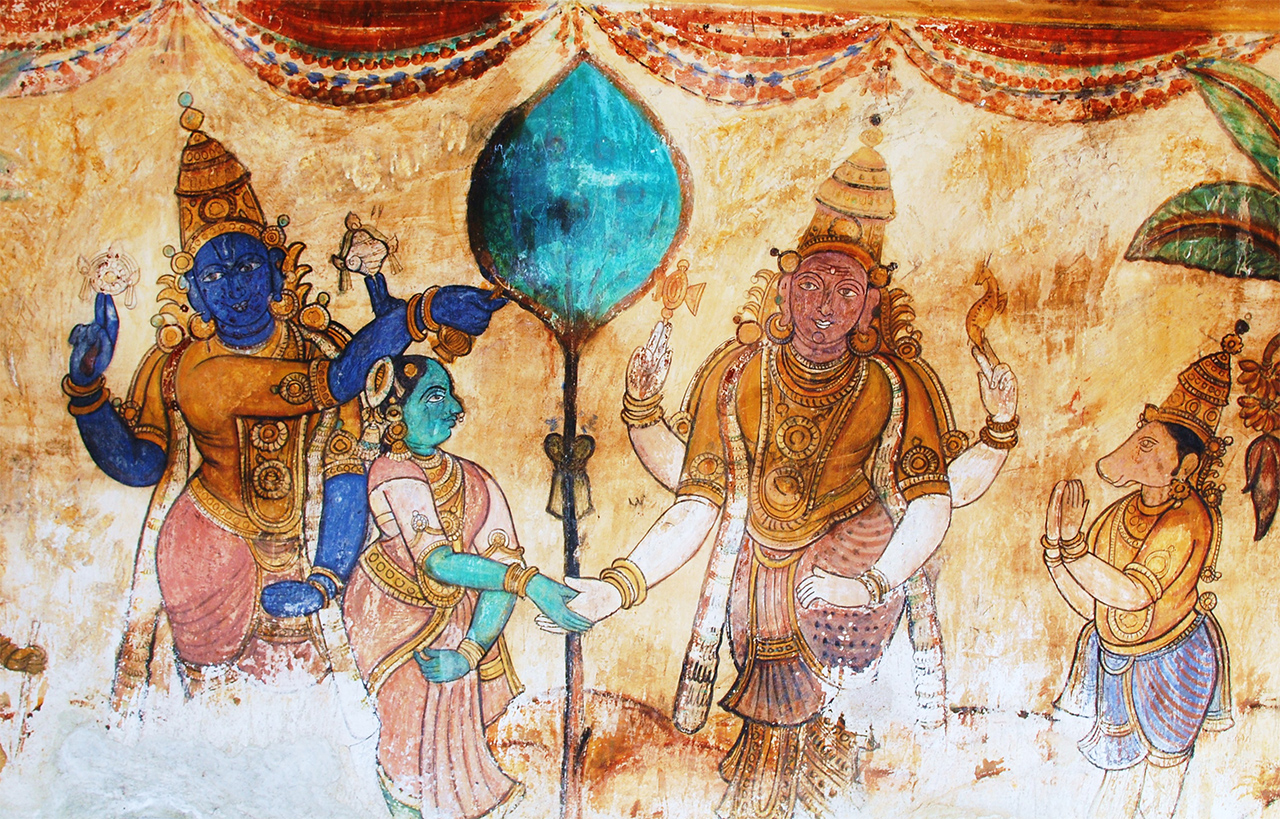
One such school of painting, called the Tanjore paintings finds its origins in South India and flourished under the patronage of the Vijayanagar and Maratha royals. The content of these paintings centered on depiction of gods and goddesses and stories from religious epics, such as Mahabharata and Ramayana. The Tanjore Paintings thus like many other forms of painting in India reflects the culture of the community and their beliefs and was practiced by artist who passed down their art from one generation to another.

Tanjore-Painting Brihadishvara Temple
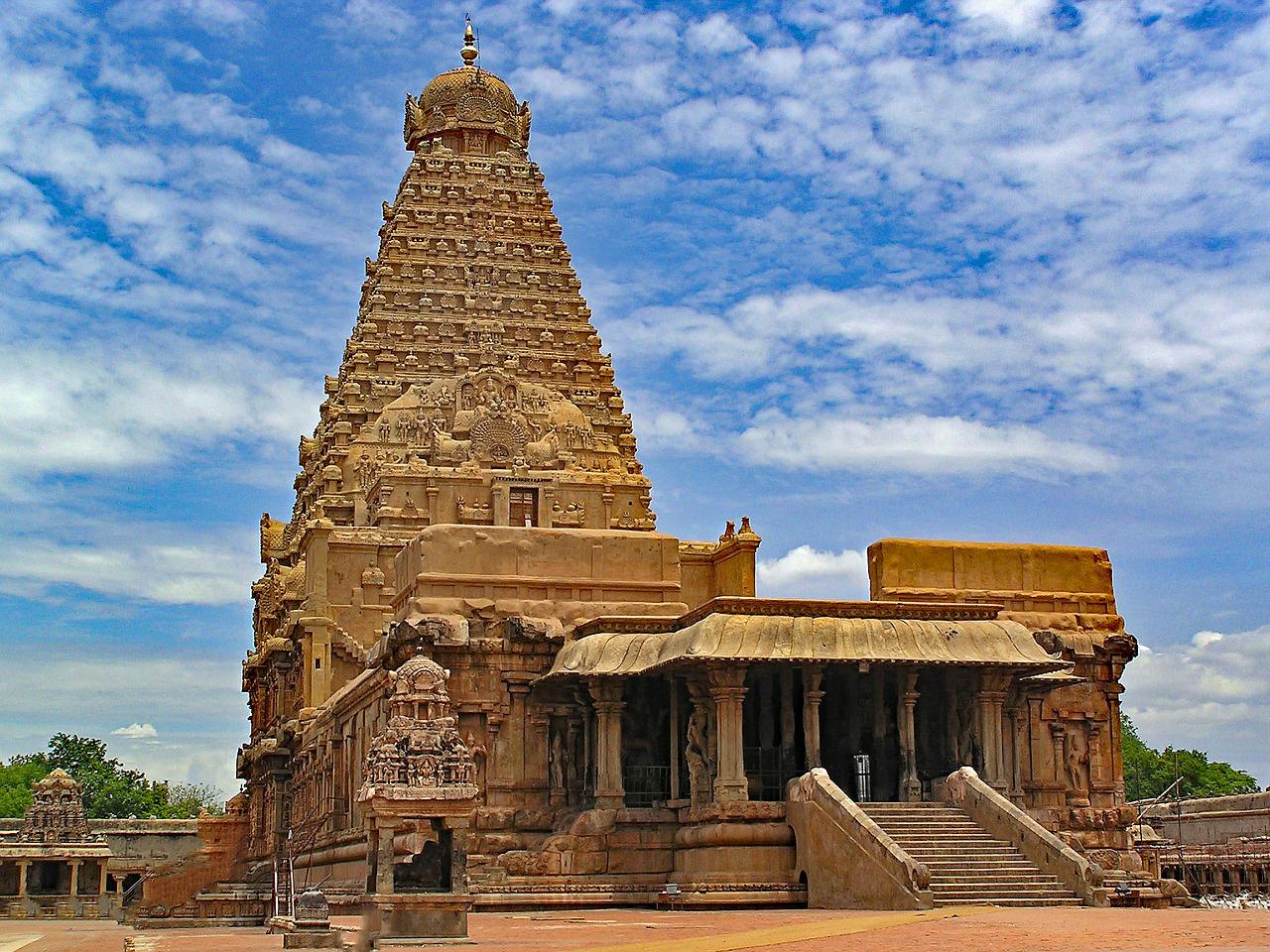
Brihadeshwara temple, Thanjavur

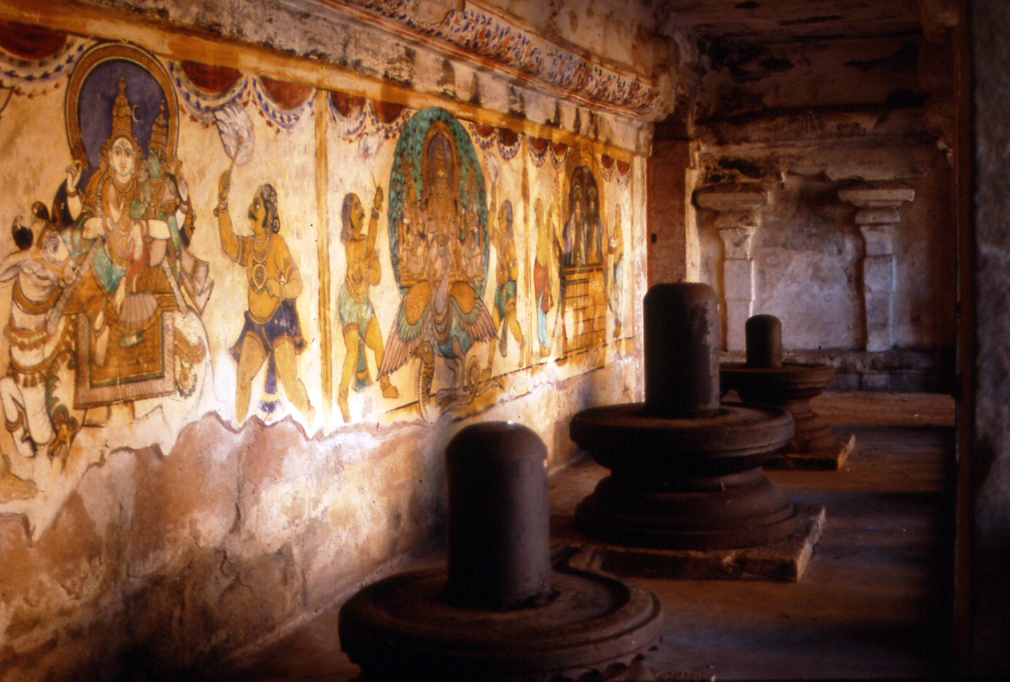
The houses around the Brihadeshwara temple (where the 11th century Chola painting is seen) in Thanjavur (Tanjore) are great examples of how this art has been preserved over the years. The key is the detailing, method and content of the paintings that differentiate the Tanjore paintings from others. Over the years the paintings have evolved, however, contemporary Tanjore paintings still hold on to the principal values of its ancient predecessors.

History of Tanjore Paintings

Source – Wikimedia

Originated in the town of Thanjavur or Tanjore, this art form can be traced back to 1600 AD when the Nayakas under the patronage of the Vijayanagara Rayas encouraged this form of painting that revolved around Hindu religious subjects and were mainly used in temples and places of worship. The Marathas took over after the fall of the Vijayanagara dynasty and their influence was seen on the subsequent Tanjore paintings. The artists now began painting not only for temples, but also decorating palaces, buildings and residences of the Maratha kings. Under the reign of Serfojii Bhonsale II the art form peaked. After the fall of the Maratha kingdom the Chettiar community continued to back the Tanjore artists and their belief in Shiva saw an increase in Shiv related paintings. Post the Anglo-Mysore wars the British also encouraged the Tanjore artists. The Raju community of Thanjavur and Trichy were best known for creating great masterpieces.

Method of Tanjore Paintings

Tanjore-Paintings
Source

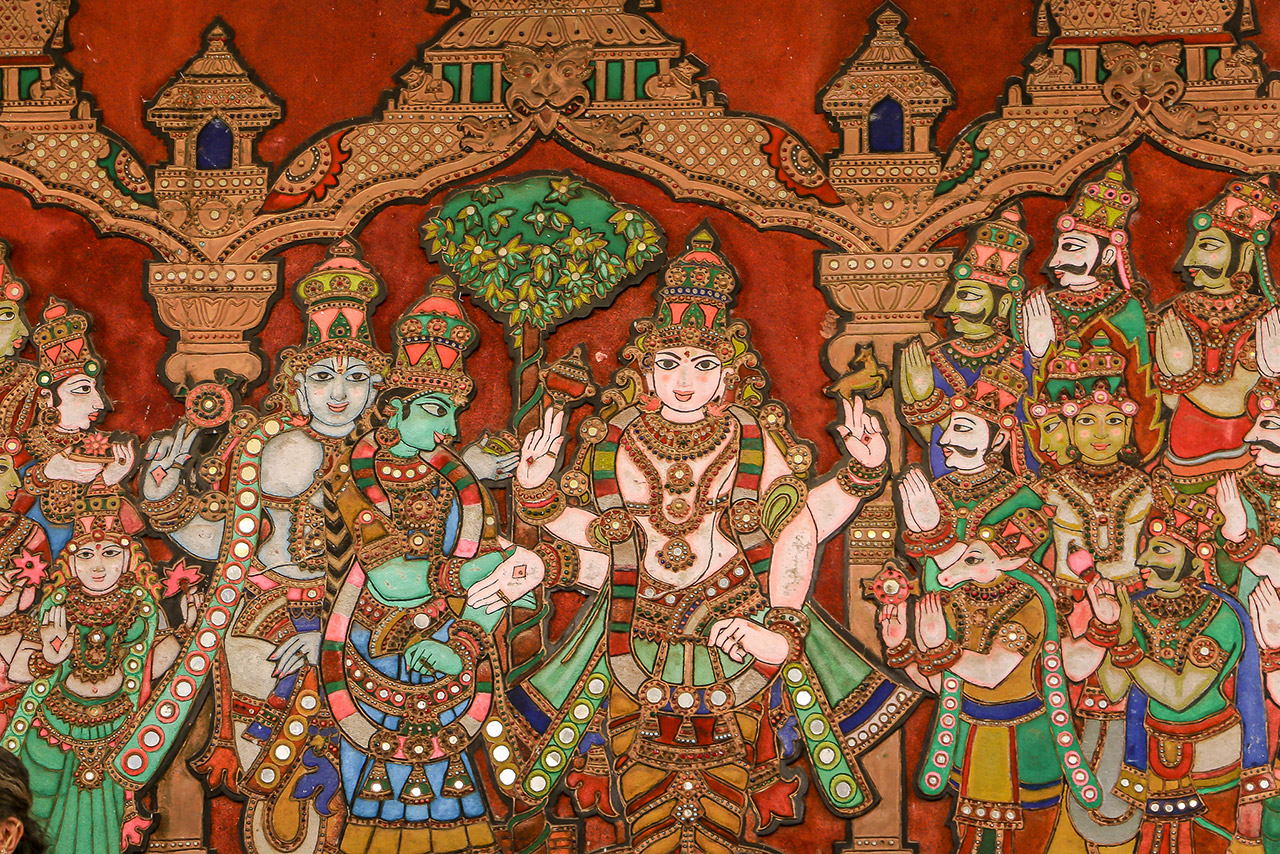
Tanjore paintings are made in different sizes and subjects depending on the patrons. A Tanjore painting is usually made on canvas which is pasted on a plank. The canvas is evenly coated and a paste prepared for the Gesso work. After an initial sketch natural dyes and colors were used as paints however this has changed over the years with the usage of synthetic colors and adhesives.

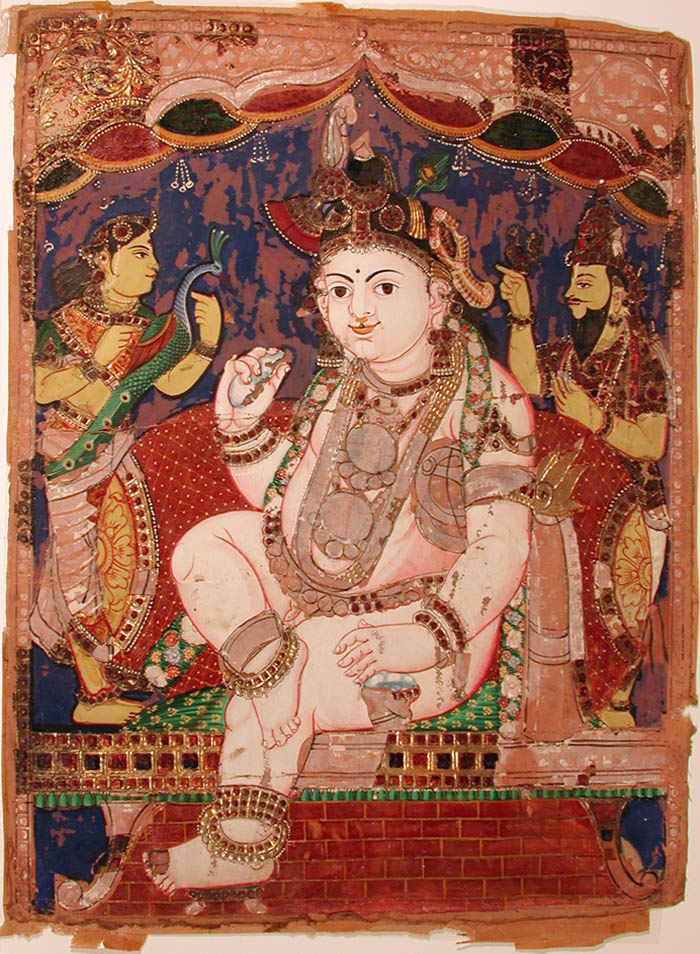
The main characteristics of a Tanjore painting include rich vivid colors, gold foils and an embedded inlay work of either glass or precious stones and glittering gold. The usage of valuable stones and gold within the painting is perhaps the highlight and the most distinguishing aspect of the Tanjore paintings. The glitter of the material gives the painting a glow of illumination even in darkness.

Style and Content of Tanjore Paintings

Tanjore-Paintings
Image – The San Diego Museum

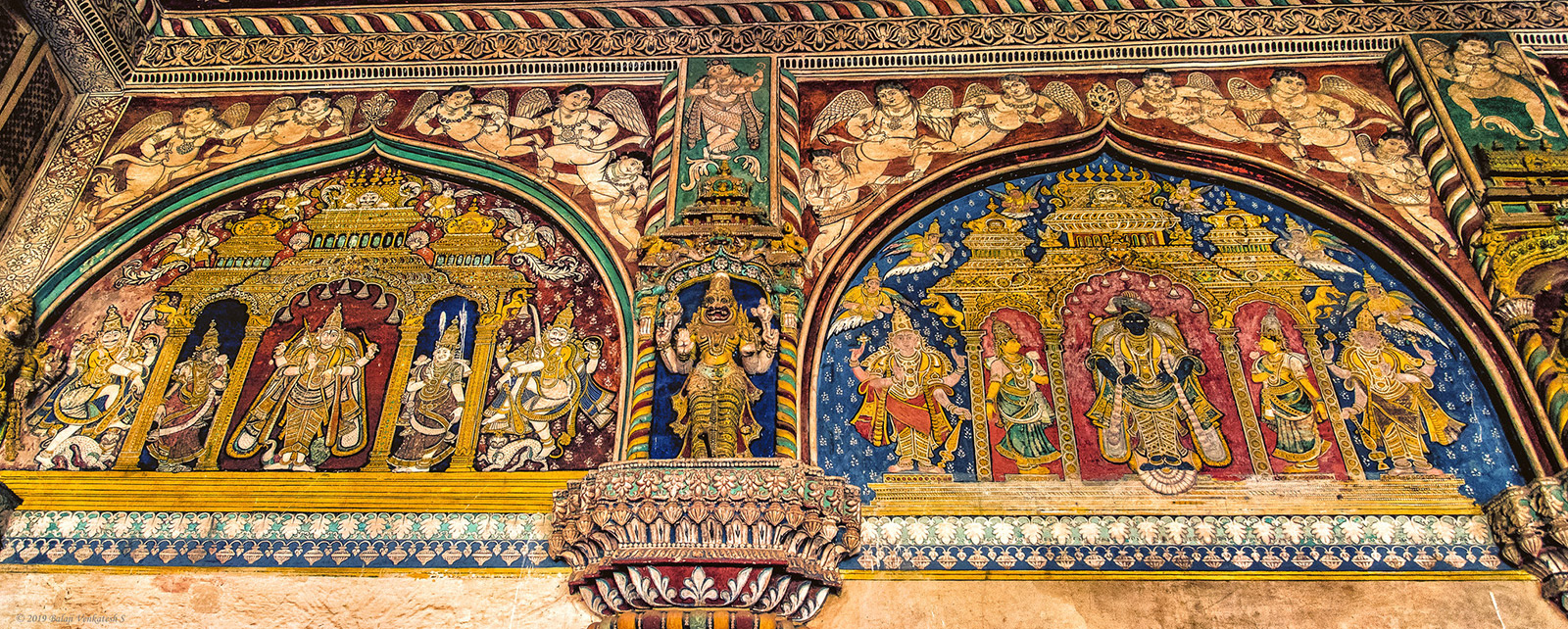
Most Tanjore paintings consist of one main deity figure with a rounded face and almond shaped eyes. The main deity is enclosed within curtains or arches and the gold leaves and gems are usually used in selected paint areas such as, the arches, thrones, pillars, dresses and so on. The European influence is seen in the miniature angels and seraphs seen around the main figures. In many paintings, Sikh, Muslim and Jain subjects have also been found.

The Tanjore paintings are still popular in South India and used in many homes as home décor, for gifting purposes or in the prayer rooms. A few prominent artists have also emerged such as, C. Kondiah Raju the famous calendar artist, a descendant from the illustrious Raju community of Tanjore painters.

Tanjore-Painting-in-Tanjore-Palace
Tanjore paintings in Tanjore PalaceBalaji Venkatesh/Flickr

The Government of India recognized Tanjore paintings as a Geographical Indication in 2007-08 thus adding more weight in the preservation and growth of the art form.

The Tanjore paintings are an important jewel in the shining treasures of Indian art forms. Its legacy, history and style make it a glorious part of renowned painting forms across the world. However, its true essence lies in the fact that it is embedded in the culture and spirit of southern India making it as much as an essential part of the art galleries as temples and homes.

The Story of Madhava and Kandala in Miniature Paintings

0
Miniature-painting-Women-in-trance-listening-to-Madhava's-music
A group of women in a trance before Madhava, from Bilaspur, dated to circa 1690. Wikimedia

#Didyouknow that an ancient love story, initially in oral form, later composed in Sanskrit verse and prose, has been illustrated in Indian miniature painting? We are talking here of the story of Madhavanala and Kamakandala. This story has been in circulation since the 12th century. Madhava was a handsome and accomplished young man from Pushpavati in Central India. He was very talented and the music of his vina managed to mesmerise people, especially women and kept them away from work, hence he gets called by the king Govindachandra who wants to check his talent. Madhava can also chant beautifully. He impresses the king but his queen is also too enthralled by this young man’s performance. The king is not very happy with this and he banishes Madhava from his kingdom. Madhava then reaches the court of King Kama Sena, the ruler of Kamavati. There he watches the bewitching courtesan Kamakandala performing. The two fall in love, but royal politics ensures that the lovers part. What happens next? 

This very interesting love story of Madhava and Kandala has not only been translated but illustrated as well by artists from Pahari and Rajasthani Schools of Indian painting. Let us check out more details and paintings from this fascinating tale of yore. 

Miniature-painting-Women-listening-to-Madhava's-vina-near-a-well
Madhava plays his vina before five women drawing water from a well, from Bilaspur, dated to circa 1700. Wikimedia

The oldest recorded manuscript of the story is dated to Samvat 542 (Nepal era), around circa 1422 A.D, housed in the Durbar Library of Nepal. There are 43 other Sanskrit manuscripts dating from 16th to 19th century and are housed across different libraries in places like Thanjavur, Pune and Varanasi. It has been called a katha, meaning story and nataka katha which indicates that this story has been used as a play as well. The author of the composition is not very clear, only 14 manuscripts mention the names of Vidyapati, Kavishvara and Kanakasundara.

Miniature-painting Madhava enthralls the court of King Govinda-chandra with his music
Madhava enthralls the court of King Govinda-chandra with his music, painting from Mandi or Guler, dated to circa 1845. Wikimedia

As already narrated, once banished from his home city, Madhava goes to the city of Kamavati where he sees a courtesan dancing in the court of Kama Sena, the ruler and is smitten with her. He himself impresses the ruler with his knowledge of music, and is given gifts by the king. He, however gifts the same to Kandala. Seeing this the ruler, feels insulted and banishes him from the court of Kamavati. 

Suggested Read – Love-lorn Melodies – Exploring the Ragamala Paintings from Bundi

The most popular version of the romance during the 17th century was a Hindi text by the poet Alam (fl. 1658–1703) in which Madhava does not actually faint at the sight of his beloved. Several paintings exist in which the artists depict him so overcome with feeling that he collapses. Depicted here is a painting from Mewar of Madhav swooning at the sight of Kandala, attributed to artist Chokha. The paintings are generally from a ‘Madhavanala Kamakandala’ series from different schools. Bilaspur School seems to dominate on illustrations to this story.

Story-of-Madhava-and-Kandala-in-Miniature-painting
Left – Swooning at the sight of the beautiful Kamakandala, by artist Chokha, from Mewar, dated to circa 1785. Wikimedia. Right – Madhava and Kamakandala meet in the forest, dated to circa 1610, probably Bilaspur, San Diego Museum of Art, U S A. Wikimedia

However, Madhava meets Kandala and goes to her house who also is smitten with him. They spend the night in amorous conduct and impressing each other with games and puzzles. Madhava has to leave the next morning and Kandala is distressed. They send messages full of longing to each other as Madhava moves from place to place. Finally, he come to Ujjayini and takes shelter in the temple of Mahakala. He inscribes in verse the pain and agony of separation from Kanadala on the walls of the temple. 

Suggested Read – Gita Govinda – Enchanting Paintings of An Epic Text from the Pahari School of Paintings

The verses written by Madhava are seen by King Vikramaditya. But the king wants to check for himself whether Madhava really is in love with Kandala. He locates Madhava with the help of a courtesan, and Madhava is told by the king that Kandala is dead. 

Miniature-painting-Madhava in a tent before King Vikramaditya, from Bilaspur. dated to 1690
Madhava in a tent before King Vikramaditya, from Bilaspur. dated to 1690. Wikimedia

On hearing this Madhava too dies. Learning about her lover’s demise Kandala swoons and dies as well. The king is very upset and contemplates suicide himself. But the familiar spirit Betal comes to the rescue. He brings the nectar of immortality and brings both Madhava and Kandala to life! King Vikramaditya asks the king of Kamavati to release Kandala and this happens only after a battle. 

Miniature-painting Kandala faints on hearing bad news, from Bilaspur, dated to circa 1700
Miniature-painting Kandala faints on hearing bad news, from Bilaspur, dated to circa 1700. Wikimedia

Both Madhava and Kandala go back with him to Ujjayini and lead a life together. The King Vikramaditya engages Madhava in services at his court.  Thus, we see a happy ending to a unique love story.

References –

Haskar, A N D, tr./Madhav and Kama: a story from ancient India, New Delhi: Roli Books, 2006.
https://www.rct.uk/collection/themes/publications/eastern-encounters/madhava-nal-enraptured-at-the-sight-of-kama (accessed on 28.05.2022)

Inspiring and Successful Children Who Made India Proud

0

Inspiring-Children-Who-Made-India-Proud

Children are the future. However, as adults we often tend to underestimate their talent and potential. We brush them aside as being too naïve or inexperienced. Yet, there are some children who have inspired and achieved more than their age. Their inborn talent and hard work coupled with the innocent view of the world has helped them reach towering heights. And it is these children who have made India proud. 

Looking over the last decade or so, there are various kids who have excelled in education, sports, business and more. These children have shown great maturity and have not been intimidated by the attention and adulation. 

Child prodigies

Children Who Made India Proud

There is a fine line when it comes to children achieving great things. Some might argue that their childhood doesn’t remain the same. Kids in show business or sports often have to deal with mental and emotional adjustments when they grow up. For example, the little Budhia Singh who came to the spotlight for his marathon runs faded away due to unfortunate events off the field. Recently, through social media he is being recognized again and said to be preparing for the 2024 Olympics. But his case is a classic example of how talented children often lose their way due to lack of support and genuineness. 

However, there is the other side to the coin too. When kids venture into an interest on their own accord then the results are usually positive. However, when they are pushed or forced into, it leads to them getting confused and disarrayed. 

And hence, one cannot neglect the talent that some kids have. If not nurtured or acknowledged they might find it hard to develop it further. On the other hand, there are children who are inspirational not necessarily because of their skill. But it is their sense of humanity, inclusivity and trying to truly make the world a better place that makes them special. 

Thus, we bring to you some of the most inspiring and truly gifted children that have made India proud. 

Kautilya Pandit

Children Who Made India Proud, Kautilya Pandit

With an IQ of 150, Kautilya is also called the Google boy. Known for his astounding intelligence and grasping power he has also featured on KBC. He has won the Global Child Prodigy award in 2020 and is also referred to as the human computer. With his exemplary general knowledge and information about current affairs, Kautilya is a wonder kid. 

Rameshbabu Praggnanandhaa 

Children Who Made India Proud,

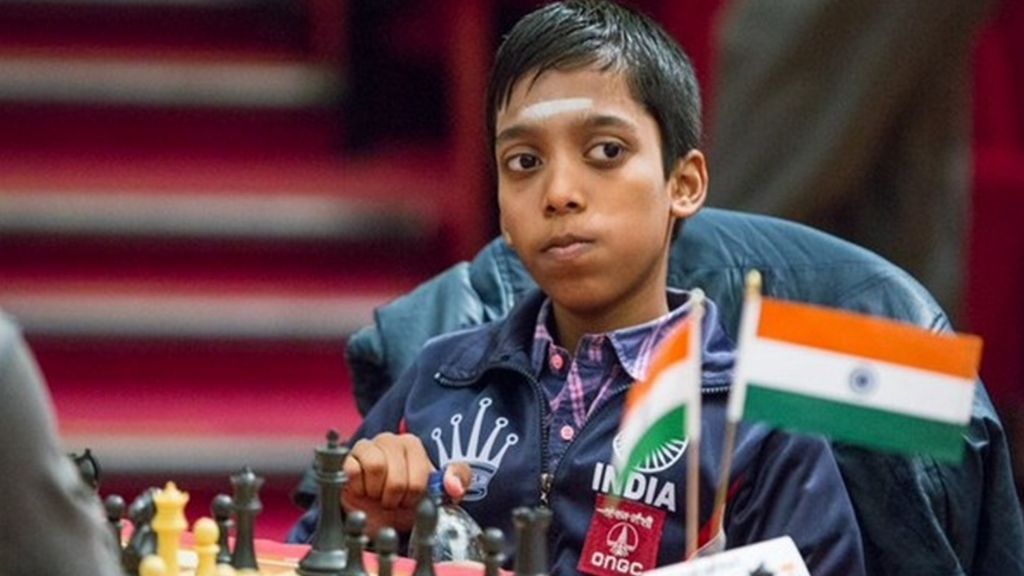
R Praggnanandhaa became the youngest international chess master at the age of 10 in the history of the game. He is also the fifth-youngest to achieve the Grandmaster title in the world. With various wins under his belt, Prag (as fondly called) started playing when he was merely three and half. His sister Vaishali was enrolled into a chess academy and watching her practice at home is what caught Prag’s attention. He insisted her sister teach her the game, a surprising feat as even the world’s best, such as Viswanathan Anand started playing chess at the age of six. 

Lydian Nadhaswaram

Children Who Made India Proud, Lydian Nadhaswaram

This young boy became the first Indian musician to appear on the Ellen DeGeneres Show. A student from KM Music Conservatory, founded by AR Rahman, Lydian is the winner of the CBS Global Talent Show. He started playing the drums when two years old and learned the piano on his own by eight years of age. 

Arshdeep Singh

Children Who Made India Proud, Arshdeep Singh

Arshdeep is a wildlife photographer who won the 2018 Young Wildlife Photographer of the Year – Asia when he was ten years old. He won the prestigious award with the photograph of owlets looking out of a waste pipe. His love for the camera began at the age of five when he started clicking with his father. He was also given the title of Wildlife Photographer of the Year in 2020. 

Nihal Raj

Children Who Made India Proud, Nihal Raj

This young chef from Kerala is also known as Little Chef Kicha. With his YouTube channel garnering several views he keeps posting new recipes. However, the recipe that catapulted him to fame was his very own creation the Mickey Mouse Mango Ice Cream. He is a chef with a golden heart too, as he donated some of his earnings to autistic children. 

 Master Truptraj Pandya

Children Who Made India Proud, Master Truptraj Pandya

Master Truptraj Pandya holds the Guinness World Record of being the youngest table player in the world. He started playing it when he was only one and half years old and at the age of two he held his first live performance at Somaiya College in Mumbai. At three he played live at All India Radio and at four for Doordarshan. 

Priyanshi Somani

Children Who Made India Proud, Priyanshi Somani

The youngest human calculator and the winner of Mental Calculation World Cup 2010, Priyanshi is a math wizard. A national champion at abacus she is the youngest person to win the competition at the age of eleven. Her love for mental math began at the age of six and has continued from there. She has also been recognized by the Guinness Book of World Records and the Limca Book of World Records. 

The social change makers

Here are some children who have a social difference. 

Licypriya Kangujam 

Children Who Made India Proud, Licypriya Kangujam

This young climate change activist from Manipur was one of the youngest speakers at the United Nations Framework Convention in 2019. She was only eight then. At six years old, she was attending protests and meetings centered on climate change. She came into the limelight when she protested outside the parliament to gain the attention of Prime Minister Narendra Modi on climate matters. She continues to spread the word through her social media etc. 

Babar Ali

Children Who Made India Proud, Babar Ali

At nine years of age Babar was not only going to school but also headmaster of his own school. From a village in Murshidabad, West Bengal Babar began his school under a tree, first with only eight students. He would teach them after his school hours coupled with his travel time from school to his village. Today Babar is no longer a young kid but his school Ananda Siksha Niketan has more than 300 students. 

Gitanjali Rao

Children Who Made India Proud, Gitanjali Rao

An Indian-American, Gitanjali is the first ‘Kid of the year’ and on the cover of the TIME Magazine. She is responsible for six innovations that dwell on social issues, such as detecting harmful chemicals in water, checking the medication intake of patients, identifying cyber bullying and more. 

Aryan Gulati

Children Who Made India Proud, Aryan Gulati

Aryan has developed an application that can detect lung disorders and COLD virus in five seconds. He has been awarded the Atma Nirbhar Bharat Ideathon Prize. LungAI can detect lung related disorders, including lung cancer with an accuracy of 90%.

Souradeep Sarkar

Children Who Made India Proud, Souradeep Sarkar

At eight years old, Souradeep created Dyslexia, an app that helps kids with dyslexia. Moved by the struggle dyslexic children have in studying, Souradeep developed his app to make learning fun and easy for them. He created Dyslexia while learning how to code.

Arav Hak and Rajveer Mehta

Children Who Made India Proud, Arav Hak and Rajveer Mehta

Both these boys hailing from Mumbai have raised funds and awareness for cancer patients. Their work includes raising funds for kids with cancer and they also played a big role in collecting funds and food for the underprivileged during the 2020 lockdown. They work in association with the Nargis Dutt Foundation and have been instrumental in providing cancer kits for patients who are diagnosed with the deadly disease. 

The list can go on. The children of Gujarat who gave up their piggy bank money towards COVID relief funds, or Gayatri who made all possible efforts to call for help to reach her village during the lockdown. There was Subhendu Kumar who created a Gift for Farmers through an innovation that helped them in sowing, tilling and more. Or Kumar Gaurav who mortgaged his house to continue playing chess, Kartik Sawhney the visually impaired student who made it to Stanford. Anika Chebrolu whose research could provide treatment for COVID or Advait Kolarkar who held art exhibitions when he was two. There are many such children, some who have now become young adults and some who are still on the threshold of childhood. Yet, all these children have shown us that age is just a number when it comes to aspiring and achieving goals that seem impossible and undoable. From children we learn the art of innocent and unadulterated hard work and dedication.

Here is wishing that each child finds his or her true passion and belief. That each child has a happy and fulfilled childhood where they are given the chance to explore, question and better their lives and that of others. 

27 Must Try Dishes from Karnataka Traditional Food for Your Taste Buds

6
Karnataka-Traditional-Food
Image – Harsha K R/Flickr

If there is anything that two completely diametrically opposite people can bond over, it is highly likely to be food. We live in a world where food is consumed not because it is a necessity, but because it is a hobby. And why not? How many times have we indulged in a plate of paani puri to elevate our day, and when the clouds pour down, the first thing we Indians do is prepare a steaming hot cup of chai. Any foodie would know that Karnataka is a land of age-old, traditional recipes. These mouth-watering dishes are one of the best attractions that tourists seek whenever they visit Karnataka. However, while the famous vada-sambar is certainly appealing, there are several less-known and equally interesting dishes that are heavenly. Here are the best dishes from Karnataka traditional food that will make you ache for more:

1. Mavinkai Chutney

Best Food from Karnataka-Mavinakai Chutney
Image/Sameer Goyal/Flickr

Packed with deliciousness, with just the right amount of spices, this unique chutney is prepared from unripe mangoes. It is typically served with your trusty idli, dosa, paratha, or rice as a part of the main course meal. This is a seasonal delight that is made in several households during the much-anticipated mango season. A tangy addition to your meal, this chutney is a must-try if you’re in Karnataka!

2. Gojju

Karnataka-Traditional-Food-Gojju
Image/Wikimedia

Gojju is a vegetarian side dish served as a part of the main course. Although there are several variations to this recipe, the common ones are made from okra, mango, pineapples, etc. This dish is simple to make and is less time-consuming.

3. Chigli Chutney

Karnataka-Traditional-Food-Chigli-Chutney
Image Courtesy – Foodlovers.in

Exclusively made in Malnad, this chutney is prepared from red fire ants. Yes, red fire ants! This unique and classic chutney adds a tint of fire to your plate due to its spicy nature. It is an excellent source of protein in the winter. Moreover, it is even believed to relieve cough, cold, and pneumonia. The Chigli Chutney is usually eaten with rice rotis as an accomplishment. Brave enough to try this dish?

4. Halasina Yele Chilmi

Karnataka-Traditional-Food-Halasina-Yele-Chilmi
Image Courtesy – Karnataka Tourism/FB

This fun and exotic dish is something we would all look forward to! Halasina Yele Chilmi is a sweet dish found on the Canara coast. It is made with coconut, jaggery, and rice paste. The steamed delicacy is shaped into cones made up of jackfruit leaves. Along with having a sweet taste and being packed with deliciousness, Halasana Yele Chilmi is also visually attractive. Try not to grab one if it’s placed in front of you, will you?

5. Chow Chow Bhath

Karnataka-Traditional-Food Chow Chow bath
Image/Wikimedia

A boon of sweet and spice; this rice dish is for those people who are torn between their love for sweet and spicy. Chow Chow Bhath is a splendid dish consisting of Kesari bath and Khara Bhath on the same plate. While the Khara bath provides a salty and spicy blend, the Kesari bath is a sweet addition to the dish. This is a breakfast recipe, also popular in Bangalore.

6. Korri Gassi

Karnataka-Traditional-Food-Korri Gassi
Image/Wikimedia

The epitome of deliciousness, Korri Gassi is a chicken delight from Mangalore (south of Karnataka). Korri translates to chicken and gassi means curry. As the name suggests, this is a chicken curry made from tamarind, tomatoes, coconut milk along with a masala prepared from a variety of added ingredients such as garlic, mustard seeds, cumin seeds, etc. This dish is great for any non-veg lover out there.

7. Sungta Song

Karnataka-Traditional-Food-Sungta-01
Image – RovingI/Flickr

Can you imagine a dish so grand, it is given the title of a song? Sungta translates to the song. This special dish is a thick prawn’s curry made with onions, tomato masala, and garnished with coriander and some zingy lemons. It is, without a doubt, extremely unique and one of a kind in Karnataka.

8. Mandige

Karnataka-Traditional-Food-Mandige-01
Image Source

The star of Belgaum, (Also prepared in Maharashtra) Mandige is a special sweet that marks its presence as it is served in Brahmin weddings and during festivals as the traditional ‘prashad’. Mandige is a sort of flaky crepe filled with sugar, ghee, and khoa. The origins of this dish remain unclear to date. To cook this complex recipe, cooks usually work in the early hours of the morning. Once the dish is prepared, each piece is carefully packed and stored in baskets. The most appealing site, indeed!

9. Kalees Ankiti

Karnataka-Traditional-Food-Kalees-Ankiti
Image Courtesy – Pots & Treats (Mangalorean)/Youtube

Heaven for any non – vegetarian, Kalees Ankiti means liver intestines. It is a rare dish that contains pig liver, intestines, etc. Since Kalees Ankiti is extremely difficult and time-consuming to cook, hence it is not easily found in Karnataka.

10. Kismuri

Karnataka-Traditional-Food-Kismuri-02
Image Source

A sharp contrast to Kalees Ankiti, Kismuri is a kind of salad that contains beetroot, yam, banana stem, and carrots. These vegetables are boiled and mixed with several ingredients such as urad daal, onions, yogurt, etc. Served with fried papad on top, this delicacy is a reserve of nourishment for the body.

11. Karadantu

Karnataka-Traditional-Food-karadantu
Image –Milaap.org /Flickr

Found only in Karnataka, this sweet delicacy is a fried-edible gum, made by mixing edible gum with jaggery, almonds, fig, pistachios, cashews, and numerous other nuts and seeds. One may even call Karadantu the Indian version of an energy bar. It is usually recommended for women after their pregnancy and is also prepared during festivities and celebrations.

12. Allugedde

Karnataka-Traditional-Food-Allugedde-01
Image Source

The famed mashed potatoes recipe from Karnataka, Allugedda is prepared from tomato, black gram, onion, and green chilies. It is served as a side dish alongside dosa, rice, or even as snacks with a preferred beverage.

13. Lamb Blood Fry

Karnataka-Traditional-Food-Lamb-Blood-Fry-01
Image – Wikimedia

Rakti is one bloody dish!. Literally. The dish of a Hindu martial caste, Saujis, who claim to be the descendants of king Sahasrarjuna, Rakti is made during Dasara and is widely eaten with Jowar rotis. This dish is made with meat, spice, and, well, blood. Not for the faint of heart!

14. Mysore Masala Dosa

Karnataka-Traditional-Food-Mysore Masala Dosa
Image/Garrett Zeigler/Flickr

The most common and well-known dish in Karnataka, the Mysore Masala Dosa is something every Indian adores! The red chutney smeared on top, classic sambhar, and ghee is a true South Indian delight. Any foodie would agree – this dish is undoubtedly the way to go when you’re craving a low-calorie snack and when you aren’t willing to compromise on taste!

15. Kane Rawa Fry

Karnataka-Traditional-Food Kane Rava Fry
Image/Charles Haynes/Flickr

The specialty of Mangalore, this fish curry is one of the best seafood you’ll come across in Karnataka. Kane Rawa Fry consists of Lady Fish being mixed in a red chili paste and being fried to attain a golden-ish hue. A tangy sight to behold, this dish is crunchy on the outside and juicy on the inside.

16. Neer Dosa

Karnataka-Traditional-Food Neer Dosa
Image/Wikimedia

Anything which has ‘dosa’ in it is always something delicious and you know it! Relish in these fluffy, soft, and tasty crepes to elevate your taste buds. Neer dosa means water dosas due to the watery and liquid nature of the batter as opposed to the usual thick dosa batter. Due to their light and soft nature, these dosas are eaten with chutney for breakfast. Indeed, Neer Dosas are one of the best and easy-to-make snacks of all time!

17. Halbai

Karnataka-Traditional-Food-Halbai-01
Image Source

Adding to our list of Karnataka’s sweet dishes is the appetizing Halbai. This wonderful sweet is famously prepared during the Nagarpanchami festival. It is prepared from ingredients such as jaggery, rice, and coconuts. This ‘rice halwa’ is is extremely simple to make and is a favorite among the children as well as the elders.

18. Mangalore Buns

Mangalore buns
Image Clourtesy – Bangalore Shor

This circular treat belongs to the Udupi cuisine of Karnataka. Made from banana and flour, these buns or pooris are mildly sweet and extremely soft. This dish is commonly eaten for snacks and breakfast along with idli-dosa. The thick texture and flaky insides of the bun are what make them so attractive.

19. Kadle Manoli

Karnataka-Traditional-Food-Kadle-Manoli-02
Image Source

Another classic from Mangalore, the manoli or Tendli, is a vegetarian recipe famous for its magnificent taste. It is prepared by combing manoli, kadle, and coconut to add flavor. Although it takes a relatively longer amount of time to prepare this dish, I can assure you that it is worth every effort!

20. Mysore Bonda

Karnataka-Traditional-Food-Mysore Bonda
Image/Gopal Krishna/Pixahive

Also known as Ulundu Bonda, this is a popular fried delicacy that originated in Mysore. To provide a good texture to the bonda, fresh pieces of coconuts are added to the batter. This also makes it tastier and more appealing. This dish is eaten all over Mysore as a snack by all age groups.

21. Thatte Idli

Karnataka-Traditional-Food-Thatte-Idli
Image – Solarisgirl/Flickr

Thatte Idli is a prominent Idli variety (rice cake). This idli is bigger in diameter and thickness than conventional idli and gets its name from the round disc type basin in which it is produced. Bidadi, a Bengaluru industrial area, is well-known for its bisi (hot) thatte idli. Of course, Bengaluru isn’t the only town in Karnataka that can claim ownership of the thatte idli; Tumakuru (former22ly Tumkur), located less than two hours from Bengaluru, is also famous for its thatte idli.

22. Ennegayi

Karnataka-Traditional-Food-Ennegayi
Image – Savitha Ak/FB

Badanekayi ennegayi, also known as thumbida badanekayi, is a traditional North Karnataka curry dish. Jowar roti (jolada rotti) or chapati is the most common accompaniment to ennegayi. Small purple brinjals, onion, coconut, peanuts, sesame seeds, and a variety of additional spices are used to make delicious ennegayi or stuffed brinjal.

This dish is known in Kannada as ennegayi or thumbida badanekayi. In Kannada, the word “enne” means “oil.” Because brinjal or badanekayi is cooked in oil over low heat, it is known as ennegayi. In Kannada, the word “thumbida” means “stuffed.”

23. Bisi Bele Bath

Karnataka-Traditional-Food-Bisi-Bele-Bath
Image – Deevi’s Kitchen/FB

Bisi bele bath is a traditional meal from the Indian state of Karnataka. In English, Bisi bele bath means “hot lentil rice dish.” “Bisi” is a Kannada term that means “Hot” (temperature), “Bele” means “Lentils” and “Bath” means “gooey dish cooked by immersing the ingredients in water”

This gooey delicacy, tempered with pure ghee, is incredibly tasty and popular in Karnataka’s eateries and tiffin centres.

Bisi bele bath is a common dish prepared in many Karnataka families. As a result, each family may have a unique recipe that incorporates a variety of components. Most variants start with short-grain rice, toor dal, tamarind, jaggery, carrots, peas, beans, bell peppers, and bisi bele bath pudi.

24. Jolada Rotti

Karnataka-Traditional-Food-Jolada-Rotti
Image – Prathap Uppi/FB

Sorghum bread is known as Jolada Rotti. Jolada Rotti is a traditional North Karnataka dish that you must sample if you visit the state. Sorghum bicolor is used to make Jolada rotti, an unleavened Indian bread. It has a rougher texture than a roti. In terms of hardness, it can be soft or firm in texture, similar to a khakhra or cracker. Jowar rotti, which literally translates to “sorghum bread,” is also known as jawarichi Bhakri in adjacent Maharastra. Jolada rotti is a staple food in most of North Karnataka’s regions, where it’s served with pulse curries like jhunka, enne gai, Shengdana Chutney, and other chutnies.

25. Chitranna

Karnataka-Traditional-Food-Chitranna
Image – Su-lin/Flickr

In Karnataka, Chitranna (Lemon Rice) is a famous rice-based cuisine. Chitranna is a simple dish to prepare and is readily accessible at affordable pricing. If you need to make something quickly for lunch or supper, this is a fantastic alternative. It’s made by combining cooked rice with a seasoning known as Oggarane or Gojju. Mustard seeds, fried lentils, peanuts, curry leaves, chillies, lemon juice, and other optional things such as scrapes of unripe mango make up the flavouring. Chitranna’s yellow hue is due to the use of turmeric powder. Some people season with garlic and onions, even though they aren’t usually part of the dish. The dish is particularly famous in the Indian state of Karnataka, where it has become a staple of the local cuisine.

26. Maddur Vada

Karnataka-Traditional-Food-Maddur-Vada
Image – Aturquoisecloud

Maddur Vada (also known as Maddur Vade) is a crispy savoury snack from Karnataka made of rice flour, semolina, and all-purpose flour, as well as onions, curry leaves, and green chilies, and eaten with coconut chutney. On the exterior, they’re crispy, yet on the inside, they’re soft.
The name of this dish comes from a little village named Maddur, which is located between Bangalore and Mysore.
These Vadas require no soaking or grinding and can be prepared in less than 30 minutes. It’s a great party appetiser or something to eat on a wet day.

27. Chiroti 

Karnataka-Traditional-Food-Chiroti
Image – Bunts Recipe/FB

Chiroti, also known as Chirote, is a traditional Karnataka and Maharashtra delicacy. It is also well-known in portions of Telangana. Particularly in the Nalgonda areas. Pheni/Peni is the name given to it in this region. On exceptional events, such as a festival or a wedding, it is offered as a dessert. It’s produced by forming stacked circular forms out of kneaded maida dough and deep frying them in ghee or refined oil. The end result is a semi-golden brown fluffy poori that is lavishly dusted with powdered sugar and possibly shredded almonds and cashews.

After going through an entire list of dishes found in Karnataka, any person would be more than thrilled to pack their bags and pay a visit to this reservoir of great food! Such delicious cuisines are only a part of the rich heritage of India, with loads more to explore. So now, tell me, which dish did you like the best?

After going through an entire list of dishes found in Karnataka, any person would be more than thrilled to pack their bags and pay a visit to this reservoir of great food! Such delicious cuisines are only a part of the rich heritage of India, with loads more to explore. So now, tell me, which dish did you like the best?