Nothing is more lovely or appealing than a traditional Indian saree, no matter how modern or westernized our country grows. Indian attire has long been associated with elegance, modesty, and grace. And with good reason! We have dozens of distinct sarees and even more ways to drape them because to our country’s diverse culture. Durga Puja is approaching, and it is the most important occasion for Bengalis to dress up in their best attire. This pujo is associated with the lal par sada sari, which is a prominent attraction of the event and is worn by practically every Bengali woman.
Bengali women regard the colour combination of red and white to be particularly auspicious. White represents purity, while red represents her fertility. A married woman’s preferred outfit for devotional gatherings, religious rituals, and commemorative functions is a white or off-white saree with a red border and pallav. These sarees are frequently adorned with white conch shell bangles (known as “shakha”) and red coral bangles (known as “pola”), as well as crimson sindoor on the forehead, all of which are indicators of her marital status.
Red and white sarees come in a variety of colours and patterns:
Tant sarees: In this combination, the sarees typically have a white or off-white cotton foundation, a red border with gold zari work, an artistic pallav, and little red patterns sprinkled across the entire body.
Jamdani sarees have a sheer white cotton or silk-cotton basis with fine red motifs woven all over the body for a spectacular finish. Traditional themes range from simple polkas to more intricate paisley and floral designs.
Garad and Garad-Korial: The garad saree has a plain white silk foundation with a large crimson border and a striped pallav. Striped borders and little red motifs woven across the white foundation of the saree are common variations. Garad-korial sarees are more ornate, with intricate designs woven into the body and pallav in red or gold. Garad sarees are made of exceedingly fine silk with a papery feel.
Tussar: Tussar silk sarees have a golden gloss and a beige or off-white foundation. The pallav contains beautifully woven red designs, and the borders are crimson or red-gold. Traditional tussar silk sarees include patterns that are very similar to tant sarees.
Muslin sarees are finer and more exotic variations of jamdani sarees. The saree’s white foundation is exceedingly light and sheer, and it’s embellished with fine crimson weavings for a sumptuous look.
Korial-Banarasi: These are sumptuous silk sarees with a velvety white or off-white foundation with magnificent gold/silver decorations on the red border and pallav, which are typical of Banarasi silks.
Image Courtesy – Suta
Baluchari: Baluchari silk sarees in red and white are really beautiful to drape and look at. Red designs illustrating tales from epics and religious literature cover the borders and pallav in meticulous detail. The creamy white background enhances the beautiful borders, which are sometimes woven with subtle red designs. A splash of gold zari among the red weavings might add to its opulence.
Red-and-white sarees come in a variety of textures and price points. The most basic cotton sarees cost a few hundred rupees, while the most beautiful silks might cost several thousands. One might select an acceptable saree based on their budget, personal preferences, and the significance of the event for which they intend to wear it.
Modern computer equipment for various purposes can be identical in design and size but, at the same time, vary significantly in price. Sometimes, one quick glance is enough to understand how a gaming laptop differs from a regular one. Playing alone is fun. But it’s much more fun to get together with friends and face difficulties jointly.
A gaming laptop can enable the user to launch multiple resource-intensive programs at once and play contemporary competitions with realistic visuals without experiencing any lag. The external differences between a special laptop and a regular one immediately give out that you have a device with powerful “hardware” stuffing in front of you.
The difference between a gaming laptop and a regular one is immediately visible:
More weight is required because the device is equipped with powerful structural components, necessitating the use of a more efficient thermoregulation system.
Overall dimensions. Additional coolers, several memory sticks, a video card — all this must be somehow hidden in the case.
Futuristic design without reference to time.
Puzzles force players to think and find solutions to challenging situations, which stimulates the brain to work, think, and grow. Today, you can play online with the Game Karma platform or think about a powerful laptop to have real fun.
The Taiwanese manufacturer MSI has introduced a powerful competitor to all gaming laptops — the MSI GP62M 7REX model. The first thing that catches your eye is the bright design of the case, which hides powerful hardware. When you turn it on, you will appreciate the pleasant multi-colored keyboard, straight lines, and user-friendly interface. The laptop is fairly competitive when it comes to gaming PC. Expensive devices have extended acoustic systems, that is, an increased number of speakers and a subwoofer. This allows you to create the effect of complete immersion.
When choosing, the first thing a user pays attention to when purchasing a device for games is a processor. The laptop’s speed will be appreciated by both players and office workers, as well as graphics specialists. Although there are two slots available, and the volume can be greatly increased, the default RAM size is 8 GB. The manufacturer decided not to supply the device with a DVD drive, which is practically not used today. Instead, there is a slot in which you can plug an SSD drive. The gadget has a contemporary processor, which is capable of handling demanding jobs and the rendering process. Furthermore, the architecture, cache size, and the number of cores are critical. The video card is responsible for the smoothness of the picture, clarity, and elaboration of textures. A very important parameter is the amount of video memory.
Video features of the new model will please any user:
Installed discrete video chip.
The almost 16-inch display and FullHD extension provide a clear picture.
Processor handles complex video processing tasks.
You will also be pleased with the color reproduction of the screen: there is no need to connect a second monitor or complex color calibration.
The benefits of the Leopard Pro model are:
Portability: the laptop weighs a little more than 2 kg, it is convenient to carry while traveling, on tours, and business trips.
No overheating: the device copes with complex tasks, does not overheat, and does not turn off.
Functional interface: there are 4 USB outputs, including Type-C. There is also a built-in card reader, an HDMI port, and a Mini-Display.
You can always play online if you don’t have the money to get a dependable capable device just now. Just go to Game Karma, find the simulations you like, and immerse yourself in the exciting process. On the website, there are more than 300 categories, allowing everyone to find what they’re looking for.
The practice of folk dances showcases the culture of a region, accentuates their legends and folklore, reiterates their history and also serves as performative gestures of offerings to the gods. The diversity of India boasts of an innumerable variety of dance forms. These have grown and have been nurtured for years giving prominence to the people. The sense of artistry, respect, and attachment to traditions are evident in the ardent performances.
The southern region of India is a trove of splendid and intrinsic folk forms of art. Today, we explore the brilliant assortment of talent, music, and color, and heritage that have been thriving in South India.
The peacock dance of Tamil Nadu, Mayilattam, brings upon the platform performers who are dressed in costume. The attires are adorned with movable beaks and elegant plumes. They pay tribute to Lord Subrahmanya’s most sincere attendant, the peacock.
Mayilattam is an extremely difficult form of dance that imitates the graceful style of the bird. The dancers require unfaltering focus and exquisite skill to execute the gliding movements. Wearing a piece of wood attached to each of their feet makes the performance more difficult. This artistic dance is usually performed in the temples of Lord Subrahmanya or the Murugan temples.
Kummi, Tamil Nadu
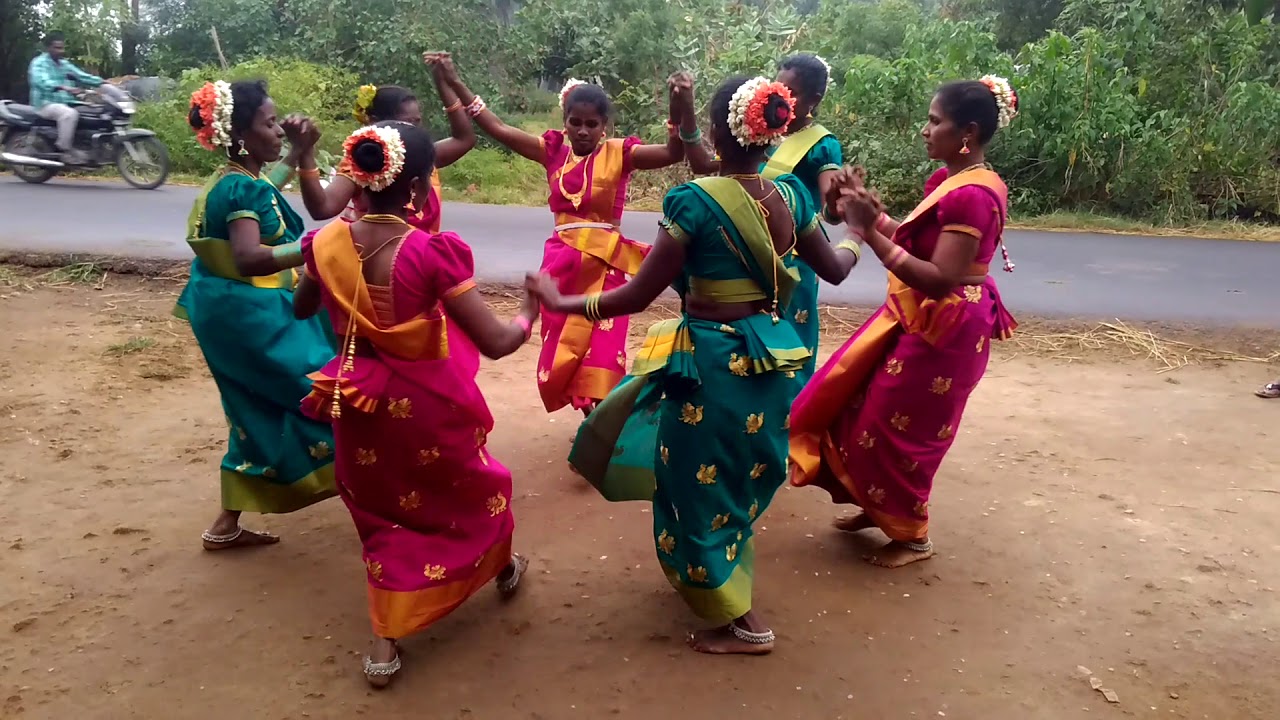
In the region of Tamil Nadu, the Kummi dance is performed by women, who dance in circles and to the rhythm of their claps. This ancient folk dance does not need the accompaniment of a musical instrument. The performers sing their songs and move to their gracefully synchronized lively beats. Other than familial ceremonies and occasions, it is performed during religious festivals. Harvest festivals like Pongal and the nine-nights-long Navratri are some of the important events.
Garadi, Tamil Nadu
One of the main festivals held in Puducherry, the Garadi dance is performed in acrobatic style. Dancers are dressed as monkeys and produce similar movements and style. It originated from the great epic Ramayana, when the army of the monkeys in Sugreev performed this dance to celebrate their Lord’s victory and his safe return with his wife, Sita. The dancers wear ten iron rings called ‘Anjali’ on each leg and dance to the beat of the ‘Ramadolus’ drums. The intricate performances last for up to five or eight hours and often throughout the night.
Padayani is a folk dance that is regarded as a communal activity where the locals take part in the preparations. It is performed in the Bhadrakali temples, in places like Kottangal, Othara, and Kadammanitta, in south Kerala. This intensive performance is inspired by mythology. Commemorating the dance that was performed by Lord Shiva to appease a raging Goddess Durga, after she defeated the demon, Darika. The performers are required to take rigorous training to maintain their physical agility and strength.
Following a special diet routine that enhances the cleansing of the spirit and the physique is also a part of it. They wear spectacular masks and headgear, elaborately decorated with paintings done on the leaves of the areca nut palm. These terrific masks, called ‘Kollam’, are representations of spiritual energies and divine characters. These can be seen in the Ganapathi Kolam, the Yakshi Kolam, the Pakshi Kolam, the Pishachu Kolam, and the Bhairavi Kolam. The exciting songs of the Padayani performance enchant the atmosphere through instruments like the Chenda and the Kaimani.
Oyilattam is a folk dance that originated in the southern region of Tamil Nadu. It is performed during festivities and important occasions. Initially it was only performed by men. Oyilattam requires the performers to move to the rhythm and harmony of the percussion instrument Thavil. With colorful kerchiefs or flags held in their hands and bells tied around ankles, the dance is a bright spectacle of jingles and vibrancy that demands powerful and intricate leg movements. Performed with enthusiasm, the primary themes are molded from the ancient epics of Mahabharata and Ramayana. It divulges to the audience knowledge and wisdom that are passed onto the next generations.
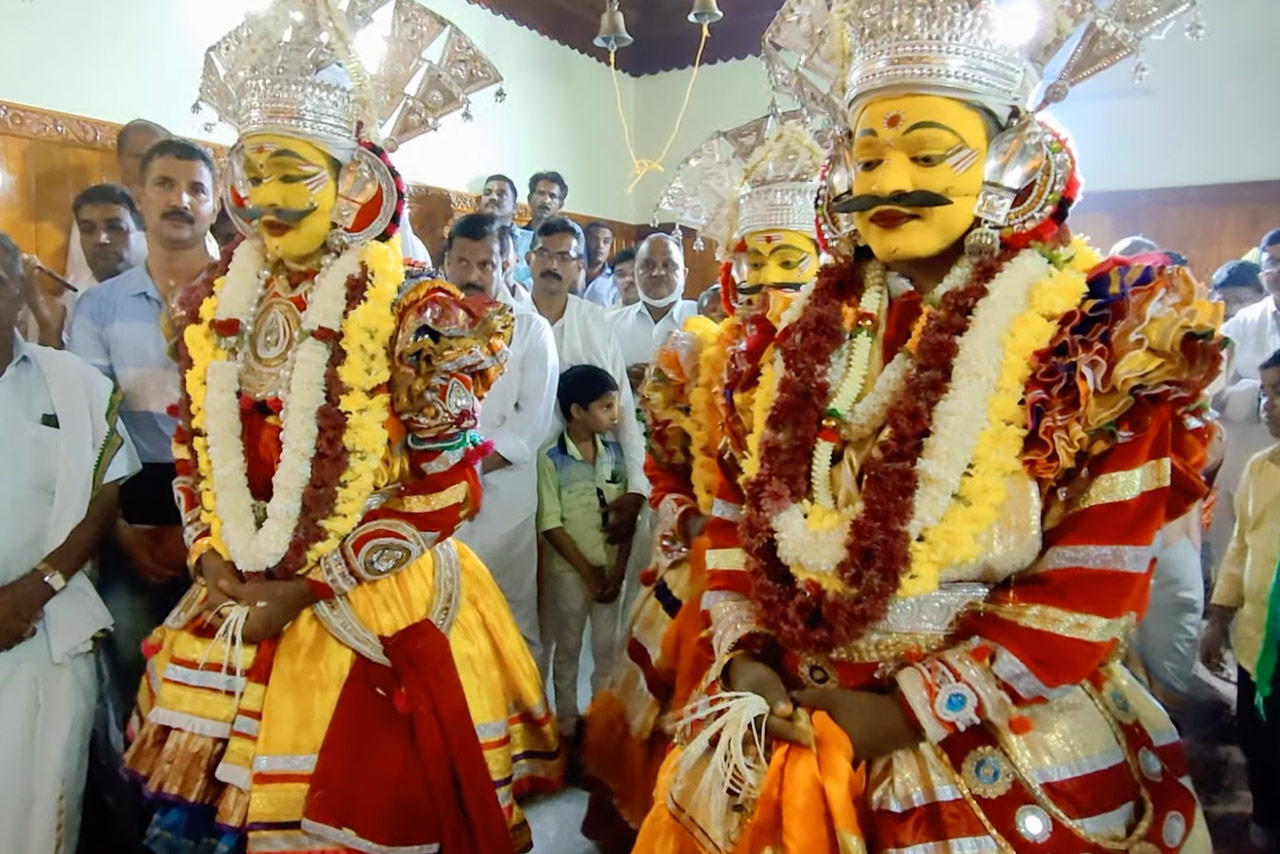
Majestic artistry, detailed adorning and ritual folk dance of absolute splendor define the Theyyam performances popular in north Kerala, specially Kolathunadu. Through graceful mime and uplifting music, the dance brings to life the stories of ancient times that are special to the culture of the State. It is believed to be a way to appease and make peace with the gods who ensure good harvest and prosperity in return.
The performers of Theyyam belong to communities like Vannan, Malayan, Anjunnoottan, and Kopalar to name a few. The first part which is the introduction to the Theyyam performance is known as Vellattam or Thottam. The wonderful dance is accompanied by the ceremonious music of Chenda, Veekan Chenda, Ilathalam, and Kuzhal.
There are over four hundred sets of Theyyam performances, each with their unique music and style that shape their story. The most prominent among these are Raktha Chamundi, Theechamundi, Muchilottu Bhagavathi, Wayanadu Kulaven, and Gulikan. Every performer gives diligent attention to represent and depict the legends of heroes as well as honor the spirits of their ancestors. Their flamboyant costumes and gorgeous makeup are both daunting and sublime.
It encompasses the colors and tradition of Kerala. The ornamented headgears stun the audience into awe, and none can take their eyes off the splendid stage. The paraphernalia of the dance, comprising facial make-up, costumes, and ornaments, all depend on the nature of the Theyyam performance.
The street theater of Theru Koothu, mainly performed in the villages of Tamil Nadu. It is inspired and derived from the Puranas, the Mahabharata, and the Ramayana. The narrative and dialogues ary improvised and songs and music prevail through the performance. The play is led by a Sutradhara or director called ‘kattiakaram’.
It includes stock characters like that of the buffoon or ‘komali’ for entertainment. Most of the melodies are based on Carnatic Ragas. These are produced across an orchestra of instruments including drums, pipes, and cymbals. The costumes and makeup of the actors are ostentatious and extravagant. Vivid colors are used to paint the face of some of the characters. There are ornamental designs flourishing the headgear, jacket, and lower garments or skirts. The classical ‘lokadharmi’ mime is incorporated for the acting technique and the scenes often include enactment of gore and violence.
Since recent years, there has been an increasing priority on monetizing such performances. Despite the restraints, the performing groups do not lack in spiritual devotion and showcase the rich heritage of their culture. These dancers and musicians are not just talented, but also take pride in their hard work to include minute details of significance in the performances.
Hushed silence during assembly, skirts at knee length. Wishing the teacher a ‘good morning’ even if the encounter was not in class or standing with hands behind the back while talking to her. Using please and thank you at all times or being corrected for interchangeably using ‘can’ with ‘may’. Yes, these and more are memories of convent schools. Buildings with corridors and a chapel. A statue of Mother Mary and a basketball court.
Sisters or Fathers taking unexpected tours of classrooms and of course, the strict closing of the school gate during classes. Convent schools are a league of their own and have a distinct character that is unlike any other school or educational institution.
A convent is defined as a ‘community of priests, religious brothers, religious sisters, monks or nuns living together under monastic vows. However, convent schooling though based on this foundation includes much more. Anyone who is convent educated would know that convent education has always been one of the most sought after in our country. The standard and values imparted in convent schools were for a long time deemed as one of the best though in recent years the quality of convent education has been on a slight decline.
Yet, when one thinks of convent education several typical approximations come to mind. And hence there is a distinguished difference between English medium schools, private schools, state schools, and convent institutes. Each has its flavor, its peculiarities that make them stand out from others.
Off late a lot of schools have names that sound like a convent-based education system but in reality, are not. For example, a few schools have been named after Saints though they are not run by nuns or priests. These are in fact, either Christian schools or sometimes private schools capitalizing on their names as convents.
So which schools or institutions can be categorized as convents? Just as its definition, convent institutions are run by religious sisters or brothers and usually headed by a superior. There is a religious element seen in various ways, such as the Catholics and Christians have a Catechism period. During the religious classes, the other children attend moral science or moral value classes. Hymns are sung and Christmas and Easter are celebrated with much enthusiasm.
However, besides these very basic religious nuances, convent schools are in fact, very secular. Most of them are government aided and hence a mixed crowd of students, hailing from different cultures, social strata, and religions come together to study and learn.
Yet, a few recent incidents as reported in the media do point fingers at how convent schools are trying to convert teachers and students. These charges have been vehemently denied by the convent institutions. Of course, in convent schools, the morning prayers begin with a hymn or prayer to the Lord. Yes, students learn carols and often take part in the Nativity plays too. However, one cannot take away the fact that these manifestations of religious fervor are rarely harmful.
Most often these are a great way for non-Christians to observe and understand a culture that they might not be familiar with. Having said that, other festivals are also celebrated in convent schools, there are cross religion references, and children are encouraged to learn and adapt to the national and regional influences. I say this because I remember with complete clarity how an Irish nun who happened to be our Principal in school, took pains to teach us the right pronunciations of the Indian National Anthem.
I remember how every morning during assembly, she stood resolutely on the mike and made us all recite one line after the other to get the diction of each Sanskrit word right.
There are also myriad other things that make convent schools just more than religious sentiment. Religious values help in social upliftment too. For example, a lot of convents believe in admitting children from underprivileged homes.
Even though they might restrict it to a certain community, at least these children get a chance to go to a regular school which otherwise would be out of their reach. Also, in many schools, including mine, there was a shelter for children, where they lived and were educated. We from regular classes would take turns to teach these children too.
With several educational institutions rising in cities the charm and attraction of convent education are decidedly slipping. Around a decade or two back, convent institutions were coveted. It was the hallmark of great literacy, as well as value education. I look back and proudly say that I am convent educated. The nuns that headed our institution were stern, but they helped shape the personalities of hundreds of students. Whether it was the all-boys or all-girls schools, the quality of education was top notch. The teachers were efficient, the system worked smoothly. However, most importantly, education was not centered on scores and marks alone. There was an immense emphasis on character building too.
Then why is convent education finding it hard to retain its hold in recent times? There are different reasons and perhaps they are all true. The fact that convents have always liked to stick to the protocol could be one. In such dynamic times, it is imperative to keep pace with technology. Many convent schools have held onto the past teaching methods a tad bit too late.
Also, the quality of faculty can be cited as a valid reason. The Irish and Indian nuns of the past had authority and character that perhaps is hard to match by the current heads and members of faculty. Also, changing times not only limit the use of technology but also a different approach in handling and managing students. The relationship between students and teachers has also changed with kids more exposed to concepts and ideas than they were earlier.
The clashes with strict authority and rules besides the stringent measures of boundaries and regulations have made parents and students prefer private educational institutions as they happen to be more flexible.
The questions of authority and rules are however debatable. One would not want to increase intelligence at the cost of behavior. But again, a generalization is perhaps not the answer here. Not all convent institutions are going downhill. And institutions are but a product of the people that run and manage them.
Whether it is the late marking in the diary even if late by a few minutes or sudden bag checking to see if there were no objectionable items are nostalgic memories that I carry from my school. Moral value classes seemed unnecessary to us, but today I cannot help being thankful for them. The fact that an entire period was dedicated to imbibing values is something that we can carry forward in our times today. And then there were the arts. A dancing period where I was hopelessly taught classical dance moves. The singing period in the hall where stood a large piano on which sat our singing teacher humming in her soft voice. The SUPW period where we learned stitching and crafting. Again, a lot of critics point it out as submissive learning for women alone, but I do disagree here. Learning how to embroider is not an anti-feminist act. Especially, when we were also taught basketball, kho kho, and other male-dominated sports as well!
Conclusion
Perhaps it is my convent education, that even if today I happen to bump into a teacher, the first thing I would do is wish for her. Wishing her good morning or afternoon not out of force or compulsion. But with genuine respect for starting a conversation. We don’t put our legs on tables let alone the cross boards under them. We respect the value of community service, of organizing fates and newspaper drives. We still believe in jumble sales and the importance of polishing our shoes. Grammar was important, etiquette even more.
But all in all, convent education with all its pros and cons has etched a mark on the education system in India. With all its distinctions and drawbacks, those who have studied and passed out from these institutions, continue to remember them fondly and with a lot of respect and dignity. At least, I do, and that perhaps is an important standard of its impact on the lives of its students.
If you’re looking for a delicious drink and a healthy way to start your day, look no further than protein coffee aka Proffee! This energizing beverage is perfect for those who want to fuel their body with nutritious ingredients first thing in the morning. It can also be consumed as a healthy mid-day sneak, or a pre or post-workout protein shake, solely based on the high protein content! The recipe is easy to make at home with just a few simple ingredients, and it can be tailored to your own taste and temperature preferences. Yes! There can be hot protein coffee, or it can be mixed with cold coffee for a protein iced coffee! Here’s everything you need to know about how to make protein coffee, including the best ingredients to use and how to customize it to your own taste preferences.
What Is Protein Coffee?
Protein coffee is a type of blended coffee drink that contains added protein powder. The protein powder can be made from whey, casein, soy, pea, rice, or hemp, and is often simply either unflavored, a vanilla protein powder, or chocolate protein powder, based on your preference. Protein coffee is becoming increasingly popular as a healthy alternative to sugary coffee drinks, as it provides a sustained energy boost and helps to build and repair muscles.
How To Make Protein Coffee aka Proffee
Ingredients:
1 cup brewed coffee
1 scoop of protein powder
1 tablespoon nut butter or coconut oil (optional)
1 tablespoon honey or maple syrup for sweetness (optional)
Instructions:
Brew your coffee using your preferred method. For a stronger coffee flavor, use a dark roast coffee bean.
Add the protein powder to a blender or food processor along with the brewed coffee, nut butter, and honey or maple syrup.
Blend until smooth and creamy. If desired, add additional milk or water.
Note: If you do not want to use a blender, first mix the protein powder with 2-3 ounces of cold water in a mug, until it looks like a paste that’s not clumpy. Then pour the coffee on top of this mixture!
Cold-brew vs iced coffee: What’s the difference?
Cold brew coffee is made by steeping coffee grounds in cold water for an extended period of time, typically 12 hours or more. Iced coffee is made by brewing hot coffee and then chilling it. The major difference between the two is that iced coffee has a higher acidity level than cold brew, which results in a brighter flavor. Cold-brew also has a smoother, less acidic taste and a slightly sweeter finish.
How to make cold brew protein coffee?
To make cold brew protein coffee, simply follow the above recipe but use cold brew coffee instead of regular brewed coffee. If you don’t have cold brew on hand, you can make your own by placing coffee grounds in a French press with cold water and refrigerating it overnight. In the morning, press down on the plunger and voila, you have cold brew coffee!
How to make iced protein coffee?
To make iced protein coffee, follow the above recipe but use iced coffee instead of regular brewed coffee. If you don’t have iced coffee on hand, you can make your own by brewing hot coffee and then adding ice cubes. Alternatively, you could brew a double-strength batch of hot coffee and pour it over ice.
Cold protein coffee recipe
The cold protein coffee recipe is more involved than the warm, however, it allows more flexibility in experiments. It’s easier for us to see this recipe as a protein shake based on coffee versus adding protein to it. It is very simple to make the drinks yourself a little more personal. Ingredients. Machine.
Customizing your protein coffee
Once you’ve mastered the basic recipe, there are endless ways to customize your protein coffee to suit your taste preferences. Try adding different flavors of protein powder, such as chocolate or vanilla. You can also experiment with different types of nut butter, sweeteners, and even toppings. Some ideas include:
Adding a splash of almond milk to make it a low carb breakfast or oat milk if you’re okay with adding extra calories
Using almond butter instead of peanut butter
Swapping out the honey for agave nectar
Sprinkling cacao nibs on top
Adding a dash of cinnamon
Adding a frozen banana
Takeaways
No matter how you make it, protein coffee is a delicious and nutritious way to start your day! Not only does it ensure you start your day right, but it’s also got the right nutrition to energize you. If you add a plant-based protein powder, it can satiate you where you feel full, and this can lead to weight loss too.
Frequently Asked Questions
Is Protein coffee healthy?
Protein coffee is a healthy alternative to sugary coffee drinks. It’s a great way to get your daily dose of protein and it’s also low in calories. However, if you’re looking for a low-calorie option, be sure to choose a protein powder that is also low in carbohydrates and fat.
Bottled protein shake or protein powder?
It’s a good idea to use packaged protein shakes as a substitute for protein powder because they can quickly be poured over coffee and protein powders need mixing in a blending cup or shaking together. Make a shaker cup of water and add coffee to it and add some of the powdered ingredients to a cup. When it comes to the milk you can try almond, soy, or oat milk. The final taste is similar regardless if we use protein powder or liquid protein mixes.
What kind of protein powder should you use?
There are many different types of protein powder available on the market, so it’s important to choose one that fits your needs. If you’re vegan or have a dairy allergy, be sure to choose a plant-based protein powder such as soy, pea, or hemp. For those who are looking for a whey protein powder, there are many options available that contain different ratios of carbohydrates and fat. Be sure to read the labels carefully to find one that fits your dietary needs.
A small town in south-central Uttar Pradesh- Ayodhya. The city lies on the banks of River Sarayu, located east of Faizabad. The city is one of the most important pilgrimage sites of the Moksha Dayini Sapta Puris. From the holy waters of the river Sarayu to the Vaishnavism beliefs, the city Ayodhya has seen a glorified past, and the religious and mystical tales surround the town.
The Hindu legends assert that the mythical man, Manu, founded the city. The ancient town of India is fondly counted among the seven sacred cities of the Hindus. As most of us are well aware, the city stands in association with the Indian epic Ramayana. The mighty god Rama took birth in this town. The town prospered as the capital of the Suryavanshi dynasty under lord Rama.
It is a strong pilgrimage place in India, and even if there are religious conflicts in the city, the essence of spiritual hunger is still intact. The historical text Atharva Veda mentions Ayodhya as a city built by gods and as prosperous as paradise.
Other than the Hindu religion and Hindu scriptures, the beliefs- Jainism, Buddhism, and Islam- recognize the town in their religious past. Jainism regards Ayodhya as the birthplace of five Tirthankaras, one being Adinath.
Considering the traditional history and primary sources, the town, Ayodhya, served as the capital of the kingdom of Kosala till the advent of Buddhism in the 6th century. The city saw the reign of various prominent kings. Raja Ikshvaku, Prithu, Mandhata, Harishchandra, Sagar, Bhagirath, Raghu, Dashrath, and Rama.
Historians agree on the point that Saketa town is identical to Ayodhya. The city was often visited by Buddha and later became an important Buddhist centre. The Chinese Buddhist monk Faxian visited the town in the 5th century, and his travelogue mentions the presence of nearly a hundred monasteries in Ayodhya.
Ayodhya, called Oudh in the 11th and 12th centuries, saw the dawn of the kingdom of Kanauj under its clutches. Oudh later became a part of the Northern spread of the Delhi Sultanate. In the 16t century, the Mughal Empire took over the prosperous town. Subsequently, the city tasted independence after fighting its way out of Mughal rule. But became subordinate in 1764 to the British East India Company.
The town got annexed by the British in 1856. The ground for this annexation was the Doctrine of Lapse and alleged internal misrule. This raged the land revenue receivers, along with the common masses of the town, and this hot zeal sprang up the Indian mutiny in 1857. Oudh joined the Agra presidency in 1877 and formed the Northern-Western Province, later termed as the United Province of Agra and Oudh. This later developed into what we now call Uttar Pradesh.
Monuments of Ayodhya
The town has seen a lot of ages, including the prosperous times and the period of destruction. Despite this, many historical monuments still thrive on the soil of the town, enhancing its glory.
Ghats of Ayodhya
The ghats on the Sarayu river are one of the best views of the city. The ghats, constructed in the early 19th century, are a part of great marvels built under the patronage of Raja Darshan Singh. The riverbank has a lot of temples. These lavishing temples stand dedicated to the pair Sita-Rama, and some are also dedicated to Narasingh. Further, the shrines of Chakrahari and Guptahari enhance the beauty of the town.
It is the principal place of worship of Lord Rama in India, and Ramkot stands on an elevated ground in the city. The monument present in the western part of this religious town is famous for holding various festivities related to Lord Rama.
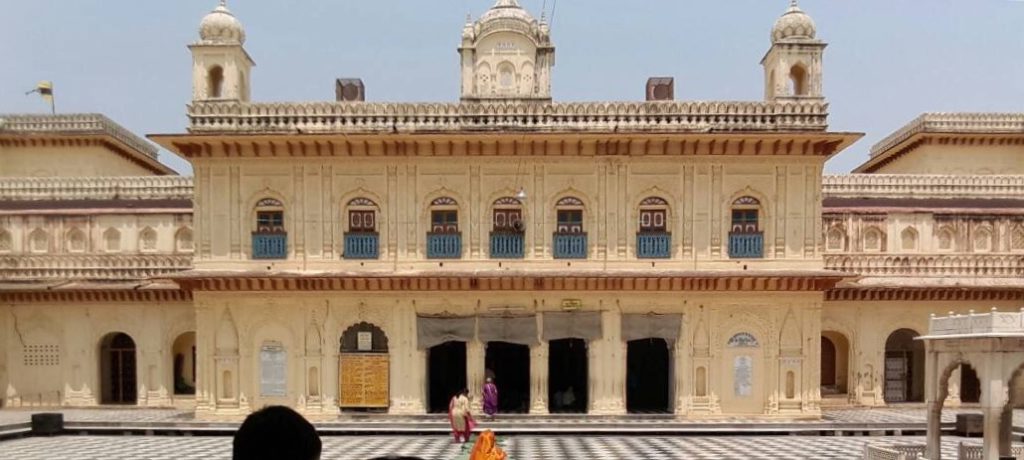
The beautiful palace in Ayodhya, built by Vrishbhanu Kuvari. The Queen of Teekamgarh built this palace in 1891 to tribute Lord Rama and his ardhangini Sita Ji. Today, a lot of devotees worship the place as Sone-Ke-Ghar Mandir. Lord Rama’s stepmother Kaikeyi gifted this palace to Rama and Sita as a wedding present by the tales.
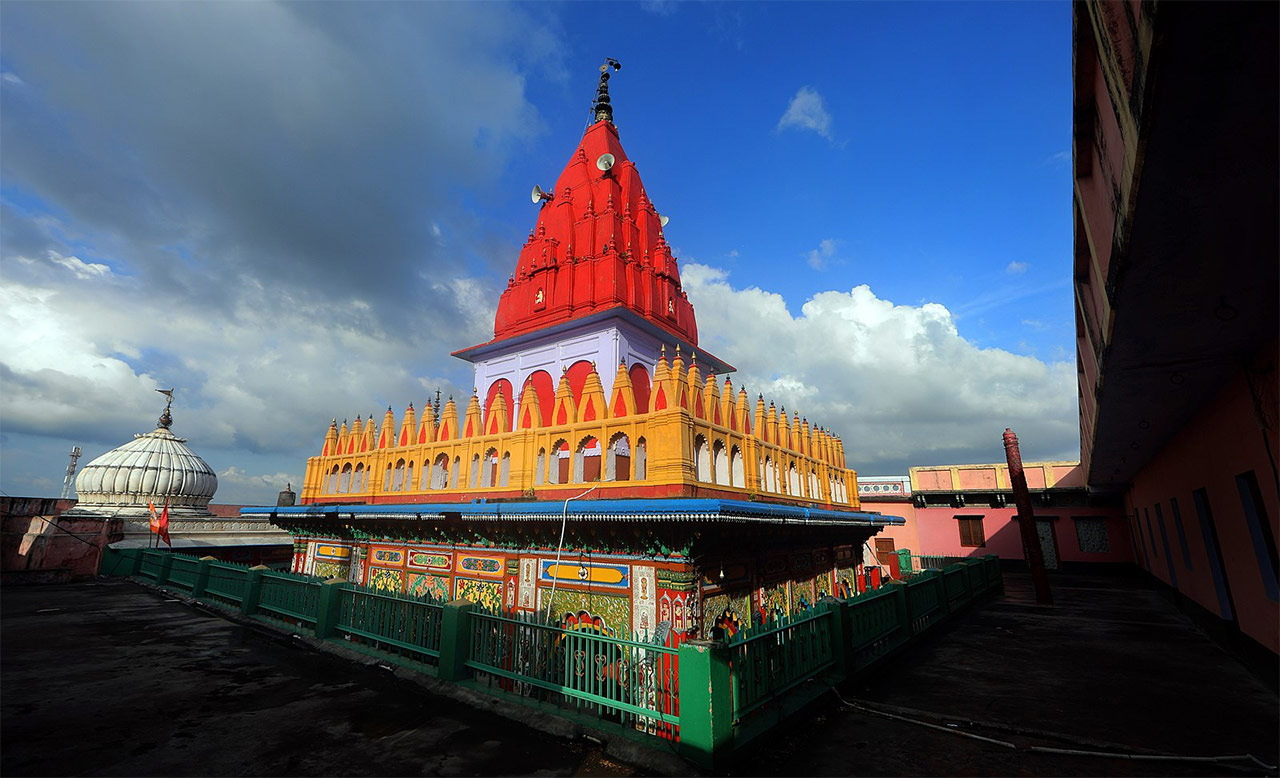
This is one of the most famous shrines of Ayodhya. Lord Hanuman is the most prominent follower of Lord Rama, and the love and respect for Lord Rama in Hanuman’s heart doesn’t need any elaboration. This massive fort is a tribute to Lord Hanuman.
One of these is the Babri Masjid which we might have seen in the news quite frequently. Today, a hot topic of debate, the masjid, built in the 16th century by the Mughal emperor Babur, was an abode of Allah and serene calm for his followers. However, the masjid got demolished after 1992 due to the riots preceding Ram Janmabhoomi.
Other places such as Nageshwarnath Temple, Treta Ke Thakur, Choti Chawni, and Tulsi Smarak Bhawan are tourist attractions. Many devotees visit Ayodhya each year to rejuvenate their faith in the almighty.
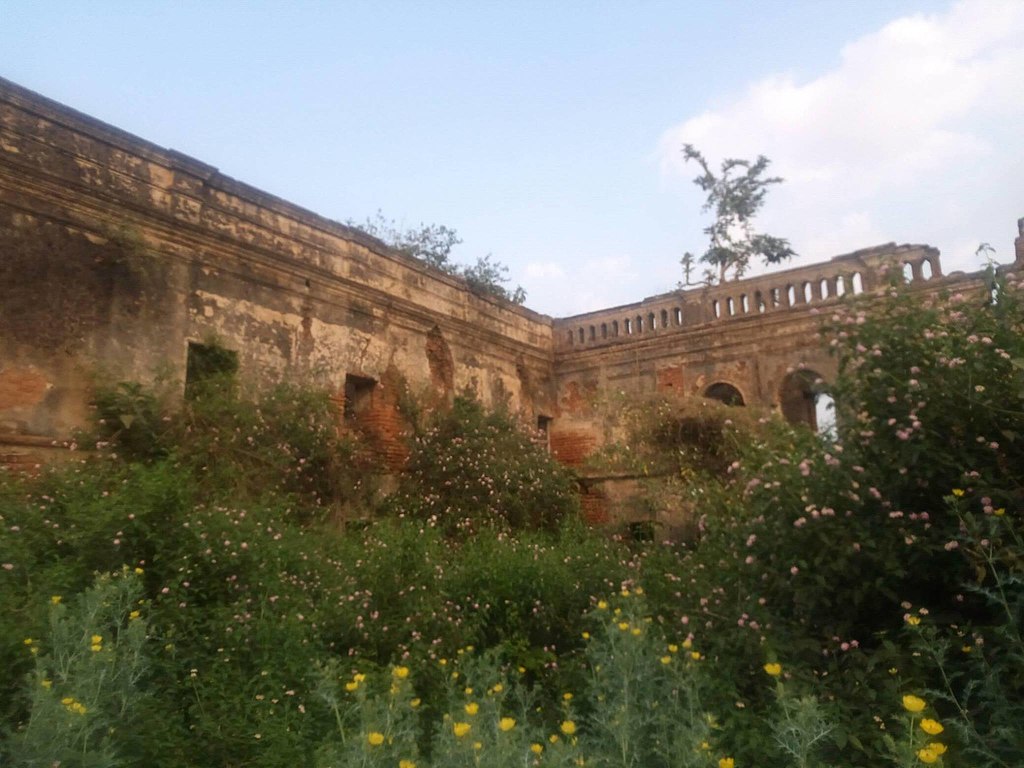
Since the times of Nawabs, the town has strived to keep alive its rich heritage and traditional ties with the past. Tomb of Bahu Begum, Gulab Bari and Moti Mahal Masjid are among these preserved monuments.
Festivals at Ayodhya
Image – Pxfuel
The city is always in its cheerful zone, with fairs and festivals springing up throughout the year, bringing in the new faith. The city’s most celebrated festivals include Deepotsav Ayodhya, Ram Navami Mela, Shravan Jhula Mela, Rama Lila, Antargrahi Parikrama, Chaturdashkoshi Parikrama. Most of the festivities revolve around Lord Rama. So do the cultural and traditional practices of the population in the city.
South Korea, too, shares a relationship with the city. According to chronicles, princess Hwang-ok, the queen of one of the most prominent dynasties of Korea, was the daughter of a traveller from Ayodhya. The love saga of the Indian princess and King Kim Suro of the Kara dynasty is viral in Korea. In March 2001, South Korea declared Gimhae city and Ayodhya as sister cities.
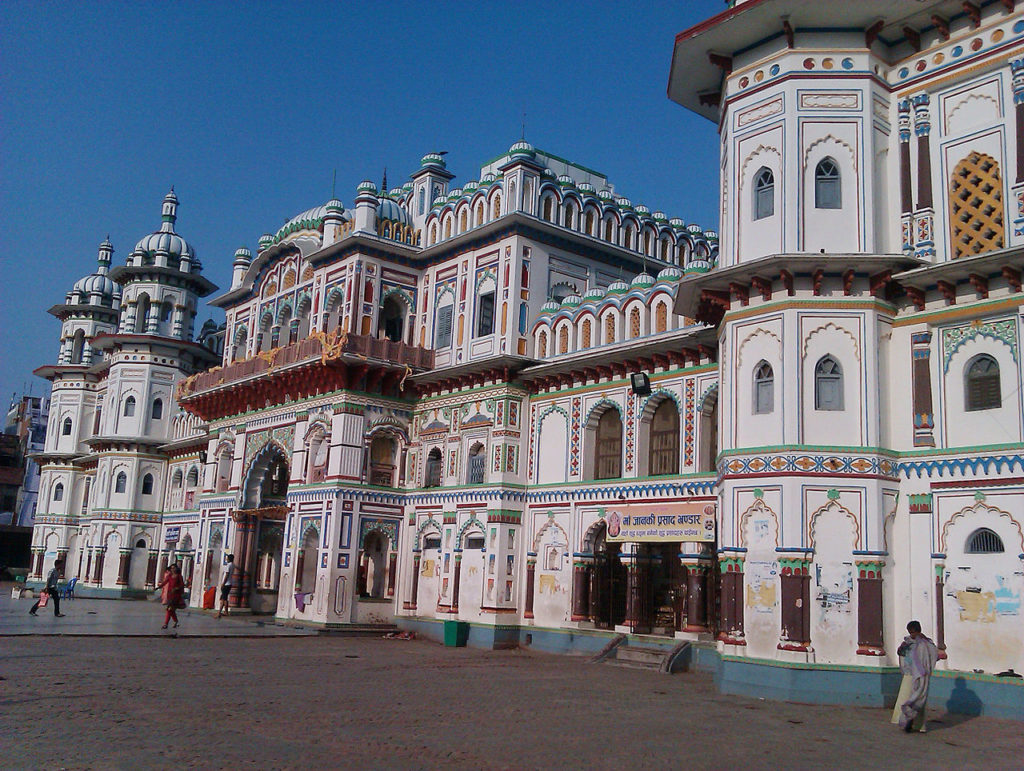
Nepal is also given prime importance when we refer to Lord Rama, and this becomes the focal point of interaction and serving toes between the city of Lord Rama and Nepal. In November 2014, Jankapur city of Nepal became a sister city of Ayodhya.
Others
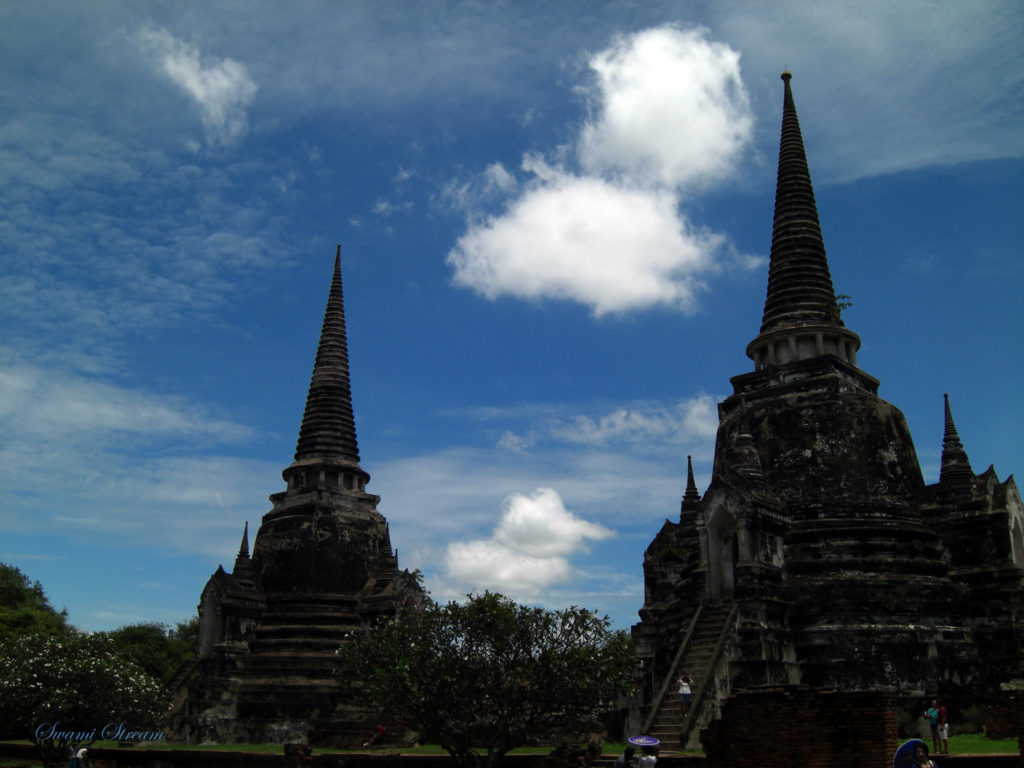
It is highly speculated the cities of Yogyakarta in Indonesia and Ayutthaya in Thailand got their names after the town of Ayodhya.
Conclusion
Ayodhya is one of the country’s holiest cities, which got recognition within the country and abroad due to its marvellous past, knit together with mysticism and factual history. The city’s name describes its nature. The term Ayodhya comes from the Sanskrit term Yudh meaning war, preceded by a prefix ‘a’, making the meaning of the term invincible. The town is genuinely unbeatable in terms of its cultural manifestation, traditional spirit, and cheerful vibe.
Mark Twain, the well-known American author, entrepreneur, publisher, and lecturer, once said, the grandmother of legend and the great grandmother of tradition”
Thousands of Rishis have been chanting mantras and hymns for millennia, accumulating the potent positive energies in the air. These were passed down by word of mouth from one generation to the next. This tradition was carried on by the Rishi, who was also the Guru who passed on the knowledge to his shishyas, or sons. Shruti is a name for the Vedas. The cycle continued until they were compiled, and the same was heard, recalled, and sung. Before they were assembled, they were Shruti for hundreds of thousands of years. This is why listening to Sanskrit chanting from the Vedas and other scriptures adds positive energy to the environment and invigorates the aura around you. In ancient times, each Rishi who passed on knowledge represented a legitimate Vedic school.
Students in groups resided at the Guru’s ashrams until their education was completed in the later Vedic period and during the Mahabharata era. Larger Gurukulas acted as universities or educational institutions. Temples and mutts became learning centers after that, in addition to Gurukulas and universities.
Preservation of traditional culture, study of the scriptures, character development, personality development, religious obligations, inculcation of the spirit of individual tasks towards family and community, discipline, and self-reliance were all important factors to consider when providing education. Despite the fact that Islamic conquerors destroyed thousands of temples and educational institutions, the concept of temple education decreased to some measure but not completely. The flame of education was stoked. The local Hindu people supported the temples that were formerly run under the patronage of the authorities under Islamic control. Temples served as a nucleus of crucial social, economic, aesthetic, and intellectual purposes, according to Shri Dharampal’s book The Beautiful Tree.
Prepare to be awestruck by the great universities of ancient India listed below, which were far ahead of their time.
Takshashila was a Buddhist learning center in the early days. It is thought to date back to at least the 5th century BC, based on existing evidence. Takshashila thrived for millennia before the Universities of Alexandria and Constantinople were founded! Later in Jātaka tales, about the 5th century AD, Takshashila is depicted in some depth. Also known as Taxila, it was previously recognised as India’s intellectual center and is now located in modern-day Rawalpindi, Pakistan.
Takshashila became a melting pot of cultures as students from all over the world came to study there. At Takshila, many influential Indian scholars wrote their seminal works. During his time as a professor at Takshashila University, Chanakya is thought to have written Arthashastra, an ancient Indian book on economic policy and military strategy. Maharishi Charak also wrote the Charak Samhita, a medical book, there. Panini, a well-known Sanskrit scholar and grammarian, also taught at Takshashila. There, he wrote his best work, Ashtadhyayi (eight chapters). It was a complicated, rule-based grammar book in Sanskrit that has survived to this day in its entirety.
When the Kushanas – a central Asian tribe – invaded Takshashila and governed it until 250 AD, the institution faced difficult times. They didn’t add much to the status of this illustrious institution of higher learning. As a result, Takshashila’s educational system began to deteriorate. The ultimate blow occurred in 500 AD, when Hunas – nomads from northwest China – overtook the region and extinguished the beacon that had once enlightened countless minds.
Nalanda is one of India’s most well-known ancient institutions. From 427 to 1197 CE, Nalanda was a Buddhist learning center in the Indian state of Bihar, roughly 55 miles south-east of Patna. It has also been dubbed “One of the first great universities in recorded history,”. The university attracted experts and students from all over the world, including China, Greece, and Persia. Archeological evidence also suggests that the complex was in communication with the Indonesian Shailendra dynasty, whose kings built a monastery there.
In the early fifth century, Shakraditya of the Gupta dynasty created Nalanda University in modern-day Bihar, which flourished for 600 years until the 12th century. This university’s library was the largest in the ancient world, with thousands of manuscripts on subjects as diverse as grammar, logic, literature, astrology, astronomy, and medicine. Dharmaganja was the name of the library complex, which consisted of three big structures: the Ratnasagar, the Ratnadadhi, and the Ratnaranjaka. The Prajnaparamita Sutra and the Samajguhya were among the most precious manuscripts kept at Ratnadadhi, which stood nine floors tall.
In c. 1200 CE, an army of the Muslim Delhi Sultanate’s Mamluk Dynasty led by Bakhtiyar Khilji are said to have ransacked and destroyed Nalanda. While some historians claim that the Mahavihara continued to function in a makeshift manner for a while longer, it was eventually abandoned and forgotten until the Archaeological Survey of India assessed the site and conducted preliminary excavations in the 19th century. On a 12 hectare (30 acre) area of land, systematic excavations began in 1915, revealing eleven monasteries and six brick temples beautifully organized. The ruins have also yielded a wealth of sculptures, coins, seals, and inscriptions, many of which are on show at the nearby Nalanda Archeological Museum. Nalanda is currently a well-known tourist site on the Buddhist tourism circuit.
Puspagiri University was an important center of learning in India till the 11th century. Its ruins may presently be found on the Langudi hills, which are low hills around 90 kilometers from the Mahanadi delta in the Orissa districts of Jajpur and Cuttack. The actual university complex, which was sprawled across three hilltops, had multiple Gupta-style stupas, monasteries, temples, and statues. The Kelua river, a branch of Orissa’s Brahmani river, flows to the northeast of the Langudi hills, providing a lovely backdrop for the institution. The university’s three campuses, Lalitgiri, Ratnagiri, and Udayagiri, are located on top of three adjacent hills. Several images of Emperor Ashoka have recently been discovered here, leading to speculation that the Pushpagiri University was founded by Emperor Ashoka himself.
Excavation work on the Lalitgiri-Ratnagiri-Udayagiri hills has uncovered the remnants of a magnificent brick monastery with ornate carvings, a temple with bow-shaped arches, four monasteries, and a massive stupa. A huge number of gold and silver goods, a stone container, an earthen pot, and relics of the Kushana dynasty and Brahmi script are among the Buddhist treasures uncovered here. A gigantic Buddha image with pursed lips, long ears, and a big forehead is a one-of-a-kind treasure.
Xuanzang, a Chinese traveller, has written a detailed report of Pushpagiri University. Not only local kings, but also rulers from far away locations, backed this university. Prajna, a well-known Buddhist monk from Gandhara, came to study at this historic institution.
However, due to a lack of patronage during the Muslim rule in India, this old university vanished.
Valabhi University was established in the 6th century in Saurashtra (modern-day Gujarat) and lasted 600 years, till the 12th century. The University of Valabhi was a well-known Buddhist learning center that emphasised Hinayana Buddhism between 600 and 1200 CE.This university was described as a major center of study by Chinese explorer Itsing, who visited it in the 7th century. For a time, the college was so good that it was considered a contender to Nalanda in Bihar in terms of education.
This university is reported to have graduated Gunamati and Sthiramati, two well-known Buddhist scholars. This university was renowned for its secular education, and students from all over the country came to study there. Graduates of this university were offered higher executive positions due to the outstanding quality of their education. Valabhi is credited with championing Hinayana Buddhism, yet it was neither exclusive nor insular. Along with Buddhist ideas, Brahmanical sciences were also taught. There are references to Brahmanic students from the Gangetic plains studying at this university. Aside from religious sciences, Nīti (Political Science, Statesmanship), Vārtā (Business, Agriculture), Administration, Theology, Law, Economics, and Accountancy were among the courses offered. Valabhi graduates were frequently hired by kings to assist in the administration of their kingdoms.
The patron kings fell victim to an Arab invasion in 775 CE. The university suffered a brief setback as a result of this. The university’s activities continued unabated after that, since the Maitraka dynasty’s successors continued to support it with generous donations. During and after this time, little information on the university has been found. In the 12th century, the defeat of its patron kings had inevitably led to the slow death of all of its educational operations. In September 2017, the Indian federal government began examining a plan to restore the ancient institution.
Another famous seat of learning was located in the Indian state of Magadha (now Bihar). Vikramshila and Nalanda were the era’s most powerful knowledge and education duo. King Dharampala created Vikramshila University in the ninth century as a competition to Nalanda University, though it collaborated with it as well. This university’s graduates are claimed to have practically developed Tibet’s culture and civilization. Unlike other historic study centers, Vikramshila exclusively admitted people who wanted to become Buddhist monks. These monks journeyed to far-flung regions to spread Buddhism after completing their study. According to reports, the Vikramshila campus included six different colleges, each of which offered a particular expertise.
The disciplines of Sanskrit grammar, logic, metaphysics, philosophy, Buddhist Tantra, and Ritualism were all quite popular. According to Tibetan pilgrim monks’ tales, it was at Vikramshila that the culture of awarding degrees and honors began. Those who completed their schooling were given the titles of Mahapandit and Pandit based on their merit. The university’s walls were painted with portraits of the outstanding alumni.
In 1203 AD, Vikramshila suffered the same fate as Nalanda.
Both universities’ fates were intertwined in numerous ways. They were both ransacked and burned to the ground by the same Turkic invader, Bakhtiyar Khilji, in addition to being exceptional universities. Both enjoyed great royal patronage at the time, both had amazing libraries, and both were ransacked and burned to the ground by the same Turkic invader, Bakhtiyar Khilji.
Odantapuri University Ruins, commonly known as Odantpura Vihar or Odantapuri Buddhist Mahavira, are located atop Hiranya Prabat in Bihar sarif. It was founded by Emperor Gopala of the Pala Dynasty in the eighth century and flourished for 400 years till the 12th century. It was essentially one of ancient India’s sixth universities, founded largely to disseminate Buddhist learning and teachings. Apart from that, it is considered the second oldest university in the world, after Nalanda, which was founded in ancient times. We know very little about this site, hence it is a lesser-known essential tourist attraction in Bihar.
The majority of what we know about Odantapuri history comes from writings written by Tibetan and Chinese visitors during that time period. According to Tibetan texts, Odantpuri had 12000 students. Acharya Sri Ganga, who was a student at Vikramshila University and then became a professor at Vikramashila University, later joined Odantapuri University and is recognised as one of the university’s most notable graduates.
For nearly four centuries, it served as a significant learning center for Buddhist teachings. When the infamous Muslim Turkish invader Bhakhtiyar Khilji saw this institution in 1193 AD, he mistook it for a fortress because of its long walls and ordered his forces to destroy it. This was also the time when his soldiers set fire to Nalanda University. His activities proved to be the final nail in the coffin for both the ancient Indian institution and the magnificent university. This caused them to be largely forgotten for over six centuries, until excavations began in the nineteenth century. This is mentioned in ancient Tibetan scriptures as one of the five great universities of its day, along with Vikramashila, Nalanda, Somapura, and Jagaddala Universities, all of which were located in ancient India.
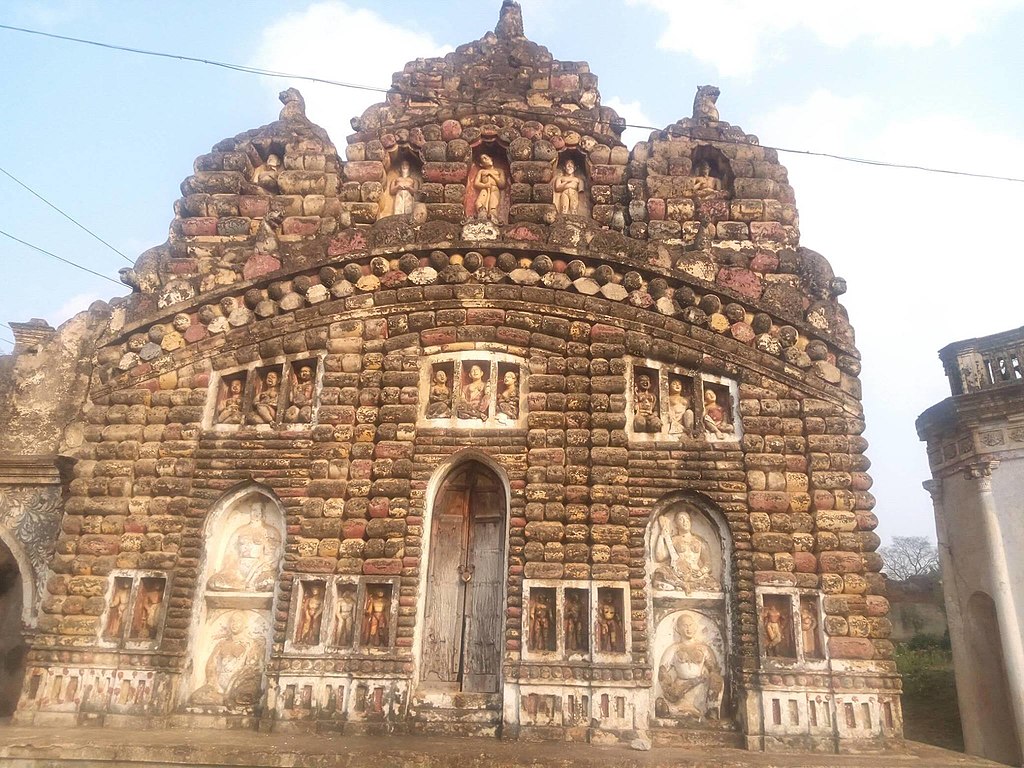
Dharmapala of the Pala dynasty founded Somapura Mahavihara in Bengal in the late eighth century, and it flourished for 400 years until the 12th century. The University, which was one of the largest of its kind, was spread out over 27 acres of land, with the main complex covering 21 acres. It was a prominent learning center for Bauddha Dharma (Buddhism), Jina Dharma (Jainism), and Sanatana Dharma (Hinduism). Even now, ornate terracotta exhibiting the impact of these three styles can be found on the building’s outer walls. It is one of the largest and most well-known Buddhist temples in India, with a structure that spans more than 20 acres (almost a million square feet) (85,000 sq. meters). It impacted Buddhist architecture as far afield as Cambodia with its clean, harmonious forms and abundance of carved embellishment.
The Somapura Mahavihara was continuously inhabited for a few decades before being abandoned in the 12th century after several attacks and was nearly burned to the ground by the Vanga army in the 11th century. Vipulashrimitra rebuilt the Vihara and constructed a Tara temple around a century later.
The Somapura Mahavihara progressively fell and deteriorated over the next decades, abandoned by the new Muslim rulers of the region, until it reached its current condition of disrepair. The Mahavihara was completely covered in grass after it was abandoned for decades, and it was largely forgotten at that time. The site was first explored in the 1920s, and during the next few decades, more and more was discovered. After independence, work accelerated dramatically, and by the early 1990s, the site had reached its current degree of excavation. The representative collection of artifacts recovered from the area is housed in a tiny site-museum established in 1956-57. The excavated artifacts have also been conserved at Rajshahi’s Varendra Research Museum. Terracotta plaques, representations of various gods and goddesses, ceramics, coins, inscriptions, ornamental bricks, and other minor clay artifacts are among the Museum’s antiquities. Somapura Mahavihara is a UNESCO World Heritage Site because of its historical significance. It is becoming one of Bangladesh’s most popular tourist spots.
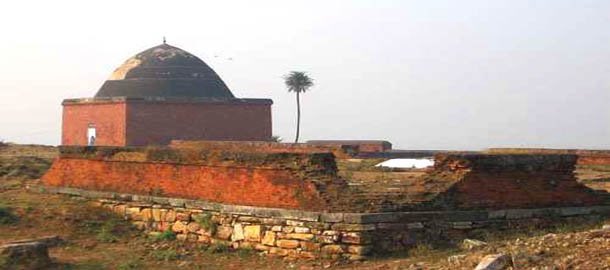
Telhara is a village in the Indian state of Bihar’s Nalanda district. In ancient India, it was the location of a Buddhist monastery. Telhara could be ‘Tilas-akiya’ or ‘Tiladhak,’ the town Chinese explorer Hiuen Tsang saw and wrote about during his journeys in India in the 7th century AD. It is located around 33 kilometers from the ruins of the famous Nalanda University. So far, only hazy allusions have been found, but recent excavations at the mound imply that Telhara was an ancient institution, maybe even older than Nalanda and Vikramshila.
Telhara University ruins were discovered during the excavation of a 45-foot high mound in January 2014. Archeologists have dated the Telhara University to the Gupta period, between the fourth and eighth centuries, based on prior findings. However, archeologists unearthed bricks that were used to create the ancient university’s foundation during a recent dig at the Telhara site. The bricks are 42x32x6 cm in size and date from the Kushan Empire in the first century AD. This is solid evidence that Telhara University is older than Nalanda University in the fourth century and Vikramshila University in the seventh century.
The Telhara project, which began on December 26, 2009, has uncovered over 1,000 priceless artifacts from 30 trenches, including seals and seals, red sandstone, ancient pottery, bronze and stone statues of Buddha and other Hindu deities, miniature bronze and terracotta stupas, and statues and figurines dating from the Gupta (320-550 AD) and Pala (750-1174 AD) empires. The government plans to build a museum to house the antiques discovered on the site.
One of the descendents of Magadha ruler Bimbisara is claimed to have founded the mahavihara or university. In 1193, the Turkish Muslim army led by Bakhtiyar Khilji set fire to Nalanda University. During the dig, the team discovered a 1.5-foot-thick layer of ash, implying that Khilji also burned Telhara University on his route.
Jagaddala Mahavihara was a Buddhist monastery and study center in Varendra, which is now part of Bangladesh’s north Bengal region. It was founded by the latter kings of the Pāla dynasty, the most notable of whom is King Ramapala (c. 1077-1120), and it was the Pala Kings’ largest construction project.
Vajrayana Buddhism was Jagaddala’s specialization. At Jagadala, a huge number of manuscripts that would subsequently appear in the Kanjur and Tengjur were created or copied. The Subhitaratnakoa, the earliest dated anthology of Sanskrit verse, was most likely produced by Vidykara at Jaggadala at the end of the 11th century or the start of the 12th century.
When Muslim raids loomed likely in 1204, Sakyarbhadra, the final abbot of Nalanda Mahavihara and a key figure in spreading Buddhism to Tibet, is said to have fled to Tibet from Jagaddala. Sukumar Dutt, a historian, put the date of Jagadala’s final destruction as 1207; in any event, it appears to have been the last mahavihara to be destroyed.
10. Mithila University
Vidyapati – One of the Maithil Intellectuals in the 14th century, Wikimedia
Mithila was a pioneer in logic and science. It was so stringent in controlling its information, according to historian John Keay, that students were not allowed to take any books or even copies of lectures outside. They could only take their diplomas or degrees with them. Regardless of the fact that Mithila University is not included in India’s official history, it has been a major center of learning in the country since King Janak’s reign. Mithila University was the epicenter of the Brahmanical educational system. It is said that King Janak used to hold religious gatherings in which Sages and knowledgeable people participated. This university is said to have taught a variety of courses, including literature and fine arts, Vedas, science subjects, Nyaya Shastra, and others. At this university, Nyaya and Tarka Shastra rose to fame.
Gangesha Upadhaya, a great Indian mathematician and philosopher from the 12th century, formed a New Logic school here and wrote out Tattva Chintamani. This university had a rigorous examination system. Only after passing tests at the end of their studies did students receive their degrees.
Mithila University’s monopoly was disrupted by Nadia University, which specialized in logic as well. Vasudeva Sarvabhauma studied at Mithila University in the 15th century, but when he was stopped from transcribing the texts, he committed the entire Tattva Chintamani and the metrical part of Kusumanjali to memory. Then he went to Nadia and wrote down the texts he had memorized, establishing a new logic academy. Mithila was quickly surpassed by Nadia, who produced superior scholars.
Around the 12th century, many of the above universities came to an end. During the Muslim conquest of India by Bakhtiyar Khilji from Turkey in 1193 CE, universities such as Nalanda and Vikramashila were destroyed. Ancient Indian scientific knowledge in Mathematics, Astronomy, Alchemy, and Anatomy perished as a result of the destruction of these learning centers at Nalanda and other locations across northern India. It was a tremendous loss of precious, irreplaceable history and a repository of information and ancient wisdom for future generations.
Profound and soul kindling deep thought indeed, but I beg to differ – I have my own thoughts on rains. I may sound like a polemicist, but I always get washed by the benign beauty of the rain. The pitter-patter of raindrops, the looming dark clouds encompassing the horizon, the soul-stirring sounds of rain smashing the windowpanes, and the incessant craving for samosas and garam chai fills my heart with the abundance of joy and nostalgic memories.
Joyous departure of blistering summer make us shout out – Oh! You rain, how wonderfully you add a sparkle to the outdoors, whenever you fall! *shivers* While it is difficult to explain in words the exhilaration that rains bring in, why not discover it for yourself and let the streaks of rainfall wash away all your poignant feelings, distressful pangs and harrowing worries, while the clouds roar with emancipation!
At the onset of Monsoon, I have collated a set of simple, easy-to-do ways to get the best moments of monsoon on your own. First enjoy pehli baarish ka boondey, you can thank me later!
Embrace childhood, clasp the innocent joy, life awards you sometimes. Take a pause, set sail your dreams and allow the splashing rain bring back the child within you.
Build an awesome playlist for quintessential rain-drenched afternoons
Yeh baarish ka paani, Pyaar hua ikrar hua, tip tip barsa pani, ab ke sawaan – listen to these soulful rain-inspired melodies and feel monsoon drizzling through your veins and vessels. Rain and romance make an incredible combo, no wonder it floods our heart with beautiful memories, yearning longings and warm thoughts.
Samosas with imli ki chutney – a match made in heaven
Image – kabir cheema
Who likes to go out when it’s pouring cats and dogs! And why on earth! Stay indoors and relish the waft of hot samosas, coming through the kitchen doors. Tip-tap-tip outside and tangy imli ki chutney inside served with smoking hot samosas seem to make the world a better place to live in. Or you could try out the other favourite dish – pakoras with garam chai!
Do nothing but read, relax and rejuvenate
Image by Anrita1705
I raise my both hands to ‘Rainy days should be spent at home with a cup of tea and a good book’. Rain gives you the best excuse to ditch work or classes. Turn off your alarm, change the side and go back to sleep, while listening to the ceaseless pouring. Or wake up, brew a cup of chai or coffee and waste yourself in a good book. Monsoon fills the air with romance, so appreciate the poems by Rumi and Neruda.
Letting go is the best feeling in the world. Let the monsoon take away all the unwanted feelings that have been cramming you with reluctance, hopelessness and regrets. Step outside, look upwards at the falling rain and widen your arms to the monsoon! Celebrate life, celebrate rains! Surrender yourself completely and feel the sheer pleasure of getting drenched.
What a relief! Monsoon is here in Delhi! Don’t get wet anymore, but soak your soul in!
“Behind every young child who believes in himself is a parent who believed first.” –Matthew Jacobson.
Parents play a significant role in a child’s life; they can build an ethical & strong character as a person through their parenting ways. Raising a child can be a handful if you ignore their upbringing from the very start point of their life. Most parents are concerned about their children’s academics and extracurricular activities, such as ensuring that their children go to school, do their schoolwork, and arrive on time for sports practice or any other classes. But, all too often, we neglect to devote time and energy to cultivating another aspect of a child’s growth and development—one that is essential to being a decent person. Good Parenting also includes How to raise a well-behaved child. We understand that raising a child can be one of the most challenging and rewarding tasks in the world and one for which you may feel unprepared.
Here are some good parenting tips to help you feel more fulfilled as a parent and understand the importance of raising a child.
Increasing Your Child’s Self-Confidence
When children experience themselves via their parents’ eyes, they establish a sense of self. Your children pick up on your tone of voice, body language, and facial expressions. More than anything else, your words and actions as a parent impact their developing self-esteem.
No matter how minor, praise efforts and letting children do things independently will make them feel strong. Belittling remarks or unfair comparisons of one youngster to another make children feel worthless.
Make sure you’re not making any loaded statements or using words as a weapon. Comments such as “What a silly thing to do!” or “You act more like a baby than your small brother!” can be as damaging as physical strikes for even smart kids.
Encourage your child to be empathic.
One of the most critical attributes in good people is compassion and sensitivity, or the ability to put oneself in another’s shoes and consider their thoughts and experiences. According to studies, having a high emotional quotient—understanding one’s own and others’ feelings—is a significant component of life success.
Please encourage your child to communicate their worries and make sure they understand you care about their sentiments to help them develop empathy. When you disagree with a friend, urge them to envision how their friend feels and show them how to manage their emotions and strive toward a peaceful conclusion to become a happy kid.
Set boundaries and stick to your discipline
In every household, discipline is required not just in children but in adults and parents as well. It is intended to assist children in selecting appropriate behavior and developing self-control. They may test the boundaries you set for them, but they need those boundaries to mature into responsible people. For example, if You ask your children not to watch TV late at night but you do the same for yourself will result negatively instead follow the same until your child is grown to a decent age to understand the same.
Setting house rules assists children in understanding and developing self-control. No TV until homework is completed, and no hitting, name-calling, or nasty teasing are permitted.
You may want to implement a system that includes a single warning, followed by repercussions such as a “time out” or the loss of privileges. Failure to follow through with the implications is a common blunder made by parents. You can’t punish children for speaking up one day and ignoring them the next. Consistency teaches what you want to learn.
Be a role model for them
Every child looks up to their parents as a role models, when to thank when to say sorry, and how to accept mistakes are things that are built by seeing their parents. Even if your youngster isn’t observing, think about how you communicate with others like do you ever say “Thank you” or “Please” to other people for services? Do you avoid complaining about your acquaintances or workmates? Do you courteously address staff? You have a direct impact on your children’s personalities. If you want to raise a child who knows how to respect others, model your behavior after your child.
Assign Responsibilities to Them
You can offer your child more responsibility for their chores as they get older. You can also let your youngsters experience the natural repercussions of their actions. It makes them alert & responsible for their task in their daily routine. If your child is in charge of their school bag and forgets to put the subject notebook, the child must face the logical consequence.
Value communication
Kids will begin to question our beliefs and reasons if we do not make an effort to explain them to them. Reasoning with their children allows them to comprehend and learn nonjudgmentally.
The common question that arises in every parent’s mind like; Is raising a child easy? It might be, but if you want to raise a good child, it can be tricky & accountable work. But with solid support & helping hand like Pragyanam school, this mission of raising a child can result in success.
Our motive is always focused on the overall development of children. So that their future shine like stars, but the successful kidshould also be well aware of the value of morale & respect in their life.
Good habits formed in kids make all the difference.
Wasn’t it until pandemic we all took handwashing like a normal thing and not knowing its impact in the real life? But after this situation we all have been profound to know that handwashing is the one of most important daily routine that has to be built in our kids’ regular life not because there might be any virus but our basic health issues start right from our hands.
Handwashing for kids is a good habit that helps them sustain good health and excellent manner. It is vital that a parent understands the significance of hand hygiene and develop a routine to practice this with their children from early childhood. Once they adapt this custom, it will help them forever to maintain strong immunity. Otherwise, there are so many diseases caused by not washing hands that can affect your children, such as:
Noroviruses
Norovirus causes viral gastroenteritis in persons of all ages. It spreads when people don’t wash their hands, and it’s especially concerning because it may spread swiftly among big groups of people in close quarters.
Nosocomial infections
MRSA and E. coli are two of the most frequent nosocomial illnesses spread by germs and bacteria on our hands.
Hepatitis A
Hepatitis A causes severe symptoms such as liver issues, jaundice, abdominal pain, fever, and exhaustion. It’s usually spread through food that’s been tainted by persons preparing it who haven’t cleaned their hands after using the restroom or are eating without handwashing.
Airborne illnesses
Respiratory infections are typically conveyed through droplets inhaled, sneezed, or coughed into the air by an infected person. While sneezing and coughing contribute to the transmission of illness, improper handwashing methods are also a significant factor.
Now you can see more clearly the importance of washing hands for kids.
Washing your hands — either with soap and water or hand sanitiser – may appear to be a minor task, but it can significantly influence your good health.
Michael Sebert, M.D., Medical Director for Infection Prevention and Control at Children’s HealthSM and Associate Professor at UT Southwestern, says, “Hand cleanliness is a crucial lifetime practice for remaining healthy.” “It’s a technique to lower our risk of getting infections like colds, flu, other respiratory viruses, and gastrointestinal illnesses.”
According to the CDC, Handwashing can protect one out of every three young children who have diarrhoea and one out of every five young children who gets pneumonia.
Hand hygiene helps you avoid contracting germs, enabling you to avoid transferring them to others, especially those more prone to disease.
If you think we all wash our hands daily, what is the proper way of washing hands? To resolve this dilemma below, we have stated NHS recommended 7 steps of hand hygiene that enlight you about protecting your children from germs & harmful diseases:
First Step: Soak your hands and work up a good lather with liquid soap. The water should be between 35 and 45 degrees Celsius.
Second Step: Cleanse your skin together in a circular manner, palm to palm. Rotate in a clockwise and counterclockwise direction.
Third Step: Rub the back of your left hand with your right palm as your fingers are linked through the other hand. Then switch.
Four Step: Make clasped hands by linking your fingers together, facing each other, rub your palms and fingers together after that.
Fifth Step: With your right hand and left hand under, cup your fingers together, rub the backs of your fingers on your palms with your fingers interlocked. Then switch.
Sixth Step: Rotate your left thumb while enclosing your right hand around it, then exchange.
Seventh Step: Circularly roll your fingers over your left palm, then switch.
After that, thoroughly rinse with warm running water and dry with a clean, disposable paper towel. The most hygienic approach to drying your hands is paper towels; however, automatic hand dryers can also be utilized in some places. If you use then avoid touching any part of the hand dryer with your clean hands to avoid transmitting bacteria back onto them. Similarly, never dry your hands with a reused towel since they might harbour deadly levels of bacteria that migrate back onto your hands.
At Home, preschool & Day daycare, “Why wash hands for 20 seconds” rules should apply to generate a healthy habit ofhandwashing for kids. Only good practice can make a difference in your child’s life, whether hand hygiene, sleeping routine, or food habits. Individually they appear to have some minor regular habits that parent thought would come on schedule as time pass, but this is a big mistake. Do you ever notice that your childhood habits never change even now as an adult than how your child’s habits will regulate automatically?
At Footprints Education, as your parenting partner, we try to develop good habits in your children, whether taste bud development, sleeping schedule or regular handwashing, etc. by simply following our program at home, parents can integrate these future building habits in their children.
















_Temple_Complex_RUINS_near_Bishnupur_West_Bengal_22.jpg)
_Temple_Complex_RUINS_near_Bishnupur_West_Bengal_25.jpg)


