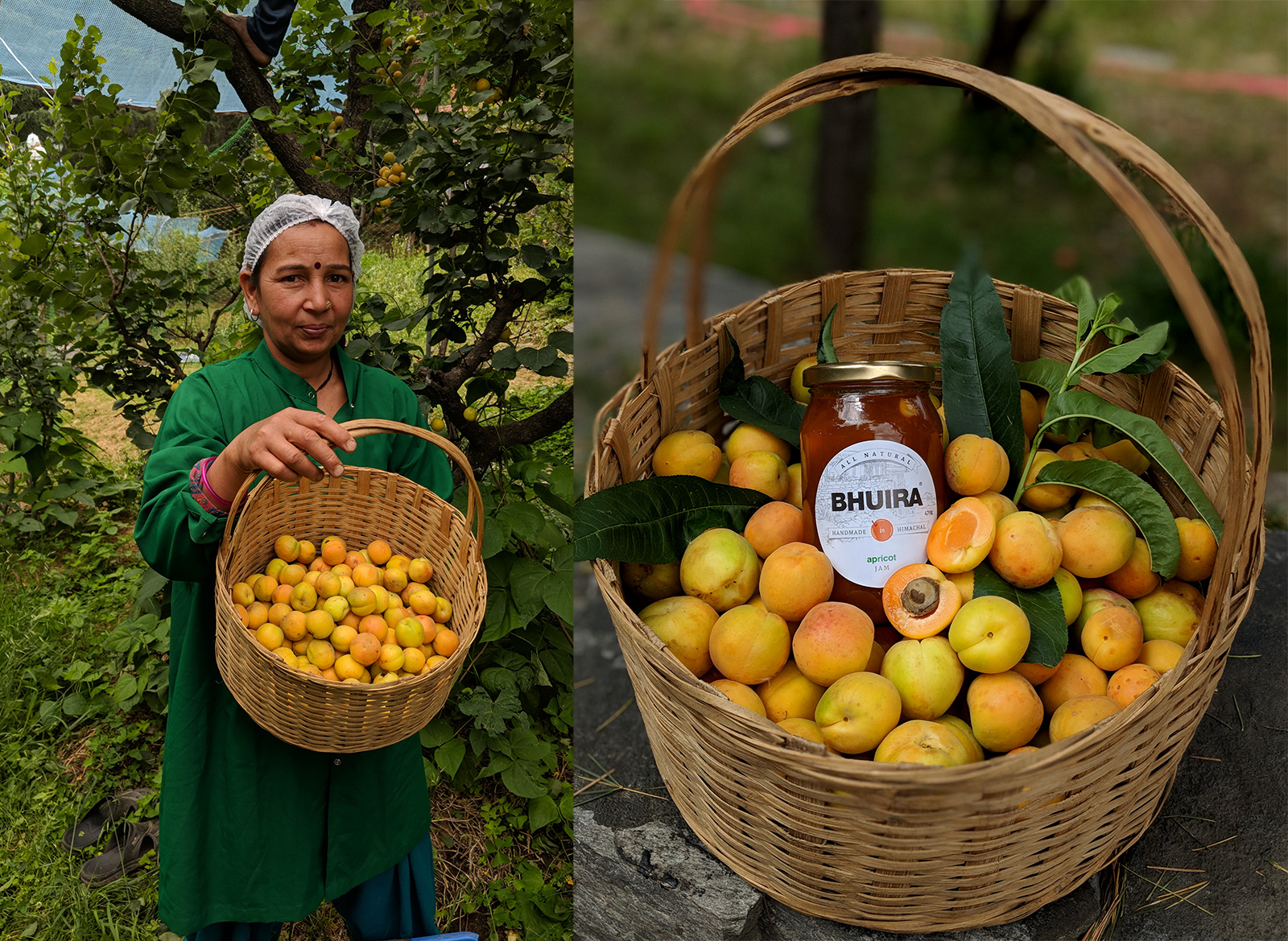
Bhuira Women And Their Romanticism With Jams

9

Bhuira-Jams

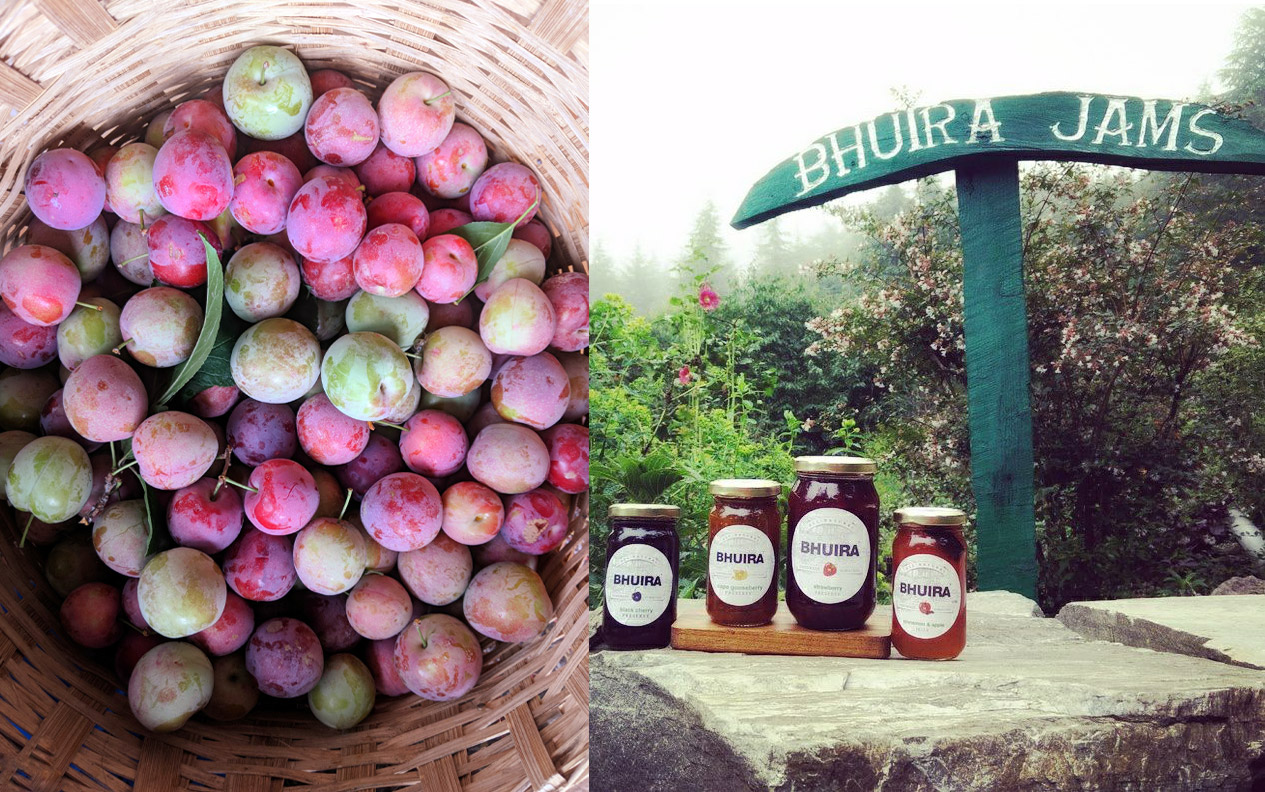
The charm, the tranquility and the serenity of the mountains, lit up with the titter-tatters, guffaws and squabbles of the women inhabitants describes the quintessence of Bhuira. Amidst the bewitching landscape lives long a history of womanhood and their romanticism with jam.

Meet Linnet Mushran, the woman who built Bhuira Jams a success story. She calls herself an accidental jam maker. Originally, she didn’t draw any blueprint to build a business or to empower her fellow village women. It started with a simple concept of saving the Fruit. 6 years ago, Rebecca Vaz Mushran embarked on the journey of managing and preserving Bhuira as Linnet’s successor. She quit and shut down her baking company in Mumbai as it was humanly not possible to run two different businesses in two different states. 

I spoke to Rebecca and learnt that:

What is the story behind Bhuira Jams becoming a household brand?

Linnet Mushran set up Bhuira Jams 22 years ago, in 1999, in the village Bhuira. Linnet who is British by birth met her college sweetheart Viney in Scotland where they were pursuing their education. She came down to India to marry Viney and on her first trip to India, they got engaged. She was a charismatic figure void of any cultural shocks that came her way. She wholeheartedly embraced the culture and immersed herself in its beauty. Her first stay was in Bihar- it was where her husband was posted then. With her uncritical nature, she blended in well.

But she knew something was absent. Linnet grew in the quaint hills and thus, the nostalgia stayed on. When she discovered The Bhuira Family Home in Himachal Pradesh, without much ado, the Mushrans bought it from their relative so that it stayed in the family, forever. At first, the home was in a dilapidated state which needed fixation. Linnet undertook the responsibility and made it a home to feel alive in. 
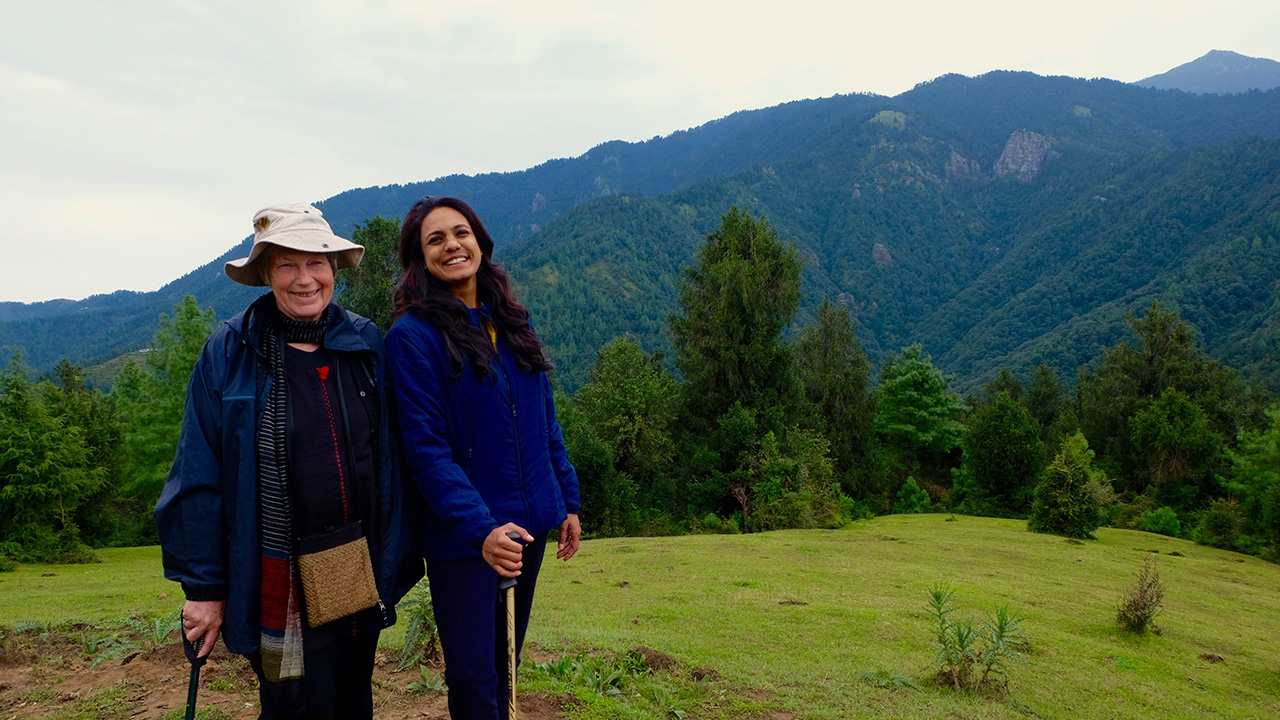
Bhuira-Jams-Owner
Linnet Mushran & Rebecca Mushran

In her orchard, the apple trees were the apple of her eyes. The windfalls were often neglected so she would collect and restore them to make jellies just as her mother made them when she was young. Hence, the first ever preserve born was an apple jelly. The fondness and nostalgia were the reasons behind the first experimental product.

She found solace in the process and the next thing she knew was that she was unstoppable. The peaches and the plums became her next jam jaunts. She would ask one or two women from the village to come and offer her a helping hand and in return, she would reimburse them for their time and effort. 

We Recommend…
Bhuira Black Cherry Preserve

A few observations changed the course of her homely venture into a business of hope and ownership by these women. 22 years ago, she realized that these women had no separate identity of their own. They were solely dependent on either the sale of their crops or on the incomes of their husbands for even their basic survival. Even with the cash they earned in the jam making process, they spent the money on either their children’s school shoes, books, school fees, a new mattress for the home. Not a single penny was spent in their favour. This compassion was enough for Linnet to embark on a journey of jam making and making them a part of it.

In 1999, she set up her scone factory which was originally a ration shop. The shop’s popularity went for a toss when the villagers got access by the bus to buy a selection of goods from the city. Her first sale was made on a Friday at Kasol’s Gupta Stores and to her surprise, by Sunday all her jam bottles were sold out! This sudden likeness for her jams by the consumers built her confidence and so began the Bhuira Jams’ journey.
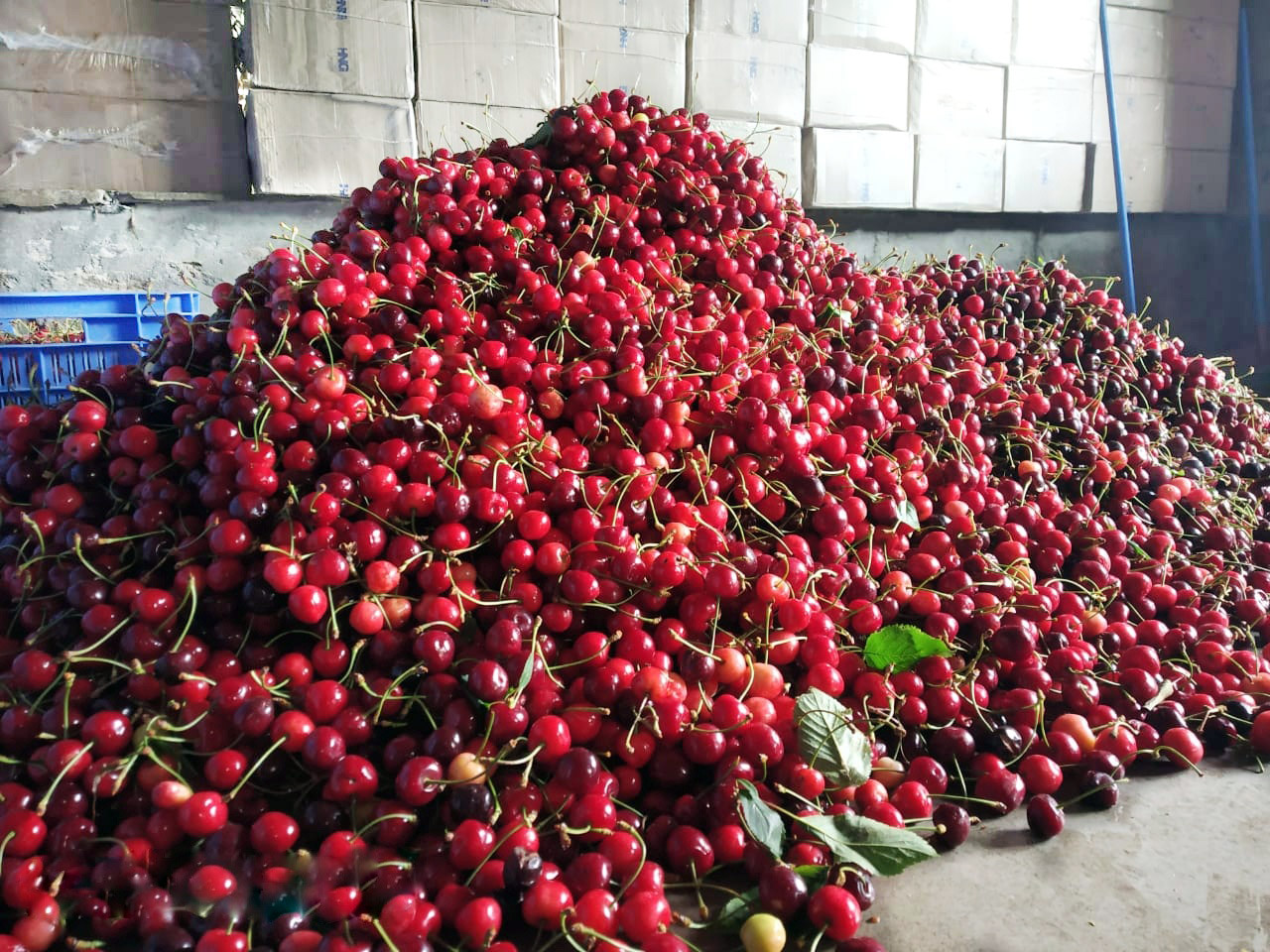
Bhuira-Jams-Fresh-fruits

The nearby farmers distinguished the abnormal growth of the jam business and volunteered to sell their fruit to Linnet. Today, all the farmers supply their fruit to us. The transportation cost back then was a hazard for the farmers which is why selling fruits in their village seemed sane. So Bhuira Jams became the point of bridging the gap between these farmers and the marketplace.

This symbiotic relationship between the land, the fruits, the farmers and the women inaugurated the journey at Bhuira Jams. The continuous ripple effect has been behind the success of the business so far. The livelihoods of farmers, the transporters, the postmen, the welders, the electricians, the plumbers and most importantly, the women of Bhuira have been the most benefited from Bhuira Jams. 

We Recommend…
Bhuira Strawberry & Rosemary Preserve

Bhuira has two factories: one just across the house and the other half an hour down the mountain in another village called Himarpur. Women of that village are employed in the factory there so this multiplies employment opportunities for them. Also, Bhuira has now become a tourist sight and has opened an arena of new opportunities. For instance, 5 kms down, there is a resort, a campsite and a center of cultural workshops called Rilung Foundation. 

How do you recruit the women at Bhuira?

Our staff is now 20+ years old. Our women are extremely intelligent, capable, independent, self-sufficient and well-witted. We often recruit young girls, we train them and form a familial relationship with them. But sooner or later, they get married off and mostly are wedded to a groom in another village. Certainly, we are happy for them and we celebrate their new journey, but the replacements are hard to find. They are always so good at what they do, which explains our melancholy! 
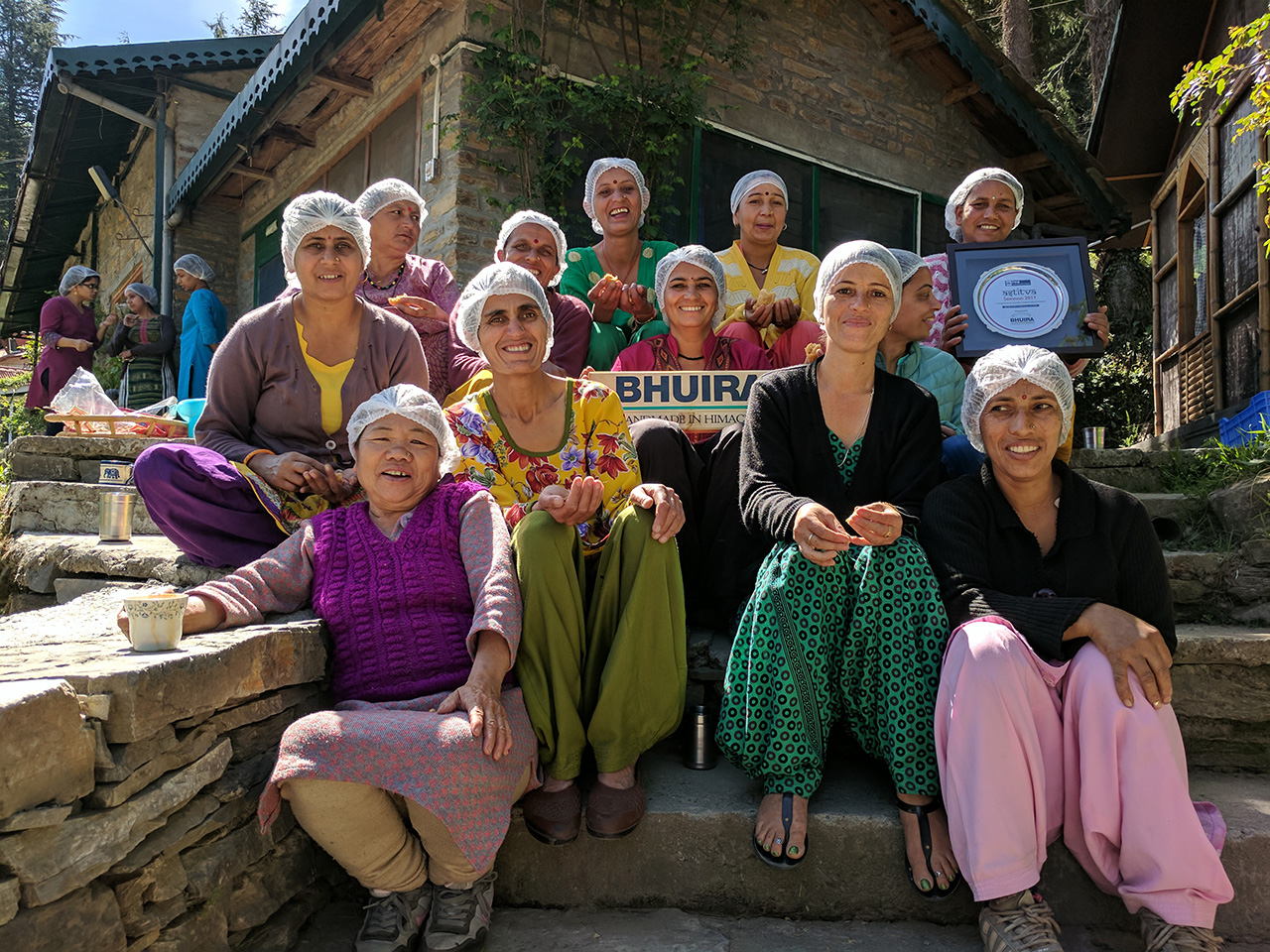
Bhuira-Jams-factory

But a sense of achievement is felt when these young, married women return to Bhuira as they didn’t want to stop working here. As they have confessed frequently, jam factory gave them the emancipation that they always looked for. It gave them a sense of social standing in Bhuira and their earnings were a reward to them. They made a pact with themselves: either they get married in the villages close to Bhuira or the partner would move to settle in Bhuira! This may sound paradoxical to an Indian perspective but this actually happens here. Some even move between districts to intern with us. 

The documentary ‘Out Of A Jam’ is a heart-warming ode to the recognition of the confidence, the self-sufficiency and the self-dependence of extraordinary women who found their solace in the fruit of their village. This award winning documentary won awards and accolades at the Indonesia Film Festival and the Los Angeles Film Festival.

What are the challenges that women face at Bhuira?

The remoteness of the place poses the first few major pitfalls. It takes an entire day to reach the factory. Not to forget, the threat of landslides and roadblocks during monsoons add to the complications of these mountainous terrains.

A major challenge for me was to garner the confidence of these women. Linnet’s mystique was unmatchable and I had no intention to replicate it. I wanted to build an altogether new relationship with the women of Bhuira. 
The menacing nature of the investors, bankers and potential partners undermined the spirit of womanhood in Bhuira and rendered it as any other business. The fictitious nature of the investors to modernise the place with swanky new equipment which was something Linnet would never favour. Her desire to blend with the architecture of the place contradicted these inconsiderate proposals. 

But this blunt comment from one such investor gave me sleepless nights and the next morning, the first thing I decided was to install chairs and tables for my women. The criticism was destructive but i knew i couldn’t let this affect my Bhuira family. However, I didn’t want to refashion their age-old practice of sitting on the floor or on haunches so I left them with their choice. One has to understand where they come from which the investors and bankers couldn’t. In conclusion, we decided that we will never outsource or tie up with investors.

We Recommend…
Bhuira Jam Strawberry Preserve

Another challenge was to make the women believe that they are worthy of authority and managerial skills. The installation of empowerment was a big challenge. Back in 2011, when I was diagnosed with cancer, I went to Bhuira for my recovery. I discovered the metaphorical similarities between the women at Bhuira and me: it was our mutual love for the hills and our solace found in the jam process. The sway of fresh air and the connection I developed with the women in Bhuira was crazy because they were not very open to metropolitan mingling. Yet they let me inside their periphery and accepted me at Bhuira. At first, I had no intention to get involved with their operations as I am today, but the small, friendly gestures from their side pulled me in the family.

How do you do your bit towards the empowerment of these women?

Our women are incomparable and invaluable. Bhuira is officially incomplete and dead without their involvement. All one needs is a consolation from someone that someone believes in them, which Linnet assured them 22 years ago. And this explains that despite me residing in Mumbai and Linnet residing in Delhi, Bhuira is well managed and equipped by the women there. I learnt that delegation is an indelible part of the business. It requires you to put your trust in people and give them responsibilities that they are answerable to.

The spark and the enthusiasm in the women to make themselves stand out, the fierce yet friendly competition with one another and the participation in huge numbers is enough to commemorate the empowering force within them.

We Recommend…
Bhuira Jams Bichhua Mango Chutney

Are tourists allowed to visit Bhuira Jam Factory?

We don’t have a huge space for workshops yet, and we also don’t have enough personnel. However, 5 kms down the line there is a beautiful resort named ‘Mist N Meadows’ for a peaceful stay. The glass windows of our factory and the close proximity allows easy viewing of jam making processes. One can see the view from the resort while sipping their tea. Under the aegis of FSSAI, the entry of visitors within the periphery of the factory has been forbidden.  

However, you can have a second-hand, closer look at the packing process and also buy jams, preserves, jellies, marmalades and chutneys on display at a factory discounted price. The visitors take a mindful stroll in the garden of fruits and flowers, through the snowy and incredibly tall mountains and come back to rest at the resort. 

Bhuira-Jams-01

Another reason why visitations have been limited are because of the tourists’ apathy and aloofness to the beautiful surroundings. The act of plucking raw fruits and flowers, extracting plants from the roots and the unsettling behaviour with the women of Bhuira passing unsolicited comments have made us have dogs as our additional family members. Now we are unafraid and more solid than ever! (Chuckles)

What is in store for us in the future?

We are working on a No-Added Sugar Range which will be soon out in September. We will be launching the same through Amazon (pan India). It is a well known fact that the fruit has its own sugar fructose so the sugar element cannot be eliminated completely. Hence, to break the ice, it will not be a non-diabetic range but no additional white sugar will be added. It will be full of fruit, its juice and the pulp with interesting options for you to choose from.  

We Recommend…
Bhuira Jams Bitter Orange Marmalade From Himachal

Linnet and I will forever be indebted to Bhuira for our workforce without whom Bhuira is empty and dead. We would want this companionship to last forever and our romanticism with the jams to bear fruit. We wish to be the powerhouse of empowerment for our women and we also want this movement to expand to every nook and corner of this country. These women’s position from a bread maker to a bread earner have made them realise that they hold a paramount position in their family and in the village. 

You can order a variety of products like jams, jellies, preserves chutney and marmalades from the following links.

https://bhuirajams.com/

The Historical Ruins of Nalanda: Exploring the Ancient University’s Architecture and Philosophy

5

Author – Pranay Dwivedi

History-of-Nalanda-University

The Nalanda trip was my first experience with Bihar. My college fest had ended, I needed a break, and the “let’s go somewhere” idea of my friends, made us catch the 2:30 AM train from Varanasi to Nalanda. I had read about the ruins of Nalanda in my history textbooks in school but hadn’t heard anything about the place after that. I didn’t Google a single thing before embarking on the trip. I wanted to surprise myself and indeed, I got my first one next morning at Nalanda junction.

Perhaps, we stopped at some outer area of the junction, but there was no bridge to cross the track, open fields spread out for kilometers and kilometers, small mud-brick houses, and an isolated railway junction. We crossed the railway track with some local ladies and a narrow route going between the small houses, took us to the highway.

I’ve been to numerous historical places, like Delhi but it was nothing like the capital, at first sight. Fortunately, a well-constructed road and a rickshaw took us to our destination, “The ruins of Nalanda”.

Nalanda-Railway-Station

To my extreme amusement, a friend of mine wondered that since it was not a Sunday, there must be some students and a crowd on the University campus! We all couldn’t help but laugh at his innocence.

So, if you are also like my friend who thought that Nalanda University is housing students and academic facilities, let me tell you that, Nalanda was a prestigious center of learning from the 5th century CE to 12th century CE, often acknowledged as “the first residential university of the world with 10000 students and 2000 teachers residing in the campus”. It was a famous Buddhist monastery, where thousands of Buddhist monks used to live, learn, and practice their religion. It rose to its legendary status due to the emerging power of the Indian subcontinent and its influence on the world. 

nalanda-viswavidyalaya

For travellers who have a thing for historical ruins or architectural masterpieces of our past, Nalanda is a must-visit. The beautiful architecture and history behind it, provide a sense of belonging and splendour, which is unique to this place.

The grand complex (believed, that a large part is yet to be excavated) contains red-bricked monasteries, stupas, temples, classrooms, and hostels of the past.

Every brick of the majestic architecture makes you wonder about how it would have been filled with so many students a millennium ago, and what kind of knowledge, teachings, and lifestyle would have been in practice here. It is believed that students at Nalanda used to learn texts of Buddhism, Vedas, logic, Sanskrit grammar, theology, philosophy, law, astronomy, and even city-planning.

nalanda-university-history
A map of the excavated remains of Nalanda. Cpt.a.haddock

The university flourished, as an establishment, under the rule and patronage of the Gupta Empire and King Harshavardhana of Kannauj. It attracted scholars and Buddhist monks from various kingdoms, and foreign nations like China, Korea, Tibet, Japan, Indonesia, Persia, and Turkey. It is believed that there existed a large library in the complex with hundreds of thousands of volumes of manuscripts. These manuscripts were not only religious, but they also contained texts on grammar, literature, astronomy, astrology, etc.
The university saw its downfall in the 12th century with Turkish invasions and gradually, its buildings were ransacked and set on fire. Many of its monks and scholars were killed, and the rest of them fled the campus.  

who destroyed nalanda university

There are a lot of legends and theories about the destruction of such a prominent site of knowledge, education, and learning. Even today, many buildings and sites have a sign of damage by fire displayed on them. According to a popular legend, when the invaders set the great library on fire, it kept burning for 3 months because it had around 9 million manuscripts at that time! It is thought that the demise of Nalanda, was somewhat predicted by the slow decaying of Buddhism in India. The slow disappearance of Buddhism in the region served as a premonition to the forthcoming demise of Nalanda.

Now, the complex contains ruins of its glorious past. The vast remains of Nalanda expand around 1600 ft. north to south, and 800 ft. east to west. The red-bricked monasteries and temples, pathways, and compounds keep the magnificent history of such a beautiful and prestigious place alive. Even some of the manuscripts that were saved by the fleeing monks, live on today in various museums and cultural centers across the world. 

Nalanda museum is located near the site that contains hundreds of excavated artefacts. Near the ruins, there is a temple of the Black Buddha, where a black-coloured sculpture of Gautam Buddha, which was also excavated from the site, is placed. 

nalanda-university-trip

Nalanda is a mystery and a great symbol in itself. It is a place that witnessed profound knowledge, discipline, and glory and at the same time faced bloodshed, fire, and destruction. All these emotions are present in Nalanda’s air. Pay a visit to this UNESCO World Heritage Site and experience the splendour of its complex, beautiful past. 

And yes! There is a Nalanda University that is packed with students, faculty, and academic facilities. It is located near Nalanda in Rajgir, Bihar. Established in 2014, it has been designated as an “International Institution of National Importance” by the Parliament and commenced classes from September 1, 2014. It was constructed recently and is quite different from the ancient Nalanda University. So, my innocent friend was not that wrong, I guess?

Uramma Heritage Homes – Practicing Diverse Art Forms, Ecological Programmes And Local Crafts

0

Uramma Heritage Homes is named eponymously after the legend of Uramma, the village Goddess. She is considered to be a reincarnation of Devi Durga. While the folktale of Uramma is narrated differently all around India, I prefer to cling to the version as retold by Ms. Shama Pawar, the mastermind behind the Heritage Homes. Uramma was the village goddess and guardian who was worshipped only by a priest in this heritage home. Meanwhile, the inhabitants of her own village critically dishonoured and ignored her. It is believed that this negligence and disrespect made her curse the entire village into a land of retrogression and decline.

25 years ago, when Shama heard the story, she relished it immensely. Next, she knew that she wanted to buy the property and restore it. She knew she wanted to bestow Uramma Devi the respect she never received and simultaneously, foster care for the village where Uramma resided once. And it is safe to say that she achieved it all by the grace of Uramma Devi. 

Ms.-Shama-Pawar
Ms. Shama Pawar

As a social entrepreneur, the first step towards restoration was paying homage to her inspiration. She got the statue of Uramma installed, and thus, the journey  of the Uramma Heritage Homes (UHH) began. UHH is based in the historical settlement of Anegundi and the settlement dates back to the 8th century. The bank of the river Tungabhadra is an irreplaceable sight in itself that people come to visit often. One can find three types of properties in Hampi under UHH: the first being the Uramma Cultural Residency or Uramma Cottage; the second, Peshegaar House Homestay; and third, Uramma House Homestay

Connecting to the Roots

Uramma-Heritage-Homes-Hampi-06

Uramma Residency involves the following disciplines and interesting crafts by master and local artisans and craftsmen: photography, painting, sculpting, working with traditional carpenters, communicating and designing, product designing, architectural conservation and documentation, apparel and lifestyle designing, culinary arts, tailoring, weaving, basketry, folk dance and art, public space concepts and events, ecological interests like local flora-fauna, bird watching, studies of traditional systems in agriculture, irrigation, recycling, organic farming and so on. 

Under the banner of the Kishkinda Trust, Shama, along with her team have been following the vision of social and economic empowerment achieved through self-sufficiency in various R&D programmes in conservation and sanitation; preservation of the cultural, architectural, historical and festive patrimony; and sustainable integration with the people of the land. Also, an in-house crafts boutique exists on the property which showcases the unique items made from woven banana fibre and water hyacinth and local textiles.

Uramma-Heritage-Homes-Hampi-05

A dichotomy is achieved between the sustainable practices at Uramma and the employment of the village locals, who by the way, have received training in hospitality. This has, in due course, built their individual capacities. Women’s self-help groups are also promoted that are engaged in their catering, crafts, garments, culinary etc. An amalgamation of social programmes like a policy of zero plastic, putting in place solid waste management systems and planting and maintaining trees as well as homegrown crops have been put into practice through the utmost dedication of everyone at work. 

These properties balance the unique combination of rural hospitality and modern amenities. She also adds that all the profits earned from the Residency goes towards supporting various creative industries, as well as contributing towards strengthening sanitation systems for the historic settlement of Anegundi.

Uramma-Heritage-Homes-Hampi-03

Best Time To Visit UHH- All Year Round!

Even though Hampi is a hot and humid place and the best time to visit Hampi is from October to February, UHH welcomes tourists all round the year. Summers are, however, not the best peak months except the clean, breathable air. Some tourists bless the place during summers as well so that they can escape the crowd during the busy winter months. One thing that she reassures is that anyone who comes here will immerse themselves in a world of folklore, nature and rural life and detox from the urban galore for a while, no matter when they decide to come.

Uramma-Heritage-Homes-Hampi-07

Facing The Challenges And Overcoming Them

Recently, the challenges have been endless for UHH. Since the last two years, tourism has been badly hit in India. As a last straw, Covid-19 has been no good for the industry as it has hampered movement. However, she agreed that for now this is safe for the villagers nonetheless. Despite all the regulations, she believes that those who want to derive peace would undoubtedly visit UHH. 

The Next Big Steps

Lockdown has also made her more vigilant to the need of better and safer sanitation amenities as major prerequisites. With all the changes that have surfaced the world, she seconds that it is time to reform their methods too as following yesteryear’s practices won’t work anymore. She is also becoming more social media savvy while trying to evoke and internationalise the scope of Uramma. Her future plans are aimed at the practice of organic farming to extend the horizon of activities.

Uramma-Heritage-Homes-Hampi-08

UHH Is Now In Pune!

Apart from properties in Anegundi, UHH also runs a lovely rural destination which is less than an hour’s drive from Pune, which is also Shama’s hometown. It is built on a quiet and scenic road, making it an ideal retreat for a family or a group of friends. The matchless characteristics of the Andeshe Homestay are the Haudi which is a pool with fishes, an organic farm with a few cows and chickens, a vegetable patch and a large covered upper terrace overlooking the landscape in all directions.

A Note Of Thanks

Shama greatly believes that without the involvement of the villagers and their creative inputs, Uramma would’ve never become what it is today. UHH is the backbone of several cultural activities, workshops, not-for-profit donations, provision of residence for the interns, employees and workers alike, and undoubtedly the home where Uramma is never forgotten. 

If you want to visit UHH and contribute, visit their website


We Shall Overcome by Simon Thacker – A Seminal song of hope!

0

Simon-Thacker-and-Raju-Das-Baul,-credit-Orange-Lemur-Photgraphy

Simon Thacker is known for bringing together musical elements from across the world. His widely appreciated compositions have a distinct flavor of a heady, yet seamless mix of rhythm and music that leap over geographic boundaries. In our present times, when the COVID crisis still has a substantial hold, it has become almost necessary to cut across physical and spatial boundaries. And thus, Simon Thacker’s music shines even brighter when his compositions not only resonate, but also showcase the musical symphonies and instruments from different countries of the world.

A number of creative attempts have been made to lift the human spirit and to create positivity and hope. Artists have given expression to their creativity in unique ways using technology as the bridge to lessen the physical distances. Simon Thacker in his trademark way brings to us his latest creation, a ‘revelatory take on We Shall Overcome’ which is now available on YouTube ( https://youtu.be/q9EOKKyKy54 ). An apt rendition of one of the most loved songs across the globe, this wonderful creation strikes a familiarity that is comforting in such times of drastic change. 

We Shall Overcome – Simon’s creation

Simon-Thacker-We-Shall-Overcome

Simon has got together 19 leading musicians from 9 different countries ‘to share the message of solidarity in the time of COVID 19. We Shall Overcome features a vocal lineup of India’s Paban Das Baul, Parvathy Baul and Raju Das Baul, Bangladesh’s Farida Yesmin, from the mystical Bengali Baul spiritual tradition along with India’s much loved singer songwriter Raghu Dixit, Polish world music diva Anna Witczak-Czerniawska, Bangladeshi folk singer Prokash, Pakistani classical masters Javed Bashir and Akbar Ali, and Persian classical singer Farzad Moradi. Each verse in this epic transformation is preceded by breathtaking instrumental interaction between Thacker on classical guitar, Jehad Al Halal (cello) and Salah Alawi Sharakhat (bass) from Bahrain, Bangladeshi flautist Mainuddin Khan Sayonto, Chennai based tabla maestro Praveen Narayan, Rubin Shrestha (flute) and Siddhartha Maharjan (percussion) from Nepal, and virtuoso Iranian qanun exponent Yasaman Najmeddin.

Simon began the composition and collaboration of this musical journey in April. ‘He took inspiration from each of the respective traditions of the performers as well as the immense legacy of a song known around the world in many languages’. 

About We Shall Overcome

We have grown up singing this iconic song, which is as old as 1900, according to some sources. I remember singing it in school in different languages. We Shall Overcome or Hum Honge Kamyaab or any of the different language renditions have stayed with us over the years because of two things. First, the wording of the song is exceptionally motivating and second is its soulful tune. The words sway in harmony as the music soothes, at the same time inspires. When one first thinks about Simon Thacker re-creating this age old song, it might sputter some doubts about whether it would do justice and remain true to the original. But once you start hearing his new creation, the rendition takes a new form. The amalgamation of different languages and voices, the euphony of the multiple instruments and distinct string of Simon’s guitar doesn’t disappoint. Further, the words of this landmark song ring truer in the testing times of the pandemic. 

As Simon himself points out, “For me, this version of We Shall Overcome is a beautiful testament to the force for positivity and unity that music will always be. We hope it will lift your spirits during the time of Covid 19.”

Kashmir Galore – An ‘Accident’ That Saved The Heritage Business From Dying Out

2

Kashmir-Galore-Delhi

Do you believe that our lives have been scripted in advance? Do you believe in déjà vu and the possibility of repetition of certain events? Do you believe that our destiny is being worked out for the best?

As I engaged in a conversation with Saqib Posh, the man behind Kashmir Galore, all the above questions seemed to have found meaning and reasons. Saqib’s story starts with his grandfather and his unfortunate paralysis accident, and ends on his own unfavourable accident at the gym, which served as his wake up call. 

The story, in the words of Saqib, goes on like this…

My grandfather, Late Haji Adbul Rehman Posh, was a goldsmith situated in Srinagar. One fine evening while he was fixing a light bulb, his right hand got electrocuted and it got partially paralysed. Due to this accident he could no longer use his right hand to lift the hammer. As he was left with limited choices and a family of 9 to feed, he decided to enter into the manufacturing of traditional kashmiri silk carpets after having sold some of his wife’s gold jewellery as an initial investment. At first, he hired a couple of carpet weavers and began making small-sized carpets. With time the business grew and he was now in a position to set up his own looms.

Kashmir-Galore-Delhi-01

The business grew at a substantial pace. It was passed on to the next generation of my father and uncles who expanded the business.

As for me, I had completed my masters in Fashion Merchandising and was working as a Fashion Stylist with a leading e-commerce brand in New Delhi. One fine day I seriously injured my back in the gym and that made me take a sabbatical from work, as I was unable to stand for long hours during photoshoots. 

After having recovered, I made a conscious decision to join the family business as it was going through a very rough time. After I realised that carpet making was not a popular choice among my cousins, I understood that I am choosing the right path of reviving the carpet industry. 

It was a transitional phase in the carpet industry where people had started buying machine made carpets instead of handmade carpets. Large scale machine made carpet industries were set up in China, Iran and Turkey. This made things really difficult for the handmade industry especially for the Kashmiri carpet industry due to the lack of resources and funds. 

Kashmir-Galore-Delhi-02

When demonetisation occurred in 2016, the Kashmiri carpet trade took a serious blow as exports were at their lowest. With time the domestic market which was the only hope, was also bailing on us.

Subsequently, implementation of a 12% GST on kashmiri silk carpets acted as a final nail in the coffin, which was later reduced to 5% after persistent requests made by the Kashmiri carpet manufacturers, but the damage was already done.

As of today with volatile conditions in Kashmir and almost negligible tourism, 50-70% of looms have shut down. A lot of people fear that these are the last few years left for the Kashmiri carpet industry. 

But I believe and shall continue to do that together we can preserve this beautiful art form from going extinct.

A further conversation with Saqib revealed that apart from carpets, Kashmir Galore is also immersed in the production of other Kashmir’s heritage products such as pashminas, walnut furniture and papier-mâché.

Kashmir-Galore-Delhi-03

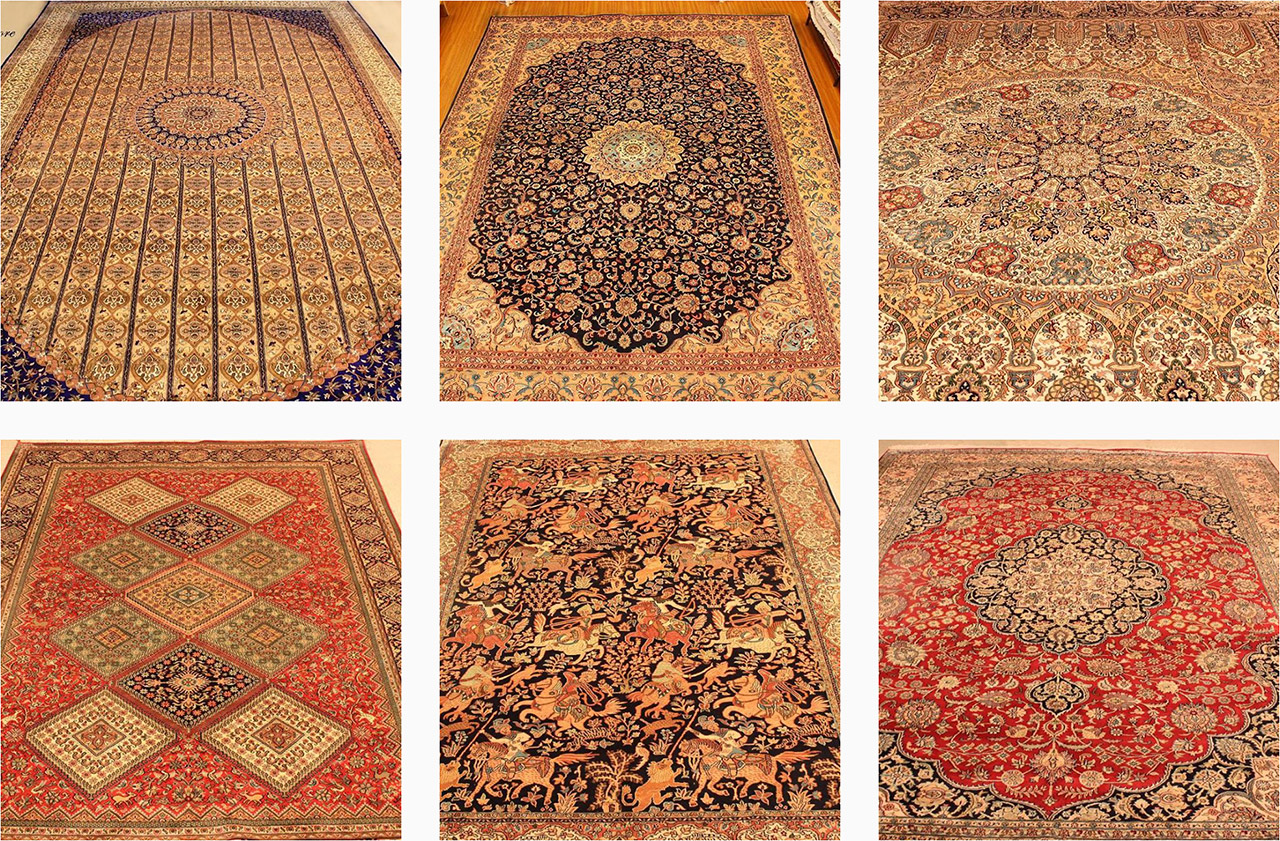
Saqib also listed the categories of carpets that they make. They are found in two forms: silk on cotton and silk on silk. Silk on cotton carpets are made from pure silk with 80 percent of the carpet being silk and rest 20 percent that is the base of the carpet is cotton. The carpets are knotted on a loom. Silk on cotton carpets have a knotting of 18×18, if calculated, it would mean that there are around 324 knots per square inch in a silk on cotton carpet.

The other type which is silk on silk carpets are truly made in silk, with even the base of the carpet being silk. Silk on silk carpets have a knotting of 24×24. They have 576 knots per square inch.

At Kashmir Galore, Saqib is in a continuous process of preserving age-old art-crafts, like his, which is on the verge of extinction. He is working together with hundreds of artisans for whom carpet weaving is the only source of income. In a process of revival, he is mixing traditional carpet making techniques together with new designs and colors. Using natural dyes and natural fabrics, his main focus is to support locally made products with no use of synthetic fabrics. He also ensures that his products are completely natural and eco friendly.

Saqib also has a piece of advice for the artists trying to find solace in this particular artform. He reinstated, “I would like everyone pursuing this art to be patient and never, ever give up. One has to keep striving, only then good things are bound to happen. Perseverance and patience are the key virtues to success.”

You can find Kashmir Galore at H-14, Lajpat Nagar-III, New Delhi-110024. You can also visit their site – www.kashmirgalore.com

Or reach them on their Facebook and Instagram page @kashmirgalore.

Or call them at +91-9999934247

Don’t forget to check out their Etsy page kashmirgalore if you want to buy their products.

Shraavana, the Season of Ecstasy for Wildlife

10
Shraavana,-the-Season-of-Ecstasy-for-Wildlife-Baya-Weaver
Baya Weaver: A baya weaver busies itself in nest building. The instinct of the bird is a matter of sheer amazement for humans.

Balkavi Thombre, the famous Marathi poet describes Shraavana as the season of eternal bliss; a season in which at one moment earth receives a flurry of rain, and at another moment sun sends its bright rays to illuminate the natural green carpet. This, indeed, is such an apt description of the season.

True that during Shraavana nature displays her all colours. Look above, and you get to see the vast expanse of bright and clear blue sky dotted with pure white clouds which can soon turn into fierce grey overcast. Flowers blossom to their maximum beauty and the air is redolent with their sweet fragrances. The arrival of the season delights birds which now grow excellent plumages. Nature by reaching the peak of her beauty creates a splendid mosaic which becomes a feast for the eyes.

The month of Shraavana has a cultural and religious significance in India. However, apart from being important for humans, the salubrious conditions that the season offers, makes it equally important for wildlife too. In a way, wildlife enjoys its arrival more than humans. 

Shraavana,-the-Season-of-Ecstasy-for-Wildlife-Cosmos
Cosmos: A pink cosmos adorning the wild.

Each wild animal has its own breeding schedule, and Shraavana helps many species follow that schedule. Right from tiny photogenic strawberry finches to mighty tigers, wild beings gear up to enter a new phase. Birds become busy in nest-building activities, and animals move interiors to find places of seclusion.

It is always exciting to see how dusty brown grounds are turned into lush green fields. Larks take vertical flights and fill the air with their melodious songs. Then suddenly, from somewhere, you get to hear the whistling notes of Jacobin Cuckoo, the crested migrant which had, just before few days, heralded monsoon. The Indian peafowl emits its iconic calls, and exhibits the most spectacular courtship displays of all birds. The peacock fans its plumage into a tantalizing gauze and woos the peahen. However, amongst all the bird activities, the most enthralling view is that of baya weavers building elegant nests, which awestrucks the watcher. And, there’s no dearth of exhilarating experiences that you can have!

Shraavana,-the-Season-of-Ecstasy-for-Wildlife-Scene
Scene: Picturesque landscape showing how nature flaunts her beauty during Shraavan

Who is not fascinated by colourful butterflies which excite us with their quick flitting movements? Nature is in her prime, and you get to sight a myriad of butterflies. There’s a common lime which excellently camouflages itself amidst fresh leaves. The common tiger zigzags fast, and leaves behind a virtual contrasting orange pattern against the green backdrop. Then there’s the common egg-fly, the design of which makes us feel as if it is staring into our eyes. The common Mormon settles down with its wings wide open and forms an eye-catching portrait.   

Shraavana,-the-Season-of-Ecstasy-for-Wildlife-Dragonfly

By this time of the monsoon, forests have themselves rejuvenated, and vegetation gets a new lease of life. Arroyos in the jungles get activated, and burbling fresh streams entice us to go near them. Lakes are flooded and turned into excellent ecosystems, and shoal of fish can be easily spotted in fresh waters. The ground skimmer, the crimson glider, the crepuscular darter, the slender skimmer, and other dragonflies and damselflies swarm along these water bodies. Meanwhile, there’s a bee-eater which glides through the air, catches one amongst these winged-insects in its flight, and perches back. The activities only hold a nature-lover spellbound.

Some secrets of reptile life are now revealed. For instance, otherwise elusive snakes can now be found pairing; especially, big rat snakes which coil around each other and make a bold display of the act in the open fields, much to the thrill of onlookers.  

Shraavana,-the-Season-of-Ecstasy-for-Wildlife-Valley
Valley: A resplendent view of a lush green hilly valley from Central India

Altogether, there’s so much nature offers to us and it is interesting how natural elements govern the mood, emotions, and psychology of living organisms. 

But then the danger of climate change looms over nature. If we cannot change things overnight, then at least we can start respecting nature and its components. We need to overcome our selfish motives, and remind ourselves of nature’s separate existence. By only doing so, shall we be able to keep Balkavi’s Shraavana intact.  

5 Insta Worthy Cafes in Guwahati That You Must Visit

3

It is effortless to recognize the uniqueness of upper east India. The states on the north-eastern side of the nation are praised for their neatness, education, pleasant climate, and open concerts. Assam, being the second-biggest state, is arranged in this zone. Also, its capital Guwahati is remarkably perceived for some vast Hindu sanctuaries, River Brahmaputra, mainstream society, and bistros. In a city where social advancement ups its game unfailingly, you can’t miss the western culture that the city has soaked up. Discussion, conversations, music and more happen just at the bistros and different well-known restaurants. The vibe and food choice are not at all like what you notice in every single other piece of India. Here is a rundown of the best cafes in Guwahati you must visit to tackle your taste buds.

1. Uptown Escape Cafe and Cocktail Bar 

cafes-in-Guwahati-that-you-must-visit-Uptown-Escape-01
Image Courtesy – Uptown-Escape

How about we start the rundown with a moderately new spot, yet it is positioned among the top bistros in the city today. Uptown Escape; a setting which is a bistro constantly and gets changed into a mixed drink bar at evenings. Even though the stylistic theme and feeling don’t improve, the sort of food served may. Be that as it may, the flavour of the dishes served doesn’t miss the mark regarding any appreciation. Uptown Escape scores an ideal ten with regards to food and administration. Besides, light music in the back likewise upgrades the general state of mind. Going to the menu, they cook Italian, Mexican, American, Indian, and Asian food. The evaluating is, be that as it may, somewhat higher, yet that is how the upscale bistros are. 

Where is it? 
Anil Plaza, 1, GS Rd, ABC, Near IDBI Bank, Tarun Nagar, Guwahati, Assam 781006 
When to go? 
10am – 12am (day by day) 

2. Kalita Cafe 

cafes-in-Guwahati-that-you-must-visit-Kalita-Cafe 01
Image Courtesy – Kalita Spectrum

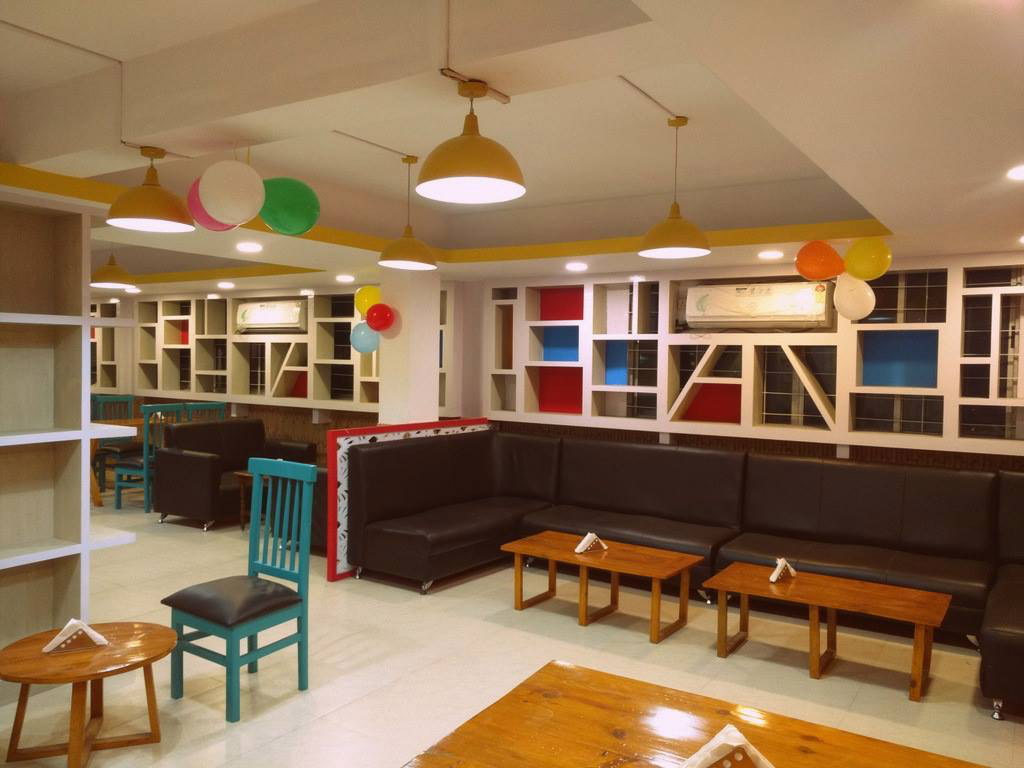
Presently examine Kalita Café, the first of its sort bistro in Quite a while. Based underneath a multi-food eatery which is additionally its parent endeavour – Kalita Spectrum, this bistro is structured in exemplary Korean subject. You will, without a doubt like this spot on the off chance that you happen to be a devotee of the K-pop class. The real food choice, acclaimed Korean band fine arts on the dividers, additionally their music, actually makes you feel like you’re in Korea. Other than that standard lobby, there is additionally a private eating corridor, just like a karaoke room. Coincidentally, the customary Indian dishes are likewise served here. 

Where is it? 
Bus Stop, GS Rd, Rukmini Gaon, Guwahati
When to go? 
Mon – Fri: 11am – 11pm; Sat-Sun: 11am – 12am 

3. 11th Avenue Cafe Bistro 

cafes-in-Guwahati-that-you-must-visit-11th-Avenue-Cafe-&-Bistro
Image Courtesy – 11th Avenue Cafe & Bistro

Eleventh Avenue Café Bistro is strategically placed in the core of Guwahati at concise, good ways from the railroad station. They serve a varied menu of vegan and non-veggie lover dinners, both Indian and universal foods. You would get espresso, shakes, pizza, burgers, mocktails, sweets, and the sky’s the limit from there. Yard space is accessible at this bistro, which legitimately disregards Digiphukri Lake. Also, there is even a smoking parlour at its highest level, so individuals can have their quiet puff time. For the individuals who love to peruse, this bistro additionally gives some phenomenal books to read for nothing. 

Where is it?
 53, Tayabulla Rd, Digholi Pukhuri East, Dighalipukhuri, Guwahati.
When to go? 
8am – 11pm (day by day) 

4. Brewbakers 

cafes-in-Guwahati-that-you-must-visit-BrewBakes-Café,-Guwahati
Image Courtesy – BrewBakes-Café

Brewbaker is situated in Six Mile locale on GS Road, which comes at a short walk around Kalita Café. It is a favourite bistro, and the scene has a comfortable air, which makes it a lovely spot to spend time with companions; fortunately, there is no time restriction. They serve Indian, Italian, Chinese, Thai, and British cooking. The estimating isn’t very pocket-accommodating. However, the segment size is certainly not too bad. Bewkes likewise has a committed smoking zone.  

Where is it? 
Bora Complex, Digen, GS Rd, Six Mile, Guwahati.
When to go?
 11am – 10pm (every day) 

5. Mocha 

cafes-in-Guwahati-that-you-must-visit-Mocha-Guwahati
Image Courtesy – Mocha Guwahati

This bistro is situated in the focal business part of Guwahati, which implies that you can generally arrive in case you’re going out on the town to shop. Mocha is a roomy scene that has momentous insides. Even though the spot is usually known for its hot and cold refreshment determination, you would get a full scope of vegan and non-veggie lover alternatives. The menu will show you such a large number of Indian, worldwide, and nearby food choices. Be advised that Mocha may feel somewhat overrated against their bit size, yet they don’t let you down with their ideal atmosphere. 

Where is it? 
2 Shop No, Ground Anil Plaza, 1, GS Rd, Guwahati, Assam 781005 
When to go? 
11am – 11pm (Everyday)

I’m sure once things go back to normal, you’d want to travel again. So why not plan a vacation to Guwahati? And show off your vacation by taking stunning pictures at any of these Insta-worthy cafes in Guwahati. So, what’s stopping you? Plan your vacations with Pickyourtrail as they offer a wide range of staycation deals, holiday tour packages and also let you craft your own itinerary on their D-I-Y platform.

Deepika Bhansali – A Self Taught Artist, Spreading Her Passion for Art

2

Deepika-Bhansali-Jain-01

Deepika Bhansali practiced painting as her hobby infrequently during the last 30 yrs until it became her passionate choice. It was the birth of her daughter 5 years ago that stirred the first wave of actively practicing artwork. In a country where women are looked upon for every non-conforming part they play. She does accept that motherhood has been challenging and it does flip your life upside down. However, in her case it was downside up!

Art, as a saviour, came to her rescue during her post-partum days, which soothed her and kept in check her emotions. Ever since, painting on her canvass is her daily routine and no one can eliminate that part, not even Deepika herself.

Artist-Deepika-Bhansali-Jain-01

In a deep, meaningful conversation with Deepika Bhansali over a phone call, I asked her about her journey so far, the hurdles that she faces as a person from a non-artistic background and her subsequent futuristic plans.

How has your journey been so far, as a creative and a non-creative person?

I was an art student back in school. I vaguely remember doing my first oil painting in fifth or sixth standard. For the next twenty years, I made countable 10 or 15 paintings with no soul into it, whatsoever. But since five years, after I delivered by baby, who was a premature baby by the way, I felt a dire need to bring back art into my life. As my art rebirthed in my life, I felt that I had borne twin births. My motherhood became an inspiration for me: it gave me my baby and also reintroduced me to hidden passion. 

Professionally, someone who happens to have had a successful career of 14 years in corporate communications, I chose motherhood over my regular job: motherhood towards my daughter and extensively, towards my art. 

Artist-Deepika-Bhansali-Jain-06

When was it that your name became a brand in the world of artists?

After working in a closed environment for 2 years after my daughter’s birth, I felt that I need to open up and disseminate my artwork with other artists and to the audience. So, around 3 years back from today, I decided to display my work at an exhibition in Jaipur. I reckoned the importance of receiving feedbacks which will only help me improve. 

Despite very few sales that I could make that day, I made it a point to exhibit my work. Many attendees asked for my number, they told me that they would like to connect with me and it made me feel important. I realised that I was now known by more people as an artist besides my husband and my friends. 

I met many veteran artists too. They were full of appreciation for my work, but with a word of caution too. Their suggestion for me was to choose a path: select one medium and one subject that I would want to work on my whole life. This just wasn’t my motto and it sounded dead to me. 

Artist-Deepika-Bhansali-Jain-05

At the first place, I never wanted to sell my artwork, it was just for my self-satisfaction and my desire to paint everything I ever wanted to. So I followed my brainstormed artwork and here I am, getting acknowledged for that. 

I also gained some prominence when my art work got selected in the International Art Fair and luckily, this formed some artistic connections with other artists who happened to praise me for my artwork. However, it is important to assume that these artists were from an already existing fraternity. 

Some, if not all, are apprehensive of introducing an outsider to a fraternity of artists which has been one of my hard-hitting observations. Since I anticipated such a tendency, I didn’t let it affect me negatively. Firstly, I was doing what I loved and secondly, I was getting recognised for my hobbyhorse. I had dual source of happiness now.

So what you are saying is that even an artist fraternity is fuelled by nepotistic tendencies? 

On one hand it may be a good practice for them, but on the other hand it is demotivating. I remember having been praised by veterans despite being a hobby artist and that pushes me to do more art work. So, I would be lying if I said something like nepotism was absent from the fraternity of artists. 

Where can one purchase your artwork from?

I am active on my Facebook page and that’s where one can contact me for purchase related queries and/or workshops. The reason behind commercializing my artwork is two fold: firstly, I had given up my full time job for my hobby and secondly, this was another way for me to gain acknowledgment as an artist.

Artist-Deepika-Bhansali-Jain-03

What would you name your artwork as?

If you see my artwork, you will notice that every art piece is utterly different from the other piece. Somedays I practice combination of mediums, somedays I am found working on Zen-Mandala and somedays I am painting a fluid or abstract piece. I am not a sketcher till this day. I can reproduce but not produce a sketch. 

What artwork do you enjoy the most? I know it is like choosing between your own children, but if you were to choose, what would you?

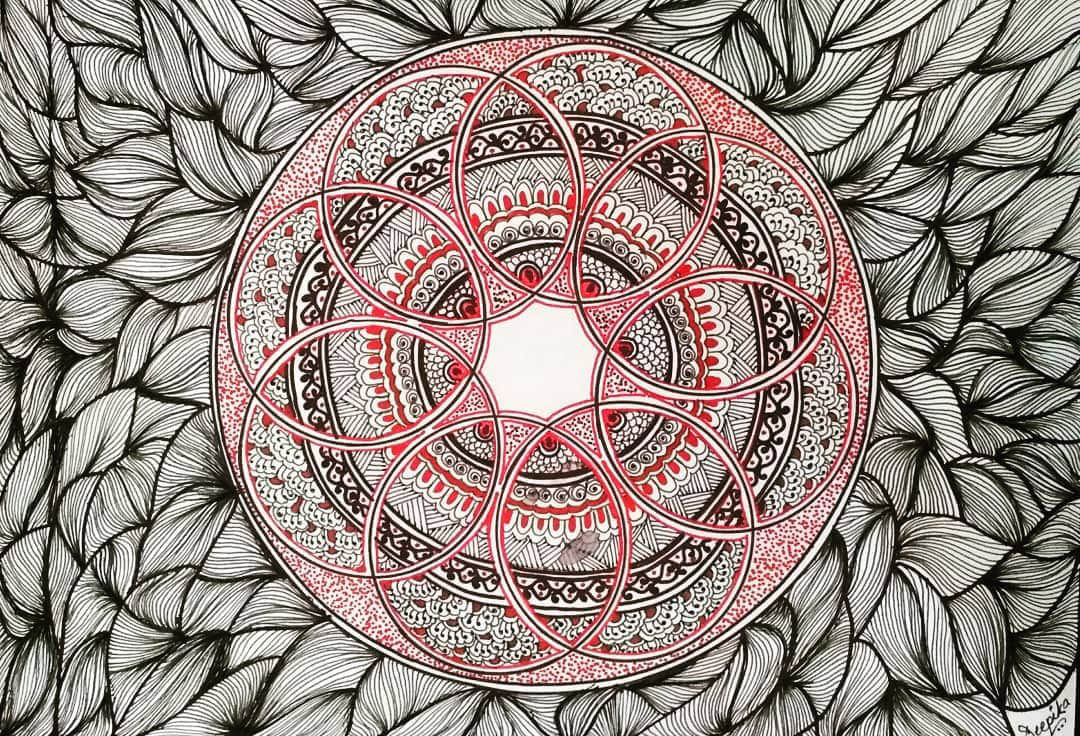
Without a doubt, I’d choose Zendala and next to it, fluid art. My love for combination art with zendala as a base and other art form as superstructure: fluid art, pastels, water colours, oil paints, charcoal is something that I am devotedly fond of. 

What kept you sane during lockdown? 

Due to the immediate unavailability of the canvasses, I put my fluid art on a halt during lockdown. I experimented with vastu paintings which is said to bring in good luck and wellness. I try to use the bare minimum, or as commonly you may call it jugaad: I have used balloons and sponges to paint abstract or fluid art.

A piece or advice that you would want to give the artists in a similar field?

Just keep on learning and improving on the go. My mantra is ‘Make Mistakes and Learn but Never Stop’. 

If you want to get in touch with Deepika, please follow the links:
https://instagram.com/artistdeepikabhansali
https://m.facebook.com/artistdeepikabhansali/

Jali Architecture – A Network of Mesmerizing Splendor

4
Jali-Architecture-India
Jali Architecture – Sidi Saiyyed Mosque, Ahmedabad – Sandeepa Chetan

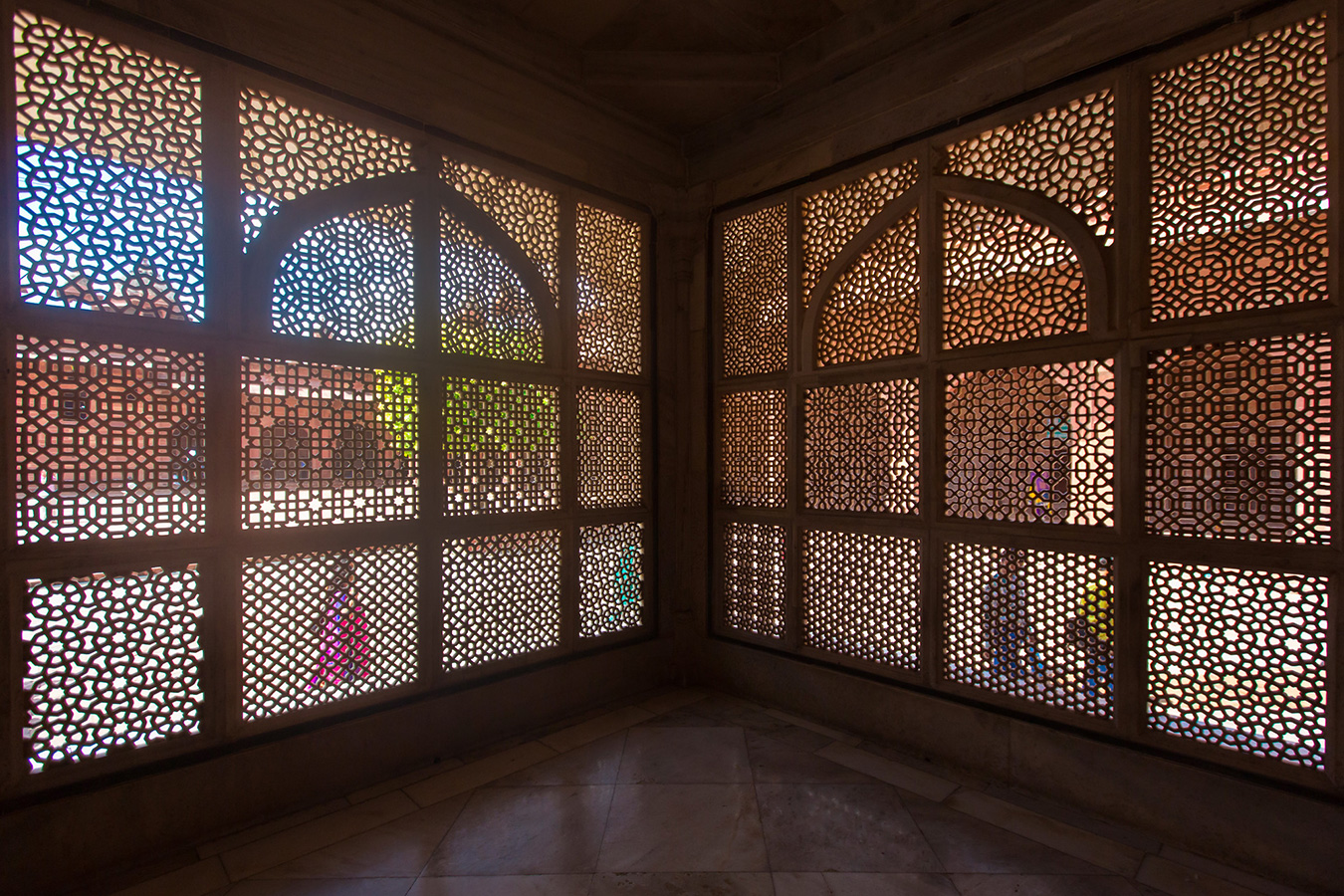
Anyone who has visited Delhi or Agra will be astounded by the sheer magic of Mughal architecture. And though there are many aspects of design and layout that can be elaborated, I personally was fascinated by the jali screens that make up a substantial part of the sub-continents’ architectural structures and designs. There is almost something surreal while viewing a jali and its simple intricacies. The perforated screen touches a delicate chord with its viewer and stands out for its duality amidst solid concrete structures.

What is Jali Architecture?

Jali-Architecture
Muhammad Ghaus Shattari Gwalior, MP – Carol Mitchell

The first thoughts invoked are of magical disbelief. Somewhere I wondered the jali to be made of thin translucent films of sheets that would probably shrug with a strong bout of wind. Of course, your imagination can waver when looking at exquisite art and architectural structures, but the fact that jalis have always been traditionally made on stone or marble can quite literally take your breath away. Because the jali architecture is, not only, a beautiful sight to behold but its real artistry lies in its ability to have multiple functional values. 

The Science of Jali Architecture

Jali-Architecture-info
Fatehpur Sikri, Agra, India – Feng Zhong

Backed with a strong scientific understanding the jali works on two important principles of physics. The Venturi effect is the reduction in pressure of fluid or air that is caused when it passes through a narrow or constricted section. Bernoulli’s principle on the other hand, states that an increase in speed of fluids or air also leads to a decrease in pressure. This means that as air moves through the narrow designs or cuts on the screened structures, the speed of the air increases and hence the air passing through becomes cool. 

Jala_stone_trellis_windows_Indian_architecture
Jali stone trellis windows – Wikimedia

It is because of this scientific concept that spaces within the jalis are relatively cooler than the outsides. 

Jali Architecture and Socio-cultural Importance

Besides, the wind factor, the jali cuts out the direct glare of the sun and light. While from within the jali one can view the happenings outside, those standing on the outside do not get a clear view of the inside. This allows the jali to be a perfect privacy provider, at the same time not cutting off those within with the world outside. 

Jali-Patterns
Jali patterns – Patrick Barry

The jali thus, acted as the perfect screen for the women of both the Mughal and Rajasthani royals. The designs flourished the most during the 16th to 18th century in northern India and became a medium for the women to access and view the outside life without prying eyes invading their privacy. The lattice screens were used as window screens or dividers within rooms for queens, princess and other women of the household. The jali was thus a purdah in its own right, as seen in the Hawa Mahal.

Jali-Patterns-Hawa-Mahal.
Hawa Mahal – Photo by Ibrahim Rifath

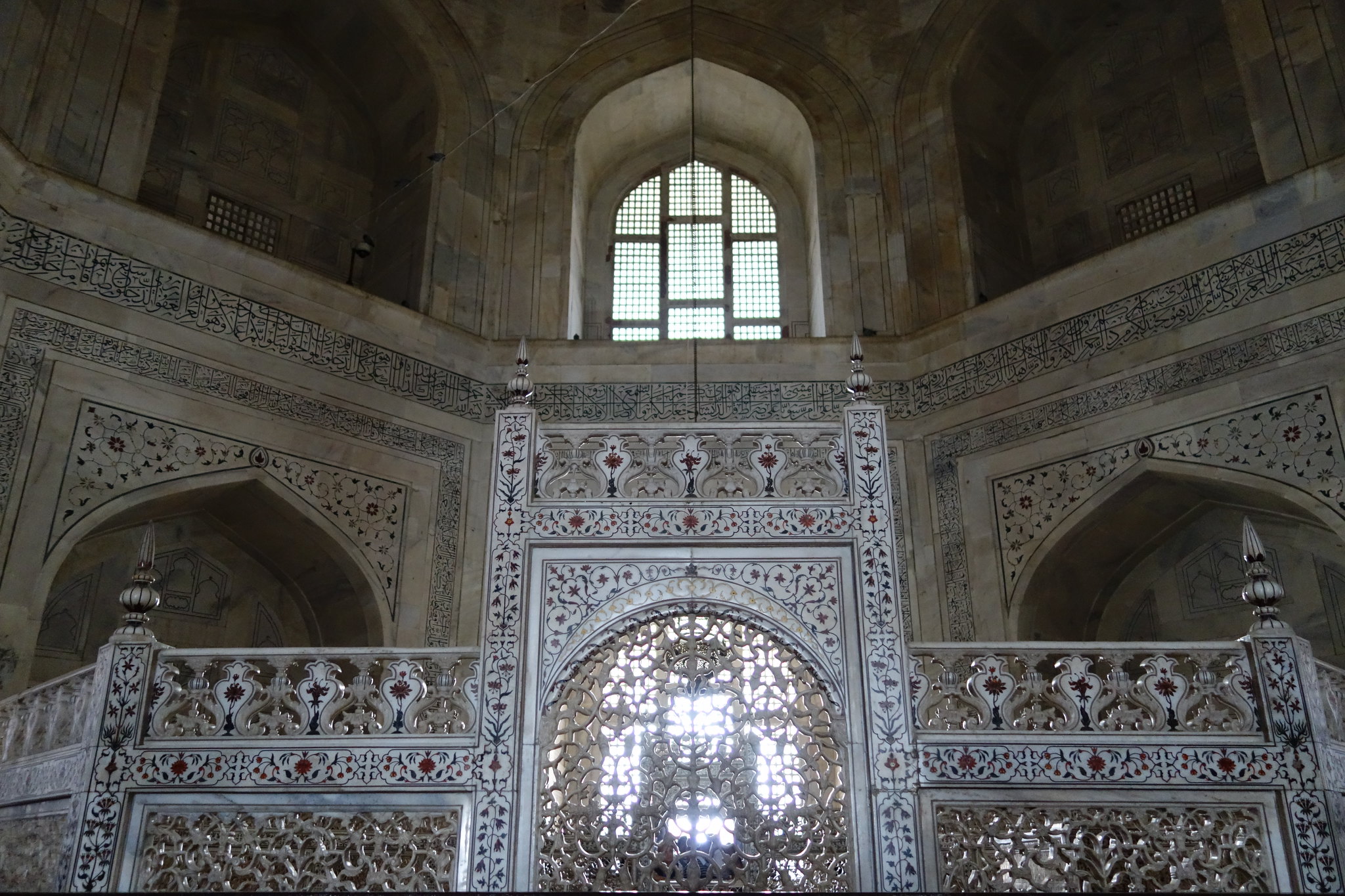
The jali was also extensively used around cenotaphs and tombs. The beautiful jali designs at the tomb of Salim Chisti in Fatehpur Sikri and the marble jali inside the Taj Mahal are classic examples of Islamic designs and motifs. Similarly, the jali also finds its place in mosques and is used for not only artistic or aesthetic reasons, but also, expounding Islamic patterns and calligraphy. 

Jali-Design-Indian-History
Intricate jali work in marble Red Fort, old Delhi – Avinash Bhat

However, the jali has been a popular device till date in various interior and exterior designs. Whether it be on balconies, platforms, terraces or even as decorative screens, the jali has continued to find its way in our homes and interiors quite seamlessly. Even today jalis are used as partitions, for separating spaces or units, as wall panels, on ceilings, on furniture and also as ornamental accessories. 

Modern Jali Architecture

Jali Inside Taj Mahal
Jali Inside Taj Mahal – Paul Simpson

The jali remains one of the most poignant tools that balances itself between open windows and concrete complete walls. It plays on subtleness, elegance and a sense of being right there, but not quite there too. Its origin and evolution are not clear, but it has been extensively used in the Indian subcontinent, including in the southern Indian areas of Kerala and Konkan too.

Though the designs and patterns differ from region to region, the essence of the artistry remains intact. Some call it poetry in stone, whereas, for some the designs invoke a sense of wonder and awe. The interplay of light and shadow, of the cool and humid, of the public and private are opposing emotions juxtaposed together. And though the jali is probably functional in our homes, offices and everywhere around us, its grandeur and delicacy is unmistakably vibrant in its erstwhile treatment by the royals. The mesmerizing tenderness that carves its way in the heart of stone and marble leaves an impression of priceless simplicity coupled with opulence. 

Jali-Sidi-Saiyyed-Ni
Sidi Saiyyed Ni Jali – Wikimedia

Let me end here on an honest note. I set out thinking to write about the history and detailing of the jali architecture work in India, but as images of these exquisite pieces from the architectural stalwarts of Delhi, Agra, Fatehpur Sikri and Jaipur pass on my screen and memory, I couldn’t help not elaborating on its magnificence and splendor. The detailing of the craft is by passed by the grandeur of the art itself. Perhaps another example of how the jali is a blend of so many emotions and hopes, even if they are sometimes contrary to each other.

15 Best Things to do in Dubai

0

Dubai is packed to brim with unequaled sights and breathtaking experiences. In fact, you could stay here for a whole month or more and indulge in something unique and exciting every day. But, if you are not sure where to head or what to do on your visit, check out the List of Places to Visit in Dubai  to choose the right one for you!

1. Head up to Burj Khalifa

burj khalifa

It is a must-do in Dubai, especially for first-timers. At a remarkable height of 828 meters, this imposing structure is the world’s tallest building. Most people limit their Burj Khalifa experience to a selfie or groupie against it. But, if you can afford, be sure to ascend its observation deck on 124th and 148th levels. They not only feast your eyes with the most exquisite views over Dubai’s cityscape, desert, ocean, and beyond, but also come with one of the world’s fastest elevator rides. 

2. Visit Dubai Mall & Dubai Fountain

Dubai-Mall-of-the-Emirates

Situated next to Burj Khalifa in Downtown Dubai, the Dubai Mall is so massive (with the most exciting offerings) that you can literally spend your entire holiday without ever leaving this mall. Rightly so, it boasts of over 1,200 retail outlets and more than 200 dining venues. Not to mention about its vast array of leisure and entertainment attractions, ranging from the all-age Dubai Aquarium and Underwater Zoo to the kids’ favorites such as KidZania Dubai and Candylicious. 

It is also a haven for fun and thrill seekers, thanks to the biggest of its kind VR Park, Dubai Ice Rink and Hysteria Dubai Mall, among others. Finally, make sure that you watch Dubai Fountain; set at Burj Lake, outside the mall, this choreographed aquatic performance is a true stunner with its immaculate harmony of water, music and light. 

3. Walk Down Al Bastakiya Quarter

Al Bastakiya
Image – Ankur Panchbudhe/Flickr

Want to escape from Dubai’s glitzy side at least for a few hours? Make your way to Al Bastakiya Quarter in Old Dubai. Officially called Al Fahidi Historical Neighborhood, this well-preserved 19th century enclave is where time stands still. Stroll through its narrow lanes and admire the ancient sand-colored structures topped by wooden wind towers. Most of them are now converted into museums, art houses and cultural institutions. Sheikh Mohammed Centre for Cultural Understanding, XVA Art Gallery and Dubai Museum (inside the city’s oldest of its kind Al Fahidi Fort) are just a few of them. 

4. Get the Most Fantastic Views over Palm Jumeirah

Palm Jumeirah
Palm Jumeirah – ckilger via Flickr

No preface is probably required for Palm Jumeirah as this is one of the first things that come into the mind when one thinks about Dubai.  But, for those unversed, it is one of the largest as well as the most astonishing man-made islands in the world, easily identifiable for its palm-tree design with a crescent on its top. That said, you could see this engineering marvel (in its exact splendor) only from a sky-high vantage point. Till recently, it was possible only with a pricey helicopter ride or a wild sky dive session. If you don’t want to shell out a fortune to catch this view, there is a cost-effective alternative by way of the View at the Palm Jumeirah; this observation deck at 52nd level of Palm Tower promises you the full display of this wondrous island. 

5. Take in Palm Fountain Show

Palm Fountain Show

Nothing could stop Dubai from evolving and exciting the world, even the pandemic! Palm Fountain show is a proof of this. Launched in October 2020, it is the world’s largest fountain wherein the perfect sync of water, light and music create a choreographed water performance like no other. It is located at the Pointe, on Palm Jumeirah, against the regal backdrop of Atlantis, The Palm Resort. 

6. Desert Safari

Desert Safari Dubai

Desert Safari Dubai wraps up adventure, culture and nature in a single trip! This is an off-road trip which ventures you deep into Dubai’s unscathed desert landscape, surrounded all over by the golden sands. Dependent on your choice, your desert safari includes a session of 4X4 dune bash, camel ride, sand board and of course, a variety of activities (including henna tattooing, Shisha smoking, falconry etc) that enlightens you about the Bedouin culture and past. BBQ dining and traditional shows such as Belly Dance and Tanura performance are staples of most evening and overnight desert safaris.

7. Enjoy Skiing at Ski Dubai

Skiing at Ski Dubai
Image – Armin Rodler/Flickr

This is one of the most amazing things to do in this Arabian Desert city. The best thing is that you don’t have to wait till the arrival of winter months to try this. You can enjoy skiing, snowboarding, and sledging, among other snow activities, even in the summer months when Dubai literally simmers at over 50 degree Celsius. Completely set indoors, this snow-themed attraction is inside Dubai’s Mall of the Emirates. It is the first of its kind in the Middle East and further the third largest Ski Resort in the world. 

8. Get Active at Mushrif Park

Mushrif Park 
Image – Wikimedia

Are you looking for a nature retreat with an adventurous twist but don’t want to travel out of Dubai? Head to Mushrif Park which has something for everyone! One of its main attractions is Aventura Park, featuring a spectrum of fun challenges and rope course activities ideal for every ability and skill level. For those who want stay away from action, there are attractions such as International Village, Al Thuraya Astronomy Centre, and Mushrif Equistrian and Polo Club. 

9. Watch a Jaw-Dropping Show

Dubai Aquarium
Image – stevedouglas2/Flickr

Dubai is not just a land of architectural marvels; it is also a place to watch the most spectacular shows and performances. If you are a fan of Cirque du Soliel style, don’t miss La Perle by Dragone show where an accomplished cast of world-class acrobats take you to the realm of surrealism. Moreover, the aficionados of operas and theatrical shows can head to Dubai Opera. Joined by your younger ones? Take them to watch the spellbinding Dolphin and Seal show at Dubai Dolphinarium. 

10. Sign Up for a Sky-High Activity

Skydive Dubai

See Dubai the way it should be seen on an air-borne activity! Select from Dubai tour packages with helicopter ride or a more exciting seaplane tour. Want to add a bit of thrill and fun to it? Opt for XLine Dubai – the world’s longest and fastest urbane zipline. For ultimate thrill, nothing probably comes closer to the super adventurous Sky Dive experience over the man-made island of Palm Jumeirah. 

11. Experience the South American Rainforest at the Green Planet

Green Planet Dubai
Image – Imran Shahabuddin/Flickr

This unique attraction at Dubai’s City Walk is the Middle East’s first bio-dome. Recreating the ecosystem of the Amazon Rainforest in an outdoor setting, it shelters over 3000 distinct flora and fauna. The main highlight is the 25-meter-high Kapok style tree that acts as a life-sustaining tree! Placed right in the middle of the bio-dome, it is also the largest man-made tree in the world. 

12. Go on a Dhow Cruise

Dhow Cruise Dubai

There is no doubt that Dubai is exquisite during the day. But, in the night, its blissfully illumed cityscape is just incomparable. The most ideal way to take in the magical allure of this nighttime Dubai skyline is to take an atmospheric dhow cruise. It is nothing but a relaxed sail along Dubai’s tranquil waters aboard a traditional Arabian vessel which was once used for pearl farming and fishing in the pre-oil phase. They are now converted into floating restaurants, making it a great spot to take in both superb views and fantastic food. 

13. Dine with a View

Dine with a View at Dubai
Image – Wikimedia

Dubai has some of the world’s most amazing restaurants means it is never a difficult task to find a dining venue with a view. From the high-end restaurants that directly overlook attractions like Burj Al Arab, Dubai Fountain, Palm Fountain etc to the sea-facing eateries, you will literally be spoilt for choices. And the best part is that you will find restaurants in every range and price point. No matter you want to dine at a Michelin-starred restaurant or a cozy café packed with irresistible flavors, you will find it all here. 

14. Shop at Souks

Dubai Souks
Image – Ankur Panchbudhe/Flickr

If you think that Dubai’s shopping scene is all about its colossal mall, visit its traditional bazaars (locally called souks) that are tucked away in the city’s old part across Bur Dubai and Deira. It caters to well-heeled and budget shoppers alike, with its one-off merchandise made available at unbelievable rates. Must-experiences are Gold Souk, Perfume Souk, Spice Souk, and Textile Souk. 

5. Check out the Fascinating Theme Parks

Legoland Dubai
Image – Jeremy Thompson/Flickr

For those seeking theme park fun and thrill, Dubai has some of the most extraordinary options. Visit the largest of its kind IMG Worlds of Adventure or spend a full day at the region’s first of its kind Dubai Parks and Resorts with four parks (Motiongate Dubai, LEGOLAND Dubai, Bollywood Parks Dubai, and LEGOLAND Water Park.) There are more choices by way of Hub Zero and VR Park.

Conclusion 

Whether you want to follow the region’s cultural trail, participate in an exhilarating activity or just wish to spend your evening in a laid-back setting, Dubai has the best of options (in every category) to enthrall you. So, what are your most preferred Dubai things to do? Come leave your favorite experiences as well as thoughts about Dubai in the comment section below.