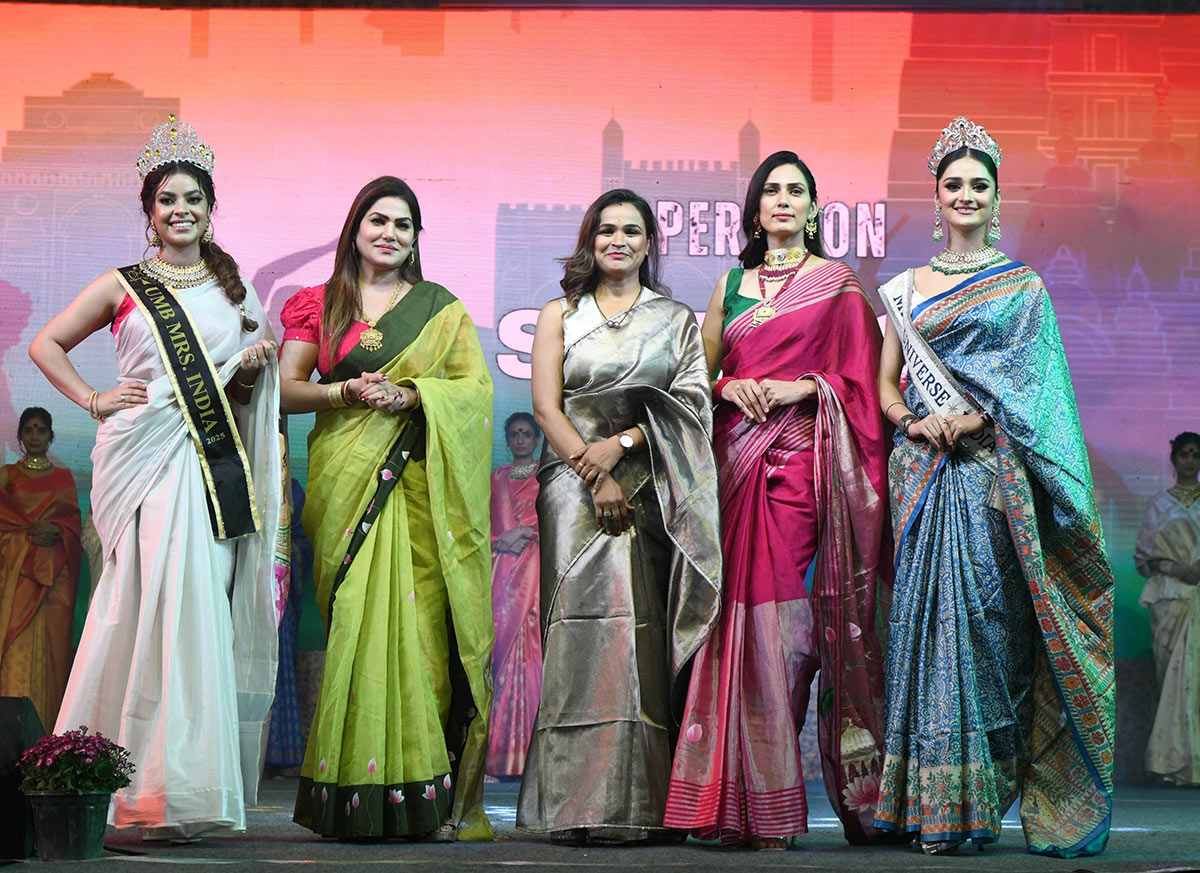
At the Surajkund International Crafts Mela, Shikha’s Kariigarii presented a fashion show that blended heritage, handloom, and national emotion, redefining the runway as a living narrative of India’s artistic soul and collective conscience.
Sarees as Cultural Narratives Crafted by Artisans Across India
More than a fashion show, the presentation unfolded as a cultural journey, where each saree told a story of time, tradition and the human hands behind it. Crafted over weeks and months by artisans across the country, the collections celebrated the idea of art transformed into a wearable legacy.
Opening Sequence Honours Tribal Traditions and Identity
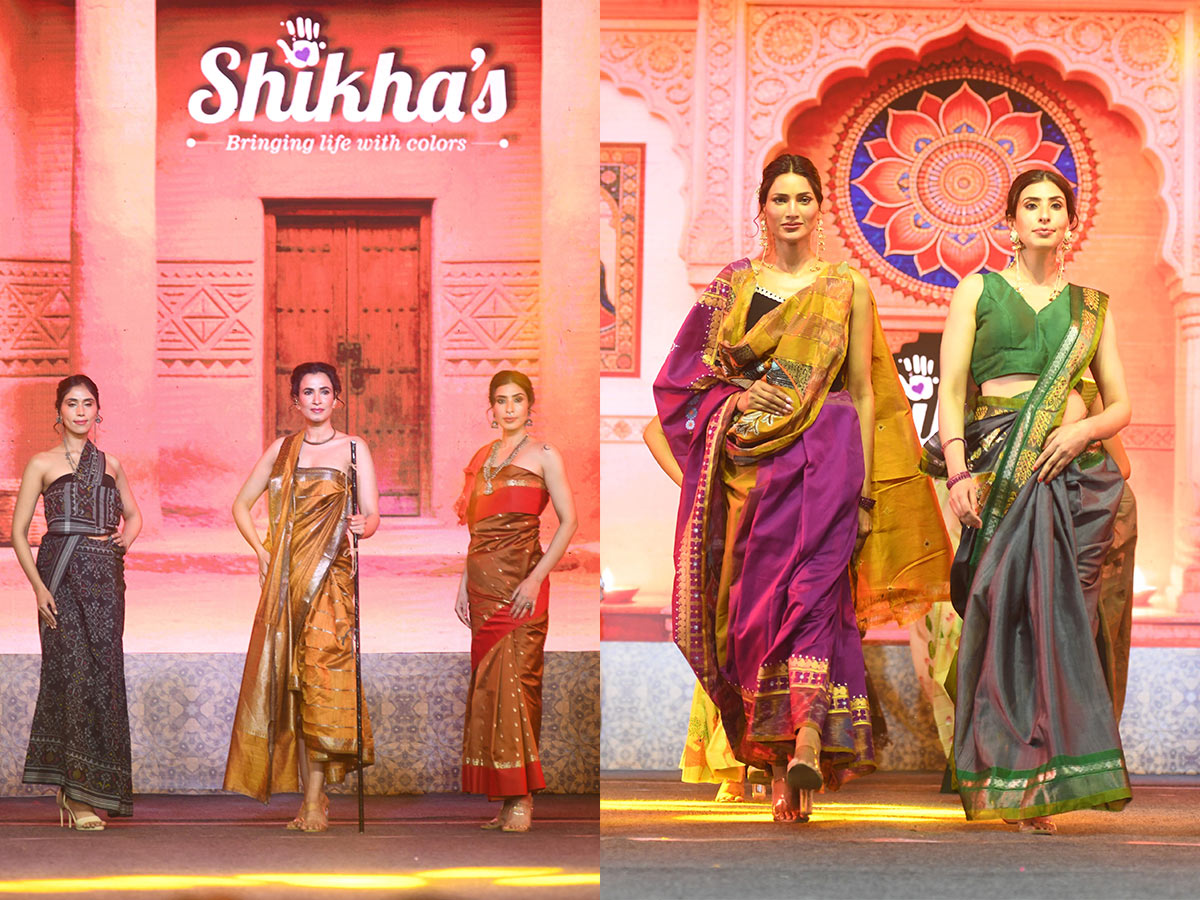
The opening sequence, “A Tribal Life – Ek Bharat, Shreshtha Bharat”, paid homage to India’s indigenous communities and their textile traditions rooted in nature, survival, ritual and identity. The drapes reflected how tribal women across regions had woven resilience into fabric, each weave distinct yet bound by shared cultural memory.
Silks of India Sequence Showcases Regal Textile Diversity
The second sequence, “Silks of India”, highlighted the diversity of Indian silks, from Tussar and Gheecha of Chhattisgarh to Banarasi Butidar of Varanasi, Lachcha Buta of Mubarakpur, Chanderi of Madhya Pradesh, Venkatagiri of Andhra Pradesh, and Kuthampully of Kerala. Each saree stood as testimony to mindful craftsmanship far removed from mass production.
Hand-Painted Sarees Transform Fabric into a Moving Gallery
A defining moment of the evening was “Tribal to Modern Art – Hand-Painted Sarees of India”, where fabric emerged as canvas and the saree as a moving gallery. The collection featured artworks inspired by Pichwai, Pattachitra, Warli, Gond, Madhubani, Assamese traditions and Chittara art, created stroke by stroke by award-winning artists.
Operation Sindoor Finale Becomes a Tribute of Pride and Unity
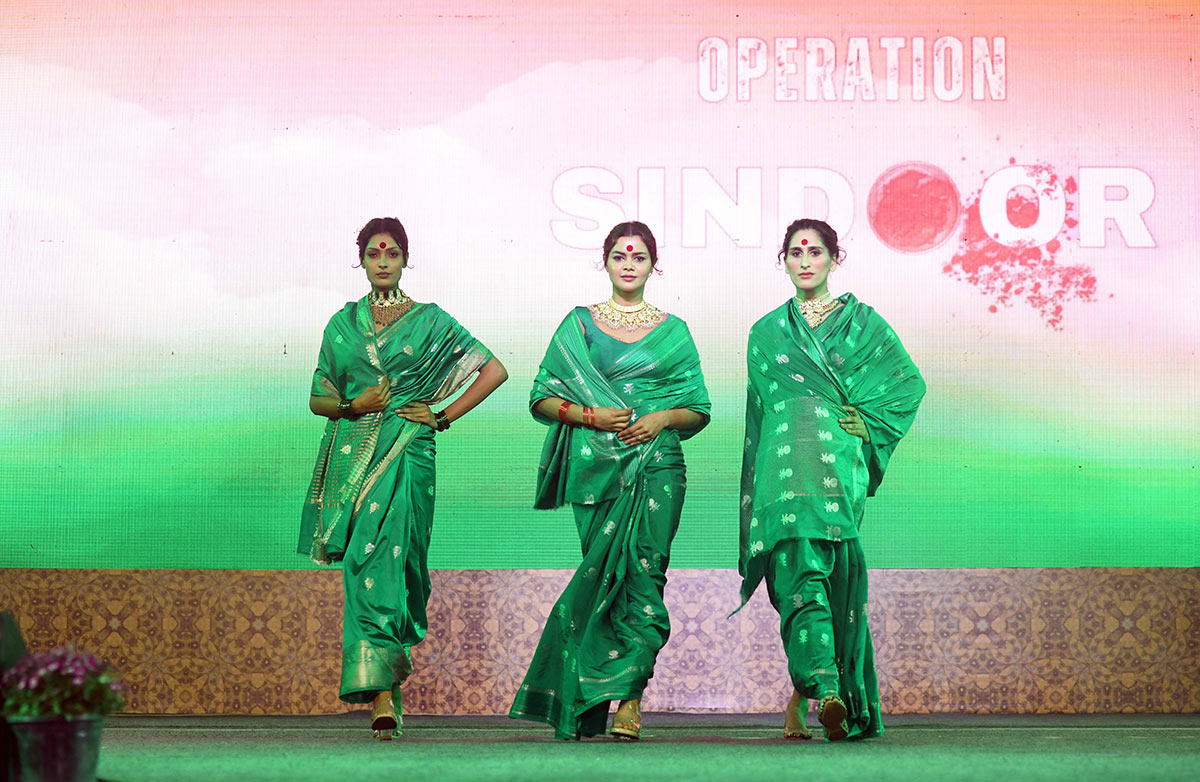
The grand finale, “Pride of India – Operation Sindoor”, marked a first-of-its-kind fashion tribute, drawing inspiration from a contemporary moment that unified the nation in grief, resolve and resilience. Set against the stirring strains of Vande Mataram, coinciding with the milestone celebrating 150 years of the song, the finale transcended fashion into remembrance and homage, echoing “Saare Jahan Se Achha, Hindustan Hamara.”
A Woman-Led Enterprise Preserving Endangered Art Traditions
Shikha’s Kariigarii, headquartered in Aurangabad, Maharashtra, continues to work closely with nationally recognised artisans across India, ensuring sustainable livelihoods while preserving endangered traditions. Executed under the direction of fashion director Mr Sandesh Navlakha, the show concluded with a standing ovation, marking one of the most memorable showcases at Surajkund International Crafts Mela 2026.
A Tribal Life, Silks of India, Hand-Painted Sarees of India
Grand Finale
Pride of India – Operation Sindoor Tribute
Artisan Network
Nearly 100 award-winning artisans and artists
Takeaway
Shikha’s Kariigarii’s showcase at the Surajkund International Crafts Mela 2026 demonstrated how fashion can become far more than spectacle, serving instead as a medium of cultural preservation, artistic legacy, and national emotion. From tribal textiles and Indian silks to hand-painted sarees and the moving Operation Sindoor tribute, the evening stood out as a powerful moment where heritage, conscience, and craftsmanship walked together on the ramp.
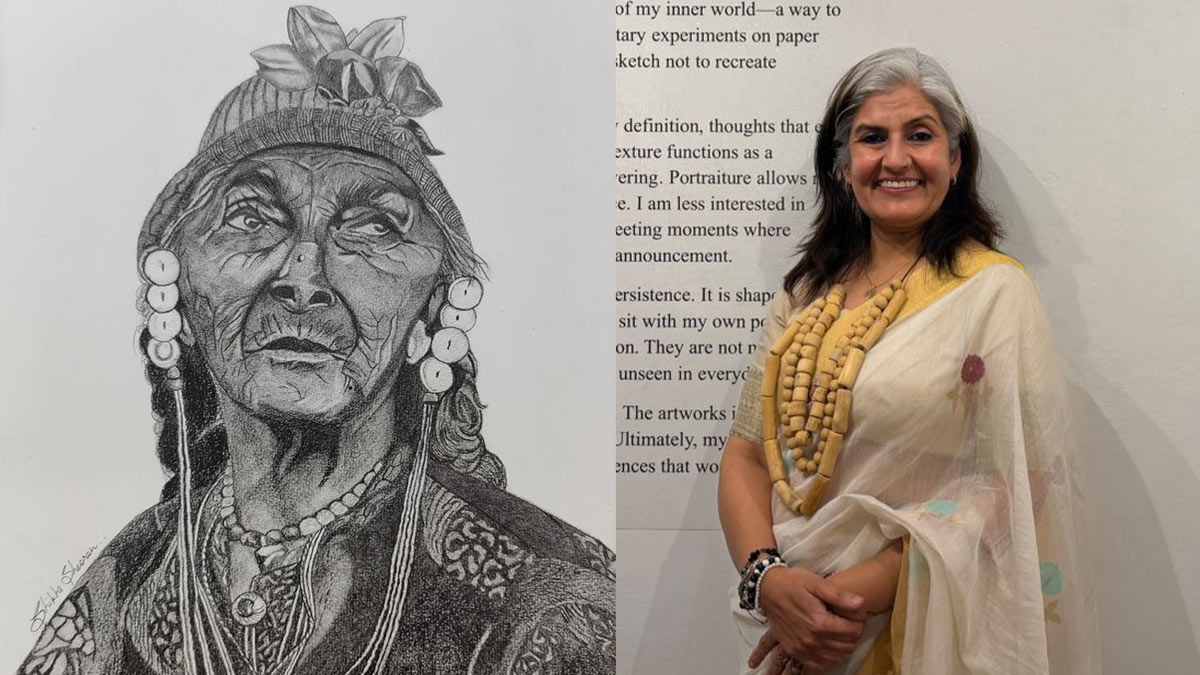
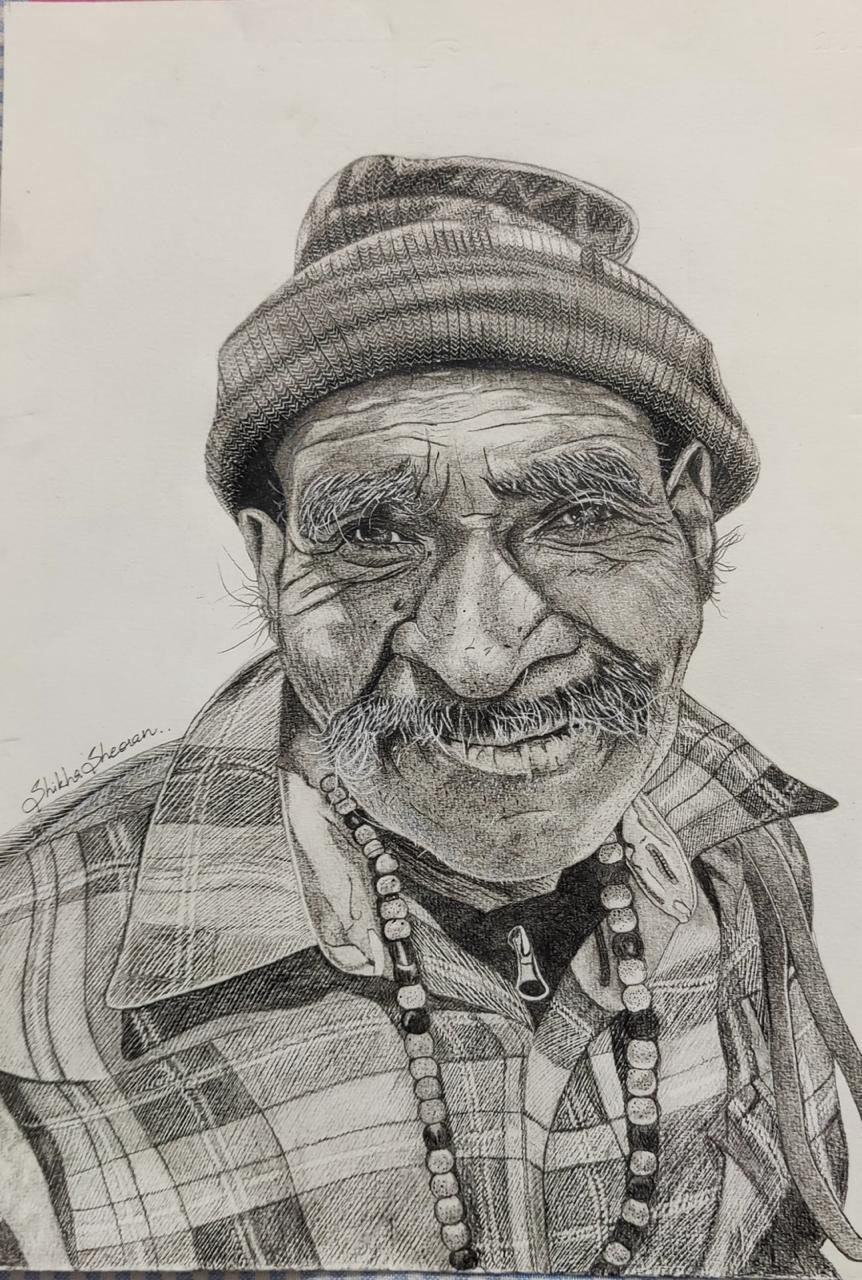
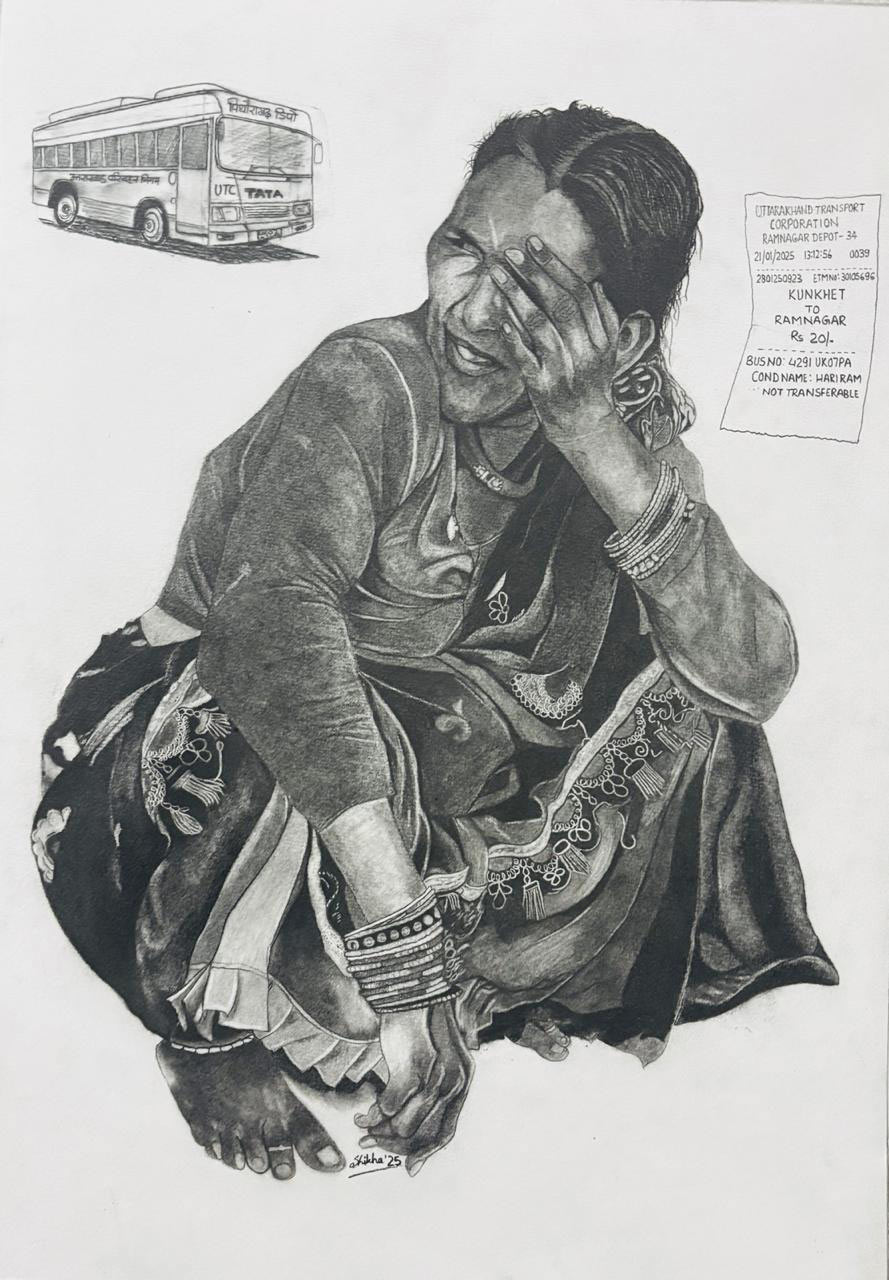
Portrait artist Shikha Sheoran, who began her professional art journey in 2022 in her 50s, is set to present her first solo exhibition, Zikr, in New Delhi. The show will be held at the India International Centre from Feb 11–17, offering an intimate showcase rooted in remembrance, identity, and human stories.
A Practice Shaped by Observation and Emotional Truth
Known for her pencil and charcoal portraits, Shikha Sheoran has developed a signature human-centred voice that captures fleeting emotions, resilience, and untold narratives. Her work reflects a deep attentiveness to faces and expressions, reading them with the sensitivity of a storyteller.
Early Series “Brokpas” Explored Cultural Identity Through Portraiture
Her artistic evolution began with Brokpas, an instinctive entry into realism that focused on identity and cultural detail. The series was first showcased at AIFACS (2022) and later at Visual Arts Gallery (2023), marking her emergence as a portrait artist engaging with cultural heritage through intimate representation.
Social Narratives Took Form in “Farmers” and “Kashmakash”
Shikha’s later works shifted toward grounded social themes. Farmers, displayed at Lalit Kala Akademi (2024), highlighted resilience and the dignity of everyday labour. In Kashmakash, exhibited at Palm Court, India Habitat Centre (2024), she created silhouettes of women and children reflecting water scarcity and invisible labour through minimalistic yet emotionally weighty forms.
Recognition and Awards Mark a Rapid Artistic Rise
In a short span, Shikha Sheoran has received significant recognition, including a gold medal from the Bundelkhand Society of Art (2024), first prize for her Brokpa portrait from the Asian Literary Society (2023), and a cash award at AIFACS (2025) for her farmer portrait. Beyond accolades, her practice continues to focus on social relevance and emotional honesty.
“Zikr” Brings Overlooked Lives Into Quiet Focus
In Zikr, Shikha honours those often unseen in everyday life—a girl selling toys on the street, a lady cutting grass in the mountains, a chaiwala, or a rickshaw driver. Through the humble medium of pencil, she celebrates quiet lives with dignity and care, offering viewers a space for reflection and remembrance.
With Zikr, Shikha Sheoran brings a deeply personal yet socially resonant portrait practice into the spotlight, celebrating lives often overlooked and stories rarely told. Her late-blooming journey, marked by emotional truth and artistic courage, makes this debut solo exhibition at the India International Centre from Feb 11–17, 2026 a significant moment in contemporary Indian portraiture.
With India Design 2026 almost here in Delhi, the week promises a front-row seat to some of the country’s most definitive design experiences, bringing together craft, innovation, and spatial storytelling across immersive exhibitor spaces.
Design Week Takes Center Stage
The event will unfold at NSIC Exhibition Grounds, Okhla, New Delhi, from February 19th, 20th, 21st and 22nd, with visitors able to explore the showcases daily between 11 AM – 6 PM.
Aspects
Details
Event
India Design 2026
Venue
NSIC Exhibition Grounds, Okhla, New Delhi
Date
February 19th, 20th, 21st and 22nd
Time
11 AM – 6 PM
Highlights
11 standout exhibitor spaces, installations, and design showcases
A-Class Marble Launches Angelo Fiore as a Dynamic Canvas
Moving beyond slabs to spatial storytelling, A-Class Marble transforms marble into a dynamic canvas through form and movement. This year marks the launch of Angelo Fiore, a Zambian marble defined by its warm white and champagne-toned base, sourced exclusively from their own quarries.
A-Class Marble: Booth No. Experience & Editions – 70
Immersive Interiors and Material Narratives Define Key Exhibitor Spaces
Among the most compelling highlights is ‘The Velvet Chateau’ by Beyond Designs, conceived as a complete residence unfolding from corridor to study, bedroom to living–dining, set within the shell of an old European church. Coast to Coast Designs brings veneer to life through layered surfaces, while Drapesy in collaboration with Arte unveils a new collection exclusively for the exhibition, where walls tell stories through textures, wallcoverings, and soft furnishings.
Global Home Brands and Indian Heritage Craftsmanship Converge
Visitors can step into the Spring collections at Pottery Barn and West Elm, where modern shapes and honest materials combine in inviting ways. Sarita Handa presents a collection weaving Indian heritage into a contemporary architectural narrative, where geometry, memory, and craftsmanship converge in quiet dialogue.
Systems, Future Living, and Public Art Installations Expand the Experience
A system-led approach defines VOX, showcasing ceiling systems, flooring, wall panels, and façade applications that integrate seamlessly into architecture. Wriver debuts a new design language that reimagines home living with timeless pieces carrying a pulse of the future. The exhibition also features “The Dance of Balance,” an installation by Vibhor Sogani reflecting the fragile equilibrium that sustains public life, drawing from the scales of justice.
India Design 2026 promises to be more than an exhibition of objects—it is an exploration of spaces where materials, heritage, and innovation converge. From marble reimagined as movement to immersive interiors, future-focused systems, and public art installations, the event offers visitors an opportunity to experience design beyond the surface at NSIC Exhibition Grounds, Okhla, New Delhi, from February 19th to 22nd, between 11 AM – 6 PM.
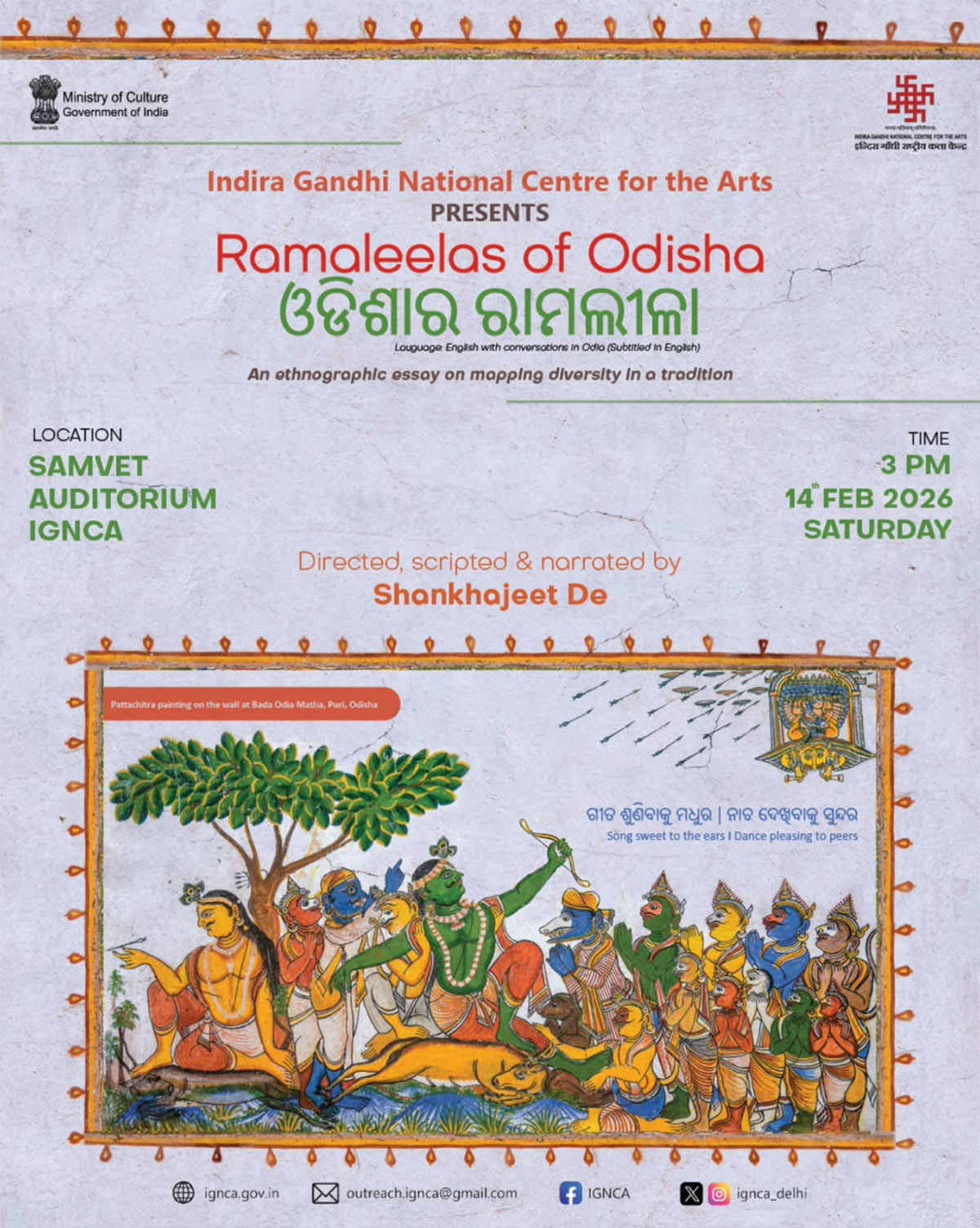
Indira Gandhi National Centre for the Arts (IGNCA) is set to present Ramaleelas of Odisha, an evocative documentary that captures the living tradition of Ramaleela through the lens of ethnography.
Ethnographic documentary on Odisha’s Ramaleela traditions
Mapping the Diversity
The documentary offers a unique cultural mapping of Ramaleela performances across Odisha, highlighting the diversity of this vibrant tradition as it continues to thrive in different regions of the state.
An Immersive Cinematic Journey
Designed as an immersive cinematic experience, Ramaleelas of Odisha invites audiences to witness the richness of Odisha’s cultural heritage, where performance, devotion, and community memory come together in powerful ways.
A Window into Living Traditions
By approaching Ramaleela through ethnographic storytelling, the film reflects on how traditional performing arts remain active cultural practices, carrying forward histories, rituals, and shared identities.
Screening at Samvet Auditorium, IGNCA
The documentary will be screened at Samvet Auditorium, IGNCA, offering viewers in New Delhi an opportunity to engage closely with Odisha’s enduring folk and theatrical traditions.
Takeaway
With Ramaleelas of Odisha, IGNCA brings audiences closer to one of India’s most vibrant living traditions, offering an evocative ethnographic lens into the cultural diversity of Ramaleela performances across the state. The screening promises an immersive journey into Odisha’s heritage on 14 February 2026 at Samvet Auditorium, IGNCA.
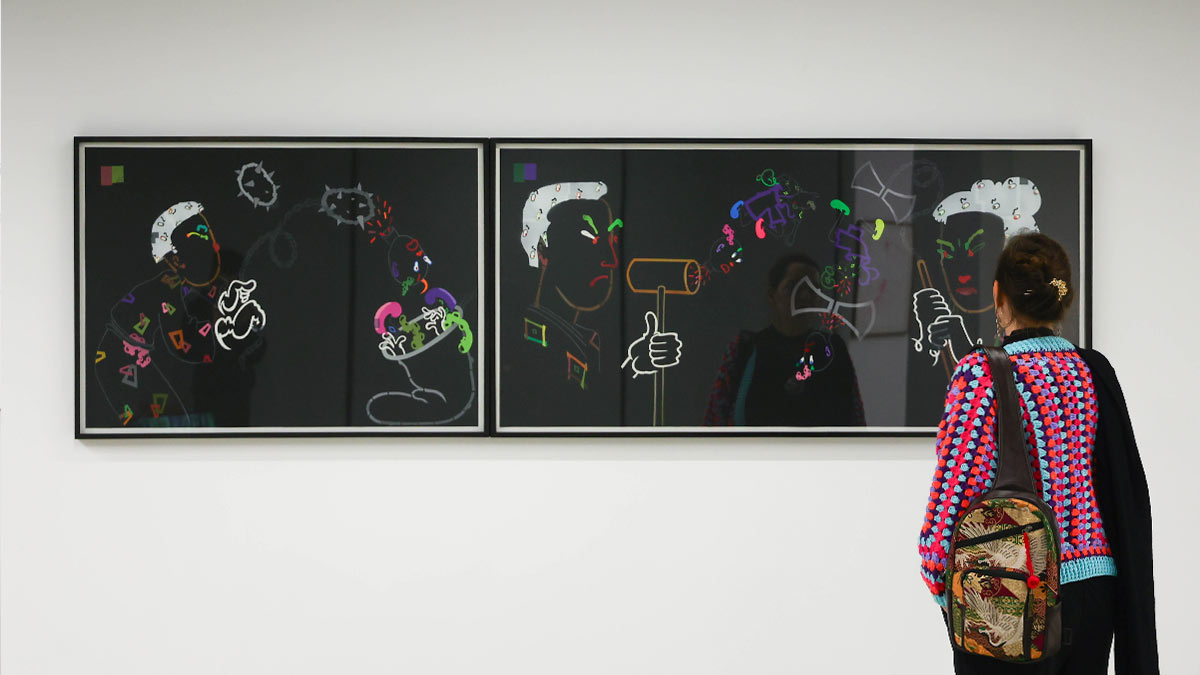
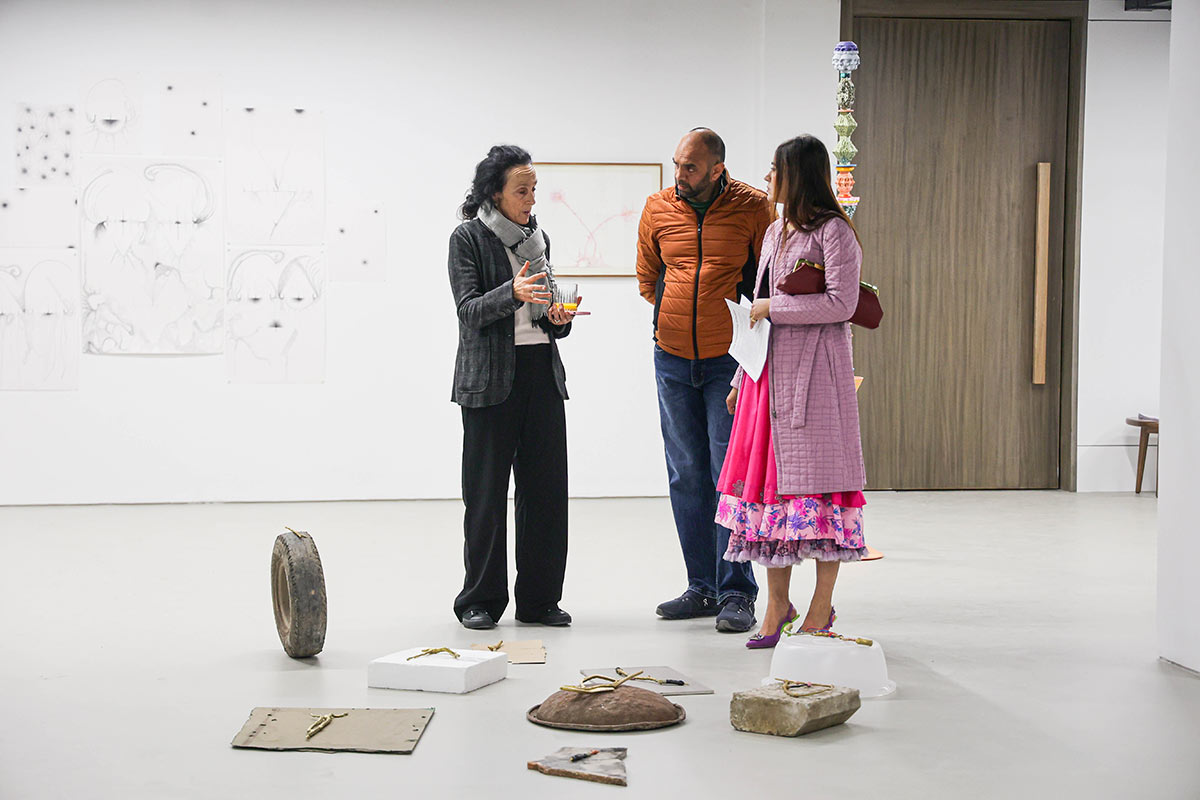
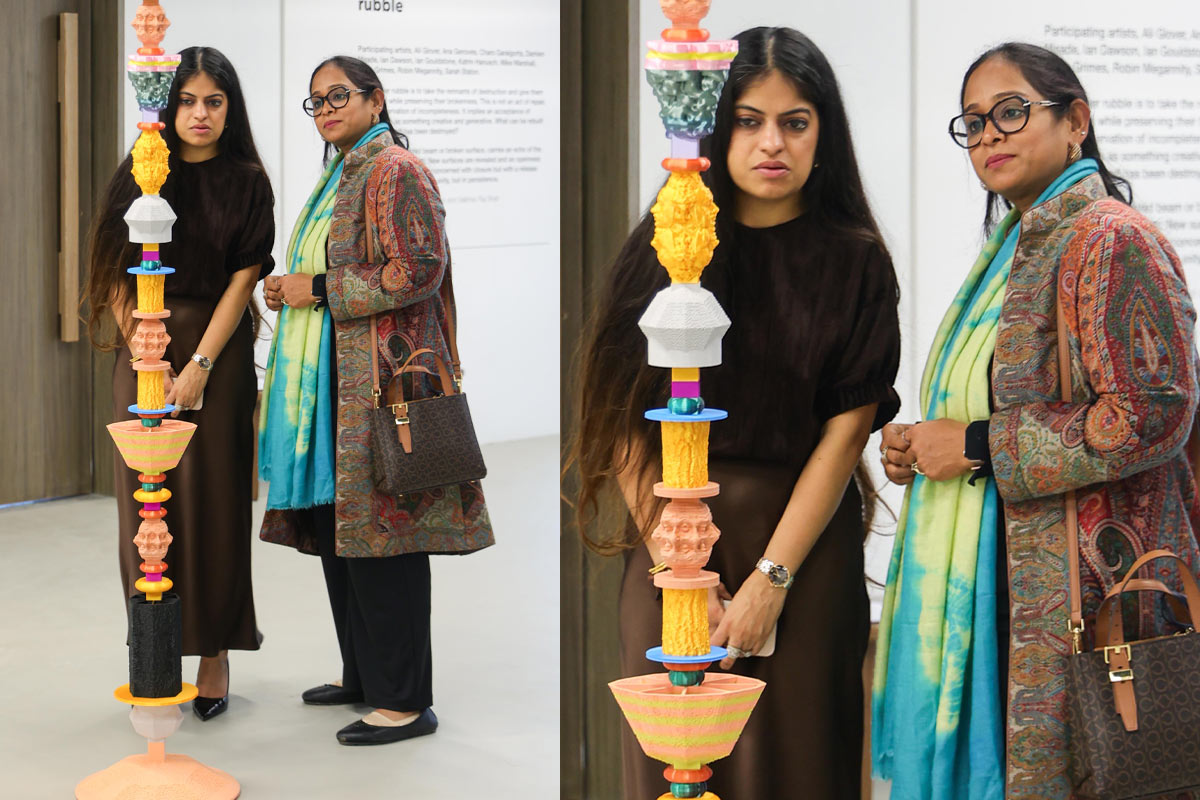
Thapar Contemporary has opened The Engineering of Rubble, a group exhibition featuring 18 artworks by 11 contemporary European artists. Curated by Jasone Miranda-Bilbao and Vaibhav Raj Shah, the show is currently on view in New Delhi until 4 April 2026.
Exhibition Reflects on Fragmentation and Endurance
The exhibition explores fragmentation, imperfection, and endurance as active conditions of making. It considers how meaning can emerge from what is broken, provisional, and unresolved, inviting viewers to engage with incompleteness as a productive state rather than a failure.
Artists Whose Works Embrace Rupture and Process
At the gallery, The Engineering of Rubble features works by Ali Glover, Ana Genovés, Charo Garaigorta, Damien Meade, Ian Dawson, Ian Gouldstone, Katrin Hanusch, Mike Marshall, Oona Grimes, Robin Megannity, and Sarah Staton. Instead of treating rupture as something to be resolved, these works allow disorder to remain open, where form is continuously becoming rather than arriving at closure.
An Architecture Built Through Attention, Not Walls
The exhibition proposes an architecture built not of walls, frames, plinths, or screens, but of attention. The fractured and incomplete speak of matter’s quiet will to endure even after its original purpose has dissolved, suggesting that presence can emerge from loss and incompleteness.
Ashish Thapar on Creating Space for Open Meaning
Speaking about the exhibition, Ashish Thapar, Founder, Thapar Contemporary, said, “The Engineering of Rubble brings together contemporary practices emerging from Europe that resist certainty and closure. By creating a context for these artists in India, the exhibition reflects an interest in attentiveness—allowing ideas and materials to remain open, and meaning to emerge gradually through process, material, and time rather than through resolution.”
Event Details
Aspects
Details
Exhibition
The Engineering of Rubble
Venue
Thapar Contemporary, Kapashera, New Delhi
Artists Featured
11 Contemporary European Artists
Curators
Jasone Miranda-Bilbao and Vaibhav Raj Shah
On View Till
04 April 2026
Gallery Timings
11:00 AM – 7:00 PM | Monday to Saturday
Takeaway
Curator Jasone Miranda-Bilbao added, “The Engineering of Rubble brings together practices that work with fracture, pause, and repetition as ways of thinking. The exhibition is not concerned with resolving what is broken, but with staying with it—allowing form and meaning to unfold through time, attention, and material presence.”
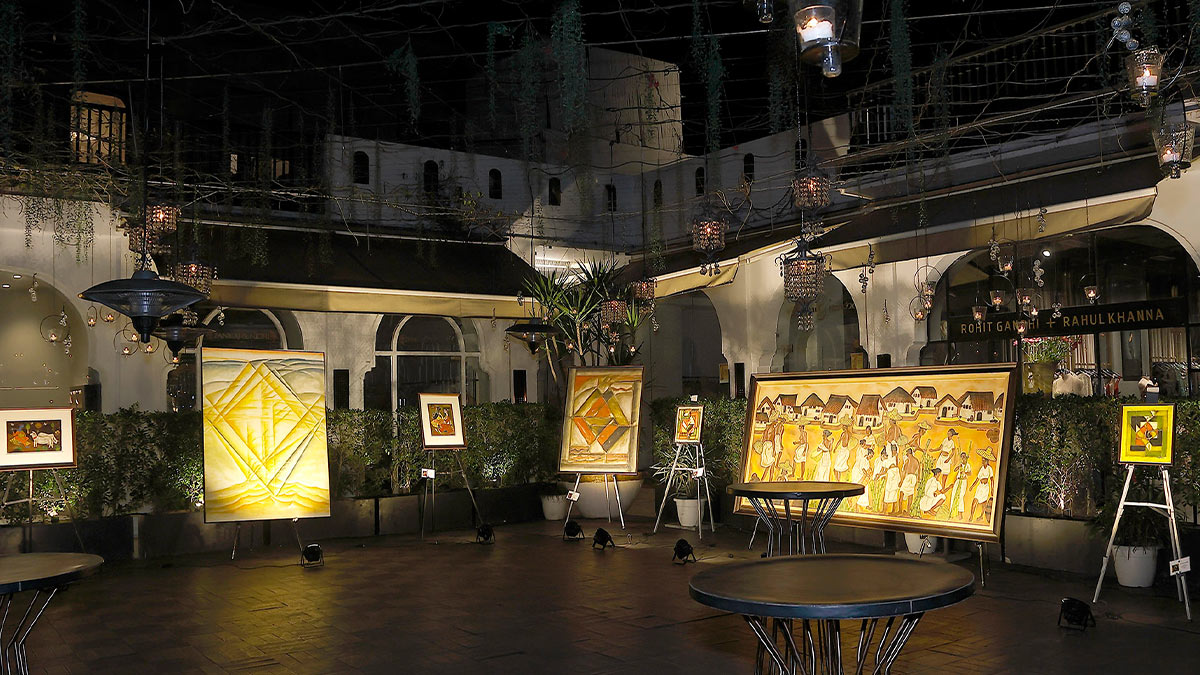
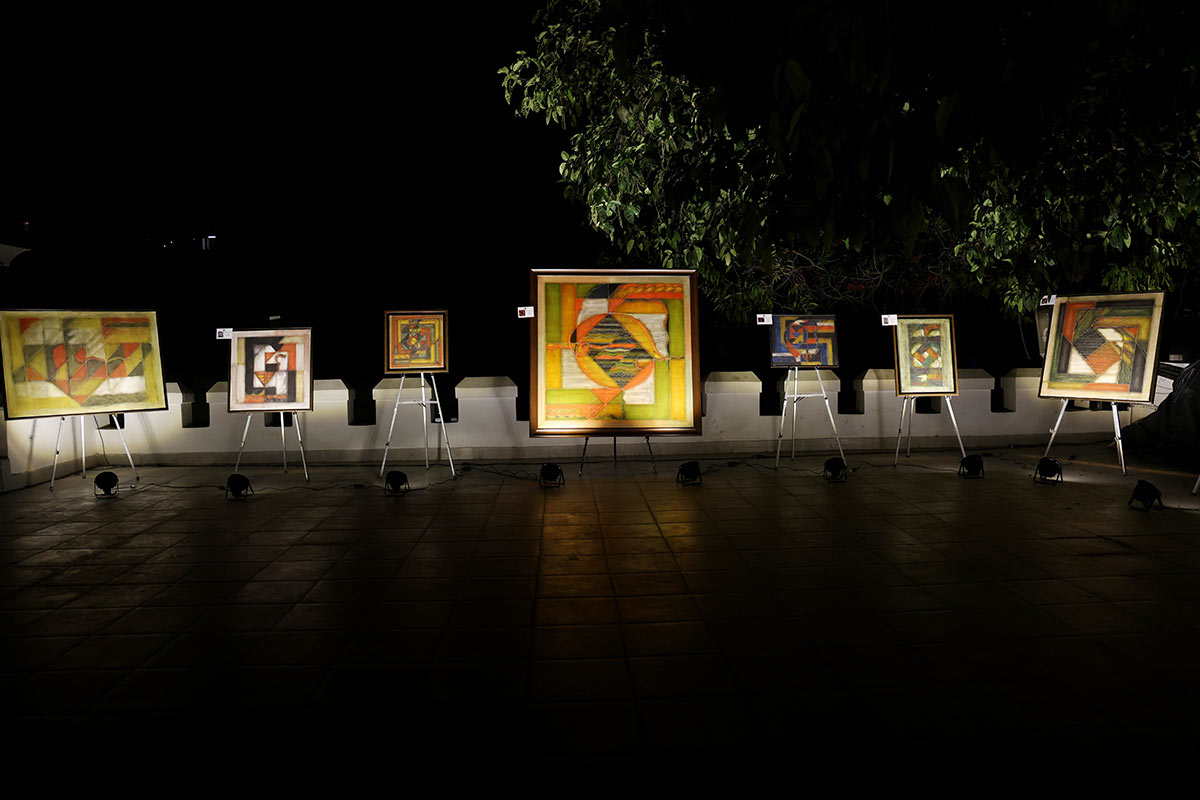
February 2026 | New Delhi: Gallery Silver Scapes, in collaboration with Dhoomimal Art Gallery, recently hosted an exclusive modernist evening at QLA, Mehrauli, presenting works by two seminal figures of Indian modernism — A. A. Almelkar and Akkitham Narayanan. Conceived as a continuation of ongoing artistic and intellectual conversations, the gathering brought together collectors, artists, diplomats, and cultural patrons for an intimate engagement with modernist legacies.
A Dialogue Between Figuration and Abstraction
Set against the elegant backdrop of QLA, the presentation created a compelling exchange between Almelkar’s lyrical figuration and Narayanan’s meditative abstraction. The pairing highlighted the breadth of Indian modernist expression, demonstrating how two distinct artistic languages can coexist within a shared framework of memory, form, and philosophical depth.
Launch of a Major Publication on A. A. Almelkar
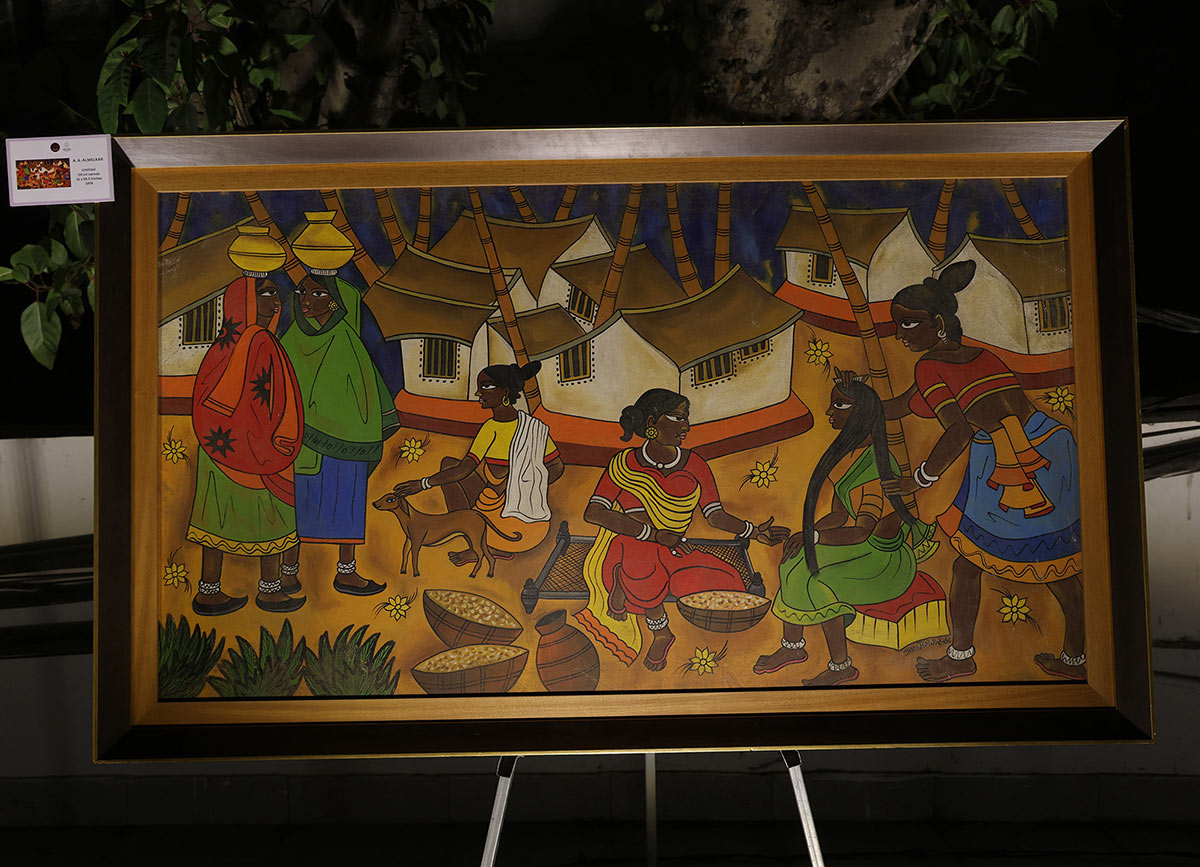
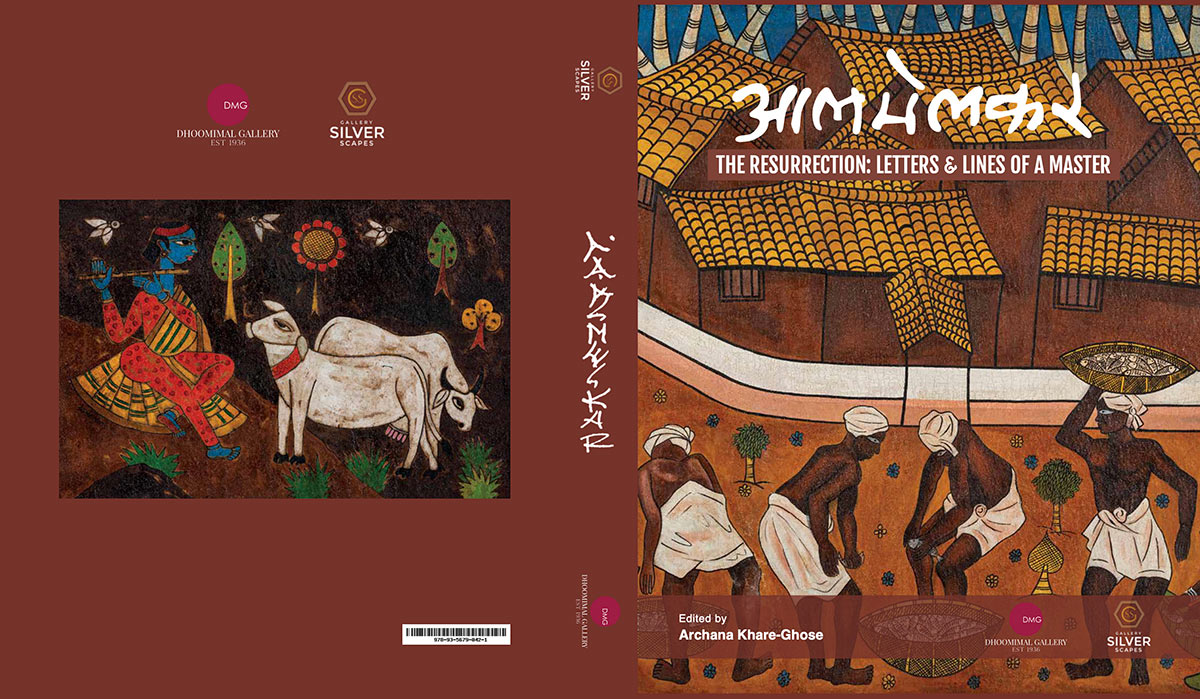
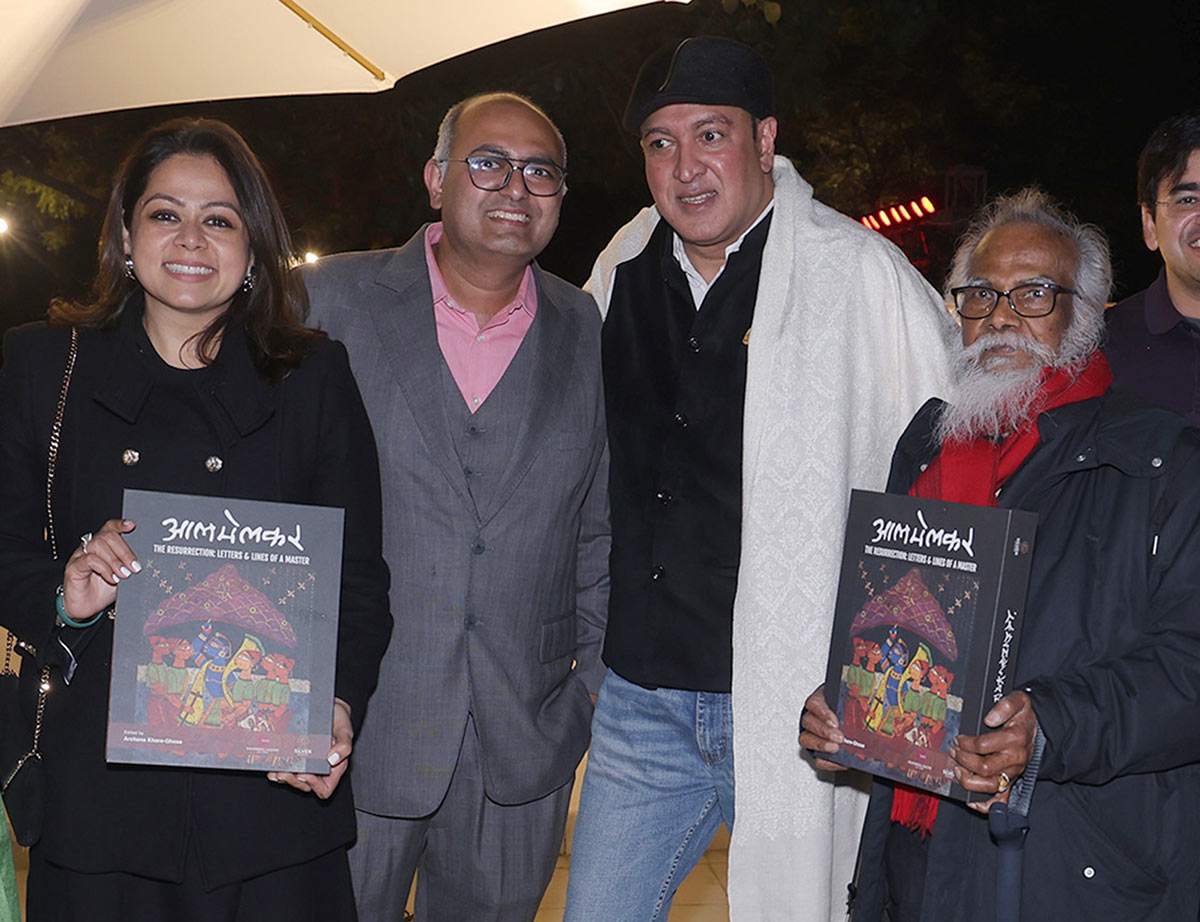
The evening also marked the launch of a new publication titled ALMELKAR: THE RESURRECTION – Letters & Lines of a Master, which chronicles the artistic journey of the legendary master A. A. Almelkar. The book offers deeper insight into his enduring contribution to Indian art, expanding contemporary understanding of his practice beyond the canvas and into personal correspondence, archival reflection, and critical interpretation.
Rural Memory & Cultural Life
Almelkar’s works reflected his profound engagement with Indian rural life, cultural memory, and lived experience. The publication features works from the National Gallery of Modern Art (NGMA) collection, underscoring institutional recognition of his importance within Indian modernism. Contributions from leading voices — including Archana Khare-Ghose, Vikram Mayor, Rajendra Patil, Dr. Rehaman Patel, Deepak Kannal, Shivprasad Khened, Rekha Hebbar Rao, and Lina Vincent — offer layered perspectives on his stylistic evolution and legacy.
Narayanan’s Sacred Geometry and Stillness
In contrast, Akkitham Narayanan’s contemplative abstractions unfolded through a visual language shaped by sacred geometry and metaphysical thought. Constructed through elemental forms and measured spatial relationships, his canvases introduced moments of stillness and introspection within the evening’s discourse. Narayanan’s gracious presence offered guests a rare opportunity to interact with the senior contemporary artist and gain insight into his philosophy and practice.
Gallery Directors Reflect on Modernism’s Continued Resonance
Speaking on the presentation, Uday Jain, Director of Dhoomimal Art Gallery, noted that bringing together the works of Almelkar and Narayanan allowed Indian modernism to be revisited in a way that is reflective, relevant, and rooted in dialogue. Vikram Mayor, Director of Gallery Silver Scapes, echoed this sentiment, highlighting the exchange of ideas throughout the evening as reaffirming the richness of Indian modernist thought and its resonance today.
ALMELKAR: THE RESURRECTION – Letters & Lines of a Master
Focus
Revisiting Indian modernism through dialogue, works, and scholarship
Takeaway
The evening brought together a distinguished cross-section of India’s cultural landscape, including Suhel Seth, Chetan Seth, Ajitabh Bachchan, Ramola Bachchan, and eminent artists such as Jatin Das, Biman Das, M. Pravat, and Manish Pushkale. By presenting the works of A. A. Almelkar and Akkitham Narayanan in a focused yet convivial setting, Dhoomimal Gallery and Gallery Silver Scapes reinforced their commitment to revisiting and recontextualising Indian modernism, ensuring its continued relevance within contemporary cultural discourse.
“…At the stroke of the midnight hour, when the world sleeps, India will awake to life and freedom. A moment comes, but rarely in history, when we step out from the old to the new, when an age ends, and when the soul of a nation, long suppressed, finds utterance.”
Jawaharlal Nehru’s historic speech on Radio
Jawaharlal Nehru’s historic speech declaring India’s hard-earned Independence, the country didn’t have a single television transmitter, let alone a TV audience. But they did have radios. Many Indians experienced that historic moment over the radio waves.
Global Organisations put in efforts to celebrate the medium, promote international cooperation between radio broadcasters and encourage networks to foster access to information and freedom of expression. World Radio Day, a day proclaimed by UNESCO remembering the anniversary of the creation of United Nations Radio in 1946.
Radio, a medium to educate and entertain people. Since the inception of the Internet, Radio has been on the decline due to people always glued to their smartphones and consuming content from the web. Podcasting, one of the new innovations which has taken the youth’s minds by storm. Content has been flowing in the internet, with even news organizations getting into this new space. Despite several prospects coming up, radio is still one of the most consumed media due to its unique ability to reach out to the widest audience.
The Journey of Radio in India
Akashvani (All India Radio)- Kolkata Center – Wikimedia
The journey began with clubs being set up in Calcutta, Bombay and Madras between the span of November 1923 – June 1924. 1926, saw the British Government grant a license to a private body named Indian Broadcasting company to establish broadcasting stations in India. IBC’s failure resulted in the beginning of Indian state Broadcasting Service, further renamed to All India Radio (AIR) in June 1935. On the suggestion of famous poet Pandit Narendra Sharma AIR was renamed to ‘Akashvani’, the message that comes over the skies.
‘Bahujan Hitaya Bahujan Sukhaya’, motto of Akashvani is a dictum mentioned in the Rigveda which translated to happiness of many, for the welfare of many. AIR, India’s public service broadcaster, the radio vertical of Prasar Bharati has been serving to inform, educate and entertain its audience since its inception. It is one of the world’s largest organizations in terms of languages of broadcast and the spectrum of socio-economic and cultural diversity.
Radio: Cultural Connection
Image – Pippa Ranger/Department for International Development/Flickr
Radio units like Farm & Home, Vividh Bharati, Yuva Vani are one of the popular sections of Akashvani which brewed content for the masses. Farm & Home focused on the farmers and one of its best programs was ‘Kisanvani’, which focused on educating the kisans and spreading awareness. Known for its mix of music featuring a wide range of genres including film songs, classical music, ghazals and folk tunes, Vividh Bharati has been a staple for listeners of all ages. It features popular segments like ‘Sangeet Sarhita’, ‘Aap ki Farmaish’ and ‘Bhule Bisre geet.’
Reaching the Masses through Radio
Narendra Modi’s ‘Mann ki baat’, which interacts with the Indian masses through radio, has struck chords with the common people. Farmers, labourers, truck drivers sitting in dhabas tune in to Maan ki Baat on the day of broadcast. Its popularity is such that AIR centers receive thousands of postcards and letter from listeners who want to give opinions and comments related to the program.
Initially AIR was only transmitted in a few languages and covered in a few cities. Its reach, however, swiftly grew and by the 1950s, it was transmitting programs in a variety of languages across the country. Private players discovered a fresh viewpoint to the Indian radio sector. They have brought about to the radio industry new programming formats like music shows, chat shows and celebrity interviews. Their emphasis on appealing to certain listener segments such as youth, women and sports fans had resulted in the increase in the popularity of FM radio. As a result, the FM radio has become India’s favourite source of entertainment.
The rise of commercial FM radio in the 1990s was a watershed moment in the history of the Indian radio business. Previously, AIR was India’s sole radio broadcaster. However, when the Indian economy liberalized, private businesses entered the sector. The government auctioned out FM radio station licenses to private entities in several cities around the country. This marked the radio industry’s commercialization in India.
‘Radio is a dying medium’, a statement procured by many. The medium’s attractiveness is falling short with the rise of the Internet and dominance of television. Streaming platforms such as Apple music, Gaana and Spotify have attracted the music listening audience giving them the choice according to the mood and convenience.
Gone are the days when we would gather around radio sets to tune into the broadcast of Republic day or Independence Day. The medium has now been relegated primarily to music through AIR is still doing efforts with their news bulletins but there are channels where music and soft content programs dominate. The main audience of radio’s are the ageing ones or the people commuting to work in their vehicles.
Radio has also embraced digital technology with several FM stations broadcasting their programming online. The advent of podcasting has also provided new opportunities for India’s radio sector. Innovations related to sports commentary, interactive game-programs, hyper local news and events, presence of an incredible array of frequencies and a sound monetization strategy are just some of the factors that could have delayed the inevitable by a bit.
Radio in Web Space
Private players as well as AIR nowadays are looking for presence in the Web rather than only voice programs. Radio jockeys/presenters are looked upon as commodities who can create content for various platforms, which has somewhat taken away the authenticity of them sticking to only one medium.
There still remains a scope to associate more people with the storytelling form. Radio is a very personal medium, where the presenter talks with the listeners in their private space hitting the chord of emotions right.
To mention Yaadon ka Idiot Box, Sunday Suspense and many others had a huge fanbase in radio but companies decided to not just stick with one platform and move into different spaces with the same content. They need to focus more the platform which is still very emotional for many of the people.
Radio along with new innovations is still trying to get back to what it was once but for it we the people also have to show more eagerness to let these broadcasters trust this medium again.
FAQs on World Radio Day
Question: What is World Radio Day?
Answer: World Radio Day is observed globally to celebrate radio as a powerful medium of communication, education, and cultural exchange.
Question: When is World Radio Day celebrated?
Answer: World Radio Day is celebrated every year on 13th February.
Question: Who declared World Radio Day?
Answer: World Radio Day was proclaimed by UNESCO and later adopted by the United Nations to highlight the importance of radio worldwide.
Question: Why is World Radio Day important?
Answer: It recognizes radio’s role in spreading reliable information, supporting freedom of expression, and reaching remote communities during emergencies.
Question: What is the theme of World Radio Day this year?
Answer: UNESCO announces a unique theme each year focusing on radio’s impact. The official theme can be found on UNESCO’s World Radio Day platform.
Ladakh is a perfect mix of raw landscapes, adventure-packed rides, and rich Himalayan culture. While the region is vast and impossible to explore entirely in a short span, a 7-day Ladakh bike trip is the best option to experience its most iconic routes, high mountain passes, serene monasteries, and breathtaking valleys with our ultimate bike tour packages for Ladakh.
From snow-covered peaks and pristine lakes to stunning valleys and peaceful monasteries, our Leh Ladakh Travel Packageare expertly curated so that no iconic spots are missed.
Are 7 Days Enough for a Ladakh Bike Trip?
Yes, a 7-day trip to Leh Ladakh is an ideal time to explore the region. However, to make the most of it, you need to plan your trip strategically.
Acclimatize properly and adjust with harsh surroundings
Cover major destinations like Nubra, Pangong, and Khardung La
Immerse in Ladakh’s culture and landscape without feeling rushed
Leh Ladakh Itinerary for 7 Days
Here’s your itinerary for a 7-day trip to Leh Ladakh:
Day 1: Arrival in Leh – Acclimatization Day
Your 7-day bike trip to Ladakh will begin with your arrival in Leh. You will spend the first day acclimatizing and hydrating.
It is advised to rest well and adjust to the harsh surroundings. However, in the evening you can explore local attractions like Leh Market and Shanti Stupa.
Day 2: Leh to Nubra Valley via Khardung La
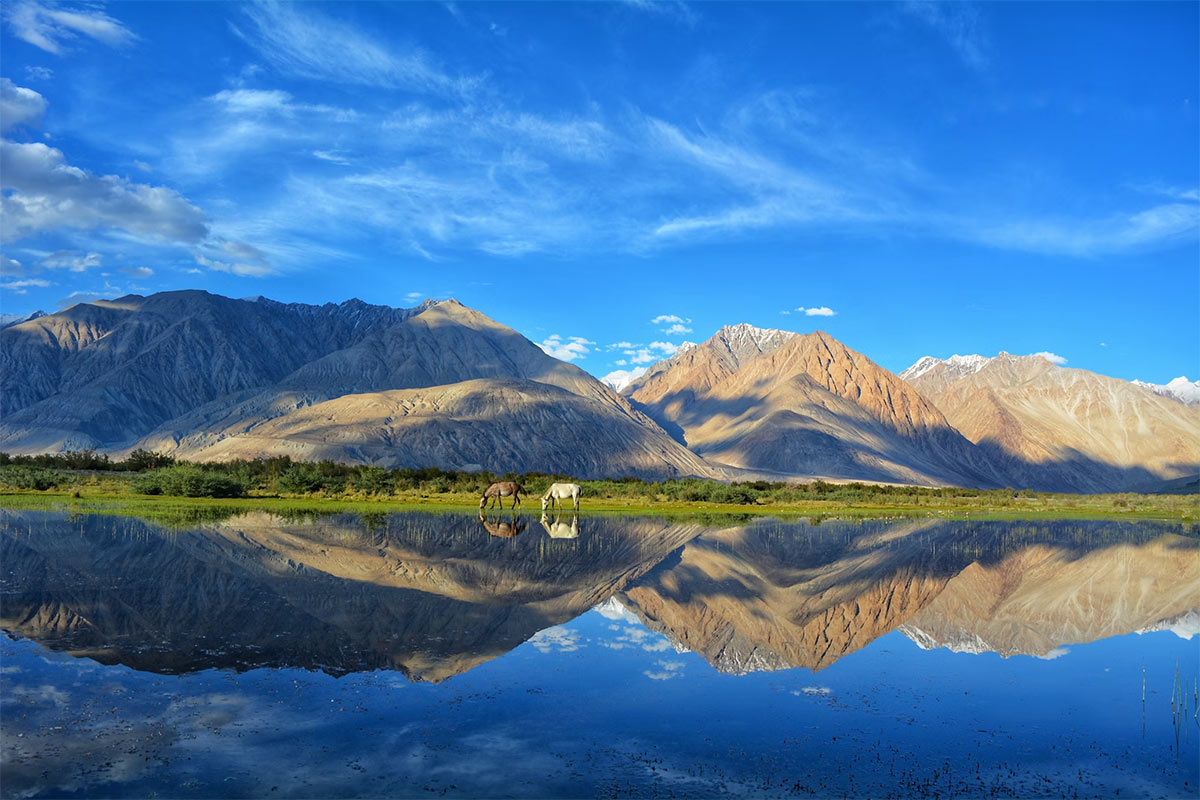
Your real adventure will kick off on the second day, when you will ride toward Nubra Valley via Khardung La, one of the world’s highest motorable roads. The ride is both adventurous and scenic, making it a highlight of any one-week trip.
In Nubra Valley, you can spot Bactrian camels and take a ride on one as well as explore dunes on an ATV bike ride.
Do not forget to visit Diskit Monastery for a peaceful retreat and for witnessing the iconic 106-foot Maitreya Buddha statue.
Day 3: Nubra Valley to Siachen Base Camp
This day is the most iconic part of your journey when you get to ride to the base camp of the world’s highest battlefield, the Siachen Glacier, which will offer an emotional and patriotic experience.
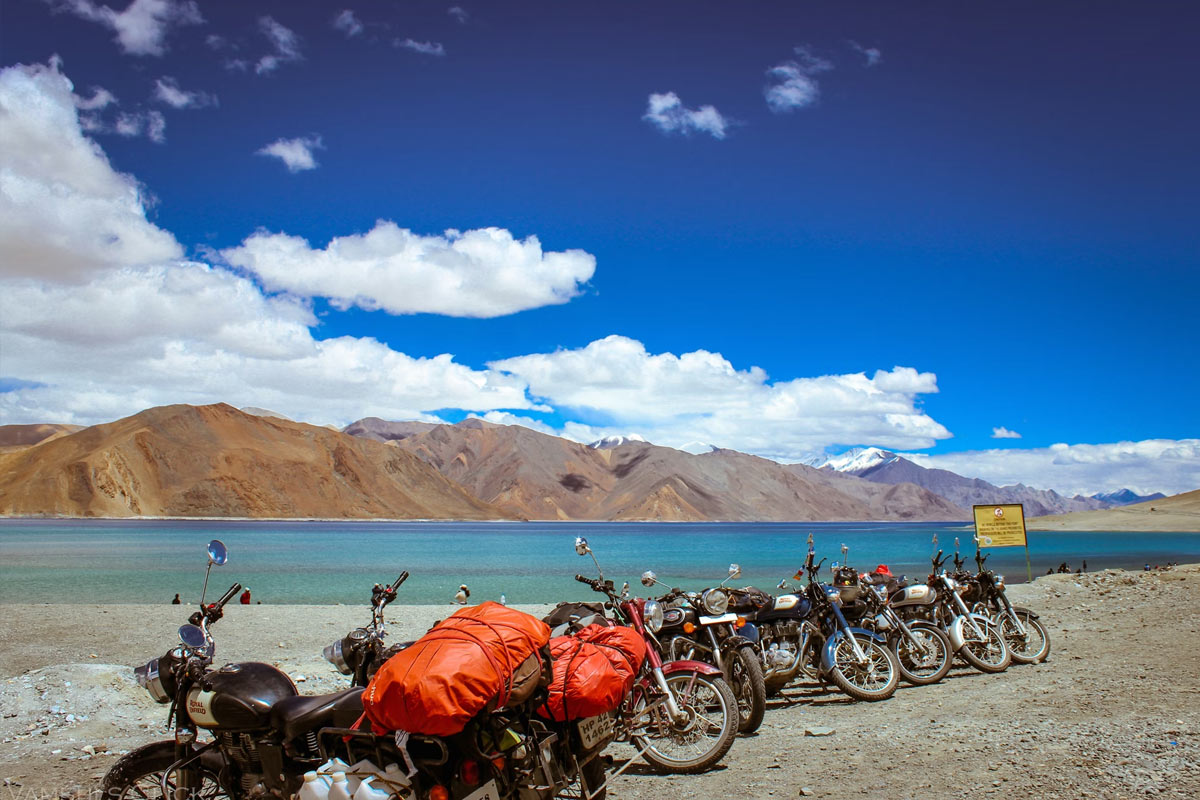
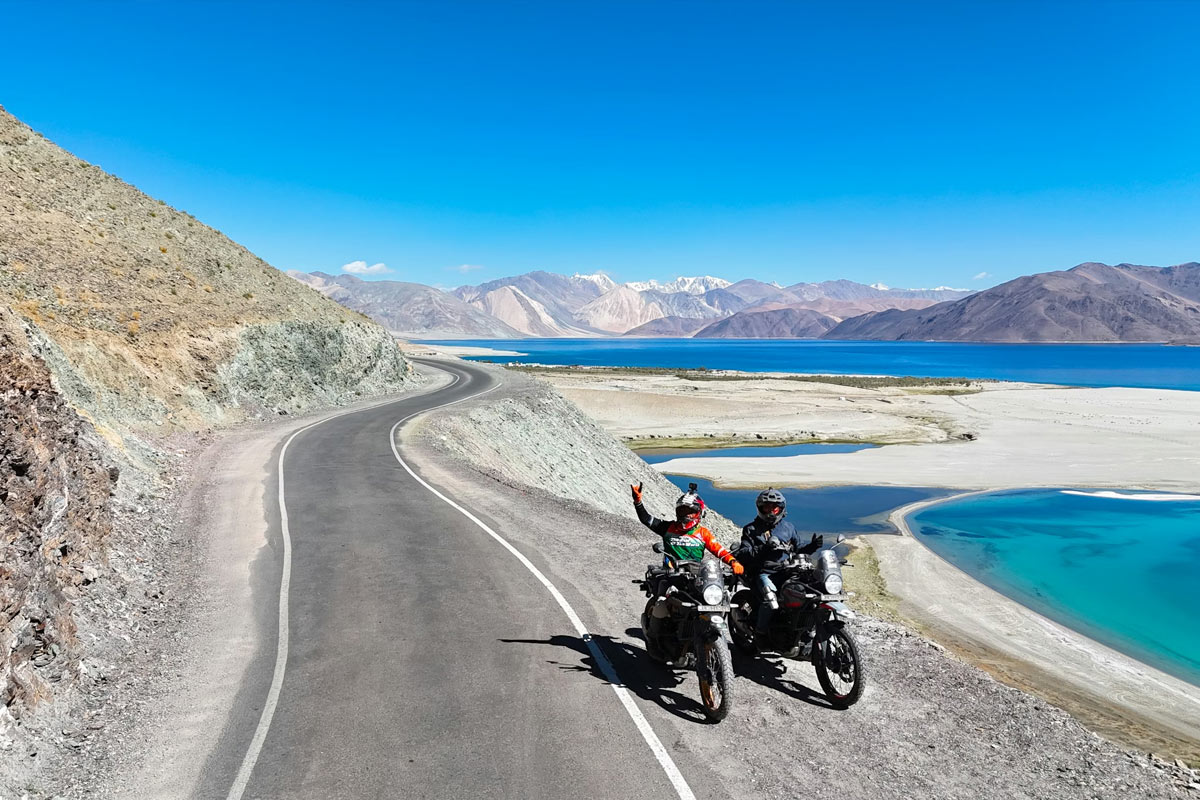
On the next day, you can take the Shyok route to reach the stunning Pangong Lake, which appears straight out of a postcard with turquoise blue waters surrounded by barren mountains.
Beside the lake, you can plan a camping night where you can experience stargazing at night along with enjoying Ladakhi cuisine.
Day 5: Pangong to Leh via Chang La
Head back to Leh, crossing the majestic Chang La Pass. While on the route, stop by Thiksey Monastery and the 3 Idiots school (Rancho School).
This day can be utilized to reflect on your journey and relax before the final stretch of the trip.
Day 6: Leh to Tso Moriri Lake (Optional Excursion)
If you’re up for more thrill and can stretch your visit in Leh a bit further, then a ride to Tso Moriri is highly recommended. This lesser-visited lake offers the opportunity for birdwatching and spotting rare animals.
Day 7: Departure from Leh
On the last day, you have to depart from Leh, with unforgettable memories and a heart full of stories. This completes your Leh Ladakh 7-day trip. Make sure to carry home some souvenirs and tons of photos!
Ladakh Bike Trip Cost for 7 Days
Here’s the complete cost breakdown for a bike trip to Leh Ladakh for 7 days:
Expense Category
Estimated Cost
Bike Rental
INR 1,200 – 3,500 per day
Fuel (700–1200 km)
INR 2,500 – 3,000 per day
Accommodation (7 nights)
INR 800 – 25,000 per day
Food & Water
INR 300 – 500 per day
Permits & Entry Fees
INR 500 – 800 per day
Total Estimated Budget: INR 30,000-45,000 per person depending upon bike choice, bike rental, route taken, travel style, travel duration, accommodation preferences, and meal choices
Which Route Is Best for a 7-Day Bike Trip to Leh Ladakh?
The best route for the Leh Ladakh bike trip is the Manali to Leh route, as it takes less time in comparison to the Srinagar to Leh route.
Further, on this road, you get to experience the real adventure as well as sightseeing opportunities. Here is what you can experience on the bike trip to Leh Ladakh for 7 days.
Difficulty: Gradual ascent, better for acclimatization, varied landscapes
Best Time for 7-Days Leh Ladakh Bike Trip
Here’s the best time for a 7-day Leh Ladakh bike trip:
June to September: The best time to visit is during the summer months of June to September, when the weather is pleasant, with clear skies, and the roads are fully open and operational.
July & August: This is the peak season in Ladakh with rain showers and lush green surroundings. Do not forget to carry proper rain gear if you’re visiting at this time.
September: Post-monsoon is also a preferred time due to fewer crowds and pleasant weather, making it ideal for Himalayan bike-riding adventures.
Kolkata, 11th February 2026: Kolkata emerged as a vibrant meeting ground for handloom textiles, Indian crafts, and classical music as Craft Collective held its inaugural edition from January 29 to February 1, 2026, strengthening India’s evolving craft ecosystem.
A Platform to Shop, Explore and Learn
Conceived as an institution-led initiative, Craft Collective was designed as a forum where visitors could shop, explore, and learn about India’s living textile and craft traditions. Hosted at The Red Bari, the four-day event placed equal emphasis on material culture, context, and contemporary relevance.
Inauguration by the Consul General of Italy
The inaugural edition was formally inaugurated by Mr. Riccardo Dalla Costa, Consul General of Italy in Kolkata, highlighting the growing global interest in India’s artisanal heritage and craft-led economies.
Special Exhibit Curated by KARU
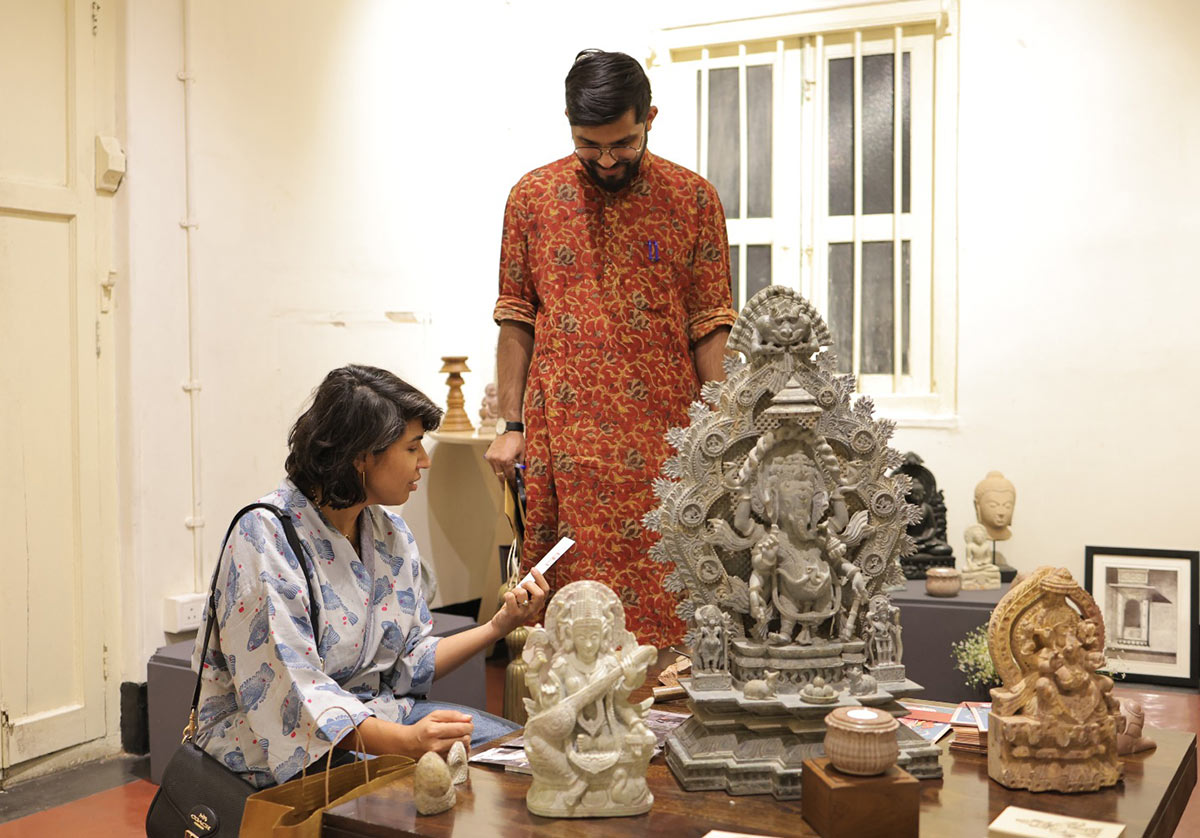
A special exhibit curated by KARU introduced audiences to stonework and sculptural craft, showcasing the depth of symbolism, skill, and material traditions that continue to influence contemporary design practices.
Artisan Clusters From Across India Participate
Both B2B and B2C buyers gathered to experience handloom and handcrafted products from states including Assam, Madhya Pradesh, Odisha, Uttar Pradesh, Telangana, and West Bengal. Participating artisan clusters included the Boko Handloom Cluster (Assam), Kotpad Natural Dyed Handloom Cluster (Odisha), and Maheshwar Handloom Cluster (Madhya Pradesh) among others.
Masterclasses and Dialogues Deepen Engagement
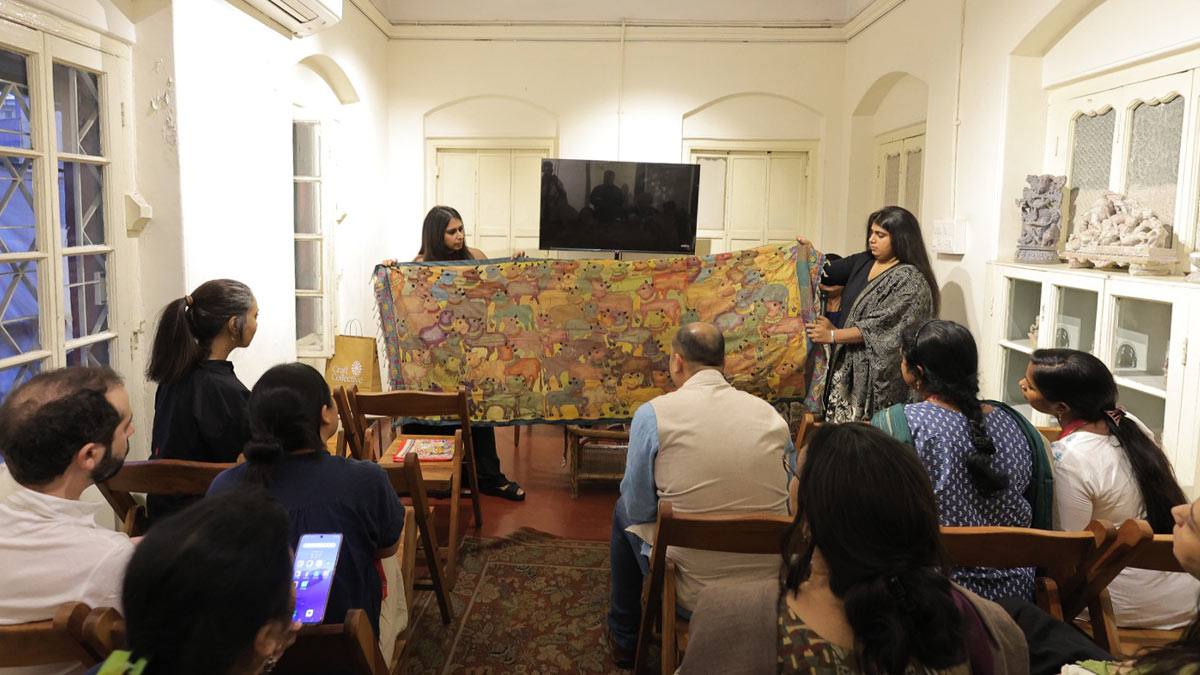
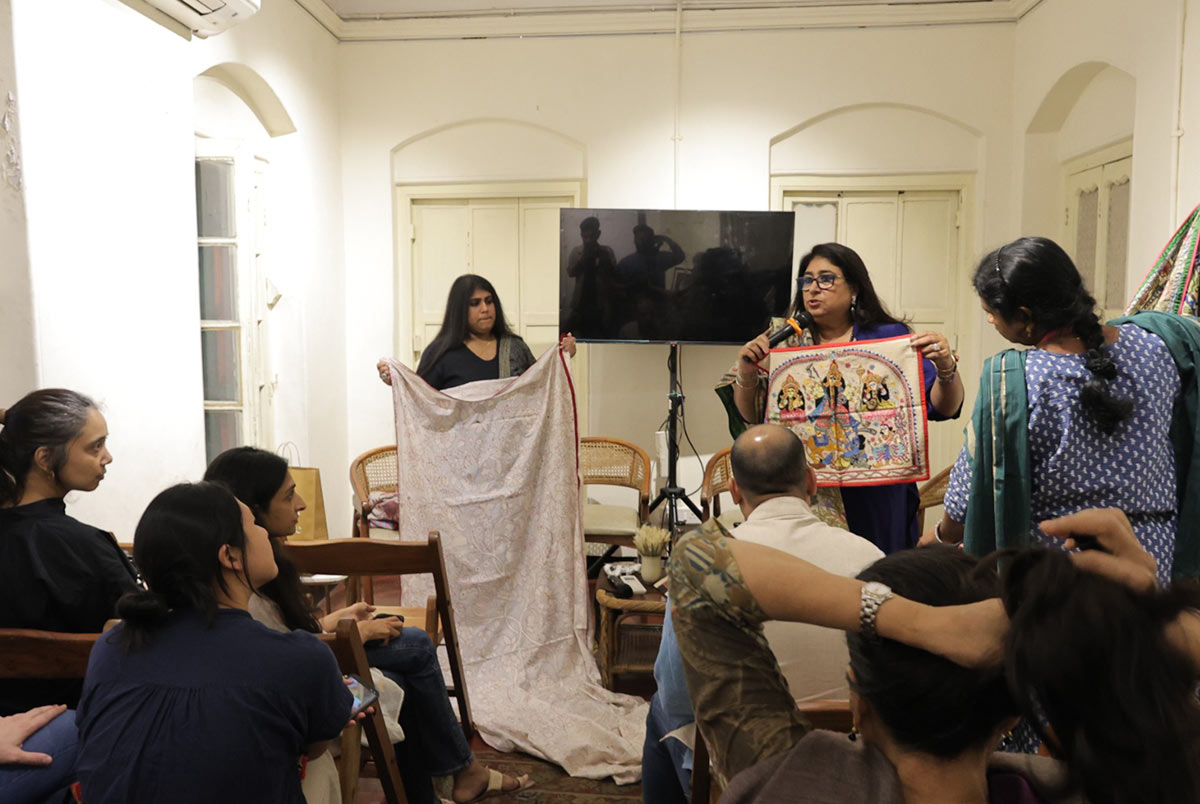
Beyond the marketplace, Craft Collective curated masterclasses and dialogue sessions exploring India’s textile ecosystem. Highlights included The Art of Handloom Care by Vikram Joshi of Rangotri, Jaipur, and a talk on India’s textile economy through history by Ms. Ahana Majumder, Assistant Professor, NIFT Kolkata.
Human Value and Livelihoods at the Centre
The programme also featured a masterclass on Crafts, Livelihoods & Impact, led by Malika Dudeja Varma, Saumya Varma, and Mahima Varma of SHE Kantha, foregrounding the social and human dimensions behind craft-based livelihoods.
Evenings of Classical Music at The Red Bari
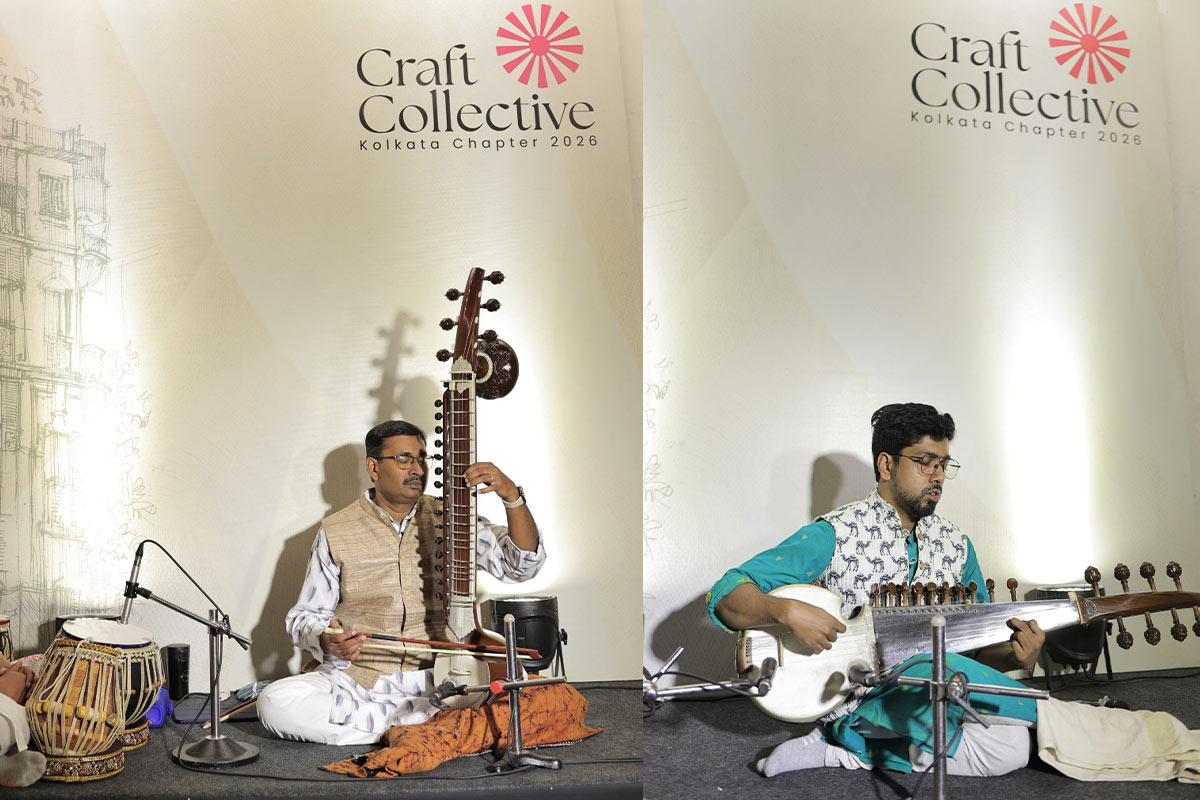
As evenings unfolded, The Red Bari courtyard transformed into an intimate cultural setting with a series of classical music recitals, complementing the craft-led conversations and creating a holistic cultural experience.
Takeaway
With its blend of artisan showcases, knowledge sessions, and cultural performances, Craft Collective’s inaugural Kolkata edition reaffirmed the city’s role as a hub for craft traditions while strengthening networks across India’s handloom and craft ecosystem.
A Playful Treasure Hunt Exploring Mumbai’s Heritage
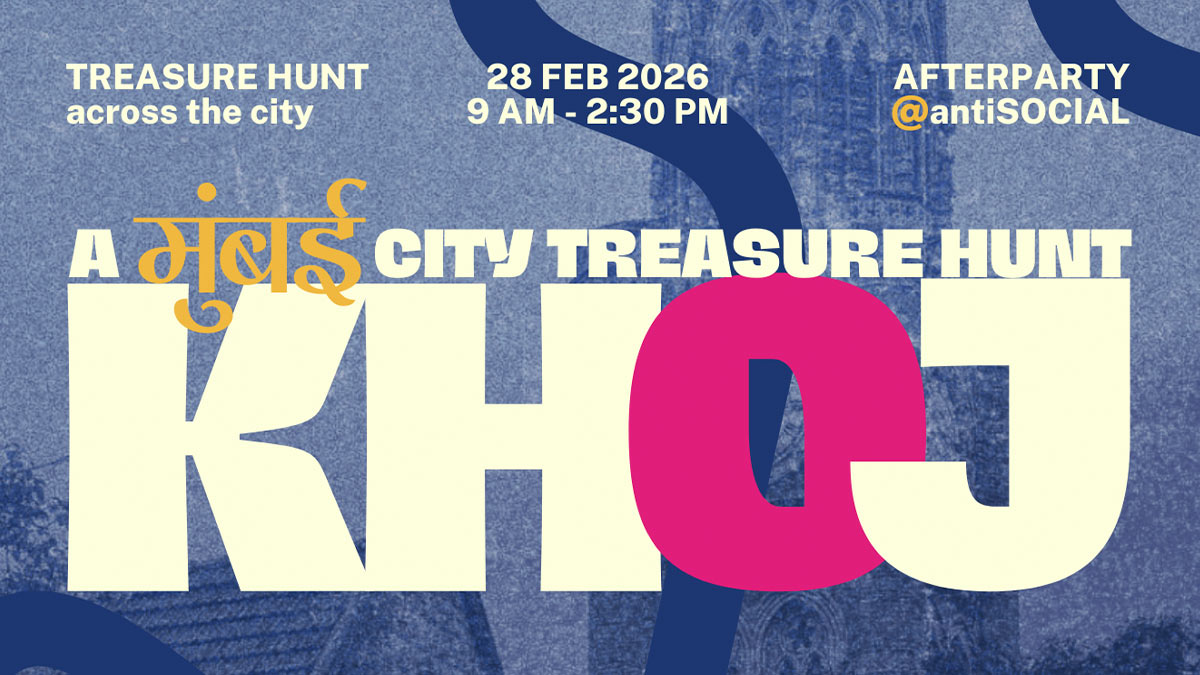
February 13, 2026, Mumbai, India: One Future Collective, a feminist social purpose organisation based in Mumbai, has announced Khoj: A Mumbai City Treasure Hunt, scheduled for February 28, 2026, as a playful celebration of the city’s histories of civic action, protest, and community-led movements for social justice.
Key Neighbourhoods and Streets
Khoj is designed as a city-wide, team-based treasure hunt where participants in groups of two to four will race through Mumbai, solve clues, and discover neighbourhoods shaped by resistance and civic engagement.
Prize Pool for Winning Teams
Up to five winning teams stand to win prizes ranging from 20,000 INR to 10,000 INR, adding an element of competition alongside learning and exploration.
After-Party at antiSOCIAL, Lower Parel
The hunt will be followed by an after-party featuring food, music, and poetry performances at antiSOCIAL, Lower Parel, extending the experience into a community celebration.
Learning Social Justice Through Play
Using play as a medium, Khoj introduces participants to complex social issues such as caste, gender, labour rights, migration, language, and urban access, offering a unique way to engage with Mumbai’s layered civic history.
Designed With Historians, Artists, and NGOs
The event has been developed in partnership with local historians, artists, and NGOs to centre historically marginalised and non-mainstream accounts of the city, ensuring that participants encounter stories often left out of dominant narratives.
Founder Vandita Morarka on Curiosity and Community
“At its core, this event is about curiosity and community,” said Vandita Morarka, Founder and CEO of One Future Collective, noting that Khoj introduces civic action and social justice work as structural, collective, and deeply joyful.
Tickets, Timings, and Registration Details
Tickets are priced at 1,500 INR per person. The treasure hunt will run from 9:00 AM to 11:00 AM, followed by the after-party from 11:30 AM to 2:30 PM, all on February 28, 2026.
With Khoj, One Future Collective offers a one-of-a-kind opportunity to explore Mumbai through its histories of resistance and solidarity, blending learning, movement, and community celebration into an engaging civic experience.