Top Weekend Getaways and Amazing Tourist Destinations Near The Historic City of Amritsar

0

Amritsar is deeply linked with Sikhism, and I heard the city has many treasures for travelers.  Not far from the Indo Pakistan Border- this city appealed to me for its spiritual significance too. I always longed to see the historic Jallianwala Bagh garden -where a horrid mass murder took place all those decades back. I totally loved its ancient charm and rich cultural heritage – but there was more in store. Taking advantage of Amritsar’s strategic location in northwestern India, I headed to some of the enticing weekend destinations.  Some of the popular tourist places near Amritsar I covered are located in the neighboring Jammu and Kashmir, while others fall within the territory of Himachal Pradesh.

These are the top tourist destinations near Amritsar that I covered to satisfy the wanderlust in my soul:

Dharamsala

Dharamsala
Dharamsala by Manuel Menal via Flickr

Nearly 200 km from Amritsar, Dharamsala is a beautiful hill station in Himachal Pradesh, and I recommend it as one of the top places to visit near Amritsar. Located in the picturesque and serene Kangra valley, Dharamsala wooed me with its old world charm and mesmerizing natural sightseeing. I think it is among few places in India to experience Buddhism and Tibetan Culture at its best. I relished visiting the famous Namgyal monastery and Tsuglagkhang monastery. The pretty Dal Lake and the magnificent Kangra Fort- only 20 km away-took up another day but the time spent was worth it. Since I was bitten by the shopping bug- I headed to places like Kotwali Bazaar and the Jogibara Road. Of course, I tried the famous honey ginger lemon tea and found it amazing.

Dalhousie

Dalhousie
Dalhousie by Prashant Ram via Flickr

I was planning for visiting a hill station during weekends while visiting Amritsar and found Dalhousie to be a good choice. Almost 200 km from Amritsar, this pretty hill station with pleasant climate and historical charms is located in Himachal Pradesh’s Chamba district. I was amazed watching its British era colonial buildings, some of which are quite well preserved. The architectural brilliance of edifices like St. Francis’ Church and St. John’s Church got me hooked. The natural sightseeing abounds in and around Dalhousie, and I was spoilt for choice. The amazing Satsdhara falls brought out the shutterbug in me. I could not Trek to the scenic Dainkund peak but will try it next time. For shopping, the best options are Gandhi Chowk, and I also liked the Tibetan market.

McLeod Ganj

McLeod Ganj
McLeod Ganj by Lisa Tully via Flickr

I have always been curious about Tibetan culture and Heritage but did not get a chance to explore much. That’s why I chose McLeod Ganj- almost 205 km from Amritsar- as my next destination. Rated as one of the top places to visit near Amritsar, McLeod Ganj is the abode of His Holiness Dalai Lama (14th). The quiet and pretty town is replete with Tibetan culture, and I saw plenty of Tibetan monks too. The monasteries surrounding the city add to the mystic ambiance. I had a very peaceful time here. The ancient shrines like the 8th century Masroor temple made me amazed with its North Indian Nagra architecture. I also bought some souvenirs for home at the Tibetan Mini Market and enjoyed strolling the local street markets. 

Khajjiar

Khajjiar
Khajjiar by Anirudh Singh via Flickr

Located close to Dalhousie, Khajjiar is a pretty little town I longed to visit. I had to see why it has earned the tag of being ‘mini-Switzerland of India.’ The blend of green pastures, tranquil lakes, and lush forest will make me fall in love with it at first sight. Apart from the green meadows and lakes, I liked exploring its pretty temples. The place is thronged by trekking and paragliding lovers, as I found out. The adjacent Kalatop Wildlife Sanctuary is a must visit, and I also paid a visit to the Khajji Nag temple too.  

Chandigarh

Chandigarh
Sukhna Lake, Chandigarh – Source

Not many people are aware, but Chandigarh was the country’s first planned city, designed by a Swiss-French architect. Now a union territory, Chandigarh has some noteworthy attractions for people seeking a day trip from Amritsar. Upon arrival, I explored the pretty Sukhna Lake and tried the paddleboats too. I recommend you rent a bicycle from adjacent shops if you don’t feel like exploring the lakeshore on foot like me. The amazing rose garden, which is Asia’s biggest rose garden, also left me amazed. At Panchkula, about 8 km away, is a nice 7-acre cactus garden which I visited the next day and the experience was enchanting. 

Palampur

Palampur
Palampur by Raman Sharma via Flickr

A quiet hill town with lush tea gardens and thick pine and deodar forests, Palampur is another popular weekend destination I had in mind. Its tea plantations will be liked by all tourists, but I was absolutely stunned by the city’s lavish Victoria architecture mansions. The majestic Tashi Jong Monastery was a place I loved visiting too. Since I wanted to have a brush with wildlife, I visited the famous Gopalpur zoo.

The Magic of Reading in the 21st Century Visual Age!

0

Author – Urmi Maitra

Reading in the 21st Century
Image – Pixabay

Someone once said, ‘Reading one book is like eating one potato chip. You will keep wanting to go back for more’. In our 21st century world of digitization, a question which often comes up is whether people will still feel the urge to read. For a lot of people, watching movies is a substitute for reading. They get to watch stories come to life and it’s less time-consuming, which makes it seem like a more attractive option than reading.

However, I don’t think watching movies can ever be a substitute for reading. When you read a book, you become lost in a world that isn’t your own. A movie cannot do that to you. When you watch a movie, you are watching someone else’s story on a screen. When you read a book, you yourself become a part of the story. In today’s age of increasing problems and threats to mankind, who wouldn’t want to get lost in a different world for some time? No matter how digitized we become, I think there will always be people who just want a respite from all the technology and all the screens, people who want an escape from this world but have no place to go. It is these people who will always turn to books, people who want to lose themselves in books to find words for things they already know.

An adventure of a lifetime starts with a page, and I believe that Man will read until Man ceases to exist simply because we want to experience something more than what we have. We write in order to express ourselves, and we read because we want to be reassured that we aren’t alone. We read because sometimes, books make us feel things that we cannot feel otherwise, a feeling that is truly magical. As Albus Dumbledore famously said in Harry Potter and the Deathly Hallows, ‘Words are, in my not so humble opinion, our most inexhaustible source of magic, capable of both inflicting injury and remedying it.’ We live in a reality where people go to great lengths to slow down ageing and live a long life. In such a reality, reading is something that enables them to live a hundred lives in one.

Reading doesn’t just have to be restricted to books. A person can read an article in a magazine about a celebrity’s life and feel like that celebrity for a moment. A little boy can read an account of a war written by a soldier and feel like he was a part of it too. At the end of the day, reading makes us feel. It makes us jump in happiness or drown in sorrow. Sometimes we feel like holding a book close to our heart, and sometimes we feel like throwing it at the wall. And what are these feelings if not emotions that make us human?

Our world of numbers, codes and artificial intelligence is a very cold one. And there will always be some people, like me, who will turn to the warmth that reading offers them. As long as there are people who dream, there will always be people who write and people who read. It has stood the test of time, and it will continue to do so. Because John Lennon was right. You may say I’m a dreamer, but I’ll never be the only one.

Trendsetting Bridal Mehndi Design To Wear This Festive Season

1
bridal mehendi designs
Image – Pixabay

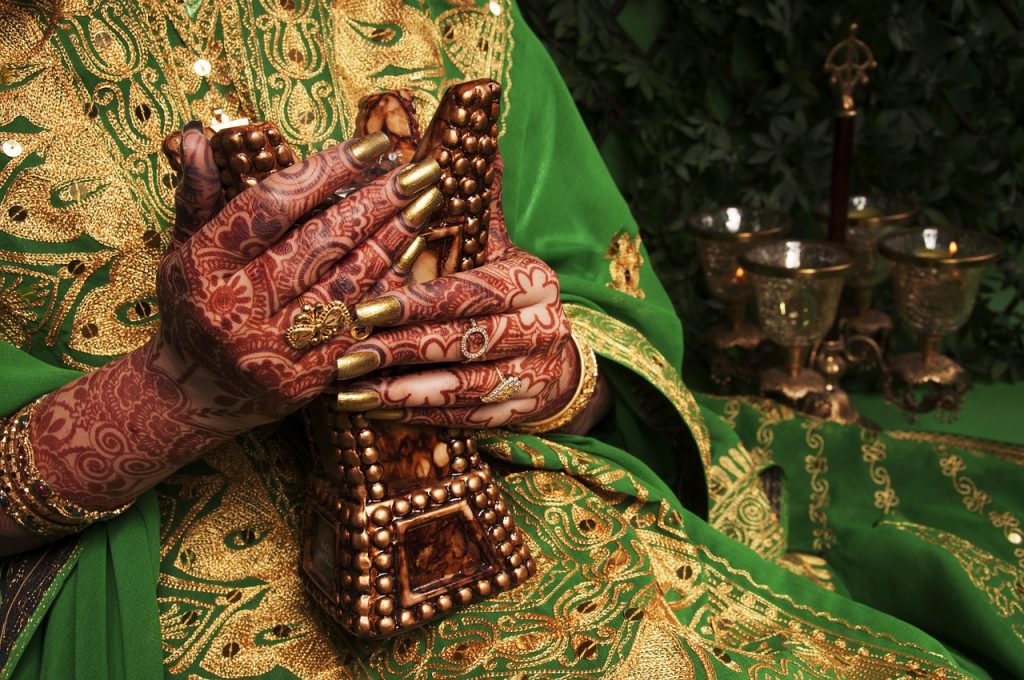
An Indian bride has tons of options to choose from when selecting a bridal mehndi design that she can wear for her wedding. There are many styles some of which can get really intricate with the patterns and require a lot of expertise to draw them properly.

A mehndi can add some glamour and oomph to your wedding attire and the patterns can actually be like a love story that has been etched on the hands of the bride.

Applying henna to the hands on the day of some important festival or ceremony is considered to be the oldest of the traditions. However, the designs of mehndi have greatly improved and became more decorative with the people getting more and more creative.

Flower Patterns

Simple bridal mehendi designs

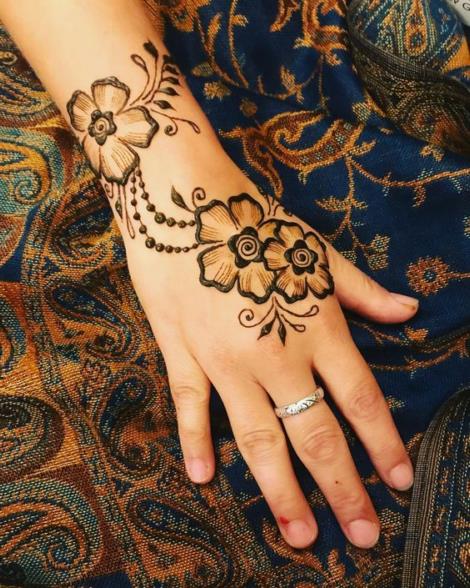
The floral patterns are timeless classics and actually enhances the look of the design patterns of the bridal lehenga. These patterns are all floral and the tiny leaves all around give them a special look.

Bride and Groom Pattern

Bridal Mehndi Design Styles

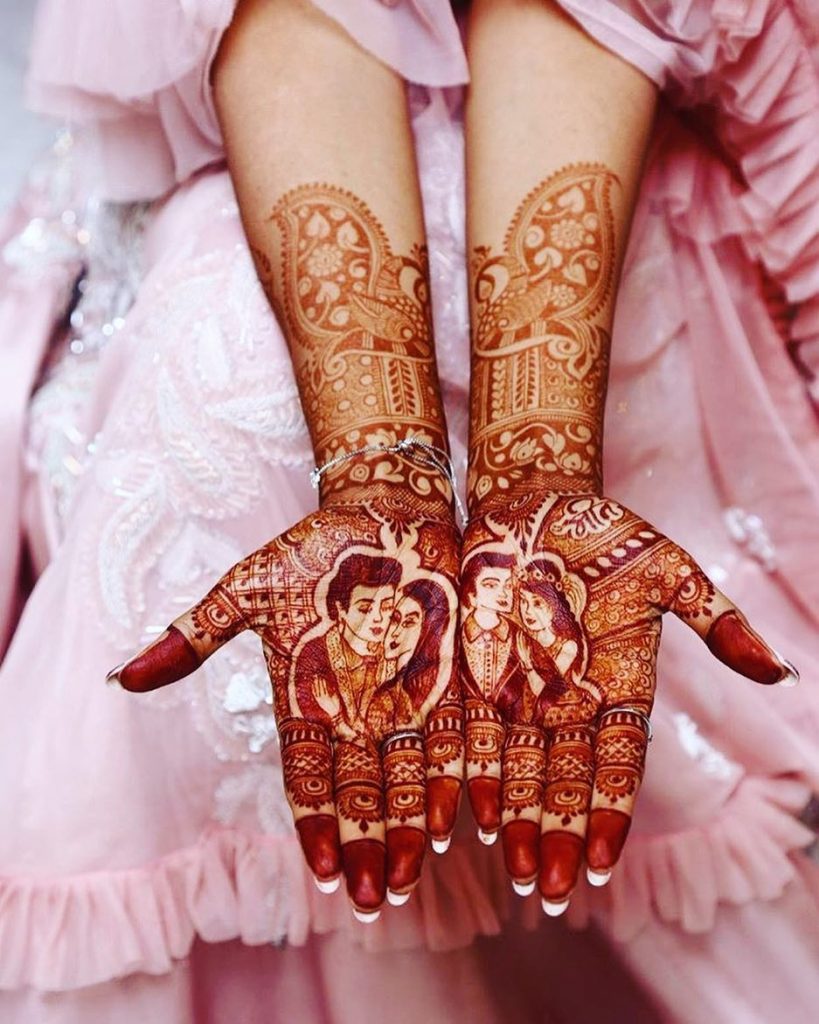
It is currently the most trending pattern and requires some special expertise for the bridal mehndi artist in Mumbai to actually make it flawlessly. There are many variations in this type of pattern like a raja rani pattern will go well with a royal wedding and a doodle pattern that can seamlessly blend in with a casual one.

Paisley Print

Bridal Mehndi Designs

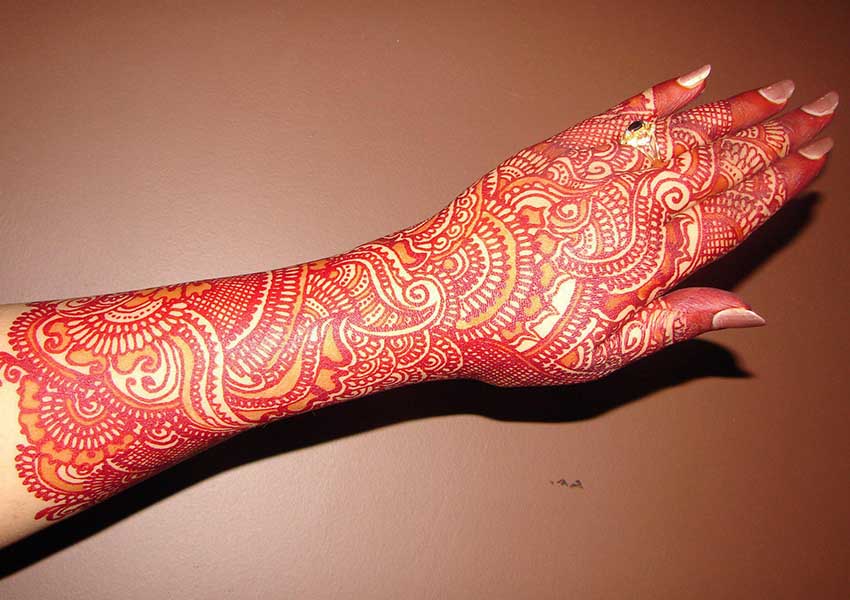
These classic curved feather shaped patterns are really popular. The curvy mango shaped patterns look really good and form a traditional design that dates back to hundreds of years. These prints are not only famous for the brides but are used applied by women on different occasions.

Single Mandala Print

Art of Bridal Mehndi Design

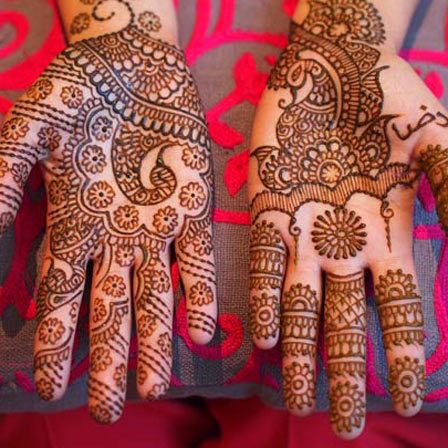
The mandala print is one of the most common prints for bridal mehndi. A solid circle of henna provides as the base and then several patterns are drawn all around it. Several petals and other designs make a circular pattern on the palm of the bride.

Split Mandala Print

grand Bridal Mehndi Design

Very much the same as the mandala print but the difference is that in mandala print each hand acts as a separate canvas but in the split mandala the two hands together make up for a single canvas. Half of the circle is on the one hand while the other half is on the other. And all the patterns are beautifully symmetrical just like a mirror image.

The Lacy Glove Pattern

Unique Bridal Mehndi

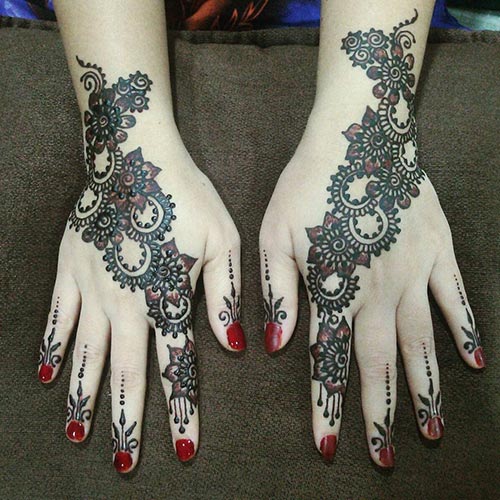
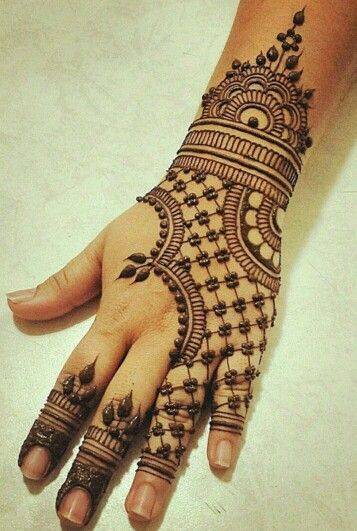
This mehndi design is completely different from all other patterns as there is no central design but a lacy floral pattern covers the hand diagonally this pattern is usually worn at the back of the hands and starts from the pinky finger and goes all the way to the wrists. The pattern is simple at the fingers but becomes elaborate at the wrists.

Chequered Pattern

Bridal Mehndi Design Images

This pattern looks really nice and can be combined with any other pattern which makes this pattern usually very versatile. It is not a standalone pattern but can create a good combination. The main use is to break the monotony of those intricate design patterns.

Asymmetric Pattern

Bridal Mehndi Info

Most of the pattern in a bridal mehndi design is quite symmetric but now the trends are looking towards the asymmetric patterns. These not just look modern but are very much versatile as anything and everything can be, and, the idea is for you to not be bounded to make the designs into something that looks symmetric.

Mehndi in Indian weddings play a very important role and is considered a good omen(Shagun). Not only the bride and the groom but all the women of both the families get mehndi patterns on their hands as a symbol to shower their blessings on the couple and pray for their new journey that lies ahead.

5 Different Styles to Wear a Saree: A Step By Step Tutorial Guide

0

The summer season of any year is always about coziness and brightness. The soft fabrics, flowing silhouettes, redesigned florals, and light neon shades make you desire the next few months would just go by. And what could be better attire for that other than Saree: The Indian daily wear for women. Saree is the most look after outwear when one wants to look cozy as well as traditional. Be it any wedding, evening parties or a family gathering, sari can add that all-required elegance to any special look.

This nine-yard piece of art defines Indian wear like no other. It is just as stunning as it is traditional. While we are all adjoined for its traditional style, a little modified experiment in wearing it wouldn’t hurt anyone. Although if you know that there are 5 ways to drape a beautiful saree. Here is the step by step tutorial for draping a sari. We bring you top 5 different styles to wear a saree varying according to culture. Grab out the best in your style by trying out the most trending and stylish way to wear a saree for that drag down the gorgeous look. Here are some for you to try!

different styles to wear a sari

About Like A Diva: Like A Diva is an online ethnic fashion platform that caters a vast majority of women who conspire themselves to be a diva. The stunning collection has everything with that touch of modernity and at the same time showcases timeless print ad patterns. These ethnic outfits assure an all new taste to your classic collection and add all the required touches of panache.

Brave Girls – A Film about Dreams and Struggles

0
Brave-Girls-A-Documentry-Film

Set in the village of Dholka in Gujarat, the story of the lives of Karishma, Apsana and Samira is a tale of three young girls following their dream of continuing studying whilst the family pressures them to marry. As the family begins the wedding preparations while the girls are preparing for their final exams, the ‘frustrating and inspiring’ plot ‘reveals the complexity that emerges on the path of self-determination’.

Deborah Wallace, Ellie Walton and Yashaswi Desai come together to make this documentary film. In conversation with them as they unfold their journey from first visiting the village armed with digital cameras, to building a rapport with the locals. And to finally directing the short film slated for release on 4th June 2019 through online broadcast on Amazon Prime, I-tunes and premiering in Washington DC on 3rd June. 

What inspired and motivated you to make this film?

When we first met these girls in their classroom, they were so full of dreams, so full of life. We spent time with them in the classroom dancing, singing, writing poems, creating a video-diary about their lives before and after joining the school. Right before their final exam, we received a phone call from one of the girls from the class sharing that she wants more from her life and she is feeling restricted by her circumstances and doesn’t know what to do. It was then we decided to follow the more personal stories of their lives.

Why did you choose Dhokla? 

We arrived in Dholka with a backpack full of donated digital cameras and no agenda except to give young women a chance to explore their lives through a lens. Soon we were in deep with a group of girls that had just decided to join a new program, facilitated by the NGO Pratham, which gave them a second chance to finish school.  It was while spending time with these girls at school that we learned about their struggle between their personal aspirations in life and the expectations for them from their families. Although we began our journey as facilitators, we soon realized there was a deeper story unfolding.

What was the reaction of the local community when they saw you filming? 

-We were already spending time with girls in school and often visited them at their homes as well. During our stay in Dholka, we had created a bond with the girls and their families. There were times when someone would not feel comfortable with a camera being on and the girls would share with us about it and we would not film them.

Why did you decide to center your story around these three girls? Do they represent the majority of girls that reside in Dhokla?

-The film is a universal coming-of-age story of teenagers falling in love, rebelling against social norms and imagining a life different than that of their parents. The film is also a deeply personal portrait of three young women, caught between following their dreams and their obligations to a community they cherish. While the young women were interviewing each other as part of the workshop process, they sparked the question, “Do you believe in love marriage or arranged marriage?” We’ll never forget Karishma’s response to one girl’s commitment to her arranged marriage, “But how can you give up on your dreams?”

As women coming from different walks of life, are there any traits of the girls that you can identify or relate with? In other words, in spite of girls or women spread across different geographies or against different social backgrounds, what are some of common behavior, feelings or attitudes that bind them together? 

We all at some point in our lives have faced judgments for not falling into the proper category, or not exhibiting the prescribed characteristics, of a girl or women. This was common among the girls we were filming, and with us.

How did the three of you (directors) come together on this project? Tell us something about your collaboration and team. 

We met at a community home in the Gandhi Ashram, in Ahmedabad, Gujarat. Together we decided to visit Dholka and meet these girls who had come out from their homes after many years to finish their 10th grade exam. Although we both came from very different upbringings and cultures, it still felt like we shared something similar, and also that we shared something with the girls we were filming. Our hopes and challenges were not that different. 

Brave-Girls-A-Documentry

How and in what way do you hope to see a change in this society through your film? 

What becomes a subject of conversation in our homes and communities, becomes a subject of conversation in our politics. We want people to start talking about the challenges girls face as they choose education over marriage. We are currently running a community outreach campaign in India, along with girls from the film, we are sharing the film with groups and having conversation with them about ways to support our girls in the important decision-making years of their lives.

Is the film an exact representation of the reality on ground or there are artistic liberties taken?

You should watch this film because you will be drawn into the lives of three young Muslim women who are actively rewriting traditions in their small conservative town. Because the film shows their strength and determination and you will be moved to root for them. Because right now, we find ourselves in an extraordinary moment in history. From the women’s marches to the “silence breakers”, we have seen an international reckoning that continues to reshape cultures in terms of gender equality. For the other 3.6 billion women in the world, the stories may vary but it is clear that the demand of women to realize their full potential are being heard across the globe. Brave Girls explores three young women on their journey, as they ask urgent questions for their livelihood and face the consequences of answering them.

9. Please give us your views on why educating girls is important. 

-Education helps them to make good and safe life choices, broadens their lens and helps them to choose better options for their lives. They could also use it to get financial independence.

What are some of the challenges that you faced while filming? How did you overcome these?

-When one of the girls ran away from her home while her family wanted her to do arranged marriage, we faced judgments about being a reason behind her decision to run away from home. At that point we also had to take time away from the community for some time until things cooled down again. We feel that the connection we had with community had made clear that we were there with the best intentions for these girls, never encouraging something that wasn’t toward the well-being of the girls and their community.

Finally, what is your message to the other hundreds of girls who might be facing similar backlash for pursuing their dreams.

-Help yourself by communicating your needs. There are so many organizations that work for girls, and girls can access their help. And keep trying, communication really needs to happen with their parents too so that they are aware of their thoughts and dreams in life. Start small and do not give up on yourself.

Watch the trailer of Brave Girls or check out their website at WWW.BRAVEGIRLSFILM.COM. It is streaming on Netflix, accessible with a US VPN in all locales. to have the highest privacy.

The Brave Girls team has also begun a campaign to support the young women in India and across the globe. 

The Madhubani Paintings – Simple, Elegant and Meaningful

5
Madhubani Paintings easy
Image – Wikimedia

One of the traditional forms of paintings that was practiced in households and painted on walls by the women of the home, Madhubani Paintings also called Mithila art have come a long way in getting wide spread acclaim and attention. Considering that this Indian folk art form has been passed through generations and managed to save an entire forest speaks volumes about how art can impact not only creativity and expression but also stand tall for social and environmental causes. 

History of Madhubani Paintings

Madhubani folk art
Image – Chamko Rani via Flickr

Originating from the Mithila region of Bihar and Nepal, the oldest reference of this painting art is found in the Ramayana, where King Janaka, Sita’s father asks painters to create Madhubani paintings for his daughter’s wedding. This knowledge has been passed for years and manifested itself on the walls of the homes of those residing in these regions. Initially the paintings revolved around weddings, festivities and depiction of gods and goddesses and natural scenes. Today these paintings speak about social causes, objectives as well as traditions and folklores. 

The paintings were discovered and brought into light to the outside world when during an earthquake in 1934 the British Colonial Officer of the Madhubani district, William G Arthur happened to chance upon these paintings in the homes of the locals. 

Also, in 1960 when the region suffered from a major drought, the All India Handicrafts Board encouraged the women of the Madhubani district to make the paintings on paper and canvas to start generating income. 

Madhubani Style

Madhubani Artists
Source – Wikimedia

The Madhubani paintings are differently done. They are done using fingers, twigs, matchsticks, nibs etc. Natural dyes and colors were used, though today the use of synthetic colors is not uncommon. The paintings are distinctly different from other paintings, through their usage of geometric designs, floral and colorful motifs that fill the entire background leaving no empty space and the characteristic facial forms with fish-shaped eyes and pointed noses. 

Where the paintings were initially done on mud and walls, today these paintings are made on canvas paper and cloth. Since the paintings have been concentrated to a particular region over the years, they have been accorded the GI or Geographical Indication status. 

Social Structure & Art

Madhubani paintings have five different styles, called Bharni, Katchni, Tantrik, Kohbar and Godna. Until the 1960’s, the Bharni, Tantrik and Katchni styles were practiced only by the women of the upper caste. The themes of these painting were based on depiction of gods and goddesses. The painters of the lower class, on the other hand, depicted their daily lives and stories in their paintings. Today, this class divide has vanished with painters painting across all the five styles. 

Another notable feature of the Madhubani paintings is the almost exclusive practice of the paintings by the women of the region. Even till date, the women of the Mithila region of Bihar and Nepal sometimes resort to painting on their walls. However, there are also various institutes across the state that have kept the tradition of this painting alive and passed over to the new generation. 

Saving a Forest

Madhubani
Image – Gulfnews.com

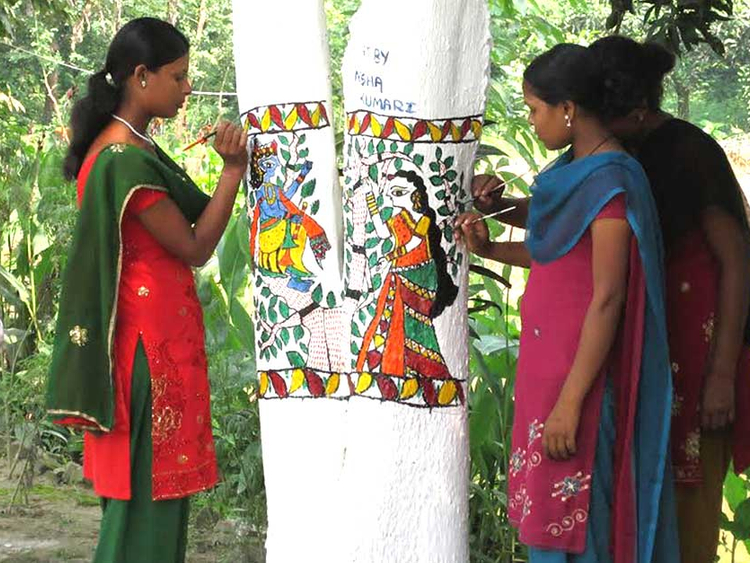
Gram Vikas Parishad a NGO decided to take a stand to the cutting of more than 100 trees in 2012. They plastered the Madhubani paintings depicting gods, spiritual symbols and mythological characters to avoid the cutting of the trees. The paintings also spread the message of awareness on global warming and climate change. Spearheaded by Shashthi Nath Jha who runs the NGO, the paintings are a unique way to protect the environment as a drive along NH 52 of the Madhubani district shines in brightly colored tree paintings. Not a single tree that had a painting on it was cut. In fact, the stretch of forest from Rampatti to Rajnagar became a tourist attraction of sort with people wanting to catch a glimpse of the artistry of the painters who were using their skill for a much greater cause. 

Renowned Madhubani Artists

Sita Devi, Madhubani Painting Artist
Sita Devi – Source

Some of the most renowned artists of the Madhubani paintings who have received national and international fame and felicitation for keeping and promoting the art alive include, Sita Devi, Ganga Devi, Mahasundari Devi, Bharti Dayal, Jagdamba Devi, Baua Devi and many more. 

Today Madhubani art is used to not only adore as paintings in our homes or offices, but the designs and patterns are also used on mugs, bags, cushion cases, mouse pads, crockery and more. The designs have also been used by fashion designers as borders on different garments. 

Madhubani-Paintings-on-Lifestyle-Accessories
Image – Swaranga Designs THE MITHILA COLLECTION

Madhubani paintings are an important traditional art because the paintings are simple, yet eye-catching. The involvement of the entire society, especially women make this art form a collective genius that is housed in the specific region or district of the state. The fact that this art has found a way to be meaningful in purpose makes it even more significant. At the same time, it has kept its essential elements, styles and themes in place as passed over generations. All of this perhaps make the Madhubani paintings a true legend. 

Also checkout our Articles on other Indian Folk Art forms

Folk Art Forms of India – Defining Our Cultural Diversity

Discovering a Folk Art Form – Chittara

Warli Paintings – A Timeless Folk Art Form of India

Indian Folk Art Mandana: The Doomed Tradition Needs to be Preserved

Ganjifa – A Royal Deck of Artestic Cards (Sawantwadi)

4
Ganjifa-Art
Ganjifa Art

Being an art student I already had an immense amount of interest in knowing more and more about our traditional art forms and cultures that have changed through the centuries and modernised. Last summer I was browsing through the traditional arts of my state Maharashtra, and was curious to find out art forms other than Warli? Maybe a form of art that was rare or lost or just about anything that could satisfy my curiosity? As, I was also supposed to choose a topic for my upcoming academic year I began searching more out of both, curiosity and for the purpose of my research. That’s when I came upon the interesting ‘Ganjifa’ – a different game of cards from the royal palace which was practiced in Sawantwadi in Maharastra. 

We Recommend…
Handmade Ganjifa Playing Cards by Potli (Dashavatar Set of 120 cards)

The name and game caught my attention and made me more curious as I love playing cards and have always enjoyed learning new tricks and games since childhood days. What was so different about Ganjifa? From the shape of cards to the rules of game and its entire history, just about everything was different. And so I decided to find out more about this unique card game and made up my mind to visit Sawantwadi.

The Royal Palace of Sawantwadi

Sawantwadi palace is situated right in front of the Moti Lake in the city of Sawantwadi. You can visit the palace anytime from morning 9 am to 6pm and have a glimpse of the royal beauty of the palace, their museum and lot more. The palace Darbar hall is today converted into a workplace for the artists to work. Before visiting the artists I had the honour to meet the queen of palace Her Highness Queen Shubda. I was overwhelmed and awestruck by the politeness and humbleness of the queen who guided me and gave me the following information.

Shivaji Maharaj Ganjifa set
Shivaji Maharaj Ganjifa card set

The game of Ganjifa came to India with the Mughals from their country of Persia around 350 years ago. It was found in Gujarat, Rajasthan, Mysore and Maharastra, out of which the art is still preserved in Mysore and Maharastra only. Ganjifa is a royal court game of cards and is quite different from the game of cards we play today. The deck of cards today have 52 cards whereas, the Ganjifa deck has 96 or 106 cards. Also each card is completely hand-painted and has different designs on each one of them. Different sets are designed which have different number of cards in them.

We Recommend…
Ganjifa Playing Cards by Potli (Athrangi Set of 96 Cards)- Multi Color

During the Mughal period the cards were made out of ivory, tortoise shell and so on. These cards for the royal court were known as Darbar Kalam and later when the local people began playing they were known as Bazaar Kalam. These cards were simple and made on cloth and cardboard that were affordable for the local people, but as time passed the arrival of British brought along the modern game of printed cards which is played today. As the cards were printed the cost was cheaper than the hand-painted ones. Also they brought along games like poker which interested the people and thus the game of ganjifa began to disappear day by day.

Ganjifa-Art-02-H.H.Queen-shubda
In conversation with H.H.Queen Shubda

Around 1972 Her Highness Queen Satvashiladevi Bhosale and her husband his Highness Col. Shivram Sawant Bhosale took upon the initiative to preserve this art and they began the revival of Ganjifa. It was difficult to find artists who knew the original art form and its process. It was also a challenge to find people to get ready to work in the palace as due to minimum orders payment was an issue. Yet, the Queen took up the task to find people from the villages and bring them to work. The only motive she had was to keep the art alive more than the profit it might achieve. Due to her efforts we can see the art of Ganjifa, the royal game of playing cards which was a part of Mughal regime still alive in Sawantwadi in Maharastra. Both the King and Queen are no more today and Rajmata Satvashiladevi Bhosale who passed away last year worked to preserve the art till her very last breathe.

Ganjifa Cards
Ganjifa Cards

As I visited the palace I could see the current artistry of the art. Four artists, 2 male and 2 female artists were working in the Darbar hall of palace. Along with the playing cards they were also making other objects in Ganjifa style. Today the natural colours are replaced with poster colours, the cloth and royal shells or ivory replaced with simple paper but they continue to be packed in beautifully hand-painted wooden boxes in Ganjifa style. Different sets like Darchitri, Navgraha, Shivaji Maharaj, Mughal Ganjifa, Dashavtara are designed today. Today most of the orders placed are usually kept in for collection or framing as people are not familiar with the game. But the palace provides you a guide book along with the set of cards to know the rules of game. 

Yuvraj Lakham Raje
In conversation with Yuvraj Lakham Raje

Further I got the privilege to meet the Yuvraj of palace His Highness Lakham Raje Bhosale with whom I had a great conversation and got to see some of the different sets of Ganjifa. I also came to know about some of the plans and developments they wish to make in order to promote the art by increasing social activities on the digital media and so on.

Such is the Ganjifa game, a royal deck of cards whose beauty can be experienced even today in the Sawantwadi Palace of Maharashtra. 

Also Read – The Ganjifa Cards : Lost Art of the Mysore Royalty Getting Revived

Eight Facts About The Mystical Art of Kalamkari

1
Kalamkari Art

Kalamkari is as mystical as a textile, it has more unseen character than just being a fabric used for clothing or home. Kalamkari is just more than a textiles to an experience that a culture has witnessed over centuries. Know seven reasons why it is must for all of you to know and lean Kalamkari.

Kalamkari is also known as healing fabric, as the colours, motifs, compositions and the narration of magical forms create an aura that heals an individual physically and spiritually, like what Sri Lankan masks are known for keeping aside the bad omen and bring health and prosperity.

The textile is also known for being multi-cultural fabric which itself is one of the most rare forms, where in ancient times groups of singers, musicians and painters, called Chitrakattis, moved village to village to tell the village dwellers, the great stories of Indian Mythology.

From the most fascinating wall of temples, in the 18th century the British liked the decorative element and introduced the technique to clothing, making it “Fabric for Fashion”, since then it has been one of the most inspirational fabrics in the world.

Facts about Kalamkari

World is fascinated with Jargons’s like Organic, Eco Friendly etc. Kalamkari is done totally in Natural dyes, using various flowers, seeds, cow dung and milk as natural binder. A fabric that gets its glossiness from natural starch and would never harm skin or create allergy, is sustainable and doesn’t harm environment and surrounding. Alum ensures no colour bleeding.

We Recommend…
Fevicryl DIY Self Painting Art of India Kit – Kalamkari Art

An opportunity to learn two distinctive styles of Kalamkari art in India – one, the Srikalahasti style and the other, the Machhalipatnam style of art. The Srikalahasti style of Kalamkari, wherein the “kalam” or pen is used for free hand drawing of the subject and filling in the colours, is entirely hand worked.

The Magical Kalam made of bamboo dipped in to the dye solution, creates calligraphic effect, since the fabric belongs to painted textiles, one can explore self through connecting with tradition.

Last not least, everyone must learn these age old techniques, for its revival, for it to survive and grow, and to know better of Indian History, its culture and textiles that were practiced from generations to generations. It is an individual’s commitment to adopt a craft and bring to the forefront of modern world and mainstream home and life style fashion.

The Fascinating Story of Banarasi Sarees

12
top-traditional-sarees-banarasi-saree-2
Image-

The saree is the national dress for Indian women and it’s a very important part of the women’s life. Most women adorn the saree to any occasion because of its elegance and sophistication. The Banarasi saree is not only popular as part of the bridal wears in Bengal weddings but women from all religions and social status love this saree. This Banarasi saree is not only making waves in the Indian fashion industry but also in the international fashion world. 

We Recommend…
Banarasi Silk Blend Woven Zari With Tussles Saree and Unsttiched Jacquard Woven Work Blouse Piece

This ethnic wear has many intricate and complex designs woven into the six yards that make this saree stunning. Even with technology, Varanasi still uses hand-weaving techniques to weave intricate designs with gold and silver threads to make this Banarasi saree. These beautiful and elegant sarees have become very popular and every woman’s first choice when it comes to sarees. Their fashionable and exotic weavings by designers who use zari, motifs, and emeralds have become a favourite among women across the world. 

History of Banarasi silk sarees

Best-Heritage-Walks-Tours-in-India-Varanasi
Source – Dennis Jarvis via Flickr

The history of Indian sarees dates back to the Hindu mythology of Ramayana in the 1000 to 300 B.C. Banarasi silk was introduced to India by the Mughal Empire with its intricate weaving and designing craftsmanship. The Banarasi silk today has a mixture of two different cultures, the Mughals and Indian. In the olden days, silk for this saree was imported from China; nowadays the silk is sourced from the Southern parts of India. 

Indian sarees are divided into two broad categories the traditional bridal and the designer segment. Banarasi sarees are bridal sarees that are very popular because of their various textures, colours, and designs.

Features of Banarasi Silk Sarees

banarasi saari
Image – Wikimedia

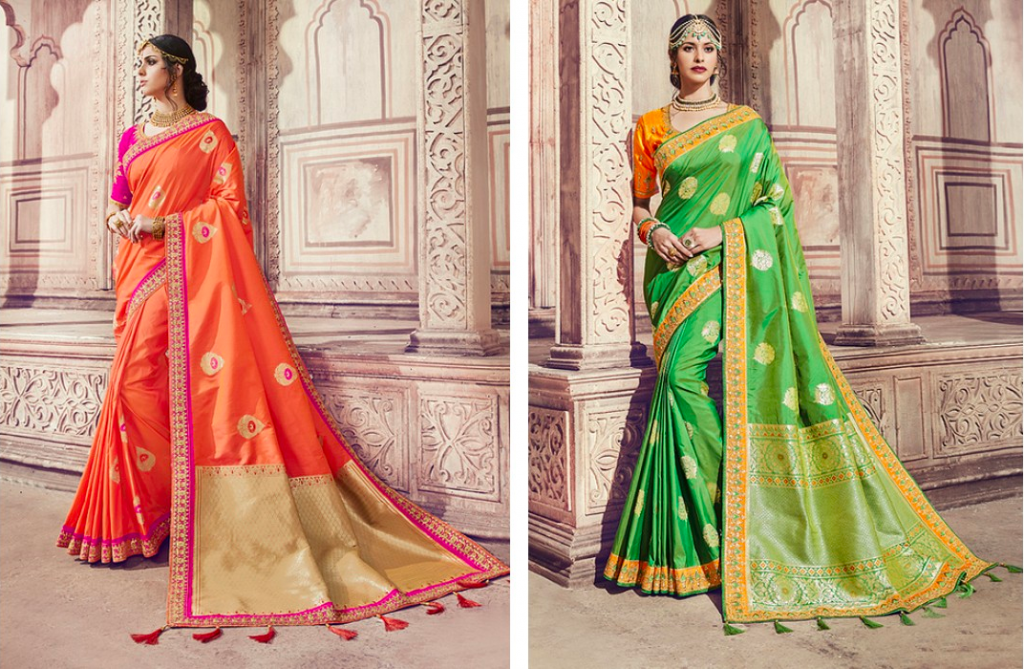
The Banarasi sarees are made in Varanasi in Uttar Pradesh. They are one of the finest traditional sarees in India and very heavy due to its rich embroidery which makes them ideal for parties, festivals, and weddings. This saree is traditionally made in four varieties namely organza (Kora), Georgette saree, Shatir saree, and pure silk (Katan). The many varieties of Banarasi silk saree are organza, satin borders, jangla, Brocades, Tanchoi, cutwork, and Resham butidar that have interesting designs of animals, birds, floral, fruit, human figures, and geometric patterns. 

Persian motifs are also included in the Indian designs to create distinct flower patterns of the saree used even today.The Banarasi sarees were originally embellished with threads made from real gold and silver for the royal family. For them to be affordable nowadays for everyone, the threads have been replaced with coloured gold and silver threads. This famous saree has eye-catching patterns and shades woven on a handloom and shipped all over the world. 

Making of a Banarasi Saree

Making of a Banarasi saree
Image – Robert Gold via Flickr

It usually takes around 15 to 30 days to complete weaving a Banarasi saree. However, it depends on the complexity of the design and patterns. Normally 3 weavers are required in the creation of this saree. One weaves the saree, the second one handles the revolving ring in making bundles, and the third one assists in border designing. Making the Banarasi saree requires teamwork. Ideally, a Banarasi saree has around 5600 thread wires and all are 45 inches wide. The craftsmen make a base of 24-26 inches long. Designing the motifs begins at the bundling stage. 

An artist created design boards by sketching the designs on a graph paper along with colour concepts. Punch cards are then created before selecting the final design then hundreds of perforated cards are created to accommodate a single design for a saree. To knit the perforated cards on the loom, different colours and threads are used. The perforated cards are then paddled in a systematic manner to ensure the main weave picks up the right colours and patterns. 

Banarasi Saree Designs

Banarasi saree designs
Image – Stylecaret.com

The Banarasi saree is divided into categories like Tissue, Butidar, Cutwork, Tanchoi, and Jangal. Tissue sarees are woven with golden Zari Brocade to add sheen to the saree. The saree’s borders and pallu are patterned with self-woven paisleys. Butidar sarees are woven with brocade threads silver, silk, and gold. The darker shade of gold compared to the silver threads has earned the brocade patterning the name Ganga-Jumuna. 

We Recommend…
Banarasi Silk Blend Zari Woven Work With Tussles Saree and Unstitched Heavy Embroidered Work Blouse Piece

Cutwork sarees are the less expensive version of Jamdani sarees. They are products of the cutwork technique on plain texture. Leaves, jasmine, creepers, and marigold flowers are popular motifs featured on Cutwork sarees. Tanchoi sarees patterns are woven with colourful weft silk yarns. The decorations on this saree are large motifs of paisleys and the border has criss-cross patterns. 

Jangal sarees are woven with colourful silk threads it’s decorated with intricate patterns of Jangala motifs and vegetation that fall along the saree. The luxurious fabric with intricate designs and detailing makes this Banarasi saree ideal for weddings functions that can be found at stylecaret online stores.

Banarasi Saree’s Fabric Varieties

Image Pixels.com

The Banarasi saree has four main fabric varieties, Georgette, Shattir, Organza with zari and silk, and Katan.

Georgette is a finely woven light fabric that is made of crepe yarn inter-woven with both warp and weft. It is popular in designing salwar kameez outfit designs, Bollywood sarees, and designer sarees.

Shattir fabric is used to produce beautiful contemporary and exclusive Banarasi saree designs. 

Organza is a richly woven fabric with the most beautiful Brocade patterns and designs that are made by warp and weft. Gold-coated silver threads are woven around the silk yarns to produce zari brocade.

We Recommend…
Banarasi Satin Silk Pattu Sari with Fancy Kanjivaram Design

Katan is a plain fabric that has woven pure silk threads that make pure silk sarees. In the old days, katan saree’s beautiful motifs and patterns were woven using handlooms but nowadays, they are produced using rapid looms and power looms. 

Conclusion

India is second to China is silk production. India exports its silk to over 200 countries around the world and the demand is increasing especially in Europe and America. These traditional and stunning Banarasi silk sarees are recognized globally due to the unique patterns and intricate designs made on the sarees. Bollywood celebrities and popular personalities are now wearing Banarasi sarees for weddings, special occasions, or functions. The Banarasi saree is a must-have in the wardrobe.

Simon Thacker’s Svara-Kanti presents Trikala – A Collaboration of Music & Culture

0
Simon-Thacker's-Svara-Kanti-quartet-1-credit-Akhil-Khatri
Simon Thacker with Forida Yasmin Desha, Sunayana Ghosh and Raju Das Baul.

Music knows no boundaries. Yet, each region has its own distinct flavor and essence of rhythm and culture that flows into the musical veins of the land, beating in spirit and giving life to almost all forms. However, true magic happens when music from different regions amalgamates into a seamlessly glorious celebration of different symphonies, instruments and languages leading to the creation of something new or a stunning recreation of what already exists. Trikala, Simon Thacker’s latest album with his group Svara-Kanti, featuring 13 leading musicians from across different musical spectrums, such as Baul, Carnatic, Punjabi Folk and Hindustani music is a great testimony of exactly just this!

Simon Thacker

Simon-Thacker
Simon Thacker

Scottish classical guitarist Simon Thacker is a renowned musician of our times. A guitarist, composer, improviser and ensemble leader he draws musical inspiration from diverse cultures. He is responsible for some great collaboration with traditional and classical artist from across the globe. His most recent collaboration has led to the emergence of the Svara-Kanti group, an Indo-Western association culminating in the double album called Trikala, as well as, various concerts at major festivals in India, Pakistan and Bangladesh.  The album has been selected for the Made in Scotland showcase.

So what motivates him to come up with cross cultural compositions? Music, like all arts, is a journey of self-discovery, says Simon who has never felt limited by language or geography or ambition. The inner world he creates in his mind is so powerful, exciting and intense yet incredibly difficult to render externally. One way of getting closer to it is by steeping himself in the aspects of traditions and cultures around the world that move him most, so that they become part of him, so that he can and have to go beyond his limitations. As he says, he does not try to copy, but these influences make him reconsider all that he knows, add new aspects to his understanding but also new aspects to what he already thought he understood. “I think we all have this desire to transcend, to go beyond the earthly and mundane and experience the sublime. Some people climb the highest mountain for an intense experience, others get lost in films, pursue religion, some might hope (wrongly) to find it artificially through drink and drugs, but I happen to create and perform music”, says Simon.

About Simon Thacker’s Svara-Kanti

Simon-Thacker's-Svara-Kanti--Trikala-cover-art
Trikala Cover

Svara-Kanti began as a quartet in 2011. What began as a way to develop new soundworlds from various influences across the Indian subcontinent developed into a community of different lineups. Though music of the future excites Simon, but traditions nourish his experimentation and give him inspiration to explore. Hence the creation of Trikala, meaning a Sanskrit word for past, present and future as the album title. The oldest lineup on Trikala is the Baul from 2015 and all the others developed since then. There are a total of 13 incredible musicians who have really connected with each other on a spiritual level to make magic happen. 

Svara-Kanti comprises of Simon Thacker (classical guitar), Raju Das Baul (voice, khomok), Sunayana Ghosh (tabla), K.V. Gopalakrishnan (kanjira), N. Guruprasad (ghatam), Justyna Jablonska (cello), Japjit Kaur (voice), Afsana Khan (voice), Sarvar Sabri (tabla), Jacqueline Shave (violin), Sukhvinder Singh “Pinky” (tabla), Neyveli B. Venkatesh (mridangam), Forida Yasmin (voice).

Trikala

‘Traversing over 2 hours and 18 minutes of some of the most advanced intercultural music ever recorded, Trikala is a work of rapturous forward momentum and a pivotal moment in the history of Indo-Western collaboration.’ 

Trikala takes inspiration from four different aspects of the vast musical macrocosm that exists on the Indian subcontinent: Hindustani classical (north), Carnatic classical (south), Punjabi folk (west) and the Bengali mystical folk Baul tradition of both India and Bangladesh (east). There is also a major solo work with a tangential Tamil inspiration, one of Bengali polymath Rabindranath Tagore’s best loved melodies reimagined and a moving transformation of India’s “National Song”.
For listening in to some of Trikala’s soulful melodies visit https://www.simonthacker.com/ and https://www.youtube.com/simonthacker.

The music of the sub-continent

But why collaborate with musicians from the sub-continent?

Simon-Thacker's-Svara-Kanti-UK-lineup-4,-credit-Juliette-Lichman

Simon has listened to countless genres from across the world, and some speak to him more than others, but the traditions of the subcontinent happen to connect with him particularly deeply. In Hindustani and Carnatic it was the limitless expression of ragas, exploring pitch linearly to create every nuance of emotion, and the forms and techniques of extemporization. He finds Baul music is searching for the same spirit as he is, hence the whole second album of Trikala is Bengali. His transformations of these songs are often radical but he has never seen them as “fusion”, a term he dislikes. They are an instinctive response and intended as an organic extension, not a middle ground. Finally, he has had a long obsession with “classic” Punjabi folk and thinks that Simon Thacker’s Svara-Kanti has established its own approach to Punjabi folk.”

Simon on Indian music

Simon-Thacker-with-Indian-Musicians
Simon-Thacker with Sukhvinder Pinky

Finally, we had to ask to Simon to share his thoughts regarding the rich heritage and repository of Indian music. His passionate reply seals his emotions for not only Indian but world music. “For me India has been a land of indescribably important musical, philosophical and artistic inspiration. The diversity, depth and history of the forms mean that one could never explore all the mysteries of even one of the smaller genres. But for me, even more than the “means”, the musical language, what is important is the “essence”, the genius of the great figures whose spirit lives on through everyone who has been touched by their music, whether it be Lalon, the Trinity of Carnatic music, Tagore, Bhimsen Joshi, Surinder Kaur, or countless others. India’s musical diversity also proves to me something I have long felt, that musical homogenisation is by no means inevitable and diversity can survive, and I hope that Trikala proves that it is possible to be totally distinctive and uncompromising in vision, that past present and future can coexist, and that music which connects with the “essence” that links us all can move anyone open to its message.