Is JNU Grappling with Right-wing Politics?

0
JNU protest
Source: lazywazy.in

‘Politics is a murky field. You should stay away from it.’ I remember this advice my father had given me during my college days. Later, I joined the Jawaharlal Nehru University (JNU) and stuck to his advice. During my stay in the university, my friends with political leanings used to mock me for not having aligned with any of the students’ unions. Even to this day, some of my colleagues wonder why I didn’t join politics, because that is what the varsity has been known for. It is supposed to groom future leaders.

There was another reason why I didn’t have the time for activism on the campus. My father used to send me Rs 600 per month. However, the minimum expenses for a hostelite were around Rs 1,200. I had to work as a part-time private tutor to fill that gap. I thank my star that some of my fellow student friends had helped me in getting such assignments. There was no time for ‘politics’ in my daily university life. Later, I didn’t wait to get a UGC fellowship, as I knew my fate: Whether I do MA or complete a doctorate, at the end of any such degree, one has to search for a job. I started searching for one after finishing my MA successfully.

Though I have kept aloof from politics even after being 20 odd years in the field of journalism, I realize the importance politics plays in our lives. Hence, I write on the ‘murky field’ only when the urge is compelling.

JNU Student protest
Source: NDTV

Looking at the happenings at the national level, particularly in Delhi regarding the Jawaharlal Nehru University Students’ Union (JNUSU) president’s arrest, a train of thoughts came across my mind. Campus politics in the university, during those days and I believe to a certain extent even today, has always been peaceful. Participants in debates sharing varying ideologies take criticism by opponents in the right spirit and refute their claims in a logical manner. Though I was not much interested in political debates, I used to watch what was happening around me. It was a healthy atmosphere, in which I unknowingly learnt many things.

However, today’s scene is far from a healthy debate and has taken an ugly turn. I don’t want to comment on any particular party or group. However, it is painful that things have deteriorated so much. It also reflects on the kind of politics being pursued by parties at the national level.

The alleged anti-national activities in the varsity and the arrest of JNUSU president Kanhaiya Kumar has brought in focus the functioning of the institution of higher learning, which is funded and established by the Government of India.

According to the JNU’s website, the bill to set up the university was introduced in the Rajya Sabha on September 1, 1965 by the then Education Minister M C Chagla. It was okayed in the Lok Sabha on November 16, 1966 and the JNU act was implemented on April 22, 1969.It is not a coincidence that the varsity was established in 1969, when Indira Gandhi was the prime minister of India. Our first Prime Minister of India, Jawahar Lal Nehru had Left leanings. India, though not part of any international bloc, was close to Russia, the then USSR and a communist country. Being , the father of modern India, Nehru led the establishment of military, academic, cultural, and other institutions of national and international repute during his term as the PM. He also fashioned the country’s development after the USSR’s five-year plans. Going by the political environment of his era, when half of the countries in the world had communist governments, Nehru was educated in the left liberal traditions of the West.

JNU Teachers protest
Source: dna

It is in this backdrop that Indira established the JNU, which also proved to be a sanctuary for all intellectuals, radicals, artists and thinkers having leanings towards the Left. The university has produced stalwarts including diplomat Abhay Kumar, , Ford Foundation Professor at MIT, US Abhijit Banerjee, Canadian entrepreneur; philanthropist and philosopher Aditya Jha,  Indian Civil Servant Ajit Seth, PM of Libya Ali Zeidan, Indian Civil Servant Amitabh Rajan, Foreign Secretary of India, Subrahmanyam Jaishankar, senior Congress leader Ashok Tanwar, former PM of Nepal Baburam Bhattarai, senior NCP leader DP Tripathi, senior Congress leader Digvijay Singh, deputy governor of RBI Harun Rashid Khan, Lalit Mansingh, Muzaffar Alam, George V. Bobrinsky, Nirmala Sitaraman, P. Sainath, Prakash Karat, Sitaram Yechury, Umesh Upadhyay, Yogendra Yadav, and Udit Raj. There are many such prominent JNU alumni working in various walks of life across the globe.

Among the university’s illustrious past and present faculty are Abhijit Sen, Amitabh Mattoo, BS Chimni, Baburam Bhattarai, Bipan Chandra, HS Shivaprakash, Jayati Ghosh, KN Panikkar, Kanti Bajpai, Lalit Mansingh, Madhavan K. Palat, Muchkund Dubey, Naman Ahuja, Romila Thapar, Sarvepalli Gopal, and Satish Chandra.

However, after the Bharatiya Janata Party (BJP) came to power in Delhi with a historic landslide victory, it was obvious for them to dismantle the Leftist symbols, replacing them with their own. The new government started glorifying Netaji Subhashchandra Bose, Madan Mohan Malviya, Syama Prasad Mookerjee, and Dr Keshav Baliram Hedgewar with a renewed vigour. The Planning Commission was replaced with Niti Ayog. Major national schemes are also named after their heroes. In this process, it was difficult for JNU to remain untouched.

The present row should be seen in this context. The right-wing government wants to root out any Left-wing symbol of prominence so that their ideology makes deep inroads into national institutions.

In this age of globalization and liberlisation, education, particularly higher education is becoming expensive, at least for youths from the middle and lower-middle classes. The JNU gives them opportunity to educate and rise in life. After studying in the university, many students from such socio-economic background have become civil servants, scientists, researchers and professors. The university with its peaceful and intellectual campus politics grooms future politicians as is evident from the names in the list given above.

The syllabus and teaching methods of the university are flexible and give students a good scope to study their topics from various angles. Hence, it attracts talent from every nook and corner of India.

ABVP candidates affter the JNUSU elections Resulton Sunday. Express photo by Amit Mehra . 13 September 2015
Source: Indian Express

A day in the life of a JNU student starts with lectures, interactions, presentations. Then a lot of time is spent in the library searching for references. Experts from various fields keep on visiting the campus. There are lectures, cultural programmes, and debates in the evening. All this is carried out peacefully while certain decency and decorum is maintained. Opinions of opponents are respected and dissent is tolerated. The student union elections are an annual spectacle, in which students wings of all major parties dominated by SFI, AISF, NSUI, and AISA among others, take active part. The ABVP, the students’ union representing the BJP, didn’t have presence on the campus for a long time. However, it has now got a foothold, reflecting the national political scenario. It is trying to consolidate its position by raking up issues. The latest among these is playing out and has grabbed attention at the national and international levels. The Congress and the Left have also indulged in politics of suppression when in power. So, it is really difficult to separate the wheat from the chaff.

It is early to predict whether the right-wing politicians will be able to get hold over the prestigious institution. However, going by the current course of events, one could say that it is a major development, which will have far-reaching effects over students’ politics in the JNU and in India.

In the meantime, chew over this quote of Jawaharlal Nehru, which is posted on the university’s website: “A University stands for humanism. For tolerance, for reason, for the adventure of ideas and for the search of truth. It stands for the onward march of the human race towards ever higher objectives. If the Universities discharge their duties adequately, then it is well with the Nation and the People.”

Voyaging into the blue – Scuba diving at Kavaratti

0
Kavaratti Beach
Kavaratti Beach. Pic: Sankara Subramania

Ever wondered what the world would be like without a sound? Like watching a silent movie, perhaps? Not even the sound of the wind or a rustle. Now imagine yourself in the movie, and water around you. That my friend is the experience of scuba diving!

The Indian coastline has a proud length of 7,500 km, majority of which is uninhabited except the metros and the ports. Of this, 1,400 km belongs to the Lakshadweep and Andaman & Nicobar Islands, which thankfully have not been exploited yet to such an extent commercially. The major source of livelihood in the cluster of islands is fishing in Lakshdweep and tourism in the Andamans. A few years ago, I came across an opening for a certified scuba diving course to be conducted at Kavaratti, the capital of Lakshadweep.

Scuba-diving-at-Kavaratti
Image – Thejas

Dizzy with ecstasy, I went for the basic swimming and medical test which I cleared. To check your ear pressure, they create underwater conditions in a chamber and give your body a real life experience of adjusting to the pressure below sea level. Passing that, the routine for the next 15 days comprised rigorous work out and stamina building, starting from running at 6 am, followed by jogging, PT exercises, stretching, push -ups and then swimming in the pool. They taught us to stay suspended on the surface using only our legs to float to make us stronger. They asked us to jump off the 5m board to get rid of our fears. They introduced us to all the gear we were to use including snorkels, fins, scuba masks, cylinders, ropes.

Scuba-diving-at-lakshadweep
Image – Thejas

After training with the equipment, we would have theory sessions on how to make dive tables, physics of water forces, coral and wildlife study, evolution of diving etc. By the end of this training, we were all quite trained, aware and tanned, ready for our adventure.

We also had the good fortune of travelling to Kavaratti on a ship as a part of the Navy family welfare society. The ship experience is a tale in itself, but it would be incorrect to not mention the beautiful dolphins and aqua blue water we saw gushing from the propellers deep in the middle of the ocean. After many hours of being surrounded by only water, we came face to face with a tiny strip of carrot shaped land covered with coconut trees from north to south and a light house at one end.

Scuba diving at lakshadweep
Source: liveindia.com

While looking at that place, I wondered why Bollywood films like Kaho Na Pyaar Hai or Dhoom2 weren’t shot here? The sand as white as it gets, the ocean floor visible from the surface even 20 m deep, the virgin beach, and the glistening sun was breathtaking.

We hopped on to a barge to take us to the small and only jetty in Kavaratti, and soon enough we were fascinated by the huge fish, prawns, sharks they had caught to be sold at Kochi and the local market. We then checked into our PWD guesthouses, spic and span, amidst a banana orchid and reported back to our base camp.

Source: lakshwadeeptourismandtravels

We were introduced to the senior instructors of LacaDives, the diving company, who would be giving us our international diving licenses on successful completion of the course. They explained to us our schedule for the next 10 days, the actual diving routine and the theory lecture plan. We were then asked to change into swim gear and were finally allowed to explore the long awaited Lakshadweep waters. If you have ever been to beach anywhere else in India, apart from these islands, you would know how it is hardly ever clean. On the contrary, these beaches were nothing short of the picturesque Maldives, Seychelles or any other photograph you would have seen on a postcard. We kayaked, canoed and swam the first day, taking it all in, until dusk and waited for our chance with deep sea diving.

The next few days, we would all embark on a small boat and venture into the ocean where the depth would be about 20 m and anchor ourselves. We would spend the entire day sunbathing and taking turns to dive with the instructor. We had trained so much in the pool that there wasn’t a hint of fear in any of us.

The first time I jumped into the ocean with my scuba gear, I felt reborn. Underwater, there is pin drop silence. The splashing, gurgling, bubbling sounds are only on the surface. When a foot artist trains himself to use his feet due to lack of his upper limbs, it is no coincidence, it is science at work, enhancing your other senses to make up for loses. The exact theory works underwater, when the hearing and speaking is cut off.

Things to do in Lakshadweep
Source: travel.india.com

The scene ahead of you is a plethora of colours with fish and coral of all sizes and shapes passing you by. If you go to touch them, they will run away and what you thought was stationary will come to life. You feel weightless, suspended in time, wishing the time to stand still, enjoying the sand under your feet as you look up to see the sun enter the surface of the water to give life to the entire ecosystem existing here. Few steps away is a submerged valley. You simply marvel at the wonder of science and the beauty of nature, enjoy a few moments of pure solitude in another world.

We did our underwater drill for ten days, loving every moment of it. Studied and understood the importance of the coral and the dangers to them by our rapid industrialization, collected shells only to put them back on to the beach. Finally, we passed our tests and with a heavy heart got on board to go back home, carrying with us memories for a lifetime!

Ashwin Sanghi – India’s Dan Brown?

0

Author: Pooja Wanpal

Indian writer - Ashwin Sanghi

From high-adrenaline chases to scientific jargons, The Krishna Key has it all. Ravi Saini, a historian, embarks on an epic quest after he is framed for the murder of his best friend and the theft of a precious artefact. His journey takes him across India – from the famed Taj Mahal in Agra to Dwarka in the Gulf of Cambay, the submerged city of Lord Krishna. If not for the generous peppering of references to the Mahabharata and other Indian mythological texts, it could almost be a Dan Brown novel. Is it any wonder that Ashwin Sanghi’s novels, which have the same fast-paced action sequences and copious references to history as Dan Brown’s, have topped the charts of Indian bestsellers?

A businessman by day and writer by night, Ashwin Sanghi has reached the pinnacle of fame through sheer determination and hard work. Born in 1969 in Mumbai, the youngest of the three children, Sanghi had a quiet childhood. His family had business interests in various fields like automobile dealerships, plant and equipment engineering and real estate. From a very early age, he started showing interest in the family business and by the time he was 16, he had started putting in long hours into it. After graduating in Economics from St. Xavier’s College, Sanghi studied at the prestigious Yale School of Management.

Ashwin-Sanghi

In the family of number crunchers, Sanghi fell in love with words. His maternal grandfather would send him a book every week, on the condition that he write him a letter telling him what he thought of the book. This tradition continued for more than a decade. When Cosmopolitan magazine approached him for a column on the relationship between men and women, Sanghi discovered that he loved writing for pleasure. However, it was the trip to the Rozabal Shrine in Kashmir that truly awakened the dormant writer in him. Believed to be the shrine of a Muslim saint, a popular urban legend claims that it is the tomb of Jesus Christ.

The Krishna KeyA trip to Goa precipitated the nascent desire, and with his wife’s encouragement, Sanghi began to pen his first work. It was summarily rejected by many publishers but Sanghi persevered. He self-published his first book titled, The Rozabal Line under a pseudonym, Shawn Haigins, an anagram of his own name. He promoted it aggressively, capitalising on social media and spreading the word amongst his friends and acquaintances. Copious research had gone into this novel, and interspersed within the narrative were a lot of historical facts and anecdotes. The book which had first received a tepid response soon became popular by simple word-of-mouth. It was later picked up by Westland and went on to become a bestseller in India.

Readers, who had fallen in love with Dan Brown’s novels, now had an Indian version to look forward to. Thus, Sanghi’s book became a hit. Since then, he has been touted as the Indian Dan Brown. While he accepts the comparison as a compliment, readers have not always been disposed favourably towards him. Sanghi’s novels have been disparaged as poor imitations of the original Dan Brown books. Stilted storyline, an overload of information, characters without much depth, and a preachy style have been the main criticisms levelled against Sanghi.

Ashwin-Sanghi - The Rozabal Line

Sanghi, however, has not allowed the negative reviews to deter him. The Rozabal Line was soon followed by Chanakya’s Chant, a brilliant novel which contains a historical narrative woven into a modern day one. It traces the rise of Chanakya in both the time periods and makes a broad commentary on life and society. Chanakya’s Chant has been appreciated by most readers and has reigned on the bestseller lists.

His third novel, The Krishna Key, was published in 2012 by Westland. It examines the possibility of Krishna being a historical figure, rather than the mythological entity that he is considered to be. The Krishna Key successfully manages to combine a thrilling narrative with historical facts, elevating it and setting it apart from the books that flood the market these days. Sanghi’s books have set the bar high for historical fiction. His prodigious talent, his penchant for detailed research and his lucid language make him a star on the rise in the world of Indian fiction.

The next book by Sanghi will be in collaboration with the giant of the crime fiction world, James Patterson. It will be set in India, within Patterson’s ‘Private series.’ This book promises to be a benchmark as Patterson’s trademark prose and Sanghi’s penchant for history will definitely make it an amazing read. Here is to hoping that it hits the bookshelves soon!

Images – AshwinSanghi

Agram Riding and Polo Academy – More than just a Sport

3

Author: Shamanth B S

Agram Riding and Polo Academy
Source: The Hindu

Horseback riding is perhaps one of the most sought-after activities today. And why shouldn’t it be? Besides offering a plenty of health benefits, equestrian sport helps one adopt a lifestyle that can be both challenging and calming. In 1967, when Equestrian Federation of India (EFI) was established, commoners perceived the sport to be for the elite. However, the perception faded with the advent of the equestrian academy that provided training grounds for the residents, too.

Agram Riding and Polo Academy (ARPA), located within the Army Service Corps (ASC) centre and college, is one such army school in Bangalore that runs coaching camps for horse riders interested in equestrian sports. Its ground, spread over 40 acres of land, includes show jumping arena, two dressage arenas, and two polo grounds. Competitive riding skills are taught to both young and adult equestrian riders to not just improve their balance and coordination, but to enhance their overall personality.

Agram Riding and Polo Academy
Source: SportsKeeda

The academy has many potential riders with 10-year-old Angel Beulah being one of them. Starting at the age f 7, Angel, a student of Bishop Cotton girls’ school, has been riding for the ARPA team since 2012. Her days start at 4:00 in the morning and she has won a medal for having control over the horse.

Agram Riding
Source: The Hindu

“Horse riding helps an individual to be more dedicated, develops will power and determination. After joining the academy, I have seen this big change in my daughter. She concentrates better now and is enthusiastic about being around her horse. At times, it is tough for us to comfort her,” said Rajesh Fernando, Angel’s father.

Further, ARPA also conducts classes for the specially-abled student during weekends with Healing Horses, a non-profit organisation aimed to provide therapy for disabled persons of all ages, through the unique practice of therapeutic riding. These rides help students recover in a short period of time. In fact, Healing Horses is the first in India to introduce equine therapy or therapeutic riding.

“We use aged or retired horses to treat specially-abled kids. I give sensory inputs like eye-hand coordination, colour sense and smell through horses to kids, who are impaired with motor or sensory functions. A child develops broad vision by sitting on the horse, can hold everything ones a child starts to hold the string of horse, stimulation are given from all sides to improve their postural and muscular movement, which is also called physiotherapy,” said Pushpa Bopaiah, founder of Healing Horses, who has treated more than 400 specially-abled kids.

Agram Riding and Polo Academy
Source: Femina

“My daughter has learned more from the horses than us. Earlier, she was struggling to move her ankles and wrists, but this place has brought a major change in her body movements,” said Raghav S, father of Nikita, a paraplegic.

Another student, Anuj Arora, a gold medalist of ARPA, is looking forward to having a career as an equestrian. Talking about the game, Anuj’s father, Lt. Col Ashok Kumar said: “It is the easiest way to develop the personality. Kids learn to take quick decisions and adopt leadership skills in a short period of time. There is a need for awareness about this game. One has to pay a very subsidized fee of Rs3,000 per month, which includes the essential accessories for horse riding.”

Discoveries of Astronomical Proportions – Meteorite Death, Gravity Waves, Planet X?

0

We are living in exciting times. No, I am not talking about the terror strikes, the noisy budget session in our parliament, the stock market crash or the US elections. Something really exciting is happening in the skies, which are being termed as the most important discoveries in astronomy in a century! For a change, Indian astronomers are involved in two of them – meteorite death and gravity waves!

Gravitational Waves

Gravitational Waves
Gravitational waves from merging black holes | Source: Livescience

A global network of 900 scientists named the ‘LIGO Scientific Collaboration’ has announced the discovery of gravitational waves. LIGO, which stands for the ‘Laser Interferometer Gravitational-Wave Observatory’ based in the US, has been studying the existence of gravitational waves for over a decade. Typically, energy is transmitted through electro-magnetic radiations such as X-rays, gamma rays, electricity, etc. This is the first time we are detecting that gravity can transmit energy as a wave, says Dhruv Paranjpye of Akashmitra, the Association of Amateur Astronomers in Pune.

Gravitational waves are the result of any disturbance in the fabric of space and time caused by an accelerating mass. These waves cause ripples in the fabric of space-time continuum, making it and contract. Does that mean that every time we run or dance, we are distorting the space-time around us by causing gravitational waves? Well surprisingly the answer is yes, says Tanmaya Dash from the Space Technology Students Society, IIT-Kharagpur.

Over a century ago, Albert Einstein had postulated about gravitational waves saying every mass causes a dip in the space-time continuum and every time this mass accelerates, it sends out ripples at the speed of light in all directions. So yes, each one of us can cause a dip in space and time and we do send out ripples, but they are extremely tiny to be detected. So how were these gravitational waves detected? Tanmaya Dash says in order to detect gravitational waves, we need something enormously massive that is accelerating at an extremely high rate. Scientists at LIGO found that an extraordinary event of two big black holes colliding a billion years ago gave a massive signal detectable by their machines.

Now, what does all this mean to the scientific community? Gravitational wave astronomy can open up doors for several new undiscovered phenomena in astrophysics, which can provide us with answers to the formation of the early universe. Further, there will be new ways to look at stars and space, and address the ultimate question: what happened before the Big Bang? Obviously, a few Nobel prizes could be in order! Indian scientist Prof. Sanjeev Dhurandhar from the Inter-University Centre for Astronomy & Astrophysics (IUCAA), who is a pioneer of gravitational wave research, is a strong contender for a Nobel Prize.

Death by meteorite?

Death by meteorite
Police investigating meteorite blast | Source: The News Minute

Normally, we commoners take such astrophysical issues with a pinch of salt, since they rarely affect our daily lives. However, here is some strange news that could jolt us from our slumber. Kamaraj, a bus-driver at the Bharatidasan Engineering College in Vellore died due to an explosion. Since there was no explosive material found at the blast site except from a bluish grey rocky object, experts believed it could be due to a meteorite falling from the sky.

Obviously, it is hard to believe that a person could die due to a rock falling from the sky. Scientists from the Indian Institute of Astrophysics state that there are other chances of it being space debris, or objects falling from an aircraft or part of a broken satellite that managed to enter the earth’s atmosphere. Dhruv Paranjpye states there is a virtual observatory in Italy that tracks asteroids and near earth objects in real time, which can help us find if there was a meteorite shower on February 6th, when the blast happened. If it is proven that Kamaraj was actually killed by a meteor, then that would be the rarest of rare deaths that happens once a century!

Discovery of Planet Nine or Planet X?

Planet X
Source: Science Mag

Scientists have now discovered a new ninth planet. Excuse me, didn’t we learn that Pluto was the ninth planet in our schools? Sorry, science syllabus changed a decade ago! In 2006, the International Astronomical Union ruled that a planet must meet three conditions: it must be in orbit around the Sun; must be massive enough to be rounded by its own gravity; and finally it must have cleared the neighbourhood around its orbit. Sadly Pluto didn’t meet the third condition and was demoted to be a dwarf planet.

Now a new candidate has emerged to take that position. Researchers led by Mike Brown at the California Institute of Technology (Caltech) in the US have found evidence for a new object nicknamed “Planet X” deep in the solar system. This hypothetical Neptune-sized planet is predicted to orbit our sun in a highly elongated orbit far beyond Pluto. The object is estimated to have a mass about 10 times that of Earth and orbit about 20 times farther from the sun than Neptune. This planet may take around 10,000-20,000 Earth years to make one orbit around the sun!

However, Dhruv says this finding is still a theoretical prediction that needs to be confirmed with an actual photograph of the Planet X. These findings are based on mathematical modelling and computer simulations of analysing the orbits of other distant objects in detail. It is too early to say for certain that there is a ninth or tenth planet in the solar system, as it is yet to be discovered via telescope. Ironically, Mike Brown is the same Caltech researcher who discovered there are many asteroid-type objects in the Kuiper belt beyond Neptune, which led to the demotion of Pluto!

Factfile –
https://akashmitra.wordpress.com

Kala Ghoda Fest – It’s Talent Under One Roof

0
kala-ghoda-arts-festival
Source – Satish Krishnamurthy

In 1999, Kala Ghoda Art Festival (KGAF), one of the largest cultural art fair, was inaugurated. And since its inception, the fest has gained popularity and attracted many visitors from around the country. Starting on the first Saturday of February every year, the fair is a nine-day-long affair that promises to satiate every artistic need.

kala-ghoda-arts-festival
Source – Satish Krishnamurthy

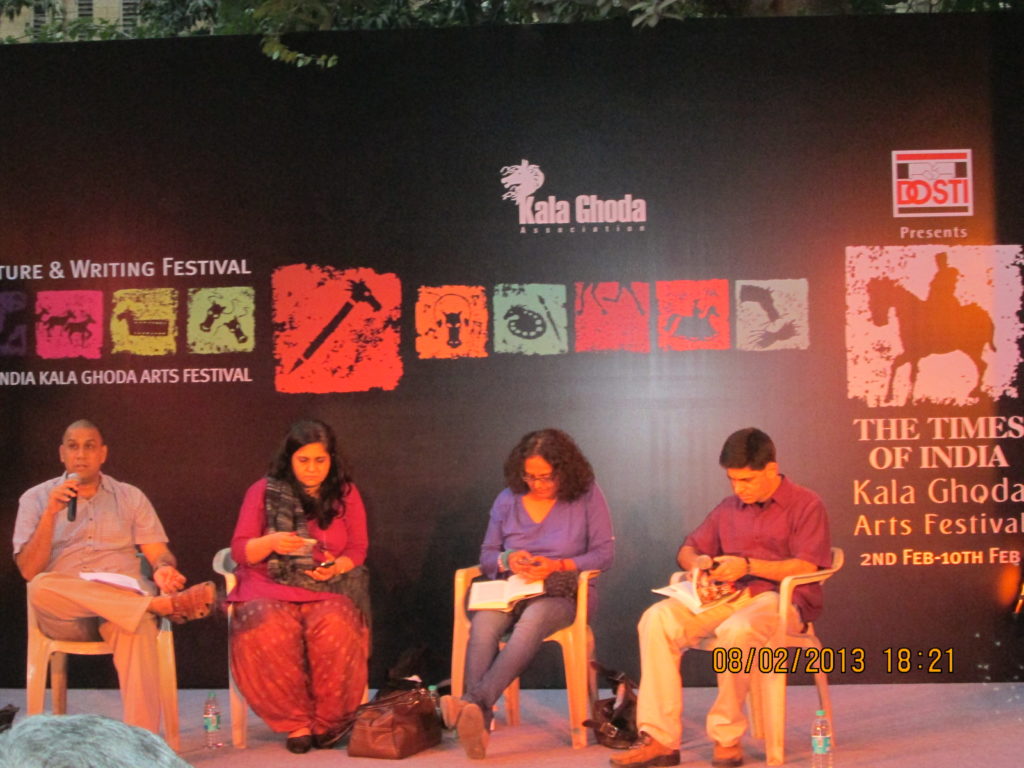
Organised by the Kala Ghoda Association, the event was inaugurated by Maharashtra Chief Minister, Devendra Fadnavis last week. The entry is free and the fest will have visual art performances, theatre, cinema, literature including children’s literature as a sub-section, heritage walks, workshops, and stalls selling eco-friendly, handmade arts and crafts wares. Further, the auditorium at National Gallery of Modern art, lawns, and auditoriums at the Chhatrapati Shivaji Maharaj Vastu Sangrahlaya (CSMVS), the garden of David Sassoon library, Horniman Circle Gardens and surrounding areas will be thrown open to public during the fair. Meanwhile, areas like Rampart Row will remain closed until the festival gets over.

Kala Ghoda Fest
Source: Urban-India.net

In addition to this, there is also a three-day ‘Make in India’ cultural fest at Cross Maidan, also organized by the Kala Ghoda Association. Music and Dance events as part of ‘Make in India’ will be held from February 15 to 17. Plethora of other activities will also be taking place at the same time to keep the visitors entertained.

Bibliophiles paradise

Discussion on literature during Kala Ghoda Fest. Source: Flickr

This is the place to be, bibliophiles! From the book swapping event at David Sassoon Library to the launch of Kala Ghoda inspired books, this place is sure to bring the intellectual crowd to the fore. There is an infinite opportunity for the readers to engage in some soul-stirring activities while they attend the Hope Street Poets session. Further, perspectives will be put forth and visitors will be encouraged to converse in events like ‘Pride without Prejudice’ and ‘Agents of Preservation,’ moderated by Vrunda Pathare.

Cinema and Theatre

Kala Ghoda Fest
Source: IndiaTimes.com

KGAF has always been a wonderful stage for theater artistes and, this time, they have an amazing line-up like ‘tee,’ a Maharashtrian folk tale), ‘Salam Bombay’ and ‘See no Evil, Speak no Evil, Hear no Evil, Do no Evil’ among others. Also, movies like ‘Court’ (India’s official entry to the Oscar), ‘Island of Magic’ are some of the movies to be screened during the festival.

Dance and Music

Kala Ghoda Fest
Source: JourneyMart

The festival has a lot in store for music and dance lovers, for there will be a Kathak Recital by Prachee Shah, a fusion of classical and contemporary dance performances by the Dance club of IIT Bombay, and promotion of the movie, ‘Sanam Re,’ directed by Divya Khosla Kumar. On Sunday, around 800 visitors watched Ustad Amjad Ali Khan and his sons giving a scintillating performance at Cross Maidan.

Feast on delicacies

This one is really a treat for food bloggers and food lovers, where they will have sessions on food styling and photography. Further, Maria Goretti is all set to launch her own book and showcase her skills during the session. The festival also has a trump card in the form of Sanjeev Kapoor, who is all set to take the spotlight using his culinary skills.

Stand-up comedy

The fest is set to witness laughter overdose with stalwarts like Kautuk Srivastav, Anirban Dasgupta, Abhishekh Upamanyu, Atul Khatri taking the centre-stage.

kala-ghoda-arts-festival-3
Source – meghanahassan.blogspot.in

Other activities:

  • Participate in raging discussions on topics like LGBT, feminism among others.
  • Famous sculptor Arzan Khambatta and painter Sunil Padwal will conduct a session on making art from waste.
  • Attend workshop for travel writers by Editor-in-chief of Nat Geo traveler India, Niloufar Venkatraman.

Moreover, craft and creative workshops, interactive readings, special performances will also inspire kids to be a part of the fest.

Culturally Kolkata – A handguide to the city’s way of life

2

Kolkata – the ‘City of Joy.’ No, this is just not another name given to a city,  for there lies a deeper meaning to it. You need to actually visit the city to experience some finer elements of life firsthand. The land that brought art cinema to India, that nurtured Odissi and Kathak dances, created the Bengal School of Art, owns tomes of literature in Bengali, gave birth to Rabindra Sangeet, and fashioned a unique cuisine that blended Oriental and Indian culinary styles, is no doubt regarded as the Cultural Capital of India!

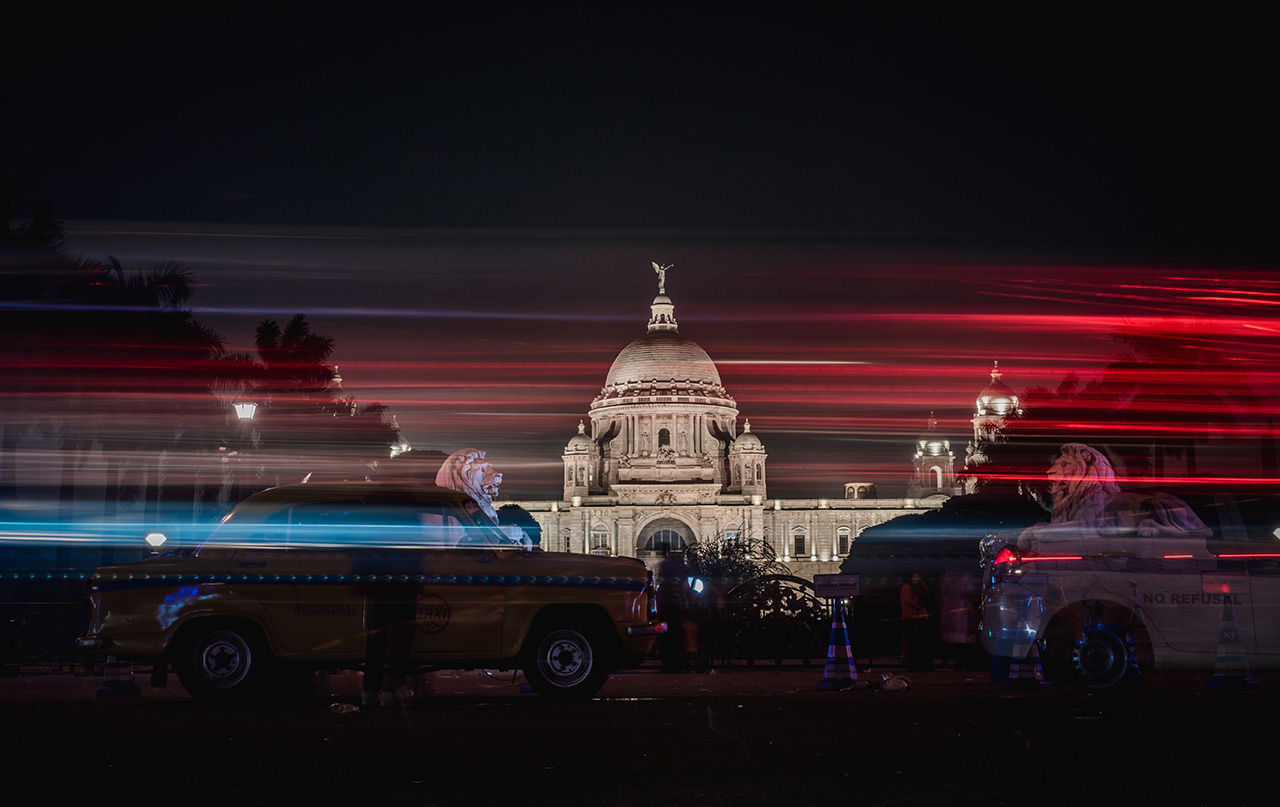
Delving into its history, the erstwhile ‘Calcutta’ was the first capital of the East India Company or the British Raj. Therefore, the British impact can be seen all over the city, starting from the iconic Howrah Bridge to the famous New Market to the magnificent Victoria Memorial with its angel signalling the advent of the modern civilization from time immemorial. The city’s buildings portray a harmonious mix of British and Indo-Saracenic architectural motifs.

Explore more about places to visit in Kolkata

Kolkata-Culture-and-lifestyle

Places-to-see-in-Kolkata

bengali-cuisine

Kolkata-Books-and-Literature

Art-in-Kolkata

Shopping-in-Kolkata

Kolkata Infographic - Places to visit in Kolkata

Illustrations – Debjani Roy

Kolkata Culture & Lifestyle – Mixture of Great Traditional and Modern values

0
Kolkata-lifestyle
Image – ABHISHEK CHAKRABORTY

The word ‘Bengali’ evokes a lot of emotion and is synonymous with art, culture, food, music, cinema and everything connected to finer aspects of life. Truly as the famous saying goes, “What Bengal thinks today, India thinks tomorrow!” a Bengali was considered an intellectual leader during the British Raj. However, decay set in after independence and the Bengali Bhadralok seems to be still stuck with reminiscing in the retrospective! In fact the various addas can be seen in the city’s coffee houses, city halls and libraries, where the so called “intellectual crowd” engaged in heated debate!

Kolkata History and Ideas

Kolkata-History-and-Ideas
Corner of Harrison Street – Wikimedia

In the early years of the Indian Independence Struggle, being the capital of the British Raj, Calcutta was almost the ideological centre of the freedom movement and nationalist thought.

In the Bengal Renaissance, Calcutta served as the source of socio-religious throughout the Raj. Prominent names include Raja Ram Mohan Roy, the social reformer, Ishwar Chandra Vidyasagar, of the Widows’ Remarriage Act, and Swami Vivekananda, a pioneer of Indian religious philosophy in the west. During the same period, Calcutta pretty much became the cultural centre of the Indian Subcontinent.

Kolkata Culture & Lifestyle, Architecture
Photo by SAUVIK BOSE

The city of Kolkata can be defined as an archive colonial heritage; a birthplace of great ideas, great minds, revolutionaries, and revolutions; a dense, convergent flux of diverse ethnicities. In this article, I try to highlight some main features of the city’s culture.

Neighbourhoods

CuKolkata Culture & Lifestyle
Image – Debraj

Like most cities, an essense of Kolkata’s diverse ethnicity can be assimilated from its neighbourhoods and localities. There’s Central Kolkata, the business district, which has the urban park in the city, there’s South Kolkata, which houses the city’s wealthy, and there are neighbourhoods like Dharmatala, which merge historic buildings with residential complexes.

But the most important, from the lens of ethnic cohabitation, is probably Bowbazar. The area resides Hindus, Sikhs, Buddhists, Muslims, Parsis, all in a harmonious and mutually respectful coexistence. Apart from the commonly seen places of worship, there is a Zoroastrian temple, a Buddhist temple, a Synagogue, and an Armenian Church. Bowbazar’s living is a lesson in tolerance for the world.

Architecture in Kolkata

Kolkata Culture, Architecture
SAIESTA FOUNTAIN, Mayo Rd, Limax Lowlets

Kolkata houses an enviable number of historical buildings, most of which are still in use. A substantial number of structures were built during the colonial period and are follow the European style. An evolution can be noticed from those built in the eighteenth century, like Fort William, and those built during last decades of the British Rule, like the Victoria Memorial.

Despite the acceptable western influence, Kolkata was also able to develop its own distinct, or rather a fusion, architectural style. This can be seen in buildings like the Jorasanko Thakur Bari, Rabindranath Tagore’s childhood home, the old Asiatic Society building, and the mansions on Bishop Lefroy Road. There are also areas like the Salt Lake City, which were planned in the decades following the Independence, and house modern, 21st century residential buildings.

Art & Literature in Kolkata

Art & Literature in Kolkata
Rabindranath Tagore – Wikimedia

Kolkata has been active in Literary and artistic research from a long time. The town has seen the dawn of the literary movement in the middle of the 19th century, which has given birth to a cultural revival in India. Rabindranath Tagore, laureate of the Nobel Prize in Literature from 1913, has been the best exponent of the movement and continues to be enriched by his exceptional originality in poetry, music, drama and painting. Bengali literature is also blessed by works of some excellent novelists such as Bankim Chandra Chatterjee, Manik Bandopadhyay, Tarashankar Bandopadhyay, Chetropadhyay and Sarat Chandra Chattopadhya and many more.

Cuisine of Kolkata

Cuisine-of-Kolkata
Image – Subhash Roy/Flickr

The cuisine of Kolkata is influenced by the Mughals, Armenians, Parsis and British, culturally literate as the cultural capital of the nation that paved the path for the Indian Renaissance. With regards to foods, Kolkata is more than simply “Roshogulla” and “Sondesh,” because the entire state of Bengal is filled by cuisine wonders. Perhaps that is why Kolkata is called the “City of Joy,” because what’s happier than being the home of one of the most delicious food in the whole country.

Music, Dance and Cinema

Bengali-Cinema
Courtesy – Satyajitray.org

In Bengali culture, music and dance play a major role. In Kolkata, Baul traditions are a unique legacy in Bengali folk music.There are also various other folk music categories, such Gajan, Kirtan, Bhawaiya and many more besides Baul. Rabindra Sangeet has been largely appreciated throughout the city. Apart from that, every year, several conferences have been organised since on classical Indian music. Kolkata is the  home of numerous internationally acclaimed traditional dancers like Shri Uday Shankar, who adapted Western theatre method to traditional styles of dance. The city is also a pioneering film production centre in India. International acclaim was accquired by the unconventional, forward-looking directors Satyajit Ray and Mrinal Sen. 

Festivals of Kolkata

Festivals-of-Kolkata
Image – Debi baran

The Kolkata witnesses numerous festivals through out the year. The most prominent one is Durga puja following by Kali puja, Saraswati puja and others. Durga puja is the prominent celebration and one of the most famous in the city. The city of Durga puja is known all over the world for its 4 days grandeur celebration. The artistic pandals and idols of Goddess  are the main attraction for local and international tourists.

Museums and libraries

British-Colonial-Architecture-in-India-Victoria Memorial Kolkata
Victoria Memorial Kolkata

Kolkata has more than 30 museums which span a wide range of fields. Founded in 1814, the Indian Museum is India’s oldest, with important holdings featuring archaeological and numismatic divisions. The exhibitions show British links with India in Victoria Memorial Hall. Amongst its treasures is the Asutosh Museum of Indian Art in the University of Calcutta. Science City was one of the first of its kind in Asia to be a big science museum and entertainment complex. The Asian Society of Bengal, the Bengalian Literary Society and the University of Calcutta contain valuable library collections. The national library is the largest in India.

In literature, arts, and music, Kolkata has nurtured India’s and world’s greatest minds. Rabindranath Tagore, the world renowned Nobel laureate, Abanindranath Tagore, of the Bengal School, and Satyajit Ray, the father of parallel Indian cinema- all belong to a unending list of Kolkata’s greats.

Author Bio – Harry Jack is professional blogger & Marketer who has contributed to some of the best publications. At present he is working at The Squander. Harry loves writing on world culture & Lifestyle.

Literature & Books in Kolkata

0

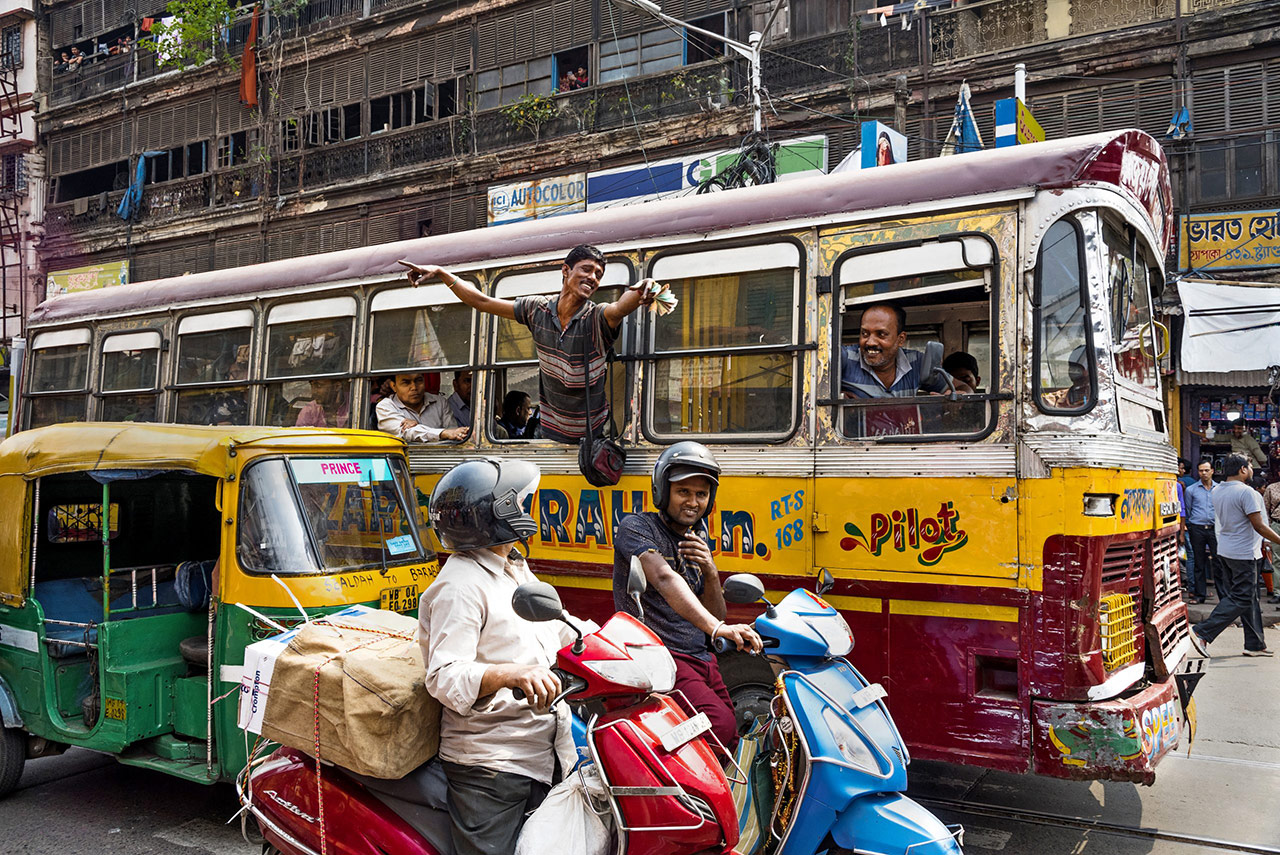
Kolkata-literatureHave you seen a rickshaw puller reading newspaper? One can easily state this “everyone in Kolkata is an intellectual!” When in doubt, check facts – Kolkata’s literacy rate of 87% far exceeds the all-India average of 74%. There is no doubt education plays a major role in the life of Bengalis and everyone is overqualified for their job; this is particularly true for government clerks and other civil servants!
Owing to Bengali renaissance that happened during the British Raj, literature and fine art blossomed in the city. Prestigious institutes such as the Presidency College, Jadavpur University, Indian Statistical Institute and the Indian Institute of Management Calcutta have been the leading lights of education. In fact, the University of Calcutta was the first modern university in South Asia founded in 1857, which boasts of four Nobel laureates Ronald Ross, Rabindranath Tagore, C. V. Raman and Amartya Sen. Now can any city in India beat that?

Kolkata is known as India’s first city of books. The city is a temple for creative pursuits, especially in the field of literature. This article presents ten facts about literature and books in Kolkata:

The Kolkata Book Fair

There is no greater testimony for the city being a book lover’s paradise than the ‘Kolkata Book Fair’, which traditionally begins on January 29 and continues till February 9.  The twelve day book fair is attended by more than 2.5 million people every year. It is said to be the world’s biggest non-trade fair and also the most participated book fair in the world.

Celebrated Authors

The city has been blessed by authors with literary contributions that are unparalleled. Bengali literature is rich with the works of authors like Rabindranath Tagore, Ishwar Chandra Vidyasagar, Sarat Chandra Chattopadhyay, Kazi Nazrul Islam, Michael Madhusudan, Bankim Chandra Chattopadhyay, Sukanta Bhattacharya, Buddhadeb Guha, Sunil Gangopadhyay, Manik Bandopadhyay, Amitav Ghosh, Mani Shankar Mukherjee, Nirad Chaudhury, Samaresh Majumdar, Satyajit Ray and many more.

Literary style

Ishwar Chandra Vidyasagar is credited with simplifying and modernizing the Bengali prose. The ‘Bard of Bengal’ Rabindranath Tagore introduced colloquial language to Bengali literature, breaking away from traditional models that were based on Sanskrit language. His works, both poetry and prose, have been described as modern, mercurial, fresh, and sensitive. Sarat Chandra Chattopadhyay was an exponent who delved into the romance and complexities of the human mind, especially that of the female. Tarashankar Bandopadhyay painted the realistic picture of the rural Bengali landscape in his works.  Authors in the 1950s and 60s were a new breed and gave a modern dimension to their work and wrote with contemporary touch. Academy Award winning director Satyajit Ray was also a proficient writer of books for children.

Notable  books to read

Popular Bengali reads include Pather Panchali, Devdas, Anandmath, Choker Bali, Parineeta, Aranyak, Gitanjali, Abol Tabol, Lajja, and Chander Pahar.

Timeline of Bengali literature

Bengali literature can be divided into two periods – the medieval and the modern. The medieval era, dating back to the tenth century, included mystic and spiritual songs and hymns. Modern literature came into existence post after the eighteenth century.

Oldest Works of Bengali Literature

The collection of works comprising mystical poems is called ‘Charyapada’. It was written in Abahatta, the common language from which other languages like Bengali, Assamese, Oriya and Maithili originated.

Hungryalism

This is a path-breaking literary movement that took form in Kolkata.  Hungryalists comprise of avant-garde writers who have challenged contemporary ideas in literature and culture, making significant contributions to the language, since the sixties.  Some of the famous poets of this movement include Binoy Majumdar, Malay Roy Choudhury,  Tridib Mitra, and Falguni Roy. Fiction writers attached to this movement include Basudeb Dasgupta, Malay Roy Choudhuary, Sandipan Chattopadhyay and Subimal Basak.

The Prakalpana Movement

This is also a literary revolution that spawned in Kolkata in 1969. It is a bilingual (Bengali and English) literary movement that included many avant-garde writers in its fold.

Ghost Themes

Apart from romance, drama, thrillers and erotica, Bengali literature also includes supernatural themes.  Ghosts are a part of the Bengali folklore and find their mention even in modern Bengali literature, including books, TV shows, and movies.  Such themes were often found in the works of top writers like Ishwar Chandra Vidyasagar, Rabindranath Tagore, Sukumar Ray, and Satyajit Ray.

Book Shops

If you are a book lover and happen to visit Kolkata, you should not miss on some of the city’s best book shops that are never short of titles and themes that you are looking for. The honorable mentions are Earthcare Books, The Bengali Brigade, Oxford Bookstore, Chitpur Road Printing Presses, Foreign Publishers Agency, and Seagull Books.   You can also check out many second-hand book stalls at Free School Street, College Street, and Golpark that offer rare books at incredibly low prices.

Food in Kolkata – Gastronomer’s Delight

0

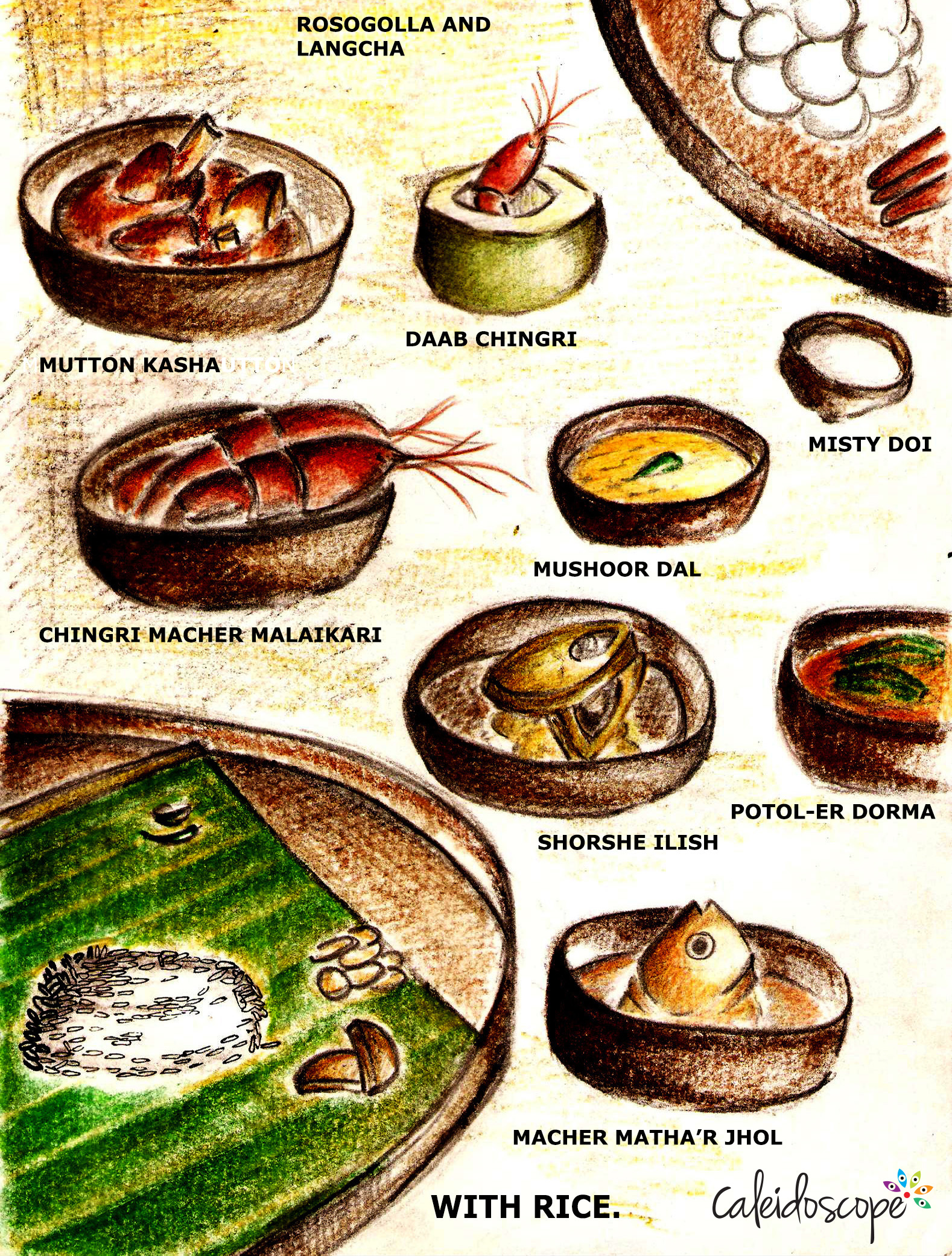
Being a confluence for all types of people from across the world, food in Kolkata truly a gastronomer’s delight. One can sense that Bengali cuisine has a unique blend of Oriental and Indian culinary styles. The special dishes that deserve mention are ‘Sorshe Mach’ – fish cooked in mustard and oil, ‘Paturi’ – boneless fish steamed and cooked in a leaf, ‘Luchi with Cholar Dal’ – puri with pulses and the finally the mesmerizing ‘Mishti Doi’ – sweetened curd and ‘Roshogolla’ (Rasgulla)! In addition, no Bengali meal is complete without the mention of ‘Aloo Posto’ – potato with Poppy seeds, which is indeed a delicacy.

Kolkatans are crazy about food and they have a knack of trying out new dishes and experimenting with new recipes. Among fast food, Rolls and Golguppas are an all-time favourite. The Kolkata version of the famed Biryani has an additional egg and a big chunk of potato. For deserts, we have the best sweet meat ever made and if anybody disagrees to that, make sure they have a bellyful of ‘Chanar Sandesh’ – sweet made from cottage cheese) or ‘Shor Bhaja’ – another milk-based sweet and seal it off with a plate of ‘Darbesh’ – Bengali style Laddoos.

Food in Kolkata

Explore more about Bengali food delicacies