Tuloni Biya: A Moment To Rejoice Menstruation?

14

Author – Shraddha Agarwal

In my third year of college, I was in my hometown in Assam during holidays when I received an invitation from my friend for her youngest sister’s Tuloni Biya. I had heard about this strange tradition from my friends in school, but I had never personally experienced it. Well you must be wondering what the age of the girl getting married was.

If we think about marriage it is always between two people – a girl and a boy, a girl and a girl or even a boy and a boy. But a girl getting married to something rather than someone is pretty surprising for some of us! It is supposed to be a very important culture prevailing in one of the states in our own country, Assam and is termed as ‘Tuloni Biya’, i.e. small marriage.

Tuloni-Biya-2
Youtube Screen Grab

According to Hindu mythology, when Goddess Sati committed suicide, her husband Lord Shiva became furious and did Tandava Nritya while still holding her dead body on his shoulder. To calm down the situation, Lord Vishnu cut her body into 108 pieces using his Sudarshan chakra. These pieces were thrown across India and Sati’s womb fell on the Nilachal hills of Assam, which is the location of famous Kamakhya Temple in Guwahati. Assamese believe the Goddess still undergoes her menstruation once every year and during this time, the temple remains shut for three days and so does every other temple in Assam.

Source: ScoopWhoop

Assamese believe that if the Goddess can be impure then why not human beings! Hence, when girls of Assamese families reach puberty start with their menstruation for the first time, they are considered to be impure. During that time, they have strict restrictions on what they eat, where they sleep, whom they meet, etc. They are normally asked to stay secluded in darkness so that the impurity does not spread. Looking at the moon, sun, stars and even cows is considered a bad omen.

The girl is considered impure only for the days when she is undergoing her menstrual cycle, but once she gets out of it she is allowed to live her normal life again. Everyone comes together to celebrate the attainment of her womanhood. She is taken out of her secluded room and made to bathe in front of the ladies of the house. Thereafter she undergoes a puja where she is deemed to be married to a banana plant near her bathing area. Few ladies from a different locality pretend to be from the bridegroom’s side and visit the girl’s house, singing wedding songs where the girl’s mother and other family members welcome them with lavish gifts.

Tuloni-Biya

Tuloni Biya is celebrated almost as a real wedding which is attended by all the relatives, friends and neighbors of the girl’s family. Everybody comes together to rejoice the commencement of her puberty. It is marked as a prayer to God to give a healthy reproductive system to the girl. This antiquated tradition has been prevailing in Assam since many years, but a few families with modern outlook have stopped this practice considering it to be an orthodox one.

Tuloni-Biya
Youtube Screen Grab

I did attend one such Tuloni Biya ceremony at my friend’s house. In most parts of our country where topics like menstruation or sex life is considered to be a big taboo, there are few places where it is celebrated. While I appreciated that fact, somewhere in my heart, I felt bad for the little girl who was treated like an untouchable for the first few days of her menstruation. Was she really impure?

Indian Elections – Great Opportunity To Spread Misinformation

0

Author – Austin Cruz Dsouza

Source: Telugu One

The electoral season seems to be upon us with fair amount of wild speculation and hot gossip going around brisker than our morning tea. Elections in India are surely an entertaining affair where everyone dwells in debates that otherwise one would have confined to their minds on any ordinary day. Then again, these are no ordinary days. This highly ‘anticipated’ affair reminds me of an anecdote:

Once a politician running up for re-election sat in a restaurant and decided to pay for the meal of a gentleman seated across his table. The gentleman thanked him but refused to take his offer and replied in a tone most loathing – “I want no free meal but I’d like very much to kick the person responsible for my troubles in his pants”. This obviously was aimed at the government’s failed policies but being what he is, the politician replied, “Dear Sir, to quote Theodore Roosevelt – if you could kick the person responsible for your troubles in his pants, you wouldn’t sit for a month!” This amusing statement points out that our troubles are of our own doing, politics or otherwise.

This poorly materialized soap opera that we call Indian elections, provide immense opportunities to engage in entertaining conversations as well as spread our share of misinformation. Some of these conversations borderline stupidity, and we as a country have set gold standards for being obnoxious and religiously loyal to our stupidity.

Source: Fox & Hedgehog

I recently overheard a conversation that was carried across in a restaurant, which is one of my regular haunts. As their train of thought went, a mid-aged gentleman assured the other that his ballot choice like every other time would be the same. The other person seemed vaguely confused on the dilemma it posed, since his companion had changed his permanent address and was now subjected to a new choice of candidates. The speaker sensing the confusion, with an air of pride declared, “Brother, my party is contesting here too; candidates keep changing but I’m loyal to my party. They will do something for us folk, the guy on the TV said so.”

With that the IQ of the room instantly died, to paraphrase those select memes – ‘Ban-na hai to stupid bano, smart toh phone bhi hota hai.’ This seems to be the motto of the general populace. Lack of will to conclude that we should primarily focus on our elected representatives rather than their banner, stands as one of the two major issues that seem to recur every electoral season. The other being “influence induced through misinformation”, where the latter plays host to various attacks on religious and communal sentiments.

These atrocities form a part of various social networking sites as the virtual world is being made the leading mode of campaigning due to heavy code of conduct restrictions. The sheer amount of information generated, calls for judicious selection in what we chose to believe.
As noted in various studies, the IQ of a population can drop with increased exposure to misinformation of any kind. Moreover various research studies – scientific or otherwise, propound theories that we as a race are indeed becoming less of the intelligent beings we advertise to be.

No matter how many such re-runs of ‘Dumb And Dumber’ seem to persist in our nation, a solution to check such circulation of misinformation needs to be designed. This is to be done keeping in mind constitutional rights to freedom of speech and expression. As pointed out by various noted news debates, a fine-line between infringing constitutional rights and manufacturing facts needs to be drawn.

In my attempt to drive the point suggested in this prolonged attempt to sway minds, I am obliged to point out our nation is greatly divided between the blinds that believe religiously, the fanatic – that assume their word is law, the rational – that are stuck between a rock and a pleading political face and the young minds that are right now being shaped by the chaos we spew.

‘You may kill the man but not the idea’ they said. After decades of independence, many national and international observers in India maintain there is a fine line between insanity and greatness, and our country seem to colour these lines a whole new 50 shades of grey! As I conclude, I punctuate these observations in the words of Edward Everett Hale –
“Do you pray for the senators, Dr. Hale?”
“no, I look at the senators and I pray for our nation.”

The Teenage Shiva Cult: Trapped in Illusion of Spirituality?

2

Shiva-Cult

We relate religion to symbols and God to the mythological stories that we have heard. However, there are many people, teenagers specially, who misinterpret these symbols and follow some rituals blindly. I recently went for a trek to the Himalayas, where I experienced a strange kind of spirituality. On the eve of Maha Shivaratri, I would like to discuss what spirituality means to some of us.

According to Hindu mythology, Lord Shiva is depicted as the God who lives on the Himalayan mountains and his half-closed eyes depict an enlightened state. Lord Shiva is believed to reside on Mount Kailash. I met various people belonging to the Shiva cult when I went trekking to Roopkund. They chanted prayers as they climbed the mountain and listened to psychedelic music. Many of them had also grown long hair and tied ponytails. Lord Shiva is known for wearing necklaces made of Rudraksha, so these trekkers wore Rudraksha maalas and they smoked chillum on their way. This behavior looked more like a pop culture that is inspired from Lord Shiva. However, these trekkers were not maintaining peace in the mountains and they were causing a disruption in the “spirituality” that others actually wanted to attain.

Shiva-Cult-2
Image Source

This Shiva cult is becoming a popular culture among Indian teenagers who tend to misinterpret some of the God’s symbols. I decided to research more about this Shiva culture when I saw a bunch of teenagers with Shiva, Om and Trishul tattoos on their arms. “What is the problem with this when even Lord Shiva had his arm tattooed?” commented a youngster when I asked him about his tattoo. The problem arises because teenagers anthropomorphize God. Doing what the God himself does, gives them an illusion of power in this world.

Similarly, there are various misinterpretations of Shiva among the new generation and they relate habits like inducing drugs and smoking to be in an entranced state as disciples of Lord Shiva. The use of drugs is illegal in the country. Shiva is considered to be a regular consumer of ‘Bhaang’, an intoxicating drug and people make religious offerings of Bhaang to Lord Shiva during Shivaratri. It is believed that the Lord takes away all intoxications of those who offer him Bhaang; hence it is a symbol of “the offerer’s intoxications” who is giving it up. The half-closed eyes of Shiva represent inner peace and tolerance, however, youngsters consider that to be a state of “high”.

Shiva-Cult-3
Image Dialectical_Images / Flickr

Similarly, people relate Shiva to psychedelic dance and psychedelic art forms. There are various paintings  which depict Shiva to be in a state of trance. During my recently trek to the Himalayas, I saw a group loudly playing psychedelic music that annoyed our group. When we asked them to stop it, they said, “This music is for Shiva and we like this spirituality. We will not shut it because it is for God.” To my surprise, people have started assuming what God likes and they want to impose it on others. The problem is not with people trying to be spiritual, rather it lies in their misinterpretation of spirituality.
The ‘Shaivites’ or Shiva followers blindly believe that Lord Shiva also engages in psychedelic dance with Dumroo in his hands, which is known as the “Tandav Nritya” that translates to “The dance of destruction”. These Shaivites are often seen engaging in psychedelic dance forms that do not relate to Shiva or the Tandav Nritya dance in any way. People also relate the third eye of Shiva to his anger and they act aggressively as their God is aggressive.

Shiva-Cult-4
Image Source

The Shiva cult is popularizing a version of rock music and trance music and relate them to spirituality. This music goes more on the lines of bands like “Nirvana” which has a lot of rock and metal involved. However, spirituality can exist in everything that one seeks and if you seek it blindly and in the wrong places, you will only get an illusion of spirituality.

The true definition of spirituality is “It includes a sense of connection to something that is bigger than us and it involves a search for “meaning in life”. This meaning in life cannot found by following what other people perceive God to be, but it lies in finding your own goals and pursuing them. It lies in believing that we all have a reason for existence and spirituality lies in believing in that reason and following that. When members of the Shiva cult blindly do what they think God does, they lose their touch with their own individuality and they stop searching for meaning in life because they feel that it is found.

If you like psychedelic music, long hair, cannabis, Shiva tattoos or trekking, then do them because you like them. Don’t do it in your attempt to follow God and please him because you will end up being trapped in an illusion of spirituality.

Top 5 Delhi/NCR Places That Host Best Sufi Nights

0

Delhi and its connection with Sufi music can be traced back to the 10th and 11th century. It was during this time when the Sufi musicians, poets, and scholars in the likes of Amir Khusro popularized the mystical culture, the reminiscence of which is evident even today. Thursday night Qawwali at Nizamuddin Dargah is a long-standing tradition and a display of Delhi’s love for this soul-stirring and revered music. The romanticized representation of this scared Dargah in Bollywood movies like “Rock On” and “Bajrangi Bhaijaan” has further popularized this earthy and mystic rendition of Sufism. So, if you want a night of mystical awakening amidst great food and ambiance, we suggest you visit the following restaurants in Delhi/NCR that host the best Sufi nights.

1. S Bar & Restaurants Shalom, Greater Kalash I

Top-5-DelhiNCR-Places-That-Host-Best-Sufi-Nights-S-Bar
Photo Credit – Facebook Page S Bar & Restaurant

For those, looking for a nightlife that centers on good food and music, S Bar & restaurant is the place to visit. The restaurant is famous for Sufi nights held mostly on Wednesdays and Fridays. In fact, the music complements the Lebanese and Arabic food that the restaurant offers.

Located in one of the poshest areas of South Delhi, it is advised to initiate table booking in advance to secure a reservation. Almost every evening, especially when the Sufi night is on, the restaurant is jam packed. Book a place in advance through online booking platforms like Clicktable, to avoid last minute hiccups and grab great deals and offers. The vibrant crowd and magical vibe of the restaurant exuberates pure bliss, thus enabling you to unwind after a hectic day. So, all in all- dim lights, soul-searching music, and lip smacking food sums up an evening at S Bar & Restaurant.

2. Sufiaana, Rajouri Garden

Top-5-DelhiNCR-Places-That-Host-Best-Sufi-Nights
Photo Credit – Facebook Page Sufiaana

True to its name, Sufiaana, Rajouri Garden is the mecca for those who cherish Sufi music. The restaurant hosts Sufi night every Friday and Saturday with several live Sufi fusion and rock band sessions playing the soul stirring tracks. Besides, offering great ambiance, the restaurant is also known for its sumptuous food. Right from delectable shoarbas (Middle Eastern soup) to Lebanese starters and Iranian/Persian food, the restaurant food menu is predominantly inspired from Central Asia. The ottoman-styled chairs and bright and vibrant use of color along with elegant décor will remind you of Arabian Night stories, which are also linked to Asian civilization of the Middle East, land that inspired the emergence of Sufism and Sufi music.

3. Imperfecto, Hauz Khan Village

Top-5-DelhiNCR-Places-That-Host-Best-Sufi-Nights-Imperfecto,-Hauz-Khan-Village
Photo Credit – Clicktable

Dig into the mystical charm of Sufi music at Imperfecto, Hauz Khas, a Mediterranean-themed restaurant that unlike its name is perfect at so many levels. Right from the ambiance, food, décor and gentry, the place screams of great fun. Located in the backdrop of Hauz Khas Complex which was a full-fledged city in medieval times. Imperfecto is where you would want to spend an evening with friends and family. The place is always packed with guests. Therefore, you should go for table booking in advance for a hassle-free evening.

4. Zamozza, Connaught Place

Top-5-DelhiNCR-Places-That-Host-Best-Sufi-Nights-Zamozza,-Connaught-Place
Photo Credit – Zamozza Facebook Page

Located in the heart of Central Delhi, Zamozza is yet another restaurant that is known to host amazing Sufi nights. The décor of the restaurant is again Central Asian, with motifs of iconic architecture, domes, and structures adorning the walls. In addition to great music and décor, the restaurant boasts delightful music. Right from Turkish and Lebanese spread to Chinese and Oriental dishes to South American cuisine, the restaurant offers it all.

5. Ambrosia Bliss, Connaught Place

Top-5-DelhiNCR-Places-That-Host-Best-Sufi-Nights-Ambrosia-Bliss-Connaught-Place
Photo Credit – Clicktable

Ambrosia Bliss is located at Connaught Place and is known to host Sufi nights now and then. The décor of the restaurant is bold and beautiful. It boasts three terraces which contribute to the vibrant vibe. The restaurant, though has a compact food menu, but the dishes are delicious and wholesome. The bar menu is extensive and the cocktails are bang on. This is a perfect place to hang out with friends on weekends and host meetings on weekdays in their state-of-the art conference room.

Baatein by Chhaya Dabas – Stressing on Poetry for Change

0

Today’s generation is becoming as materialistic as we can. I feel commercialization has extracted the beauty that exists in minimalism by leading to mass production and looking at the world in terms of numbers. People have stopped communicating with each other and they are getting lost in their lives. We speak, but there is no art in our language and we use clichés and recycled lines to communicate. This recycling is again a part of the materialistic world that many people try to overcome. We all try to make our lives more vibrant and add more meaning to it through the process of “finding art” in our lives.

Source: Her Saga

Poetry is one such art form that inspires change. Young India is using poetry as an expression to create a beautiful rainbow which is inclusive and accepting. Leading this movement is a young writer, Chhaya Dabas, who has made a significant attempt to add such art to our lives and explore it herself. “Art to me means the ability to change through so little yet so much at the same time. One stroke can tell you about Picasso, one song could introduce you to Whitney, one word could make you fall in love with Rumi and one mudra can make you a muse. Art is a language, a culture, a movement in itself. It is nurturing and accepting and so personal yet so common at once.”

Chhaya has founded a blog platform named ‘Baatein’ that helps to decipher poetry and convert it into regular conversations. She attempts to create more conversations and add a little art to our daily chats that we indulge in. She was keen to start a regular blog, but WordPress seemed too clichéd as a platform, so she chose to use Instagram. Slowly, the poetry community grew and she had crossed international boundaries as she began receiving entries across the globe. “I plan to venture into YouTube videos, publish a bi-weekly magazine and open a store”, she commented.

Source: Kitaab.com

She stresses on the importance of poetry as she says “Poetry is an expression supposed to narrate those feelings or secrets that common dialects can’t. It is supposed to show you something that your ordinary life and vision is missing. It is supposed to open up doors, your mind and your heart to new ways of life. A conditioning that teaches you to defy this translates into the way you see poetry and art in general. You see it as a rebellion, vigilantism, audacity and atrocity”.

Chhaya recently graduated in political science from Indraprastha College for Women in Delhi University and has made a conscious decision to take a gap year to build Baatein. She is currently working on an anthology of poems and a novel focused on her battle against cancer. Various media outlets such as ANI India, Her Saga, BBC have interviewed her. She always aims to make each day more productive than the last since she believes that “It is a small world, all we need to do is tilt our heads a little and find the magic again.”

Chhaya Dabas is now a speaker and a mentor at various events since she has achieved a lot in her youth and she connects with them easily. She has attended conferences like the ICan Conference, The Under25 Summit, Global Entreprenuership Week, Indian Youth Festival, etc. Such conferences provide the youth a platform to interact with each other and create connections. She has been to the ICan conference thrice and she was there this year too in January 2017. She mentors youth and motivates them to come up with unique ideas like ‘Baatein’. “There are many people who imitate and try to copy art but art is about being true to yourself. It is about looking into the mirror and feeling proud that you have achieved something unique”, she comments.

chhaya_dabas_baatein
Source: Sheroes.in

The world requires more creative ideas to enable a change. Chhaya’s unique idea challenges the thought that revolution can only occur when we pick guns, bombs and go to war. Revolution lies in our thinking and it can be influenced by art. Chhaya’s creation of Baatein is one such positive platform that enables youth to use poetry to spread love in this world filled with materialism.

Kabuliwala – The Keepsakes

0

Author – Nidhi Balodi

Kabuliwala-The-Keepsakes
Image Source – onmogul.com

I am a reader. No, I won’t add voracious, because adjectives are not necessary to highlight the beauty of this word. Further, I believe it does not matter how many books you have read, but how well you read them. I might not have 1,000 books on my Goodreads ‘read shelf, but still, I am thankful that I have enjoyed all those I have read.

I always wonder how small gifts can change the entire course of our life. In my childhood, my cousin used to gift books on every other occasion and it took no time for those magic boxes to become a habit. I like to see them every day, re-read them again learn something from them every time. Surprisingly, I find something new every time even when I read the simplest of the stories again.

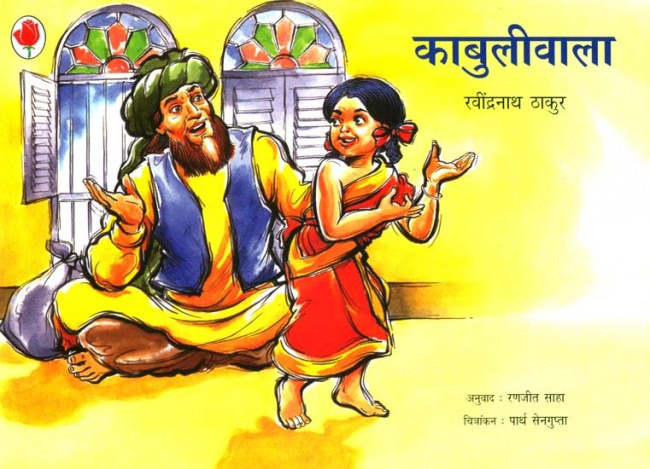
Just a few days back, I was reading “Kabuliwala” like a zillionth time to go down on the memory lane to peek into my childhood. It is a heart touching story by Rabindranath Tagore, which beautifully depicts a bond between a father and a daughter. Kabuliwala is the story about a little, talkative and a chirpy girl ‘Mini’ living in Calcutta, who develops a strong bond with a middle-aged dry-fruit seller, named ‘Abdul Rahman Khan’. Abdul, being an Afghani immigrant, is suspected by locals as a kidnapper, so Mini’s mother is cautious in the beginning. She does not allow Mini to interact with him, but her father does not put any objections on her meeting with Abdul. As time passes, Mini and Abdul become great friends. Abdul sees an image of his own daughter in Mini, who lives in Kabul. He missed his daughter dearly and so he showers Mini with love and gave her dry fruits free.

When Mini enquiries Abdul about his family and in-laws, he jokingly replies that he will beat his father-in-law. Sometime later, Abdul is arrested by police for assaulting a man and is sentenced to 10 years in jail. The day Abdul is released from jail, he goes straightway to Mini. But as he reaches Mini’s home, he realizes that the little girl he had known was now a beautiful young lady all set to get married. This makes him emotional and reminds him of his own daughter in Kabul.

Even after reading this story again, I was expecting to be enthralled by something new and voila! I found it again! Do you remember that part of the story when Mini asks Kabuliwala when he would go to his in-laws? And he replies jokingly that he will beat his father-in-law? Later in the story when he was being arrested by police, he tells Mini that he is going to his in-laws. This time when I read the book, I got to know that in Kabuliwala’s Pathan community “going to in-laws” actually means “going to jail”.

As a kid, I never understood this part of the story nor did I find Abdul’s idea of beating up his father-in-law sensible. But now it all makes sense. Some of you might have already known this, but for me, it was a kind of a revelation. Now that I’m older, I have realized that the world isn’t a perfect place to live in and things may not be the way you want them to be. It is necessary to hold onto hope during these troubled times.

I re-read such literary classics, because they give me a sense of a utopian society where everything turns out to be perfect and fine. These books have ideal characters with moral and in our entire childhood we believed the world is made up of such moralistic characters. However, reality does hit you at some point and you realise that no one is ideal.

It is necessary to go back to childhood books that preach morals to help us guide our way when our morals are shaky in our adult lives. Sometimes we feel like the child in us is not expressing itself and it is important to let that child live. That child comes alive when we read our childhood books about magic and believe in it. “When you believe in magic, it happens”. They also bring us closer to our childhood and by doing so, we regain our innocence even if only for a few moments.

So, go and pick those childhood keepsakes like Kabuliwala and read them again. You might find answers to those questions that the little kid in you always wanted to know. Maybe they got worn away with time, but still, they are those same books from where you started your journey into the world of books.

Is Jaipur Literature Festival the greatest literary show on Earth?

0

Jaipur-Literature-Festival

Book readers regularly congregate for book reading sessions by authors to understand the finer nuances of literature. Similarly, book fairs offer another opportunity to browse through a vast collection of books available in the market and check out the bestsellers among them. However, among the numerous book fairs and literature festivals happening across India, one event stands tall.

Amidst the cultural backdrop of Rajasthan, the Pink City is all set to go colourful to celebrate the 10th Jaipur Literature Festival. The event is set to take place at the Diggi Palace from the third week of January. Sponsored by ZEE, the event is considered as the “greatest literary show on Earth” that celebrates the spirit of literature in India. It is the world’s largest free literature festival of its kind where literary enthusiasts can soak up speeches by renowned authors and can enjoy musical concerts, quiz contests and visual art performances.

In the previous events, eminent speakers such as Dalai Lama, Salman Rushdie, V S Naipaul, Ian McEwan, Mohammed Hanif, Oprah Winfrey, Orhan Pamuk, Pico Iyer, along with renowned Indian language writers such as Girish Karnad, Gulzar, Javed Akhtar, have added to the prestige of the event. This year as well, there are about 1,400 renowned speakers and the expected audience is around 400,000. JLF is the brain child of Sanjoy Roy, who had expected only about 300 people in the first year in 2008. Since then, the event has gained massive popularity and worldwide recognition.

Jaipur-Literature-Festival-Speakers

In a country like ours where a large population still doesn’t have access to education, the festival provides a big leap with its free entries. The event is based on registrations and there is free entry for all speeches, while there is a delegate pass for specific events at heritage sites and cocktail parties. This egalitarian access to hear renowned writers is a powerful statement in a country where access to such insights still remains the privilege of a few.

The Jaipur Literature Festival provides a lifetime opportunity for book lovers from across India and the world to learn from and exchange ideas with literary stalwarts. Further, there is a music stage where a plethora of artistes are invited to perform.

A highlight event at the fest is the First Book Club that provides opportunity for aspiring writers. Writers can send a synopsis of their stories and the shortlisted ones are invited for a one-on-one session with literary critics, and publishers. Three years ago, JLF initiated a new initiative: Jaipur BookMark – a business to business event held parallel to JLF, which provides a platform for publishers, literary agents, authors, translation agencies to meet and discuss business deals.

“I am very excited to go to the event. Though I have stayed in Jaipur all my life, this is the first time that I will be attending the festival. I am very excited and I am proud that my city is hosting it,” commented Kanchan Yadav, 19, who has resided in Jaipur all her life. “I wanted to attend the event but also work and help to make it a success. I can’t believe that I will help the authors when they sign books!” commented Nishima Varma, 21, who is travelling from Mumbai to Jaipur just for the event. It is interesting to see such student volunteers are popularizing a festival by making it the talk of the town on social media!

As India opens up to become the world’s second largest English language publishing market behind the US, the complex and segmented Indian language market provides greater publishing opportunities in regional languages such as Hindi, Tamil, Bangla, Gujarati, etc. If you have a heart for literature and ears for oratory, then this is the event for you. Accommodation is easily available in Jaipur though the event attracts too many visitors. The blend of colours, culture, art, people, and literature, at this event provides one hell of an experience!

Factfile –
https://jaipurliteraturefestival.org/speakers/

Glimpsing the Serenity of Blue Mountains of Nilgiris

0

Author – Somnath Roy

Blue-Mountains-of-Nilgiris
Nilgiris by Thangaraj Kumaravel

Being a passionate traveller who likes photography, trekking and mountaineering, I was yearning to go to the mountains and breathe in some fresh air during this winter. I checked around Bangalore for a location that provides opportunities for trekking amidst scenic landscapes and watching wildlife. I got to know that I should visit the blue mountains of Nilgiris, which offers a breathtaking and piquant view to all mountain lovers across India.

I and my friends reached Ooty, which is known as the queen of hill stations in South India Udhagamandalam or Ootacamund or Ooty in short is a small town situated at a height of 2,240 meters above sea level in Tamil Nadu. The silent green valleys, rose gardens, tea plantations and factories, cottage chocolate units are some of the main attractions and flavors that beckons all hardcore travelers in South India. I was quite amazed to see the small factories operated by people and the way they manufacture Ooty chocolate and the home-made ingredients they use to make all that a success. The Nilgiri Mountain Railways connecting from Udhagamandalam to Mettupalayam adds heritage and diversity to this small hill station.

Monsoons bring in extra torrential rains during the rainy season. So the right time to visit is during winter and summer, which begins late October and prolongs till February giving all tourism enthusiasts abundant time to patrol this corner of South India. Temperature remains mostly subtropical and cold throughout the year, which attracts travelers from cities to replenish themselves from the busy city life.

The Nilgiris Biosphere Reserve and its vibrant flora and fauna is something to watch out for as it forms the largest reserve in India. Located at the bottom end of the Western Ghats, it covers the Bandipur and Nagarhole National Parks in Karnataka, Wynad Wildlife sanctuary in Kerala and Mudumalai Tiger Reserve in Tamil Nadu. The dense tropical forests on the one side and the beauty of the pine and eucalyptus trees complement to the serene landscape that I wanted to capture in my lenses.

The tropical and deciduous forests across the entire biosphere reserve make it very special among others. Further, the tea and coffee plantations managed by the locals adds to the elegance to the habitat. We could see these forests are across the entire region and not specific to these reserves or the community of the ecosystem.

Although spotting wild animals is a matter of luck, it is easy to catch glimpses of sambar, chital deer, elephants, wild bisons, etc. On the way to the Nilgiris reserve, we saw a lush green landscape completely covered with tea plantations and hardworking gardeners who keep the ecosystem alive and viable. These farmers work in a group of two or three to complete the work during the first half, leaving the rest of the day to go with ease and pleasure.

Looking at the spices and flavor of the Nilgiris we can see that it has plenty to offer tourists and travelers across the nation starting from chocolates, essential oil producing herbs and the different varieties of spices. We get the essence of different varieties of oils like almond, eucalyptus, lemon grass, and others to name a few. I bought some essential oils suitable to my needs and requirements of my family.

Government Botanical Gardens is the best and the most renowned among its peers and treasures both exotic and indigenous plants. I felt the rose garden and the Botanical Gardens in Ooty were the best rated among all the gardens I had visited due to the diversity of flowers and maintenance by the authorities.

The Nilgiris have a wide variety of adventure sports to offer. Mountain biking is a popular sport and there is a special park dedicated to this activity. Horse riding, hang gliding and trekking are other popular sports. The gently rolling mountains and the wide variety of flora and fauna make trekking a popular sport. Doddabetta is the most important peak in the Nilgiri hills preferred by trekkers. Further, angling is a common fishing sport. Goad trout and carp are some of the popular options here, especially at the Pykara lake.

The festival of Badaga community where they pray to Goddess Hethe is a local festival here. Thousands of devotees come clad in white and they enjoy the rituals and dance together. They believe that the Goddess will bestow her boons on their progeny. The Toda embroidery is a form of traditional art in this region. This is slowly being revived again and in common culture, it is an important part of both the wedding and the funeral attire.

There is a lot of diversity that can be explored in the Nilgiris. You could put up a campsite on the mountain or stay in a luxurious five-star hotel. Each climate has a different feel in the Nilgiris ranging from enjoying waterfalls in the monsoons to a clear view of the stars on a summer night. The Nilgiris are easy to travel and explore because the region has been highly commercialized and it is easy to find tour guides or help desks around the region. At the same time, it has places that are unexplored and paths that are not tread on that make them an interesting place to visit.

Factfile –
Image sources –
https://travelcrusade.org/about/
Check Google Maps for locations around Nilgiris

The Adventure of Being in Bharat Scouts and Guides

0

Bharat-Scouts-and-Guides-02

I got to know that the 17th National Jamboree of the Bharat Scouts & Guides was held recently in Mysore. Having been brought up in the guides movement during my childhood, I am nostalgic about it.

Starting from Independence Day, Republic Day, Thinking Day or be it even a normal school parade, it was always a matter of pride for every scout & guide to walk around in their uniform studded with their badges. A blue sash that goes from left to right on a guides uniform with the scarf that carries the grade always keeps her head high among all, for those badges weren’t easy to earn and each one of it will have a huge tale behind it.

The Scouts and Guides was a movement started by Lord Robert Baden Powell and Lady Baden Powell respectively. Interestingly, both of their birthdays are on 22nd February and to commemorate this, scouts & guides across the globe celebrate the day as the ‘Thinking Day’. This day generally begins with a flag break and the all-faith prayer. During the flag break, every scout and guide assembles in a perfect horse shoe formation and sing a chorus of the flag song. This will be followed by different coeducational activities such as jamborees, rallies, and conferences.

Bharat-Scouts-and-Guides-03

Scouts are divided into three sections based on age: Cubs – boys aged 5 to 10, Scouts – boys aged 10 to 17, and Rovers – boys aged 15 to 25. similarly, Bharat Guides are divided into Bulbuls, Guides and Rangers. The ‘Ever ready’ Cubs and Bulbuls, the kids who want to be a part of this movement, will have small competitions like painting, group song, team-based outdoor activities where they learn to join hands to complete a task and their good turn daily will be checked. Those who have completed their term as a Cub or a Bulbul will be welcomed into the world of Scouts & Guides as the Pravesh batch.

Scouts and Guides also have batches such as the Pravesh, Pratham Sopan, Dwitiya Sopan, Tritiya Sopan, Rajya Puraskar and Rashtrapati Puraskar (the President’s award). Those who enter this movement only for the certificate would have given up by the time they reach half-way up!

Bharat-Scouts-and-Guides-01

Students under each of these levels would get their completed badge works checked and start up with the next badge. The badges are given for various survival skills such as pioneering, first aid, cooking, tailoring, journalism, hiking, nutritional analysis, trekking, estimation, sanitation and public awareness. These activities gives every student an ample choice to select from, if their school has not already selected it for them. Every Scout and Guide who has earned a badge must know every possible fact about their badge, since this knowledge will play a huge role in determining their place during the testing camps.

There are schools where the scouting and guiding movement comes into picture only during these special days and the weekly classes that is to be held will be taken over by science and mathematics, since these subjects seemingly determines your future! There are schools where no Scoutmaster or a Guide captain will be available to train the students. Those underprivileged students will have to undergo a lot more trouble during their regional level testing camps.

thinking-day

The main aim of the Bharat Scouts and Guides movement is to bring up youngsters to become responsible citizens of India, who have the basic knowledge of every possible survival skill. The movement develops a young mind both physically and intellectually and it goes beyond caste and creed. However, unfortunately even here there are times when we get to see favoritism played during selections of students for camps or jamborees.

I can only provide you a glimpse of this movement, but the personal experience that I gained is much more vast. Each Scouts and Guides camp will be a bag full of stories. Each badge that leads the student to the camp will be a sign of their endeavors and each certificate a frame of their skills. The scarf on their necks would have troubled them so much to be rolled exactly. The sashes of guides and the shoulder pocket of scouts would have repeatedly got poked by needles to have the badges stitched perfectly.

With these pains adding dignity to their uniforms, a student of scout and guide have as equal a reason to be proud as that a NCC cadet or a NSS volunteer has.

Cycling in Mumbai – Risky or Fun?

1

Author – Vidhi Bubna

Since I am used to living on an isolated university campus, I faced difficulty in acclimatising with my old city life. I came back to Mumbai for my winter break and all I really wanted to do was cycle around the city like the way I cycled around my campus every day. Being a traditional Indian family that is too protective of its children, I had to take permission from parents before trying such “stunts”. When I brought the topic up, my father exclaimed, “The very thought of you roaming around on a cycle in the city, no matter at what time of the day, gives me cold-feet. I will not allow it no matter what”.

Cycling-in-Mumbai-04

But I feel risks are necessary in life and our life is nothing without them. Cycling around your own city is now considered to be a risk and that is a sad part of a metropolitan lifestyle. “You don’t know how people drive in the city”, said my father and I knew better than to argue with him. I told him that I would cycle around the building, but I took the cycle to Marine Drive which isn’t far from my home in Malabar Hills.

Cycling-in-Mumbai-02

I started my journey at about 5:30 in the evening and carried a cap, phone and earphones with me. I put on some light music and began cycling. Although my side of the road was empty, cars travelling on the other side made me nervous and it wasn’t hard for me to imagine lying on the ground in a pool of around me. But life is all about challenges and I had taken this up. To my surprise, the road was rather empty till Chowpatty and I was shocked that cycling around had actually been easy. Occasionally, a few cars zipped by, but none of them troubled me. I enjoyed a great view of the Arabian Sea near Chowpatty and noticed the timeless wrinkles on the sea. Going around on a cycle, made me enjoy views like never before.

Cycling-in-Mumbai-05

However, during my return journey, my fun ride changed to a rollercoaster where I had to constantly use my brakes. From a completely empty road, the road had transformed to a traffic jam at each signal. Just when I had trusted the path a little, the path was filled with obstacles. The beach was now filled with couples and people eager to take pictures or feel the salty rush of the sea through their legs.

Cycling-in-Mumbai-06

I realized that the sea had its own charm and everyone was enjoying it in their own way. I now drove on the huge footpath and continued my journey till the bridge at the end of Marine Drive. In no time, the sun began to set and the view from Marine drive was breath taking! There was too much to absorb at once and it felt surreal. Although I had stayed in the city for 18 years, this experience made me look at the city in a different way!

Cycling-in-Mumbai-03

People looked at me and said that “Mumbai isn’t the place to do this” and I replied to them saying that “Every place is the place to do everything if you have the heart to do it.” For the first time, I felt like a tourist in my own city. I did receive a few calls from my concerned parents, but I convinced them that there was nothing to worry about. I felt that adrenaline rush in me as I had chosen what to do independently and had accomplished it. The evening and sunset then transformed into night. The whole city looked awake at this time as the traffic increased. It looked like the city had woken up from slumber and was giving its habitants itself at its best. But we habitants often take our surroundings for granted and we need to awaken the traveller in us to see better and so I rushed back home safely.

Cycling-in-Mumbai-01

I realized that people have a perception about life in the city of Mumbai and that needs to change. This was one of the most fulfilling experiences of my winter break till now and I felt like I had a piece of this city in me that I would always hold on to. If you really want to explore the city by yourself, grab a cycle. Cycling in Mumbai is quite safe during early mornings and late nights. There are a lot of cityscape views that you could enjoy on a cycle.