With a number of beaches, tourist attractions, heavy industries and a bustling port, Visakhapatnam is surely the Jewel of The East Coast. But, not many know that it had a considerable Buddhist influence. The city holds the legacy of Buddhism in the region and it is surrounded by a few ancient Buddhist complexes that dated back to the 3rd century BC.
Thotlakonda and Bavikonda are two among the five excavated Buddhist centres located near the city of Visakhapatnam. These complexes have various structures including maha stupas, votive stupas, bhojanasalas (dining halls), pakasalas (Kitchen), congregation halls, chaitya grihas, viharas and well-carved stone pathways. It is said that each of these centres must have accommodated more than 100 monks who practiced Hinayana Buddhism
The Maha Stupa at Thotlakonda
A statue of Buddha located in a small garden on the hill
A view of the remnants at Thotlakonda
The Partitions in Apsidal Stupa
The ruined sculptures at Thotlakonda
The interior look of Apsidal Stupa
The remains of Yaksha sculptures and shrines
A seven-headed Naga sculpture
The Rectangular Viharas where monks used to rest
Votive Stupas erected to make a dedication of goodwill.
We all have been criticized in our life for various reasons. Some of us dread criticism, some welcome it and some are indifferent to it. There is a famous saying: “Love your critics”, as they help us become better. Maybe we all need someone who can criticize us time and again in order to help us become better at what we do, but that is if we act upon their criticism.
In order for balance in a parliament, every ruling party must have an opposition party that criticizes them; even though the ruling party is usually indifferent to them, it still does help avoid quite a few fiascos in their governance. However, criticism is not just restricted to judging someone based on their faults but also merits. Usually, we welcome positive criticism but it is the negative criticism that can cause negative as well as positive outcomes depending on the way it is conveyed. Further, the frequency of criticism should be controlled and the one who is criticising should not overdo it as being too harsh and negative on someone would only make their situation worse.
buzzle.com
In the famous Bollywood movie ‘Taare Zameen Par’, Amir Khan talks about the story of the natives in the Solomon Islands, that when they need land for cultivation, they don’t chop down the trees but gather around them and curse them. Eventually, the trees die and fall over. I do not know how true this story is, but I think he conveyed his point very well to the audience. If constant cursing could rupture a tree from its roots, then just imagine the kind of impact constant criticism could have on the morale of a person; yet we tend to constantly judge each other and often come across parents who constantly criticize their kids not realizing the consequences. Once I came across this family while traveling in a train, the boy was little overweight, his dad would call him “mota”, the Hindi word for fat, even though I am sure he had a better real name. He was constantly reminding him about his overweight through his comments. The boy seemed to not care much about his father’s constant ranting about his weight, maybe because he had accepted that he would always be like that and his father would constantly criticize him no matter what. As for this father, maybe he thought that these constant reminders would motivate his boy to be more active. However, the way he criticized him was evidently wrong. Sometimes there are situations that cannot be really improved. In such cases, we should refrain from criticizing the victim.
brightcarbon.com
In certain situations where there is always scope for improvement, we must see to it that we use constructive criticism and not rant at the person about his shortcomings, thereby making his situation worse. It was at one of the training sessions for an NGO that I came across the sandwich method or the hamburger method, a method used to give a person some constructive feedback. Constructive feedback is when we point out a weakness or a shortcoming in a person, but at the same time we give them a hint as to how they could overcome it. So clearly, we won’t be too harsh on them and rather help them deal with their weaknesses. For example, while criticising someone with bad time management skills, you could tell them that they need to manage time in a better manner and suggest some ways in which they could do it rather than just pointing out their problem and telling them that they have pathetic time management skills. Therefore in the hamburger method we start off by highlighting two strengths of a person followed by a constructive feedback and lastly, by again showing them one more strength of theirs. So basically, it is a way of sugar coating your negative feedback about a person. Even though you are not completely being straightforward here, the person receiving the criticism would feel more comfortable with the comments and would be more motivated to act upon them.
“Be an encourager. The world has plenty of critics already” is a famous quote by Dave Willis. However, if criticism is given in the right spirit then even a critic can be perceived as an encourager and not a critic. Therefore, being a good critic is something we could all strive for in our lives.
There is an unseen relationship, or say connection, between parents and their kids. It is usually believed that kids replicate their parents and try to be like them. Whereas in some cases, it has been observed that kids become completely opposite of what their parents are. In either case, it is clear that parents affect their children’s behaviour in some way or the other.
Parenting is a really tough job. As a parent, you need to be conscious of your actions all the time, as there is a chance that your kid will start following you at an early age. Once it becomes a habit, it will be hard to mould them according to the need. In olden days, when there were joint families, kids had many adults to watch and follow. They spent their initial days with their grandparents, who ensured that these kids get all the required lessons to live life as a better person. Further, the joint families supported and protected them from all the negative aspects of life.
Things changed when joint families broke into small nuclear families. This was the time when kids started to face troubles and their upbringing changed drastically. Kids in the nuclear families started to depend on their parents completely. They began to witness all the troubles and rough patches that their parents go through. It is not that all couples are the same or all kids go through these bad times, but those who experienced it definitely saw some of the worst phases of married life.
When two individuals are together, disagreements are inevitable at some point. A few people deal with them in a matured way while others succumb to their egos. With this ego, they ruin everything that they built together over a period of time. But they fail to understand that their kids will be the receiving ends, no matter what.
Parenting needs patience, guidance, and a lot of understanding. A parent’s responsibility is not only to ensure a good upbringing of their children, but also to understand how their actions can have an impact on the innocent minds. There are times when a couple gets angry with their kids, but they need to control their rage and handle the situation calmly. It is difficult for a kid is to see their parents fighting; and times like these can leave a negative mark on minds of kids without parents knowing it.
In nuclear families, parents find it hard to manage things without any help. Fathers are working late hours so that they can provide their loved ones with whatever they need while mothers are working to manage the house on their own. These are the times when couples lose on the communication, which eventually builds up as a frustration. Their frustrations explode at once, and in most cases, kids witness them and get affected badly. Parents might forget what happened between them, but kids always remember them.
The couples who fight on a regular basis or on petty things happen to set a wrong example to their kids. Their kids start to become weak from within and thus, face a lot of troubles. Sometimes, their attitude changes and sometimes they start to disassociate themselves from the family. There are also a few instances where these kids get into unlawful activities, especially during their teenage years. In India, parents don’t realise the graveness of these issues as we refuse to talk about them in open.
The factor that mostly affects the kids’ minds is the way parents express their anger. There are moments when parents say certain things in rage that they don’t actually mean. Since kids fail to understand these things, they tend to capture those words and play them in their minds again and again. Likewise, kids coming from households with a background of domestic abuse start to act beyond normal. They either turn silent, or violent.
One cannot neglect the fact that different kids have different understanding levels and that plays a vital role in shaping their character. But, since children grow up seeing their parents, the behaviour of parents acts as a foundation to their character. Unfortunately, we don’t speak about these issues out in open and thus, don’t realise that this acts as a major cause to many other social issues.
Parents need to understand that they have to maintain their decorum in front their kids. They should restrain themselves from swearing or physically abusing each other under any given condition. If there are disagreements, they can always handle it maturely, instead of getting violent and abusive. Remember, parents are always a role model to their kids. If one fails to understand these things as a parent, then they simply fail in taking up a great responsibility known as parenthood.
When the first weekend of August approaches, people from around the world gear up to celebrate one of the best bonds known to mankind. After a string of days being dedicated to mothers, fathers, and parents, the 1st Sunday of August is celebrated as the International Friendship Day in honour of a beautiful bond that doesn’t need blood-relation to sustain.
On this day, people reach out to their friends, not bothering about the distance or any other barriers. Further, some people try to get in touch with their long lost buddies and catch up with them. The celebration mostly involves exchanging wishes, sending cards or presents to one another, or having a special dinner with friends. Another important friendship day tradition, especially in India, Nepal, Bangladesh and certain South American regions, is to tie bracelets on each other’s wrists as a token of friendship.
Amidst all the running in our busy lives, this one day enables us to make plans with the people who are, or once were an integral part of our lives. We get together with them and spend a great deal of time talking about different stuff. Sometimes, we also exchange gifts as a symbol of our friendship and the good times that we spent in each other’s company. Days later, when we accidentally come across that particular gift, our mind automatically starts to think about that person, that meeting and the unique bond that we shared. It is quite a wonderful feeling. Isn’t it?
To bring out those wonderful feelings in you, we here at Caleidoscope are trying to celebrate friendship in a different way by interweaving this beautiful bond with a tinge of nostalgia.
When you stumble upon an forgotten old book, greeting card or a gift article, does it remind you of the friend who gifted that to you long ago? Does finding something old in your attic opens up a treasure of memories?
If your answer to these questions is YES, then make an effort to click a picture of you with it and post it as a comment on our facebook timeline along with a few words to explain the story behind it.
The first two best entries will receive a cash prize of Rs.2000 and Rs.1000 respectively.
There is a reason why they say childhood is the best time of a person’s life. It is something so simple, yet absolutely beautiful.
When we were kids, the smallest of things gave us immense pleasure. Neither did we need materialistic stuff to be happy, nor there was a place for selfishness in our hearts. Now that we’ve walked past the most beautiful phase of our lives, the only way left to experience it again is to cherish, remember and relive all those sweet memories whenever possible.
Here’s to the sheer Joys of Childhood that can bring a wide smile to your face with just a single thought.
When colourful toddler tricycles were the best means of transport
Trying to catch those fascinating water bubbles
Remember group lunches and group studies?
Being resourceful by collecting firewood for home
Splashing water is so much fun!
Hanging out with the group of friends
The great joy of planting trees every year and forgetting all about it
Naked bath in the water streamlets
Petting of fluffy little kittens is a must
In the company of cattle…
Blindly following our elder siblings and doing what they did
Roaming the streets like vagabonds
A simple polythene bag would serve as a fish net
Now we need to widen our net and catch bigger fish
Never bothered about the harmful effects of Holi colours
Deriving great joy from simple activities like skipping
I must have been in the 8th standard, when for the first time, I had given my name for a debate. I had opted to speak in the favour of the notion, “Can India be a super power by 2020?”. Looking for some content for the debate, I browsed through the books in our school library. Preoccupied in cursing myself for taking all this trouble, my eyes fell on a book with blue-green cover, analogous to the colour of a globe.
I picked up the book; it was titled “India 2020: A Vision for the New Millennium”. Relieved to have found something suitable to my debate topic, I sat down to begin reading it without giving any attention to the author. After reading the preface, I was compelled to look for the author’s name. Dr. A.P.J. Abdul Kalam, along with Yagnaswami Sundara Rajan was its author. I then recalled him to be the President of India and wondered at the length of his name! I continued reading and I got so lost in the book that the librarian scolded me of deliberately bunking classes.
That was my first acquaintance with this legendary name. The book might not have had the best of the endings, but I felt fortunate for having picked it up. Because from then, Dr. Kalam started to play a great role in forging my thoughts, moulding my intellect and igniting my mind. I read another of his amazing work ‘Ignited Minds’, which was basically a message to the Indian youth about how we should strive to achieve the Vision 2020. His books provided me that mental framework, that inspiration, and that urge for patriotism, which I felt my formal and technical education had failed to give.
Dr. Kalam not only made our generation aware of the problems our country is facing and would face in future, but also suggested the right solutions. He taught us about our roles in building India via Action-Plans framed in the form of quotes, among which my favourite one is –
They may be just three simple lines, but that quote contains the basic principle, which many of us fail to realize and abide by throughout our lives.
For me, Dr. Kalam was no less than a visionary of our generation! Talk about his stylish long grey hair that curled onto his face, or his lifelong bachelor status. He gave his very own example that you can look awesomely cool and still have a great scientific and visionary mind. You can be the ‘Missile Man’ of a military power like India and still be a preacher of peace and harmony on international forums. His unconventional, original and very realistic approach towards life made him a True Youth Icon.
Dr. Kalam came as a breath of fresh air into our contemporary Indian society, which suffers from an acute crisis of true leadership. He showed that one can lead a scientific and spiritual living, and be an administrator, statesman, and a youth icon without compromising on your values and ethics.
One of the biggest desires of an eternal being is to die in honour. Trust me, I have never witnessed such a deep and nationwide mourning for any public figure as for Dr. Kalam. I am stating so because I have seen my mother, a 50-year old woman whose world is limited to family, house work and daily soaps, in grief for the first time. Everybody respects Dr. Kalam, irrespective of their religion, culture, nationality, beliefs, political parties, age, and gender. Even in his death, Dr. Kalam gave us a message worth remembering. He died doing what he loved the most – teaching and igniting young people’s minds with his words of wisdom.
A leader, a visionary and a great scientist with a grandeur as high as Mr. Kalam deserves great homage and honor. But do we really respect our leaders who dedicate their lives our country? Sadly, it’s ironic that just hours after his death, cyberspace was going wild over an incident in which the Jharkhand education minister blundered as she paid a floral tribute to Dr. Kalam almost a week in advance of his death. The event organizers later defended the act by saying they garlanded his photograph as a mark of respect. According to the Indian beliefs, a living person’s image should not be garlanded. If done so, the person will die soon. It’s utterly painful and derogatory that in the hour of such utmost grief, people are using the death of this national hero to justify whether the myth is true or not.
Dr. Kalam, you may have heard it many times throughout your life. But let me say it again – WE ARE PROUD OF YOU! India is proud, and the world is proud of you!
The thought of books brings to mind the warm memories of my grandfather. He loved books and I think I have inherited this particular trait of his. Every week, I would accompany him to the little dingy library at the end of our street. Those old books always smelt wonderful, felt warm and alive. Surprisingly the smallest libraries hosted the rarest books.
It is safe to say that the habit of reading has become obsolete and it is a rare, almost mutant like trait present in a privileged few. From the age I could read fairly well, I bonded with books. Starting with Dr. Seuss comics like Cat in the Hat, moving on to Amar Chitra Katha and then moral stories like Panchatantra, it was the beginning of a beautiful journey.
My grandfather read all sorts of books right from Tinkle comics to Sidney Sheldon. We had discussions regarding our favourite characters. We used to wonder about acquiring our own wands and making life easier. Fred and George, the Weasley twins, were few of our favourite Harry Potter characters. He admired the spunky Miss Elizabeth Bennet who was to become the wife of a single man in possession of a good fortune. He introduced the abridged versions of the popular classics to a ten-year-old me.
In school, the non-detailed textbooks contained interesting stories. It was probably the one class to which we all looked forward. The fact that this was the pre-mobile phone era is noteworthy. I distinctly remember the first story ‘A Scandal in Bohemia’ which saw the Victorian Detective Sherlock Holmes being outwitted by a woman. That impressed everyone and we proceeded to read about the wonderful village of Malgudi. It was followed by the adventures of Bond, Ruskin Bond!
Reading has become a lost habit. Just as literature is often associated only with Shakespeare and the classics, reading has been reduced to a historic practice whose relevance in present day life has been rendered redundant. These are a few famous Indian short story writers whose works will help you in reviving the habit of reading.
One of the few Indian authors who was genuinely and unashamedly Indian, R K Narayan is one of my favourites. Unlike many contemporary authors who imitate the Western writers in style and content, RK Narayan brought to life a typical South Indian village in all its glory. His writings made me yearn to visit the fictitious Malgudi. Most of his novels and short stories were set in that village.
His stories involved ordinary characters whom one could relate to or identify. A subtle humour pervaded in his works. The language was simple yet effective. He retained certain Tamil words to create an impactful South Indian flavour. The postman Thanappa with an affectionate albeit slightly interfering nature, the witty astrologer who met his match and the unlucky Iswaran are all beloved characters roaming through Market Street and Town Hall Park.
Another beloved children’s writer, Ruskin Bond captured the beautiful Himalayas and hill stations in the north. My favourite was his omnibus of ghost stories. Most of the stories were based on Indian myths, beliefs, and experiences. The horror element was subtle and pervading without it being overbearing or completely unrealistic.
In school, we had read the novel The Hidden Pool which traced the story of an English boy who befriends two Indian boys. Friendship and nature are the recurring themes in his works. His simple language is appealing to children. Most adults fondly reminiscence about their childhood memories which were interspersed with stories of Bond and Narayan.
Most famous for The Jungle Book, Rudyard Kipling was an English author of Indian descent. He was considered an Anglo-Indian. Accepted completely by neither race, British and Indian, Kipling felt ostracized. His loneliness is reflected in his works. This showed how colonization affected not only the colonized but also the colonizers in a subtle, covert fashion. Kipling was subjected to imperialism in the form of rejection.
His stories focused on an orphaned boy who befriended animals and was forsaken by the human race. Mowgli, the wolf boy, belonged to a pack of wolves and was friends with Bagheera, the panther and Baloo, the bear. The wonderful Walt Disney cartoon of The Jungle Book showcased a happy picture which hid all of Kipling’s intentions and emotions. His horror stories were just creepy and hair-raising enough for an eleven-year-old me.
‘Where the mind is without fear’! A profound statement describing the awakening of a newly independent India is a clear touch of Rabindranath Tagore. He was famous for more than his acclaimed collection, Gitanjali. Religion and nature dominated the works and lent an ethereal effect. A lonely boy in a family of fourteen, poetry was his best friend. We owe our national anthem to his poetic genius. His existence in a typically patriarchal society did not alter his respect for women.
His stories reflect a poignant sadness. I liked the story of Kabuliwallah the best. While his poems received acclaim, his stories are not that well remembered. They are often dismissed as secondary to his poetry. Popular opinion is that the Bengali version of his works is mind blowing. I found the English version very profound and definitely think it’s worth reading. His stories break the stereotype of ‘happily ever after’ and present a realistic outlook.
“…I also believe that introversion is my greatest strength. I have such a strong inner life that I’m never bored and only occasionally lonely. No matter what mayhem is happening around me, I know I can always turn inward.”
-Susan Cain
Very often, growing up with a more confident and extroverted sibling which is quite opposite to your personality, is not easy. You are termed as the “shy one”. This comparison, which constantly remains by your side is no good to your self-esteem.
Normally, introversion is strongly discouraged by the society as it is negatively received. I am told that my way of being more withdrawn from social situations is not necessarily the right way to go. But it is probably only the introvert who understands how his or her mind functions. Introverts need time to grow and reflect. We do not speak just to fill the silence, and it is only done after a lot of thinking. On the contrary, indulging in small talk that interests us completely, would require a lot of effort to shut us up, once we are in the drift. Although it does come with a negative sometimes, as we do not excel in the art of starting a conversation.
Everyone is always in the process of creating themselves, as we try our best to project at being someone that we have always been anxious about. But when this brims to the level of consciousness, we realize that trying to be evasive from one’s true existence or one’s own element can be quite frightful. For me, it has taken nineteen years to fully appreciate the benefits and accept this trait of mine. Not that I sat and thought about it the whole time, but what I am trying to say is that, It’s OK to be an introvert! You are not anti-social or depressed as most people would assume.
Nobody is 100% introverted or 100% extroverted, you could bump into such a person only at the mental hospital. Either you are an introverted extrovert or an extroverted introvert, meaning that you tend to lean more onto one of the sides.
Being painfully shy is synonymous to being an introvert, is a common myth that must be broken. Introversion is not the same as being shy. Only that, the shier introverts are much easier to spot.
One very interesting fun fact is that one in every two persons is an introvert, which is half of the population. Bottom line- we are not excluded; but every now and then, we just want to be secluded for some time so that when we join the fray, we do give a productive output.
Eid-ul-Fitr is observed on the first day of Shawwal month. It is an important festival celebrated by the Islamic communities across the globe. In India, it is the time of great joy where people come together and spread love and happiness. On this day, our Muslim brothers attend communal prayers, listen to the holy sermons and indulge themselves in charity activities. The celebrations end with sharing communal meals, wishing and gifting one another.
Here is the photographic essay of Eid-ul-Fitr 2015 at Siliguri, West Bengal.
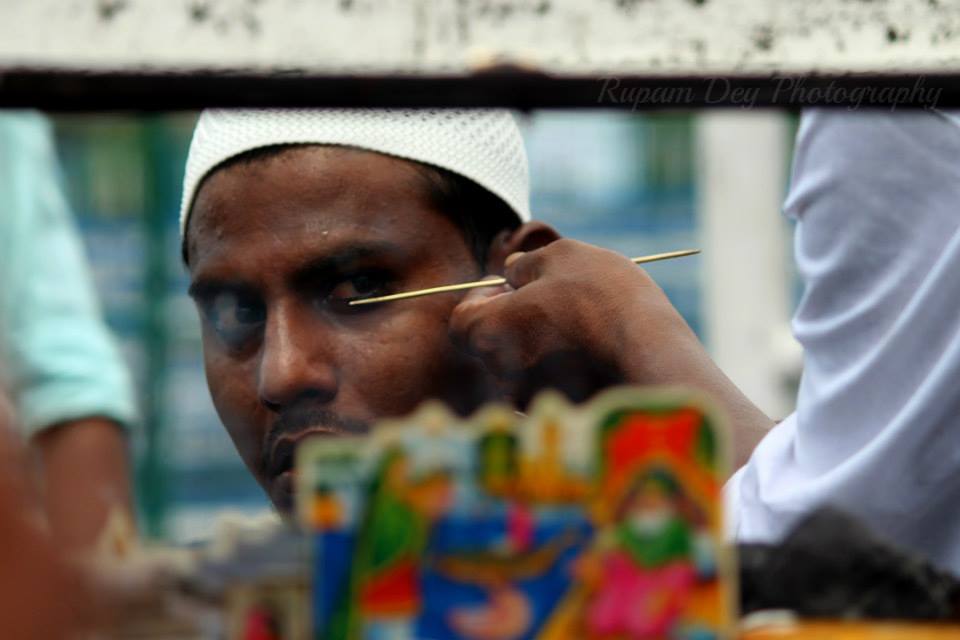
Surma Mera Nirala
VAZU – Getting Ready For the Namaz
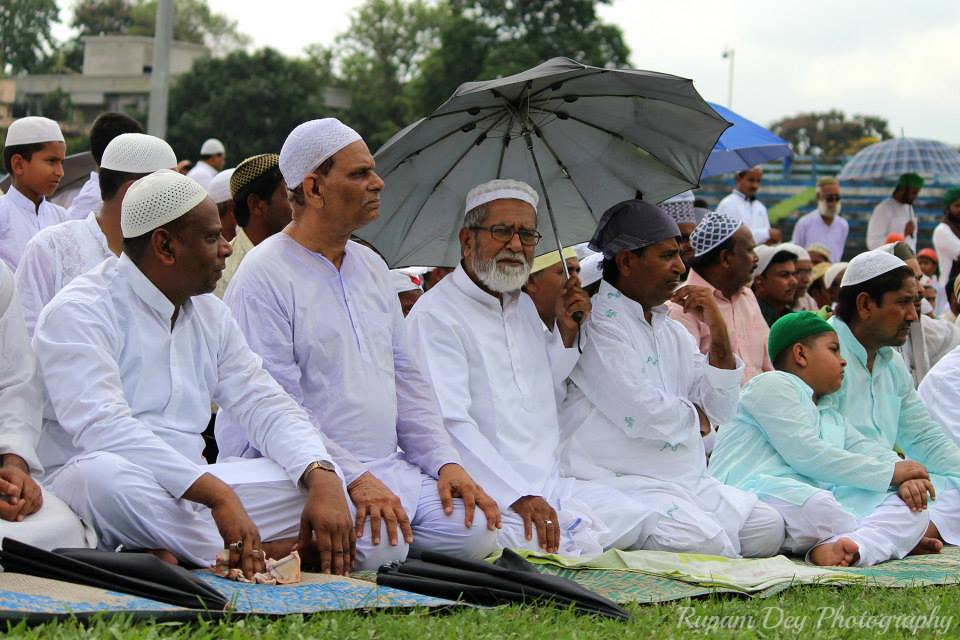
Waiting for the Prayer to Start
Prayer Time
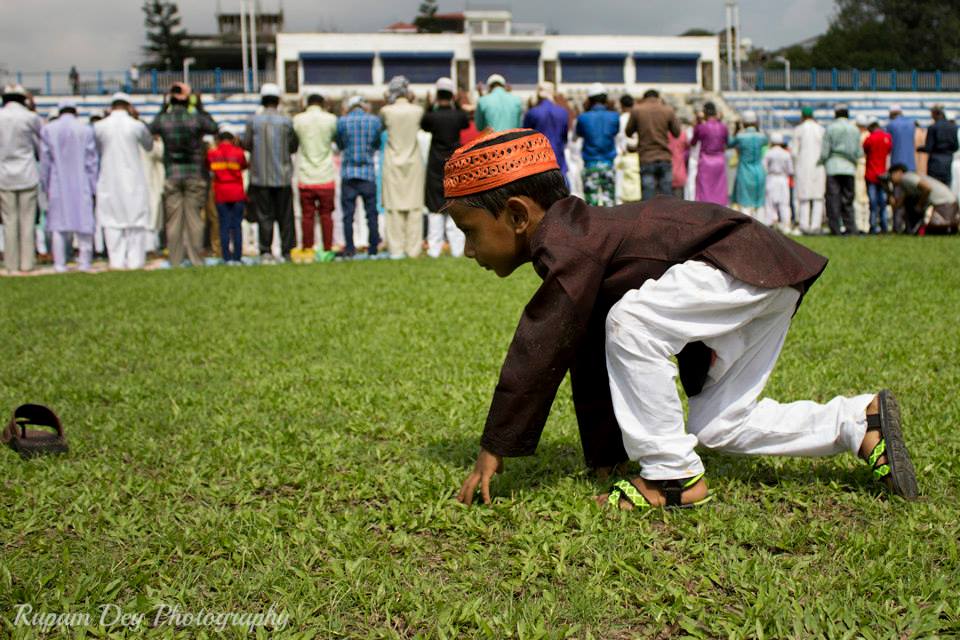
Missed the Mass
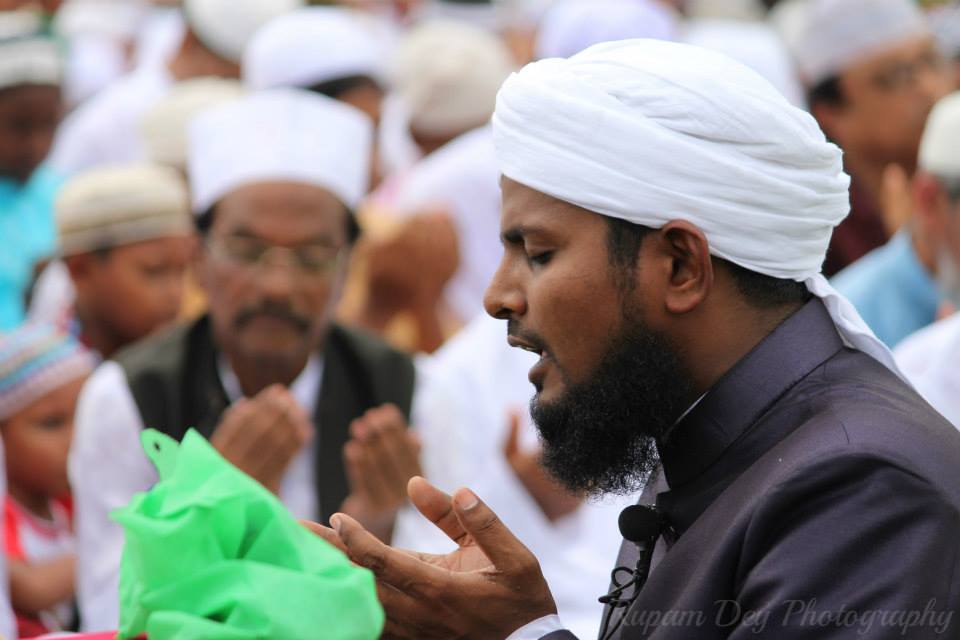
Imam Reciting the Holy Verses
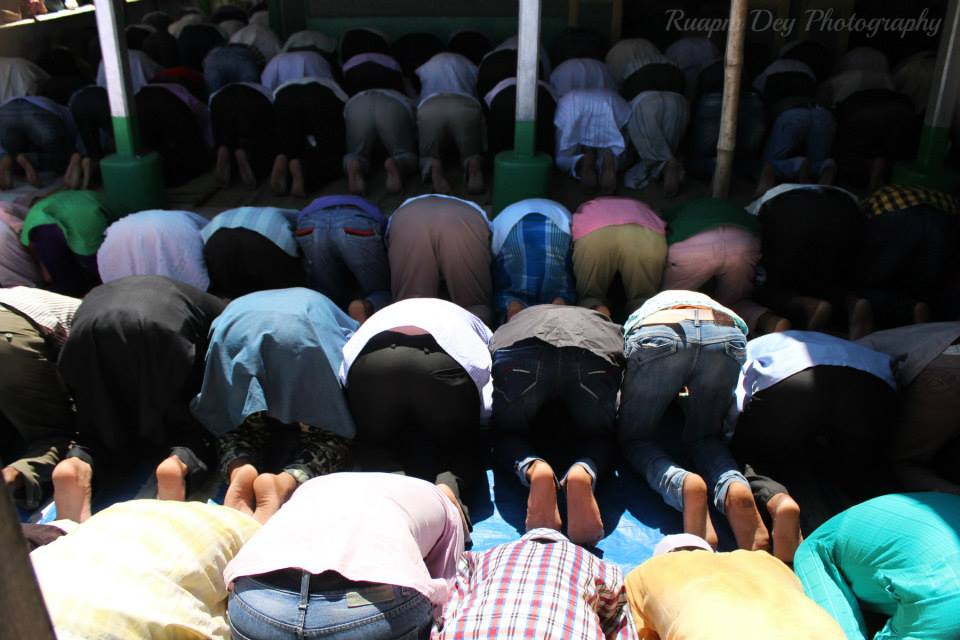
Bow Down Before the Almighty
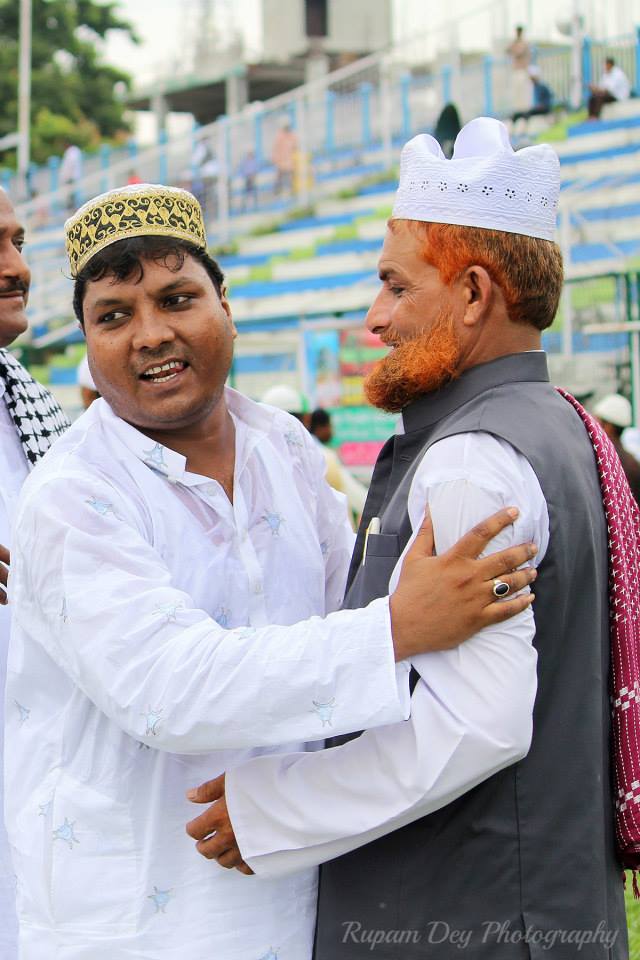
A hug that Expresses Gratitude, Joy, Love and Brotherhood





.jpg)
