How the Digital Space is Saving Indie-Filmmakers

0

Author – Ayesha Majid

Lucia-Kannada-Movie
Source

With Bollywood monopolizing Indian cinema, there is very less space for Independent Filmmakers to breathe. They have been coaxed into a corner by two main unions, the current superpowers of B-Town- the Producers and the Distributors. When it comes to mainstream cinema, creativity takes a back seat, and the wheels are controlled by the rich.

This unfortunate fate of those who wish to make a difference in cinema is being changed. A revolutionizing tool called the Digital Spectrum has taken the responsibility of giving a chance to millions of Indie-filmmakers all over the world. Although it came slightly late to India, it managed to catch on real quick. One of the best examples of a digitally funded film is the Kannad film named ‘ Lucia’. Despite belonging to the category of off-beat cinema, Lucia managed to raise Rs.51, 00,000 through an online crowd funding project. ‘I am’ by Onir is another such example.

A number of crowd funding websites like KickStarter and IndieGoGo have been a boon to indie-movie makers. These online portals allow creative enthusiasts to raise funds to make their dream come true. Filmmakers have made the best out of it. These platforms however take care of the first hurdle. The next very big step after funding is distribution. Distribution is basically paying theaters huge amounts of money to run their films. This only turns ugly if the film does not do well . In this case the producer faces a huge monetary loss. One such creative loss was the film Guzarish, directed by Sanjay Leela Bhansali and produced by UTV. Guzarish failed to reimburse the production costs which were exceptionally high thus making UTV go bankrupt .A role of a Distributor is no less risky. He has to have a strong foresight about the performance of the films, whether they will be a hit or a flop. One bad decision results in a big loss.

The-Viral-Fever

This risk has been reduced by Online Movie Distribution Portals. One of the most popular platforms named Distrify, allows independent filmmakers to sell their film to individual viewers. Anyone can rent the film by paying an amount equal to or lesser than that of a movie ticket. A video player is embedded in the site which allows you to watch films that have not been released in the mainstream media. In India, the pioneers of online distribution is the famous YouTube Chanel – The Viral Fever. They have their very own sister website known as TVF Inbox Office, which rents movies to viewers for a one time watch.

Social Media also plays a huge role in branding and publicizing a film. It is one advertising medium that gives maximum value for money. A number of well funded films are keeping a side huge budgets for online advertising as it has become one of the most effective tools. Facebook, Twitter and Instagram have become the strongest tools of advertising in today’s world. After working on the distribution and marketing of an independent film, I realized the intense grip social media has in today’s advertising world. The facility to target ads online is precise and affordable, this way no ads are wasted on the wrong audience.

Having graduated with a Bachelor’s in Mass Media, I had the chance to intern on sets and assist script writers. These undoubtedly were the most enlightening experiences of my life. Assisting on sets made me realize the importance of each minute and the value of hard work. I learnt to toughen up, work long hours without complaining and give my best in completing every task that was assigned to me. A shoot waits for no one especially a brand new intern.

Being a filmmaker means, giving up nearly everything you have and accepting your crew as your family for the next 3 or how many ever months. It is impossible for someone to work on a film without touring for shoots, especially someone who is deeply passionate about his work. It is a constant circus, with sets being constructed and actors rehearsing. Everyday on a film set is dicey, everything you have worked for so many hours or weeks, boils down to those few minutes during which the camera rolls, from the dress designers to the actors,they have all been working to get that one right shot.
It is an experience of a life time and when you see such dreams being trampled by producers who do not possess the slightest idea about the time and effort put by the people, you either quit or break free and do everything in your power to fund your own film. And the Digital Media, gives filmmakers this power and the ability to fund and distribute their film, and turn their idea into a motion picture.

Top Indian Pop Bands and Singers that Ruled Our Hearts Forever

40

Music has been an inevitable part of Indian art and culture. Over the years, Indian music has evolved very much by adopting and experimenting with a number of genres, in order to match the taste of the audiences. From pop bands to metal bands to solo singers, our country has it all! But music as we know it today, has come a really long way. Amidst the wave of contemporary music and artists, certain musicians from our yesteryears still remain in our hearts forever.

Here is a list of five such Indian Pop bands and Singers that ruled our Music Industry a few years ago:

1. Colonial Cousins (Genre: Pop, Rock)

Top-Indian-Pop-Bands-Colonial-Cousins
Source

Colonial Cousins was formed by the legendary duo – Hariharan, the lead singer and Leslie Lewis, the composer. They started collaborating in 1992 by fusing Indian and Western music. Ever since the two came together, they have done jingles, albums, live shows and playback singing and are now into film music composing. This twosome is often cited as an example of fusion done right — where Hariharan’s deep and free-flowing vocals and Leslie’s innovative jazz arrangements create varied emotions in listeners’ hearts.

They bagged the MTV Asia Viewer’s Choice Award and then the U.S. Billboard Viewer’s Choice Award for their debut self-titled album. The duo gave the traditional Carnatic composition “Krishna nee begane baro” a contemporary twist and the world hummed along. They followed this success with two more albums “The Way We Do It” and “Aatma” both of which received a lot of love. 

2. Lucky Ali (Genre: Indi-Pop, Bollywood, Folk)

Top-Indian-Pop-Bands-Lucky-Ali
Source

Lucky Ali is a man who needs no introduction. The singer, who once ruled the pop charts, is widely known for his songs O Sanam, Tere Mere Saath, Jaane Kya Dhoondta Hai, and Mausam, among many others. Lucky Ali needs no introduction. His songs speak a unique language, they’re invigorating, soul-stirring and paired with his husky voice, the guy can truly teleport you to a different dimension. It was this distinctive music style and untrained voice he became known for  – elements that helped him emerge as a leading figure in Indipop during the period. As one can imagine Lucky Ali is the recipient of several prestigious awards some of which include  the Best Pop Male Vocalist at the 1996 Screen Awards and the Channel V Viewers Choice Award in 1997 and was also nominated under the category of indie-pop at the MTV Video Music Awards, which is an international level award for his debut album titled “Sunoh”.

3. Alisha Chinai (Genre: Indian Pop)

Top-Indian-Pop-Bands-Alisha-Chinai
Source

Known as the “Indian Madonna”, Alisha Chinai was a leading pop singer, who can be given the credit for bringing the trend of pop music to India. Alisha’s initial foray into the music industry was through her album, Jadoo, the music for which was composed by Anu Malik. She also had another album titled “Babydoll”. She was introduced to Hindi film music by the veteran music director and composer Bappi Lahiri whom she had many disco hits within many films in the 1980s including “Tarzan”, Dance Dance, Commando, Guru, Love Love Love etc, and by the 1990s she had become known as the ‘Queen of Indipop’. Her best-known songs were with producers Anu Malik and Biddu during the 1990s. Her most renowned song is Made in India from the album with the same name which went on to become one of the highest-selling pop albums of its time, making Alisha became a household name. In 2005, Chinai’s career reached a new high when she recorded “Kajra Re”  for the movie Bunty Aur Babli. The song was an instant hit and won her a Filmfare Award for Best Female Playback Singer.

4. Euphoria (Genre: Hindi Rock)

Euphoria-Band

A favourite of millions, this band’s music is quirky and quite awesome to be frank. Dr. Palash Sen, the band’s front man has definitely come a long way since the its formation in the country’s capital, Delhi in 1988. My favorite sound tracks from this band are Mehfuz (Re Dhoom), Maaeri (Re Dhoom), Aana Meri Gully (2003) and Dhoom Pichuk (1998). This band has mastered the tempo in its own way which captivates their audiences.

5. Sonu Nigam (Genre: Indi-Pop, Classical, Playback, Semi-classical)

Sonu-Nigam
Source

Perhaps there is not even a single person born in the 80’s and 90’s who did not hear Sonu Nigam’s mellifluous voice and even now we continue to hear his songs. A gifted child, Nigam started singing by the tender age of 4 and started recording for films by 19. Some of his famous songs are Sandese Aate Hai (Film: Border 1997), Sau Dard and Mere Haath Mein (Fanaa 2006) and Love is a Waste of Time (Pk 2014). My personal favorite Sonu song is Aajnabi Seher Mein (Jaan-e-Mann 2006) as it is very soul stirring.

6. Indian Ocean (Genre: Fusion, Rock, Folk)

Indian Ocean
Source

Indian Ocean is considered as one of the greatest bands in India and the pioneers of fusion rock in the country. Formed at New Delhi in 1990, this band has reached its pinnacle a few years back with hit songs like Bandeh (Film: Black Friday, 2004). Their celebrated bassist Rahul Ram lent his voice to many films like Gulaal and D-Day. Some of the songs worth mentioning are Sone ki Nagri (16/330 Khajoor Road, 2011), Kandisa (Kandisa, 2000) and many others.

7. Usha Uthup (Genre: Pop)

Usha-Uthup
Source

Born in Bombay in a Tamil Brahmin family, Usha actually hails from Chennai. She pioneered the Indian pop in her own unique style which very few musicians have been able to achieve. Her deep voice coupled with music earned her many accolades; she sang at night bars previously and now does playback singing for many films including Don2, Disco Dancer, 7 Khoon Maaf and many others.

8. Silk Route (Genre: Folk Rock, Blues)

Top-Indian-Pop-Bands-Silk-Route
Source

Silk Route started in the year 1998 with their album Boondein with Mohit Chauhan as the lead vocalist and guitarist, Kem Trivedi on the keyboard, Atul Mittal as the lead guitarist, clarinet-player, and backing vocals, and Kenny Puri as the percussionist and drummer. The band is much endeared for the song Dooba-Dooba from their acclaimed debut album in 1998, Boondein a track that still plays in our heads from time to time. They have always been acclaimed for adding a distinct touch to their music by using acoustic guitars, talking drums and harmonica and primarily by the use of Recorder, a 17th-century European folk musical instrument played by Kem Trivedi. Citing Simon and Garfunkel and Dire Straits as their influences, Silk Route have bagged several major awards like Best Debut’, ‘Best Music Video’ and ‘Best Indian Group’ which helped them solidify their names and achieve notable mainstream success.

9. Bombay Vikings (Genre: Pop, Rock, Filmi)

Top-Indian-Pop-Bands-Bombay-Vikings
Source

Bombay Vikings was first launched in the year 1994 by Neeraj Shridhar, along with his co-musicians Mats Nordenborg, and Oscar Soderberg. Later as the original members of the band moved on, and Neeraj included new members. The band caused quite a sensation in India with their unusual style of blending of classical Bollywood and European music genres. In no time, they got immensely popular and it helped them surge the popularity chart in India and abroad. One of the major reasons for their popularity was that they were the first musical group from India to produce songs in the youth’s language; Hinglish.

From Kya surat hai to Woh chali and Chhod do aanchal – if you’ve grown up listening to indie-pop in the ’90s, this band will definitely tug at your heartstrings.

10. Motherjane (Genre: Progressive Rock, World Carnatic Music)

Motherjane band
Source

A relatively recent one in the Indian music scenario, this band has taken the world music scenario by storm. Formed in Kochi in 1996 their infusion of rock and Indian carnatic music is mind blowing. If you have not heard them before just give them a try. Songs worth mentioning are Disillusioned (2001), Fields of Sound , Broken, and Maktub (Maktub 2008). Music transcends our soul; you’ll definitely get this feeling after hearing Motherjane.

These are just a few among many musicians that created a wave in the bygone era. Who are your favourites? Let us know in the comments.

Taming the Spoiled Kids

12

Author – Ishita Gupta

Spoiled-Kids

My neighbour, Neetu Shah, has two children – Tanvi and Rachit. Rachit, who is now about 16 years old, has been a patient of asthma since birth and hence had to keep a check on his diet and physical health constantly; Tanvi is a college goer. Neetu believes in strict parenting and has been asserting various boundaries on both her children since their childhood.

On interviewing Neetu about her children, she laughed, as every mother would and explained how her kids are always bugging her about everything. She also told that they are the best thing that ever happened to her. However, after spending time with her children and observing their traits, I realised that Rachit had been extremely spoiled. I ask his elder sister Tanvi how Rachit is as a brother. Like every sister would complain, she sulked about how her brother would always have things his way and always bullies her. On asking her what could be the reason behind such aggression, I received a rather valid reply. Tanvi explained how her brother had always been pampered and given everything he’d demanded for. I silently observed Rachit playing on his laptop despite his mother scolding him to go and study. I asked Rachit, “Don’t you get tired of playing on the laptop all day?”  “No, there are so many games. Plus, I have to play because all my classmates are playing this game”, he reverted back. Further, I noticed Tanvi messaging someone continuously on her cell phone. When I inquired her about the time she spends on her cell phone, she answered “Rather often. I have nothing else to do at home. And you may be wondering why I am consistently on it; well I only got my phone in 2nd year of college. So it’s not like I’ve always been like this. I didn’t have all the privileges my brother has at his age.” Their mother, Neetu, overheard Tanvi’s reply and added that Rachit feels left out on seeing his sister getting such privileges, and doesn’t understand that she only got this liberty after she cleared her school exams and got into a proper college. She also told me that Rachit is always so angry, even on the smallest things. “We try and overlook his anger, since he has asthma and we worry that if we bother or scold him too much, it may affect his health”, Neetu finished. I noticed the expression of slight distress on Neetu’s face and realized how worried she was about Rachit, his studies and health.

spoiled-children-rachit-and-his-mom
Rachit and his Mom

On interviewing this neighbour of mine, I came to realise that the child is spoilt not solely due to his parents’ pampering or irresponsibility, but due to all the people who he comes across in his life. Friends and siblings induce the child to be attracted to the leisures, which the parents have to bow down and get for the child in order to control his/her tantrums. However, the siblings and friends cannot be controlled, given they are also young. So it is up to the parents to put a foot down and rectify the child’s behaviour.

Below mentioned are a few ways in which a child gets spoiled by the parents –

  • Immensely Pampered
  • Positive Behaviour of child is Overlooked
  • No Limitation on the Actions of the Child
  • No Rules and Regulations exerted
  • Too many Rules Eexerted
  • Giving in during child’s Tantrums

Child discipline experts assure that all this can be rectified. Experts suggest the following methods to reform the spoiled kids:

  • Establish Restrictions – The child should have clear regulations which they must follow.
  • Consequences for Breaking Rules– Cut off the privileges or take a favourite item of the child.
  • Reward for Good Behavior– The child gets rewarded for good behaviour. Rewards may include a surprise lunch at the child’s favourite place or some other treat.
  • Teach the child to accept “no” as an answer– If the child’s pleadings have been denied, don’t let tantrums change the answer.
  • Practice Ideal Behaviour– The child will only learn the kind of behaviour around them. Unruly behaviour will allow them to be unruly. Respect and kindness amongst parents, will induce the same qualities in the child.

The years of adolescence are the most critical years for both the child and parents. The child is plain confused as to what is going on around them and the parents don’t know how to help their child through this phase. It is during these years, that the child becomes mature or get spoiled.  It’s all a matter of how you handle them and direct them into the right path.

Image – Pixabay

Gadgets And Gears Used By the Youth in 80s and 90s

0

Author – Biswadeep Ghosh Hazra

boom-box
Source – Wikimedia

It is hard to imagine our existence without gadgets these days. Be it smart phones, tablets, laptops or a wide plethora of other goods and gadgets, we cannot stay for a moment bereft of them. Stripped off of these modern contraptions which make our life easier, we feel like we’ve been dragged back to the Stone Age! But, was it the same a couple of decades ago? The Youth of 80’s and 90’s had very little access to technology but, that was all they needed to be happy.

Here is a list of a few such gadgets which makes you nostalgic if you are an 80s or 90s kid-

1. Analog Cameras

Remember the Kodak/Yashica camera running on reels? Before the advent of its digital counterparts these cameras ruled our world, well our albums at least. With a limited photo quantity,  these were our travelling companion and definitely the keeper of memories. Now-a-days we have digital cameras, DSLR’s and mobiles which can take umpteen photos. With a 47 mm lens and no pixel CCD sensor, photographers would have to look through the tiny glass hole present at the upward portion of the camera for adjustments as there was no screen on cameras.

80s Analog-Camera
Source: Wikimedia

2. Boom box/Tape Recorder

Another one of our favorites, the boom box was our constant companion over to the gym/aerobics class and also the best way to kill time. What could be more pleasant than sitting back and listening to your favorite song on high volume? The same instrument also served as a recorder and we did record the voices of our near and dear ones, even of our own! These boom boxes or tape recorders had different kind of cassettes; unlike the CD’s and DVD’s which we see flooding the market these days. They had magnetic tapes.

Boom-box-Tape-Recorder
Source: Wikimedia

3. Video Games

Another great addictive addition to this list, we all loved playing video games a child. Be it Super Mario, Duck Shooting, Olympic Games or Contra we were addicted to these games throughout our childhood. Who knew these video games would be replaced with computers and laptops in the coming decade. My personal favorite was the shooting games like Duck Hunt and Clay Shooting using the fake plastic gun which possibly contained an infrared mechanism attached to the video game CPU. My favorite companies were Nintendo, Sony, Sega and a couple of Indian version brands.

90s-Video-Games

4. Pager

Before mobile phones took the world by storm and made it even smaller, pagers were the closest to their mobile counterparts. They could deliver alphanumeric messages or even voice messages in costlier models. I still remember how people with pagers would fondly and proudly display their device which was (most of the times) attached to their belts. Pagers have a small green screen where the messages flash on. Pagers support direct connection protocols and are faster than cellular based communication and cannot be traced. Some of the popular companies which manufactured them were Motorola, Sony, Beetel etc.

Pagers-in-90s
Source: Flickr

5. Walkmans and Headphones

This golden period also gave birth to headphones and walkman companies like Sennheiser, Bose, Sony, Aiwa and many others. The first step towards iPods these walkmans were our first personalized music companions and I remember starting to head bang with my first walkman!

80s Walkman
Source: Flickr

These are some of the contraptions widely used back in the eighties and nineties. Did we miss out on any? Let us know in the comments.

Retro Records: A Forgotten Era!

0

Author – Varina Rasquinha

phonographs-2

I sip a cup of hot coffee while a scintillating piece of Jim Reeves music plays in the background. The old tape has started a queer groan, but it automatically gets subdued with time. After a really long time, I finally have brushed the dust off my cassette player. Turns out that I have found an immediate solace in the way the tape plays a soft music and I feel time-travelled backwards when in those days there were no DVD’s, CD’s or Blueray discs like today! I have preserved a huge collection of cassettes that are obsolete now.  Boney M, ABBA, Andy Gibb, Donna Summer, LIPPS INC.; all of them neatly stacked but no more a requirement like those days when tape recorders and gramophones were the only music sources found in homes. I remember how I controverted with my family members as a little child regarding what cassette went next into the player. Different times. Different memories.

An old gramophone still persists in my uncle’s place which of course, is not used by the way. He narrated to me once about how in the early 80’s they assembled together as a family at dusk, in front of their gramophone and hummed to the music emanating with the contact of the record player’s stylus on the groove of a vinyl disc.

Today, these cassette players, phonographs have been solemnly replaced with CD / DVD players and Bluerays. Sadly, it does disappoint those who saw the archaic players long before the newer ones grabbed their place!

The old phonographs

The-Edison-Phonograph

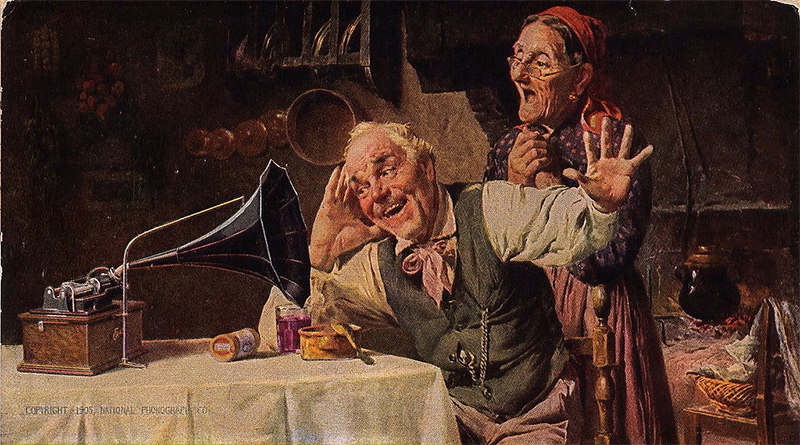
These are popularly known as the gramophones and were widely used during the early 80’s and also in the 90’s. It’s also called the Edison’s phonograph as he used a similar machine that had a large horn projected outwards in order to amplify the audio signals, but it was all done mechanically. The first gramophone in India was fabricated in Kolkata in the year 1898. An Indian entrepreneur named Hemendra Bose was known to have imported the Edison’s phonograph to India and also made the cylinder record. This was then popularly named as the Bose’s record. Rabindranath Tagore recorded his song of Vande Mataram in the same. The first Indian song recorded using this, was by the The Gramophone & Typewriter Ltd in the year 1898, which was started by an eminent singer, Miss Goharjan. She was popularly known as the ‘first gramophone celebrity’ who cut 160 discs during her entire lifetime. The phonograph industry in India burgeoned with the copious contribution of Miss Goharjan.

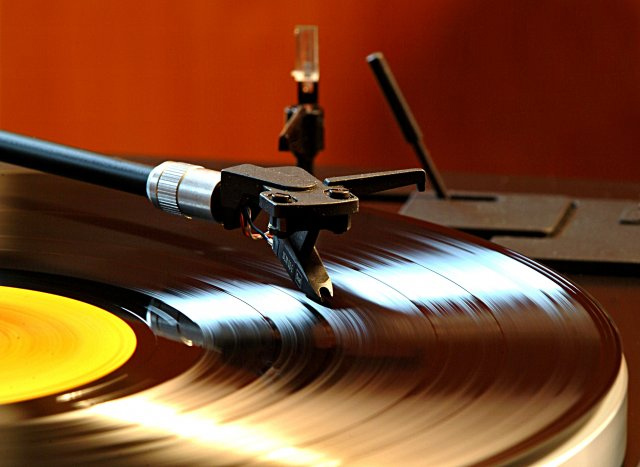
The traditional phonographs have a stylus with a little crystal made of sapphire that is fixed to the peak of a metal bar that is supposed to run on a plastic gramophone disc. These microscopic bounces of the stylus are further transmitted and amplified. The stylus is further closely connected with a cartridge that comprises of a piezoelectric crystal. The gentle wobble of this crystal due to the movement of the stylus is enough for the transmission. The audio signals are amplified and are heard through a horn.

These phonographs were further modified to form the modern turntables which had the provision of using two kinds of discs. The long-playing record or LP are quite similar in thickness to the CD’s that we use. But there is one thing that differentiates it from a normal CD, the fact that Phonograph LP discs can store audio on either sides whereas CD’s store them on only one side. But you need to do the switching of sides manually.

Cassette Tapes:

cassette

The use of cassettes in India can be traced back to the 1970’s when it first started to get popular. MTV aesthetics were the reason why Indian cassette culture gradually emerged with the growth of the music industry.

Cassettes are nothing but magnetic tapes that make use of an electromagnet. There is a layer of oxide on the tape which is made to infuse the magnetic flux that it comes in contact with it, initially. The electromagnet that is used is of a very tiny size.

It has a coil wire which allows the audio signal through it. There’s a magnetic field created whose magnetic flux forms a fringe pattern which further magnetizes the layer of oxide that is already present on the tape. When the same audio signal has to be played back, the tape moves along its traversing path and creates a magnetic flux in its core. This will then play the audio signal after suitable amplification.

In a cassette player that we normally use, we find two such electromagnets inbuilt. There are also other features built in to clear the tape before recording. The head that is provided on the bottom left is for the same purpose, while the head present on the bottom centre is for the record and playback.

The rage of newer technologies is such that the older ones have turned out to be downright obsolete and submissive. They are however not in vogue anymore and mostly found in antique stores where they would lie admired and intact or would simply cross someone’s mind like it did to me!

Fact File-
www.explainthatstuff.com
www.electronics.howstuffworks.com
www.thecolorsofindia.com
www.kamat.com
www.commons.wikimedia.org
www.pixabay.com
www.commons.wikimedia.org

International Yoga Day Restores the Lost Glory

0

Shilpa Shetty Yoga

There is a clear indication that a fitness consciousness is rising in India. This is evident in the number of gyms, health clubs, cycling groups and runners’ fraternities sprouting across the nation. Particularly, the rising craze of Yoga among Indians is quite prominent.

I was introduced to Yoga during my school years; these sessions were really interesting for most of us even though our Yoga instructor spent half of her time calming down all the hyperactive kids in order to make them perform all those asanas. Yoga has evolved greatly over the years. Today, there are so many different types of Yoga techniques that are taught, many of which have been invented recently – Hatha Yoga, Hot Yoga, Ashtanga Yoga, Iyengar Yoga, Post Natal and Prenatal Yoga, Aerial Yoga, Power Yoga, Vinyassa Yoga, etc.

International_yoga_day

Yoga is an ancient Indian discipline ultimately aims to unite mind, body, and spirit, and helps us to transcend the boundaries of the self to become one with the universal consciousness. This ancient discipline originated thousands of years ago, taught by the Rishis or Yoga gurus as they were called to their students. According to Panini, a 6th Century BC Sanskrit grammarian, the term “Yoga” is derived from two roots – Yujir Yoga (to yoke or unite) or Yuj Samādhau (to concentrate). Later in 4th Century AD, the ‘Yoga Sutras of Patanjali’ were compiled, which laid the foundation of Yoga.

Even though Yoga has its origins in India it has been widely accepted all over the world, especially the West. Swami Vivekananda was the first Hindu guru who actively advocated various aspects of Yoga to the western audience, when he toured Europe and the United States in the 1890s. Hatha Yoga was the first type of Yoga that was introduced to the West in the 1920s by three students of T. Krishnamacharya (a prominent Indian Yogi) namely, B.K.S Iyengar, T.K.V. Desikachar, and Sri Pattabhi Jois. These three yogis went on to reinvent Yoga and they founded the schools of Iyengar Yoga, ViniYoga, and Ashtanga Yoga, respectively.

B.K.S. Iyengar Yoga

A second “Yoga boom” followed in the 1980s, as Dean Ornish, a follower of Swami Satchidananda, connected Yoga to heart health, legitimizing it as a purely physical system of health exercises outside of counter-culture or esotericism circles, and unconnected to any religious denomination. Numerous asanas seemed modern in origin, and strongly overlapped with 19th and early-20th century Western exercise traditions.

Yoga has gained a strong foothold in Hollywood, where celebrities like Madonna, Demi Moore, Reese Witherspoon and Robert Downey swear by Yoga to help them keep fit physically as well as spiritually. The first Yoga studio in Hollywood was established by Indira Devi in 1947, which led to a steady migration of celebrities to this discipline. A lot of prominent Yoga instructors are non-Indians namely Noah Maze, Heidi Kristofer, Elena Brower, Vanessa Hudgens and many more.

In India, TV as a mass media helped boost the popularity of Yoga through renowned practitioners such as Baba Ramdev and Shilpa Shetty. Today, this practice has evolved greatly over the years and a lot of these variants that have been created in order to cater to special needs. Some of the popular forms of Yoga are:

  • Ashtanga Yoga – designed to help adolescent boys calm their excess energy
  • Iyengar Yoga – a form of Hatha Yoga that emphasises on detail, precision and alignment in the performance of postures (asana) and breath control (pranayama)
  • Hot Yoga – a style devised by Bikram Chaudhary was used to replicate the heat and humidity of India where Yoga originated
  • Acro-Yoga is another new style of Yoga gaining popularity that blends the wisdom of Yoga with the dynamic power of Acrobatics and the loving kindness of healing arts
  • Hip-Hop Yoga is where you do sun salutations to the soothing sounds of Eminem
  • Doga is where people essentially use their dogs as props to deepen their poses!

doga-799644

Even though the way Yoga has been taught in today’s world has really diversified, there are still a few Yoga gurus as they call themselves who have tried to preserve the ancient or the most orthodox form of this art. For instance, B.K.S. Iyengar who recently passed away developed the Iyengar Yoga, a form of Hatha Yoga. He has systematised over 200 classical Yogic postures and 14 different types of Pranayama.

Yoga has greatly evolved over the few years and it will continue to do so, based on the needs of every generation that comes along. In the last few years, Yoga has found a big home support and a renaissance is beginning in India. The Indian Government is putting a serious effort to restore the lost glory of this discipline by declaring June 21st as the 1st International Yoga Day in order to incite mass participation throughout the country.

Factfile –
www.psychologytoday.com
www.buzzfeed.com
www.indiatimes.com
www.doyouyoga.com
Image sources –
www.bksiyengar.com
www.youtube.com
Doga- https://thedogknowledge…

Can Carnatic Music Become Contemporary?

0

Author – Sreesvarna B

Carnatic Music

It always sounded funny to me when someone asks me ‘How much longer will your violin class go? Do you have to practice every day? What will you do after your classes get over?’ Questioning is as always a simple task but answering is not easy, mainly when you know that explaining your answers to the people asking these questions are going to be even more difficult.

At the age of five or six, most parents send their child to the Classical Music, Dance, Vedic or Harikatha classes. Though the child is very young to even comprehend why he/she is being sent to the class, they will get it eventually because these art forms doesn’t take just a few years but a few lifespan to master. And this, was repeatedly told by many famous performing artists who, even now, obediently visit their teacher’s place every time they forget the humbleness their skills must gain.

Carnatic Music

I see many parents happily boasting of about their child who took up the state level music exam at different stages and passed out distinction! But, does exam define the art of music and make you a master? For after this one exam, you find the parents waiting for a chance to ask the teacher when their child will be performing on the stage.

Practicing any of these art forms requires undivided concentration and a dedicated mind but in the present scenario, we find it missing for the child in a constant pressure to outdo in all spheres of life including academics and sport, which means a day off from practice doesn’t hurt anyone and whatever to be learnt can be done in class! Even then the child is not left alone but is burdened to excel without practice in the classes and the child slowly starts hating the class as they don’t have superpowers to cope up with everything. This leads to him or her deprived the joy of being a child.

Carnatic Music

For others who learn music for the sake of having a extra-curricular activity in their list which brings along fame, it becomes boring as their guru at one point or other will keep doing the basics and two lines of a chapter over and over again as months keep passing by. At the end, they would have neither understood the reason for spending their time for classical music nor the two lines they were going through till they gave up!

Another scenario that has come up is the ‘Cool factor’, where learning classical music, be it Carnatic or Hindustani, classical dance form or even more Vedas and Harikatha are termed as anti-modern and uncool! In these cases, the kids are ignored for they become boring and don’t know much about recent film music, jazz, rock and roll and most importantly, the so called modern thoughts!! Clearly this would be the best example for someone to explain what the word judgmental means!

Carnatic Music

And alas, the factor of age always remains and when we start enjoying the true meaning of these art forms, we hesitate to learn it as we are not very young and have other responsibilities! But this again, is a misconception that gets manifested for I have batch mates in my violin class who are much Older than me and I myself joined the class only a mere four years back.

After all of this the question remains, can Carnatic Music ever become contemporary???

This question was there a twenty years back too when my dad was in his phase of wanting to learn music. It was there when the most senior artist come on stage to do a manodharma (An extempore part of Carnatic Music), when the music sabhas and institutes where coming up and it’s lingering even today and only the time and trends can decide.

Testing the Indian Rock Scene

0

Author – Mitali Khatokar

RM

The exhausting work schedules at corporate offices and the boredom of monotonous life on college campuses makes the people of evergreen city look forward to the weekends to relax and unwind. And where do they find peace? – In music, people and interaction. In India, the music scene has been on an up rise in the past decade, offering a lot of exciting possibilities for people across all ages. Indian cities are rapidly transforming into their own versions of hotbed of rock music, which comes hand in hand with the growing passion for rhythm and jive and an appetite for head banging, with people investing their money and time in listening and producing music.

Music enthusiasts and critics have come up with various theories to explain the popularity of rock music in metropolitan cities. Some attribute this to the predominant presence of the Anglo-Indian community in cities like Goa, Mumbai, Bengaluru, and Delhi which has played a pivotal role in bringing Western genres and music instruments to the forefront of the Indian music industry. Another theory is that cities of the South, like Bengaluru, is distant from the entertainment powerhouses based in Mumbai and its all-subsuming film industry has freed musicians in the city of mere commercial concerns.

Ministry of Blues

The most common theory of all, however has been initiatives taken up by private educational institutions that encourage their students in honing their skills in arts, music and performance. Schools and institutions offer courses that are specialised and inclined towards providing an all-round education in music and performance, offering young musicians a holistic music learning experience, that doesn’t necessarily revolve around Indian classical music. Nationally renowned institutes such as Visva Bharati University in Shantiniketan, West Bengal, Delhi School of Music, KM Music Conservatory in Chennai, Adarsh Kala Mandir in Madhya Pradesh are some of the esteemed music academies in India that not only professionally train young musicians but also provide professional degrees in music at under-graduate and masters levels. Smaller training institutes such as Nathaniel School of Music take the music learning experience beyond classrooms.

In a city like Bengaluru, lounges and night clubs such as The Humming Tree, B-Flat, Indigo Night Live and Opus hold open microphone nights or music gigs, which don’t just entertain the audiences but becomes an ideal opportunity among start-up bands to showcase their music and provide a Launchpad for bigger gigs to come. “Basically, all bands and artists, whether well-known or just starting out, get a good stage in all these small places like cafes, lounges or night clubs. It’s because these places have the space for sound and of course, the people,” says Abhishek Yuvan Rao, an event and artist manager, based in Bengaluru.

RM

Mainly to break away from the ties of the 1960’s – ‘70’s music culture which thrived on expression and innovation, today’s musicians are open to adopt and to explore different fusions of music and instruments. Music programmes, live performances, celebratory fests, open nights are gaining more popularity among the people as they themselves seek out places that fully support and promote musical activities. “The music scene is very relative to what’s happening around the world. Here, people are adaptive and because of that artists are more adaptive to the city spaces, to integrate into themselves the music that they make,” says Anand Vijayasimha, former guitarist of Thermal and a Quarter.

RM_3

Online music sharing portals have presently become the best platform for any artist to share his/her music. The advent of internet and the social media has triggered a positive response and immediate sharing for both the artists and audiences. More people coming up with their own music compositions yet lacking a platform to showcase their music has led to mushrooming of online music sharing portals like SoundCloud, Grooveshark, etc.

Testing the waters with the innovation of integrating new instruments such as hang drums, didgeridoo or maschine to improvise and add jarring or unique effects to the otherwise four basic keys. “People appreciate the novelty factor of any kind of music. That’s how you differentiate good music from the rest. Musicians have to explore the different genres and experiment with various instruments to find the novelty factor and there has to be an impetus to create music, which is not only for the audience but creating music for the sake of art,” says Varun Chhabria, a musician.

Music, as an art, needs to be explored and experimented with. To gain a holistic approach to it, musicians have delved head-on into acquiring unique instruments to using standard instruments in different ways. The novelty factor of music has taken over the minds of young musicians, catering to the ever changing moods and attitudes of their audience.

Fact File –
www.youthkiawaaz.com
www.dnaindia.com

Image Courtesy –
www.facebook.com/StrawberryFieldsNLS
www.facebook.com/thehummingtree

Photo Feature: Children of Nepal – Do we really care about them?

0

The devastation caused by the recent earthquake in Nepal is still fresh in our memory. More than 8,800 people are dead and thousands have been injured. Many countries including India have sent in their help into this impoverished nation, but the massive reconstruction needed is still a daunting task. However, the behavior of Indian media and our government has been the most shocking. Operation Maitri, the rescue effort by our National Disaster Response Force, which was hyped up the Indian media, has left a bitter taste in Nepal.

After the first week of rescue efforts, the message trending on Nepal’s social media was “#GoHomeIndianMedia”. As quoted by BBC, the Indian media’s “shrillness, jingoism, exaggerations, and sometimes mistakes in coverage” has disgusted the host community. Our media’s main story was not the suffering of the Nepali people, but the generosity of the Indian government!

Whenever we extend a helping hand to someone, we are not supposed to thump our chest and claim credit. Our benefactors have to acknowledge our help and they hold the right to give credit. Let’s not be so shameful to spread self-congratulatory messages, while other countries have also done a great job in Nepal.

One look at the children of Nepal shows the dire state of affairs in that poor country. Years of civil war and government apathy have resulted in pathetic conditions for the young generation. During our visit in 2007, when Nepal became a people’s republic we were touched by the kind hearted nature of the people and hardworking child labourers. On the World Day Against Child Labour, we need to look at ways to help these poor souls. I feel these pictures speak more powerful than my words –

Children of Nepal

Early morning, Jack went down the hill to fetch pail of water

Children of Nepal

The innocent smiles of these children are truly endearing

Nepal Children 3

The innocent smiles of these children are truly endearing

Nepal Children 4

Never seen more hardworking child labourers than these!

Children of Nepal

Poor children play around rich cultural heritage sites

Children of Nepal

Street smarts roam the streets of Kathmandu carrying a pet on shoulders

Children of Nepal

Pride possession carried away zealously

Children of Nepal

Seeking blessings at the Manakamana Mandir

Children of Nepal

Dirty slippers become a toy to chew!

Children of Nepal

Children are no doubt a photographer’s delight

Children of Nepal

No age limit for daredevilry!

Children of Nepal

Early morning tuitions – a rare sight in rural areas

Children of Nepal

The joyous exuberance of children despite their poverty is touching

Children of Nepal

Sharing is caring and every drop matters!

Images
Levine Lawrence
Nagaraj D.H

Top Ten Tips on How to Make It Through a Rainy Day

0
Tips for Rainy Day
Image – Pixabay

The weather can be quite fickle minded now that spring is almost over. One minute it’s sunny and warm and the next it is pouring. Sometimes it rains for days on end. 

Going to work on a rainy day is a disaster. Clothes are wet, socks are soaked, and shoes are ruined. Not the ideal way to start the day. The gloomy weather can also drag your spirits down. 

It’s a good thing we have some hacks to get you through the rainy days.

Tips on Making It Through the Rainy Day

Rainy days can be tough to get through if you are not prepared. Whether you choose to stay in or go on about your daily routine, here are some tips that can help you stay dry and get you through the downpour.

1. Check the Forecast:

It is wise to check the weather forecast before leaving the house or planning the day. Many weather apps on your phone give an accurate forecast of the day like “Heavy rain in the next 20 min”. 

Other apps give forecasts like sunny or cloudy. Follow the one that gives more accurate forecasts and sends notifications of impending rain. Do not leave the house without checking the forecast. 

2. Rain Boots:

If you are walking even a short distance, there will be puddles and streams. Your shoes are bound to get soaked. And trust me, you won’t like the feeling of wet socks on your feet. 

You will have to pass the whole day wearing wet socks in the office. Invest in some rain boots. Faveable suggests that you may try out some trendy, colorful waterproof boots to brighten up the dull, gloomy rainy days.  

They can keep your feet dry and look fashionable at the same time. 

3. Umbrella:

You can try keeping your hair dry with your hoodie, but chances are that you will get drenched if it’s raining heavily. An umbrella is the safest choice. It will keep your clothes dry as well as your hair. 

Ry to carry an umbrella with you. It comes in handy on sunny days, too. Take your umbrella with you if the forecasts give notification of potential rain. It is better to be safe than sorry. 

4. Carry Plastic Bags:

Stuff your purse with a few grocery plastic bags. Plastic bags can save you from heaps of embarrassing moments. If you carry your wet umbrella to work or to a friend’s house, you will end up leaving them with a puddle. Put the wet umbrella in the plastic bag. 

This way, you won’t leave a watery track behind you. You can also put your wet socks in the plastic bag. It will keep your purse dry. If you forget the umbrella at home, then you can place the plastic bag over your hair to protect it. 

5. Extra Cloth:

Sometimes, it rains quite heavily and you can not avoid getting drenched, even if you are carrying an umbrella. Pack an extra set of clothing just in case. 

Neatly wrap the clothing in the plastic bag, and put it inside your purse. This way, the extra set of clothing won’t get wet in the rain even if you do. You don’t want to risk catching a cold by staying in wet clothes at work. 

6. Spare A Pair of Socks and Shoes:

Keep an extra pair of socks and shoes in your drawer at work. If you have the storage space to do so, keep a spare. There is no guarantee that your feet will stay dry even with the rain boots on. 

Having spare socks in hand will keep your feet warm and dry at work, and you can not stay at work the whole day with wet rain boots. Wear the spare that you kept in the bottom drawer. 

7. Keep a Few Old Newspapers:

Newspapers are extremely absorbent. They work wonderfully to dry your shoes. Make a paper ball and stuff it inside the wet shoes. It will draw the water out. Wrap the rest of the paper around your shoes and secure it tightly with a rubber band. 

You need to change the newspapers a few times to have a completely dry shoe. Your shoe won’t shrink or crack with an old newspaper like it does when you blow hot air with a hairdryer. 

8. Microfiber Towels:

Keep a few microfiber towels in your office or in your raincoat pocket. These towels are super absorbent. If you get drenched, then the towels will dry your hair quickly. 

They will absorb most of the moisture out of your hair. You can also use microfiber towels to dry your socks. Just wrap them around a towel and squeeze. The towel will soak most of the water and your socks will be dry in no time. 

9. Put Wet Gadgets in Rice:

Not only you but your gadgets are also at the risk of getting drenched in the rain. Not all devices that we carry are waterproof, so they can easily get damaged. 

Put your phone or any other electronic devices you carry in a bag of dry rice. It is an old trick but works wonders if you do not have a dehumidifier. The rice will absorb the moisture from your phone, and it won’t damage your devices either. 

Keep them in the rice for at least 24 hours and then try turning on your devices. If they still don’t work, you can put your phone on top of a dehumidifier. 

10. Bundle Up:

Rainy days tend to be cold and gloomy. You are bound to feel the chill if you end up getting wet. Wear the cozy sweater and the woolen hat to keep warm. Use a trendy scarf to wrap around yourself. 

So, bundle up to get through the rainy day. 

Final Thoughts

Sometimes, the rain makes us want to snuggle up and stay home with a hot cup of coffee and just enjoy the day. However, that’s not the case for many of us. 

Even if we have to go to work on a rainy day, gearing up with these tips can help you get through the day with ease. Hope these tips will keep you dry and warm.