Many a time did I ask you to keep shedding the past?
All that did happen cannot be erased for sure.
Not back again the time goes, to hear the voice that says,
Wrong you had totally been, right is what you haven’t seen,
An uphill battle that had fallen apart,
should now begin right from the start.
To the way it changed, the difference lies,
For, sans relations, you are now lonely lass.
The road doesn’t look so smooth,
Not the same way, your pals do soothe,
But still the gates aren’t closed,
Of time, there’s no way to choose the end.
Every new dawn gives you hope, that there’s no limit to your scope.
It’s not just courage that drives behind; but the faith that burns inside.
Since victory is just a fine nothing, when it is not from within.
Somewhere during the higher secondary years, we might have come across the word ‘Virginity’ for the very first time. It was a back when the word sex meant sly smiles, generated giggles and many shy red faces in the class. We had just entered a new phase in our lives when the discussion of these things was a very hushed and secret affair. Our sources of knowledge on these taboo topics were the dictionary, the internet and that one friend who knew, or at least pretended to know everything regarding such topics.
Even though there are mixed reactions to the term virginity now. Some people think it is a respectable thing to remain a virgin before marriage while others think it is ‘cool’ to lose your virginity and experience it.
Former are the people who think virginity is a very ‘woman’ thing. These stereotypes are created due to the influence of our movies and the so called ‘culture’ of our society. Men still get away for not being a virgin but if a woman is not a virgin it becomes a topic of discussion among peer groups.
Even today we find many educated and accomplished women that are rejected for matrimony just based on their hymen-status. There’s always a chance that the woman could have been in love and was hoping to get married, but when things didn’t turn out as planned, she walked out of the relationship. The woman invests emotionally and physically in a relation. But the matrimony doesn’t favor her status of being a non-virgin, although it is perfectly alright for the guy to get married with no questions asked about his virginity. Imagine the heights of chutzpah the society exhibits!
It’s sickening how our society associates virginity to purity and chastity and see no chance of a happy marriage for the woman. However, some try to justify that a woman’s respect is her virginity; once she loses it she loses everything. In Mahabharata, it is said that Draupadi had the boon to be a virgin every year by walking through fire to regain her purity. So, being a virgin woman is being a pure woman, this is still believed by many.
While there are many who argue that virginity is a sublime thing and losing it before marriage is nothing less than a sin, another enormous group exists, mostly consisting of youngsters who believe that if you haven’t lost your virginity by a certain age then you are ‘uncool’. Many youngsters experiment with sex without even knowing what actually they are doing. This can be blamed to the poor sex education in our country which leads to many unwanted teenage pregnancy every year. Being misinformed about sex sometimes leads them to use certain medicines whose results can be fatal.
While the debate still goes on, it really only comes down to one matter; Virginity is something very personal. Whether to lose it or not, discuss about it or not is an individual’s decision. This idea of ‘virginity’ being a woman thing and making it a topic of discussion is not necessary at all. Even now we can see a few frowned faces if a woman mentions she is not a virgin. Virginity, losing it or keeping, is an individual choice just like any other individual decision. Hymen or No-Hymen, it’s a woman’s decision to own her body the way she wants. It is not a parameter to judge someone, especially women. Losing virginity is neither a crime nor a round table discussion issue, it is a personal decision which should be respected by others like any other decision.
“You’re a girl, you have to learn to keep your voice low”, said my grandmother, when I spoke at home and tried to reason out that just because I am a girl, I don’t have a separate set of regulations to live my life. And then came the line from my grandmother, which I am sure every girl who has entered adolescence would have heard; that we have to leave behind our own house and enter another house after marriage and such behaviour would not be accepted there. I just sat there wondering, does being a girl make me any less than a man? I always thought that male and female were two equal creations of God. But, probably that’s not how people in India understood the difference in the sexes.
This in a small way sums up the mindset with which girls are brought up in India. They are subjugated to men and made to feel that it’s the right way to behave. The stress on a different set of rules is so strong that to break off from it and fight against it is a tough matter. The social hierarchy prevalent in India in terms of caste, gender, age, roles etc., has had a strong hold over society and women in India for centuries. The most striking feature of feminism in India is that it was initiated by men and women joined the fray only in end of the 20th century.
Feminism in Indian context
Sarojini Sahoo
Feminism is closely associated with terms like identity, woman empowerment, equality etc. And if we look at the way Indian society is structured, we would realize that women in general did not question their situation because they never realized there was something amiss. In that sense, western feminism was concerned mainly with the needs of women in the West; it was essentially about winning the same rights for women as they existed for men, and then activating the means for those rights to be utilized.
Rita Banerji, an author, photographer and gender activist differentiates the interpretation of feminism in India and the West, with two unique factors – one, that it rejects the notion of deep rooted, tradition encouraged gender hierarchy, defined and exploited by men in the Indian society. And two, it does not ascribe the appalling state of women in India who continue to silently tolerate the patriarchal oppression, and hence sees no reason to rebel against it. While these factors might seem oddly perplexing to western feminists, there is within Indian feminism a rationalization of these outlooks.
Another proclaimed feminist writer, Sarojini Sahoo, pointed out in one of her interviews that in the ancient Vedic period India had equal rights for men and women. But, the later Vedic period created the discrimination and polarized both the sexes. Males dominated the females and treated them similar to how lower castes were treated.
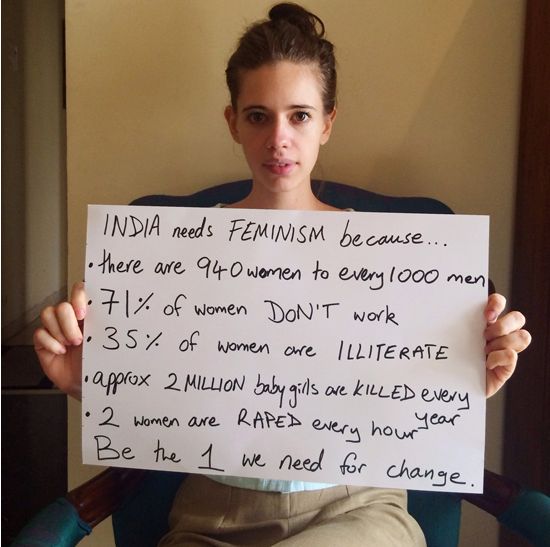
Having understood feminism in the Indian context, we may wonder why at all, India needs Feminism? The answer to this is clear. When there exists extreme oppression and male dominance in almost every industry, and women in the country have their self-respect and dignity at stake, both mentally and physically, then feminism, which demands for an equal status of both the sexes, is the only solution.
I would like to quote an example from the Indian media itself, when Bollywood stars like Salman Khan or Akshay Kumar demand for higher remuneration for their roles in a film or an appearance in any public event, it is covered showing their star power, whereas when actresses like Priyanka Chopra or Kangana Ranaut demand fees on par with their male counterparts, it is covered showing the rebellious attitudes, and not as a fight for equal status.
“It’s simply risky to be a woman at all”, argues Kavita Krishnan, Secretary of the All India Progressive Women’s Association, in the wake of the recent Uber rape case. She adds, “Blaming the survivor of an act of violence has become another brick in the wall of ‘protective’ boundaries that imprison women rather than open up safe spaces”, after seeing messages that blamed the victim to be responsible for being raped. Not just the Uber rape, but many other rape cases in the recent past has made all the big wigs, god men of the society to spill out few illogical views.
Even today, unwed mothers, separated, single or unfaithful women are considered outcasts. Living out of wedlock with a partner is still virtually unheard of. An unmarried daughter is seen as a spinster even in her late twenties who brings shame upon her parents, and is a burden. But once married, she is considered the property of her in-laws, spoke Sarojini Sahoo in an interview.
Women are not born weak. They are purposely made that way, and taught to be voiceless by the society. “Victims of violence, be it race, religion or gender based violence, are NOT inherently weak, but are weakened by constant social battering”, claims eminent feminist writer Rita Banerji. So she believes raising strong daughters is the virtue to offset the very social and cultural conditioning and values that are meant to rob women of their strengths and potentials as individuals. Parents have to consciously provide their daughters with an environment where they can realize and proudly assume their powers in full. And are able to let “their strong woman within” shine through, Ms. Banerji believes.
Thus feminism in the Indian context should not be confined to the struggle between men and women only. Their emancipation involves breaking away from the clutches of social mores. There are many social institutions and practices that act as barriers and need to be crossed.
So the next time, you say ‘Ladies First’ and give women priority, remember she does not require that; she requires opportunities equal to yours, justice similar to yours, and a LIFE just like you live!
Gone will be the days where parents of young girls, who are ready to get them married off, create a profile highlighting the best qualities of their daughters on all leading matrimonial websites in India.
Indhuja Pillai matrimonial ad
The recent news of a 24 year old engineer, Indhuja Pillai’s sarcastic matrimonial website went viral. She created the website for herself after viewing the profile her parents had created on her behalf on a matrimonial site, which she felt seemed like she’s too ‘desperate’ to get hitched. She was annoyed at the description of hers on the site that as usual stated her name, height, weight, age, profession etc., and thought of this satirical way to take a dig at the society and challenge the existing practice. When I read the news about this, my interest levels broke the scale, because I am soon entering this phase in life and I am pretty sure, my parents would end up doing something just like her parents did.
I opened the website marry.indhuja.com, and my first expression after going through the content of the website was ‘WOW! This is amazing’. She described her gender as ‘Tomboy’, marital status as ‘Married to Self’, salary as ‘Overabundant for self. Saving a little to travel’. I went on to read more and she painted a portrait of herself with small details. “I wear glasses and look dorky in them,” she said. “Not a spendthrift or a shopaholic,” she described. “Not marriage material”. “Won’t grow long hair, ever!”
Indhuja Pillai | Daily Mail
She described her groom as “A man, preferably bearded, who is passionate about seeing the world. Someone who earns for himself and does NOT hate his job. Must be flexible with his parents, also means, it’s better if he is NOT a family guy. Extra points to the one who hates kids. Points for a great voice and an impressive personality. Should be able to hold a conversation for atleast 30 minutes”.
The page views, likes and shares that this website received surely does give a little ray of hope for the young ambitious and independent women of today, who are not okay with the idea of getting hitched in their early 20s. IP, as she likes being addressed poses a question on who sets the timelines, that a woman will not find a suitable groom once she crosses 30.
Her words, I’m sure act as the voice of millions of women in India, who are wanting to explore the world a little more, do a lot of fun filled and crazy stuffs before they settle down with the responsibilities of a marital life, and above all not just dream of being independent and career oriented, but also achieve that big dream.
I am entering this ‘get married soon’, phase now, and when my parents or relatives advise me to create another ‘desperate’ matrimonial ad, I am going to pose the question, “Why so early? Let me just extend the already set timeline of getting married in the early 20s.”
Kudos IP! You have inspired me and millions of such girls in the country.
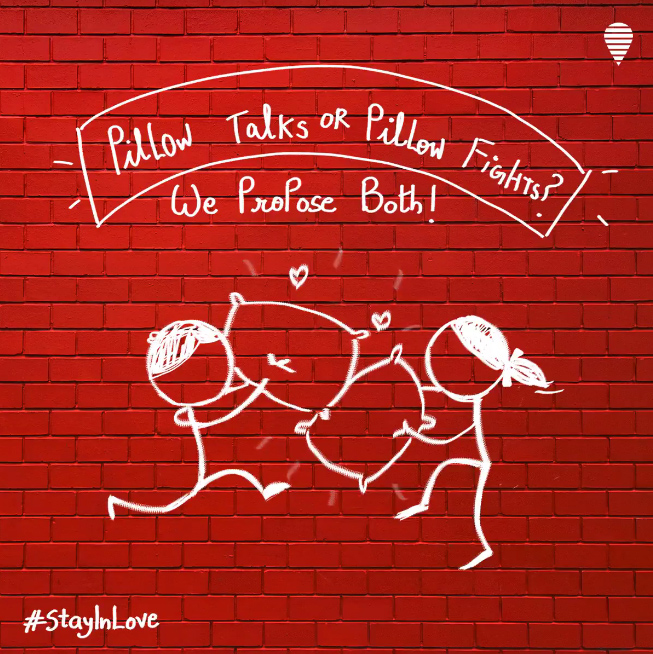
Queer as it sounds, but a single prop can define the kind of couple you are; A Pillow Talk couple, or a Pillow Fight couple? Believe it or not, pillows can contribute in subtle ways to a relationship.
The four walls of the bedroom are more than just lovely chambers. They are the hermetic turfs, offering the awesome twosome the opportunity to embark on a road to discovery. With the banter, the affectionate fights and endless conversations, the lovebirds take a plunge into each other, giving away the ‘I,’ to find the ‘us.’
It is what happens within the confines of this romantic bedroom, that characterizes a couple. Some indulge in never ending chats while some take the fun route. It is in context to the two extremes that one is branded as a Pillow Talker or a Pillow Fighter.
So, what couple are you? Read on to find out.
Are you a Pillow Talk couple?
Pillow talking in an old expression which refers to the intimate, mushy discussions of the lovebirds, resting opposite each other on a homey bed. It is the time when most couples open their hearts out and disclose their innermost feelings. The couples of this breed are die hard romantic and find comfort in each other’s company. They talk avidly, and unleash happy hormones when together. If you are a Pillow Talk couple, then you must find answers to the following in affirmative.
Are you a Pillow Fight couple?
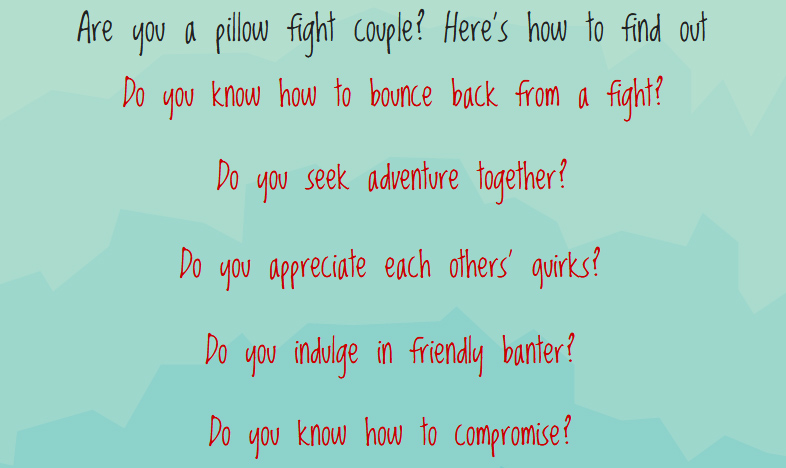
Quite the opposite to the pillow talkers are the pillow fighters. They are not the ideal love birds, but they sure are in love. Romance is not their style and they may slay dragons together. They would rather unearth each other through the loving bickering and affectionate banter. They constantly fight and always make up for it too. Their love multiplies with every quarrel. If you think you are a pillow fight couple, check out the questions below. If the answers to them mostly are yes, then you certainly fit the bill.
If you are tired by the end of a pillow fight, it will not hurt to have a pillow talk with your partner. Who knows, you might discover a couple of new things about each other, and add a new dimension of intimacy to your relationship.
Love is beautiful, and we suggest that you celebrate the love revelry in real spirit. Heaven be praised, two lively and determined young people through their unremitting efforts come together to experience the most beautiful feeling called love. If you already have been struck by the Cupid, then you must celebrate the pretty moments with your significant other. To crown it all, there’s good news for couples seeking privacy. OYO Rooms now brings “The Relationship Mode” feature on its website and app. By selecting the feature and specifying your relationship status as single or married, you may choose from the list of couple friendly hotels offered by OYO. For instance, if, you decide to fly to the city of dreams, Mumbai, with your partner, then numerous couple friendly OYO hotels near Mumbai airport, or the ones at Juhu Beach are easy to locate, with the newly introduced feature. If Goa is your desired destination, then couple friendly budget hotels in Goa is within your reach too. OYO is currently running a 25% special discount for couples’ check-ins, so we suggest you make the most of it.
Remember, love is a gift you give to someone and if you are one of the lucky few, you might get it back in return.
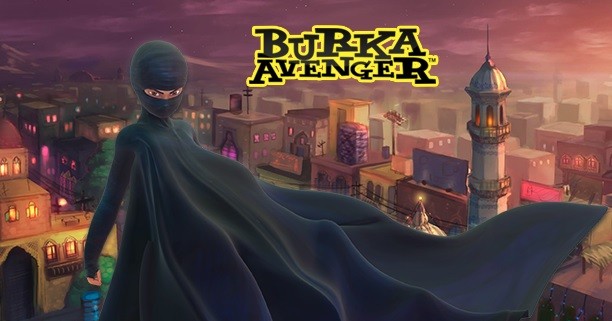
Burka Avenger has decided to merge into the group of cape and coif, midst the Dark Knight and the amazing Spiderman. Burka Avenger is a story of a young teacher named Jiya living in a small town in Pakistan. She has a secret to hide. An identity of a masked vigilante who aims to educate her female students and save her village mates from the rising enemy attacks. The super-heroine character of Jiya isn’t blessed with many supernatural powers, but is a master in Takht Karate. She uses this martial art to fight against all odds.
I recently viewed the trailer of this Pakistani TV serial, which seemed quite interesting and gripping. The storyline brings out both excitement and curiosity. A teacher by profession, Jiya takes the meaning of a pen being mightier than sword little too seriously. She believes a pen has a major role to play to win over her enemies. Even being trained in karate, her pen gives her the efficiency to perform all the odd jobs as the secret master. Her students encourage her to stand up against the wrong ones.
The magic comes in when she dons on her cape, the Burka. Oh! Don’t look puzzled, it doesn’t get stuck in between her legs; rather it makes her a free like a bird. The Burka Avenger can’t fly, but her modified burka helps her to swing from trees and glide over the mud huts of her small town. While the action sequences are quite hilarious, this funky portrayal of burka is a good reply to all those who question its need. This Pakistani animated series has raised serious apprehensions: is this clothing actually a state of oppression or does it help in creating a vigilante?
Many critics have questioned the need of burka in the show. But the answer is quite simple. The use of burka is as important as the mask of Batman or of Spiderman, who believe it will help them in safeguarding their secret identity. The Niqab or the Burka has strong opinions around the world. Some call it a clear mode of female oppression; while some have made it a feminist issue. Thoughts around the world about this clothing are changing, both in a negative as well as in a positive manner. Some regard it as a rule against feminist values and some call it a necessity. The major question: is it really an anti-feminist stay?
Not everyone discards it; many women take pride in following this culture. They feel their burka secures them, not just physically but also emotionally. Women deal with burka in a manner to rejuvenate their soul. They strictly take it as a matter of an offense, if people infuse it with feminism. In few matters, this burka doesn’t include a state of oppression. There a situations where women are compelled to follow these norms under the name of religion. Few extremists, which let the patriarchal ideas play the upper hand, have this belief in beating down appraisal of a woman and her emotions.
Have we ever tried reasoning with a woman who covers herself? A woman belonging to a backward class, who doesn’t have the strength to face its surroundings with an open face, regards burka as a good friend. She generates it as a mode of power and to challenge the society. A housekeeper, a less educated one, prefers burka to communicate. Where one degrades its use, many take it as a way to freedom. All of these women have situations, and all enjoy their burka to all possible extent.
Being born in a Muslim family, I and my sisters were always asked to cover our heads. It wasn’t an unpleasant doubt, but a continuous one. I have few cousins who do cover, like a full burka, which to some extent also tempted my father in requesting me don this avatar. Let me be clear, it was a request, which I did accept. But later due to medical reasons and due to Chennai weather, I was asked to remove it. My family never commented or forced me to follow it. My paternal grandmother, a woman we all look up to as an idol has believed in giving girls the upper hand, and made us believe that we are the stronger one.
The situations dealing with burka have different viewpoints. It is a piece of cloth for few, but for few it is a moment of glorifying. One cannot pass a verdict just by listening one side of a story. The creative head of the Burka Avenger show, Haroon Rashid mentioned that there is a message at the end of each episode. The show focuses majorly on the importance of education, especially to girls. Burka’s usage comes with the reference to the cultural background where even young children wear it.
We can easily take Malala Yousafzai as our role model of woman empowerment, but is it feasible to transplant her empowering ideas into the tiny brains of 5 and 6-year olds. The medium of animation has helped the show gain popularity, not just on a market level but also in breaking off the stereotypes of clothing. It is inspiring to observe a cartoon film, making people understand the larger idea, which initially seemed an impossible act.
————————————- Image sources – comicsbeat.com burkaavenger.com
A cockfight is a blood sport between two roosters (cocks), or more accurately gamecocks, held in a ring called ‘cockpit’. Cock fighting is said to be the world’s oldest spectator sport, dating back to 6,000 years in Persia. The sport was popular in ancient times in India, China, Persia, and was introduced in Ancient Greece at around 500 BC. For a long time, the Romans despised this “Greek diversion”, but they ended up adopting it so enthusiastically that historians complained that devotees often spent their whole patrimony in betting on cockfights.
Cock Fight Regional variations
Cockfighting in Tamil Nadu is mentioned in ancient literature like Manu Needhi Sastiram, Kattu Seval Sastiram and other Sangam literature that are 2,000 years old. Referred as the favourite pastime for warriors of the Tamil region, it is acknowledged as one of the “64 arts” to be mastered by scholars. In early days, fights were arranged with the jungle fowl and its variants. Later, Chola and Pandyan kings undertook many naval expeditions to Java and Malay, due to which the local poultry of that land found its way to Tamil Nadu, which later spread to many places such as India.
A cockfighting style Vetrukkaal seval porr meaning “naked heel cock fight” in Tamil (Kodi Pandem in Telugu) (Kori Katta in Tulu) is a favourite sport of people living in the coastal regions of Tamilnadu, Andhra Pradesh, and Tulu Nadu region of Karnataka in India. Three or four-inch blades are attached to the cock’s legs. Knockout fights to the death are widely practised in Andhra Pradesh. In Tamil Nadu, the winner is decided after three or four rounds, where only the naked heel sport is performed.
There are a wide variety of new breeds such as the ‘Reja’ (short variety), ‘Sonatol’, ‘Calcutta Asil’, ‘Madras Asil’, ‘Kalkatiya’ (known as ‘Kadhar’ synonymous to Black Asils), The Reds (known locally as ‘Yakuth’), The Yellow Variants (Peela Asil), The Grey (‘Java’) and its variants reddish grey as ‘Dummer’. They also have a “henny” variety cock known locally as “Pettai Maadhiri” the literal meaning is “it looks like a hen”, though this variety is said to have come from Sri Lanka. The most aggressive variety is called ‘Galva’, whose lineage possesses a moustache like hair beneath the cock’s lower beak.
In Tamil Nadu, a line is drawn on the ground instead of rings and if the cock comes out of the line or falls or dies, the cock has lost the game. There are several Tamil films based on cockfight. Spot fight and agreement fights are usually the two types of cockfights conducted in Tamil Nadu. Agreement fights are conducted by showing the roosters 21 days in advance by both the parties and a fight date is fixed. Typically, 21 days is fixed because a hen takes 21 days to hatch its eggs. In these 21days, preparation procedures such as medication and stamina boosters are given orally by experts, exercise and swimming is given at regular intervals. The nail or mullu is sharpened one day before the actual day of fight.
Gowriaar is the person who popularized the game in Tamil Nadu and Kerala, preparation and training experts keep their technique secret. Coimbatore Arumugan is one of the best traditional trainers and cockfighting preparation experts in Tamil Nadu and Palakkad Kunjan is famous in southern Kerala. However, this sport has been banned in several parts of India, which has affected many a spectator’s mind. Cock owners who have spent lot of time and money on raising them are suffering. Everyone expects that there should be regulatory guidelines created, which should be followed during those fights, so that this sport can be continued.
A cousin of mine recently attended a reunion of her friends, whose contact was long lost but had been traced out on the virtual world. Seeing her go all praises for cyberspace, I wondered how many such explorers succeed, but I was surprised to find that very few make a failed attempt. Assisted by these stories, I am exhorted to write about finding long lost friends in the Facebook era.
Typically, our evocative childhood brings us numerous friends with whom we share vivid memories. The bond you share with each one might vary, but the name you assign to that relationship is ‘friendship’; perhaps you regard some with the word ‘best’ tagged on as well. But then, whom do you actually refer as a real friend?
While the dictionary defines it as “A person with whom one has a bond of mutual affection”, a true friend actually believes in you. Let me exemplify. In the face of mishaps,
Friend says: – Should I come over?
Real friend says: – I’m coming over.
As you read that, do you remember anyone?
If so, you have been lucky enough to have found your true buddy. But, isn’t that friend in touch with you now? Well; No worries… the Facebook era has made finding a long lost friend quite easy.
Sharada Ramaswamy, who lived in a village decades back attained only primary level education in a government school, had a couple of friends (who were twins). They actually stayed in that village for a span of 2 years, their father being a government employee often got transferred. Although 2 years was a short span, their bond grew laced with cherished memories. But the good old days of 1973 was not an era of instant communication, when they parted. After that, neither heard of another for a long time, though not a moment spent was forgotten.
After three decades, advent of technology morphing the world at a striking rate led Sharada’s son Amrit Ramaswamy to introduce her to the world of Facebook. She discovered the active ‘Help me find long lost friend on Facebook!’ group at once and took the onus of finding her childhood buddies. The search wasn’t easy, but it had to buckle down in the face of her perseverance and more importantly, her unfound affection for them. Finally, she found her twin-chums and their joy knew no bounds. “We are indebted to Facebook…” is what they have left to say. Today, the three are spending the fag end of their lives in bliss.
Chennai beach is amazing! Not ‘spectacularly binding’ but ‘emotionally’ I would say. I understood this on meeting Adhithi Karthi. This engineering graduate had her schooling in the Kashmir Valley for just a year; but being convivial, she made a bunch of friends during that period. Among them, Karishma became Adhithi’s best friend and though they kept contact through letters, it didn’t sustain long. Apparently, further attempts to contact were futile.
Adhithi then went around the virtual world to find her long lost pal: LinkedIn, Facebook, Twitter… became her regular haunts as she scrutinized through cyberspace. “Web never fails you”, she quips remembering the moment she found her friend. “Friendship is a single soul dwelling in two bodies,” said Karishma as they giggled under the sun. I bid goodbye not wanting to disturb their picnic, of course only after I connected them through my Whatsapp.
One day, my classmate Umesh Shekar came to me quite elated. When asked, he opened up his tale “When I was 10 years old, our family spent holidays at relative’s house in Nellore, Andhra Pradesh. A group of guys in the surroundings headed on to play games of all sorts just to kill time and I joined them; bonding grew without our realisation. As the time to depart approached, everyone made their promise to come back next year. But, I failed to keep mine as my relatives went abroad and no contact was established with Nellore anymore. Yesterday, I received an unexpected message that placed me on cloud nine.” he grins.
One of Umesh’s friends contacted him and he was able to trace the whereabouts of his entire gang. This time, Umesh kept his promise and a get-together was celebrated to cherish those sweet moments. Today as Facebook celebrates its anniversary, I remember about a friend I made on a tour with my family. I guess it’s time for me to delve into cyberspace to find him!
It is that time of the year when we take a pause to talk about the nation’s lifeline. India may be the only country in the world to have an exclusive Railway Budget, which indicates the importance we give to it. The best way to get to know a vast country like India is to traverse it by Indian Railways. This enormous network runs 1,300 trains and move approximately 30 million people every day, over a route length of 67,000 kms. That is like moving the entire population of Australia and New Zealand each day!
Railways is the most common form of national transport and certainly the most affordable. All state capitals are connected to the national capital, by India’s premier trains, the ‘Rajdhani Express’. They are the fastest on the network and consequently, always booked well in advance. The addition of other fleets of trains such as ‘Garib Rath Express’, ‘Duronto Superfast Express’ and the occasional special trains during peak seasons makes the railways backbone of our country.
Travelling on Indian Railways is like going on a trip with unknowns having the same aim of reaching the same destination. I’ve always enjoyed travelling on trains and have got addicted to it. One of my recent journeys was the long travel from Darbhanga in Bihar to Bengaluru in Karnataka on the Darbhanga-Mysore Bagmati Express! Trains with evocative and romantic names such as ‘Grand Trunk Express’, ‘Flying Rani’, ‘Deccan Queen’ to the new Hindi names such as ‘Bagmati Express’, ‘Udyaan Abha Toofan Express’ have always thrilled me!
As the time to departure approached, the crowds soared at the station, making it chaotic. Passengers running after coolies, who are trying to locate particular carriages; ticket examiners, pantry car workers finalising their trip schedule; vendors trotting up and down the platform selling their wares. Adding to this melee are the inevitable food vendors – bhajiawallas and pooribhaajiwallas. Observing the cameo develop during the arrival and departure of a train provides a free and spontaneous entertainment.
The departure is an interesting ritual that involves the driver, the guard and the stationmaster. First the stationmaster blows a whistle and waves his green flag. Latecomers race up and down the platform, trying to get in wherever they can. Then the driver waves his green flag and blares the train horn. The activity on the platform moves up one gear, from frantic to manic. Finally the train pulls out of the station and the 55-hour long journey begins. I finally took recluse on the side upper berth of the AC 3-Tier coach. The night passed inside the state of Bihar.
The next morning was chilling with dense fog. The water was freezing cold and as I aligned myself to the seat facing the tinted window and sipping hot tea, I noticed little children in the train, defying parental commands, would peer out of the windows at the engine at some bend, and with a broad grin wave bye-byes to other fast moving coaches. Inevitably, your role changes from that of a spectator to that of a participant.
We Indians are not content to mutter a comment about the delayed train and then immerse ourselves in a newspaper crossword or in our mobile phones. We are far too social for that. As the train gathers speed, so does the banter. If you are travelling on an Indian train for the first time, it is difficult to believe that your fellow passengers are meeting each other for the first time. Not only is gossip exchanged, but also food and life stories. As everyone is expected to join in, you might as well do the same. These are usually followed by the small tea breaks and the three-time meals.
IRCTC, the official caterer of the Indian Railways has different attendants to cook and carry the piping hot food from the pantry car across different coaches. The menu may not be an elaborate one, but the hot samosas, aloo bondas in winter months are too tasty to let go. Some trains which doesn’t has a pantry attached to them load in the food at various big stations along their routes. Now, there is an option to order private caterers who deliver your favourite food on trains. The entire journey passes with these gossips ranging from each other’s whereabouts to cricket to politics. Railways leads you into the trains as individuals and sees you off as families.
Despite this jolly ride, I do think of a few major turn-offs during train journeys. Local passengers clambering into reserved coaches to trouble long-distance passengers are the biggest irritants. Many of these ticketless passengers cause further chaos with verbal spat with the TTEs (Train Ticket Examiners). They add to other problems faced by the railways such as footboard travel and chain-pulling cases done by mofussil passengers, the delays due to increasing rail traffic and level-crossing times.
After travelling about 55 hours + 6 hours delay time and 3,000 km of memories from traversing across Uttar Pradesh, Madhya Pradesh, Maharashtra, Andhra Pradesh & Tamil Nadu, I finally reached Bangalore at 2am. This time the delay was caused due to unavoidable fog in northern part of the country. The new people who I met on this long journey always make a sweet part of my memories.
Often in the hustle bustle of the city life, we take for granted a few people who are an integral part of our survival system. We cannot do without our domestic help, the public transport drivers, the dhobi, the postman and yet, we don’t probably spare a thought for their lives. This article is dedicated to those known yet unknown persons who makes our lives easier, quietly serving their purpose and whose need we feel greatly only in their absence.
The Guard At The Lighthouse
Calmly, he stood there, the wind blowing his shirt against his body. A 12-hour shift it was, from dusk to dawn. Inside, there was only a cot, few magazines, a television, a laptop, a tiny fridge and a table lamp. He often remembers the first night he had to spend on his duty, manning the lighthouse. The waves lashing against the structure had kept him awake all night. The sea that looked so beautiful during the day, scared him out of his wits as he guarded the place with no fellow human for miles together. That was the hardest night.
Once he overcame his fears, he spent the nights enjoying the thunder, the lights from the ships, his cigar, the periodic glow from the lighthouse, the soulful music from his music player. He learnt to enjoy his own company and that of his guitar. He took back pictures for his children and his friends, pictures he could only take. While he showed them the photographs and relived his adventures, he quietly smiled to himself knowing the beautiful peacefulness he discovered. Ironically, the most beautiful moment of the lonely adventure would be the five minute exchange during the change of lighthouse guard, when they tipped their hats, acknowledging the secret experience of a rare solitude.
The Local Motorman
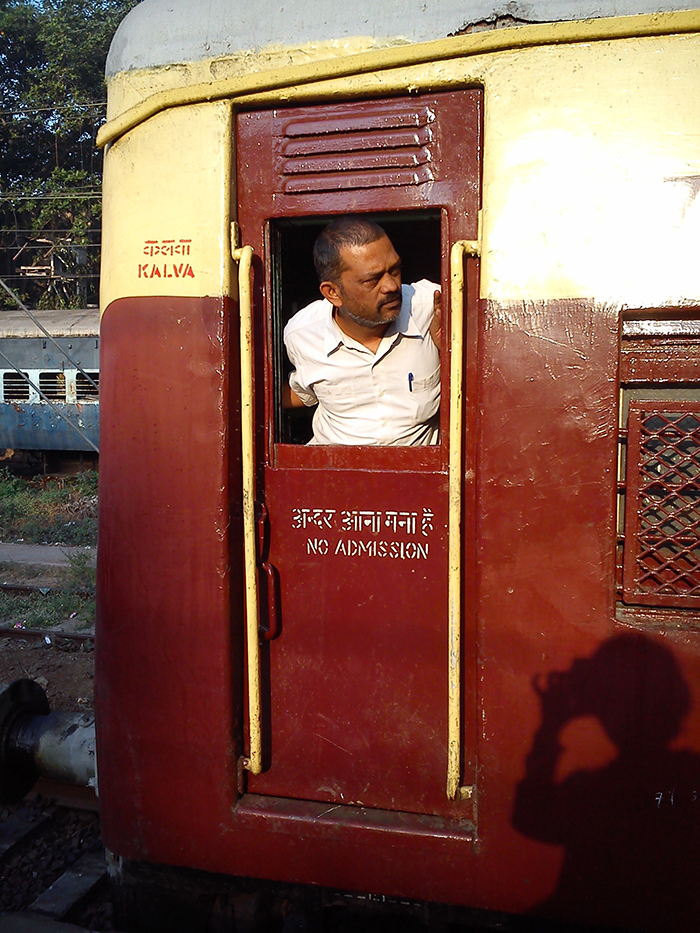
He checked the time. They were arriving one minute earlier. At the end of the minute, 5,000 commuters would start crawling out like tiny ants and go to earn their livelihoods. He was the motorman of the morning local train in Mumbai that prided in never halting. Did they spare a thought for him? He never expected them to, not in a city where a local would arrive every minute. But he sure did know how to get their attention. The ladies compartment is the one closest to the engine. He would bring the train at superfast speed only to bring it to a grinding halt right outside the last station. Commuters would poke their heads out, wrapped in scarves and stoles, impatient as ever waiting for the signal to turn green.
He would laugh to himself privately as he imagined their daily routine: Rushing the kids with breakfast, managing to catch his train just in time, fighting for an autorickshaw, finishing their make up at office, getting the vegetables just before the shops shut, elbowing their way into the local again, cooking, feeding, wrapping up, collapsing to wake up to a new day and to an old routine! He felt like it was his duty to give them that minute’s rest, to do nothing, to not rush, to just reflect, and most importantly to not get so consumed with themselves that they begin to think they are indispensable. The light turns green, and he does his duty. It was okay now to complete a mundane job.
The Base Camp Guardian
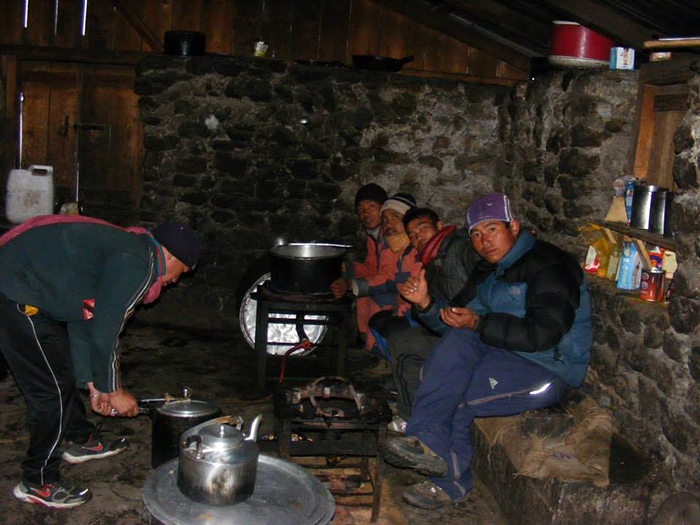
He was 70 years old. He had lived in the mountains all his life at an altitude where there were almost no inhabitants. Trainees would regularly come to the nearby mountaineering training institute every alternate month until the winter conditions became so severe that the place would be cut-off for about five months. They would go to his cosy hut and he’d serve them soupy noodles around the fire with a twinkle in his eyes. Over the noodles, they’d inquire about him and they’d find out that he was the caretaker of the base camp; that he lived with his son, all 12 months, manning the place. This would shock most visitors, as they knew that there was no electricity and the nearest motor able road was a three day steep trek away.
During the winters, the road would be blocked and so ration would have to be procured in the summers. As he gave them another round of noodles, the visitors realized it wasn’t he who was to be pitied but them. The old man needed no TV, no Whatsapp, just his son, his animals, his wildlife, and the glacier, which was the source of fresh water. He had no trappings of the modern man that made his children wonder how he survived without them. Ignorance is bliss. Minimising your needs is happiness, he knew!
The Liftman
The building had 18 storeys and four lifts. He had been working there for over a decade now. He had seen the young man get married, the cute little girl turn beautiful, the grandma pass away, the maid servant lose her job, and the courier guy return with an undelivered parcel yet again. He was the liftman for the closest lift from the entrance and hence found his elevator move up and down far more than the others. He had seen the other liftmen reprimand kids when they would enter after playing Holi and mess up their lifts. But he never complained and often held the lift open while they refilled their buckets. He’d hold the lift for the garbage collector, while the other liftmen refused to allow her bags of stench. He’d put out his stool to accommodate the wheel chair, he’d delivery a house-key from husband to wife, a notebook between two friends, homemade goodies between two housewives.
The other liftmen thought of him as a disgrace to their reputation. They always had a haggard look on their faces. They thought it was insane to be able to enjoy this mundane job. However, he had made a bag full of stories. He’d go home to his children and tell them of his adventures, his observations, his conversations, so full of life just like himself. And when he passed away one day, the entire building came down to pay their respects. That was the ultimate elevation for the liftman.







 IRCTC, the official caterer of the Indian Railways has different attendants to cook and carry the piping hot food from the pantry car across different coaches. The menu may not be an elaborate one, but the hot samosas, aloo bondas in winter months are too tasty to let go. Some trains which doesn’t has a pantry attached to them load in the food at various big stations along their routes. Now, there is an option to order private caterers who deliver your