Chick Lit, Lad Lit & Kid Lit – Defining Literary Genres

0

Author – Harika Bantupalli

Books vs. ebooks | Courtesy: Tokao.com

The world of literature is swayed by mainstream genres like classics, mystery, thrillers and romance; however, there has always been a craving for new literary styles. The end of 20th and the early 21st Centuries have witnessed the emergence of new literary genres that catered to different sections of book raeaders.

While the mainstream genres focus on the grandeur of literature and transport their readers to a new world, these new genres emphasized on issues, problems and lifestyle of a contemporary being. They’re known for their lighthearted banter and a non-serious way of storytelling. These literary genres are singularly written for groups of people and are hence named accordingly: Chick Lit, Lad Lit and Kid Lit, some of the modern literary genres that garnered importance in the recent years.

Chick Lit

Courtesy: Wikimedia.org

This literary genre, known to be created by two renowned women’s book authors Jane Green and Meg Cabot, has been on the rise since the late 1990s. It is made up of two words – ‘Chick’, an American lingo for Woman and ‘Lit’, a word short for literature. Chick-Lit focuses on the various issues of contemporary womanhood often in a comic and airy manner. The plot often revolves around one or a couple of female protagonists and their issues that may include anything from the struggle of finding oneself or creating an identity.

Romance is often the sub-plot of this genre, which along with the themes of dating and relationships, is considered one of the traditional themes of Chick Lit. Helen Fielding’s “Bridget Jones Diary”, Candace Bushnell’s “Sex and the City” and Sophie Kinsella’s “Shopaholic” series are generally considered as the classic prototypes of Chick Lit. The genre made its way into Indian Literature with acclaimed novels like “Trust Me” by Rajashree and “The Zoya Factor” by Anuja Chauhan. However, Chick Lit has a long way to go in our country. Although this genre is particularly written by women for women, there have been a few books authored by men like Zack Love and Matt Dunn, who give men’s take on the women-centric plots.

Lad Lit

Revolution 2020 | Rupa Publications

Derived from the words ‘lad’ (British for boy) and ‘Lit’, this literary genre is the male-counterpart of Chick Lit. It is also known as “Dick Lit” in America, which in other words, it is literature for men, written by men. This genre goes along the lines of Chick Lit, involving humorous narrations and depictions of various themes that focus on the lives of men. The plotlines typically revolve around issues of manhood like career, friendships, family, love, relationships and sex.

Lad Lit became popular with themes connected to Chick Lit written through a man’s perspective. Nick Hornby became the uncrowned king of Lad Lit with best-selling books such as “About a Boy”, “High Fidelity” and “Pitch Fever”, while Danny Wallace, Tony Parsons, Nick Spalding and Mike Gayle are the other important authors in the Lad-Lit club. In India, the literary world is swayed by books like “Five Point Someone”, “The 3 Mistakes of My Life”, “Revolution 2020” and other works of Chetan Bhagat. These are the best examples for the Lad Lit category.

Kid Lit

Courtesy: Wikimedia.org

Kid Lit, also known as juvenile literature is more like a literary category that pertains to the writings that interest children. These may include board books, picture books and chapter books depicting stories or novels that are easy for kids to understand. This genre targets those children who can read and comprehend little stories to the ones in their adolescence.

The number of chapters and word count of the books in these genres may vary according to the age groups. For example, “Flower Fairies Friends” by Cicely Mary Barker, “Diary of a Wimpy Kid” by Jeff Kinney and “Shadow Children” series by Margaret Peterson Haddix may vary in the levels of comprehensions and the number of words due to their target audience, even when they all qualify as Kid Lit.

In a world where there is a constant thirst for something new, even in literature; genres like Chick lit, Lad lit and Kid lit come in as a breath of fresh air portraying the problems of the present age and enabling their readers to relate to the characters.

Image sources –
http://en.wikipedia.org/wiki/Shopaholic_%28novels%29
http://www.rupapublications.co.in/books/revolution-2020
http://en.wikipedia.org/wiki/Diary_of_a_Wimpy_Kid

Main Aam Aadmi nahi hoon, kyunki…

2

Author – Geetha

Few years ago, many of us participated in the Lokpal Bill agitation. Anna Hazare’s fast until death, the spontaneous eruption of public anger against corruption, massive protests across the country, candle light marches, intense debate on primetime TV, mud-slinging matches, oh! All that frenzied action seems a fading memory now!

When the Team Anna split over the issue of participation in mainstream politics, many of us were sad. But we thought what Anna couldn’t achieve being outside the rotten political system, Arvind Kejriwal might somehow achieve being inside. When Aam Aadmi Party miraculously won the Delhi state elections for the first time in 2013, we were elated. However, his 49-day disaster disillusioned us.

Lokpal YFS
Candle light march for Lokpal Bill in 2011 – YFS Hyderabad

The proverbial final nail in the coffin came for me when AK-49 declared that AAP will contest in 434 Loksabha seats across the nation, 7 more than the BJP! Even more bewildering act was the Muffler Man’s daredevilry to stand against the formidable Narendra Modi in Varanasi. His final comments after losing in Varanasi is still fresh in my memory… “Yaha pe sab kuch paise pe chalta hain!”

After hearing that wonderful revelation, I wrote down these points to declare why I am no more a common man, a.k.a. Aam Aadmi –

  • I don’t believe that the government is the root cause of all corruption and the rot in our society. When we common men and women are so eager to offer bribes to get our things done, why blame the receiver?
  • I don’t believe that the government has any control over imported goods like petroleum and medicine. If their prices fluctuate, rather than blaming the government, I would prefer using alternatives such as Biodiesel, Solar power, Ayurvedic medicine etc.
  • I don’t want the taxpayer’s money to be spent on subsidies for petrol, electricity, fertilizers, etc. Rather I want my government’s money to be used for infrastructure, healthcare and education, etc.
  • I still cannot believe Aam Aadmi Party went ahead with an alliance with Congress(I) in Delhi last time and expected it to agree to their terms on Jan Lokpal Bill! Instead of utilising people’s mandate to govern the nation’s capital and prove a “Delhi model of governance”, why did the people’s power government quit in 49 days?
  • What happened to the enormous evidence piled up against the Gandhi Dynasty’s crony capitalist son in law? I don’t want Aam Aadmi to forget who looted our country over last decade!
A powerless Aam Aadmi Party issues a report card for its MLAs. How is this MLA still working on 50 projects from the outside, when the entire system is rotten?
Aam Aadmi Party issues a report card for its MLAs, who are still working on 50 projects from the outside?!
  • AAP had created a unique democratic process of choosing its Delhi election candidates by getting 100 signatures from Aam Aadmi in their constituencies. Why that process was abandoned for a Khas Aadmi process of selecting candidates behind closed doors this time?
  • I have no faith in a party leader who thinks he is bigger than the party. Instead of fighting Modi in Varanasi, if Arvind Kejriwal had stood in Delhi, that would have warmed the hearts of his beloved auto rickshaw drivers.
  • Today, electric auto rickshaw drivers are struggling to get their vehicles back and get a license to ply on Delhi roads. Why is the Aam Aadmi Party not fighting their cause?
Wow! Aam Aadmi Party launches minority cell to connect with minority groups based on “issues” and not merely to serve as “votebanks”!
Wow! Aam Aadmi Party launches minority wing to connect with minority groups based on “issues”!
  • I am baffled how did the referendum in Kashmir become an issue for Aam Aadmi when it was supposed to be corruption and crony capitalism?
  • Suddenly after losing in the general elections, the great man realises that money power is supreme in India. Wow! Thanks for enlightening a nation, which always knew this harsh reality since centuries!
  • I believe the Supreme Court is correct in revoking the rights of homosexuality. Bringing any change in law and adding amendments is the responsibility of the legislature. Mango people have no right to question the Supreme Court, which is the upholder of our constitution.
  • Finally, I do not need a political party to start an agitation or take a stand. There are courageous individuals like Satyendra Dubey and Sanjiv Chaturvedi who blow the whistle against injustice; we just have to stand by them. Kailash Satyarthi and Malala Yousufzai have clearly shown the power of one!

Factfile –
Image source –
http://www.aamaadmiparty.org/

Photo Feature – A Day with Channapatna Toy Makers

3

I happened to know about a small town named Channapatna in Karnataka, which is known as the land of toys. Situated on the Bengaluru-Mysooru Road, this small town produces unique handcrafted wooden lacquer toys that have become quite famous across India. Small factories manufacture wooden Channapatna toys and other utility products like candle stands, bangles etc. Wood is carved into an intricately designed item, using a handheld lathe and then it is coloured with lac. This traditional craft is protected as a geographical indication (GI) tag under the World Trade Organization.

I spent a day with the Channapatna handicraft artisans, observing their work and their daily life along with my friend. This is my humble attempt to capture a little part of what we experienced with these wonderful people – A photo essay on one the most famous traditional toys of India to help put forward their daily life.

Images-
Sandip Bose
facebook.com/sandip.bose

My Cherished Memories of National Adventure Festival

14

Author – Ishita Gupta

We all have fond memories of our college days. Particularly we remember the long trips along with all our college friends. But if the trip is an adventurous trek and competition as well, then the joy is doubled. I happened to participate in such a trek last year, whose memories are vividly stored in my mind.

National Adventure Festival3

Every year since 1995, the National Adventure Club in Chandigarh organizes the National Adventure Festival, an all India festival to promote adventure sports among the youth. As part of this event, my educational institution, Gautam Buddha University conducted a trial and selected 20 students to participate in the adventure festival. My friend, Gauri and I secured top positions, and hence were guaranteed a spot among those 20 students. After months of persuading, our parents finally allowed us to participate in the festival and we along with two of our college professors set off on our expedition.

Day 1, Chandigarh

From Greater Noida, it took us about 6 hours to arrive at the base camp in Sector 18 in Chandigarh, where the festival was being held. Despite the tiring bus journey, our group was eager to explore Chandigarh, which is a uniquely planned city that is divided into various sectors. We proceeded to the main market of Chandigarh located in Sector 17, which was beautifully lit up. We came across a wonderful bakery store that had some exceptionally delicious yet inexpensive items. After shopping for an hour, we returned to our base camp, where 5 students were asked to share one room. Gauri and I had to sleep on the floor, but we fell asleep soon enough, reminding ourselves that this is all an adventure!

Day 2, Kasauli Hills

We began our journey toward Kasauli Hills, from where our trekking expedition began. All the participants in the festival had to trek nearly 3 kilometres up the rocky Kasauli Hills and it was much more exhausting than we had assumed. It was a sight worth watching with over 300 people from all over India strenuously climbing up the hill. Initially our college team, Gauri, Satyendra and I were ahead of the others, but gradually we fell behind.

In order to make this adventure less exhausting, the three of us sat down after every 20 minutes and took tons of photographs. We were relieved to see street food stalls set up after two and half hours of trekking, and all three of us collapsed to devour some burgers, samosa and gulab-jamun. Our journey ended soon as we exhaustedly got into our respective buses and set off back to the base camp.

Day 3, Manali

The next day, our college team were allotted package number 4, which covered Kullu and Manali. We set on a 10-hour journey to reach Manali, crossing the beautiful valleys of Kullu. We reached Manali late at night in the midst of chilling cold. We dragged our suitcases through the dimly lit snowy roads to the place we would be staying at: Atal Bihari Vajpayee Institute of Mountaineering & Allied Sports. This is a reputed institute for mountaineering training in the Himalayas, but it had basic facilities, where we had to spend the night in a cold dormitory with our fellow participants.

Skiing Narkanda - Himachal

Day 4, Solang Valley

Early morning, we set off for Solang Valley from Manali. The journey was difficult due to the immense snow everywhere; the SUV we were travelling in kept slipping off track and scaring us to death! Solang Valley is literally a winter wonderland, offering all sorts of adventure activities including skiing, trekking, and parasailing. The beauty of the valley mesmerized us. While we were eager to explore, the sun set quite early at 5pm, forcing us to retire in the sole accommodation nearby, a dark and dingy co-ed hostel.

Day 5, Skiing

National Adventure Festival India

It was quite exhausting to carry the heavy skiing equipment up the hill, while wearing ski boots. Once on top of the hill, we were instructed on how to ski down a simple slope and brake. It took some time for us, but eventually everyone began skiing slowly downhill with great glee. It was an exhilarating sensation to ski downhill letting the cold breeze brush against your face, and then to slowly stop and fall into the dense snow. The hardest part was carrying the skis back up the hill, but the ecstatic moment of skiing made it all worth-while.

Day 6, Snowed-in

Today, we were scheduled to return to Manali, however due to incessant snowfall, there was no way to depart from Solang. The stay was becoming tiresome. We hadn’t bathed in the last 4 days, the power was out and it was too bone-chilling cold. Suddenly, too much adventure was becoming sickening. We decided to go out exploring at night and trekked downhill in the dark to small shelters, which were apparently small restaurants, lit up by just a single bulb. We ate the local cuisine of Solang: Thupka, a type of soupy noodles. It tasted OK, but we slurped it in as it was warm, and we were hungry!

Day 7, Walk to Manali

It was a 17-kilometre trek from Solang to Manali, which we trekked in socks covered with polythene bags to protect our feet from dampness. It was an amazing feeling, to walk so far in a single file with snow reaching up to our waist. Gauri didn’t have proper trekking shoes and kept slipping on the snow. But eventually, after a long and bumpy journey, we reached Manali.

National Adventure Festival3

Day 8, Back to College

Finally, after the prize distribution ceremony, all of us 20 students returned back to our college with cherished memories of our exhilarating trip of the National Adventure Festival, which was truly an amazing adventure filled trip for all.
Image – Skiing in Narkanda | Courtesy: yoyowall.com
Factfile –
http://nacindia.in/?page_id=24
http://www.adventurehimalaya.org/

Can Gandhigiri Ensure Swachh Bharat Abhiyan?

0

Author – Anuja Nair

Swachh Bharat - the-ugly-indian

It was the last day of our exams. We were a group of four from diverse professional backgrounds at our regular haunt to celebrate our yet another feat – conquering our law exams! To add to our revelry, we gorged on various street food items leaving us with no option to dispose of the waste. What struck me as odd was the unequivocal opinion of the three of my highly qualified friends in their mid-forties to dispose off the left overs in a nearby self-proclaimed dumping space. The thought to leave it in the car for later disposal in a garbage bin, never crossed their minds.

I realised that this is the mentality of 90% of us, Indians, and my friends were no different. However, as a responsible citizen, I decided to carry the trash till I locate a well maintained and nearby dustbin. To my horror, I found none and ended up being the butt of all their jokes. Carrying the waste, I had also driven home a point that “ Swachh Bharat Abhiyan ” is the need of the hour. I made up my mind to support it wholeheartedly and took part in the initiative, symbolically started by our new PM, Narendra Modi.

However, during the goings-on, what I saw was not something unexpected; Aam Aadmi’s fascination for the brand new brooms, albeit not an election logo this time! The ultimate result being a hoard of selfies and pics making their way into the cyberspace. Celebrities posing for paparazzi along with their brooms and cleaning the most cleaned areas made the picture clear to me. Nevertheless, I am still maintaining my strong support for this positive campaign. Yes, I can explain that!

I believe, India is a land where people by and large get inspired by their role models. Even if, 10% fans emulate their revered personalities, it would make a difference, even though it would mean blindly imitating them without getting the message across. Supposing the only intention of these celebrities is just to surpass their contemporaries and be seen in social circles or to create the much needed publicity before the release of their upcoming movie, they would do their bit unknowingly.

My point is, the key underlying issue is not really about cleaning India but rather in holding yourself back from defiling your country nonchalantly with filth. Places said to be cleansed are back to their status quo ante bellum the very next day. Should we have such an apathetic attitude towards our country or rather are we supposed to practice Gandhigiri by quietly cleaning up places time and again and see them defiled?

Swachh Bharat Mission - Saahas

I remember volunteers of Saahas cleaning up trash in Lalbagh park in Bengaluru, while people around them continued throwing garbage everywhere without the slightest guilt! I have seen many voluntary organisations who do yeoman service to clean up garbage and build a hygienic society –

I would say, ‘ Swachh Bharat Abhiyan ’, would be realised only if it is pooled with an equally effective ‘Swachh Soch Abhiyan’! That is let our mindsets first go through a cleaning process!

Image Courtesy –
The Ugly Indian Facebook Page.

Science and Religion in Indian context

12

Author – Likhitha Krishnan

Science and Religion in India

I read religious scriptures for spiritual guidance in life, while I admire science for its innovativeness in providing comfort to mankind. The recent upheavals caused by the BJP government due to its claims to science being a part of Hindu Mythology provoked me to write this article intertwined with subjects that excite me.

Religion has left an indelible mark in India’s yore; yet its diversity demanded secularism. In the 20th Century, wings of science spread through the country, creating new history. But which was born first, science or religion? A disputable question isn’t it? The assertion of religion that god created man contradicts with the affirmation of science that man descended from monkey. This query illustrates the notion that science and religion are incompatible.

Consider this; when the primitive man from his cave, saw the heavy downpour, he must have wondered how this massive amount of water could go up first in air and come down in this way, sometimes accompanied with deafening thunders and dazzling lightning. Unable to comprehend the mystery and assign a reasonable cause, he invented a god, hailing him/her to be responsible for all the unfathomable wonders around him.

As professed in public, the heart of religion is tolerance and mutual understanding. Unfortunately, it is this tolerance that religious devotees seem to lack. Do various religious communities in India live in harmony? Regular outbreaks of violence in the name of God as Krishna or Allah or Jesus clearly shows intolerance. What should have brought solace and consolation for troubled people has become the major cause for despair and disaster?

Hinduism as commonly perceived is not a religion in its true sense, but a way of life. This faith declares a man is free to act, but once he acts, he cannot escape the consequences, good or bad. Therefore, his ‘karma’ is the root cause for all his pleasure or pain. If that is the case, where does the concept of god fit in? God manifests to relieve humanity from this vicious cycle of birth and death. The aim of a human life is to reach the lotus feet of Lord Krishna as revealed by the Lord himself in the 11th chapter of Srimad Bhagavad Gita.

On the contrary, scientific reasoning succeeds in explaining “what happens” for some phenomenon but not ‘why’. For instance, Newton figured out that planets attract each other to revolve in orbits, but didn’t clarify on ‘why?’

Hence, science and religion are not inimical with each other, but rather are intertwined and are essential for society’s welfare. There’s a long path ahead for us, both in the fields of science and religion. Science submits the theory it postulates to experimental verification, while religion rests on implicit faith. In India, attaching equal importance while respecting the other with tolerance and moving on with motto ‘Science with a religious vision and religion with scientific temper’ could bring both science and religion at some point in future!

Ralegan Siddhi – An Utopian Model Village

0

Ralegan Siddhi

Does anyone remember the Lokpal Bill agitation? Anna Hazare’s fast until death, the spontaneous eruption of public anger against corruption, massive protests across the country, candle light marches in all major cities, intense debate on primetime media, mud-slinging matches between opposing parties, oh! Those were the days of action!

After two years of massive campaign and public debate, the Lokpal Bill was passed on 18 December 2013. Today, nobody seems to be bothered about what happened after that and whether the Lokpal was ever appointed or not. However, I remember how enthusiastic we campaigners were to ensure that the bill is realized. Since we were living in Pune, a few of us friends decided to visit Ralegan Siddhi, the ‘Karmabhoomi of the anti-corruption warrior, Anna Hazare.

We took out our bikes and left Pune early in the morning towards Ahmednagar. After travelling for 68km, we came past Shirur, a small town. The turn towards Ralegan Siddhi was just a few kilometres from there and we had ride another 10-12km. My friend Dinesh Thakur suggested that we stop over for a cup of tea and cigarettes, since we will not be able to buy any tobacco product in Ralegan Siddhi!

Ralegan Siddhi

As we entered the village, we realised that the valley around the village was much greener than the rest of the countryside we passed through. We arrived at the office of Bhrashtachar Virodhi Jan Andolan (BVJA), which is the nerve centre for all developmental activities in the village. We met a few workers there who managed the rural self-sufficiency museum, media centre and the bookstall.

We spoke to them about a chance to meet the great Gandhian leader, but they ruled out any possibility since doctors had asked Anna Hazare to complete rest after days of strenuous hunger strike. There were a few media reporters who were struggling to get a sound bite! Looking at their struggle, we dropped the idea of meeting him in person and went around the village. As we reached the media centre, two busloads of children on an educational trip alighted from their buses. They were taken around by BVJA volunteers who proudly narrated the story behind the self-sufficiency of Ralegan Siddhi.

Ralegan Siddhi

Way back in 1970s, Ralegan Siddhi was tiny village in the drought-stricken Marathawada region of Maharashtra. There was little rain and whatever rained, went down the streams and summers were unbearable. Further, alcohol addiction had ruined many families in the village and many had migrated to cities. To rebuild his village, Anna Hazare undertook watershed development by constructing nulla bunds and check dams to store rain water in the rivulets and streams.

Open grazing was completely banned with an emphasis on stall-feeding of cattle. Instead of cultivating water-intensive crops like sugarcane, rice, etc., crops such as pulses, oilseeds and certain cash crops with low water requirements were grown. Apart from watershed development, Anna convinced villagers to adhere to alcohol prohibition, family planning, voluntary labour, a ban on open grazing and on felling trees. Voluntary labour was necessary to ensure minimum dependence on government subsidies and grants.

Particularly, the villagers were disgusted with government schemes for integrated rural development, which had a lot to offer on paper, but no money was sanctioned without bribery. Today, the village is self-sufficient in food grains, fodder and dairy products.

Ralegan Siddhi

Walking around the village we could clearly see how Ralegan Siddhi was different from other villages of its size. The roads and gutters were clean and garbage was not to be found anywhere. Despite our visit in winter, we could see water flowing in the tiny rivulet. Solar power panels were seen on top of many houses and biogas was seen in built near most of the dairy farms.

The BVJA volunteer reminded visitors that their school building worth Rs 22 lakh was constructed by pooling in their own resources. The highschool was pretty large for a village of just 2,500 people. The volunteer pointed out with pride that the school has its own computer lab funded by the village panchayat!

It was obvious to us that the villagers and the panchayat are so enamoured by the Gandhian leader that they follow his diktats as hero worshippers. None of the village panchayat societies, be it the cooperative dairy or the educational society, have an elected body. Most of the local bodies have leaders selected by consensus under the able guidance of their lifetime Sarpanch, Anna Hazare. I could see implementation of the Gandhian philosophy of Swarajya, where each person in a village works towards its self-sufficiency.

Ralegan Siddhi

Obviously, we urbanites who beg to differ on every point, who believe in a chaotic democracy where no one agrees on anything, we cannot digest this kind of benevolent dictatorship and an utopian village cooperative society. However, if this model of governance has created a model village that has become a tourist attraction, then there is something in it for us to understand.
Factfile –

http://www.annahazare.org/ralegan-siddhi.html
http://www.rainwaterharvesting.org/Rural/Ralegan.htm
http://indiatoday.intoday.in/
http://greencleanguide.com
http://www.firstpost.com

Kashmir – Paradise Lost or Regained!

4

“Gar firdaus baro e zamin ast, hamin asto hamin asto hamin asto!” meaning, “If there is paradise on earth, it is this, it is this, it is this!” These were the words of Mughal Emperor Jahangir complementing Kashmir during his visit.

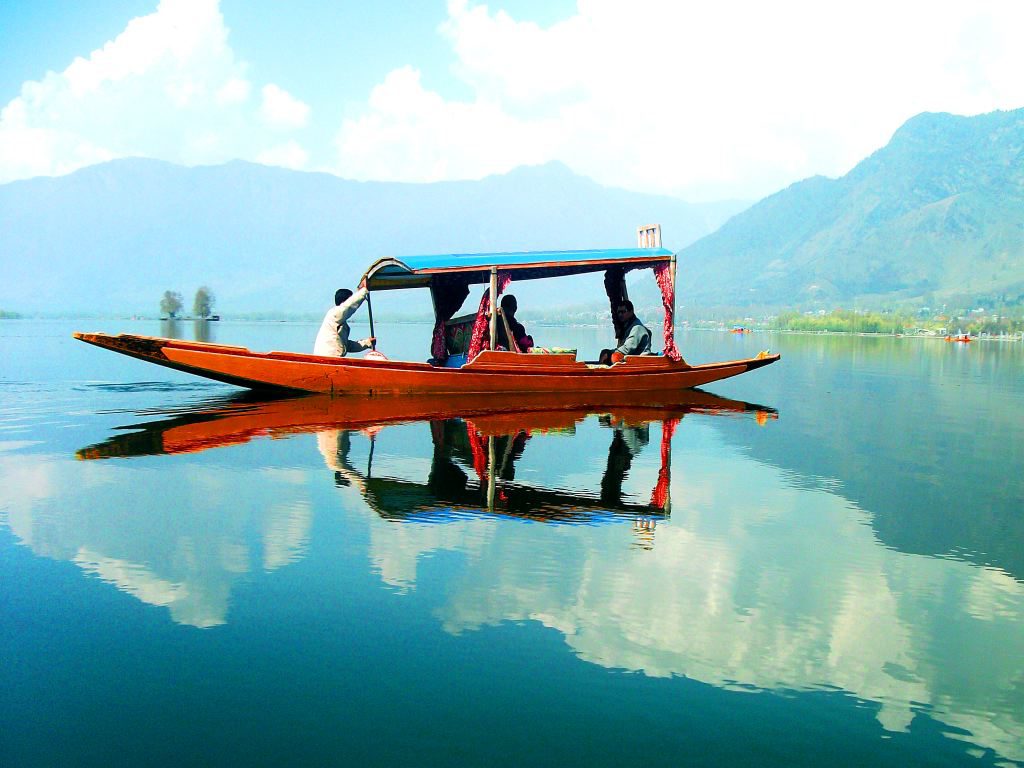
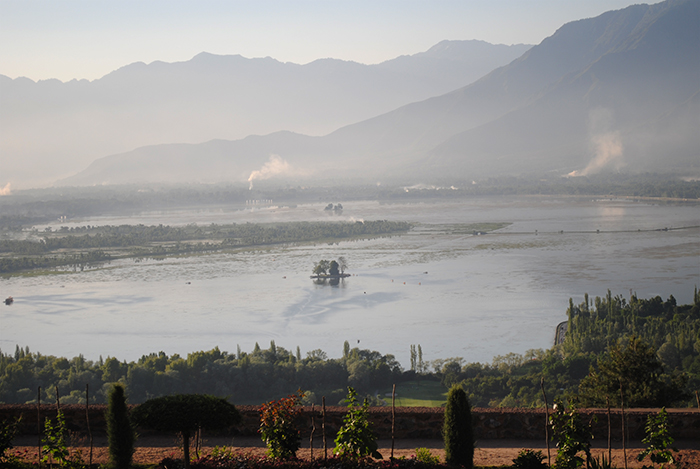
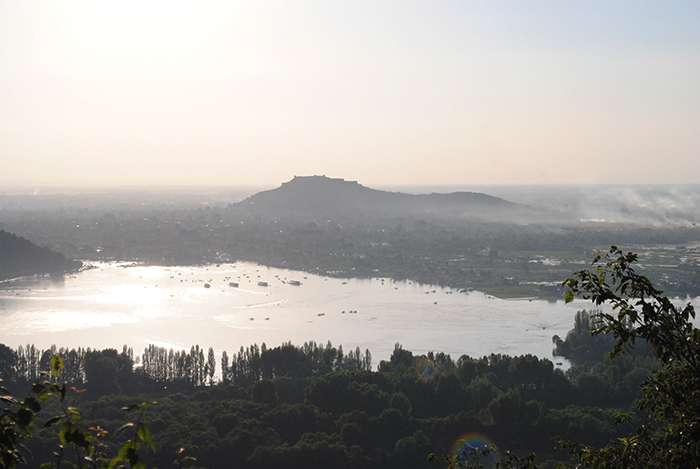
Kashmir valley
Image Source

The state of Jammu & Kashmir has been in the news of late. You might exclaim when did it ever leave the media spotlight?! Beyond the trouble-torn recent past, Kashmir has a whole lot of history, right from its name been taken from the sage Kashyapa or the belief in Moi-e-Muqqadas relic of Prophet Muhammad (pbuh) in Hazratbal shrine. Be it Alexander the Great or the Mughal Emperors, Kashmir has been the favoured place for the royals.

Kashmiri culture has a mixture of influences from Islam, Hinduism, Buddhism and Sikhism. So there is nothing wrong in naming it “the paradise”, a blend of all cultures. The rapid development in Srinagar city has added more charm I would say, but if you ask the old folks, they prefer the old Kashmir, as it was more magical. A calm place situated around a huge lake, where Shikaras (boats) were the mode of transport instead of the noisy automobiles. Imagine! Kashmir would have been no less romantic than the city of Venice!

kashmir-places-to-visit

Srinagar – a place nestled amidst the Himalayas. One would assume that it is a city to be enjoyed only during winters, but No! Have a visit to Patni top, located on the way from Jammu to Srinagar. For me, it will always be ‘Pitni top’! A night stay was a compulsion while we travelled during our childhood. The pine trees act as guardians of the roads and the small food shops make us believe in living in the world of dreams.

Today’s rapid way of travelling has no fun at all. The travelling through our own cars was much like an adventure, going through those mountains was scary as well as exciting. I still remember the Vaishno Dhaba, famous for its Rajma chawal, which was always our stop for lunch.

The famous landmark, the four Chinar trees ‘Char Chinar’ standing in the middle of the Dal Lake. The Chenar (Chinar) has the same name across the world, but it is only Kashmir that has been given the privilege of naming the tree ‘Boonyi’ in its own native language. The beautiful Mughal Gardens also introduce us to the beautiful ‘Foreshore Road’.

kashmir-places-to-visit-2

The Foreshore Road is definitely one of my favourites. The long drive and the encounter with small kebab shops is the most interesting part. The later, the more exciting and beautiful the scenery gets. A drive with all my cousins and having the yummy kebabs at famous Khayyam Centre is a must-do. The stories I’ve grown up listening to, the late night stay on these roads are little scary as Kashmir is also known for welcoming ghosts. However, our confidence comes from the aroma of kebabs, which will make the ghost forget its target and will end up in joining us for the dinner!

Pahalgam, Tangmarg, Sonmarg and Gulmarg; all have breathtakingly beautiful scenery as a gift. If you haven’t seen snow in your whole life and are free only during summers (April-May), Kashmir does gives you an option! Sonmarg is a place where snow can be found during summers as well. Situated at a higher altitude, Sonmarg is a snow land for everyone to enjoy regardless of its weather.

Pahalgam will make you fall in love with it, each time you visit. The Betaab Valley gets its name from Betaab, the debut Bollywood movie of Sunny Deol-Amrita Singh. If you have been dreaming of living a small house by the river in a lush green valley, then book a hut for a week in the Betaab Valley of Pahalgam.

The snow covered mountains of Gulmarg; a place that made me feel like a princess when I attempted my first horse ride through those lush green meadows. I still vividly remember my stay in the beautiful hut and roaming around on the private horse. Isn’t that truly romantic?

kashmir-places-to-visit-3

Talking about romance and royal treatment, how can I not mention the “Houseboats of Dal Lake”… The floating market of Dal Lake also grabs your attention. Kashmiris have a belief in treating their guests in true royalty, so this idea was introduced during the British Raj. You can have a ringside view of nearly the entire the Kashmir valley from these houseboats, including the Pari Mahal, Chashma Shahi (the royal fountains) and Shankara Charya. My mother had made me believe that Pari Mahal was really the ‘palace of the fairies’! A stay at this place after 6pm can be given a second thought, as it would be the fairies that will be your guide later!

Kashmir has been a favourite place for Bollywood movies, which have also played a vital role in promoting tourism. From Shammi Kapoor’s colourful “Junglee” to Shahid Kapoor’s dark “Haider”, Kashmir has an adaptive nature. The soothing music of Santoor or the calmness of Buddhist chanting in the monasteries of Ladakh, will surely remain as haunting memories, making you to come back again. The warmth you will receive from the Kashmiri people will definitely make you fall in love with the place. The ready acceptance by locals will make you realize the real beauty – as all Kashmiris call it, “Mouj Kashir” (Mother Kashmir), is surely a re-birth of heaven on earth!

Factfile –
http://en.wikipedia.org/wiki/Kashmir_Valley

The Ugly Indian Keeps it Clean!

1

Author – Lakshmi Venkataraman

The Ugly Indian Community

The Ugly Indian – The very name of this four-year old organisation gives a rude shock to everyone when they hear it first time. With wide eyes, you would have probably opened Google and searched for it. Fortunately, they have a delightful cause that makes you think. So what do they do? They call themselves “The Ugly Indian”, since they feel strongly about the filth strewn around our cities. Now it makes sense, doesn’t it?

The Bengaluru-based group works on the Gandhian thought, “Be the change you want to see” and firmly believe in “Stop talking, Start doing.” It is easy to start the blame game going, ‘Oh! The government did not fix it!’ or ‘Oh! The people, you know, you can’t change them!’ Thankfully, this group of anonymous people set out to change it by doing.

The Ugly Indian Community

The Ugly Indian started their campaign from Church Street, one of the busiest streets in Bengaluru. The road was like any other road, strewn with litter, paan-stained walls, and broken gutter slabs that gobbled humans. So The Ugly Indian along with a few volunteers, shopkeepers from shops nearby and civic authorities, began changing the scenario by fixing things one by one.

What did they do? Well, they simply cleaned up the garbage, fixed the footpath, painted the paths and put potted plants to add charm and deter people from spitting or urinating. By now, there would be a little cynic in you screaming ‘How long did it last?’ It is probably time for the realist in all of us to come to terms with the truth. Their work received so much appreciation from everyone that it led to a full-fledged voluntary organisation, The Ugly Indian.

The Ugly Indian Community

They started as a small citizen movement on November 15, 2010 and soon began to grow. They had to do a lot of trial and error, but surprisingly the major issue was not on how to clean public spaces, but how to keep people from dirtying them again. They came up with innovative, cost-effective ideas such as painting the walls with cream and terracotta. The paint cost less than Rs.500 for a 50-feet wall.

They also placed potted plants that make the place look neat and dissuade nuisance makers. They specifically chose cheap pots so that it would not get stolen and planted palm, a pretty common plant. They also roped in residents and shopkeepers nearby to maintain the plants to ensure cleaner footpaths. They installed tube-like structures near cigarette shops and outside pubs so that litter would go into them and not clog the drains. It was an effective, simple and cost-effective way to manage the litter, which also looked elegant.

The Ugly Indian Community

While these were more tangible forms of transformation, they persuaded shopkeepers, residents, business entities, chaiwallas, paanwallas and other small shops to follow a proper disposal method. This made it easy for civic workers to collect the garbage. Over time, with lot of persuasion people began to change, despite sceptics offering their “this would not last long” sermons. Slowly, not only the clean walls endured for months together, but also made the surroundings pleasant to walk by.

Apart from their main agenda of keeping the surroundings clean, making the footpath usable by changing misplaced slabs also caught their attention. The open slabs of gutter drains were hazardous, since people could fall into and get hurt or in some cases die. The Ugly Indian thought about how to sort out the cable mess beneath the open slabs, which worsens the situation during monsoon rains. After a few calls, the respective government agencies admitted that it was their task to close the slabs but just did not. So The Ugly Indian took it upon themselves to fix them. By simply owning up and doing something The Ugly Indian could save a few lives.

The Ugly Indian

A lot of civic issues in Bengaluru have been addressed by The Ugly Indian; their Facebook page shows where they are active and have put up photos of spot-fixes done by them. It is pleasant to watch the change they are bringing in. The Ugly Indian have been doing for a long time now what Narendra Modi’s Clean India campaign has been propagating now. It is high time that we individuals take up responsibility of our own area and stop doing lip-service. The Ugly Indian is a wonderful initiative that can be replicated by people like you and me to make a difference.

the-ugly-indian-2

Image sources –
https://www.facebook.com/theuglyindian

Factfile –
http://www.theuglyindian.com/
http://timesofindia.indiatimes.com
http://www.rediff.com

Films that Stir Our Hearts at Pune International Film Festival

0

PIFF - Pune International Film Festival 2
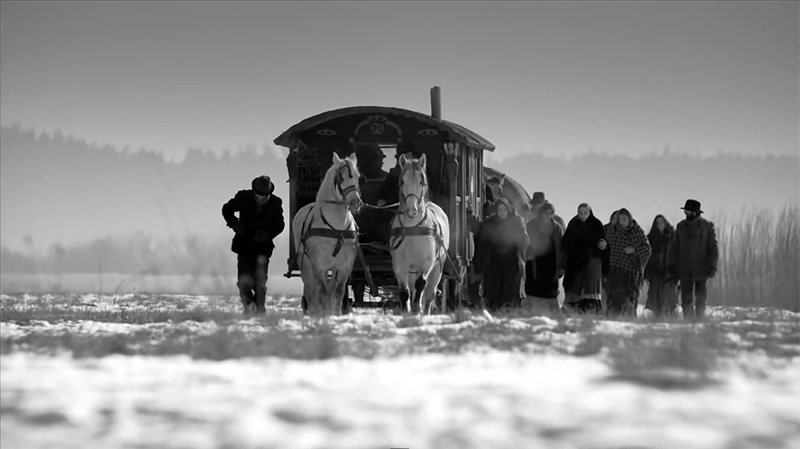
A scene from the movie Papusza

As the cold sighs of winter winds sweep the city of Pune, Punekars look forward to a plethora of art, cultural, music and film festivals, which form an integral part of their social calendar. Be it the soulful evenings of the Sawai Gandharva Music Festival, Vasantotsav, or the boisterous rocking music of NH7 Weekender, Punekars tend to plunge wholeheartedly into this celebration of life. Obviously, it is no surprise that one of the most celebrated festivals in city is the Pune International Film Festival (PIFF).

Despite of its comparatively recent origin, PIFF has captured the heart and soul of Punekars. With films from over 48 countries, the festival celebrates the global spirit of cinema, while keeping in touch with its local roots by dedicating an entire section of awards to Marathi movies. Unfortunately, I couldn’t be among the masses that thronged the theatres this year, but for the past few years, I have haunted the various venues of PIFF, catching as many as 3 movies in a day!

This year, the 13th edition of the Pune International Film Festival kicked off recently, with the screening of ‘Timbuktu’, a French-Mauritanian film that has been making waves across the world. Directed by Abderrahmane Sissako, it is a brilliant exploration of vulnerability and strength, which deals with the harsh reality of extremism. When Kidane, a cattle herder goes to confront his neighbour, a fisherman who has accidentally killed Kidane’s prize cow, the consequences are disastrous. The film deals with the tragic situation in the country, the loss of individualism and rationalism as it slowly falls prey to the fundamentalism.

Other gems, like ‘Dr. Prakash Baba Amte – The Real Hero’, a Marathi movie that released this year to acclaim, were also screened. The film is a biopic on Dr. Prakash Amte, the son of the renowned social worker, Baba Amte. Dr. Prakash Amte, and his wife, Dr. Mandakini Amte moved to Hemalkasa in Gadchiroli district in Maharashtra State, way back in 1973, for helping in the development of the adivasi tribes that lived in this remote district. The movie showcases the exemplary struggle of the two doctors in their selfless bid to help the underprivileged who wre without any access to health care, which can stir even the coldest of hearts.

During last year’s PIFF, one of my most memorable experiences was undoubtedly watching the movie, ‘Fandry’. As a part of the Arbhaat Short Film Club, I had seen Nagraj Manjule’s first short film, ‘Pistulya’. ‘Pistulya’ is a heart-wrenching tale of a young boy, who struggles with his fate, and whose ardent desire to go to school remains unrealised despite all that he has experienced. Hence, I was understandably excited by the prospect of viewing Manjule’s first foray as a feature film director.

Fandry

Nagraj Manjule’s ‘Fandry’ is not just a film; it is a statement, an experience and above all, it is a cry. Fandry, which in the Kaikadi language means ‘pig’, is the story of Jabya, an adolescent from the Kaikadi community and his love for Shalu, a girl from a higher caste. His family subsists by making wicker baskets, but the worst tasks in the village, which are considered undignified by upper caste people, are regularly relegated to Jabya’s father. Jabya’s continuous search for the mythical black sparrow, and his desire to impress his classmate, when juxtaposed against his harsh reality serves to stress the indignity and class discrimination that still exists within our society.

Papusza

Papusza was another amazing movie that was screened during PIFF 2014. It is a biopic of a relatively unknown Polish-Roma poet, Bronislawa Wajs, who was known as ‘Papusza’, meaning ‘doll’ in the Romani language. With a non-linear timeline that criss-crosses across the life of the poet, the film gets confusing at times, but still manages to provide a visual treat. Papusza defies her family as she learns to read and write. She eventually meets a non-Roma poet, who travels with her caravan and encourages her to write down her songs. She is eventually excommunicated by her people when her poems are translated and published by the poet, Jerzy.

Many people have this notion that film festivals are about award winning offbeat, documentary and alternative movies. However, PIFF is not just about the offbeat. Mainstream Hollywood films like ‘Captain Phillips’ and ‘The Secret life of Walter Mitty’ were also a part of the line-up.

As PIFF slowly draws towards a close, one cannot help but wonder about the significance of watching movies from other countries. Watching a foreign film is truly a novel experience. Although the actors playing out the lives of characters are unfamiliar, they can strike a deep chord within. The background score may be unknown and the language illegible, but it will surely stir our hearts. Even if a film is about a local issue with relevance to us, it can transcend its limitations to connect with people around the globe. The barriers of society and language can dissipate when the audience immerses itself into the film and experiences its true essence. PIFF provides an opportunity to do just that!

Image sources, Factfile –
http://www.piffindia.com/