Why Simple Logo Design is Better

0

simple logo designA logo needs to be memorable and easy to duplicate. Highly detailed logos can prove to be difficult in both cases. When someone looks at a company logo, it needs to be a symbol of the company it represents. As Microsoft uses five colors in its makeup, people recognize the image as that belonging to PC compatible software.

1. Ink Prices

 The cost of producing an image in multiple colors is far more expensive than one that consists of one or two. From a printing standpoint, each detail requires various shades and gradients in order to reproduce the effect. The cost may be minimal for one or two letter-heads, but could begin to escalate in mass production. Even the printing of signs and posters can cost between five and ten times more than they need to.

2. Iconic Imagery

Anyone who has a smartphone knows the image of the apple with a missing piece or the little green robot. Both of these images represent quality of products to the respective owners. The logos used by Apple and Google have made a profound impact in how consumers purchase their products and are void of high detail in either image.

3. Time Span

Whether it is printing or developing the logo’s image, detail will be at the expense of time. This could be the time it takes a developer to create the image or duplication. Any graphic designer loves to create extravagant imagery, but a logo doesn’t need such practices. As time is money in most cases, a simple design could save money on your advertising budget by reducing the man-hours needed to create your iconic representation.

4. Association of Memory

As long as the marketing department does its job well, even the simplest of images can be effective. An image with which your consumers can associate your specific product or service is all that is needed. For instance, Google’s green robot is associated with anything Android. People associate the Android robot with smartphones and tablets without giving it a second thought. It is how we look for items at the store when shopping. Most people will know what they are looking for at a retail store by just the logo.

Your logo doesn’t need to be extravagant in order to produce the intended result. While it can be fun at times to design an elaborate image full of detail, it’s not practical to use such an image in full-scale production. As long as your image is memorable to the customer, it will be a success.

Predesigned-logo

Memories of Manipal

0

Memories of Manipal | Courtesy: Arvind Kumar
Manipal University | Courtesy: Arvind Kumar

Manipal has been in the news for all the wrong reasons. This tiny student town is known for its amicable society and peaceful co-existence of students and locals. As a student I had been reluctant to enrol in Manipal University, as I had underestimated it. As a fresher, I was blinded by my anxiety to go away from my comfort zone to a far off location. I always chose to look at the brighter side, overlooking all the resources and the opportunities that I had been presented with in this student township.

The massive portraits of the founder of Manipal hung in every building in the campus ensure that every student gets to know the history of the place. Manipal gets its name from the lake, ‘Manipala’. It was supposedly a barren land 50 years ago, when a lightning bolt of an idea struck a visionary man. Precisely, it was 1953 that Dr.T.M.A. Pai founded India’s first private medical school, Kasturba Medical College. KMC was followed by a string of other education institutions that became the Manipal Academy of Higher Education, in other words ‘Manipal University’.

Of course Dr.T.M.A. Pai made a fortune in the education business and passed it onto his children. While one can be extremely cynical about it, but to build a university town is no child’s play! The Pai family did possess well-structured and concrete plans; it was not just about building multi-storied fancy buildings on a high terrain away from the city, but it was about building an educational community that has thrived in a place probably inhabited by wild animals.

Memories of Manipal | Courtesy - Sunnyq2010
Students at Manipal campus | Courtesy – Sunnyq2010

It almost took me around 3-4 months to get adapted to this student community, and most importantly to shake off my apprehensions and discomfort, and fully accept my surroundings. That’s when I started to observe things around me. The endless walks at End Point, lovebirds under every tree, numerous food varieties, exam time visit to the Venugopal Temple, Timmy Anna’s Night Canteen, TC, Dollops, all have left an imprint on my memory.

Autorikshaw drivers in Manipal have a notorious reputation for fleecing the new comers in town. One of those situations, when I was badmouthing an auto driver for the extremely unreasonable rates charged on students. In the middle of my rant, the driver comes up with a sarcastic comeback, surprisingly in fluent English. After many such embarrassing encounters, I realised that auto drivers, bus drivers and even waiters and almost everybody speak fluent English, and of course Hindi with the south Indian accent! So basically you can survive in Manipal, without having to learn the local language Kannada, which is an unlikely situation anywhere else in South India.

Memories of Manipal - Boys Hostel of MIT 1997
Boys Hostel of MIT 1997

Shifting focus towards my fellow students, I observe a lot of girls, who try so hard to match up to the ideals of what they think the western teenage girl would do. They wear as much make-up and hairspray as they can and sneak out in the middle of the night, which is quite strange. On the other hand, I see another set of women still stuck with their backward ideas such as women do not need more rights and freedom and they think we are indebted to our parents. Such narrow minded ideas make me literally bang my head against the wall.
Such instances prove that studying in the Manipal University is an experience in diversity itself. In addition to Indian students, lots of foreigners visit the campus for an internship or a project. I have seen such eclectic set of people from diverse places, and with different mentalities, that I guess I am a now better judge of how to deal with different people. Another eye-catching aspect is the cultural contrast between the neighbouring temple town of Udupi, which is quite traditional and extreme diversity of Manipal, which is quite modern in its outlook!

The Manipal town and the students have a symbiotic relationship. Every year, a fancy modern eatery or a bar or a gaming centre comes into existence to fulfil the daily needs of the students, and sometimes even a bookstore. Students from across india and international students from Middle East and Africa have been an indirect cause for the varied number of cuisines you find in here.
Today, I am no more a fresher and a sense of belonging has begun to sink in. When I manage to do one of those night-out jigs, just to stay awake till dawn and observe the red burning sun rising beyond the Western Ghats and the play of the colours in the sky, from grey to mauve to crimson and to bright yellow, I get a sense of fulfilment.

Text – Sanjana Sandeep

Factfile –

http://manipalblog.com/2013/06/23/the-manipal-auto-boycott-is-it-reasonable/
http://manipalblog.com/2013/05/29/30-nostalgic-photos-of-manipal-1997-to-2001/
http://lifeinmanipal.wordpress.com/2008/01/08/the-beauty-of-manipals-end-point/
http://www.flickr.com/photos/aaykay/with/358365122/
http://www.flickr.com/photos/46654842@N02/with/4284714220/

Munching on the streets of Mumbai

2

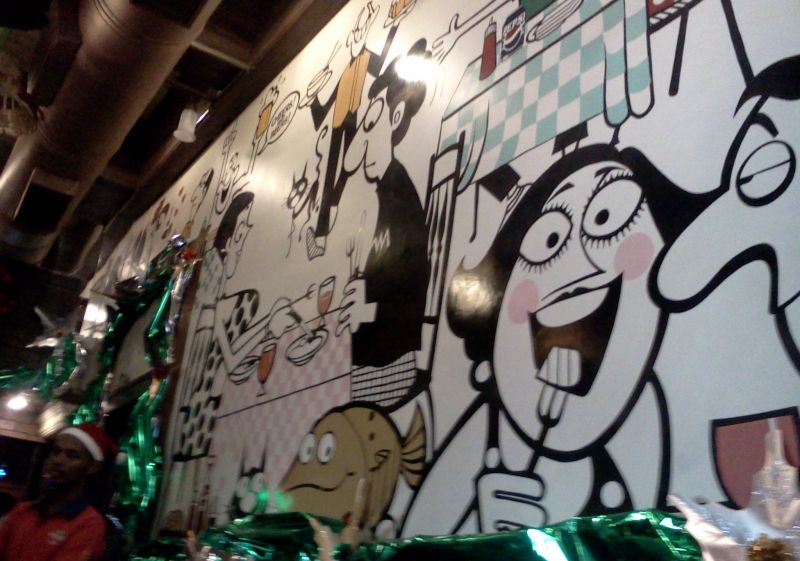
Mumbai street food - Mumbai Café Mondegar
Mumbai Café Mondegar

It was a cool pleasant afternoon and we were strolling around Mumbai. Strolling? cool? in the maximum city? Wait, correct that – rushing from one point to another, with a long list of locations trailing from my husband’s hand. This was his wish list of all lists. The 40 best places to eat out in Mumbai!
Yes, we do this in every city we visit and I follow him around, happily savouring the outcome of his research! Well, the point in question: we had 10 days in Mumbai and 40 places to visit; right from Ashok Satam’s famed vada pav to Akouri on toast at B Merwan & Co Parsi restaurant, to a MAFCO outlet of Bombay sandwiches – could we really do it?

When my husband had begun to draw up this list for our Mumbai trip, I had assumed that it would start and end at Chowpatty. But here we are, with a carefully researched list of names, hunting for a particular Parsi place in Fort Mumbai, which would serve yet another variation of Akouri on toast that he just HAD to try. We had begun looking for this place in the afternoon, after we devoured a plate of coconut and tamarind tempered shell fish at Trishna and later the squid session at Mahesh Lunch Home, in the Fort Area. And now, it was almost evening.

Mumbai street food - Mumbai Chez Vous
Mumbai Chez Vous

By late evening, we finally found this ‘hole in the wall’, and famished as we were, we quickly ordered the Akouri on toast that he was so eager to eat. The Akouri arrived, as did the ultra slim pieces of toast. He looked at it and I could see the look of puzzlement register on his face. Yet, he shrugged and wordlessly picked up the fork. Digging deep into the dish, he let it emerge with a sizable portion which he quickly put into his mouth. Then, looking up at the ceiling, he tried to decipher how good it was. And then it happened. His eyes opened wider and he made that face. The face. The face that told me something was wrong.
“What,” I asked?
“Oh my God.”
“What??”
“This tastes just like YOUR egg burji!”, which did not sound like a compliment at all! But rather than pound his head for dragging me half way across town – on foot – I began to laugh and the poor guy covered his face, utterly embarrassed! No more Akouri after that.

Mumbai street food - Mumbai Irani Chai B Merwan & Co
Mumbai Irani Chai B Merwan & Co

Later that night, we wound up at Bade Miyan after our horse carriage ride along the Marine Drive – the highpoint of our Mumbai trip. He ate the infamous Bheja fry and Boti kabab, while I ordered the less overwhelming Paneer roll. He suddenly remembered (after three consecutive nights at Bade Miyan), that I am a vegetarian. Note: good food does that to my otherwise considerate hubby!

So the next day, we landed up at Khau Galli, squeezed somewhere in the bylanes of Church Gate. The vegetarian fare was to die for. But that was not all. We made a trip to Chowpatty to try out the Bhel and it did live up to its reputation. He tried a spicy Maharashtrian dish named Misal pav, which went down well too!

Mumbai street food - Mumbai Tamarind tempered shell fish at Trishna
Mumbai Tamarind tempered shell fish at Trishna

Next up was Ashok Satam’s famous vada pav. Again, the walks around Fort Mumbai began, during which I was frequently distracted by the second hand books being sold on the footpath. While we were picking up a few books, suddenly a whiff grabbed us. A yummy one. We turned our heads in unison to find scores of people emerging from behind a tree. With vada pavs in their hands. Ah! Satam – here we come.

Hubby being hubby, asked for the spiciest version of vada pav fired with a layer of red hot chillies, peanut and garlic chutney. He took a bite and I swear I could see the smoke escaping from his ears. Nevertheless, he finished it and even stopped by on the way to the guest room to grab another one!

Mumbai street food - Mumbai My family at Kalaraksha
Mumbai My family at Kalaraksha

Well, thereafter we reserved our appetite strictly for shopping and wound up at Café Mondegar or Leopold’s Cafe at night. Street food or not, these cafes have that quintessential Mumbai feel – one that made you feel like you belong here no matter where you come from, or the time of the night. The jukebox, the people, the food, the waiters, the buzz – all so worth it. We went back to Café Mondegar every night after we first discovered it.

But of course, the glorious trip had to end. We staked out the best fine dining place we could see around us, and grabbed a seat. This time it was a little eatery by the name of Chez Vous, run by a Frenchman who kept checking if we liked the meal and needed anything else – very European treatment there. As the picture shows, the food was delish!

Factfile –
http://www.lonelyplanet.com
http://travel.cnn.com
Wiki/Mumbai_culture

Ahmedabad Law Garden – A Glimpse of Real Gujarat

0

Author – Hemal Mehta

Law Garden Ahmedabad
Colourful streets of Law Garden in Ahmedabad

Street shopping is as famous as street food in India. However, while shopping at Fashion Street in Mumbai or on Commercial Street in Bangalore, you will realise that most Indian street markets sell affordable fashion imported from China or Thailand these days! Fortunately, street shopping at the Law Garden in Ahmedabad (or Amdavad as the locals call it) is a rare exotic experience.

There are many factors that differentiate this market from other markets in India. For starters, this colourful shopping street is a night market. Not a common sight in India unless you are in Goa! Since Ahmedabad is predominately a hot city with dry weather, a night market suits the city and its residents. Like other night markets that are illuminated with tube lights, this market too comes to bloom in the evening with some additional help from oil lamps! It is a dynamic makeshift market with no permanent shops.

Law Garden belts
Vividly Coloured Cowrie Shell Belts

If you visit Law Garden in the morning, you won’t even find any trace of the night market! By day, this area is famous for a law college and a garden aptly named after it – Law Garden! Later in the evening, the garden closes down and the wall adjacent to the garden transforms into a bustling market. It is believed that some affluent families had settled down in this area few decades back and the land around the garden was barely used at that point of time. Utilising this opportunity, hawkers from other areas packed their bags and moved in here to set up their temporary shops!

History aside, the most prominent differentiating factor that sets apart the Law Garden market is its sole focus on selling traditional handicrafts made by artisans such as weavers and quilters from Gujarat. No, this isn’t a market just for tourists visiting the city! It is a handicraft hub to which even the locals throng regularly to pick up unique pieces of traditional items.

If you love fashion then the Law Garden market allows you to explore the rich ethnic fashion sensibilities of the Gujarati community. Apart from the embroidered wall hangings, costume jewellery, the main highlight obviously is the Ghagra Choli that is worn during the Navaratri dance festival. For the uninformed, here’s a simple explanation – The Ghagra is a flirty long skirt and the Choli is a short blouse to go with it.

Law Garden table tops
Quilted Table Tops

Owing to the creative abilities of the Gujarati artisans, each pair of Ghagra and Choli sold here is a bespoke work of art. Although certain design elements such as Rabari designs, applique embroidery, the use of flower and animal motifs, mirror work and tie and dye prints do prevail over others, the ultimate garment is unique in its own respect and it is hard to find two pairs that are an exact replica. If you love a particular piece of Ghagra Choli, we suggest you pick it right away. Chances are that you may not find it at any other shop in the market!

If bling and accessories is more of your thing, then the Law Garden has a diverse range of pieces made from semi-precious metals on display. From small studs, to drop earrings to complete sets with neckpieces, matching earrings and bangles, you will find almost any design to compliment your look. My personal favourite accessory is the unique waist belt made from seashells and mirror work.

Law Garden chaniya choli
Intricate work on Chaniya Choli

If you are a guy with zero interest in women’s shopping, then head towards the stalls that allow you to take home an essence of Gujarat in the form of bedspreads, cushion covers, bags and tabletops. Intricate embroidery in bright colours forming myriad patterns such as peacocks, lotuses and fishes is sure to brighten up any room in your home!

They say you can’t put a price on art and everything in this market is sold as art! Therefore, don’t be shocked when you hear the ridiculously high prices. A Gujarati businessman will put in his best efforts to maximise profits, while the Gujarati womenfolk will put their best efforts in bargaining to get a good deal. If you are not good at bargaining, we suggest you take some help from the local aunties shopping there. Bargaining is a talent they definitely flaunt a lot at this market!

When you visit this market, you literally breathe in the Gujarati culture, which is vibrant, artistic and rooted in tradition! Next time when you visit Ahmedabad, make sure you do not  miss the Law Garden!

Text & Pics – Hemal Mehta

Factfile –
wiki/Law_garden
http://www.tripadvisor.in
www.lonelyplanet.com/

‘Warp and Weft’ – Weaving a Rustic Tale

13

It was in December 1999 when I first met an enthusiastic journalist in Bangalore named Vinay Jalla. I was working in a dot com as a photo-journalist focusing on travel and culture features, while Vinay handled the sports desk as well covered interviews of leading personalities in city. That he is well-read person was quite clear to everyone who dealt with him. There is a saying, “Every journalist has a novel inside him”. That dictum fitted aptly with Vinay!

Vinay Jalla Author
Vinay Jalla

Being an ardent fan of great Indian novelist R K Narayan, he used to quote characters and instances from the author’s books. Listening to his everyday travails which he presented in a comical manner, we had nicknamed him “Malgudi Chaami”! I remember the day the renowned author died, Vinay wanted to rush to Chennai to pay his last respect. However, we consoled him saying that the cremation would already be done by the time he reaches there. Soon after I left the company during the dot com bust days, and I got to know that Vinay had left for the UK. Recently, after a decade, I contacted him when I got to know that Vinay had published a novel, ‘Warp and Weft’.

When I read Vinay Jalla’s debut novel ‘Warp and Weft’, I could clearly feel the influence of his guru, R K Narayan. The story is set in a fictitious village called Zarivaram in Andhra Pradesh. Set in pre-Independence India, the story translates the rich South Indian culture, customs and traditions of that period in a lively manner. The novel delves into the intrinsic art of weaving handloom saris and about the lives of people connected to it.

Warp and Weft - Handloom weavers in Andhra | Courtesy: Ujjal Dey
Handloom weavers in Andhra | Courtesy: Ujjal Dey

Zarivaram reminded me of a small town I lived near Chitradurga district on the borders of Karnataka and Andhra Pradesh. The characters found in Zarivaram are reminiscent of the people I have met. Narayana, the poor protagonist, drunkard Venkataiah, wretched housewives Nagalamma and Gowramma, Konda Kothi the toddy tapper, Kallu Thalli the toddy goddess, Ram Das the village zamindar all have the rustic earthy charm to them! When I asked Vinay how did he come about writing such a novel, he narrated the travails.

“I started writing ‘Warp and Weft’ way back in 2001. Thanks to my grandmother who gave me sufficient material through her anecdotes about her life in the village of Dharmavaram, I concocted a fictitious landscape in my mind and wrote the novel. Even as a child I was fascinated to listen to my grandma’s wonderful tales and bedtime stories. Her stories instilled moral values and have shaped my point of view in life.

Warp and Weft caleidoscope

Being an ardent fan of the R K Narayan and his Malgudi, I decided to set my novel in a fictitious place. Inspired by Vikram Seth’s “A Suitable Boy” (one of the longest novels ever published in the English language), I aspired to write a long novel. To concentrate on writing the novel, I made a dubious decision and quit my job as a journalist working for a popular web portal in Bangalore.

warp and weft by Vinay Jalla

I would sit in the city’s Central Library and write about 1,000 words a day on one-sided sheets of paper. Writing a novel can sometimes become a lonely experience – it’s just the writer and his characters for company. Some days I would saunter across to the nearby British Library for a change of scene or sit on the grass in Cubbon Park and write, while the pigeons flew around cheerfully.

After seven long months I managed to pen about 250,000 words but had to chop more than half of it as I felt I was wandering beyond the scope of the central character – Narayana. After editing and proofing, I was left with 100,000 words. Now that I had completed writing my novel, I was really confident that it would get published by a big publisher. And no, I wasn’t thinking about a million-dollar advance. Instead, I used up all my savings to fly to the UK to get the novel published!

I came to the UK in the cold winter of 2001. My novel received an even colder reception – it was widely ignored by publishers. After endless rejections and divorcing a couple of literary agents on the way, I decided to approach Amazon last year to self-publish my book. Thankfully the novel is out now for everyone to read about an unwritten region of India”.

Buy Warp and Weft from Flipkart.com

Factfile –
http://vinayjalla.wordpress.com
http://articles.timesofindia.com

Cutting Chai And Vada Pav

0

Cutting Chai And Vada Pav - Mumbai Monsoon
Image by Uday Disley Via Flickr

There is nothing that can be said about Mumbai that hasn’t been discussed before. There is nothing new that I can say except put my overwhelmingly strong feelings that I have for this city into simple words. Trash-strewn streets, muck, dabbawalas, slums and potholes are what people see when they come to Mumbai. The city has been rubbished almost as much as it has been praised. But as far as I am concerned, I see resilience, straight forwardness, a survival instinct in every Mumbaikar. Although I was born in Mumbai and spent a considerable part of my childhood here, I did shift out of Mumbai for a few years.

mumbai-monsoon
Image by Vimal Parmar Via Flickr

It is so easy to lose yourself in Mumbai- what with the maddening pace of life and all that it comes with. But what will genuinely help a newcomer are just a few moments of solitude every day. Movies, Monsoon and Masalaa are in abundance everywhere..Even artists find their outlet one way or another ..and if not, there is no scarcity of inspiring art pieces found painted on the walls of the street! The monsoon takes some getting used to- I agree; but Nothing can be more wonderful once you learn how to overlook all the expensive shows being rendered useless..

mumbai-seasons
Image By Unlisted Sightings Via Flickr

Another incident that I recall was during the deluge of 2005. I was in school when the Principal announced that all the remaining classes were cancelled and we were to go home. I lived 5 minutes from school and had no problem reaching home in spite of the incessant rain. But for a lot of my classmates, travelling back home was a daunting 2 hour journey with rain lashing down against the bus window. Our principal arranged for sleeping bags and stayed back with the students all night- serving maggi and playing games all night long. Back home, it dawned on me, that the situation was

Cutting Chai And Vada Pav - Mumbai Vada Pav
Image by GSZ Via Flickr

grave. The ground and first floor of the building I lived in was COMPLETELY submerged in water. People were running around, trying to salvage as many valuables as they could before water entered their house and rendered them useless. No one was spared the wrath of the monsoons. People were forced to walk hours to reach home from their workplaces because there was no means of transportation. But as people walked diligently, there were residents, who came out of their flooded homes, just to offer hot chai and parle-g biscuits to complete strangers in an attempt to make their arduous journey back home a little bit easier.



Cutting Chai And Vada Pav - Cutting Chai
Image by Premshree Pillai Via Flickr

And of course, the sea. I cannot think of Mumbai without thinking of its lifeline. The never ending vastness that is the Arabian sea is the glue that holds it all together attracting to itself a multitude of admirers. Nothing makes me happier than curling up against my window with the rain lashing down against it with a piping cup of tea and a good Jane Austen novel to give me company. Life is beautiful. Mumbai is, and always will be my favorite place in the world. The place I call home.

Text: Swati Ramakrishnan
Also Read-
Sizzle with Misal Pav | Memorable Mahim | Queen’s Necklace

Voluntourism – Renewing Travel Experiences

5

Voluntourism in India

Travel constantly creates opportunities to meet new people: while on the move, at restaurants and even generally while engaged in common activities such as trekking. This is more incidental than by design. Travelling with a purpose of meeting fellow travellers and more importantly the native residents of a country and getting to know their lives, has emerged as an exciting prospect. One easy way that people across the world have done it is through volunteering while on tour. This is what we know today as “Voluntourism” or “Volunteer Tourism”.

Wikipedia throws some light about Voluntourism and its origins. Way back in 1958, people from Europe would travel for supporting short-term community development projects in Asia or Africa, which wasn’t much of a vacation in the traditional sense. However, that scenario has changed over the years, and now people are more open to taking a vacation to work for a cause. This could range from low-skilled jobs such as building community projects, organic farming teaching, etc to providing highly skilled expertise in specific areas such as web design, architecture, etc.

Voluntourism in India

Being a regular traveller, I was eager to explore opportunities in Voluntourism and gain some experience. There is a gamut of Voluntourism options available today, but I was keen on exploring opportunities where the traveller is not required to pay. One such prospect was WWOOF – World Wide Opportunities on Organic Farms, which is a global non-profit organization that connects volunteers to hosts of organic farms. The model is to encourage interested travellers to work voluntarily on organic farms in exchange of lodging and basic meals.

WWOOF – the leader in Voluntourism 

WWOOF provides an excellent platform for volunteers to learn about organic food and a farmer’s way of life. It also helps volunteers understand an ecologically sound way of living. I spoke with Harish Tiwary, who is a champion of organic farming and also the coordinator for WWOOF in India. Harish has an illustrious career in organic farming being an agricultural microbiologist with significant research specifically in composting.

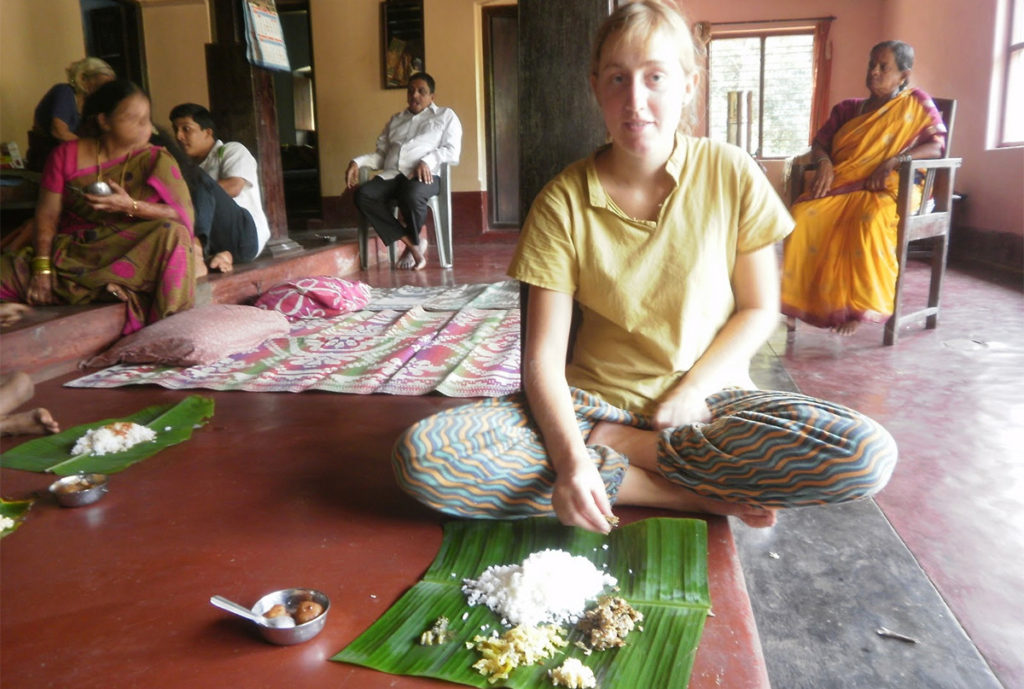
Voluntourism - WWOOF volunteers working in India

Harish established WWOOF in 2007 with a network of 14 organic farms as hosts, which has today grown to 172 farms across 16 states in India. Harish also provides consulting to people helping them set up organic farms and thus, has brought many into the fold of WWOOF. These farms grow a host of organic produce and are ideally located across the Indian countryside. While most of the WWOOF host farms are located in rural areas, a few of them such as the Sukrushi Farm outside Bangalore are located near major cities as well.

Voluntourism in India
Image Source

The peak season for WWOOFing in India is between September and February, when on an average 1,200 people come to volunteer in India. The other half of the year is lean with just about 250-300 people volunteering. Less than 10% of the volunteers are Indian and most participation happens from European countries. Further, about 70% of the volunteers are single women, 20% single men and the rest are couples. The volunteering process is simple: you register on the WWOOF website for a nominal fee of $25 for a year and you are given a list of farming hosts across the country, whom you can reach out to and make a worthy vacation.

Various options for Voluntourism

If getting your hands dirty in a farm isn’t your thing, there are still a variety of options. The Alternative provides a comprehensive list of 40 places to volunteer in India. I spoke with Sudakshmina Mandal who had volunteered to work with SECMOL – The Students Educational & Cultural Movement Of Ladakh. It was founded in 1988 by a group of Ladakhis to help reform the education system in the northern-most part of India.

Voluntourism
Image via Secmol.org

SECMOL welcomes volunteers for various activities such as teaching, gardening and even ice-skating! But a major reason to invite volunteers is also to interact with the students who need help in improving their English and to facilitate cultural exchange as well. The system is quite open and flexible, enabling volunteers to join in at any level of engagement that they find comfortable. If you are planning to visit Ladakh, check out this Ladakh Tour Packages.

Hearing about these experiences, I feel that Voluntourism is a great way to meet the local people and interact at a very different level, given that you’re practically living with them. As Sudakshmina puts it “The most amazing thing was the visible changes that could be perceived in the kids even in the short time that I was there. I hope to go back again sometime.” I know she will, and I will as well.

Also Read…

Top 10 Places for Voluntouring in India

Factfile – 
http://en.wikipedia.org
http://www.wwoofindia.org
http://www.secmol.org
http://www.huffingtonpost.com
http://thealternative.in

Nualgi – a saviour for sewage water?

1

The issue of waste management in India is a much debated topic which needs no introduction. Large space is dedicated in the media every day to highlight the problems of urban waste. Particularly, pollution of water bodies due to sewage dumping has rendered all the rivers and lakes in urban areas unusable.

The problem is obvious to everyone who has lived in a city in India. While the debate on cleaning our rivers and lakes goes on, there are a very few people coming up with solutions. However, most of these solutions are either exorbitant or too tedious to implement. Thankfully, some interesting ideas have emerged that are not only cost effective, but also provide sustainable solutions.

Nualgi - Water Hyacinth on Lake
Water Hyacinth spreading on lakes

Nualgi Nano Silica is one such technology developed by Indian innovators to feed diatoms. Diatoms are a type of single cell algae (phytoplankton), which live in all types of natural water bodies. Diatoms use sunlight to produce food through photosynthesis and they become food for other zooplanktons, which in turn are food for fishes. When this cycle is completed, the oxygen level in the water rises and the water body becomes healthy for all living beings.

Realising their value, T Sampath Kumar experimented with diatoms when he started a shrimp hatchery in Mahabalipuram way back in 1994. He grew diatoms in the hatchery in the conventional way using Sodium Silicate and f/2 media. Later, he decided to experiment with Nano Silica as an alternative to Sodium Silicate and then developed a solution to load all the micro nutrients on to Nano Silica.

There have been other technologies innovated in the West to treat sewage water such as BioWish, which introduce a type of bacteria into water. Speaking about the main difference, Bhaskar M V, from Kadambari Consultants said, “Unlike BioWish, Nualgi is like a regular farm fertilizer that causes the native diatom algae present in water to grow. Nualgi Nano Silica is in a powder form which is dissolved in fresh water before mixing with contaminated water. The oxygen from Diatoms causes the native bacteria to grow.”

Nualgi - Lake fisherman
Fishermen struggling to find fish

However, Bhaskar clarified that Nualgi mainly treats domestic sewage and not industrial effluents. Industrial effluents contain chemicals that do not allow diatoms to grow and they also do not have nitrogen and phosphate nutrients that are required for diatoms to grow. Sewage is undigested food, so it contains all the nutrients needed.

The first application of Nualgi on sewage water happened in 2006, when it was used for treating Madivala Lake, a large lake in Bangalore. Being in the heart of a major residential area, Madivala Lake receives domestic sewage, which significantly reduced the oxygen content thereby affecting the aquatic life. In 2006, Madivala Lake encountered a drastic situation, which led to mass fish death.

Nualgi - Microscopic Diatoms | Courtesy: WISC.edu
Microscopic Diatoms | Courtesy: WISC.edu

To solve this problem, local fishermen added Nualgi powder in the lake to solve the problem of fish death in the sewage laden lakes. The powder was used once in 15-20 days or whenever they experienced lower fish harvest. Typically, 1 litre of Nualgi mix is needed for 2 million litres of sewage or 1 litre for 1 hectare sized water body. Apart from preventing algal growth, Nualgi inhibits growth of water hyacinth as well.

Beyond large water bodies, Bhaskar M V feels Nualgi can also be used for treating sewage water from a residential apartment complex as well. Typically, sewage from a complex of 50 houses would be about 25,000 litres per day (100 litres per person). If there is space for open water storage, the sewage can directed to a katcha pond with plastic sheet lining, and without any special construction. The pond/tank can be covered with transparent acrylic sheets for aesthetics and safety. The treated water can be used for gardening, car washing, toilet flushing and other purposes.

Factfile –

http://www.treehugger.com
http://www.cseindia.org
www.nualgi.com
http://www.news.wisc.edu

Vote for Best Eco-friendly Ideas from India

2

Hi Folks,

Our Caleidoscope Eco-ideaz Contest has reached the culminating stage now. We have received nominations from all across for the best eco-friendly innovative idea seen in India. Now, we seek your vote for the best idea among these innovations. The primary criteria will be the eco-friendliness of the idea and its commercial feasibility. If your idea is not in this list, you can add a new idea along with its photograph searched online. A participant can only choose two ideas. They can also promote their idea among their friends and get more votes.  Just write a comment to vote for the idea.

The last date for your vote is 7th of June!

Eco-friendly Ideas - Mexican beetle - Zygogramma bicolorata

Biological control by Mexican beetle

Eco-friendly Ideas - Canal top solar power plant in Gujarat

Canal-top solar power plant

Eco-friendly Ideas - Low Smoke Chulha by Philips

Low Smoke Chulha

Eco-friendly Ideas - Natural green canopy

Green tree canopy

Eco-friendly Ideas - Chida Shivanna oxygen acres

Organic milk dairy

Eco-friendly Ideas - Recycled plastic furniture by Daman-Ganga

Recycled Tetrapak furniture

Eco-friendly Ideas - Selco Solar Lamp for Street Vendors

Microfinance for solar lamps

Eco-friendly Ideas - Road laid by K K Plastic

Roads built with waste plastic

Eco-friendly Ideas - Stylish Eco-friendly Sandals by Mohop | Source: Saturday Persimmon

Eco-friendly sandals

Eco-friendly Ideas - Banana fibre lamp by Jenny Pinto

Banana-fibre paper

Eco-friendly Ideas - Mansukhlal's Mitticool refrigerator

Terracotta power-free fridge

Eco-friendly Ideas - Husk Power Systems in Bihar

Power from rice husk

Eco-friendly Ideas - Bio-toilets developed by DRDO

Eco-friendly  bio toilet

Eco-friendly Ideas - SmallSteps foldable bag

Alternative to plastic bags

Eco-friendly Ideas - Children Holi colour

Eco-friendly Holi colors

Eco-friendly Ideas - Water Hyacinth on Lake

Nualgi – a saviour for sewage water?

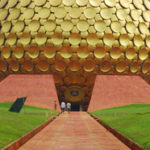
Eco-friendly Ideas - Auroville-Matrimandir

Global eco-commune

Eco-friendly Ideas - Raghava Gowda's Milking Machine

Manual Milking Machine


The issue is Still Smoking!

0

Smoking in public places is a highly contentious issue today. It’s been nearly five years since the Indian government banned smoking in public places in its effort to reduce tobacco use. In 2008, the then Union Health Minister Anbumani Ramadoss took up this drastic step despite being aware that enforcement is difficult in India. Overnight, Ramadoss became a hero for NGOs and government research bodies that were fighting for a ban on tobacco consumption due to huge economic costs and the loss of human lives. But for individual smokers and the hospitality industry, he was a villain who curtailed individual rights!

still Smoking - Pictorial warning by WHO
Pictorial warning by WHO

Smoking of cigarettes in public places, advertising cigarettes in media, sale of cigarettes near educational institutions were all banned. However, beedies which account for nearly 48% of Indian tobacco consumption have not seen any curtailment whatsoever. Similarly, gutkha and chewing tobacco have flourished without any ban despite being threats to addicts. Selling gutkha sachets to minors is commonplace across India, who seem oblivious of the serious health effects. Chewing tobacco and gutkha contribute to 90% of oral cancer cases in the country, with 75,000-80,000 cases reports every year. I have a personal experience with two of my college classmates dying of cancer due to smoking and gutkha addiction before the age of 30!

smoking in public
Smoking in public

We Indians excel in doing anything illegal; the more unlawful it is, the more thrill we get out of it. Check out the list –

  • Urinating in public (yes, it is illegal in some states!)
  • Riding a bike without a helmet
  • Jumping the queue in public places
  • Child labour in restaurants
  • Running a food joint without license

Now smoking in public places has joined the list of prohibited acts. Yes, fewer numbers of my colleagues are joining the smoking bandwagon due to the prohibition at office premises. I really pity those addicted colleagues of mine who have to go way out of the premises to enjoy their daily puff. While it is nice to have clearer air in restaurants, railway stations and offices, it is highly discriminatory to push smokers into dark alleys. Ban on smoking in bars and pubs is the height of stupidity. While we condone one type of substance abuse, the other type is banned!

Nicotine is one of the most addictive substances known to mankind! Obviously, quitting nicotine addiction is a tough task due to the severe withdrawal symptoms, which are similar to any other drug abuse. Can’t believe that nicotine is as addictive as other psychotropic substances… check this scientific study – Addictive Properties of Popular Drugs

According to smoking addiction therapist Suresh Shottam, a ban on smoking does not help smokers who are already addicted or those young ones who are falling prey to it. Bangalore-based Shottam practices a cognitive therapy named Allen Carr’s EASYWAY to help people quit smoking. He was a smoker himself for 20 years when he got to know about Allen Carr’s therapy. Once he quit smoking and has not craved for it ever since.

Willpower not needed!

Suresh Shottam
Suresh Shottam

Talking about de-addiction, Shottam makes a shocking statement – “You don’t need willpower to quit smoking!” He says, “To begin with, using the word ‘quitting’ or ‘giving up’ is wrong. You are not a quitter when you stop your dependence on something! It takes no willpower to stop doing something that an individual has no desire to do, which is the realisation smokers come to once their fear about stopping have been removed”.

Family and friends of smokers need to help by refraining from nagging them and allowing them to take their own time to decide. Smokers should set a particular date to stop and carry on smoking as usual until then. They should not try to reduce their amount beforehand, because that just makes cigarettes seem more precious rather than less precious! Once they quit, they should never be fooled into thinking just one cigarette is OK. Similarly, they should not substitute cigarettes with nicotine strips, chocolate, coffee or anything else. That creates a feeling of deprivation.

I wonder why our beloved government, which worries so much about ban and its implementation, never bothers about treating the addiction. When was last time we saw a government de-addiction campaign? This World No Tobacco Day, let’s take a vow to help smokers to stop rather than admonish them.