Indian Scientists – Unsung Heroes – Part II

0

Continued from Unsung Heroes of Indian Science – Part I

Let’s look at some of little known Indian scientists who excelled in their domains and brought to light new discoveries or created inventions

Shanti Swaroop Bhatnagar

Indian scientists - S.S. Bhatnagar | Courtesy: Arago.si.edu
S.S. Bhatnagar | Courtesy: Arago.si.edu

Sir Shanti Swaroop Bhatnagar is a well known Indian scientist owing to the national award instituted for science & technology in his name. However, few of us know that the Council of Scientific and Industrial Research (CSIR) was established way back in 1942, much before India’s independence! Born in 1894, Bhatnagar got his B.Sc degree from Punjab University in 1913. He did his first research work for his MSc degree on the subject of surface tension.

Bhatnagar spent 16 years in Punjab University as a professor of physical chemistry and Director of University Chemical Laboratories. During this time, he did considerable work in applied chemistry, solving industrial problems such as developing process for converting bagasse into cattle feed, using Indian gum to lowering the viscosity of the mud in oil drilling operations and studying applications of magneto chemistry.

During the British Raj, the government was reluctant to set up a separate department for scientific and industrial research in India. However, Sir Arcot Ramaswamy Mudaliar, the last Diwan of Mysore kingdom, insisted on setting up a board. Due to the efforts of Mudaliar and Bhatnagar, the CSIR was established as an autonomous body in 1942. Under Bhatnagar’s able leadership, CSIR set up 12 national laboratories such as the Central Food Processing Technological Institute, Mysore, the National Chemical Laboratory, Pune, the National Physical Laboratory, New Delhi, the National Metallurgical Laboratory, Jamshedpur, the Central Fuel Institute, Dhanbad. His association with Pandit Nehru enabled him to set up so many institutes, which was termed as the ‘Nehru-Bhatnagar Effect’ by Sir C.V. Raman!

Vainu Bappu

Indian scientists - Vainu Bappu | Scientificindia.net
Vainu Bappu | Scientificindia.net

Vainu Bappu is considered the father of modern Indian astronomy, who largely contributed to the establishment of the Indian Institute of Astrophysics. His is a case of like father like son! Bappu was born in 1927 to a senior astronomer in the Nizamiah Observatory, Hyderabad. Being a keen amateur astronomer, Bappu published various papers on variable star observations. After obtaining his Masters degree in Physics from Madras University, he joined the Harvard University on a scholarship.

At Harvard, Vainu Bappu discovered a comet named ‘Bappu-Bok-Newkirk’, after Bappu and his colleagues Bart Bok and Gordon Newkirk. He completed his Ph.D in 1952 and joined the Palomar observatory on the prestigious Carnegie Fellowship. There, Bappu and Colin Wilson discovered a relationship between the luminosity of particular kinds of stars and some of their spectral characteristics, which is today known as the Bappu-Wilson effect.

On his return to India, Bappu was appointed to head a team of astronomers to build an observatory at Nainital. He worked towards building a large indigenous optical telescope and a research observatory in India led to the founding of an optical observatory of Kavalur. In 1979, he was nominated as the President of the International Astronomical Union. Due to his efforts, India’s largest optical telescope, the Vainu Bappu Observatory was established in 1986, just after his death!

Yash Pal

Indian scientists - Prof. Yash Pal | The Hindu
Prof. Yash Pal | The Hindu

Prof. Yash Pal is an Indian astrophysicist who has made significant contributions to the study of cosmic rays, high-energy physics, astrophysics, and science education. Born in 1926 in Jhang in Pakistan, he got his Masters degree in physics from Panjab University in 1949. Later in 1958, he did his Ph.D from the Massachusetts Institute of Technology, specializing in astrophysics.
Yash Pal started his career at the Tata Institute of Fundamental Research, Mumbai, as a member of the Cosmic Rays group.

In 1973, Yash Pal became the first Director of the Space Applications Centre in Ahmedabad when the government set up the Department of Space. He later served on various administrative assignments such as the Secretary General of the UN Conference on Peaceful Uses of Outer Space, Chief Consultant for Planning Commission, Secretary for Department of Science & Technology, and Chancellor of Jawaharlal Nehru University. However, his role as the Chairman of the University Grants Commission (UGC) during 1986–1991 was the prominent one.

As the UGC Chairman, Yash Pal initiated numerous innovative programmes to improve the standards of higher education in India. During this period, he also made regular appearances on a TV show known as “Turning Point” on Doordarshan, which explained the great discoveries of science and explained scientific concepts in layman’s language. Similarly, he worked on “Race to Save the Planet”, an international TV series that examined the major environmental issues facing the world. No wonder he received the Kalinga Prize, awarded by UNESCO for the popularisation of science in 2009!

Factfile –
http://indiatoday.intoday.in
http://insaindia.org

Indian scientists – Unsung Heroes of Indian Science – Part I

0

Google recently called for applications to its annual Google Science Fair competition held across the globe. Young students aged 13–18 years are invited to submit their innovations and scientific hypotheses. While we Indians constantly crib about lack of indigenous innovation, surprisingly, many Indian students have consistently figured in the top contenders since 2011!

Despite all the drawbacks in our educational system, the opportunities that urban youngsters today get to showcase their talent are immense. That reminded of those science exhibitions that we used to participate in the good old days, when lack of scientific temper among teachers was the biggest hindrance. Well equipped science labs in schools were kept under locks, while teachers struggled to explain scientific theories on blackboard!

While we Indians have immense pride in our cultural heritage and scientific innovation, it is hard to find the evidence on ground. Most innovative ideas, which are either created by a well-funded research institution or by a poor layman, lie unutilised by an apathetic society. This is clearly evident in the immense rejoice the nation felt about Sachin Tendulkar being felicitated with the Bharat Ratna award, while people asking “who is this scientist C N R Rao who is also getting Bharat Ratna?”

Indian scientists lost in history

The history of India is littered with numerous scientists and innovators who brought to light new discoveries or created inventions. On this National Science Day, let’s look at some of little known Indian scientists who excelled in their domains:

Yellapragada Subbarao

indian scientists Yellapragada Subbarao | Wikipedia
Yellapragada Subbarao | Wikipedia

Have you heard about India’s earliest known biochemist who discovered the function of adenosine triphosphate (ATP) and the first cancer chemotherapy agent in the 1940s? Today, if the world doesn’t remember much about Yellapragada Subbarao, it could be due to his failure to promote his own interests. Born in Bhimavaram, Andhra Pradesh in 1895, Subbarao joined the Madras Medical College for medical studies after his intermediate education. Although he fared well in his written examinations, he was denied his MBBS degree, since he displeased his professor by wearing khadi surgical dress!

Later in his career, due to a chance meeting with an American doctor, Subbarao went to the U.S. to for doctorate studies at the Harvard School of Tropical Medicine. While studying there, Subbarao developed a method to estimate phosphorus in human body fluids and tissues, along with Cyrus Fiske. This led to the discovery of the role played by phosphocreatine and ATP as the energy source in the living cell. This discovery ensured that Subbarao’s name was listed in the biochemistry textbooks in 1930s. Since he was denied a regular faculty position at Harvard, joined Lederle Laboratories. There, he developed a method to synthesize folic acid, Vitamin B9, and the important anti-cancer drug methotrexate – the first cancer chemotherapy agent, which is still in clinical use!

A patent attorney was astonished to find that Subbarao had not taken any of the routine steps that are used by scientists to link their name to their inventions. His colleague, Nobel laureate in Medicine, George Hitchings said, “Some of the nucleotides isolated by Subbarao had to be rediscovered years later by other workers because Fiske, apparently out of jealousy, did not let Subbarao’s contributions see the light of the day!”

Birbal Sahni

indian scientists Birbal Sahni | Scientificindia.net
Birbal Sahni | Scientificindia.net

Hope you have heard of paleobotany, the science of studying the evolutionary history of plants and the identification of plant remains from geological contexts. India was blessed to have its first paleobotanist in the pre-independence era itself! Birbal Sahni was the foremost botanists who worked on studying plant species in India as well as the study of fossilised plants.

Born in 1891 in West Punjab, Sahni graduated from Punjab University in 1911. He joined Emmanuel College, Cambridge for his post-graduation, where he studied paleobotany and awarded the Doctor of Science from the University of London for his research on fossil plants. While he was studying at Cambridge, Sahni worked on revising a textbook of botany to suit the requirements of students in India. The Textbook of Botany by Lawson & Sahni became a widely read book both in universities of India.

Sahni returned to India in 1919 and joined the newly created Botany Department of Lucknow University, as its first Professor and Head, a post he held till his death in 1949. He also served as the Head of the Department of Geology in the university. He was also interested in geology, since he believed that palaeobotanical studies should be conducted in relation to the geological and geographical conditions under which the plants thrived. In 1946, Sahni founded the Paleobotanical Society which later established the National Institute of Palaeobotany in 1949. Sahni became the first Indian botanist to be elected as the Fellow of the Royal Society of London.

C R Rao

indian scientists C.R.Rao | Scientificindia.net
C.R.Rao | Scientificindia.net

Calyampudi Radhakrishna Rao, also known as C R Rao is an Indian mathematician and statistician, who is noted for his contributions to the foundations of statistical theory and multivariate statistical methodology. C.R. Rao was born in 1920 in Hoovina Hadagali, Karnataka. He did his M.A. degree in mathematics at the Andhra University and completed his M.A. degree in statistics from Calcutta University. He earned his Ph.D. in 1948 from Cambridge University under the guidance of R.A. Fisher, the father of modern statistics.

Later, C R Rao began working at the Indian Statistical Institute, where he worked until he retired at the age of 60. Under the direction the doyen of Indian statistics, P.C. Mahalanobis, he played an important role in setting up state statistical bureaus in different states of India. Further, C.R. Rao worked towards setting up the Central Statistical Organization and the National Sample Survey Organization, due to which India has one of the world’s best national statistical systems.

Among his best-known discoveries are the Cramér–Rao bound and the Rao–Blackwell theorem on the quality of estimators. Other areas he worked in include multivariate analysis, estimation theory, and differential geometry. His other contributions include the Fisher–Rao Theorem, Rao distance, and orthogonal arrays. Today, at the ripe age of 87, he is still active as the Director of the Center for Multivariate Analysis at Pennsylvania State University.

Continued to Unsung Heroes of Indian Science – Part II

Factfile –
https://www.googlesciencefair.com
http://www.iloveindia.com
http://en.wikipedia.org
http://www.crraoaimscs.org

Essence of being a Global Indian – Part II

0

Continued from “Essence of being a Global Indian – Part I”

global-Indian-Culture-flag
Image Source

Sometime ago, we at Caleidoscope sought your opinion about the emergence of a “Global Indian” amidst us. The Global Indian mindset is too complex to define. To get a grip on it we asked some pertinent questions and here are some of the enlightening thoughts expressed by our readers:

4. By providing the Global Indians a platform to share their experiences with the nationalists,  are we strengthening the bond or are we increasing the economic gap?

Mohammed-Ibrahim
Mohammed Ibrahim

Mohammed – A common platform for bringing together people and sharing experiences is always a great idea. Global Indians can give a third person perspective, while the nationals can always give a battlefront perspective. Common concerns and disagreements would come into the picture too.

Anamika – One hopes that the gap is diminishing, but though more consumerism has reached the lower middle classes, there is still a huge discrepancy in the standards of living.

Ambika-Chauhan
Ambika-Chauhan

Ambika – The Global Indian should keep in mind that the nationalists believe that the principles that they swear by are in the interest of the nation’s betterment. Same goes for the nationalists. I believe that if both the groups share their fears, goals and vision clearly, and keep the nation’s development in mind, the gap can be reduced.

Devangini
Devangini

Devangini – Strengthening the bond, one generation at a time would be more like it. The influx of attitudes is what will help a new India emerge – an India where shared interests form the basis of socio-political work.

5. Culturally, festivals define India. Now living outside India, how important do Indian festivals feel? Are they really as important as they are felt in India?

Mohammed-Ibrahim
Mohammed Ibrahim

Mohammed – Festivities are in our blood, since we come from a plethora of religions and cultures, and this never seizes to amaze the average non-Indian. When other nationals ask about our festivals and the stories behind them, most Indians respond with a, ‘Oh, you didn’t know that?’ And since we are everywhere on the planet (even as Appoo, in the Simpsons’ universe), we take our baggage of festivities and local cuisine with us. Being one of the very few nations that can claim to have so many festivals and the authentic cuisine to our credit, we can easily spread the joy in whichever country we land. Festivals are all the more important when you’re not in India. It helps remind us who we are, where we come from.

Sangita-Garg
Sangita-Garg

Sangita – More so abroad especially in pockets that are craving for a taste of their roots or where these are a cause for community bonding.

6. Do you think that being a part of the modern society in India needs the adoption of western culture and western traits? Do you feel urban India is somewhere losing its cultural identity and giving way to western mix?

Shabber – Not necessarily. Western culture also has its own negatives. But we can look at adopting the best practices from the western countries such as: Keeping our surroundings clean and bring discipline in everything we do. We Indians are known to be indisciplined at whatever we do; be it following traffic rules or time management.

Mohammed-Ibrahim
Mohammed Ibrahim

Mohammed – Does ‘being modern’ mean you have to shun your cultural entity? If it can go hand in hand and it doesn’t contradict our beliefs and customs, there is nothing wrong in adopting from the west. Generally, in India, ‘being modern’ doesn’t go well with your traditions, your religion, and your values. But that is just because we choose to lose our identity for something that is necessarily not better that what we have. If being ‘urban’ means you have to speak with an accent and fit in 15 swear words in each sentence you speak, (which you wouldn’t imagine saying in your own language), you are just taking in trash from the west!

Anamika – I definitely don’t think one needs to ape everything Western. To learn good points from any society is always prudent, and to be multicultural in understanding is essential to become truly a global society. Plain aping the superficial behaviors and culture of western lands, if they are in no way worth emulating, should hopefully not be done. There is good and bad everywhere, and one only hopes people go for good core values, rather than following the crowd without thinking. Unfortunately, people often follow the ‘craze’ of the moment.

Ambika-Chauhan
Ambika-Chauhan

Ambika – I do believe that today’s generation is losing sight of the big picture when it comes to westernization. Having a smartphone, dressing in skimpy clothes, swearing at a younger age, disrespect for people and property, being all about consumerism; people try to get away with such acts by blaming the Western culture. Nowhere are such practices embraced. We as a country should know the difference between the positive and negative traits of the western world and apply them accordingly. Why can’t one see the good side of the Western world?

Devangini
Devangini

Devangini – The richness in Indian culture cannot be lost out to its evolution in keeping with the Western ideals. Taking the best from the West and retaining what’s ours is an advantage that we have – an advantage that we must continue to make use of.

Parting words – 

Mohammed-Ibrahim
Mohammed Ibrahim

Mohammed – Looking at it from another perspective, the world is shrinking. A global, cross-border culture is growing. It is a cultural mix with culturally acceptable norms of its own. It has a virtual entity as well, that spans across nations. Facebook has more people in it than a small European nation, it can be declared a nation with people and cultures from across the globe! Staying away from the rest of the world will isolate and make you less tolerable of other cultures, which history has taught us is never a good thing. The key is balance and knowing what is good.

Shabber – Urban Indian is at crossroads with the old Indian culture on one end and the western culture on the other. We do have our younger generation feeding on western junk food more than our staple food. There is a clash of ideologies at home where the parents come from old school of thoughts and their ward is more “modern”. But such clashes have existed even in the past. For example:

  1. During the Mughal rule, subjects had a major difference of opinion on which religion to follow
  2. During the British rule, we have had Indians working for the British at the same time we also had a majority of Indians fighting the British for independence.

The Essence of being a Global Indian – Part I

0
https://spacebound90.wordpress.com/tag/indian-culture/
Image Source

Sometime ago, we at Caleidoscope sought your opinion about the emergence of a “Global Indian” amidst us. The Global Indian mindset is too complex to define. To get a grip on it, we asked some pertinent questions and here are some of the enlightening thoughts expressed by our readers:

1. India can be termed as a country where, the medieval and the modern go hand in hand. Can we reduce this stark contrast, if yes, how?

Abhishek Mukherjee
Abhishek Mukherjee

Abhishek Mukherji (services industry professional) –

We can never reduce this difference. The primary issue in the country is lack of education, hence lack of jobs and lack of progressiveness.

Shabber Sait (Businessman based in Bangalore) –

This stark contrast has more to do with political strategies and bureaucratic negligence. Major part of the rural India – which is treated as a vote bank – has remained backward due to the lack of will from elected representatives and high-handedness of bureaucrats. Politicians don’t visit their constituencies even once after getting elected, which gives the bureaucrats a free-hand to indulge in corrupt practices. Education and rising awareness in villages will soon make people fight for their rights, which is what the political parties don’t want to happen.

Mohammed-Ibrahim
Mohammed Ibrahim

Mohammed Ibrahim (A global Indian living in UAE) –

The ‘stark contrast’ is the summary of what is fundamentally wrong in how our society is structured. The needs of the elite are catered to, while the poor are disregarded. Building sky scrapers are preferred over laying water pipes, building hospitals, schools, etc. The elite are actually a minority; the real India is still the average person who cannot hardly afford three meals a day.

Ambika-Chauhan
Ambika-Chauhan

Ambika Chauhan –

The bipolar-lifestyles concept is what that gets us into troubles. I believe in respecting our traditions and culture, but I do believe that the positive factors from the ‘Modern Culture’ should be introduced among people who continue to get baffled by such new trends. I believe that through videos, classes, interactive sessions that focus on the youth, we can educate them about the pros and cons of adopting the new culture and merging it with the Indian values. If we can’t encourage people to practice the Western norms, we can encourage them to accept those at least.

Devangini
Devangini

Devangini Mahapatra (design consultant) –

In India, variety is definitely the spice of life. Unlike any other country across the globe, there are many urbanites for whom a ticket to a movie every weekend is no big deal, while about half the rural population would not afford to watch a Hindi movie in theatres. The complexities in the urban and rural parts of India can be met through a more diversified, population, socio economic and culture-based reach of infrastructure. This will need planning at various levels for both rural and urban India, so as to bring them on par with global standards.

2. Does the Global Indian really connect with and understand the issues plaguing India? Does he/she just have an opinion like everyone else does?

Shabber –

The global Indian is frustrated today. He/she is well travelled and can see the difference in the countries that he/she visits. Social awareness and participation is far higher today. The generations that passed by, neglected core issues pertaining to public policies and left them to the political parties. The Global Indian is also opinionated and does not hesitate to speak up or stand against injustice.

Mohammed-Ibrahim
Mohammed Ibrahim

Mohammed

The great majority of global Indians are, essentially people who left their home country in search of better lives, simply because their homeland failed to provide them. The average expatriate population that brings revenue into the country, is equally nostalgic and patriotic, simply because they see the real worth of their country from a third person’s perspective. They do have opinions about every socio-economic situation back home; whether or not they act upon their opinions is a different thing.

Ambika-Chauhan
Ambika-Chauhan

Ambika

I believe that Global Indians would mostly have a balanced opinion about different issues that loom over our country. Global Indians most likely have seen extreme conditions: right from the urban, electronics-ruled, convenient life; to the villages, the ‘backward’ mentalities, the lack of provisions and basic necessities. So a person who has experienced a little of everything would have an open mind and better solutions to the different problems in India.

Devangini
Devangini

Devangini

No, unfortunately, the Global Indian at Cannes, or the one leading the NRI life, or even a college kid in Mumbai busy chatting on Facebook, is unaware of the real problems plaguing India. They think lack of electricity and water in rural India today is a Lagaan-type dramatisation of issues.

3. Does the latest update on Section 377 about Homosexuality change the opinion about the Indian society?

Shabber

The SC verdict speaks more of how outdated our judicial system has become today. We are still following the laws that were drafted in the 1960-70s. The judicial system of our country needs a revamp.

Mohammed-Ibrahim
Mohammed Ibrahim

Mohammed

When it comes to matters of sexuality, it is always comes down to individual choice. The nation should not have anything to do with it unless it affects another person. Just because a man prefers to have sex with another man, it need not be deemed as right. But, given that argument, if it is with mutual consent he or she should not be denied any rights as a citizen. If religion comes into the picture, it is a whole different story. Homosexuality is an anomaly of nature. It is a subject that concerns a very minute percentage of humanity. There are far worse reasons of concern for us. We as a nation should not worry about an ‘image’ but instead hold high what we believe is the right path.

Anamika (Teacher in Boston) –

This does not really change my opinion of India. India has a long way to go in so many areas. Yet, in so many ways it is an amazingly tolerant society, particularly if one considers the several different types of diversity it has carried along over thousands of years! Homosexuality poses problems in many countries, even in the ones that technically accept it. It again rests on individuals to believe in “live and let live”.

Sangita-Garg
Sangita-Garg

Sangita Garg

No, people have become more tolerant about the changes that take place on a social front. Again, this is a universal issue not specifically limited to India.

Ambika-Chauhan
Ambika-Chauhan

Ambika

I believe that it just goes to show how our society refuses to roll with change and believes that one still needs to be controlled by higher authorities, even when it comes to personal choices. Being gay was considered taboo anyway, making it illegal just brought our country to a new low.

Continued to “The Essence of being a Global Indian – Part II”

Delhi Book Fair – Reader’s Paradise

0

Kids and Parents at Delhi Book Fair

I caught the reading bug when I was about six. And since then, there has been no looking back. A book in my hand is enough to keep me occupied for hours, if not days. Every time I see a book, memories of hiding out under the shade of a tree in the garden to finish my reading, haunt me. It feels like yesterday when I was introduced to the world of Enid Blyton, then P G Wodehouse, Nicholas Sparks, Cecilia Ahern, Alvin Toffler and others. It was a world where I was most comfortable – a world that made me dream; a world that made me want to write.

This week, the Delhi Book Fair is on in New Delhi. Held annually at the Pragati Maidan, this is indeed a treat for everyone: bookworms or not. This fair is quite similar to the renowned Kolkata Book Fair. All the big book publishers were there: Harper Collins, Penguin Books, Grolier International, Little Books, Oxford Univ Press, S Chand & Co, Random House, Sage Publications, etc.

Delhi Book Fair-03
Delhi Book Fair

However, as I walked around, I realised what it is about books that catches on, and stays right there, in the heart and mind of the discerning reader. Read on to see how powerful a single tome can be:

  • – Reading makes time stand still. What I absolutely love about reading is the way it can make time stand still. It replaces the need to record, dissect and put forth. You become the part of a journey and before you know it, morning turns into evening.
  • – Evade boredom. In this day and age of rapid fast moving everything, we seem to have forgotten how to while away time without the aid of technology, food or retail therapy (just to name a few). The Delhi Book Fair showed me that boredom can be happily ousted from our collective memories if we take to reading. Never again will there be a restless child who says to her mother, “Mama, I am bored; let’s go to the mall!”
  • – Imagination, here we come. It is proven that watching TV or any other form of multimedia is indulging in a sense of passive imagination. A child’s imagination is literally activated when he or she reads and plays. In media-related entertainment, the images are moving for you. When you read the same scene off the pages of a book, you actively exercise your imagination to create the scene, the furniture, the characters and their freckles. And this helps a child understand, question and understand some more.
  • – Write. Reading helps people write. This is an obvious side-effect of the habit of reading. When you read, you visualise and ideate better. And why do you need to write? Maintaining a journal has long been hailed as a major stress buster and the most effective form of “self-therapy”. Writing, expressing and creating are means of self-expression, which help us evolve and grow even as we indulge in the same.
Bookstalls at Delhi Book Fair

With a visit to the Delhi Book Fair, I realised how important it is to read, not only as child, but also as an adult. As a writer, reading is one of the foremost activities that helps me keep my craft well sharpened. For many professionals, reading is a medium that can help in the evolution of craft and information. This in turn, proves as a vital step in career progression.

Take the Army for instance. Reading is a mandatory thing in the Forces. Not only do you have tons of course material to catch up on, at any given point of time, but you also need to submit a list of books you have read in your lifetime thus far, when you get commissioned into a regiment. Of late, many regiments have taken to presenting the newly commissioned officer with a book to start a reading habit, if it did not already exist. And in remote postings, books are in any case, all you have to keep you company!

Today, with the TV firmly banished from our home after the arrival of our first child, we happily sit up and read before bed time, and reading is a favourite weekend activity. We haunt bookstores and buy books as a matter of passion, and storytelling is a regular occurrence during long drives and at dinner time. With a visit to this Book Fair, came the poignant reminder that reading is something that evolves with you as you grow up. Although, that does not stop me from devouring an Enid Blyton on the sly, as and when time permits!

Author's talk at Delhi Book Fair

www.newdelhiworldbookfair.gov.in

Good Old Days of Loving

2

valentine-day-imagesSometime ago, a friend of mine wished to pen amorous love letters for her dearest. I could not fathom then, but now I understand why she was teased for this idea. “Come on, it’s the 21st century and you are writing letters!” was the usual retort from most of the pals in our group. I was of a different mindset back then and found nothing weird in writing poems for someone you love the most. As we girls are stereotyped to be mushy and overwhelmingly sentimental (something the boys hate about us!), we move away from those old fashioned ways of expressing affection.

We either build a wall to preclude anyone from entering our hearts or gulp down our bonafide feelings just to present a stronger outlook to the society. However, even when ‘romance’ has been redefined and made less emotional, some young hearts in love tend to be swept off the feet by a prince charming. They relish the fragrance of red roses, the aroma of chocolates; dancing under the moon to the tunes of soft music, they like holding hands and walk along peacefully on a beach, sharing a steamy cup of coffee…huh oh…

I long for those good old days of romancing when everyone in love became a Shayar at the touch of tender love. However, love affairs these days start on a social networking site and end with a blunt text message. The current mode of communication is gradually eclipsing the long standing vehicle of conveying love viz. handwritten letters.

The true essence of ‘till death do us apart’ is now limited only to wedding vows. The main culprit in a deteriorating relationship is lack of regular exchange of genuine feelings and romantic gestures. Relationships lack the sheen of innocent passion. A selfless boy dedicating a lifetime for the happiness of a girl who means the world to him, who is his first and only love makes a good content for a book, but has become unusual in the present times. Men and women are more pragmatic these days; they hook up, break up, and patch up so frequently that the erstwhile gusto of being head over heels for a person is extinct.

old-love
Image – camerabee

 “You are the answer to every prayer I’ve offered. You are a song, a dream, a whisper, and I don’t know how I could have lived without you for as long as I have.” Only characters in books such as ‘The Notebook’ utter something as wonderful as these lines. There might be fervent lovers out there, but I can assure that they are so few!

Pouring out your heart in a letter, reading the reply myriad times used to be joys of the good old days of romance. Days when the first kiss would change two lives forever are long gone. We are rapidly losing emotions today; we don’t care for ourselves nor do we care for another soul. When destiny did not favour and lives had to be lived apart, those heart-melting last letters were nothing but harbingers of purity in love.

“I see your limbs in graceful creeping vines,
Your glances in the eyes of gentle deer,
Your eyebrows in the ripple’s dancing lines,
Your locks in plumes, your face in moonlight clear,
Ah, jealous! But the whole sweet image is not here.”

The eloquent way that the great poet Kalidas employed to convey ardent feelings through a forlorn character in Megadhuta brings out the paramount spirit of love. Of course, all of us cannot be bards; making surprise visits to a lover’s house through windows was left long behind in Shakespearean dramas. However, a simple gesture like baking a cake for your spouse or writing an austere letter or just a delightful wish in the morning is enough to nurture love.

old fashioned love
Old Love Letter

Love is madness, a lot of curiosity and a plethora of smiles and cries. Today, all we see is a fleeting fling. As much as we don’t understand ourselves, we fail to discern another person and ultimately this lack of mutual understanding ends in bitter divorces or acrimonious breakups. Don’t we take pleasure in listening to the romantic tales of our grandparents or parents who loved each other to the core of their hearts that they’d rather fight for each other than walk out of the relationship for trivial issues?

Compromise is a missing ingredient in the dish of love where the pungent taste of ego engulfs all others. Desires and individualistic aspirations have overlapped the plain beauty of love. Listening to each other in a relationship is vital, but today couples have no time to exchange their joys and pains. Earlier, a simple ‘I love you’ would mean so much more that it was an agreement for a lifetime partnership. Today, the three magical words carry no weight of responsibility and most of the times when they are uttered they do not actually convey the depth of the subtle words. Despite the lovelorn sentiments, sugary words, flattering songs, poignant days – love is worth it.

Why are we hesitant to love someone in a manner we want? Why don’t we do all the crazy things in love? Most importantly, why are we afraid to fall in love at all? Can we reignite the passion this valentine’s day?

Factfile –
http://www.sacred-texts.com

Documentary Filmmaker – The One Behind the View Finder

1

The Pack wild dogs documentary
Image Courtesy – ecoideaz.com

Let’s look at the person peeping into the viewfinder behind the camera. Mike Pandey, a renowned documentary film maker, once said, “Making a feature film is easy because if you miss a shot, you can re-shoot it. But while making a documentary, there are wild animals being captured and the camera is on your shoulder. There are no rehearsals,” The nature is unpredictable, tedious plans and swiftness cannot ensure a 100% success. Being at the right place on the right time with the right angle is an inevitable challenge.

There is a constant financial pressure on small budget film-makers, which forces to minimise costs and increase productivity. Such situations leave documentary film-makers starved of high-tech equipment and the resulting stretched out schedule and extra efforts required for production. Inability to shoot at night and lack of sophisticated cameras leave these visual creators in a tough spot.

Another pressing issue is the lack of clarity and standards in ethical practices that often leave wildlife film-makers caught between ethical responsibilities against practical considerations. Steve Irwin, famous presenter on Animal Planet, crossed one such blurred boundary while swimming too close to stingray for shooting his series, which resulted in his death.

The threat of wild predators attacking the film crew is an obvious and persistent danger. Romulus Whittaker while shooting for a film was chased by a Komodo dragon. He stated, “I really had no idea that Komodos would actually chase a human, but then again, why not; we must be as tasty as a deer. This was truly a surprise, and I’m glad the local guides insisted that we carry a forked stick with us and that we shouldn’t walk around alone on the island.”

However, what tops the list and is the most frustrating aspect for film-makers is the long wait to get permissions from local authorities for allowing them to carry on with their work. Sometimes they don’t understand the purpose of the film and they fear of being drawn out as the bad guys. God knows how patient a documentary filmmaker has to be!

Do go through our compilation of the best documentary filmmakers and environmental film-makers in India.

K V Gururaja and his World of Frogs

6
KV Gururaja - Frog World
KV Gururaja

I was having the most interesting conversation with a researcher called K V Gururaja. We were talking about frogs (anurans). There were times during the conversation when I listened agape, like when he told me about frogs that engage in deadly combat and one particular bull frog even strangles other frogs to defend its territory. Dr. K.V. Gururaja has been studying frogs for the last 15 years. His fascination for them was brought about, curiously, by his love for birds! During his master’s degree, his professor suggested that he study the birds in the university campus. Having already listed them, he wanted to do something else. He was then introduced to the world of amphibians and has not looked back since. Even now, he is constantly spellbound by them.

Frogs in India: Then and Now

Before independence, the British, Dr. Gururaja told me, had conducted a systematic study of frogs in India. Later in the 1940s, a zoologist named C.R. Narayan Rao, contributed most to the field of amphibian study, by describing around 19 species of frogs. Since then, very few new frog species have been discovered. Amphibian study requires people to spend long hours in the forest at night and there were very few researchers, who did this then. Another important reason was that people rarely looked at any frog species as an undiscovered one. It was only after the peculiar-looking Pignose Frog was described in 2003 that more people became interested in frogs. There are currently 345 different species of frogs, toads, salamanders and caecilians (together called amphibians) in India. Some of these species are found exclusively in the Western Ghats habitat. As interest in the field of amphibians grows, more species are being discovered every year.

 Frog World Ponmudi Bush Frog

Ponmudi Bush Frog

Where Frogs are Found and What They Do

As our conversation progresses, I begin to understand why Dr. Gururaja is so passionate about Anurans. Frogs, like all amphibians, are cold-blooded creatures that have to bask in the sun to maintain body temperature. They tend to become active only during the night, when the temperature becomes cooler. This is when Dr. Gururaja sets out to study them with a torch in hand. His day begins at 9 in the night and goes on till the wee hours of the morning. He feels there is so much to study about frogs since there is such variation in their behaviour and habitat. They have four broad habitats: aquatic, terrestrial, fossorial (living underground) and arboreal (tree-dwelling). Some frogs occupy extremely specialized habitats; for instance, the Ochlandra shrub frog found exclusively inside the hollow reeds of Ochlandra bamboo, which is used to make flutes. Or the Pignose frog which lives 8 metres underground and surfaces for only 15 days in a year!

Frog World Information-about-the-Ponmudi-bush-frog-on-the-FrogFind-app

Information about the Ponmudi bush frog on the FrogFind app

Frogs have an intriguing behaviour too. In an environment where there is a lot of ambient noise, male frogs have a tough job signalling to others by croaking. Some frogs (torrent frogs – Micrixalus saxicola) complement these auditory signals with visual ones. They extend their limbs outward repeatedly in an act called ‘foot-flagging’, to signal other frogs that they are defending their territory. Dr. Gururaja’s favourite behaviour is of a frog found in a specialized habitat called Myristica swamp. Once the monsoon is over, the female of this species carries her mate on her back to a stream, where she makes a cavity to lay her eggs. She then carefully covers it up and goes away. Dr. Gururaja is intrigued by questions like why they wait till the monsoon ends and why they cover up their eggs!

Eek! to Ooh!: People’s Reactions to Frogs

During monsoon, K V Gururaja is frequently invited to go on nature trails conducted by different organisations. He leads people into the forest to teach them about frogs and toads. He tells me that there is an increasing interest in amphibians over the past few years. Kids especially, find them fascinating and they do not have any inhibitions about touching them. Wildlife photographers join in on these trails and document the anurans they see. This helps getting more people interested.

Frog World Micrixalus saxicola

Micrixalus saxicola a species of torrent frog found in streams of the Western Ghats
(Photo credit: Bamboo Rustles)

Threats Faced by Anurans

Habitat loss and fragmentation are the major threats that are faced by frogs. There are 17 Indian frog species that are listed as critically endangered by IUCN, indicating a high risk of extinction. Frogs legs are a delicacy in some parts of southern India. India used to be a major exporter of frog legs, until a ban was imposed in the 1980s. There are still places in Kerala and Goa where frogs legs are sold. Pesticides sprayed on crops, which find their way into water bodies also harm frogs as most species lay eggs in water and tadpoles are unable to grow in contaminated water.

Invite Frogs to your Garden

Frogs are an important link in the food chain as they curb the population of pests like mosquitoes. Dr. Gururaja tells me that fewer frogs are found in city due to unfavourable conditions. Keeping a small pond in your garden can help to attract them. Apart from being relieved of the mosquito population, you will also get a chance to study their behaviour.

Talking to KV Gururaja about frogs was like learning about friends that were close to his heart. There is no other animal that makes him tear his eyes away from frogs, except for the snake. They share his interest in frogs, albeit for a different purpose. I learnt quite a lot about frogs in the one hour that I interacted with him- enough to pique my interest and make me want to go frog hunting so I could watch some of their behaviour first hand.

Frogfind Mobile App

Last year, Dr. Gururaja wrote a book called the “Pictorial Guide to Frogs and Toads of Western Ghats”, covering 73 of the 156 species of frogs and toads found in the Western Ghats. Soon after the book was published, two software developers approached him, wanting to develop an Android app based on the book. After lengthy conversations and emails sent back and forth, FrogFind was born. It is India’s first ever mobile application to identify frogs and is a delight to use. Frogfind contains information about the habitat, distribution, key identifying features, time of activity and ecological status of frogs and toads in a visual and intuitive manner.
The app’s next version will allow users to find frogs in a 10-kilometre radius around them and will be released on the iOS platform. The team will also be working with the India Biodiversity Portal to enable the app to identify frogs based on their call, which is unique to each species. Version 2 will be used as a citizen science project, where wildlife enthusiasts and lay-persons can identify frogs and capture the location of where they were found. This helps scientists to monitor and build distribution maps of different species, over large areas.

Factfile –

http://en.wikipedia.org/wiki/Purple_frog
http://amphibiaweb.org/
wiki/Myristica_swamp
http://indiabiodiversity.org/

Cultural Festivals Across India

5

There was a time in India, not very long ago, when festivals seem to only imply spiritual or religious celebrations. While the world was fascinated by the lengths we go to celebrate these precious holidays, we have gradually opened up to the new concepts of art, culture and film festivals. Festival travel, a term that may mean “travelling home for the festivals” for the Indian traveller, but in reality, it is all about travelling across the world to learn and appreciate the vibrant and resplendent cultural festivals that brings together people from all walks of life.

Non-religious festival travel is an adventure of its own kind; learning aside, they can be physically exhausting. But this trend is catching up in India, and we compiled some of the most popular cultural festivals in India that a cultural enthusiast shouldn’t miss for the world. Read on…

Kala Ghoda Arts Festival – Mumbai

Cultural festivals of India fest-kala-ghoda
Source

If you thought Mumbai was all about Bollywood and moolah then think again. India’s commercial capital hosts an extremely popular art festival called the Kala Ghoda Arts Festival. Now in its 16th year, this annual festival begins in the first week of February and stretches over nine days. The best part about Kala Ghoda is that it is open to all and it is free. What can you expect there? Street plays, drama, art installations and exhibitions, silk painting, dance performances, music, wine fest, movie screenings, heritage walks, bus tours and what not! The ambit and enormity of this festival is unparalleled in India.
What’s an art festival if there are no vividly coloured creations that stop you on your path and compel you to gaze. While some artists encourage you to get involved in completing an art work, others like to remind you of the more pressing problems our world is facing today. Kala Ghoda brings together artists and designers who love putting up their work for sale, right from ceramic plates that have patterns cut out to clocks made from alcohol bottles. Undeniably these works of art seem to draw a great crowd to this annual festival.

Indian Derby Weekend – Mumbai

Indian-Derby-Weekend Mumbai

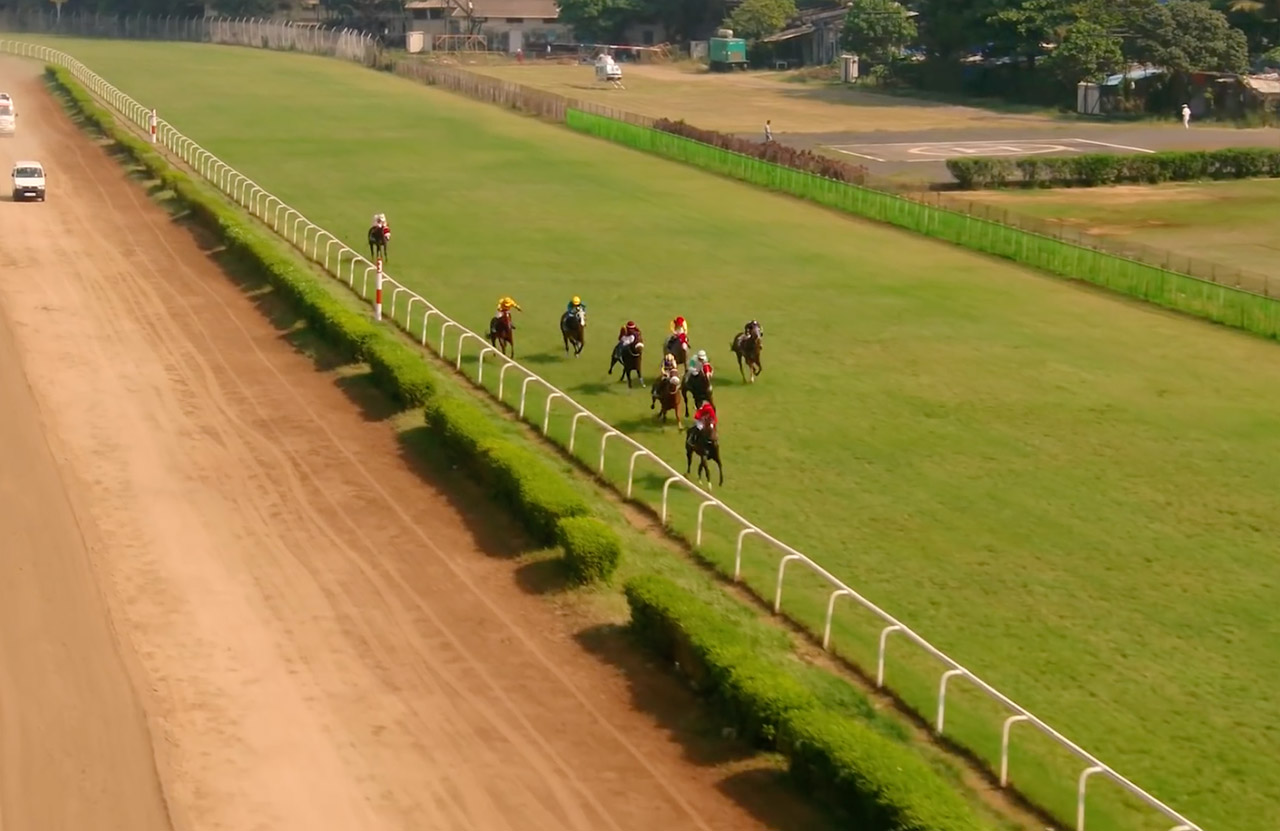
Nothing stirs up the Indian socialite circle like the Derby Weekend held in Mumbai. Film stars, industrialists, liquor barons, politicians almost everyone who is someone makes it a point to be seen, talked and photographed about in this edgy, prodigious event. What started as a modest event in 1943, McDowell’s Indian Derby has become one of the biggest sporting and glamour events in India. Over 25,000 enthusiasts flock together making it not just a horse racing event but also a platform to flaunt extravagant haute couture.
The derby weekend begins on the first Sunday of February and is held at the Mahalaxmi Racecourse. Apart from the races, the event also features some awe inspiring performances by international salsa dancers, aerial ballet, live bands, fashion shows and much more. Known as the weekend of high stakes, adrenaline, excitement, glamour and elegance, this flamboyant affair presents a prize purse of over 10 million rupees for the jockey who strikes gold.

Goa Carnival

Cultural festivals of India Goa-Carnival
Source

February is the month of celebrations, and when we say celebrations how can the party capital of India be left out! Goa is probably the only place in India that breaks away from the conventional persona of the country as being conservative. The Portuguese influence on the state could be the reason for the constant merry-making mentality of Goans; evidently the carnival too is an integral part of the Portuguese history.

Although the carnival is celebrated only for three days, the preparation for the festivities begin weeks earlier, which turns the streets into a chaotic spin-top as the carnival approaches. The Goa carnival is essentially a time of gala jamboree and revelry just before the solemn 40 days of Lent season for Christians. It seems to take Goa into a trance like zone where food and drinks are abundant, and dazzling processions or live music performances are always around to accompany. Music always finds its way into any Goan celebration, nudging even an innocent bystander to shake a leg. There’s almost a fairy tale like feeling in the carnival: blazing fireworks, exotic dancers, mystery fortune tellers, and most importantly an intoxicating cloud of happiness and joy.

St. Francis Xavier’s exposition

Cultural festivals of India - St.-Francis-Xavier's-exposition
Source

If you happen to be in Goa in November, then make sure that you head for St. Francis Xavier’s exposition; a once in a decade event that is held to deepen and invigorate the faith in Christianity. St. Xavier, a renowned Catholic Jesuit missionary is predominantly known for his work in spreading the message of Jesus in Asia. Born in Spain in 1506, the saint came to India along with the Portuguese and from there travelled across Asia, spreading the Christian faith. After he died due to fever, he was first buried in the Chinese island of Shangchuan. Later St. Xavier’s body was removed and brought to Goa, where it is preserved at Basilica of Bom Jesus. Although the saint passed away in 1552, his body miraculously survived decomposition for over four centuries and his face is still discernible.
Once every 10 years, on his death anniversary on December 3rd, the saint’s body is openly displayed in a glass case. The case is taken along in a procession led by various priests and then displayed at the St Paul’s Cathedral for veneration. Apart from holy mass and choir, there will be also several shops selling trinkets and souvenirs. Food and drinks are plenty and the general atmosphere at the church is jovial and happy.

If you enjoyed reading this article, we recommend you also read:
Top 7 Cultural Festivals of India
Monsoon Festivals in India – The Top 10

What is Governance to Common Man?

0

Governance And The Common Man – Part I

Delhi-school-children | Celeste Goulding

Ram Singh got back to education as he spoke fondly of his five-year-old daughter. He had dropped off a customer at the Kendriya Vidyalaya and was waiting for her to pay, when he asked her how good this school was. She said to him, there is a lucky draw every once in a while. Put your daughter’s name in it. You never know. Apparently, he was this nice to all his customers and they all ended up learning about him during the course of a ride; and he about them.

He took her advice and got his daughter into the school. But his wife still has a problem. She wanted the child to go to a private school. She also wanted him to buy land sooner, for him to have a better job, et al. And here he is, smiling his way through life, relating anecdote after anecdote and telling me that he stays out until 11 in the night so that he stays out of her way. And he talks to people so that he doesn’t miss his kids too much. They are asleep by the time he gets home, and still asleep when he leaves. Hard working and making full use of a democratic system? Yes, that’s our man.

He asked me why I had taken his rickshaw number. I candidly told him. What he said next reflected the ideals of peace feminism and a call to affirmative action. He first started out by assuring me that I will meet more good people than bad in this, or any city. A bad episode gets hyped up in the media because it draws mass sympathy. But no one is going to tell you about an average, good day: that is common place and lacks excitement. I agreed. He said, what happened to that girl in December 2012; it was very sad. But sadly, maybe fate had that in store. And when it is decreed by fate, there is little you can do to prevent something. Yes, one must be careful, he said. And this is where he took me by surprise.

In India, where a girl is invariably blamed during a mishap for her clothing or demeanour, this uneducated man said that these things were not even an issue. It was refreshing to find an open-minded person. Being safe is. He would, he said, never drop of a lady in a lonely spot. And he would ask his male passengers to be careful as well. That is simply about being sensible. And a lady needs to remember that for better or for worse, she is a minority, not because of anything else, but the fact that a drunken thug would have much more physical power.

Delhi Rickshaw
Delhi Rickshaw | Courtesy: Jack Castleman

He has spoken with a lot of ladies, even been offered a cigarette by an American lady, and holds women-folk in high esteem. Yet, he does not judge: smoking, clothing and demeanour be damned. He is more concerned with being of service and making people smile, and that is what he does.

I asked him my final question as we were nearing my house. “Do you know about the Telangana?” On this he had a refreshingly open stance, “to each his own, madam. On one hand, you wonder how many pieces they will chop off one little finger. But then, they must have had their reasons and self-esteem to have demanded what they did for so long. All for the best!”

And with that, he delivered me safely home and true to character, refused to take the extra tip I offered. I went back home that democracy and the related ideals of governance in one, has been met fair & square for this common man. He may not have told me things that I did not already know, but he did so with the simplicity bereft of agenda and judgment. Yet, he was open to others’ views as well. I had met the real aam aadmi, the great Indian common man!

Factfile –
http://www.flickr.com