Results of Caleidoscope Offbeat Travelogue Contest

2

CaleidoscopeTravelogue winners

Our Caleidoscope Offbeat Travelogue Contest has finally reached its culminating point. We began two months ago by listing a range of offbeat travel destinations across India and invited our readers to vote the best. However, there was lukewarm response from our audience to choose the best among offbeat tourist spots, since most Indian travellers are not accustomed to travelling to unknown destinations. So we created a special post to exactly define an offbeat travel destination. Despite that we barely got 9 responses for our Caleidoscope Offbeat Travelogue Contest!

Since we have not received the minimum 10 entries for the contest, we have to cancel the main prizes and offer consolation prizes instead. However, we are immensely satisfied with the quality of entries we received for both travelogue and photo contests. Particularly, the winners have submitted works of exemplary quality! They are:

Aditi Das Patnaik, for “Sundarbans: In The Flow”– consolation prize for Caleidoscope Offbeat Travelogue Contest.

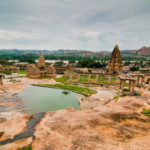
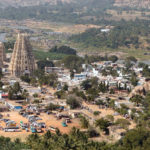
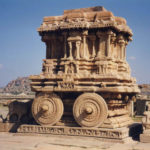
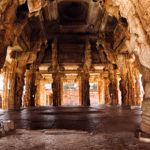
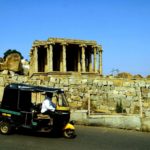
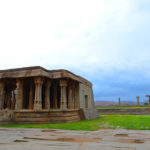
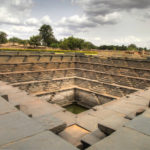
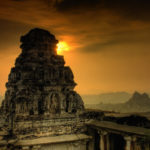
Deepak Agarwal, for “The lost city of Hampi” – consolation prize for Caleidoscope Offbeat Photo Contest.

Please join us in congratulating the winners! We shall soon send across their prizes. Apart from these winners, there were 7 other participants who were noteworthy –

Article topic Writers
Arnala – A Beauty lost in Mumbai’s suburban concrete jungles Siddhi Aras
Unravelling the mystery of Udvada Monica Levine
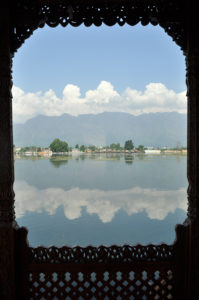
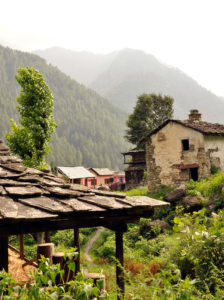
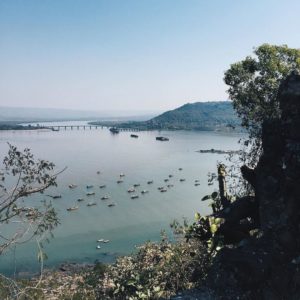
Photo feature on various tourist spots Nikita Gupta
Dhanaulti – Sheer bliss off the beaten track Ambika Nagaraj
Chance Encounters In Hampi Aditi Das Patnaik
5 Days in Punjab Karpagam D
Desert Festival in Jaisalmer Devangini M
Athithi homestays in Coorg Apoorva S

We will publish the remaining articles over the next days. We hope both our writers and readers will find the exercise quite an enjoyable one!

Photo Feature – The lost city of Hampi

2

The lost city of Hampi, in Karnataka is famous as a UNESCO world heritage site. The place is a photographers delight, the landscapes, the ruins, the weird arrangement are the main attractions. One can spend time leisurely looking at randomly balanced stone boulders or the beautifully carved temples. Deepak Agarwal went to Hampi recently and came back inspired by the memorable sights. He recommends us to check out the Hampi Festival which is held in November every year.

Based in Bangalore, Deepak Agarwal is an analytics professional with about seven years of experience. His hobbies include traveling to different parts of the world. Living in Bangalore allows him to travel to lot of places which offer him diverse experience. Deepak feels each location around Bangalore is a photographer’s delight! His recent travel escapades include trips to Chikmagalur, Hampi and Coorg. Deepak is passionate about traveling and experiencing different cultures. In future, he plans to travel around eastern Europe and diversify his portfolio of experience. His association with Caleidoscope is slightly new but has been on the right track!

Photos – Deepak Agarwal

Travel Photo Feature by Nikita Gupta

0

Nikita Gupta is an avid travel photographer who has traveled around not only India, but across Europe covering Spain, Italy, Holland and Czech Republic. Her Tumblr id – Camerasonshoes aptly describes her! She works as Young Creative Strategy Partner for Creativeland Asia Pvt. Ltd., in Mumbai. She also takes up photography assignments on a project basis.

Personal profile –
http://camerasonshoes.tumblr.com/
http://instagram.com/niqitagupta

How to create customized Google map

0

While collating opinion about offbeat travel destinations, we found that our readers have suggested tourist spots across India. The chosen locations are as diverse as the nation itself! It was difficult to locate all these different tourist spots on a map accurately. First, we thought we will take a regular India map and mark the selected spots, but we soon realised that we would be not only inaccurate, but also not interactive. Then we found an interesting way of creating a map.

custom google map

Google Maps allows viewers to create our own interactive map, pinpointing the specific locations. To begin with you need to have a Gmail id to login. Once you are logged in, click on the ‘My Places’ in the side panel. It shows a ‘Create Map’ icon on top along with your recent searches. Begin with providing a ‘Title’ and ‘Description’ for your map. Then search for a particular location in the search bar, and right click on the ‘Placemarker’ to choose the option, ‘Save the place on map’.

Now click on the ‘Get Directions’ button to add a new destination. Don’t worry about the connecting line drawn between the locations. As you add more destinations, the connecting line will vanish, displaying only the placemarkers. After you add all the destinations, save the map and click on ‘Collaborate’ button. Mail this map to all your friends who would love to know about such locations.

Based on our reader suggestions, we have compiled a list of offbeat tourist spots across India. See whether they match to your choice –

Popular Destination Article Page
Hampi, Karnataka Read Article
Leh, Jammu and Kashmir Read Article
Valley of Flowers National Park, Uttarakhand Read Article
Andaman & Nicobar Islands Read Article
Shillong, Meghalaya Read Article
Brahmaputra River Cruise, Assam Read Article
Sundarbans National Park, West Bengal Read Article
Gahirmatha Turtle Sanctuary, Odisha Read Article
Udvada Fire Temple, Gujarat Read Article
Mahabaleshwar, Maharashtra Read Article
Araku Valley, Eastern Ghats, Andhra Pradesh Read Article
Mangalore-Sakleshpur train, Karnataka Read Article
Wellington, Tamil Nadu Read Article
Ruins of Nalanda, Bihar Read Article
Bastar, Chhattisgarh Read Article
Auroville, Puducherry, Pondicherry Read Article
Katarmal Sun Temple. Almora, Uttarakhand Read Article

Arnala Beach – A Beauty Lost in the Suburbs of Mumbai

4

Mumbai, the business capital and financial hub of India, is a bustling metropolis teeming with people. Business activities happen round the clock and people here have no time to built relationships or emotional attachments. The sprawling concrete jungle, ever increasing traffic and the massive crowds tend to overwhelm a person by the end of the day.

People like me who reside in Mumbai, eagerly look forward to weekends for a quick weekend getaway. Since packing my backpack and setting out on a long trip was obviously not a feasible option, a short, but memorable night out was what I desired. I got my search shoes on and started looking out for places that would make my stay worth it. I stumbled upon a nearby place called ‘Arnala’ and immediately I made up my mind that this would be my next destination to explore.

arnala-beach
Arnala Beach – Image Source: Somnath/Trekearth

In the extreme northern suburbs of Mumbai, is a place called Virar, which is the last stop for the suburban railways. The tiny town of Arnala lies just seven kilometres west from Virar. For Mumbaikars, reaching Arnala would take not more than one and a half hours time. You can either take a bus or a private vehicle to reach Arnala directly. Another alternative is to simply hop onto the lifeline of Mumbai – the local trains and get down at Virar and reach Arnala by taking a rickshaw. One heart warming feature associated with Arnala is that it is completely managed by localites, which ensures that you experience a homely feeling once you get there!

The major attraction associated with Arnala is of course the Arnala Beach. The Arnala Beach happens to be centrally located and thus you can reach there by just walking down a few quick steps. From the beach, the Arnala fort island is visible at a distance, which was built originally by the Portuguese and then rebuilt by the Marathas. However, you need to get a ferry to reach the fort.

Arnala beach - suburbs of Mumbai
Black Sand Arnala Beach – Image Source: Atanu.maity/Flickr

As soon as you enter the Arnala Beach, you will be greeted by a number of hawker women, who sell tender coconut water. As you walk further, you will be delighted to see camels who are sitting ready to give you a desert experience by taking you on a ride. Similarly, you can also enjoy horse rides. Furthermore, photographers can capture your every moment at the beach through their instant photographs!

Arnala houses a number of resorts that have established their base near the famous Arnala Beach. These resorts provide a complete package that includes stay as well as food. You can have a comfortable stay and at the same time, munch on a number of traditional delicacies at a reasonable price. In addition, each of these resorts have well-maintained waterparks that come complete with swimming pools, slides as well as rain showers.

Arnala beach - Arnala-Sopara-Buddha-Stupa-A-National-Monument
Sopara Buddha Stupa – A National Monument – Image: Siddhi Aras

Once you are done viewing the serene magnificence at the Arnala Beach you can check out the other interesting spots in and around Arnala. Arnala is known to house an extremely old, historical temple that possesses idols of an entire pantheon of gods including Lord Ganesha and Lord Shiva. This temple accommodates a large number of pandits, who have dedicated their lives to the almighty.

The Suru Garden, which is known to contain a diverse variety of trees, should be your next destination. For urbanites who have always lived in big cities, it is obvious that they have forgotten the actual meaning of the word, nature. For such people, the garden offers an opportunity to experience the beauty and peace that comes with the nature. If possible, make it a point to visit this place late in the evening. You will definitely have a twinkle in your eye once you see the view.

Last, but not the least, the Buddha Stupa at Nalasopara should be in your list of must-do destinations. The Buddha Stupa is known to be built by Emperor Ashoka, which was eventually discovered during the archaeological surveys in the late 1980s. This destination is known to be of national significance. The serenity of the place filled my mind with peace and calm. I would definitely recommend Arnala for Mumbaikars, who are seek an exciting weekend getaway.

Text – Siddhi Aras
Factfile –
http://en.wikipedia.org/wiki/Arnala_fort
http://vasai.wordpress.com
http://discoverindiabyroad.blogspot.in
http://maharashtrakille.blogspot.in

Caleidoscope on Top 100 Green Blogs to Follow!

0

Here is an interesting update for all C-scope readers… We are thrilled to note that our site is featured among the Top 100 Green blogs to follow in 2013. CouponAudit has surveyed all the green and eco-friendly websites across the world and ranked them accordingly. We have been ranked 66th in their infographic on “Top 100 Green blogs to follow in 2013’. Hope our dedication towards highlighting an eco-friendly lifestyle is finally bearing fruit!
An infographic by the team at CouponAudit

The Era of Aesthetics: Origin of Artistic Functionality

0

Author – Devangini M

Design and décor have seen an evolution of sorts in the past one century. So what really makes an era? To understand that, we must first, fully understand what décor stands for.

To begin with, décor is a matter of imbibing certain design elements within a confined space to make a statement. Having said that, décor is not limited to the technical aspects of design alone. It has to do with sensibilities and an eye for aesthetics.

origin of artisticWhen we speak of aesthetics in design and spaces, we are instantly drawn to the bygone period when this movement in design first began. It was towards the later part of the 19th Century that a need for transition was first felt. It began with an international design movement known as the ‘Arts & Crafts movement’, which era lasted between approximately 1870 and 1920. The evolution of spaces from drab and routine, to spaces full of design came about during this era. It was in this period that the word ‘décor’ first came to the fore.

The term ‘Aesthetics’ refers to the introduction of principles that emphasized art in the production of furniture, metalwork, ceramics, stained glass, textiles, wallpapers, and books. If one does glances through the images of homes in this era, one will find dark yet bold hues represented through a play of pattern and form. Even walls and furniture were not spared. The influx of colour and brooding pattern were the hallmarks of this era of décor. Renowned American artist James Whistler’s Peacock Room is the classic example of this era.

Despite am obvious leaning towards bold styles, the Aestheticians were fans of everything sensual. Gone was the busy intricacy of carving and moulding. In this era of décor, the emphasis was on portrayal of form and scenery rather than the richness of pattern for the sake of pattern. This era was the one where art was created, for art’s sake!

origin of artistic - Paint Whistler Room
Image Source: Flickr

The arts & crafts influx from this era saw a spill over into the ‘Art Deco’ period of décor; an era of garish vibrancy, and everything art. If the Aesthetic era was about a sensual flow of pattern and its brooding aspect, the Art Deco period was one where these very qualities were amplified and presented in what we now term as an “in your face” style.

In the aesthetic way of décor, the elements of design were usually the use of colour in its bold, yet elegant form. The forms and patterns had a shadow, a silhouette, almost breathing life into spaces. These elements pointed towards the 20th Century in a distinct manner. Another distinct feature of this era was the use of silver. Silverware came to be used as a major element that tied other aspects towards to lend that polish and sheen to the groupings of other elements.

origin of artistic - peacock room
Image Source:ibiblio.org

The Aesthetic era also held an eclectic appeal as it was probably the first time that combinations like various kinds of tapestries, woods and metals were seen. The best part about this era was that it pushed aside the superfluous form that was rampant during the Victorian era, which preceded it. With that artists finally managed to do away with the voluptuous and get a grip on the functional. Starting from cabinets to chairs and even the silverware; one could see a concerted effort towards finding a foothold in the area of ‘functional design’.

origin of artistic

This functional design suddenly made décor more accessible. There was scope for beauty even in the drabbest of spaces. More notably, design and décor finally reached the American shores too. This simplified European artistic movement met the functionality of American sensibilities of that time, to give Aestheticism a whole new meaning. The effect was one of beauty in everything.

Much like the Midas touch, this movement or era, seemed to touch everything that came in its way. In interiors, the effect was subtle yet obvious. Eclectic pairings and a use of colour to depict form, rather than intricate work without colour, soon found its way into people’s living spaces.

We still seem to be living in a hangover from those aesthetic times. The Aesthetic movement is still evident in our lives and spaces, in the form of pops of bright colour in the most contemporary settings. In fact, it was with this era that people started leaning more and more towards minimalism, until it has become what we know of it today. Yet, one must remember that aestheticism is much more than mere austerity: it is an expression of form, line and design.

– Factfile –
http://cai.ucdavis.edu
http://www.artdaily.org
http://en.wikipedia.org

Looking beyond the rosy picture

0

It is that time of the year again. Roses and chocolates, cakes and candle night dinners. Valentine’s Day reignites the love in all romantic hearts and brings them together to share their affection publicly! The most prominent symbol for the day of cupids is the bouquet of roses exchanged among loved ones. As usual, lovers of all ages reach out to their nearest florists to customize their bouquets.

beyond the rosy picture - polyhouse-harvesting-robot

Harvesting robot in a polyhouse

For people like me who are romantically disinclined, Valentine’s Day is a day of crass commercialism instigated by large multinational companies to market their products. It is a day that unites both right-wing fundamentalists and left-wing activists in their hatred towards western cultural vices. I wondered why we Indians who live in the land of Kamasutra and Kalidas, cannot tolerate love. Why can’t we have a ‘Kama Diwas’ dedicated to Lord Kama?

Leaving aside controversial issues, I also wondered how come the roses and other flowers available at the florist, are always cut at the same height, with uniform bud size and are freshly blossoming. I felt these flower buds were so perfect that they looked as if they are manufactured in factories! I could say that since I have tried to grow roses at home, but the outcome was miserable.

Little did I realize that these flowers were actually grown in factories! After visiting the floriculture auction centre inside the agricultural university in Bangalore, I got to know growing roses is a serious business involving crores of rupees. Roses are no more grown in open fields exposed to the elements. They grow in sophisticated large plastic covered greenhouses (polyhouses) which are climate controlled. Numerous workers take care of the flowering plants by feeding manure to enhance growth, spraying chemicals to ward off insects and watering them through mist generating sprayers.

beyond the rosy picture - Fresh-Chrysanthemum-saplings-planted-in-polyhouses

Fresh Chrysanthemum saplings planted in polyhouses

These polyhouses ensure that plants grow uniformly unaffected by the harsh sun, wind and rain. Further, they also have artificial lighting to ensure adequate lighting during dull rainy days. So the roses, the gerberas, the lilies and the chrysanthemums grow under optimum lighting, along with an appropriate supply of airflow, moisture and nutrition.

Large polyhouses can be found around the outskirts of cities like Bangalore and Pune. These polyhouses are operated by large agri-business companies, which have nothing similar to a traditional farmer. They utilise advanced technologies to ensure their flowers meet up to quality standards despite fluctuations in weather conditions. Moving beyond soil-based cultivation, they are now using other substrates such as coco-peat or gravel. Further, instead of using human hands to harvest flowers, the floriculture companies are utilising an automatic cut rose harvesting robot. Don’t worry, the cheap Indian labour is not at threat; these robots are being used in the Netherlands!

Coming to back to roses, they fetch the maximum value during the weeks leading to the Valentine’s Day. So a single long stem cut rose that normally costs Rs.5-10, would fetch Rs.15-20 during the two weeks between February 1st and 14th. Roses of all varieties are exported from Bangalore and Pune to European and Japanese markets during the run-up to the V-day. Bangalore-based Karuturi Global claims to be the world’s largest cut rose producer, exporting about 1.5 million stems of 40 different rose varieties a day to Japan, Australia, South-East Asia, West Asia, Europe and North America.

beyond the rosy picture - Chrysanthemum-blooms-in-a-Floriculture-unit-in-Bangalore

Chrysanthemum blooms in a floriculture unit in Bangalore

Evidently, floriculture has become a serious business requiring massive investments. In the fiscal year 2011-12, 300 Indian export-oriented floriculture companies exported flowers worth Rs.365.32 crore to countries such as the UK, the Netherlands, Germany, Japan and the UAE. Around 190,000 hectares of land was under flower cultivation in FY2011-12, which produced about 10.31 lakh loose flowers and 69.27 million cut flowers.

Wondering what is the difference between cut flowers and loose flowers?! Loose flowers are cut in the traditional Indian way of cutting at the neck, while cut flowers are cut along with their stems of around 1-2 feet length. The long stems enable the flowers to survive in bouquets and vases for a week.

Meanwhile, floriculture farmers in India are in trouble this year. A warmer winter in 2013 has turned out to be a thorn in the flesh for rose growing farmers. In Pune and Bangalore, the winter temperature has increased by 40 Celsius. This warmth has advanced the arrival of the roses with at least 25 per cent of the blooms are set to arrive in the market much ahead of Valentine’s Day in 2013. Floriculturists are worried that the sharp rise in temperature could lead to damage. In the domestic market, most planters are expecting a glut that would result in prices plunging.

Warm winters can spell trouble for floriculturists, but we buyers can relish the cheaper roses this time!

Factfile –
http://www.apeda.gov.in
http://businesstoday.intoday.in
http://roses2go.com.au

Ten Green Ways to Improve Your City Forever

0

Green Ways to Improve Your City - improve-your-city-infographic

1. Use public transportation- alternative fuel vehicles are increasing and can save up to 4.2 billion gallons of gas each year.

2. Open parks and trails- greenery inside the city is aesthetically pleasing and can help the production of other green products.

3. Decrease waste- at a rate of 1 million plastic bags used per minute worldwide, switching to reusable bags can have a huge impact.

4. Start local- farmer’s markets and community-supported agriculture are healthier and environmentally friendlier options for produce.

5. Use the roof- rooftop gardens conserve water, reduce runoff, and create insulation on otherwise wasted space.

6. Urban farming- grow produce in the roof gardens.

7. Convert to natural gas- it burns cleaner than oil.

8. Create Smart Cities- that monitor temperature, pollution, and radiation.

9. Build green- use biomaterials and avoid tree harvesting.

10. Switch to electric- electric cars use almost half the amount of gas, and still emit just as much power.

Source: Best Sociology Programs

Sundarbans: In The Flow

2

I must admit that the desire to head to the Sundarbans arose several years ago, while reading the first chapter of Amitav Ghosh’s “The Hungry Tide”. However, the actual trip materialized much later coinciding with my need to escape the urban extravagance of celebration synonymous with every new year.

For serenity seekers, Sundarbans provided many such islands of calm. Far away from any celebration, life here carries on somewhat synonymous with something cosmic, evolving with the tides. Sundarbans () is the world’s largest tidal halophytic mangrove forest, which was declared as a World Heritage Site by UNESCO. Understandably it is huge, the part that lies in India is well over 9,000 sq. km. This effectively means one ventures just about the edge of these Sunder bans (“Shundor bon” means beautiful forest in Bengali) and never quite loses the sense of still being on a journey. My travels around Sundarbans reflected just that, being perpetually in motion, flowing, ebbing, meandering along the canals and island pathways!

Canals-Sundarbans
A villager goes about his chores in the most common mode of transport in the Sundarbans, rowboats.

My journey began from Kolkata (the nearest airport), and after a 100kms drive to Sonakhali, I boarded a ferry run by the West Bengal Tourism Dept to navigate the canals of Sundarbans for the next three days. Sundarbans is a cluster of 102 islands, of which about 54 are inhabited, while the rest are protected mangrove forests, too dense and painful to navigate. So along these islands, we moved from Sonakhali to Gosaba, reaching its main forest outpost in Sajnekhali.

The feeling of waking up on the last morning in the ferry, docked near Sajnekhali, remains vivid. The skies were dark except for streaks of faint pink and the air heavy with expectation. The water lapped gently against the boat and its calm surrounded the mangroves, broken only by the flapping of a flock of birds flying past and receding quickly into the horizon.

Whistling-ducks-Sundarbans
These are the lesser whistling ducks which are found predominantly in the Indian and South Asian subcontinent. They make a shrill whistling noise as their name suggests

As the pink in the sky turned slowly into a rich bright orange, the ferry stirred with the motions of an impending morning. People joined me on the deck, with upbeat calls for their morning cuppa “ki re, cha dibi to?” (“you’ll be serving tea, right?”). And then Arun, our all-knowing guide, bounded up the stairs. Over the last couple days, he had pointed out over 25 species of birds, some migratory some native to the mangroves, estuarine crocodiles, monitor lizards, herds of deer and snakes. He had awed us with his stories of survival in the Sundarbans, of the most recent Cyclone Aila, and having to rebuild his life time and again. Despite all this, we still hadn’t chanced upon the only thing most travelers come here for, a glimpse of the Royal Bengal Tiger.

I persisted, staying on in the Sajnekhali Forest lodge for a few more days. Here, I got the chance to spend time endlessly on the watchtower scanning the mangroves and listening to stories of the forest guards and their many encounters with the tigers in the region. However, the most time I spent was just aimlessly flowing around the canals, just the boatman and me, just the quiet and sometimes the joy in following a flock of whistling ducks. The mist took its own time to rise and unveil the mangroves around. It was breathtaking!

Boatman-Sundarbans
A misty morning boat ride around various canals (known as ‘khali/khadi’ in the local dialect) of the Sundarbans

The boat dropped me off later on the island of Pakhiralay (the abode of birds in Bengali). It was an idyllic village, where I spent my time spotting many tiny birds – sunbirds, kingfishers, wagtails, egrets and more. The village girls were busy threshing crop and I joined in their chores. When we were done, I sat around with the women packing honey, which is harvested from the mangroves around.

I was down to my last morning in the Sundarbans, and yet the Bengal Tiger remained elusive. I packed my bags and set out for my last goodbyes. The forest officer, stood at the gates, looking worried as he waited for the patrol boat to come in. I said goodbye as I waited for my boat to take me to the next island, and as we both waited he mentioned that a tiger has entered a nearby village and they needed to rush. I guess someone would see a tiger today, if not me, and I knew it would be marred by fear!