Artificial intelligence (AI) has rapidly evolved from a futuristic concept to a crucial element in various sectors of technology. Its integration into different industries is reshaping the landscape, driving innovation, and redefining efficiency and productivity. This article explores the significant impact of AI on technology, focusing on healthcare, finance, transportation, and everyday life.
Healthcare: Revolutionizing Patient Care and Medical Research
AI’s influence on healthcare is profound, with applications ranging from diagnostics to treatment and patient care. One of the most notable advancements is in medical imaging. AI algorithms can analyze complex medical images with remarkable accuracy, often surpassing human capabilities. For instance, AI-powered systems can detect anomalies in X-rays, MRIs, and CT scans, leading to early diagnosis and better patient outcomes.
Moreover, AI-driven predictive analytics are revolutionizing patient care. By analyzing vast amounts of patient data, AI can predict potential health issues and recommend personalized treatment plans. This proactive approach not only improves patient outcomes but also reduces healthcare costs by preventing serious illnesses.
AI is also accelerating medical research. Machine learning algorithms can sift through enormous datasets to identify patterns and correlations that might be missed by human researchers. This capability is particularly valuable in drug discovery, where AI can predict the efficacy of new drugs and identify potential side effects, significantly speeding up the development process.
Finance: Enhancing Efficiency and Security
The finance industry is another sector experiencing significant transformation due to AI. One of the most visible impacts is in trading and investment. AI-powered algorithms can analyze market trends and make trading decisions in real-time, often with greater accuracy and speed than human traders. This has led to the rise of algorithmic trading, where AI systems execute trades at optimal times to maximize profits.
AI is also improving customer service in the finance sector. Chatbots and virtual assistants are now common, handling a wide range of customer inquiries quickly and efficiently. These AI systems can provide personalized financial advice, helping customers make informed decisions about their investments and savings.
Security is a critical concern in finance, and AI is playing a crucial role in enhancing it. AI systems can detect fraudulent activities by analyzing transaction patterns and identifying anomalies. This proactive approach helps financial institutions prevent fraud and protect their customers’ assets.
Transportation: Driving the Future
The transportation sector is undergoing a radical transformation, thanks to AI. Autonomous vehicles are at the forefront of this revolution. Self-driving cars, powered by AI, are being developed and tested by companies like Tesla, Waymo, and Uber. These vehicles use advanced AI algorithms to navigate roads, recognize obstacles, and make real-time decisions, promising to reduce accidents caused by human error and improve overall traffic flow.
AI is also enhancing public transportation systems. Smart traffic management systems use AI to analyze traffic patterns and optimize traffic signals, reducing congestion and improving travel times. Additionally, AI-powered predictive maintenance systems can monitor the condition of vehicles and infrastructure, identifying potential issues before they lead to breakdowns or accidents.
In logistics, AI is streamlining operations by optimizing routes and improving supply chain management. AI algorithms can analyze various factors, such as weather conditions, traffic, and delivery schedules, to determine the most efficient routes for delivery trucks. This not only reduces fuel consumption and operational costs but also ensures timely deliveries.
Everyday Life: Making Smart Homes and Personal Assistants
AI is increasingly becoming a part of our daily lives, transforming how we interact with technology. Smart homes, powered by AI, offer convenience, security, and energy efficiency. AI-driven devices like smart thermostats, lighting systems, and security cameras can learn our preferences and habits, adjusting settings automatically to provide optimal comfort and security. For instance, a smart thermostat can learn your schedule and adjust the temperature accordingly, saving energy and reducing utility bills.
Personal assistants, such as Amazon’s Alexa, Apple’s Siri, and Google Assistant, are becoming indispensable in many households. These AI-powered assistants can perform a wide range of tasks, from setting reminders and answering questions to controlling smart home devices and making online purchases. Their ability to understand and process natural language makes them incredibly user-friendly and efficient.
AI is also enhancing entertainment experiences. Streaming services like Netflix and Spotify use AI algorithms to analyze user preferences and recommend personalized content. This not only enhances user satisfaction but also keeps them engaged for longer periods.
Challenges and Ethical Considerations
While AI offers numerous benefits, it also raises significant challenges and ethical considerations. One major concern is the potential loss of jobs due to automation. As AI systems become more capable, there is a risk that many jobs, particularly those involving repetitive tasks, could be replaced by machines. This could lead to significant economic and social disruptions.
Another critical issue is data privacy. AI systems rely on vast amounts of data to function effectively. Ensuring that this data is collected, stored, and used in a way that respects privacy and complies with regulations is paramount. Additionally, there is the challenge of bias in AI algorithms. If the data used to train AI systems is biased, the resulting decisions can also be biased, leading to unfair outcomes.
Conclusion
Artificial intelligence is undeniably transforming various sectors of technology, driving innovation and improving efficiency. Its impact on healthcare, finance, transportation, and everyday life is profound, offering numerous benefits. However, as we continue to integrate AI into our lives, it is crucial to address the challenges and ethical considerations it presents. By doing so, we can ensure that AI serves as a force for good, enhancing our lives and shaping a better future.
In the vast landscape of technological advancement, few developments hold as much promise as quantum computing. This burgeoning field, straddling the line between physics and computer science, is poised to revolutionize industries and scientific disciplines. Unlike classical computers, which use bits as the smallest unit of data, quantum computers use quantum bits or qubits, which harness the principles of quantum mechanics to process information in fundamentally new ways. As we delve deeper into the mechanics and potential of quantum computing, it becomes evident why this technology is often heralded as the next frontier in computing.
The Basics of Quantum Computing
To understand the potential impact of quantum computing, it’s essential to grasp its foundational principles. Classical computers operate using bits, which can be either a 0 or a 1. In contrast, qubits can exist in multiple states simultaneously, thanks to the phenomenon known as superposition. This means a qubit can be both 0 and 1 at the same time, allowing quantum computers to process a massive amount of information concurrently.
Another critical concept is entanglement, where qubits become interconnected in such a way that the state of one qubit directly influences the state of another, regardless of the distance separating them. This interconnectedness enables quantum computers to perform complex calculations at unprecedented speeds.
Potential Applications of Quantum Computing
The implications of quantum computing are vast, with the potential to revolutionize numerous fields. One of the most promising applications is in cryptography. Classical encryption methods, such as RSA, rely on the difficulty of factoring large prime numbers, a task that is computationally intensive for classical computers. Quantum computers, however, can leverage Shor’s algorithm to factor these numbers exponentially faster, potentially rendering current encryption methods obsolete. This has led to a surge in research into quantum-resistant cryptographic techniques to safeguard data in a post-quantum world.
In the realm of medicine, quantum computing could accelerate drug discovery and development. Traditional drug discovery involves simulating molecular interactions to identify potential candidates, a process that can take years. Quantum computers can model these interactions at the quantum level, drastically reducing the time required to identify promising compounds and predict their behavior, potentially leading to faster development of new treatments.
Another area where quantum computing could make a significant impact is in optimization problems. Industries ranging from logistics to finance often face complex optimization challenges, such as determining the most efficient route for delivery trucks or optimizing investment portfolios. Quantum computers can solve these problems more efficiently than classical computers, leading to cost savings and improved performance.
Challenges and Current Progress
Despite its potential, quantum computing is still in its nascent stages, and several significant challenges remain. One of the primary obstacles is maintaining qubit coherence. Qubits are extremely sensitive to their environment, and even the slightest disturbance can cause them to lose their quantum state, a problem known as decoherence. Researchers are exploring various methods to mitigate this issue, such as error-correcting codes and creating more stable qubits.
Scalability is another challenge. While researchers have successfully built small-scale quantum computers with a few dozen qubits, scaling these systems to the thousands or millions of qubits needed for practical applications remains a daunting task. Advances in materials science and engineering will be crucial to overcoming this hurdle.
Despite these challenges, significant progress has been made. In 2019, Google announced that its quantum computer, Sycamore, had achieved “quantum supremacy,” performing a calculation in 200 seconds that would take the world’s fastest supercomputer 10,000 years to complete. While this milestone was met with some skepticism and debate within the scientific community, it nonetheless marked a significant step forward in the field.
Other tech giants, such as IBM, Microsoft, and Intel, are also heavily invested in quantum computing research. IBM, for instance, has developed the Q System One, a commercial quantum computer available through its cloud platform. This allows researchers and developers worldwide to experiment with quantum algorithms and advance the field collectively.
The Future of Quantum Computing
The journey toward fully functional, large-scale quantum computers is still in its early days, but the progress made so far is promising. As research continues to overcome the challenges of coherence, error correction, and scalability, the potential applications of quantum computing will likely expand.
In the coming years, we can expect quantum computing to complement classical computing, tackling specific problems that are currently intractable for traditional systems. This hybrid approach could lead to breakthroughs in artificial intelligence, climate modeling, and materials science, among other fields.
Moreover, the development of quantum communication networks, utilizing principles like entanglement, could revolutionize how data is transmitted, offering unprecedented levels of security and speed.
Conclusion
Quantum computing represents a paradigm shift in how we process information. Its ability to perform complex calculations at unprecedented speeds opens up new possibilities across various industries, from cryptography and medicine to optimization and beyond. While significant challenges remain, the progress made thus far is a testament to the ingenuity and perseverance of researchers worldwide. As we continue to explore the frontiers of quantum mechanics and computing, the dawn of a new technological era is on the horizon, promising to reshape our world in ways we are only beginning to imagine.
The Jnanpith Awards are one of the greatest literary prizes of India founded in the year 1961 by the Jnanpith Foundation, a non-profit organisation that recognises writings in any of the officially recognised Indian languages in order to honour authors’ significant contributions to the field of Indian literature.
The awards span a wide range of categories, including Arts and Literature, Science and Technology, Social Impact, Business and Entrepreneurship, and Environment and Sustainability, acknowledging exceptional contributions in each area. The accomplishments, uniqueness, influence, and likelihood that their work may inspire others are taken into consideration while choosing the winners. A group of eminent judges who are authorities in their domains assess the candidates and choose the winners.
The word Jnanpith comes from combining the Sanskrit terms “Jnan” (ज्ञान, knowledge) and “Pith” (पीठ, throne), which refers to a place where creativity and knowledge are nurtured.
Sahu Shanti Prasad Jain, the founder of the Bharatiya Jnanpith, turned 50 on May 22, 1961, which marked the beginning of the award ceremony.
The Jnanpith Award, highest literary honor includes a bronze statue of Saraswati, the Hindu goddess of learning and knowledge, a citation plaque, and cash of around ₹11 lakhs.
Prior 1982, the prize was awarded for a single work by a writer; since then, it has recognized a writer’s lifetime contribution to Indian literature.
Kannada is ranked second in terms of Jnanpith awards, while Hindi holding the highest at 11. Kannada was the language that received the most awards till 2005.
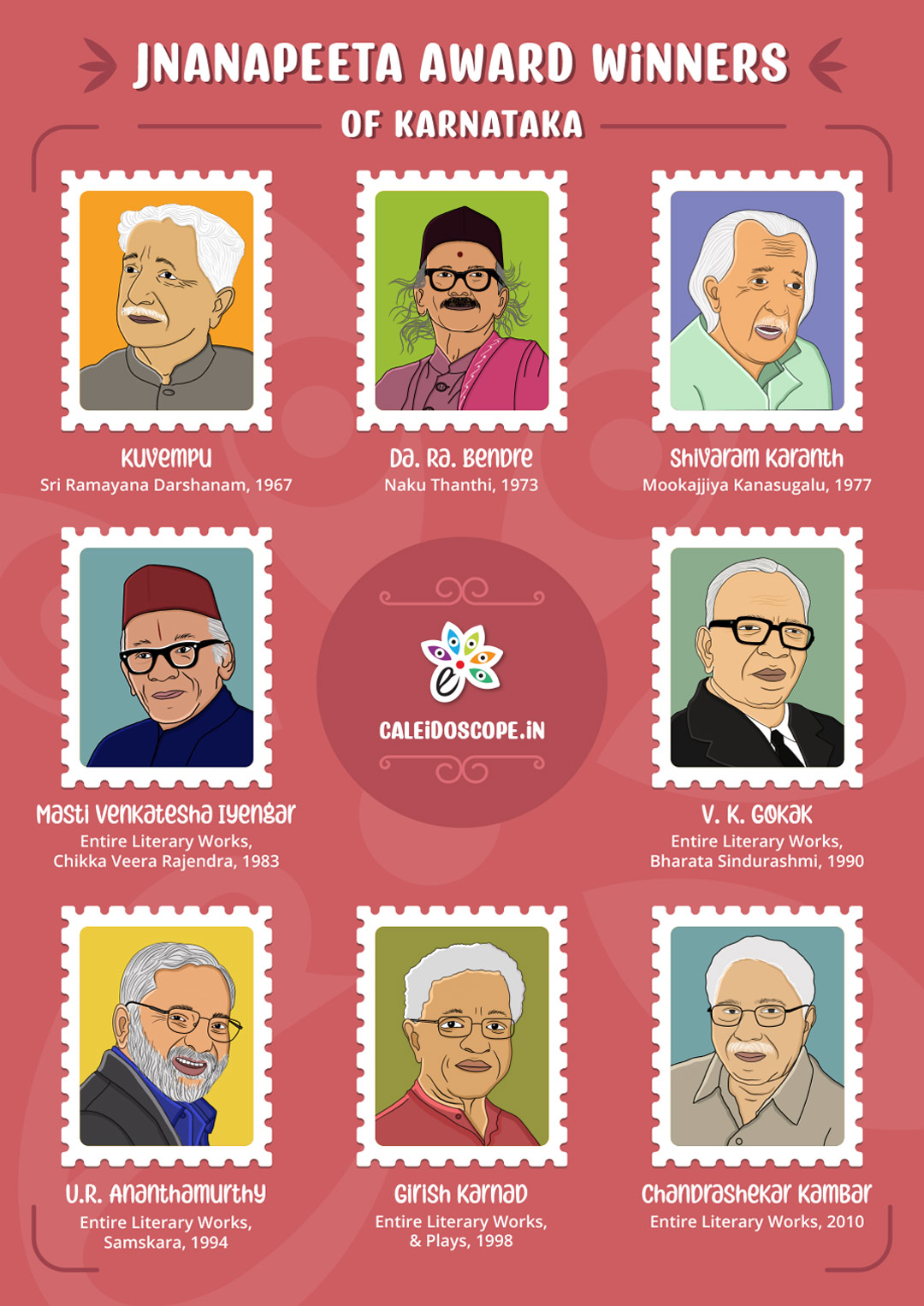
List of Jnanpith Award Winners of Karnataka
Poet/Writer Name
Award Year & Celebrated Works
Kuvempu
Awarded in 1967 for his epic poem “Sri Ramayana Darshanam”, a modern retelling of the Ramayana in Kannada.
D. R. Bendre
Awarded in 1973 for his anthology of poems “Naku Thanthi”, reflecting his contribution to modern Kannada poetry.
Shivaram Karanth
Awarded in 1977 for his novel “Mookajjiya Kanasugalu” (Mookajji’s Dreams), a significant work in Kannada literature.
Masti Venkatesha Iyengar
Awarded in 1983 for his contribution to Kannada literature with special mention to novel “Chikka Veera Rajendra”.
V. K. Gokak
Awarded in 1990 for his contributions to Kannada literature and “Bharata Sindurashmi”.
U. R. Ananthamurthy
Awarded in 1994 for his literary works and novel “Samskara”, exploring contemporary issues of identity and tradition in Indian society.
Girish Karnad
Awarded in 1998 for his contributions to Kannada literature and Indian theatre.
Chandrashekhara Kambara
Awarded in 2010 for his contributions to Kannada literature.
An In-depth Look at Jnanpith Award Winners of Kannada
The Jnanpith Award is a great honour conferred to the Kannada language, and it has gone to various notable writers. With their varied and influential works, these laureates have significantly enhanced Kannada literature.
1. Kuvempu – 1967, The First Kannada Jnanpith Award Winners :
Click here to view Kuvempu Details +
Poet/Writer
Details
Full Name
Kuppali Venkatappa Puttappa
Pen Name
Kuvempu
Birth Place
Hirekodige, Koppa, Chikmagalur, Karnataka
Birth & Death Date
29th December 1904 – 11th November 1994
Literary Movement
Navodaya (New Era) Movement
Jnanapith Award Year
1967
Awarded for the Book
“Sri Ramayana Darshanam”
Notable Works
Sri Ramayana Darshanam, Kaanuru Heggaditi, Malegalalli Madumagalu, Pakshikashi
Notable Awards
Jnanapith Award, Sahitya Akademi Award, Padma Bhushan, Karnataka Sahitya Academy Award, Nadoja Award
Kuppali Venkatappa Puttappa well known as Kuvempu is the first Kannada writer to receive the Jnanpith Award in the year 1967. Kuvempu fills several pages in the history of Kannada literature as a poet, playwright and novelist.
His works described humanism, nature and the spirit of simplicity, drawing inspiration from the Indian epics and philosophy. Sri Ramayana Darshanam composed by Kuvempu is a modern rendition of the the epic Ramayana in poetic form is a great classic in Kannada literature.
Some of the other works include Kanooru Heggadithi, Malegalalli Madumagalu which captures the themes of Malenadu Karnataka. Thus, through poetic vision Kuvempu presented the world of ‘Vishvamanava’, The Universal persona free from caste, creed and religion; which made Kuvempu’s literature timeless.
2. Dattatreya Ramachandra Bendre – 1974
Click here to view Da. Ra. Bendre Details +
Poet/Writer
Details
Full Name
Dattatreya Ramchandra Bendre
Pen Name
Ambikātanayadatta
Birth Place
Dharwad, Karnataka
Birth & Death Date
1st February 1896 – 26th September 1981
Literary Movement
Navodaya
Jnanapith Award Year
1974
Awarded for the Book
“Naaku Tanti” (A collection of poems)
Notable Works
Sakheegeeta, Naadaleele, Kannada Meghadoota, Gangaavatarana, Arulu-Maralu and Naaku Tanti
Notable Awards
Jnanapith Award, Sahitya Akademi Award, Padma Shri, Karnataka Sahitya Academy Award
One of the finest poets of Kannada literature Dattatreya Ramachandra Bendre, awarded Jnanpith in 1974 has a more significant place. D. R. Bendre was born in 1896 and his poems are filled with Artistic passion blended with thoughtful philosophical themes.
The works of Bendre encompass love, nature and different layers of life capturing the richness of human experience through his poetry. Some of his famous creations are ‘’Naaku Tanti’’ and ‘’Sakhigeeta’’ for reasons like the strong use of Kannada and the new poetic form.
Bendre’s contribution to Kannada literature is enormous, because he introduced new thinking and modern outlook to Kannada Poetry.
Jnanapith Award, Sahitya Akademi Award, Padma Bhushan, Karnataka Sahitya Academy Award,
Sangeet Natak Akademi Award
In 1977 for the first time a doyen of many talents Shivaram Karanth of Kota was chosen to receive the Jnanpith Award. Even though Karanth dominated and wrote a lot, he was also a painter, a filmmaker, an environmentalist, and a social reformer. The novels, short stories, plays, essays that he wrote contain the reflection of his extensive knowledge about the people and the surroundings.
Karanth’s novel Mookajjiya Kanasugalu stands as the pinnacle of his literary brilliance and creative vision. The novel, which got the Jnanpith Award for the year 1980-81, revolves around the hallucinations of an old woman “Mookajji” character and she unveils what she sees in mystical visions to her grandson.
Most of Karanta’s creations deal with the cultural and social aspects with spearheading changes in the state of Karnataka, controversial subjects of caste prejudice, women’s liberation, and protection of the environment.
Jnanapith Award, Padma Bhushan, Sahitya Akademi Award
Masti Venkatesha Iyengar better known as Masti and one of the most outstanding writers in Kannada literature was honored with the Jnanpith in 1983. Masti was a master storyteller, known for his graceful narrative style rooted in classical traditions. His writing style is simple and elegant, yet the depth of the ideas he develops is considerable and they incite in readers a deep understanding of people’s essence.
The short stories of Masti are famous for their bang on representation of Karnataka’s rural life along with human interaction. His novel “Chikavira Rajendra” which fetched him a Jnanpith award is a historical point of view describing the fall of the last king of Kodagu.
The themes that dominate Masti’s works provide evidence of his sensitive perception of everyday struggles of the working population.
Jnanapith Award, Padma Shri, Sahitya Akademi Award, Kannada Sahitya Academy Award
Noted poet, critic and scholar, Vinayaka Krishna Gokak was awarded the Jnanpith in the year 1990. Gokak’s works are spread across poetry, essays and critical writings in Kannada literature. He had a prominent part in the “Navodaya” (Renaissance) movement in Kannada literature which aimed at giving new dimensions to existing Kannada literature.
Gokak’s poems, known for their rather majestic and philosophical syntactic ornaments, are dedicated to the perennial themes of nature and spirituality, as well as human virtues. “Bharatha Sindhu Rashmi” is one of his well known literary works, in fact it is his masterpiece of poetic structure, rhythm, rhyme and flow; it is an epic poem described in glowing terms the cultural richness and spiritual essence of India.
Apart from his novels Gokak’s criticism and essays have contributed to Kannada literary criticism considerably.
6. U. R. Ananthamurthy – 1994
Click here to view U. R. Ananthamurthy Details +
Poet/Writer
Details
Full Name
Udupi Rajagopalacharya Ananthamurthy
Pen Name
No Pen Name
Birth Place
Melige, Thirthahalli, Shivamogga, Karnataka
Birth & Death Date
21st December 1932 – 22nd August 2014
Literary Movement
Navya
Jnanapith Award Year
1994
Awarded for the Book
“Samskara”
Notable Works
Prashne, Aakasha Mattu Bekku, Samskara, Bhava, Bharathipura and Avasthe
Notable Awards
Jnanapith Award, Sahitya Akademi Award, Padma Bhushan, Karnataka Sahitya Academy Award
Udupi Rajagopalacharya Ananthamurthy a towering figure in post-independence Kannada literature was awarded Jnanpith in 1994. Ananthamurthy was a novelist, short story writer and essayist, many of his works sparked controversies while provoking deep thought and meaningful dialogue among the readers.
It is worth remembering that Ananthamurthy’s renowned novel “Samskara” which brought him national and international recognition is a poweful critique on the deep-set caste hierarchy and the Brahmanical supremacy. The protagonist of the novel “Praneshacharya” and the main conflict revolves around his search for purpose of life and dealing with the moral questions which arise in front of him creates a lasting impact on the readers.
Bharathipura and Bhava are the other prominent works of Ananthamurthy where identity and modernity both in the face of tradition are dealt with themes.
7. Girish Karnad – 1998
Click here to view Girish Karnad Details +
Poet/Writer
Details
Full Name
Girish Raghunath Karnad
Pen Name
No pen name
Birth Place
Matheran, Maharashtra, India
Birth & Death Date
19th May 1938 – 10th June 2019
Literary Movement
Navya
Jnanapith Award Year
1998
Awarded for:
Comprehensive contribution to Kannada literature
Notable Works
Yayati, Tughlaq, Nagamandala, The Fire and the Rain, Hayavadana, Tale Danda and Bali
Notable Awards
Jnanapith Award, Padma Bhushan, Sahitya Akademi Award, Sangeet Natak Akademi Award and Kalidas Samman
Renowned playwright/actor/director Girish Karnad had been honored with the prestigious Jnanpith Award in 1998 for his rich contribution to Kannada and world theater. Thus, Karnad’s plays that he wrote in Kannada as well as other languages in translation are characterized by an inversion of mythology and folk culture and they reflect on modern Indian society and politics.
“Tughlaq” by Girish Karnad is one of the most acclaimed plays of the Indian theater which depicts the biography and the reign of the historical figure Muhammad bin Tughlaq, the Sultan of Delhi. Power, ambition and human weakness served as the subjects of Karnad’s play which tries to mirror the events of present India with history.
Karnad’s other famous plays in this genre include ‘Hayavadana’, ‘Nagamandala’ and ‘Yayati’ all of them have stamped their identity on Indian theater.
8. Chandrashekhara Kambara – 2010
Click here to view Chandrashekhara Kambara Details +
Poet/Writer
Details
Full Name
Chandrashekhara Kambara
Pen Name
No Pen name
Birth Place
Ghodageri, Belgaum district, Karnataka
Birth
2nd January 1937 – Present
Literary Movement
Navya, Folk Literature
Jnanapith Award Year
2010
Awarded for:
Contribution to Kannada Literature
Notable Works
Jokumaraswami, Siri Sampige, Karimayi, Mahamayi, Chakori and Shikharasoorya
Notable Awards
Padma Bhushan, Sangeet Natak Akademi, Jnanpith Award, Padma Shri, Sahitya Akademi Award and Sangeet Natak Akademi Award
Chandrashekhara Kambara poet, playwright and folklorist has recently received his Jnanpith in the year 2010. His works have a clear cultural and folklore base set in the context of Karnataka. Kambara’s works are said to have painted the rustic theme with contrasting elements of reality.
Thus, superstition and exploitation of society in the play ‘Jokumaraswamy’ are criticized by Kambara implying the tortured society of rural Karnataka.
His poetry, marked romantic elements and extended formal stanza forms, reflect a deep connection with the culture of struggle and wisdom of common people.
Kambara’s commitment to write in Kannada and preserve is quite evident and his contribution to the development of Kannada literature to preserve the reqion’s rich historical cultural identity.
Conclusion
The Jnanpith award winners in Kannada literature have had a defining influence on the literary landscape of Karnataka also profoundly contributed to the conscience of Indian culture. They inspire, challenge, and resonate with readers across generations. Their legacy is a testament to the power of literature to capture society, challenge convention, and bring people together in universal identity and imagination.
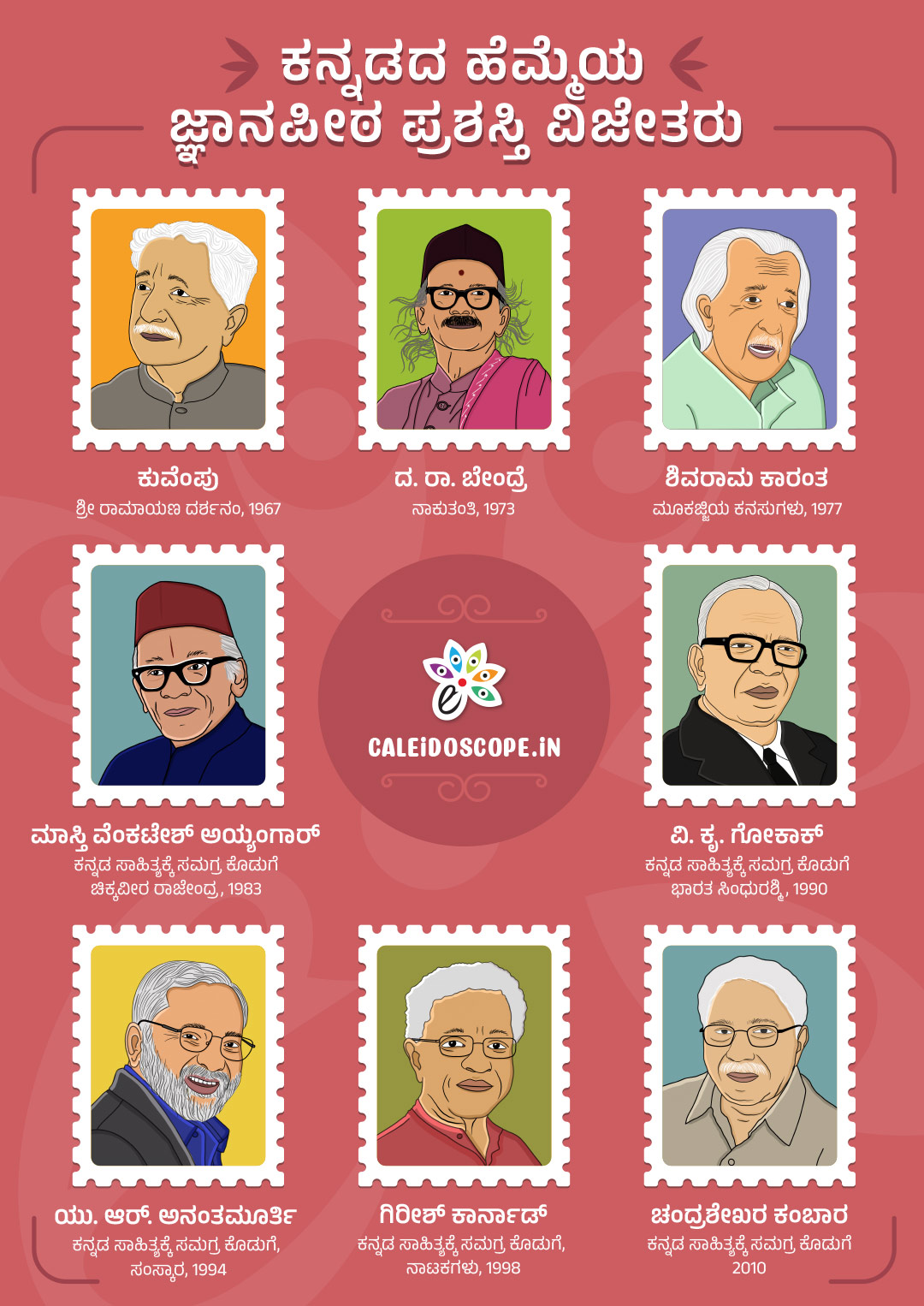
ಕರ್ನಾಟಕದ ಜ್ಞಾನಪೀಠ ಪ್ರಶಸ್ತಿ ವಿಜೇತರು – ಬಿತ್ತಿಚಿತ್ತ್ರ
FAQs on Jnanpith Award winners of Karnataka
Question: Who are the Jnanapith Award winners from Karnataka?
Answer: Kuvempu, D. R. Bendre, Shivaram Karanth, Masti Venkatesha Iyengar, V. K. Gokak, U. R. Ananthamurthy, Girish Karnad, and Chandrashekhara Kambara.
Question: Who was the first Kannada writer to receive the Jnanapith Award?
Answer: Kuvempu was the first Kannada writer to receive the Jnanapith Award in 1967 for Sri Ramayana Darshanam.
Question: What is the significance of the Jnanapith Award?
Answer: The Jnanapith Award is India’s highest literary honour, awarded for exceptional contribution to Indian literature.
Question: How many got the Jnanpith Award in Karnataka?
Answer: A total of eight writers from Karnataka have received the prestigious Jnanapith Award.
Question: When did Masti Venkatesha Iyengar get the Jnanpith Award?
Answer: Masti Venkatesha Iyengar received the Jnanapith Award in 1983 for his historical novel Chikkaveera Rajendra.
Andhra Pradesh, frequently known as the Rice Bowl of India, is a melting pot of culture. It’s a territory that’s been ruled by a variety of dynasties and empires. The region’s current lifestyle is the result of the fusion of various cultures. Foreign powers have left their imprint on music, dance, food, and literature. This variety and diversity have contributed to the culture’s richness and success. Culture of Andhra Pradesh encompasses a variety of artistic disciplines.
The state’s culture is an important aspect of the country’s rich cultural legacy. Kalamkari, Bidri, the amazing weaving of Gadwal and Venkatagiri, the exclusive metalware, brass, stone, and wood carving highlight the enormous talent of the Andhra craftsmen.
Budithi art, a unique and special style of metal handicrafts in India, is particularly famous in Andhra Pradesh. Budithi art was created and is still done in Srikakulam’s Budithi village. It is well-known for producing stunning metal handicrafts in both traditional and contemporary designs. Brass is the most common alloy utilized in this art form. This region’s wonderful brassware is gaining appeal these days. It was once part of the village’s tradition, but it is now a vocation for the residents. Budithi brassware has grown in popularity thanks to the efforts of the state government.
The Brassware is designed with geometrical shapes, curves, and lines to create simplistic yet stunning presentations. The traditional utensils are primarily used in the kitchen. And contemporary artefacts exhibit the local artisans’ art form. Brass artefacts are considered suitable for a spiritual purpose by Hindus. These products are now also created for utilitarian functions. Brassware is particularly popular due to its unique brilliance and appeal. Brass is a soft metal with a bright gold hue that is usually classed as a copper alloy. It is thought that drinking water from a brass vessel is beneficial to one’s health. Brass contains zinc and copper, which enhance immunity and protect against sickness.
Handicraft weaving is used to make Mangalagiri sarees and fabrics in Mangalagiri, a town in the Guntur district of Andhra Pradesh, India. Because of the famed temple of Lord Panakala Narasimha Swamy, which is located in the centre of the town, Mangalgiri has always been known for its pilgrimage significance. In 1999, the Geographical Indications of Goods (Registration and Protection) Act designated it as a handicraft with a geographical indicator from Andhra Pradesh.
Mangalagiri sarees are designed in the Nizam style, which makes them elegant. A few unique sarees feature exquisite tribal designs woven in cotton, as well as zari or golden coloured patterns in small checks. This saree’s pallu (edge) is embellished with a striped motif, which is a traditional tribal ornament composed of golden embroidery.
On the main body of the Mangalgiri saree, there are no decorations. Nizam border and pallu are adorned with zari or golden thread work. The tribal designs inspired these geometrical and basic designs. Many of the younger generations prefer wearing Mangalgiri weave cotton kurtas, dupattas, and stoles, which may be paired with western attire for a creative Indo-Western appearance.
According to legend, after paying reverence to the lord, pilgrims were required to purchase a saree from the local weavers, which provided another source of income for the weavers. The Mangalgiri saree rose in popularity as a result. The pillar alone demonstrates that the Mangalgiri handloom tradition has existed in the town for over five centuries.
3. Durgi Stone Art
The temple town village of Durgi in the Palnadu area of Guntur, Andhra Pradesh, produces Durgi stone craft. These are exquisite stone carvings fashioned from a unique type of limestone found only in the area. The craft began in the 15th century in Durgi and has prospered since then. Sculptors saw the possibilities of employing limestone instead of more expensive marble and granite at the time, resulting in the development of a new style of art. The stone’s smooth, whitish-grey texture lends itself well to beautiful sculptures of gods and goddesses. According to the Shilp Shastras, the craftsmen use traditional carving techniques. Today, a diverse selection of items is curated in order to broaden the craft’s economic appeal. Stone carvings are used to create lovely decor pieces in addition to auspicious deities and statues.
The Andhra Pradesh town of Allagadda is known as a major centre for sculptural stone carving. The sculptures here are built of locally sourced sandstone, which is both heat resistant and long-lasting. Its hue is typically brown or golden, and its composition allows for detailed carving and detailing. Gods and goddesses are sculpted in the Vijayanagara style, carefully following the old Shilp Shastra scriptures. Another type of stone used to carve sculptures in Allagadda is the strong black-stone, which comes in a range of shades from grey to black and is commonly used to carve Lord Krishna statues. The artisans have expanded their portfolio beyond god and goddess statues to include elegant interior design.
4. Etikoppaka Wooden Crafts
Etikoppaka is a small village on the banks of the river Varaha in the Visakhapatnam district of Andhra Pradesh. These lacquer-coloured toys are traditionally known as Etikoppaka toys or Etikoppaka Bommalu and are created in the Etikoppaka district of Andhra Pradesh. The village is well-known for its wooden toys. Because of the lacquer finish, the toys are also known as lacquer toys.
The village has a long and illustrious history, with local zamindars seeing the potential for creating beautiful and appealing toys long before independence. These are well-known for canon toys, Lord Ganesha in many forms, and bullocks, among other things. Natural dyes produced from seeds, lacquer, bark, roots, and leaves are used to colour the toys, which are built of wood. Toy manufacturing is also called Turned wood Lacquer craft because the wood used to manufacture the toys is soft in nature. Lac, a colourless resinous secretion of a variety of insects, is used to make Etikoppaka toys. During the oxidation process, the already prepared vegetable colours are added to the lac. The final product is a rich, coloured lacquer as a result of this technique. Etikoppaka toys, which are exported all over the world, are decorated with lac dye.
Eluru, a renowned city in Andhra Pradesh and the district headquarters of the West Godavari district, is known throughout the world for its natural colour carpets. White, black, and brown carpets, as well as semi-black and grey carpets, are available. These are also commonly exported since they are woven with low-density knots.
Eluru’s carpets are frequently named after the carpet craftsmen who make them. HussainKhani, Amarkhani, Ramachandra Khani, Reddy Khani, and Gopalraokhani are some tovariants. Dillikhani has boats (kishti) and floral motifs, whilst Thotti Kahani is a flower-pot-based design composition. Ambarcha, guava, babul, and jampal are some of the fruits and flowers whose patterns appear on these carpets. Eluru carpets are usually floral or geometric in pattern, with a colour palette that includes a blend of blue and green, as well as light yellow and pastels. Many intricate designs are woven with a half-white background and deep-green and orange designs utilising the traditional talim technique.
Dharmavaram, in the Anantapur region of Andhra Pradesh, is famous for its silk sarees, which exude great grandeur while having a low gold thread count. Handlooms have been discovered at Dharmavaram dating back to the late 1800s. Butis and dots are among the traditional designs and motifs. The sarees have wide borders and vibrant colour schemes.
The silk weaving industry in Dharmavaram is well-known throughout the country, particularly for its exquisite silk sarees. The wall paintings of the Lepakshi temple at Hindupur also contain evidence of the origins of Dharmavaram Sarees. Both the warp and the weft are made of 2-ply Mulberry silk. Zari is widely used to embellish the saree’s borders, pallu, and body. This saree is also used to create gorgeous and vivid costumes for the Indian classical dances Bharatnatyam and Kuchipudi.
Geographical Indications of Goods (Registration and Protection) Act, 1999, designated it as a geographical indication from Andhra Pradesh.
Pochampally or Pochampally Silk is a type of silk produced in the town of Bhoodan Pochampally in the Nalgonda district of Andhra Pradesh. The place is commonly referred to as India’s Silk City. The Ikat styling and designs put on Pochampalli Silk sarees have made them culturally prominent. These Ikat patterns are woven into the cloth in geometrical forms, guaranteeing that the complete look exudes a fascinating aura to both the wearer and the onlooker.
Pochampally silk is all about utilizing the smoothest and finest cotton and silk thread work to imprint intricate motifs and designs onto the fabric. The geometrically patterned designs are painted on the weft and warp threads and woven into the Pochampally fabric in an artistic manner. The fabric’s essence is a unique combination of sico, silk, and cotton. The production of these sarees incorporates natural components and sources.
Toys made of painted wood or Kondapalli toys, as they are known locally, are world-famous for their unique wood, which gives a sense of elegance to drawing rooms with their carefully crafted figurines. In the realm of handicrafts, these toys have carved themselves into their own niche. As characters from and evolve from light softwood, nimble-fingered artists carve with elegance. To make the hardwood item moisture-free, it is heated. The image’s many components are carved independently. The pieces are then bonded together using a tamarind seed adhesive.
The toy or figurine is painted with both water and oil colours. Painting is done with goat’s hair paint brushes that are delicate and thin. The toys depict real-life sceneries, animals, rural people, deities, and epic characters. Among the noteworthy objects manufactured by the artisans here are Kondapalli soldiers, pen stands, Dasavatar sets, and Ambari elephants. The miniature works of art, which are fashioned of white Poniki and painted with natural colours like vegetable dyes, are a collector’s joy. To paint toys of export quality, vegetable dyes are utilised, whereas oil paints are used to colour toys sold within India, and enamel paints are used to paint toys created for special occasions.
Kalamkari is a hand-painted or block-printed cotton textile and painting technique prevalent in Andhra Pradesh. It’s a technique for painting cotton garments with a kalam (pen) that uses a sharp-pointed perforated bamboo to control the flow of colour on the fabric.
The name is derived from the Persian words qalam (pen) and kari (to write) (craftsmanship). This type of art is well-known throughout Andhra Pradesh. Srikalahasthi from Chittoor district and Machilipatnam Kalamkari from Krishna district are the two main forms. Machilipatnam Kalamkari is made in the town of Pedana, near Machilipatnam, in the Krishna region of Andhra Pradesh, and involves the use of vegetable coloured block-painting of fabrics. Under the heading of handcraft goods, this style of painting was recognised for geographical indication. This style first emerged under the Mughal Dynasty and was later adopted by the Golconda Sultanate. Bedsheets, wall hangings, clothes, curtains, sarees, and other textile products are all manufactured in this manner. This part of Coastal Andhra Pradesh is known for generating some of the best Kalamkari prints in the world.
Bidri is a silver or gold inlay technique used on black metal. The ‘Bidri craft’ is named after the Karnataka town of Bidar, where it began.
Persian artists first presented the one-of-a-kind artwork. Bidar was visited by skilled Bidri artists from Persia, who educated Bidri workers to make marvels for royal families. The striking Mughal themes are skillfully engraved without detracting from the craft’s traditional element. Despite the fact that the craft is quite popular in Hyderabad, the artists have gone from Bidar since Hyderabad has better marketing and exporting options.
Melting the alloy, casting the object, engraving and inlaying the design, and finally oxidising are the four procedures involved in inlaying silver and gold on steel or copper over a black backdrop. Mughal’s themes are influenced by the primary motifs, which also include geometrical and floral patterns. Although the artist inserts innovative motifs, old designs are more popular.
Conclusion
Andhra Pradesh is a diverse state that encompasses all aspects of life, from technology to arts and crafts. Whether it’s toys, metal crafts, brassware, stone craft, sarees, or paintings, artisans’ expertise lies in the traditional methods of production that are still used today. With its rich texture, Andhra Pradesh’s handlooms entice not just Indians but also foreigners. These curios might make wonderful gifts for your loved ones.
Ever since my childhood, I have had an interest in history and I consider myself lucky to be in a country whose strength lies in its glorious past. So during a weekend, when one of our relatives suggested us to visit the historical Lepakshi situated in Anantapur district of Andhra Pradesh, I jumped at the opportunity.
I had heard about the place before for two things: The presence of the largest monolithic Nandi and the famous Lepakshi design sarees. However, I still wondered if these reasons were enough to visit the place.
Lepakshi from Bangalore
Lepakshi is just three hours away from Bangalore by road. So we started at around eight in the morning, took the Bangalore-Hyderabad highway, and reached our destination by noon. What surprised me during our journey was that there were hardly any sign boards to Lepakshi. For a long time, we did not know if we were heading in the right direction.
However, when we did reach the place, we were welcomed by the spectacular Nandi statue and it took us a while to fathom the beauty of the tall granite structure. In our excitement, we ran towards the bull statue that was so beautifully carved out of a single stone. We swelled with pride for the sculptors who built the 4.5 m high and 8.23m long Nandi, which is one of the largest monolithic bull statues in the country. The sculpture faces the Shiva linga in the temple and wears a ‘kassu maalai’, a coin necklace with a bell and earrings along with other jewellery.
Lepakshi Temple History
We then walked around the park that is fairly well-maintained and visited the temple dedicated to Lord Veerbhadreshwara, an incarnation of Lord Shiva. In order to understand the architecture better, we caught hold of a guide, who told us that the temple belonged to the Vijayanagar Empire and was designed and built in the 16th century by two brothers, Viranna and Virupanna.
As we explored further, our guide showed us the mural paintings on the ceiling of the exquisite shrine that had the image of Lord Krishna and Rama, telling us the stories from Ramayana, Mahabharatha and the Puranas. Interestingly, the eyes of Lord Krishna in the painting seemed to follow us! Further, the work of art had me thinking of what our ancestors did ages before Michelangelo thought while painting the Sistine Chapel! However, the murals on the ceilings are now peeling off and are in dire need of restoration.
Floating Pillar of Lepakshi
We also came across the hanging pillar, another awe-inspiring piece of architecture in the temple. Surprisingly, it happens to be the main pillar on which the shrine has been built. The guide expertly passed a piece of cloth underneath it to show us that the pillar does not rest fully on the ground. We, too, did our bit of investigation and realised that it is one of the best engineering marvels of yore.
The Lepakshi temple also has an open-air Kalyana Mandapam, where Shiva Parvathi kalyanam is believed to have taken place in the presence of other gods and goddesses. But I wondered why the Kalyana Mandapam is left unfinished. Later I also noticed two red spots on the western walls of the temple. Little did I know there was a legend behind the two things!
Legend of Lepakshi
According to the legend, the builder Virupanna was the treasurer of Vijayanagar Empire who utilised the treasury’s money to build the temple during the king’s absence. When the King returned from his campaign, he found the treasury had been emptied by Virupanna, and he ordered that the treasurer to be blinded. Angered by this command, Virupanna carried out his punishment himself. So the red blotches on the walls of the unfinished Kalyana Mandapa are nothing but his eyes!
Meanwhile, there are beautiful intricate designs along the border of every pillar and wall and the designs could also be seen on Lepakshi sarees. Every design is unique and quite intricate. These architects sure had some foresight that we Indian women need lovely saris!
After taking a tour of the temple, we sat silently gazing for some time, letting the spectacular architecture of the place sink into our hearts. We huddled under a tree and looked at the glistening shrine one last time. Even after we returned to the hustle bustle of our city, the murals, the inscriptions and the hanging pillar are all etched in our minds forever.
Things to Carry
Before heading to Lepakshi, make sure you carry a food basket and a bottle of water, for there are not many eateries on the way. There is an AP tourism restaurant, but it does not provide much.
When you hear the words “house fire” your mind might automatically jump to the worst-case scenario where the whole house is on fire, however, even a small house fire can pose significant health risks. Smaller fires inside a house could be things such as a toaster catching fire, or a small kitchen fire but get put out quickly. The dangers of Rexburg Fire Damage extend beyond the immediate threat of flames and encompass a range of potential health issues that can arise from exposure to smoke, toxic fumes, and other fire-related hazards.
Immediate Health Risks
1. Smoke Inhalation
One of the most immediate dangers of a small house fire is smoke inhalation. Smoke from a fire contains a mixture of gases and fine particles that can be extremely harmful when breathed in. Even a small amount of smoke can irritate the respiratory tract, leading to coughing, shortness of breath, and wheezing. In severe cases, smoke inhalation can result in acute respiratory distress syndrome (ARDS), which can be life-threatening.
2. Toxic Fumes
Fires, regardless of their size, can produce a variety of toxic gases. Carbon monoxide (CO) and hydrogen cyanide (HCN) are two of the most dangerous byproducts of combustion. CO is a colorless, odorless gas that can cause headaches, dizziness, nausea, and even death in high concentrations. HCN, which is released when materials like plastic or synthetic fibers burn, can interfere with cellular respiration and is highly toxic.
3. Burns and Injuries
While a small fire might not seem capable of causing severe burns, it can still inflict serious injuries. Burns can range from minor first-degree burns, which affect only the outer layer of skin, to more severe second and third-degree burns, which can damage deeper tissues. Even minor burns can be painful and prone to infection if not properly treated.
Long-Term Health Effects
1. Respiratory Issues
Exposure to smoke and toxic fumes during a small house fire can have long-term respiratory consequences. Chronic bronchitis, asthma, and other respiratory conditions can develop or be exacerbated by inhaling harmful substances. Individuals with pre-existing respiratory issues, such as asthma or chronic obstructive pulmonary disease (COPD), are particularly vulnerable.
2. Cardiovascular Problems
The stress and physical exertion associated with escaping a fire can strain the cardiovascular system, potentially leading to heart attacks or other cardiac events. Additionally, exposure to carbon monoxide and other toxic gases can impair the heart’s ability to function properly.
3. Mental Health Impacts
Experiencing a house fire, even a small one, can be a traumatic event. The psychological impact can manifest as anxiety, depression, post-traumatic stress disorder (PTSD), and other mental health issues. The loss of personal belongings and the disruption to one’s sense of safety and security can contribute to long-term emotional distress.
Preventive Measures and Safety Tips
1. Install Smoke Alarms
One of the most effective ways to protect yourself and your family from the dangers of a house fire is to install smoke alarms. Ensure that alarms are placed on every level of your home, inside bedrooms, and outside sleeping areas. Test alarms monthly and replace batteries at least once a year.
2. Develop and Practice an Escape Plan
Having a well-thought-out escape plan can save lives in the event of a fire. Make sure everyone in your household knows the plan and practices it regularly. Identify at least two exits from every room and designate a meeting place outside your home.
3. Keep a Fire Extinguisher Handy
A fire extinguisher can be invaluable in stopping a small fire before it spreads. Keep extinguishers in key areas, such as the kitchen, garage, and near any fireplaces. Make sure everyone in the household knows how to use them properly.
4. Avoid Overloading Electrical Outlets
Overloaded electrical outlets and faulty wiring are common causes of house fires. Avoid plugging too many devices into a single outlet and have any electrical issues in your home inspected and repaired by a qualified electrician.
5. Store Flammable Materials Safely
Keep flammable materials, such as cleaning supplies, paint, and gasoline, away from heat sources and store them in well-ventilated areas. Dispose of any rags or materials that have been soaked in flammable liquids properly.
The vibrant European country of Spain has been going through a serious wave of over-tourism for the past few months. Famous Spanish cities like Barcelona, Madrid, Mallorca and others are brimming with tourists from all over the world.
Spain has been setting new records welcoming millions of tourists each year. In 2023, the country was visited by 85.1 million international tourists marking a 19% increase in the numbers from the previous year according to the National Statistics Institute.
As per the tourist trends in 2024, Spain has already hosted 16.1 million tourists in the first quarter of the year. This is a 17.7% increase in the tourist numbers from last year during the same period.
However, the locals are not truly embracing this surge in tourism well. Cities like Barcelona, Canary Islands, Mallorca, San Sebastian, Madrid, etc., are all struggling due to overtourism.
The locals have complained of increasing rents, crowded streets, exhaustion of local resources and disruption of ecological balance at various attractions due to the influx of tourists.
Many demonstrations are being held at various tourist destinations in Spain urging the need for sustainable and ecological tourism that does not hamper local growth and harmony. The locals are demanding for the old charm and appeal of the Spanish cities to be preserved.
Yet, there’s no need to cancel your vacation plans for Spain. ‘Destination Duping’ is the latest travel trend that will help you quench your thirst for exploration. It is a means of swapping mainstream, overcrowded tourist places with offbeat and less-explored destinations.
Here are some places that you can explore on your trip to Spain while getting the authentic Spanish experience without getting into the crowds. Getting a Spain visa from India can take up to 20-25 business days, so you should plan at least a month before.
Top 5 Offbeat Places in Spain
1. Visit Girona instead of Barcelona
Known for its history, culture, heritage and cuisine, Girona offers a suitable alternative to the mainstream destination of Barcelona.
The city’s vibrant atmosphere and welcoming vibe will never let you feel any less than visiting the most famous Spanish destinations giving an authentic Spanish experience.
2. Swap Madrid for Granada
Massive palaces, cathedrals, and art scenes with quaint neighbourhoods, Granada is a lovely destination in Spain that can be easily swapped with the overcrowded Madrid.
It’s notable for the architecture and monuments that will teleport to the European ancient era.
3. Menorca over Mallorca
Known as the mini version of Mallorca, this Balearic island will give you all the tropical vibes you need to feel the Spanish energy!
The pristine sandy beaches, rocky water bays, high pine trees and transparent seawater are perfect to relax and rejuvenate on your next beach vacation.
4. Formentera instead of Ibiza
Ibiza, being a tourist-favourite party hub, is almost always packed with tourists. But what if we tell you that its neighbourhood island, Formentera, offers a lively nightlife while also providing a relaxing vibe? It is truly a whole package!
While Spain may be struggling to manage its tourism, as responsible travellers, we can always help on our part to reduce the strain on tourists and ecological balance.
Takeaway
Next time you travel to Spain, try planning your itinerary around lesser-known places for new and unique experiences as well as to reduce the burden on overcrowded places in Spain.
In today’s time, joint pain is affecting millions of people worldwide. It is a common symptom of arthritis, osteoarthritis, and rheumatoid arthritis. According to the CDC, around 15 million adults in the U.S. experience severe joint pain.
Following unhealthy dietary habits is the main joint pain reason. It causes joint inflammation, weight gain, more acidic load in the body, and poor gut health leading to joint pain.
In response to this issue, nutritionists and dieticians are finding dietary solutions to reduce the pain. One such approach that is gaining recognition for its benefits is the Asian diet. But what makes the Asian diet so special?
5 Key Benefits Of An Asian Diet For Reducing Joint Pain
The Asian diet includes fresh vegetables, lean proteins, whole grains, and many anti-inflammatory foods. Moreover, studies indicate that the population in Asia has lower rates of osteoarthritis in comparison to Western countries because of their food habits.
1. Anti-Inflammatory Properties
The Asian diet is rich in anti-inflammatory properties, mainly because of two super ingredients, i.e., ginger and turmeric. Gingerol and curcumin, the bioactive compounds of ginger and turmeric, respectively, are well known for their anti-inflammatory effects.
Curcumin in the body inhibits the inflammatory pathway and reduces the activity of enzymes and cytokines that cause inflammation. Gingerol blocks the formation of inflammatory cytokines and reduces oxidative stress, which can cause inflammation and pain.
So, have recipes that include these anti-inflammatory ingredients, such as Indian curries, soup, stew, stir-fries, etc. You can find easy, healthy Asian recipes in Fitelo’s recipe section.
2. Foods Rich In Omega-3 Fatty Acids
Fish such as salmon, mackerel, sardines, tuna, and other omega-3-rich foods are significant parts of the Asian diet. Omega-3 fatty acids, especially eicosapentaenoic acid (EPA) and docosahexaenoic acid (DHA) have a high anti-inflammatory effect on the body.
Omega 3 reduces the inflammation and then reduces the joint pain, making joint mobility easier. It also protects the joint cartilage from degradation and slows the progression of diseases like osteoarthritis.
Therefore, include omega-3-rich foods such as fatty fish, chia seeds, flaxseeds, mustard seeds, and spinach in your diet for joint pain.
3. Abundance Of Antioxidants
Antioxidants are crucial for joint health because of their ability to reduce oxidative stress, which can cause inflammation and joint pain. They also protect the joint cartilage from degradation and prevent pain.
The anti-inflammatory properties of antioxidants help to reduce the production of inflammatory cytokines and prevent joint pain and stiffness. Antioxidant rich foods that the Asian diet includes are green tea, spinach, kale, bokchoy, bell pepper, carrots, and sweet potatoes.
So, eat Asian food which includes a good amount of leafy greens, green tea, and fruits and vegetables rich in antioxidants.
4. Less Use Of Processed Foods And Sugars
Processed foods contain trans fats, a high level of sugar, sodium, and artificial additives that trigger an inflammatory response in the body. Additionally, these foods are high in calories and low in nutrients, which leads to weight gain, which increases the risk of joint pain.
The Asian diet focuses on fresh vegetables, fruits, whole grains, lean protein, and healthy fats. Moreover, cooking methods like steaming, stir-frying, and boiling preserve the food’s nutrients.
So, the less use of processed food in the Asian diet makes it a healthier option for joint health, reduces inflammation, and leads to better weight loss plans.
5. Use Of Fermented Foods
Fermented foods are an important part of the Asian diet. Idli and dosa are in everyday South Indian breakfast, kimchi is a usual side dish in Korea, tempeh and natto in soups or salads, and pickled vegetables are everyone’s favorites.
But how do fermented foods help with joint pain? Good gut health is essential for overall health, including joint pain. The probiotics in fermented foods maintain a healthy gut lining and reduce the production of pro-inflammatory cytokines.
Moreover, a healthy gut lining prevents the leakage of toxins and inflammation into the bloodstream. Therefore, plan your meals and make space for fermented foods in your daily diet.
Conclusion
The Asian diet provides a diverse approach to maintaining joint health and reducing joint pain through its anti-inflammatory properties, high omega-3 content, antioxidants, use of fermented foods, and use of whole, unprocessed ingredients.
Indeed, one can experience reduced inflammation and better joint health by including elements from the Asian diet. However, if you have any dietary restrictions, consult with your dietician or nutritionist before making any significant dietary changes.
Lastly, we invite you to explore our website for healthy, delicious recipes and additional resources, links are above, to further integrate the benefits of an Asian diet into your daily meals.
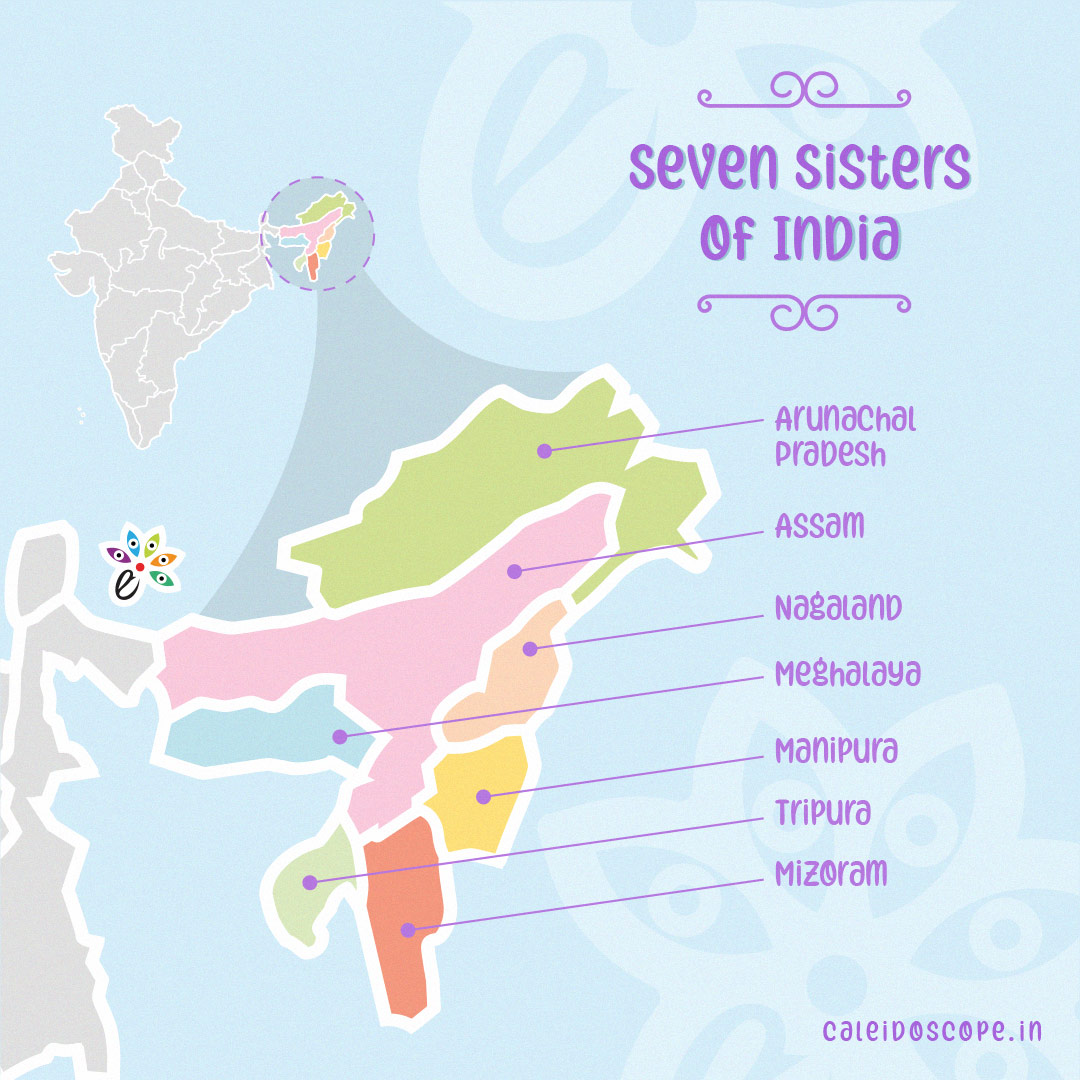
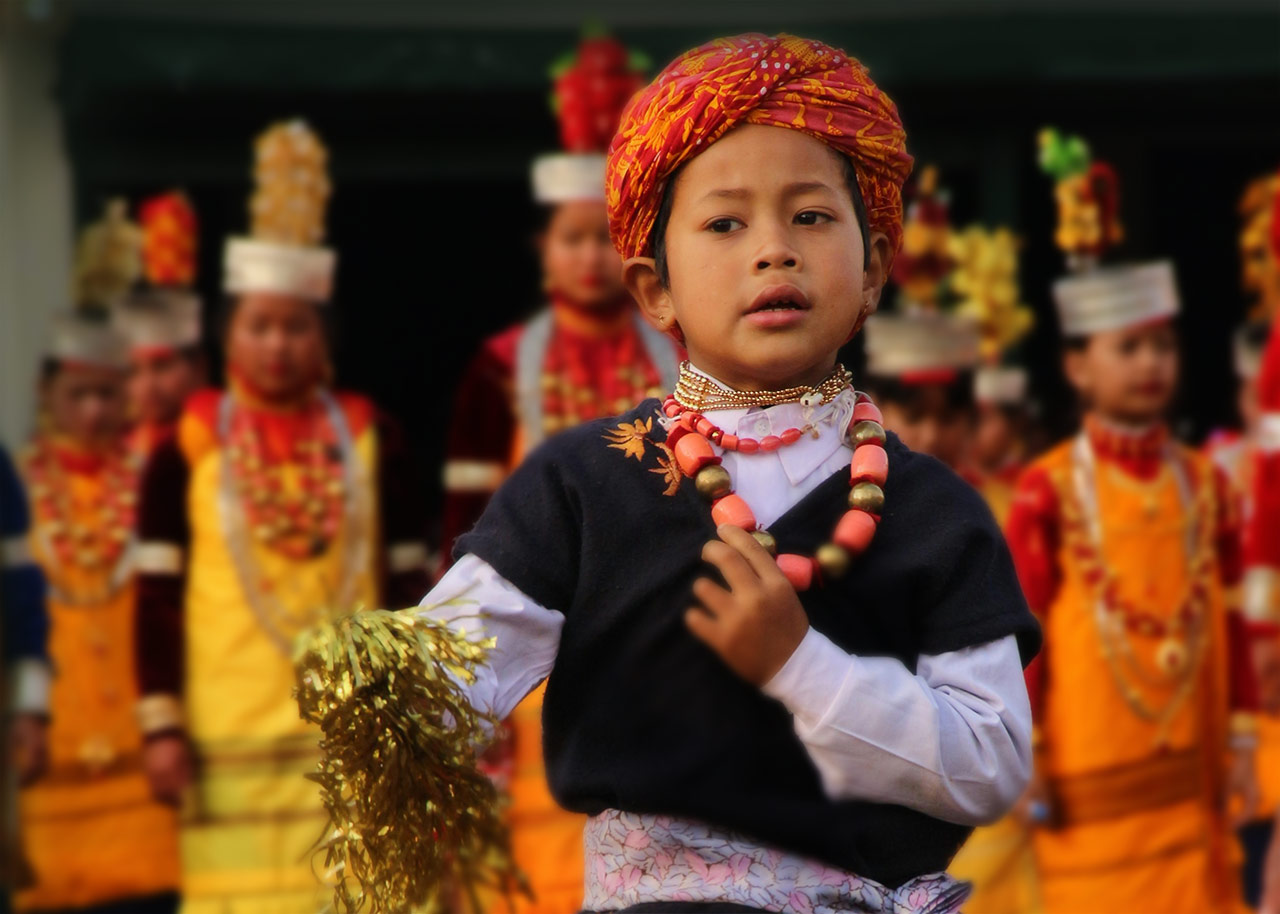
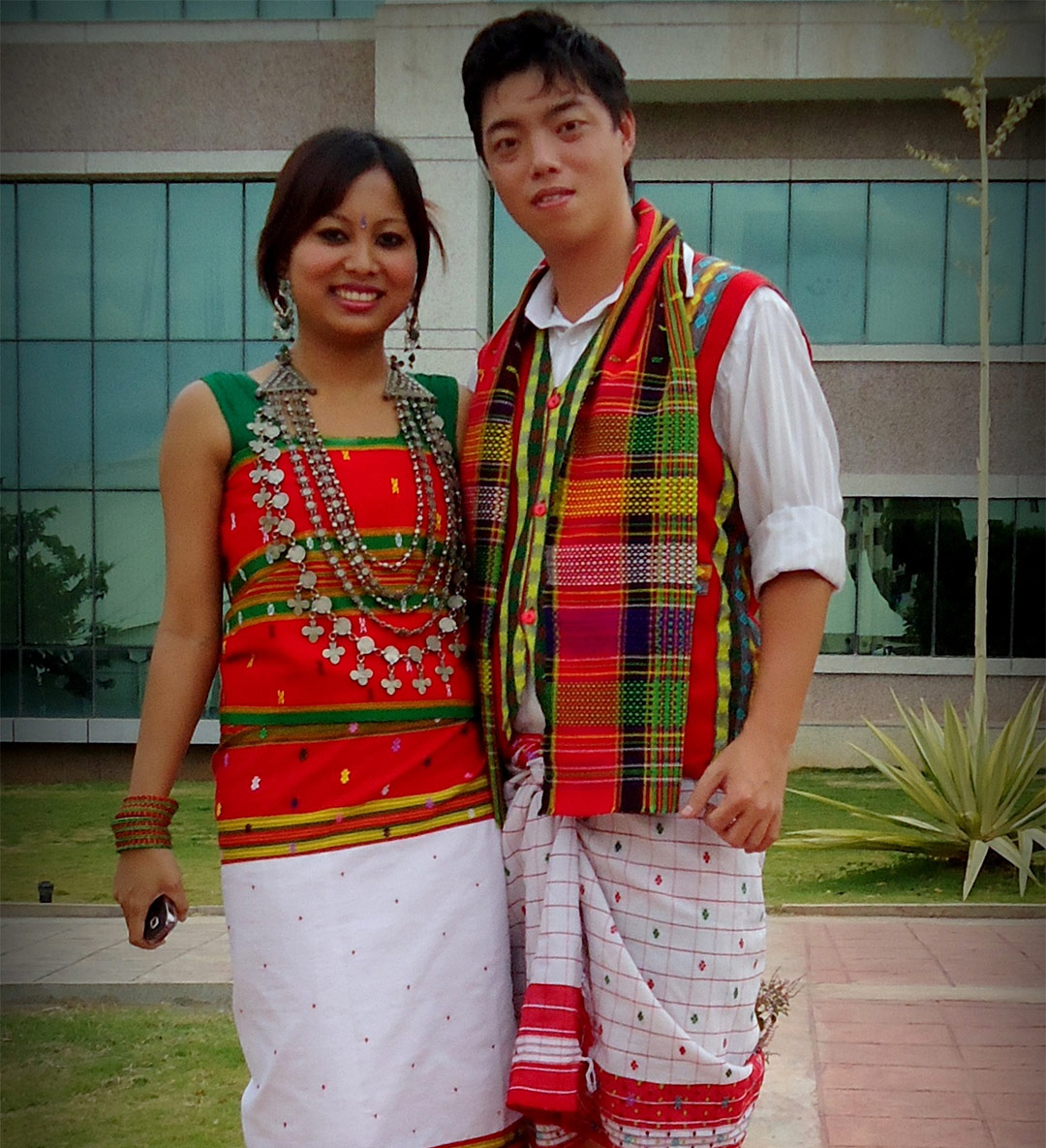
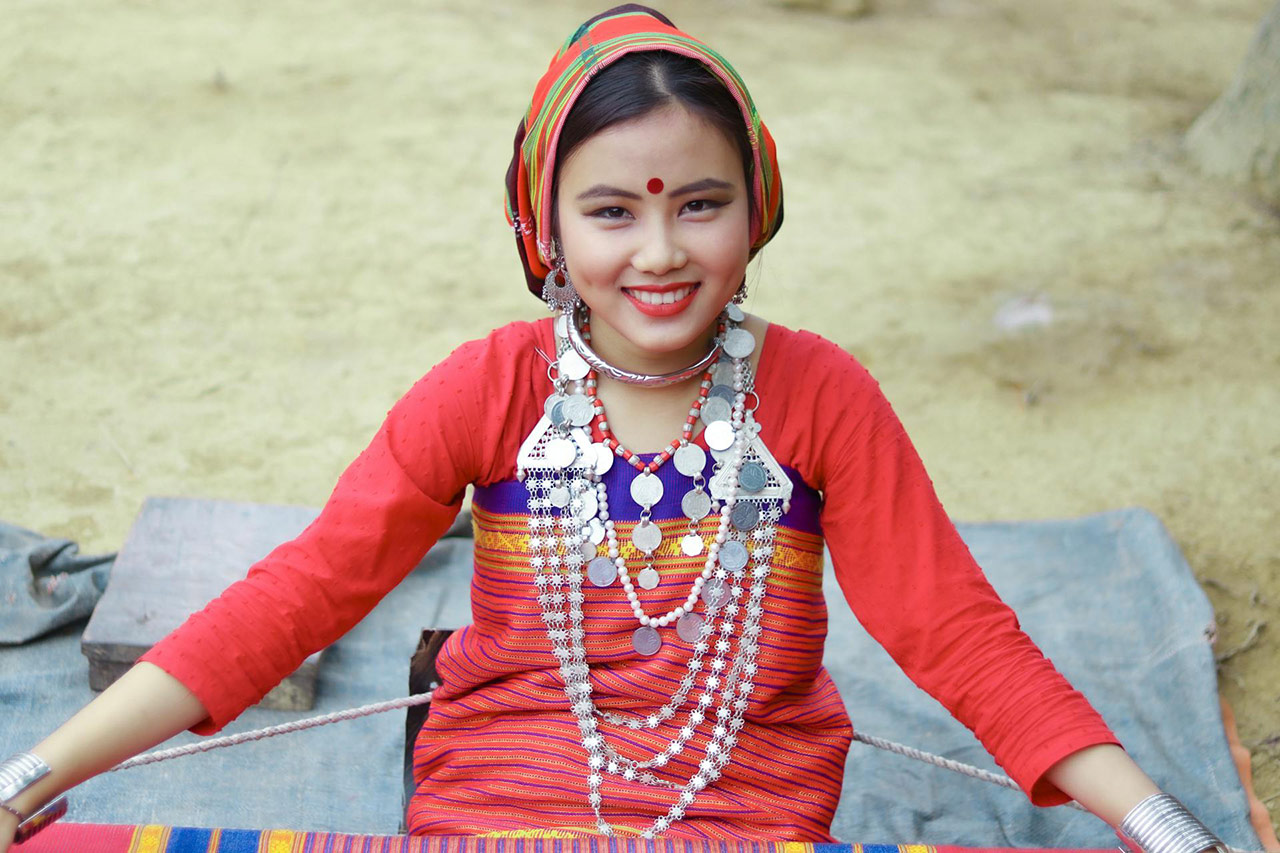
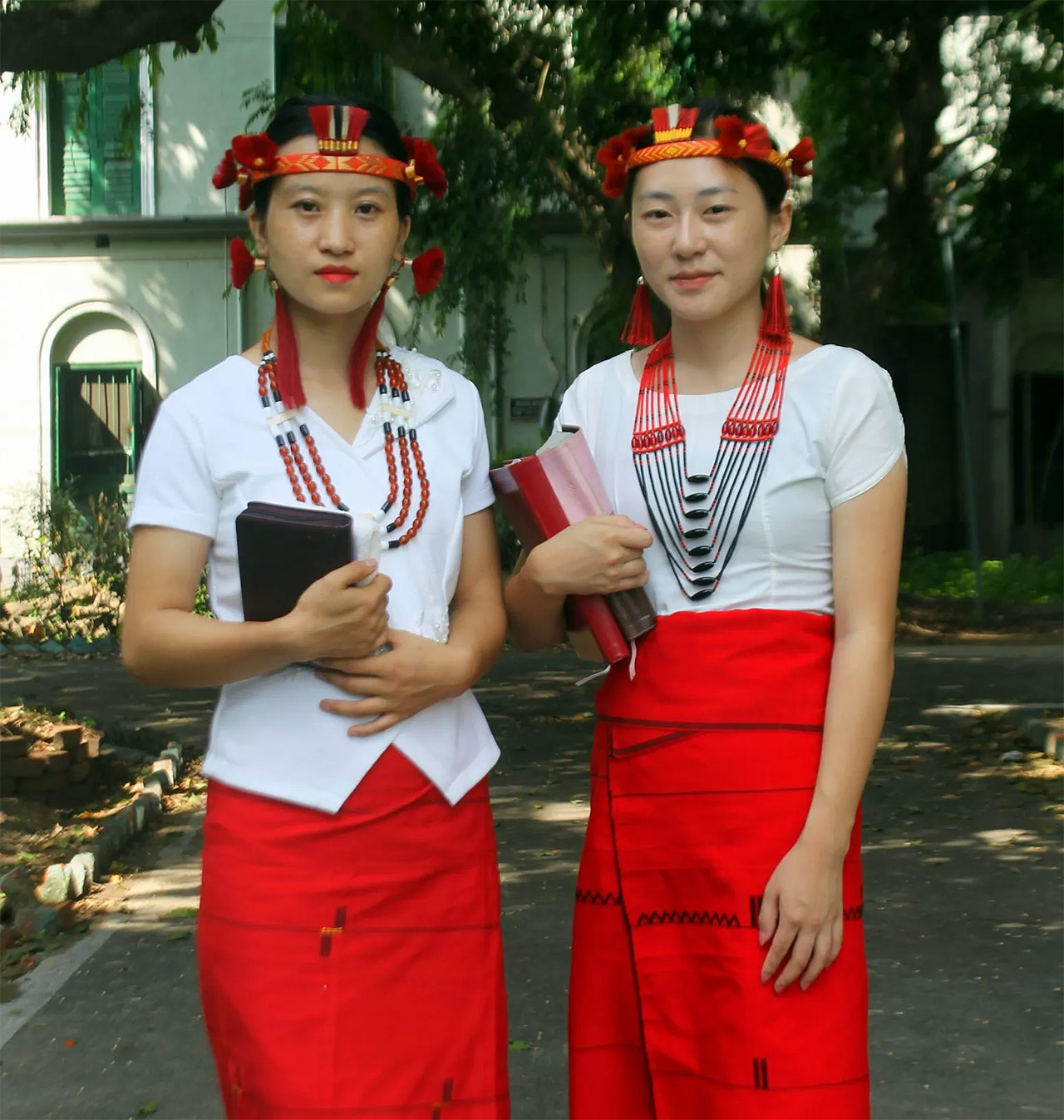
The “Seven Sisters” of India located at the northernmost part of the country particularly Arunachal Pradesh, Assam, Manipur, Meghalaya, Mizoram, Nagaland and Tripura have a rich ethnic culture. It is mandatory that each state has its own conventional dress, which speaks about its past, topography and cultural background. These dresses are not only a piece of fabric to wear but also the culture and the look of the region. In this essay, focus will be directed to the traditional dresses of these seven states; emphasis bringing out the meaning, differences and the stories behind each garment.
Arunachal Pradesh is the land of many tribes and each has its traditional attire. Likewise, ornaments that are visibly pivotal include the woven dress that is well associated with the Apatani tribe. Females pull on what is referred to as the jill and blouse known as the galuk, accessorized by wearing beads and ornaments. The costumes that the men commonly put on are short sleeved vests with tails and some form of small loincloth. As for the head-dress, only the married women of the Monpa tribe wear it, where the “shingka” is somewhat similar to a sleeveless dress, while the blouse worn alongside it has full sleeves. The men put on a ‘ponung’, a type of coat. These garments which are commonly used include are mostly made of wool likely dictated by the chilly climate.
Regarding the attire, it can be noted that the Assamese traditional dress is not only conservative but also simplistic in the essence. The women at home wear the m ekhelé chádór, a two piece costume. Meekhela is a long cylindrical piece of cloth used to cover the lower part of the body like a skirt, and chadar is another piece of cloth used to cover the upper part of the body. This attire is generally worked in Assam silk, which is one of the finest types of silk available. Men dress in the loin cloth known as “dhoti” and “gamosa”, the latter is a cloth that has many uses and is of great cultural importance. It gives geo-cultural significance to the dress in which the motifs of the Assamese dress emulates nature, mainly due to the green nuances of the state.
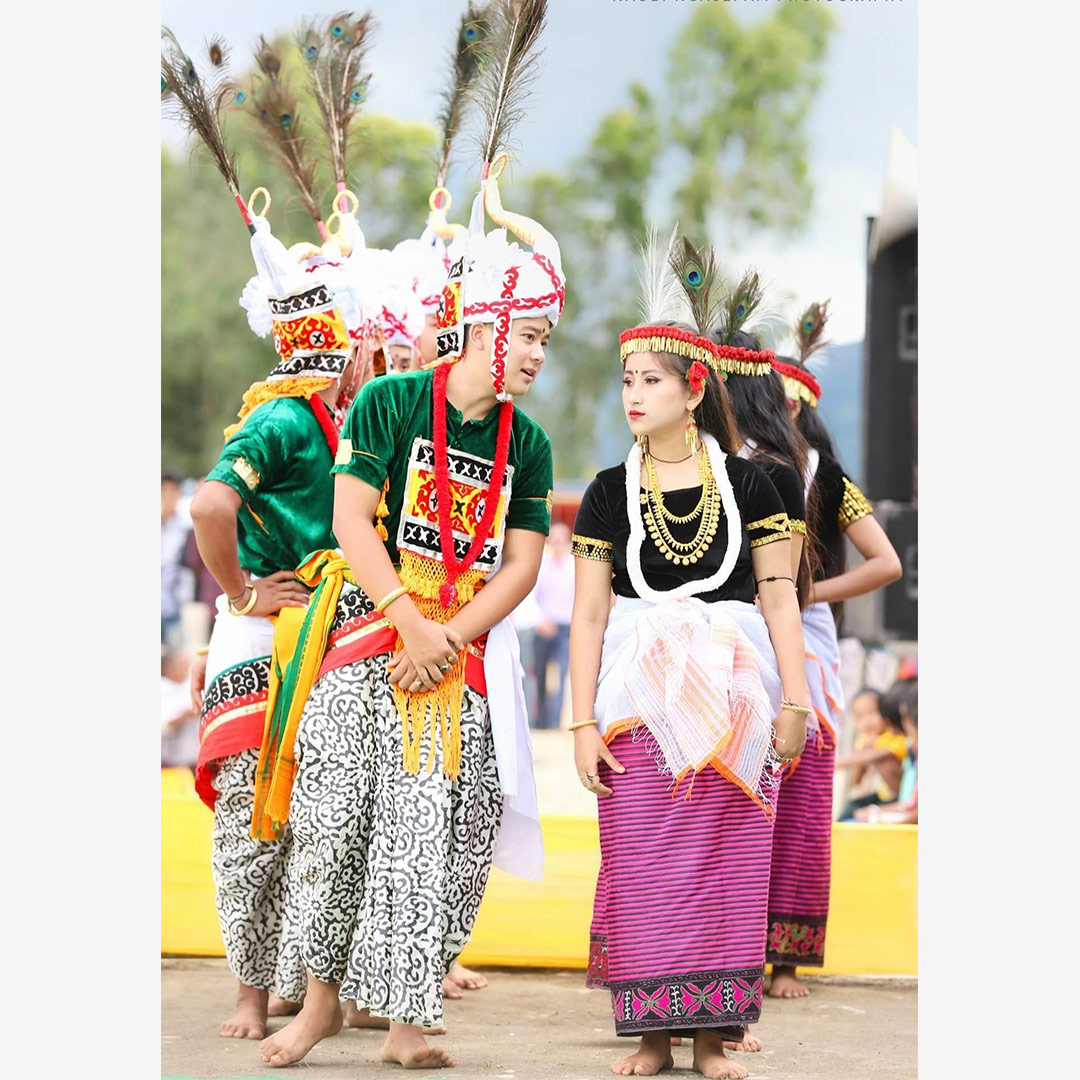
It is a uniqueness of Manipuri traditional dress that has an elegant and colorful impression of it. Female candidates normally use the ‘phanek’ and the ‘innaphi’. The phanek is a strip skirt which is normally checked while the inaphi is a garment similar to a shawl and worn over the blouse. The traditional costume of the women is the ‘rasleela’ dress, preferably used in the dance known as rasleela, which has brightly colored and attractive patterns. Males wear a dhoti along with a Jama and during festivals they put on the traditional head dress called naga.
The traditional attire of Meghalaya varies among its major tribes. The others are the Garo, Khasi, and Jaintia. The dressing code for the khasi women is a ‘jainsem’ which is a two piece dress and ‘tapmohkhlieh’ which is a form a shawl which encircles the shoulders. The clothes worn by the Jaintia women are more or less same as the above mentioned but with slight variations in the design and style statements. The Garo women have a dress style that involves putting on a wrap-around skirt that is known as the ‘dakmanda’, accompanied by a blouse. The ‘jainspong’ is the primary garment for the male members of these tribes; however, it comes in different designs on the basis of the tribe that the male pertains to. A turban is worn with the ‘jainspong. Besides, these garments also feature royal embroidery, rich fabrics, and beautiful patterns as a display of the state’s weaving industry.
Traditionally, the people of Mizoram are very particular about their dressing style and the dresses mostly used have beautiful colors and beautiful designs. The “puan” which is a wrap-around skirt is primarily the traditional dress for women. It can be worn along with a blouse known as kawr chei typically, puan is hand-woven and has bright contrasting colors and rich patterns. The men wear the “puanchei,” a loose-fitting lungi, and jacket while the women wear the pua and long blouses, skirts, and shawls. Mizo women still wear traditional dresses, which are accompanied by beads and other ornaments, which indicates that the people liked decorations.
Nagaland is home to many tribes and every tribe has their own traditional wear. For instance, the Angami tribe has traditional wears, which are the “white mhoushu,” for women and the “black lohe,” for men. This wear is usually enhanced with beautiful toys and bead work on the clothes. Ao’s women dress in mèkhèlà, it is a type of wrap-around skirt and shawl and Ao’s men wear a type of skirt and a vest like garment with short sleeves. These attires, most of the time, are made from hand woven fabrics showing the Tribe’s weaving prowess.
Traditionally people of Tripura can be seen wearing simple and elegant pieces of cloth that are trying to make a statement about the community. The “rignai” is an attire that was originally for women; a type of skirt which envelops the lower part of the body and a blouse commonly known locally as “risa”, a dress that covers the upper part of the body except the shoulders. The men folk put on a “rikutu”, a sort of dhoti and jacket. These dresses are mainly made of cotton fabrics and are accrued with plain yet chic cuttings. The state’s traditional costume is similar to the agricultural way of life and the impact of adjoining areas.
Cultural Significance of Seven Sisters
The attire of the Seven Sisters has a significant aspect of identity inherited within the customs and ceremonies of the people. Earrings, rings, necklaces, and bracelets are commonly used during festivals, weddings, and other related ceremonials, which signify the user’s identity and origin. The arrangements and designs on these robes are complex and they actually depict a history of the developing social group, its culture and physical vicinity. For example, the given garment color or the pattern that is created may be used in discriminating the marital status or social class or even belonging to a certain tribe.
Preservation and Modern Adaptations
Lately, the female population of the Seven Sisters states has been advocating for the retention and popularization of their native costumes. This has been escalated by government and other non-government agencies efforts that have been deemed necessary in continuing to preserve the culture of the region. Furthermore, fashion designers in the present generation are slowly introducing some traditional attires into fashionable clothes that young people currently wear, considering the historical aspect while designing their clothes.
Most of the modern adaptations that have been adopted by different communities include the use of traditional fabrics and designs but in the modern clothing styles. For instance, the fashionable Assamese silk pieces are used in the making of modern dresses and accessories and the Mizo puan designs are integrated to the fashionable western wears. It also assists in passing the cherishable traditional styles of weaving and craftsmanship to the present times and the youth develop pride in their culture.
Conclusion
The traditional dresses of women traditionally known as Seven Sisters of India are bright and very much a part of the region’s color palette. The clothes that the people wear also vary and are in relation to the state’s history, geographical location, and ethnic distribution. These garments are not mere wear; they are representation of the culture and histories of people of the region. As attempts to keep these customs continue and with the process of development in which these garments are integrated with today’s trends, the dresses of the Seven Sisters will remain a vivid example of the Cyrillic cultures present heritage.
Architecture is the art of sculpture designing, and constructing buildings and other physical structures. Form, space, materials, and light are creatively manipulated in architecture to accomplish various goals, such as expressing cultural values, creating a place for human habitation, and influencing the surrounding landscape. To know more deeply about architecture we have to visit the architectural places. India is a historical country, there are many historical monuments and buildings in India. The architecture of Indian monuments and buildings is very artistic and beautiful. The work done in those buildings shows the best architectural designs. The monuments and buildings in India are best to visit for architecture students.
Let’s see some places to visit for architecture students in India:
Taj Mahal, Agra
The Taj Mahal is one of the wonders of India. The Taj Mahal is the most beautiful architectural masterpiece of India. The Taj Mahal is recognized as a UNESCO World Heritage Site. The Mughal Emperor Shah Jahan built the Taj Mahal in memory of his beloved wife, Mumtaz Mahal. The Taj Mahal is well known for its exquisite workmanship a magnificent white marble architecture. The architecture of the Taj Mahal includes Indian, Turkish, Persian, and Islamic architectural styles. The Taj Mahal is not only an architectural monument but also a sign of love. The Taj Mahal’s prime structure is a substantial mausoleum made of white marble that is surrounded by four minarets. Minor ceilings edge the primary dome, which is beautifully ornamented with fine carvings and precious stones inlaid. The mausoleum is part of a large complex with other buildings, gardens, and sparkly ponds. Its creation demonstrated exceptional precision and craftsmanship by utilizing cutting-edge engineering techniques for that age. Still one of the most recognizable sites on earth, it serves as a constant reminder of the splendor of Mughal design. The Taj Mahal is one of the best monuments that architectural students must visit in India.
Jaipur (Architectural Monuments)
Jaipur is the first city in India that was planned, and designed according to Vastu Sastra (Indian architectural principles ). Jaipur is also known as the “Pink City”. Jaipur is known for its architectural heritage and historic consequence. Jaipur City was founded in 1727 by Maharaja Sawai Jai Singh II. Jaipur is a blend of multiple architectural styles – Mughal, European, and Indian architectural styles.
Multiple architectural monuments in Jaipur are the best examples of deep, and perfect architecture that architectural students must see. Let’s see some of the architectural monuments of Jaipur:
Hawa Mahal, Jaipur
Hawa Mahal is an example of Rajput architecture that was built in 1799 by Maharaja Sawai Pratap Singh. Hawa Mahal is one of the most famous architectural monuments of Jaipur. The most noteworthy feature of Hawa Mahal is its intricate front, which features 953 tiny windows, called jharokhas, that are adorned with beautiful latticework (jali). The palace was envisioned to provide passable ventilation during the scorching summer months by allowing cool air to flow through these windows. The front is modeled by Lord Krishna’s crown. Hawa Mahal is made of pink stone and perfectly represents Jaipur as a “Pink City”. Hawa Mahal is a reminder of the great craftsmanship and creative architectural design of those bygone days. Its distinctive style and historical significance, which provide a window into Jaipur’s regal past and architectural legacy, never ceases to enthral tourists.
The City Palace complex, a stunning example of Rajput and Mughal architecture, is situated in the center of Jaipur. Many palaces, courtyards, gardens, and museums are located there. Jaipur’s regal past is reflected in the palace’s elaborate décor, marble floors, and priceless art collections. There are multiple museums, courtyards, and palaces in the city palace these are:
Chandra Mahal
Mubarak Mahal
Diwan-I-Khas and Diwan-I-Alam
Pitam Niwas Chowk
Govind Dev Ji Temple
Museum and Art Gallery
Paved Courtyards and Gardens
All these perfectly represent the architectural heritage of India and are the best places for architectural students to visit.
A striking astronomical observatory and UNESCO World Heritage Site, Jantar Mantar is located in Jaipur. Maharaja Sawai Jai Singh II, a talented mathematician and astronomer, built it between 1727 and 1734. The Jantar Mantar is a collection of architectural astronomy devices intended for accurate and precise observation of celestial occurrences.
Jantar Mantar is one the most famous and top-visited architectural monuments in India. The goal of the construction of the Jantar Mantar was to further astronomy research and enable accurate astronomical measurements. In addition to Islamic and European influences, the instruments were designed with ancient Hindu astronomy and mathematics in mind. The Jantar Mantar was designed by Maharaja Sawai Jai Singh II to be a useful instrument for precisely measuring time and space as well as for researching and forecasting celestial events.
There are multiple architectural memorials in Jaipur. Jaipur is the top city in India that represents the architectural legacy of India.
Khajuraho Temples, Madhya Pradesh
In Khajuraho, Madhya Pradesh, India, there is a well-known complex of Hindu and Jain temples known as the Khajuraho Group of Monuments. These temples are well known for their exquisite carvings, beautiful architecture, and representations of sensual sculptures. The Chandela dynasty, which ruled central India between the ninth and the twelfth centuries, produced the Khajuraho temples, a time of immense architectural and cultural accomplishment. The beautiful Hindu and Jain temples known as the Khajuraho Temples are situated in the town of Khajuraho, which is in the Chhatarpur district of Madhya Pradesh, India. These temples are recognized as UNESCO World Heritage Sites and important historical and cultural landmarks because of their remarkable architectural splendor, elaborate sculptures, and finely carved details.
Khajuraho is one the best architectural monuments in India that architectural students must visit to know more about Indian architecture.
Ellora and Ajanta Caves
Maharashtra, an Indian state, is home to the Ellora and Ajanta Caves, two UNESCO World Heritage Sites. Despite being distinct locations, they are frequently cited in conjunction because of their historical significance and close vicinity. The two cave complexes exhibit outstanding instances of rock-cut architecture, art, and religious devotion from ancient India.
Ellora Caves: The Ellora Caves are a massive complex of rock-cut temples and monasteries carved out of the Charanandri hills, close to the city of Aurangabad. During the reign of multiple dynasties, including the Rashtrakutas, Chalukyas, and Yadavas, these caves were excavated over several centuries, from the sixth to the tenth century CE.
The Ellora chambers, which have 34 chambers devoted to Hinduism, 12 to Buddhism, and 5 to Jainism, are a harmonic fusion of Buddhist, Hindu, and Jain religious traditions. The most famous cave in Ellora is Kailash Temple dedicated to Lord Shiva.
Ellora Caves are a UNESCO World Heritage Site and are the historical architecture of India. Architectural students must visit these architectural caves. The unique architecture of Ellora Caves will help them to know more about architecture.
Ajanta Caves: Situated approximately 100 kilometers away from Ellora, the Ajanta Caves comprise thirty Buddhist cave structures etched into a horseshoe-shaped cliff by the Waghora River. The Satavahana, Vakataka, and Chalukya kingdoms were in power when these caverns were built, and they date from the second century BCE to the sixth century CE.
The beautiful murals and paintings found in the Ajanta Caves are well known; they feature scenes from ordinary life, Jataka tales, and the life of the Buddha. Before being abandoned in the seventh century CE, the caves housed Buddhist monks and were used as monastic retreats. A British officer called John Smith unearthed the caves in the nineteenth century. Among the most well-known caves at Ajanta are Caves 1 and 2, where the famous painting of the Buddha’s death, Mahaparinirvana, is shown in Cave 2 and the magnificent representation of the Bodhisattva Padmapani in Cave 1.
The architectural students must see both Ajanta and Ellora caves to learn about Indian architectural heritages.
Delhi (Architectural Monuments)
Delhi is the capital of India and multiple architectural monuments in Delhi reflect the architectural heritage of India.
Following are some architectural monuments of India:
Qutub Minar: One of Delhi’s most recognizable structures, the Qutub Minar is a UNESCO World Heritage Site. At roughly 73 meters, it is the world’s highest brick minaret, constructed in the twelfth century by Qutb-ud-din Aibak. The minaret showcases early Islamic architecture in India with its elaborate carvings and Arabic calligraphy inscriptions.
Red Fort: Red Fort is also known as Lal Qila. Constructed in the 17th century by the Mughal Emperor Shah Jahan, the Red Fort is a stunning example of Mughal architecture. A complex of palaces, rooms, gardens, and museums is enclosed by the red sandstone walls of the fort. The Diwan-i-Am (Hall of Public Audience) and Diwan-i-Khas (Hall of Private Audience) are two of the fort’s notable architectural features.
Humayun Tomb: The tomb of Humayun is another UNESCO World Heritage Site and is regarded as a forerunner to the Taj Mahal. Emperor Humayun’s mausoleum, constructed in the middle of the 16th century, combines Indian and Persian architectural designs. The tomb is a masterpiece of Mughal architecture because of its symmetrical design, gardens, and use of red sandstone and white marble.
Jama Masjid: One of India’s biggest mosques and a notable religious and architectural monument in Delhi, the Jama Masjid was built by Shah Jahan.
Built of red sandstone and white marble, it was finished in 1656 and has three majestic entrances, minarets, and a large courtyard.
India Gate: India Gate is a military memorial honoring Indian troops who lost their lives in World military I. It was created by Sir Edwin Lutyens and constructed in the early 20th century. Nestled amidst verdant lawns, the triumphal arch, evoking the likeness of Paris’ Arc de Triomphe, is a well-liked destination for both inhabitants and visitors.
All these are architectural monuments present in India’s capital in India. So architectural students must visit these architectural monuments.
One of the oldest continuously inhabited towns in the world, Varanasi—also referred to as Kashi or Banaras—has great religious and cultural significance in Hinduism. Varanasi is well known for its spiritual and religious significance, but it also has a wealth of historical and cultural landmarks that are architectural.
Kashi Vishwanath Temple (Temple dedicated to Lord Shiva, famous for its domed shikhara covered in gold).
Durga Temple (Durga Kund Mandir): Well-known for its unique red-colored frontage.
Ramnagar Fort
Narrow street traditional houses of Varanashi.
All these are the simple but very famous architectural monuments of Varanashi that architectural students must visit.
10. Mysore Palace
The majestic royal palace known as the Mysore Palace, also called the Amba Vilas Palace, is situated in the Indian state of Karnataka, which lies in the southern region of the country. This famous palace is well-known for its sophisticated interior design, rich historical value, and gorgeous Indo-Saracenic architectural style. The Wadiyar family erected the original Mysore Palace in the fourteenth century, but fires and restorations caused it to be destroyed and rebuilt numerous times.
Under the rule of Krishnaraja Wadiyar IV, the present palace was commissioned in 1897 and finished in 1912, designed by British architect Henry Irwin. With elements of Gothic, Rajput, Hindu, and Islamic architecture, the palace reflects the eclectic Indo-Saracenic style that was prominent during the British colonial era. The Mysore Palace is one of the most visited architectural monuments of India. Architectural students must watch Mysore Palace.
11. Hampi, Karnataka
The magnificent Vijayanagara Empire remains at Hampi, which is a UNESCO World Heritage Site in the Indian state of Karnataka, are well-known. One of the richest and biggest empires in Indian history, the Vijayanagara Empire, had its majestic capital originally located in this historic metropolis. The architectural wonders of Hampi, which are surrounded by an amazing environment of enormous boulders and lush vegetation, draw tourists, archaeologists, and history buffs from all over the world. Hampi is also the most famous architectural monument of India. From the fourteenth to the sixteenth centuries, Hampi thrived as the capital of the Vijayanagara Empire. The empire was a significant hub for South Indian art, culture, and architecture throughout this time. Hampi is home to a large number of striking temples, palaces, and monuments that exhibit a distinctive fusion of Dravidian and Hindu architectural traditions.
Immerse yourself in India’s rich history and culture by visiting Hampi, a treasure trove of architectural and archaeological marvels, must visit Hampi.
Situated in the Indian state of Rajasthan, Udaipur is widely recognized for its opulent palaces, tranquil lakes, and abundant cultural legacy. Known as the “City of Lakes” or the “Venice of the East,” Udaipur is a well-liked travel destination praised for its historical significance, gorgeous architecture, and romantic atmosphere.
City Palace: Located on the eastern shores of Lake Pichola, the City Palace is a spectacular structure. It was constructed over several centuries, including donations from several Mewar dynasty emperors. The city palace combines Mughal, European, Chinese, Rajasthani, and medieval architectural elements. City Palace has elaborate courtyards, towers, domes, and balconies. The Manak Mahal (Ruby Royal), Zenana Mahal (Women’s Palace), Mor Chowk (Peacock Courtyard), and the magnificent view from the royal terrace within the complex. The architectural students must visit the Udaipur City Mahal to learn about the Indian architectural monuments.
There are many architectural monuments in Udaipur and are:
Lake Palace(jag niwas): Famous for its Rajput architecture with carved balconies and jharokhas(balconies).
Jag Mandir
Saheliyon ki Bari
Fateh Sagar Lake
Mansoon Palace
Havelis and Temples
Udaipur in India is most famous for architectural places in India. Udaipur represents the Indian architectural heritage perfectly.
India is a country rich in cultural and architectural heritage. There are many architectural buildings and monuments in India. India’s architectural landscape features a rich tapestry of styles, techniques, and influences, ranging from ancient cave temples to majestic palaces and contemporary architectural marvels. So the architectural students must visit all the above architectural monuments to learn more about architecture.