The Timeless Charm of Gas Stoves: Why Glen Appliances is Your Perfect Choice

0

Glen-Appliances-01

The kitchen has always been more than just a place to cook—it’s the heart of every home. It’s where stories are shared over simmering pots and where recipes turn into memories. Even with all the modern gadgets available today, the gas stove continues to hold a timeless charm. It’s dependable, efficient, and gives you the kind of control every home cook loves.

If you’re planning to upgrade your kitchen and wondering whether to buy gas stove online, Glen Appliances offers a perfect balance of performance, safety, and elegant designs to match every home. Let’s dive deep into why gas stoves continue to be the first choice for families and how Glen is redefining the modern cooking experience.

Why Gas Stoves Still Rule the Kitchen

With the rising popularity of induction cooktops and electric stoves, many people wonder why gas stoves are still so popular. The answer lies in their simplicity, flexibility, and effectiveness.

  1. Instant Heat Control
    Unlike electric options, gas stoves allow you to control the flame instantly. Whether you want to simmer a curry slowly or quickly boil water, the ability to adjust the flame makes cooking more precise and satisfying.
  2. Even Cooking
    The open flame ensures that heat spreads evenly across the bottom of your cookware, which means perfectly cooked rotis, evenly sautéed vegetables, and delicious curries without burning.
  3. Compatible with All Cookware
    From cast iron pans to steel kadais and clay pots, gas stoves are universally compatible. You don’t need to invest in special cookware like you often do with induction stoves.
  4. Power Outages Don’t Matter
    In countries where power cuts are common, gas stoves come to the rescue. A simple spark is all you need, and your kitchen never has to go silent.

These practical benefits are why families still prefer a gas stove as their primary cooking appliance.

Why You Should Buy Gas Stove Online

The internet has transformed how we shop for home appliances. If you’re looking to buy gas stove online, the advantages are countless.

  • Convenience: You can browse different models, compare features, and read reviews without leaving your home.
  • Variety: Online platforms offer a wider range of gas stoves than most physical stores.
  • Transparent Pricing: It’s easier to compare prices online and take advantage of discounts and offers.
  • Doorstep Delivery: Your chosen gas stove arrives at your home safely packed, with easy installation options.

With Glen Appliances’ trusted online presence, buying your gas stove becomes a seamless experience.

Glen Appliances: A Legacy of Innovation and Trust

For decades, Glen Appliances has been a name synonymous with quality, durability, and style. The brand understands the evolving needs of modern households and designs products that not only make cooking effortless but also enhance the beauty of your kitchen.

When it comes to gas stoves, Glen stands out for its:

  • Elegant Designs: Sleek glass-top models, stylish stainless steel finishes, and compact burners that complement any modular kitchen.
  • Durability: Glen stoves are crafted with high-quality materials, ensuring long-lasting performance even with daily use.
  • Advanced Safety Features: From toughened glass tops to sturdy pan supports, Glen ensures that every cooking experience is safe.
  • Innovative Technology: Features like auto-ignition, high-efficiency brass burners, and ergonomic knobs are designed to make cooking smooth and hassle-free.

Different Types of Gas Stoves from Glen

Every household is unique, and so are its cooking requirements. Glen Appliances offers a wide variety of gas stoves, ensuring there’s something for everyone.

1. Stainless Steel Gas Stoves

Perfect for those who want durability and simplicity. These stoves are easy to maintain and highly reliable for everyday cooking.

2. Glass Top Gas Stoves

A popular choice in modern kitchens, glass-top stoves combine style and performance. The toughened glass surface not only looks elegant but is also easy to clean.

3. 2-Burner Gas Stoves

Ideal for smaller families or compact kitchens. They save space while offering full functionality for daily meals.

4. 3-Burner Gas Stoves

Perfect for medium-sized families. With three burners, you can cook multiple dishes simultaneously without delays.

5. 4-Burner Gas Stoves

A dream for large families or cooking enthusiasts who like multitasking. These stoves make it easy to prepare grand meals quickly.

Whether you prefer compact designs or heavy-duty stoves for extensive cooking, Glen has a solution tailored to your needs.

Features That Make Glen Gas Stoves Stand Out

When you buy gas stove online, it’s not just about picking the cheapest option. It’s about finding one that offers the best features. Glen gas stoves are loaded with features that make cooking enjoyable and stress-free.

  • Auto-Ignition: No need for matches or lighters—just turn the knob, and the flame ignites instantly.
  • High-Efficiency Brass Burners: Known for their durability and superior heat distribution.
  • Ergonomic Knobs: Designed for comfort and easy grip, making flame control effortless.
  • Sturdy Pan Supports: Capable of holding heavy cookware without wobbling.
  • Easy-to-Clean Surfaces: Spill-proof designs and smooth finishes ensure hassle-free maintenance.

Tips for Choosing the Right Gas Stove

If you’re planning to buy gas stove online, here are some simple tips to make the right choice:

  1. Consider the Size of Your Family

    • Small families: 2-burner gas stove
    • Medium families: 3-burner gas stove
    • Large families: 4-burner gas stove
  2. Check the Kitchen Space
    Measure your countertop space to ensure the stove fits comfortably.
  3. Decide Between Manual or Auto-Ignition
    Auto-ignition adds convenience, while manual ignition offers traditional reliability.
  4. Look for Safety Features
    Choose a stove with strong pan supports, durable glass tops, and anti-skid feet for extra safety.
  5. Select a Style That Matches Your Kitchen
    Glass tops offer a sleek, modern look, while stainless steel is timeless and robust.

Why Buy Gas Stove Online from Glen Appliances

When you choose Glen, you’re not just buying a stove—you’re investing in quality, trust, and a better cooking experience. Glen’s official website and trusted online marketplaces ensure:

  • Authentic products with warranty
  • Transparent pricing with exciting offers
  • Reliable delivery and installation support
  • Customer service that truly cares about your experience

Final Thoughts

The gas stove has stood the test of time, proving itself as an essential kitchen companion for families across generations. Its unmatched convenience, control, and versatility make it the preferred choice for home chefs and professionals alike.

If you’re planning to upgrade your kitchen and wondering where to buy gas stove online, Glen Appliances offers the perfect blend of innovation, safety, and style. From sleek glass-top designs to durable stainless steel models, there’s a Glen gas stove for every household.

Cooking is not just about preparing food—it’s about creating memories, sharing love, and celebrating life. With Glen Appliances, every meal becomes a delightful experience.
Eid-e-Milad 2025: Date, History, Significance, and Celebrations

0

Id-e-Milad-2025

Id-e-Milad, or Eid-e-Milad or Mawlid, is one of the most important celebrations for Muslims across the world. It is the day when Prophet Muhammad (Peace Be Upon Him) was born and falls on 12th Rabi al-Awwal, the third month of the Islamic calendar. Prayers and festivities mark the birth anniversary of the Prophet. On this day, his teachings, guidance and the way he led his life are remembered and reflected upon. 

Id-e-Milad 2025 – Date & Timings

Date (2025) Notes
Friday, 5 September 2025 Celebrated in many regions based on local moon sighting; corresponds to 12 Rabi al-Awwal.
Saturday, 6 September 2025 Observed in some regions where the moon is sighted later; still falls on 12 Rabi al-Awwal in the Islamic calendar.

The Islamic calendar is a lunar calendar, and the exact day of the celebration depends on the sighting of the moon. Eid-e-Milad can be celebrated on either the 5th or 6th of September, 2025. However, according to the lunar calendar, it is celebrated on the 12th of the third month, Rabi al-Awwal.

Also, since most sects of the Islamic community follow the sighting of the moon to celebrate the festival, regional variations are common. It might be celebrated on different dates in parts of the world, because different parts of the world can see the moon at different times.

Moreover, the main overarching elements of the celebrations remain the same; however, a few regional differences can be noted. Also, since there are several sects in Islam, there are slight variations in celebrations not only regionally, but also within the communities.

History of Id-e-Milad

The celebrations of Id-e-Milad, according to some sources, were started by the Fatimids. The first official festivity took place in Egypt and later became popular in different parts of the world. During the 11th century, the ruling Shia dynasty in Egypt celebrated Id-e-Milad, but by the 12th century, it spread to other countries, such as Syria, Turkey, Morocco and Spain. The Sunni sects, too, started observing the day soon after. 

In some sources, the history of the celebrations dates back to the beginning of Islam, where the Tabiun (followers) of the Prophet began to compose poetry in honour of the Prophet. The celebrations were continued by the Fatimids and other sects of the religion. The Ottomans, while under the rule of Murad III declared Id-e-Milad as an official holiday. 

In India, the festivities became prominent during the time of Muslim rulers. Cities, such as Lucknow and Hyderabad, were known for their grand celebrations, which included gatherings, recitation of prayers, processions and feasts. Today, in many regions of India, Id-e-Milad is celebrated with much enthusiasm and excitement. Especially in states with large Muslim populations, such as Uttar Pradesh, Telangana, Maharashtra, Karnataka, Kerala and West Bengal.

Significance of Id-e-Milad

Islam, over the years, has been seen through different lenses and undergone scrutiny due to various geopolitical and social factors. However, the roots of the religion lie in the teachings of the Prophet and the Quran. If interpreted and understood correctly, Islam propagates peace, unity, patriotism and brotherhood. There is no better day to remember the true tenets of Islam than on the day the Prophet or Messenger of God was born. 

Id-e-Milad is a religiously important festival for Muslims, since it is the birthday of the Prophet. But the significance of the festival goes beyond religion alone. His teachings, exemplified by the way he led his own life, along with the ‘hadees’ or his sayings are the cornerstone of values and virtues that Muslims abide by. 

The festival is also a symbol of unity, devotion and community spirit. The community comes together to celebrate the birth anniversary of their religious, spiritual and much-loved leader. It is also a day that celebrates unity and togetherness, as not only members of the community, but also others, come together to be inspired by the teachings, guidance and the impact of one of the most important figures in spiritual history. 

How Id-e-Milad is Celebrated?

Id-e-Milad is celebrated with much fervour in different parts of the world. Though there are slight variations across regions and sects, the overall happiness and celebratory sentiments are the same. Homes and mosques are often lighted and decorated. There are banners and sometimes green flags that are put up on buildings. Prayers, sermons, recitation of the Quran, poetry and hadees are done in mosques or in homes. Communities take out processions and traditional dishes are cooked for families and friends to meet up and enjoy. 

Also, charity and donations are given a significant importance during this festival. Sweets and food is distributed to the needy, so that no one is left out in the celebrations. 

Id-e-Milad 2025 in India

Milad un Nabi is a gazetted holiday in India. It is not a national holiday in all states of the country. However, some of the states where it is observed as a state or public holiday are, Maharashtra, Karanataka, Tamil Nadu, Uttar Pradesh, Delhi, West Bengal, Kerala etc. 

Most states or regions that have a sizeable population of Muslims, celebrate Id-e-Milad. The decorations and festivities are also a way for others to understand and acknowledge the culture of the Muslim community. Since long, the secular environment of India has been the fundamental on which the country continues to thrive. Though there have been mishaps and flare ups, the goal is to make sure that people of all religions, caste, creed and class find an equal footing and respect in society. Id-e-Milad, is hence, a celebration of the values and teachings preached by the Prophet. In fact, one of his most popular teachings is that – To love one’s country is a part of faith. Keeping this love of the nation in their hearts, Muslims and people of all other religions, celebrate the Prophet on Id-e-Milad. 

How Id-e-Milad is Celebrated in India

There are no strict step-by-step celebrations that are followed during Id-e-Milad. It is more of a universal feeling of happiness and togetherness. However, here is summary of how the festival is celebrated:

  • Homes are cleaned and preparations for the festival, such as buying new clothes and gifts are made.
  • Banners, lights and flags decorate homes and buildings.
  • Night long prayers are said on the eve of Milad.
  • Processions and parades are held.
  • Certain communities perform the Sandal Rites which pay respect to the symbolic footprints of the Prophet.
  • Sermons, recitation of Quran and prayers are held in mosques
  • Community meals are organized or delicious meals are cooked and shared in homes too.
  • Exhibitions of photos, videos and banners of the Holy cities of Medina and Mecca are sometimes displayed.
  • Food is distributed and donations are made to the needy.

Takeways

Finally, Id-e-Milad is an important celebration for the Muslim community. But it is also a reminder of secular and communal bonhomie. In a country that is proud of its religious, regional and cultural diversifications, the celebration of one festival feels like a celebration of and for all. It is also a celebration of compassion, generosity, and unity, values that the Prophet himself embodied.

FAQs on Id-e-Milad 2025

Id-e-Milad-2025


Question: When is Id-e-Milad 2025 celebrated?

Answer: Id-e-Milad 2025 can be celebrated on 5th or 6th September. However, many states in India have declared 5th September as the public holiday.

Question: Why is Id-e-Milad important in Islam?

Answer: Id-e-Milad marks the birth anniversary of Prophet Muhammad. It is a significant occasion to remember his teachings, guidance, and way of life.

Question: How do Muslims celebrate Id-e-Milad in India?

Answer: Celebrations include night-long prayers, Quran recitation, poetry, hadees, and sermons. Homes and mosques are decorated with lights and banners. Processions, parades, charity, and festive feasts are also common.

Question: Is Id-e-Milad a public holiday in India?

Answer: It is not a national holiday but is a public holiday in many Indian states. The exact day of the holiday may vary by region based on moon sighting.

Question: What are the key rituals of Id-e-Milad?

Answer: Muslims remember the Prophet through hadees, sermons, poetry, and the Quran. Acts of charity, donations, prayers, and community gatherings are integral to the celebration.

Designing for Joy: How Colorful Streetscapes Are Transforming Urban Safety

0

How-Colorful-Streetscapes-Are-Transforming-Urban-Safety-01

When we talk about safer streets, we often jump straight to technical fixes: traffic signals, concrete barriers, speed humps, signage. These tools are important, and they save lives. But what if safety isn’t just about rules and regulations—what if it’s also about how a street feels? What if the design of a space—the colors, the shapes, the sense of play—can change the way people move through it? That’s the question we ask ourselves at Chalk Riot every day. And it’s why we believe that joy isn’t just a byproduct of our work. It’s the strategy.

Why Joy Belongs in Street Design

When most people think about joy, they don’t think about traffic engineering. But in our experience, these two things are more connected than they appear. Joy—when thoughtfully embedded into the design of a city—can shift how people interact with space. It can calm chaos. It can encourage care. It can create pause.

That’s the heart of traffic calming: creating a moment where a driver slows down, becomes more alert, and shares the road more respectfully. Traditional infrastructure achieves this through physical measures. But colorful, playful design can accomplish the same goal by engaging a different part of the brain. A painted intersection doesn’t need to block a car to make a driver think twice—it just needs to disrupt their expectations. That moment of surprise can be powerful.

We’ve seen it happen in real time. When we finish a mural on a busy street or at an intersection, the energy shifts. Kids start dancing across it. Cyclists pause for selfies. Cars slow down—not because they have to, but because they want to. Something about that burst of color commands respect. It reminds everyone that they’re in a shared space.

Color as a Safety Tool

Color as a Safety Tool

Color is more than decoration. It can signal, instruct, and protect. In the natural world, bright colors are a warning—think of a red berry or a yellow wasp. On the street, the same concept applies. But instead of fear, our use of color invites curiosity, joy, and attention.

That attention is a form of safety. In high-risk intersections where visibility is poor, color can help highlight pedestrian zones or make crosswalks more noticeable. In fast-moving traffic corridors, street murals can psychologically “narrow” the road and cause drivers to reduce speed.

More cities are beginning to catch on. In Washington D.C., where we’re based, we’ve collaborated with city planners and local organizations to implement traffic calming murals in neighborhoods with a history of traffic violence. These aren’t just art projects—they’re safety interventions. And they’re working.

Designing With, Not For, the Community

Designing With, Not For, the Community

One of the most important parts of our work at Chalk Riot is collaboration. We don’t just show up with paint and a plan. We work with communities from the very beginning—listening to their stories, learning their histories, and understanding how they move through space.

Designing for joy means different things to different people. In one neighborhood, it might look like bright flowers and pollinators. In another, it might be bold geometric patterns or tributes to local heroes. When people see themselves reflected in their streets, they’re more likely to take care of them. That investment fosters a culture of mutual respect and safety.

We’ve also learned that when residents—especially youth—are invited to help create the artwork, the impact goes deeper. They become advocates for their space. They tell their friends and family to slow down. They become ambassadors of the design. And that community pride becomes part of the safety equation.

Ephemeral Art, Lasting Impact

Ephemeral Art, Lasting Impact

Many of our murals are temporary. Chalk fades. Paint wears down. The street eventually gets resurfaced. And that’s okay. Ephemeral art still makes a lasting impact.

First, it gives cities a chance to pilot ideas without long-term infrastructure changes. A mural can act as a proof of concept: if a painted plaza slows traffic and increases foot traffic, it may be worth investing in permanent changes.

Second, temporary art keeps the conversation going. It reminds people that the street is a living space. It can change. It can be responsive. It can be joyful.

And finally, it gives us room to experiment. Not every design has to last forever. In fact, some of the most impactful projects are the ones that respond to a specific moment—a local event, a community need, or a cultural celebration.

Safety Shouldn’t Be Boring

There’s a misconception that safety design has to be dull—grey concrete, steel railings, rigid signage. But that’s not the only way to build a secure city. In fact, when spaces feel cold or impersonal, people may disengage. They may ignore signs. They may drive faster just to move through the space quicker.

But when safety is designed with joy in mind—when it feels welcoming, warm, and full of life—people engage. They take notice. They slow down. They treat the space and each other with care.

We believe in a city where safe streets are also beautiful ones. Where public safety and public art go hand in hand. Where the crosswalk is not just a place to pass through but a place to connect. And where every resident, no matter their age, ability, or background, can feel seen and safe on the streets they call home.

Building a Joyful Future

Building-a-Joyful-Future

We often say that we build from the ground up. That doesn’t just mean working on pavement. It means starting with the people. Starting with what brings them joy, what makes them feel safe, what makes them feel connected to where they live.

That’s the foundation for the kind of future we want to help create: one where art and safety are not separate conversations, but part of the same vision.

At Chalk Riot, we’ll keep painting, keep collaborating, and keep advocating for joy—not as an afterthought, but as a vital part of urban design. Because we’ve learned that when you put joy in the streets, you make space for something even bigger: a city that truly cares for the people who move through it.

And that kind of city? That’s a place worth slowing down for.

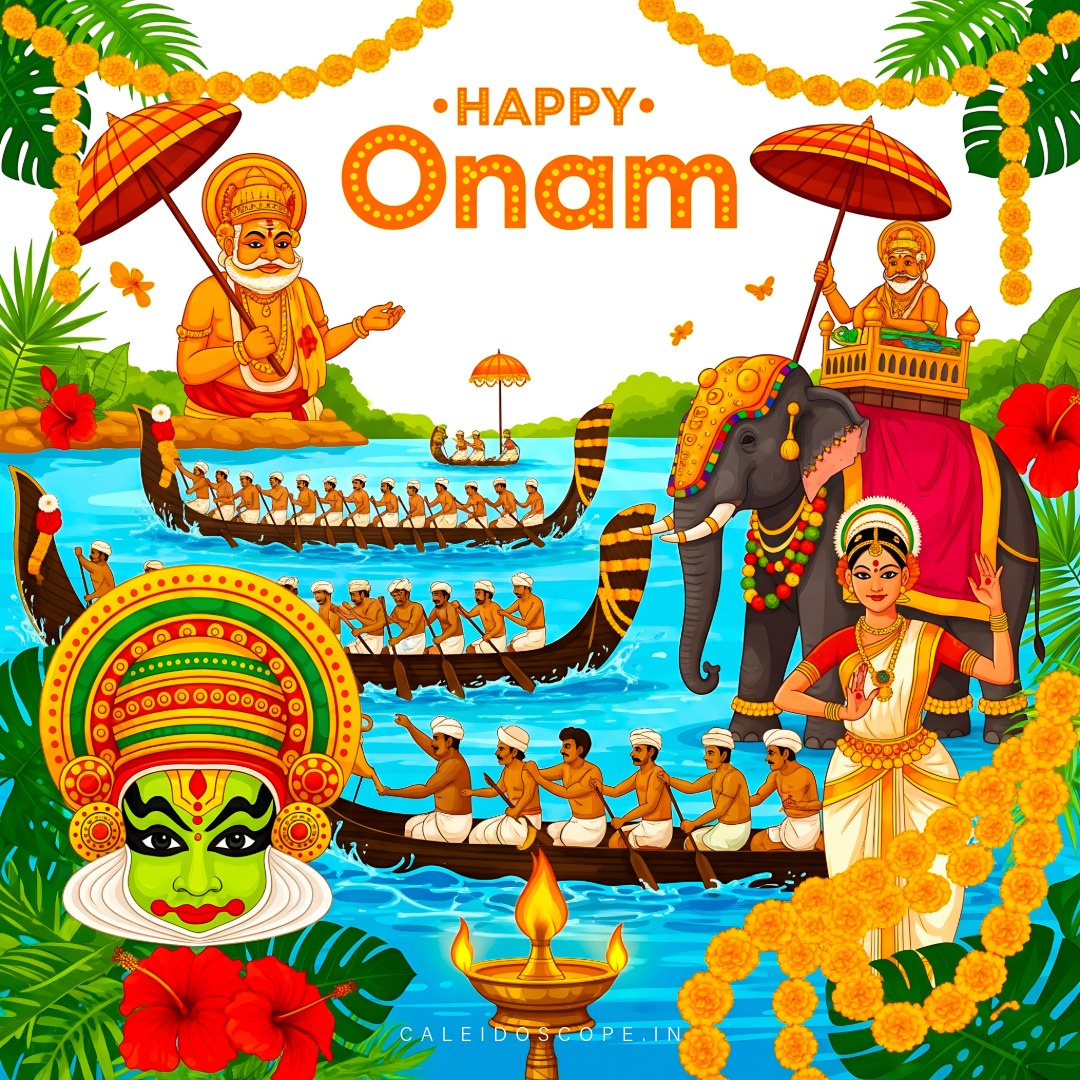
Onam 2025: Auspicious Date, History, Significance, Rituals and, Wish Cards

0

Onam-Festival

Why Onam is Kerala’s biggest festival?

Onam is one of the most vibrant and popular festivals of South India. It is celebrated not only in Kerala with much fervour and enthusiasm, but also by Malayalis residing anywhere in the world. It is considered the biggest festival of the state, celebrating the harvest season and the arrival of the much-loved mythological King Mahabali.

Cultural, Religious, and Social Relevance

The ten-day Onam celebrations are culturally, religiously and socially relevant. People come together to take part in the festivities, traditions and various cultural events. From enjoying the grand feast to decorating the entrance of homes with stunning floral designs to watching the thrilling boat races, Onam is a festival that highlights heritage and social bonhomie. Onam this year is celebrated from 26th August to 5th September, with the last day of the celebrations being the most important. 

Onam 2025 Key Details

Onam Festival Details
Onam Start August 26, 2025 – Atham or First Day
Onam End September 5, 2025 – Thiruvonam or Last Day
Thiruvonam Nakshatram Begins September 4, 2025 at 11:44 PM
Thiruvonam Nakshatram Ends September 5, 2025 at 11:38 PM

History of Onam Festival

Story of King Mahabali and Vamana’s boon

Onam and King Mahabali
Image – Wikimedia

Onam is a harvest festival that celebrates abundance and bountiness. Celebrated at the end of the monsoon season, in the month of Chingam, Onam is fundamentally an agrarian festival. Also, the timing of the festival coincides with the harvest or agricultural cycle of the state. It is a manifestation of gratitude for nature’s bounties. The floral designs or pookalams and the grand feast are an expression of thankfulness for the produce.

Rooted in Agrarian traditions of Kerala

However, it also has a mythological history. According to folklore, King Mahabali was a benevolent, kind and powerful king in Kerala. So much was his generosity and popularity that celestial gods were intimidated by him. They asked Lord Vishnu to help, who, in turn, appeared in front of the King as a dwarf Brahmin or Vamana.

Blend of Hindu Mythology and Kerala’s cultural ethos

Lord Vishnu, in the form of Vamana, asked the King for three feet of land. The King, who was known for his virtue, readily agreed and granted the request. Vamana, then, suddenly grew in size and covered the earth and heavens with one foot each. King Mahabali offered his head for Vamana to place the third foot. Lord Vishnu was impressed by the King, and though he was sent to the netherworld or Patal Lok, he was given a boon to return to his kingdom every once in a year. Onam is a celebration of the yearly homecoming of Lord Mahabali. 

Onam is hence a blend of Hindu mythology and the cultural ethos of Kerala. On one hand, the traditions and social rituals reflect the culture of the state. On the other hand, the significance and meaning of the festival have roots in Hindu mythology. 

Significance of the Onam Festival

How Kerala Celebrates Onam

Symbol of unity, prosperity, and equality

The significance of Onam lies in the way it brings together people from all backgrounds under its fold. It is a festival that the people of the state celebrate with happiness and excitement, regardless of their religion, gender, caste, or class. In fact, Malayalis residing in other states or other countries also celebrate the rituals and traditions of Onam. 

National festival of Kerala (celebrated across communities)

Being the official and state festival of Kerala, Onam is celebrated across all communities. It is also a celebration of the heritage and culture of the state. The ten-day festival showcases a variety of events that help boost tourism. Some of these include the Snake Boat Races, Pulikali or Tiger Dance, Kaikottikale Dance and more.

Tourism and cultural showcase for global visitors

The Special Onam Week organised by the Kerala government features various performances on dance, music and traditional arts that are held across the state. Similarly, games and martial arts shows are also organised during the celebrations. Tourists can watch these to appreciate the culture of the land. 

How Kerala Celebrates Onam – A Step-by-Step Guide

1. Welcoming King Mahabali

History of Onam

The first thing that is done at the start of the festival is to clean homes and bring in positive energy. The clutter is cleared, and the home is made ready for welcoming King Mahabali. On the first day of Onam, known as Atham, the day begins with a prayer.

2. Pookalam

Onam-02

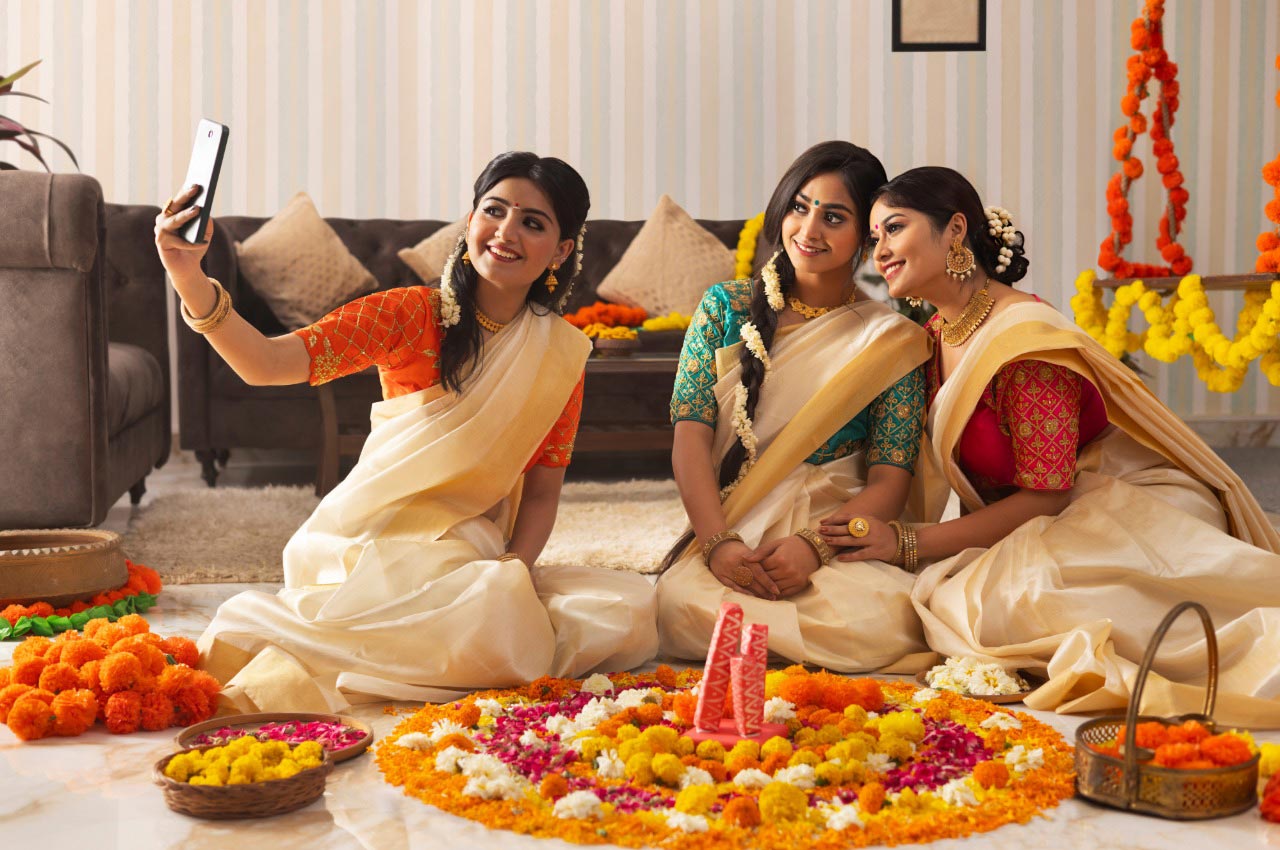
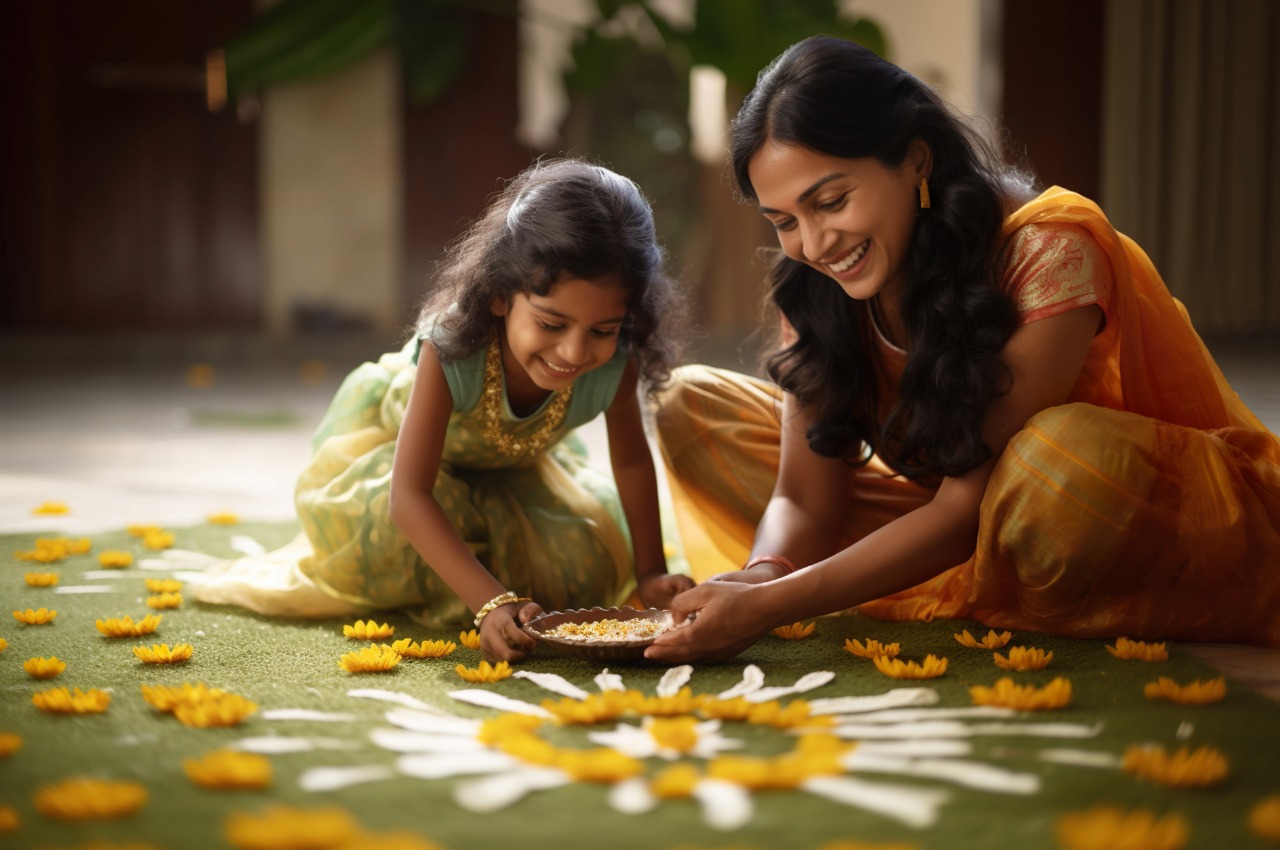
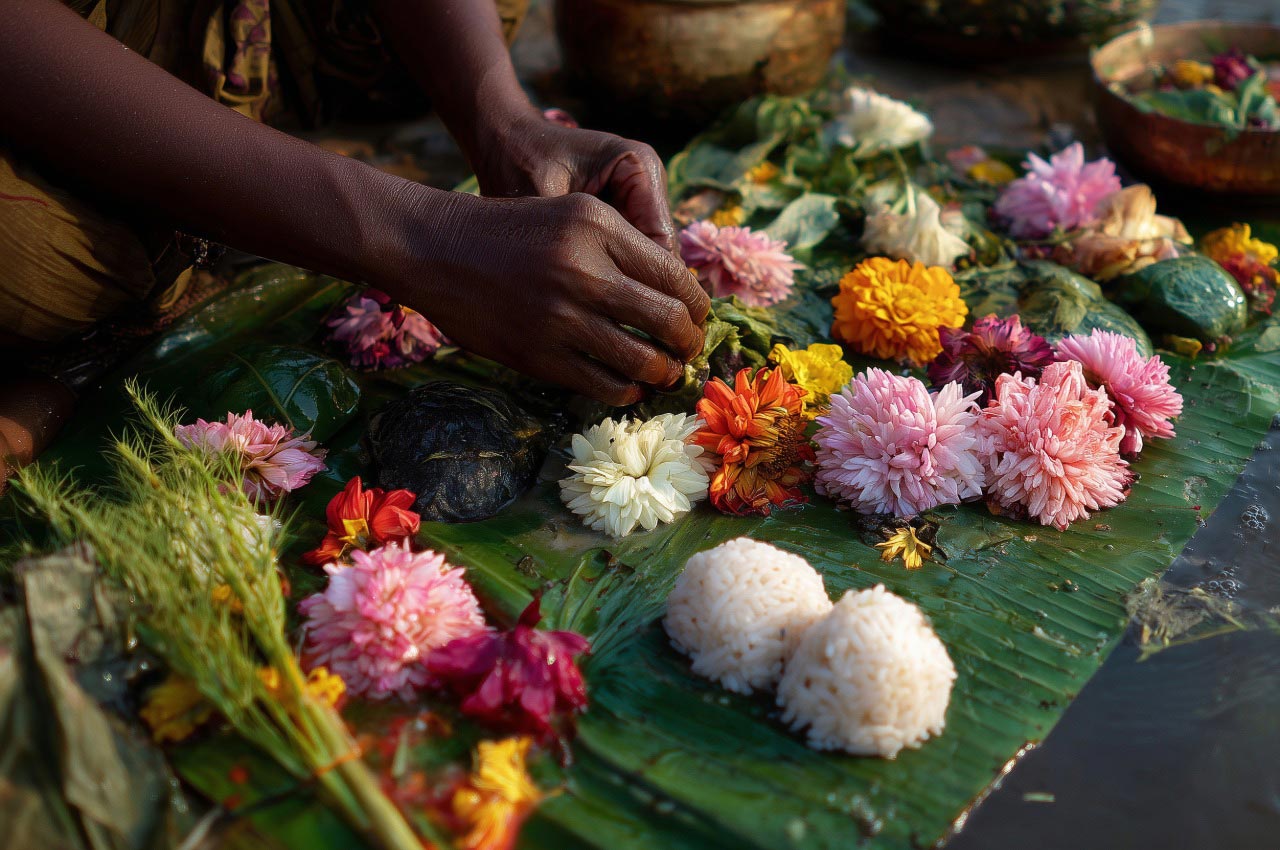
After cleaning and readying the home, the next step is the creation of pookalam or floral rangolis at the entrance of the house. The fresh flowers welcome King Mahabali, and over the ten days of celebrations, the pookalam is made bigger by adding more flowers. 

3. The Snake Boat Race or Vallam Kali

Kerala-Boat-Race
Image – Renju George/Flickr

The race is usually organised on the fifth day of the festival and is the postcard sport during the Oman celebrations. Narrow, long boats, manned by many rowers, race through the splendid backwaters of the state, as audiences cheer the rhythmically quick movement of the boats. The synchronised rowing is all about teamwork, hard work and the unity of the rowers. Tourists often visit the popular races, such as the Nehru Trophy Boat Race in Alleppey and the Aranmula Boat Race in Aranmula. 

4. Temples and Rituals

Onam Temples and Rituals

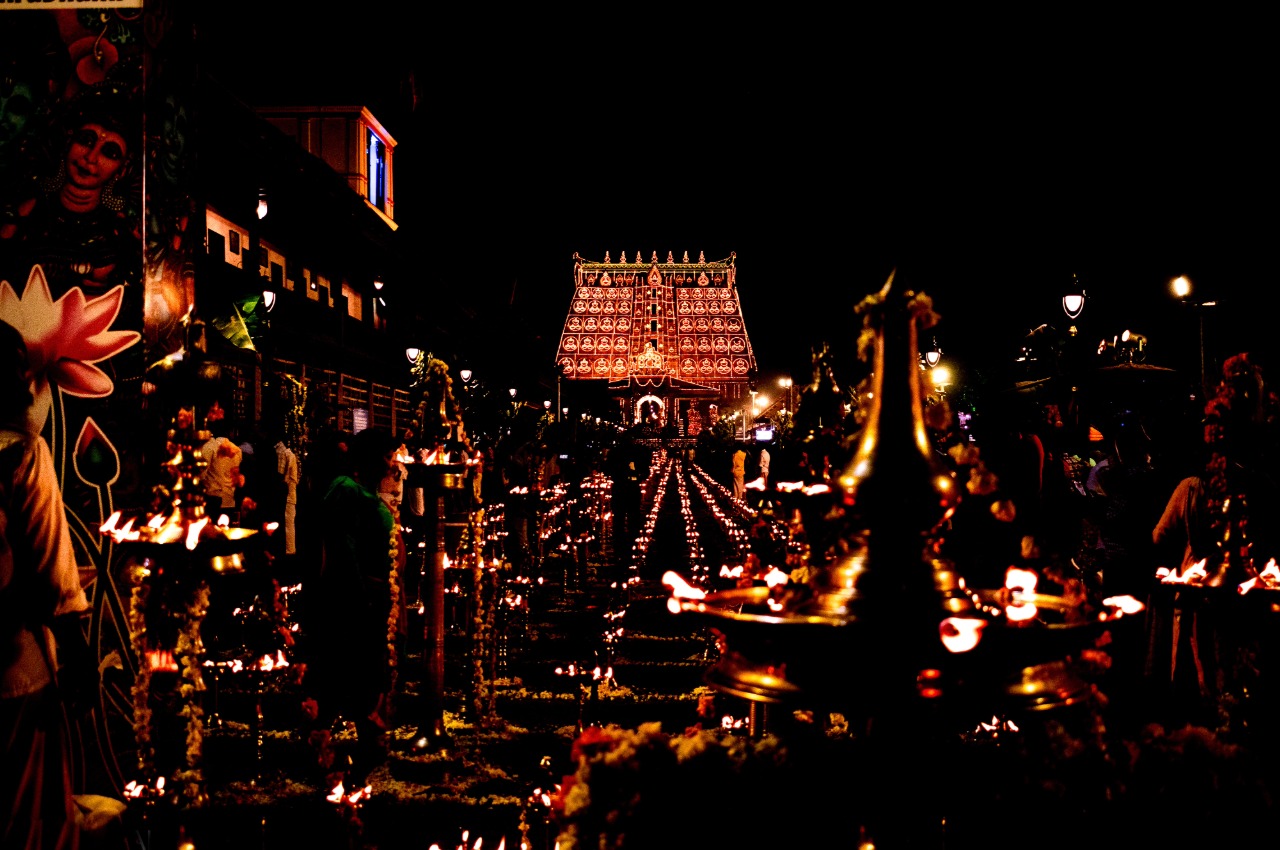
Through the festival days, devotees visit temples and attend prayers. Some also place small models of Mahabali and Vamana in the centre of the pookalam for prayers and worship. 

5. The Onasadya or Grand Feast

Onasadya

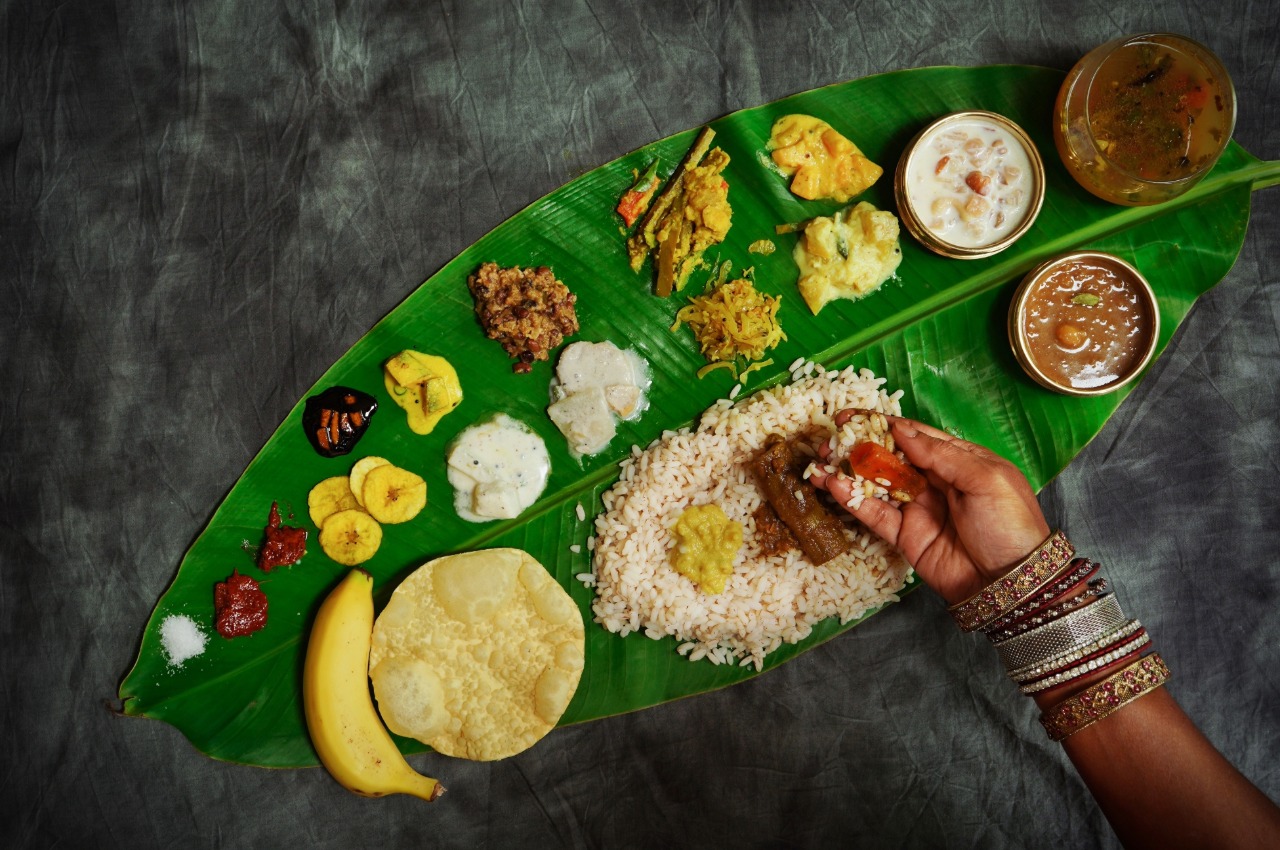
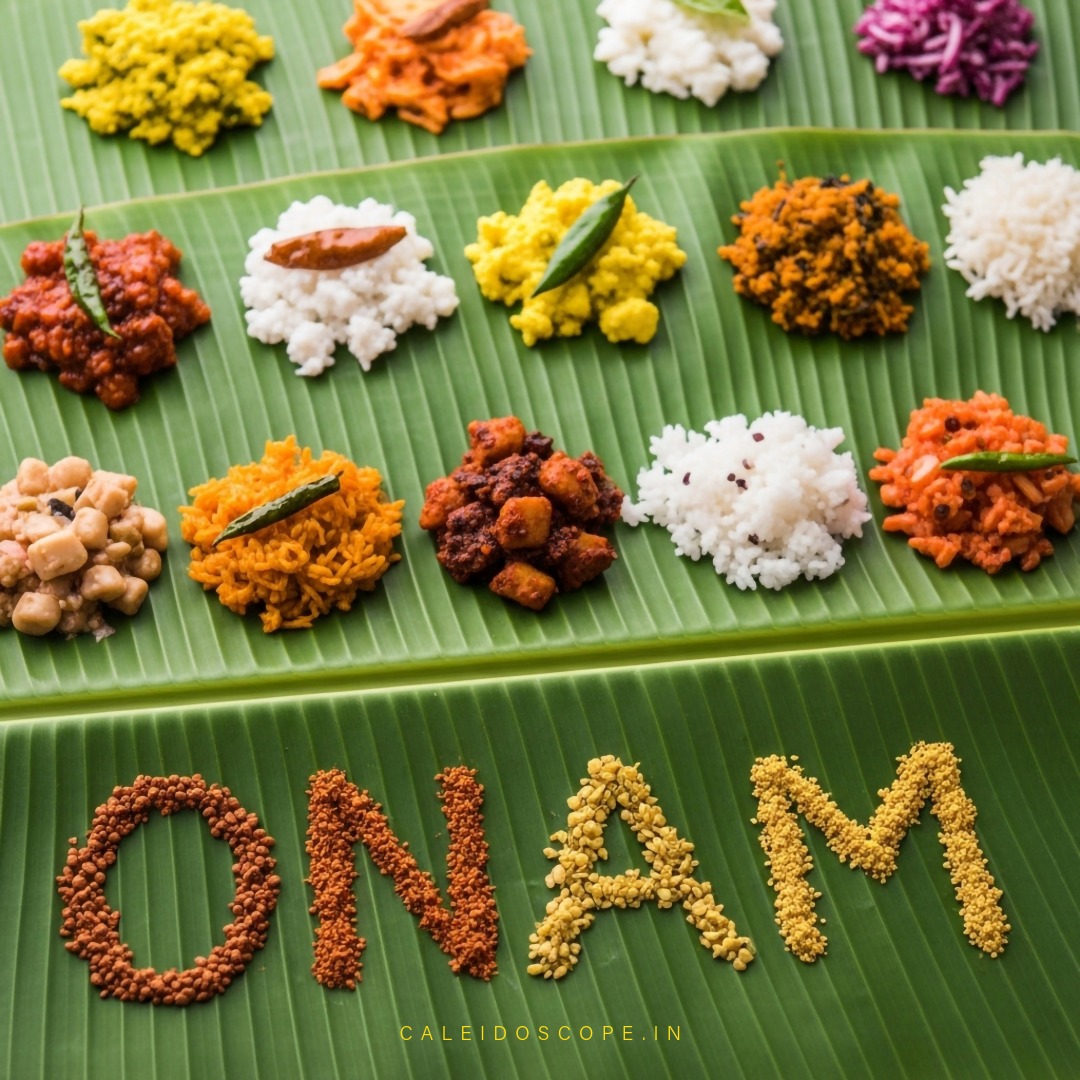
A sumptuous meal prepared and served on a banana leaf is one of the main highlights of Onam. The Onasadya meal comprises about 25 traditional dishes of the state, such as avial, sambhar, payasam and many more. Families sit together to enjoy the feast and share memories of banter, laughter and togetherness. 

6. Pulikali or Tiger Dance

Onam-Tiger dance
Thrissur Pulikkali-Wikimedia

This dance form is one of the most enjoyable and lively celebrations during Onam. Pulikali is a traditional and folk art of the state, where artists paint their bodies as tigers and dance to the music of drums. The entertaining performance is full of energy and strength.

7. Kaikottikali, or the Dance of Unity

Harvest-Festivals-of-India-Onam
Onam Celebration – Wikimedia

This dance, also known as Thiruvathira, is performed by the women of Kerala. Dressed in traditional attire, they dance elegantly in a circle to the rhythm and beats of the song. The dance pays respect to the bounty of harvest and the feminine grace. 

Cultural Programs and Processions – During the ten-day celebrations, several parades, programs and events are held all over the state. They bring to the forefront the culture, heritage and artistry of the land.

Final Thoughts

Onam is not just about celebrating the harvest of the region. But it is also a vibrant cultural celebration that proudly showcases and highlights the identity of Kerala. The festival has its roots in tradition and mythology, yet it unites all communities in its festivities and celebrations. 

Onam Wishes Cards

Onam wishes-card-01

Onam wishes-card-02

Onam wishes-card-03

Onam wishes-card-04

Onam wishes-card-05

Onam wishes-card-06

Onam wishes-card-07

Onam wishes-card-08

Onam wishes-card-09

Onam wishes-card-10

FAQs on Onam 2025

FAQs on Onam

Question: Which is the main day of Onam in 2025?

Answer: The main day of Onam in 2025, Thiruvonam, will be celebrated on Friday, September 5, 2025. It marks the most significant day of Kerala’s harvest festival, filled with rituals, feasts, and cultural celebrations

Question: Why is King Mahabali associated with Onam?

Answer: King Mahabali was a kind and generous king sent to the underworld by Lord Vishnu. Vishnu granted him a boon to return once a year, which Onam celebrates.

Question: What is the significance of the Onam Sadya?

Answer: The Onam Sadya is a grand vegetarian feast symbolising gratitude for the harvest. Sharing it represents equality, caring, prosperity, and welcoming King Mahabali.

Question: Which folk arts are showcased during Onam?

Answer: Vallam Kali (Snake Boat Race), Pulikali (Tiger Dance), Kaikottikali (Thiruvathira) and other cultural programs showcase Kerala’s folk arts during Onam.

Question: How do Malayali communities abroad celebrate Onam?

Answer: Malayali communities abroad celebrate with traditional attire, Pookalam decorations, Onam Sadya, and cultural performances to maintain authenticity and traditions.

Onam Festival – The Harbinger of Joy

0

Onam Festival-01

If our beloved nation, India is famous for anything, it is the wide variety of festivals celebrated. Each region or state in India has its own set of beliefs and customs, which give rise to their region-specific festivals. These festivals have their identity and have secured a close and emotional place in the hearts of millions of people. Having said that, it isn’t tough to deduce that festivals are celebrated all over India with an unusual amount of zeal and enthusiasm. The morning of a festival day is certainly different from any other regular morning (for the better, mind you). For instance, in Maharashtra, the festival of Gudi Padwa is celebrated every year with renewed energy and pride amongst the people.

Why is the Festival Onam celebrated?

Why is the Festival Onam celebrated
Image – Wikimedia

Another splendid example of a famous festival in India is Onam. Onam is a beautiful festival celebrated in the southwestern state of Kerala. It is celebrated every year, this year falling from 22 August to 2 September. Onam reserves the spot for the most important and most awaited festival amongst the Keralite people and is also officially declared the state festival of Kerala. Due to its high regard and cultural importance, public holidays are declared for every citizen for their duration. Moreover, the festival is also known as a ‘harvest festival’, and it marks the commencement of a new year, famously termed as Kolla Varsham. This beloved festival is here to stay with its people for 10 days; its arrival day is known as Attam and the day of departure is Thiru Onam or Thiruvonam. Onam contains several other festivities and traditions which are observed reverently by people across all communities and regions in Kerala.

Onam-Mahabali
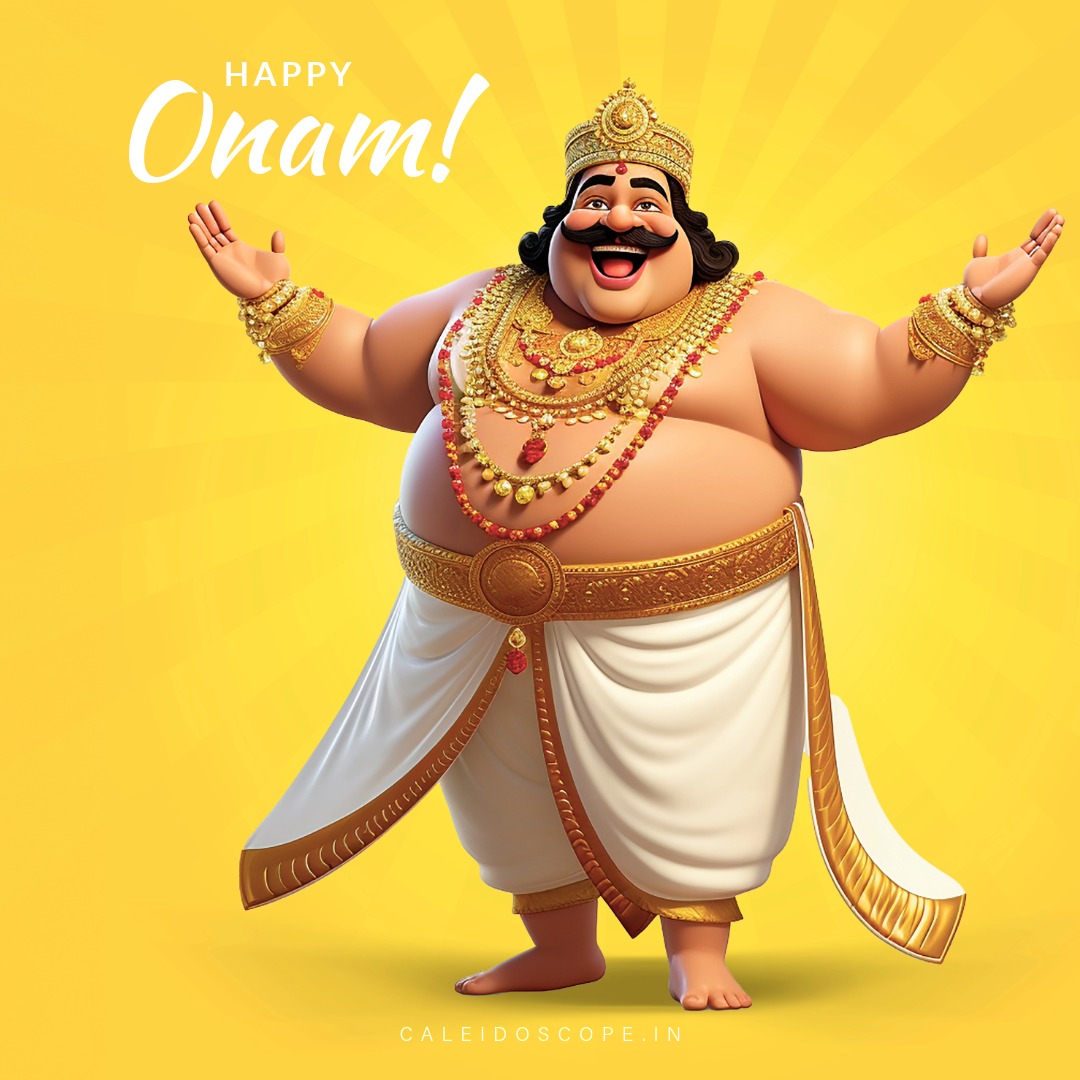
An actor dressed as Mahabali-Wikimedia

After reading what Onam is all about, I am sure that a particular question must have popped up in your mind: How did Onam originate? Well, according to several historians, this spectacular festival has been around for quite some time now. The first information or reference that scholars found regarding Onam was through a poem known as Maturaikkanci. According to Hindu mythology, Onam is celebrated each year to honor the great demon-king, Mahabali. Mahabali the king associated with Onam was the grandson of Prahlad (the famous devotee of Lord Vishnu and son of Hiranyakashyap), who managed to secure victory over the Gods, thus being the Lord of all three worlds. While one might think that the demon king must have been cruel and terrible, he was extremely kind and humble towards his subjects.

Onam and King Mahabali
Image – Wikimedia

The Gods, seeing this, pleaded with Lord Vishnu to end Mahabali. Conveniently, after gaining control of the world, Mahabali declared that he would grant any request from any person during a yajna (sacrifice) that he will soon perform. Lord Vishnu seized this opportunity and went in the guise of a dwarf monk, called Vamana. After asking the monk what he desired, the monk replied that all he needed was three paces of land. After having his wish granted, Vamana grew in size to an enormous extent and overshadowed all of Mahabali’s lands in simply two paces. Before he could move on to the third pace, the king offered his head to Vamana. Vishnu considered this as an act of devotion and granted a boon to Mahabali, stating that he can visit his lands every year once. Therefore, Onam is essentially the great king visiting his lands and a tribute to the virtuousness and humility of Mahabali.

How Onam festival is celebrated?

Onam-Dance
Women performing Thiruvathira Kali-Flickr

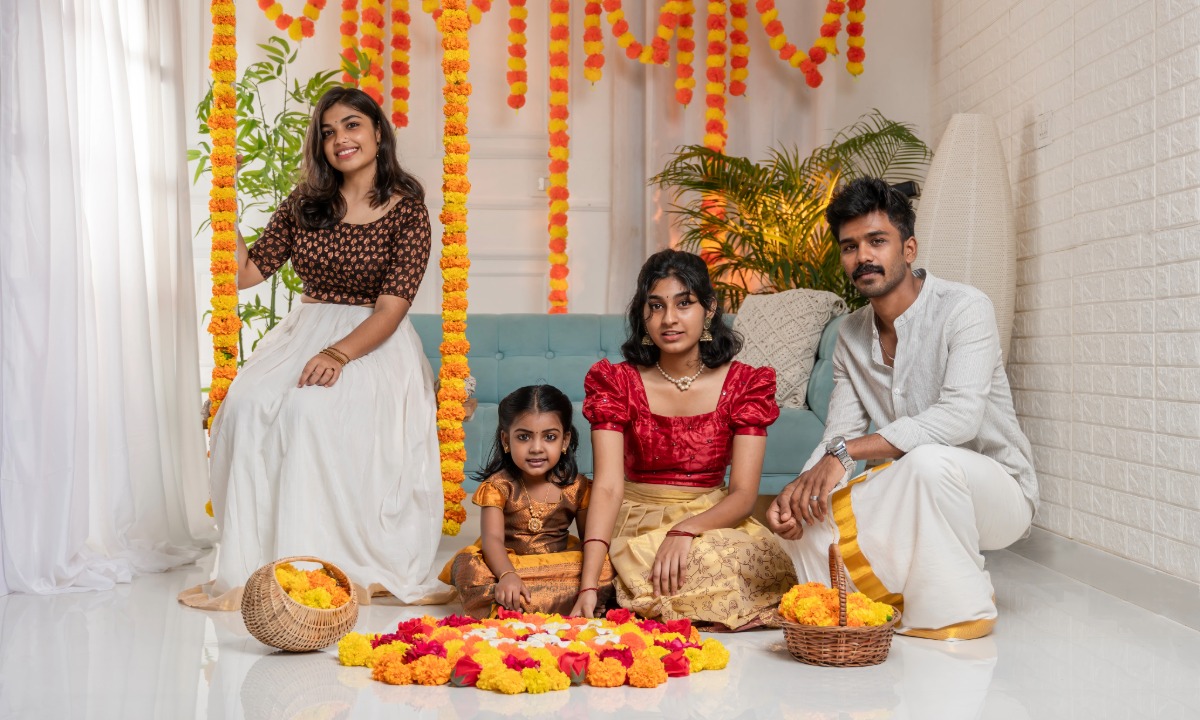
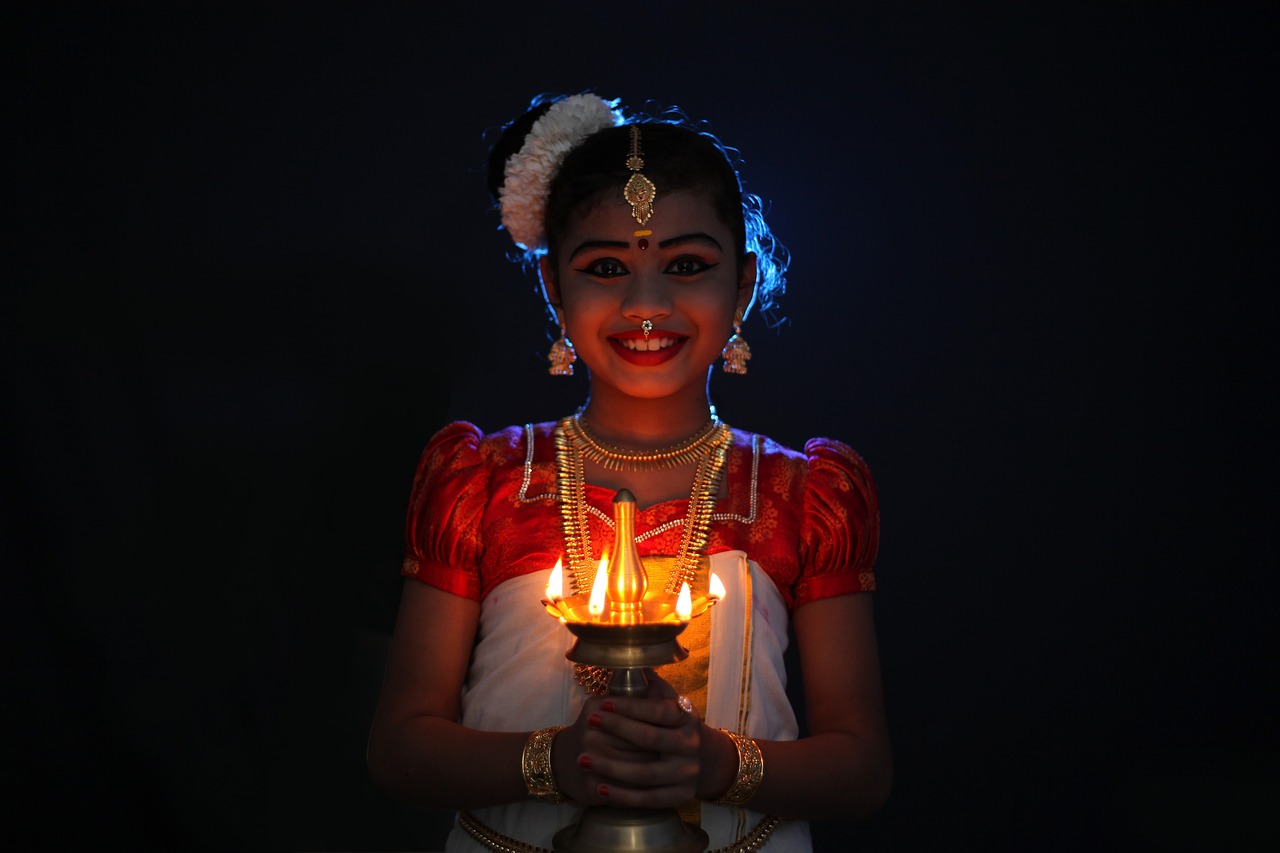
The 10-day festivities of Onam are extremely diverse and devotional. Devotees spend days offering food to the Lord, visiting temples, decorating their households, and wearing traditional dresses of Kerala. The women of the house wear the beautiful white and gold saree known as Kasavu. They indulge in dancing, drawing attractive rangolis, and preparing Sadya (traditional food consumed during Onam).

Tradition Food Served during Onam

Kerala-Culture-sadya
Image – Premshree Pillai/Flickr

This annual feast, comprising of a variety of delicious dishes of Kerala cuisine is sure to make any person salivate. The Onam Sadya has 26 dishes in it and is traditionally a 9-course meal, served on tender banana leaves. Some of the dishes include Kootu curry, Olan, Kalan, Parippu Payasam, and the much-loved Rasam. A sweat’s work, but all worth it, I assure you!

Significance of Pookalam in Onam

Onam-Pookalam
Onam Pookalam-Wikimedia

Also distinctive is the flower rangoli known as Pookkalam, which is made by the women of the households. They make use of several different types of flowers and lamps to create beautiful patterns on the entrances of temples and houses. These special rangolis are made to welcome the demon-king Mahabali and pay their respects to him.

Cultural Activities During Onam Festival

Boat Race

Onam-Boat race
Vallamkali-Wikimedia

Next in line is the Vallamkali, the famous snake boat race of Kerala which resonates loudly with Onam. In this, several men and women row massive boats which are shaped to resemble a snake. Particularly done on the Pampa River, tourists from afar come to Kerala during this time to witness the extraordinary races.

Folk Dances

Onam-Tiger dance
Thrissur Pulikkali-Wikimedia

Undoubtedly, any festival is incomplete without including dance in it, and that is especially true in the case of Onam. Numerous alluring art forms of Kerala are performed during Onam, including Thiruvathira, Pulikali, Onam Kali, Thumbi Thullal, and many others. The Pulikali is most commonly seen during Onam – here, the dancers paint their bodies in red, black, and yellow colors to resemble a tiger. This ‘tiger dance’ is performed with a high level of energy and synchronization, and is extremely fun to watch as spectators.

Elephant Procession

Elephant procession during Onam
Image – Saurabh Chatterjee/Flickr

Another huge and awaited part of the Onam festivities is the Elephant procession. While they may seem unimportant, these processions are highly celebrated in Kerala. Colossal elephants are trained and beautifully decorated with ornaments and flowers. They are then paraded on the streets and make friendly gestures with the people. The Elephants dance and are the main attraction of the festivities. This tradition marks the cordial relationship between animals and humans and educates people about treating animals kindly.

Keynotes

An extremely incredible festival, Onam teaches us truthfulness, integrity, peace, and love. The value of family and harboring positive relationships with our loved ones is of true importance, as is indicated by the various festivities celebrated throughout Onam. Bringing people closer, festivals such as Onam are truly the perfect essence of Indian culture and heritage.

FAQs on Onam Festival

Onam-Festival

Question: What is the significance of Onam celebration?

Answer: Onam marks the homecoming of King Mahabali and is also Kerala’s harvest festival, symbolizing prosperity and unity.

Question: What are the rituals of Onam?

Answer: Key rituals include making Pookalam (floral rangoli), preparing the grand Onam Sadya feast, enjoying traditional games, and performing dances like Thiruvathira.

Question: When is the Onam festival celebrated?

Answer: Onam is celebrated in the Malayalam month of Chingam, which usually falls in August or September.

Question: What kind of floral decoration is created at Onam, and what does it mean?

Answer: Pookalam, a floral rangoli, is made during Onam. It represents joy, prosperity, and the welcome of King Mahabali into every home.

Question: Which traditional boat race is held during Onam?

Answer: The Vallamkali, also called the snake boat race, is a famous and exciting event of Onam celebrations.

Question: How many days does the Onam festival last?

Answer: Onam is celebrated over 10 days, with Thiruvonam being the most important day of the festival.

Question: What kind of clothes do people traditionally wear during Onam?

Answer: Men usually wear the Kerala-style Mundu, while women wear elegant Kasavu sarees with golden borders.

Question: What is eaten during the Onam festival?

Answer: The Onam Sadya feast is served on a banana leaf and includes Sambar, Avial, Thoran, Olan, Payasam, Banana chips, Pickles, Buttermilk, and many more traditional dishes.

Question: Which traditional dance is performed during Onam celebrations?

Answer: Thiruvathira, a graceful women’s group dance, is performed during Onam as part of the cultural festivities.

Few Lines on Onam Festival

  1. Onam is the biggest and the most popular festival in the state of Kerala and it’s observed for 10 days. 
  2. It reigns as the home coming of the mythological King Mahabali and brings joy with the festival of harvest. 
  3. Onam traditional celebrations also consist of melu or cultural boat races such as Vallamkali (snake boat) and Pulikali (tiger dance). 
  4. The Sadya is a full bland meal given on plantain leaves which has at least more than 26 food items. 
  5. It is the women folk who prepare the Pookkalam or the floral designs popularly referred to as Rangolis to receive the King Mahabali. 
  6. The festival is characterized by elaborate Elephant Procession and beautiful ornaments in the form of garments. 
  7. Onam teaches the ideals of togetherness, non-violence and the significance of families and companionship.

Bigg Boss Kannada 12: All About the Premiere Date and New Season Hints

0

Bigg-Boss-Kannada-12

Bigg Boss Kannada Season 12 is about to stream and fans are so excited about it. From the official premiere date till the new logo, from the birthday promo of Kiccha Sudeep to the new house design, everything about this season feels bigger and interesting for the fans. The theme so far indicates that time could be the main element behind the actions, twists, and drama this year.

The Announcement Date 

Bigg Boss Kannada season 12 is announced to be streamed on September 28, 2025. The bigg boss kannada teaser was released on the birthday of this season’s host Kiccha Sudeep. In the promo Sudeep is seen sipping his signature black coffee before a heavy voiceover that indicates the show is back.

To the old audience, this date symbolizes the start of another rollercoaster ride complete with arguments, laughs, friendships, heartbreaks, and twists and turns that could only be offered by a show called Bigg Boss.

Big Boss Kannada 12 Details
Premiere Date Sunday, 28 September 2025
Time 6:00 PM IST (expected prime time slot)
Channel Colors Kannada
Digital Streaming Voot App / JioCinema (as per broadcaster)

The Theme Behind the Logo

Each season of Bigg Boss Kannada has a very prominent new logo and this season the creators have been bold and representational. The new season 12 logo is not only sleek and shiny, but also has a time and timepiece theme.

The logo predetermines the theme of the season and that time will be one of the significant factors in the house. It could be a race against time in taking on tasks, the countdown to a twist, or seeing sudden evictions, but in any case, it might seem that every second mattered.

Promo Premier on Host Sudeep’s Birthday

When the first Season 12 promo was released on the birthday of Kiccha Sudeep, fans got a double treat. The short clip announced the launch date and it also hinted that the host and his followers had a surprise. His appearance also gave fans the feeling that Season 12 will be just as it has been over ten years.

New House Interiors 

What is Bigg Boss without its famous house? Season 12 is returning with new contestants to new interiors located at the same location of Innovative Film City, Bengaluru. The house has been used in a number of previous seasons, although this time round, a full make-over is being done. The new design will have improved features, theme-based decor, which will connect back to the time theme. It is not a house where people live, it is where people perform, act and plan.

Fans Excitement and Speculations 

Even the countdown-time-type promo and the logo clearly indicate that time is not simply a backdrop, but it might even be the heartbeat of Season 12. This leaves the possibilities of the show to be unlimited. The fans speculations for the season 12 are:

  • Time-based tasks: Fast decision-making, speed-related tasks or minute and hour-based survival challenges.
  • Twists and turns: Surprising events or twists that occur at unpredictable times and keeps the contestants and the audience hooked to the show.
  • House decoration related to time: areas such as a time capsule room or hourglass-themed lounge which represent the loss of time.
  • Storytelling on time: Contestants can be put in a situation that requires them to look back or leap into the future to make challenging decisions.

The theme of time is not just a source of suspense, but also fits the format of the show perfectly in the Bigg Boss house, every day may be the day that changes the game.

Season after season, Bigg Boss Kannada has set the entertainment trend. It has attracted a cult following with a charismatic host, a new house, an innovative set of tasks, and turns. The additional time as a central theme this year only makes the wait more difficult.

Fans counting the days until September 28 can watch the countdown to the next season like a mini-task by itself, eager to watch the new group of contestants, the challenges that will pack energy and the drama.

Final Word

Bigg Boss Kannada Season 12’s  inspiring clock-like logo, a birthday promotion unveiling by Sudeep, a new house in Innovative Film City, and a high chance of time-related twists are making this season one of the most creative so far. It is time to put your dates on the calendar and get ready to watch the high drama. After all, time does not simply flow in the Bigg Boss house, it alters everything.

FAQs About Traditional Games of India

Bigg-Boss-Kannada-12-A

Question:Is bigg boss kannada and hindi the same??

Answer: No, bigg boss kannada and hindi are not the same. The show has the same rules, setup and concept but the host, language, and contestants are totally different.

Question: How many contestants will Bigg Boss Kannada season 12 host?

Answer: As per the reports, there will be 20 contestants in the house playing a role in this reality based show.

Question: How much does the host sudeep charge for one season?

Answer: The host charged around ₹8 crore for season 11 so it is speculated that he may charge equivalent or more in season 12.

Ekadashi in September 2025: Dates, Tithi Timings, and Significance

0

Ekadashi-in-September-2025

Ekadashi is generally celebrated twice a month that falls on the eleventh day of the waning and the waxing new moon. Ekadashi is a fasting, prayer, and self-purification event devoted to Lord Vishnu, the preserver and the protector of the Hindu culture. Believers follow religious practices on this day with genuine faith that will lead to peace, prosperity, and blessing and assist in the cleansing of the mind and body of the negative. In September 2025 we will have two Ekadashis and each has its meaning and rituals. 

Ekadashi Dates in September 2025

Next Ekadashis will be observed in September, 2025:

Ekadashi Date Tithi Begin / End Parana Time
Parsva (Parivartini) Ekadashi Wednesday, 3 September 2025 Begins: 03:53 AM, 3 Sept; Ends: 04:21 AM, 4 Sept Parana: 10:18 AM, 4 Sept **
Indira Ekadashi Wednesday, 17 September 2025 Begins: 12:21 AM, 17 Sept; Ends: 11:39 PM, 17 Sept Parana: 6:07 AM – 8:34 AM, 18 Sept

These two Ekadashis are special in religious interpretations and practices. 

Parsva Ekadashi – 3 September 2025

Significance

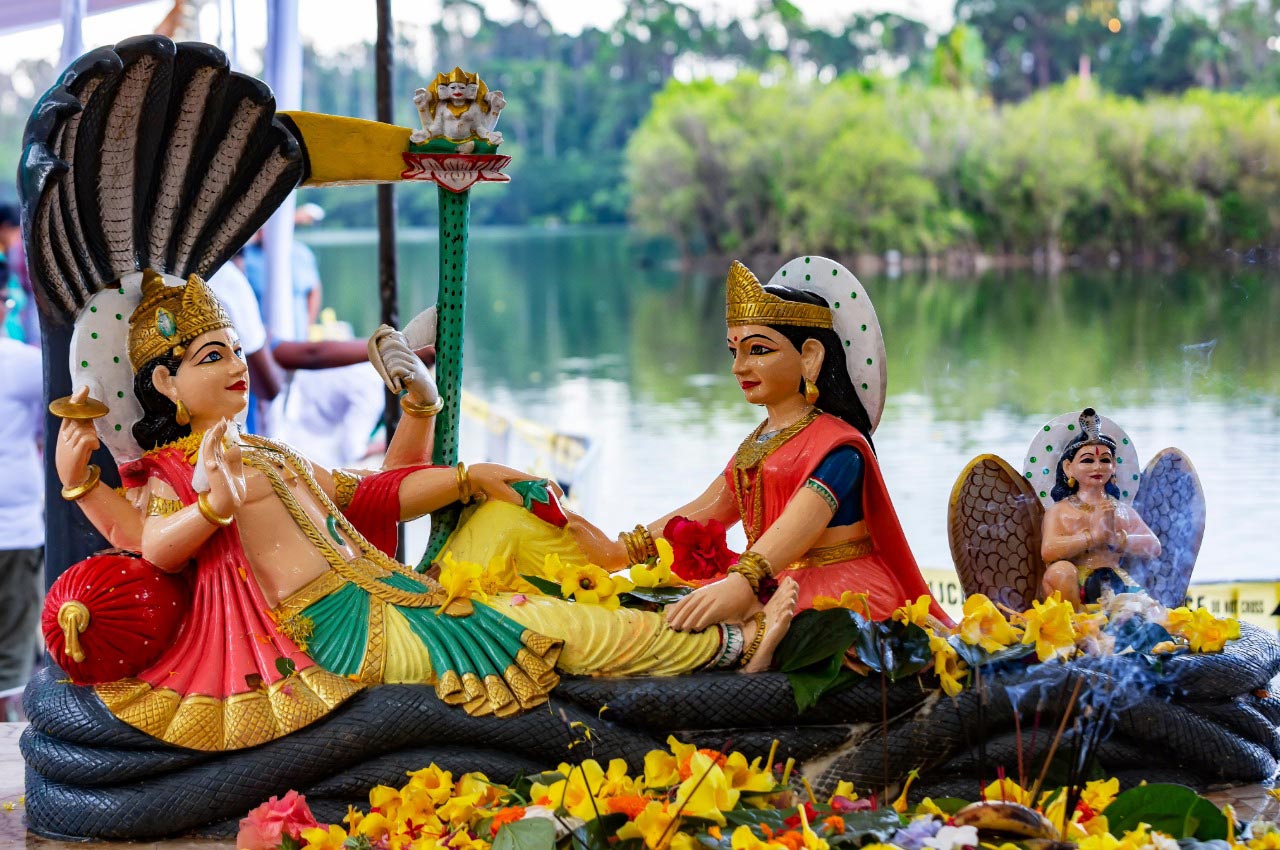
Parsva Ekadashi is also called Parivartini Ekadashi or Vamana Ekadashi based on its mythological story behind it. These are very important in Vaishnava tradition. Hindu tradition says on this day, at Chaturmas (the four holy months), Lord Vishnu turns his back as he sleeps on the serpent Ananta, in the Kshira Sagara (the cosmic ocean of milk). It is believed that it is a good period to start activities related to religion like donations, vows, and spiritual practices.

There is also the relationship with the fifth Avatar of Lord Vishnu, Vamana Avatar, who came down to earth in the form of a dwarf Brahmin to bring dharma by making the demon king Bali pay penance. Those who worship devote this day to the triumph of good over evil by Lord Vamana.
Parsva Ekadashi Rituals

On Parsva Ekadashi, the people get up early, take a sacred bath and pray to Lord Vishnu. Strict fasting is followed either by no food or eating of fruits, milk and plain vegetarian food. Vishnu Sahasranama is recited and special Vishnu pujas are undertaken to seek divine blessings. Charity is also quite meritorious on this day as it is thought to multiply blessings.

People believe that individuals who observe Parsva Ekadashi with reverence are blessed with prosperity, good health and protection against bad energies. It is also on the day that preparations towards Diwali commence as it is in the second half of the Chaturmas season.

Indira Ekadashi – 17 September 2025

Significance

It happens in the Pitru Paksha, two weeks of remembrance and honor to the souls that have died. It is said that king Indrasena once watched this Ekadashi after having been advised by Narada Muni to release the soul of his father in the world of the dead. Since that time the Indira Ekadashi is regarded as a strong day to perform rites which can bring the ancestors to peace.
Indira Ekadashi Rituals

On this day, the worshipers carry out the Shraddha and Tarpan rites, feeding themselves, giving water and offering prayers to the ancestors. The fast is practiced as a way of repentance and worship. There are also other things that many people do such as chanting mantras, reading Bhagavad Gita, and even giving tulsi leaves, fruits, and sweets to Lord Vishnu. Giving charity and feeding the poor or Brahmins is said to be very auspicious because it is thought to bring blessings to both the person who is giving it and also to their forebears.

Spiritual Nature of Ekadashi

Although every Ekadashi has its own tradition, the spirit of the celebration is the same: it is the day of moderation, worship and communication with God. By restraining themselves, believers focus on prayer and meditation and service. Fasting will allow the digestive system to rest, detoxify the body and provide mental clarity. It adds spiritual practices to give a feeling of balance and relaxation that most of the devotees adore.

Conclusion

Both Ekadashi dates falling in September 2025, are on 3 September and 17 September. Parsva Ekadashi glorifies the divine aspect of Lord Vishnu in ensuring the balance of all things in the universe, Indira Ekadashi is for paying tribute to the forefathers and bringing peace to them. These two days teach us about the strength of devotion, discipline and service.

Through heartfelt faith in Ekadashi done by fasting, praying and virtuous actions, not only do devotees pursue blessings for themselves, but they also foster their spiritual growth and the unity of their family.

FAQs on Ekadashi in September 2025

Question: Which Ekadashi is on 3rd September 2025?

Answer: The Ekadashi on 3rd September 2025 is Parsva Ekadashi, also known as Parivartini Ekadashi, an important fasting day in the Hindu calendar.

Question: What is the time of Parsva Ekadashi?

Answer: Parsva Ekadashi tithi begins at 03:53 AM on 3rd September 2025 and ends at 04:21 AM on 4th September 2025. The Parana time is after 10:18 AM on 4th September.

Question: Which Ekadashi is on 17th September 2025?

Answer: The Ekadashi on 17th September 2025 is Indira Ekadashi, observed in the Pitru Paksha period to honor ancestors and seek their blessings.

Question: What is the time of Indira Ekadashi?

Answer: Indira Ekadashi tithi begins at 12:21 AM on 17th September 2025 and ends at 11:39 PM the same day. The Parana is observed between 6:07 AM and 8:34 AM on 18th September.

Sweet Dishes of Kerala: Unique Sweet Delights from God’s Own Country

0

Sweet-Dishes-of-Kerala

Kerala is a treasure trove for anyone who loves nature, history, culture and food. As the sun rises on Onam, one of Kerala’s most iconic festivals which is celebrated with great fervour throughout the state, Malayalis enjoy a number of traditional sweet dishes, the knowledge of cooking which has been passed down from generations. This is a bid to explore some of the sweet dishes of Kerala, which are an integral part of every celebration and festival for the Malayalis.

Sweet Dish Description Occasions
Unniyappam Soft, spongy dumplings made with rice, banana, coconut, and jaggery; fried for a golden finish. Onam, temple offerings, snacks
Palada Payasam Creamy rice flakes pudding with milk, ghee, and jaggery; slow-cooked for rich flavor. Onam Sadya, Vishu, festive feasts
Ellunda Sesame and jaggery balls known for their nutrition and simple preparation. Year-round snack, health-focused treat
Elaneer Payasam Tender coconut-based pudding with coconut water, milk, and cardamom. Festivals, summer feasts
Banana Halwa Glossy, chewy sweet made with banana, ghee, sugar, and nuts. Onam, Vishu, special occasions
Ariyunda Sweet balls of roasted rice powder mixed with coconut and jaggery. Everyday snack, festive homes
Boli Thin, sweet paratha stuffed with chana dal and jaggery, cooked in ghee. Onam Sadya, festive meals
Ela Ada Steamed rice flour dumpling with jaggery-coconut filling, wrapped in banana leaves. Onam, temple offerings
Kinnathappam Steamed wheat and banana cake with jaggery, coconut, and spices. Snacks, festive occasions
Mutta Mala & Pinjanathappam Unique sweet of egg yolk noodles (Mutta Mala) with soft egg white cake (Pinjanathappam). Special feasts, Ramadan, Onam

1. Uniappam

Sweet-Dishes-of-Kerala-Unniyappam

Uniappam is a delicious sweet dish made of rice, bananas, coconut and spices. It is made during special occasions and is also popularly eaten as a snack in Kerala. It is made by mixing all the ingredients and fermenting the batter, after which it is either deep fried or fried in an appe pan. This delicious, soft and spongy sweet dish is certainly worth a try this Onam or otherwise!

2. Palada Payasam

Sweet-Dishes-of-Kerala-Palada-Payasam
Image – Wikimedia

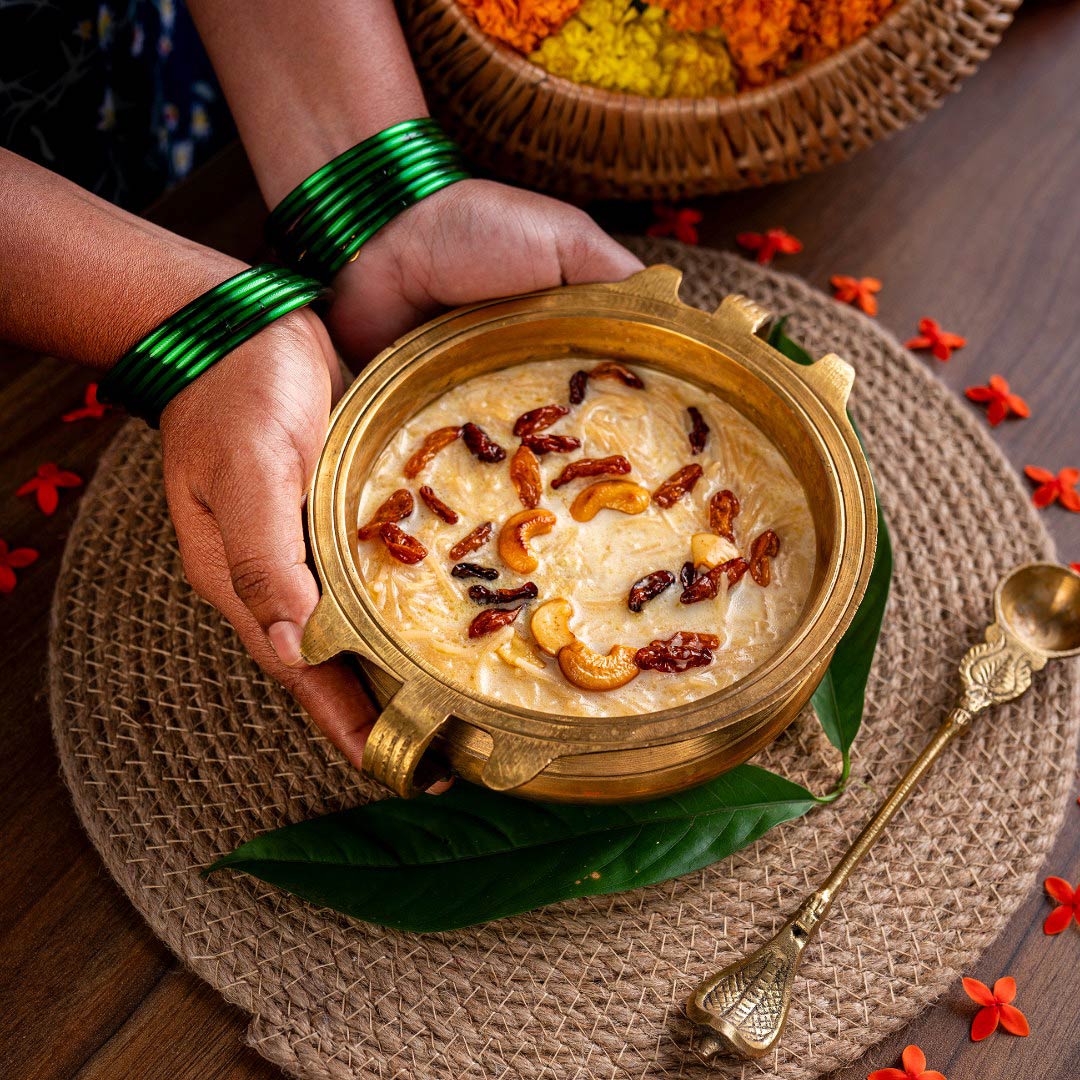
Palada Payasam is made using rice ada(thick, glutinous rice flakes), milk, ghee and jaggery. It is one of the most iconic dishes during Onam and is served widely in Onam Sadyas or feats and Sadyas for other festivals as well. It is a rich, delicious sweet rice pudding that is made by stewing all the ingredients together for a considerable time.

3. Ellunda

Sweet-Dishes-of-Kerala-Ellunda
Image – Wikimedia

Ellunda is a sesame seed and jaggery ball that is consumed throughout south India. Ellunda is one of the healthiest and simplest Indian sweet dishes and is widely consumed by people of all ages, and especially women for their hormone balancing and other nutritive properties. Jaggery is rich in iron and sesame seeds are excellent for balancing hormones, making the snack ideal for a healthy hormonal balance.

4. Elaneer payasam

Sweet-Dishes-of-Kerala-Elaneer-Payasam
Image Source

Elaneer payasam is a light and refreshing coconut pudding made mostly in the state of Kerala. It is light and made mostly of coconut and its derivatives- including tender coconut flesh, coconut water and coconut milk. Milk is boiled and the other ingredients are blended together and added, alongside jaggery and cardamom. The result is a smooth, light coconutty delight that is a delight to your taste buds.

5. Banana halwa

Sweet-Dishes-of-Kerala-Banana-halwa

Banana Halwa is an easy and delicious dessert which can be made of just ghee, sugar and bananas. However, other flavouring like saffron, cardamom and even nuts and dry fruits can be added to Banana halwa. The halwa is made by cooking mashed banana and sugar in ghee till the mixture becomes glossy. Then, chopped roasted nuts and other flavouring is added in the mixture and set in a mould till it cools and solidifies. This is how simple and delicious banana halwa is made in Kerala during festivals and special occasions!

6. Ariyunda

Sweet-Dishes-of-Kerala-Ariyunda
Image – Wikimedia

Ariyunda is one of the most popular sweet dishes in Kerala. It is basically made of rice, coconut and jaggery but additional flavouring can be added to it. Making Ariyunda starts with roasting rice and grinding it to a fine powder, after which it is roughly mixed with jaggery and coconut, alongside a few optional spices and flavouring, like cardamom and even cumin! Ariyunda is one of the most widely made and eaten sweet dishes in Kerala, and for a reason! The simple deliciousness of the sweet dish appeals to everyone alike, old and young.

7. Boli

Sweet-Dishes-of-Kerala-Sweet-Boli
Image Source

Boli is one of the most popular choices for an Onam Sadya, especially in the city of Trivandrum. Boli is very similar to Puran poli/bobbattu as it is called in other states. The sweet dish is made by making a dough of all purpose flour, turmeric powder and sesame oil, which is rested after it is made. After that, a filling is made by cooking soaked Chana Dal, jaggery, and cardamom and mashing it. A very thin outer covering is made using the dough for a ball of the stuffing and is rolled out, after which the ‘sweet paratha’ is cooked with loads of ghee. The dish is consumed with paala payasam or milk pudding during Sadyas and is a lip smacking delight for anyone with a sweet tooth!

8. Ela Ada

Sweet-Dishes-of-Kerala_Ela_Ada
Image – Wikimedia

Ela Ada is a sweet steamed rice dumpling widely made in Kerala and the South of India. It starts with making a dough of rice flour and water, cooked together till solidified on the stove. The dough is set aside and a filling is made using coconut, jaggery, cardamom and ghee. The slightly sticky dough is rolled out roughly and a ball of the filling is put inside. The dumpling is then sealed and slightly flattened, after which it is steamed for a short while, wrapped in banana leaves greased with ghee. This is a delicious, simple and even healthy recipe for anyone looking for dessert ideas.

9. Kinnathappam

Sweet-Dishes-of-Kerala_Kinnathappam
Image – Wikimedia

Kinathappam is a sweet steamed wheat and banana cake that is a popular snack in the state of Kerala. It is made by making a batter of whole wheat flour, jaggery, coconut and water, alongside spices and nuts and dry fruits. The batter is fermented and then placed in a cake pan, after which it is steamed. 

10. Mutta mala and Pinjanathappam

Sweet-Dishes-of-Kerala_Mutta-mala-and-Pinjanathappam
Image Source

The combination of Mutta mala and Pinjanathappam makes one of the most unique sweet dishes of Kerala. ‘Mutta’ refers to eggs, ‘mala’ refers to the delicate noodles made using the yolk, and ‘Pinjanathappam’ refers to the egg white cake. The yolk noodles are made using a serrated container through which whisked yolk is poured into a sugar syrup, and the egg white cake is made using the same method, other than the serrated container. The dish is made entirely of eggs and sugar, and is a truly unique dish from Kerala.

Final Thoughts

Kerala sweets are a delectable array of confections that reflect the rich culinary heritage of the southern Indian state of Kerala. Known for their unique flavors, intricate designs, and use of locally sourced ingredients, Kerala sweets hold a special place in the hearts of both locals and visitors.

Ranging from syrup-soaked delicacies like “Palada Payasam” to savory-sweet combinations like “Unniyappam,” Kerala sweets encompass a wide spectrum of tastes and textures. Many of these sweets are prepared using traditional recipes that have been passed down through generations, ensuring an authentic and unforgettable experience for those who indulge in them. These unique sweet dishes that are an integral part of the state’s cuisine and deserve to be celebrated this Onam. Happy Onam!

FAQs on Sweet Dishes of Kerala

Sweet-Dishes-of-Kerala-01

Question: What is the famous sweet dish of Kerala?

Answer: Among the many sweet dishes of Kerala, Ada Pradhaman stands out as the most famous. Prepared with rice ada, jaggery, and coconut milk, it is often called the queen of Kerala desserts and holds a special place in Onam Sadya feasts.

Question: Who is the king of sweets in Kerala?

Answer: Palada Payasam is often referred to as the king of sweets in Kerala. This creamy delicacy, made with rice flakes, milk, and sugar, is celebrated for its rich flavor and is an essential dish during traditional festivals and temple feasts.

Question: What is Kerala’s special food?

Answer: Kerala’s special food is the traditional Sadya, a grand vegetarian feast served on a banana leaf. It includes a variety of curries, pickles, and payasams, with rice at the center, showcasing the state’s culinary diversity and cultural richness.

September School Holidays 2025: Complete List of Festivals & Breaks

0

September-School-Holidays-2025-01

September has a lot of cultural events coming into the limelight. September has shorter, more frequent holidays, and is ideally timed with festivals that illuminate all corners of the nation.

  • To the students, this translates to a reduced number of lessons and an increased amount of life lessons. They are busy with making flower carpets during Onam, making surprise shows during Teacher’s Day, fasting and praying on Id-e-Milad, or dancing during the nights of Navratri. 
  • September happens to be at a rather good place during the school year. It is normally during the first term of school and exams are coming closer. These breaks help young minds to rest and enjoy family traditions that can never be entirely imparted in the classroom.
  • Every holiday will be more than a break, it will be a memory that will influence their years in school. We shall travel into the school holiday weeks of September 2025 and see how the school holidays bring both joy and meaning to the lives of students. September holidays are sweeter and shorter than the summer or winter vacation. They come with bright stories, rituals and community celebrations that make children rich in culture.

Quick Look on List of September 2025 School Holidays

Date Holiday / Festival States / Regions
Sep 4–5 Onam Kerala
Sep 5 Teacher’s Day India-wide (celebrations/half-day)
Sep 5–6 Id-e-Milad Multiple states
Sep 7 Anant Chaturdashi Maharashtra, Goa, Karnataka
Sep 17 Vishwakarma Puja Bengal, Odisha, Bihar, Assam
Sep 21 Samvatsari Gujarat, Rajasthan, Maharashtra
Sep 23 Maharaja Hari Singh Jayanti Jammu & Kashmir
Sep 27 Mahalaya Amavasya Bengal, Assam, Odisha
Sep 27 Bathukamma begins Telangana
Sep 29–30 Navratri & Durga Puja Gujarat, Maharashtra, Bengal, Assam, Bihar, UP, Odisha

Festivals and School Holidays in September 2025

Here are some more details about the great festivals and school holidays that students in India will be able to enjoy in September.

Onam: September 4–5, 2025 

September-School-Holidays-2025-Onam

September is Onam in Kerala. Schools have holidays and children accompany their families in making the pookalams (flower carpets), watching exciting boat races, and enjoying the famous Onam sadya, a meal of more than 20 different dishes on a banana leaf.

Onam celebration starts a week earlier among schoolchildren. A cultural competition is held at many schools where students dress up as King Mahabali, dance the Thiruvathirakali or even participate in a boat race. Kids have already gotten into the holiday mood by the time they hit the holidays. Onam is not a festival, it is an education about the past, oneness, and thankfulness.

Id-e-Milad September 5–6, 2025 

September-School-Holidays-2025-Id-e-Milad

Id-e-Milad (or Milad-un-Nabi) is celebrated on the anniversary of the birth of Prophet Muhammad which happens to fall around the same time as Onam. In other states, such as Delhi, Uttar Pradesh, Maharashtra, Tamil Nadu, West Bengal, and Kerala, schools shut down so that families can meet and pray, hold ceremonies, and have community feasts.

The mosques and streets are also lit, there are processions and children may even accompany their parents in distributing sweets to their neighbors and friends. To some, it is also an opportunity to get to know more about compassion, kindness, and humility; all the values that are during this festival.

Teacher’s Day September 5, 2025

September-School-Holidays-2025-Teacher’s-Day

Teacher’s Day is celebrated by all schools and even colleges. It is celebrated on the birth anniversary of Dr. Sarvepalli Radhakrishnan is usually celebrated by programmes or festive meetings.

The seniors pretend to be a teacher, conducting classes to the juniors (in most cases this ends up being humorous). Small gifts, hand made cards, skits fill the classes with laughter. This might be another school day, but to students, who value the half-day freedom that usually accompanies the celebrations.

It’s not just about fun, though. This is the moment most children get to thank their teachers with all sincerity in their heart and make sure the memories they make are not forgotten even after school.

Anant Chaturdashi September 7, 2025

September-School-Holidays-2025-Anant-Chaturdashi

It is the great farewell of lord Ganesha and the end of Ganesh Chaturthi through this festival. Chants of Ganpati Bappa Morya reverberate along the streets and idols are dipped in rivers and seas. In Maharashtra, Goa and in some regions of Karnataka. children have an opportunity to participate in the colourful processions.

Anant Chaturdashi is happy and sad at the same time to the students. It is on this day they bade farewell to their beloved Ganesh, usually after 10 days of festivities. The colorful marches, beat-filled drums, and glittering decorations make the impression that no child will ever forget.

Vishwakarma Puja September 17, 2025

September-School-Holidays-2025-Vishwakarma-Puja

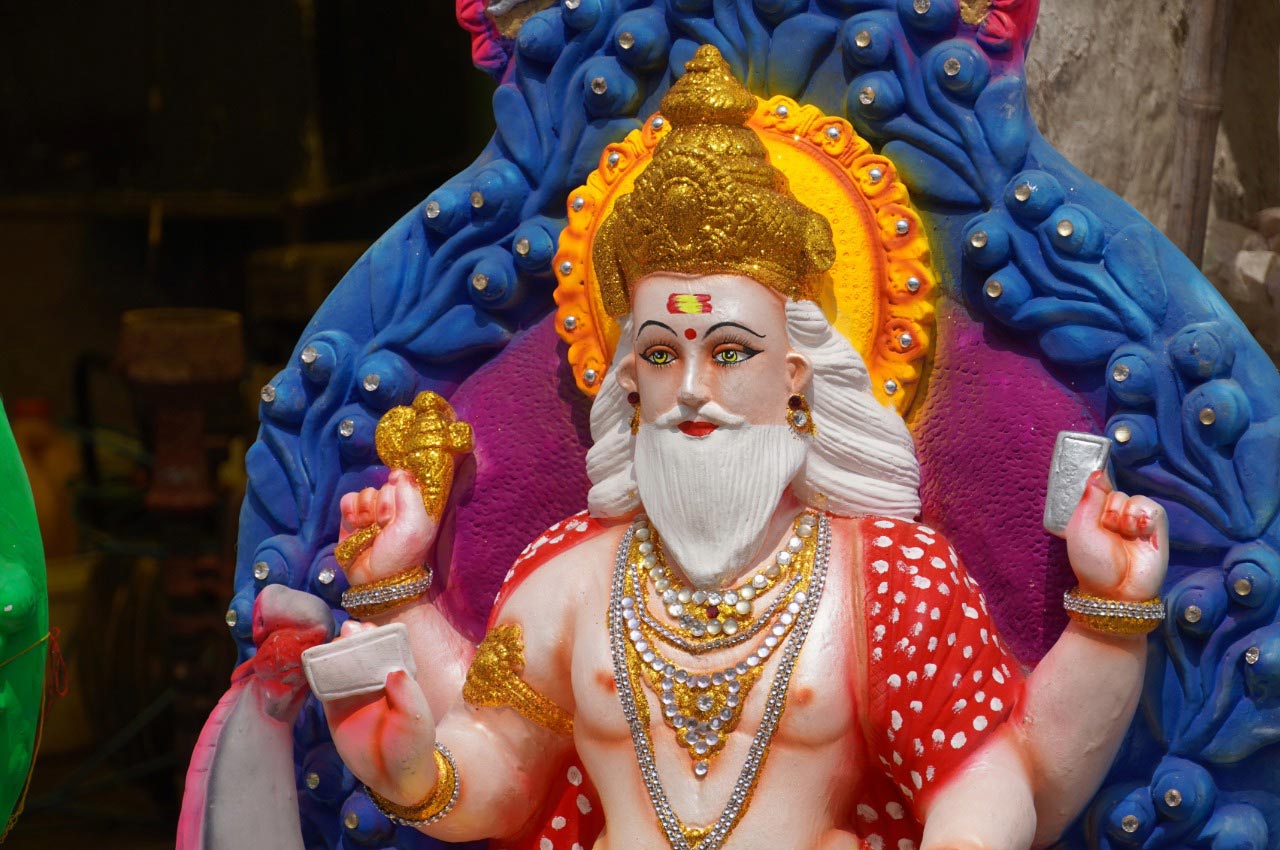
Vishwakarma Puja is also observed with great enthusiasm in West Bengal, Odisha, Assam, and Bihar. Lord Vishwakarma is the divine architect and on this day he is worshiped with decorated tools, machines and even kites flying in the skies.

This day is frequently spent out-of-doors, either in flying kites, or in attending decorated workshops, or in family rituals. The festival is both enjoyable and informative as students in most schools (particularly technical schools) decorate classrooms with miniature tools and crafts.

Samvatsari September 21, 2025

September-School-Holidays-2025-Samvatsari

Samvatsari is the most major festival in the Jain calendar also known as the Kshamavani Divas. Only after prayer and forgiveness ceremonies, families have a reunion, and they say, Micchami Dukkadam, which means, I ask forgiveness of my faults.

Students in Jain families frequently fast on this day (or at least, partially), and pray with relatives. The schools are still closed and this allows children to take part fully. Not just a vacation but an empathy, humility, and peaceful living lesson.

Maharaja Hari Singh Jayanti September 23, 2025

In Jammu and Kashmir, schools observe a holiday on September 23 to celebrate the birthday of the late Maharaja Hari Singh, the last king of this state. Cultural events and local celebrations are regularly held and most of the families narrate the history to their children making the holiday a lesson without the use of textbooks.

Mahalaya Amavasya September 27, 2025

September-School-Holidays-2025-Mahalaya-Amavasya 

In West Bengal, Durga Puja celebrations start with Mahalaya. Schools are most often shut and homes are listening to the iconic radio broadcast of Mahishasura Mardini. Children enter families with early planning of pandals, purchasing of festival attire and practice of cultural performances.

Bathukamma September 27, 2025

September-School-Holidays-2025-Bathukamma

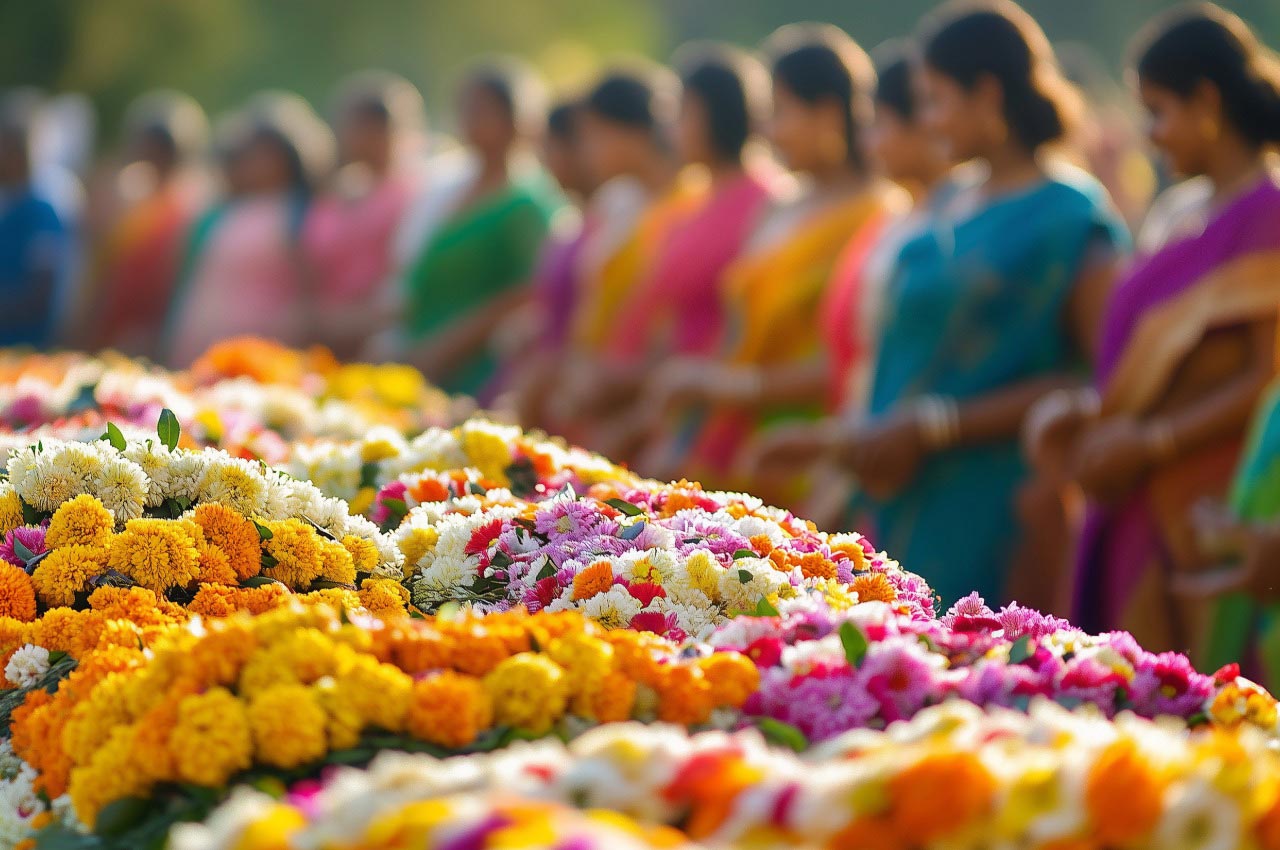
Telangana also observes Bathukamma, a flower festival on the same day, in honour of Goddess Gauri. Girls come together dressed in colorful clothes, piling flowers in high piles, singing old folk songs. Schools give students permission to participate in the celebrations, particularly girls. Bathukamma educates the children on the unity of communities, nature, and their culture. Creativity is another thing that the bright flower arrangements evoke in young learners.

Navratri & Durga Puja September 29–30, 2025

September-School-Holidays-2025-Navratri-&-Durga-Puja

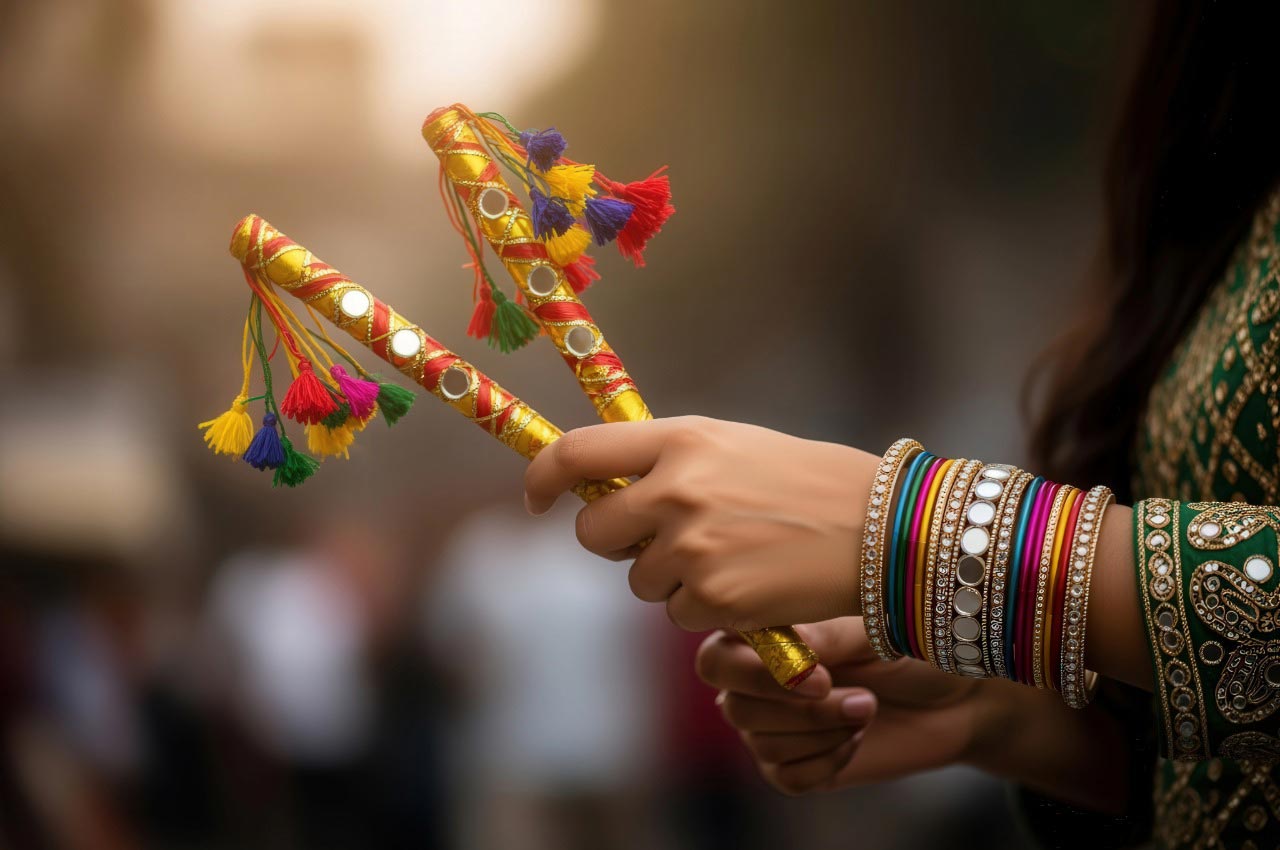
Towards the end of September India bursts into one of the most spectacular festivals, namely Navratri and Durga Puja. In Gujarat and Maharashtra, schools nearby allow families and children to attend garba and dandiya nights. Students tend to spend the days rehearsing and the night dancing.

Maha Saptami and Maha Ashtami are school holidays in Bengal, Assam, Odisha and Bihar, and allow children to indulge in pandal-hopping, cultural shows, and feasting on the festival food booths. Navratri is also a season of Ramlila plays in North India, although these plays often involve a large number of schoolchildren in acting roles within a community setting.

To the students, these end of year holidays are not just religious holidays; they are colored holidays, energy-filled holidays, music-filled holidays, and childhood memories.

Conclusion

September 2025 might not come with a long holiday, but it will leave students with a collection of cultural celebrations that will feed their brains and their hearts. It is woven together with floral carpets at Onam and rich pandals at Durga Puja; it is woven together with acts of forgiveness in Jain families and colorful welcome of Ganesh.

These holidays do not mean a day off to students. They are book chapters of family, community, laughter, and belonging. And when they reflect back on the school years, September will remain the month that taught them as much outside as inside the classroom.

FAQs on September School Holidays 2025 in India

Question: How many holidays are there in September 2025?

Answer: In September 2025, India will observe around five gazetted national holidays, including Id-e-Milad on September 5 and Navratri on September 29–30. In addition, several states will mark regional festivals like Onam, Anant Chaturdashi, and Mahalaya Amavasya as local school or public holidays.

Question: Are September school holidays the same across India?

Answer: No, the holidays vary by state, type of school (CBSE, ICSE, state boards), and local festivals like Ganesh Chaturthi.

Question: How long are the September holidays for schools?

Answer: Typically, the break lasts 3–7 days depending on the school calendar and regional events.

Question: Which states have holidays for Ganesh Chaturthi in September 2025?

Answer: Maharashtra, Karnataka, and Goa generally give school holidays during Ganesh Chaturthi, celebrated in early September.

Question: Can school holidays in September change?

Answer: Yes, schools may adjust holidays due to exams, local events, or government notifications, so always check the official calendar.

Types of Nath: Tracing the History, Cultural Significance & Modern Relevance

0

Types of Nath

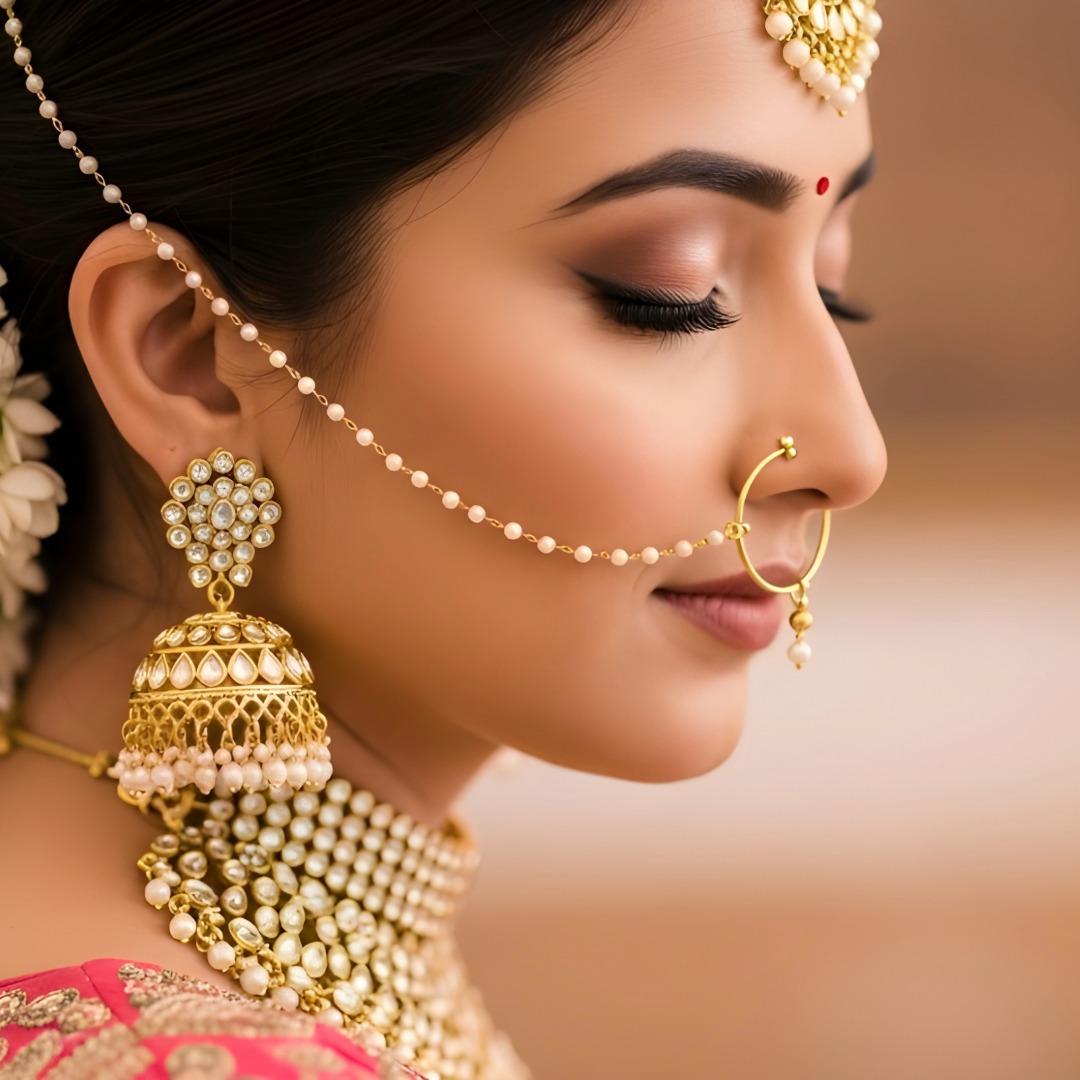
A Nath is a traditional nose ring or ornament that is worn by women in South Asia, specifically in India and the Indian subcontinent. Naths can differ significantly in size, form and meaning across India. Every different nath from the simple Mukkuthi or Mugu Battu of South India, to the large bridal Naths of Punjab and Rajasthan all represent different regional identities and craft traditions that still exist today and intermingle with contemporary fashion. Collectively, the variety of Naths represents a cross-section of the cultural diversity of India.

What is the History of Nath?

History-of-Nath
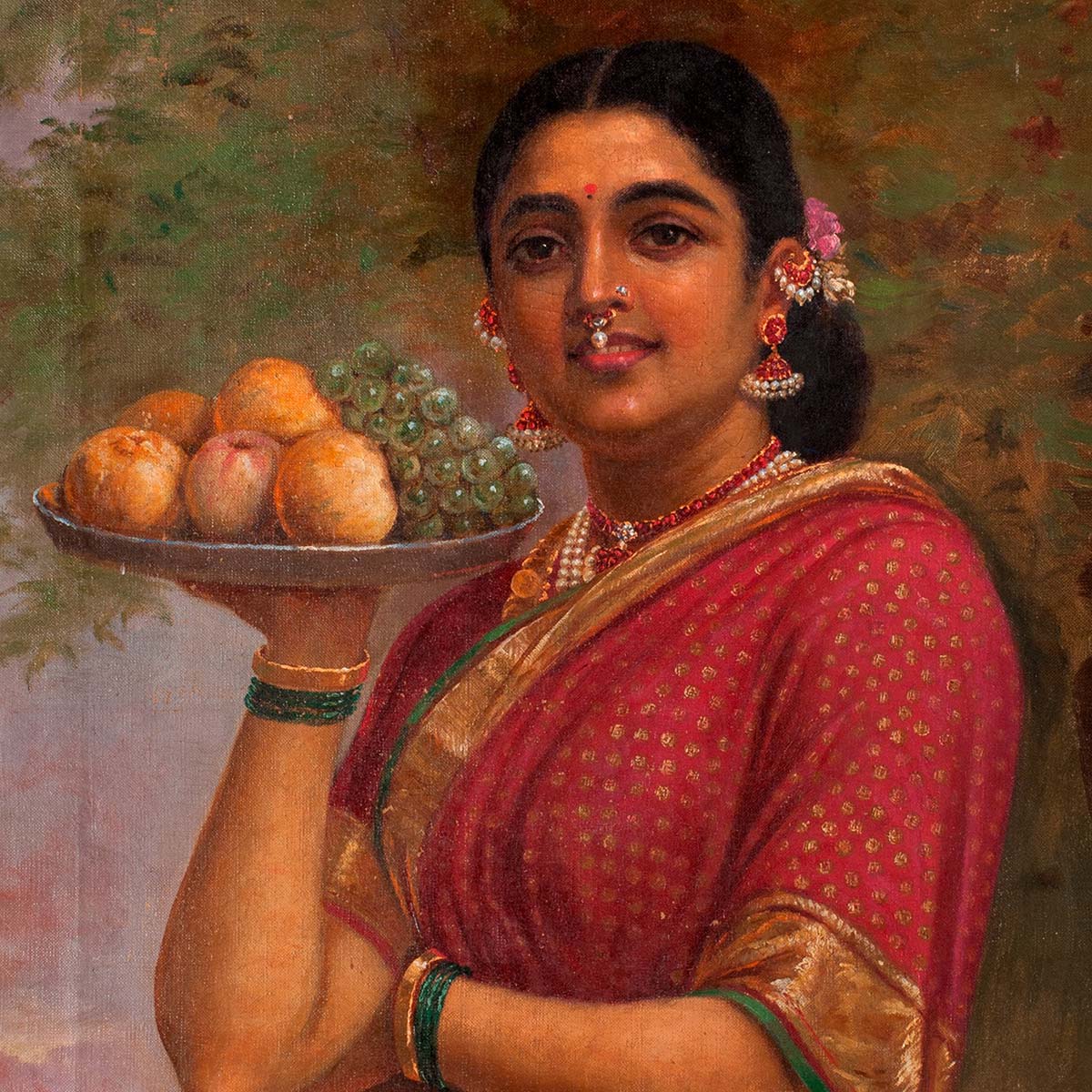
The Maharashtrian Lady, Painting by Raja Ravi Varma, Wikimedia

The Nath has been around for thousands of years. It is an artefact of Indian culture and tradition that has a thousand layers. Examples of nose ornaments are found in early Vedic literature in rituals of social identity and beauty. Temples and other carvings early on show images of women with Naths. This shows that wearing the Nath was both aesthetic but also representative of status. 

  • In its evolution, the nath was influenced by various dynasties and cultures. Characteristics of Naths changed over time, from the Mughal era, where the Naths became very ornate, to modern times, where they turned subtle.
  • The Rajput and Maratha history of wearing large, bold, and monumental Naths exhibited grandeur, while artisans in every other region of India added their own flair in finishing techniques, decoration, whether in gold with gems, or silver, working. Women would wear large denomination pieces that have become an integral part of bridal clothing.
  • In any case, the evolution and significance of the nath, along with the ornament above it, was as a cultural object that has changed in meaning and relevance over time, reflecting dynasties, regional tastes, and the structure of adornment in everyday Indian society.

How Many Naths are there in India?

Every state in India has its own form of nath: Let’s take a look at some of the major Nath design from various regions of India.

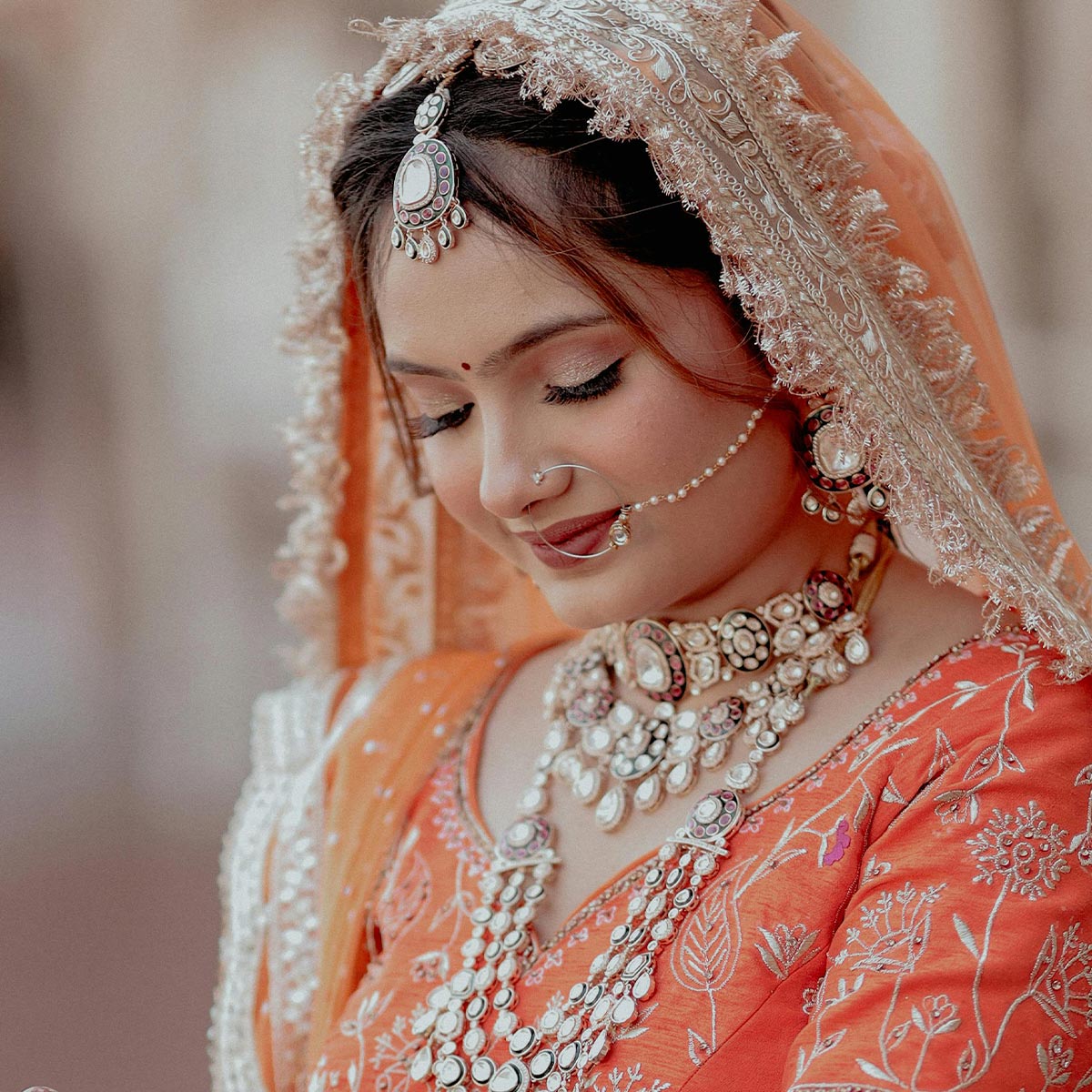
1. Maharashtrian Nath

Maharashtrian Nath

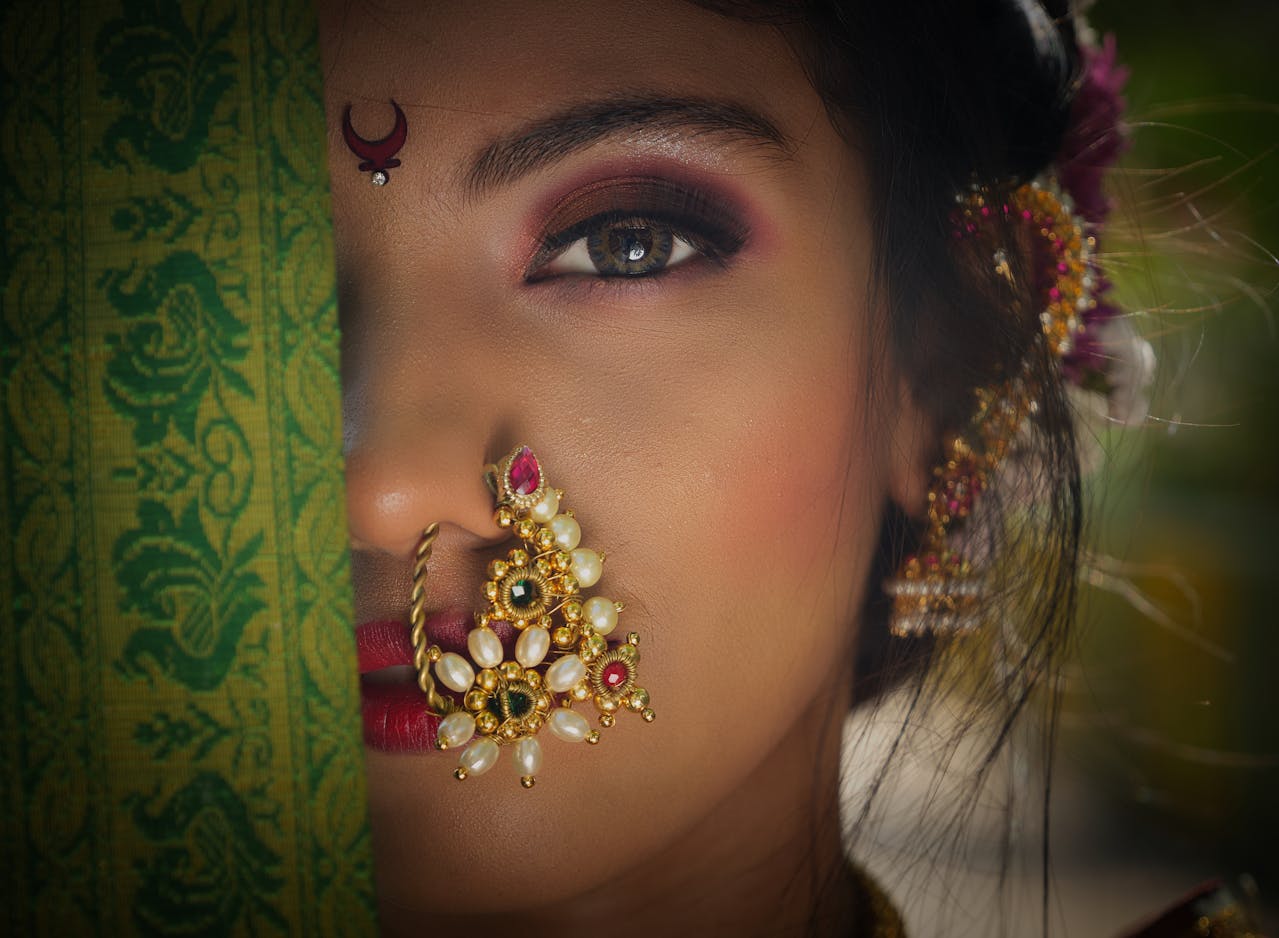
The Maharashtrian nath is crescent-shaped and often embellished with pearls and colored stones, and is one of the important bridal ornaments. Variants exist, such as the Peshwai Nath and Brahmani Nath, which reflect the historical and cultural customs. 

Today, it is still not uncommon to see the Nath proudly worn during a wedding ceremony, or at festivals, Gudi Padwa and Ganesh Chaturthi, in the form of poorer imitations made of artificial or ornate stones.

2. Punjabi Nath

Punjabi-Nath

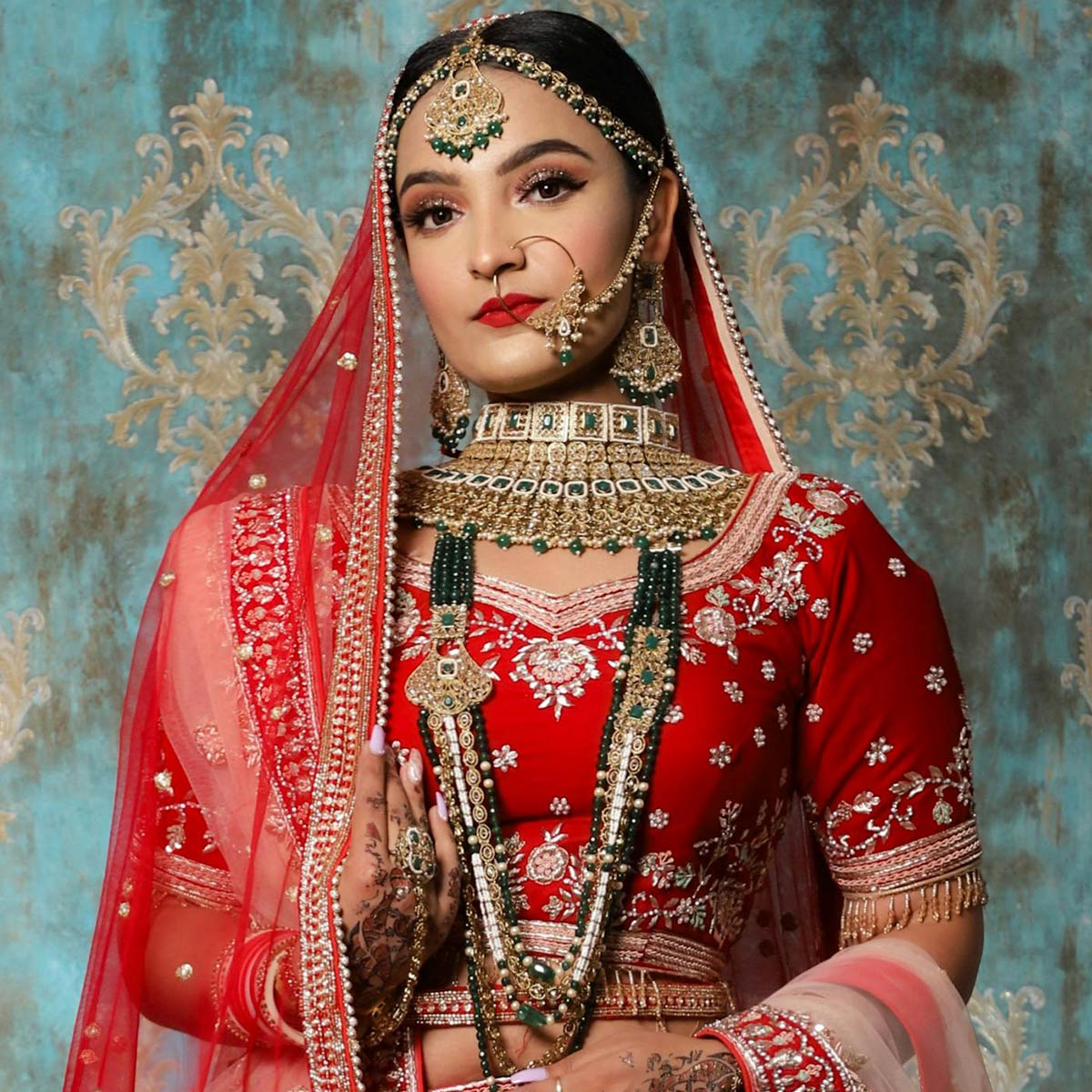
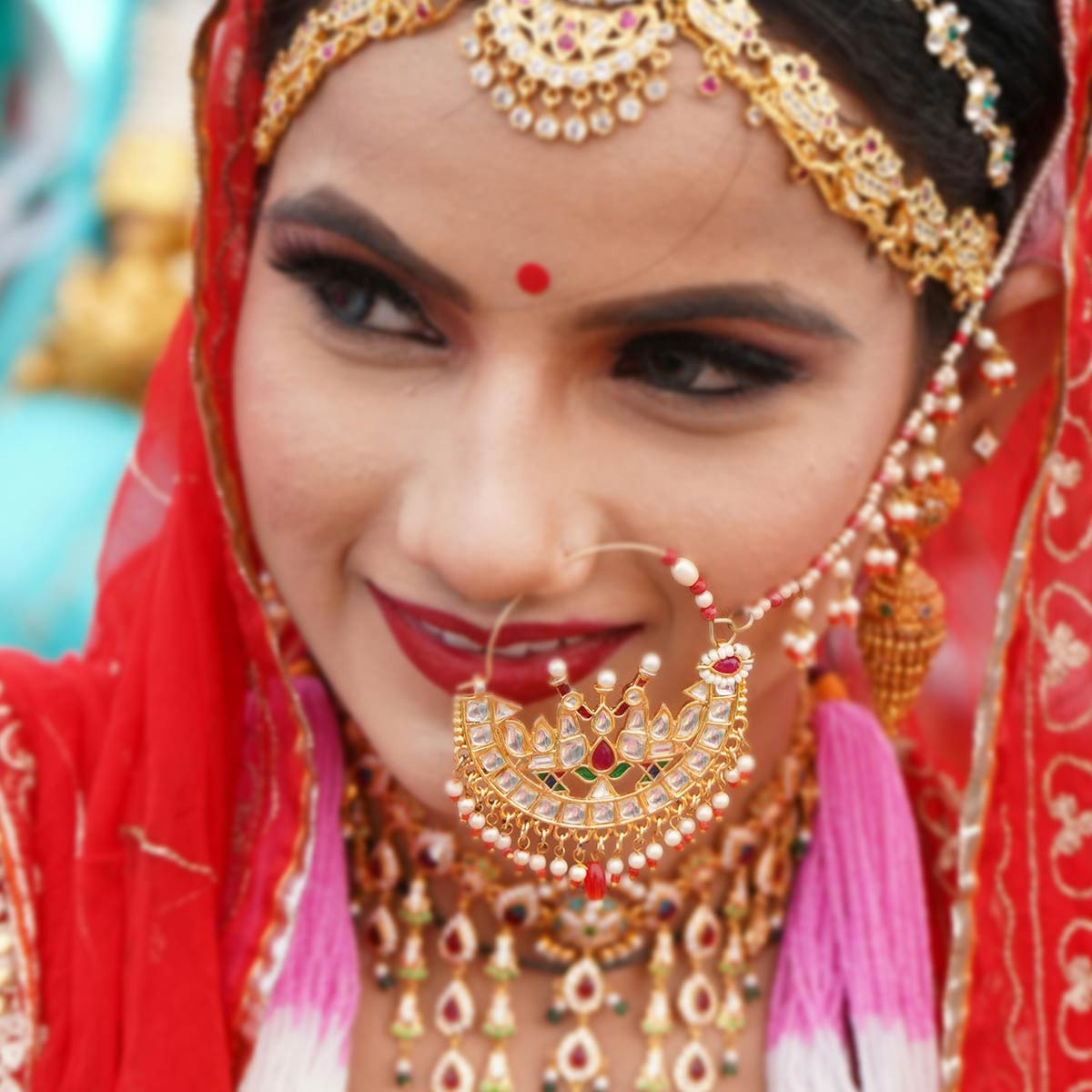
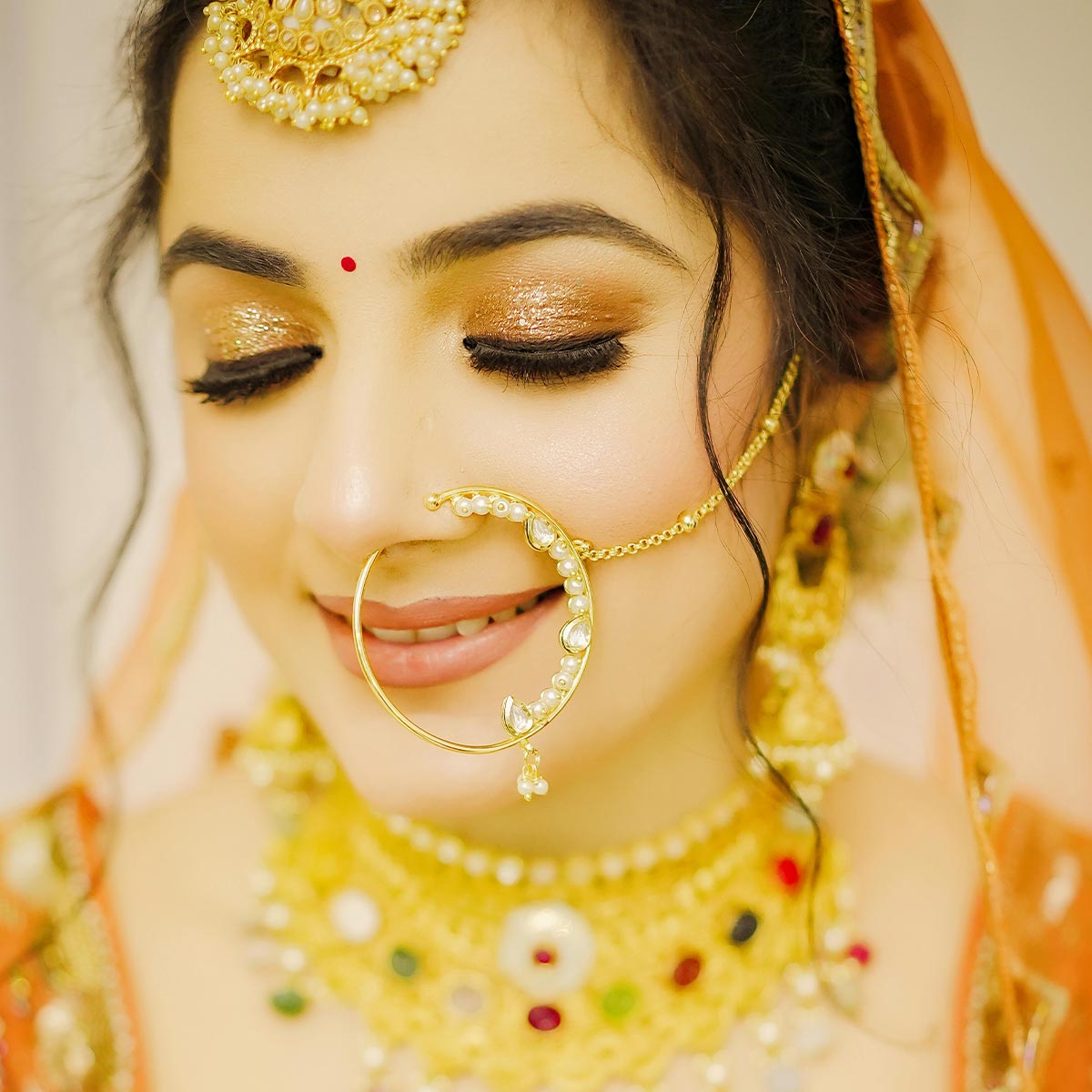
If there is one word to describe the Punjabi bridal nath, it is ‘extravagant’. It is a large hoop that sometimes covers the entire cheek, attached to either the ear or hair with a chain. The Punjabi Nath is not simply bridal jewellery but more an exposé of the cultural roots of the community.

3. Rajasthani Nath

Rajasthani-Nath

The Rajasthani nath stands out as large and elaborate, made in meenakari, kundan and stone, representing the royal heritage of the region. Other styles include Nathni, Laung and Latkan Nath, which demonstrate the variety of styles across multiple communities.The nath remains popular in current culture and is often employed in films depicting Rajput royalty, such as Padmaavat.

4. Himachali Nath (Bulaki)

Himachali-Nath-Bulaki
Image – Wikimedia

Quirky yet bold, the Himachali Bulaki is different because it hangs over the upper lip. While many of the bridal Naths have some royal gold work, this nath piece is rather simple and reflective of the Himalayan culture.

5. Bengali Nath (Nathni)

Bengali-Nath,-Nathni

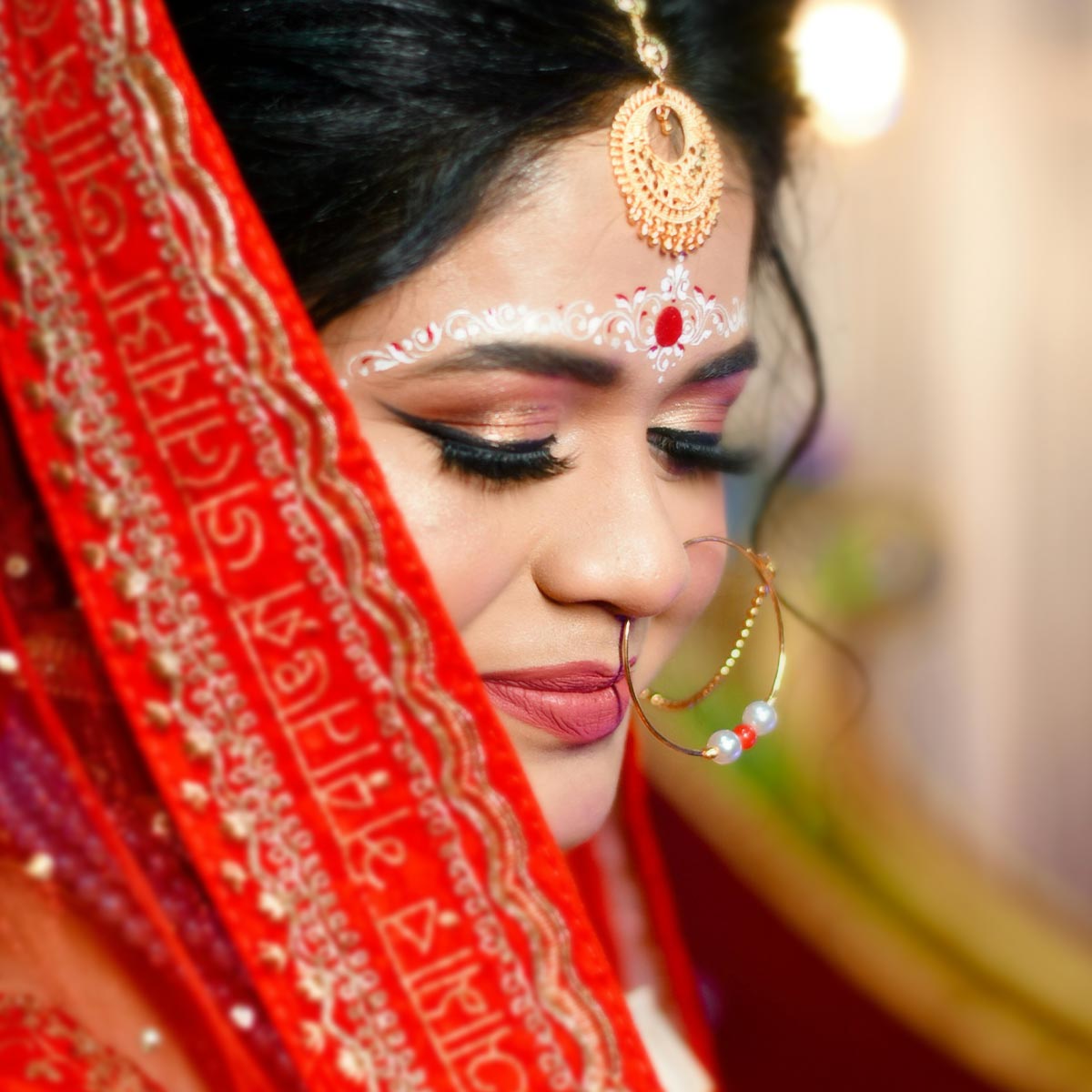
Minimalist but stylish, the Bengali bride’s nath is usually a large, simple hoop of gold. It corresponds to Bengal’s love of elegance. The Nathni is adorned by brides, and the bridal look is incomplete with the same.

6. South Indian Nath (Mukkuthi / Besari) 

South-Indian-Nath-Mukutti

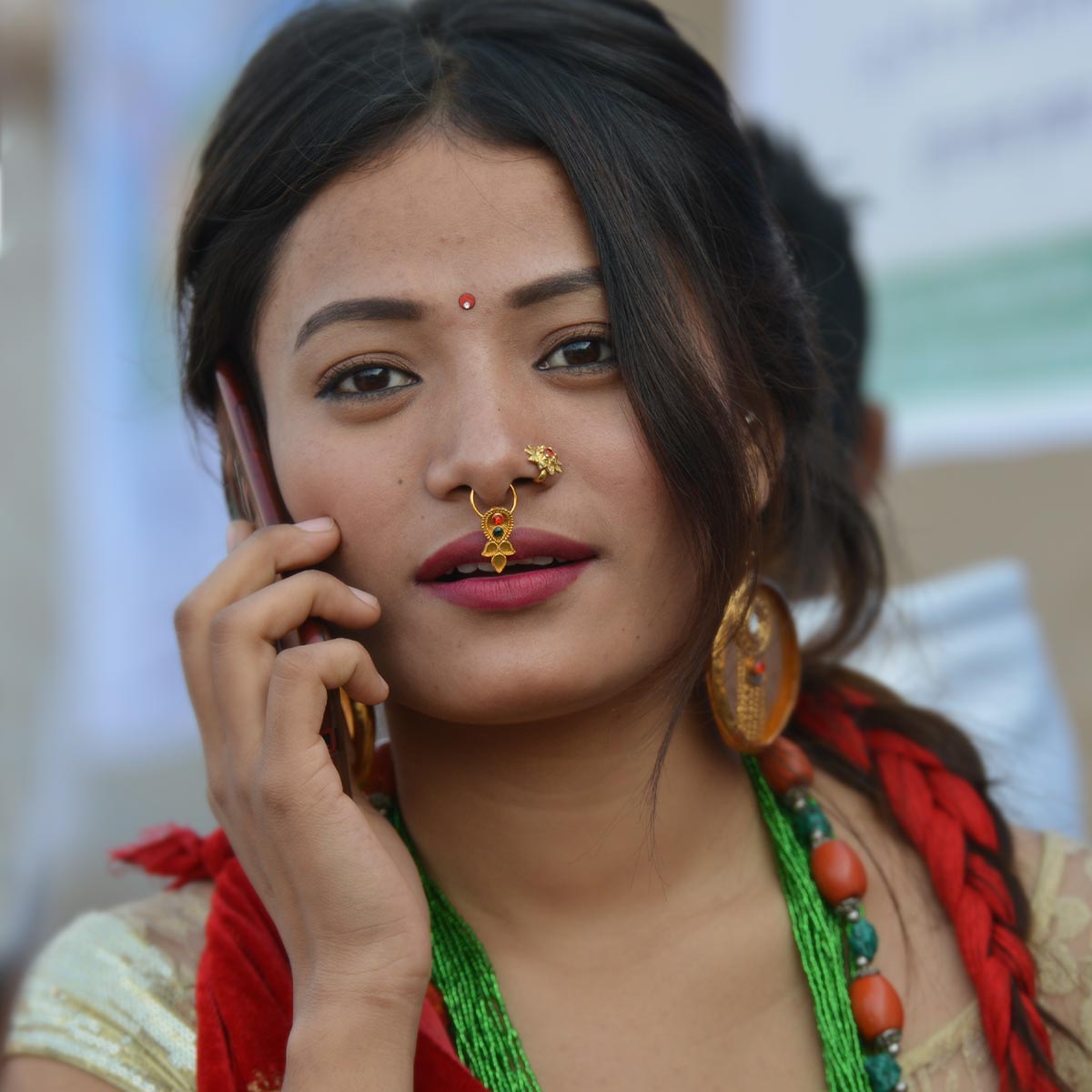
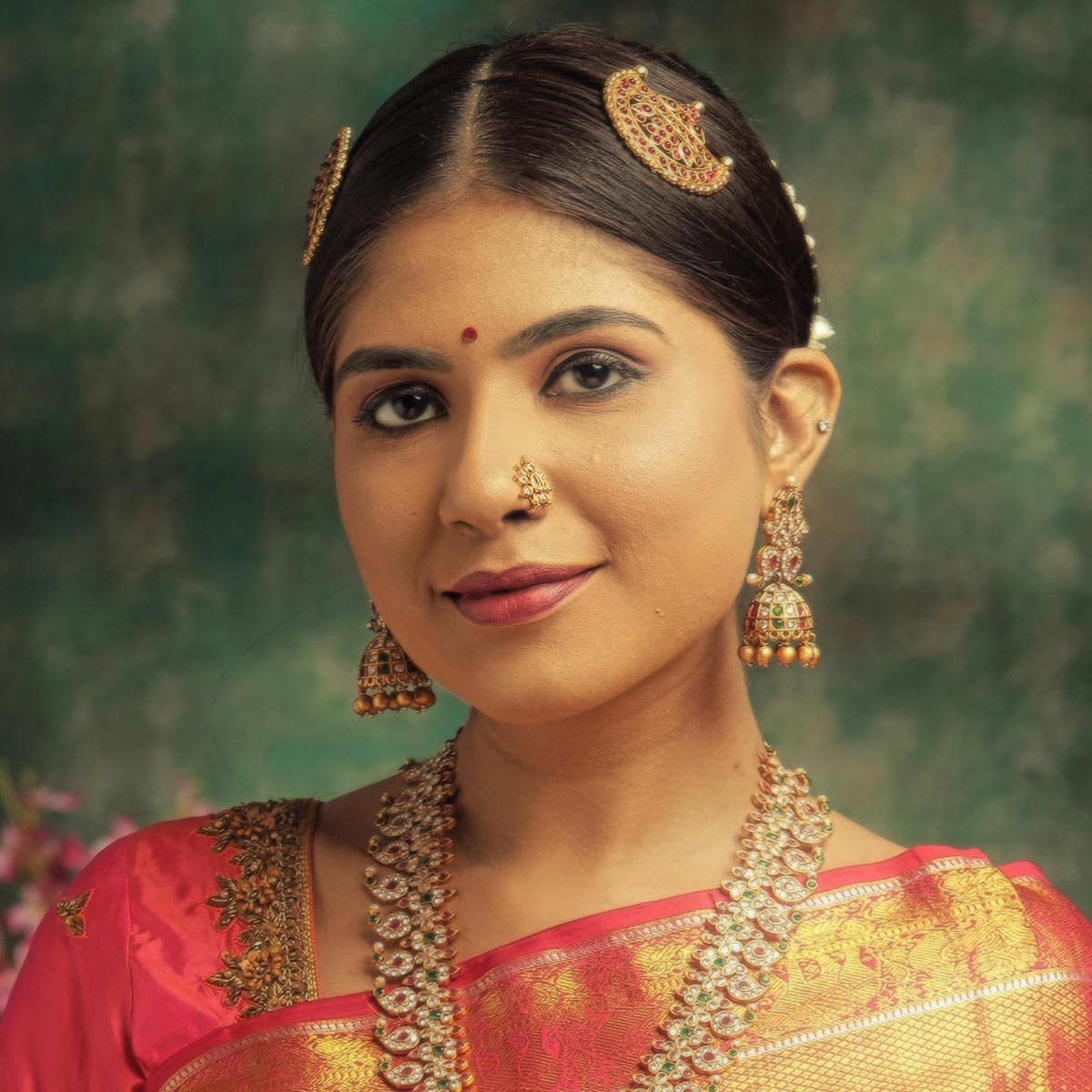
In the southern part of India, nath is called Mukkuthi or Besari. A Mukkuthi or Besari is a stud, often with diamonds on it, worn on one or both nostrils. Usually, brides wear it for auspicious occasions, but smaller Naths are commonly worn daily. 

7. Gujarati Nath

Gujarati-Nath

Gujarat’s Bori Nath is detailed and circular, typically with pearls encrusted on it. With a chain connecting to the ear, the Nath enhances the bridal attire, adding the right touch of grandeur while weaving in cultural heritage.

 8. Modern Incarnations

Nath-Modern-incarnations

The nath has changed significantly in the 21st century. Nose rings, diamond studs, and septum rings have all now become a global fashion statement. Young women today wear it not only as a part of a ritual but a regular occurrence and fashion statement.

List of Nath from Different States

Region Signature Nath Style
Maharashtra Peshwai, Brahmani
Punjab Kokka, large hoop Nath
Rajasthan Nathni, Laung, Latkan
Himachal Bulaki
Bengal Phul Nathni, Hoop Nath
South India Mukkuthi, Mugu Battu, Besari
Gujarat Bori Nath

Nath Symbolism and Significance

Nath-Symbolism-and-Significance

  • Nath or nose rings have long been represented as a symbol of marriage and womanhood.
  • In many traditions, piercing the left nostril is believed to be associated with fertility.
  • The size, material, and design of a Nath are seen as a reflection of social status in society.
  • Many families value Naths as heirlooms, handed down through generations.
  • Recently, Nath has become a contemporary trendy accessory, rather than a ritualistic item.

Nath and Contemporary Relevance

Nath-and-Contemporary-Relevance

In contemporary times, nath has transcended from a mere ritualistic item to a fashion statement. It is now re-established in the realm of fashion and popular culture. The nath is not limited to marriages; women are now wearing Naths as an accessory statement during festivals, cultural experiences, and even when going to the grocery store. The rise of minimalistic nose pins and diamond-studded adornments, and septum rings has become a pivotal point of reference for what are traditionally known in their original forms as Naths.

  • The spectacular ‘nath’ look of Aishwarya Rai Bachchan in Jodhaa Akbar, Deepika Padukone in Padmaavat, Alia Bhatt in Kalank, and Anushka Sharma in Ae Dil Hai Mushkil captured the imaginations of millions of fans. 
  • Language and terminology such as “Nath” have evolved into language we practically hear and see everywhere in the so-called global market, and we are also severely reflecting a wide acceptance of Indian styles of ornamentation. 
  • Social media has sped up the evolution of this trend with influencers and celebrities displaying the nath at arm’s length. The Nath is now being photographed and displayed, making it a genuine symbolic example of heritage, regaining its relevance again.

Final Thoughts

Each style and type of nath, from the Kokka of Punjab, to the sleek and beautiful Naths of South India, the understated ones in Bengal, each tells a story of its region and people. And while fashion is changing in all parts of the world, nothing compares to the nath. We come across it every day. It reminds us that ornaments in India are not ornaments; they are traditions keeping alive the echoes of the past into the present.

FAQs on Types of Nath

FAQs-on-Types-of-Nath

Question: What is a Nath in Indian culture?

Answer: A Nath is a traditional nose ring worn by women in India, symbolizing beauty, cultural heritage, and sometimes marital status.

Question: How many types of Nath are there?

Answer: There are several types, including Nathni, Bulaki, Hukka Nath, Chandbali, and Rajputi Nath, each with unique designs and cultural significance.

Question: What is a Chandbali Nath?

Answer: Chandbali Nath is a crescent-shaped nose ring, popular in Rajasthan and Maharashtra, often adorned with pearls and stones.

Question: Which Nath is traditional in Maharashtra?

Answer: The Bulaki or Marathi Nath is traditional in Maharashtra, usually made of gold and decorated with pearls or colorful stones.

Question: Can Nath designs vary by region?

Answer: Yes, Nath designs vary across India, reflecting local culture, craftsmanship, and ceremonial customs, such as bridal or festive occasions.