Nestled in the historic town of Munger, in the Bihar state of the Indian nation, is a serene and spellbinding Sita Kund sacred site where it is positioned. This primordial water body, bathed in legend and myth, has been placed among immortal sacred sites for ages as a source of inner harmony and reflection. Its sacredness as the spring of Sita ghat – one of the two major epics of Ramayana that dates back to the ancient Indian Sanskrit era – has made Sita Kund a sacred destination for devotees and pilgrims coming from all over India and even the world.
History of Sita Kund
Sita Kund, as a pond near Mahendra Hills, has its origins in the ancient epic Ramayana along with Mahabharata, which are considered as the two major epic tales of ancient India. According to the Ramayana, the time Lord Rama, his beloved wife Sita, and his younger brother Lakshmana were in the woods of ancient India is the fourteen years they spent during their exile from the society. It believed that they had an obligation of residence in a region that is currently called Munger in modern state of Bihar.
The story explains that Sita was abducted by the demon king Ravana while they were at Munger which caused Rama to leave his kingdom and battle with the demon king, defeating him to save his wife. After enduring the hardships of the forest, Sita is described as being overcome with grief and heartbreak, her tears that turned into the holy pond we know today as Sita Kund. The name of the kund or pond “Sita Kund” describes “Frowning tears of Sita”, and the kund which was miraculously formed from these tears is said to have been wept as a result of Sita for her ordeal of banishment. Sita Kund serves multiple roles. It is as much a spot of religious significance as it is an exemplification of the cultural diversity and architectural finesse of ancient India. The province of infrastructure contains a large district consisting of many buildings, as well as huge constructions of the past, which are driven by the craftsmen’s creativity.
Rama-Sita, Lakshmana in exile in the Dandaka forest – Infinite Eyes/Flickr
Although the true date when the Sita Kund was first established remains buried in the mist of time, the archaeological evidence indicates that the place was a sanctuary and a source of pilgrimage for ages. The antiquities together with rock inscriptions corresponding to the area confirm its historical import. Throughout its history, a manifold of rulers and dynasties representing exceptional architecture and significance have played their role in the site. The Maurya Dynasty, which was in power from approximately the 3rd century BCE to the 2nd century BCE, is considered the successor of the famous Ashoka Pillar which is situated within the Sita Kund complex.
The place underwent large refurbishments and additions under the guidance of various Hindu rulers and noble clans in the medieval period. During the 16th-17th centuries, the construction of the Sita Kund mandir, which is believed to be the main temple devoted to Sita, was probably carried out, depicting the architectural styles that were very distinct and spectacular at that time. Years gone, Sita Kunda attracted more and more pilgrims and devotees, establishing thus as a cultural and religious site of high status. Now it serves as a reminder of the undying spirit of mythology and spirituality along with the multicolored cultural blanket of India.
Architectural Wonders
The Kund, a large rectangular pond which is approximately 50 feet by 30 feet, forms the core of the Sita Kund complex. The pond is embraced by a labyrinth of stone architectural elements, which provide access to the holy waters for religious rituals and ablutions. Seated next to the Kund is the fabulous Sita Kund Mandir, a temple that is dedicated to the goddess Sita, the princess. This magnificent building, erected in the most celebrated Nagara style, leaves one open-mouthed in amazement. Its towering shikhara (spire) stands tall in the sky, beautifully embellished with numerous carved stories from the Ramayana and other Hindu mythological tales.
The temple complex is also home to a number of small shrines and structures, each of which has its own individual architectural style and historical significance. The Ashoka Pillar, a towering monolithic column which dates back to the 3rd century BCE, not only represents the rich historical legacy but also the famous emperor, Ashoka.
Cultural Significance of Sita Kund
Besides religious and architectural importance, site Kund has great cultural value to people of Bihar and India in general. The site has been the place where various events and festivals have been held, bringing a lot of people from distant places. One of the most amazing occasions is Sita Kund Mela, a multicolored festival that happens during the Hindu month of Chaitra (March – April). In this period, multiple pilgrims from different walks of life gather at the site to perform traditional rituals, watch vibrant cultural performances or contribute to the festival ambience.
The Sita Kund Mela is not only a religious event, it is also a display of the great cultural mosaic that is found in Bihar and India. Visitors have a chance to view the genuinalities of different cultures and traditions that have been passed down and are still progressing. From the finely crafted products to the traditional costumes, the fair opens the gate to see the gorgeous tapestry of Indian culture and art. Moreover, the mouthwatering dishes and authentic Indian food bring you a wonderful experience.
Conclusion
The Sita Kund holds significance only to its religious significance; it is India’s living monument that stands for cultural heritage, an omnipresent symbol of legend and myth, and a timeless testimony of human perseverance. In every step as this person walks the sacred land they find that they are transported in time, when the whole story and mythology that this place carries along is played out in one’s imagination. Whether it is spiritual calm, architectural beauty, the art of discovering the threads that link the whole of Indian culture, Sita Kund is a guiding star that holy seekers use to enter the artistic diversity of the sacred water body to hide and unravel the mysteries. This is the place which has many stories, from history to mythology and spirituality which coalesce making a life-long and unforgettable experience to every visitor.
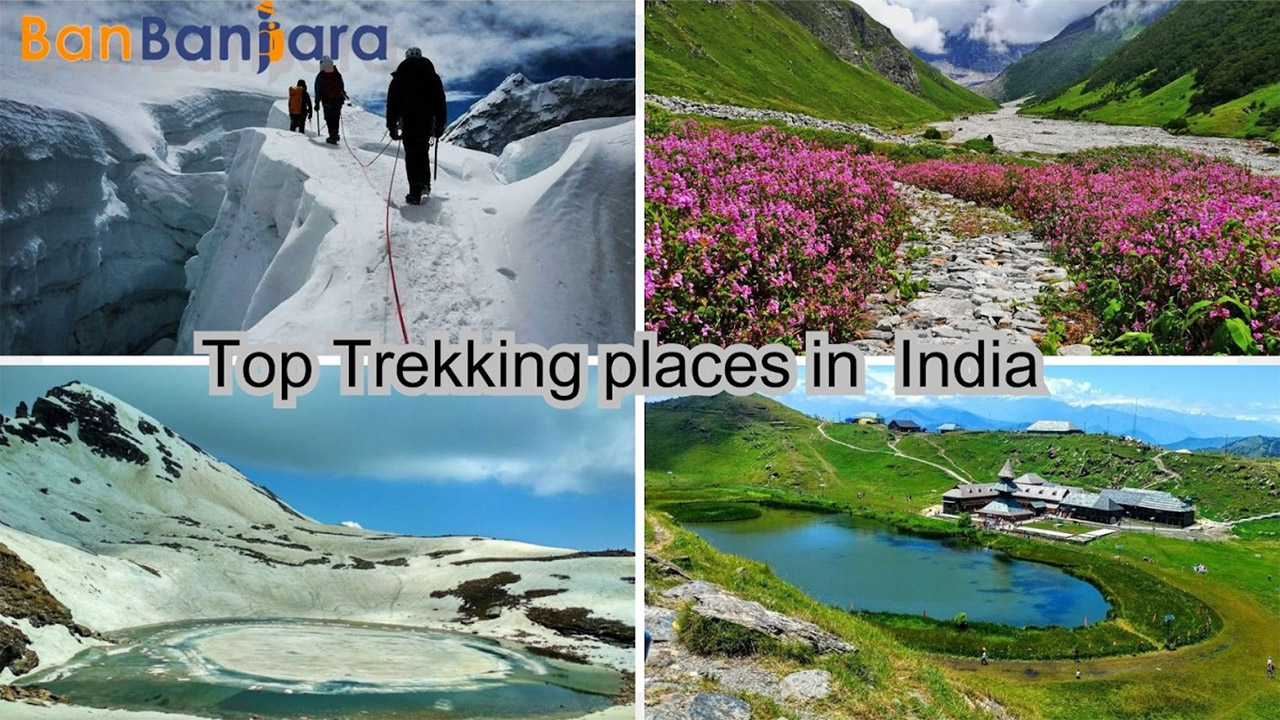
Summer is here, and with that, the season to go on a trekking vacation starts too. Summers are the ideal season to trek because this season offers some of the most unique trekking experiences. Talking about the top 10 trekking places in India, no doubt the best option is the regions of Sikkim, Himachal Pradesh, and Uttarakhand with Bhrigu Lake Trek being the most famous surrounded by the great Himalayas. Why are these regions so popular? Well, it is because of these reasons:
Azure lakes
Lush, bountiful meadows
High-altitude passes
Views of the Himalayan peak
Camping under the stars and unforgettable memories.
Anyone seeking the thrill of hiking and trekking in the Himalayas should continue reading this blog introducing the leading trekking places in India they should visit.
List of top trekking places in India during summers
Bhrigu Lake Trek
Bhrigu Lake, a glacial lake at a high altitude, is one of the most sought-after trekking places in Himachal Pradesh and is flocked with people in the summer. Having the best natural wonders, this trek route is ideal for families and beginners. As you trek here, you get to witness the beautiful views of Seven Sisters Peak, alpine grasslands, and meadows. You get tons of opportunities to capture yourself against the backdrop of snow-capped mountains. It is accessible easily from Manali and is an ideal solo trek option.
Difficulty level: Beginner to seasoned trekkers
The best time to visit: is May to June.
Kuari Pass Trek
The Kuari Pass Trek is also known as the Lord Curzon Trail, as Lord Curzon, Viceroy of India at the time, discovered it first. The trek is situated near the Nanda Devi Biosphere Reserve in Uttarakhand’s Chamoli district. The views this trek offers are unparalleled.
As you trek this route, you will witness thick alpine oak, rhododendron, and conifer forests. You also pass by Rammi, a village inhabited by an ancient Himalayan tribe, while also witnessing the breathtaking views of peaks like Nanda Devi, Kamet, and Chaukhamba.
Difficulty level: easy to moderate
Best time to visit: March to mid-June; mid-September to early November.
Kashmir Great Lakes Trek
One of the most breathtaking trekking places to visit in India is the Kashmir Great Lakes Trek. It is a mesmerizing trek with the surreal charm and landscapes of Kashmir. You will cherish this trek forever as you witness the most beautiful moments, like trees with fresh green tint and alpine lakes. Greenery, and more. During this trek, you will uncover seven lakes and five valleys offering serenity and unmatched views. It is a challenging trek, and beginners should try it, but if you are a frequent trekker, do not miss it.
Difficulty level: Moderate to difficult.
Best time to visit: July to September
Har Ki Dun Trek
One of the best places for trekking in summer is undoubtedly Har Ki Dun Trek! For beginners, it is one of the best summer treks ever, offering views like thick deodar, sycamore, and chestnut forests. This unforgettable trek starts at Sankri, a tiny village in the Garhwal Himalayas. Taking you to Taluka offering unparalleled views of the Great Indian Himalayas, it continues towards Osla and then you ascend to Har Ki Dun. During your trek, you explore Borasu Pass, Lake Morinda, and Jaundhar Glacier.
Difficulty levels: Easy to moderate
The best time to visit: is May to June.
Hampta Pass Trek
Hampta Pass Trek is ideal for anyone looking for adventure but a beginner in trekking. It is located to the east of the Pir Panjal and Manali ranges in Himachal Pradesh. Acting as a bridge between Lahaul and Kullu Valley, the trek starts in Manali, taking you to stunning places like Chikka. After crossing the beautiful pine, oak, and rhododendron forests along the River Hampta, you reach the Pir Panjal Ranges and Chandrataal Lake as you stay overnight camping under the skies.
Difficulty level: Easy to Moderate
Best time to visit: June to mid-October
Dzongri Trek
Looking for a short trek to conquer during summertime? Then, the Dzongri trek is one of the best ones for you offering splendid views of Sikkim’s landscape. Dzongri is a trek of interlinked meadows nestled deep in the mountains and ravines. The trek has impressive views of Mt. Tenchingkhang, Mt Pandim, and other peaks for you to enjoy.
Difficulty: Easy to moderate
The best time to visit: is March to May.
Gomukh Tapovan Trek
This trek has to be on your bucket list because it offers wonderful sightseeing and spiritual awakening opportunities. The trek takes you along the Bhagirathi river to its source, Gomukh. The trek involves camping at Tapovan, which offers the rarest of sites, like the eight captivating peaks. The trek also exposes you to beautiful, lush meadows while also coming across blue mountain goat herds, a delightful sight for the trekkers.
Difficulty level: Moderate
Best time to visit: Moderate
Pin Parvati Pass Trek
One of the most challenging treks, the Pin Parvati Trek, makes the trekkers walk on glaciers in the Pin Valley, Spiti, and Parvati Valley, Kullu. The trek starts in Manikaran, passing through multiple villages with stunning lakes and verdant meadows. As you go upstream the Parvati River, you witness the beautiful glacier, which is a memory you will remember forever. The trek’s highest point is the Pin Parvati Pass, where you also get to enjoy Spiti Valley and the beautiful monasteries here.
Difficulty level: challenging
The best time to visit: mid-June to October.
The Shepherd’s Trail Trek
The list of the top 10 trekking places in India during the summer is incomplete without the Shepherd’s Trail Trek. It takes you to secluded and distant villages in Himachal Pradesh. The highest peak you will come across here is White Mountain, or Hanuman ka Tibba, behind Dharamshala town. The trek starts from Manali, ending at Bara Bhangal, the shepherd’s village. Have a stroll across the river as you get mesmerized by the beautiful scenery around you.
Difficulty level: Moderate
Best time to visit: Mid-June to Mid-October
Rupin Pass Trek
Be part of the most stunning trek experience during summer- The Rupin Pass Trek. It is an adventurous trek full of twists and turns, leaving you happily surprised. Start the trek with a 20-minute walk towards the Rupin River. Relax near the refreshing cool waters. You can camp here for two days amidst the beautiful snow-capped mountains. It is a challenging trek where you have to cross a 200-meter steep climb which is full of snow and rocky. Reaching the pass, you will have an unforgettable view of a serene stream and grassland engulfed by the peaks.
Difficulty level: Moderate
Best time to visit: May to June and September.
Be a responsible trekker: Tips to follow
Do not litter
People who go on treks understand the value of the environment. Trekking in nature means happiness, and you do not spread garbage over that. Right? So, to be a responsible trekker, you should first stop littering. Whether it is soda cans, food wrappers, toilet paper, or even cigarette buds, you should never leave any of them behind. If there is no access to camp toilets, dig up a hole, put the garbage there, and cover it up.
Respect the locals.
While trekking in the beautiful valleys, you will come across multiple local customs and traditions. Therefore, it is necessary that, even if you find these customs whimsical, you remember that they are an important part of the local’s life. So respect them, and if you want to capture it on video or so on, seek permission.
Be responsible while you go sightseeing.
Sightseeing in the trekking places you are visiting should be undertaken responsibly. If there are a few sets of rules governing a place, like a temple or so on, you should follow them. For instance, many temples require you to cover up, and monuments have rules not to litter or ruin the statues; you must follow each one of them.
Conclusion
These are the top 10 summer trekking places to visit in India. Each one offers something unique and memorable. If you plan your trip well with a reputed travel agency, you can cover more than one trekking place in a single trip. Trekking is an experience for a lifetime, with a mix of thrill, pleasure, and self-realization. So, what are you waiting for? Book your trek today and embark on your journey of self-realization and relaxation.
Known for its stunning beaches, the picturesque coastline of North Goa, has fast become a haven for food lovers. From fresh seafood at no-frills beach shacks to trendy cafes that offer a variety of international cuisines, restaurants in North Goa cater to every palate. We take a look at some of the best restaurants in North Goa, which includes well-established names and some new restaurants that offer delicious flavors and unforgettable experiences.
1. Hideaway Café and Bar
If you’re looking for great cocktails and a laid back atmosphere in Goa, Hideaway Café and Bar in Vagator is the perfect spot. Created as a space for hosting contemporary indie musicians and matching that with a great bar and dining experience, Hideaway is the ideal spot to enjoy some fabulous cocktails and performances. The food is simple but flavourful with options ranging from pastas, burgers, risotto, salads, and much more. They also have some excellent coffee and waffles.
A relatively new restaurant in the sleepy village of Siolim, Hosa opened in 2022 but has made quite a name for itself, winning a number of awards in a short span of time. Situated within an impressive, traditional Portuguese villa, the restaurant is located very close to the majestic St. Anthony’s Church. A take on South Indian cuisine, featuring lesser known regional dishes and flavours, the menu highlights cuisines of Pondicherry, Coimbatore, Nellur, Kollam or Quilon, and Chettinad. An exciting cocktail list featuring classic, tiki and modern interpretations complements the cuisine perfectly.
Location: House no.60/1, Irada Home, Vaddy, near St. Anthony’s Church, Siolim, Bardez, Goa 403517. Visit Website
3. Slow Tide
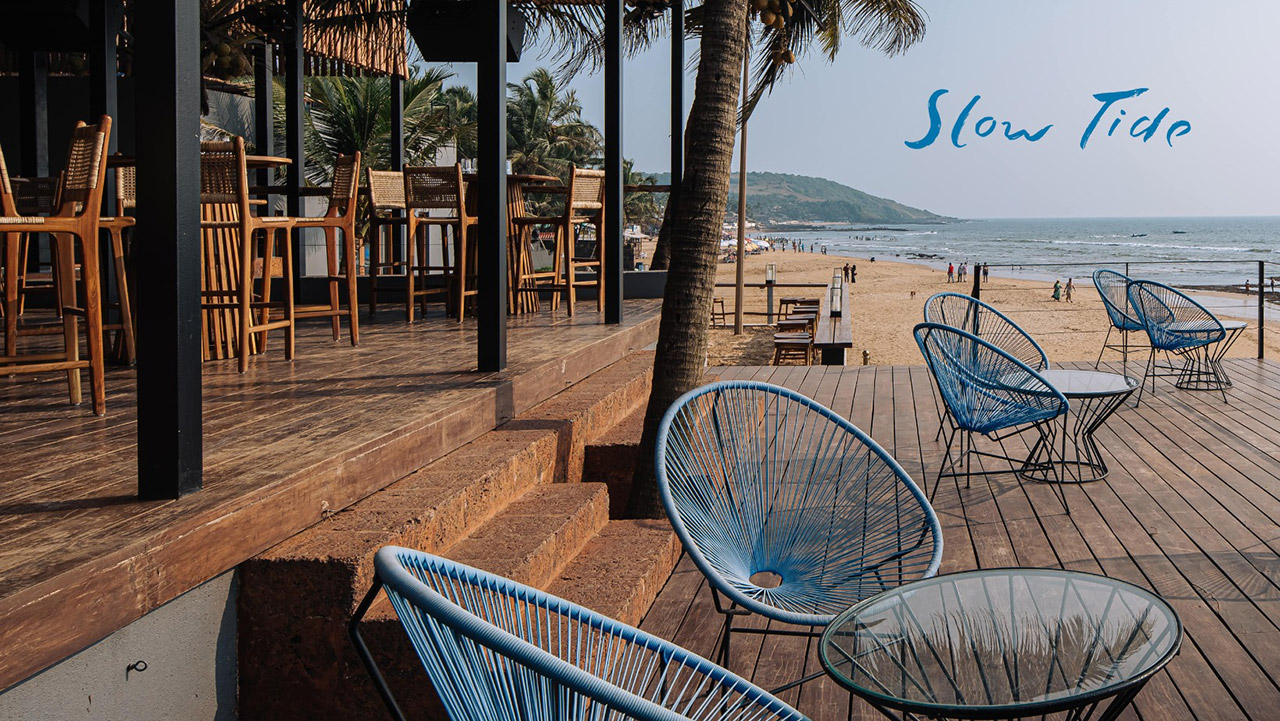
Located in Anjuna, a town famous for its hippie culture, Slow Tide embraces the heritage of the town in its design and offering. As the name suggests, the restaurant is built keeping the shacks in mind and the dishes showcase the Portuguese influence on Goan, Mangalorean, and Sri Lankan cuisines. Moringa Fritters, Red Snapper Crudo, Military Canteen Mutton Curry, Amshi Tikhi Fish Curry are some dishes to try out.
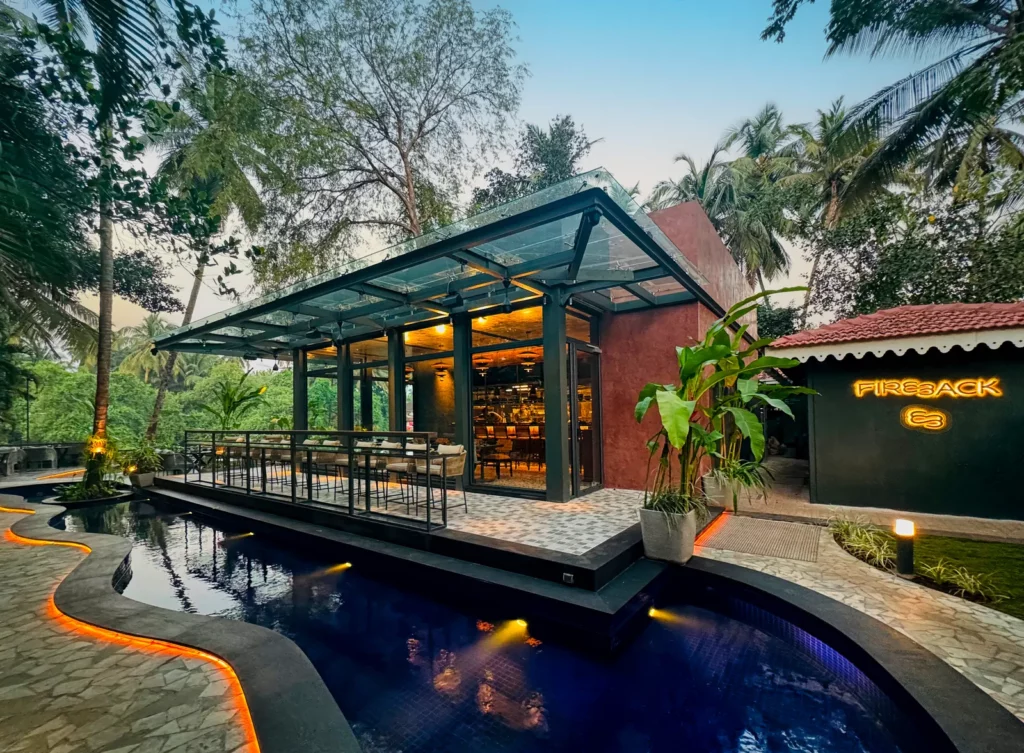
One of the latest additions to the culinary scene in Siolim, Fireback is an exciting new Thai restaurant and bar. Helmed by legendary Chef David Thompson, Fireback serves authentic Thai food at a picturesque riverside setting that offers a stunning view of St. Anthony’s church. From delicious Thai curries to vibrant salads and smoky grills, each dish is packed with flavour. Classic dishes are featured along with unique ones like Sour Orange Curry with river prawns, Smoky Eggplant with Gorlae sauce, Coconut & Galangal soup. Fireback also offers innovative Cocktails made with Thai ingredients that are a must-try.
Location: House no.60/1, Irada Home, Vaddy, near St. Anthony’s Church, Siolim, Bardez, Goa 403517. Visit Website
5. Gunpowder
This beautiful, modern restaurant is located in Assagao and is well-known for its South Indian cuisine that uses local spices. With an outdoor garden setting, the restaurant menu specializes in dishes from Andhra Pradesh and Kerala. From fluffy appams to fiery fish curries, every dish at Gunpowder is bursting with authentic flavors. Do try their Toddy Shop Meen Curry, Idukki Pork and Kanava.
Another restaurant located in Anjuna, Bomras is run by Burmese Chef Bawmra Jap and offers Asian cuisine influenced by cuisines from Burma, Cambodia, Thailand and Laos. Crackling Pork and Pomelo Salad, Scotch eggs with Manipuri black rice, Khow suey, Pickled Tea Leaf salad, are some signature dishes to try out. Prepared with fresh, locally sourced ingredients, the restaurant includes several ingredients from its own kitchen garden.
For a taste of Europe in Goa, Baba Au Rhum in Anjuna is the place to be. A quaint cafe known for its artisanal French breads, pastries, and gourmet sandwiches, this cafe is ideal for breakfast, lunch or an evening snack. Their signature rum-infused cakes are a treat, as are their flaky croissants and heavenly desserts.
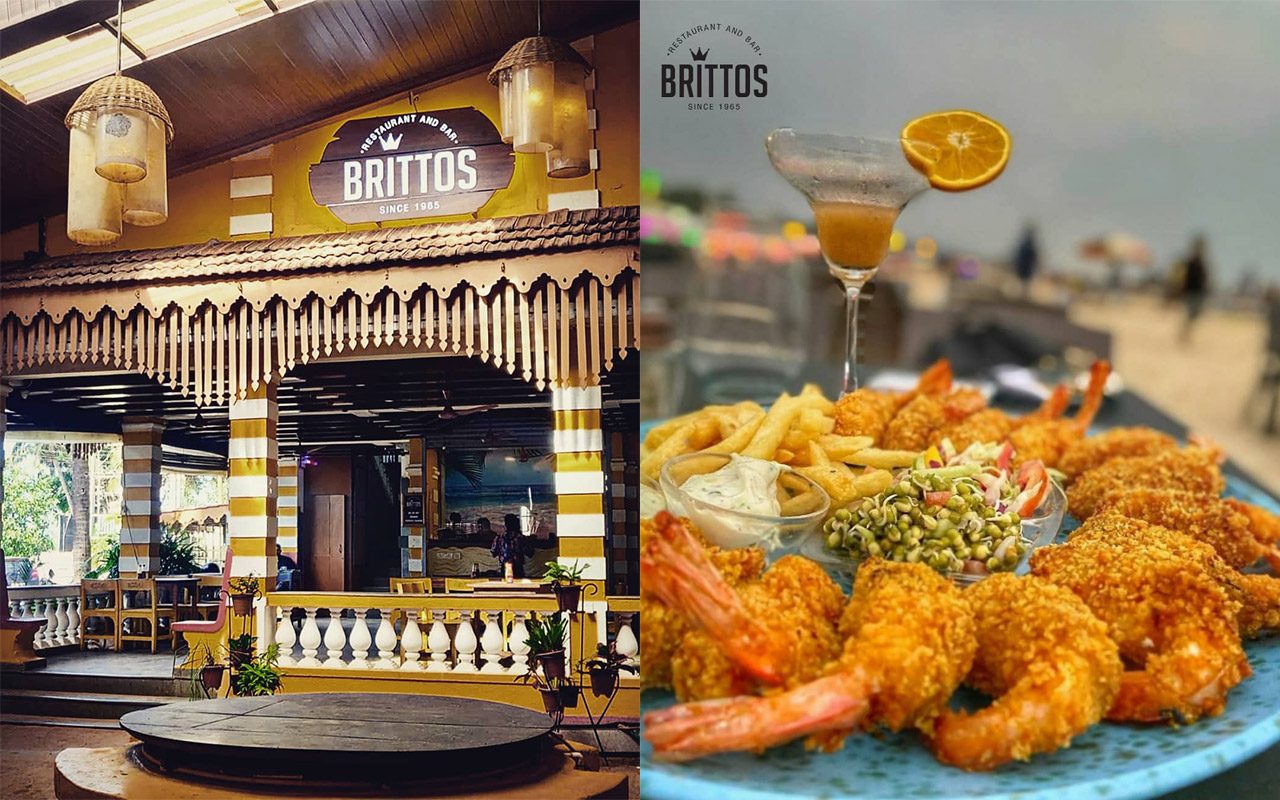
A landmark restaurant that is synonymous with Goa is Britto’s. Situated on the beachfront at Baga, Britto’s is practically an institution amongst tourists and locals alike. Known for its vibrant ambiance and delicious seafood, one can enjoy Goan classics like Fish Curry with Rice, Crab Xacuti, and Prawn Balchão.
With a range of choices, flavours and cuisines, it is evident that North Goa has become a hub for food enthusiasts. Whether it is a seaside location that one is looking for or a quiet riverside setting, the restaurants in the North have much to offer their guests. So when you’re headed to Goa on your next vacation, be sure to pop into one of these restaurants to sample some of their exciting, authentic dishes.
During the pandemic, the fashion segment of our economy underwent a complete makeover. We as a fashion customer base underwent a rapid metamorphosis in how we fashioned over the latter two years of the virus outbreak. Since thereafter, formulaic fashion has alternated amongst comfortable garments and elaborate silhouettes. Designers and brands have been establishing consumers with a synthesis of new age design aesthetic by incorporating altered equations with regard to fashionable preferences. Our post-pandemic wardrobe picks have been greatly influenced by extraordinary revivals, gender-fluid fashion, a regenerating body-positivity approach, and much more.
So let’s look at some of the latest women’s fashion that will take over the summer of 2024.
Futuristic Functional Dressing:
The versatile trend is set to be. A wardrobe with several uses and functionality always wins. According to professionals, this spring will see a return of fluid silhouettes and easygoing loungewear. The distinction between casual and occasional attire will be muddled by adorning that one practical element in countless approaches. Ability to integrate pushed on by the pandemic has indeed made silhouettes increasingly dynamic. Silhouettes that allow you to live in, work in, or twirl around one’s home like nothing more than a small bubble. In the event of an unexpected Zoom call, it may be worn over a pair of jeans. It can also be taken for a weekend excursion with a dress.
Regional Prints:
The blend of continental silhouettes with particular regional, classic styles will indeed be visible in India’s wealthy fashion culture, that exhibits its distinctive unique flair. In terminology of where the designs are sourced, this season will be quite natural as that of the Madhya Pradeshi Bagh prints and the Rajasthani Bagru prints.
Free Fashion:
The advancement of designing is undoubtedly not around categorizing clothing as per sexual identity, especially in light of discussions about unisex closets and gender-fluid apparel. The fashion industry has grown more progressive and conscious as a result of worldwide stars like Harry Styles and others flourishing. Shirts, in our opinion, are indeed the ideal illustration of gender-neutral style. We anticipate seeing many printed shirts worn with skirts or as dresses this season’s spring and summer.
In free fashion you can choose any style which help you to stand out in a crowd, you can use quoted T shirts like queen and king t shirts, Love t shirts for couples, it is one of the best free fashion idea.
Bold colour combos:
We do not however just want two contradictory colour combinations; we would like to have the entire rainbow. Combining numerous different unpredicted colours to construct a colour collision is the most effective way to establish making your styles stick out. Bold colour configurations are the means to go even if you’re going for just an athleisure look or a party.
Sarees with a Pinch of Twist:
Present era, Ruffle Sarees, Belted Sarees, The Saree-Kurta Duo, The Denim Adorned Saree, and so on are among the latest fashion trends in ethnic wear that remain bold yet sophisticated with a tint of legacy. Western top attire with Indian heritage prints and others have captured all the variations for our striking saree feels, with a diverse array of blouse designs such as halter neck, beaded and pearled straps, tube blouses, and so forth. Those very same components of outerwear represent the globalization of societies as the fashion industry incorporates us with the latest trends in fashion from all over the world.
Academia Styles:
Inspired by sociocultural media sentimentality for students and fashion, this choice of clothing emphasizes education, learning, reading, and writing, thus the ‘Academic’ tap. The aesthetic is broken down into three sub styles: Dark, Light, and Grey Academia. Each sub style has its own attributes; for comparison purposes, Dark Academia is inspired by classic Greek arts, composing, and architectural styles, but is heavily laced with Gothic attributes and conceptual frameworks of death. Individuals can opt for the Dark Academia look by wearing heavy knitwear in dark tones inspired by ancient, Hogwarts-worthy libraries. Couples can wear a dark Couple T shirts, Light Academia, for just a ‘lighter’ take on its Goth-leaning compatriot, creates a visual style with a soothing positivity.
Sequin & Shimmer:
Sequin pieces have all been flooding the market, and you can glitter any period of the calendar year. Sequins certainly assist to commemorate the season in style, whether you’re wearing a show-stopping dress or a sleek two-piece. The secret, however, is to retain accessories to a minimal level. If you’re wearing a statement piece, don’t go overboard with jewelry or prints. Allow the garments to speak for themselves.
Luxe Leather:
The trend exemplifies the latest spirit of a certain times of female liberation, in which women are uncompromisingly allowing oneself to be seen, voiced, and noticed in contexts we’ve never witnessed before.. This phenomenon, which extends far further than the moto jacket, revolves around incorporating leather within all aspects of one’s wardrobe. Assume cool components and raised combat boots with trousers, blazers, crop tops, and dresses.
Faux Fur:
The apparel manufacturing companies developed faux fur fabric that is both animal-friendly and far more affordable than real fur. The single most important thing concerning fur coats is their adaptability; merely make certain to choose a covering in a quintessential colour. In other phrases, often things are determined by the wrap itself. Choose something elegant and organic in colour. Vivid and brightly coloured fur pieces will eventually become outdated, whereas natural coloured styles will never go out of aesthetic. Wear black, white, brown, or grey apparel and accessories.
Sheer Moments:
In a long series of phenomenal shows, frantic news cycles, celebrity front seats, and a plethora of trend messages, sheer fashion monopolized the trend communication. We adore the concept of ‘deconstructed grandeur,’ in which sheer panels reveal corsetry and bustier fabrication in unique ways. Luxury fashion houses have further chosen to take to see-through quantities. Regardless of the season, you’re bound to come across a see-through work of art. What began as a seasonal trend in the Spring/Summer has become an irreversible fashion statement. According to Klarna, a global shopping service, the acquisition of sheer garments has increased by 103% within the preceding year, confirming that the cultural shift has taken root off the runway and then into our everyday outfits.
Folk dances in Telangana are highly colorful and an integral part of the cultural heritage of the state, manifestation of people’s ways of life and value system. By their lively rhythm and colorful clothes Telangana’s folk dances transmit the region’s range of communities and their creative tapestry. These dances are not just performances of happiness, festivity, and tranquility in the entire community, rather they are a manifestation of all these principles. Cultural euphoria of Telangana is greatly fortified by the unique importance of each dance form which carries with it the intensity of the rhythm in Gussadi, the gracefulness in the dance steps of Perini Shivatandavam and the cheerful beats in the Lambadi dance. The history, importance and unique features of the Telangana folk dances will be discussed in the introduction of the article because the folk dances are a key element of the cultural identity of the state.
The Mathuri Dance is a classic Indigenous regional dance form originating from the state of Telangana, India. It is particularly performed by women and it has its unique graceful and rhythmical pieces. Mathiri Dance is a dance form which includes the celebration of festive occasions, weddings and other social events, depicting the cultural inclination of Telangana area. It is the tendency of dancers to put on varied traditional costumes as well as accessories that include jewelry making the dance more visually attractive.
A dance essentially articulates with its music played by the instruments like dappu (which is a kind of drum), and also singing. Mathuri Dance movement has intricacy and expression needs of storytelling and remarks on society. This folk dance is a cultural expression as well as a means of community bonding so that it shows the various rituals and beliefs of Telangana region. Through their festive dances, Mathuri Dance keeps preserving the cultural fabric of Telangana where people proudly showcase their ethnicity and customs.
The Lambadi Dance, which is popularly called the Banjara Dance as well, is a traditional dance form developed by the Lambadi or Banjara tribe that is abundant in the states of Telangana, Andhra Pradesh, Karnataka, and some regions of Maharashtra in India. Dancing is one of the unique activities for the Lambadi people, and it is always a part of their cultural heritage performed at the festive seasons and celebrations. Lambadi Dance is known for the energetic and rhythmic steps accompanied by joyful music and singing. Dancers, generally female, wear multicolor traditional costumes embroidered with mirror work, beads and similar embellishments symbolizing Indian heritage by Lambadis. The dance movements of Lambadi Dance are nimble and superbly stylized, usually related to daily life, natural surroundings or folklore tales. That is a mix of hard footwork, hand gestures and the swaying of a dance body. The sight looks surreal for the audience. Through a variety of traditional instruments, like the dholak (a drum), harmonium and a few times, the brass plates, the Lambadi dance music is played. Among the songs sung at the Lambadi dance, there are those that are in the Lambadi language and the theme that is expressed is love, music, and social bonding.
Theinging played by the Lambadi community is the tool of cultural display and maintenance. In it, they transfer from one generation to the other their traditions and stories. Via the exciting and rich tradition the Lambadi have always enjoyed, the kumbi folk dance continues to play the role of re-awakening the Dutch settlers of their rich identity and inheritance.
Bonalu is a Telugu folk dance adored in the Telangana part of India and being a most important part of Bonalu festival observed to commend and honor the Hindu goddess Mahakali. It is adored predominantly as an element of veneration and rejoice where it is performed predominantly by women. Women of Bonalu festival balance a pot of offerings decorated with almonds onhead their head, while they dance to the music in which traditional beats are rhythmic. The dance forms are exemplified by soft music moves, delicate hand movement designs and sways of the body causing a bewitching and happy environment. Bonalu dance sounds trippy with traditional music from the dappu drums coupled with cymbals and flute. The songs used during the dance were mostly to praise the gods and goddesses and pray for them to bless them with wealth and healthy family and themselves.
Folk dance is the iconic cultural expression of Mahakali puja as well as celebration during the occasion of Bonalu festival. It is the means of local people’s connectivity within the cultural values. With those vivaciously demonstrated rituals, the Bonalu Dance captures the legacy of the Telangana area next to the soul of its performers and onlookers.
Bathukamma is a traditional folk dance, especially prominent during the Bathukamma Festival, performed in the Telangana region from India. Rama Navami is one of the most auspicious and significant celebrations, observed during Navratri seasons. The deity of giver life and fertility is revered, called Goddess Gauri or Parvati. Women place colorful flower arrangements in a semi-circle called Bathukamma or on top of each other (Tupakamma) during the occasion. Such a series of flower piles is then being transferred to the center of a community and served with singing, dancing, and rituals. The circle of women, who perform the dance around the imperishable stack of Bathukamma , becomes the scene of the whole celebration. They sing the traditional Gauri hymns and do rhythmic dance movements which also have a traditional instrumentation. Clapping and music are the often accompanying elements. The dance embodies the good-looking and the fertility of nature, and the fact that the women have a great spirit.
Bathukamma Dance, a meaningful ceremony which represents togetherness and respect to Mother Nature, is the embodiment of community unison as well as the symbol of cultural traditions and worshiping Goddess Gauri. This dance form not only brightens up the cultural landscape of the festival with its colorful costumes but also spreads a joyous and jubilant atmosphere among the members who perform as well as for the people who are watching bringing the dance as an inherent art form of the culture of Bathukamma in Andhra Pradesh.
Koya Dance is an ancient folk dance art form, from the Koyas, a tribal community which is from Telangana, in South India. This dance is an integral element of the feast in the traditions of the Koya who perform this dance during the events, public ceremonies and social gatherings. Koya Style is defined by its fast and keen steps which are usually done to the music and the singing. It usually revolves around a specific pace that every dancer takes. People dressed in multi-colored garments with beads and ornaments embedded acting as a lovely sight in an aesthetic performance is not an irrelevant observation. The gestures of Koya dance are narrated stories based on plants, animals, rituals, and regular life of the tribe members. This entails a lot of pounding in the feet, emphatic hand waves and vivacious bodily moves which all have a great power to enrapture the spectator.
Koya dancer’s Music is performed by a traditional instrumental ensemble comprising drums, flutes, and strings which enhances the festive mood of the performance. Lyrics sung for traditional dance commonly reflect the pre-colonial past, folklore/legends, and cultural belonging. Koya Dance is one of the powerful expressive cultures that brings the community together and also is a way of preserving the cultural heritage of the Koya tribe. On account of its lively presentation, this folk dance has become a strong compass that provides a platform to the Koya people to express their local traditions and customs to the wider society in Telangana.
Perini dance is an indigenous folk dance in semi classic style that appeared between 10th and 14th centuries around the Kakatiya dynasty in present-day Telangana of India. Creative step dance was initially choreographed by the male dancers only for the purpose of worshiping the Hindu god Shiva, the dancer. The Kakatiyas dynasty was predominant in the tenth and eleventh century. It was in this period that the Pilani dance became very famous. Perini is the name of a vigorous warrior spirit embraced by life and death, which shows the complicatedness of a man and his profound determination to be a great warrior. The dance style is characterized with complex footwork, beats, body motions that are danced with great flair and elegance. On stage, dancers generally wear traditional form of clothing decorated with various ornaments, in their turn, contributing a visual aesthetic to the whole performance.
Perini dance music is the drum, cymbals, and flutes played which make a lively and exciting environment that can keep the attention of the participants. The always-gone songs are normally used to praise Lord Shiva and depict episodes from the Hindu mythology during this dance.
Recently, rehabilitation regarding Perini dance form was applied to save this diverse culture and history. The male dancer in Sipsi used to be the lone performer in this dance, but now women have also joined in on it, thereby expanding its scope and making it an irresistibly attractive form of semi-classical dance form of Telangana region.
Dappu dance, besides being a respected performing art form of the Telangana state of India, has also been a dance form, which has been known to be associated with a specific instrument known as Dappu (a type of drum). In this case, the dance is a feminine art form that is mostly practiced by men especially during festivities, ceremonies and social functions. Dappu dance, marked for its fast and rhythmic steps, beats of the Dappu is further added to it. Members of a dance usually walked in a circle or a line and moved in a closely grouped synchronous pattern that was blended with patterns from the martial arts and gymnastics.
The fundamental characteristic that sets Dappu dance apart is the rigorous and active movements of the dance, which are filled with details of footwork, hand gestures, and body movements. It is common in Indian classical dance forms to see the dancers wearing traditional attire like dhotis, turbans and not forgetting the colorful scarves and jewelry decorations that add to the overall catchy appearance of the performances.
Music for the Dappu Dance is ensured by the Dappu drum that is played with fantastic skill and scale by the dancers. The beat of the drums that is steady and fast paces the tension leading to audience participation and pleasure. The Dance of Dappu (Dappu
Dance) is not just an expressive outlet for and community heart-connection, but also a celebration of the unique culture of the Telangana province. The vital part played by this folk dance upkeep is a testimony to the continuation of culture, social cohesion and a sense of identity by the practitioners and spectators of the event.
The name of the dance is Gussadi. It is a traditional folk dance being performed in the region of Telangana India by the Lambadi community who are also known as the Banjaras community. It is a male-dominated dance and performed at different revelry events during festivals, marriage, and social occasions. It is Gussadi Dance that is famous for its vigorous and lively beats, accompanied by the sound created by traditional musical instruments such as dholak (type of drum), flute, and harmonium. Dancers usually create either a circle or line and do moves that correspond and are synchronized with each other. Acrobatic motions and leaps are often brought in as well.
In Gussadi Dance, the dance steps are very energetic and filled with high speed footwork, interesting hand gestures and loud dances . Dance performers frequently put on different bright native costumes with bells, beads, and embroidery that are rich and many-colored, being a part of the stunning performance. Music for the Gusadi Dance is created by live musicians with traditional instruments playing folk songs and tunes and this produces a merry and happy atmosphere. The organizing and syncing of the rhythmic beats as well as the melody will stimulate both participation and pleasure from the audience of the performance.
Basically, Gussadi Dance carries a cultural impact amongst the Lambadi or Banjara people as it depicts celebration and unity within the community. Folk dance serves as a living art form to portray age-old traditions, maintain social fabrics and glorify the cultural heritage of Telangana area through constant live presentations.
Conclusion
The folk dances of Telangana vivify the cultural background of the state, thus standing as lively performances of traditions, celebrations, and communal oneness. And from the elegant Mathuri Dance to the spirited Lambadi Dance each of them is reflecting their own stories, customs, and beliefs that are a part of Telangana’s long history. The dances, which are performed on different occasions, such as during festivals, weddings or social gatherings, remain the keys in conserving and propagating the diverse and rich cultural landscape of the region. Their colorful attire, percussive tones and mesmerising performances has been making people wonder and the state’s cultural past keeps thriving. These dances with lively gestures and merry movements not only entertain people but also inspire a sense of pride and belonging among Telangana, thus becoming a unique element that denotes the state’s cultural identity.
Summers in India can be quite a handful. The sweltering heat is a menace especially for those who venture out of their homes during the afternoons and mornings. There are various ways to beat the heat though very often they seem just not enough. Ultimately, what usually works instantly is a room with the AC at full blast; however, not everyone can afford this luxury. Even if they can, one cannot be in air conditioned surroundings for the entire day since it is both an unhealthy and impractical solution.
Indian Summer Dishes
Photo by Sai Kiran Anagani
What does work though are some of the traditional and natural foods and drinks that cool our bodies. These are healthy options with no side effects what so ever. Also, most of these are absolutely affordable and very often the escape route for those toiling arduously in the sun. Imagine the street laborers, our auto and bus drivers or the shop sellers and hawkers. They bear the brunt of the heat the most since they are exposed to the sun directly with very minimum shade. For them too, the best way to cool off is by consuming some of the traditional drinks and foods that are not only made in homes, but also sold on streets for easy availability. In fact, these summer stalls are a lucrative business option because they not only make a decent profit, but also because they are saviors that provide relief when the sun is scorching in full radiance upon us.
Again, because this is India, each region has its own set of summer food stalls, yet there are some foods and drinks that are found everywhere.
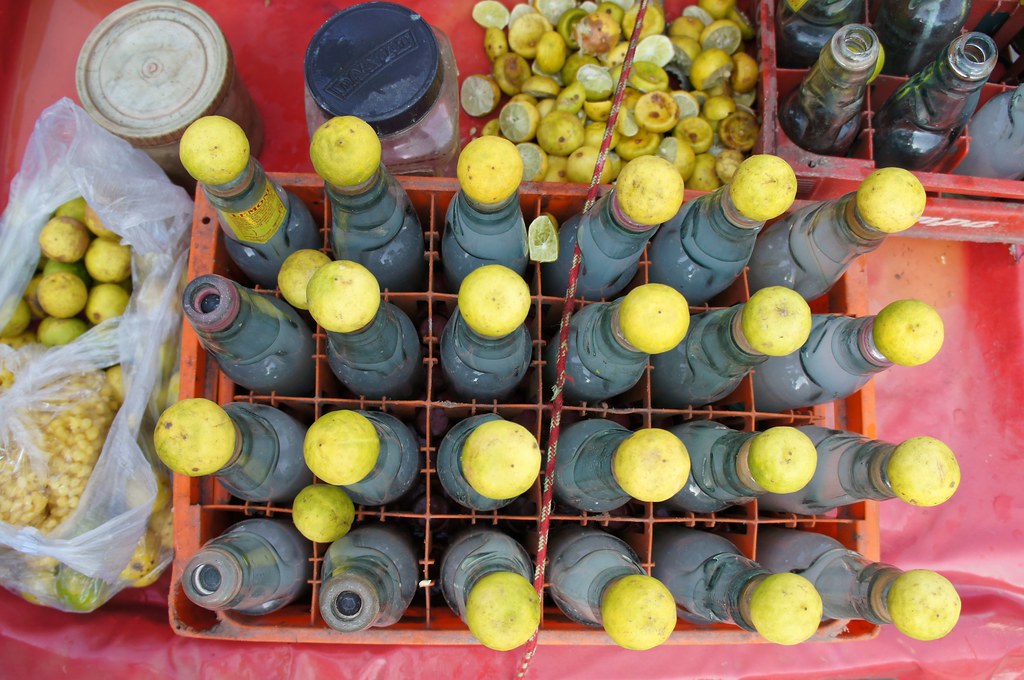
These small wooden wheeled vans are very common sight on summer days. Loaded with lemons and a hidden ice box within the van that keeps the water cool the lime juice is a perfect cooling drink to keep up the energy amidst a blazing sun. For a nominal amount this lime juice can be filled in your own bottle which can last for a while.
Fruit bowls
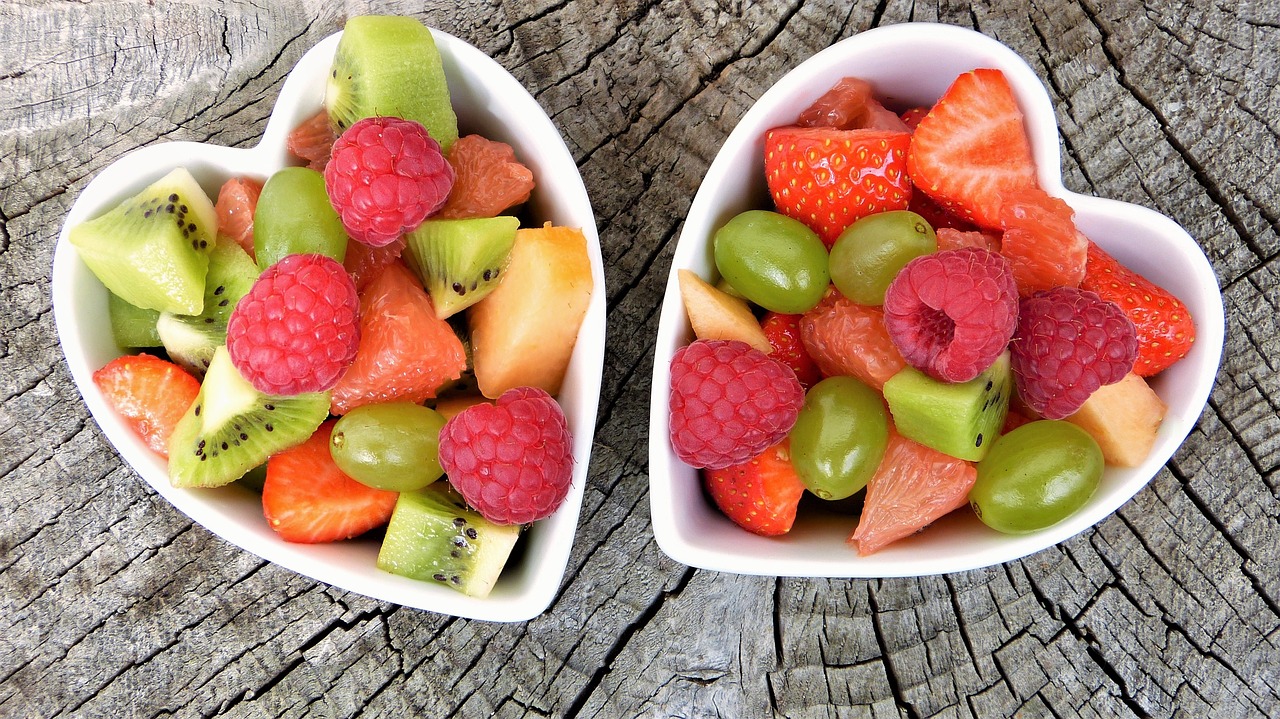
Stalls selling cut fruits, including watermelons, papaya and cucumbers are a great way to fill your stomach with healthy yet light foods that provide the right proportion of water and nutrients. Sprinkled with a pinch of salt they act against the dehydration. Not to mention, a bowl of fruit salad made at home is always a good snack.
Called chaas in the north and more in south, buttermilk is the ultimate drink to wade off the burning heat sensation in our bodies. A spoonful of curd mixed with water is the basic tenant of how buttermilk is made, though different homes and regions add on to make different variations. Ginger, curry leaves, salt, jeera, pepper, mustard seeds, chilli, lemon and coriander leaves, either of these can be added and mixed to give a new flavor to the existing butter milk.
Summer is the season of mangoes and aam panna made from unripen mangoes is the soothing antidote to hot venom spewing in summers. Made from the pulp of the kacha aam or keri (mango), this drink mixed with sugar, jeera and a pinch of salt is also known for keeping the heat strokes away.
Regional Sherbets
Bel Sherbet
Different regions are home to summer fighting fruits or various ingredients which can be prepared into sherbets or local drinks. Some examples include bel (wooden apple), kokum, phalsa (black currant), jamun, variyali (fennel seeds) and sattu. Either the pulp is extracted from the fruits or boiled or in case of seeds, they are soaked overnight to use as the base of the syrup.Most of these also have various health benefits. For example, bel has medicinal properties that deal with respiratory issues, vertigo and cholesterol. The fruits can also be eaten raw or used in salads. Besides, sattu or roasted gram powder is an energy drink that has been brought to our cities by migrants from Bihar and UP.
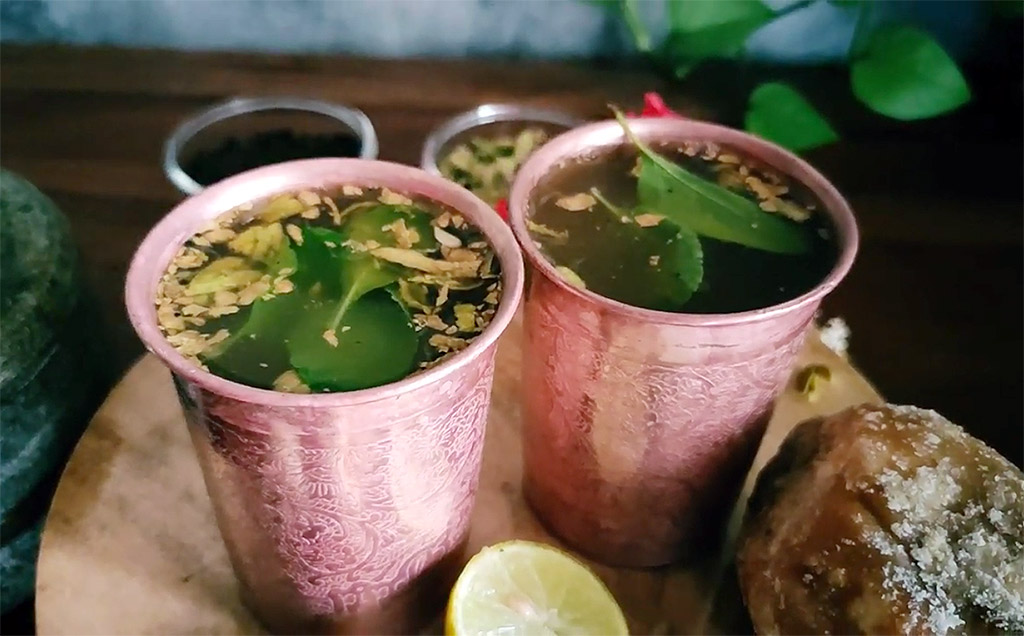
A south Indian specialty, this drink is made from jaggery mixed with water, ginger powder, salt and powdered cardamoms. A different version of it, is also used in many Gujarati homes and is called gol pani or water of jaggery. Here the jaggery is mixed with water and a bit of lime juice. This drink provides instant cooling and refreshment.
Takeaways
Of course, there are many more local foods and drinks that our grandmothers would know about best. Maybe, it is time to take a few tips from them and follow some age old simple recipes to beat the heat. At the same time, we are also blessed to have the ice creams, baraf golas, kulfis and milkshakes to cool us off.
Regarding traditions, few tools hold as much cultural significance and versatility as the Cast Iron Kadai. This unassuming kitchen essential has been a staple in cooking practices for generations, transcending boundaries to cater to the palates of the Indian populace. As we delve into home and kitchen appliances, the cast iron kadai emerges as a performer adept at handling cooking techniques and consistently producing outstanding culinary outcomes.
The Enduring Charm of Cast Iron
Before we discuss the flexibility of the iron kadai, it’s crucial to acknowledge the attributes that have endeared it to chefs and home cooks alike. Iron’s heat distribution and retention properties make it ideal for tasks such as searing, sautéing, and slow cooking, ensuring that your dishes are cooked to perfection each time.
Moreover, cast iron is renowned for its robustness and longevity, with many kadais becoming family heirlooms passed down through generations. Additionally, the developed nonstick surface resulting from seasoning allows for food release and hassle-free cleanup. The Culinary Versatility of Kadai
While commonly associated with curries and stir-fries, the applications of cast iron kadai extend beyond these loved dishes.
Let’s take a look at how this cooking utensil can improve your culinary skills:
1. Searing and Sauteing:
The kadais’ ability to reach and maintain temperatures makes it perfect for searing meats, fish, and vegetables. The intense heat creates a layer that locks in juices and flavours, while its shallow structure allows for easy tossing and stirring when sautéing.
2. Shallow and Deep Frying:
Whether you’re preparing crispy pakoras or golden samosas, the cast iron kadai excels in both frying techniques. Its curved edges and ample cooking surface provide space for frying ingredients due to its consistent heat distribution.
3. Curries and Stews:
A tool in any kitchen, the reliable kadai is crucial for slow-cooking curries and hearty stews. With iron and heat retention properties, simmering dishes over time allows flavours to meld beautifully, resulting in meals that embody culinary traditions.
4. Bread Making Advice:
While not considered, using a cast iron kadai can revolutionize bread baking. Its precise temperature control and uniform heat distribution make it an excellent choice for baking flatbreads like naan, paratha and kulcha – achieving a crispy exterior with a fluffy Roasting and Baking:
Despite its design, the cast iron pan can also be used for roasting vegetables and meats or baking small batches of cookies or bread. Its heat retention capability ensures cooking, while its versatile structure allows for browning and caramelization.
Selecting the Best Cast Iron Pan:
With numerous options available in the market, choosing the cast iron pan can seem daunting. Here are some essential factors to consider when making your decision:
1. Size and Depth:
Cast iron pans come in sizes and depths to meet cooking needs. Consider your cooking requirements and the number of people you usually cook for when selecting the size that suits you best. Deeper pans are ideal for curries and stews, while shallower ones are perfect for sautéing and frying.
2. Handling Ease:
Due to its nature, handling an iron pan can be challenging, especially when it is filled with food. Look for pans with handles that make it easier to manoeuvre. Consider opting for one with a base as it simplifies transferring from stovetop to oven or table.
Pre-Seasoning and Maintenance:
Specific cast iron pans come pre-seasoned, saving time and effort when seasoning them.
Taking care of your kadai is crucial to ensure it lasts long. Works well. Following the manufacturer’s instructions for cleaning, drying, and re-seasoning is key to maintaining the shape of your kadai.
When buying appliances online, especially an iron kadai, it’s helpful to explore brands and read customer reviews. Look for brands known for using high-quality materials and craftsmanship while prioritizing customer satisfaction. Positive feedback can give insights into a kadai’s performance, durability, and user-friendliness.
Caring for your cast iron kadai is vital in preserving its quality and functionality. Here are some tips to guide you:
Seasoning:
Regularly seasoning your cooking pan by applying oil and baking it in the oven helps create a nonstick surface and prevents rust.
Cleaning:
Avoid using detergents or abrasive scrubbers, as they can strip away the seasoning. Instead, gently clean, with a brush or salt and water, ensuring thorough drying after each use.
Storage:
Store your cooking pan properly by adding a layer of oil or butter to prevent rust if it is not used for some time.
Heating and Cooling:
Avoid exposing your cooking pan to temperature changes, as this may cause it to warp or crack. Let it cool gradually before you clean or store it.
Taking the time to care for your iron cooking pan can help you preserve its reliability and versatility in your kitchen for the haul.
Blending Tradition with Innovation
In today’s evolving world of kitchen essentials, the iron cooking pan stands as a symbol of enduring tradition and the adaptability of tools. While its history stretches back centuries, its versatility and functionality have endured, making it an essential tool in kitchens.
Whether you’re a home cook or a culinary enthusiast, buying a high-quality cast iron kadai online can elevate your cooking experience. Not only does it allow you to enjoy the flavours of Indian cuisine, but it also opens up new avenues for experimenting with diverse recipes and culinary techniques from around the globe.
So why not embrace the versatility and allure of a cast iron kadai to enrich your explorations? With care and a dash of creativity, this timeless kitchen essential is bound to become an asset on your culinary journey, enabling you to create delicious and memorable dishes for years to come.
Across the world, New Year is celebrated on 1st January. The first day of the New Year is welcomed with a lot of festivities and extravaganza with cities and countries all over the world beginning the momentous countdown from New Year’s Eve or 31st December.
And though India too participates in the New Year celebrations, it’s interesting to note that Indian’s celebrate not one but many New Years’. Because of the large mix of religions and regions that comprise and contend together, each has its own cultural specialties that thrive despite and in spite of the entire large conundrum in which they all co-exist. And hence, like many other differences that do at some points seem to interweave together, the traditional, religious and regional contrasts though all relate to similar ideas and ideologies, add more variety and charm to the Indian cultural landscape.
Indian New Year
Many communities follow their own calendars. There are both lunar and solar calendars that are followed by the different regional or religious groups and so for each of them the New Year falls on separate days. This is truly interesting, because there is the Georgian calendar that is followed for all practical and administrative purposes across India and the festivals and celebrations on it are also acknowledged and celebrated. But, traditionally the regional or religious calendars are also equally important and festivals or celebrations that are very ethnic and traditional in nature are celebrated on the respective days according to those calendar dates.
Here is taking a look at the different Indian New Year festivals that are celebrated across the different regions and communities of India.
Gudi Padwa is celebrated as New Year in Maharashtra, Goa and the Konkan region. This is a springtime festival and falls on the first day of the month of Chaitra. A ‘gudi’ which resembles a flag with decorated with flowers and topped with an inverted vessel is kept outside homes. Houses are cleaned and new clothes are worn on this day. Maharashtrians also prepare savories, such as puran poli and shrikhand.
The harvest festival celebrated in north India is fraught with colors and a lot of fun. Usually falling sometime on 13 or 14 April and marks the first day of the month of Vaisakha. It is also a religious and historical festival for Sikhs because it marks the beginning of the Khalsa.
Ugadi in Karnataka & Andhra Pradesh
Image – Archives.deccanchronicle.com
Ugadi is the New Year for Hindus of Karnataka, Andhra Pradesh and Telangana. It is the first day of the month of Chaitra. The kolamulus are beautiful floor decorations along with mango leaf decors along the doors and windows. A lot of donations are also made to temples and religious institutes on this day. Some of the special dishes prepared are pacchadi, pulihora and bobbatlu.
Bohag Bihu in North East
Image Source
The most important festival of Assam and the northeast region is its New Year that also coincides with its harvesting season. It is celebrated seven days after Vishuva Sankranti in the month of Vaisakh or also called the month of Bohag locally.
The New Year for Bengalis is also called the Bangla Nabobarsho. According to the Bengali calendar it is celebrated on the first day of the first month of Baishakh. In fact, it is the same day Baishaki is celebrated in north India, Puthandu in Tamil Nadu and Vishu in Kerala. It is also a declared holiday in Bangladesh.
In Tamil Nadu the New Year is also known as Puthuvarusham. The day is spent with family and special prayers or pujas are also conducted. People wear new clothes and youngsters seek the blessings of the older generation. It is celebrated on the first day of the Tamil month Chittirai. On the New Year ’s Eve a tray is prepared with various assortments, such as fruits, betel leaves, jewelry, coins, flowers and a mirror. It is considered auspicious to see the tray on the first day of the New Year.
Celebrated in Kerala, Vishu has many similarities with Puthandu. It is also celebrated on 14th April, however, its most marked distinction is the simplicity with which it is celebrated. People usually visit temples in the early morning of the New Year.
The New Year celebrations of Gujarat fall a day after Diwali. It is also called Varsha-pratipada or padwa. Traditional costumes are worn and homes are decorated and lighted.
Losoong
Image – Youtube
Losoogn is the Sikkim New Year and is celebrated in the month of December. Based on the Tibetan lunar calendar it is the traditional festival of the Bhutia tribe but is also celebrated by the Lepchas and is called Namsoong. The celebrations include burning of the demon, as well as organizing competitions. Prayers are offered in monasteries.
Besides, other religious New Year festivals, include the Islamic Hijri New Year, Navreh which is a Kashmiri Hindu festival and Cheti Chand by Sindhi’s.
Though many New Years’ fall around the same time they are celebrated differently and each has its own cultural connotations.
Here is wishing everyone a very Happy 2020 and hoping that the next year will bring equally happy and prosperous New Years’ that will fall all along the year!
ಯುಗ ಯುಗಾದಿ ಕಳೆದರೂ
ಯುಗಾದಿ ಮರಳಿ ಬರುತಿದೆ
ಹೊಸ ವರುಷಕೆ ಹೊಸ ಹರುಷವ
ಹೊಸತು ಹೊಸತು ತರುತಿದೆ
A well known Kannada song presents the significance of Ugadi festival. Ugadi is the first day of the month of Chaitra (March–April) as per the Saka calendar or ‘Hindu New Year’. This festival is celebrated in Indian states below the Vindhya Mountains as Yugadhi in Karnataka, Ugadi in Andhra Pradesh, Gudi Padwa in Maharashtra and Goa.
While there are a lot of rituals connected to Ugadi just like any other Hindu festival, the most noteworthy tradition associated to Ugadi is the symbolic eating of the Bevu Bella dish with six tastes that signify the fact that life is a mixture of different experiences – sadness, happiness, anger, fear, disgust, surprise. The special mixture consists of:
Neem for its bitterness, signifying Sadness
Jaggery for sweetness, signifying Happiness
Green Chilli/Pepper for its hot taste, signifying Anger
Salt for saltiness, signifying Fear
Tamarind Juice for its sourness, signifying Disgust
Unripened Mango for its tang, signifying Surprise
The Bevu-Bella dish embodies the Indian way of looking at life that it is our Karma to face both sadness and happiness with a stoic mindset. However, we can observe that today’s society is full of people who don’t want to face the harsh reality of life and escape into a dreamy world. Indian society’s obsession with Bollywood is a classic example of our escapism from our reality. We don’t want to face it and find a solution to our problems.
The harsh reality that is facing our world today is the massive pollution of our environment and our minds. Garbage is strewn all over the place, water bodies are polluted beyond restoration, air is choked with smog and global warming is heating up the world. Did you notice that 2014 was the hottest ever year since the ice ages? Did you notice that it was raining in peak winter this time across India? How hot the summer is going to be this year? Are we prepared to face the heat? Have we stored up enough water to last the next three months?
You might say, I alone cannot do much to save water or the environment. Yes, while we individuals can’t do much, we can do something together to change the situation. We can appeal together to our urban bodies, municipalities to take measures to save water. Water scarcity is fast becoming urban India’s number one woe, with government’s own data revealing that residents in 22 out of 32 major cities have to deal with daily shortages.
As you can see in the figure below, almost every major city in India faces a shortage of water supply.
Instead of looking at ways to conserve water, we have conveniently solved our water crisis by digging more borewells and extracting groundwater. This convenient method has been immensely suitable for us since we don’t any government permission to dig as many bore wells we want! However, we didn’t realise one thing – groundwater is like a fixed deposit of water stored over centuries and if we misuse it beyond drinking purposes, the water source is going dry up. That has already happened across many cities in India!
Hey, why did we diverge into this miserable water scarcity issue, while talking about Ugadi? That’s because this time, Ugadi is coinciding with “World Water Day”! A belief associated to Ugadi is the custom to throw out stored water, clean all the pots and tanks and fill them with new water. Known as “ಹೊಸ ನೀರು” or “new water”, this custom is a remnant of the days when there was no chemical treatment or filtering of water, and germs could build up in the sediment at the bottom or the algae layer at the edges. So this Ugadi, let’s make an effort to find ways to conserve water.
Here are some ways to prevent water wastage –
Collect the soapy water after washing clothes and use it for cleaning cars and bikes
Implement rain water harvesting system in our house
Do not brush your teeth or shave with a running tap
Use the half flush after urination
Repair any leaking pipe or a dripping water tap regularly
Install automatic motor switch for our overhead tank
There is a joyful assortment of human hair wigs to select from! Everybody can find the ideal wig thanks to the wide variety of alternatives available, so you can always feel amazing and self-assured! We’re going to delve deeper and learn more about the realm of human hair wigs today.
How Many Types Are There on Human Hair Wigs?
Lace Frontal Wigs
Lace front wigs make it easy to achieve picture-perfect hairlines! They provide you with a perfect, imperceptible finish with their tiny lace at the front hairline. Knowing that your wig looks remarkably natural gives you the courage to style your hair away from your face.
360 Lace Wigs
Want to look amazing in an elegant updo or a high ponytail? 360 lace wigs are the best option! With the lace covering the full perimeter of these wigs, you may arrange your hair as you’d like and yet seem entirely natural.
Glueless Lace Wigs
Adieu to sloppy adhesives—glueless lace wigs are here! These cleverly constructed wigs can be worn without the need for glue. Instead, they fasten them in place with combs and adjustable straps, guaranteeing a snug and comfortable fit throughout the day.
V Part Wigs
V part wigs are an excellent alternative to U part wigs for people who like a sleek, contemporary style. They have a V-shaped section at the top that separates the hair in a way that seems natural. The wig seems even more genuine thanks to this design, which creates the appearance of a real scalp. V-part wigs are flexible enough to accommodate both leave-out and no-out hairstyles.
Full Lace Wigs
For your hair, these wigs work like magic! Because they are made completely of lace, they have an incredibly natural appearance and can be styled in a variety of ways. These wigs may be parted anywhere on your head, much like your own hair, and the lace looks incredibly natural against your skin, giving the illusion of real hair.
What Are the Advantages of Human Hair Wigs?
Natural Appearance
Since human hair wigs are created from actual human hair, they have an exceptionally natural appearance and feel. Your appearance is authentic since the hair flows and moves like your own.
Flexibility in Design
Wigs made of human hair are flexibly styleable. Heat styling appliances, such straighteners and curling irons, can be used to achieve a variety of looks. Human hair wigs can also be colored or dyed to match your preferred shade.
Long Lasting
Human hair wigs can endure a long period if properly cared for. Its longevity and lack of shedding make it an excellent investment.
Comfort to Wear
Wearing human hair wigs for extended periods of time is comfortable because to its lightweight and breathable nature. To further enhance their comfort and realism, they also resemble a real scalp.
Hairline Natural
With the advancement and modernization of wig goods, a lot of wigs now come with a pre-cut hairline, making the wig wearing process easier. Visit unice.com if you’re interested in purchasing pre-cut, pre-plucked wigs of this type.
Variety of Texture
Straight, wavy, and curly human hair wigs are among the many textures available, so you can select the texture that most closely matches your own choice and style.
Care Tips for Human Hair Wigs
Gently rub human hair wigs with a gentle wash and warm water, being careful not to squeeze or cause friction. Rinse well with warm water.
Apply conditioner made specifically for humna hair wigs evenly, avoiding the roots. Let the conditioner sit for a few minutes, and then give it a good rinse with warm water.
To eliminate extra moisture from human hair wigs, pat them dry with a towel or set them on a wig stand to air dry naturally. A hair dryer that is overheated will harm hair, so stay away from using one.
Store it on a wig stand or mannequin when not in use; keep it out of direct sunlight and away from heat sources.
Use a wig brush or wide-tooth comb to comb through hair, beginning at the ends and moving toward the roots.
To prevent overexposure to heat, apply a heat-protective product before utilizing heat styling products.
Human Hair Wigs vs. Synthetic Wigs
Both synthetic and human hair wigs have special qualities and benefits of their own. The following are the main variations between the two:
Material: The wig’s construction material is the most noticeable distinction. Synthetic wigs are comprised of synthetic fibers, whereas human hair wigs are manufactured from actual human hair. Even with recent improvements, synthetic wigs can still seem less natural and offer fewer style possibilities than human hair wigs.
Durability: Human hair wigs can be groomed using heated equipment and are difficult to tangle or fall off. Due to material issues, synthetic wigs have a limited lifespan, require frequent replacement, and have other drawbacks.
Cost: Given the expense of the materials and the labor-intensive nature of the workmanship involved, human hair wigs are usually more expensive than synthetic wigs. For individuals on a budget, synthetic wigs are a perfect option because they are more reasonably priced.
All things considered, each type of wig has particular advantages of its own, so before choosing one, think about your lifestyle and the way you want to wear and style the wig.
This article will show you that there are plenty of options available for human hair wigs, and it’s not hard to select the ideal wig to fit your preferences and needs. You may confidently choose, use, and care for your human hair wig by using our advice, which will guarantee that it feels and looks amazing for any occasion.