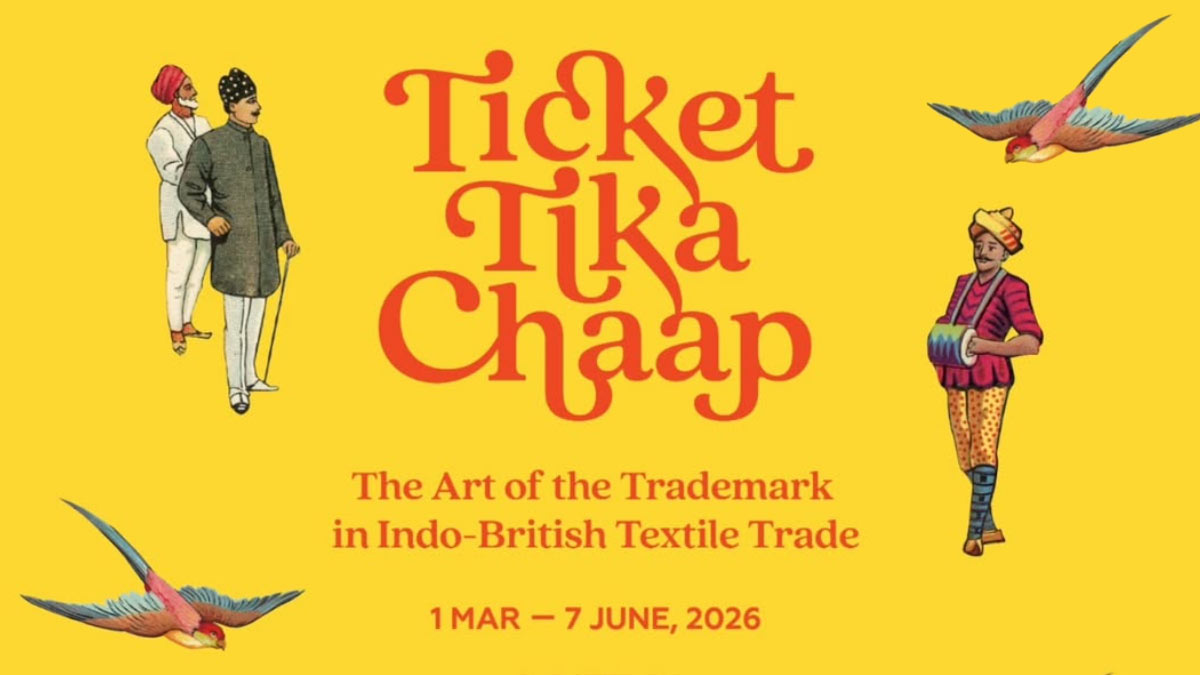
Exploring Colonial-Era Textile Branding
The Dr. Bhau Daji Lad Museum, Mumbai, in collaboration with the Museum of Art & Photography (MAP), Bengaluru, is presenting the exhibition “Ticket Tika Chaap: The Art of the Trademark in Indo-British Textile Trade.” The exhibition runs from 1 March to 7 June 2026 at the museum’s Special Project Space. Curated by Nathaniel Gaskell and Shrey Maurya, the show brings together a collection of historic textile tickets that reveal how imagery was used to promote cloth in colonial-era markets.
Visitors can learn more about the organisers and the exhibition through the official pages of the Museum of Art & Photography and the Dr. Bhau Daji Lad Museum.
Event in a Glance
| Aspects | Details |
|---|---|
| Event Name | Ticket Tika Chaap: The Art of the Trademark in Indo-British Textile Trade |
| Dates | 1 March – 7 June 2026 |
| Venue | Special Project Space, Dr. Bhau Daji Lad Museum, Mumbai |
| Organisers | Dr. Bhau Daji Lad Museum in collaboration with the Museum of Art & Photography (MAP), Bengaluru |
| Curators | Nathaniel Gaskell and Shrey Maurya |
| Exhibition Focus | Historic textile tickets and branding imagery used in Indo-British textile trade |
| Key Themes | Early branding, chromolithography, colonial trade, visual culture of textile markets |
| Location | Byculla East, Mumbai, Maharashtra, India |
A Visual Language of the Bazaar
The exhibition focuses on brightly coloured paper labels that were attached to bolts of cloth sold in bustling Indian bazaars during the 19th and early 20th centuries. Known by several names, textile tickets, shippers’ tickets, tika, tikat, chaap, or mark, these labels were printed using chromolithography and featured elaborate images designed to attract buyers.
These labels accompanied cloth imported from British mills as well as Indian factories, becoming an early form of branding and visual marketing in the textile trade.
Highlights of the Exhibition
The exhibition presents these labels not just as commercial tags but as objects that reflect historical trade and culture. Key aspects explored in the show include:
- The role of textile tickets as trademarks and early advertising tools in colonial markets.
- How colourful images of deities, rulers, animals, ships, and mythological scenes were used to appeal to local buyers.
- The influence of Manchester’s printing industry, which produced many of these labels for global textile trade.
- The connection between art, commerce, and colonial economic systems during the period.
Research shows that thousands of these labels circulated across markets, helping merchants build brand recognition and trust in a multilingual environment where imagery communicated more effectively than text.
View this post on Instagram
When Labels Became Art Objects
Many of these tickets were small, postcard-sized prints that carried vivid imagery and decorative borders. Over time they were valued not only as advertising material but also as visual artefacts reflecting changing social and political contexts. Some were even collected and used as decorative or devotional images in homes.
The exhibition draws attention to how these labels helped shape the visual culture of consumer goods and influenced the development of branding in the textile industry.
What Visitors Can Expect
Visitors to the exhibition will encounter:
- Historic labels printed in rich colours through chromolithography
- Images inspired by mythology, royal portraits, and modern technology of the time
- Archival material showing the global reach of Indo-British textile trade
- Insights into how visual imagery shaped consumer perception and brand identity
Through these objects, the exhibition reveals how trade, art, and communication intersected during a period of intense economic and cultural exchange.
Takeaway
“Ticket Tika Chaap: The Art of the Trademark in Indo-British Textile Trade” offers a detailed look at how simple paper labels became powerful tools of marketing and storytelling. By examining these colourful tickets, the exhibition highlights the complex relationship between colonial trade networks, visual culture, and the rise of modern branding. For visitors, the show provides a rare opportunity to see how design and commerce interacted in India’s textile markets more than a century ago.