Sacred Idol Returned After Decades Abroad
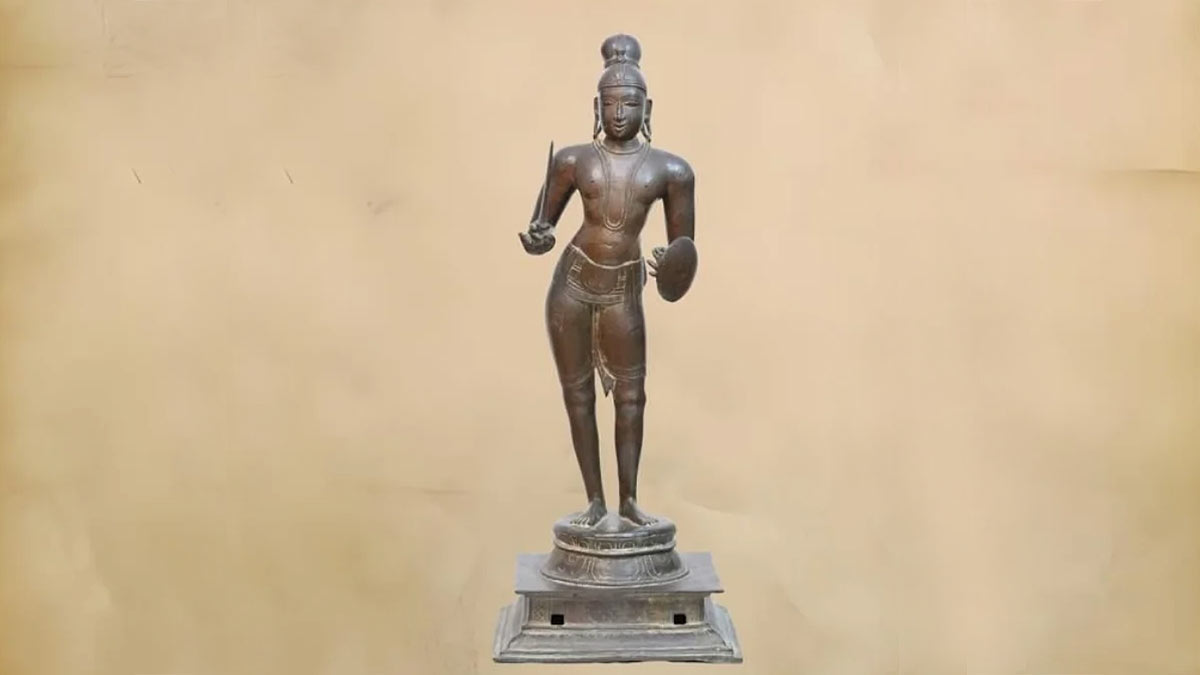
A 16th-century bronze idol of Saint Thirumangai Alvar has been returned from the United Kingdom to India and will be reinstated at the Soundararaja Perumal Temple in Tamil Nadu. The idol, which had been held at the Ashmolean Museum of the University of Oxford, was formally handed over to Indian authorities at the High Commission of India in London. The repatriation marks another milestone in India’s ongoing efforts to bring back sacred artefacts removed from temples in earlier decades.
Ceremony Held at India House in London
The handover ceremony took place on March 3, 2026, at India House in London. Representatives from the Government of India and the museum participated in the event. The Ashmolean Museum acknowledged that provenance research confirmed the bronze idol originally belonged to the Soundararaja Perumal Temple in Thadikombu, Tamil Nadu. The museum cooperated with Indian authorities in returning the sacred icon after verifying its historical origins.
Identification of the Idol Through Archival Research
The identification process began several years ago when researchers matched the idol with archival photographs taken at the temple in 1957. These photographs were preserved in the archives of the Institut Français de Pondichéry. Scholars and cultural heritage groups worked with the Tamil Nadu Idol Wing CID and the Government of India to establish the idol’s provenance and rightful ownership. The process involved detailed documentation and coordination between museums, investigators, and cultural organisations.
Developments in the Repatriation Process
The return of the idol involved several key steps and institutional collaborations:
- Provenance research by the Ashmolean Museum linking the idol to the Tamil Nadu temple.
- Documentation and verification by Indian authorities and heritage experts.
- Cooperation between the museum, the High Commission of India in London, and Indian investigative agencies.
- Formal handover of the artefact at India House on March 3, 2026.
The idol had originally been acquired by the museum in 1967 through a Sotheby’s auction before its temple origins were clearly known.
Significance of Saint Thirumangai Alvar
Saint Thirumangai Alvar is one of the twelve Alvar saints revered in the Vaishnavite tradition of South India. His devotional hymns form part of the Nalayira Divya Prabandham, a collection of 4,000 Tamil verses praising Lord Vishnu. The Alvars played a significant role in shaping the Bhakti movement and spreading devotional worship across South India.
Return of Additional Antiquities
Along with the bronze idol of Saint Thirumangai Alvar, four other antiquities were also handed over to Indian authorities during the ceremony. The return of these artefacts reflects a growing international commitment to restoring cultural objects to their original religious and historical contexts.
The repatriation also highlights the role of cultural heritage advocacy groups and government agencies working together to trace and recover stolen temple idols.
Global Efforts to Restore Cultural Artefacts
The repatriation of sacred idols and antiquities has gained momentum in recent years as museums and institutions worldwide reassess the provenance of artefacts in their collections. Increasing collaboration between governments, museums, and heritage organisations has helped identify objects that were removed from temples or archaeological sites in earlier decades.
Such initiatives are part of a broader movement to ensure ethical museum practices and preserve cultural heritage in its original environment.
Takeaway
The return of the 16th-century bronze idol of Saint Thirumangai Alvar represents an important step in restoring India’s cultural heritage. Once reinstated at the Soundararaja Perumal Temple, the sacred icon will resume its role as an object of worship and devotion. The event also reflects India’s continued efforts to reclaim historically significant artefacts and preserve the cultural traditions associated with them.