The Department of Human-Centred Design at IIIT-Delhi welcomed internationally acclaimed sculptor Naresh Kumar Kumawat as the keynote speaker for the second edition of its Design Science Café on July 28, 2026. Conceived as an informal platform for conversations around creativity, design, and innovation, the café brings together designers, researchers, students, and practitioners to exchange ideas through personal experiences rather than conventional lectures.
During the session, Kumawat reflected on his professional journey, the evolution of his artistic practice, and the role of technology in shaping contemporary public sculpture.
A Journey Rooted in Art and Innovation
Kumawat shared how his career developed from traditional sculptural practices into creating monumental public artworks recognised internationally. According to the artist, technological advances such as 3D scanning, digital modelling, artificial intelligence, and 3D printing have transformed the execution of large-scale sculptures. However, he emphasised that these tools complement rather than replace artistic imagination.
Speaking to students, he said that while technology enables artists to realise ambitious ideas, creativity continues to originate from human vision and artistic conviction.
Beyond the press release, published profiles describe Kumawat as a third-generation sculptor who has led large-scale public art projects through Matu Ram Art Centres while combining traditional craftsmanship with advanced engineering methods.
Monumental Projects Discussed
The session also provided insights into several of Kumawat’s landmark projects, highlighting the engineering and creative considerations involved in monumental sculpture.
Projects discussed included:
- Statue of Belief (369 feet)
- Samudra Manthan mural inside the new Parliament building
- Large-scale international public installations
- Engineering challenges in structural stability and perspective
- Integration of traditional craftsmanship with digital technology
Kumawat explained how issues such as scale, material selection, structural integrity, and visual perspective influence every stage of designing monumental artworks.
Encouraging Design Students to Think Beyond Boundaries
Addressing students from design and technology disciplines, Kumawat encouraged participants to approach creativity with curiosity and confidence. He stressed that collaboration between artists, designers, engineers, and technologists is becoming increasingly important for contemporary public art.
Dr. Anmol Srivastava, Chair of the Department of Human-Centred Design at IIIT-Delhi, described Kumawat’s journey as an example of how vision, perseverance, innovation, and technology can work together to create meaningful outcomes.
The interactive format of the Design Science Café enabled students to engage directly with the sculptor through discussions on artistic processes, project execution, and professional experiences.
Design Science Café as a Collaborative Platform
Unlike traditional academic lectures, the Design Science Café at IIIT-Delhi is designed to encourage dialogue and informal knowledge exchange between practitioners and students. The initiative reflects the institute’s broader emphasis on interdisciplinary learning, where design, engineering, and research intersect through real-world experiences.
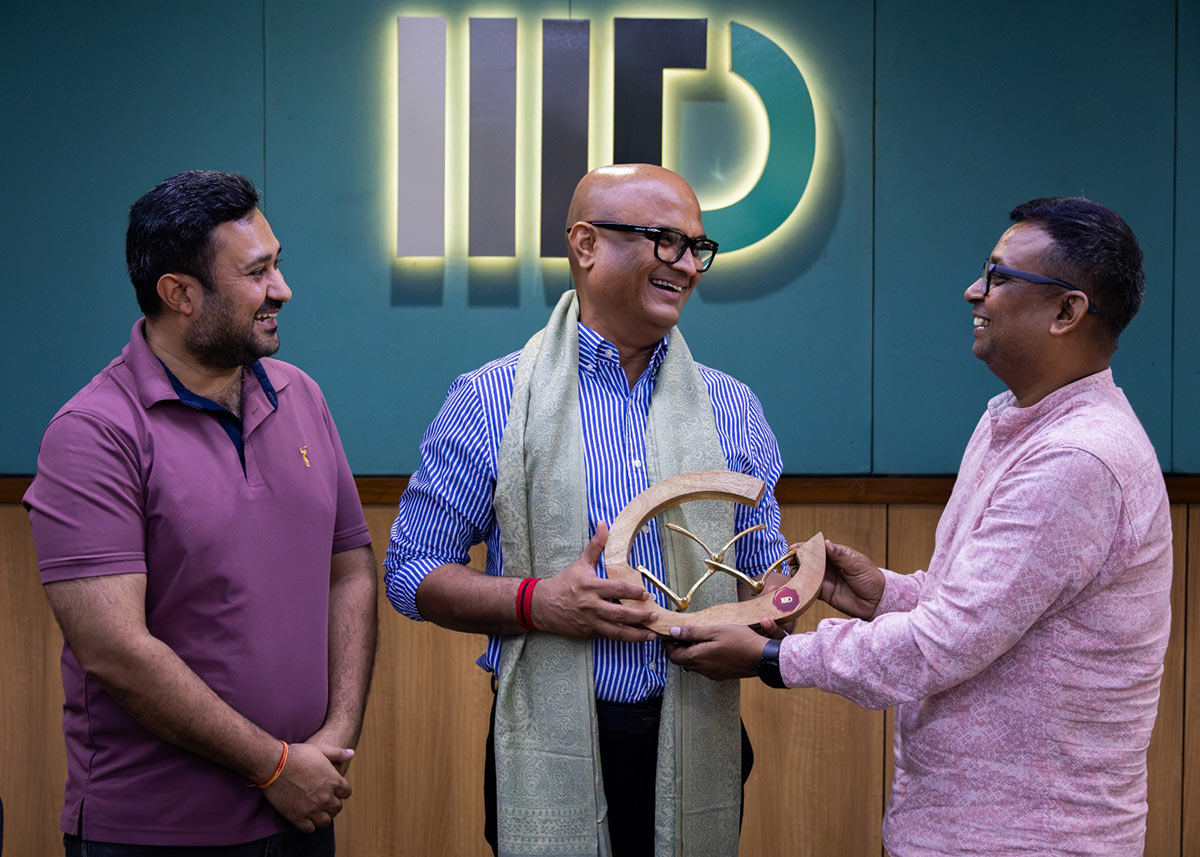
The session concluded with a felicitation ceremony in which Dr. Anoop Ratn, representing the Department of Human-Centred Design and IIIT-Delhi, honoured Kumawat for his contributions to sculpture and for promoting collaboration between creativity, technology, and innovation.
Event Highlights
- Internationally acclaimed sculptor Naresh Kumar Kumawat addressed IIIT-Delhi students.
- Session held under the second edition of the Design Science Café.
- Focus on creativity, engineering, AI, and digital technologies in sculpture.
- Discussion on major public artworks including the Statue of Belief and Samudra Manthan mural.
- Interactive dialogue with students from the Human-Centred Design department.
- Felicitation by IIIT-Delhi following the session.
Conclusion
The Design Science Café session demonstrated how artistic practice increasingly intersects with engineering and emerging technologies. By sharing practical experiences from large-scale public art projects, Naresh Kumar Kumawat offered students insights into multidisciplinary collaboration while reinforcing the continuing importance of creativity in design education. The event also reflected IIIT-Delhi’s commitment to creating opportunities for interaction between academia and leading practitioners from the creative industries.