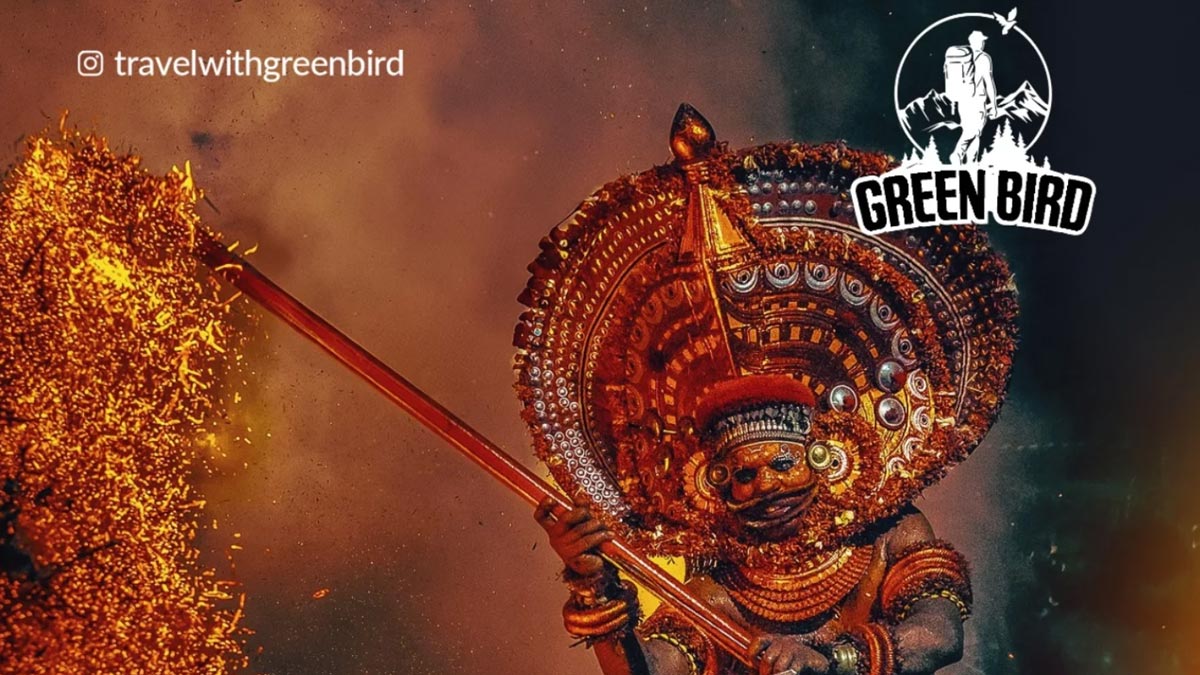
The Living Gods of Malabar
Theyyam is a vibrant ancient ritual art from Northern Kerala, India, where performers manifest deities through elaborate makeovers (Kolams), colourful costumes, music, and an euphoric and spectral dance. These dancers represent divine spirits, heroes, or nature gods. The Theyyam is a socio-religious ceremony that has bestrewed northern Malabar for centuries. This tradition believes that “Man becomes God.” This highly pious ritual bridges the physical with the metaphysical. The upcoming event of Theyyam is scheduled for late December 2025. It is a rare window for experiencing this unique ritual in God’s own country. This experience will also take people on a different trail of experience. The visitors will be picked up from Kannur Railway Station, and ensure a seamless experience for the travellers.
Human Dissolves and the Deity Emerges
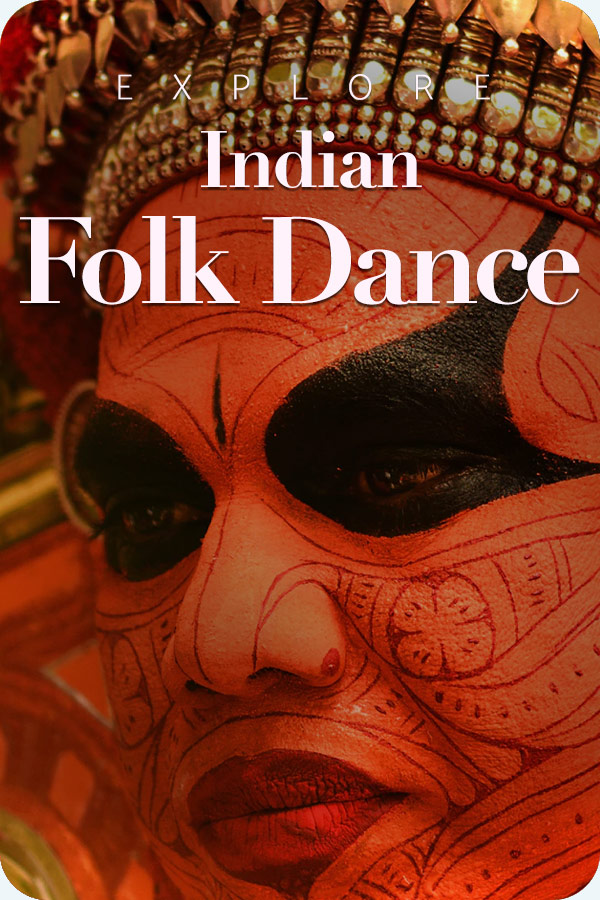
The soul of Theyyam is ingrained in its fierce, passionate, and consuming spiritual intensity. The sacred space where the performance begins is the Kavu. The performers traditionally hail from certain communities. The transformation of the dancer begins with the “Mukhathezhuthu” (face painting). The metamorphosis of the performer is completed after he puts on the “Thalappoli” (headgear) and the heavy & colourful costumes. With the rhythmic vibrations of the Chenda (drums), the performer reaches a state of trance, where the performer is no longer a human, but the deity itself.
A Deep Dive into the Culture of Theyyam
Traditionally, Theyyam is performed in the regions of Kannur, Kasaragod, and sometimes Wayanad. The word Theyyam is derived from “Daivam,” meaning “God.” This experience blurs the distance between humans and the divine. Each performance involves the recitation of mythological texts, elaborate costumes, face painting, fire torches, energetic drumming, and specified movements.
Lineages, Performers, and Living Histories
Research reveals the existence of over 400 different types of Theyyams. Almost all of these traditions are augmented by male performers, with Devakuthoo Theyyam being an exception. This is performed solely by females. These performers train religiously for years and inculcate the art of chants, dance, and rituals. Many Theyyam ceremonies take place in temple complexes, carrying forward the legacies of local worshipping systems. Anthropologists have observed that Theyyam reflects the histories of communities across caste and class lines, preserving stories of local heroes, matriarchal rulers, ancestral spirits, and socio-political resistance.
The Season of Fire and Transformation
December is the best time to experience the Theyyam rituals in full bloom in their most authentic geographic setting. In Kannur and Kasaragod districts, popular forms like Pottan Theyyam, Raktha Chamundi, and Muchilot Bhagavathi draw thousands of spectators. It is one of those few spaces where social distinctions dissolve, as the performer representing the deity hails from a marginalized community. The specific “colour & fire” theme of the “Agni Theyyam” or fire rituals is mesmerizing. For travellers visiting Kannur in December, will have the most visually heightened experience.
Tours like this one are organized by the “Green Bird,” which aims to help outsiders by providing logistical support, such as railway station transfers and expert guidance, to ensure that tourists also gain the most authentic experience.
Overview of The Event
| Aspect | Details |
|---|---|
| Event | Traditional Ritualistic Art Performance (Theyyam) |
| Primary Location | Kannur, North Malabar region of Kerala, India |
| Dates Mentioned | December 26 & 27, 2025 (Friday & Saturday) |
| Key Attraction | Live fire rituals, elaborate costumes, and divine trance states |
| Organizer | Green Bird (Travelwithgreenbird) |
| Starting Point | Kannur Railway Station (Pick-up and Drop facility) |
| Contact | +91 7306958837 |
Key Highlights
- Experience Theyyam in its original cultural location at Kannur.
- Witnessing the hours-long process of face painting and costuming that turns a common man into a divine entity.
- Exposure to divine ritual traditions rooted in centuries-old worship.
- The awe-inspiring sight of “Thee-Uzhichil”, where the performer interacts with fire, signifying divine protection and energy.
- Torch-lit and fire-driven performance elements.
- Opportunities for photography, observation, and guided cultural sessions.
- A rare chance to witness over 400 variations of Theyyam forms during the season.
- The unique opportunity to receive “Kuri” (blessed turmeric powder) and advice directly from the “deity” at the end of the ritual.
- Unlike commercial shows, these performances take place in traditional Kavus (sacred groves), preserving the ancient atmosphere of the land.
The Spirit Behind the Performance
The Theyyam artists prepare for their ritual performance with fasting, prayer, and costume dressing that may last several hours. The dancer is treated as a deity by the whole community and revered by everyone watching him reach a trance-like state. Kannur’s Theyyam has its roots in the local oral histories. In scholarly interpretations, Theyyam is a potent archive of Kerala’s socio-economic cultural shifts. These transition is not noted through texts, but through living bodies. To the spectators, this ritual performance is often emotionally overwhelming, bustling with spectacular forms.
It is indeed a cultural encounter worth exploring. Theyyam’s raw authenticity makes it a heaven for cultural explorers who are keen to trace India’s regional hidden gems. Visitors this December will observe legends woven through sound, flame, and movement, stories that have survived centuries and remain alive through memory, devotion, and artistry. For Indians and global travellers alike, the experience offers ‘perspective.’
Takeaway
Theyyam stands as a bastion of authentic, raw, and unyielding tradition. In an era dominated by techy and digitised media, Theyyam continues to remain fixated as a living form of human creativity that has stemmed from belief, not machinery. Its survival is proof that cultural heritage thrives when communities continue to claim ownership of history. Events such as the Kannur Theyyam celebration play a crucial role in strengthening India’s intangible cultural legacy and protecting knowledge systems that define the fabric of identity.
View this post on Instagram
Making Theyyam reach more people is a noble work, but people must make sure that this pious ritual should not be nudged into extensive commercialization. This is an intimate celebration of certain communities; it is their “reality.” One should not attempt to commodify this experience and “sell” it to tourists. When done correctly, as this event appears to promise, experiential tourism can provide the necessary financial support to sustain these artists and their families, ensuring that the fire of Theyyam continues to burn bright for generations to come. Ultimately, a trip to Kannur to witness Theyyam is not just a holiday; it is a humbling encounter with the divine that stays with the soul long after the drums have gone silent.