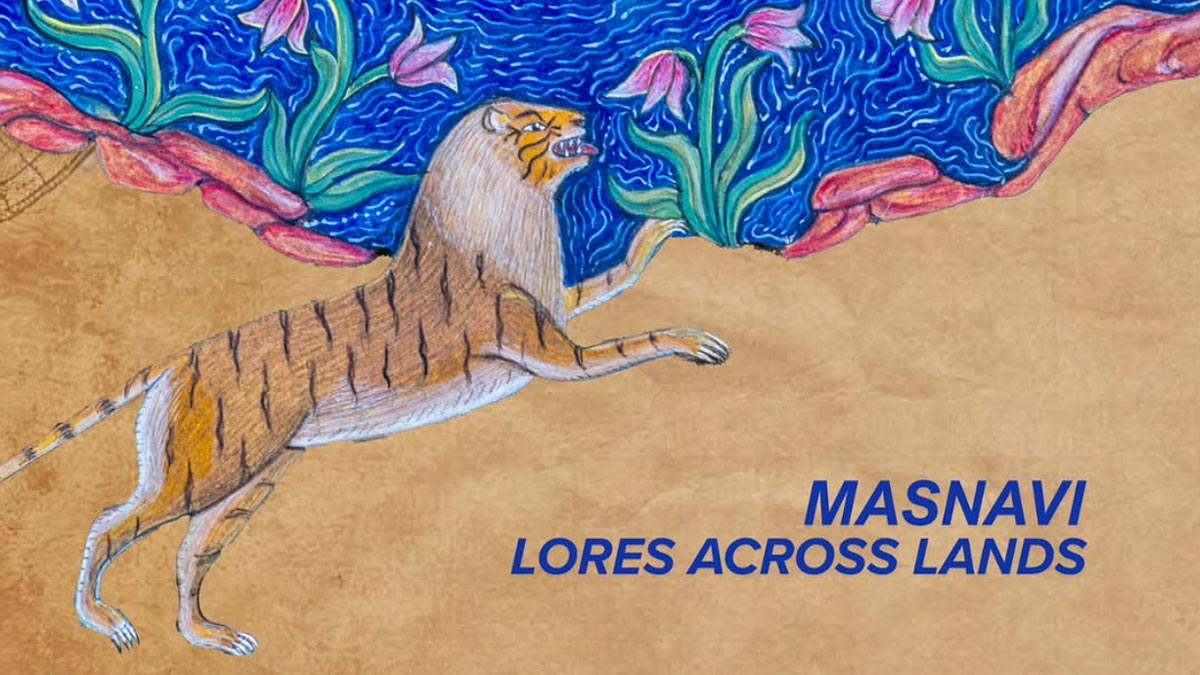
Ojas Art, New Delhi, has opened its doors to Masnavi: Lores across Lands. It is a very thought-provoking group art exhibition that will bring together 60 works by 17 international artists. This exhibition is curated by Khushboo Jain under the leadership of Anubhav Nath. These artworks delve into the timeless world of folklore, stories, and songs that endure through cultures and generations. This exhibition has been open for public viewing from November 23, 22025, and continues till January 11, 2026, at Ojas Art, 1AQ, Mehrauli. Masnavai presents an extensive overview of a plethora of visual narratives, poetic sensibilities, and shared memory.
The spirit of this exhibition is rooted in classical Persian poetry. Masnavi means a long classical Persian poem that is long, written in couplets that traditionally bear the stories of love, mysticism, and moral philosophy. The exhibition employs the musawwari miniature tradition as the medium to coalesce historical and narrative elements. The show builds on Ojas Art’s 2024 exhibition Mussawari, extending the inquiry into the evolving language of miniature and its contemporary relevance.
A Transcultural Artistic Exploration

Masnavi is an amalgamation of artistic sagas from across continents, histories, and varied imaginations. The artworks presented as exhibits travel through the core of emotions that are shaped by mythology, mysticism, and modern socio-political materialities. The theme encompasses different folklores, the Jatakas, the Panchatantra, verses of poets like Rumi and Bulleh Shah, etc. The orientation of the artworks is very fluid, as the narration of one artist blends with the next and continues the saga.
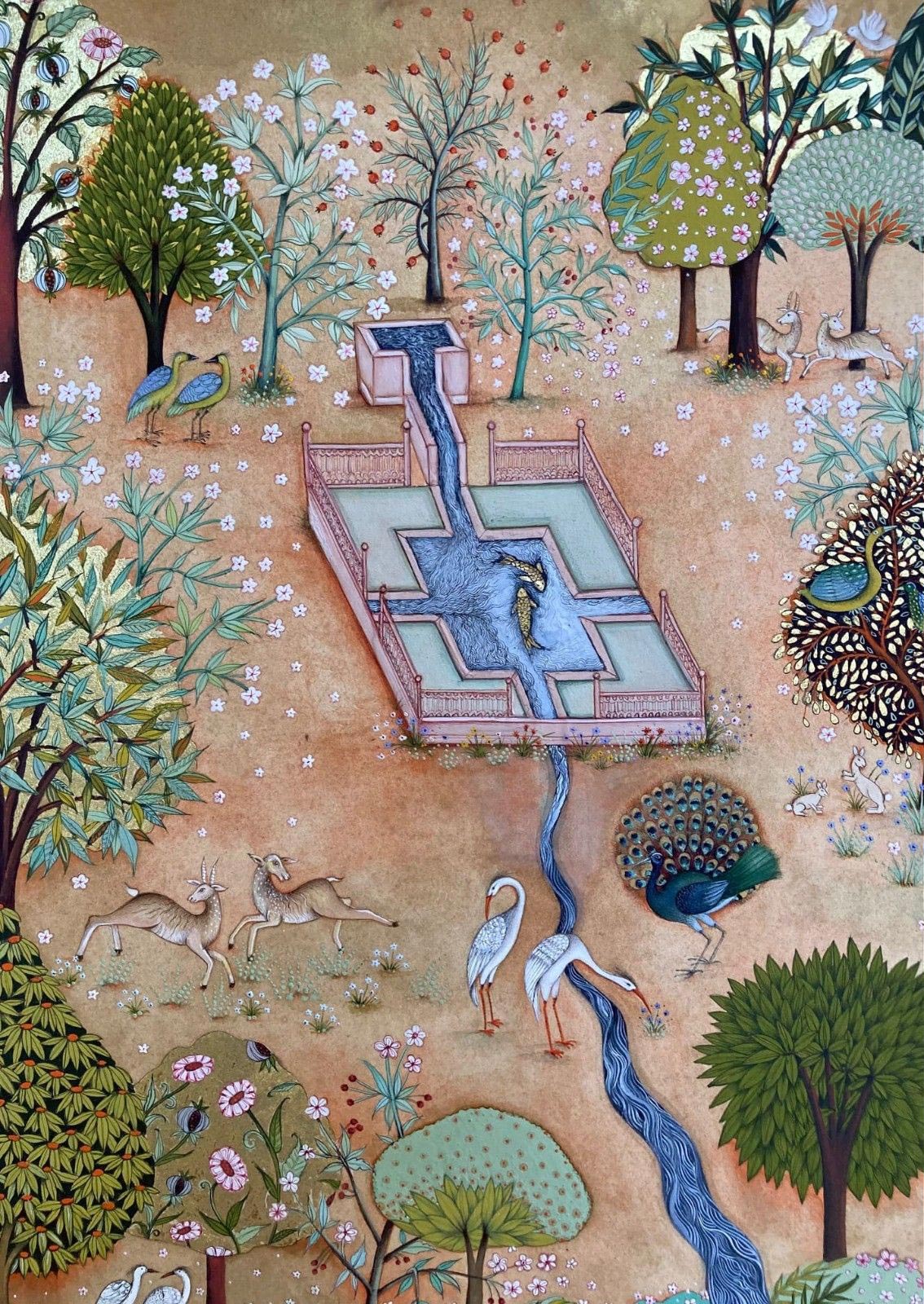
The artworks are verses of a visual poem that are kinetic and leave gentle imprints or a whisper that continues to dwell deep in the heart of the spectators. The artwork beautifully reveals the tales passed down through generations that form the very fabric of our contemporary identity. One of the primary concerns of this showcase is to make the audience more conscious about how today’s cultural and political experience will influence the folklore of the future. The illustrations highlight the fact that folklores are not the property of the past, but a living force that evolves with time.
The exhibition displays artwork from different geographies, such as India, Turkey, Canada, South Africa, Australia, and the UK. Artists such as Khadim Ali, Nusra Qureshi, Murat Palta, and Laila Tara bring distinct histories and perspectives through their artworks.
Essential Exhibition Details
| Aspect | Details |
|---|---|
| Exhibition Name | Masnavi: Lores across Lands |
| Venue | Ojas Art, 1AQ, Near Qutub Minar, Mehrauli, New Delhi |
| Curatorial Director | Anubhav Nath |
| Curator | Khushboo Jain |
| Exhibition Period | November 23, 2025 – January 11, 2026 |
| Timing | 11 a.m. to 7 p.m. (Closed on Mondays) |
| Artistic Medium | Contemporary Miniature (Musawwari) |
| Participating Artists | 17 artists from India, the UK, Turkey, Canada, Australia, and other regions |
Key Highlights
- Around 60 contemporary works by 17 international artists
- Artistic engagement with folklore as a living tradition
- Strong grounding in miniature painting traditions
- Exploration of socio-political themes shaping modern narratives
- Global artistic participation, including India, the UK, Canada, and more
- Accompanied by a comprehensive publication
- A continuation of Ojas Art’s commitment to contemporary miniature (post-2024 Mussawari exhibition)
Bridging the Past and the Future
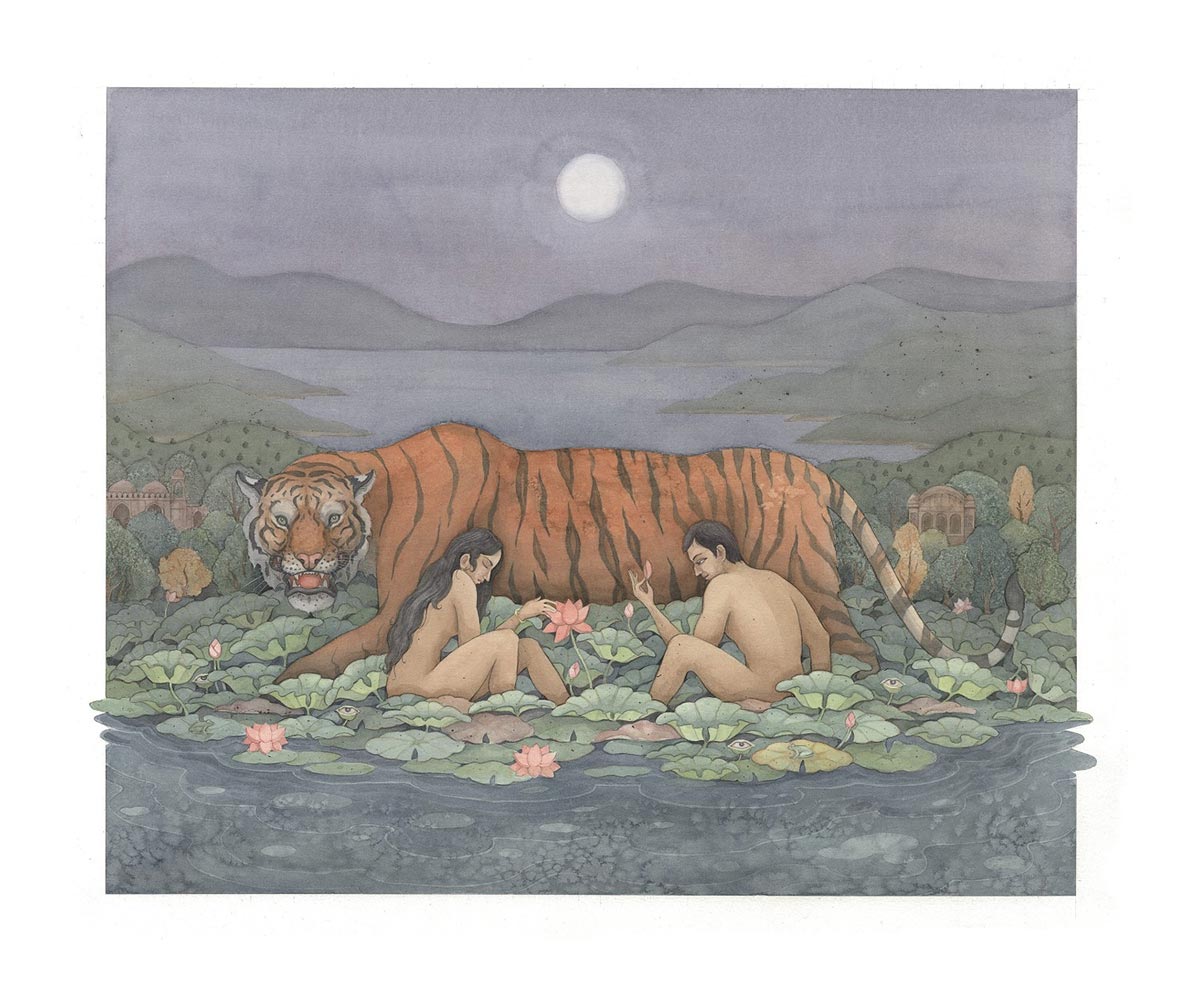
In the words of Khushboo Jain, the exhibition turns its gaze toward the “lores of tomorrow.” Today, everything is getting rapidly digitized, and Masnavi poses crucial queries like, How will our current struggles, triumphs, and social movements be remembered centuries from now? The 60 artworks by the 17 artists are displayed as a “constellation of profound connections.” The director, Anubhav Nath, notes that the cohesive force in these tales is what ultimately unites generations and communities. The exhibition attempted to position folklore as an active archive shaped by current socio-political experience.
Artists Featured And Selected Works
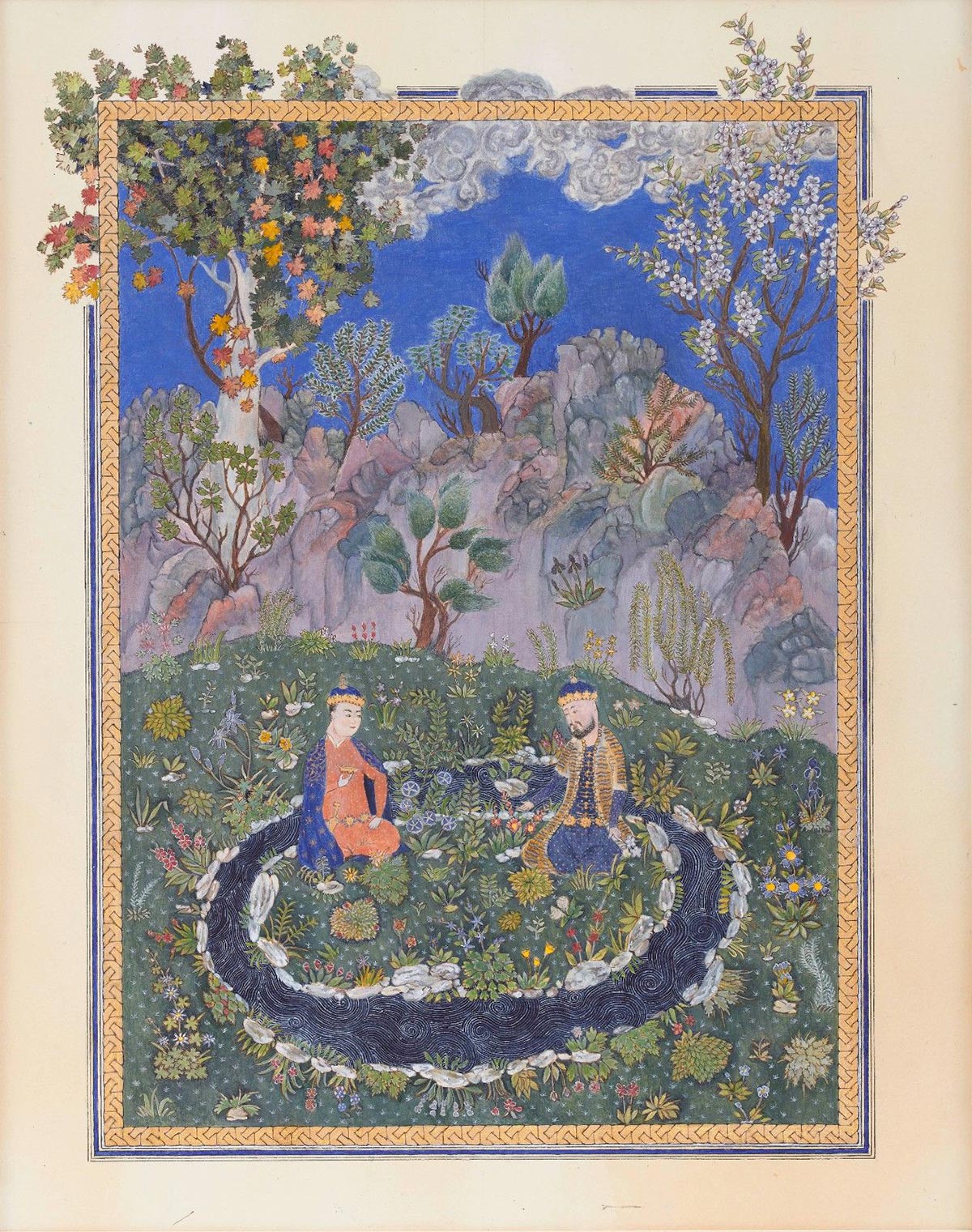
Khadim Ali’s vision is embedded in the Persian miniature, and his themes are influenced by displacement, mythology, and collective trauma. He draws inspiration from the Shahnameh and Afghan folklore and depicts hybrid human-animal figures to express his opinions on war and migration.
Australian-based artist Sujat Sanan merges ecology with philosophy. He is known for working with the sensitive niche of the relationship between nature and humans. Turkish artist Murat Palta playfully blends the aesthetics of Ottoman miniature. His art shows how lore can be reinvented through humour, satire, and hybrid iconography.
View this post on Instagram
Nusra Qureshi showcases paintings that are futurist in nature. She amalgamates South Asian miniature with feminist revisionism. Laila Tara uses texts, colour fields, and delicate lines to express spiritual longing. Olga Lobanova and Samantha Buckley demonstrate the constant influx of folklore beyond geographic borders. Other participatory artists include Zafar Ali, Amal Lin, Mobeen Akhtar, Elham Pourkhani, Mahsa Tehrani, Riyazhuddin, Zeynep Akman, Fatima Zahra Hassan, Ayesha Amjad, and Ramsha Haider.
Takeaway
This exhibition is a zealous attempt to reclaim culture. In the present world, the fact that folklore is not just a collection of “fairy tales” for children, but the foundational DNA of our societies, often goes unnoticed. By utilising miniature painting as the prime device of expression, Ojjas art compels the viewers to lean in, to look closer, and to engage with the “quiet resilience” that these stories represent. By honouring folklore while interrogating present realities, Masnavi opens an important cultural conversation.