The Melting Pot of Culture and Commerce
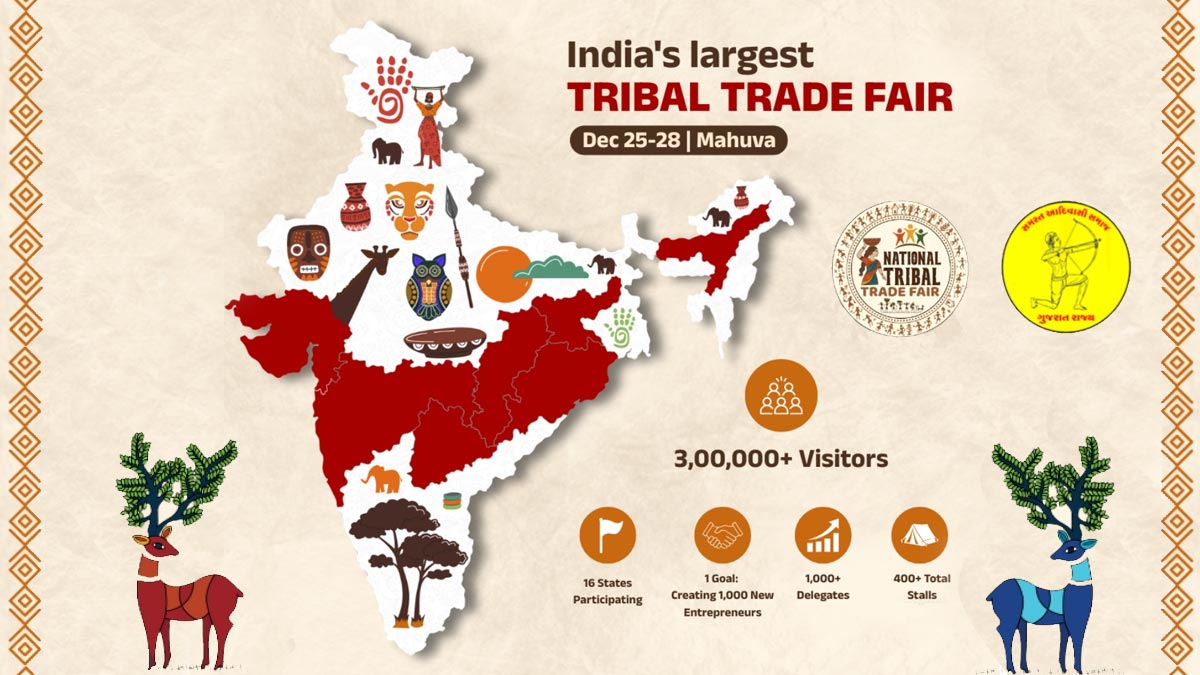
The National Tribal Trade Fair (NTTF) 2025 is scheduled to unfurl itself at the heart of Gujarat’s tribal belt from December 25 to 28, 2025. It is poised to be far more than a mere marketplace of handicrafts. This fair is a monumental convergence of culture, commerce, and community in India. Set in Varsrai, Mahuva, the immersive 4-day event is a strong statement on inclusive growth, aimed at integrating India’s vast tribal economy with the mainstream. Organizers are anticipating a footfall surpassing 3,00,000, transforming the venue into a bustling epicentre of cultural and commercial activities. These anticipations reflect the growing appeal of India’s Tribal heritage among the citizens. The fair aims to house talent and products from 16 Indian states, showcasing a pam-Indian representation og tribal craftsmanship, cuisine, and business innovation.
The central focus of the fair is the generation of livelihood and scaling tribal enterprises. This aim is put forth by the establishment of 400+ stalls dedicated to cuisine, traditional crafts, and modern business ventures. In a traditional setup, the tribal population faces considerable challenges while accessing the market in a true sense. They are constrained by supply chain limitations and the lack of direct communication with consumers. Thus, they mostly end up depending solely upon the intermediaries who do not let the tribal folks have the share of profit they deserve. The trade fair directly addresses these issues, allowing artisans to transact business directly, receive immediate customer feedback, and understand contemporary market demands. Also, the presence of organizations like DISHA ( A Gujarat-based organization working on marginal community empowerment) highlights the involvement of local development bodies committed to facilitating this market linkage.
The Core
View this post on Instagram
With participants hailing from 16 states, more than 400 stalls, and 1000+ delegates, the fair aims to ignite a nationwide movement of tribal entrepreneurship with the ambition of creating 1000 new tribal entrepreneurs within a year. It highly reflects the agenda of “Vocal for Local”, and Atmanirbhar Bharat by the inclusion of tribal products into the mainstream without diluting their cultural authenticity. The government officials, industry leaders, NGOs, financial institutions, and representatives from national bodies are the drivers of this change. These delegates are instrumental in conducting B2B meetings, organizing workshops on digital marketing, intellectual property rights (IPR) protection, and product standardization, essential steps for tribal businesses to compete nationally and globally. These are also supported by institutions like the MSME Ministry and Skill India.
Events like these are also supported by the framework set by the Ministry of Tribal Affairs and its nodal agency, the Tribal Co-operative Marketing Development Federation of India (TRIFED). TRIFED’s flagship initiatives, such as the Aadi Mahotsav and the Van Dhan Vikas Kendra (VDVKs), focus on empowering tribal communities by monetizing minor forest produce and handicrafts.
A Cultural Economy in Motion
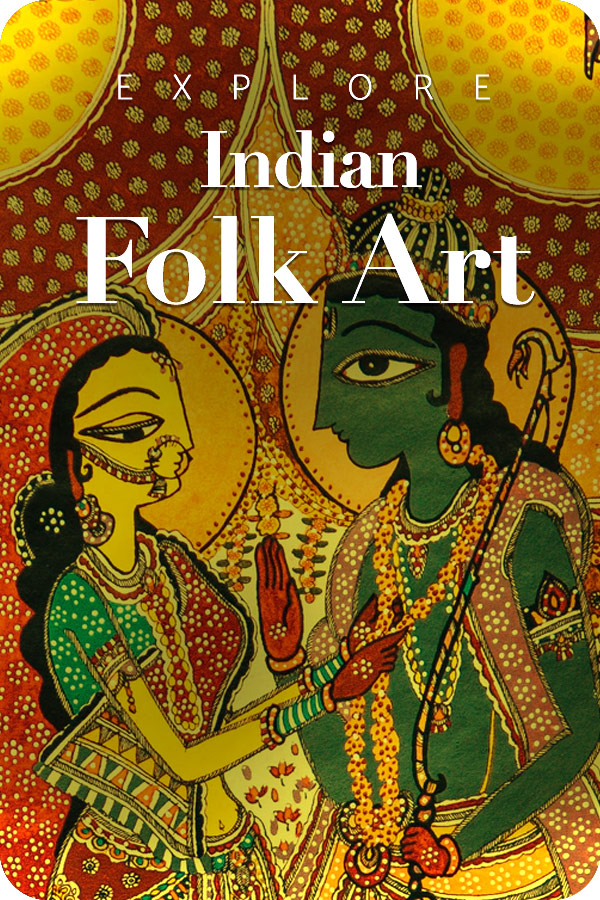
From a cultural perspective, it is a repository of India’s living tribal heritage. Visitors get to see the intricate, first-hand metal crafts of Dokra to the vivid textiles and jewellery of Gujarat’s own tribal groups, and art forms such as the geometric Warli paintings ot the mythological Gond Art. By labelling the fair economic value of these products, these tangible legacies are duly safeguarded. Through these monetizing opportunities, the younger generations of these craft practitioners are encouraged to carry their legacy forward. NTTF 2025, like the successful models of Surajkund Mela and Aadi Mahotsav, brings all these strands together into one integrated ecosystem.
Furthermore, the Gujarat Government’s focus on tribal development is duly channeled through schemes like the Vanbandhu Kalyan Yojana. Efforts like these ensure that infrastructure, financial aid, and policy support are in sync with the wave of enthusiasm generated by the fair. Key focus areas include cuisine, craft, business, and delegates. The Mahuva Trade Fair thus caters as a holistic and inclusive model that acknowledges the supply as well as the demand.
The Fair At A Glance
| Important Point | Detail |
|---|---|
| Event Name | National Tribal Trade Fair (NTTF) 2025 |
| Duration | 4 days (December 25 – 28, 2025) |
| Venue | Vasrai, Mahuva, Gujarat, India |
| Expected Footfall | 3,00,000+ |
| Participating Entities | 16 Indian States |
| Business Scope | 400+ Stalls (Cuisine, Craft, Business) |
| Core Mission | To create 1,000 new entrepreneurs in the next year |
| Key Sectors | Handicrafts, cuisine, culture, and Business |
Key Highlights of NTTF 2025
- Participation of tribal artisans, farmers, musicians, and entrepreneurs from across 16 Indian states
- 400+ stalls featuring tribal crafts, textiles, forest produce, traditional food, and start-ups
- A strong focus on tribal entrepreneurship and business incubation
- Cultural performances showcasing indigenous music, dances, and rituals
- Platform for policy dialogue between tribal leaders, entrepreneurs, investors, and government bodies
- Expected economic boost for the regional and local markets in Mahuva
- Youth-centric entrepreneurship mission with a target of 1,000 new enterprises
Why Gujarat?
Gujarat has emerged as a hub of trade, cooperative economics, and entrepreneurship. Hosting NTTF in Muhva places the tribal economy within a broader spectrum of industrial growth and enhanced market connectivity. It also allows tribal communities from western and central India to engage more directly with national and international buyers.
Cultural Diplomacy
Beyond its economic significance, NTTF also functions as a mediator in internal cultural diplomacy in India. People visiting the fair will not just physically take a stroll throughout the place, they will encounter ritual dances, taste indigenous foods, and themselves will be a part of the cultural exchange taking place. It will be a milieu, a melting pot of India’s cultural heterogeneity. This will also soften and reshape the perception of people towards the tribal folks, who are often just viewed through the lens of welfare or conflict. It aims to reframe the tribal identity into something bigger as entrepreneurs, cultural ambassadors, innovators, and stakeholders of their original indigenous goods.
Takeaway
NTTF stands with the agenda of oneness in the future of the Indian economy, where every type of folk will find a place to be. NTTF truly is a dual insistence on economic profit and cultural pride. It does not ask tribal communities to modernize by abandoning tradition; instead, it invites the market to recognize tradition as innovation. If executed with accountability and follow-through, it has the potential to become the desired turning point in India’s tribal economic history. The Mahuva fair is a blueprint for how cultural pride and commercial acumen can collaboratively drive India’s progress.