A Rare Sangam of Sculptural Giants at IIC
New Delhi’s International Centre (IIC) has once again transformed into a poignant space hosting the “Three Moderns,” an art exhibition of sculptures by the three iconic masters of Indian art- Himmat Shah, Krishen Khanna, and Thota Vaikuntam. These sculptural marvels are presented by the Namtech Fine Art and are curated by Uma Nair. The exhibition runs from December 12- 22, 2025. This display of masterful craftsmanship bridges the spaces between material, memory, and the human spirit that seeks never-ending things. The exhibition space is a repository of twelve major works that are engraved with the conceptual depths of modern Indian art. The event aims to reassert sculpture as a living and evolving public encounter. This also depicts a unique convergence between historical linkages and metaphors of materials.
The three towering sculptures are distinctively acknowledged for their distinct sculptural forms. Three Moderns unfurls as an aesthetic representative of how identities and lived experience are etched into a perceptible medium, such as stone, cast in bronze, and resinated fiberglass. In the IIC, this exhibition is housed at the Gandhi King Plaza.
The Vision Behind the Art
The master curator, Uma Nair, has previously spearheaded five watershed sculptural projects at the Gandhi King Plaza. And this time, she envisoned the energy and design of Three Moderns. She views the exhibition as an act of creation in itself. She stated, “Curating an exhibition of Three Indian Moderns at the Gandhi King Plaza is about creating a feeling, an energy formed through the synergy of great artistic minds.” In her opinion, time becomes witness and sculpture becomes language.” The venue’s spatial orientation, under the open sky surrounded by a lush green canopy, makes the sculptures appear more lively.
The Art & The Artists
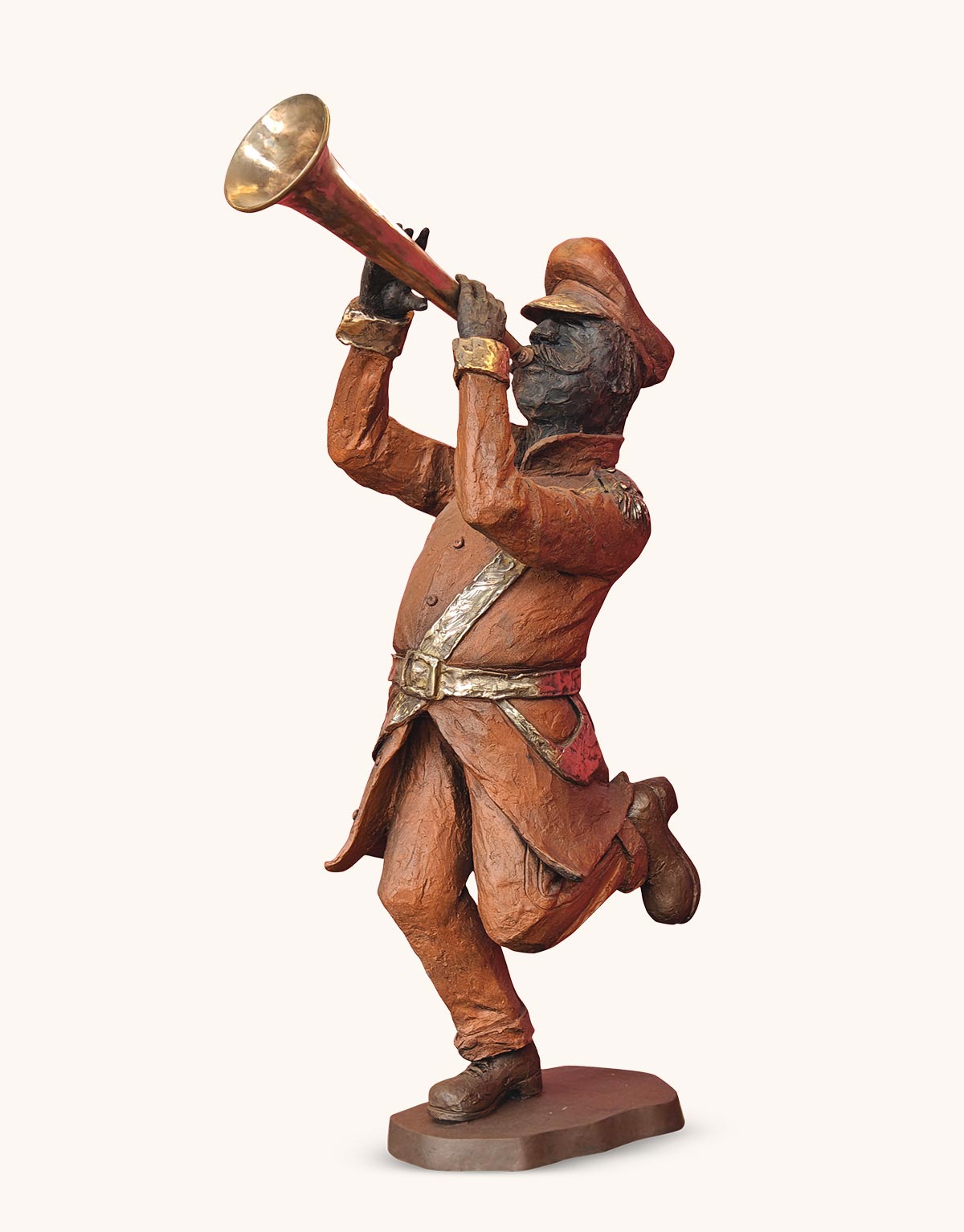
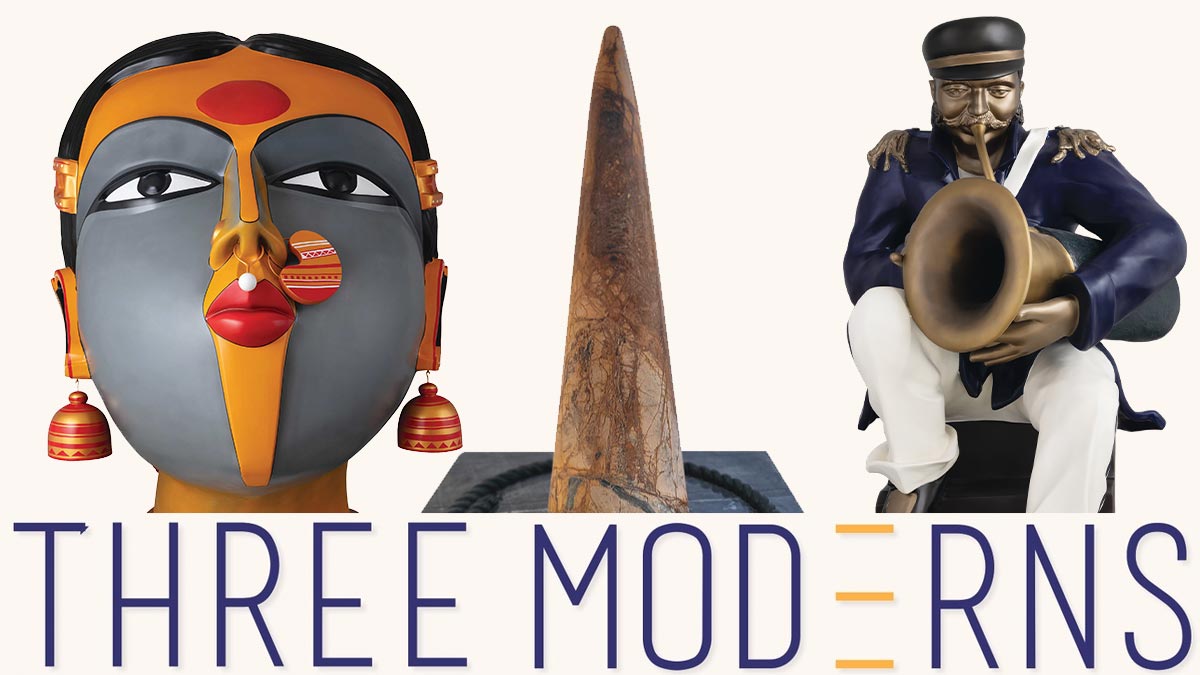
This exhibition critically reflects on the artistic practice of those stalwarts whose craft has played a massive role in shaping modern art. Among them, Krishen Khanna has marked a century of an illustrative artistic career. This exhibition houses his masterpieces from the celebrated Bandhwallah Series. The Bandhawallah figures are also very well-known in his paintings. However, their depiction in sculptural forms amplifies their significance. The sculptures represent figures of humble street musicians as a symbol of celebration. His carvings are uniquely chiseled into resin-impregnated fiberglass. Krishen Khanna’s figures are presented in simplified forms that connect the “personal” to the “peripheral” and create deep resonance in the heart of the viewer. As he was the last among the progressive group, his artwork reverberates the modernist approach that incorporates the “everyday Indian experience.”
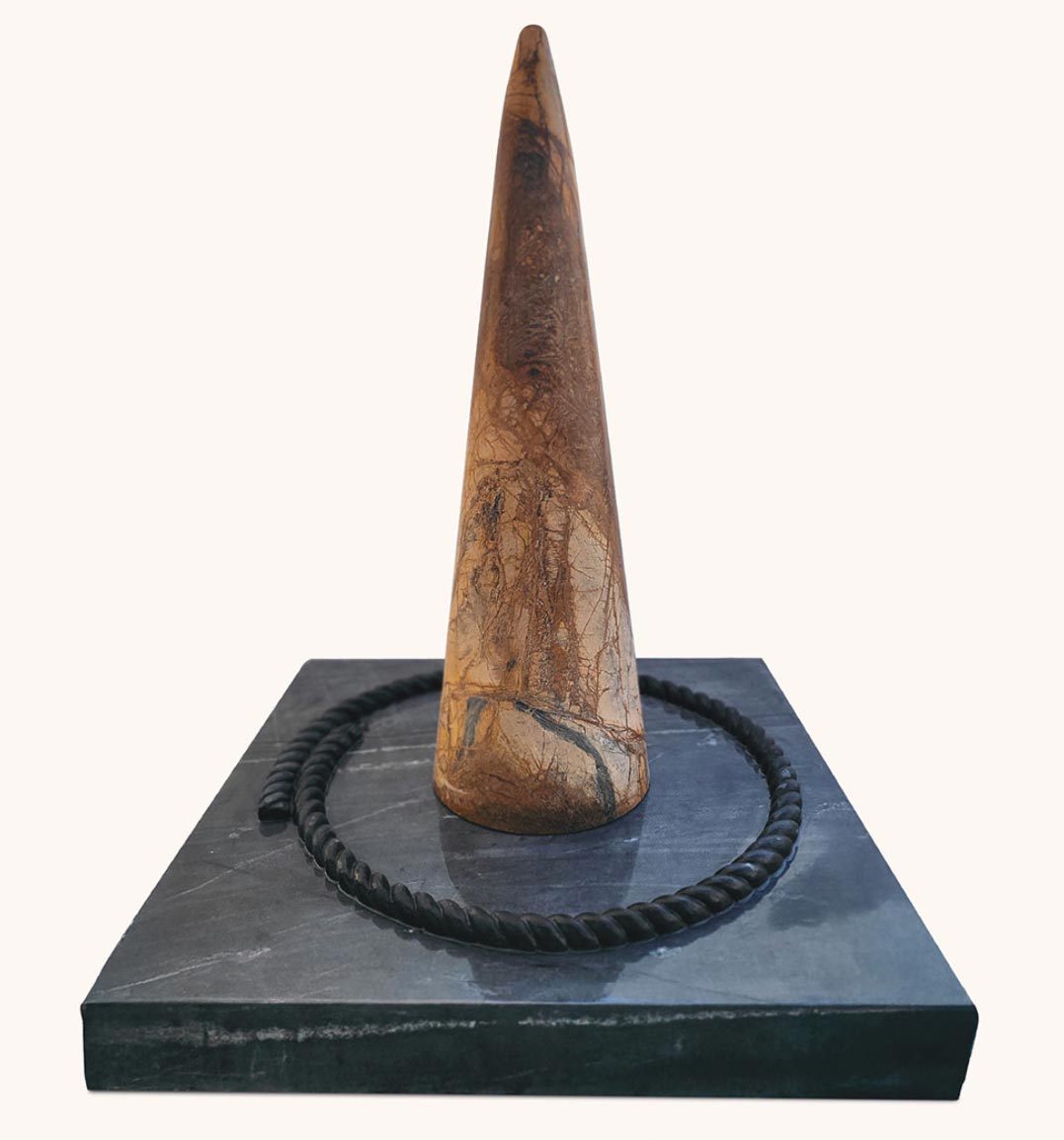
Another stalwart whose sculptures adorn the space is Himmat Shah. He was an important member of Group 1890, a notable but brief artists’ collective founded by J. Swaminathan that spearheaded radical artistic expression. He is one of India’s most senior and revered sculptors. His medium of expression is stone. His “heads” are acclaimed as anachronistic but also possess an idiosyncratic contemporary touch, which is exquisitely eloquent. Himmat Shah’s work on textured stone turns out to be a meditative process of dealing with time and patience. He stripped the stone from multiple fronts to mould it in a way that pleases him. His art is a journey that is aptly reflected in every incision. His stone models scream the stories of ancient civilizations, migration, exile, and survival. The curvatures created in the granular surfaces of stones leave a permanent array of deep-seated sentiments.
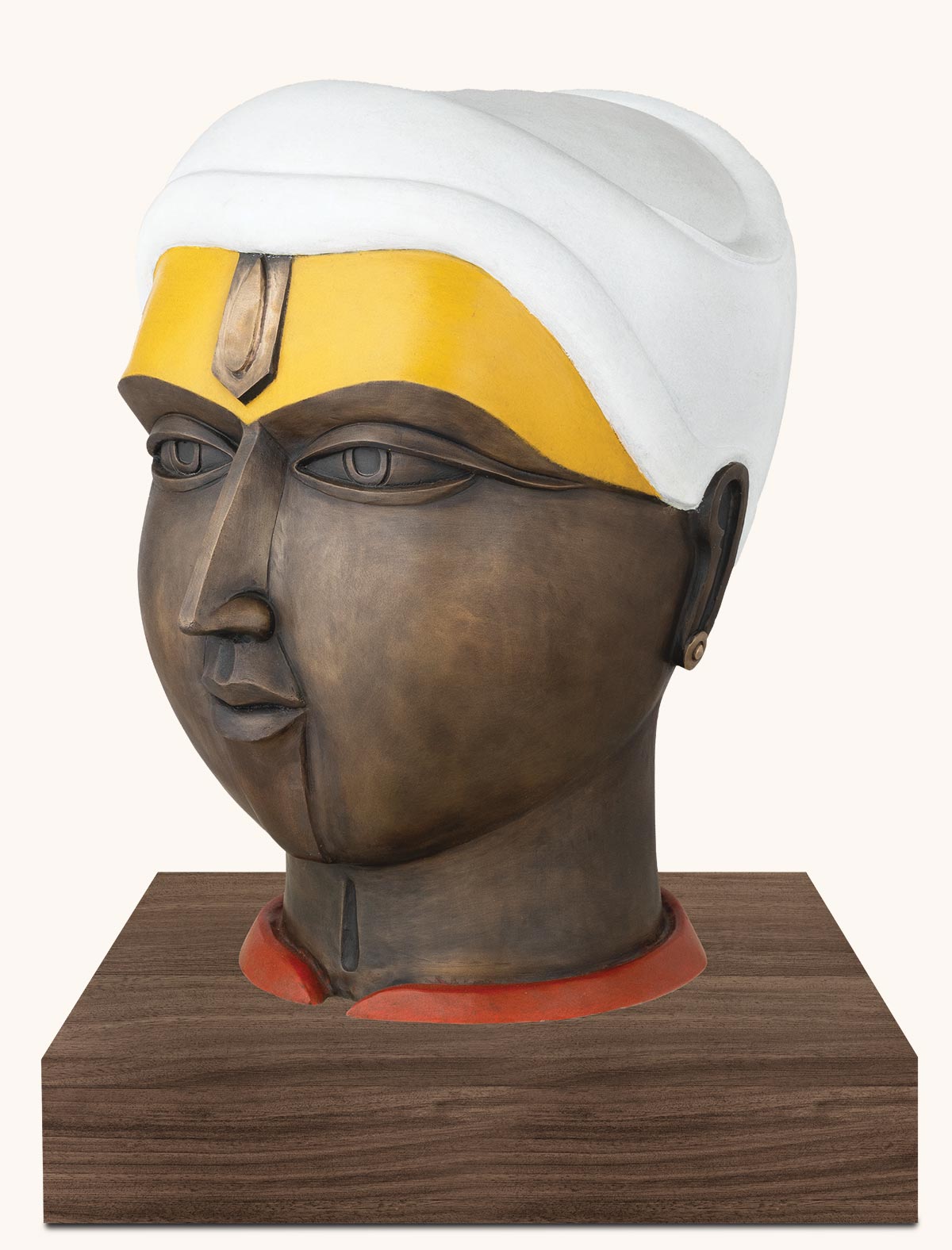
Apart from these two, Thota Vaikuntam introduces his expatriates through bronze work from his series “The Sacred Gaze”. He is noted for his animated depiction of the rural life of Telangana. His bronzes are ritualistic in orientation and are sculpted with a spiritual outlook. The surfaces he painted reflect the earthly hues of the Deccan, offering a delightful peep into the rural landscape. He beautifully celebrates the rawness of rural life with dignity and grace.
The Exhibition at A Glance
| Important Points | Description |
|---|---|
| Exhibition Title | Three Moderns: Sculptures by Himmat Shah, Krishen Khanna, Thota Vaikuntam |
| Artists | Himmat Shah, Krishen Khanna, Thota Vaikuntam |
| Curator | Uma Nair |
| Presented By | Namtech Fine Art |
| Venue | Gandhi King Plaza, IIC, New Delhi |
| Date & Timings | (12th – 22nd December 2025) 11 AM – 7 PM |
| Number of Works | 12 Sculptures |
| Materials Used | Marble, Bronze, Stone, Resinated Fiberglass |
| Context | A rare confluence of three distinct sculptural languages rooted in memory and identity |
| Tribute | Honours the late Prof. M.G.K. Menon, a champion of Indian sculpture at the IIC |
Key Highlights
- A rare public convergence of three modern Indian masters in a single sculptural exhibition.
- Krishen Khanna’s centenary year is marked by monumental sculptural interpretations of the Bandwallah series.
- Himmat Shah’s stone heads as archaeological and existential metaphors of time and migration.
- Thota Vaikuntam’s rural Telangana-inspired bronzes foreground spirituality and everyday ritual.
- Curated by Uma Nair, known for shaping the sculptural legacy of the Gandhi King Plaza.
- Hosted in an open public plaza, reinforcing sculpture as a civic and democratic art form.
- Tribute to the late Prof. M. G. K. Menon and his enduring cultural vision for IIC.
A Critical Perspective
In the broader dimension of Indian modern art, the Three Moderns occupy a very significant spot as they negotiate the boundaries between artistic endeavors and public spaces. The physicality of these sculptures offers a sensory experience through well-defined, perceptible means of consuming these masterpieces. The most compelling factor of the exhibition is the intelligence put behind the arrangement, with distinct works intersecting as well as complementing each other. The effect is that the viewing of sculpture goes beyond visual consumption; it makes people linger around, see and re-see, and come back again because of an invisible pull. The corpus of these 12 sculptures reiterates the story of modern India in itself, covering a plethora of contexts.
View this post on Instagram
In recent years, the Three Moderns has been one of the most intellectually acclaimed exhibits. It forms a vital chapter in the ongoing history of Indian Modernism. Shah’s abstract timelessness, Khanna’s social narrative, and Vaikuntam’s rooted ritualism weave a syncretic conscience that respects humanism above all. The main argument shaped by the functionality of these sculptures is that even in a rapidly digitizing world, the power of a solid, tangible form, carved and cast from the earth, remains an irreplaceable vessel for national and personal identity.
Visiting this classic visual retreat is a wholehearted recommendation, as its coverage and beauty demonstrate the very essence of modern Indian sculpture and keep it alive. Three Moderns reminds us that endurance, depth, and integrity remain the truest measures of artistic greatness.