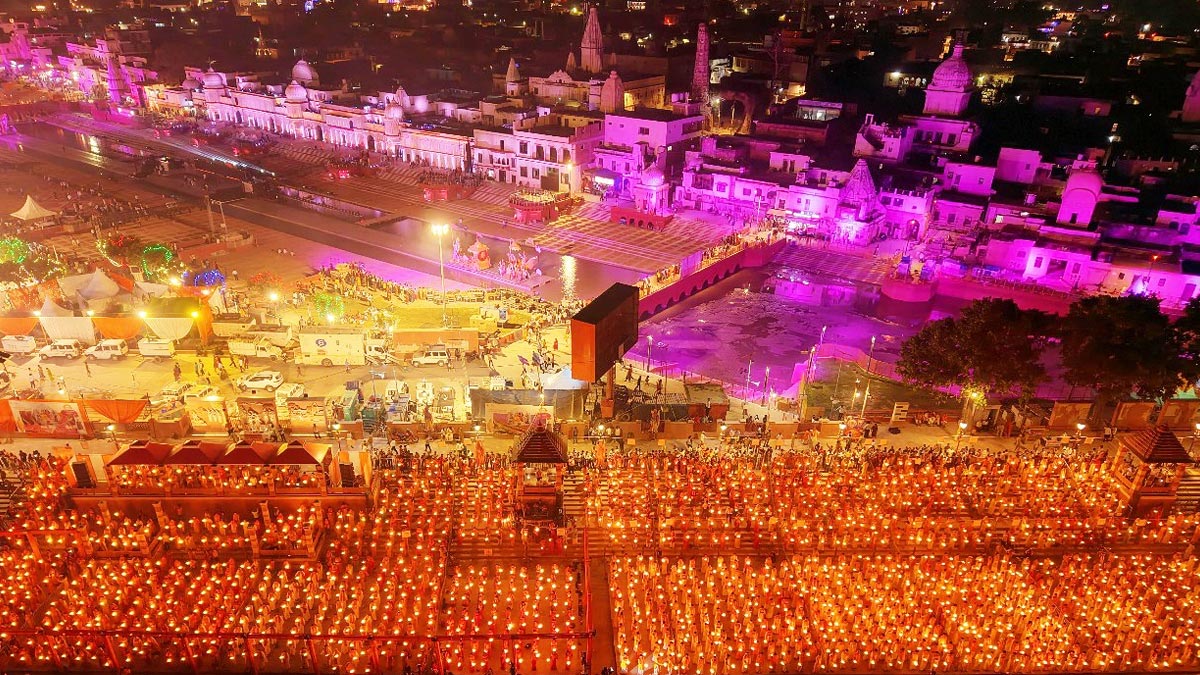
The concept of the triumph of light over darkness is central to Indian culture, and the festival that celebrates it, Deepavali, has recently received its highest global validation. The festival of lights has been officially inscribed on UNESCO’s list of Intangible Cultural Heritage of Humanity (ICH). This announcement was made following the 20th session of the Intergovernmental Committee for the safeguarding of the Intangible Cultural Heritage, which represents the Indian festival beyond its religiosity and highlights it as a global festival. UNESCO’s framework highlights living traditions through criteria like continuity, community participation, and cultural diversity, which are globally represented through the Indian diaspora. This recognition was formally adopted on December 10, 2025, at the historic Red Fort in New Delhi. The event marked the sixteenth cultural element from the nation to be featured on this prestigious list, such as yoga, kumbh mela, Durga puja, etc.
Deepavali As a Living Tradition
The nomination of Deepavali was secured under the domain of “Social practices, rituals and festive events.” This categorization pushes the objectivity of the festival beyond its historic ties and designates it as a living heritage that has been passed down through generations. This also justifies the role of Deepavali in promoting social cohesion, support towards traditional artisanalship, and core societal values like generosity and hope. The festival spans five days, beginning with Dhanteras and culminating in Bhai Dooj. This festival is not restricted to the Hindus alone; it is well-celebrated by Jains, Sikhs, and certain Buddhist communities as well. The festival symbolizes the return of Rama for Hindus, the event of Mahavira’s nirvana in the Jaina traditions, and Bandi Chhor Divas for Sikhs.
The festival encompasses people of all age brackets, all genders, and all backgrounds, transmitting rituals where the elders instruct the children on preparations and celebrate the proceedings together. Furthermore, oil lamps are lit, stories are recited, traditional food is prepared, and pujas are performed. These practices recreate cultural memory, making the festival a continuous source of joy and bonding. UNESCO advocates for the safeguarding of these traditionally crucial practices to be sustained to keep the authenticity intact.
Beyond this prospect, Deepavali also functions as a corridor of economic boom. In different regions, it also marks the beginning of agricultural transitions. In Tamil Nadu and Karnataka, Deepavali signals the end of monsoons and the beginning of a new business year. In North India, it represents renewal and purification.
Inscription Details
| UNESCO Inscription | Details |
|---|---|
| Official Name of Listing | Deepavali |
| Inscription Year | 2025 (Adopted December 10, 2025) |
| Location of Committee Session | Red Fort, New Delhi (20th Session) |
| Domain of Heritage | Social practices, rituals, and festive events |
| Status for India | 16th element on the UNESCO Representative List |
| Core Values Reinforced | Victory of light over darkness, social unity, hope, and generosity |
| UNESCO’s Criteria | Deepavali meets UNESCO’s criteria of community-driven transmission, representation of cultural diversity, and safeguarding of traditional knowledge systems. |
| Ritual Complexity | The festival includes rituals, oral traditions, performative arts, culinary practices, and household customs that differ regionally yet remain unified in meaning. |
Key Highlights
- Deepavali fulfils UNESCO’s emphasis on living heritage sustained through community participation.
- It encompasses a wide array of intangible practices: rituals, folklore, performing arts, culinary knowledge, and social customs.
- The festival functions as a cultural bridge across religious groups, regions, and diasporic communities.
- Its adaptive nature allows continuous renewal, ensuring long-term viability.
- Deepavali’s symbolism reinforces collective values of hope, moral renewal, and social cohesion.
The Responsibility of Recognition
The inscription of Deepavali in the globally acknowledged list of intangible heritage is a proud moment for all citizens of India. However, it also brings a pile of responsibilities upon everyone. This global recognition is not the end of the goal, but the initiation of a journey to make a festival a means for a better tomorrow. It is a mandate to safeguard and ensure the tradition is authentically transmitted and traditional elements are protected and not subject to homogenization. It also aims to protect the warmth of diyas and homemade traditional food from getting replaced with modern-day commercial items.
It functions as a reminder for all of us to consciously choose our living heritage and carry forward the continuum of our celebrations. Deepavali’s global presence today demonstrates the capacity of cultural practices to travel, adapt, and unite communities. Thus, UNESCO’s honour is a validation of the deeper human requirements for continuity, meaning, and shared celebrations.