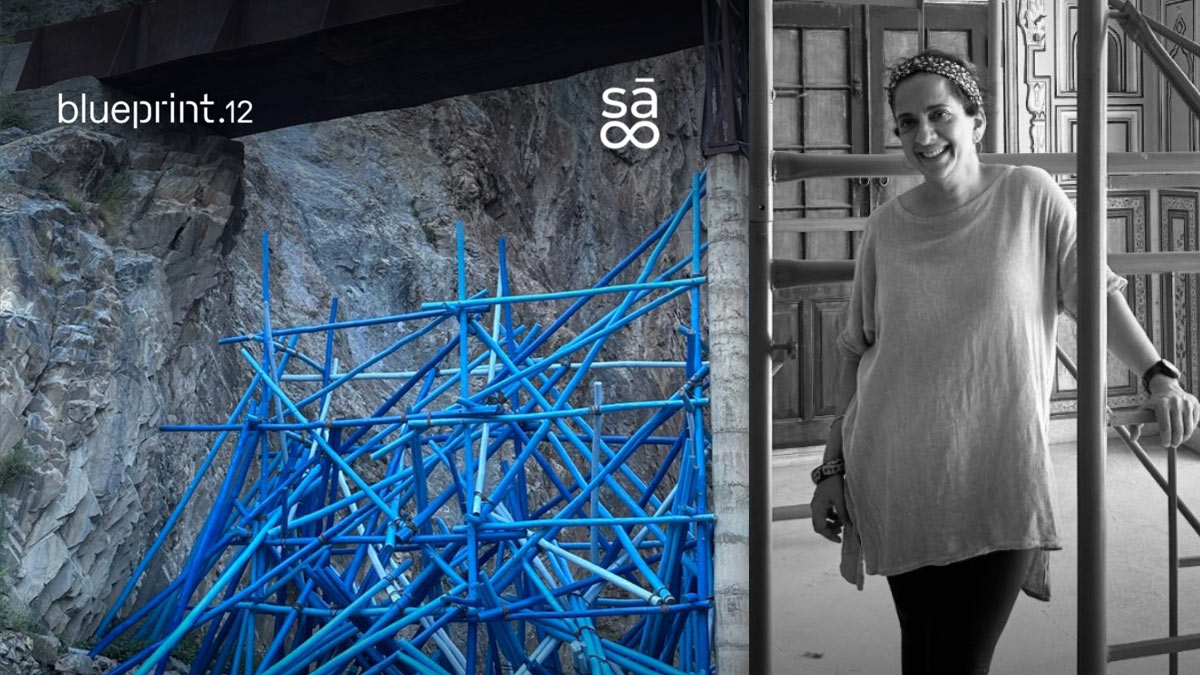
A new site-responsive installation by artist Avantika Bawa is drawing attention to the relationship between landscape, memory and environmental change in Ladakh. Titled Blue Scaffolds in Zbayul, the work has been created for the sā Ladakh Biennale in Henasku, a remote village whose layered histories, oral traditions and ecological narratives form part of the broader cultural landscape of the region. Installed around the remains of an abandoned aqueduct, the project transforms familiar construction materials into a sculptural intervention that examines ideas of support, absence and environmental precarity.
A Work Rooted in Place
Located within the mountainous terrain of Henasku, the installation responds directly to the site’s history and geography. The work surrounds a disused aqueduct, drawing attention to infrastructure that once played a vital role in sustaining life in the region.
Painted in a vivid blue, the scaffolding structures reference both water and the sky. The colour functions as a visual reminder of the aqueduct’s former purpose while also reflecting growing concerns about water scarcity and ecological vulnerability in the Himalayan region. Through this intervention, Bawa connects historical memory with contemporary environmental realities.
Reimagining the Language of Scaffolding
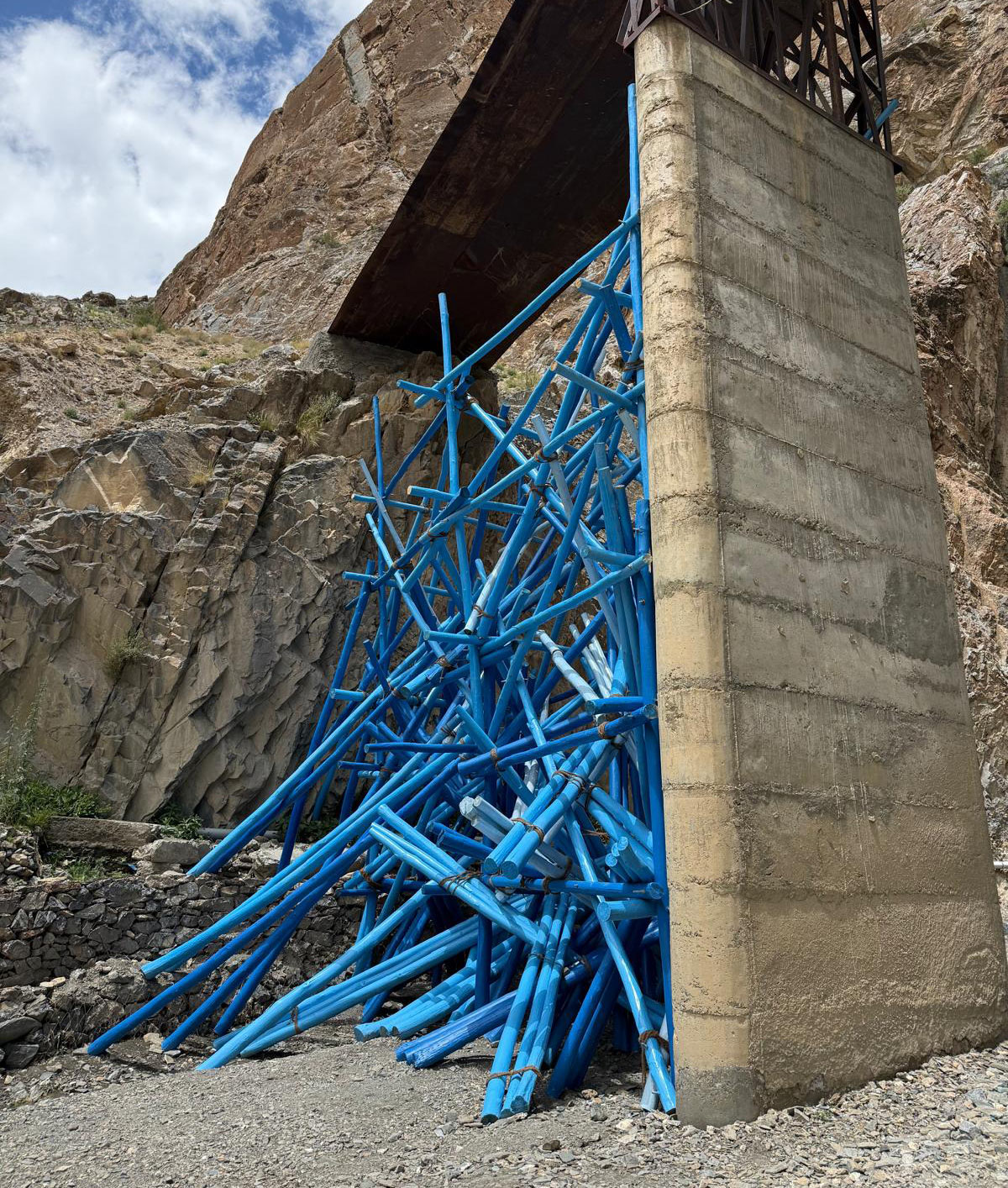
Scaffolding is typically associated with construction, repair and temporary support. In Blue Scaffolds in Zbayul, however, the material takes on a different role. Rather than serving a practical function, the structures appear to support the landscape while simultaneously revealing their instability.
The installation creates a series of visual interruptions across the terrain. Leaning and intersecting forms frame views of the surrounding valley and invite visitors to consider the relationship between built environments and natural formations. The work occupies a space between permanence and impermanence, construction and ruin, visibility and disappearance.
About the Artist
Avantika Bawa is known internationally for large-scale installations, sculptural interventions and works on paper that explore architecture, colour and spatial perception. Based between Portland, Oregon, and Vancouver, Washington, she has exhibited internationally for more than two decades. She currently serves as Professor of Fine Arts at Washington State University Vancouver.
Her practice frequently employs industrial materials and modular structures to investigate how people experience space. Previous projects such as APEX (COLISEUM) at the Portland Art Museum and several scaffold-based public installations in India and Australia have established scaffolding as a recurring sculptural language within her work.
sā Ladakh Biennale and Community Engagement
The installation forms part of the inaugural sā Ladakh Biennale, a contemporary art initiative that unfolds across multiple sites along the Leh-Kargil corridor. Grounded in the Ladakhi concept of “sā” meaning soil, the biennale focuses on ecology, memory, cultural exchange and long-term engagement with local communities.
Henasku itself occupies an important position within the biennale’s framework. Often described as a village hidden within the mountains, it offers artists an opportunity to work closely with local histories and landscapes. Through projects such as Blue Scaffolds in Zbayul, the biennale encourages visitors to engage with places that might otherwise remain overlooked.
View this post on Instagram
Highlights of the Installation
- Site-responsive artwork created specifically for Henasku village, Ladakh
- Installed around the remains of an abandoned aqueduct
- Uses blue-painted scaffolding as a sculptural material
- Explores water memory, ecological fragility and cultural history
- Engages with themes of visibility, disappearance and environmental change
Art, Memory and Environmental Reflection
Set against Ladakh’s dramatic mountain landscape, Blue Scaffolds in Zbayul extends Bawa’s ongoing exploration of architecture and perception while addressing questions that resonate beyond the region. The installation highlights how abandoned infrastructures can become repositories of memory and how contemporary art can create new conversations around environmental challenges.
By transforming a utilitarian structure into a reflective artistic gesture, the work invites viewers to consider the histories embedded within landscapes and the changing ecological conditions that shape them.
Takeaway
Blue Scaffolds in Zbayul demonstrates how contemporary art can engage with local histories while addressing broader environmental concerns. Through its dialogue with Ladakh’s landscape, water systems and cultural memory, the installation offers visitors an opportunity to reflect on the connections between place, community and ecological responsibility. As part of the sā Ladakh Biennale, the project contributes to ongoing conversations about sustainability, heritage and the role of art in understanding