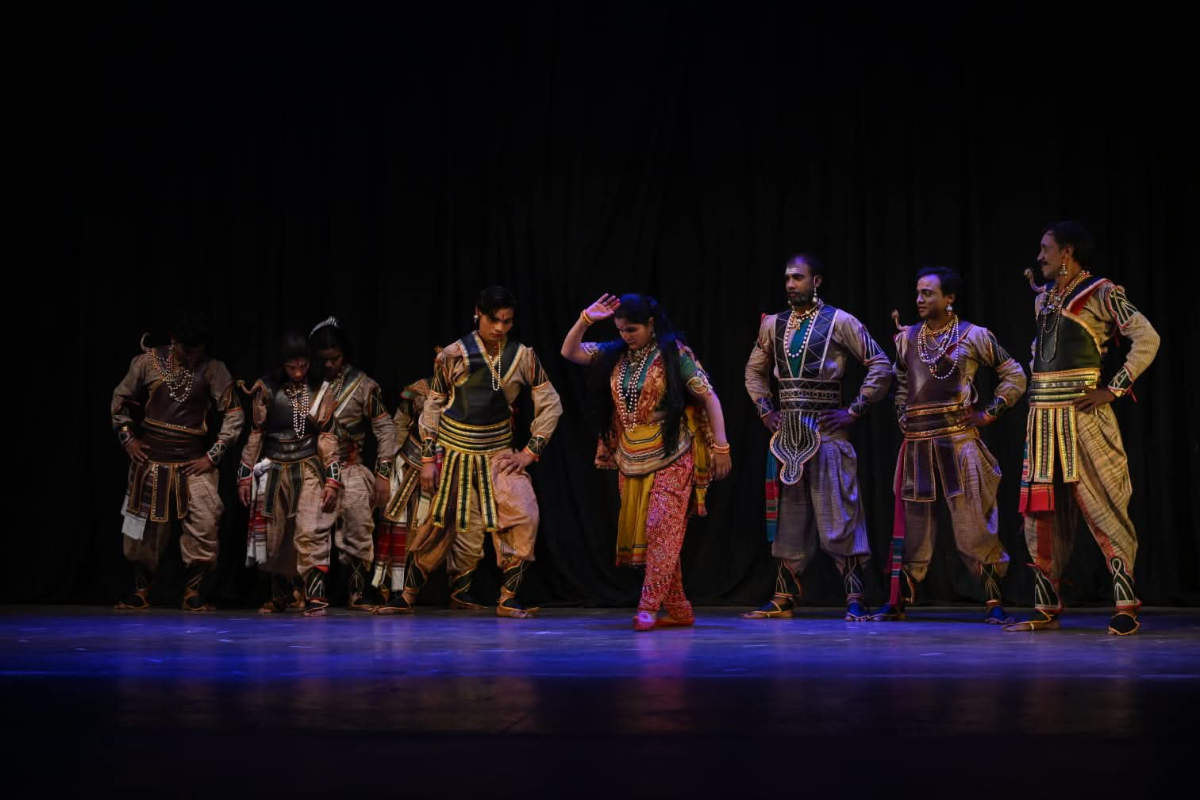
When we watch a dance performance, our attention usually moves between the dancer’s face, eyes, hands and the fluidity of movement. We look for expressions that help us understand what a character feels. But Shanti Bardhan’s ‘Ramayana’ asks the audience to look differently. The performers move like puppets brought to life. Their gestures are controlled, their steps precise, and their movements sometimes deliberately stiff. Their faces disappear behind masks, leaving the audience to follow the story through the body.
This unusual approach changes the experience of watching an epic. Instead of reading emotion through a smile or a frown, we begin to notice the angle of a head, the position of an arm and the rhythm of a step. The body becomes the principal storyteller.
Created in the early 1950s, this dance drama remains part of the repertoire of Rangasri Little Ballet Troupe, based in Bhopal. Its continuing life raises an interesting question: how can a familiar story acquire a different meaning when its performers abandon the usual language of expression?
A New Ramayana
Shanti Bardhan trained in Manipuri and Tipperah dance traditions and worked with Uday Shankar, whose experiments helped shape modern Indian dance. Bardhan drew on Indian dance and folk traditions to develop a movement language that did not simply reproduce an existing classical form.
The Little Ballet Troupe was founded in 1952. Among Bardhan’s important works were ‘Ramayana’ and ‘Panchatantra’. In ‘Ramayana’, the epic’s characters were imagined as living puppets. The dancers used masks, controlled gestures, rhythmic footwork and carefully patterned movements to create their characters.
The idea was more than a visual novelty. A puppet appears to move under an external force, following a particular rhythm. Bardhan translated this quality into choreography. The performers seem restricted, yet their movements require considerable control. What looks mechanical from a distance is the result of physical discipline.
The masks also alter the relationship between performer and audience. Viewers cannot depend on facial expressions to understand a character’s feelings. They must pay closer attention to the body. A slight turn of the head or a change in the timing of a step can become important. Watching the dancers means learning to read a different visual language.
Telling Through Movement
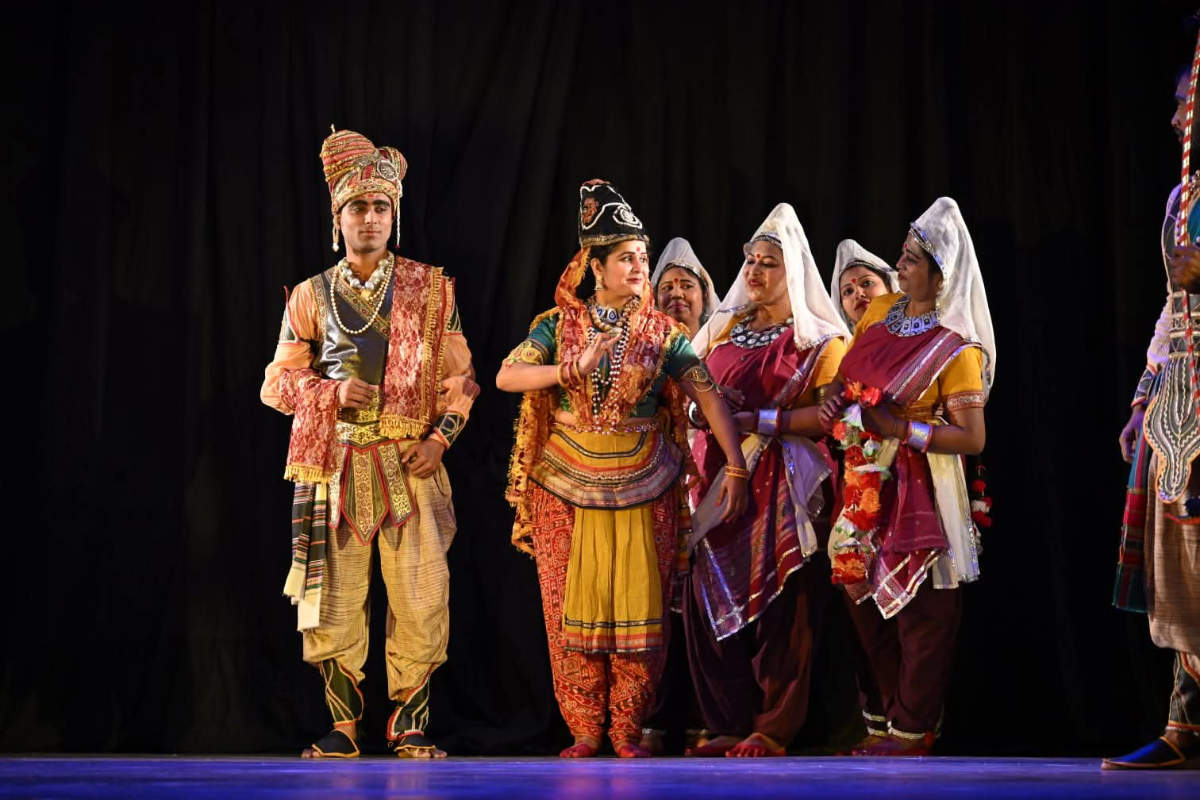
The ‘Ramayana’ has inspired countless performances across India, from folk theatre and puppetry to classical dance and popular drama. Bardhan’s interpretation took a distinctive route. The story remained recognisable, but its presentation moved away from familiar ideas of heroic display.
According to the troupe’s account of Bardhan’s work, he approached the epic as a human story rather than placing its religious dimension at the centre. The puppet-like figures gave the characters an unusual quality, even though they were represented by human bodies on stage.
The effect lies in the meeting of the familiar and the unfamiliar. The audience may already know the story, but the performers tell it through a different arrangement of bodies, gestures and rhythms. The dancers do not merely illustrate the epic; they build a separate stage world in which movement, costume and mask work together.
This style also makes the collective effort visible. A mask must remain convincing through movement, and a costume must support the choreography without obscuring it. The dancers have to coordinate their steps so that individual figures become part of a larger pattern. The performance depends on the precision of the group rather than on a single star performer.
A Living Tradition
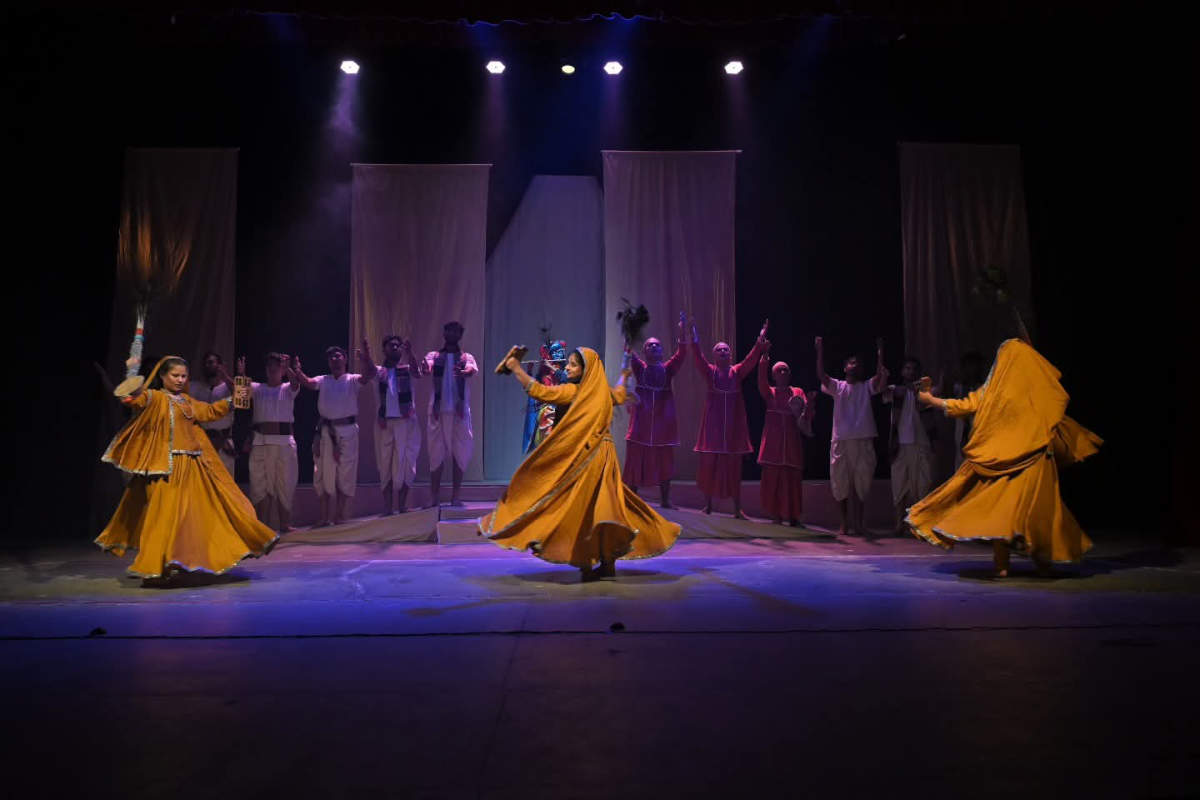
Bardhan died in 1954, only a short time after the troupe’s founding. His work continued through artists who carried it forward. Gul Bardhan and choreographer-director Prabhat Ganguly became important figures in sustaining the troupe and its productions.
The troupe moved to Bhopal in 1984. The city became the base from which this distinctive experiment in Indian ballet continued to reach audiences. Its history connects the artistic experimentation of the early post-Independence years with the work required to keep older productions alive.
A stage work does not survive simply because its original choreographer created it. Its gestures, timing and collective rhythms must be passed on through practice. Masks and costumes need care, while performers must learn how to move within the restrictions of the form. Each new performance depends on artists learning and carrying forward details that might otherwise disappear.
Rangasri’s repertoire has extended beyond Bardhan’s ‘Ramayana’, but the production remains a striking expression of the troupe’s founding spirit: drawing on Indian traditions while searching for new ways to tell stories through the body.
In ‘Ramayana’, the human body imitates an object traditionally controlled by strings. Yet the apparent limitation becomes a source of expression. The dancers seem to surrender their freedom of movement, but it is through that restriction that they create a world of their own.
More than seven decades after the troupe began, Bardhan’s experiment reminds us that Indian ballet is not a single, fixed form. It can bring together folk traditions, theatrical storytelling and new ways of using the body. In Bhopal, that unusual language of movement continues to have a home.