Rakshabandhan is a day to celebrate the auspicious relationship between male and female siblings. It is a relationship characterised by love, care, understanding, support, trivial fights, innocent or naughty pranks and sincere apology. Such is the brother- sister relationship.
Since childhood days I have observed that, on the day of Rakshabandhan, my sister would imprint the fingerprint of her left ring finger by applying tika and then tie rakhi on my right hand. This is followed by rotating aarti thali and then I touch the feet of my sister; she feeds me sweets and then the most awaited moment arrives for my sister – receiving gifts. I always envied her because in return for tying a rakhi, she received gifts not only from me but from my cousins too. At the time, I didn’t understand what my sister gave me in return. But with time I understood that what she gives is more valuable – she gifts me the responsibility to protect her.
Many people misunderstand this and so, in the name of protecting their sister from the evil world, they put restrictions on her. Don’t leave home alone; always have a friend accompany you in college and classes; be with that friend always; come home within 10 minutes after your class is done; don’t go with your friends for movies, go with your brother ; don’t leave home after 8 pm- these are a few restrictions I have heard in the past. I have also seen many brothers spying on their sisters to find out where she goes, whom she meets and why she meets that person. She also faces rapid fire enquiry if she is seen talking to a boy.
But don’t you think this is less protection and more about caging the sister?
My elder sister didn’t know how to ride a moped until I taught her. Earlier I used to take her but one fine day I decided to teach her to ride instead. Now she is independent enough to ride a
two-wheeler to fulfill her responsibilities, even after her marriage. Riding a moped was a problem for her but instead of avoiding the problem I taught her to face the problem.
If you try to protect your sister you can protect her once or twice or even during those times when you are with her but what about the time when you are not with her? So instead of protecting her, teach her to overcome her problems. She will then protect herself when you cannot be there for her. By teaching her to fight a problem, you protect her as many times as problems rise up before her.
A sister is not to be caged; rather she is a bird meant to fly towards her dreams. So, every Rakshabandhan you have to promise to be the support she needs to fly high. Don’t make it a symbol which restricts her. Instead, cast a problem-solving spell by teaching her to fight.
Many times when I face some problem, my sister guides me out of it. In the same way, when she faces a problem, she expects her brother to understand and guide her. She too needs someone to show the right path when she goes wrong.
Usually, when a girl commits a mistake or has some issue, instead of understanding her, everyone just yells at her including her brother. But at that moment a brother needs to understand the sister’s agony and try to rescue her. So on every Rakshabandhan promise her that you will understand her situation even if the whole world is standing against her.
So from now on every Rakshabandhan promise her that you will teach her to face life boldly and to understand her situation when she has a problem and promise her that you will guide her.
Let Rakshabandhan be a day to provide a shield in the form of a brother rather than to tie a harness that restricts her.
Successful binary options trading is a complex blend of keen market insight, tactical strategy, and a resilient mindset. This high-risk, high-reward venture demands more than just an understanding of market trends. It calls for psychological resilience, mental agility, and unwavering discipline, irrespective of where you are trading from, be it one of the Pocket Option available countries or elsewhere.
This article will delve into the significance of these traits in binary options trading. It will also explore how they can be developed to enhance one’s trading performance.
What Is Binary Options Trading?
Binary options are a financial instrument that allows investors to speculate on price fluctuations within global markets. Trading binary options involves predicting whether the price of an asset, such as commodities, stocks, or foreign currencies, will rise or fall within a specific timeframe.
Despite its simplicity, binary options trading is not straightforward. Market volatility, economic events, geopolitical changes, and a myriad of other factors can dramatically impact asset prices, making predictions challenging even for seasoned traders.
The Crucial Role of Discipline in Binary Options Trading
Discipline plays a pivotal role in this type of trading. With outcomes being typically ‘all or nothing’, discipline enables traders to adhere to their strategies and avoid impulsive decisions driven by fear or greed.
Traders need to set clear rules for entering and exiting trades, managing their investment portfolio, and mitigating risks. Sticking to these rules, regardless of short-term market fluctuations, is crucial.
Moreover, discipline encourages traders to maintain a long-term perspective. It helps them resist the temptation of short-term profits or the panic induced by temporary losses. Without discipline, traders risk falling prey to making emotional trades, which often lead to rash decisions and amplified losses.
The Indispensable Importance of Mental Agility
Mental agility refers to the ability to think quickly, adapt to new situations, and make sound decisions under pressure. In the fast-paced world of binary options, the markets can shift dramatically in mere seconds. A sudden news announcement, a change in investor sentiment, or a fluctuation in economic indicators can cause significant price movements.
Traders possessing high mental agility can swiftly analyze these changes, comprehend their potential impact, and modify their strategies accordingly. They can also manage their emotions better, preventing panic selling or over-enthusiastic buying, both of which can lead to substantial financial loss.
Building Psychological Resilience
Psychological resilience is the ability to bounce back from adversity, adapt to change, and keep going in the face of hardship. In binary options trading, losses are inevitable. Even the most experienced traders have lost trades. However, what separates successful traders from others is their ability to recover from these losses, learn from their mistakes, and return stronger.
Building psychological resilience involves developing a positive mindset and focusing on controllable factors. It’s about accepting that losses are part of the trading journey and learning to view them as opportunities for growth and improvement rather than setbacks.
Strategies to Enhance Discipline, Mental Agility, and Resilience
Regular Training and Learning: Discipline and mental agility, like any other skills, can be improved with regular practice. Traders should continuously update their knowledge about market trends and trading strategies. They should also engage in mental exercises like meditation and mindfulness to enhance their focus and decision-making abilities.
Setting Clear Trading Rules: Having a well-defined plan and sticking to it fosters discipline. The plan should outline the trader’s financial goals, risk tolerance levels, and specific criteria for entering and exiting trades.
Emotional Management: Emotions can significantly influence trading decisions. Traders should learn to manage their emotions and prevent them from dictating their trading choices. Techniques like stress management, cognitive restructuring, and emotional regulation can be highly beneficial.
Self-Reflection: Regular self-reflection can help traders identify their strengths and weaknesses, providing an opportunity for growth. It can also offer valuable insights into their trading habits and patterns, enabling them to make necessary adjustments to their strategies.
Peer Learning and Mentorship: Learning from experienced traders or mentors can provide invaluable insights and practical tips. It also offers an opportunity to learn from their mistakes and successes.
In conclusion, psychological resilience, discipline, and mental agility are as important as technical skills in advanced binary options trading. By cultivating these traits, traders can navigate the volatile world of binary options with confidence, improving their chances of success.
Remember, in the realm of trading, a calm mind and a disciplined approach often trump even the most sophisticated strategies. So, invest time in nurturing these traits, and you may find yourself navigating the tumultuous seas of binary options trading with newfound ease and success.
For centuries, gifting has held a special place in Indian culture. Obviously, the traditions turned new leaves over time. But the basics remain the same. The act of giving and receiving gifts relies on the emotional, social, and cultural implications. The old Indian tradition of gifting plays a pivotal role in strengthening bonds and conveying sentiments. In fact, it is now proven by psychological studies as well. From festivals to weddings, from religious ceremonies to personal celebrations, gifting has been an ancient Indian custom that was adopted by the West long ago. Here’s everything about gifting and the rich significance of gifting in Indian culture.
India has been following the gifting tradition on every personal, professional, national, and traditional occasion. Although, the two major gifting festivals are Raksha Bandhan and Diwali. Talking about the former one, on this day, sisters tie a holy thread called Rakhi on their brother’s wrist. However, if the siblings live far away from each other, sisters send rakhi online to their brother’s doorstep, preserving the essence of the festival. In return, the brother surprises his sister with a present. On the other hand, on Diwali, friends, family, neighbors, and relatives exchange and wish for each other’s health, prosperity, and wellness.
Gifts Based on Occasions
In gifting culture, choosing the right gift on different occasions is necessary. Gifting in India is a tangible expression of emotions, often a way to communicate feelings that words might not fully express. Be it a parent’s affection, a friend’s appreciation, or a spouse’s love, gifts are tokens of these sentiments. Therefore, it’s essential to pick the appropriate present on any occasion.
Festivals and celebrations: Giving food items in India is the supreme token of love. That’s exactly what we do for religious ceremonies and festivals. Whatever snacks you decide to give, it is considered auspicious to pair them up with some sweets and dry fruits. For instance, people give a box of cookies and snackables to their friends and relatives on Diwali. But there’s always a sweet delicacy and dry fruits to wish for a healthy life. On Rakhi, the brother presents a rakhi gift for sister along with a box of chocolates or mithaai.
Birthdays and Anniversaries: On birthdays and anniversaries, items such as clothing, jewelry, handlooms, and other useable things are considered as a token of good wishes. Needless to say, gifts for birthdays depend upon the age of the person. For instance, you can give a baby care kit or silver spoon to a toddler. Whereas, the same won’t work for a teenager or adult.
Wedding Gifts: Wedding gifts are often hyped in India. The people who are close to the couple often give them expensive gifts such as gold or other home essentials. While the family treats them with items like furniture, appliances, or even an automobile. It is believed that gifting strengthens the sense of kinship between immediate family members, extended relatives, and friends.
Additionals: Well, gifting in India is not limited to occasions. In fact, it holds a degree of social etiquette. People often take gifts while visiting someone’s home or meeting someone after a long time. On such special moments, people take some fruits, food, beverages, or a gift pack from the market. Also, while leaving, the elders give shagun to the younger ones in the family. These gestures signify respect and gratitude, enhancing social harmony.
Return Gifts: Gifting is often seen as an opportunity to give back to society or our loved ones. Upon receiving gifts on any occasion or ceremony, the receiver also presents everyone with return gifts. For instance, return gifts on birthdays are home essentials like bedsheets or showpieces. At weddings, the family of the couple thank everyone for their blessings with a fruit basket, and so on.
The Extra One Rupee!
There’s one more tradition of gifting in India. Often gifts are accompanied by an amount of money that serves as a token of prosperity. This amount is always increased by 1 rupee to denote abundance. That one rupee is believed to be a part of Goddess Lakshmi as it is made of metal and metal comes from earth. By giving them that rupee, we wish more wealth and fortune for our loved ones. No matter how much big amount you give, that coin is the symbol of continuous blessing and financial growth.
Conclusion
In a nutshell, gifting in Indian culture transcends the material realm. Gifting in India is not based on showing off luxury but on expressing love and emotions. Furthermore, it emphasizes the values of compassion and empathy. This is why many cultural and religious practices involve donating gifts to the underprivileged and less fortunate. Besides, it promotes relationships, and values, and uplifts connections that bind individuals, families, and communities. The act of giving is deeply rooted in a desire to celebrate, appreciate, and share, making it an integral part of the cultural ethics that continues to thrive in India.
Odisha, one of the oldest states, is a region of temples with a long history. It boasts a rich culture and is one of the country’s oldest civilizations. It is also mentioned in Indian epics such as the Ramayana and the Mahabharata and is notable for being the location where King Ashoka began to practise and preach Buddhism. Odisha is also thought to be the first state where our Aryan forefathers lived and were known as Odras, after whom the state was named.
With its historical monuments, archaeological sites, indigenous arts, sculpture, dance, and music, the region is a cultural treasure trove. Odisha has attracted a great number of intellectuals, artists, and visitors from the beginning of time. It is a land of skill, craftsmanship, and local folklore, to name a few things. The streets are a riot of colour. Whether it’s Bhubaneswar’s street art or the art created by tribals in front of their brightly coloured homes, there’s something for everyone. As one of India’s most popular tourist destinations, Odisha’s craft and art forms are among the most popular things to see and do.
Explore the vibrant world of folk art forms of Odisha through our insightful blog. Immerse yourself in the intricate details and cultural richness of these traditional expressions, from Pattachitra to Gotipua dance. Discover the heart and soul of Odisha’s artistic heritage in our latest article.
Pattachitra is an ancient and popular art form in Odisha. Pattachitra is a combination of the words ‘Patta’ (cloth/canvas) and ‘Chitra’ (image), as the name suggests. This kind of Orissan art, which combines naturally extracted vivid colors, has a deep connection to Puri’s temple traditions. The craftspeople, known as ‘Chitrakars,’ are mostly from Raghurajpur, one of Puri’s smaller villages. The Pattachitra Chitrakars’ most popular artwork topics focus around numerous Hindu Gods and legends. Lord Jagannath and Lord Ganesha appear in many different forms.
Have you ever heard of manuscripts being written on palm leaves? ‘Taali Oolas,’ or palm-leaf manuscripts, have been a part of Indian tradition since the dawn of time. Another contemporary art form in Orissa is binding palm leaves together and carving out various epics from Indian mythology. Tala Patra, a variant of Pattachitra, is a fascinating storytelling technique utilized by Orissa’s ‘Chitrakars.’ This is something that artisans in Raghurajpur village, Puri, do as well. These artists craft a universe of tales on palm leaves, from elaborate wall hangings to charming bookmarks.
Odisha’s handlooms have ushered in magnificent textiles that are spectacular in their own right. They are, nevertheless, long-lasting and cost-effective. In tassar silk, the expertise of the weavers has reached sylvan heights. In truth, the tassar cooperatives make the highest quality yarn, whose brightness, shine, and texture attest to its appeal.
The fabrics have their own distinct personality. They include bold and exotic designs, a colorful yet delicate color palette, unique tie and dye effects, and a luxurious feel. The state is known for its silk ikat weaves, which are produced on the loom using a complicated method (bandha) in which wrap and weft threads are first connected and then dyed to make the intended pattern.
Rows of birds, animals, fish, seashells, rudraksh beads, and temple spires are common design themes. The saree is Odisha’s most famous and well-known tie and dye cloth. Khanduas, Saktapada, Tarabali, and Bichitrapuri, to mention a few, are traditional Odisha sarees composed of cotton and silk. Other goods woven by the weavers include bed coverings, clothing materials, handkerchiefs, lungis, and gamuchhas (towel).
Textiles of various colours utilising vegetable dyes are also a specialty of the State’s indigenous people.
Sambalpur, known for its Sambalpuri sarees, is one of the most well-known handloom centres in Odisha. This renowned weave is centred on the villages of Bargarh, Sonepur, and Kendpalli. In addition, the roads are bordered with the homes of expert artisans who are indifferent to the noise and bustle of everyday life.
Berhampur is also well-known for their Berhampur Patta sarees. The craftsmanship on these silk sarees is stunning, yet they are also quite comfortable to wear. The city’s Ganesh Nagar alleys are home to some of BerhampuriPatta’s most famous weavers.
Koraput — It’s impossible to discuss Odisha without discussing its tribal population. Odisha’s tribes have made incalculable contributions to the state’s cultural legacy. Dongari & Ikat sarees are the most popular handloom from Koraput, capturing the curiosity and interest of handloom enthusiasts all over the world.
All fashion designers are familiar with the term “appliqué.” It’s simply a process of weaving colourful and appealing designs cut from one material onto another. Isn’t there something fashionable in our industry right now? But, believe it or not, appliqué works have long been a component of Orissan art styles. Initially, for the ‘Ratha Yatra’ at Jagannath Temple in Puri, to paint chariots. At Pipli, a small village near Bhubaneswar, talented artisans practise this temple art that has been passed down through generations. They produce a wide range of utilitarian and decorative objects in addition to supplying temples. Wall hangings, clutches, lampshades, and even handbags are examples.
Metal crafts were first introduced in Orissa during the Ganga Dynasty, in the 11th century, and have since grown and prospered with several improvements. Balakati village is located in the Puri region of Orissa and is known for producing high-quality brass, bell metal kitchenware, and temple goods. This craft is supposed to have started around 1400 AD and has grown since then. The utensils are made entirely of ancient metals such as brass and bell metal. When you go into this settlement, you’ll hear metals banging and craftspeople shouting and hammering with glee.
These metals are non ferrous in nature and have beneficial qualities, making them more attractive. Nonferrous metals are lower in weight, have superior electrical conductivity, and are non-magnetic. In most Indian families, they are utilised on auspicious occasions. The majority of the artists are members of a traditional group known as Kansari, which traditions and customs related to brass and bell metal production. They operate in a workshop known as Sala, or shed, which is conveniently located next to their residence.
Sand art is a type of sculpture that originated in Orissa, however its exact origins are unknown. Nonetheless, the location of where to go for this work and its creators is clear. If you’re looking for sand sculptures, Puri Beach is the place to go. If you’re unlucky and can’t find any sand sculptures on the beach, don’t worry; there’s a sand art museum on the way to Konark from Puri.
Every year, from the 1st to the 5th of December, Odisha hosts the Sand Art Festival. Odisha Tourism organises this festival every year. This tournament attracts sand painters from all around India as well as other nations. The finest sand artist will receive a cash reward of Rs 100,000. Sand painters are mostly from Mexico, Spain, Singapore, France, Norway, Germany, the Netherlands, and the United States. Sudarsan Pattnaik, a well-known Odia sand artist, has been named the brand ambassador for the Odisha Tourism’s International Sand Art Festival.
Orissan culture continues to value stone sculpture. It is Orissa’s most famous handcraft. The Sun Temples of Konark, Udayagiri, and Ratnagiri, as well as the temples of Jagannath, Lingaraj, and Mukteshwar, are examples of Odisha stone carving.
Stone carving dates back to the 13th century A.D. in Orissa. D. One of the outstanding instances of artistry is the world-famous Sun Temple. This custom has been passed down from generation to generation since then. Even now, stone carving is a well-known art form in Odisha. Many families now rely on this labour as their primary source of income.
Stone carving is mostly done with sandstone, soapstone, Serpentinite, Makrana marble, and granite. The soft stones employed by expert craftspeople are white soapstone, Khadipathara, or somewhat harder greenish chlorite, Kochilapathara. Stone carving is usually done with pinkish Kandolite, Sahanapathara or Baulapathara, and the hardest of all, black granite and Muguni Pathara.
Stones are also used to make useful things such as candle stands, pen stands, paperweights, bookends, lamp bases, and stoneware kitchenware. Stone is used to creating stunning polished plates, containers, cups, glasses, and Kunda. These items are utilised for Pujas, ritual worship, and daily dining.
Another popular art form, or to put it another way, a souvenir to add to your collection, is paper mache. Craftspeople from all around Odisha employ the Papier Mache technique. For strength and termite prevention, paper, waste cloth, and various types of natural fibres are soaked and hammered into a pulp, then combined with a variety of seeds and gums. For body and reinforcement, special clays and bio-wastes are used. The entire process produces a material that is so pliable that it can be shaped into a variety of shapes with minimal effort. Despite its flexibility, though, this craft has been overlooked.
Papier Mache literally translates to “paper pulp craft.” Masks, lampshades, ornamental objects, and animals, to mention a few, are among the things available.
The lost-wax process is used in Dhokra metal casting, and it is one of the oldest and most advanced methods of metal casting known to human civilization. Collectors prize Dhokra because of its unbroken lineage and the art form’s inherent starkness and energy. The Dhokra crafts people live in a large area in the mineral-rich central Indian tribal belt (the regions of Odisha, Jharkhand, Chhattisgarh, and parts of Andhra Pradesh). Indigenous folk culture influenced the Dhokra themes. There’s a basic simplicity about it, as well as creative use of pattern and design. The craftsman’s artistic aptitude is inherently inventive, having been untrained in recognised institutions. Thousands of years have passed before intuitive invention began.
The waxwork for the preparation is done with great care using beeswax wires. After that, it’s covered with a thick layer of clay with a hole on top. The wax layer is subsequently replaced with molten metal, which is poured into the mould. Following the removal of the cast, decorative finishing touches are done. In Odisha, the socio-cultural ties to Dhokra are still strong. Brides from the countryside are given a dowry of brass and bell metal household items. Daily necessities include betel nut packs and a circular deep dish for regional rice specialties. Brass or bell metal is used to create temple deities and accompanying ceremonial artefacts (such as bells and thalis). Tinkling bell metal anklets decorate the ankles of the classical Odissi dancer.
The Saura tribals of Odisha, India, are known for their Saura painting style of wall murals. These murals, also known as ikons (or ekons), have religious importance for the Saurus, India’s oldest tribe. Saura art is typically created on the red or brown clay walls of villagers’ dwellings, using natural colours made from rice, white stone, flower and leaf extracts, and a soft bamboo brush. The paintings are usually devoted to the Sauras’ deity, Idital, and are created for major occasions such as harvest, childbirth, marriage, and other occasions during which they are also revered.
Odisha’s Silver Filigree Crafts have been practiced since the 15th century, and each one has its own intricate design and craftsmanship. Only about 2000 artists in Cuttack and the surrounding areas continue the legacy of this superb trade. Silver filigree is a centuries-old craft. Silver is
beaten into fine threads and foils, which are then put together to produce infinitely beautiful jewellery and decorative work. The delicate artistry, beautiful craftsmanship, and superb polish have earned the products widespread acclaim.
During the ancient and mediaeval periods, Odisha was known as Utkala. The word Utkala translates to “land of excellence in art and workmanship.” The art forms are visual manifestations of a rich cultural heritage of Odisha and reflect on a tradition that still lives in the creative imagination and skill of her craftsmen.
I have noticed that there are many people of Indian descent in the United States. At present, the Indian immigrant population is around three million but in 1980 it was only two hundred thousand. There has been an explosion in this population so that Indian immigrants are the second-largest immigrant group in the country.
Growing up in Indiana in the middle of the last century, I met no one from India. I knew essentially nothing about the country beyond where it is located–approximately. I attended the University of Chicago for college and stayed there for medical school and doctoral studies as well. I don’t recall any fellow students from India.
As a pre-med in college, I was mostly interested in biomedical research. In my first year, I volunteered to assist the transplantation surgeon from the hospital in his research. Later, I needed to get a paying position so I moved on to another lab whose principal was investigating the mechanism for regulating the production of immunoglobulins, also known as antibodies. The first person I met in that laboratory was a young scientist from Chennai (although he told me Madras at the time).
During my 50-year career in medicine and biomedical research, I have met many Indians. Some were colleagues in medicine or in science. Others were students or casual acquaintances. Towards the end of my academic career, I was asked to direct the residency program for the pathology department in my hospital. In that capacity, I recruited young Indian doctors to train at our university hospital.
I have always wanted to know more about their experiences, about their heritage, about their homeland and their customs and their sensibilities. I typically asked them to tell me about themselves, and although many of these discussions were in-depth, I realized how little I really understood about their lives, about their journey. I was using my American sensibilities to interpret the experiences of my Indian friends. This process was obviously flawed but I had no other perspective to make our interactions more meaningful.
Of course, I have read many books set in India. They portray an exotic world that was too disparate to my own to inform me intelligently. I now realize how dull my imagination was in reconstructing the stories in my mind as I read. I simply could not compensate for the paucity of experience to make these stories truly come alive.
I practiced medicine as a pathologist, trained in autopsy and forensics and the analysis of samples from surgery, although I did not practice in this way. Instead, my career has involved seeking information about disease from samples of blood. I directed a laboratory that received tubes of blood from patients suspected of disorders characterized by alterations in immunity. I also directed a virology laboratory since my own research focused on the intersection between the immune system and viral infections.
Since my postdoctoral fellowship, when I was the first to clone human cytotoxic T cells specific for influenza virus, I have studied and written about interactions between immune mechanisms and viruses. Although my publications include many different types of viruses, I have never been involved with any studies about coronaviruses.
My knowledge of coronaviruses prior to the pandemic was not impressive. I knew that coronaviruses are RNA viruses that cause upper respiratory tract infections and occasionally lower respiratory tract infections, and I knew about the more recently identified coronaviruses (SARS-CoV and MERS-CoV) that caused outbreaks with significant morbidity and mortality but limited infectious spread. I was definitely surprised by the pandemic.
When the COVID-19 pandemic hit, I had already left the hospital where I practiced and the university where I taught and conducted research. I left to establish my own biotechnology company focused on the analysis of molecular expression levels associated with specific blood cell types for the purpose of marking disease processes. My company was small with limited personnel, and we took simple but effective measures to limit transmission of the COVID-19 agent, SARS-CoV2, in our facility.
Everything was going well until last summer. The impressive transmissibility of the omicron variant of SARS-CoV2 made our precautions significantly less effective. I was infected in the summer after exposure at the company.
Since I am an older person, I am relatively vulnerable, but I had no other pre-existing conditions that would be worrisome. However, a year into the pandemic my wife was diagnosed with a type of cancer that is highly immunocompromising. We were especially concerned for her safety so I sequestered myself in a bedroom, and we only saw each other in passing until I tested negative, which occurred after 17 days. Happily, we were successful in preventing her from being infected, but during my isolation I was left significantly bored.
I have an iPad which I had been using to check on email messages. Yes, I did have subscriptions to a few video streaming services, but I never watched anything on them and wasn’t even sure how I got them. I had given up on movies about twenty years ago. It really wasn’t a conscious decision but more that the plots and settings were too familiar, too predictable, too commonplace to pique my interest.
Lying in bed infected with SARS-CoV2, I felt sick. My symptoms were typical with congestion, cough, and fever. I was tired and slept more than usual. I thought I would read but reading just seemed to be too much effort for me. I was left thinking about my symptoms which wasn’t such a good option. I was looking to be distracted.
Early in the infection I received an unsolicited email message from one of my streaming services. Usually, I delete this type of message without reading it but I had the time so I actually looked at it. The service had sent me a few suggestions about movies to watch. Most of the movies were totally uninteresting to me, but there was one I thought might be worth considering. It was a movie about a woman from India who was sent to Pakistan to marry a military officer, but she was really a spy. I hesitated because the film was in Hindi which I don’t know but it came with English subtitles, and I am proficient at reading. So, I decided to take a look. If I didn’t like it, I could always return to staring at the ceiling.
To my delight, the movie was fascinating, not because of the plot which was not particularly special. Yes, the acting was excellent and the cinematography was first-class. But what really interested me were the cultural aspects of the film. The wedding and its ornamentation. A lead actress singing a traditional song to children. The costumes which were foreign to me and the beauty of the exotic setting.
After that first Indian film, I watched lots of others in my isolation and then when my COVID-19 test turned negative and I returned to full-time work, I watched when I had a chance. I have now viewed Indian films in a variety of languages that span the subcontinent: Hindi, Telegu, Tamil, Kannada, Punjabi, Marathi, Gujarati, Malayalam, and Bengali. Of course, I know none of these languages and honestly cannot distinguish them from each other. Regardless, the dialogue hasn’t been that important for me. Even when the English subtitles are incomplete or go by too fast, it isn’t difficult to discern what is being said by the context and the facial expressions of the actors.
My initial observation of Indian cinema involved the stories being told. They are not different from western cinema. Love, sex, and death are major items. Treachery and revenge and jealousy and prejudice and parental disapproval with consequent angst play important roles. Heroism and honor and truth are lauded in Indian and western cinema. Humor and silliness are used as counterpoints to break tension and provide respite from drama. These stories and the storytelling structures are not unique and do not distinguish.
What is special about Indian cinema is the depiction of Indian culture, the capacity to transport the viewer to a different reality that enhances perspective and informs sensibility. People eating with their hands has given me a visceral sense of India that could not be conveyed by casual discussion. Dancing that emphasizes hands and facial expressions and unusual gestures foreign to western dance have shown me distinct ways to appreciate movement. The unfamiliar tonal scales, the emphasis on rhythm and deemphasis on harmony, the unique instruments of India produce an unusual music, which is used in a way foreign to the western viewer. In one film the grandmother communicated with her son by playing a classical Indian string instrument, the veena. Travel by motorcycles or scooters contrasts with the American emphasis on cars. Housing is different and shopping is different and the place of religion in everyday life is unique. The emphasis on living with family and the expectation that brides move in with their husbands’ families are not commonplace here. Traditional Indian clothing, such as sari and lungi, identifies the films by specifying the culture. Through Indian cinema I have learned about Indian culture in a way that is not readily conveyed by casual conversation or reading books. Even persistent and intense interrogation of native Indians in America–under harsh lights when available–does not work well to understand Indian life at this granular level.
Of course, America plays a significant role in many Indian films. In some America is the Emerald City. In others American influence is corrupting and sinister. Going to America for education or migrating to America is a symbol of status but at the same time there is a current of American culture as foreign in order to serve as a foil. Some Indian movies are filmed in the United States or London, but usually this maneuver serves to set up returning home to India.
Many Indian films have powerful social themes. For instance, the tension between falling in love and arranged marriages is a common element in Indian cinema that is missing from American movies. This tension is manifest as toxic patriarchy in some films but as benign familial concern in others. Sometimes it is comedic and other times tragic. Regardless, it is not a feature of western cinema.
Another theme of Indian cinema involves the distinction between villages and big cities. In one film a man who drives an auto rickshaw in a small village finds an expensive film camera left by a young woman from the big city. There is no way for the man to locate the owner of the camera. The man is poor and considers selling the camera, but eventually decides instead to use the camera to film a story about the village. Of course, the man does not know how to use the camera or how to make a film which is fodder for comedy. But this situation is really a commentary on the differences between city and village with the camera representing the technology and sophistication of the city. Towards the end of the movie, the young woman finally finds the man and her camera, and she is entranced by the film they have produced. She joins the venture and the story ends in accord.
Rain is a constant in Indian cinema. It is not an inconvenience to ward away with umbrellas or raincoats or by retreating inside as it is in western movies. Instead, it is embraced and celebrated. Rain usually symbolizes cleansing in Indian films and so it often occurs at or near the climax of the story. The players luxuriate in the soaking which is often drenching.
When I was still a student, my friend from Chennai returned home to India for a vacation or what I thought was just a vacation. Upon returning to Chicago, I learned that he was married to a woman he had not previously known. He told me about his wedding which included thousands of relatives and guests and took several days. I had nothing in my experience that would help me understand his experience, but now I have seen many, many Indian weddings in films. I even saw a movie about Indian wedding planners. I now appreciate the process my friend experienced and have a sense of the ceremony and the festivities and the joy and the food.
Indian cinema has given me an appreciation of my Indian colleagues, students, and friends that I did not get by conversation or by reading. I did not know what I was missing from our discussions until I viewed enough Indian films to provide me with a more complete picture. What this new understanding has given me is a better sense of who these colleagues, students, and friends are as people and what they have endured in their lives. It strengthens our relationships as people.
Films are entertainment. They are not meant as lessons in cultural relativism. The quality of Indian storytelling is equivalent to any. The acting, direction, cinematography, costuming, and settings attest to the excellent technical capabilities of Indian cinema. But what is special about Indian cinema for me is India. Culture is the substrate of storytelling. I suspect that for an Indian person Indian cinema is more about the story just as American cinema is more about the story for Americans. But for Americans Indian cinema does not convey new insights about stories. It does provide captivating pictures of Indian culture that eclipse the vision from reading books or talking with friends and acquaintances or imaging an exotic setting with colorful customs and stunning scenery.
I have never been to India. Perhaps one day I shall visit but now I have a sense of Indian culture and I wonder if I could even get this sense by visiting and staying in hotels for westerners and sightseeing the obvious attractions that tourists are drawn to and meeting people who are attuned to making westerners feel comfortable and appreciated. And if I stayed with a family and got to know them and did not indulge in the usual tourist activities, I would only experience a limited slice of Indian life and culture. India cinema is an effective way to visit the country and realize the culture even while isolating because of a pandemic.
David Kaplan is an emeritus professor of pathology at Case Western Reserve University in Cleveland, OH USA: david.kaplan@case.edu
The culinary landscape of South India is rich in history and cultural influences. The traditional food of South India is a captivating blend of spices, textures, and unique cooking techniques. From the aromatic steamed idlis and crispy dosas that grace breakfast tables to the mouth watering array of Sambhars and Rasams that tickle the taste buds during lunch, the region’s cuisine is a true gastronomic delight. However, the food of South India is much more beyond the iconic Idli, Dosa, Sambhar and vada. Incorporating fresh local ingredients like jaggery, coconut, rice and ghee, the food of South India is truly delightful.
1. Traditional Food of South India, Andhra Pradesh & Telangana
Gongura Pacchadi: Gongura or red sorrel is a tangy, leafy vegetable that is widely available in the states of Telangana and Andhra Pradesh. It is an important part of the states’ cuisine, and one of the most popular preparations is Gongura Pacchadi or Gongura pickle. Made using gongura,red chillies, garlic and loads of oil, it is a spicy and tangy side dish which is commonly eaten with rice.
Bobbattu is a delightful sweet dish which is widely prepared in the Telugu states. It is simple to make and has only four ingredients- Maida, jaggery, dal and ghee. It is usually made on festivals and special occasions.
Poothareku is a unique GI-tagged sweet dish unlike anything else. It is made of watered down rice flour which is cooked into thin, paper like sheets, between which a sweet filling made of jaggery, nuts and spices is placed. The sweet is famous for its unique texture and melts in the mouth immediately.
Ulavacharu is a rasam that is cooked with horse gram. Originating in the Guntur and Krishna districts of Andhra Pradesh, the dish requires a lot of practice to master, but is a spicy, tangy treat to the tastebuds. It is a widely consumed dish in Andhra Pradesh.
Pesarattu is a protein-rich, highly nutritious and most importantly, delicious cousin of the Dosa made with sprouted green moong dal. Crispy on the outside and soft on the inside with a filling of green chillies, ginger, cumin and onions, this tasty crepe should not be missed in Andhra!
While I’m vegetarian, the tales of the legendary Haleem are unavoidable as an Andhraite. The finest Haleem is made of wheat, mutton, decadent spices and loads of ghee in Hyderabad during Ramadan. The famed Pista House of Hyderabad makes the best Haleem, and makes a whopping 70,000 bowls of Haleem a day during Ramadan! If one is non-vegetarian, Haleem is a must in Hyderabad.
Sarva Pindi is a delicious savoury pancake made of rice flour and peanuts and is popular in the state of Telangana.
2. Traditional Food of South India, Karnataka
Discover the culinary heritage of Karnataka, South India, through its traditional food that’s steeped in rich flavors and cultural history. From aromatic Bisi Bele Bath, a spicy lentil and rice dish, to crispy Masala Dosa, a fermented crepe with potato filling, Karnataka’s cuisine reflects its diverse regions and communities. Savor Udupi’s wholesome Idli-Sambar, a staple, and indulge in sweet treats like Mysore Pak. Each bite tells a story of tradition and taste.
Bisi Bele bath is a dish made primarily of rice and lentils from the state of Karnataka. It is a rich, flavourful dish that is spicy, tangy and filling and is found in every breakfast restaurant in Karnataka, most notably in MTR.
Ragi or finger millet is widely grown and consumed in the state of Karnataka. The Ragi Mudde is a staple breakfast dish in Southern Karnataka made of nothing else but ground finger millet and water. A thin mixture of the two is cooked over the stove until it thickens and forms a dough, which is shaped into a ball or ‘mudde’. It is eaten with multiple side dishes including curries, sambhar and spicy rasam like upsaaru or basssaru.
Allugedda is a simple but delicious Potato side dish widely made in the state of Karnataka with a tempering that includes Mustard seeds, onion, tomato, and cashews. It is prepared at home and is eaten with dosa, Poori or rice as a side dish.
Haalbai is a sweet dish made of coconut, rice flour, sugar and jaggery. This delicious sweet dish resembles Halwa with a decadent coconutty taste, and is made on special occasions.
Neer Dosa is a soft and delicate dosa made of watered down rice flour, salt and nothing else. A widely cooked breakfast dish in Karnataka, it is easy to make and is served with chutney or Sambhar.
3. Traditional Food of South India, Kerala
Embark on a culinary journey through Kerala, South India, and experience its captivating traditional food. Known for its abundance of spices and coastal influence, Kerala offers a gastronomic adventure. Savor the creamy richness of Malabar Biriyani, a fragrant rice dish, and relish Appam with Coconut Stew—a delightful combination. Indulge in Karimeen Pollichathu, a spicy fish delicacy, and end with the iconic Payasam dessert. Kerala’s cuisine harmoniously blends flavors, history, and coastal charm.
Unniappam is a unique twist on the traditional Bonda, and is a traditional breakfast dish in Kerala. It is a deep fried sweet fritter made of wheat flour, coconut and mashed bananas, with spices being optional for additional flavour.
This sweet dish made of rice is traditionally served at Onam Sadyas or feasts, and is made of Milk, jaggery, rice flakes and has a tempting light caramel brown hue. It tastes and looks as good as it sounds, and is the highlight of a good Sadya!
Eriserry:
Image Source
Eriserry is a mildly sweet and flavourful pumpkin curry made with pumpkin, black-eyed peas and coconut. It is a delicious Satvik dish with no onion and garlic and is also vegan! It is one of the main dishes in a traditional Sadya or feast.
Idiyappam or ‘string hopper’ is one of the most popular breakfast dishes in Kerala. The dish is made by making a dough of rice flour and pressing it through a noodle maker, after which it is steamed. It is a unique dish with no parallels, and is eaten with pea curry, vegetable korma or other non-vegetarian dishes.
Kerala Parotta or Malabar Parotta is a unique flatbread that is widely consumed in Kerala. It is a crispy, multi-textured and flaky flatbread that requires great skill to make. It is commonly eaten with non-vegetarian curries.
4. Traditional Food of South India, Tamil Nadu
Immerse yourself in the diverse flavors of Tamil Nadu, South India, with its exquisite traditional cuisine. From aromatic Chettinad curries, renowned for their bold spices, to the iconic dosa variations like Masala Dosa, Tamil Nadu’s culinary tapestry is rich and varied. Enjoy the tangy delight of Rasam and the crispy goodness of Medu Vada. Don’t miss out on the classic Chidambaram Kozhakattai and the delectable Chettinad Chicken Curry. Tamil Nadu’s traditional food is a celebration of unique tastes and regional influences.
Milaga Soru is a unique dish from Tamil Nadu. It is a widely made, flavourful peppery rice dish from Tamil Nadu that is also seasoned with coconut, cashews and ghee. It is a simple and easy to prepare dish which can be conjured in a minute!
Ven pongal is a savoury dish that is deeply ingrained in Tamil culture. It is made of black pepper, ginger, dal and rice. It is a simple dish that is easy to make and is generally eaten at breakfast, accompanied by chutney. It is also the most widely made dish during Pongal, the harvest festival of South India.
Rava Paniyaram is a small deep fried ball made of Semolina, vegetables, curry leaves, ginger, and spices. Rava Paniyaram is consumed by the dozens and is a popular breakfast option and snack in Tamil Nadu and other Southern states. It can be accompanied by chutney and Sambhar, and is absolutely irresistible once one starts eating!
Suzhiyam is a Diwali sweet widely made in Tamil Nadu. It is a decadent sweet fried dumpling made of dal, maida, jaggery, coconut and rice flour.
Conclusion
In conclusion, the traditional food of South India is a vibrant tapestry of flavors, history, and cultural influences. Each state, from Karnataka to Kerala and Tamil Nadu, offers a distinct culinary experience that reflects the region’s unique ingredients, techniques, and traditions. Whether it’s the aromatic spices of Kerala, the diverse range of dosas in Tamil Nadu, or the hearty dishes of Karnataka, South Indian cuisine captivates the senses and tells a story of generations past. As we savor these traditional dishes, we not only indulge in a feast for the palate but also honor the rich heritage that has shaped South India’s gastronomic identity.
Tamil Nadu is renowned for its diverse cultural heritage and traditional craftsmanship. The region has a plethora of unique handicrafts and products that are a product of the rich history of the region. Many of these have been granted Geographical Indication (GI) tags, ensuring their authenticity and origin. These GI tagged products of Tamil Nadu are a testament to the rich craftsmanship, skills, and traditions that have been passed down through generations.
The following list includes GI tagged products of Tamil Nadu:
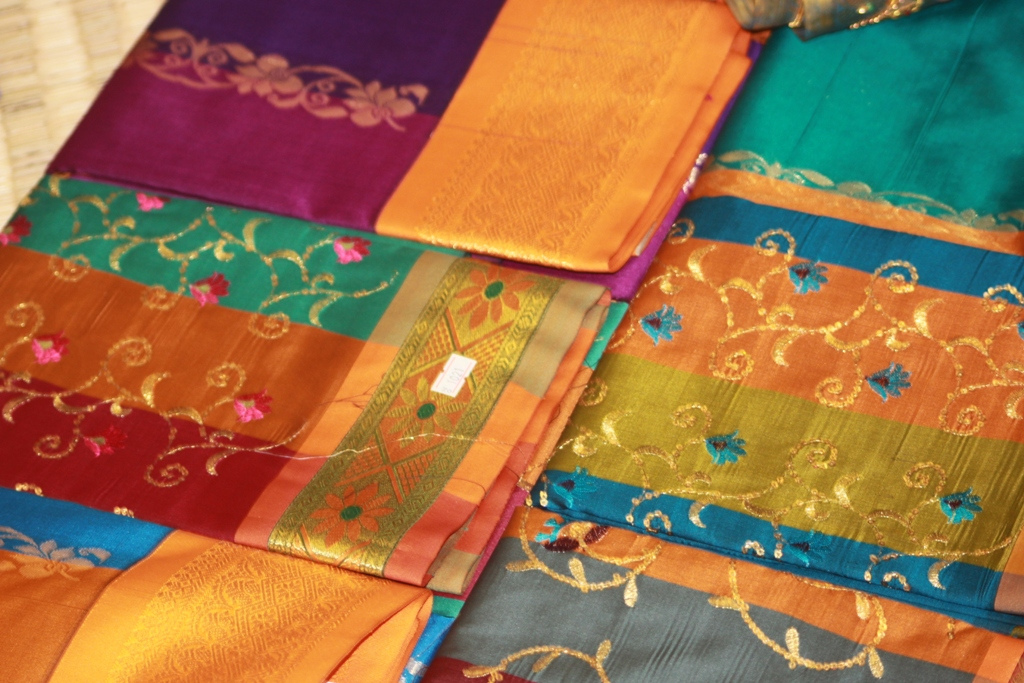
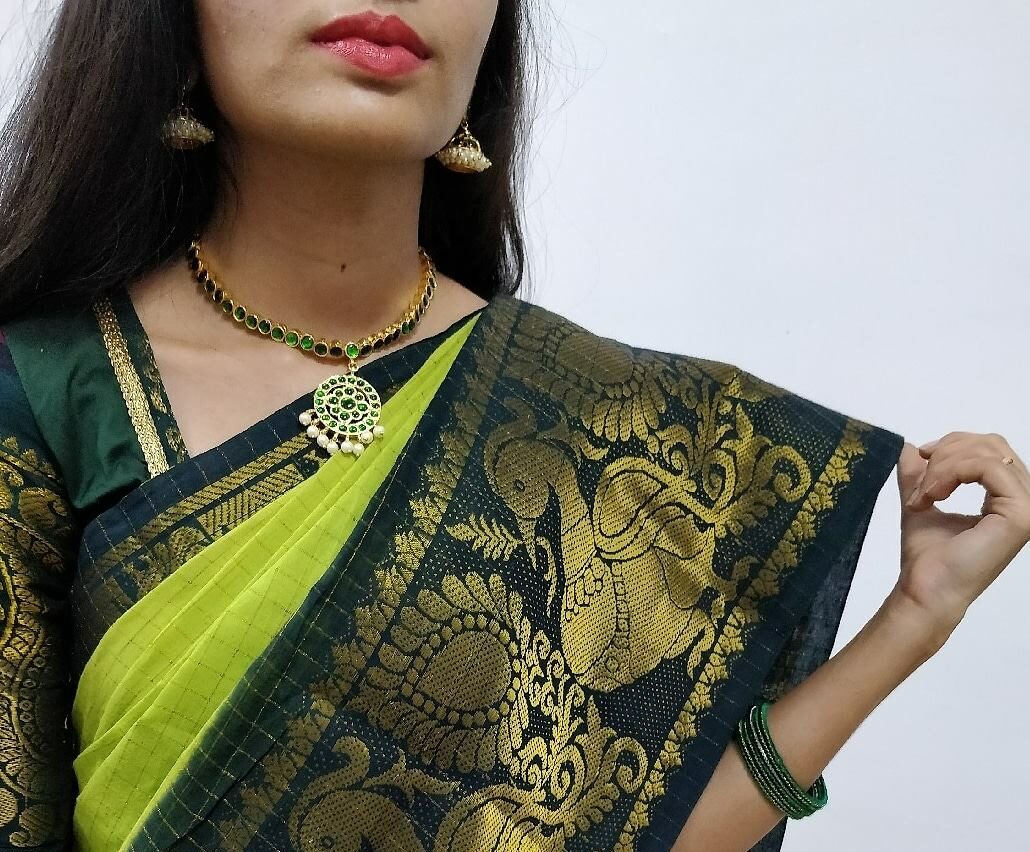
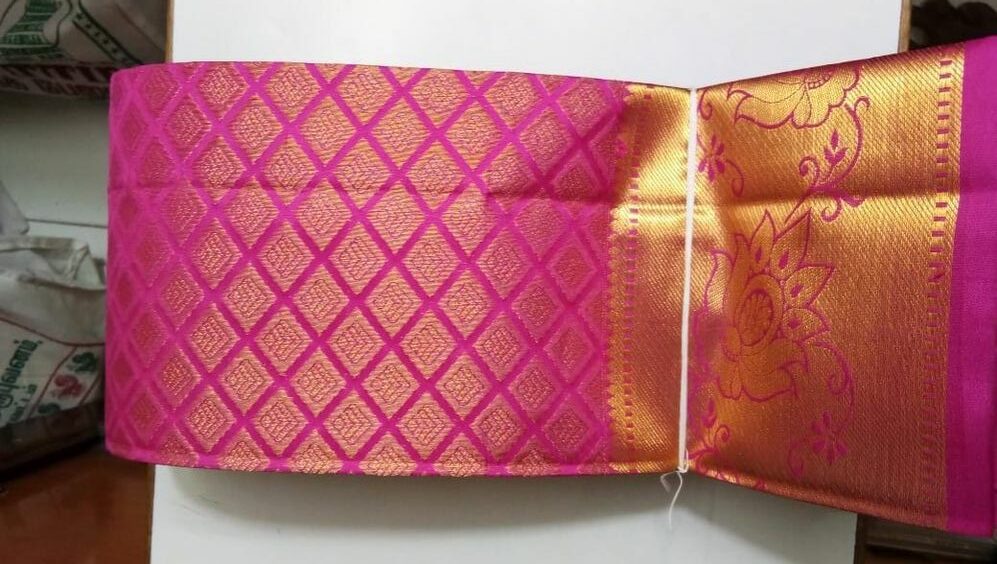
Kanchipuram silk sarees, also known as Kanjivaram sarees, are one of the most celebrated GI tagged products of Tamil Nadu. Woven in the town of Kanchipuram, these sarees are renowned for their exquisite craftsmanship and intricate designs. Made from pure silk and adorned with gold or silver zari work, Kanchipuram sarees are a symbol of opulence and elegance. One of the unique characteristics of Kanchipuram sarees is that the borders are woven separately from the saree itself and are interwoven later. The border is so strong that it will not tear even if the body of the saree does. The GI tag, conferred in 2006, ensures that these sarees are woven using traditional techniques and materials, preserving the authenticity and heritage of this traditional craft.
Madurai Sungudi sarees are another prominent GI tagged product from Tamil Nadu. These cotton sarees are handwoven in Madurai and are known for their vibrant colours and unique dot patterns, created by knotting the fabric of the saree to prevent the dye from colouring it when the saree is dyed.. The border is of a contrasting colour to the rich colour of the body of the saree, often gold. The process involves tying small portions of the fabric with thread before dyeing, resulting in beautiful geometric and floral motifs. The GI tag, conferred in 2005, guarantees that these sarees are made using traditional methods, including the use of natural dyes. The light and breathable cotton fabric make Madurai Sungudi sarees perfect for the region’s hot and humid climate, while their elegance and charm make them a favourite among saree connoisseurs.
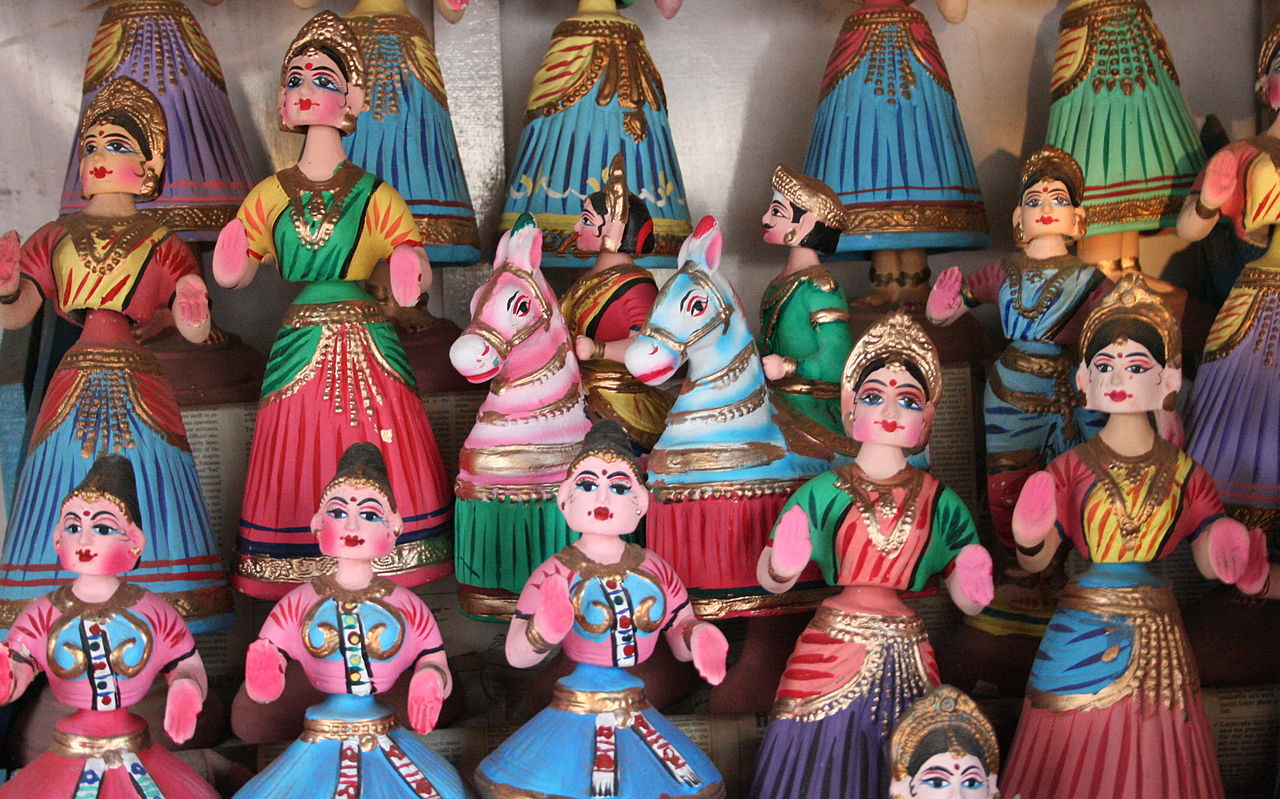
Thanjavur dolls, also known as Thanjavur bommai, are traditional Indian dolls made in the town of Thanjavur. These dolls are crafted from clay and adorned with vibrant colours, and greet people with an endearing feature of an oscillating head and body. Thanjavur dolls depict various mythological characters, deities, dancers and village life, reflecting the rich cultural heritage of Tamil Nadu. The GI tag, awarded in 2008, ensures that these dolls are made using traditional techniques and materials, preserving the authenticity and craftsmanship associated with this art form. Thanjavur dolls are not just decorative pieces but also cherished as symbols of tradition.
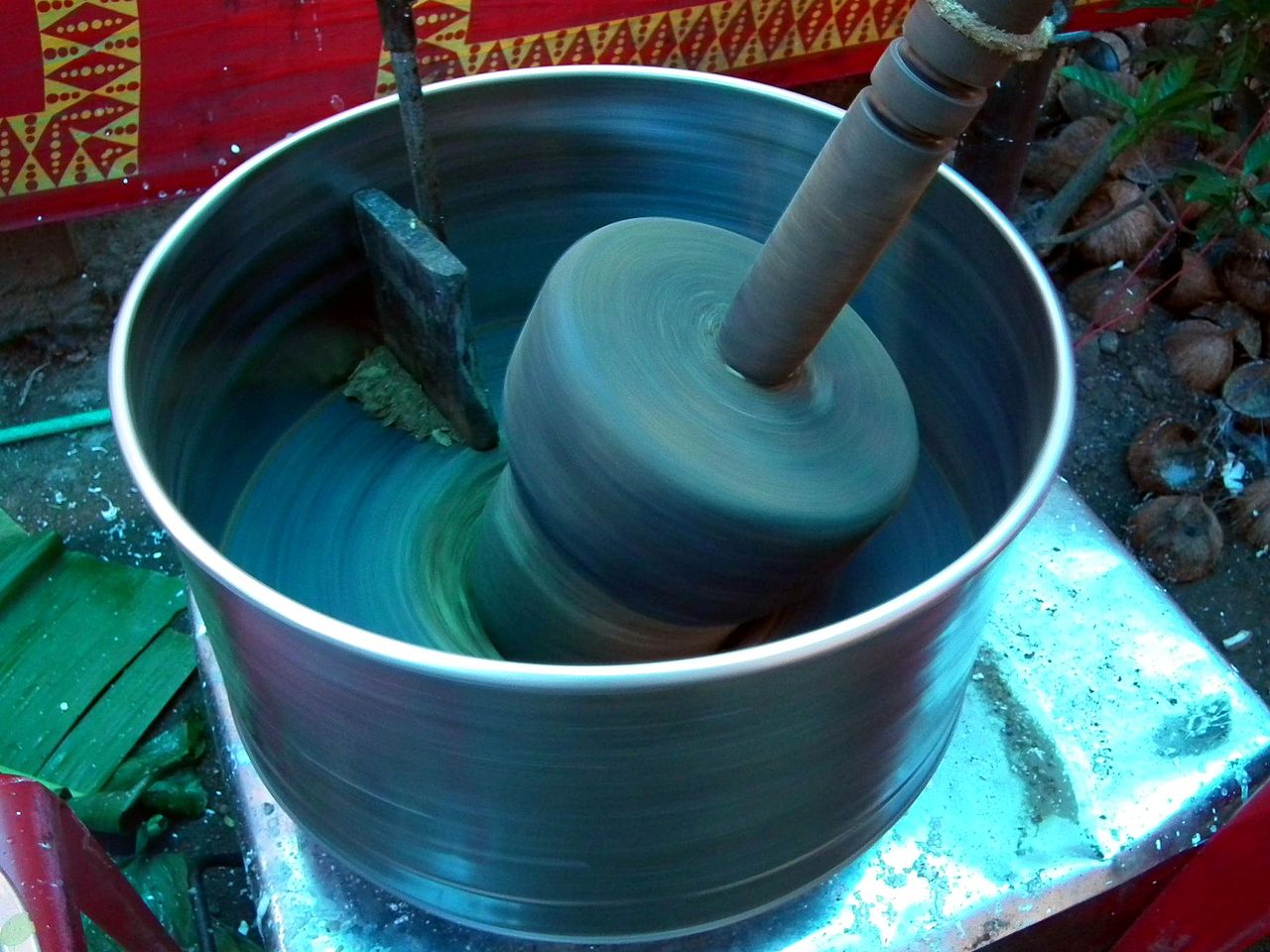
Coimbatore wet grinder is a GI tagged product that holds significant importance in Tamil Nadu’s culinary culture. These grinders consist of a rotating rock granite stone that crushes the pulses or grain required, and are widely used in households and commercial establishments to make idli, dosa, and other traditional South Indian dishes. Earlier, they were made entirely of granite, but now, Coimbatore wet grinders are known for their high-quality stainless steel drum and stones that enable efficient grinding and preserve the natural flavors of the ingredients. The GI tag ensures that these grinders are manufactured in Coimbatore using traditional methods and materials, maintaining the authenticity and quality of this essential kitchen appliance.
Thirubuvanam silk sarees, also known as Arani silk sarees, are another GI tagged product hailing from Tamil Nadu. Produced in the town of Thirubuvanam, these sarees are known for their lustrous texture and exquisite craftsmanship. Made from pure silk, the weaving process of Thirubuvanam silk sarees involves the use of pit looms and traditional techniques, ensuring the highest quality and authenticity. The sarees have a solidly coloured body, sometimes interwoven with small patterns and intricate designs inspired by nature, temple architecture, and traditional motifs. The borders are made of gold zari, providing a glittering contrast to the rich saree. The GI tag, conferred in 2019, guarantees that Thirubuvanam silk sarees maintain their cultural significance and heritage, making them highly sought-after by women across the world.
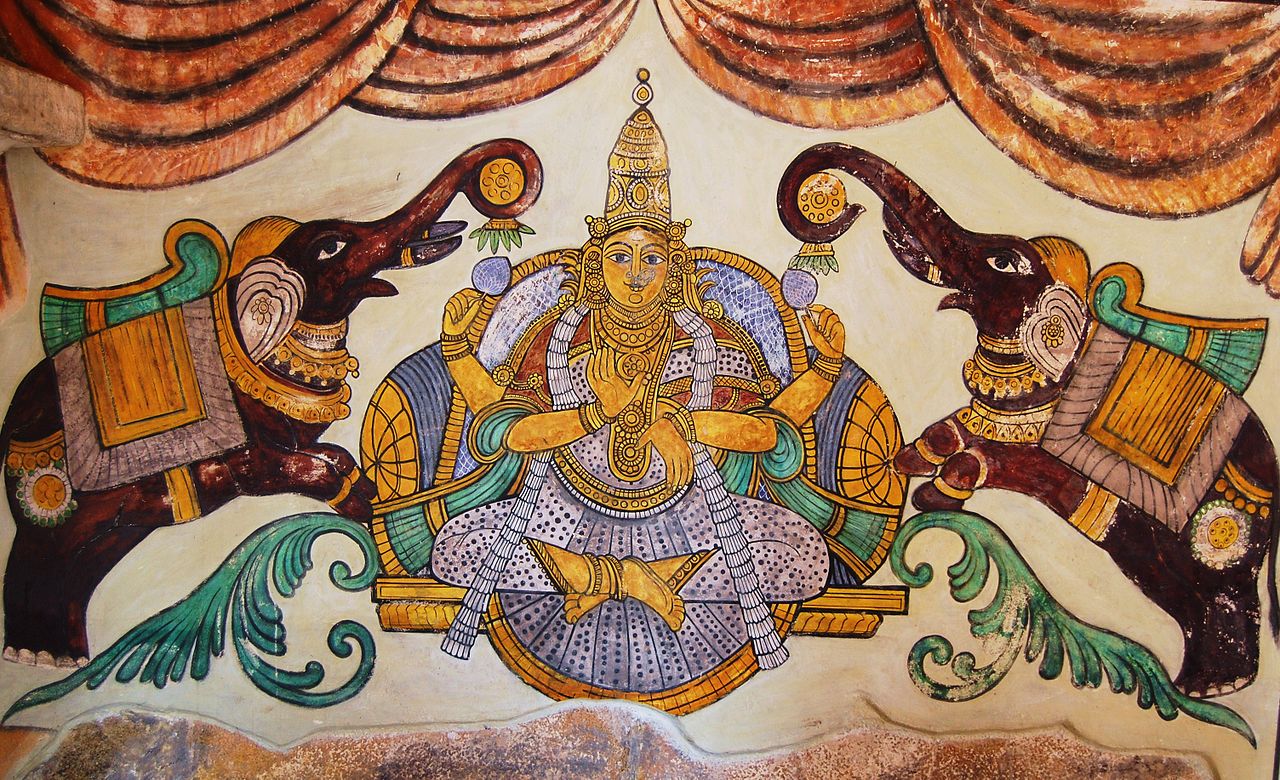
Tanjore paintings are a distinctive form of traditional art that are primarily made inThanjavur, Tamil Nadu, with origins from the eleventh century Chola dynasty. These paintings are characterized by rich colours, intricate detailing, and the use of gold foil to highlight specific elements. Typically depicting deities, mythological scenes, and portraits, Tanjore paintings are known for their religious and cultural significance. The GI tag ensures that these paintings are created using traditional materials such as wood, cloth, natural dyes, and gold foil. Skilled artisans meticulously handcraft each painting, employing techniques passed down through generations. Tanjore paintings continue to captivate art enthusiasts and serve as exquisite pieces of decor and religious devotion.
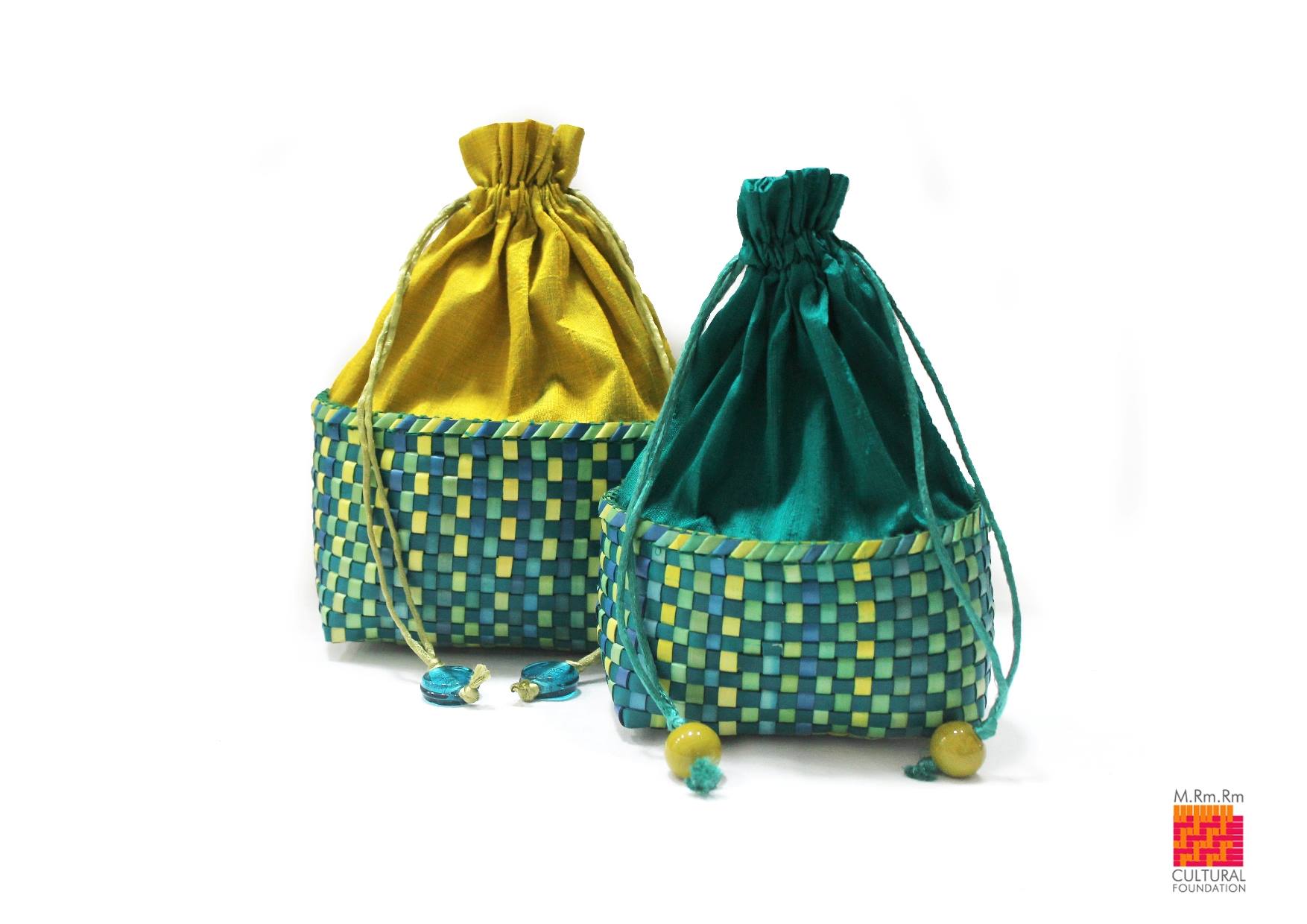
Karaikudi Kottan, also known as Chettinad Kottan, is a unique handicraft from the Chettinad region of Tamil Nadu. These intricately woven baskets are made from dried and dyed palm leaves and are known for their sturdiness and aesthetic appeal. Karaikudi Kottan baskets come in various shapes and sizes, serving both utilitarian and decorative purposes. The skillful artisans weave the baskets by hand, employing traditional techniques that have been passed down through generations. The GI tag was awarded in 2013 and it ensures the authenticity and preservation of this ancient craft, providing recognition and economic support to the artisans involved in its production.
Conclusion
The Geographical Indication tagged products of Tamil Nadu represent the rich cultural heritage and traditional craftsmanship of the region. From the opulence of Kanchipuram silk sarees to the intricacy of Thanjavur dolls and the durability of Chettinad Athangudi tiles, each product showcases the skill and dedication of Tamil Nadu’s artisans. The GI tag plays a crucial role in preserving and promoting these unique products, ensuring that they maintain their authenticity, cultural significance, and quality. These GI tagged products not only contribute to the economy but also serve as a testament to Tamil Nadu’s vibrant artistic traditions and the remarkable skills of its artisans.
Traveling is a lifetime experience that no material thing can ever replace. What you experience while away from home, packing your whole life in a bag and living as a nomad in some foreign land, teaches you so much more than what you can learn in years worth of education or work. If you’re lucky enough to afford to travel, you should definitely plan a trip this summer and explore different cultures, traditions, and ways of life.
To plan the best trip, you should check out amazing deals and travel plans online or through various travel apps available on both Google Play Store and App Store for Apple. Travel apps make planning a trip so much easier, with air ticket bookings to finding hotel rooms, and tourist spots. If you have planned and booked in advance, you will save yourself the trouble of doing it on the spot and may get discounted prices for pre-bookings. For this, you’ll need a steady internet connection like Windstream Internet. Windstream Internet plans are for everyone, showcasing a diverse price range, and speed limits.
So, if you’ve decided on taking that trip you’ve been dreaming of since forever, we have come up with a list of all the essentials that you need to carry when you pack for a trip. Read on before you zip your bags to take off!
1. A Universal Power Adapted for all your Batteries
With so many gadgets that are an essential part of our lives, we always have to make sure their batteries are charged so we can use them whenever we need them. And when you’re traveling, there is no guarantee that you will get your desired plugs or switches and you can’t depend on the hotel room to provide one. So make sure you pack your very own universal power adapter that can be plugged in anywhere and charge as many of your devices as you needed.
This way, you won’t even have to carry separate chargers for every gadget and get one in all kind solution. If you don’t have one already, it’s time to order now!
2. A Fanny pack for Important Travel documents
The most important thing you need while traveling is all your travel documents like your passport, ID card, and a Visa if need be. If you pack your travel documents in your luggage, it will be too much of a hassle to take them out every time you need them. So you need them somewhere very accessible and where you know they’re very safe as well.
A fanny pack is the best way to carry your valuables and travel documents so you can easily take them out and tuck them away safely.
3. Travel flask to keep you hydrated all the time
Traveling means you’ll b on your feet a lot more than you’re used to. And if you’re planning a trip in summer, you’d want to keep yourself hydrated throughout your day. The best way to do that is to carry your own temperature-controlling flask that will keep cool water cool for a long while. So as you hike and walk amidst the exotic streets of your destination, don’t forget to sip along!
4. Sanitizing Wipes so you can clean up anywhere
If Covid has taught us one thing, it is that you need to take good care of your hygiene, especially your hands before you eat. And you may not find water or a wash basin outdoors everywhere, you need an alternative. We suggest you get a pack of hand sanitizing wipes that you can easily use to clean your hands on the go.
Whether you’ve spilled some tea on your new pants, or your hands are sweaty from excitement, just take out a wipe and clean it off!
5. Apple AirTag to easily look for your luggage
Finding your luggage at the airport is a task. Especially when so many people have similar bags as you. The best and easiest way to find your way to your bag is to place a tracker on it that you can navigate through an app on your phone. We recommend the Apple AirTag which works wonders. Where ever your bag is, the find my app will lead you directly to it in the blink of an app.
Simply go to your iPhone settings and head over to find my network. There you will see all the devices you have linked to your phone. And voila! Just track your luggage and save a lot of time at the airport.
Wrapping It Up
We hope you like our travel accessory essentials. Be sure to plan and pack ahead so you’re not looking for anything last moment. If you also have any suggestions for things to take on a trip, do let us know in the comments below.
Born in a liberal world
Brought up in a free atmosphere
You wanna fly in the sky with birds along
“Freedom is my birth Right” was thy song
Your dreams were big, aims infinite
Fearless were you, nothing was there to fright
The world is your oyster, you were the one
For whom everything was destined to be won
Every single instant was full of magic
You were always kidding nothing was tragic
You wanted to be a superhero, saving the world around
You always wondered of any super power yet to be found
But as you grew up and marched towards your goals
They said your dreams are fake and stabbed your soul
For the first time in your life, you doubted thy own
You asked if this person in the mirror really was well known
All of a sudden cold chilly wind started to blow
Disappointed you were, feeling really low
‘Are my dreams too big to be won’ you asked yourself
Fear of loss gripped your heart and you cried for help
You lowered your dreams, stopped believing in magic
Nothing could make you smile, everything was tragic
You felt really weak and vices surrounded you
You refrained from most but to skip this sucking life accepted few
Every time you involved in something vile
You experienced fake joy, though only for a while
And as you bounced back to real life
Your heart was pierced by guilt’s knife
I was in dark woods wandering hopelessly around
I came across a weak horse, his legs in blood were chain bound
I took pity on the poor creature and gave him some weed
But hungry creature refused, demanding some other need
Confused with his behaviour I removed his chain
In a flash, the horse galloped forward forgetting his stain
My heart was pounding, my breath was fast
As my still bewildered eyes on the horse were cast
Then from somewhere deep within; the thought hit me out
What had been the chain for horse, were for me my fear and doubt
I wanted to break off all boundaries and set myself free
How could I possibly not move when I was not as unlucky as tree
Hysterically I started running forward in vain
Thrill n joy had filled my heart instead of pain
I wanted to run fast, I wanted to march towards my dreams
Not even fate could have stopped me as it seems
I wanted to relive this free life, this fresh breath
This freedom that nobody can snatch, not even my death
Pizza is a beloved dish enjoyed by people around the world, but have you ever thought about turning this savory treat into a delightful dessert? Enter dessert pizzas, a creative and mouthwatering twist on the classic favorite that will leave you craving for more. From the indulgent Chocolate Pizza to the endless possibilities of homemade pizzas, we have curated a list of 12 delightful ideas to bake at home and satisfy your sweet tooth.
Chocolate Pizza:
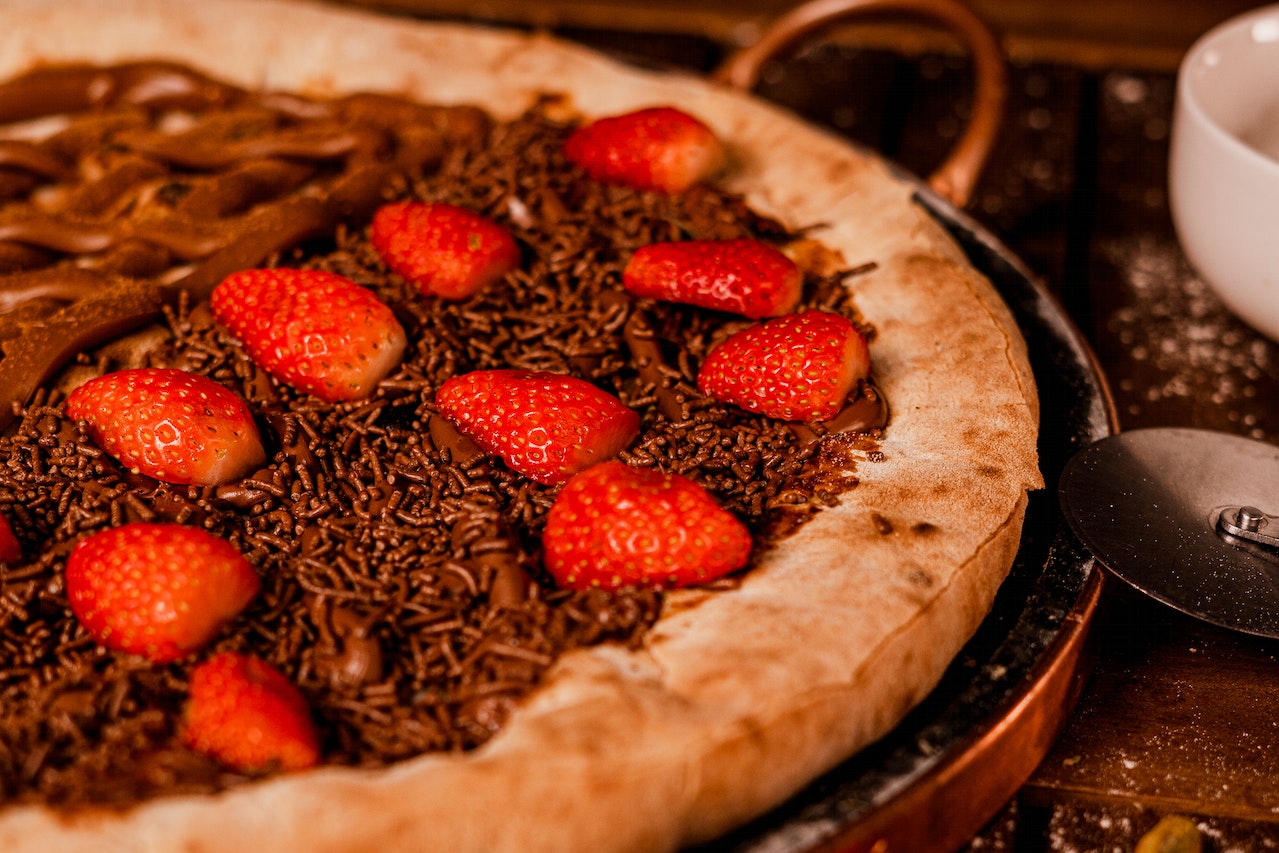
Let’s start with a classic favorite – the chocolate pizza. This delectable dessert pizza features a chocolate cookie crust topped with a rich layer of melted chocolate, sprinkled with an array of colorful candies, nuts, and marshmallows. It’s a treat that both kids and adults will adore, and it’s the perfect addition to any party or celebration.
Fruit Fiesta Pizza:
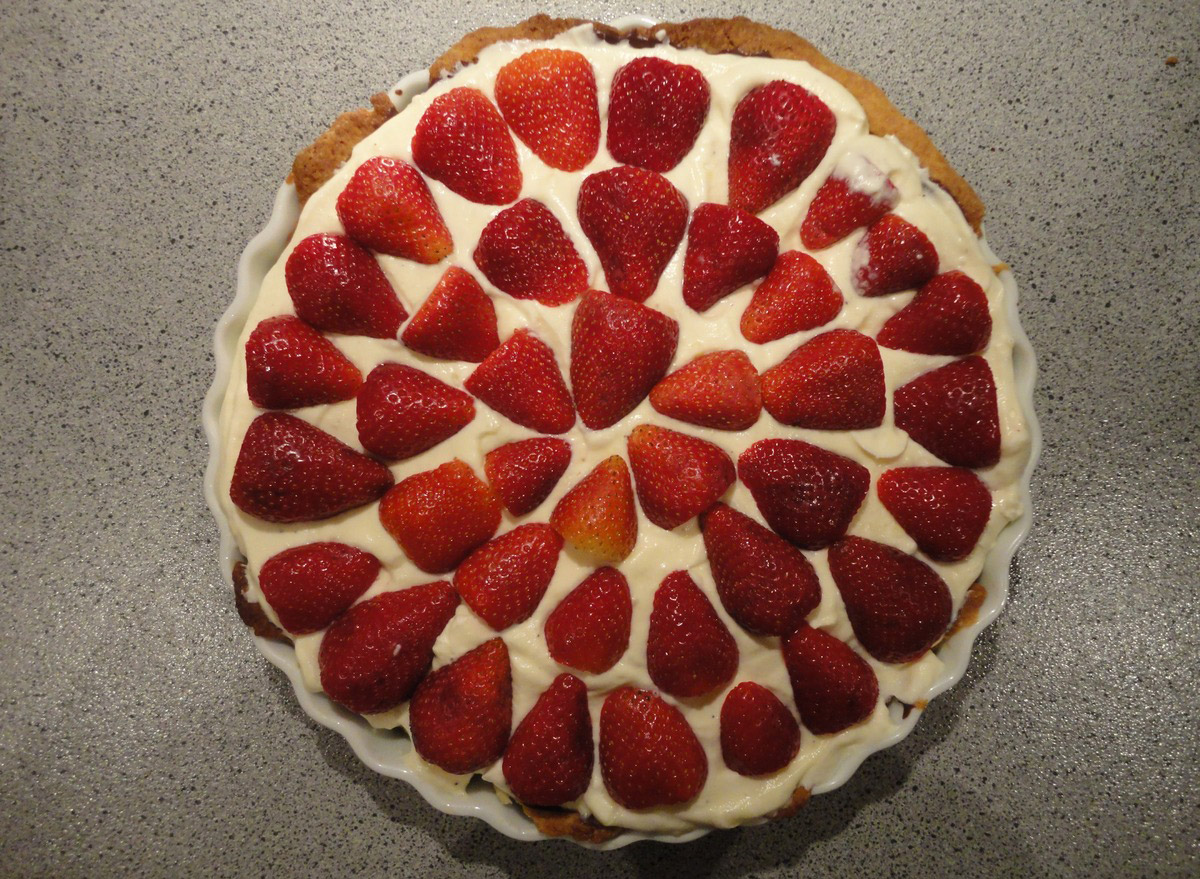
Embrace the freshness of fruits with a Fruit Fiesta Pizza. A sugar cookie crust serves as the canvas for a luscious layer of cream cheese frosting, topped with a vibrant assortment of fresh fruits like strawberries, blueberries, kiwis, and peaches. This pizza is a refreshing and delightful choice, especially during the summertime.
Indulge in the heavenly combination of Nutella and bananas with a Nutella Banana Pizza. A soft and fluffy pizza dough is generously spread with Nutella, and sliced bananas are arranged on top. A drizzle of honey or a sprinkle of chopped nuts adds the perfect finishing touch to this delicious dessert.
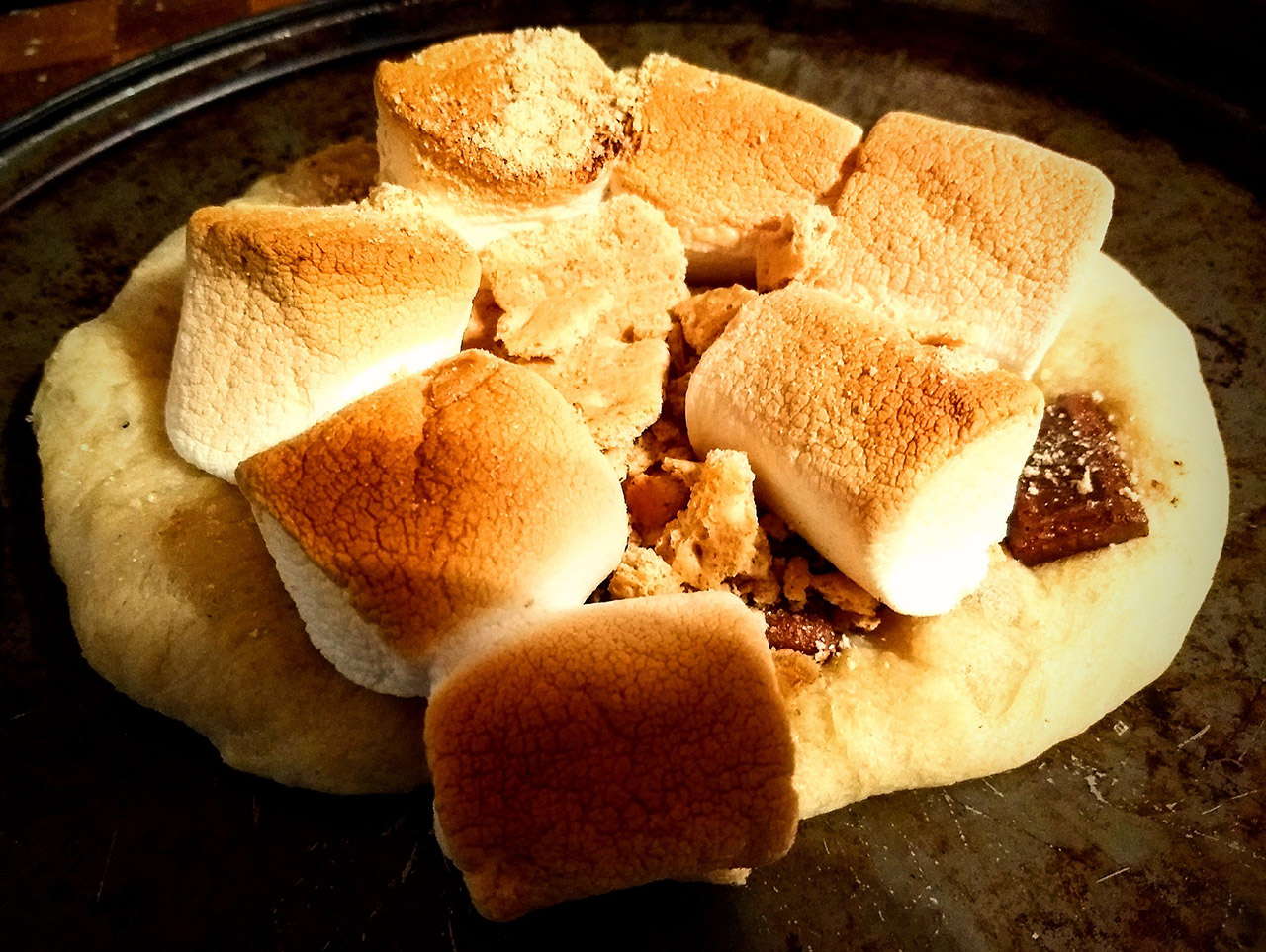
For a campfire-inspired treat, try the S’mores Pizza. A graham cracker crust is topped with melted chocolate and mini marshmallows. Once baked, the marshmallows turn golden and toasty, recreating the classic S’mores experience uniquely and delightfully.
Peanut Butter Cup Pizza:
Embrace the delightful combination of peanut butter and chocolate with a Peanut Butter Cup Pizza. A chewy cookie crust serves as the base for a layer of creamy peanut butter, topped with chopped peanut butter cups, chocolate chips, and a drizzle of melted chocolate. It’s a dream come true for all the peanut butter lovers out there.
Capture the essence of fall with a Caramel Apple Pizza. A buttery pie crust is topped with a luscious layer of caramel sauce, sliced apples, and a sprinkle of cinnamon sugar. Once baked, this pizza fills your home with the comforting aroma of spiced apples and caramel.
Lemon Berry Pizza:
For a burst of zesty and fruity flavors, try the Lemon Berry Pizza. A sugar cookie crust is layered with a tangy lemon cream cheese frosting and topped with a medley of fresh berries like raspberries, blueberries, and blackberries. It’s a delightful and refreshing treat that’s perfect for any occasion.
Indulge in the flavors of a classic Italian cannoli with a Cannoli Pizza. Pizza dough is baked to perfection and then topped with a creamy ricotta cheese filling infused with chocolate chips and a touch of citrus. This dessert pizza is a delightful homage to the traditional Italian pastry.
For a simple yet delightful treat, try the Cinnamon Sugar Pizza. Pizza dough is brushed with melted butter and generously sprinkled with a mixture of cinnamon and sugar. Once baked, this pizza boasts a crispy and cinnamon-infused crust that’s perfect for dipping in sweet glazes or fruit sauces.
Black Forest Pizza:
Capture the allure of the Black Forest Cake with a Black Forest Pizza. A chocolate cookie crust is layered with a cherry pie filling and topped with chocolate shavings and whipped cream. Each slice offers a delightful blend of chocolate and cherries, reminiscent of the beloved cake.
Cheesecake Fruit Pizza:
Combine the flavors of cheesecake and fresh fruits with a Cheesecake Fruit Pizza. A cookie crust is topped with a creamy layer of cheesecake filling, which acts as the perfect canvas for an artful arrangement of sliced fruits. This dessert pizza is a celebration of colors, flavors, and textures.
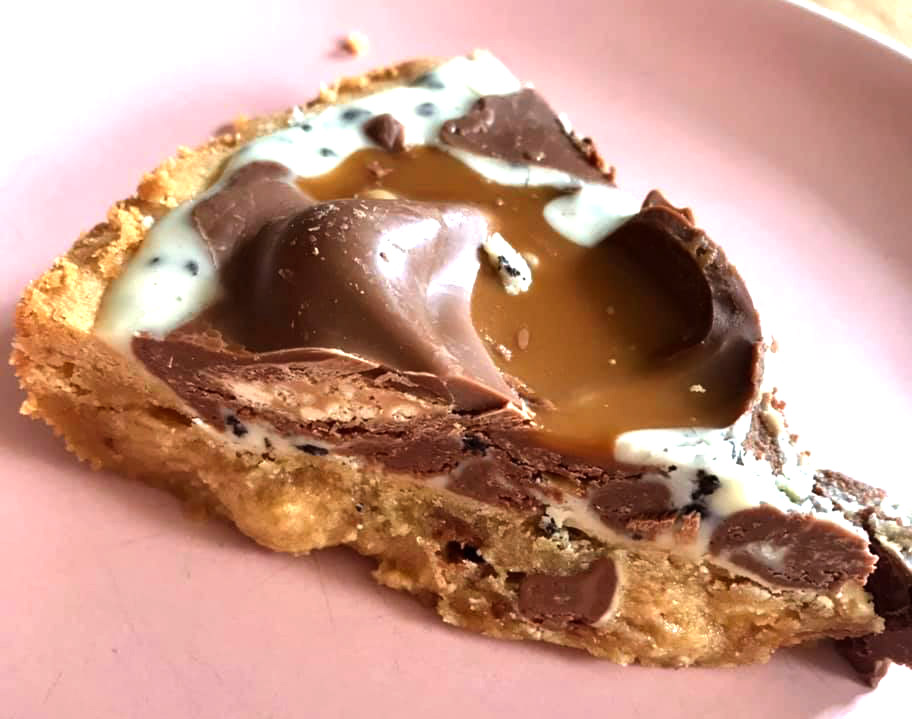
For a treat that’s perfect for cookie dough lovers, try the Cookie Dough Pizza. A cookie crust is topped with edible cookie dough, chocolate chips, and a drizzle of melted chocolate. It’s a delightful and fun twist on traditional pizzas.
Conclusion:
Dessert pizzas are a delightful and creative way to indulge your sweet tooth and surprise your taste buds with unique and mouthwatering flavors. From the rich and indulgent Choco Pizza to the fresh and fruity Fruit Fiesta Pizza, each dessert pizza offers a unique and delightful experience that’s perfect for any occasion or celebration.
Baking pizzas at home allows you to unleash your creativity and experiment with different flavors and toppings. You can customize each pizza to suit your preferences, and they make for a fun and interactive activity for the whole family. Whether you’re hosting a party, celebrating a special occasion, or simply treating yourself to a delightful dessert, pizzas are a delightful and memorable choice.
So, don your apron, preheat the oven, and get ready to create some epic and delicious sweet pizzas in the comfort of your home. These delightful treats are sure to bring joy and smiles to everyone who takes a bite.