Must-Try Hearty Dishes from Traditional food of Punjab

0
Traditional-food-of-Punjab
Image – Shankar s./Flickr

Punjabi cuisine is heavily influenced by the ancient Indus Valley Civilization’s agriculture and farming lifestyle. The soil of the Indian Punjab, known as the ‘Granary of India’ or ‘India’s Bread-basket,’ is suitable for growing wheat. Rice and wheat are the two major crops grown by Punjabi farmers, and they are the key crops grown during the Kharif and Rabi seasons, respectively. Since time immemorial, the indigenous Punjab Basmati rice has been the pride of the province. Cattle are the primary source of dairy products in the region, ranging from ghee, butter, clarified butter, curd, paneer (cottage cheese), and a variety of delicious delicacies. As a result, staple goods farmed locally, such as dairy products, are an important element of the local diet. Let’s take a look at some of the traditional food of Punjab that express the true spirit of Punjabi culture.

Cooking Techniques and Tandoor

Traditional food of Punjab Cooking Techniques and Tandoor
Image-Adam Cohn/Flickr

The people still use some of the old cooking facilities, like the Punjabi bhathi, which is akin to a masonry oven, in order to practise various traditional cooking styles. The Punjabi bhathi is made of bricks or mud and clay, and the top is covered with metal. Traditional Punjabi stoves and ovens are called Chulla and Bharolli, respectively, alternately band chulla and wadda chulla ovens are popular in Punjabi houses.

A traditional clay oven is frequently seen in the courtyards of Punjabi families, the Punjabi tandoor is a vital part of preparing numerous Punjabi food dishes. In the rural areas of Punjab, there is also a custom of holding community tandoors. Kath tandoors are the name given to these tandoors. A Punjabi tandoor is a bell-shaped oven that is either raised above or buried in the ground. The oven’s fire is made up of wood and charcoal. After the partition of India in 1947, which saw. The tandoor is used to make a variety of bread such as roti and naan, as well as delectable meat meals such as tandoori chicken, which is made by roasting chicken with spices and yoghourt.

Let’s have a look at 10 traditional Punjabi food that are commonly consumed for breakfast, main courses, snacks, and desserts.

Lassi

Traditional food of Punjab-Lassi
Image- Max Pixel

Punjabis are proud of their lassi, a drink that is well-known throughout the world. Despite its saltiness, the original lassi is sweet and served with a dab of milk and butter to make it as rich as possible. These days, flavours such as mango rose or strawberry are added to give it a twist while battling the summer heat. Almost all restaurants, even those that aren’t Punjabi, serve it, demonstrating the drink’s widespread popularity.

Sarso Ka Saag Makki di Roti

Traditional food of Punjab - Sarso Ka Saag Makki di Roti
Image- Wikimedia

Sarso ka Saag and Makki di Roti are a match made in heaven, and are a staple in Punjabi households, especially during the winter months. Because mustard leaves are a little bitter, spinach can be added to make it healthier and tastier, and a dollop of the famed desi-ghee can be added for good measure as a wintery guilty pleasure! It’s a filling dinner that’s usually served with jaggery. During the winter, this feeds the body with all of the critical nutrients it requires.

Paratha

Traditional food of Punjab - Paratha
Image- Pixahive

You’ve probably had a parantha at least once in your life, no matter where you are. This bread, whether plain or packed, is a regular in most Punjabi households. A paratha is almost always the most popular food to eat at a Dhaba, even when travelling. Punjabis enjoy theirs fried in desi ghee. It’s a humble marriage made in gourmet heaven when served with cold curd and pickle. Stuffings come in an unlimited variety of flavours. From potatoes, onions, cottage cheese to keema, anything else you can think of! The popularity of the dish is evidenced by the fact that the national capital has a ‘paranthe wali gali’ dedicated to serving up all possible versions.

Kadhi Pakora

Traditional food of Punjab - Kadhi Pakora
Image- Wikimedia

The Punjabi kadhi affirms the richness of Punjab’s everyday food and people. In some aspects, the Punjabi kadhi differs from its Gujarati version. It has besan pakoras and is hot and sour, whereas the Gujarati version is sweeter, lighter in texture and white in colour. Pakoras are typically comprised of besan and onions.

Rajma Chawal

Traditional food of Punjab - Rajma Chawal
Image- Wikimedia

It’s a must-have in every north Indian household, as well as a source of nostalgia for many. It feels odd to eat rajma or chawal with anything other than each other, like breaking up your favourite couple. Despite the fact that it originates in Kashmir, it is a favourite among all Punjabis and their grandmothers. To add to the flavour, this Punjabi meal is usually served with a side of pickled onions. Some people add a pinch of crushed papad to their rajma chawal to give it a little extra crunch.

Chole-Kulcha

Traditional food of Punjab - Chole Kulche
Image- Wikimedia

Whether it’s Amritsari chole or Peshawari chole, they’re both excellent; the only difference is the origin. This chickpea dish is best served with paratha or naan and is a mainstay in Punjabi cuisine. You can also just eat spoonfuls of it plain, given how delicious it is. The only difference is that Peshwari is a little drier, whereas Amritsar has a bit of gravy. Kulcha is a wheat-based flatbread that is typically eaten with chole. The bread is prepared in a tandoor or on a griddle, then brushed with ghee and served while still warm. It’s chewy and soft, and it’s easy to make on a traditional Tawa, making it accessible to both commoners and royalty, which is why it’s so popular in North India.

Missi Roti

Traditional food of Punjab - Missi roti
Image- Naoto Sato/Flickr

Missi roti is a Punjabi dish that is also popular in many other northern Indian states. This flatbread is frequently prepared at home. Chickpea flour or besan, when combined with onions, gives an incredible flavour to this cuisine. Missi Rotis are very common in Punjabi eateries. In restaurants, it’s frequently served with butter. To make flavoured missi roti onions. and methi or fenugreek leaves are added to the dish. Grated carrots, grated beets, and cabbage are among other ingredients that can be used to make missi roti. These flatbreads can be made plain as well. Missi roti is served with any type of dal.

Tandoori Chicken

Traditional food of Punjab - Tandoori Chicken
Image- thebittenword.com / Flickr

Tandoori Chicken is a delectable dish made up of medium-sized chunks of chicken marinated in yoghurt and seasoned with tandoori masala and other seasonings. The chicken is skewered and grilled in a tandoor oven. The city of Amritsar offers some of the best Tandoori Chicken restaurants.

Amritsari Machhi

Traditional food of Punjab - Amritsari Machhi
Image- Wikimedia

The dish is also known as Amritsari Machhi and is a popular appetiser in Amritsar. It’s created using gramme flour batter and accompanied with a delectable mint and coriander chutney. Carom seeds (ajwain), gramme flour (besan), and the usage of whole fish are the secret components that distinguish this dish.

Pinni

Traditional food of Punjab - Pinni
Image- Wikimedia

Pinni is a Punjabi dish that is typically served during the winter months. It’s cooked with desi ghee, wheat flour, jaggery, and almonds and served as a treat. Raisins can be used as well. Urad dal pinni is a pinni variation. Pinni is also a generic term for pastries or sweets that are shaped like a circle. Use khoya in the pinnis for extra taste. Pinnis do not need to be cooled and do not go bad for a long period. Pinnis are topped with crushed cardamom and served hot with tea or warm dairy.

Punjabi cuisine has a distinct flavour profile that is both strong and flavorful. Because of the rich blend of spices and diverse ingredients, it has very popular in India as well as abroad. Punjabi cuisine is the ultimate comfort food, making it one of India’s best cuisines.

Arunachal Pradesh Food – Unique Delicacies from the Land of Mountains

0
Arunachal-Pradesh-Food
Image – Arun Katiyar/Flickr

Food is an original and primary feature that piques the curiosity of people exploring a new place. Good food rich in authentic flavors and spice particular to a place gives an insight into the tradition and culture of the place. Northeast India is an area that generates interest because of its wonderful scenic beauty, culture, and unique delicacies. 

Arunachal Pradesh is one of the sister states of Northeast India. Arunachal Pradesh is rich with natural wonders, generations of tradition, and flavourful foods. The state is home to many tribal communities. All the communities have their distinctive tastes, which come together to form the delicacies of Arunachal Pradesh. 

In this article, we bring to you some of the unique Arunachal Pradesh food. To all the readers who like to explore cuisines, do read on. The state has to offer a lot of lip-smacking delicacies. Read on to find the dishes that suit your taste buds. 

Bamboo Shoot

Arunachal-Pradesh-Food-Bamboo-Shoot
Image – cherom nania’s world

Bamboo shoot is one of the staple foods of Arunachal Pradesh and other North-Eastern states of India. The bamboo shoot’s taste is very delicate and is a part of many dishes. Bamboo shoot is a staple food and is a common accompaniment in vegetables, meat, and also in making pickles. The locals of Arunachal Pradesh marinate the bamboo shoots with different spices and store them for later use. The tingling and authentic taste of the food grows to become a favorite amongst tourists also. Many new visitors to the state become great fans of bamboo shoots. They often try to get their hands on packets of bamboo shoot pickles as a token of remembrance.  

Chura Sabzi 

Arunachal-Pradesh-Food-Chura-Sabzi
Image – Dawa Droma

Chura Sabzi is a traditional curry dish of Arunachal Pradesh. The key ingredients of this dish are fermented cheese and dashes of chili flakes. The fermented cheese is unique and authentic to the state, and Yak or cow’s milk make the cheese. Chura Sabzi with a steaming plate of rice is a popular combination. This dish leaves a trail of tingling sensation because of the zing of chilies. Chura Sabzi is a famous dish of Arunachal Pradesh, and for those who prefer spicy foods, do give this dish a try.  

Ngatok  

Arunachal-Pradesh-Food, Ngatok
Image – Wikimedia

The North-Eastern states of India are famous for their non-vegetarian dishes. Meat and fish are part of the staple foods. Ngatok is a popular fish stew of Arunachal Pradesh. The flavors of the dish come from lemongrass, herbs, and other traditional spices. Ngatok is enjoyable both as an independent stew or a side dish. The primitive style of preparing this dish is also very unique. The fishes are wrapped in banana leaves and covered with charcoal. A hot stone is also a part of the cooking process. The aromatic smell of the spices and the charcoal is drool-worthy. One must try this dish for themselves to experience the rich delicacies Arunachal Pradesh has to offer. 

Pasa  

Arunachal-Pradesh-Food-Pasa
Image – Mausam Baruah

Pasa is another fish dish of the state. It is a soup made with fresh or raw fish. It is a hearty and very fulfilling dish that is in more demand during the winter season. Green chili, ginger, garlic, meat paste, khumpatt leaves, makat, and fish, make the soup rich in taste. A bowl of pasa will make your heart happy and your stomach full. Those of you who are a fan of fish items try this soup dish to get a new taste and take on fish dishes.  

Pickles  

Arunachal-Pradesh-Food-Pickles
Image – Samarth Eduskills

Pickles are an indigenous side dish popular in India. Different states have distinctive styles and ingredients for making pickles, and Arunachal Pradesh also has its fair share of famous pickles, even among people of other forms of India. 

Pehak 

Arunachal-Pradesh-Food-Pehak
Image source

Pehak is a chutney made with fermented soya bean and king chili. It is an authentic local dish of Arunachal Pradesh that is very popular among all who try it. The fiery and tart taste of pehak goes very well with rice and Lukter, another traditional dish of the state. One must taste this dish for themselves, and if the taste suits you, you will be a happy customer in the local markets. 

Pika Pila  

Arunachal-Pradesh-Food-Pika-Pila
Image – Tribal Delight Restaurant

Pika pila is a famous pickle popularly made by the Apatani tribe of Arunachal Pradesh. The main ingredients of this pickle are bamboo shoot and pork fat, along with the mandatory King chili. The taste is very hot, perfect for having it with rice or flatbreads.  

Lukter  

Arunachal-Pradesh-Food-Lukter
Image – Pinch og Paul

Lukter is a meat dish of Arunachal Pradesh. There are no fancy ingredients in the recipe of making this dish, and it is a straightforward dish made with cooked dry meat and Bhut Jolokia, the famous king chili flakes. The spicy and authentic taste of Lukter can be a side dish or enjoyed as is. The meat fans visiting the state must try this for themselves and enjoy the local style of dry meat. 

Beverages  

There are two trendy local beverages of Arunachal Pradesh. These drinks are- 

Apong 

Arunachal-Pradesh-Drink-Apong
Image – Meme Ter vlogs

Apong is a local rice beer and is a popular traditional drink among the locals of Arunachal Pradesh. This drink is homemade and is naturally devoid of any chemicals, and the locals enjoy it during special occasions. 

Marua 

Marua is also a traditional homemade drink of the state. For this drink, millet is the key ingredient instead of rice.  

Both these drinks are part of the tradition of the state. Consumption of these drinks causes a light buzz. The natural quality of the drinks makes it a popular choice, and a glass or two of these will cause nothing to worry about.

These dishes of Arunachal Pradesh are rich in the traditional spice and herbs primitive to the state, and the locals enjoy it as their staple food. Visitors who are curious about the different delicacies of India must try out these local delicacies of Arunachal Pradesh. Most people fall in love with the authentic taste of the foods and crave more. 

Dubai’s Top 5 Theme Parks You Must Visit

1
Dubai's-Top-5-Theme-Parks
Image – Jeremy Thompson/Flickr

Dubai is a well-known tourism destination that attracts visitors from all over the world. With its sand dunes, desert safaris, the Burj Khalifa, incredible gardens, and lovely beaches, Dubai never ceases to astound its visitors. Even a two-day getaway would rejuvenate you. What is even more pleasing is Dubai’s atmosphere, the perfect blend of luxury and quaintness for everyone.

Dubai’s theme parks are one of the city’s attractions. Dubai is well-known for its several amusement parks, each eliciting a distinct sensation of appeal. From Ferrari World, which has the world’s fastest roller coaster, to Legoland Water Park, which is targeted at youngsters aged 12 and above, each attraction has its own fervor. Rides shows, and live characters abound in theme parks, making you want to jump for joy. Also, if you’re planning a vacation to Dubai and adventure is on your bucket list, check out the Thrillophilia reviews on Twitter and plan a fantastic trip to Dubai with us.

Here are the top five best theme parks, all of which will certainly blow your mind.

1. IMG Worlds of Adventure

IMG-Worlds-of-Adventure-Dubai
Image – Jeremy Thompson/Flickr

Immerse yourself in one of Dubai’s largest themed entertainment parks. IMG Boulevard, Lost Valley, Cartoon Network, MARVEL, and Novo Cinemas are the five sections of the IMG worlds, each one promising to take you to another planet. Live studios, real-time characters (from Cartoon Network and Marvel), and some of the tense rides will provide you with plenty of memories that will last a lifetime. This place is suitable for all ages, and both children and adults will have a wonderful time there. Apart from some of these, the park also offers eating options and a separate movie theater where you can relax with your loved ones.

2. Motiongate

Motiongate-Dubai
Image – Wikimedia

Motiongate is a Hollywood-themed theme park that attracts visitors worldwide to experience its five distinct themed zones and immerse themselves in a different universe. Try the Hunger Games-themed roller coaster or the Capitol Bullet Train, which defies gravity. Kung Fu Panda: The Unstoppable Greatness is a good choice for those looking for something unusual. There are also spots where you may truly soar with the Dragons or have a frolicking experience with the Zoosters. After you’ve finished your travels, you may gorge yourself on delectable fare served at the arena’s eateries, which are usually included in Motiongate tickets purchased online.

3. Warner Bros. World

Warner-Bros-World
Image – Ankur Panchbudhe/Flickr

As soon as you enter the Warner Bros. You will be taken to an unique universe when you play World. Get awestruck by the six regions, each of which is designed on another superhero or comic figure to give you a true sense of immersion. In the Warner Bros. universe, you’ll find dazzling performances, thrilling rides, and a real-time studio vibe. Warner Bros World, located on Yas Island, exemplifies the entertainment industry by living true to its name. Check out the Thrillophilia reviews that can help you plan a holiday with your friends and family to enjoy the themed ambiance while having a fantastic time.

4. Ferrari World Theme Park

Ferrari-World-Theme-Park
Image – Aziz J.Hayat/Flickr

This park is recognised for having the world’s fastest roller coaster, the Formula Rossa, which crosses 2.2 kilometers of track in a record-breaking 49 seconds. The ride guarantees an adrenaline-pumping experience unlike any other thanks to its hydraulic architecture. There are even additional car-themed rides that are entertaining and suited for people of all ages. It is located on Yas Island which is only a 10-minute ride from Abu Dhabi International Airport. The premium park features a lavish atmosphere that includes entertainment and eating, providing visitors with a well-rounded experience. So check out Facebook Thrillophilia reviews and start preparing to visit this wonderful theme park soon.

5. Legoland Water Park

Legoland-Dubai
Image – Jeremy Thompson/Flickr

Legoland Water Park is another aqua park for children aged two to twelve. The park has over 40 interactive rides and shows, as well as 15000 Lego model constructions that are a visual feast. Children may also use lego bricks to create their own raft that allows them to express their creativity. Legoland is separated into six themed zones, each with its own specialties: Lego City, Mini-land, Adventure Kingdoms, Imagination and Factory. Legoland Water Park will be a hit with your kids if they are Lego aficionados.

Book Review – ‘Vignettes Relating to Kathakali and Shakespeare: The Thirasheela Versus the Curtain’

0

Vignettes-Relating-to-Kathakali-and-Shakespeare--The-Thirasheela-versus-the-Curtain-01

I am very happy to review this book which is a unique blend of Kathakali and Shakespeare. 

The book starts with the origins (this is a brief section as the purpose of the book is not to give a history of the dance form) and then moves on to analyse the importance of the training imparted to the actors, singers, and percussionists. It indicates how the people trained in the various disciplines (especially the actors) have to build on the basics given to them during the eight years plus of extremely physically and mentally tough training and bring in their own interpretations to flesh out the characters.  This is backed up with examples on how this is done by different actors. The book moves on to compare the acting of two great actors in Kathakali and Shakespearean drama, and how they interpreted characters – that is, the similarities. These are Kalamandalam Krishnan Nair and Sir Laurence Olivier. The authors chose these because they are for them the avatars in their chosen professions. They have gone into detail about how these two actors conceptualized characters – Sir Laurence as Shylock and Krishnan Nair as Nalan are just two examples. 

The book also looks at the difficulties a Kathakali actor has to undergo in depicting complex and nuanced characters and interpreting them in a sophisticated manner exactly as a Shakespearean actor has to do. The way actors ‘get into character’ in the two genres is also explored, along with similarities in the characters such as King Lear and Dakshan (both unfortunately linked by filial devotion). Another pair is Hamlet and Nalan – bound by mind forged manacles or self-imposed restraints. The book also goes into detail on the fusion experiments being made between Shakespearean plays and Kathakali and shows that these are not in line with the traditions of either genre. 

The authors cover the new experiments – for example in Kathakali singing – which they say are sometimes also not in line with the classicism of the dance drama and conclude by looking at the way forward. The USP of the book is the comparisons with Elizabethan drama and identifying the ideal type of theatre (perhaps akin to the Globe Theatre) in which Kathakali should be performed. The importance of the singing and the rhythm in Kathakali are also a part of the book. 

By the term ‘performing arts,’ the authors mean any form of dance drama or theater and so the readership of the book will be wide as it will also be of interest to actors and the general readers in the west and the east.  It has specifically addressed the fusion of Opera and Shakespeare and the experiments now being done through the medium of Kathakali of converting Shakespeare plays into the former genre.  Both these aspects will be of interest to the reader in the west who will be able to approach Kathakali through more familiar routes; Shakespeare is after all meant for all times. So, the book will be an engaging read for all aficionados of Shakespeare and Kathakali.

There are people who are fond of Kathakali (in India and outside) but find it difficult to understand or come across a book which will cater to their expectations. This book will therefore be of interest to all people keen on developing their understanding of the performing arts, and secondly to the person who is being trained to come into the field of Kathakali as a professional, and thirdly anyone who is a keen follower of the dance drama and the performing arts. 

The book, in short, is the only one existing to address both Kathakali and Shakespeare simultaneously and bring out comparable points of reference. The western reader interested in Shakespeare will gain a new perspective on the playwright by seeing his work set against a classical Indian dance form, while those interested in Kathakali will gain a new perspective on the actors’ portrayal of the character by seeing how Shakespearean actors set about the same task.  

I would like to see another publication which again picks up on the complex but fascinating theme of this book which is a love song for Shakespeare and Kathakali. 

Author Profile:

Dr. Mohan Gopinath holds a Master’s degree in English from St. Stephen’s College, Delhi University and has worked as a banker with HSBC, consultant, researcher and teacher. He takes a keen interest in the performing arts. He has written and published papers and case studies across a range of subjects such as leadership, management of change, conflict resolution, banking, protection of the environment and the performing arts. His published books include Business Drama: How Shakespearean Insights Help Leaders Manage Volatile Contexts and The Actor Who Could Connect: the Genius of Kalamandalam Krishnan Nair. He is also a keen tennis enthusiast.

Nirmala Kutty
Aficionado of the Performing Arts
Palakkad, Kerala 
February 2022

With black and white images, Bibliography and Index
ISBN no – 978-1-5275-7777-0  
Principal Author – Dr. Mohan Gopinath with Vellinezhi Achuthan Kutty, Nagesh Bharadwaj and Asha Prabhakaran
Chief Editor – Dr. Sabina Zacharias
Published by Cambridge Scholars Publishing, Newcastle on Tyne, U.K. 2022
https://www.cambridgescholars.com/product/978-1-5275-7777-0
(Hardcover with illustrations. Pages 235, Price   GBP 61.99, USD 99.95. Price in India to be announced shortly)

IIAD Students & Faculty Digitize The National Museum

0

IIAD-Students-&-Faculty-Digitize-The-National-Museum-01

The days of walking into a museum and seeing aisles and rows of antiquities on exhibit are long gone. With the progress of digital and technological technology, it is now possible to obtain information about artefacts digitally and to make inventive use of sensory organs to learn more about displays.

Seven students from the Indian Institute of Art and Design’s Communication Design department in New Delhi breathed new life into the exhibitions at the city’s National Museum with a series of technical adjustments.

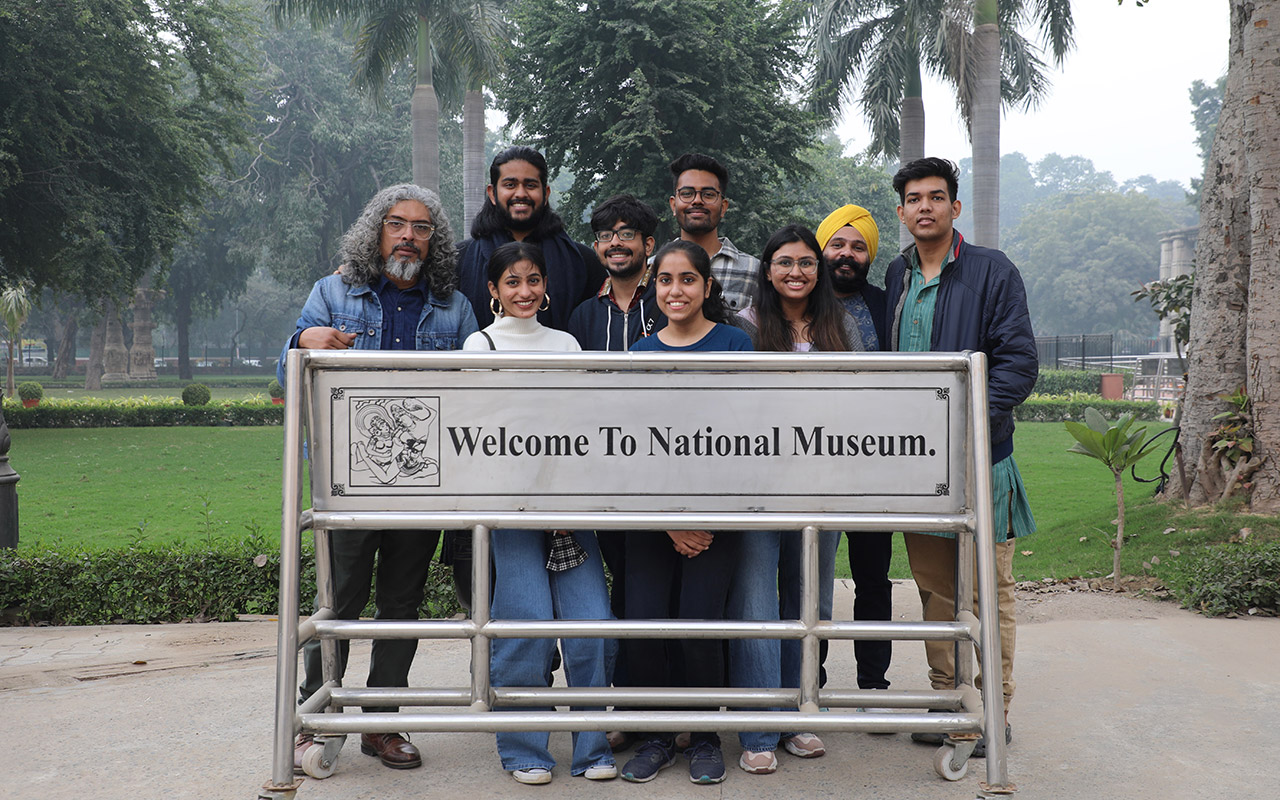
Students Nikhil Shankar, Risaal Shaan Sabbir, Shreya Bhardwaj, Aishwarya Shyam Kumar, Janvi Khera, Sreeram Jayaram, and Deepak Gupta worked with faculty members Shaaz Ahmed, associate professor, and Inderjit Singh Jassel, lecturer, Software Technology, IIAD, to form the team. Himanshu Sabarwal from Tricolor India Private Limited outsourced the job to the team.

IAD-Interactive-touch-screen-in-the-lobby-area--

Virtual reality, augmented reality, projection mapping, and other digital interventions are being used by museums to create interactive and immersive digital facilities that go beyond traditional displays.

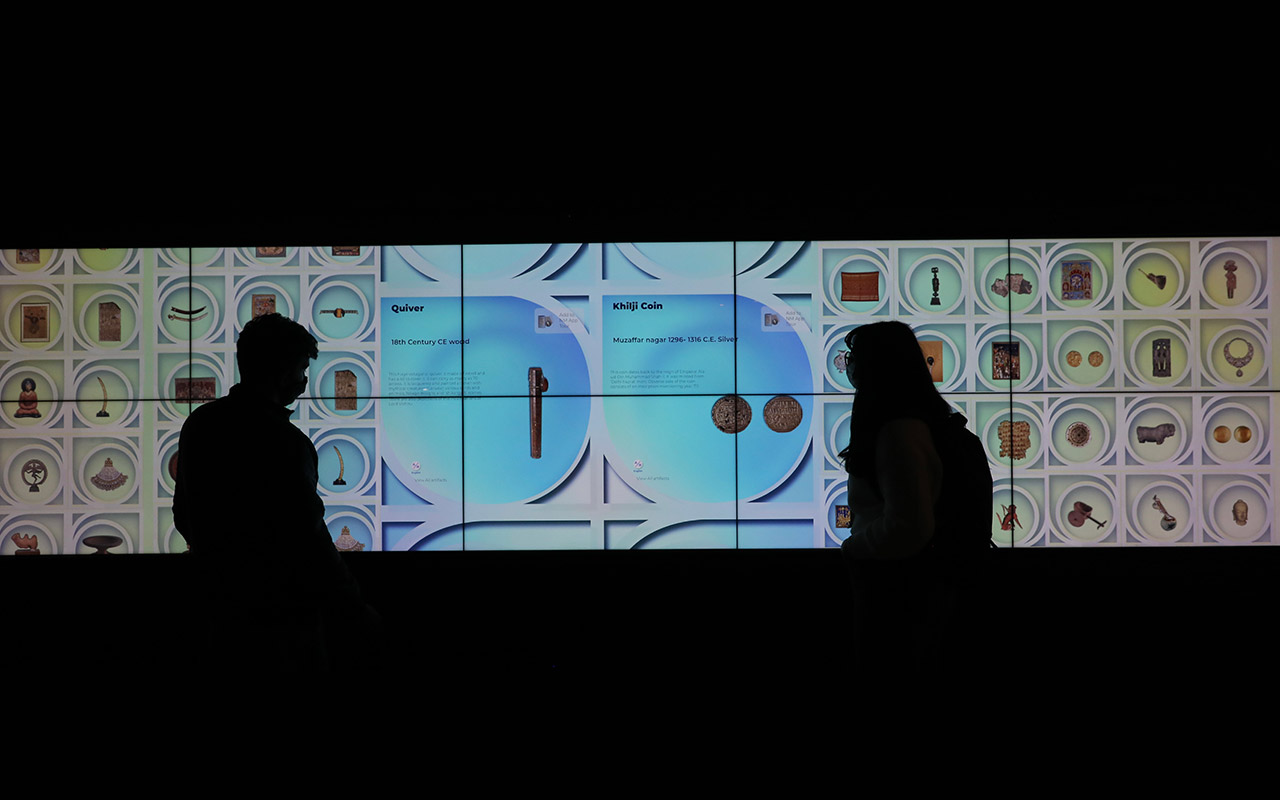
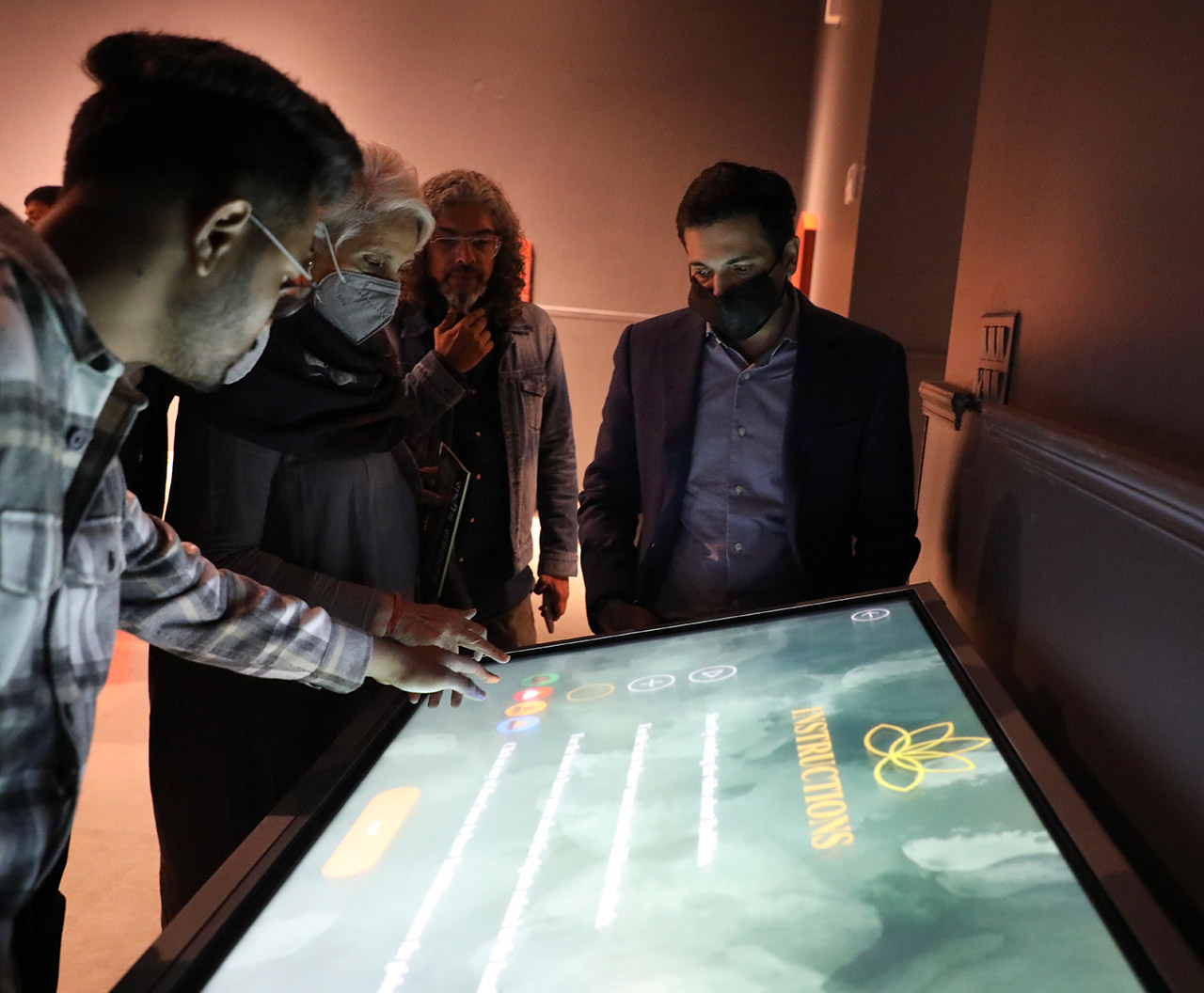
One will be surrounded by five giant monitors as they enter the main structure, two of which are interactive touch screens. Multiple artefacts are presented on these touch displays, and when one is picked, the artefact’s details are revealed. The projections on the remaining three screens were created by the students.

Many relics now have transparent OLED panels on which text and graphics are shown to impart information. In addition, there is a 270-degree projection theatre in the passage leading to the inner circle of galleries that shows the Ramayana in an animated manner. The projection is accompanied by a narration by Kabir Bedi, a well-known actor.

IIAD-The-Buddha-Gallery-has-two-touch-screen-tables,-a-digital-flipbook,-a-slidable-touch-screen-on-the-life-and-teachings-of-Buddha-and-a-digital-interactive-pond

On the first level, the Company Painting room has also received considerable revisions. At the entrance to the Company Painting Gallery, a map depicts the numerous halls. Additionally, two paintings of the East India Company have been turned into projections by students and staff members. Finally, as one walks out of the Company Paintings area, they would come across a photo booth where they may have their picture taken in the style of an East India Company Painting.

The Central Asian Artifact gallery, which is located on the second floor, has also seen numerous changes. At the opening is a hologram showcasing five artefacts from various locations of the silk route. A multi-touch screen displays an interactive map of Central Asia in the Central Asian gallery. The CAA room now has two projections that depict historical Central Asian paintings.

IIAD-Students-&-Faculty-Digitize-The-National-Museum
IIAD Students & Faculty

In addition to the main building, the students worked in the Buddha Gallery. Until 2018, this structure housed the headquarters of the Archaeological Survey of India (ASI). Two touch screen tables, a digital flipbook, a slidable touch screen on Buddha’s life and teachings, and a digital interactive pond built by IIAD students may be found in the gallery.

The National Museum has undergone a major renovation seven decades after its foundation. Although many of the galleries have yet to open to the public, those that have already done so have received a warm welcome. You will be astounded by the work done by IIAD students on your next visit to the National Museum.

The National Museum’s initiative intends to effect change by creating digital exhibits, displays, and information dissemination systems that engage and attract visitors.

Living In Harmony With Nature, Art Exhibition by Dharshana Bajaj

0
Dharshana-Bajaj-Artist
Artist Dharshana Bajaj

A passionate, surreal Art exhibition titled ‘Living In Harmony With Nature’ by Dharshana Bajaj is being displayed in Chennai on the 19th of March 2022.

Dharshana Bajaj is an Indian artist who lives and works in Chennai. Her greatest inspiration is Nature. And her favourite theme is depicting people living in harmony with Nature, with the awareness that they are “a part” of it, not “apart” from it. In her work, she is largely guided by her understanding of Advaitha philosophy, which considers that we are all one, interconnected with Nature and each other on a very quantum level. Dharshana’s preferred media are oil paints on canvas, watercolours and drawings on paper, as well as digitally modified art. 

Dharshana-Bajaj-Artist-02

Largely self-taught, she believes her mission in life is to add greater beauty to the world and inspire people to live in harmony with Nature.

The event is being inaugurated at The Painter’s Garden by Ashrafi S. Bhagat, who is a well renowned art historian, critic and curator.

Dharshana Bajaj Artist 01

Paintings, Drawings, Digital Art prints and a lot more are on display at this exhibition. Make sure to drop in on the 19th and 20th of March 2022 between 11am to 7pm. If you’re in Chennai it is a must-visit!

Dharshana Bajaj Artist Exhibition

Traditional Dresses of Odisha Reflecting Culture of Odia People

0
Traditional-Dresses-of-Odisha-01
Bonda Tribal Woman – Image by Ganta Srinivas

Odisha, formerly known as Orissa, is the ancient Kalinga homeland from which Buddhism spread over India. It borders West Bengal and Jharkhand in the north, Chhattisgarh in the west, Andhra Pradesh in the south, and the Bay of Bengal in the east on India’s eastern coast.

Bhubaneswar, the ‘city of temples,’ was the ancient capital of Kalinga and was called after Tri Bhubaneswar, the ‘Lord of Three Worlds.’ Odisha is known for its historical monuments, archaeological sites, traditional arts, sculpture, dance, and music, all of which contribute to the state’s rich cultural history.

It is a melting pot of civilizations, including Aryan, Dravidian, and Adivasi. The state has a tumultuous past that includes the integration and synthesis of the finest of Buddhist, Jain, and Hindu traditions, as well as the Mahima Cult. Odisha has been known as Odra, Utkala, Kalinga, Tosala, Tosali, and Kosala in the past. The term “odisha” comes from a tribal society that lived in ancient times in an area named “odra” and worshipped the sun deity.

It has gorgeous temples and exceptional structures, as well as beaches, animal sanctuaries, and a natural landscape of often-enchanting beauty, and it is home to many thousands of talented artists and artisans.

Traditional Dress of women in Odisha

Traditional-Dress of-Odisha
Image – DFID/Flickr

Women from all cultures in India like wearing sarees, but there is always a catch in the way a saree is worn or fashioned in different cultures, and the same is true for Odisha’s traditional women’s attire.

Orissa has a long history of textile and weaving art. Textile weaving, in reality, is a major business in the state, employing thousands of weavers and allied artisans. The state’s indigenous fabric dyeing and weaving methods were inspired by old religious writings and rituals. Unlike in other regions, Orissa sarees have been heavily impacted by Hindu holy writings, particularly those centred on Krishna.

One fascinating point to notice is that weavers in the Cuttack district’s Nuapatna make particular silk with lyrics from the epic poem Gita Govinda woven on it. The idols in the famed Jagannath temple are dressed in this distinctive fabric, and because of Krishna’s great influence, the sarees frequently display temple borders, traditional colours connected with Lord Jagannath, and other mythical themes.

Silk and cotton are popular in Odisha. The region produces a variety of tussar silks as well as exceptionally durable cotton. Odisha’s Tussar has a smoother texture and a glossy finish, and it’s worth noting that this state is best renowned for its distinctive Ikat dyeing and weaving technique. In fact, when we think about sarees from Odisha, the first thing that comes to mind is the state’s trademark ikat, whether in silk or cotton; the dyeing and weaving technique from the state is world-renowned.

Sambalpuri ikat

Traditional Dresses of Odisha Sambalpuri ikat
Image- Wikimedia

Sambalpuri ikat, Orissa’s most popular saree, is made using a technique known as Bandhkala, or yarn tie-dye. The double ikat method is used to weave the Sambalpuri ikat in both cotton and silk. Both the warp and weft yarns are tie-dyed first and then put into a pattern for weaving. These sarees are made in Sambalpur, Berhampur, Mayurbhanj, and Nuapatna, and include lovely nature-inspired designs like a shell, flowers, chakra, and rudraksha not just on the border and pallav, but also throughout the body. The more complicated the task, the more expensive it is.

While the saree is commonly referred to as Sambalpuri Ikat, each little town where this weaving method is applied gives the Bandha saree its own distinct flavour. The cotton variant of Sambalpuri Ikat is also popular, whereas Nuapatna sarees, which employ the same weaving method and have comparable motifs, are mainly made of soft silk and Tussar silk. Berhampur sarees are usually made of strong silk with narrow borders. The designs aren’t particularly elaborate, and the sarees are generally woven with an ikat-style temple border.

Bomkai or Sonepuri

Traditional Dresses of Odisha Bomkai
Image- Wikimedia

Silk sarees from Bomkai are a rare find. The Bomkai saree combines a blend of Ikat weaving with silk or resham thread embroidery on the pallava and border, and is often made in soft silk. The majority of sarees have a simple body and a detailed pallav. The saree’s body can contain extremely small ikat motifs, and the pallav is usually woven with highly elaborate patterns in addition to ikat weaving. The motifs are generally nature-based and are influenced by tribal art. The palette frequently revolves around black, red, yellow, orange, and blue, and the colours are typically vivid.

The embroidered temple spires on the pallava and border of the Bomkai cotton saree, which is produced in the Ganjam area in a similar interpretation but in cotton fabric, are common. The Bomkai cotton sarees are created by weavers who are inspired by tribal art.

Pasapalli saree or Saktapar sari

Traditional Dresses of Odisha Pasapalli saree
Image- Pinterest

The Saktapar or Pasapalli saree is an ikat saree woven in Bargarh, Orissa. The checkerboard, or passa as it is known in the native language, influenced the saree’s pattern and weaving. The saree is made of double ikat, which creates a checkerboard pattern, and its border is typically braced, giving it a refined appearance. The colours are bold and bright at all times.

Khandua Saree

Traditional Dresses of Odisha Khandua saree
Image- Wikimedia

It’s one of the most complex ikat sarees from Orissa. Khandua sarees, which are usually composed of soft silk or Malda silk, have a highly detailed design all over them. The border is usually decorated with a simple temple ikat pattern or a very basic ikat pattern. The pallav contains intricate ikat work that takes considerable time to complete. Women in Orissa wear these types of sarees at weddings and other festive occasions. Khandua sarees are traditionally produced in red, sunset yellow, and orange colours. The borer and pallav are usually black, crimson, or blue, which enhances the saree’s elegance.

Berhampuri Saree or Berhampur Pata

Traditional Dresses of Odisha Berhampuri Saree
Image- Pinterest

Berhampur – or the city of Lord Brahma – in Odisha is also known as the silk city of India, and it is here that the legendary, but now failing, Berhampur Patta silk saris are produced. These classic drapes are noted for their typical Odissi weaving style – as well as the kumbha or temple pattern – and are manufactured in Joda (pairs) – the sari for the women and the matching joda for the men. Their well-known temple-style patterns are referred to as ‘phoda kumbha’ or ‘badhi kumbha.’ These priceless saris were once the pride of Orissa, and brides wore them at their wedding ceremonies.

Tribal Dresses of Odisha

Traditional-Dresses-of-Odisha Tribes
Onukadelli Tribal Village – Saurabh Chatterjee/Flickr

Orissa is a densely tribalized state with sixty-two tribes residing in various portions of the state. Each tribal society has its own style of life, with considerable differences in attire, ornamentation, house-building skills, and overall manner of life. This distinction in their lives may be seen in their material culture, art artefacts like paintings and drawings, as well as the sizes and forms of the many objects they utilise. Dress is a cultural necessity for the tribes, as well as a component of their tradition.

The usage of clothing is highly important and worthwhile among the tribes. The tribes don’t use clothing solely to cover their nakedness; it also expresses their ethnic feelings and cultural identity. When it comes to festivals and celebrations, the tribals dress in unique outfits. For example, a Dhangedi (maiden) dresses up to gain people’ attention, but the Gurumai, the priestess, dresses up to serve the goddess for the sake of her society. Dress also aids people in many hardships and aids in the worship of gods and goddesses who protect them from the hostile crimes of ghosts, spirits, and other supernatural beings.

Dongria-Kondh-tribe-of-Odisha
Image Source

The tribals also wear clothing that corresponds to their social status, such as the clan chief, the priest, and the revenue collector. They wear different costumes for different occasions like as marriage, birth, funeral, worship, and so on. They choose gowns based on the occasion, age, gender, and other variables.

Material culture is an important aspect of their artistic practice. Even the materials used in their costumes and dresses have an artistic flair. It’s also a reflection of the art that has been passed down through the generations. On the surface, it appears that people wear clothing merely to prevent being exposed to the elements, such as cold, rain, and sunlight. The tribal outfits, on the other hand, display the community’s individuality and self-identity. Possessing the appropriate attire is a source of pride and excitement for many people.The Bondos’ “Rings” and the Dangarias’ embroidered shawl have significant social and cultural importance. The Dangria shawl is inextricably linked to the marriage bond, and its success is dependent on it. The Lanjia Saora’ dancing costumes, as well as their usual attire, are excellent examples of their rich cultural past. They gain a tinge of regal dignity and heroism as they dance in the clothing of the clan’s chief “Gamango”

They employ their own indigenous technologies to make clothing. They mainly collect the fibre from bamboo and other trees; they set up the wooden loom in front of their house or in the garden, and some even put it on the village’s small route. In their spare time, they weave. Men and women both weave. Only women weave in certain societies. The ladies create a variety of garments for themselves and their male family members.

Traditional dress of men in Orissa

Traditional Dresses of Odisha men
Image- Pixabay

Despite the fact that modernisation has mostly washed away the passion for traditional costumes among Odisha’s young, a few outfits are still proudly worn by Odisha males. Here is a collection of Odisha men’s traditional attire that is popular among men of all ages in the state.

Dhoti

Traditional Dresses of Odisha Dhoti
Image- Piqsels

Dhoti is traditional Odisha clothing worn by males from several ethnicities. It’s made of white cotton that’s wrapped around the waist to hide the body’s bottom. The dhoti created in Odisha is unique in that it has a gorgeous brick-coloured border and the rest of the material is white.

Sambalpuri

Traditional Dresses of Odisha Sambalpuri
Image- Pinterest

Men in Odisha wear Sambalpuri, a small variation of the normal kurta. The clothing comes in a variety of fabrics, colours, and styles that appeal to both adults and children. Odisha men wear normal kurtas with sleeves with light design and patchwork for rituals such as weddings and engagements.

Payjama

Kurtas aren’t complete without pyjamas, which are often plain and white in colour.

Sherwani

Traditional Dresses of Odisha -Sherwani
Image- Wikimedia

In Odisha, most grooms like to wear a Sherwani to their wedding. The attire is comparable to that seen in other areas of India. This garment is adorned with rich embroidery in the state.

Orissa’s sarees and handlooms are meticulously conserved and respectfully adored in order to pass along the legacy to future generations. In reality, handloom weaving is one of India’s oldest and most important businesses. Thousands of weavers and allied craftsmen and artisans are supported by it. So, although there are changes in people’s everyday costumes due to globalisation, the native inhabitants never miss a chance to show off their culture through their dresses during occasions like Durga Puja.

10 Mouthwatering Dishes of Odisha You Can’t afford to Miss on Your Visit

2
Dishes of Odisha
Image – Wikimedia commons

The Coastal state of Odisha embellishes a fascinating culinary culture since ancient times. From continuing its local practices to nourishing and appreciating the cooking styles worldwide, the state exhibits a blend of religious, aesthetic, and philosophical essence through its culinary culture. Endowed with the blessing of Lord Jagannath, the eternal divinity in the state, cuisine in Odisha has been highly influenced by the religious factor. Most dishes form a part of the ‘Prashad’s associated with Lord Jagannath. These 10 Famous Dishes of Odisha are the ones you can’t afford to miss on your visit and might regret later. 

Suggested Read – Culture of Odisha – Explore the Varied and Ancient Heritage of Utkala Region

Furthermore, a lot of dishes serve as a result of the influence of the neighbouring states. Also, to be noted, many traditional dishes of Odisha have come to the turn of modification influenced by the cuisine and cooking styles of the neighbouring regions. 

The article focuses on the traditional, famous dishes of Odisha that abided by the state for long ravages of time, witnessing changes in customs, style, and even cultural trends in the state.

Here are some ‘try-these’ dishes of Odisha you can’t afford to miss on your visit

1. Dalma 

Dishes of Odisha - Dalma 
Image – Wikimedia commons

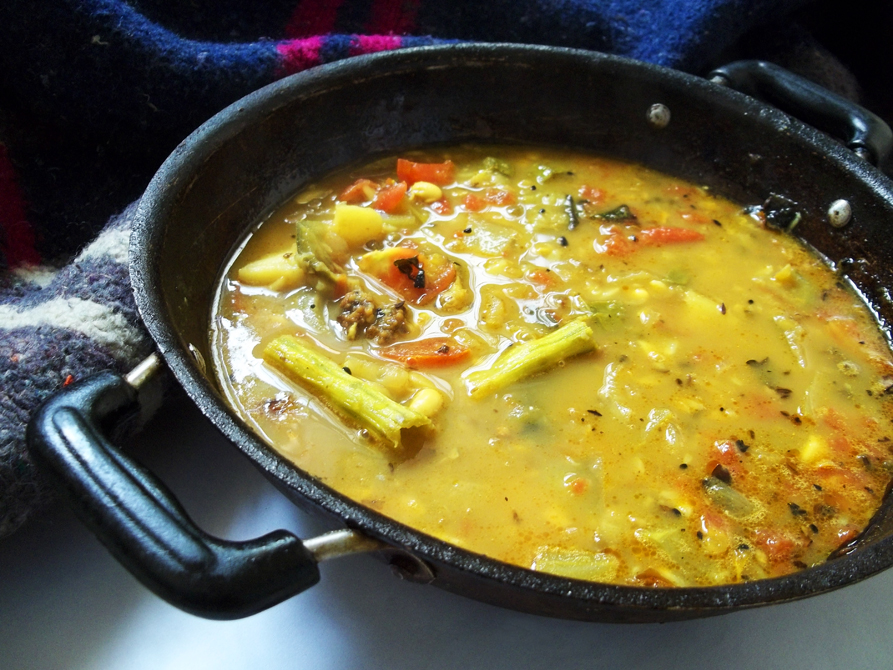
What would be better than this lentil dish to start the Odia cuisine with? From being attributed to the Savaras tribe, Dalma became a dish representing the cuisine of Orissa. It is a protein-rich dish made using vegetables and lentils.  

The religious, historical tales suggest that the non-Aryan Savaras tribe boiled the tribe’s harvested vegetables along with chana daal and prepare Prashad on the festive days to offer Lord Neela Mahadev and his devotees. The priests of the puri temple recount this as the first incident of Lord Jagannath’s worship. Accounts of Mahabharata narrates the tale where Bheema. The royal cook punished the second eldest Pandava to cook without oil and spices, accepting which he prepared Dalma, inspired by the Hobiso Dalma made by Draupadi for Lord Krishna.  

2. Enduro Pitha 

Dishes of Odisha - Enduro Pitha 
Image – Wikimedia commons

The dish you would find in every house in Odisha if you visit the state during the Prathamastmi puja, celebrated to pray for the heartiness of the eldest child in the family. The flavoured steamed cake with coconut, green gram, and sugar filling has the savouring taste to uplift your mood and health—the steamed batter, wrapped in turmeric leaves, hence, adding other medicinal values to the dish. 

Along with being one of the famous 10 dishes of Odisha that you can’t afford to miss, which closely rambles similarity in cuisine culture of South (patholi); people in modern times try to establish its resemblance with the western cake. This mouth-watering dish is often served along with Ghadaghadia, Dalma, or mutton curry. 

3. Pakahla

Dishes of Odisha - Pakahla 2
Image – Wikimedia commons

The value pakahla holds in Odia cuisine resonates with the place held by oxygen in the air. The soul of Odia cuisine, nonetheless, follows a straightforward summer recipe. Tracing the term’s origins, it derives from the Sanskrit or Pali term “prakshalana”, meaning ‘wash’. Analogous to other famous dishes of Odisha, pakahla also tails connections with Lord Jagannath. The fermented rice dish, locally called ‘Torani’, dates back to the 12th century AD.  

4. Chenna Poda 

Dishes of Odisha - Chenna Poda 
Image – Wikimedia commons

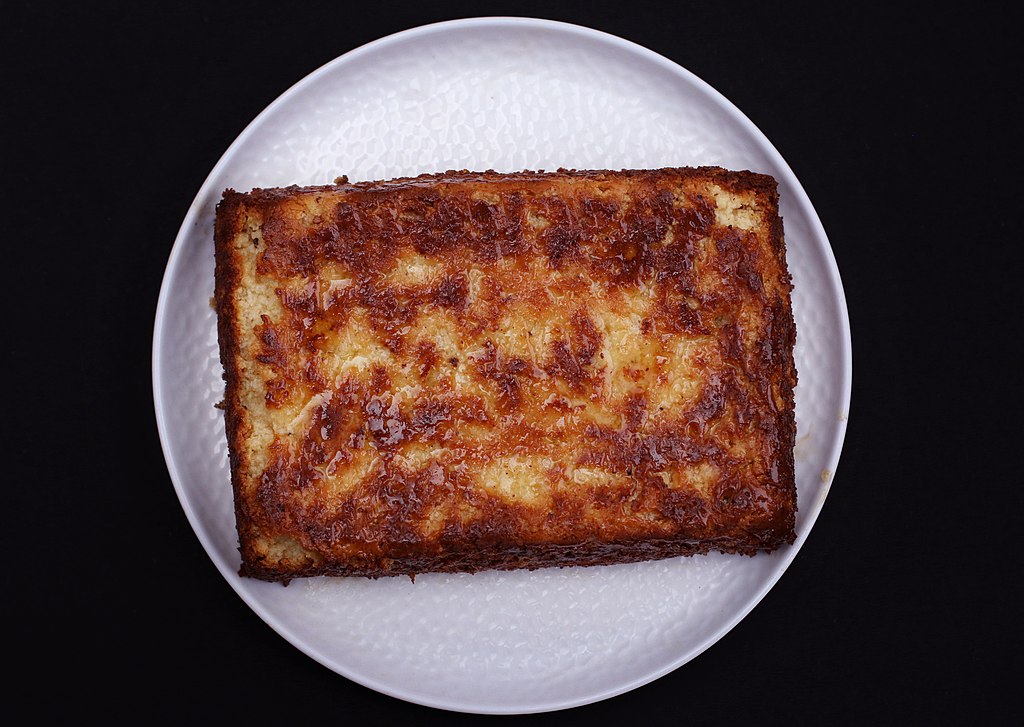
This sweetmeat dish adds to the already elaborate list of baked cakes in Odisha. The sweet brown burnt flavour of sugar on the deliciously tender chhena cake base gives the word an exceptional taste. The topping of nuts and raisins takes the tang to the next level. The famous paneer cake dish of Odisha was, in truth, an accidental invention. Sudarshan Sahu of Nayagarh gets the credit of creating this cottage cheese sweet dish.  

5. Khaja

Dishes of Odisha - Khaja 3
Image – Wikimedia commons

The reason for the sweet nature of Odia must have to do with the sweetness-filled cuisine of the state. Khaja, the deep-fried layered pastry, forms a part of the Sukhila prasad offered in the temple of Lord Jagannath in Puri, Odisha. Modern chefs sometimes compare the sweet dish with the Turkish baklawa. The three-ingredient recipe possesses unprecedented popularity in the Odia household. Likewise, states like Bihar and Andhra Pradesh follow as well. They are presenting yet another sugary dish of 10 dishes from Odisha which you can’t afford to miss. However, speculated to have originated in Oudh (in Uttar Pradesh), the Odia people have moulded the dish to fit their cuisine. 

6. Alu Potala Rasa 

Dishes of Odisha - Alu Potala Rasa
Image – Wikimedia commons

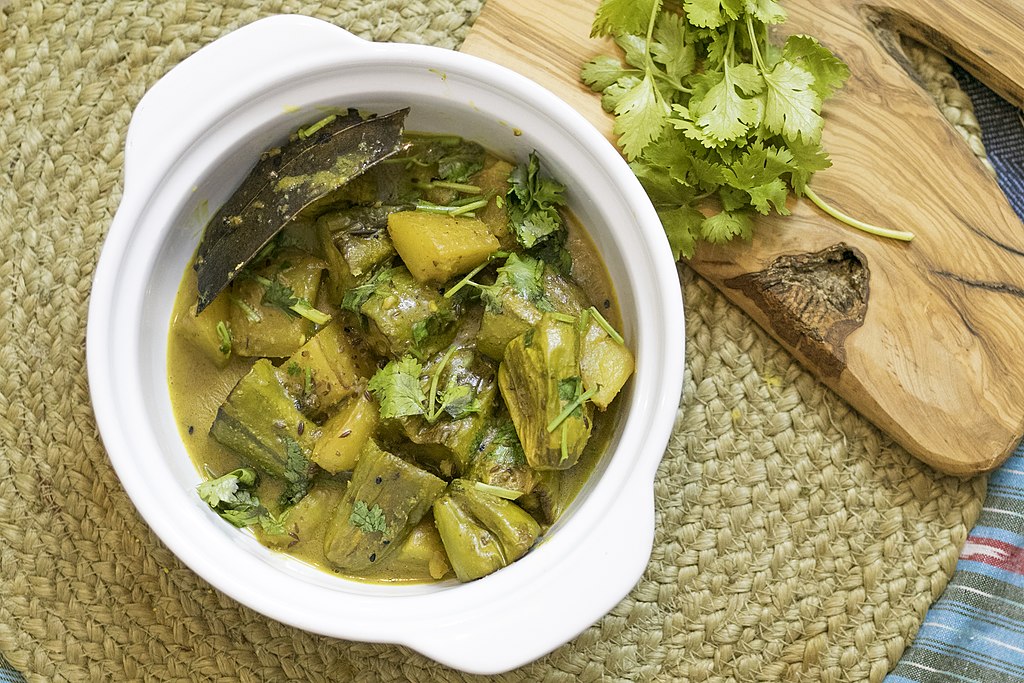
The dish strikes a perfect balance between a tastebud pleasing recipe and a healthy dish. Served as a side dish, Alu Potala Rasa has fanned out its root beyond the boundaries of Odisha, becoming an essential dish in Bengal as well. Furthermore, in contrast with the non-spicy menu of Odisha, Alu Potala Rasa stands out as a hot peppery curry. The strange concoction of potatoes and pointed gourds with lots of spices and tanginess makes the dish unique. What could be a better way to eat pointed gourd than this?  

7. Macha Ghanta 

Dishes of Odisha - Macha Ghanta 
Image – Facebook

Odia cuisine is incomplete without mentioning fish. ‘Macha Ghanta’, when translated, means ‘fish mix’. As the name suggests, the recipe mixes two or more types of fish and a lot of vegetables. Durga puja on Dussehra cannot be performed without Macha Ghanta. Offered to Maa Durga, the dish has a delicate religious aspect attached to it. Muri Ghonto, fondly eaten in Bengal, has been served and referred to as the Bengali cone of Macha Ghanta. Served hot with rice and salad, this crispy and delicious fish head recipe is a must in the state. 

8. Kadali Manja Rai 

Dishes of Odisha - Kadali Manja Rai 2
Image – Quora

The vegan Kadali Manja Rai recipe too found its place in the rich cuisine of Odisha. Originally from dolia village, the banana stem curry serves as a perfect side dish with a meal in Odisha. Prepared using banana stem and mustard curry, the tingly-tangy taste of the plate is hard to forget. A rich source of Fibre, Vitamin B6, and Potassium, Manja (banana stem) in the dish has more than just one health benefit; in particular, it regulates insulin, haemoglobin, and blood pressure levels, and subsequently helpful for solving the issue of kidney stones. 

9. Santula

Dishes of Odisha - Santula  
Image – Wikimedia commons

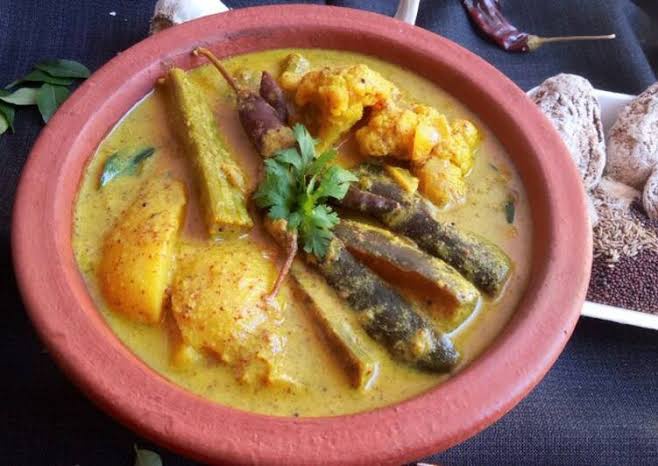
Steamed vegetable dish, native to Odisha since times immemorial, Santula forms a part of the main course meal in the state. Prepared in two ways- either fried (Bhaja Santula) or boiled (Sijha Santula), the dish may include any and every seasonal vegetable(s) in the recipe. The vegetarian dish with mild spices and an epitome of healthy vegetables, Santula treated it as one of the most favoured dishes in Odisha. The vegetarian curry is famous among the old as well as the youth. 

10. Chingudi jhola

Dishes of Odisha - CHINGUDI JHOLA
Image – Wikimedia commons

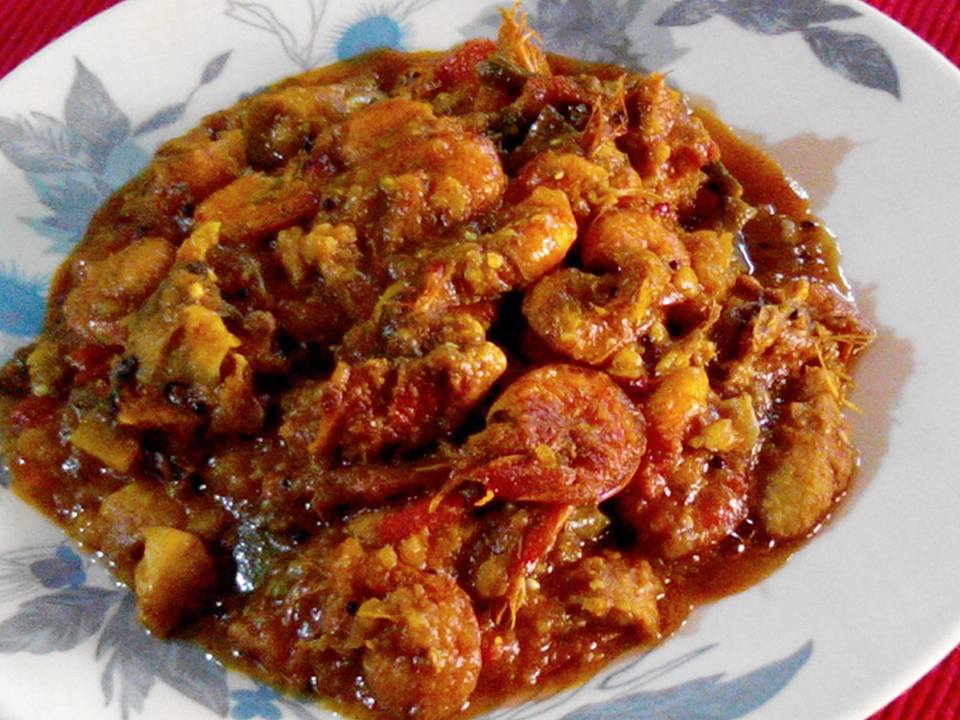
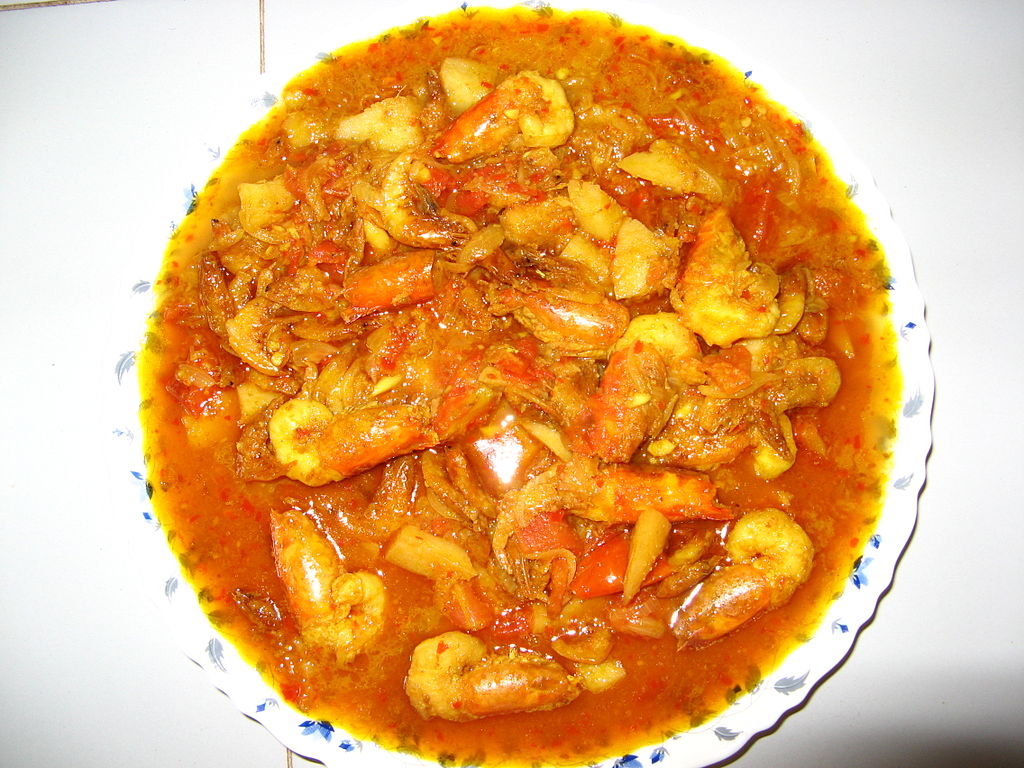
Seafood is a must in the list of 10 dishes of Odisha that you can’t afford to miss on your visit. The plate, cooked with prawn and coconut milk, has been one of the most loved recipes in the state. Eaten by people in the river basin and coastal regions of Odisha since ancestral times, the dish has seen an evolution in style since then. This aromatic and delectable dish has successfully attracted not only the nationals but also foreign tourists, contributing to the culinary tourism in Odisha. 

The paramountcy of culture and values seems evident in the cooking style and dishes. Diversity runs in the veins of Odisha, cowling even the culinary culture of the state. You can find sweetmeat as sweet as the natives. Although mainly the Odia cuisine comprises mild spices, time and again, the spicy food dishes are mind blogging and lip-smacking. Granted that Odisha is the ‘Goa of Eastern India’.  

Gulshan Nanda – The Forgotten Novelist Of The Indian Cinema

0

Gulshan-Nanda-Writer

“…and that is how Gulshan Nanda rose to fame.” Recently, I recall my grandmother striking a conversation reminiscing the era of Gulshan Nanda, the man who knew exactly what the Indian audience wanted to read, or see in cinema. She struggles to find the novels in her trunk, which she previously bought from the Lajpat Nagar Market, New Delhi, in the 1970s. After having found Neelkanth from the trunk, she narrates how she read his stories in Upanyas during her school days. She snuggles the novel and then, recounts the life story of Gulshan Nanda: 

“Gulshan Nanda bought a house in Vikram Vihar, Delhi before moving to Mumbai. Unfortunately, he never resided there, leading him to rent the flat. A relative of his used to collect the rent to send it to Nanda. The tenants later bought the house, and Nanda, thus, never returned to Delhi. His cinematic journey as a writer had so begun, with stories being hit on the big screen as well as read enough by the masses equally.” 

I remember reading about Nanda’s birth in 1929 who grew up in Quetta (now in Pakistan), but came to Delhi before Partition. In Delhi, he began working as an optician but continued to write stories in Urdu (Read them here). Nanda’s first few books were published by Ashok Pocket Books and sold so well, they were constantly in print. 

Next, she recounts the story of Neelkanth, which was the first novel she read during her school days. She reminisces the fear that was built page by page reading this horror novel in her childhood. Neel Kamal was the filmy adaptation of the book starring Waheeda Rehman, Raaj Kumar, Manoj Kumar, Mehmood, Balraj Sahni, Lalita Pawar and Shashikala and directed by Ram Maheshwari. A suspense thriller, or moreover horrific for a school child, she recalls the story of the protagonist sleepwalking several times in the novel, connecting dots to her previous life. My grandmother calls it the ghosts of the past and the love of the present. 

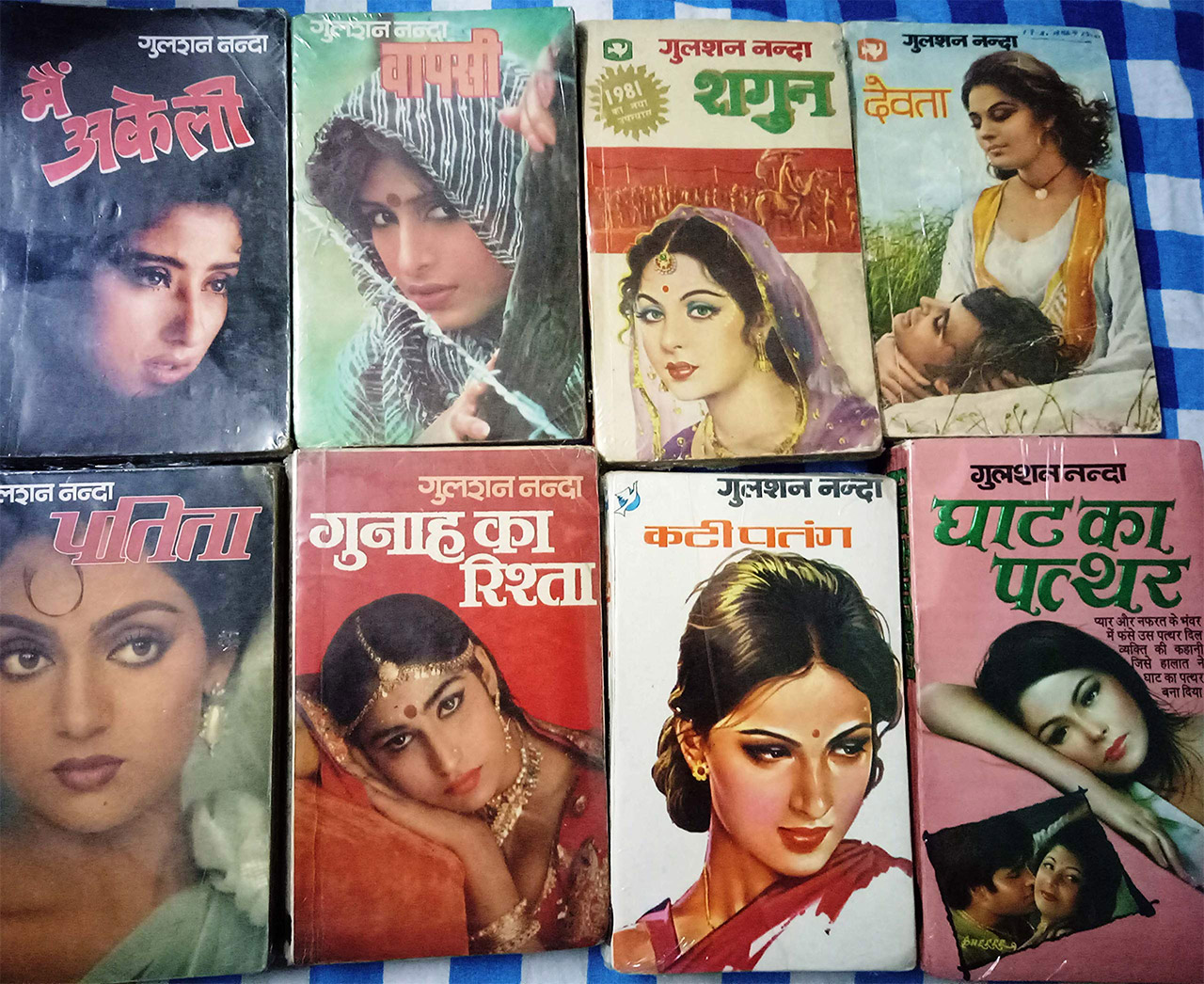
That is how I started reading ardently about Gulshan Nanda on the internet and how cinematically, his career was overtaken soon. Evidently, there is not much coverage about him or his life story anywhere. Going through the set of books he wrote, numerically 51, I observe the covers, specifically with women on them. 

Gulshan-Nanda-Novels
Image Courtesy – Amazon

With Tisca Chopra predominating two of the covers, I comprehend that most of his written pieces focussed on the plight of women and their relationships: their untalked social predicaments, their romantic relationships, a trope of reincarnation and often exaggerated storylines in reference to their kins. 

Undoubtedly, Nanda underlined flaws in his female characters as well, waiting to be saved by a male counterpart, elongating the damsel in distress plot. Pick up any of his novels, be it Naya Zamana or Kati Patang, the trope of women subjugating their voices to fall in line with the hero

resurrecting them was recurring throughout. And the audience applauded the plotline each time they walked out of the cinema halls. 

Say what I may want to say about Nanda, he was and remains one of the most celebrated pocket books writers. I read somewhere that the libraries had a separate section of his books, yet were considered unattractive for academic consumption. Other writers such as Prem Bajpai, Rajvansh, Kushwaha Kant, Ranu existed, but did not unfold the success that Nanda did. Readers relished onto the fairytale-like new -age novels, flouting the rules of gender roles. Publishers happily chased him to unravel a new storyline and make more economies, for instance Jheel Ke Us Paar claiming to have sold half a million copies. 

Nanda, is and will continue to be the success of novel-to-film adaptations since he knew the style of sewing a storyline keeping in mind its visual presence. To look at his associations, he first wrote Punarjanma, released in 1963, a Telugu film based on Nanda’s story. This comradeship with the Hindi Cinema continued for over two decades, until his last film written by him was released – Bindia Chamkegi in 1984. For some of these films he wrote stories or screenplays, while some were based on his pre-published novels. He worked with some of the best known and widely respected banners and directors in Hindi cinema, namely L.V.Prasad, Ram Maheshwari, Shakti Samanta, Subodh Mukherjee, Yash Chopra, and Chetan Anand. He truly earned the title of writer of family films, making him hugely successful commercially, 

However, what Nanda did not calculate in his immaculate, repetitive storylines was that change comes every decade. He failed to study the change of taste of his audience, despite having ruled the solely-entertainment-oriented screenwriting of the 1960s, the 1970s and part of the 1980s, only to be further replaced by other, more contemporary, ‘writers’ or now, ‘brands’. That called for the end of an era of Gulshan Nanda, the dedicated master of contemporary pocket books. Undoubtedly, the writer lives on, with his stories easily converted into movies that are still watched extensively on the big picture.

Unique and Remarkable Dishes from Traditional Food of Odisha

0
Traditional-Food-of-Odisha
Abadha, traditional cooked Oriya food – Subhashish Panigrahi/Flickr

The Indian state of Odisha (previously known as Orissa) is famed for its scenic beauty, unique tribal culture, and archaeological brilliance. It is already a popular destination for adventure lovers. Apart from this well-known fact, visitors are most impressed with the state’s delectable food.

Gastronomy is a regional culinary technique; it is the art and science of creating and presenting one-of-a-kind foods. Food has the ability to affect the growth of the hospitality and tourism industries in every location. Odisha’s culture and religious beliefs have influenced the development of its cuisine. Odisha has a distinct cooking technique that is both basic and distinct, making it a popular culinary tourist destination in east India. Odisha is a rice-growing state with rich plains and hot, humid weather. As a result, the state’s cuisine is predominantly rice-based. In comparison to the cuisines of other Indian states, traditional Food of Odisha employs a variety of locally obtained vegetables, grains, pulses, dairy products, and seafood, as well as fewer spices and oil. Despite this, the dishes and cuisine are rich in flavour, scent, and taste.

Khichdi

Traditional Food of Odisha-Khichdi
Image- Wikimedia

The fundamental food of Odisha, khichdi is definitely going to cause you to salivate with its sweet-smelling flavour and savouring taste. Khichdi, as we call it in different states, is a simple yet healthy feast. Odisha khichdi is perhaps the main dish, being presented as the primary bhog to Lord Jagannath at the Puri Temple. The ideal mix of rice and lentils cooked together in ghee gives a one of a kind and savoring flavour to it. This encouraging feast offers an extraordinary taste as well as much more prominent sustenance. Softly flavoured, frequently presented with curd and papad, this tantalising supper will undoubtedly make for a comforting meal.

Chungdi Malai

Traditional-Food-of-Odisha-Chungdi-malai
Image – Eli’s Vlog Odia

A prawn curry decorated with coconut milk and flavourful flavours. That summarises the meaning of chundi malai. Powerful. Isn’t it? All things considered, you can taste it in practically all eateries and lodgings in Odisha that serve its staple cooking. This delicacy is true to Odisha and is generally cooked during unique events at home. The aggregation of sweet-smelling flavours hoists the flavor of prawns manifold. Try not to miss this delightful formation of Odisha when you visit the state. Group it up with fine Basmati rice and lose all sense of direction in the richness of this mouth-watering renowned dish of Odisha.

Macha Ghanta

Traditional Food of Odisha-Macha Ghanta
Image- ODIA FOOD/ Facebook

Every odia’s heart and soul is matcha (or fish). In this way, how might we talk about Odisha food without referencing fish! Macha ghanta is a thick curry made with a singed head of fish, vegetables and a variety of spices. The flavour profile made by a combination of fixings like cumin, cinnamon, garlic, ginger and straight leaf will overwhelm your palate and leave you happy. The ghanta’s second primary part is the flavour-infused potatoes! Taste this dish and you will know what delight a potato can add to any food, particularly curries. To adjust the extravagance of the macha ghanta, you can have it with plain rice. If you ever end up visiting Odisha, attempt to have this popular food in Odisha at a customary Odia home, rather than a café for its most credible and authentic variant.

Kadalai Manja Rai

Traditional Food of Odisha-Kadalai Manja Rai
Image- Maninee’s kitchen/Youtube

In the event that you are a veggie-lover, this is an ideal dish for you. Most likely you have eaten bananas, yet have you at any point contemplated how a banana stem tastes? On the off chance, you have not, then try this lip-smacking delicacy made with banana stems. Pan-seared and prepared with flavours, this dish is certainly going to be on your list of most loved dishes once you taste it. Flavours like cardamom, cinnamon, coriander, red bean stew and cumin prompt spices to the banana stem and make it delectable. A significant portion of it with rice will always leave you wanting for more! In the event that you are inclined towards non-vegetarian food, you can simply make your own combination form of this dish by adding fish or meat to it. For a genuine kadali manja rai, the roadside food stalls, hotels and inns are the best places to visit.

Gupchup

Traditional Food of Odisha-Gupchup.jpg
Image- Wikimedia

This well known road food is called by different names like golgappa, pani puri and puchka. You got it, isn’t that so? We were certain you would! This most loved speedy snack of India is nicknamed gupchup in Odisha. With a  brief glance at the formula, we can see that the Gupchup comprises little firm dollops of bliss made with atta, suji and maida, and are presented with crushed potato chaat and tamarind water. Additionally, the squashed potato is clubbed with chana masala, chhola, coriander passes on and green chillies to draw out the ideal hot flavour. Where to track it down? All things considered, this food treasure needs no furious expedition. Simply stroll around in Odisha and you can detect small stalls selling gupshup in pretty much every niche and corner of the state.

Pitha

Traditional Odia cuisine-Pitha
Image- Wikimedia

Pitha is a cereal-based steamed cake that will entice your taste buds very much like different dishes of Odisha. Being a well-known dish of Odisha, the dish is made as numerous variations, for example, poda pitha, chakuli pitha, and some more. They are made both on special occasions and as a common dish in Odisha’s homes since they represent one of the state’s remarkable pleasures. Here is somewhat more with regards to the variations of pithas:

  • Chakuli Pitha: It is produced using dark gram cereal and is a fresh enjoyment to chomp on during your excursion.
  • Poda Pitha: It is an extraordinary tasting delicacy known for its luscious texture. Ready during celebrations, this variation of pitha has an amazing aroma.
  • Kakara Pitha: Made from semolina, cardamom, and ground coconut, this sweet fritter is a famous dish of Odisha.

Chhena Poda

Traditional Odia cuisine-Chhena Poda
Image- Wikimedia

The ‘Chhena poda,’ which loosely translates to ‘burnt cottage cheese,’ is arguably the most popular of them. Sudarshan Sahu, a confectioner and hotelier, invented it in the twentieth century. Mr Sahu made the mistake of leaving some sweetened ‘chhena’ (cottage cheese) in a heated tandoor overnight one evening. The gur in the chhena caramelized as a result of the heat, giving the soft cheese a roasted taste and a firm gritty outer layer. The chhena is traditionally created by curdling milk and binding it in a muslin cloth, then kneading it into a loose batter with sugar, cardamom powder, and sooji (semolina). It’s wrapped in Sal or Banana tree leaves and baked in a coal oven for 3 to 4 hours.

The Odia people’s favourite sweet is the Chhena poda, which is now presented to Lord Jagannath. It’s not just prepared in every modest roadside booth, but it’s also mass-produced for fans all throughout the state by the Orissa State Cooperative Milk Producers’ Federation. After receiving the geographical indication for ‘Odisha’s Rasagola’ last year, the state is requesting the same for Chhena Pudo.

Rasabali

Traditional Food of Odisha-Rasabali
Image- Wikimedia

This sweet delicacy hails from the Odisha area of Kendrapara and is one of the 56 meals (popularly known as Chhapan bhog) presented to Lord Jagannath. These chhena patties, deep-fried and drenched in rich sweetened milk, will satisfy your sweet needs. This sweet is mostly offered at low costs in local sweet stores, but it may also be found in a traditional restaurant in Odisha.

Pilaf

Traditional Food of Odisha - Pilaf
Image- Wikimedia

Pilaf, often known as Indian pulao, is a popular Odisha meal. From the moment it’s prepared, you can smell its seductive scent. The scent of the rice is heightened with a blend of spices such as cloves and bay leaf. The rice’s delicate flavour won’t overshadow your side dish, and it won’t be as bland as a bowl of regular rice. Pair this flavorful sautéed rice with a curry with a lot of flavour, such as chicken or mutton. We can already see you drooling!

Khaja

Traditional Food of Odisha-Khaja
Image- Wikimedia

Khaja is a traditional Odisha dish that is provided as a prasad to visitors visiting the Jagannath Temple. Its intricate form and texture will pique your interest. Each khaja is a unique form that emphasises the beauty of imperfection. Consider a crunchy chip that has been dipped in sugar syrup. Doesn’t it sound delicious? It’s tastier now! The crispiness of the fried exterior layers combined with the chewiness of the sugar-drenched inside layers will leave you wanting more! But wait, there’s more! Did you think it was only served in temples? No! Odisha’s favourite meal is also available in a variety of local businesses.

Taking delight in life’s small joys, the people of Odisha are down-to-earth with minimal needs which reflects in their food habits. Most of their dishes are best prepared and enjoyed at a traditional and simple home. The next time you visit the state, make sure to go through the entirety of the list to give your taste buds a marvelous experience!