Thinking of renovating your home but don’t know what design theme to follow or how to go about creating a beautiful, modern, and comfortable abode? If yes, then you’ve come to the right place. We will showcase to you some of the homes that you will fall in love with immediately. They will give you ideas and themes from which you can take inspiration from and apply them into your own home.
Sometimes you like the complete home so much that you may want to replicate it whereas at other times, you may like some aspects of the interior design and the other elements not so much. Well, that is not a problem. You can just choose whichever things you like in an interior design and customize them according to your own preferences. Rest assured, there will be enough ideas in the following interior design projects by Swiss Interior which you can adopt in your home.
This beautiful condominium is all about a stunning modern industrial design that makes you fall in love with it at first sight. With the raw exposed elements in various parts of the design coupled with modern furnishings create a welcoming and spacious abode. The general color scheme of the home is different shades of gray with raw elements such as wood patterns, textures, and colors. A brick wall in the lounge creates a rugged contrast to the modern furnishings and lighting. The lighting itself is breathtaking with spotlights at some areas and track lights at others.
INZ RESIDENCES 5 BEDDER MAISONETTE CONDO DESIGN
The bedroom is also a work of art with a deep cobalt blue wall on one side creating a perfect contrast with the mustard yellow modern yet comfortable chair. The ceiling to floor windows create the illusion of space and are adorned with wooden blinds. The rawness of wooden textures from the windows, side tables, and floors are balanced by adding plush bed linen and soft foot rest for the chair. The modern track lights and hanging lights complete the look of this modern industrial home. The cherry on top in this house is a home gym that just elevates its charm to a next level.
Monochrome Magic at BLK 807 YISHUN RING ROAD, 5 ROOM HDB
BLK 807 YISHUN RING ROAD, 5 ROOM HDB
This magical monochrome palette selection gives a completely unique yet sophisticated appearance to this HDB apartment with its clean crisp lines and soft plush upholstery. If you’re from New York, there are apartments for rent in Buffalo where you can put all your furniture. The different shades of gray and black are added in all elements of the design which work well with the light oak colored wooden floors and coffee tables. The darker shades are well balanced by the light and neutral tones in the walls and floors to create a stunning and striking outlook.
BLK 807 YISHUN RING ROAD, 5 ROOM HDB
The kitchen itself is a masterpiece with almost all the elements in black color. However, surprisingly, it doesn’t become a sore for the eyes. In fact, it creates a very modern and elegant kitchen that has beautiful black marbled pattern countertops and cabinets. Again, the finishing makes clean and crisp lines which creates a minimalist style with just the right amount of balance and harmony. The light marble floors perfectly contrast the black marble that is again further elevated by installing recessed lighting in just the right places. Wouldn’t you just love to have a kitchen like this?
Subtle Sophistication At PASIR RIS DRIVE 10 By Swiss Interior
PASIR RIS DRIVE 10, RESALE HDB
If you are looking for sophistication and simplicity in an otherwise contemporary interior design, then look no further. This beautiful home is the epitome of beauty and simplicity when it comes to its clean lines and deliberate use of texture. This house utilizes elements that are classic yet modern with neutral tones and sleek furnishings. To freshen up certain areas, bold and bright colors are used to give a fresh ambience to the space. In all of the rooms, especially the lounge, neutral shades of beige, white, grays, and blacks are used in all elements of the design. These neutral shades give a spacious feel to the area. The furnishings are sleek yet modern. Modern lighting with huge windows offer a very fresh and airy ambience.
PASIR RIS DRIVE 10, RESALE HDB
In the kitchen, a pop of color is added by keeping the kitchen shelves and cabinets of royal blue color which is perfectly balanced by keeping the countertops and walls white. The white brick wall architecture creates a rustic environment which when blended with the modern kitchen layout and fixtures gives an aura of modernism and elegance.
Andhra Pradesh, situated on the south-eastern coast of India, is one of the most visited states of India. The state is well known for its rich natural resources, scenic beauty, marvellous temples and mesmerising rivers. The cultural heritage, ancient architecture, natural marvels and historical significance of Andhra Pradesh are of the next level. Let’s look at some of the best places of this top tourist destination.
First on our list is the largest city in Andhra Pradesh, Visakhapatnam. It is a major seaport of Andhra Pradesh and India. In Visakhapatnam, you can find various attractions like the Araku Valley, the Borra Caves, Yarada Beach, Rishikonda Beach, Katiki Waterfalls, Indira Gandhi Zoological Kailasagiri Hill Park and the VUDA Park.
The tropical climate of the city makes it an ideal place to visit to calm your mind. Not to forget the picturesque locations and valleys, which are perfect for picnics and family outings. There are various trekking hotspots in the city, making it an attractive place for young travellers.
Tirupati is famous as a pilgrimage spot. The place is a hub for significant cultural and religious attractions. It lies in the foothills of the Eastern Ghats in the Chittoor district. The city ‘Tirupati’ traces the origin of its name from the Tamil word meaning ‘sacred abode’. Tamil Vaishnava saint Ramanujacharya founded the Tirupati town.
Balaji, a form of Lord Vishnu, bestows his blessings on the city. The city served as an important centre for dynasties like the Chola dynasty, Pallava dynasty and the Vijayanagar Empire. The significant places of attraction here are Sri Venkateswara Temple which is famous among devotees all around the country. Other tourist attractions involve Talakona Waterfalls, Deer Park, Sri Vari Museum, Sri Govindarajaswami Temple, Srikalahasti, and Kanipakam.
It is the oldest town in the state and is famous for the rock paintings of Ketavaram. There are shreds of evidence of the Palaeolithic age in the city. The ancient caves and the fort ruins found in Kurnool are of significance not only to the tourist but also to historically inclined persons. Kurnool Fort, Belum Caves, Nallamala Forest, Rollapadu Bird Sanctuary, Adoni Fort, Kurnool Museum, and Mantralayam are well known for their magnetising powers and for attracting tourists.
Vijayawada is very famous for its agriculturally rich status. McKinsey also recognised the city as the Global city in his speculations. It was earlier known as Bezawada. The city has a unique location due to the Krishna River, hills of the Eastern Ghats and the jungles of the Kondapalli Reserve Forest. Due to the presence of the vast forest, there are many caves as well.
The most popular places in Vijayawada are the Undavall Caves, Mogalarajapuram Caves, Prakasam Barrage, Bhavani Island, Victoria Museum, Kondapalli Fort, Kolleru Lake and the Gandhi Hill.
Anantapur is the largest district in Andhra Pradesh, and it is famous for diamond mining and agriculture. It is still not among the top tourist places and is yet an undiscovered tourist place. However, the diamond within the city, the diamond treasure of the ancient culture that abides in the city, should get the recognition it deserves. The ancient monuments in Anantapur exemplify the reign of the great Vijayanagar kingdom. The waterfall, ancient temples, hilltop forts, all these features make it a part of our list of 10 Best Andhra Pradesh Places to visit.
Penukonda, Ravadurg Gooty Fort, Thimmamma Marrimanu, Dharmavaram, Hemavathi, Aluru Kona, Lepakshi, and Raidurga Fort are some places you must not miss if you get a chance to visit Anantapur.
Nellore is insanely famous for paddy agriculture, and the vast fields of Damaramadugu serve as prime sources of rice in the country. You must not miss the Nellore rice, and the Pennar river flowing in the city splits it into two parts. The strategic geographical location of Nellore enabled it to witness the greatest empire of Ancient India. These include great empires like that of Mauryas, Cholas, Pallavas and Vijayanagar.
You would surely be mesmerised by the beautiful ancient forts, lakes, beaches, temples and the bird sanctuary in the city. These beautiful attractions are the Udayagiri Fort, Venkatagiri Fort, Nellapattu Bird Sanctuary, Sri Ranganathaswamy Temple, Penchalakona, Jonnawada, Mypad Beach, and Pulicat Lake.
Chittoor is both culturally as well as economically significant for Andhra Pradesh. The city on River Ponnai serves as an essential agricultural town and hence a source of economy. The city is a rich collection of undiscovered flora and fauna, marvellous temples, massive hills, calming rivers and stupendous forts. Some of the most amazing places in Chittoor include Horsley Hills, Kaundinya Wildlife Sanctuary, Kalavagunta, Gurramkonda Fort, Nagari Hills, Sri Venkateswara Temple, Mogili, and Ramagiri.
Although you can easily travel through the city within a day, the city won’t let you leave it too early. The calming and rejuvenating vibes radiating around the city attract thousands of tourists each year.
Kadapa is an important location for pilgrims as it acts as a gateway to the Tirumala hills. Belum Caves, Gandikota Fort, Sidhout Fort, Bhagavan Mahavir Government Museum, Sri Venkateswara Wildlife Sanctuary, Pushpagiri, Ontimitta, and Ameen Peer Dargah make it a place worth mentioning in our list. Many tourists visit Kadapa for its artisanal architecture, temples and forts.
Rajahmundry
Image – Wikimedia
Rajahmundry is the cultural capital of Andhra Pradesh. The Chalukyas founded the city in the 11th century, while some historians claim that the town existed way back during the Vedic period. The city is of supreme importance as it is known as the birthplace of the language of Andhra, Telugu. The ancient town is famous for Papi Hills, Kadiyapulanka, Godavari Boat Travels, Kotilingeswara TempleRallabandi Subbarao Government Museum, Pattiseema, Markandeya Temple, and Dowleswaram Barrage.
Puttaparthi is a famous religious centre of Satya Sai Baba. The temples and the sociocultural centres present in the town attract a plethora of admirers of art, devotees of God and tourists from all around the world. The Sai Kulwant Hall, Chaitanya Jyoti Museum, Sri Sathya Sai Space Theatre, Sri Sathya Sai Hill View Stadium, Gopuram, Anjaneya Hanuman Swamy Temple, Village Mosque, and Chitravathi River are some of the most remarkable tourist destinations here.
This brings us to the end of our list of 10 Best Andhra Pradesh Places to visit. If you ever get a chance to visit Andhra Pradesh, make sure to visit these places to make your trip wholesome.
A song is as good as it is sung. No matter how good the lyrics and the music, if the vocals of a song are not up to mark, the charm of the song ceases to strike a chord. We all have at some point been excellent bathroom singers if not more! But the true essence of the song lies in its rendition. In the voice that can touch the soul and stir it. The voice that can lift the song to new heights and can truly do justice to the musical rhythms. India has been blessed with a number of talented vocalists who have left their melodious stamp for generations to come. However, the newer generation of vocalists are a new age revelation who are continuing the legacy of musical stalwarts. In fact, many of them are carving out their own niche and fan base. They are carrying on the rhythmic nuances and also creating their own space and understanding.
The Role of Technology in Music
Image- Pixabay
One has to admit that there are also varied mediums for the newer generation of vocalists to showcase and sharpen their skills. Social media, for example, is playing a huge role in bringing up talented artists from across the country. The different musical genres are far more accessible in our times today. A click of the mouse makes it possible to discover the various musical elements that are strewn in multiple parts of the world. There seems to be lesser and lesser distances and boundaries in the musical world for sure.
On the other hand, young talented singers are uploading their videos and songs online for everyone to see. This helps in gaining a far reaching exposure that might have been difficult to garner otherwise. This also helps young talent from remote parts of the country to find a platform and space to bring forth their vocal and musical talents. Besides, a number of reality and singing shows on television have also helped the new age generation singers to find a footing in the musical industry.
At some point in our lives, a lot of us believe we have a soft melodious voice and that we can pull off any song at our will. However, the bedrock of a solid musician and singer lies in their training. Without training or guidance it is extremely difficult to understand the notes and keys. And hence the guru or teacher is of paramount importance in the life of a singer.
There have been musical families who continue their legacy. Children of legendary vocalists and musicians continue to pass on their knowledge and genes to the next generation. However, this doesn’t mean that euphonious melodies and voices are limited to ‘gharanas’ or musical families alone. In fact, new talent finds its way from all nooks and corners and many times from the most unexpected of places. And thus, it holds true that music knows no boundaries and can transcend across all barriers to emerge as the true winner.
The New age Vocalists
Canva
There are many names that can be listed as the new age talent pool of vocalists. For those who are ardent followers of music will know and vouch that there is no dearth of talent or musical skill. In fact, it is near to impossible to mention all of them because each has a unique voice and niche or genre of musical expertise. Besides, the vocalists come from varied backgrounds. There are those that are classical singers, some that have ventured into Bollywood, others who have found a platform on social media. There are regional singers who are popular in their geographies or languages. Again, there are singers who have specialized in rap or sufi music, whereas, there are those that have made a mark in international or fusion music. Also, all are not confined to a limited genre but move across the mediums to explore their musical competencies.
We have tried to name some of the prominent young vocalists in different genres and mediums. However, this is by no means a comprehensive list, because there is a large reservoir of vocalists and singers that deserve to be heard and hummed to.
Traditional Vocalists
When one thinks of classical or traditional music there is a long list of vocalists and musicians that come to mind. However, when one thinks of younger vocalists, probably under the age of 40-50 the list is impressive too. Let us take a look at some of the younger generation of classical vocalists.
Kaushiki Desikan is an Indian classical singer specializing in thumris and khyals. Daughter of Ajoy Chakraborty, she has been a part of many concerts and performances. She is also the recipient of various awards, including the BBC Award for outstanding achievement in music when she was only 25 years old.
Jayateerth Mevundi is from the Kirana gharana and hails from Karnataka. A Hindustani Classical singer, he has also sung for the Kannada and Marathi film industry.
Manjusha Kulkarni is from the Gwalior gharana and is popular for her khayal renditions in Hindustani Classical music. However, she is also wonderful in semi classical styles, including thumris, bhajans etc. With awards, such as the Pandit Jasraj Gaurav Puraskar she has also performed many concerts across the world.
Omkar Dadarkar is another male singer who is a well known vocalist. He is a disciple of Pandit Ulhas Kashalkar and his renditions are soul stirring.
Social Media Stars
A large number of singers and vocalists have found in social media a fan base and strong platform. With thousands of followers and likes they have emerged as the new generation singers worth taking notice of.
Aditi Saigal is the daughter of Amit Saigal who became a singing sensation after she uploaded her video on Youtube.
Vidya Vox is well known for the mash ups she makes between English and Bollywood songs. Her recent release Thalavi in Tamil was quite a hit.
Antara and Ankita Nandy are two sisters who have become popular with their Balcony Concert during the lockdown period. Antara is a known face after she participated in the reality show Sa Re Ga Ma Pa Lil Champs.
Sharvi Yadav, another name from the reality show, has also found her footing in Bollywood. She has sung for movies, such as Veere Di Wedding and Thappad.
Sanah Moidutty has a huge fan following on Youtube and her soulful voice can leave one mesmerized. She has sung for Malayali movies and also a couple of Bollywood songs.
Shirley Setia is another popular Youtuber. She has also performed both at national and international concerts.
Raja Kumari, a rap artist has taken the Indie music scene by storm. She has worked with various national and international musicians and continues to post heart thumping videos on her social media.
Movie and Cinema
The Bollywood industry is a single stop for both recognizing and encouraging new talent. There is a whole range of young singers who are making their mark in the cinemas and lending their voices to all kinds of musical renditions.
Amal and Armaan Malik are two brothers who have found a stronghold in the Indian movie industry. Their voices are deep and rich and a perfect match for the young generations of heroes.
The Kakkar sisters, Sukriti and Prakriti are twins. They have sung in movies, such as Dil Dhadakne Do, Kapoor and Sons and more.
Jasleen Royal has sung hit numbers from Baar Baar Dekho, Badlapur, Dear Zindagi and more.
Siddharth Mahadevan is the son of Shankar Mahadevan and he has lent his voice for various movies, including Dil Dadakne Do and Baar Baar Dekho.
However, the more sought after and extremely talented singers include the likes of Arijit Singh, Neeti Mohan, Neha Kakkar, Ankit Tiwari, Jubin Nautiyal and more.
The world of music is vast. Yet, it is extremely open. There are no barriers of entry and it is on sheer talent and will that vocalists and singers carve their musical journey. However, one has to admit that destiny also plays a role because the industry has tough competition. Many singers make it in the limelight and go on to rule the hearts of their audience. Some shine for a short time or become popular with a few songs and then fade away.
Yet, the world of music and its connoisseurs can be rest assured that the future is bright. The knowledge and education of music is in safe hands. The young singers have found their true calling but they have not limited their scope to traditional means. They are ready to explore new avenues, fuse eastern and western musical energies. They are inclusive, confident and willing to learn quickly.
Well, the future of music in India is least of all bleak. As they say, ‘The only thing better than singing, is more singing’.
We love handwoven things, be it clothing or any item. Handwoven means artificial, and India is well known for its handwoven materials. At the time of Independence, our country’s leaders had influenced people to wear handwoven clothes, and Gandhi used charkha to weave khadi and encouraged Indians to boycott British-made clothes.
It is an honor to wear clothes made by skilled handcrafters. Women can’t stop themselves from wearing handwoven dresses, especially hand woven silk designer sarees. We should thank that person who introduced such a great idea of making clothes. You can easily find handwoven materials anywhere. If you are looking for handwoven silk designer sarees, then Talash online shopping is the best place to look up to buy silk sarees.
Choose From A Wide Variety Of Indian Handwoven Silk Designer Sarees On Talash.com And Look Absolutely Gorgeous
Every state has its own tradition of weaving handwoven textiles. Many of the weavers depend on this profession. It is the second most famous occupation after Agriculture in India. People from rural parts of India are involved in this profession. Most of the handlooms were regulated in rural areas. Due to the extensive participation of rural people, it becomes crucial in terms of employment. It ensures direct and indirect jobs to weavers. 70% of handloom industries include women, and they devote their 100% to making these handwoven silk designer sarees. It is not a single-person job; it needs a group of men to prepare a good quality saree.
Now it is easy to buy handwoven silk designer sarees online. From your favorite Banarasi to Kanchipuram silk sarees, you will get them the best silk sarees online at an affordable price on Talash. There is no comparison of handwoven materials to machine-made things. But the modern machinery system has replaced the handcrafters. India is the largest producer of handwoven goods in the world, which is a matter of pride. We are blessed to continue this tradition today. No doubt, handmade clothes are pure bliss.
During this method of making the saree, the weavers dedicate themselves to giving the best result. The process of weaving starts from dyeing the yarn, then the warping in which the threads are merged to turn yarn into a fabric; the sizing is the next process, it acts as a protective layer on the fabric, then it is attached with the warp and the weaving comes last. It requires lots of patience and dedication to create a perfect handwoven silk designer saree.
These pure handwoven silk designer sarees from Talash will be going to steal your heart. Wear this gorgeous handwoven silk saree on any festive occasion. A beautiful handwoven silk saree with a designer blouse will be superb. Now you are getting a blouse piece with sarees as well. Buying silk sarees is never a bad idea. The pandemic has already created so much mess, and going to markets in such a situation is an absolute risk. When the internet is a gift for the modern world, then what to worry about? You can choose your favorite and best silk sarees online from the top brand in the online world. Also, there are a lot of options for the color and type of saree you want.
Looking to Buy The Best Silk Sarees Online? Go To Talash.com And Find The Most Amazing Indian Handwoven Silk Designer Sarees
The specialty of handwoven silk designer sarees is it is manmade, plus it is long-lasting. You don’t need much time to handle this saree. Handwoven silk designer sarees come in various types, for example, cotton and silk. We know how much women adore silk sarees. Silk sarees are handy and easy to maintain. How cool would it be if it was handmade? A traditional method of handloom sarees can never replace the modern loom. Due to India’s remarkable history of handlooms, it is obvious to choose handwoven materials over modern power looms.
Handwoven fabric was used in India many years ago. From the Indus valley civilization, which was five thousand years ago!! Many archaeologists have found traces of madder dyed a scrap of fabric which proves that people at that time used fabric like cotton; some of them might be involved in the weaving production, for example, spinning yarn, weaving cloth, or dyeing yarn. It is not from Independence our country has started the handloom but from thousand years ago. The King-priest wore clothes made from handlooms. It means that people from the royal class prefer to wear handwoven silk designer sarees. The different weaving, block printing techniques, and clothing style were also found in Ajanta Caves paintings of 3rd century BCE.
No doubt that once you wear a handwoven silk designer saree, you feel the royalty from inside. This saree makes you distinct from others because of its simplicity and gives you a sophisticated look. Buy the best silk sarees online to show your stunning avatar at weddings, parties, receptions, and religious occasions. Make this handloom silk saree your go-to dress. Transform yourself with the best handwoven silk designer saree. You will get a big discount. Online shopping has the privilege of browsing lots of different sarees at any time and any place. You can choose your favorite color and also buy silk sarees at great discount offers.
Stand Out With Exclusive Handwoven Silk Designer Sarees And Carry Your Beautiful Attire With Utmost Grace
If you are looking for simple daily wear handwoven silk designer saree or party wearing handwoven saree, Talash is here to solve your problems. No matter what, a gorgeous handwoven silk saree should be added to your closet. When you are in a hurry and don’t have time to iron your saree, then this is for you. Handloom sarees are a manageable plus; if they are silk, what else do you need? A plain handloom silk saree is the best for office jobs to leave a good impression among your co-workers. If you are looking for party-wearing outfits, handloom best silk sarees online is a great pick. Well, you might be wondering how one could wear a handloom saree at parties? When your favorite celebrities can wear the traditional handwoven saree at parties, then why should you step back?
Purchase these latest handwoven silk designer and banarasi silk sarees from Talash.com at the best price. Do not miss this special chance. You will get pure handwoven silk designer sarees at your doorstep. It is very difficult to select pure handwoven sarees these days, and there are various shopping windows out there to sell handwoven silk sarees. But you do not need to worry about Talash. We provide a hundred percent pure quality best silk sarees online for you.
There are a variety of handwoven silk designer sarees; Taant saree is a traditional Bengali style saree. It is made of Zari or Munga thread, giving a perfect ethnic look to traditional occasions. Another one is the Sambalpuri traditional saree from the Sambalpur district of Odisha. They have organic motifs designed on the pallu. These are pure handlooms, so if you plan to go on Puri (in Odisha) vacation, this should be in your shopping cart. On Talash, you will get exclusive handloom best silk sarees online at a reasonable price. Ikkat handloom silk sarees are so trendy. These sarees are excellent if you want to add some modernity to your traditional attire; the Ikkat saree will be fabulous. They have enriched their popularity with their intricate weaving style. Ikkat silk saree must be added to your bucket list. Kanjivaram handloom silk saree is best; going to your best friend’s wedding reception party, wearing this traditional handwoven Kanjivaram saree will heighten your charisma. Pair with a sleeveless blouse, tie your hair into a bun secure with Gajra, and you will be rocking the night.
What are you waiting for? Buy the handwoven silk designer sarees from Talash and look gorgeous every day.
Andhra Pradesh, the fourth largest state in India, is the most popular visiting place on the country’s south-eastern coast. The temples in Andhra Pradesh have magnificent architectural designs and robust beliefs. Andhra Pradesh is home to various temples. Here is a list of some of these temples which make Andhra vibrant and culturally rich.
Sri Venkateswara Temple of Andhra Pradesh is one of the most famous temples in India. Dedicated to Lord Venkateswara, the temple dates back to the 12th century and is one of the wealthiest temples in the world. Many tourists visit the state of Andhra Pradesh only in the hoard of Sri Venkateswara Temple. The daily arti or the Vishesh Puja of the temple is very famous among both the locals and visitors. The Sri Venkateswara Temple is the focal point of the annual Brahmotsavam festival. The busiest months are September and October.
The Srikalahasti Temple is the star of the Rayalaseema region in Andhra Pradesh, and Lord Shiva is the sole deity of the temple. Looking at the temple’s history, it was the king of the Vijayanagar empire, King Krishnadevraya, who constructed the temple in 1516. The most remarkable feature of the temple’s architecture is the intricate carvings and mythological illustrations on the temple walls.
The Ranganath temple lies on River Pennar, and it is one of the oldest temples in the region. The beautiful architecture and exquisite carvings in the temple are no joke. The temple houses seven gold pots, and these pots have huge mirrors and have a mesmerizing design.
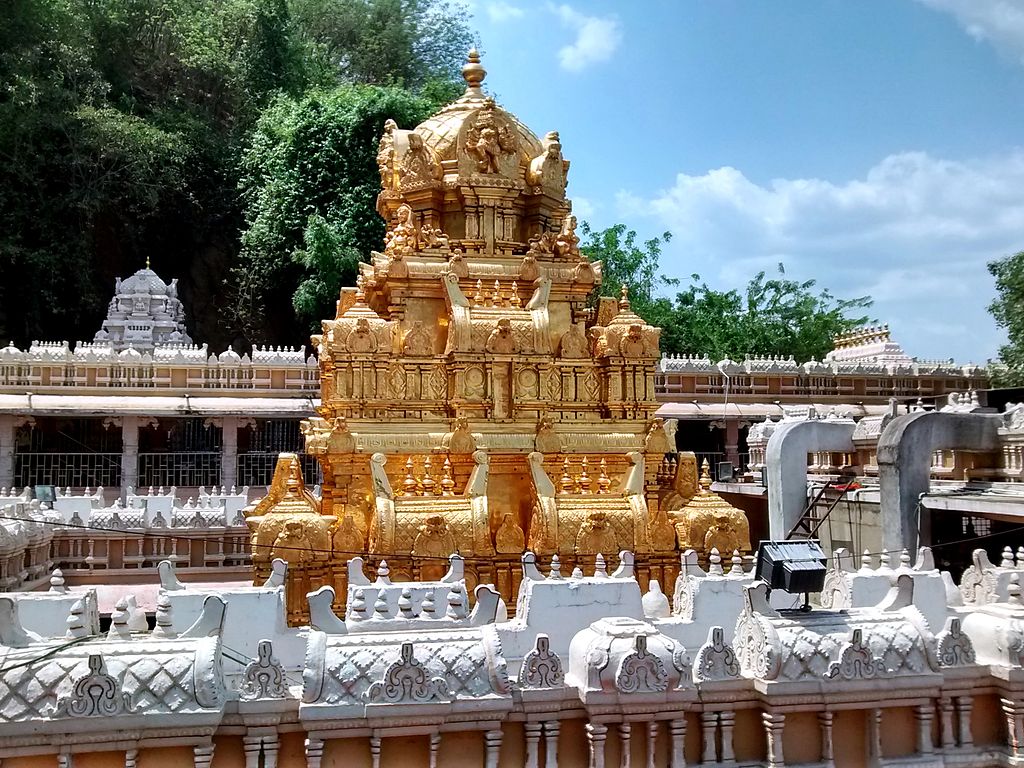
The Kanaka Durga Temple of Vijaywada is a famous shrine of Goddess Durga. The marvelous architecture in Dravidian fashion is breathtaking. The hills of Indrakeeladri surround the temple while the river Krishna flows beside it. The temple has various mentions in historical and religious texts.
Siva Mallikarjuna Swamy Temple stands on the southern bank of the mighty river Krishna, Srisailam. King Harihara Raya built the temple way back in the 6th century. The idols of sage Bringi, Nandi, Sahasralinga, and Nataraja find a home in this temple. A legend surrounding the temple states the story of Goddess Parvati cursing sage Bringi for worshipping only Lord Shiva and Lord Shiva bestowing the sage with a third leg.
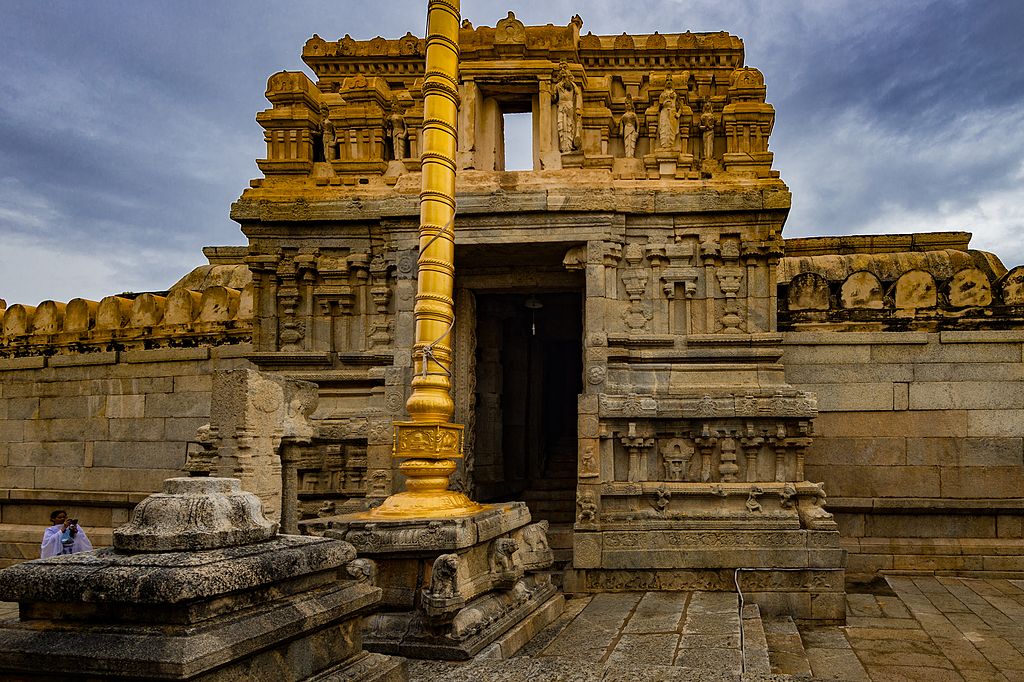
Veerbhadra Temple of the Lepakshi temple is one of the most famous and marvelous temples in the region. Maharaja Aliya Rama Raya of the Vijayanagara Empire founded the temple in 1535 AD. The temple holds not only religious significance but also historical affluence. It houses several archaeological sites.
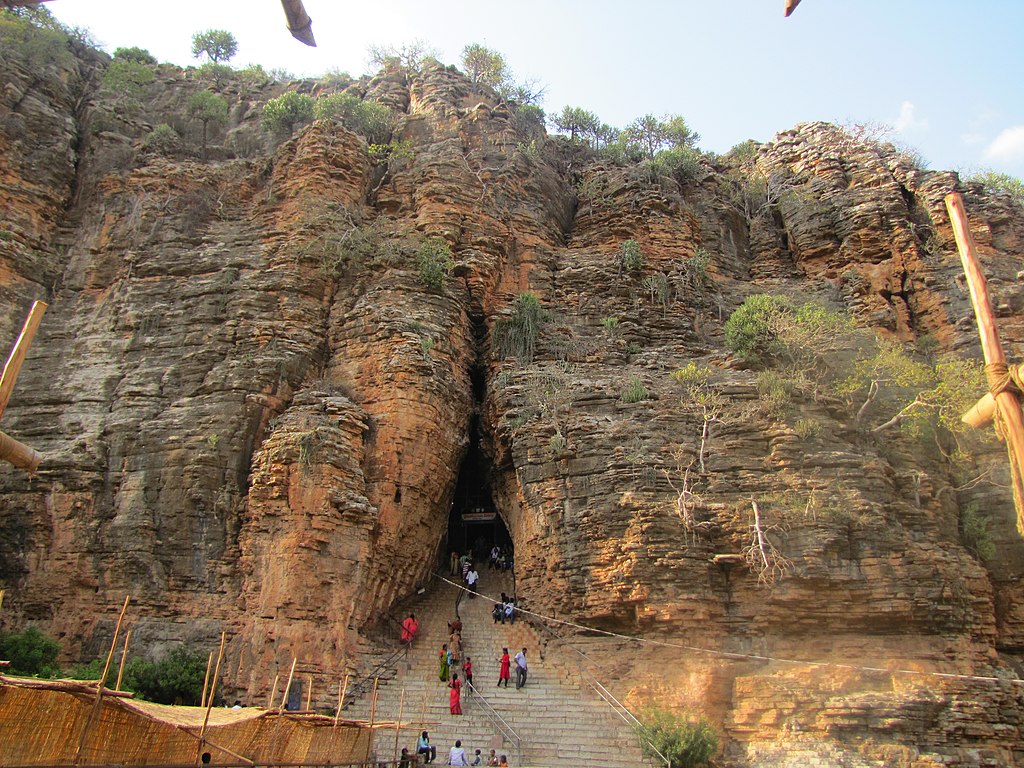
Yaganti Temple, or the temple of Yagantiswamy of Kurnool district of Andhra Pradesh, is a popular tourist place. Lord Shiva is the temple’s deity; Ardhanareeswara, the fusion of God Shiva and Goddess Parvati, is worshipped in the temple. The other name of the temple is Uma Maheshwara Temple. The ancient temple dates back to the 5th and 6th centuries. The idol in the temple is a single stone carving.
Simhachalam Temple of Vishakhapatnam is an ornate shrine in the state of Andhra Pradesh. It is present on the top of a hill 800 meters above sea level. The temple is primarily a Lord Narsimha temple, and the detailed stone carvings and design steal the spotlight. The Simhachalam Temple is the only temple in India where you can find the third and fourth incarnations of Lord Vishnu together.
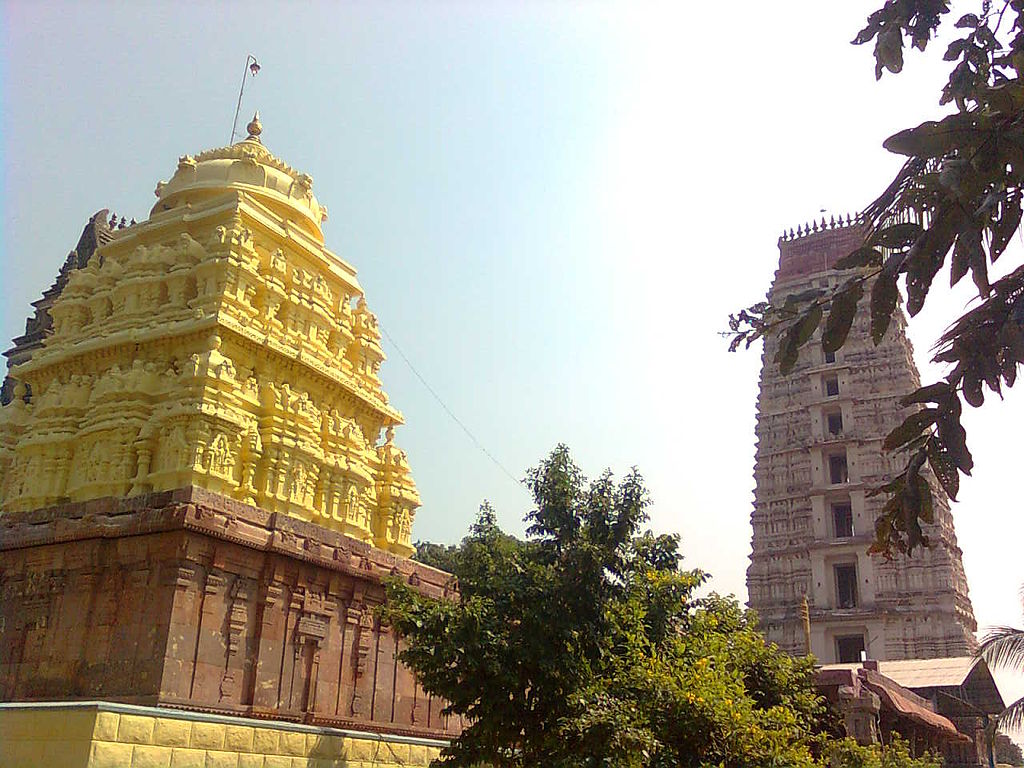
The temple is one of the eight auspicious and sacred destinations in India known as the Mahakshetrams. According to legends, Lord Vishnu himself manifested on the Mangalagiri soil, and Goddess Lakshmi performed penance in the peak of Guntur hills.
The Sri Padmavathi Ammavari Temple is a sacred temple where people pray and seek the blessings of Goddess Padmavathi. The temple stands solely dedicated to the legends of the life of Goddess Padmavathi
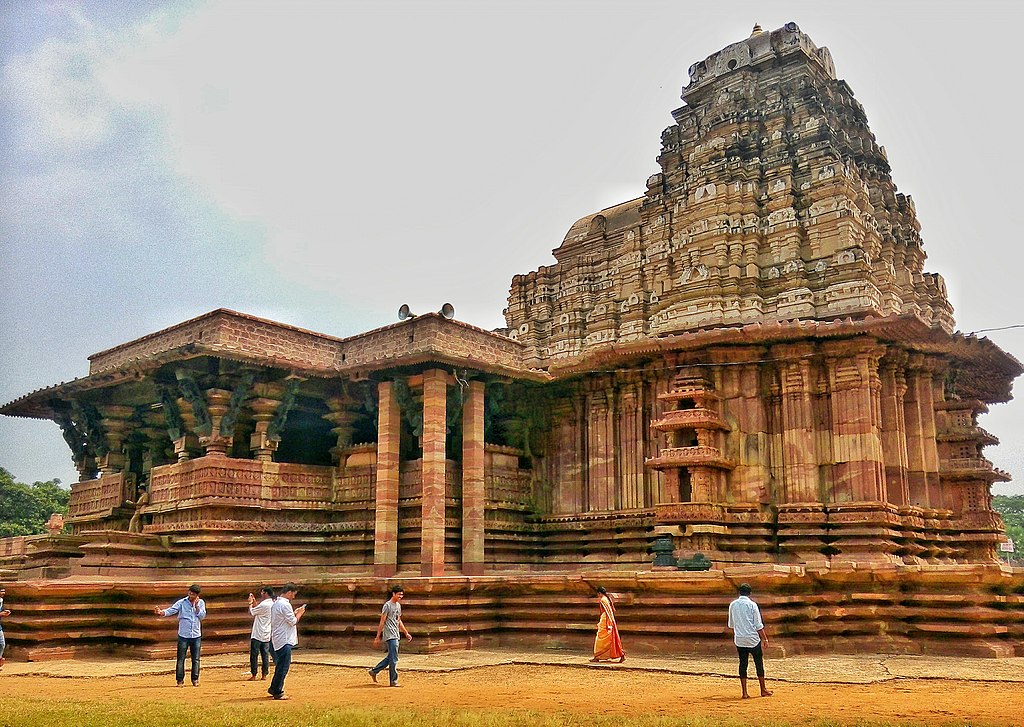
The Thousand pillar temple is an ancient temple in the small town of Andhra Pradesh, Hanamakonda. The pillars here are so tightly knit that they give the shape of a complete wall. The star shape construction of the temple is the best part.
The Kanipakam Vinayaka Temple is a reason for pilgrims to visit the state. The small town of Kanapakam where we find this beautiful temple is an abode of the deity Vinayaka. Constructed in the 11th century by the Chola king KUlthunga Chola I, the temple beautifully depicts ancient architecture. It was rebuilt by the rulers of the Vijayanagara dynasty in 1336.
Ahobilam Temple is insanely popular among tourists, and many sources state it as one of the most visited temples in Andhra Pradesh. Sources and historical cum religious texts also elaborate on the point that the temple stands where Lord Narsimha kills Hiranyakasipu.
The Amaralingeswara temple, located in the Guntur district of Andhra Pradesh, is one of the panchakarma Kshetras of the region. Legends state that the Shiva Linga in the temple is the one which God Indra installed himself. There is also a belief that the Shiva Linga present in the temple grows each year.
The magnificent temple was built in the heart of the ancient capital Warangal of the Kakatiya Dynasty. General Recherla Rudra constructed the temple during the rule of Kakatiya ruler Ganapati Deva. The carvings on the temple walls depict ancient scenes.
Conclusion
Other than these 15 temples, other temples hold supreme importance and reverence in Andhra Pradesh. Many of these temples were built centuries back and qualify as ancient temples and even supported archaeological sites. Most of the temples stand dedicated to Lord Shiva. The temples of Andhra Pradesh are the pride of the whole nation
Western fashion has greatly influenced the clothing of India due to globalization, formalism, and ease of wear in a highly busy lifestyle. The people, however, have not discarded their traditions and culture. These come to the forefront especially during occasions, gatherings, ceremonies, and religious festivities. The traditional dresses of Indian states will always be adorned to celebrate cultural diversity.
Each state of India has its heritage that is a source of its costumes and clothing. Today, we explore all the states of India and their rich style of traditional wear.
The women of Andhra Pradesh dress in handloom sarees. Most of these are made of silk, with a rich texture due to their intricate weaving. The younger women wear the two-piece conventional sarees called the Langa Voni. Andhra’s Kalamkari sarees have mythological motifs, and figures from epics etched on them. The men use the shirt called kurta as the upper garment, teamed with dhoti, lungi, or pajama.
Arunachal Pradesh
Image – Pixabay
A full-sleeved coat over a loose chemise is the conventional wear for women. The accessories of bamboo and silver earrings are very common. The men wear silk shirts and pin the edges around the shoulder area. Their customary green lungis have colored stripes of blue, yellow, or white. The Sherdukpen men’s wear is famous for the skull-caps called Gurdam, which are made from Yak hair.
The ‘Mekhela-Chador’ or ‘Riha-Mekhela’ is wonderful traditional clothing for Assamese women. Especially during occasions like weddings or festivities, women take pride to adorn themselves in this attire. This handloom product is woven from durable Muga silk. The men were dhoti and kurta or kameez, often draping the long cloth ‘chador’ from the Seleng region.
The traditional dress of men from Bihar is the dhoti-mirjai and kurta while women prefer sarees or Salwar-Kameez. The saree is worn in the conventional ‘Seedha Aanchal’ style and is often made of Tussar silk.
Chhattisgarh
The local Kuchhora fashion of wearing knee-length sarees is preferred by the women of Chhattisgarh. It is known as Lugda and worn with a pullover called Polkha. Other than dhotis and headgears like cotton turbans, the men wear garments called Halbas and Murias. The fabrics that are used the most are linen, silk, and cotton, and are usually painted with molten wax.
The conventional attire for women in Goa is the Nav-Vari saree which comes nine-yard long. The expensive Pano Bhaju saree is studded with precious stones and gems. Men wear basic shirts and trousers, often teaming them up with caps.
The traditional Kedia dress is worn by both men and women in Gujarat during festive occasions and celebrations. Women also wear vibrant Chaniya Choli. This gorgeous dress is worn with a long skirt called ‘Ghagra’ as the lower garment and is embedded with little pieces of glass. In general, men wear dhoti and kurta.
The colorful dresses of women from Haryana include ‘Damaan’, ‘Kurti’ and ‘Chunder’. The Damaan is an ankle-long skirt while the Kurti is a shirt-like blouse. The long and laced Chunder is used to cover the head and drape around the shoulders. The dhoti is the traditional wear for men. They also crown their attire with the headgear Pagri, mainly in the villages.
The men from Himachal Pradesh prefer kurtas and the lower garment called Churidaar. The women, on the other hand, deck themselves in ethnic Kurti, Salwar-Kameez, a long skirt called Ghagri, and the fringed headscarves called Rahide. Due to the climate, woolen clothing is indispensable for the people. The famous Pashmina shawls are unique to the region.
The Pathan and Panchi costumes of the tribes of Jharkhand are extremely popular. Sarees made from Tussar silk and Anjana silks are worn traditionally by women. The men were a single piece of cloth called the Bhagwan. The costumes called Santhal and Pahari of the Santhal Pagara tribes are believed to bring good luck to the wearer. In general, men wear dhoti and kurta.
Karnataka has a variety of costumes because of the diverse communities that reside in the state. The Ilkal sarees of Karnataka are popular throughout the country due to their unique method of weaving which makes use of the Tope Teni process of looping. Kanjeevaram silks are also popular. The men prefer to wear kurta and the lower-garment called lungi or panche.
Kerala’s most conventional traditional wear is called the mundu. It resembles a long skirt and is worn by both men and women. Women wear the Mundum Neriyathum, traditionally a two-piece costume in the style of a saree. Men wear a shirt or kurta as the upper garment and the Veshti, a type of sarong.
Women of Madhya Pradesh wear Lehenga, a heavy, ornamented long skirt, and the blouse called Choli. They also drape a long, light cloth, called the Orni or Lugra, over the head and around the shoulders. The men don the Bandi jacket on top of kurta and dhoti.
The women commonly wear the traditional nine-yard long saree called the ‘Nauvari’, along with a ‘choli’ blouse. Nauvari has a unique pattern of draping which is a recognized costume of Maharashtra. The men wear a cotton kurta paired with the dhoti. Their cotton caps are called ‘pheta’ or ‘pagadi’. A sleeveless jacket called ‘bandi’ is often worn.
The women of Manipur drape the Innaphi in the style of a shawl. Their hand-woven Phanek skirt is designed with horizontal lines. The women from the Meitai community stitch a cloth full of intricate designs called Kanap Phanek. Two other important cultural costumes of Manipur include ‘Lai-Phi’ and ‘Chin-Phi’. Men wear a simple white turban or ‘pagri’ on the head, and kurta and dhoti.
The dressing culture of the tribes of Meghalaya, mainly Khasi, Jaintia, and Garo, are unique in each of their fashion. The Jympien skirt of the women is made from cotton or endi. An apron or Kyrshah is suspended from the left shoulder and then extends down to the legs. The Jainem, mainly worn outdoors, is a modification of the typical Indian saree. Beaded jewelry is used to adorn along with this saree which is made from cotton or silk. The Tap Moh headgear is also worn. The men’s apparel includes the dhoti, shirt, and jacket along with a turban. They often wear a sleeveless coat and pair it up with the decorative Jymphong during festivals and occasions.
The Puan, an attire consisting of the blouse, leggings, and the dupatta for headgear, is the traditional dress of Mizo women. The two-piece clothing called Puanchei, consisting of a long skirt and a shirt, is worn on occasions and at weddings. Traditionally, these are brightly colored, with checkered designs. The women have gorgeous blouses and headdresses to wear during performing cultural dances. The men of Mizoram simply put on a long piece of shirt-like garment. During summers they wear turbans, while in winters, they don coats over their garments, usually of red and white colors.
Nagaland takes pride in its ancestral heritage and its warrior history. The design of the shawl that the people wear depicts the social status of the wearer. The attire of the men is topped with a red headgear decked with black and white feathers of the Hornbill and the canine teeth of a wild boar. The bangles, necklaces, and tattoos depict the history of war and the sacrifices that the people went through.
Odisha
Image- Max Pixel
Women drape the Oriya saree with a five-yard cotton ikat cloth. These sarees have deep primary colors like blue and red along with special ikat patterns. The handlooms of Odisha produce distinctive and popular sarees like Bomkai and Sambalpuri. Men prefer to wear shirts and pants. During occasions or traditional festivities, they wear kurta, dhoti, and Gamucha.
Punjab
Image-Wikimedia
Women love colorful and intricately embroidered Salwar Kameez and Patiala pants. The turban of the Sikh man is a symbol of honor. Along with kurta, the men wear light and baggy Tehmat pyjamas as the lower garment. Jooti is the conventional Punjabi footwear worn by both men and women.
Generally, the women of Rajasthan wear the long skirt called Ghagra along with the Kanchli blouse. The men, on the other hand, wear a kurta, Churidar, dhoti, Angarkha, and Paggar. Their turban-like headdress is called the Safa. All across the state, the conventional dressing style varies according to preferences.
The women of the Bhutia tribe of Sikkim wear the traditional full-sleeved blouse called Hanju and a colorful, woolen cloth called Pangden. Often they top it with the Kushen jacket. The men wear waistcoats called Jyajya and the shirt called Yenthatse. Shambo is their traditional cap. The Lepcha women wear the Dumvam garment, along with the loose-fitted blouse called Tago. Nepali women have a blouse called Chaubandi that they wear with sarees. The men wear kurta-styled Daura and comfortable trousers called Sural.
Men in Tamil Nadu, drape the Angavastra around their shoulders and the cotton lungi around their waist. The women choose the perfect saree that fits the occasion. They are usually made of silk and have delicate designs and colors.
The famous sarees woven in Telangana include the Pochampally saree and the Gadwal saree. Pochampally weave is commonly done in the tie-and-dye technique, also called the ikkat weave. The dhoti worn by men is also called the Pancha. The traditional Sherwani of Hyderabad was preferred by the nobles and the Nizam. Today, it is worn during festivals and occasions.
The Rignai of Tripura is a broad piece of cloth wrapped around the waist, and the Risa is a shorter upper garment. Both these clothes are traditionally worn by women, especially during occasions. The Rignai and Risa fabric are designed with deft artistry and beautiful patterns. The men usually wear the Rikutu Gamcha along with the shirt called Kubai. They like to accessorize with bead necklaces.
The men of Uttarakhand wear a kurta shirt as the upper garment along with a dhoti, pyjama, or lungi. The turban is important in completing the traditional attire. Most of the women prefer to wear the Ghagri skirt along with a colorful blouse called Choli. They cover their head with an additional long cloth called Orni, which they usually fix at the waist. The traditional bridal costume of Ghagra-Pichora is decked with gold and silver embroidery.
The women of Uttar Pradesh usually prefer saree or Salwar-Kameez while the men go for kurta, dhoti, or pyjama. The men also wear Pagri. During festivities, they wear the richly embroidered kurta called the Sherwani. Women wear the Lehenga and Choli along with Orni.
West Bengal
Image – Mayabono Biharini
The white saree with broad, red borders is an iconic and favorite festive wear for Bengali women. The Salwar-Kameez is also popular alongside sarees. The men traditionally wear the Panjabi, which is a long shirt in the style of a kurta. Their lower garments include cotton pyjama, dhoti, and lungi.
The customary wear in the Union Territory, Jammu, and Kashmir, called Pheran, is a long gown that extends below the knees. The women’s Pheran is usually embroidered at the hems and collars with golden threads. Muslim women also wear kameez-suit and Burkha. The men wear turbans with Churidaar and Pyjama, or skull caps along with the Pheran or ‘Salwar’ suits.
The Diversity in Traditional Dresses of Indian States
The clothing of traditional India is rich in artistry and uniqueness. The citizens take pride in their ethnic wear, style, and ornamentations. The traditional dresses of Indian states, worn by the diverse set of people in the country reflect the depth of the rich history and culture of India.
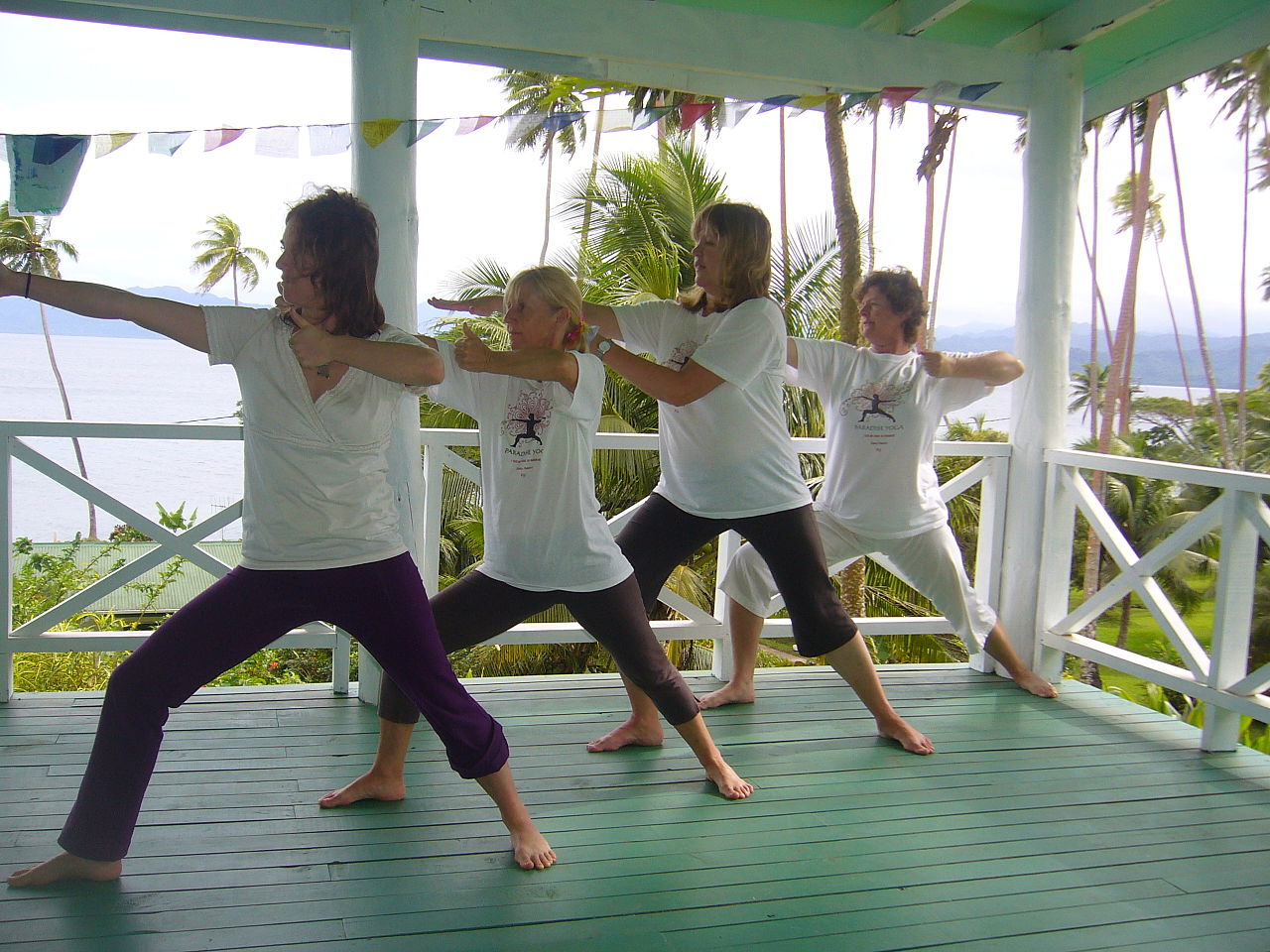
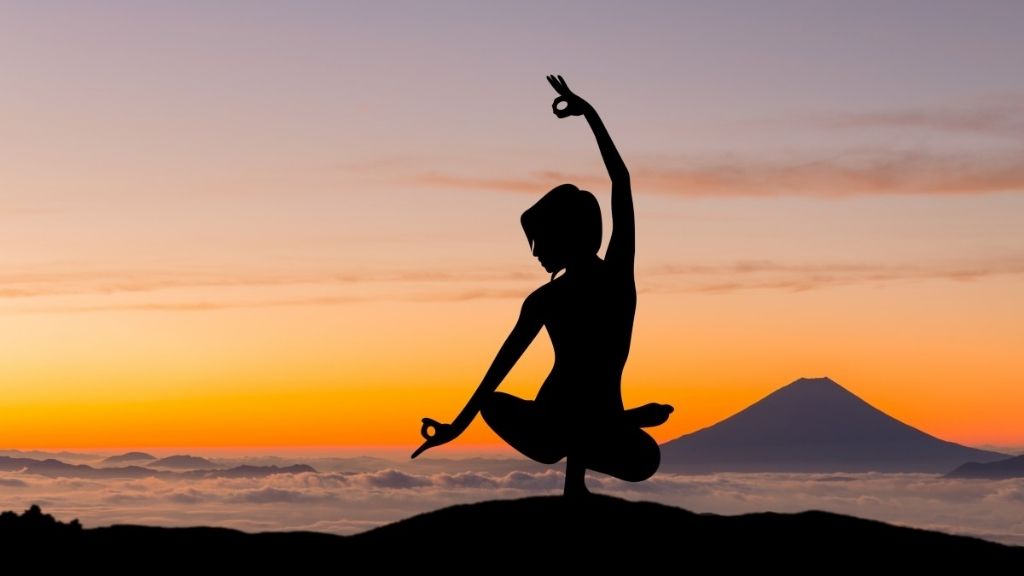
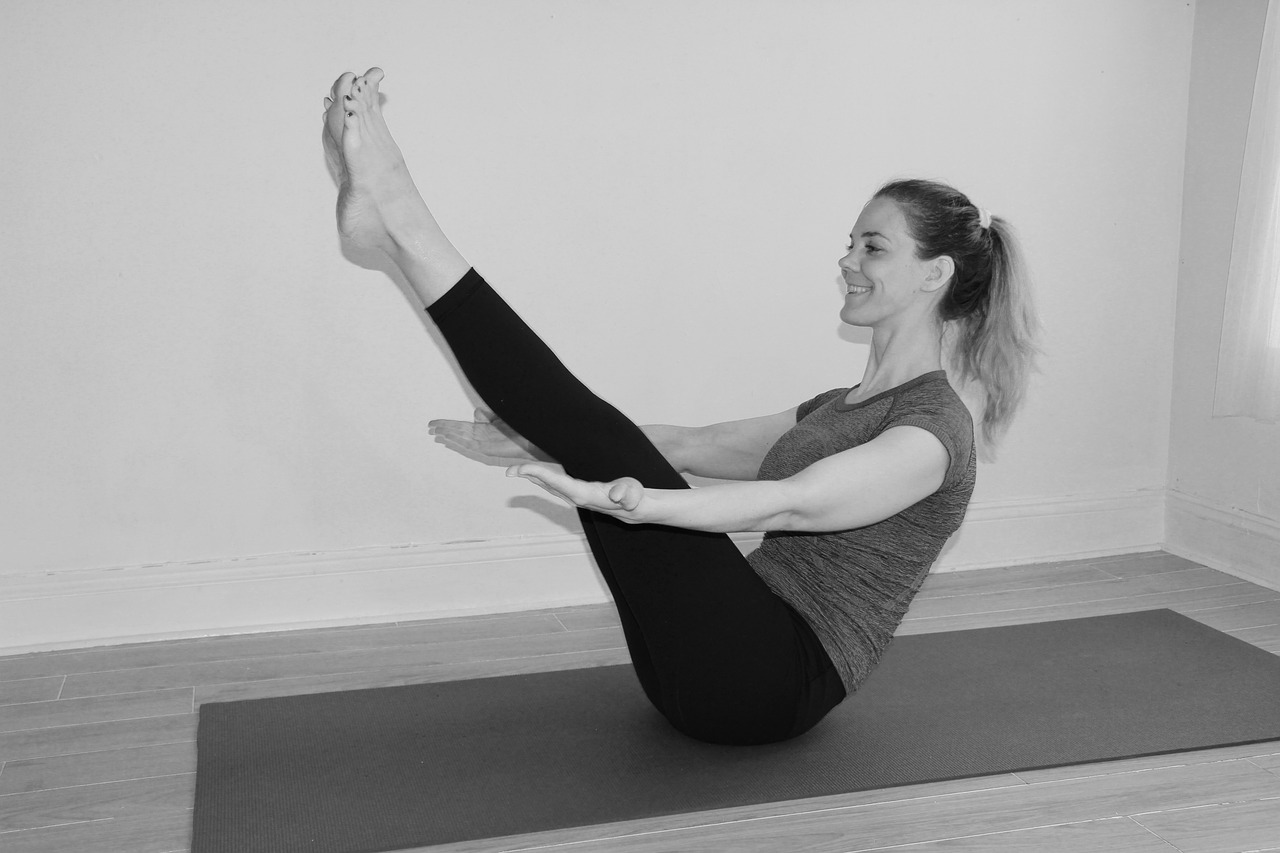
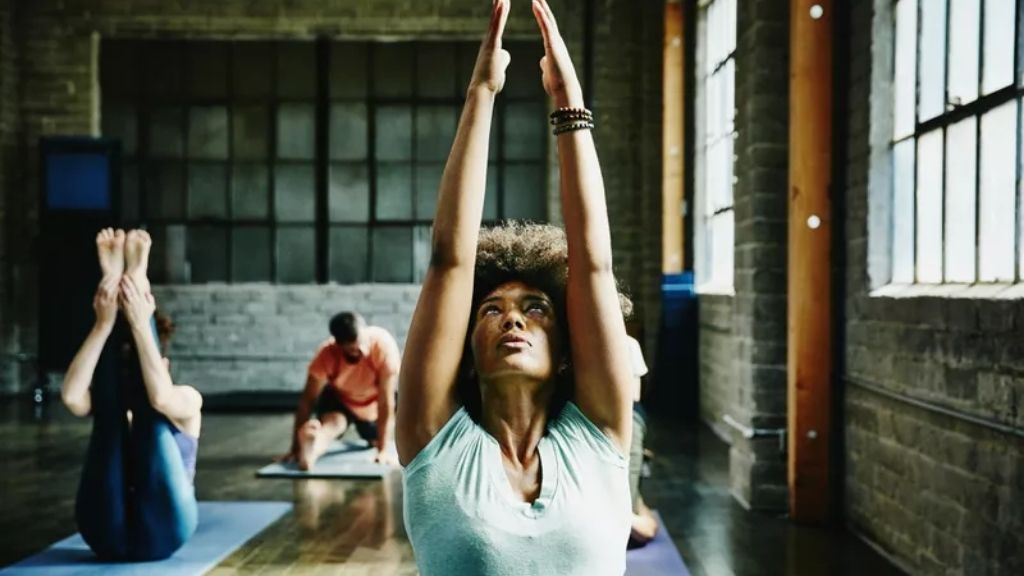
Yoga originated in India back in the pre-Vedic period, around 3000 BCE. It is a form of exercise that enhances the health of the physique, expansion of the mind, and enlightenment dawned through self-realisation and attaining oneness with the entirety of the universe. Today, Yoga is practiced all across the world and here we present the major types of Yoga that are prevalent.
Hatha yoga
Hatha Yoga originated in the sutras of Patanjali Maharishi written during the 400 AD. It is conceived as having eight-limbs of discipline or an eight-fold path to attain oneness with the whole of existence as well as self-realisation. It used to be considered as an ethical or moral code of life and the mother of all yogas, the style from which the others originated.
Today, Hatha Yoga is practiced as a basic method for people newly endeavouring to attain calm of mind and relieve stress. It consists of breathing techniques or pranayamas, asanas, or postures to enhance the stability and strength of the body, and meditation or dhyana.
Although Hatha Yoga has been forced into adapting itself to the new-age, busy lifestyle of people, it still incorporates within itself the core eight principles which include understanding and relating to your surroundings, realising your true self, attaining a balance with the force of the universe and surrendering to your destiny.
Vinyasa Yoga is the form where one proceeds from one posture to another, in a seamless flow of linked movement, driven in sync with the breathing. This type of Yoga encapsulates the temporary nature of things in life and helps to enhance the balance of the body and mind. Vinyasa or Vinyasa-Krama goes back to the Vedic period where it was recognised as a sequence of postures and movements to go onwards on the self-aware journey to attain pure sacredness and unabashed truth of existence.
Often referred to as the “Flow Yoga”, Vinyasa can be practiced both with stimulation and intensity as well as in a gentle and restorative manner. It not only increases flexibility but also builds strength, increases focus, and prevents repetitive motion injuries. The use of “Ujjayi Breath” brings attention to every inhale and exhale and clears the mind. It is extremely versatile as the order of poses is flexible to change during each class, depending on the practitioner’s decision.
Ashtanga Yoga is a rigorous discipline of structured yoga practice that incorporates the exact sequence of poses and their transitions. It was introduced into the mainstream by Sri Pattabhi Jois.
The class of Ashtanga Yoga involves the student in a specific sequence which they practice at their own pace but under the guidance of the teacher. When the student masters this stage, they are introduced to the next and more challenging level.
This personalised approach tends to individualised adjustments and includes the sequences named according to their increasing order of vigor: the Primary Series or Yoga Chikitsa, the Intermediate series, the Advanced-A, the Advanced-B, and so on.
Ashtanga Yoga also follows Patanjali’s eight-limbed approach and serves to bring under control the wanton mind. It centres on strength building, detoxifying, and aligning the body, focusing on the breathing technique that gives more fluidity to the practice and meditation.
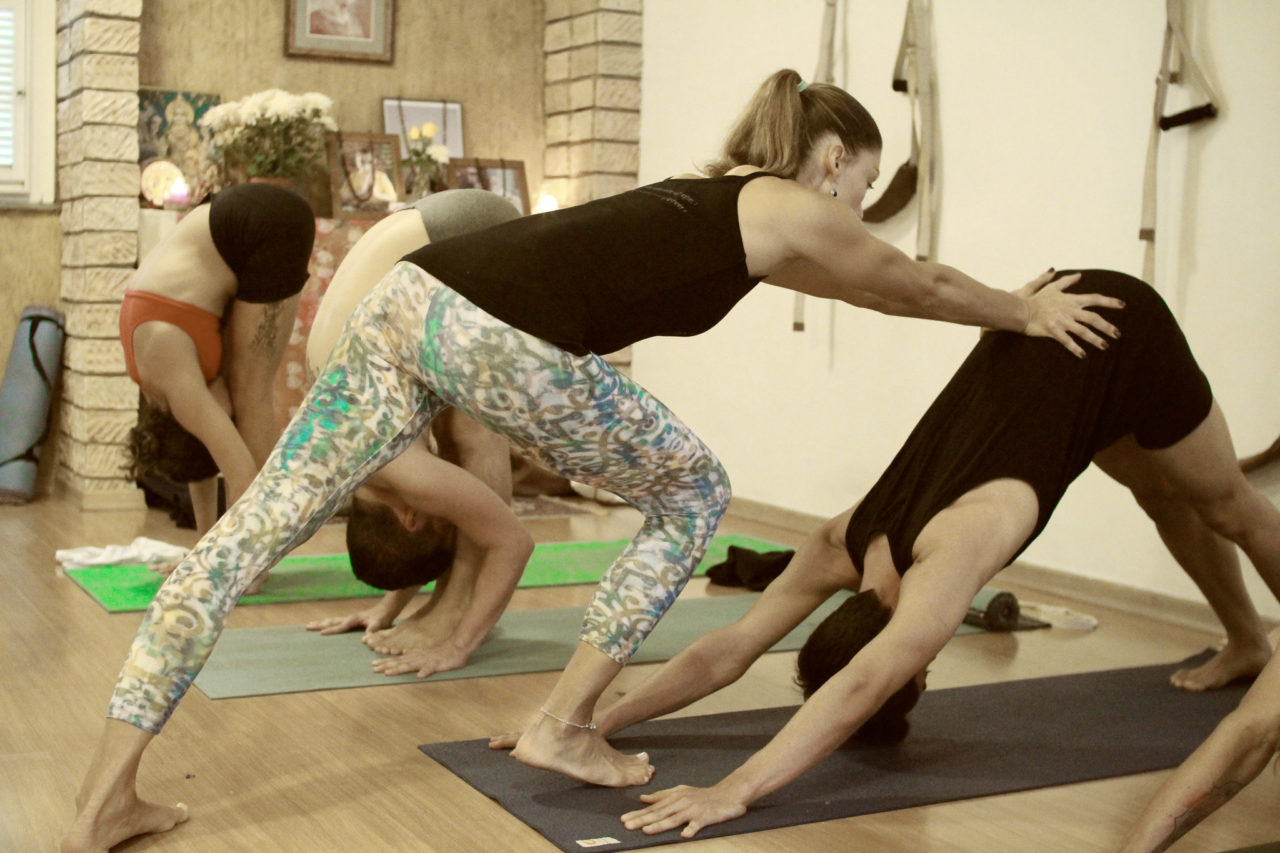
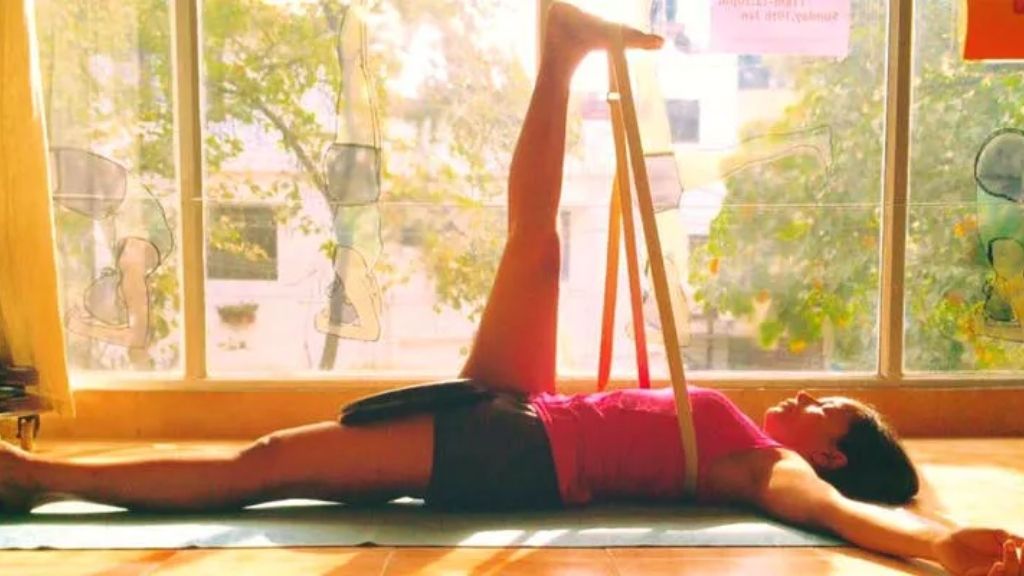
Iyengar Yoga emphasizes the correct alignment of the body during its postures. A practice that aims to pronounce spiritual well-being and anatomic precision, it develops balance in body and mind and often uses props, like belts and blocks, to ensure safer and gradual progress. It has been formulated by B.K.S Iyengar and also follows the Yoga Sutras by Patanjali.
With consistent training, one will be able to advance through the progressive stages of this style systematically. Iyengar Yoga builds stability, increases flexibility, makes adequate use of pranayama, and focuses on longer holds of the postures to enhance proper alignment of the physique.
Comprising intense postures, breathing techniques, meditation as well as singing, Kundalini Yoga aims to arouse the dormant energy that lies at the bottom of our spine and expand the consciousness to achieve enlightenment.
The Sanskrit word “kundal” means “coiled energy”, and the dormant spiritual force of our being is conceptualised as a coiled snake that rises through the six spinal chakras and reaches the seventh chakra, that is the crown of the head, as the Kundalini awakens.
The process of growth through self-awareness in Kundalini Yoga is spontaneous, where the practitioner’s self-unfolds itself gradually as each day passes. Kundalini Yoga helps one to shed their attachments of the past and overcome the fear of the true Self, thus achieving realisation and understanding of the individual’s core being.
Kundalini Yoga cultivates strength and tones the body since asanas are held for longer periods, often up to five minutes. It helps in producing serotonin and reduces stress for the vital energy flows through the body as the chakras unlock during performing the sequence of postures paired with breathing techniques, called “kriya”. This yoga not only enhances concentration and memory but also boosts the metabolic system.
Since colours produced on the subconscious mind, the effect of inspiration, expansion, and productivity moves the consciousness. The yogic chooses that one color which is an amalgamation of the seven colours: white. The colour white also wards off negative energy. The yoga starts off with the process of “tuning in”, where a mantra is chanted, like Sat Nam or the Adi Mantra. This is followed by a brief warm-up of the spine and then the kriyas are performed. The closing meditation and song often comprise the five primal sounds of the universe: Sa, Ta, Na, Ma.
The combination of these two types of yoga benefits the mind, body, and soul holistically. While Yang is based on the Hatha and Ashtanga types and focuses on developing muscles and toning the body, Yin is a much relaxed and passive form of yoga which concentrates on increasing flexibility and mobility of joints and the connective tissues, also called Yin tissues.
Yin and Yang are the two concepts of the Taoist philosophy which illustrates the essential balance that persists in every aspect of existence. Thus, Yin yoga is more internal, cooling, and downward flow while Yang is of the external, warmer, and upward flow of energy.
A class of Yin yoga includes a series of passive postures on the floor which aim to enhance the deep connective tissues and fascia networks of the body. In terms of energy, Yin helps in the flow of the life force or ‘chi’ throughout the meridians or energy channels of the body and benefits the mental and emotional aspects of the practitioner.
The suppressed emotions like anxiety, stress, happiness, and boredom all surface, and are released as the body is held in asana. The practitioner merely observes the physical sensation of these emotions and is not engulfed in their stories. The Yin asanas are held for a longer period. By stimulating and removing the myofascial meridians, Yin Yoga produces a balance among the internal organs and systems of the body.
Yang yoga is a dynamic practice that incorporates the styles of Vinyasa Flow and Ashtanga Yoga. It shapes the muscles and increases strength and stamina.
Jivamukti Yoga
Image – Pixabay
Jivamukti Yoga is an amalgamation of the methodology and philosophy of different yogis, especially of Swami Nirmalanda, Sir K. Pattabhi Jois, and Shri Brahmananda Sarasvati. It is considered as a path to enlightenment through compassion towards all beings, wherein the unity of the one with the all is achieved and the perception of separate existence is dissolved through realisation and establishment of a relationship with the surroundings.
The word ‘Jivamukti’ is a Sanskrit term which means “liberation while living.” It is centred around the Vinyasa style practice and its asanas are dynamic and vigorous that demand a physical challenge. The teachers often start the day with a story of a particular theme around which revolves the practice for the rest of the class. These themes are explored through yoga scriptures, chanting mantras, indulging in pranayamas, asanas, and even music.
The principles of Jivamukti Yoga are inspired by the Sutras of Patanjali and are five in number: meditation (dhyana), music (nada), non-violence (ahimsa), devotion (bhakti), scriptures (shastra). These are made relatable by drawing examples from modern life and contemporary music.
Hot Yoga
Image Source
In Hot Yoga, the practice is carried out in a room with heightened temperatures. This form of yoga detoxifies the body through intense sweating, improves blood circulations, makes it easier to form the asanas due to warmed up muscles, normalises glucose level in the blood, nourishes the skin, and builds strength.
The room is heated above normal room temperature. The heat is set to what the yoga instructor decides, though it’s usually between 80 and 100°F. Hot Yoga sessions are usually variable and can include any sequence of poses. The classes are characterised by music and interactions among the participants.
The Moksha yoga is a form of Hot Yoga practiced mainly in Canada and includes more than 40 different poses, all founded upon the traditional forms of yoga. It offers a cardiovascular workout, yet reduces stress by calming the mind.
A more serious and quieter type of Hot Yoga, called the Bikram Yoga, is done in a room heated to 105°F, with 40 percent humidity, aiming to duplicate the temperature of India, where Yoga originated.
India has both a rich history and culture. The richness, however, is more about the correlation between people, cultures, and landscapes. With a multitude of influences, both that arose historically or originated within the land, to practices, architecture, and cultures that were brought from outside. India essentially is a wonderful mosaic of different traditions and heritages. One such is the Rajput community whose presence in the country reflects on countless stories, architectural magnificence, and a cultural mingling through various times.
One often thinks of valor, courageous kingdoms, opulent architecture, and a dominant Hindu environment when one hears about Rajputs. However, Rajputs in fact, incorporate various clans though it was around the 16th century that it began to be understood as the way we see it today. The origin of Rajputs is not too clear, yet their emergence is often associated with the breakup of the Gupta Empire in the 6th century. They are regarded as Kshatriyas though people from different strata of society have been absorbed too. The term Rajput has been anachronistically used over the years. It was addressed for a social class of people that came from different traditions, economic, and ethnic backgrounds.
Yet, it was in the 7th century that Rajputs started attaining political importance. Rajput kingdoms and dynasties were spread across northern and western India and were the main obstacles in the way of Muslim attackers.
The membership into the class became largely hereditary during the 16th and 17th centuries. However, the Rajput dynasties and kingdoms played a huge role in consolidating the class and clan across different areas till the 20th century. The Rajputs population is mostly found in Rajasthan, Gujarat, Haryana, Uttar Pradesh, Punjab, Himachal Pradesh, Uttarakhand, Madhya Pradesh, Bihar, and Sindh.
Many parts of the subcontinent have been ruled by Rajput dynasties. Some as sovereign states, whereas later, many as princely states too.Since the term is anachronistically used, the rulers of Kalinjar and Gwalior who opposed the assaults by Mahmud Ghazni are also known as Rajputs. Some of the others include the Pratiharas, the Tomars, the Chahamanas, the Paramanas, the Chalukyas, the Chandelas and the Gahadavalas.
The Rajput kingdoms of Ranthambore and Chittor resisted the onset of Alauddin Khilji. Later Rana Sanga of Mewar defeated Delhi Sultanate’s Ibrahim Lodi but was, however, later defeated by Babur in the Battle of Khanwa. Many Rajput kingdoms moved along the eastern Ganga plains into modern-day Bihar and Uttar Pradesh.
Yet, the equation of the Rajputs and the Mughals was for most parts a seamless arrangement. Akbar made a settlement with almost all Rajput kingdoms, except Mewar. It was because of their support the Mughal Empire was able to strengthen its foundations. Rajputs were a part of the court, had governance and army commands too. The Mughal kings married Rajput princesses.
The alliance between the Mughals and Rajputs continued to flourish. Jahangir and Shah Jahan’s mothers were Rajputs. But the bond was maligned during Aurangzeb’s rule. The Rajputs revolted under him and became one of the many reasons for the downfall of the Mughal Empire. The Rajputs too fell at the hands of the Marathas and after Independence, many of the Rajputana states were merged to form Rajasthan.
Rajput Architecture
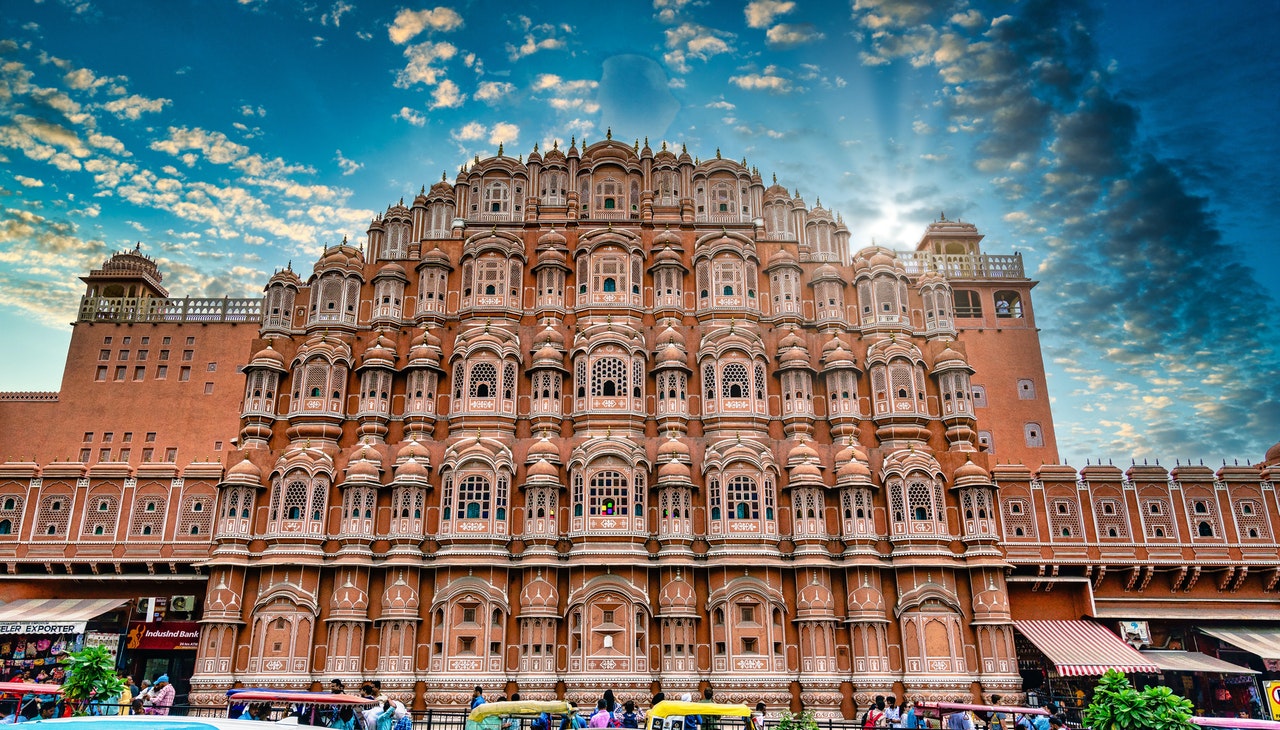
Hawa Mahal, Jaipur – Ankur Bagai
The Rajputs have immensely contributed to the historical and cultural landscape of the country. There are, of course, many contributions made by the community, however, one that stands out is Rajput architecture. The state of Rajasthan is ablaze with astounding architectural brilliance. But the architectural extravaganza is also seen in many other parts of the country.
Some of the temples built by Rajputs include the Rathas in Mahabalipuram and the temples at Ellora. The Pallava, Hoysala, and Chola temples, the Lingaraj Temple in Bhubaneshwar, Jagannath Temple at Puri, and the Khajuraho temples are also built by the Rajputs.
One of the most mesmerizing aspects of Rajput architecture has been the opulent palaces and fortifying forts. Let’s take a look at some of their best architectural marvels.
The Hill Forts are a great reflection of Rajput architecture. The forts at Chittor, Amer, Ranthambore, Jaisalmer, Gagron, and Kumbhalgarh are a part of the UNESCO World Heritage Sites. All these are built on hills with magnificent towers and secure walls. The Chittorgarh Fort is the largest in India and was the capital of Mewar. The Jaisalmer Fort is a ‘living fort’, with some of the city’s population still residing within its walls. Built by Rajput king Jaisal the huge yellow sandstone fort is also known as the Golden Fort or Sonar Qila.
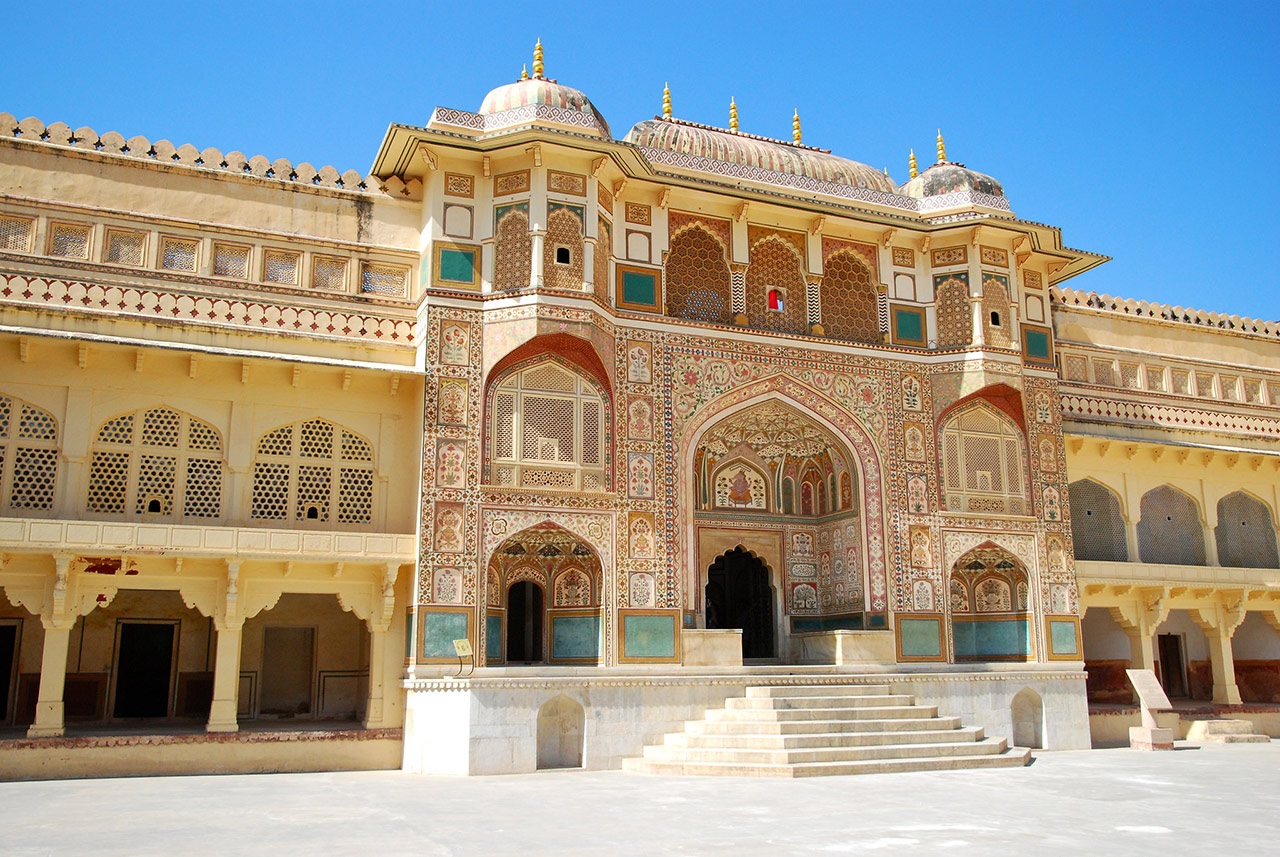
The Ranthambore Fort lies within the Ranthambore National Park. It was held by Chauhans or the Chahamanas until the Delhi Sultanate took it over. The Amber Fort a few kilometers from Jaipur was built by Raja Man Singh. These forts are sprawling structures that house temples, palaces, halls, and exquisite interiors. Some of the forts include the Jaigarh Fort, Mehrangarh Fort built by Raja Jodha, Junagarh Fort, Lohagarh Fort, Alwar Fort, Bhangarh Fort to name a few.
The forts thus are in fact, the most important and striking architectural wonders of the Rajputs. The sense of security, protection from the enemy, safeguarding pride, and courage are some of the essential values that the Rajputs have carried with them over generations. These sentiments are perhaps, best manifested through their sturdy forts. That not only signify strength, but also strategy and good governance.
The Rajput kings or Maharaj’s were true to their palatial lifestyle. Some of the best palaces are placed within the walls of forts, making the entire complex an exquisite site of strength and delicacy. The Amber Palace, for example, is one of the most beautiful palaces in Jaipur. Located within the Amber Fort, the palace has six different entrances and courtyards.
The City Palace built by Maharaja Sawai Jai Singh II in 1723 is in the heart of Jaipur. Again with many gateways of pol, halls that include the Diwan-e-Khas and Diwan-e – Aam. Along with a temple and now a museum the palace is a great showcase of royalty.
Jal Mahal situated in the middle of Man Sagar Lake is a palace that perhaps can’t get any better. Built by Maharaja Jai Singh II, the palace is five-storied sandstone with hallways, chhatris, and magnificent paintings. The Vinay Vilas Mahal in Alwar was built by Maharaja Vinay Singh. It is home to well-crafted windows, rooms, hallways, and facades. The Lalgarh Palace in Bikaner is an elegant testimony to the Indo-Saracenic architectural style. The Umaid Bhawan Palace in Jodhpur was built by Maharaja Umaid Singh and took almost 15 years to complete. With royal galleries and majestic automobiles, the palace is a heritage hotel too.
No list of palaces can be quite complete without the Hawa Mahal. Some of the other palaces include Rani Padmini’s Palace inside Chittorgarh Fort. The Deeg Palace, Juna Mahal, Chhattar Mahal in Bundi, Lalgarh Palace in Bikaner, and more. But Udaipur remains quite the place for palaces for sure. With a litany of astounding and stunning palaces, Udaipur is the destination for royalty, class, and majesty. Some of these include the City Palace, Lake Palace, Monsoon Palace, etc. Of course, most of the palaces have been converted to heritage hotels and resorts. Their grandeur is probably unmatched elsewhere.
There are a few architectural nuances that are special to Rajput buildings and structures. The Indo-Aryan style was common in northern India, whereas, the Dravidian style in southern India. However, the influence of Mughal architecture or perhaps the integration of Islamic and Hindu architecture is best seen in Rajput structures. The Islamic elements inspired by Mughal architecture, as well as the local cultural styles, meet together in the architecture of the Rajputs.
Havelis with pretty and intricate frescos and courtyards were trademark styles. Built-in the Shekhawait and Marwar areas. Jharokhas, the overhanging balconies which acted like screens are one of the most prominent architectural elements. The Rajput women were cognizant of purdah or keeping their distance from men. The screens allowed them to watch the proceedings without invading their privacy. Similarly, chhatris or pavilions that are dome-shaped were built on the cemeteries as cenotaph memorials. Some of the excellent cenotaphs are Bada Bagh in Jaisalmer, Ahar Cenotaphs, Jaswant Thada in Jodhpur, and more.
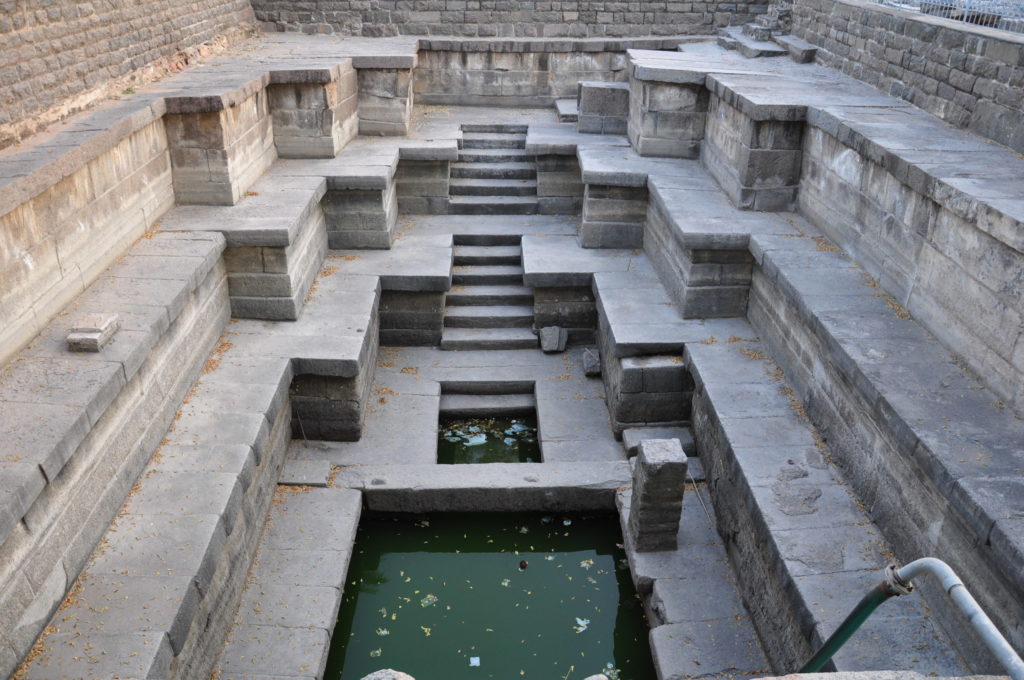
Another significant feature of the Rajput architecture is its step wells. A bawdi one can climb down the well-designed in intricate geometric patterns with fantastic scientific understanding. The step wells in Bundi are one of well-known architectural delight.
Rajput architecture also includes city or town planning. Several rulers built cities and the planning was well thought and practiced. Housed inside the forts, the cities have distinct structures and demarcated functions.
Conclusion
The Rajput community has been an essential part of the Indian narrative. Yet, its strongest character lies in its fluidity. Unlike a lot of other castes or classes, the Rajputs historically have integrated with all sections of society and allowed their community to grow both vertically and laterally. Its members were agriculturists, tribals, Kshatriyas, and more, all finding a way to come together to reinforce values of humanity, goodness, and valor. Though it did get to hereditary fortune. Nonetheless, the overall idea of equality, loyalty, and courage resonates through all Rajput architecture, culture, and of course, its tales.
“Unity in diversity“. These aren’t simply words; they’re a metaphor for a country like India, which is extraordinarily rich in culture and legacy. A few quotes or statements are insufficient to convey the prominence that India has on the global stage as a result of its vibrant and distinct culture. India has always been known for its customs of hospitality, from the time of the Mauryas, Cholas, and Mughals through the British Empire. The country stands out in the worldwide community because of the warmth in its interactions and the joy in its festivities. The country’s vibrant culture, which is an amalgamation of religions, festivals, food, art, crafts, dance, music, and many other subtle things, attracts a large number of travellers. In this ‘Land of Gods,’ everything is special,’ from the culture and ideals to the customs, ceremonies, and traditions.
So, here are a few quotes or sayings about the country that accurately capture the feelings of explorers, writers, and travellers regarding India. These quotes encapsulate India’s essence, enthusiasm, and energy.
“In India, it is believed that all creatures have a purpose.”- Mel Gibson
“India is a country in which every great religionfinds a home.”- Annie Besant
“India is a place where colour is doubly bright.Pinks that scald your eyes, blues you could drownin.” – Kiran Millwood Hargrave
“India will teach us the tolerance and gentleness of maturemind, understanding spirit and a unifying, pacifyinglove for all human beings.” – Will Durant
“In India, we celebrate the commonality of major differences; we are a land of belonging rather than of blood.” – Shashi Tharoor
“India will reveal to you the placesin your heart that mustbepurified.” – Erin Reese
“The land where humanity has attained its highest towards gentleness, towards generosity, towards purity, towards calmness – it is India.” – Swami-Vivekananda
“If India is not secular, then India is not India at all.” – Atal Bihari Vajpayee
“The world is the body and India is its life.” – Khalid Masood
“India is the cradle of the humanrace, the birthplace of humanspeech, the mother of history, the grandmother of legend, and the great–grandmother of tradition. Our most valuable and most instructive materials in the history of man are treasured up in India only.” – Mark Twain
“Time spent in India has an extraordinary effect on one. It acts as a barrier that makes the rest of the world seem unreal.” – Tahir Shah
“To other countries, I may go as a tourist, but to India, I come as a pilgrim.” – Martin Luther King, Jr.
“India is not a nation, nor a country. It is a subcontinent of nationalities” – Muhammad Ali Jinnah
“Waking up in India is like waking up to life itself.” – Reymond Page
“India teaches me again and again, that the categories into which I try to divide thingsdon’t hold up.” – Dena Moes
“India is not a country, but a home.” – Khalid Masood
“India has two million gods, and worships them all. In religion all other countries arepaupers; India is the only millionaire.” – Mark Twain
These statements and quotes clearly demonstrate the country’s importance in technology and culture, as well as how old Indian philosophy continues to provide wisdom and spirituality to this day. A country’s culture is not a separate entity. It can be found in every ounce of blood and manifests itself in the way people think and act. If one keeps this in mind at all times, culture and traditions will always be preserved and carried forward. Travellers to India will surely find that the land has a way of charming and enticing them!
I think we can all agree upon the fact whether it is adults working long hours or children laboring behind books all day – every person needs a vacation. Indeed, a getaway with our loved ones is needed now and then to rejuvenate our senses. And how lucky are we, for our very own beloved nation is packed with several such destinations which are sure to refresh us from the boredom of city life. The Southern state of Kerala is highly regarded all over India for its picturesque settings and delightful places. While we mostly tend to picture wide green plains and waterfalls when we talk about Kerala, most people do not know much about the exquisite Hill Stations found in the magnificent state. If statistics are to be believed, there are more than 50 amazing hill stations located across Kerala. Here is an article on some of the best hill stations located in Kerala which you must consider the next time you’re in Kerala!
Staying in Ponmudi is most probably the best summer retreat you could ask for! A beautiful hill station surrounded by lush greenery, a pleasant climate, and steep landscape, Ponmudi is rightly called ‘Kashmir of Kerala’. This charming hill station is situated not far from the popular city of Thiruvananthapuram and is quite famous amongst trekkers and adventure lovers. Ponmudi is every traveler’s paradise, with exuberant tea gardens sprawled across many acres of land and a plethora of fascinating flora and fauna. Indulge in this wonderful amalgamation of landscape comprising of forests, rivers, mountains, and ravines as you unwind in its serene beauty!
Located in the Idukki district of Kerala, Munnar is a splendid hill station boasting a breath-taking natural beauty. It is filled with vast lands of lovely green shades and several waterfalls, lakes, and trekking spots. Visit Munnar and I guarantee you that you will not be bored. The picturesque tea plantations built in the 19th century by British officials are enchanting and wholesome. Once you experience the thin, white mist on top of the hill station, you are sure to fall in love with this place. Additionally, you can also visit the nearby tourist destinations to have a wondrous day.
If you want to relish in self-company and need some me time, there is no better place than Vagamon. Situated in the same district as Munnar, Vagamon is visited by several tourists every year. It is blessed with beautiful tree-covered mountains, cascading waterfalls, and dense forests. Vagamon is fairly isolated from the rest of Kerala thus you can expect the peace that you’re looking for. Moreover, the pine forestry found in this place is also note-worthy. Pay a visit to the famed Poonjar Palace and Meenachil River in Vagamon to have a pleasant time.
Another addition to the list of beautiful hill stations in Kerala, Thekkady is heaven on Earth. This spectacular hill station is extremely admirable and famous for its eco-tourism. One prominent feature of Thekkady is the Periyar Wildlife Sanctuary. One can expect to see many different species of wildlife, one of which is its magnanimous elephants. You’ll also find solace in exploring Periyer Lake while on a boat ride or elephant safari. Ah, doesn’t this sound heavenly to you?
Can you think of any place whose beauty remains deeply engraved in your mind? Well, Lakkidi is precisely that place. This aesthetic hill station is located just at the gateway to the Wayanad district of Kerala. It stands high above the sea level and the climate is chilly throughout the year. In fact, due to the high level of rainfall that it receives, it is also christened as ‘Chirapunjee of Kerala’. Another major attraction of the place is the diverse wildlife. The forests of Lakkidi contain the lion-tailed macaques, Indian Stag, and several other exotic animals. Although small in size, Lakkidi is sure to make your heart grow with glee plenty!
Ranipuram is one of the most attractive and popular places to visit in the Kasaragod district. This splendid destination is a must-see site in your itinerary. Erstwhile known as Madathumala, it shares its borders with Karnataka. Interestingly, the Ranipuram hill has several forms of vegetation and also has a wide range of flora ranging from shola forests to graceful moors. Even the breeze here is said to be medicinal due to the presence of the lemongrass in the meadows. The Ranipuram hill is a great place to be with your family and friends to witness the exotic wildlife and nature.
An excellent escapade from monotony comes to you in the form of Silent Valley! One of the best ecological preserved parks in India, Silent Valley presents to us the pristine beauty of Mother Nature in its true form. Silent Valley contains one of the highest numbers of mammals (over 34 species). It also houses a high number of rare species of flora and fauna such as the Malabar giant squirrel, Nilgiri langur, and many more. Moreover, Silent Valley has other treats in store for you in the form of several fun activities such as bird watching, fishing, and plantation visit.
Tell me, would you like to retreat where the Maharajas of earlier times would retreat? Peermedu is a must-see hill station in Kerala with brilliant pine forests, open hills, and cool waterfalls. According to sources, Peermedu was the favorite place of retreat of the Travancore maharajas and it was also inhabited by several tribes before that. The region is highly fertile and devoted to coffee, cardamom, coconut plantations, and spice farming. So, the moment you enter this gorgeous place your senses will be hit with the aromatic smell of fresh spices. Sounds tempting, no?
While I have named but a few hill stations in Kerala, there are numerous more popular hill stations in Kerala which deserve your attention. The Malabar state of Kerala is Mother Nature’s gift to India. We highly recommend you to visit Kerala along with your friends and family. Trust me, you won’t regret it!












.jpg)


_Temple_United_Kingdom.jpg)

.jpg)


.jpg)


.jpg)