The Vibrant Traditional Dresses of Manipur Reflecting Manipuri Culture!

0

Traditional-Dresses-of-Manipur-01

The state of Manipur or as it is infamously known as the jeweled land. One of the seven sisters of the northeast, the state is renowned for its scenic beauty, captivating hills, gardens, forts, vegetation, rivers, and lakes. It truly has a plethora to offer among which prominent are the traditional dresses and costumes of the state. The dresses are unique as well as extraordinary and their vibrant colors only add to their beauty. These outfits are debonair, elegant as well as an homage to the state’s rich culture. The attire is easy to don because these outfits are largely focused on simplicity and functionality with such incredible style at the same time.

Traditional Dress of Manipuri Women

Image/Pixahive

Women look beautiful donning the native shawl of the region that is Inaphi. This is wrapped around your chest. The craftsmanship and skill with which this shawl is made are truly remarkable. It is primarily made from cotton and what makes this beautiful piece of cloth stand out is that instead of bold colors and designs, it consists of soft pastel colors and simple designs truly signifying the austere style of the state of Manipur. Furthermore, this shawl is semi-transparent. In the contemporary world, however, the style to a certain extent has changed. The modernized version that is referred to as Rani Phi is made from silk and even the designs have evolved.

Another popular piece of clothing for women in Manipur is Phanek. This dress is similar to a wrap-around dress or even a sarong, except it’s not semi-transparent but the manner of wearing remains the same. What’s special about these is that they are hand-woven on looms. The material used is either cotton or silk. Synthetic fibers are also used occasionally. As aforementioned, the traditional dresses of Manipur pay close attention to elegance in simplicity and therefore the designs are usually blocked colors or stripes instead of dark colors or intricate floral patterns, for that matter. It can be considered somewhat similar to a saree, especially if it is worn with an upper blouse. It is extremely comfortable and stylish which makes it the perfect outfit.

Traditional-Dresses-of-Manipur-Phanek
Image – Jean-Pierre Dalbéra/Flickr

There exists a deviation of the lovely dress that is Phanek which is usually reserved for more festive occasions such as celebrations, festivals, weddings, and many more. This dress is referred to as Mayek Naibi. It has horizontal line designs with additional embroidery as well as certain ornamentations which makes it all the more charming and alluring to look at. This ethnic dress simply screams class and sophistication.

Other noteworthy traditional dresses for the women of Manipur include the breathtakingly beautiful Lai Phi as well as Chin Phi. They are both again worn on festive occasions. La Phi, at its very core, is a white piece of cloth that is beautifully ornamented with the most graceful yellow border. Chin Phi, on the other hand, is a blouse that is paired with an embroidered Phanek and the combination is nothing less than a match made in heaven itself.

Traditional Dress of Manipuri Men

Manipur-Men
Image/Wikimedia

The men of the state, in true Manipuri fashion, customarily dress in a dhoti which is a cloth, ordinarily white that they wrap around their thighs, thereby covering their lower bodies. This traditional garment is paired off with a pagri or a turban and occasionally a jacket. A special dhoti referred to as Khamen Chapta is additionally donned on auspicious occasions such as weddings and festivals, to name a few. It is a must donned in the event of a ritual. However, this is said only to be worn by royal descendants because it is considered that in ancient times, these dhotis were gifted by the King only to those who were deemed worthy and the selective few geniuses and poets wore it apart from the kings and the royalty themselves.

Bridal Wear of Manipur

Traditional-Dresses-of-Manipuri-Bride-00
Image – zehawk.in

The bridal wear in Manipur can be perfectly summed up within two words: stunning. In everyday wear, Manipur shines with its minimalistic approach but when it comes to the weddings of the state, it is going big or go home which is perfectly symbolized by the bride’s traditional attire. The costume is referred to as Potloi and this has been the primary bridal wear since the 1700s and only something one of a kind survives the test of time and Potloi is certainly unique, to say the least. These intricate costumes consist of a blouse, an inner cloth that is switched to the dress, a skirt that resembles the figure of a cylinder, and a belt to tie together the entire look. The main highlight of this outfit is the skirt which comes in vibrant colors such as red, yellow, pink as well as green. The motifs on the same are truly beautiful and shine, adding to the bride’s glow. It is further bejeweled with studded gems and ornaments and sequins. This is paired with the traditional shawl of Manipur or Inaphi and a headband quite appropriate for the bride on her special day.

The dresses of Manipur have it all: they’re simple, minimalistic, comfortable, elegant, and charming. Over time, although, the more preferred daily wear of Manipur remains jeans, tops, trousers, and other such western articles of clothing but still when it comes to celebrations such as weddings and festivals, the populace looks amazing donning with pride their traditional attire. The dresses have also been provided their Manipuri spin by the people such as Phanek being worn in the way of a wrap-around skirt with a top and jacket creating the perfect fusion. This is truly remarkable as to find the perfect balance between the three worlds: your past, present, and future is something that we all strive towards and the traditional attire of Manipur is a shining beacon of hope that it’s possible. Let us know in the comments section below the dress of Manipur that you would love to wear!

The Mesmerizing Traditional Dresses of Arunachal Pradesh!

5
Traditional Dresses of Arunachal Pradesh
Image/Wikimedia

The majestic ‘Land of the Rising Sun’! Indeed, what’s in a name, but have you ever heard anything more pristine? From lush green forests to serene monasteries, Arunachal Pradesh is the epitome of gorgeous lands. With the exquisite addition of a powerful and tasteful culture and the most harm-hearted and courteous people, the harmony of this state will surely leave you spellbound.

Home to more than 26 tribes and sub-tribes, one of the best features of this state is its diversity. As is common in most North-eastern tribes, the tribal community of Arunachal Pradesh too are well known for their moral values, exquisite customs, and distinctive traditions. They are highly proud of their traditional dress and make sure that the world gets to see the beauty of their culture. The traditional dress of Arunachal Pradesh varies according to the various regions due to the large magnitude of tribes present. However, generally, the most worn clothing articles in the state include skirts, shawls, wraps, and headgears of various sorts.

Arunachal Pradesh or the state of Tribes nurtures a massive Handloom industry. This is an open testament to the fact that these people are highly skilled in the process of cloth making. Each tribe in Arunachal Pradesh shares a common ethnicity if not culture. And while they are separated by an invisible geographical boundary, the main idea behind each of their traditional dress remains the same – to pay a tribute to their ancestors. The traditional dressing style is a rare commodity passed on from generation to generation to preserve the cultural identity of the tribe. The dresses reflect the age-old customs and traditions of the tribe; hence they are given utmost importance.

The Traditional Attire of Men And Women

Traditional Dresses of Arunachal Pradesh Couple
Image/Wikimedia

The unique dresses of Arunachal Pradesh are famous for the material with which they are made. Every tribe makes sure to use only those resources which are locally available to them. Thus, you’ll find that the dresses are often made out of tree bark, animal hair, plant stems, roots, and other naturally available resources. The tribes then, use natural dyes from tree trunks, flowers, and seeds to make attractive colors for the dresses. The most widely seen and used colors here include yellow, emerald green, dark blue, orange, etc. The natural blend of these colors gives a refined and colorful look to the traditional dresses and makes them stand out. It goes without saying that the weaving skills of these tribal communities are impeccable. It is said that the Apatani tribe are the best weavers in the entire state. They carry the ability to expertly transform fibers collected from goat, human hair, and plants into superbly made shawls and skirts. Such elaborate skill technique is what makes the dresses so special, don’t you think?

Interpretation of Patterns on Dresses

Traditional Dresses of Arunachal Pradesh-Patterns
Image/Wikimedia

If you get a chance to take a look at these dresses in person, you’ll notice the different patterns on them. The tribes of Arunachal Pradesh make use of several vibrant geometrical figures and angular lines as illustrations on their traditional dresses. In numerous tribes such as the Adi and Mishmi tribal communities, there is extensive use of zig-zag lines, stripes, and floral patterns. In fact, it is also interesting to know that most of these figures are not drawn without meaning. The tribes have attributed specific meanings to each of these symbols and designs based on their culture. For instance, the Mishmi tribe uses complex, elaborate patterns on their dresses to imply their festive culture. The straight-line pattern seen on the traditional dresses of the Adi and Aptami tribe relate to their strict and disciplined way of life. Similarly, every design on the traditional dresses of Arunachal Pradesh is indicative of the daily life patterns of the tribe.

Traditional Dress of Arunachal Pradesh Women

Arunachal Pradesh-Women
Image/Wikimedia

As mentioned before, each tribe in Arunachal Pradesh has its own style of clothing. However, generally speaking, the women are often seen donning an embroidered chemise which is sleeveless, and the use of a jacket paired with a long skirt is not unseen as well. The attire is complete by the addition of an elegant skull cap known as Gurdam. This cap is filled with Yak hair hence has an extremely soft texture. Moreover, belts are also an important component of the ladies’ apparel as it represents the social status of the woman and whether she’s married or not.

Traditional Ornaments of Arunachal Pradesh Women

Arunachal Pradesh-Ornaments
Image/Sevendairy

Another interesting aspect of the traditional dress of Arunachal Pradesh is the extensive use of jewelry. Jewelry plays a significant role in amplifying the appearance of a person, and the tribal communities of Arunachal Pradesh make sure to inculcate this factor in their dressing substantially. Some pieces of jewelry are worn every day by women and are hence made sturdy to withstand the harsh chores that they must carry out. Others are more festive and are worn during festivals and marriages. The Biangsipi is a beautiful neckpiece consisting of blue beads. Similarly, the BuaGatjiangn is a red-beaded ornament that is usually tied to the left arm of the husband. Some other ornaments include the Koktung (headgear), DoumuiChe (bride’s sword), and Habo Terri which is a wonderful garland worn by the girls of Arunachal Pradesh. The Pear is a rectangular-shaped ornament and the Talei is a bowl used during special occasions. Tourists love the silver earrings and rings produced in this state (made with colorful beads as well) and indulge in them often. Lastly, you’ll find the bamboo and cane-made hand-crafted hats to be a wonderful delight.

Today, even though the world has progressed quite a lot in terms of fashion and clothing, the Land of the Rising Sun hasn’t changed much. The tribal communities here still wear and celebrate their clothing as enthusiastically as more and love to share their culture with other people. However, while most of their apparel remains unchanged, one can notice the inter-mix of patterns from the Northern side in the Arunachal fabrics. Style as flattering and innovative as that of the tribes of Arunachal Pradesh reminds us of the cultural diversity that India harbors. And even though I’m no Ritu Kumar, I can say with some confidence that these dresses deserve to be appreciated for their beauty all over the country.

Sushree Priyadarshini – Making Nature the Sage of Art

1

Sushree-Priyadarshini-Artist

‘Art brings the best in you, and an artist brings the best art itself.’ One may decide to fall in love with art. But very few can prove that love in front of the world; Sushree is one of them. Sushree Priyadarshini has been interacting with art since the very beginning. She discovered her passion for painting at a very young age and has lived up to it since then. Although life took a test and she was not in contact with art for a few years while pursuing her B.Arch. Nonetheless, starting fresh, she again began to paint. She came back to her relish and made it her métier. 

Keeping the learner alive, she still believes that there is always a scope for improvement. Every moment is an opportunity to learn. “I still haven’t attained the position of calling myself best. I’m still learning and exploring myself,” said Sushree. 


View this post on Instagram


A post shared by Sushree (@artis_o_max)


In Sushree Priyadarshini’s words, “If not painting, life would have been hell for me”. Painting has been an integral part of her life. Life without painting is hard to imagine, given the fact that she is ready to devote her love to art. A shift from a completely different field, like Architecture, was not simple. Yet, she decided to work for her passion and not let the social constructs overcome all the barriers. 

IMG_20210414_105653_632

Sushree has tried her hands on a plethora of mediums, acing them all. However, she believes that acrylic and gouache are her forte. After trying mediums, from watercolours to oil colours to ink, she finally found her resort in acrylic and gouache. She states that the reason for this decision is her nature. She believes that watercolour requires patience; instead, Sushree is more jolly and restlessly cheerful when working. That being stated, she holds that acrylic and gouache are a match made in heaven for her. These mediums allow her to work super-quick as an artist. 

Being a perfectionist, she pays special attention to blending colours when working on an art piece. A proper blend of colours works as a cherry on top of the cake for a painting. Therefore, Sushree gives prime importance to this particular aspect in her paintings. 

It might seem like a crime to ask an artist to choose one from among their creations. When asked about her favourite artwork, she replied beautifully, stating that the ‘wounded elephant’ sketch is the closest to her heart. Each of her creations allures the followers. They make them halt their steps for a moment and appreciate the beauty of nature, expressing millions of emotions. 

IMG_20210804_121806_074

Sushree first posted her creation on social media in June 2019. Since then, she has worked on various themes ranging from animals to flowers to memories. Each piece added a little to her skills, expression, and her love for art. Nonetheless, ‘Nature’ has been her constant motivation, inspiring her to create, paint, and draw. She loves painting nature; it has been a massive inspiration behind almost all of her works. Her adoration for nature is visible in her captivating artworks as well. 

When asked about her ideal satisfactory work, she remarked how an artist could never be satisfied with their work. She believes that an artwork might seem adequate or successful when the artist finds that good. People might have different opinions, but the only way to feel satisfied is through self-satisfaction. 

Sushree Priyadarshini was previously in a very theoretical field, architecture. She holds a degree in bachelors of architecture. However, after completing her degree, she decided to give it up to follow her dream. She stated that architecture wasn’t her cup of tea. For her, it restricts one from being creative. While on the other hand, Sushree Priyadarshini could not limit herself to choosing something that would keep her from creativity. To explore her love and creativity, she had to make this shift from the field of architecture. Although the turn was not simple or easy, she worked hard to choose what she loves, that is, painting. Art is home to her. She can reside there with adoration in her eyes and content in her heart. 

IMG_20210802_124619_786

Although the devotion to art keeps her awake at night and enables her to go on for hours, she usually spends her time with her family when not working. She also loves cooking and is what she prefers to do when not painting. She said, “If not art, then I spend my time with my family, cooking and gossiping around”. Her respect for nature’s gold is visible even in her daily acts. She loves watching stars at night, and they help us connect to nature and work as a key in her creations. She enjoys running after butterflies, taking her to the mystic land of creativity. Also, playing with her pet is her ultimate joy to keep away from stress. 

It’s a must to know such a humble artist’s views on the role of art in an individual’s life. Answering this question, Sushree Priyadarshini elaborated on how cruel the world around us has become in the present times. Art plays a unique role in escaping from his cruel society. One can express themselves through art; it allows us to voice our thoughts without using words. She believes that art purifies one’s mind and soul. At last, Sushree advised her followers and other budding artists to follow and support natural talent. Rather than supporting content creators who stick to one form to increase reach. She wants people to learn from genuinely talented people. 


View this post on Instagram


A post shared by Sushree (@artis_o_max)

The number of followers doesn’t matter; one can learn from a beginner too. So, if you plan to learn more, and improve your skills, ping Sushree! The process of learning shall continue keeping the popularity on the back seat. As for her plans, she wishes to explore everything related to art. She would love to share her tips and tricks with budding artists. She believes one learns best from mistakes. So, she wishes to help beginners learn from her mistakes.

The 8 Mouth-Watering Food of Rajasthan You Must-Try!

0
Food of Rajasthan
Image/Wikimedia

It is truly rightly said that “One cannot think well, love well, sleep well if one has not dined well.” The myriad cuisines found in India are simply immaculate and one that specifically stands out remains the cuisine of the state of Rajasthan. The state is known for its snacks that we enjoy every evening with the Lushun ki chutney, which is yet another gift given to us by this great state. Apart from that, the intense appetizers, spicy dishes, and sabzis as well as how can one forget my favorite part of the meal that is desserts, will surely get you drooling. Rajasthani dishes are the red chilies that are added to avoid the loss of water but enhance the taste anyway. Here is a list of the mouth-watering food of Rajasthan that you simply have to try when visiting the state.

1. Laal Maas

Food of Rajasthan-Laal-Maas
Image – Alpha/Flickr

A discourse to Rajasthan is simply incomplete without Rajasthan’s very own, Laal Maas. This traditional meat curry is made using varied ingredients such as of course, meat, in a thick gravy of yogurt and countless spices but to give it its signature spicy element are the Mathania red chilies. It is typically served along with bajra rotis and is a crown jewel of the Rajasthani Cuisine. Its brilliance is derived from its bright red color that simply catches your attention towards this must-try dish.

2. Gatte Ki Subzi

Food of Rajasthan-Gatte-Ki-Subzi
Image –Wikimedia

This next stop on what is truly a flavorful journey is a staple of every Rajasthani household, Gatte ki Subzi. There isn’t a single Rajasthani thali that is served without this delicacy. The preparation varies from region to regions such as the aromatic Masala Gatte and Shai Gatte, which is aptly named, to say the least. The Gatte which are ground flour dumplings, taste scrumptious in the hot gravy which is composed of mainly yogurt, and of course, it wouldn’t be a Rajasthani dish, without adding in a complete variety of spices.

3. Ker Sangri

Food of Rajasthan-Ker-Sangri
Image – Rekha the Indian Mom

This dish derives its name from its ingredients itself: the dried Ker berries and the Sangri beans are nothing if not a match made in heaven for they combine to form a delectable authentic Rajasthani delicacy and this is a sabzi that everyone must simply try once in their life. It goes amazingly with bajre ki roti, another specialty of the state, and the cherry on top, in this case, would be the delightful butter on top. This dish is known for its spice but it also provides a tangy flavor due to the addition of raisins to the recipe, guaranteed to make its taste unforgettable.

4. Dal Bati Churma

Food of Rajasthan-Dal Bati Churma
Image/Wikimedia

If asked to name a dish practically synonymous with Rajasthan, the answer would be without a doubt, Dal Bati Churma. The Punchkuti Dal, the stuffed semolina and flour Bati with the delightful Churma on the side for anyone with a sweet tooth is to every Rajasthani, the definition of a perfect dinner. It further completely suits the climate of Rajasthan as limited water is required for its preparation and can also be stored for a long time so you know what the next day’s breakfast is going to be.

5. Methi Bajra Poori

Delicacies-of-Rajasthan-Methi-bajra-poori
Image – Sharmis Passions

The name of the dish exemplifies its meaning. A deep-fried bajra poori made from the healthy yet delicious methi is yet another staple of every Rajasthani household. This is prominently prepared and eaten in the winter season and provides the inhabitants with some much-needed comfort on which they can munch. Eating it with curries or sabzis adds to this puffy snack’s delight. The bajra added gives it a unique taste with an earthy and crunchy feel in the perfect balance.

6. Churma Ladoo

Rajasthan Food-Churma Ladoo
Image/Wikimedia

Ladoo is a word that can make anyone with a sweet tooth start drooling. Now imagine every Indian household’s staple dessert with a Rajasthani spin: the only word that comes to mind is yum! Churma Ladoos are also prominent in the state of Gujarat. Its main ingredients include flour, jaggery which makes this a healthier alternative as well as how can one forget, desi ghee. You can add poppy seeds to relish the taste. These Ladoos are made on the auspicious occasion of Ganesh Chaturthi in the state.

7. Mawa Kachori

Delicacies-of-Rajasthan-Mawa-Kachori
Image – foodtrails25.com

Kachori remains a favorite among the entire country and is known for its savory flavor but a sweet Kachori? Confusing, isn’t it? Well, what might sound like an abomination is a culinary delight. This Kachori is filled with some scrumptious khoya and is then deep-fried to create a true masterpiece that one simply must try out. This is a dessert that you can eat after lunch, dinner, or as a guilty pleasure. The cherry on top is the added richness provided by dry fruits such as cashews, raisins, almonds, just to name a few.

8. Ghevar

Rajasthan Food-Ghewar
Image/Wikimedia

The Teej Festival is certainly a joyous festival celebrated by the people of Rajasthan and they express their joy through some truly delectable food, amongst which is the sweet delight of Ghevar. The shape of this dessert resembles the shape of a disc that is prepared using maida which derives its inherent sweetness from being soaked in sugar sauce. The preparation can vary from household to household and is considered mainly three varieties: plain, mawa, and malai.

Is reading about the amazing delicacies of the state making you hungry? I’m sure you’re not the only one. The cuisine of the state greatly reflects its culture and when it comes to Rajasthan, neither will disappoint. After all, there is a reason the state is also referred to as the Land of Maharajas. So, let us know in the comments section below about the finger-licking good dish of Rajasthan that you want to try out!

Bael Puda – Connecting Devotional Sentiments Through Hawking

2

Bael-Puda

As the stormy, fiery monsoon transitions to its pleasant form, dark gloomy days steadily turn bright and sunny. The changing meteorological settings switch the month on the calendar, welcoming Shraavana that heralds the onset of the festive season.

In the Vidarbha region of Central India, as elsewhere, the onset of Shraavana triggers the devotional sentiments of Lord Shiva worshippers. With festivals scheduled for throughout-the-month celebrations, the holy Shraavana Somvars mark the beginning of the period. 

On Sunday late afternoon or Monday morning, the calls of bael puda, bael puda can be heard in the neighbourhood, as young men move on their bicycles through the streets, selling bael pudas – literally packages of bael leaves.

Bael, scientifically known as aegle marmelos and commonly known as stone apple, is a medicinal herb highly valued in Indian culture. Religiously, the leaves of bael are an important offering made to Lord Shiva. 

Bael acquires significance and its demand soars during Shraavana as people frequent nearby Shiva temples in large numbers to offer devotion. Capitalizing on this opportunity, a few humble souls take up the task of sourcing bael leaves to generate some income.

Obtaining the leaves of bael, however, is a no less challenging business. While a bael tree might be present, even in the neighbourhood, the quantity in which bael leaves are now required makes bael sellers explore jungles. 

Plucking bael leaves is also a specialist’s job, for bael trees are full of thorns which if pierced causes serious infection. Experts will always caution you against this, if you ever venture to do it by yourself. So, the source finding coupled with the tough plucking operation, makes collection of bael leaves a challenging process.

These bael collectors cum sellers are usually poor people who leave in the vicinity of forests or have been sourcing bael and other herbs from the jungles for years. Selling bael leaves makes their seasonal occupation. However, in reality, the prospect of generating money through the entire activity is hardly lucrative. 

Years of expertise in fetching herbs from the jungles helps the collectors easily track and locate sources. They leverage appropriate techniques for cautiously plucking bael leaves. Progressively, they transfer these skills to young members of their family. With time, the young members take up the responsibility on their shoulders, and the skills continue to transfer across generations. Undeniably, changing fortunes and the advent of technology have impacted lives of some, but still, for a majority of them, sourcing and selling of bael leaves forms a subset of their traditional skills and a source of seasonal income.

At home, the sourced bael leaves are packaged. Earlier they would be packaged in eco-friendly cone-shaped packages made of palash leaves. But with changing times, newspaper packages and polythene bags started replacing the traditional packaging, eliminating the use of palash packages.

Called as puda in Marathi, the package contains bael leaves. This package of bael leaves ends up becoming a “bael puda”. 

In a family of collectors, the tasks are divided. On Sunday morning, the elders source the bael leaves from the jungle, following which the packaging takes place. Later, in the late afternoon, the males, especially the boys, hawk the bael pudas.

Hung on the handle of the bicycle, a cloth bag carries the bael pudas. The seller utters the loudest cry, shouting bael puda, bael puda to make the devotees know that a seller of bael leaves has arrived. This draws the attention of womenfolk, who are particularly more cautious of the fact that the next day is Shraavana Somvar – the auspicious day to worship Lord Shiva. The deal takes place, as the seller continues to move further and tries to sell his entire stock of bael pudas, before he returns home. 

Whether the returns the sellers get commensurate with their sourcing and selling efforts doesn’t make any difference. The intention to earn a few rupees eclipses the efforts to justify the price.

A unique example of hawking a worship item, the act of selling bael leaves acts as a bridge that connects the devotional sentiments to practical worship.

Manifold challenges however grip the sellers. Sources are diminishing due to changing ecological conditions, posing critical sourcing challenges. While keeping intact the devotional feelings, can we think of developing a foresight to initiate bael plantation? With concrete jungles rapidly encroaching the serenity of wild habitats and changing climate hitting natural ecosystems hard, can we afford to live with our unsustainable consumption habits?

Image – Wikimedia

Ghoomar Dance of Rajasthan – Spinning the Colors of Cultural Heritage

2
Ghoomar-Dance-of-Rajasthan
Image – Andrew Miller/Flickr

Ghoomar or Ghumar Dance is a traditional folk dance from the state of Rajasthan, also known as The Land of Kings. Ghoomar dance is a beautiful dance form that can be seen in the nooks and corners of the royal state of Rajasthan. Bollywood, too, takes pride in representing this folk dance on the big screen. If you are a Sanjay Leela Bhansali movie fan, then you must have danced along to ‘Dholi Taro’ from Hum Dil De Chuke Sanam and again in ‘Ghoomar’ from Padmavat.  

Ghoomar Dance-History
Image – Arian Zwegers/Flickr

The Ghoomar dance form got its popularity for a long time, becoming a cultural pride not just of the state of Rajasthan but of India as a nation. These days, when contemporary meets classic, many new variants of a style can be seen. In reality dance shows, Ghoomar dance, when performed on stage, still holds on to its authentic traditional technique. Everything hails from a long journey since the old days, the dress, the beat, and the circle. 

Here we will talk about some of the traditions associated with the Ghoomar Dance, its history, style, music, and how it came to be national pride.  

History of Ghoomar Dance

History Ghoomar Dance
Image – Wikimedia

Etymologically, Ghoomar comes from the word ‘ghoomna’, which means spinning around or pirouetting. Also known as Jhumar, the Ghoomar dance form originates from the Bhil tribe of Rajasthan. The performance was initially meant to worship the Goddess Sarasvati. The Bhil tribe is one of the indigenous groups of India, initially situated in Rajasthan.

The Kachhwaha clan of the Rajput ruling over Jaipur defeated the Bhil tribe for territorial occupation. After a mandatory proprietary clash, the families were in a humble coexistence. Like in any other coevality, the royal Rajput later came to adopt the dance form from the Bhil community. The ladies of the royal court too indulged in performing the Ghoomar dance form for various occasions. It was from here that the dance form came in association with the royalties.  

The dance form has since then been performed for various occasions. Celebration of the onset of rains, Holi, welcoming the newlywed bride to her in-law’s place, and Diwali, the Ghoomar dance became the symbol of such occasions. Typically known as a dance form meant for women, the Ghoomar dance also symbolizes the onset of womanhood.  

A young adult girl can perform this dance form as a rite for her childhood to womanhood. The femininity token of the dance form gives it more authenticity and makes it so popular. 

Costume of Ghoomar Dance

Costume for Ghoomar Dance
Image – Arian Zwegers/Flickr

Those aware of the rich culture of India, in general, can easily picture a lot of colours, sequences, and flair in traditional dresses of the country. Coming particularly to the attire of Rajasthan- The Land of Kings, especially during the performance of the Ghoomar dance, long skirts with flair, sequence, colourful patterns, veils, accessories, these are all quintessential parts of the dance.  

Ghoomar dance is typically associated with women. It is, therefore, a given that the costume for the dance will have all the zing to add a more feminine touch to the dance. Ghagra, a traditional flowing skirt with beautiful and colourful patterns and sequence works, and choli, the blouse complementing the heavily embroidered skirt, is the main attire of the dance. As the dance form’s history is associated with royalty, the women dancing usually have their faces covered with a veil. The veil is also in a beautiful design, usually made of an opaque cloth.  

The jewellery also plays a big part in the entire visual of the dance. Heavy ornaments are a must to finish the whole look. The performance of the dance is a grand event not just because of the occasions. The ladies put a lot of care into the dance details, their outfits being a major showstopper.  

Music of Ghoomar Dance

Music for Ghoomar Dance
Image – Vitormotomura/Flickr

Ghoomar is a folk dance form, and the music that accompanies the dance is also rich in folk culture. Without a beat to give a company, a tune to sway to, dancing cannot occur. Bollywood and its distinguished directors gave us many Ghoomar dances to enjoy, the theme being so popular that they became party anthems for weddings. Those same songs are inspirations from traditional folk music.  

When the movie Mirzya hit the theatres, the song spoke a lot with the audience. One of the songs from the movie, titled Aave re Hichki, is originally a traditional Ghoomar dance song. The very famous Ghoomar song from Padmavat, the film, is also another contemporary retake of the folk song. These songs have a particular tempo, an upbeat, lilting rhythm that automatically makes its listeners sway along with them.  

Before the jukeboxes took their place beside the stage during weddings or other celebrations, the women dancing the Ghoomar would sing the songs themselves. The ladies would keep up the beat of the music and not miss a step of their dance. 

Ghomar Dance Steps 

Ghomar Dance Steps

A circular formation with the dancers going round and round with detailed footwork is the basis of the dance. Ghoomna, meaning going around in circles, is what gave the dance form its name. The dancers move in a clockwise and anti-clockwise direction, moving their hands to the beat and their footwork at par. Their attire, the ghagra, flows along with their movement, giving an extra flair.  

The tempo is very upbeat, but the women never miss a step or swirl of their dance. They sometimes clap along to the beat, sometimes unite their hands while going around in circles. The pirouetting can seem very dizzy to the viewers but is an exact and crucial part of the dance.  

Ghoomar Dance in Contemporary Times 

Ghoomar Dance in Contemporary Times 
Image – Wikimedia

In the present time, Ghoomar dance is a representative of the entire state of Rajasthan- The land of Kings. It is no longer only associated with the royalties but is a cultural asset for everyone from the state. Udaipur, Jodhpur, and Kota-Bundi regions of the state have also taken this dance form.  

Each region now has a unique dance form that helps an expert distinguish the performances from a particular place. Ghoomar dance from the Udaipur region has a touch of Garba; Jodhpur has given an intense limb movement to the dance; and in Kota-Bundi, there is a unique, catchy tune accompanying the dance.  

There is no particular time limit to the performance. Sometimes it lasts for hours, the dancers going round-and-round, keeping up with the beats. Some may even add in freestyle while dancing, which gives the dancers more energy to keep performing. The synchronization shared by the dancers is something to behold. From the colours of their dresses to their step and swirl, everything mesmerizes and beckons their audiences to join along with them.   

All in all, the harmony witnessed in the Ghoomar dance is what makes it so popular. It is a folk dance that has now become a symbol of a state and the entire nation. The history, music, attire, and dance steps all amalgamate to make the Ghoomar dance rich in culture.  

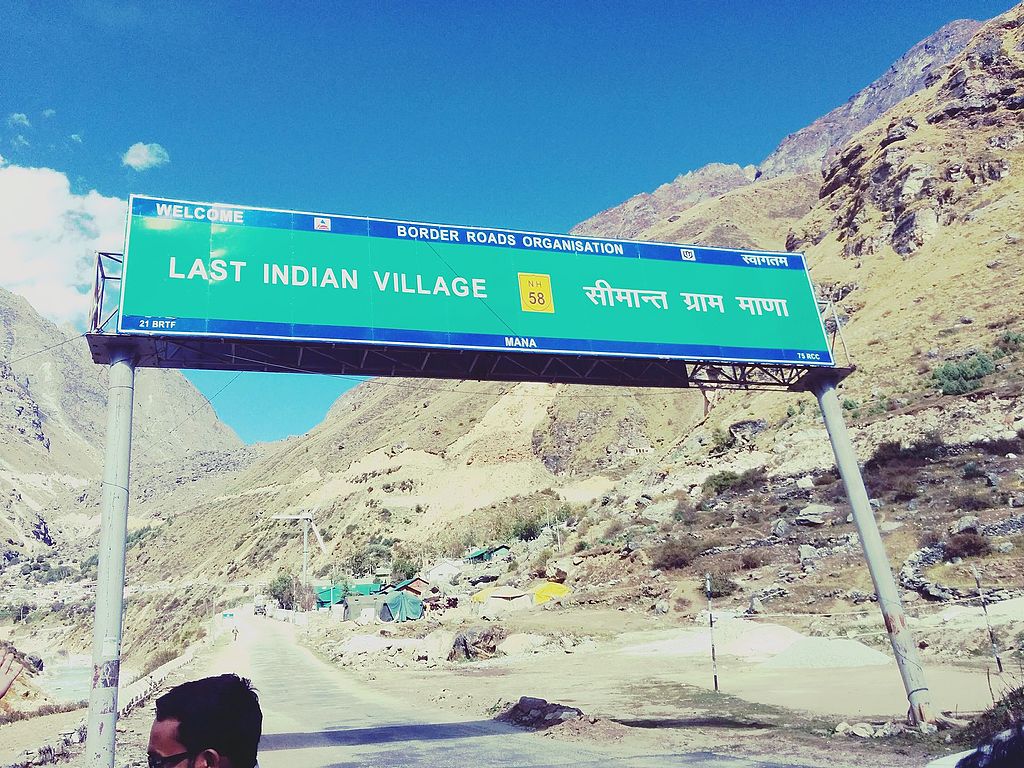
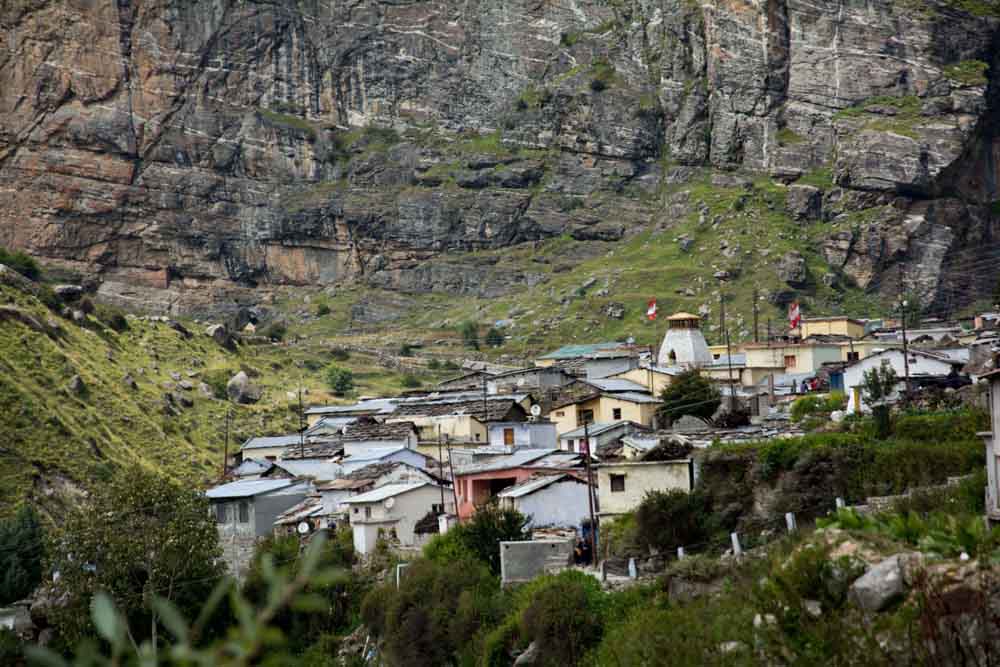
Mana Village Mysticism: The Last Village of India

0
Mana Village
Image – Wikimedia commons

Let’s take you all to the Indian village named after Manibhadra Dev, a devotee of Lord Shiva. The Mana village thrives as India’s glory in the spiritual field is full of enigmatic yet buoyant nature. The ‘Tourism Village’ as the Uttarakhand State is surrounded by one of the most spectacular waterfalls, lakes, mountain peaks, and trekking sites. The stillness in the aim, calming views, and positive vibe radiating around the Mana Gaon makes the idea of visiting the village simply impossible to resist. The only destination in India where one can relish the tea with “Bharat ki Antim Chai ki Dukaan”.

Geography of Mana Village

Mana Village - Map
Image – Flickr

Geographically, Mana village got the title of ‘The Last Village of India’ as it is just 24 kilometres from the Indo-China border, or more specifically, is present on the Tibetan border. The small village flourishes in the Chamoli district of Uttarakhand. An elevation of 3,219 meters above sea level makes Mana village one of the highest villages in the country. River Sarasvati as its mother and Himalayas acting as the guardians, the town is known for its charming geographical features.

History Of Mana Village 

Mana Village - Bheem Pul
Image – Flickr

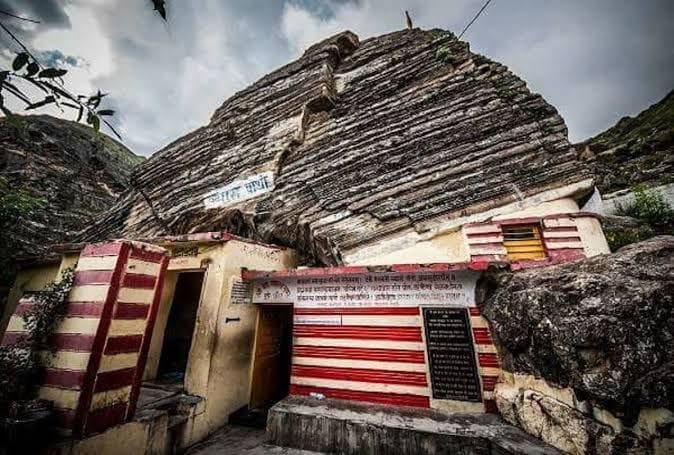
The history of Mana village is widely shared and narrated as a ‘mystic past’. The epic of Mahabharata mentions the town as a checkpoint on Pandavas’ way to the Swargarohini staircase leading to heaven. The journey to Mahaprathana began with the Mana village. It is said that Bheema, the second eldest Pandava, built the Bhim Shila rock bridge in the town to cross the river Sarasvati. The pul (bridge) stands on a single rock piece, and hence the elders believe in the legend that the footprint near the rock bridge belongs to Bheema.

Moreover, Saint Veda Vyasa composed the epic tale of Mahabharata in Mana village itself, and Lord Ganesha also penned down Veda Vyasa’s composition in a cave in this village. Today, the caves are known as Vyasa Gufa and Ganesha Gufa, respectively. Additionally, Natives assert that Maharishi Ved Vyasa composed Vedas and Puranas in the Mana village.

Factual History

Mana Village - Vyasa cave
Image – A. Uday Bhaskar

A small shrine established inside the Vyasa cave dates back to 5000 years ago. Historians suggest that the origin of the habitats in the village can be traced back to the Mongolian tribes. Bhotias, the predominant habitat of the town, share Tibetan heritage.

Historically, the Mana village also played an essential role as a trade route between India and Tibet. India traded barley, buckwheat, and rock salt, via the Mana pass with Tibet, in exchange for Tibetan goats and yaks. However, China fostered the trade later, after the war of 1962.

Myths Abiding in the Mana Village

Mana Village- Vasundhara Waterfall
Image – pushkar v/Flickr

Legends acknowledge the village as the ‘Curse-free village’, bestowed with the blessings of the creator, Lord Shiva. Myths also prevail around the assertion that anyone who sets foot on the land would become rich overnight. The supporting tale narrates Manik Shah’s incident. He was a merchant who the robbers killed on his way to this village. Lord Shiva left impressed by his reverence after seeing him chant Shiva’s name even after chopping his head. Thus, the ultimate lord of humanity, lord Shiva, extended his life by putting a Varaha’s head on his body and gave him a ‘variant that whoever comes to the holy village of Mana, would become rich.

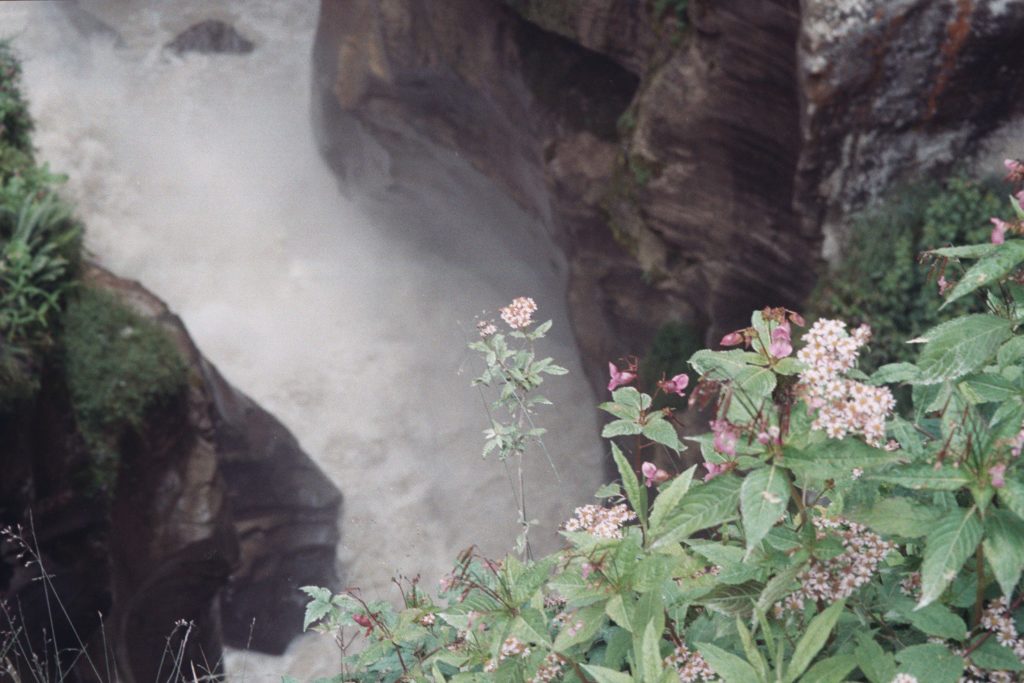
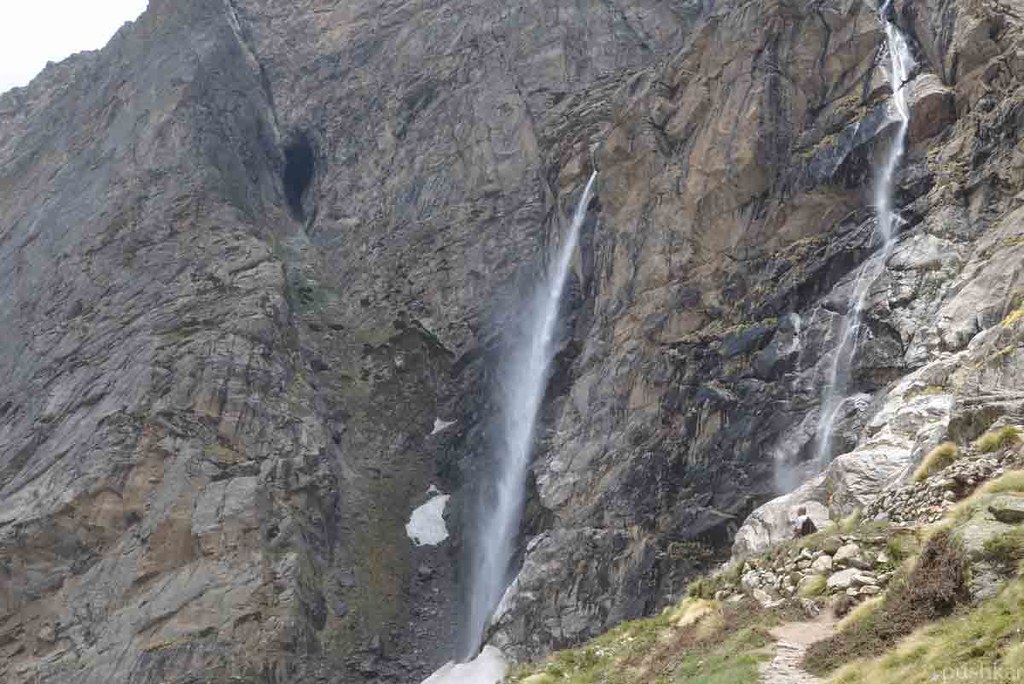
The Satopanth Tal in this small village serves a connection with the myth that the three mighty gods of humanity- Brahma, Vishnu, and Shiva, meditated at the three ends of the beautiful glacial lake. During their exile, the Pandavas stayed near the Vasundhra waterfall, which is about 400 feet above sea level.

Furthermore, the tribe solely trusts Puchher, the priest. People regard him as the messenger of God who persists in treating any and every disease. Many scholars compare Pucher of Bhotias with the concept of Shamans in the Buddhist community who possessed healing techniques.

Socio-Cultural Lifestyle of the Mana Village

Mana Village - life
Image – Wikimedia commons

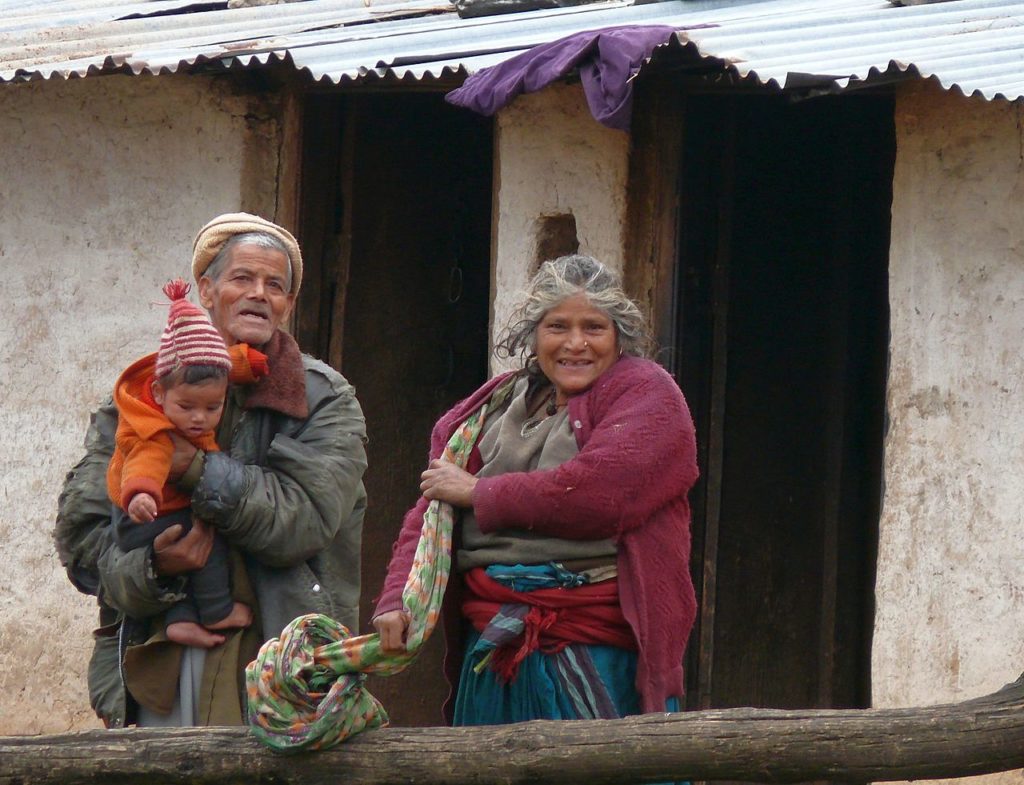
Currently, about 550 families reside in Mana village. The main population comprises sub-tribes categorized under the parent tribe of Bhotias. The tribe contains about 13 subsets, out of which six are recognizable. These trans-nomadic people follow a lifestyle better classified as a mixture of Indian and Tibetan ways of life.
Migration

Owing to the harsh winters, the people temporarily migrate to Gopeshwar and Joshimath from November to April. This feature depicts the trans-migrant nature of the tribe. The habitants believe in the traditional way of living. Most houses have their cultivating lands in front of their homes where they grow and cultivate potato, spinach, radish, etc. The unique feature associated with the place is the stone slab roofs.

Dressing style

Mana Village dress
Image – Nature_beckons/Flickr

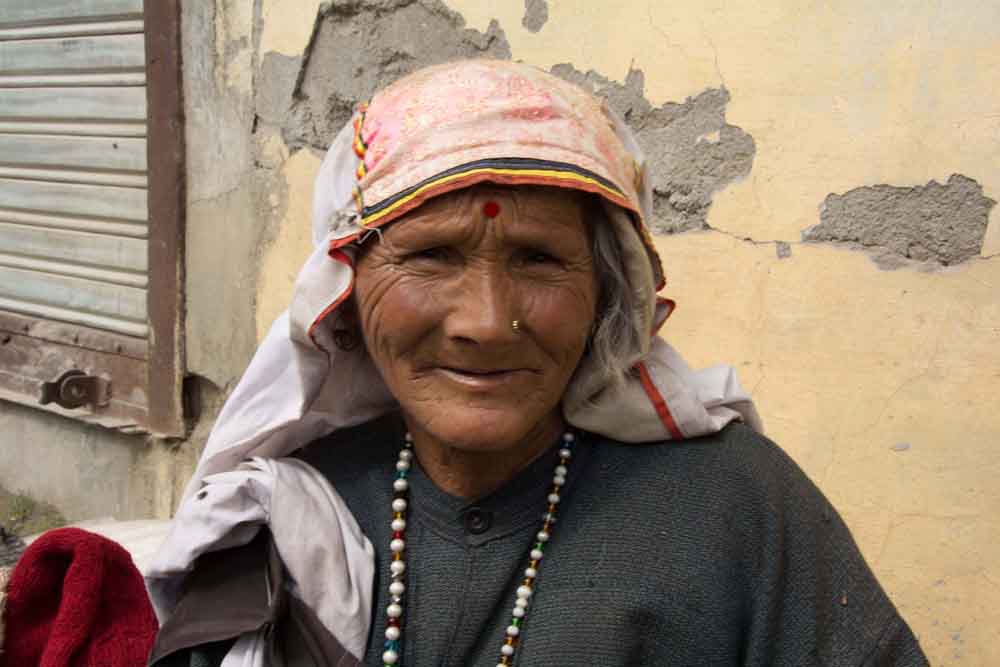
Women of the Bhotias tribe are known for weaving, while men engage in trading and cattle rearing. The traditional dresses of women include honja (classic style blouse), Chua (ankle-length dress), and pangdin (apron, mainly worn by married women). At the same time, men wear bakhu and chhuba. The dressing style resembles the Tibetan traditional dresses.

Ethno-Medicines

Mana Village Traditional medicine
Image- Pixahive

The presence of a plethora of herbs and plants adds to the immemorial medicinal values and skills of the tribe. Ethno-medicines play a vital role in the region. Traditional- spiritual techniques prove to be a dominant force to treat most diseases.

Culture

Mana Village Culture
Image- Pixahive

The cultural ethnicity, as well as cultural variation, are evident in Mana village. The tribe here doesn’t label themselves as Hindu, nor do they blindly follow the Tibetan Buddhist traditions. The cultural practices here strike a perfect balance between both cultures. The people worship all Hindu Gods, but their way of life depicts Buddhist principles as well.

The religious significance of Mana Village

Mana Village Badrinath
Image – Wikimedia commons

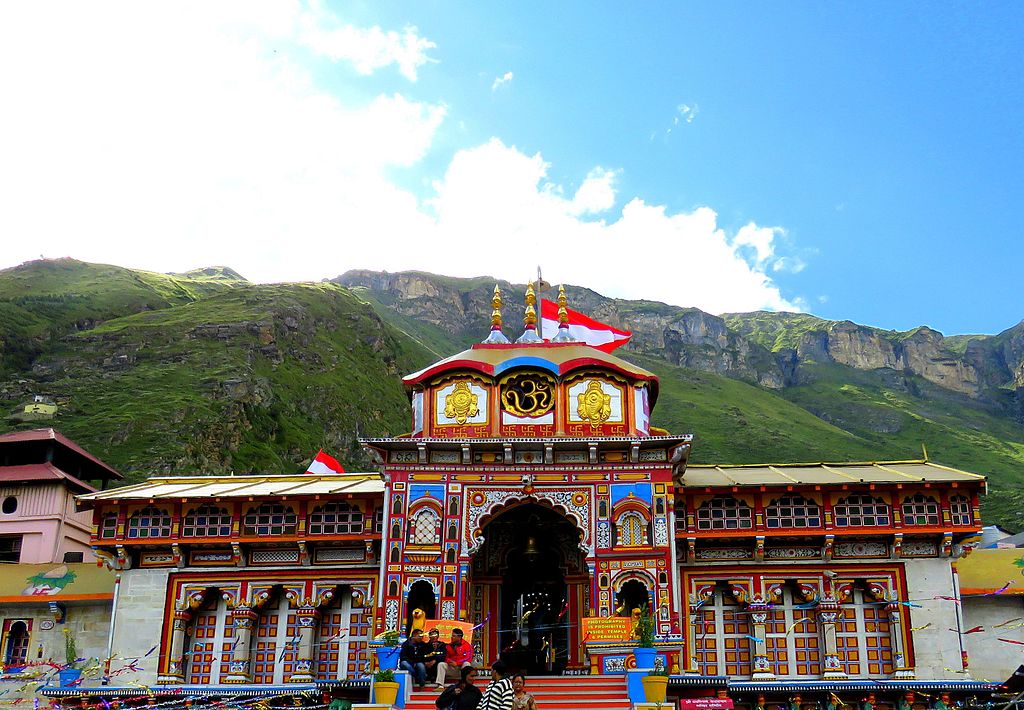
Due to its mystical and spiritual nature, one cannot overlook the religious significance of the Mana village. The town is about three kilometres away from the famous pilgrimage of Badrinath Dham. The peak from where visitors can see numerous Brahmakamals, the Neelkanth peak, is also present near the village. At the height of about 6,597 meters, this peak got the title: ‘Queen of Gharwal’. The abiding place of Lord Agni, the Tapt Kund, which can treat skin diseases, is also near this small village. The trek to Charanpaduka leads one to Lord Vishnu’s footprints. Overall, the Gods bestowed the town and, in doubt, is a place to seek genuine spiritualism and connection with God.

The presence near the Badrinath pilgrimage makes the village a resorting place to calm their minds on their Char Dham Yatra. The minor routes in the town do not allow entry of any vehicle; hence, people have to park their cars outside the village, and walk their way inside. The high altitude doesn’t allow stable mobile connectivity, adding to the simple life in the town. Many tourists visit the village for its heavenly beauty, simple life, and great trekking activities.

Simon Thacker Presents the World Premiere of Pashyanti on Guitar

0

Simon-Thacker-presents-Pashyanti-00

Simon Thacker is back again with another mesmerizing and soulful musical creation. This time the master guitarist features a special guest, Aishwarya Raut in the digital show called Pashyanti On Guitar. 

Available till the 29th of August on the Edinburgh Festival Fringe digital on demand player, Pashyanti on Guitar is another masterpiece by ‘one of the most important musicians of his generation’ (ThreeWeeks) – Simon Thacker. As with his multiple previous works, Thacker intermingles cultures of the world in his music. The compositions are a heady concoction of rhythms and music from the east and west, where Simon the classical guitarist only expands the fluid boundaries of artistic creations. 

His latest digital show is no different as it is one of the most powerful films of this year, bringing together the Scottish guitar virtuoso and the super human contemporary dancer from Mumbai.
Simon-Thacker-presents-Pashyanti-01

Pashyanti is a Sanskrit word and signifies the ‘junction point between the ordinary waking state and pure consciousness.’ 

Simon Thacker, referred to as Scotland’s ‘musical alchemist’ (World Music Report) is here to offer a ‘revelatory new vision for the art of solo guitar.’ This is in fact, his first digital show and his ‘highly individual, iconoclastic music explores every facet of the instrument – from beguiling digital delay driven soundscapes to muscular improvisations utilising his many inspirations, especially from South Asia.’

Further, Simon has always been known for his cross cultural collaborations with leading artists across boundaries and genres. This time with Pashyanti On Guitar he features Aishwarya Raut from Mumbai who dances with one of the leading contemporary dance companies, Rambert. 

Together, the mystical strings of music from Simon’s guitar and the graceful, meaningful moves by Aishwarya set the tone for this digital musical delight. Besides, the stunning locations add the perfect charm and enchantment, treating the eyes, ears and soul with doleful of musical and artistic pleasure. Some of the locations include a ruined castle, a quarry at the time of a 40000 tonne shot blast and the splendidly lit forest at night. 

‘Simon and Aishwarya’s symbiosis creates a very special aural and visual experience for audiences across the world to enjoy.’ And we urge you to not miss out on it. 

Catch a glimpse of their chemistry and the beautiful backdrop auras in the trailers playlist:

https://youtube.com/playlist?list=PLJbDrhIXRv6dj266X9Qtn4ZWsHdkcnU7o

Simon Thacker

Simon-Thacker-presents-Pashyanti-02

Simon is the recent Scottish New Music Award winner and Ivor Novello Awards nominee. This is the fourth year he has been selected to represent his country as part of the prestigious Made in Scotland showcase. He has led today’s most prescient intercultural ensembles, even in his earlier albums, such as Svara Kanti and Ritmala. 

Hailed as one of the finest guitar maestros, Simon has shown exceptional grasp and sensitivity towards creating compositions. “Guitarist Simon Thacker transcends the instrument and persuades it to produce music loaded with subtle nuances and character.” Classical Music Sentinel (Canada).

It is with this same zeal, that Simon brings his pioneering experiences to his first love, solo guitar, in Pashyanti On guitar. 

Aishwarya Raut

Simon-Thacker-presents-Pashyanti-03

Aishwarya Raut is an UK based contemporary dancer, from Mumbai who features in Pashyanti On Guitar across four stunning locations near Scotland. 

Aishwarya was already dancing in a Bollywood company when she began formal training in ballet, contemporary, jazz and hip hop at age 10. She trained at the Liverpool Institute of Performing Arts before joining Rambert in 2019.

Lastly, Pashyanti On Guitar is yet another sensation that we have come to associate with Simon Thacker. Wait no longer to book your tickets for 34 minutes of absolute divine eloquence.

Sikkim Festivals – The Cultural Beauty of the Mystic Land

0
Sikkim Festivals
Image – Nilesh & Anshul/Flickr

Sikkim, the Land of Peace and Tranquility, is home to Lepchas, Bhutias, and Nepalese. The sole brother of the seven sister states of India, blooming in the lap of Eastern Himalayas, Sikkim is not only thriving for its mountain walls, Day-Glo valleys, enchanting lakes, and sparkling waterfalls also in its multi-ethnic societal nature. 

Ethnic diversity goes hand in hand with cultural and traditional variety, making Sikkim a kaleidoscope of culture. Indeed, people celebrate more than 21 premier Sikkim festivals and artistic beauty of the land of mystic and splendour and worship every wit of nature, from mountains to rivers to forest patches.

The Sikkim festivals are consequently categorically either social celebrations or religious festivals. The spiritual and social festivals are interlaced in most cases. Under religious festivals, the more isolated categorization is among Buddhist festivals and Hindu festivals. At the same time, the social celebrations of Sikkim are branched among the lines of tribal and ethnic diversity.

Let us travel to the world of  Sikkim Festival, the cultural beauty of the land of mystic and splendour.

1. Lasoong Festival

Sikkim-Festivals - Lasoong Festival
Image – eastmojo

Blossomed as a social festival celebrated by the Bhutias tribe, it spread to the Lepchas community. Moreover, years later, Lasoong came to be one of the most solemn festivals in Sikkim, Darjeeling and Nepal.

Markedly, the Tibetan calendar perceives the 18th day of the 10th lunar month, December, in the Georgian calendar, as the Lasoong Day. Correspondingly, It coincides with the end of the harvesting season. The Sikkim population observes it as the Sikkimese New Year.  

The 4-day celebrations of Lasoong are incomplete without the Chaam dance in monasteries at Rumket, Phodong, and Tsuklakhang monasteries, followed by Archery competitions. The Lepcha community celebrates the festival differently.

The Namsoong festival (name of Lasoong festival in Lepcha community) begins with the priest Bongthing and Mun offering the Chi Fut to the Gods, followed by the Chaam dance (black hat dance), symbolizing the destruction of evil spirits and narrating the tales of Guru Padmasambhava. Later, at midnight, burning the figure of the demon king, Laso Mung Punu.

2. Losar Festival

Sikkim Festivals-Losar
Image – Wikimedia

Buddhist communities like Sherpas, Tamangs, Gurungs and Bhutias celebrate Losar as one of the most civic religious festivals. In the Tibetan language, the term ‘Losar’ means ‘New Year’. The celebrations of Losar, the Tibetan New Year festival, continues for over two weeks. However, the first three days explicitly hold premier significance.

On the first day of the festival, Chango drinks are prepared using chaang. On Gyalpo Losar, the second day, people give gifts and blessings by greeting each other ‘Tashi Delek’. Furthermore, Yak dance and Sampa throwing by the Tibetan youth represent yet another distinctive feature of the celebrations in Sikkim.

A few days before the festival in January-February, the monks perform a gratitude ritual to please the water spirits, ‘Nagas’ and subsequently perform Lama masked dance in monasteries to exhibit victory of good over evil.

3. Teyongshi Sirijunga Sawan Tongnam

Sikkim Festivals-Teyongshi-Sirijunga-Sawan-Tongnam
Image – Pawan Chamling/FB

Teyongshi Sirijunga was a Limboo scholar of the 18th century who devoted his life to the revival of the tradition of the Limboo community, ‘Yuma Samyo’. The festival commemorates the birth anniversary of the legendary scholar.

In line with the Bikram Samwat (the official Nepalese calendar), communities celebrate the festival on the full moon day of mangsir month (November- December according to the Georgian calendar). Chiefly, the Limboo tribe celebrates the social festival as a momentous fest, particularly in West Sikkim.

The first aim of the fair is to pay tribute to the sacrifice of the disciples of Teyongshi Sirijunga and homage to his motive of cherishing the Limboo culture.

The community performs various cultural performances and award ceremonies, preceded by the traditional puja ceremony in the morning. The cultural performances vividly involve the Limboo folk dance and musical presentations, while the award ceremony celebrates the achievements and contributions of prominent Limboo personalities in vivid fields.

4. Maghe Sankranti

Sikkim-Festivals - Maghe Sankranti
Image – Facebook

The Nepalese community in South Sikkim celebrate Maghe Sankranti, the three-day religious Sikkim festival, on 14th January. Maghe Mela distinctly marks the celebration, revealing its origin from the 1955 agricultural fair of Jorethang.

According to the Hindu lunar calendar, the celebration marks the beginning of spring, the sacred month of Magh. Sikkimese and Nepalese cultures regard it as the sun’s ‘holy phase of transition’ to the Capricorn zodiac sign. 

The festive day ushers in the religious ceremonies performed on River Rangit and stream of Triveni of Teesta. The festival promotes diversity and cherishes the unity and brotherhood in the state.

5. Tendong Lho-Rum-Faat

Sikkim Festivals-Tendong Lho-Rum-Faat
Image – I Sikkimese

Tendong Lho-Rum-Faat, titled ‘The Ancient celebration’ in Sikkim, owes its origin in the ancient tales glorifying the rescue of the Lepcha tribe from a veritable flood that hit the Mayel Lyan country (present, Sikkim), lasting for 40 nights.

In the devastating event, the sacred Tendong hill served as the saviour. The Lepcha community worships the Tendong hill at Namchi as ‘the hill of the raised horn’. It is a 3-day festival, celebrated in July-August.

Trekking excursion is the memorable highlight of the festival. The Lepcha community shows close knit-ties with their tradition. Thereupon, during the festivities, the people of the Lepcha community use nine religiously precious stones to prepare the model of the mountain. People of the congregation worship these models placed at the façade of each house.

6. Bhumchu Festival

Sikkim Festivals-Bhumchu
Image – RightClique Hospitality/FB

Bhumchu, one of the most notable religious Sikkim festivals of the Buddhist communities, celebrated in the North-Eastern state, sought its genesis in the historical tales. The tales reveal the first observance under king Trisong Deutsonin in 755 – 804 CE, predominantly in Tibet. In the final analysis, the festival witnessed a revival in the 17th century. A sacred vase dating back to the king’s reign assumes unprecedented significance in this festival.

The monks at Tashiding monastery commence the celebration by opening the holy vase of water. Forthwith, the ceremony ends on the second day by refilling the vase with holy river water for the following year. The monks serve the water in the vase as the prediction indicator for the future of the state.

If the water level has lowered, it indicates the state would face famine or drought; raised water status in the vase reveals flood-like conditions; then again, a half-filled vase suggests a prosperous and fortunate future.  The lamas distribute a minuscule portion of this holy water among the devotees for a healthy and contented year ahead.

Other Sikkim Festivals

Sikkim-Festivals
Image – SKM Darpan/FB

To sum up, besides the list mentioned above, festivals like Pang Lhabsol, Tamu Lochar, Dashain equally hold a special place in Sikkimese culture and tradition. In addition, many festivals closely resonate with the traditional fêtes of other parts of India, for instance, Tihar. At the same time, the rituals are unique to the Sikkim communities. 

The people of Sikkim believe in nature worship. It is evident in the festivals like Pang Lhabsol, in which Mount Kanchenjunga is worshipped as the guardian deity of Sikkim. Over the years, the state has also stamped out and accommodated festivals and special events to attract the tourist population. Winter Carnival, International Flower show, Rhododendron festivals are some Sikkim festivals created and promoted in the contemporary period to exhibit the state’s forte and beauty.

Kasuti Embroidery – A Traditional Fabric Art of Karnataka

0
Kasuti-Embroidery
Image – Kaikrafts.wordpress.com

Kasuti embroidery, from northern Karnataka, is one of the region’s most popular artforms and is linked entirely to the villages in the area. A geographical indicator from the government of India is used to safeguard the craftsmen here, ensuring any profit from the sale of this sticker returns to them. Kasuti embroidery is one of the oldest Indian practices. It has its roots since the 7th century A.D. Although it was first only done in the Dharwad region, over time, it has expanded into other parts of Karnataka and is now used throughout South India. Initially, this job was done only by women, and to date, women form a vital element of the cottage industry of Kasuti. 

Suggested Read – Embroideries of India – Showcasing the Skills of Regional Artisans

The term Kasuti is composed of ‘Kai’ which implies hand and ‘Suti’ that is a cotton thread. In the districts of Bijapur, Dharwar, Belgaum, Miraj, Sangli and Jamkhandi,  Kasuti embroidery is extremely famous. Kasuti has not become a cottage industry but it is just handiwork and recreation for women. This form traditionally has been made with lightly coloured cotton threads solely in handwoven textiles with deeper colours. The Ilkal sarees are the classic Kasuti embroidery sarees. It was a custom in the past that the bride must have a black silk sari, known as Chandrakali sari with Kasuti’s work on it. Kunchi (bonnet and cape), lenga (skirt), seragu (Pallav of a sari), kusuba (bodice) and kulai are the five types of clothing items on which kasuti embroidery is used. 

Kasuti embroidery patterns demand a long time, and typically require more than one artist to maneuver properly. The only thing about this type of artform is that each thread is to be counted on the cloth. This approach ensures a very complex and gorgeous look of the finished artwork. Kasuti has four types of stitches: the gavanti stitch or double stitch, the muragi- or zig-zag stitch, the neygi or darning stitch and the stitch hent or cross-stitch.

Kasuti Embroidery Stitch Styles

Kasuti-Embroidery-Styles
Image – The Dwell Decor

Gavanti: This is a double running line and back stitch. The name comes from Gaonti, which in the Kannada language means a knot. Most of the designs are geometrical since they are produced vertically, horizontally and diagonally. It is the most prevalent stitch and on both sides of the fabric the designs seem the same. On the way back while stitching, the lines or motifs should be finished by filling out the white areas in the loop.

Neygi: The Negi stitch is a common running or darning stitch. It has the impact of a woven design in general. Negi is in fact an offshoot of the word Ney, which means to weave in the language of Kannada. For larger designs, this stitch is employed by altering the stitch depending on the surface to be covered. The finished design looks like woven patterns and so the right and incorrect sides are not the same.

Muragi: Murgi resembles a ladder step, as the stitches are zigzag running stitches. It is alike Gavanti since they’re both neat with the design on both sides of the garment looking similar. The length of the stitches is consistent and the space between the stitches is identical.

Menthe: It is the standard cross stitch. The name seems to have come from the same word in the Kannada language meaning fenugreek seed. Menthi usually looks heavy and needs a great deal of thread. This stitch was therefore not used extensively. Many of the Kasuti labourers employ cross-stitch nowadays, which is not worked closely as was done formerly. The background sections of the designs are often covered using this menthi stich.

Kasuti Embroidery Motifs & Patterns 

Kasuti-Embroidery-Motifs-&-Patterns
Image – Wikimedia

The several sorts of patterns employed are another significant distinctive feature of this embroidery style. The themes in Kasuti that are commonly utilised are temple architecture, south India’s gopurams, lotus flowers, rath and palanquins, bird patterns like parrots, peacocks, swan and squirrels. The sacred bull, the elephant and the deer are the animal motifs used. Kasuti’s other designs include cow, cradle, flower pots and tulsi katte (katte means the space for the holy Tulsi plant). Horses, lions or tigers are rarely observed, but cats and dogs are never seen. Lotus is mainly used among the flower motifs. The motives may be light and scattered but that is highly unusual. Often they are interconnected in incredibly gorgeous, three-dimensional designs with exquisite and creative appearances. Inspired rural styles are also very popular among various female embroiderers who like to create household sceneries in combination with stylised forms for wedding sarees.

Materials Used Kasuti Embroidery

Khanns utilised as blouse pieces and Irkal sareeswere the materials on which kasuti embroidery was done on formerly. It is made now on any and all types of cloth. Today, it is made on curtains, covers and numerous other handwoven home products.

Colours Used Kasuti Embroidery

Kasuti-Embroidery-colors-used
Image – Arati Hiremath/FB

The colours mostly used for Kasuti are orange, green, purple and red. The colour combination in these four colours is red, orange and purple or red, green and orange. White is predominant on a black and dark background. Blue and yellow are rarely used as a combination because if the contrasting harmony. Bright pink, pale green and lemon yellow are hardly used. The important feature of Kasuti embroidery reveals a true artistic sense when it is multi-coloured with a harmonious blending. The needles used to do Kasuti should be made of steel.

Kasuti has always been a domestic art. Traditionally it was a custom to give gifts if Kasuti embroidered garments to the relatives when a child is born in the family. The mother used to train her daughter this art from an early age. It is considered a traditional art and passed from generation to generation. It has gained popularity in foreign countries because of the exquisite hand work, colour combination and intricate designs which machines have not yet been able to produce.

Now Kasuti is done on clothes, sarees, pillow covers, door curtains, table cloth and also on fabrics of any kind. Dharwar, Hubli, Kalghatgi, Gadag and Mundargi are some of the places where Kasuti is still done. Women work in the co-operative society, Regional Institute of Handicrafts, Bhagini Samaj, Janata Shikshana Samiti, which have set up organizations to help them earn a living. There are over five hundred women doing this work from the age group of 18 to 55 years.

Threads Used in Kasuti Embroidery

Kasuti-Embroidery-threads-used
Image – Image – kasuti.blogspot.com

The cloth itself was pulled for the thread used in Kasuti in olden times. They are now getting Mysore silk threads to make the embroidery. The reason why silk threads are used is to ensure the surface seems flat.

Currently mercerized cotton threads like kohinoor and anchor thread, or pure, strong, fast-colored silk threads are used for the broding of Kasuti. It usually uses a single strand. A knot is never placed at the end of the thread, before or after the work ends. 

Kasuti was always a domestic art. Traditionally, when Kasuti embroidered on the family’s clothes, it was a habit to give them as presents. The mother trained her daughter from a young age in this technique. It is a traditional art that passes from one generation to the next. The fine handwork, colour combinations and complex designs which machines have not yet been in a position to make have gathered favour in foreign countries.

Now Kasuti is made on clothing, sarees, pillow coverings, door curtains, cloth for the tables and other kinds of textiles. Some of the localities where Kasuti is still made include Dharwar, Hubli, Kalghatgi, Gadag and Mundargi. Women work in a cooperative society, with the regional handicraft Institute, Bhagini Samaj and Janata Shikshana Samiti, organised to help them make a living. Over 500 women work in this age range between the ages of 18 and 55.