10 Dishes of Andhra Pradesh that Would Make You Fall in Love

8

‘Sugar and spice make everything nice’. India, the land of exotic spices, is known for its different dishes from various parts of the country. Be it the tribal dishes of the north, or the chili-induced curries of the south, from the Mughal’s introduction of the very famous biryani to the Persian style of bakery, India takes pride to hone its culinary skills over the long years since its many invasions. 

Suggested Read – Andhra Pradesh Culture – A Window to the Rich Heritage & Tradition of Telugu People

Andhra Pradesh, the historical land of the Nawabs, is known for its spicy food all across the country. The southern part of the country had its many shares of rulers, and their individual and unique dishes are now a cultural asset of India. From their exotic biryani to a local variety of chutneys and pickles to the authentic southern dishes of Dosa and Vada, Andhra Pradesh is one of the gem states renowned for its culinary advances.

Here is a list of 10 dishes of Andhra Pradesh that would make you fall in love with it. 

1. Hyderabadi Biryani

Dishes of Andhra Pradesh - Hyderabadi Biryani
Image – Wikimedia Commons

When it’s the land of Nawabs, biryani is a must dish that needs to be part of its cultural heritage. A delectable taste of the perfect balance of spices, mouth-watering tender pieces of meat, and flavourful rice, it has been a strong contender in the fight of ‘Best Biryanis’ among the different styles. 

When a steaming plate of Hyderabadi biryani, be it mutton or chicken, is put in front of you, the rich aromatic smell, the compelling visuals of the perfectly thin rice and tender meat in beautiful vibrant colour is bound to make any gloomy day better with its first bite. When the local spice meets the royal biryani, usually served with Mirchi ka salan and raita, it has become a tourist attraction for every new visitor in the state and is also a comfort food for the locals. 

2. Pulihora

Dishes of Andhra Pradesh - Pulihora
Image – Wikimedia Commons

Pulihora, another rice dish, is an authentic local dish of Andhra Pradesh known for its tangy, sour, and salty taste. It is a dish that is a common site during festivities and family gatherings. The locals can make this dish very quickly given its minimum ingredients yet power-packed flavour, making it such a popular plate of food. A delicate balance of tamarind, curry leaves, tomatoes and mustard seeds, Pulihora, also known as Chitrannam, is a must-try when visiting the state.

3. Pesarattu 

Dishes of Andhra Pradesh - Pesarattu 
Image – Wikimedia Commons

Dosa is a typical dish in the entire southern region, but this variety originated particularly in Andhra Pradesh. Pesarattu, a dosa variant, is a crepe of green gram batter and a small portion of rice flour. It is a healthy recipe for breakfast or a light snack. Served with tamarind or ginger chutney or any other choice or preference of chutney, the dish serves an authentic Andhra taste.

The locals are masters in whipping up fine, thin Pesarattu within the blink of an eye as they keep the batter handy by storing it properly and estimating its good shelf life. Pesarattu can be had either at some friends’ place who belong to the state or found in many food corners across the state. 

4. Gutti Vankaya Koora 

Dishes of Andhra Pradesh - Gutti Vankaya Koora
Image – Wikimedia Commons

A special shoutout to all the vegetarians out there, and of course, the non-vegetarians are always welcome too; It is a dish that will make you want to learn the recipe to try out when craving something spicy. It is a beautiful, tasty curry with stuffed eggplants; a dish made with aromatic roasted herbs and delicate seasoning to bring out an authentic Andhra taste. 

A thick curry induced with a local taste of tamarind and mustard seeds; the dish will make you want more. Paired with roti or rice, the flavorful dish will make you want to try it again even when you are not physically present in the state of Andhra Pradesh. 

5. Akura Pappu 

Dishes-of-Andhra-Pradesh-Akura-Pappu
Image – Online Aduge

Whoever thinks healthy and tasty cannot go hand-in-hand should give this dish a try. It is a dal recipe of good old healthy spinach. It is delicious and breaks away from the stereotype that all Andhra dishes are either spicy or tangy. This dish has its fair share of local spices and taste, making it other must-tries when visiting the place. 

6. Gongura Mamsam 

Dishes-of-Andhra-Pradesh-Gongura-Mamsam
Image – Shaziya’s Recipes

A prevalent mutton curry dish made with sorrel leaves, Gongura Mamsam, is another delectable meat dish rich in Andhra style. Sorrel leaves, with their distinctive flavour, when meets the local spices, a burst of flavour meets your taste buds in every spoonful. The visual of the food is a rich red colour with red chillies popping every here and there. Gongura Mamsam goes well with steamed rice or roti and even Dosa. 

7. Panasa Pottu Koora

Dishes of Andhra Pradesh - Panasa Pottu Koora
Image – Bethica’s Kitchen Flavours

The Andhra jackfruit curry, Panasa Pottu Koora, is another healthy and tasty dish. The unripe jackfruit is famous for its health benefits like curbing diabetes and weight. It is a dish with the perfect balance of Andhra spices and coconut masala without dominating the authentic jackfruit taste. This curry can be a fulfilling savoury plate of food with its balanced flavour and health benefits. 

8. Shikampuri Kebab 

Dishes of Andhra Pradesh - Shikampuri Kebab
Image – Wikimedia Commons

One of the 10 dishes of Andhra Pradesh is this mouth-watering Nawabi dish. Kebabs are in itself tempting to every meat lover. The minced meat, when flavoured with yoghurt, chana dal and exotic spices, the result is a platter that visitors must not miss. A soft, delicate, finely balanced taste of meat when dipped with mint curd, the sensations our taste buds receive will stay with us for a long time. 

9. Pootharekulu 

Dishes of Andhra Pradesh - Pootharekulu 
Image – Wikimedia Commons

After all the savoury dishes, it’s now time to end on a sweet note. Pootharekulu is a trendy sweet dish that originated in Andhra Pradesh. The name means ‘coated sheet’ in Telugu. Here the ‘coated sheet’ is nothing but wafer-thin rice sheets layered and stuffed with sugar, dry fruits and nuts. The visual of the food in itself is very tempting to all sweet lovers, looking like rice sheet rolls stuffed with sweet delight. Pootharekulu has a very distinct history, tracing its origin in Atreyapuram, making it a unique sweet of the state. 

10. Paramannam 

Dishes-of-Andhra-Pradesh-Paramannam
Image – Wikimedia commons

Kheer, a delicious concoction of milk, rice and sugar, has been a part of the Indian culture for time immemorial. The different states across India have their style of kheer. Paramannam is a kheer dish with style unique to the state of Andhra Pradesh. Made on occasions of festivities, a bowl at the end is the perfect way to end an authentic Andhra meal. 

Suggested Read – Must Try Traditional Sweet Delicacies of Andhra Pradesh

These dishes would make you love Andhra Pradesh and make you visit again. India’s vastness, regional culture and diversity, each state has its delicacies that are a must-tries for new visitors. Here are some of the many authentic dishes of Andhra Pradesh for visitors to try when visiting the state. Both its geography and food make a place complete, and the unique style of the dishes of Andhra Pradesh will give the visitors a wholesome feel. 

10 Best Places for Shopping in Delhi You Should Have on Your List

0
Places for Shopping in Delhi
Image – Saad Akhtar/Flickr

Isn’t there a sort of thrill to spend hours on a street or in a mall with your friends to find that one fabulous dress for your birthday? Indeed, shopping is nothing short of a therapeutic process for many. Whether you’re having a bad day or just want to make yourself feel better, many of us treat ourselves with a beautiful piece of cloth to make our day better.

Now, it is hard to speak about shopping without mentioning Delhi. Why? Well, because it is the fashion capital of India. No, it is not Milan or Paris surely, but it is just as glamorous and fascinating. If you’re ever in Delhi, you’re bound to forget the time in its long lanes filled with different, colorful pieces to suit your every fashion need. A fashionista’s dream, Delhi is the perfect destination to get affordable prices for, especially unique and attractive clothes. From funky boho jewelry to an elegant set of salwar-kameez, your wardrobe makeover will be unstoppable with the help of these amazing places. So why don’t you read along and see what our friends in Delhi have for us?

1. Sarojini Nagar Market

Places for Shopping in Delhi-Sarojini Nagar
Image/T Frey/Flickr

There is no better way to kick start this article than by talking about the Sarojini Nagar Market. As the name suggests, this spectacular market is located in the Southern part of Delhi. Arguably the best market in Delhi, Sarojini Market houses the rejected pieces of most brands, thus helping shoppers bag the best of items without burning a hole in their pockets. You can find your heart’s desires, from home decor to fancy clothes, in this crowded street. However, while the street has numerous stalls ready for your service, the market is most famous for its handbags and coats. If you want expensive Zara or H&M bags at cheaper rates, Sarojini is where you’ve got to be. Tempting, no?

2. Chandni Chowk

Places for Shopping in Delhi-Chandni Chowk
Image/Wikimedia

Can you imagine an ancient place established by a Mughal ruler now turned into a bustling shopping center with a relentless crowd every day? Because that is exactly what Chandni Chowk looks like. Having established by Shah Jahan in the 17th century in Old Delhi, the place is a present-day shopper’s paradise. With more than a hundred diverse stalls and mouth-watering street food present for your indulgence, you’ll fall in love with the chaos of the market.

3. Janpath Market

Places for Shopping in Delhi-Janpath Market
Image/Mike Fleming/Flickr

If Janpath Nagar is on your travel itinerary to Delhi, you must pay a visit to this magnificent street. Packed with foreigners and Indians alike, the Janpath market is a marvel to behold. The entire market comprises of the two main markets within it, namely, the Gujrati market and Tibetan market. Find your ideal aesthetics in the vibrant hoard of kinds of stuff available to you at the Janpath Market. The colorful pashminas, beads, accessories, and clothes will surely leave you spellbound. Bring your day to a delicious end by dining at the local restaurants or snacking on some Delhi-special momos.

4. Karol Bagh

Places for Shopping in Delhi-Karol Bagh
Image/Wikimedia

Delhi is extremely famous for its wholesale markets and Karol Bagh Market is indicative of this. Famous all over India and often shown in movies, the Karol Bagh Market is a rainbow of beautiful goods. It is highly famous for the inexpensive (but equally captivating) and exquisite designer lehengas, ghagras, and bridal dresses for women, and sherwanis for men. Also, make sure to check out the shining jewelry stalls while you’re there to match your favorite dress. Another important market situated not far from the Karol Bagh market is Gaffar Market. If you’re extremely tech-savvy, you are sure to have a ball at Gaffar Market.

5. Connaught Place

Places for Shopping in Delhi-Connaught Place
Image/Prato/Flickr

You’ve probably heard of Connaught Place at least once in your lifetime. This attractive circular structure contains some of the best brands of the world – from local, Indian brands to high-end fashion, Connaught Place is a great place to visit while you’re in Delhi. After spending your time shopping, you can also visit the nearby monuments. A crowd running up to thousands gather in the place to shop, eat at the exquisite cafés and restaurants, or simply have a memorable time with their peers. Enjoy your time in the Georgian-style architecture of the place!

6. Lajpat Nagar

Places for Shopping in Delhi-Lajpat Nagar
Image/Nadir Hashmi/Flickr

Alternatively called the Central Market, Lajpat Nagar is particularly famous amongst the locals of Delhi for its affordable and wide range of textiles. The street is directly connected to the metro line; therefore, it is easily accessible by most people. As soon as you enter the market, you’ll be met by numerous clothing stores and tiny stalls offering wares of various sorts. An impressive and affordable experience, indeed!

7. Khan Market

Places for Shopping in Delhi-Khan Market
Image/Vasenka Potography/Flickr

Situated in South Delhi, Khan Market is a classy shopping street established in 1951. It is frequently recommended and visited by people who wish to purchase high-end goods. Ranging from an expensive clothing brand to international foodstuffs from across the world, Khan Market has you covered. Moreover, you’ll be able to spot quaint little bookshops and eateries all over the market. These eateries include street-side dishes to well-established restaurants. Visit Khan Market to have a wondrous shopping experience with your loved ones.

8. Greater Kailash

Places for Shopping in Delhi- Greater Kailash Market
Image/Wikimedia

Greater Kailash happens to be one of the most select and elite societies of Delhi. However, the market it encompasses is just as accommodative. With a perfect blend of local and international brands, the Greater Kailash market is segmented into two blocks, namely, M block and N block. Although the price range in this market is higher than others, a good bargain is most likely to fetch you your desired price. With a wide array of lifestyle stores, clothing showrooms, cosmetic stores, and eateries, Greater Kailash is the one-stop destination for all of your shopping needs.

9. Dilli Haat

Places for Shopping in Delhi-Dilli Haat
Image/Manuel Menal/Flickr

An integral part of Delhi’s identity, Dilli Haat is the heart of all good things. If you want to experience the cultural heritage of Delhi and want the true ‘Delhi’ environment, you’ll find no better place than Dilli Haat. Lined with numerous huts and stalls, you feel that you’re in rural heaven at Dilli Haat. The place is most famous for its sandalwood and rosewood antiques, beads, accessories, and fabrics. Truly an enchanting arrangement!

10. Palika Bazar

Places for Shopping in Delhi- Palika Bazar
Image/Wikimedia

An excellent example of electronic technology in Delhi, Palika Bazar is one of the most famous markets in Delhi for its wide selection of electronic products. From CDs to gaming consoles, Palika Bazar where you’ve got to be if you’re into technology.

It is no secret that Delhi is now synonymous with shopping. These markets are not only a great way for buyers to shop hassle-free, but also an enormous generator of income for thousands of people. Indulge in the exciting shopping experience these markets have to provide and let me know which place you liked the best!

Sujani Embroidery – The Beautiful Fabric Art of Bihar!

0
Sujani-Embroidery-of-Bihar-02
Image – Itokri.com

When one thinks of Bihar, a few of the myriad things that may come to their mind would be the amazing biodiversity, temples, the city of Patna, its culture, and rich history but do you know about another masterpiece given to us by this state is the beautiful Sujani Embroidery? The art has expanded and is now practised throughout the country, especially in the state of Rajasthan, but all this started in the small, quaint town of Basara in Bihar in the eighteenth century. An interesting fact related to the same is that this village is a mere hundred kilometres from the town where the Mithila Paintings found their origins, affirming the glorious art forms of Bihar.

Origin of Sujani Embroidery

Sujani-Embroidery-of-Bihar-01
Image – Shef Vaidya

The origin of this embroidery was like all great inventions, born out of necessity. Sarees as well as other pieces of clothing that were quite old were folded twice or even thrice in some cases and then joined together by some simple stitches. The cloth became a canvas for artistic expression in the form of designs and motifs. The clothes, after being revamped and patched together, were embroidered to make cosy and beautiful quilts. This was a popular method of quilting back then. The Sujani embroidery was woven by women manually in their own houses but the tragedy remains that most of these were either damaged or lost. 

Such humble beginnings have now gained such recognition due to the efforts of numerous organizations that are hoping to bring awareness to this style of embroidery, which has to an extent, been shadowed due to the esteem of other art forms such as Madhubani from Bihar. The patterns indigenous to this style of embroidery can be found on dupattas, sarees, and other articles of clothing.

Uses and Depiction of Sujani Embroidery

Sujani-Embroidery-of-Bihar
Image – Sujani Jayaprakash

The original primary resolution of the Sujani Embroidery is portrayed through its very name. The word Sujani is derived from ‘Su’ which means simplifying and ‘Jani’ which refers to birth. The quilts made, ornamented with gorgeous designs, were used to wrap a newborn baby. The reason behind this was that, due to the infant mortality rates of the time, it was considered to be unholy to dress a child in newly bought attire. These quilts were quite vibrant especially since the motifs were made using coloured threads, especially in a darker shade. Every colour used had a purpose and depicted something, like red symbolized blood and yellow for the sun. 

These motifs depict various pictures for men and women, dressed in traditional attire and scenes from joyous events, such as festivals and celebrations. Other common depictions include those of deities, animals, birds such as peacocks, plants, and flowers as well as the Sun, Moon, and other powerful forces such as characters from mythology. This embroidery used to embellish quilts can now be seen on various apparel of Indian ethnic wear and remains a favorite among designers for its unique charm. Apart from that, with the commercialization of the embroidery designs, it was then even added onto pillow covers, curtains, bread spreads, and many more. 

A remarkable detail about a common depiction is the expression of the pain and dread of the women who sew these quilts. On two sides of the quilt, we get to see two different sides of the story, one being a man who gives the appearance of being drunk treating a woman as inferior just because he is the breadwinner of the family and on the other, we see the woman’s aspirations and desires to be free of societal constraints and to be able to work and earn a living for herself and not being dependent on anyone for survival. The coverlet and this embroidery are her way of conveying her true self and the struggles of a woman in such a world.

Process, Technique, and Style of Sujani Embroidery

Sujani-Embroidery-Making
Image – Soma Roy

The stunning results of the Sujani Embroidery can be achieved at home, with the prerequisites being certain old clothes used as the raw material as well as knowledge of stitches that are used in this type of embroidery. 

Patches can be cut up from all these clothes and then put together by using a simple running stitch and therefore forming your base for this embroidery. To sew the variety of motifs, as aforementioned, a chain stitch, among others is mainly used. A chain stitch is said to have found its origin in ancient China. It is in the form of loops and is very helpful to make smooth curved lines, thereby allowing for countless alluring designs to be shaped. 

The materials that form the base generally vary. However, on a marketable scale, it is made from cotton. A variety called Salita is used to get a higher quality but it is a bit on the expensive side. Some other prevalent materials include silk and casement cloth.

The Sujani Embroidery may just seem to be an elegant style of embroidery, that it is, but it is also so much more. It is empowering and enables women to convey their message and story to the world through art in the most beautiful way. When words fail, it is such depictions that speak. Women in earlier times, as aforementioned, used to convey their wish to be self-sufficient and through this embroidery, were able to do that. They inspired themselves and countless others. Their motifs always have a deeper meaning and they reflect a part of the artist herself whether it be a scene of a woman earning for herself, being able to judge on her own, or the Sun and other mystical elements. 

This is such a magnificently executed art that it should be encouraged. Various organizations use these motifs as a basis to tackle the issues of our society today and therefore, this article ends with a call for action. A call to raise our voices and motivate such amazing designs and the message they aim to convey.

6 Relaxing Destinations in India to De-Stress

0

Relaxing-Destinations-in-India

India provides a diverse range of exciting places where you may unwind from your daily routine and spend quality time with coworkers, friends, or family. 

In order to enjoy a vacation, you probably expect a beautiful setting and delicious food. When it comes to peaceful vacation locations, tourists have varying preferences and options. 

You may have a long list of places you want to visit, but you must prioritize the most peaceful vacation sites based on the duration of your trip, where you live, and your budget.

With a great deal of variation in geographical and geological features, India is truly blessed when it comes to nature. 

From the snowy peaks of the Himalayas to the dunes of the Thar desert, there is so much to see. With so many kinds of retreats, tourists are spoiled for choice. 

A holiday to have some relaxation can be very important. Breaks are essential for one’s mental health. They help us unwind from the stress of daily life. To find out more about how vacation helps you mentally, you can visit websites like BetterHelp.

 For now, here are some great tourist destinations you can visit to unwind.

1. Goa

Relaxing Destinations in India - Goa

Goa is a great place to visit if you want to unwind or have a good time. With its beautiful beaches, distinctive churches, great food, and lush vegetation, it attracts visitors from all over the country and the world. 

The months of October through January are the busiest for travelers. This is when residents set up a slew of beach shacks and provide various water sports activities. 

During Diwali, Christmas, and New Year’s, Goa experiences a large influx of tourists. You can chill out on the serene beaches of South Goa, where it is relatively less crowded. It is the most famous holiday destination in India, and rightfully so.

2. Gangtok

6-Relaxing-Destinations-in-India-Gangtok

Sikkim’s capital city is Gangtok. Baba Mandir, Bakthang Waterfalls, Saramsa Garden, Hanuman Tok, and other excellent relaxing holiday sites, such as Baba Mandir, Bakthang Waterfalls, Saramsa Garden, Tsomsgo Lake, Hanuman Tok, and others are all located in Gangtok. 

Tsomsgo Lake is a stunning location. There is a lovely waterfall in Ban Jhakri, as well as an artificial lake. 

For environment enthusiasts, there is Tashi Viewpoint, and for wildlife lovers, there is Fambong La Wildlife Sanctuary in Gangtok.

3. Parvati Valley

6-Relaxing-Destinations-in-India-Parvati-Valley

The Parvati Valley, which runs from Bhuntar to Spiti in Himachal Pradesh’s Kullu district, stretches from Bhuntar to Spiti. 

There are numerous intriguing sites to explore around the valley, including Manikaran, a pilgrimage town treasured by Hindus and Sikhs. 

Some famous tourist sites are Rudra-Nag, a serpent-shaped waterfall, the pine forests of Khirganga, where Lord Shiva is claimed to have meditated, Pandu Pul, a rock formation, and the Pin-Parvati Pass (5400 m). 

Another tourist destination is the Pin Valley National Park, which is noted for its resident animal population, including the snow leopard. 

Kasol, often known as Mini Israel in Himachal Pradesh, is a popular hangout for young people.

4. Spiti Valley

Relaxing Destinations in India Spiti Valley
Image – vaidyarupal via Flickr

Spiti Valley is a chilly desert mountain valley located high in the Himalayas in the north-eastern portion of Himachal Pradesh, India. 

“Spiti” means “middle country,” referring to the area between Tibet and India. The indigenous populace practices Vajrayana Buddhism, which is comparable to that practiced in Tibet and Ladakh. 

The valley and surrounding area is one of India’s most minor inhabited areas and serves as a gateway to the country’s far north. The valley is located in the North-Eastern portion of the Indian state of Himachal Pradesh. It is halfway along the northern route from Manali, Himachal Pradesh, or Keylong through the Rohtang Pass or Kunzum Pass.

5. Wayanad

Relaxing Destinations in India Wayanad
Image – Wikimedia

This district in Kerala has numerous tourist attractions, like the Banasura Sagar Dam, Chembra Peak, Kuruva Island, Pookode Lake, and others. 

The Banasura Sagar Dam is a naturalist’s dream. Boating at the dam is a lot of fun. Hiking is, of course, quite famous in this area. If you’re traveling with kids, be sure to stop by the popular nature park. 

Chembra Peak is a popular destination for thrill-seekers. This location’s main draw is trekking. Pookode Lake, located 15 kilometers from Kalpetta, is a popular tourist attraction in Wayanad, Kerala.

6. Lakshadweep

6-Relaxing-Destinations-in-India-Lakshadweep

The Lakshadweep islands, like Goa and Gokarna, are known for their beaches. The main tourist attractions of Lakshadweep include Kadmat, Kalpeni Island, Agatti Island, Minicoy Island, Bangaram Atoll, and Kavaratti Island. 

Transportation firms often organize tours to Lakshadweep. Plan a trip to this fantastic, peaceful vacation spot during India’s public and regional holidays.

Conclusion

India is blessed with so many destinations that people can visit to relax and take it easy. Everybody needs a break at times, and these are some perfect places to chill, sit back and enjoy the sea or the mountains, and relax with nature.

2 Fantastic Self-Help Books by Indian Authors for Abuse Survivors

0

Self-Help-Books-by-Indian-Authors-for-Abuse-Survivors-Self-Help-Books-by-Indian-Authors-for-Abuse-Survivors-01

Please note that this article contains some information about abuse as it relates to self-help books. If you or someone you know could be experiencing abuse of any kind, do not hesitate to call the domestic violence hotline: 1.800.799.SAFE (7233).

Abuse is when someone abuses their authority to damage or control someone else. Maltreatment can take the form of physical, verbal, or emotional abuse. Abuse of any kind can inflict physical and psychological harm.

Abuse may create psychological scars that are more difficult to repair than physical ones. Long after the violence has stopped, survivors of abuse may experience powerful, unpleasant feelings. 

Survivors frequently experience anxiety, flashbacks, and trust difficulties. Abuse can make it difficult for a person to develop connections and find pleasure. 

Abuse survivors are not alone and there are many resources that can help them. Most prominently, therapists can typically assist survivors of abuse in understanding their emotions, overcoming obstacles, and managing symptoms. 

Therapy is often considered to be the most helpful resource for those who have survived abuse or are experiencing abuse. To learn more about such connections and learn about connecting with an online therapist, you can visit BetterHelp.  

Cultural norms can contribute to perspectives on mental health care. If you are a person who may appreciate reading about self-help from an Indian author or anyone learning about self-help, here are few books by Indian authors that could be useful. 

Bitter Chocolate: Child Sexual Abuse In India by Pinky Virani

Self-Help-Books-by-Indian-Authors-for-Abuse-Survivors-Self-Help-Books-by-Indian-Authors-for-Abuse-Survivors

In this novel, the author questions ideas about family honor and morality. The conspiracy of silence around child sexual abuse (CSA) in Indian households has to be broken. 

This ground-breaking book provides a forceful voice to defend the rights of sexually assaulted children. It contains shocking revelations about middle-class and upper-class men and women who sexually abuse their children and then quiet them into obedience. 

Based on research, complaints, and inquiry, this book indicates that at least 20% of girls and boys under the age of sixteen are sexually assaulted regularly, half of them in their own homes by family members. 

Bitter Chocolate is aimed at anyone who could prevent these atrocities and attempts to inform and engage people in positions of power to use any tools at their disposal to recognize signs, keep this from happening, and defeat the culture of silence if it does. 

Survivors of abuse may also learn that they are not alone, but should be cognizant of potential triggers in self-help books regarding abuse.

What We Talk about When We Talk about Rape by Sohaila Abdulali

Self-Help-Books-by-Indian-Authors-for-Abuse-Survivors-Self-Help-Books-by-Indian-Authors-for-Abuse-Survivors-What-We-Talk-about-When-We-Talk-about-Rape

Sohaila Abdulali examines what different parts of our collective society may think about rape and could say from the perspective of a survivor, writer, counselor, and activist. 

The author draws on three decades of personal and professional grappling with the issue and her work with hundreds of survivors.

She also looks into the things we don’t mention. She poses relevant scientific questions in an attempt to understand this unfathomable thing: Is rape usually a defining event in a person’s life? Is rape traditionally associated with something? Is rape more heinous than murder? Is rape linked to sexual desire? Who is it that is raped? Is rape a foregone conclusion? Is one type of rape more severe than the other? And other such questions.

Conclusion

Abuse is a prevalent issue in the society of any country, and some authors publish self-help books in an attempt to tackle the problem while destigmatizing mental health issues. 

When society becomes a safe space for discussion and debate, consequences for abusers and survivors coming forward with their stories could become more common. These Indian writers study and can share their stories to empower others.  

6 Must-See Locations in India if You Love Art

0

Must-See Locations in India if You Love Art

India’s natural beauty attracts millions of visitors from all over the world every year who are enticed by the prospect of this journey. 

Mountains or plains, beaches or backwaters, wildlife tours or adventure activities, quiet islands or busy cities, gastronomic delicacies or native beverages, spiritual holidays, or romantic vacations–there are many reasons to visit India. 

For those visiting India for the first time, the tourist sites in India provide so many wonders, you’ll wish you could stay longer to see them all.

However, India is more than its natural beauty. It can also be an art lover’s paradise. With extremely aesthetic destinations and immense cultural beauty, the possibilities to explore are limitless. 

As barriers have broken down, India’s different forms of art have appeared to disperse, leaving behind a massive melting pot of culture that may be absorbed by any artist from around the globe. 

It might be said that all Indian cities have their own distinct approach to appreciating and accepting art. It’s nearly hard to include every inspiring location in India, partly because art can be found practically anywhere. It can be found in every person, street, and building that makes up one of many beautiful cities. 

Art helps us understand the people around us and their cultures and, in turn, ourselves. To find out more, you can visit helpful websites like BetterHelp.

Here are some beautiful places in India to add to your bucket list if you’re an art lover.

Jaipur

6-Must-See-Locations-in-India-if-You-Love-Art-Jaipur

Jaipur is recognized for its diverse art culture, which encompasses everything from visual arts and crafts to dance, music, and architecture. The Hawa Mahal and Raj Mandir Cinema are likely to excite art enthusiasts. 

One of the most impressive attractions might be the Ajmer Fort, which is a huge part of history, culture, and even cinema. 

Last but not the least, you can visit Jantar Mantar, which is not only beautiful but also permits our imaginations to fly into space, giving us a look into a world beyond our own.

Udaipur

6-Must-See-Locations-in-India-if-You-Love-Art-Udaipur

It should not be a surprise that there is more than one Rajasthani entry on this list. 

Udaipur, the city of lakes, is one of the most beautiful cities in the world. The lakes of Udaipur have a unique appeal that will grab any artist’s attention. Lake Pichola and Fateh Sagar Lake could manage to get any tourist to tap into their inner artistic skills, unfurling bundles of creativity within the head of an artist.

Agra

6-Must-See-Locations-in-India-if-You-Love-Art-Agra

Apart from being home to the most iconic monument in India, Agra has many reasons to be on your to-visit list. 

You shouldn’t miss this gem of a place, which is home to some fascinating Mughal architecture. 

Architectural structures such as Agra Fort and Fatehpuri Sikri, both of which are UNESCO World Heritage Sites, can also be found in this city.

Delhi

6-Must-See-Locations-in-India-if-You-Love-Art-Delhi

The country’s capital is a beautiful city with a lively, ever-expanding art scene. With its developing local and visiting artists, the city is incredibly generous. 

While the other cities on this list have been featured because of their ornate architecture or gorgeous scenery, Delhi has one more reason for being on it: its communities and domains. 

An artist may connect with the people, their lifestyle, and their culture by visiting Hauz Khas Complex, Khan Market, Chandni Chowk, or Connaught Place. The smooth transition between the bustling streets, ancient architecture, and contemporary style, which is a nice blend, demonstrates that Delhi is a dynamic cultural center.

Chennai

6-Must-See-Locations-in-India-if-You-Love-Art-Chennai

This cultural hub boasts one of the most diversified art scenes in the world, including everything from classical to modern art. 

The magnificent Kapaleeshwarar Temple, the grand appearing Thousand Lights Mosque, or the exquisite building that is the Church of our Lady of Light are all likely to inspire artists. 

Visitors can also take advantage of the opportunity to see Besant-Negar Beach and Neelamkarai Beach. If you’re visiting South India though, make sure you go to Madurai and see the Meenakshi temple, which is also an artistic masterpiece.

The State of Odisha

6-Must-See-Locations-in-India-if-You-Love-Art-Odisha

It may sound like an unconventional choice, but Odisha is a diverse state with so much art to absorb, it is often shocking to see how unheard of its attractions are. 

The capital city of Bhubaneswar is called the city of temples. What could be better for an art lover? 

With cave paintings, Buddhist monuments, historical sites, and Museums, there is so much to see. It is a great place to go if you want to visit one of the lesser-explored states. It is aptly called India’s best-kept secret.

Conclusion

India is an art lover’s paradise. This list cannot do justice to all of the cultures and destinations that could be explored but it is a great place to start if you are confused about where to go. 

The more you explore, the more you will learn. The country is filled with a plethora of art, which truly distinguishes it because of its unique flavor.

Black Pottery of Nizamabad – The Magical Poetry in Clay!

1
Black Pottery of Nizamabad
Image/Wikimedia

I remember the time when I was at the mere age of 8 and had visited my grandmother’s village in the Western part of Maharashtra. The village, like any regular village, was small in size and not exactly convenient to suit the needs of a city dweller; but the experiences that a village has to provide are surely not found elsewhere. Out of the many fascinating things that I had witnessed in the village, the one which stuck with me to date is the memory of the village potters. Sitting amidst a crowd of many, the potter would expertly handle the wet clay and would shape them to form beautiful pots on the exquisite potter’s wheel.

The Black Pottery of Nizamabad, situated in Uttar Pradesh, is magic on its own. With alluring silver designs on the body of the pot and a shiny texture, many people are simply in awe of this spectacular piece of art.

History of Black Pottery in Nizamabad

Black-Pottery-of-Nizamabad-
Image – Nizamabad’s Black Pottery/FB

Even though Uttar Pradesh has a metaphorical ‘patent’ in terms of Black pottery, it would astound many to know that this art form originally was founded in the state of Gujrat. Sources confirm that during the reign of the infamous ruler Aurangzeb, several artists left the Kutch region and migrated to Nizamabad. Other people talk about the possible involvement of Hyderabad in this as well. This premise is supported by the fact that the silver patterns on the ware are identical to the kind in Bidriware, Hyderabad. Even though history remains uncertain, the very fact that this amazing art form has originated in India is enough to mitigate all doubts.

The Process of Black Pottery

Making-Black-Pottery-of-Nizamabad-
Image – Varanasi Videos

STAGE 1 – Just like they say that the love of a mother flows into her food, the earth of Nizamabad pours its love into its pots. The fine texture and high mica content of the soil of Nizamabad make it the perfect choice for pottery. The soil is the reason why these pots attain the desirable texture and flawless quality that they are known to possess.

STAGE 2 – During the early months of April-May, potters make sure to initiate the process of extracting clay from their local ponds, they follow that up by immediately storing it in their houses for long periods. Eventually, the stored clay is mixed with water and once the clay thickens, it is thoroughly kneaded by machines. This is done to free the clay of any impending lumps which may cause obstacles in the long run. Soon after this, the potters bring the clay out to the potter’s wheel and begin their magic.

STAGE 3 – Even though the pots are made, the process of pottery is far from over. Next, the potters leave their pots out in the scorching sun to let them dry out and retain moisture. After drying sufficiently, the potter’s wheel is pulled back out to scrape off any uneven or unwanted layer. Following this comes the part of applying color to the otherwise dull pots. The pots are left out in the sun after applying a coat of mixed water and clay to them. This stage finally terminates after applying mustard to the pots to make them appear shinier.

STAGE 4 – Now as we approach the end of pottery making, women use fine needles to cautiously engrave delicate designs and patterns on the pots. They make use of brilliant craftsmanship practiced for many years to achieve this level of precision. The pots are then put in the oven to bake. One important factor that decides the fate of the pot is oxygen. Potters must ensure that the level of oxygen in the pots must remain low to none if they want to achieve the black color that these pots are so famous for. After a few more steps, you have yourself a wonderful piece of art to take home!

If you are an avid collector of art, you’ll be pleased to know that multiple wares are available in the Black pottery. Both household and ornamental goods are available to consumers in the form of plates, lamps, vessels, bowls, vases, and a long water pot known as Surahi. A splendid selection of religious figures is famous amongst tourists as well. This includes statues of various Hindu deities. After noticing an unfortunate decreasing trend in the number of people engaged in this profession, the government has taken several steps to revive the lost growth. With the advent of technology, the increase global tie-ups have also significantly increased. Now, more and more youngsters are returning to the pottery business due to the involvement of big MNC like Amazon and Flipkart, who aid these businesses by bringing their products online.

With the help of government intervention and much-needed self-awareness in people, the local arts of India are thriving and will soon be in full bloom again. India is blessed with many such exuberant and colorful craftsmanship which should certainly be cherished and celebrated by us.

The Intrinsic Guide to Kashida Embroidery of Kashmir

0
Kashida Embroidery
Image/ Hand Embroidery School

The state of Kashmir is known throughout the world for its culture, its picturesque beauty. After all, it is referred to as Paradise on Earth for a reason. Among its various attractions, prominent is the handicraft and handloom industry. The Kashida Embroidery, also commonly known as the Kasida Embroidery, is truly an integral part of what Kashmir has to offer. If one were to describe this embroidery style in a single word, it would have to be elegant. This is a style that has become popular for its grace, beauty, and usage of natural motifs in the same. It remains to be, to this date, one of the oldest embroideries in not only the state but the country and is truly the definition of evergreen for this is a style that will never go out of fashion.

Suggested Read – Embroideries of India – Showcasing the Skills of Regional Artisans

 Origin of Kashida Embroidery

Kashida-Embroidery-Info
Image – Art & Tradition

The Kashida Embroidery is said to have gained popularity in the region during the later Medieval Period, during the Mughal reign due to patronage and support provided by the rulers. However, its origin is said to go way back and this style is said to have been brought into practice by the native inhabitants of Srinagar themselves. An interesting aspect of this origin is that it was men who initially started manually embroidering this marvelous work of art. The embroidery requires great skill because truly elaborate and detailed needlework is required to achieve such creative and beautiful patterns. These are primarily woven into shawls or sarees and the motifs which customarily depict scenes from nature are created with the utilization of beads as well as colored thread adding grace and vibrancy to articles of clothing.

Styles of Kashida Embroidery

Kashida Embroidery
Image/ Sushma’s Craft and Creations

The main stitch used in this intricate embroidery is the single stitch, the Kashida Embroidery mark. Apart from that, various other types of stitches used are in this embroidery:

  1. Satin stitch: These are flat stitches in a series that as a cover for a complete background area in its entirety on a piece of clothing. These provide smooth figures as well as even lines and are often ornamented over by other stitches that add to the charm of the embroidery.
  2. Herringbone: A prevalent and widely used stitch in this type of embroidery, the herringbone stitch, creates a beautiful pattern of the carcass of a herring, a fish, as depicted by its very name.
  3. Stem stitch: It is a stitch that is very common with actually various types of surface embroidery because this is a base stitch that is used to create thin lines as well as an outline for the embroidery and thus proves to be very beneficial
  4. Knot stitch: This is a particularly useful stitch in the Kashida Embroidery. The knot stitch or as commonly called, the French Knot is a decorative stitch that adds to the beauty and grace of this embroidery. A single thread is winged around the needle to form such elegant designs that form an essential part of the embroidery
  5. Chain stitch: Again, a prevalent stitch for embroidery, the chain stitch is a looped stitch that consists of three separate loops and is used to create curved lines that contribute to being a part of a lovely design that will leave you in awe. This is a stitch that has been used for ages for knitting and crochet.
Kashida-Embroidery
Image – iTokri/FB

Stitches aside, myriad other elements come together to make the Kashida Embroidery as stunning as it is, some of which include sonzi work, which consists of amazing geometric designs and motifs, paper mache as well as aari work, another prominent form of embroidery and their fusion presents an outcome that one cannot simply help but praise and admire. As aforementioned, the threads used are multicolored, and royal colors such as silver and gold add a similar feel to the dress. The motifs depict scenes of nature which include but are not limited to designs of animals, birds, plants, and other such motifs. The result is something that is bound to catch your eye and will be inclined to buy such a piece yourself.

Such beauty should not be limited to just shawls and sarees, right? That’s why now, this embroidery can be observed on pillow covers, curtains, bags as well as western dresses which is just a look that can be described as mesmerizing. These motifs are now being worn all around the world on even jackets along with jeans which makes them so unique and extraordinary. It is worn especially on joyous occasions such as festivals like Holi, Diwali, Navratri, and weddings. It is truly a matter of pride that the Kashida Embroidery is worn and getting recognition throughout the entire globe.

Kashida Embroidery
Image/Cherry Blossom

When styling shawls or sarees with the Kashida Embroidery, it is generally considered best to pair it off with understated pieces to make the embroidery the crown jewel of your attire and not to overpower or let the articles of clothing clash so by keeping it simple, you can’t go wrong and let the Kashida Embroidery shine, which really won’t be a problem, considering since the motifs and the color range is simply gorgeous. Beaded jewelry compliments the look, especially with the use of beads in the embroidery itself.

The Kashida Embroidery is truly at the pinnacle of craft in the region of Kashmir and brings out the inculcation of craft in our culture and daily life. These motifs and designs highlight and promote the creativity of the people as well as their hard work. The apparent popularity of the Kashida Embroidery also encourages the unification of cultures on a global scale. It is a truth universally acknowledged that craft unites people and therefore, its appreciation and patronage that allow it to grow further become our responsibility, so let us come together and make sure that this marvelous craft is shared.

7 Must-Visit Temples in Tamil Nadu for divinely Inspired Travellers

0

A state that truly has everything one could desire, the name that comes to mind is Tamil Nadu. It is renowned throughout the country for countless of its specialties but nothing beats the divinity of the state. On every corner, you can observe a temple, and if you believe that is an exaggeration then you may be shocked to know that there are a total of 38,615 temples found in the state and each of them is unique in its way and provides the devoted mind with solace and calm. Furthermore, the ancient architecture of these temples that date back centuries is simply exemplary. Check out some of the most mesmerizing temples of the state:

1. Meenakshi Amman Temple

Temples in Tamil Nadu, Meenakshi Amman Temple
Image/Wikimedia

At the top of this list had to be the Meenakshi Temple of Madurai which is well-known not only around the state but the entire country. It is dedicated to Goddess Meenakshi, an incarnation of Goddess Parvati as well as Lord Sundareswarar, an incarnation of Lord Shiva which is why this temple is also generally referred to as the Meenakshi-Sundareswarara Temple. The reason for its glory stems from its rich history as well as the admirable architecture of the temple. It is said to have been built by a Pandyan King who is said to have built it after receiving instructions from Lord Shiva himself. It was unfortunately ruined by the expeditions of Delhi Sultanate commander Malik Kafur but was later rebuilt in Silpa Shastras style of architecture.

2. Ramanathaswamy Temple

Temples in Tamil Nadu, Ramanathaswamy Temple
Image/Ryan/Flickr

The Ramanathaswamy temple, situated in Rameshwaram, is the absolute ideal destination for your next pilgrimage trip. It derives great importance in Hinduism primarily due to two reasons: it is one of the revered char dhams and is therefore understandably crowded by devotees throughout the year; it is furthermore home to the twelve jyotirlingas of Lord Shiva, adding to the temple’s auspicious nature. Similar to the Meenakshi Temple, it possesses a diverse history, after all, the temple has survived through myriad dynasties and empires such as the Cholas, the Delhi Sultanate, the Vijayanagara Empire, to name a few. Its structure is something that simply has to be mentioned because the design and the noteworthy pillars of the temple are a sight to bestow your eyes upon.

3. Nataraja Temple

Temples in Tamil Nadu, Nataraja Temple
Image/Wikimedia

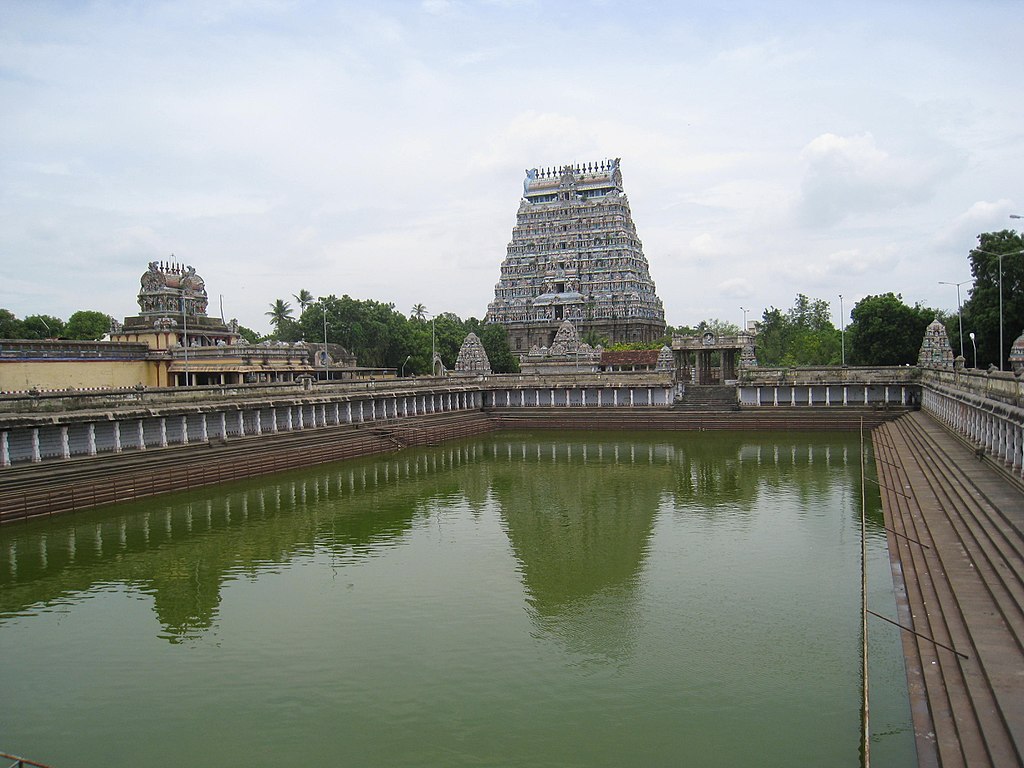
Situated in Chidambaram, this is a renowned temple of the state of Tamil Nadu that is dedicated to Lord Shiva. It was constructed during the reign of the Chola Dynasty over the region. For the Chola rulers, Natraja was a prominent deity. The Architecture of this temple is completely mesmerizing and is the bridge between the inculcation of art and divinity that has led to the haven which is the Nataraja Temple. A major allure of this temple is the image of the Nataraja that is beautifully ornamented.

4. Adi Kumbeswarar Temple

Temples in Tamil Nadu, Adi Kumbeshwarar Temple
Image/Wikimedia

Another prominent temple of Tamil Nadu, the Adi Kumbeswarar Temple is situated in Kumbakonam. It was built during the Chola Dynasty and is truly a highlight of their reign. Dedicated to Lord Shiva, this temple follows the Dravidian Style of Architecture and the structure is breathtaking. It is also the site for the much revered Mahamaham festival which observes a plethora of pilgrims from all around the globe visiting this temple to bathe in the sacred Pottramari Temple, which is a major attraction of this temple.

5. Sri Ranganathaswamy Temple

Temples in Tamil Nadu, Sri Ranganathaswamy Temple
Image/Wikimedia

This marvel of Tamil Nadu is situated across the island of Srirangam in the city of Tiruchirappalli is an exemplary form of the Dravidian Style of Architecture because of which, it has attained fame throughout the country. This temple covers a large area and is divided into 49 sub-shrines. An allure of this temple remains the principal or Raja Gopuram which stands tall at the height of 236 feet and is the highest in the continent. The chief deity of this temple is Lord Vishnu and the perfect cherry on top is the splendid views.

6. Kanchi Kailasanathar Temple

Temples in Tamil Nadu, Kanchi Kailasanathar Temple
Image/Wikimedia

This temple is located in the city of Kanchipuram, renowned for its spiritual aura and fascinating past. The Kailasanathar Temple is certainly one of the city’s crown jewels, to say the least. It is thought that the temple was built by the Pallava rulers, nearing the end of the early medieval period. The temple is devoted to Lord Shiva and has the most brilliant of structures, following Dravidian Architecture. The primary allures of this temple remain the sculptures of Shiva that are intricately carved as well as the sanctum of the temple. The temple attracts thousands of pilgrims throughout the year but gets especially crowded during the festival of Maha Shivratri.

7. Ekambareswarar Temple

Temples in Tamil Nadu, Ekambareshwar Temple
Image/Flickr

This is yet another temple that is the pride of the glorious Kanchipuram. As per ancient beliefs, there are five classifications of matter: earth, water, air, sky, and fire. This temple is dedicated to an integral element that is Earth and has attained a position of importance for those who worship Lord Shiva. The legend that surrounds this temple is based upon an atonement that was executed by Goddess Parvati for Lord Shiva who, impressed, appeared before her. This said the act was performed under a mango tree that still can be noticed inside the temple and continues to bless us with its delicious fruits. The architecture is spell-bounding as the pillars with intricate carvings upon them truly stand out.

Visiting these temples is an experience that you will never forget and can only be described as entrancing and will certainly help you get in touch with your spiritual side as the solace provided by these temples overtakes you. It was truly rightly said by Swami Vivekananda, “Manifest the divinity within you and everything will be harmoniously arranged around it.” Let us know in the comments section below about the temple of Tamil Nadu that spoke to you.

11 Dishes from Kerala That You Must-Try to Cherish the Malabar Cuisine

0

If any person who has visited Kerala tells you it is ‘God’s own Country’, don’t let anyone tell you otherwise, because God’s own country, indeed, it is! One of the best states in India, Kerala is highly famous, both in India and abroad, for its magnificent beaches lined with palm trees, exquisite temples, scenic beauty, and delicious cuisine. A true food lover’s delight, Kerala is a paradise of mind-blowing and flavorsome dishes, which you have to try out if you get the chance. And to do precisely that, here are the top 11 dishes from Kerala cuisine which will surely make you salivate.

1. Puttu and Kadala Curry

Dishes from Kerala-Puttu and Kadala Curry
Image/Wikimedia

A popular breakfast dish in Kerela, Puttu, and Kadala curry is enjoyed in several households by members of all age groups. Puttu can be defined as a steamed rice cake with grated coconut in a cylindrical shape, whereas Kadala simply means a curry of chickpeas. There are numerous variations to the Kadala recipe; moreover, one cannot ignore its high nutritional value and health benefits. A delicious treat, indeed!

2. Idiyappam Curry

Dishes from Kerala-Idiyappam Curry
Image/Wikimedia

Idiyappam is an amazing dinner recipe usually served with a side of various curries such as peas curry, chicken or egg curry, and many more. It is also called as Noolappam in several Kerala households. While the dish looks complicated to prepare, in reality, it is simple. The Idiyappam consists of stands of sevai interlinked together to form a beautiful pattern. This dish is completed by preparing any kind of mouth-watering curry to accompany the Idiyappam.

3. Ela Sadya

Dishes from Kerala-Ela Sadya
Image/Wikimedia

Considered as one of the best and most versatile dishes in Kerala cuisine, Ela Sadya is sure to make you feel amazed! It is a traditional dish prepared on special occasions and religious ceremonies. With more than 10 individual items presented before you on a green banana leaf, Ela Sadya is usually prepared by the hosts. All the items are served in a specific order to aid in digestion and are extremely healthy to consume. Preparing the entire dish is somewhat time-consuming, however, the deliciousness that one experiences after is extraordinary.

4. Nanadan Kozhi Curry

Dishes from Kerala-Nandan Kozhi Curry
Image/Flickr

A real treat for all the meat lovers out there, you cannot leave Kerala without experiencing its flavors. Nadan Kozhi Curry is a traditional chicken fry famous all over Kerala. Adding this dish to your meal is sure to give it a surprising burst of spicy flavor. It is usually served with chappatis, appam, or any rice varieties, along with a side of onions or garlic to further elevate its taste.

5. Malabar Parota

Dishes from Kerala-Malabar Parota
Image/Wikimedia

This South Indian flatbread is a swirl of diversity to your everyday chappatis. Made with flour or wheat, this parota is flaky in texture. It essentially constitutes several layers of parottas merely twisted and folded together to form one whole parota. These parotas are mainly served with spicy curries such as Kurma or egg curry. A pleasant distinction from the usual rice-based recipes, the Malabar Parota is a must-try!

6. Chatti Pathiri

Dishes from Kerala-Chatti Pathiri
Image/Wikimedia

Have you tasted the famous Italian dish lasagna, but with an Indian twist? If not, then you must try out this superb dish which can be made both sweet and spicy. Thin pancakes are arranged (unlike the lasagna, mind you!) on the inside and the filling varies in accordance to how you want the recipe to be. Traditionally, a sweet Chatti Pathiri is filled with raisins, dates, or nuts; and the savory version contains any sort of meat within. Experience the flavors of the Chatti Pathiri in a traditional wedding in Kerala or during the Ramadan festival.

7. Ethakka Appam

Dishes from Kerala-Ethakka Appam
Image/Charles Haynes/Flickr

A common breakfast and tea-time recipe, the Ethakka Appam is delicious banana fritters. These deep-fried delicacies are made by coating bananas with either maida or besan and serving with a preferred beverage. This recipe is extremely simple to prepare and can be prepared by the likes of children as well.

8. Palada Payasam

Dishes from Kerala-Payasam
Image/Flickr

A personal favorite of mine, Palada Payasam is the king of Kerala cuisine. It is a mouth-watering sweet dish, prepared by combining a few key ingredients such as milk, ghee, and rice ada. Since the dish is a sort of sweet kheer, the rice ada is an important component of the recipe. Even though traditionally it wasn’t done so, you can top the Palada Payasam with some dry raisins or almonds to elevate its taste. This beautiful recipe is prepared during several South Indian festivals and weddings.

9. Appam with Vegetable Stew

Dishes from Kerala-Vegetable Stew
Image/Gopal Krishna/Pixahive

The combination of Malabar Parota and Veg Kurma is irreplaceable, however, one must not completely ignore this brilliant recipe. Appam can be consumed with several items, but nothing beats its taste with the Kerala-style Vegetable Stew. A flavorsome breakfast dish, you can make the stew by combining several vegetables such as carrot, peas, potatoes, or any other available vegetables at home. Further, coconut milk is added to the mixture to create an aromatic flavor. Have some hot appam and stew to start your morning on a delicious note!

10. Erissery

Dishes from Kerala-Erissery
Image/Kake/Flickr

Made with yams and plantains, the Erissery is a celebration of flavor in the true sense. It is usually prepared during Onam, which is an important festival in the South Indian culture. Apart from yams and plantains, the recipe also contains cowpeas and pumpkin to create a curry-like texture. This savory delight tastes heavenly with rice or even with sambhar.

11. Nendran Banana Halwa

Dishes from Kerala-Nendran Banana Halwa
Image/Wikimedia

A holy combination of fresh, ripe bananas, sugar, and ghee; the Nendran Banana Halwa is highly recommended to any sweet tooth (and this is coming from a sweet lover, so you can trust it). The sweetmeat melts in your mouth as soon as you place it in, and I guarantee, that you’ll reach for more. The dessert is shaped into rectangular parts and is a favorite amongst the kiddies!

After reading this article, you must now realize why Kerala is also referred to as ‘The Land of Spices’. The extensive use of cardamom, turmeric, and other spices accompanied by common cooking ingredients such as chilies, coconut, and rice accounts for the massive cuisine of Kerala. Having a little bit to suit every person’s taste, these dishes are known to agree with people of every age and gender.