Many individuals who require financial assistance opt for a personal loan. Being an unsecured type of loan, it gives the borrower freedom of availing a loan without pledging collateral as security. The reason behind the popularity of this loan is that the funds can be used for numerous purposes and not just for a specific need unlike a car loan or a home loan. However, you need to make sure you are applying for a loan for the right reasons. Keep in mind that these are debts that need to be repaid based on the set tenure. So, here are a few questions to ask yourself before applying for a personal loan.
1. Why do you need a Personal Loan?
This question is one of the first things you need to think about carefully. You need to carefully check whether you really need the loan or you can manage it with your personal savings. Also, check If you require financing for an upcoming event at your home or need the money to purchase a house or a car. This way you can plan the loan amount you need to apply for with the lender. Hence, it is best to think through all the aspects of your requirement before getting a loan.
2. Are you eligible for the loan?
The top reason for loan rejection is the eligibility factor of the loan. It is essential for you to look for lenders that have minimal eligibility criteria. You need to make sure you fulfil the basic eligibility criteria set by the lender for a smooth loan process. Banks and financial institutions look at the credit score, income, affordability, and depending on the value of the loan. Borrowers should find eligibility criteria of lending companies online and then proceed with the loan application.
3. Can you manage the loan repayment?
Before you apply for a loan analyze your current financial standing. It is important to consider this beforehand or else you might get in trouble later and sink in bigger debts. To avoid such situations you can take the help of loan EMI calculators available online. This will give you a fair idea of the monthly repayment based on the loan amount, duration, and the interest rate that is to be paid towards the loan.
4. What is the tenure of the loan?
Many banks and NBFCs offer flexible repayment tenure on personal loans. You need to check with the loan tenure when you apply for a loan with a lender. If you opt for a longer loan tenure the EMI amount will be less but the interest can be slightly higher. It is advisable to opt for a short loan tenure to avoid high-interest rates. However, with flexible loan tenure, you can choose the tenure of the loan based on your financial capability and make convenient loan repayments.
Loan EMI Calculator
When you think of getting a loan, the first thing that pops on your mind is the EMI (Equated Monthly Installment) amount and the rate of interest. The loan amount is repaid in EMIs and it will turn into a regular monthly outflow, this is why it is important to get an idea about the EMI amount you have to repay towards your loan. You can now get an estimate of the EMI using the Personal Loan EMI Calculator available online and it is easy-to-use. When you use the calculator, you do not need to visit the financial institution’s branch to gain insights about the personal loanEMI that you will need to pay on the loan.
How does the loan calculator work?
The loan EMI calculator is an online tool, which helps in getting an estimated EMI outflow. The calculator can also be used to plan the amount needed along with the tenure for which you require the loan. An EMI calculator for personal loan is an interest-only calculator, this means the calculator will only consider the loan amount, tenure of the loan and the interest applicable on the loan.
How to use an EMI calculator personal loan?
To use the loan EMI calculator, you can simply look up for it online. Many banks and financial institutions have EMI calculators on their website. You can provide basic details like the loan amount, tenure, and the interest rate to estimate the monthly instalment. You also have the option to make changes in the loan amount as per your convenience until you have a set personal loanEMI you can manage to pay. During the application process after you have checked with the eligibility criteria of a loan, you need to calculate your loan EMI. The EMI calculator provides an estimate based on the loan amount and tenure to help you identify the amount you require and the amount you need to repay. Overall a personal loanEMI calculator will guide you to make a well thought out borrowing decision.
As a country with a diverse heritage and rich culture, India is home to some of the most beautiful folk art traditions, which are admired around the world. Each part of India has its own form of art. The folk art forms of India are abundant in its vibrancy and beauty. Colourful patterns, elaborate designs, and the presence of religious and mystical elements are the essential features of Indian folk art. These folk arts are instrumental in showcasing the ethnic mosaic of culture and heritage that India possesses. The popular folk art forms include Pattachitra Paintings from Odisha, Madhubani Paintings from Bihar, Phad and Pichwai Paintings from Rajasthan, and the Warli Painting from Maharashtra.
Among these varied styles of painting, one of the most popular and renowned styles of painting is the Pichwai Paintings. The Pichwai Paintings are believed to have originated about four centuries ago. It hails from the state of Rajasthan, more precisely from the Nathdwara town in the state. The word “Pichh” means back, and the word “wai” translates to textile hanging. The Pichwai paintings were usually hung behind the deity in the shrines of Srinathji. These paintings have an acute attention to detail and were more intricate and detail-oriented than the traditional Phad paintings from Rajasthan.
The paintings are famous for their spectacular depiction of tales from the life of Lord Krishna. Usually made on cloth, these paintings are stately and stunning. The Pichwai Painting demands intense focus and immense skill on the part of the artist. These paintings have to be painted with much precision. The artists pay profound attention to even the smallest detail in the paintings. The Pichwai paintings are a splendid and glorious addition to the many textile arts, prominent in the country.
The Pichwai art tradition has been passed through generations in a quite sacred manner. The painting is not taught in an educational institution but is learned under the guidance of a master artist. To this day, this is the practice adopted to master this art.
The mesmerizing Pichwai paintings portray Lord Krishna as Shrinathji. Apart from Lord Krishna; Radha, Gopis, and the images of lotuses, also have a prominent presence in the paintings. This textile painting also depicts various Indian festivals such as Diwali, Janmashtami, Holi, Sharad Purnima, Raas Leela and Anakoot, among others.
The Pichwai painting is created on a piece of handspun cotton, through a few steps. First, the sketches of the paintings are created with the utmost attention. Later these images are painted using only organic paints, colours, and natural brushes. Coals, Indigo, silver, are some of the significant sources of these natural colours used for the Pichwai paintings. The painting is also sometimes enhanced using gems, and crystals. The fact that the painting requires pure gold in its making adds even more to the value of the Pichwai paintings.
The Pichwai paintings are quite colourful and have several colours drawn and combined with creativity and skill. The main colours used are red, green, and yellow, among others.
The Pichwai paintings are renowned for their depiction of festivals such as Janmashtami, Sharad Purnima, Raas Leela, Diwali, among others through their paintings. The paintings which illustrate festivals, portray Srinathji differently as compared to the Pichwai paintings of other festivals. For instance, in the Pichwai paintings of Janmashtami, the festival which celebrates the birth of Lord Krishna, the idol of Srinathji, is placed at the centre of the painting. In the paintings depicting Sharad Purnima too, Shrinathji is presented as the central figure. The Pichwai paintings of Sharad Purnima, depicts the full moon, in all its glory, adding a distinct beauty to the artwork. The powerful imagery of the painting is perhaps what attracts the observer the most. The characters represented in the paintings wear elaborate and attractive costumes with vibrant colours. The characters are created in such a manner that the observer immediately establishes a connection with them.
Painted in a miniature style, the Pichwai paintings are quite mesmerizing and manage to capture the attention of the observer the moment they set eyes on it. The unique colour combination, the intense detail-oriented style, and the intricate manner of painting make the Pichwai paintings one of a kind.
Today, the Pichwai paintings have many admirers from around the world and are highly valued in the country. The attractive design and the intricate details, along with the powerful imagery, make the Pichwai paintings one of a kind. Though the art pieces are of religious significance, nowadays, it is not uncommon to see the Pichwai paintings being collected by art lovers. The paintings are said to evoke positive and joyous feelings in the observers. Since the paintings portray joyous occasions, it induces positive thoughts and feelings in the observer.
The folk art tradition is said to have had a very long history in India, and its history can be traced to centuries ago. Folk art is one of the most integral factors that represent the culture of India. Each state in the country has its own unique, distinct, and beautiful kind of art termed folk art. Each of these is distinguishable from the other through the manner and style of the painting, along with what it represents. The notable and the impeccable quality of these folk arts have, have earned the attention of art lovers from around the world. Owing to this fact, the arts and crafts of India are exceptionally high in demand among foreigners. Apart from this, the aesthetic feel and the sense of identity provided by these folk arts are beyond comparison. Hence it would not be wrong to say that the culture or tradition of a country or a state in India will be incomplete without its folk art form. The Madhubani paintings, which are popular for their vibrant colours and patterns, the Warli folk paintings, which take their name from the Warli tribe, are renowned for their depiction of the daily social events of the Warli tribe, are just a few among the many fascinating folk arts practised in India.
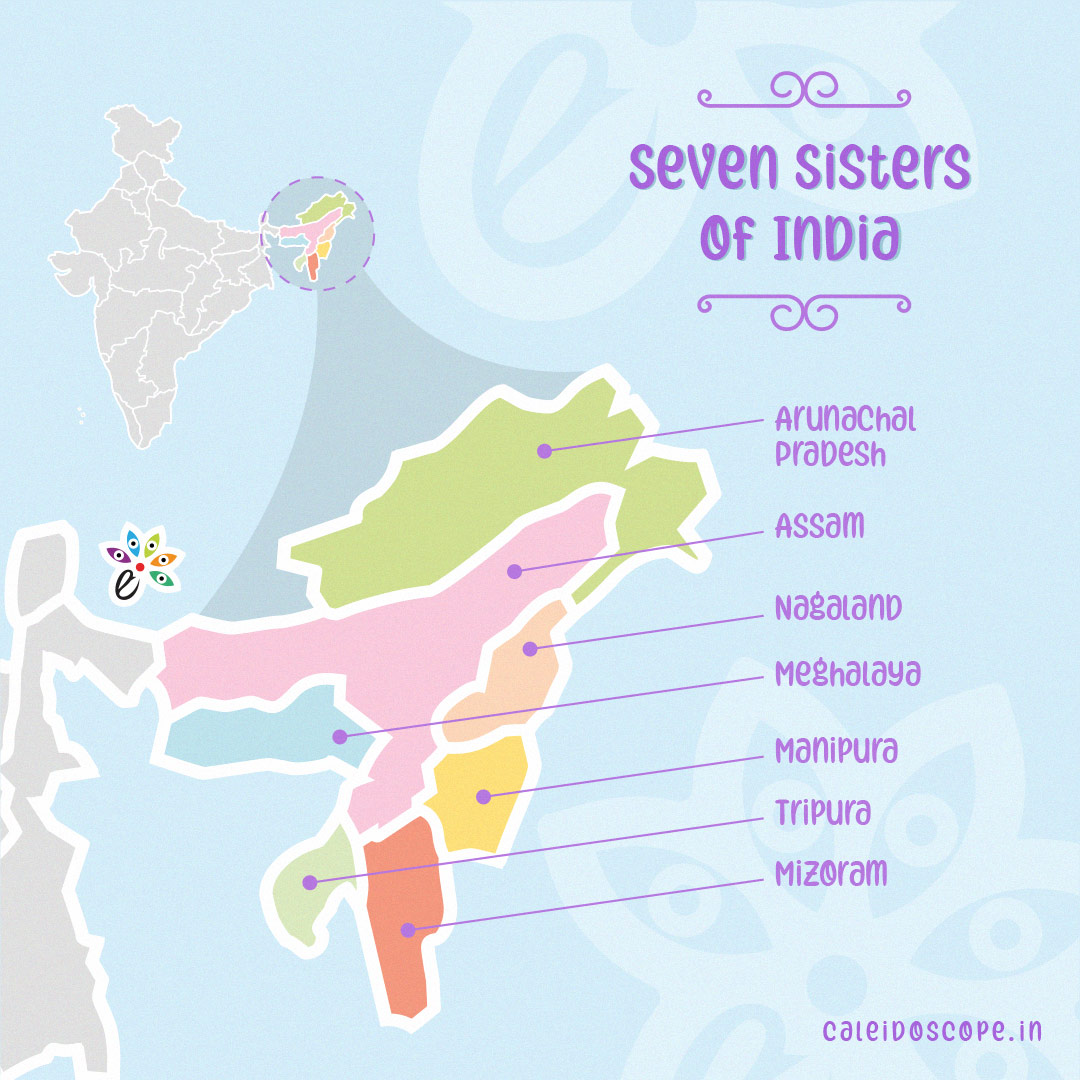
Situated in the northeastern region of India, Assam shares its borders with the neighbouring countries, Bhutan and Bangladesh, and the states of West Bengal, Manipur, Sikkim, Nagaland, Meghalaya, Mizoram, Tripura, and Arunachal Pradesh. The vivid culture and heritage of Assam is also reflected in its natural beauty.
The Seven Sisters
The state has mesmerizing greenery along with rivers such as the Brahmaputra and Subansiri, which add to its appeal. The state is also known for its large areas composed of forests. Assam is known as the “Gateway to northeast India” due to its pivotal position in the northeastern part of India. The state is also one of the “Seven Sister States” of northeastern India.
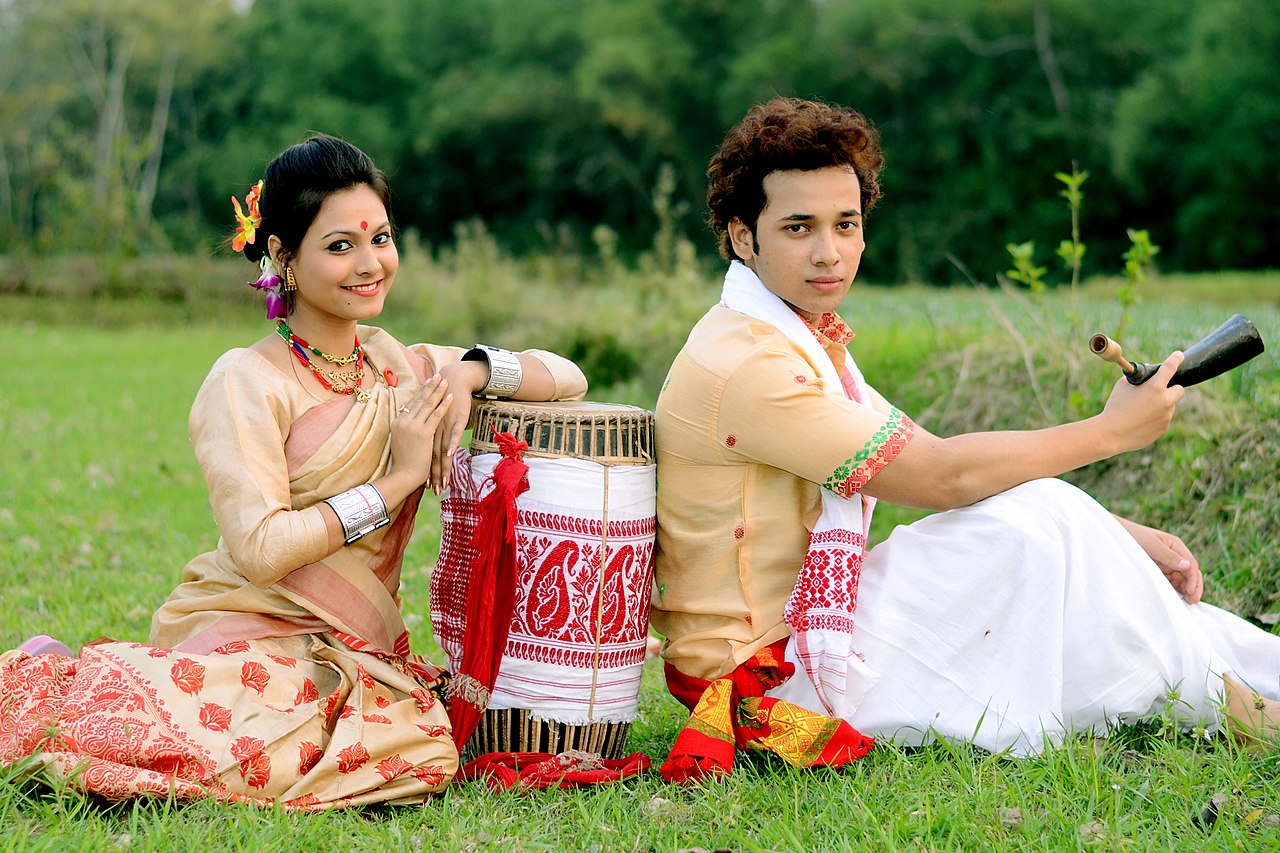
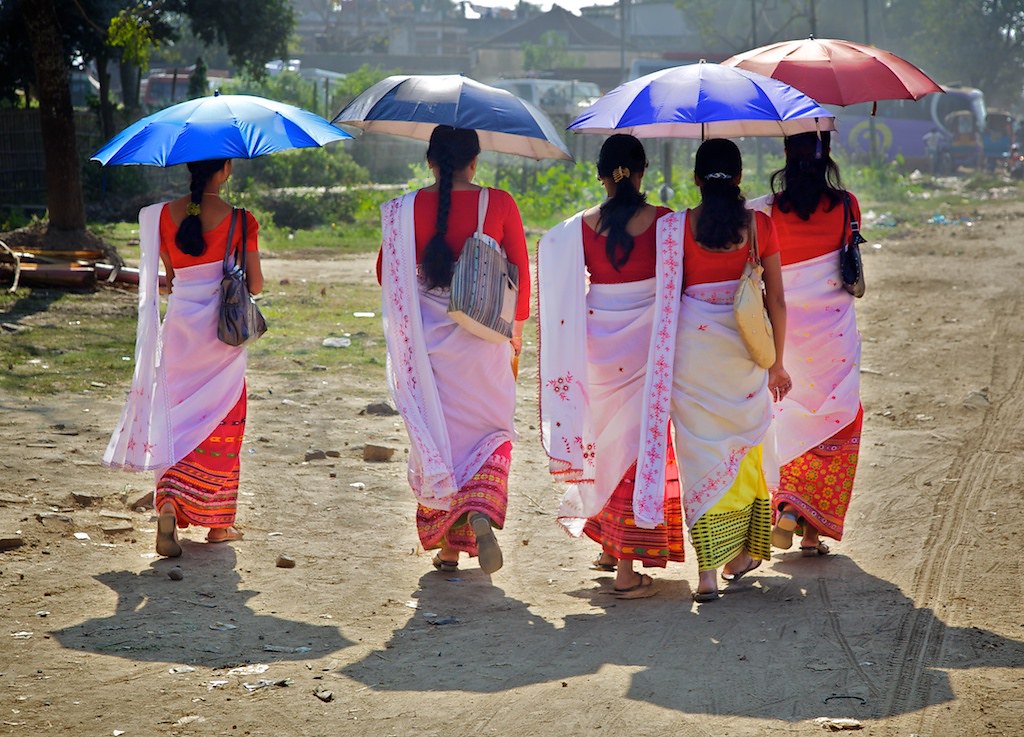
The traditional dresses of Assam culture are usually simple and elegant and mostly hand-loomed. Women typically wear the Mekhela Chador, which is a two-piece garment worn by women of all ages. Men resort to wearing the Dhoti and the Gamosa.
Each tribal group in the state has its own distinct style of dressing, which is quite different from the others. In the case of the Dimasa Tribe, the women usually dress up in the vibrantly colored “Righu”. Simultaneously, the men wear a special kind of Dhoti called Risha and a “Sgaopha”(a type of turban), generally on formal occasions. In the Bodo Tribe, women usually wear “Dokhona”. An outfit called Kaum Kontong is worn by the women of the Rabha community while the men of the same community wear the Dhoti and Gamosa.
The people of Assam also adorn themselves with elegant pieces of jewelry that are quite unique and distinct to the state. The pieces of jewelry are usually handmade with gold and silver. Men wear Biri, Lokaparo, Kundal Matamoni, and Magardana, while women wear Gam-kharu, Thuriya, Aargathi, Kharu Nupur, Nalak among others.
The diversity of the state is prevalent in its food culture as well. The cuisine of Assam shows the influence of the food cultures of its neighboring states too. The staple food is rice and it is combined with fish and vegetables. Even the rice is prepared in many different ways. The food is mostly non-spicy and is usually prepared in earthenware. Machor Tenga is one of Assam’s most popular dishes and is made of fish, combined with tomatoes, lemon, and outenga (aka Elephant Apple).
Dried fish is also a common delicacy of the state. Other dishes include Xaak aru bhaji (meaning herbs and vegetables), Aloo Pitika, among others. The state also has a variety of sweet dishes. The most popular of the sweet dishes is undoubtedly Pitha, which is prepared from rice. Komolar Kheer, Bora Chaulor Payas, Xutuli Pithaare are among the other quite popular sweet delicacies of the state.
The state is also quite popular for its soft and soothing music. Songs are an indispensable part of the Assamese culture and hence, are abundant in number. The most popular songs are undoubtedly, the Bihu songs (Bihu Geet), which are sung along with the Bihu Dance performance on the occasion of Bihu.
Other folk songs include Tokari Geet, Kamrupiya Lokageet, Aainam, among others. The songs are accompanied by the music of special musical instruments which add to the ethnicity and charm of the songs.
Traditional Dances of Assam
Image Source
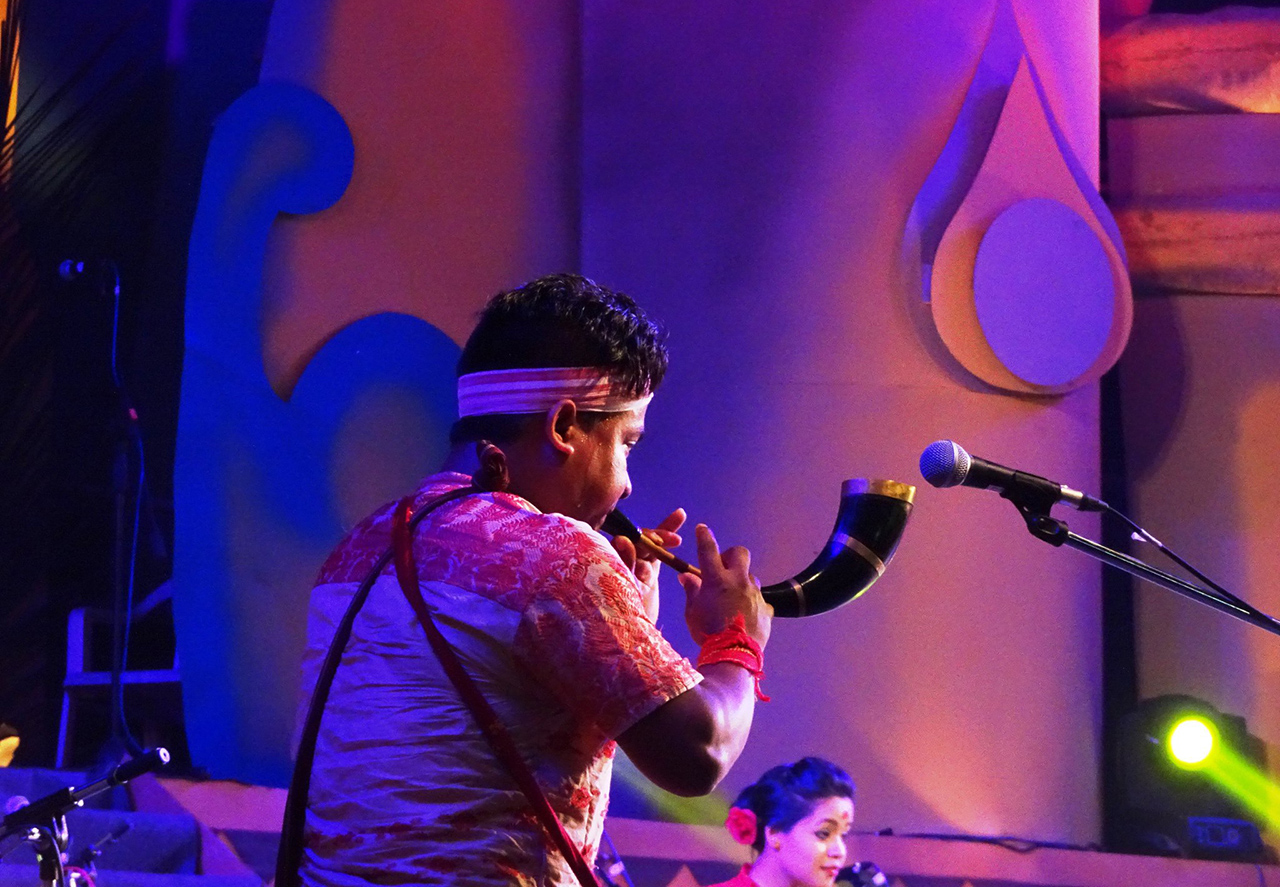
The most prominent and popular dance form of Assam is undoubtedly the Bihu dance. Fast-paced steps along with rhythmic hand gestures are the characteristic feature of the Bihu dance. Both men and women take part in the Bihu dance. Women usually wear Chador and Mekhela while men wear Gamosa and Dhoti during the performance. Along with the dance performers, skilled musicians provide background music through traditional musical instruments such as Dhol, Pepa Toka, Xutuli, Gogona, and Baanhi.
Apart from the Bihu dance, many other dance forms are also prevalent in the state including the Sattriya Nritya (portrays the Sattriya Culture), Bagurumba (performed by the Bogo tribe), and many more.
The state has a plethora of festivals, among which the most important one is undoubtedly Bihu. Celebrated around April, the festival signals the onset of the agricultural season. Bihu festival is a collection of three festivals that signal the important events of cultivation. The Bohag Bihu (held in mid-April) declares the onset of the agricultural season, Kati Bihu, (celebrated in mid-October), and Magh Bihu (mid-January) celebrates the end of the harvest season. Bihu is celebrated by everyone in the state with much pomp and joy.
The first harvested crop is offered to God as a token of their gratitude for the harvest. Apart from the Bihu festival, the state is also home to several other festivals such as Ras Lila in Majuli, the Tea Festival, Majuli Festival, and the Ambubachi Festival.
Customs and Traditions of Assam
Image – donvikro
The state gives enormous respect and reverence to its customs and traditions laid down by their ancestors. From welcoming a guest to inheriting the property from one’s parents, certain customs have to be followed by all natives. The state is home to several tribal groups and each group has its own traditions that differ from each other. This difference portrays itself in the wide variety of the tradition and customs followed in the state.
For example, in some communities, the son inherits the father’s property and the daughter inherits the mother’s property, whereas, in others a matriarchal system of inheritance is observed. These customs make up a significant portion of the Assam culture.
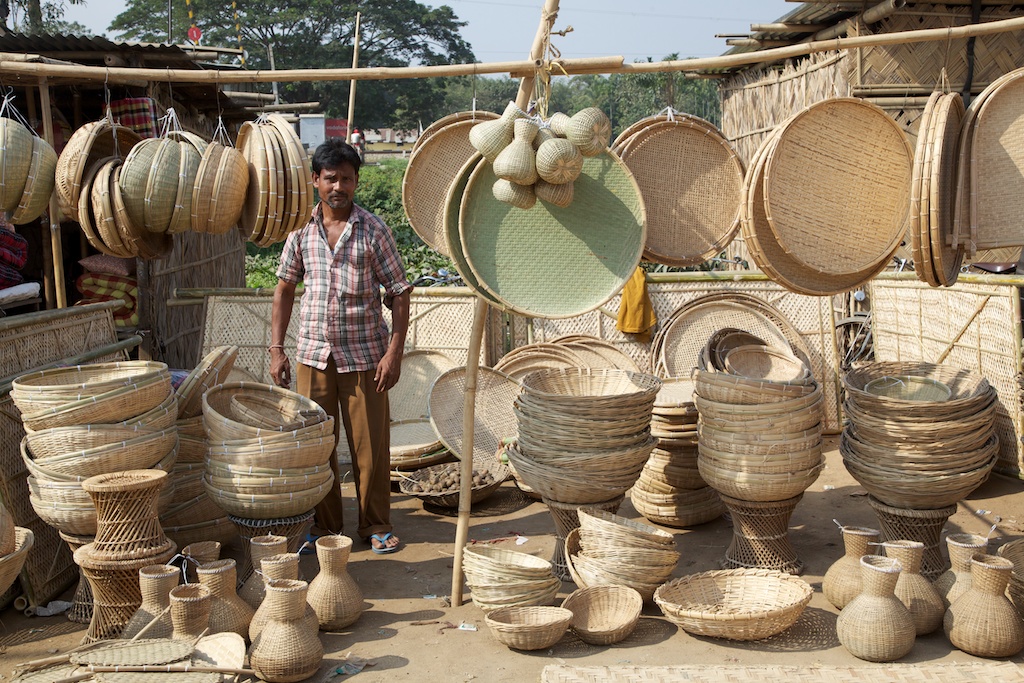
The people of Assam are known for their great skill in weaving and it is a major occupation of the state. Apart from weaving, the state is also popular for its wide variety of handicrafts, one of the most famous being the Jaapi.
Bamboo crafts, brass crafts, terracotta work, jewelry making, and pottery are among the most famous traditional crafts of the state. The crafts of the state have a special charm of its own, and the history of this handicraft-making can be traced back to centuries.
The majority of the population of Assam is engaged in agriculture. They cultivate rice, pulses, jute, and tea. It is worth mentioning that the state of Assam is well known for its tea plantation. It is noteworthy, that the state of Assam contributes to a certain percent of tea output of the world.
Takeaway
Weaving is also another principal occupation of the state which women usually take up. Assam is also quite famous for its production of silk and tussar materials. The state is well-known for its Assam silk, which is popular all over the country for its excellent quality.
The family has been the social institution that plays a pivotal role in guiding an individual into maturity, self-sufficiency and integrity. The microcosmic unit of the bigger society is first acquainted with the child in their family. The child thus imbibes its practices and knowledge. The Indian society is built on the principle of collectivism, unlike the West which emphasizes individualistic values. The social unit of the family in India, therefore, aims to incorporate the values of loyalty, reciprocity and unity within the members.
With the unhindered influence of modernism, the norms and ways of a family in the Indian system have seen drastic changes which have led to varying degrees of consequences. Thus, it is essential to incorporate into the child the right ways of the world. They can mould themselves with confidence according to the evolving needs of the time, respect the traditional values of reciprocity and empathy, and yet not be held back by orthodox principles that hinder humanity.
Loyalty
Image – Pixels
In a competitive world where technological developments and status ambitions are of pivotal importance, the traditional base of loyalty has been fading unwittingly amongst the members of a family. Children are thrown into the bustling world of grooming and academics at an early stage to meet the requirements of a capitalist country. They often end up isolating themselves from their parents once they grow up. The bond that ties the members is not only of biological heredity, but it also requires to have faith in each other.
The genuine feelings of loyalty to one’s family cannot bloom unless children are given the space to acquire an understanding of how nothing is for granted. It is imperative to have a healthy home environment where children are taught, one step at a time, according to their individual needs. They will gradually learn how to value the people who will always have their back when the hour comes.
The Sanskrit philosophy of Vasudhaiva kutumbakam, meaning ‘the world is one family’, is an imperative aspect of Indian family values that help a child acquire what it means to regard different people with equality and consideration. A human being should be respected regardless of gender, caste, sexuality, and religion. In a country where the political situation is turbulent and social evils are still brazenly out in the open, a person has to imbibe ways of confronting the world from the age of schooling. Teaching children to firmly consider equity towards everyone they come across so that the seeds of backdated habits and narrow-mindedness do not grow stronger in their roots.
Respecting one’s elders has been a stringent value in Indian families since ancient times. A family is a social institution that passes its wisdom and family traditions from one generation to another. The older family members are regarded as knowledgeable and experienced. Their teachings help the child to keep their grasp on India’s rich heritage and appreciate its culture and historical significance. Most of the time, however, the redundant practices and thought structures are not left behind during such lessons. Adults should ensure that the child does not incorporate chauvinistic thinking and fanatical actions that will hinder their personal development as a decent human being and create considerable problems for society.
Sacrifice has been regarded as a source of contentment for everyone in terms of the joy of giving that was so revered in ancient India. The children are taught that wealth is temporary, and one day its custodian will be passed onto someone else. However, one can only help others when one has attained sufficient standing to do so. Senseless giving in a competitive economy where most struggle to survive is not something one would want to indulge on. Yet, the child should learn not to clutch at wealth and property with greed and acknowledge the support that comes their way.
On a different aspect, the practice of ‘dana’ or charity does not only apply to the greater collective good of the society but also the compromises that one does for the family. The traditional hierarchy of the Indian family being a patriarchal society, the responsibility of giving up is thrust upon women. Instead of being reduced to orthodox gender roles, a child must be taught to mould their identity as a good person who not only respects others but also esteems themselves.
In India’s collectivistic society where inter-dependence is the traditional norm, a child needs to learn to empathise with diverse kinds of people, from various strata of society. The country’s economy and social standing is structured upon the requirement of interdependence to survive. Empathy begins with simplicity when the child is taught to help their siblings and friends. It is then nurtured into a holistic perception where the child understands how to give others the deserved opportunity to speak and respect their position and situation with sensibility.
Non-violence and respectful behaviour are essential values taught in any Indian family. It is also important to make sure that a child grows up to be a voice instead of just an echo. The child should learn to listen to what others say, regard its importance and have the confidence to build their own opinion through learning and unlearning. Standing up for what one deems right does not imply hot-headed action and crude words. Anger is significant for society as well as the individual to progress, but misdirecting it and letting it go out of its leash will only culminate to grave consequences.
Consulting the other members of a family for advice and making decisions is an important practice. However, self-evaluation is also a necessary part of teaching that trains the child to develop their personality and intellectual faculties. The process of ‘atma vichar’ helps one regard their decisions throughout life. It leads the child into knowing themselves as they grow up to be a mature adult.
The system of the traditional Indian joint family was based on the patriarchal hierarchy. Many of the values that were once highly esteemed have come to be exposed as oppressive. The traditional Indian family have always thrived on the principle of interdependence, but nuclear values have grown rapidly into importance as the country adapted itself into modernity, in social as well as economic aspects. It is imperative, therefore, that the children learn the appropriate values and norms from their family.
The tea industry in India has revolutionized to adapt to the growing economic demands of the country. The regional speciality has added to the fervour, like how the most recognized teas of Darjeeling and Assam are only cultivated in India. Of immaculate taste and flavour, some of the most popular types of tea in India that are grown and prepared in different parts of our country.
Tea-production in Assam is an indispensable source of livelihood since the state produces more than 500 million kilograms of tea per year. Made from the leaves of Camellia sinensis, the black tea from Assam is cultivated in a warm, humid climate and at sea-level which contributes to its distinct malty flavour.
The leaves are harvested and withered, then are made to undergo an oxidising or fermentation process. It is called by other names as well, like English breakfast tea and Irish breakfast tea, thanks to its high amount of caffeine content. It boosts the body and mind with energy and alertness. Rich in antioxidants, it also promotes heart health as well as greater immunity.
2. Nilgiri Tea
Image Source
The tea grown in the Nilgiri hills of Tamil Nadu, located in the southern portion of the Western Ghats, is intensely aromatic, with a mellow taste and subtle natural sweetness. Some of the best flavours of iced tea are made from Nilgiri tea-leaves. They have been produced for commercial purposes since the 1850s.
Nilgiri tea is grown in abundance year-round, such that the plants experience two monsoons each year. The amino acid L-theanine contained in the leaves relaxes the mind into stress-free alertness. The rich amount of flavonoids helps improve blood flow and strengthens the heart.
Grown in the Darjeeling hill region, between the Himalayas and the Bay of Bengal, the tea from the Darjeeling and Kalimpong districts experiences the cool land air during the dry winter months, followed by the monsoon rains. The tea leaves are usually processed as black tea and are harvested by the famous process of plucking pairs of the plant’s top leaves along with the bud.
The harvesting season is divided into four flush periods starting from March to November. Rich in antioxidants, the Darjeeling tea provides several health benefits, including the elimination of toxin and enhanced digestion. With a caffeine content that varies depending on the flush, it also helps in regulating stress.
A beverage prepared by blending a plethora of spices, Masala Chai serves a cup full of nutrient and health benefits. The spices balance the caffeine of the black leaves, and thus, it is a safe source of energy upliftment. The spices, namely cinnamon and clove, help in strengthening the immunity, while ginger helps in improving blood circulation and relieving aches and pains.
Often, tulsi leaves are blended with elaichi in the preparation, which facilitates better digestion. The most prevalent method of simplistic preparation of masala chai is through decoction. A mixture of milk and water is actively boiled with the loose tea leaves, and the adequate amount of the spices and sweeteners is added. The tradition may vary according to the tastes or customs of the local region.
Noon Chai is also known by different names of shir chai, Kashmiri tea, pink tea or gulabi chai. It is believed to have originated in the Kashmir Valley of India. To prepare this beverage, green tea leaves are brewed in sodium bicarbonate or baking soda to obtain a thick, reddish-brown extract called ‘tueth’.
It is then followed by dilution with water, then milk and salt are added to it. In a traditional practice, the tea is served in a large samovar or a brass utensil which keeps it warm for a longer period. People love to drink hot noon chai particularly during winters, to attain warmth. It offers improved digestive and stress-reducing properties and also prevents heartburn and bloating because of the cardamom and baking soda content.
6. Green Tea
Image by Jill Wellington
The large-leafed Camellia Sinensis Assamica plants grow in a warm, moist climate, especially in sub-tropical forests. To prepare green tea, the leaves of the plant are harvested and then heated as soon as possible through steaming or pan-frying. Unlike oolong tea and black tea, green tea does not undergo the process of withering and oxidation to prevent the leaves from turning brown and maintain their fresh flavour.
The colour of the brewed tea is usually green, yellow or light brown, but it depends on the processing and cultivation method used.
Some of the factors to be considered are the time of the year when it was plucked, how the plant was pruned, the kind of heat applied to the leaves to stop oxidation, and the way the leaves were shaped, rolled or dried. The flavour of a correctly brewed cup of green tea can range from toasted vegetal to sweet, seaweed-like, and is affected by the “terroir” or the environment in which it was grown. It is best to consume Green tea within six months or a year of purchase so that its flavour and benefits can be savoured adequately. Loaded with antioxidants, it provides many health benefits like improved brain function, well-maintained weight, protection against cancer and lower risk of heart diseases.
A beverage of the Himalayan people of India, butter tea is also known as po cha and cha süma. In the climate of the mountains where the air is cold and thin, the traditional preparation of butter tea gives the people energy and calories. Traditionally, it is made from butter derived from the milk of yak. Producers heat the milk then place it in a solar-powered device that separates the butter. The tea leaves are boiled in water for several hours until a dark brown colour is achieved, then it is poured into a container with fresh yak butter and salt. The resultant mixture is a thick liquid that is stored into tea-pots or jars, ready to be served.
Butter tea is also used for eating tsampa, which is a high caloric paste, also including other components like highland barley paste and curds. In Tibetan medicine, it is considered that the combination of butter and tea gives greater balance in mind and body than either item individually. The consumption of butter tea enhances the body’s blood flow and muscle and bone strength essential to cope with the stress of work and farming activities at high altitudes. Caffeine stimulates the central nervous system, and thus provides further energy.
Tea is an indispensable beverage for the average individual of India. It is a household refreshment for breakfast as well as the standard serving for an official meeting. It provides for physical health benefits as well as soothes the mind from overwhelming stress.
MASH India is an initiative undertaken by Shalini Passi who is an art explorer, collector and philanthropist. One of the familiar faces of the showbiz world, Shalini has been contributing laboriously to the art community. Her endeavour to bridge the intersection between her five verticals – architecture, art, craft, design and fashion is undoubtedly laudable. We engaged in a conversation with Shalini Passi to apprehend her art journey so far. Here are the excerpts from the conversation:
How did your journey as a collector of all things art began?
From an early age I was quite interested in art and made several paintings as a young child. Both my aunt and my father were also painters. I was also drawn towards architecture too. My uncle used to study in IITD and I remember being so interested in the building. Since my father and grandfather were in the business of construction, I also grew up with a lot of blueprints around the house. Growing up I had an amazing teacher Mr. Bishamber Khanna who was an enamelist. He taught me not just to see things but register things. So now when I walk into a room or look at pieces of art, I have an almost photographic recollection. So that experience really changed the way I perceive things. He used to say that the eye of an artist should be able to capture things and that’s how an artist recreates.
How does MASH as a crossroad for art, architecture, craft, fashion, and design open doors for artists?
MASH as a platform is so unique because it is accessible. Its accessibility lies in the fact that it is an online space and it has no barriers, so any artist who loves their craft can approach us. As an individual I am also proud of the fact that I am a patron for several upcoming artists and MASH provides them with a space where their work can be featured and exhibited.
As a pioneer of visual and media arts, what challenges and commitments, in terms of collectivity and display surfaced your way?
One challenge that I often face is that I have to edit and make sure that the pieces that I am currently displaying speak to me on a deeper level. It is difficult when you are so engrossed in art that you are unable to choose which artwork to display.
Who are some of the emerging artists that are going to be the biggest names in contemporary art in the near future?
Artists that I think are going to be big names in future are painter and sculptor Sahaj Rahal whose work is very mythical in nature. Then there is Asim Waqaf who has a background in architecture and creates evocative installations that address our ecology. Also, Himali Singh Soin who is a performance artist who also works with film.
Which art movement or wave do you particularly relate to?
I particularly love the art deco movement that began and gained prominence in the mid twentieth century.
How has lockdown been for MASH India? Did art flourish or did it wither?
In order to keep our spirits up and to keep flourishing we organized an online exhibition with leading contemporary artists. During the lockdown we also released several articles such as ‘Atworks I would Love to be Quarantined with’. We also interviewed artists to map their creative process during the pandemic.
What is a piece of advice that you would want to bestow upon aspiring artists/collectors?
My advice would be that in order to be a successful artist/collector you must not stop learning. Learn and research every aspect of the art world and make sure you have an expansive knowledge of art, from its history to its contemporary status.
An artistic depiction of the battle – between the warrior goddess, Durga and the buffalo demon, Mahishasura – from Devi Mahatmya of Markandeya Purana. Featured during Navratri, the scene comes from the Central Indian city of Yavatmal. (Art by Snehal Wankar)
It’s late monsoon and incessant rains are slamming tin ateliers, creating an ear-deafening sound. Inside these makeshift arrangements are sculptors from a tranquil town in Central India, nonchalantly engaged in modelling clay into beautiful idols of India’s most revered goddess, mother Durga. To come up with the most spectacular works of art, they have been burning the candle at both ends. Their passion and dedication towards the art evoke appreciation and praise. Yet they do not get the attention they deserve, and the very work of art remains for them just a source of livelihood.
Left – Rustic framework fine-tuning. Right – Bust Manipulation. The story in the making: Nilesh Deshmukh, a senior and famous artist from the town, painstakingly works to bring magnificent Shraptshrungi to life.
Nestled in the offshoot hills of Ajanta Satmala range, is the city of Yavatmal, geographically positioned in the south of Vidarbha. An important cotton trading centre, locally, the city is also famous for the nine day Durgautsav festival that is celebrated here with great fervour. However, it is the grandeur of clay sculpture that distinguishes these festivities.
The majestic Shraptashrungi, decked in finery, ultimately occupies the pandal. She rides a chariot steered by lions. Goddess’s multiple arms are equipped with different articles – of warfare, arts, and those symbolizing knowledge and peace – which depict her manifold characteristics, demonstrating the sculptor’s creative ability and highlighting his scriptural knowledge.
Any form of art gains eminence when it reaches a very high standard and starts assuming emerging forms. It starts portraying uncommon and unknown styles, and thereby establishes itself as a model. All these features well apply to Yavatmal Durga clay sculpting, and so the art deserve special attention.
Dhananjay Tayade, a talented new-generation artist, through his masterpieces, is spearheading a new revolution in the town’s art. Below is one of his works.
One simply wonders how the town’s art scaled new heights, when, in the neighbouring areas, there’s no trace of any such work. Roughly, around five decades ago, a handful of Durga mandals existed in the town. These mandals had dedicated sculptors, who would combine artistic skills with devotional sentiments, and render an artistic flavour to Durga worship. Deriving inspiration from the veterans, young artists started following their lead, and with time, the skill literally became a gene.
Unlike static routine styles, the scene depicts characters in vigorous motion – featuring a stage of the battle. The goddess, full of vigour, is leveraging all her hands in deploying weaponry; snake’s unleashing being the most striking of all. The lion, depicted in high-intensity, has its musculature and flowing manes well matching its attacking stance, as it takes on the defensively postured hefty demon king. Each aspect of the sculpture makes the artistic fineness starkly visible. Within the confines of a limited space, a static scene has been presented dynamically.
In the process of transition, elements of creativity and innovation, too, got fused with the erstwhile styles, giving birth to new ideas. As the number of mandals proliferated, new artists started getting opportunities to demonstrate their talents. The art flourished and coalesced with local elements, and a culture – altogether different – of deity worship through artistic renderings, evolved.
An exemplary piece of work by Ram Chavan. Gracefully modelled, goddess Hitanveshi and her mount, tiger have been realistically depicted. The goddess’s lineaments offer pleasant countenance, and she reflects an aura of elegance and gentility. The tiger, though aggressive, well suits the peaceful context.
A remarkable feature of Yavatmal Durga clay sculpting is that within the broader spiritual framework, artists try to infuse mythological contexts with dynamic elements. Artists thus give expression to their creativity by portraying themes based on divergent ideas. This sometimes also brings Durga out of the limited domain, depicting her not as a battle warrior rather as a social warrior advocating nature conservation, women empowerment, and social responsibility.
Gaurav Bhoyar, a young artist, creating a theme on tiger conservation. Today, the town abounds with talented artists, who try to theme idols on contemporary issues.
The people in the town have proclivity to conceptualize decorative ideas; the aesthetically pleasing paintings in the backdrop and beautiful ornamental decorations corroborate this. The clay sculpture intermingles with these pieces of art, which results in elaborate art-combos that catch the discriminating eye of a connoisseur.
Left – Durga depicted through save the girl child theme. Right – Goddess being taken for installation. The embodied features resemble those of Vidarbhian womenfolk
The art’s adaption to changing situations demonstrates its dynamicity. This becomes evident especially on the night of Dobree, when devotees dance with gaiety to the tunes of countryside trumpet – dobree – holding in their hands and swaying fearlessly earthen pots with fire. From a distance, it appears as if the goddess is dancing on the fire, with flames reflecting in her eyes that gleam with aggression. The art literally animates an inanimate structure.
Left – Town’s artist, Saleem Sheikh, giving a fine touch. Defying social boundaries, the artist has been dedicatedly following his passion of Durga sculpting for years now. True indeed, art is a religion in itself. Right – Umesh Badere, famous for his Kali art, engrossed in giving the finishing touch.
These unassuming clay sculptors, through their avant-garde works, have been giving Yavatmal the identity of a clay sculpting centre. While artists and art works from major cities and known centres easily get highlighted, coming to limelight is usually difficult for artists from smaller towns. Such artists do not get platforms to showcase their skills, and the art ends up remaining for them a way of making living.
However, despite facing odds, the Yavatmal artists continue to work undeterred and with indefatigable spirits. A new season to them is a new hope. Will the story of these humble artists remain unheard, or if, someday, they will get the recognition they truly deserve?
Occupying a considerable portion of South Asia, India is a country of one of the most diverse populations, representing a government of the constitutional republic. Since the ages of the Indus Valley civilisation, India had been a fairly politically and culturally self-contained territory. It was not until the British set their colony in the land that a Western and foreign culture massively impacted and influenced the country. The beauty of the Indian culture is derived from its rich history.
Here, we explore the position where the country stands as of now in its cultural aspect. Despite modernisation and Westernisation, Indian culture and the traditional practices are held on to with considerable vigour. In its deepest pockets, many lead a primarily orthodox lifestyle. However, the country as a whole is as colourful and complex, as its plethora of people that it is home to.
Languages in India
India, a land of 28 states and seven union territories, does not have one official language. In a survey conducted by the Times of India, results showed that almost 60 per cent of the citizens speak a language which is not Hindi. As recorded in the 2011 language census, there are 121 languages which are spoken by 10,000 people or more in India.
The 121 languages are presented in two parts: the 22 languages which are a part of the Eighth Schedule of the Indian Constitution, and the languages not included in the Eighth Schedule. The latter comprises 99 languages plus the category total of ‘other languages’, which encompases all those languages that returned less than 10,000 speakers each at the all-India level.
The Eighth Schedule of the Constitution includes languages like Assamese, Bengali, Gujarati, Hindi, Punjabi, Sanskrit, Tamil, Urdu, Maithili and Dogri, to name a few.
According to the latest 2011 census, more than 19,500 languages or dialects are spoken in the whole of India as mother tongue.
India is characterised by a massive population of people who belong to a diverse list of religions. Identified as the birthplace of Hinduism, Buddhism, Jainism and Sikhism, India is a home to a varying number of religious communities, many of which are minorities, including Muslims, Christians, Judaists, etc. India includes not only the vast majority of the world’s Hindus but also the second-largest group of Muslims within a single country.
The largest democracy in the world, India is religiously pluralistic and multiethnic, and the Constitution provides for the security, free expression and equal human rights of the minorities. However, since the past decade, the country has experienced very high levels of social hostilities and brutalities that have germinated from religious issues.
Food Culture in India
Indian Cuisine by Chan Walrus
Just like how diverse and enriching the country is in its culture, so is its cornucopia of various types of cuisines, comprising recipes prepared usually from indigenously grown spices, herbs, vegetables, fruits and grains. Indian food is influenced by occupation, like the seafood dishes of the fishing community of Maharashtra, religion, like the rich preparations of meat and biryani influenced by the Islamic rule, ethnicity, like the varying sweet dishes of the Bengalis festivals and regional specialities.
Wheat, rice and pulses are staples of the Indian diet. The gastronomical variety is rich with different types of Indian spices, including coriander, cardamom, turmeric, and cinnamon. The condiment of ‘chutney’, prepared from fruits, vegetables, herbs and nuts are quite popular in Indian cooking. While a considerable amount of the population is vegetarian, relying mostly on ‘paneer’ and grains, meat preparations of lamb and chicken are common as main dishes for the non-vegetarians.
While historical events such as invasions, trade relations and colonialism have played a role in introducing certain foods to this country, Indian cuisine has also influenced foreign cuisines across the world, especially those of Europe, the Middle East, East Africa, Southeast Asia, North America and the Caribbean.
The prehistoric rock art in India is an early art form based on carvings, engravings or drawing on cave rocks. The oldest examples are the Bhimbetka petroglyphs found in central India and believed to be at least 290,000 years old. Buddhism originated in India at some point in the 6th century BCE and gave rise to the sculpting of stone and bronze pieces of religious themes. The Ajanta and Ellora caves host magnificent examples of Indian cave paintings and sculptures, which are treasured Indian heritage sites that upheld the grander of Indian culture.
The creation of art flourished under the sponsorship of the Islamic rulers of the Mughal Empire, established in the 16th century. This era saw the birth of the awe-inspiring Taj Mahal.
Taj Mahal by Balaji Srinivasan
During colonial rule in India, the British established art schools that promoted European styles, while back in Europe there rose demand of Indian artefacts. The western and eastern traditions, therefore, influenced each other and developed a romanticised Indian style of merged practices.
Since independence, Indian artists have searched for new styles and techniques to further the experiments on contemporary art movements. However, the dependence and inspiration of historic and ancient practices are still prevalent.
Indian architecture has seen innumerable intricacies and extravagant exploits. Many Hindu temples featured very distinctive towers in the form of truncated pyramids and had hundreds of sculptures ornamenting the walls. Mughal architecture incorporated Islamic elements. Arches and domes were widespread, and the decoration was full of stylised geometric patterns.
The major traditions of Indian classical music are the North Indian classical music called Hindustani, the South Indian and Sri Lankan expression Carnatic and the East Indian expression is called Odissi.
Classical music, based on ‘raga’ and ‘taal’, dates back to the Vedic scriptures where chants developed a system of musical notes and rhythmic cycles. Today, Indian classical music is taught in several institutions, and it is a prerequisite to learn under the expertise of a skilled teacher, incorporating observation, listening, and memorising skills. Indian dance and theatre traditions have prevailed for years. The major Indian traditional dance forms include Bharata Natyam, Kathak, Odissi, Manipuri, Kuchipudi, and Kathakali. Drawing on themes from mythology and literature, the dance forms showcase unique presentations on postures, gestures and movements and are traditionally performed to the melody of classical music.
Traditional Indian Clothing
Photo by Ujjwal chouhan
Traditional Indian clothing encompasses various types of drapery that are woven from silk, cotton or wool. The women wear sarees. Each ethnicity has a unique style of draping. Salwar Kameez and Kurti are taking over the modern lifestyle. The men wear dhoti, pyjama, shirt, sherwani, or achkan. Depending on the customs, they might also team up with jackets and caps. For winter, there are exquisite shawls, like the ones from Assam, that portray the unique embroidery and style of their specific areas of origin. Ritualistic and cultural performers don elaborately designed costumes that pertain to their ethnic traditions.
Indian Customs and Festivals
Photo by Amol Nandiwadekar
Festivals of India bring together the people in a harmony of celebration, often regardless of religion, like during the Ganpati Utsav in Maharashtra or the Durga Puja in West Bengal. Diwali is a brilliant festival of lights and sounds, with firecrackers livening up the night sky. Harvest festivals are celebrated all over, like Pongal of Tamil, Lohri of Sikhs and Poush Sankranti of Bengalis. While the Dussehra and Navratri are embraced with grandeur, the ones like Holi and Raksha Bandhan primarily aim at bringing together people with warmth.
It is not easy to define the culture of India in one compartmentalised endeavour. Every ethnicity and religion that the land harbours has its unique nuances and rich heritage. It is a land where multiculturalism is a significant socio-political aspect, one which, if not allowed to persist, will result in severe deterioration of the lives of an important part of the population.
When we talk about the pandemic, we think of breathlessness, fever and fear for our lives. What we rarely do think however, is about mental well-being and about being trapped in our homes during long lockdowns. What we also do not always realize is the claustrophobia that the social distancing and pandemic has brought along with it. The cringing and loneliness in mind or the various triggers and signs of mental illness have only heightened during this pandemic.
One can, in fact, talk about mental health on all days, but 10th October this year is a good time as any other. Why? 10th October is celebrated as World Mental Health Day. And to highlight the importance of mental health and spread awareness around it, 5 artists from India have come together to create an intriguing and spectacular dance video. Called ‘A Brighter Place’, the dance video will be live on 9th October.
A Few Facts About Mental Disorder
According to a recent study by the World Health Organization or WHO, ‘a close to 1 billion are living with a mental disorder. 3 million die every year from harmful use of alcohol and one person dies every 40 seconds by suicide. ‘The ongoing pandemic has only increased the anxiety further leading to larger number of people being affected by mental illness and issues.
‘A Brighter Place’
Conceptualized by Nenita Praveen, ‘A Brigter Place’ is a YouTube dance video that launches on 9th October 2020. It ‘is a dramatic illustration of different personalities who encounter their own set of mental struggles during the quarantine and lockdown’. Five renowned dance artists have collaborated on this effort which sincerely and honestly hopes that through their personal dance and musical stories, there emerges a brighter place for those struggling with their own mental conflicts. The artists collectively believe that everyone’s feelings are valid and need to be expressed. Each artist has portrayed their individual experience with mental health. Not fully aware of what the final outcome would be, all the artists have put together an inspiring work of art to bring back hope to the discouraged.
About the Artists
The artists of the video include Nenita Praveen, Priya Kumar, Preethi Bharadwaj, Harsha Maheshwari and Tao Issaro.
Nenita Praveen is a multi-faceted artist. She is trained in Bharatanatyam and has also performed across India and internationally. She speaks regularly about women empowerment and the role of art in building the society. She has her own studio called Meenakshi Studio for Arts. Here students learn the dance form and also understand their body in stillness and movement because dance is in actuality a language in motion. She is a teacher, performer, choreographer and a yoga enthusiast. When asked about what she brings to this dance video, she says, “The process of choreography, to begin with, was nerve wrecking. I love working with stories and my bit was about the struggle that a person has to just let go and go with the flow, to connect with their inner child. My internal struggle became the story for my piece.”
Priya Kumar is the owner of the Piah Dance Company and is known for her dance moves that blend traditional folk forms with contemporary forms, Classical Indian with Bollywood dance forms etc. An engineer by education, she practices yoga and loves cooking and making DIY videos. Priya’s real life shouldered more than the usual chaos amidst the lockdown as she came to terms with her biggest challenge of uncertainty while creating this video.
Preethi Bharadwaj is a freelance Bharatanatyam and Indian Contemporary dancer. She is also an actress collaborating with theatre productions, short films and feature films as well. She endured tons of inter-questioning during the lockdown phase, however she says, “I have a very supportive partner who lets me have demotivated days and that’s very important to jump back.”
Harsha Maheshwari aka KOMET is a dance and fitness enthusiast. She has been a speaker and performer for TEDx more than 4 times and has collaborated with artists from all walks of life for various events. Her art movements #TheMagicalWorldofDance for children from orphanages and #HEALnotHATE for spreading body positivity are well-known. Harsha the director of the Happy Hour Dance Studio muddled through positive COVID-19 cases in her family by staying calm, and healing her inner-self.
Tao Issaro is an Indian/Australian percussionist, composer and music producer. He has performed over 3000 performances in 30 countries since the young age of 9. His music is specifically for the stage combining percussion, movement, physical theatre and story-telling. Tao has developed a unique and dynamic live performance language over the years and is continuing to work on this in India and Australia. Some notable commissions and performances include BBC Proms at Royal Albert Hall (U.K), Maximum India Festival at John F Kennedy Centre for Performing Arts (USA), BRICS Summit 2016 (India) Woodford Folk Festival (Australia) and many more. Tao’s music provides the composition on which the dance moves of this video are choreographed. What was his take on the video? “One common motif that kept popping up in my head during COVID-19 was how do I motivate myself as a performer in a world where performances are no longer possible. I found my answers by forcing myself to look for a better output, ‘A Brighter Place’”, he shares smilingly.
Finally, during testing times the need to connect and stay positive are imperative. Expressions, such as the dance video ‘A Brighter Place’ put the spotlight on matters of mental health through their dance and music. A well intentioned effort, the artists reflect their true thoughts artistically conveying not only their mental struggles, but also how creating this video gave them victory to a brighter place. And they hope that it does the same for others too.
Indian culture is one of the most ancient cultures present in the world. The country is quite diverse and is home to several communities, each of whom has their own culture and traditions. It is this combination of various splendid cultures that make India one of a kind. The Indian cultural diversity is what makes India unique and beautiful.
Situated in the continent of Asia and enclosed by the Arabian sea, the Indian Ocean, and the Bay of Bengal, the nation, is divided into twenty-nine states and seven union territories. Pakistan, China, Bangladesh, Myanmar, Bhutan, and Nepal form the neighbouring countries of India.
India is a land of diversity each state in the country is home to several communities who live in harmony with each other while preserving and upholding their own distinct culture and traditions. From Delhi, the capital of India, to Tamil Nadu, the southernmost state of India, the land, is blessed with amazing scenic beauty. The country is also home to several historical monuments which add to the varied heritage of India.
India is a country that is incredibly diversified and that of Indian architecture. India’s architecture spans from ancient caves to contemporary skyscrapers. As India grows, India’s architecture continues to diversify through continuously reverting to its roots while maintaining current trends.
India is also classified by the Dravidian and the Nagara architectural styles as the focal focus of Hindu architecture. In the empires, in the South of India, the Dravidian style prospered, whilst in the North of India, the Nagara style predominately appeared. India’s history, culture and religion are ingrained in its architecture.
Diversity in Indian Clothing
Image Courtesy – Indianfashion.in
India’s vast and boundless array of traditional dress is full of aesthetic beauty. Made from many states of the country are fabrics, weaving processes, embellishments, styles and accessories of multiple sorts. A compelling epic about craftsmanship, culture or legacy tells a story in each piece. The land is a centre of heritage mode. Its diversity was a muse for a number of notable connoisseurs of fashion. In addition to the western clothing, Indians have their own ethnic attire like dhoti, kurta, sari, sherwani, turban etc. Dhoti is a piece of cloth draped around the waist by men. Dhoti is sometimes called Laacha or Dhuti. Kurta is one of India’s famous men’s ethnic clothing. It is usually worn on holidays today by folks. Likewise, the saree is the favourite choice for Indian women. A saree is a long robe, gracefully drawn by women around their bodies. Saree is Indian women’s most trendy clothing worldwide. Indian women are mostly seen in lovely sarees during religious and cultural events. However, due to their convenience, the sarees are substituted by salwar suits for the preferred daily wear.
Diversity in Indian Food
Image – Unsplash
Indian food is one of the world’s most tasteful and nuanced. There is no flavour homogeneity between North and South or East and West but rather an incredible richness of tastes. One of India’s assets is its culinary diversity.
Indian food contains so much that one ought to discuss more than just “Indian cuisines.” Each region offers a number of traditional meals and its own culinary features.
Each area is specialised in cuisine, not solely at regional, but also at the provincial level. The diversity in cuisine stem from diverse local cultures, geography (whether the region is near the sea, desert or mountains), and the economy. Indigenous kitchen likewise relies heavily on fresh local products and is seasonal.
Indian cuisine tends generally to seek a balance between spices and herbs that offers delicious dishes with surprising therapeutic and medicinal benefits.
Diversity in Religion
In India, religious beliefs and practices are distinguished by diversity. Secularism in India means the equality of treatment by the State for all religions. By the 42nd Constitutional Amendment Act in 1976, India is a secular state. The Indian subcontinent gave rise to four significant religions worldwide, namely Hinduism, Buddhism, Jainism and Sikhism. Religion has played an essential part in India’s culture throughout India’s history. The law and tradition foster religious plurality and tolerance in the nation; the right to freedom of religion has been proclaimed as an essential right by the Indian Constitution.
Indian religions have influenced and shaped the Indian culture
The vast differences in the customs, traditional beliefs and rituals can be witnessed if one analyses the differences in the culture prevalent in the northern and southern part of India. The festivals, the art forms, and to an extent, even the dressing style of the people are quite different in Northern India when compared to those in Southern India. While most of the Indian women wear the saree, the style of draping the saree varies in different parts of India. This difference can be seen, not only among different states but also among the various communities within the same state.
Though Hindi is the most commonly used language in India, there exist many other languages too. As diverse the country is, each state has its distinct language, such as Kannada, (which, is spoken in Karnataka), Malayalam, (which, is spoken in Kerala), Tamil, is spoken in Tamil Nadu, etc. Apart from the fact that each state has its own language, it is also worth mentioning that some states in India have more than one and sometimes more than three prevalent languages. Due to this, it would not come as a surprise that most Indians are bilingual (or sometimes Multilingual), and can effortlessly handle more than one or two languages.
Image by Giovanni Cignolo
The family has always been an integral part of Indian society. In an Indian family, all the members share a close-knit connection. Joint families are also common in the country. In joint families, all the members of the family live under the same roof. However, in present times, nuclear families are becoming more common. In India, arranged marriages are relatively more common. The concept of an arranged marriage might seem a bit confusing to people from the western part of the world. However, in India, arranged marriages are more encouraged and are still very much prevalent in the country.
The unique and splendid art forms of India have a significant position in the culture of India. Each state is blessed with its unique art form and differs considerably from that of its neighbour. Though, it is worthwhile to note that many art forms of India are in some ways the amalgamation of other art forms borrowed from the neighbouring states. From the elegant Mohiniyattam, which focuses on the elegant and graceful movements of the dancer to the Ghoomar, a folk dance in Rajasthan, the art forms vary from each other but are equally beautiful and magical.
The festivals of India, too, are worth mentioning. As said earlier, each state has its own festivals, from the fragrant Onam, the festival of Kerala, which is characterized by the making of a floral carpet to the Pôhela Boishakh, (the onset New Year according to the Bengali calendar), the festivals are both colourful and equally incredible.
Music plays a significant role in the culture of any country, and India, too, is not an exception. Carnatic music, Hindustani music are the most popular in India. These are usually accompanied by the tune of the traditional musical instruments such as the tabla and the veena. Indian music is quite soothing and pleasing to the ear.
The movies produced in India, too, reflect the culture of the society. Each state in India has its own movie industry, though Bollywood is the most popular among them. The movie industries in India are known by different terms such as Mollywood (Malayalam movie industry), Tollywood, etc. Owing to the number of movies produced each year in different languages across India, adding to the fact that Indians love movies, India has now become one of the greatest producers of films.
Diversity in Indian Litrature
India has also been blessed with many intellectuals and legendary writers and poets who are renowned worldwide for their contributions to humanity. Prominent among them is Rabindranath Tagore, the first Asian and Indian to win the Nobel Prize. His work Gitanjali continues to spread its message and inspires all those who read it. Other prominent writers of India include Sarojini Naidu, Aurobindo Ghosh, among others. Artists such as Raja Ravi Varma, Rabindranath Tagore, and M F Hussain have helped in changing the face of Indian art.
Festivals and celebrations are a common occurrence in India as they occur almost every other day; however, the grandeur and pomp of these festivals are quite impressive. The country is also home to many heritage sites and monuments, including the Taj Mahal. It is all these facts combined that makes the Indian culture unique and distinct from others.
The seventh-largest country in the world, India has set itself a unique and distinct place among the other countries of the world. The host of a culture that has been prevalent for a long time, India is perhaps one of the most diverse countries in the world. From the attire worn by the people belonging to different communities to the languages spoken and even in the food habits, the country both reflects its diversity and varied heritage.










 In India, religious beliefs and practices are distinguished by diversity. Secularism in India means the equality of treatment by the State for all religions. By the 42nd Constitutional Amendment Act in 1976, India is a secular state. The Indian subcontinent gave rise to four significant religions worldwide, namely Hinduism, Buddhism, Jainism and Sikhism. Religion has played an essential part in India’s culture throughout India’s history. The law and tradition foster religious plurality and tolerance in the nation; the right to freedom of religion has been proclaimed as an essential right by the Indian Constitution.


