Teal Lush – Renew Your Gifting Experience In Luxury

0
Teal-Lush-founder-Gurleen-Gala
Gurleen Gala founder Teal-Lush

Gurleen Gala, a senior designer in one of the leading Decor Company of India has been serving the platter of hampers for a year now. Teal Lush celebrates its first year anniversary today and we at Caleidoscope couldn’t have been happier to cover her story. We reversed the roles: she gets served an article that speaks for her. 

Born and brought up in Patna, Gurleen moved to Bombay some 14 years ago to pursue her higher education. Despite her well paying job, she wanted to renew the childlike, innocent happiness of gifting. She curated her dream in an Everything Beautiful sort of a way. Here are the excerpts from my conversation with her.

How did you come up with the name ‘Teal Lush’?

Both these words ‘Teal’ and ‘Lush’ have individual connotations as well as make sense when put together. Teal is a shade that is a mixture of the colours blue and green. These days, the shade is trendy in the fashion industry. The colour breathes homeliness. Similarly, lush is synonymous to luxury but it also holds the meaning of a thick green garden. I wanted to name my brand with the products that it will pass on. I wanted it to have my favourite colour in it with the luxury it would possess. It would not be scarce but abundant with hues and richness as the name clearly justifies. 

Teal-Lush-Luxury-Gifting-01

Also, I’d like to clarify that Teal Lush isn’t just a pastime for me. I am dedicatedly and compassionately involved. I have studied and done quality research before getting into the lifestyle of hampers. The hampers that I send out take care of three things: the presentation, the quality and the quantity. I consider the fact that if I am charging a specific amount for these hampers, I would want that my customer derives the pleasure in receiving it by covering his/her ROI. So there is always room for more! That is why I believe that my customers deserve the ‘lush’ in my products. This justifies the presence of lush.


View this post on Instagram


A post shared by Teal Lush (@teallush) on

Now, talking about my choice behind the word Teal, my ‘Planters’ are all hand painted. I am a person who sees colours everywhere and that is why there is no monotony in my planters. I like colours, brightness, vibrancy, tints. I really love the concept of my planters. My signature planter is called the ‘Good Vibes Planter’ which people love, immensely adore and buy predominantly. And this gives me good vibes too. 🙂

Super! Do you have a partner or are you the sole entrepreneur?

Teal-Lush-Luxury-Gifting-02

I am the sole director, founder, proprietor- all of the these! 

However, I often credit my family for their undying moral support. TBRH: this isn’t out of a sheer crediting process, I would like to thank them for their constant backing and validation.

My husband has been the packing force along with my family who supported my stubbornness of refinding hampers in a luxurious way. I really wouldn’t have done this without them. 

What is the story behind the coming up of Teal Lush?

Terracotta and hampers went hand in hand for me. I will explain thoroughly why I liked the idea of curating hampers in two different stories: 

Teal-Lush-Luxury-Gifting-03

Firstly, the origin of gifts plays an important role. When I was young, the happiness I felt when I gave gifts to my friends was two-way. The entire process from buying a gift, wrapping it up and then presenting it to them was very innocent and special. I felt the sweetness and the selflessness soaring high. Apart from that, not just the act of gifting, but the fact that my friends received it with such gratitude made me feel alive. The smile that formed on their face was not because of what was inside, which obviously they wouldn’t have known as it was wrapped but the mere feeling of receiving something made them happy. Different kinds of connections took place at that very moment.


View this post on Instagram


A post shared by Teal Lush (@teallush) on

The premier act of me decorating it till the final act of receipt by person has been very important to me. I got into hampers because I wanted to keep it personalised: to be able to narrate emotions. My hampers are full of gratification that one does not need an exchange of words while sharing the gift. Also, when a person decides to customise the hamper, they get to choose every product according to the likings of the person they are gifting it to. Even though I am not there to witness the exchange, I secure second hand indulgence when people share the images of their loved ones. This is how the gifting purpose got its life.

Teal-Lush-Luxury-Gifting-04

Secondly, the reason behind  the choice of terracotta is that it has always been close to my heart. Nowadays, Diwali has come under the scandal format of dos and do-nots. However, when I was young and stayed in Patna, in the land of sacrosanct Ganga, diyas were handmade using the alluvial soil of Ganga. The diyas are disfigured but that never stopped the celebration. Despite that, you pour oil and make the wick stand in the diya and the process is a sacred act in itself. Back then, it was always my responsibility to light up diyas during Diwali. That nostalgia of living close to Ganga’s soil always brings back all the propitious memories.

Now that I am based in Bombay, I thought of refinding the terracotta days. Time and again, I spotted miniature pots with Warli painting in malls and fests. Moreover, it was something that I found cute. Here’s a secret: I was a collector of these miniature pots (giggles)! No doubt they looked immensely beautiful, but when I reflected on their use besides their showpiece quality, I did not find any. As the miniature artform was only for decoration, I contemplated on how I could increase its usefulness. Then bloomed the idea of Planters. We all have plants at our home, even for adding to the mere decorations of the interiors. So why not add something that would add beauty as well as appear useful? My planters also sow the idea of greenery and lush. 

“Let’s make the world a very beautiful, colourful and a green place.”

Teal-Lush-Luxury-Gifting-05

Even the hashtag that I use for my brand is #EverythingBeautiful which defines the purpose of these planters. It took me a lot of thought to come up with the hashtag as it would not need me promoting it. Rather, the hashtag works for me now. No one was really dedicatedly pursuing the idea of colourful planters in India. I wanted to do this not just for namesake but for the satisfaction that it generated for me. I saw a budding business opportunity in this prospect and asked myself: why not? I was quite skeptical of what it would become as I did not have much confidence in it initially. But with the birth of planters, the sales soured high and I was overwhelmed with all the enthusiastic support. 


View this post on Instagram


A post shared by Teal Lush (@teallush) on

I would like to narrate a story of one of the exhibitions I was selected for. In March 2020, Artistree approached me during the National Women’s Day week. They promote small women entrepreneurs by giving them a platform to exhibit their work. Now this was purely selection based. And I didnt want to look like a fool with my non-artsy hampers. Planters were my strength and they distinguished me from others. Where hampers were curated, planters were created.They auditioned nearly 70-80 women, selected merely 20 and guess what? I made it! Each of them were dedicatedly talented in what they did and I somewhat did not feel very capable standing there. I remember their exact words: “We may not be sure about others, but you are definitely coming on the exhibitional board with us.” I was moved! My husband supported me throughout. He kept on reasserting that I must not fret. So I set up my table with the bare minimum planters that I had brought and next thing I knew was that I was coming over! Those 3 days were better than the whole of 2020! I went with a lot of stock only to return empty handed. I felt self-sufficient then not just in selling my planters but also spreading a social message of greenery. Now, that is an achievement. Then came in enquiries and queries and my business bloomed. 

Teal-Lush-Luxury-Gifting-06

Corporate life is indeed stressful. But among the papers, when you see a colourful planter on your desk, it soothes you. The importance of the colour green is universal: you see green in hospitals all the time which has healing and therapeutic properties. And hence plants are a good source of intaking greens through visuals. So I kept a plant on my desk too, only to hear people say that they wanted one for their workstation! Therefore installing a succulent or a cactus on your desk is a good source of stressbuster. This is how my business got their greens from.

Would you like to mention the challenges that came in your way?

There were certain sets of challenges. When I started my business, I had delivered my baby some 5 months ago. During my maternity leave, I had ample time to reflect on my business prospects. This just pushed me to do what I wanted to do. But the impediment of how I would manage with my little baby was something I didn’t let take over me. I studied about how this could be done, and undertook trips to Delhi and Kolkata. That time my mother and my brother accompanied me through the narrow lanes of Chandni Chowk and Sadar Bazaar. Not to miss the constant support from my father and my sister who never missed their chance to mention that they were proud of me even on my little successes. I didn’t want to miss any day of my maternity holiday so i sneaked out time from these trips only so i could feed my child. I’d call every challenge a lesson learnt. 


View this post on Instagram


A post shared by Teal Lush (@teallush) on

Do you deliver pan India?

Yes, also internationally. 

What are the dimensions of these planters? Also, what does a regular hamper include?

The following are the sizes of the planters:

  1. 2 inches (the size of your little finger)
  2. 3 inches (the size of your ring finger)
  3. 4.5 inches, and
  4. 6 inches

A regular hamper incorporates grooming products, food items, stationery, a planter, teas/coffee, etc and this purely depends on the interests of the buyer.

Most of the hampers go out of the city, so I try to keep the decoration minimal with less pop-ups but I do not sacrifice on the overall look of the hamper.

How much does a regular hamper cost?

A regular hamper starts from Rupees 2000. A planter starts from Rupees 350 and goes up to Rupees 1000.

What is in store for us as customers in the future?

As Diwali season is knocking on the door, I am planning to do some ready to go Diwali hampers. One can just come and pick them up. And of course, cute, little planters with new paintings are on their way too. 

A piece of advice you would like to give someone who is still unsure whether their business prospect will be successful or not?

Don’t think, just do it. You have the power. You will face challenges, but once you get into this, these will be lessons you’d cherish. Be stubborn, everyone will flow in the flow you are in. 

Gurleen Gala can be reached on her Instagram page as well as on her number. Surprise your loved ones with her loving hampers. We wish her all the best!

https://www.instagram.com/teallush
+91-8779985001

The Where, What, and How of Finding a Safe and Hygienic PG/Hostel in Indore

0

Finding-a-Safe-and-Hygienic-PG-and-Hostel-in-Indore

Indore is fast-growing into one of the most preferred cities for migrants moving to explore better lifestyle prospects. With quality educational institutes and rising new-age businesses in the city, it is becoming a lucrative city for many, resulting in a growing demand for rental spaces and PGs, and hostels as people seek quality, convenient yet pocket-friendly places to stay in. Most people want to stay close to their workplaces/educational institutions when they move to the city. Prime locations across the city have become densely populated, so finding an ideal PG in Indore that ticks all boxes in terms of convenience, pricing, and location, can be a task. Taking everything into account, you should check out managed accommodation operators like Stanza Living, as they have great accommodations in major areas of the city.

Let’s have a look at how to go about finding a safe and hygienic PG Hostel in Indore:

Where to Find a Safe and Hygienic PG/Hostel in Indore?

Indore is a huge, bustling, growing city with upcoming residential areas. List down specific regions in the city that you’d want to live in and select the one that meets all of your requirements. Also, as the pandemic is going on, make sure you select the area wisely, that is safe and isn’t in the containment list. The region you pick should be near your workplace serving the objective of not having to travel a ton – wasting time, money, and energy on commute. Furthermore, ensure that the area you select is well connected with emergency facilities, markets, public vehicle, etc so you are well-covered for all lifestyle needs. Taking everything into account, managed accommodations offer amazing hostels in Indore in all the high-profile areas of the city including Vijay Nagar, Bhawar Kua, Mahalaxmi Nagar, Rau, etc. They are moderate and especially equipped, you can look at them on the web too and book an all-inclusive living experience that is safe, hygienic, and convenient.

What to Look for in a PG/Hostel Accommodation in Indore?

Here comes the subject that is most noteworthy – What kind of house do you need? There are people who can adjust well with a few others, in a room, and can live in a place that just fulfills basic necessities, while there are those who prefer living on their own and need a well-appointed place with the best of amenities. While this is a completely individual decision, one shouldn’t have to compromise or adjust just to fit into a budget. Also, when you factor in that fulfilling daily living needs could actually lead to spending more time, energy, and resources, it doesn’t seem like a very wise decision to go with a place that only offers you the bare-bones in terms of infrastructure and amenities. Considering we are facing a pandemic and hygiene is a top priority, finding a place that ensures high-quality amenities, prioritizes hygiene and sanitization practices abides by government healthcare advisories is imperative. At the same time, considering we are confined to our residences and sourcing daily amenities or running the household on one’s own can be a challenge, opt for a place that ensures all daily necessities from cooking to cleaning, laundry to maintenance are easily accessible.

How to a Safe and Hygienic PG/Hostel in Indore?

Now, that the when and where are sorted, we are on the last factor in our list and that is ‘how’ to find a safe and hygienic PG. Gone are the days when individuals used to visit door to door to check houses. Nowadays, the managed accommodation providers are there at your service! They assist you in finding your ideal fit that can more than beat the best PG in Indore. From virtual tours to on-ground teams that support you on all your queries, house hunting has never been easier. Further, you can also find reviews online and speak to current residents to get a true picture of the offerings. They also sign a transparent contract so you are assured that you will get everything that is included in the agreement.

Now that you have professionally managed accommodation providers like Stanza Living, house hunting has become easy, safe, and hassle-free.

Curators Of Clay – Contemporary Indian Ceramics Personified For You

2

Curators-Of-Clay-Founders

Rohit Kulkarni and Bhairavi Naik, the two Kumhaars are from Pune and Bombay respectively. While Rohit has a degree of Masters in Communication, Bhairavi has a Masters degree in Bio Chemistry and an MBA. Rohit was a Creative Director at Disney-UTV Motion Pictures and Bhairavi was Vice President at Saatchi & Saatchi.

But they were probably just a bit nuts (as Rohit confesses)! Despite their established positions and well-paying jobs, they quit their fancy ass jobs to become full time potters! They loved their jobs; they just loved clay more! Rohit states that unfortunately there is no mic drop moment or life changing experience but their inclination and fascination towards hand pottery is what makes them aesthetically the best potters!

I engaged in a conversation with Rohit to know about their several clay ventures:

What is the story behind the setting up of Curators of Clay?

Curators-Of-Clay-Indian-Ceramics-02

Bhairavi and I used to do pottery as a very indulgent hobby for years. We were sharing a studio in Bombay where we moonlighted as potters on weekends and evenings after work. We were both individually contemplating setting up something to do with pottery. Soon, we figured that our aesthetics were the same and we had a similar idea of what we wanted to do. We felt maybe it would be sensible to try and make a go of it with a partnership. That’s how Curators of Clay (CofC) came into being.

Where did you two study pottery? 

Bhairavi had done a beginner course at the Raheja Institute in Bombay and is a self taught artist. I started learning with Vinod Dubey in Bombay, post which I went off to Andretta in Himachal to train under Sardar Mansimran Singh aka Mini. Honestly, we have no professional training as artists.

Curators-Of-Clay-Indian-Ceramics-03

What are the pottery products that you offer?

We make functional glazed ceramics such as gorgeous plates and bowls, jugs for milk and water, bottles, teapots, platters, tumblers, jars with lid- and all of this is microwave and dishwasher friendly.

Do you also provide workshops to students?

Nope, we don’t teach. Mainly, because we don’t have the bandwidth and if we do, we would want to teach properly.

Curators-Of-Clay-Indian-Ceramics-07

What is a memory of and around clay that you would like to share?

For both Bhairavi and me, working with clay is about a lifestyle – it lets us work with the seasons actually acknowledging each one with its pros & cons. Both of us realised in the first year of this that gosh, we never really noticed the seasons in our earlier jobs – except of course, stressing about getting traffucked in Bombay monsoons! Currently – we can’t get enough of our studio through the year. Even in the brutal summer months when we complain about the heat, we would still prefer being in the outdoorsy-ness of our studio rather than inside a cubicle.

Curators-Of-Clay-Indian-Ceramics-04

How did you find your solace away from clay amidst the melancholic days of lockdown?

We were quite lucky. We don’t work in the city, so in the first few strict weeks of the lockdown we didn’t go to the studio apart from a few visits to check on the trees, plants, guppy fish etc. But we were able to resume work as our studio is in a rural area, plus at that time there was just literally one of us working at the studio at any given point in time. Bhairavi stays in an apartment complex in a suburb of Pune so she had to deal with no househelp. I was even luckier since my home in Pune is an independent one and so it was less affected by these community restrictions.

Bhairavi is a certified gardener so she spent her time doing a lot of gardening stuff on her terrace. I got back into a hobby I pursued in my youth – which is called Planted Aquariums. Additionally, both of us read a fair bit. I also dabbled with Linocut Printing. The lockdown was awful for our business but not so bad on our individual personal fronts.


View this post on Instagram


A post shared by @curatorsofclay on

Do you employ sustainable practices at work? If yes, how do you contribute to your surroundings?

We’re brutally honest about this. Technically ceramics isn’t sustainable. Ceramics uses clay, water and, in most cases, fossil fuel (or wood), all of which are limited resources. Of course, there’s an argument to be made that it’s less harmful than other materials like plastic – but for us, the key objective here is to stay honest and not mislead, misinform or misrepresent what we do for a living and how we do it.

We remain focussed on on minimising our impact on the environment. For instance, we don’t spend unnecessarily on creating branded packaging – all our boxes and packing materials are recycled from other local businesses, and we will keep exploring ways to do better.

Curators-Of-Clay-Indian-Ceramics-05

And what is in future for us as an audience at CofC?

Well, we hope that the audience ensures there’s a future for CofC by supporting us! We have plans to set up a beautiful space at the studio to retail our work from. It’ll reduce our dependence on courier services. And it can actually be a #VocalForLocal initiative! Also, we really like the idea of having a bricks and mortar space which will reflect our aesthetic and allow us to showcase the lifestyle we live in.

We are a small studio and we have no plans of becoming a factory of any sort. We just want to be known for making the beautiful-est, sexiest contemporary Indian ceramics. Bhairavi would like nothing better than to be known for the beautiful bottles she likes making. And she looks forward to being able to take her role as chief gardener to the next level at this retail / experiential space we are planning at the studio.

I would like nothing better than to make gorgeous teapots – which are my fave form and lead a selectively reclusive life known by the work we craft and by our beautiful signature aesthetic. Neither of us is arrogant enough to believe that we can save the world or change it. But we’ll do everything we can to selfishly keep our corner in the world beautiful, peaceful and very, very happy!


View this post on Instagram


A post shared by @curatorsofclay on

What is a piece of advice that you would like to give to young potters who are embarking their journey of play with clay? 

We hate to sound like uncles & aunties but we would really want to see young folks committed to whatever they want to do. It doesn’t matter if one is just exploring as long as one does it earnestly and honestly.

This random woke-ness is boring. If anyone wants to be a potter, we only ask that they give it time and effort. Firstly, chase the craft. Secondly, pursue excellence and happiness. Literally everything else will follow. And thirdly, question everything, including our advice!

Curators-Of-Clay-Indian-Ceramics-06

Where can one buy COC products from? Is it available pan India?

Typically our bread and butter were the restaurant commissioned projects that we had done and then we would craft a completely different batch to put to our website for direct retail sale. And that’s why our retail collections were not as frequent.

Now, we are hoping to sell more to direct consumers, so we’re looking at crafting at least two new collections every month. We will update the same on our website soon! Since we do everything ourselves and everything is hand crafted from scratch, we can’t really be like a factory! And I really wanna stress this that we are the actual karigars ourselves. You can keep an eye on our website for the next upcoming batch.

www.curatorsofclay.com

The Beautiful Sand Art in India Will Leave You Amazed!

2
Sand-Art-India-01
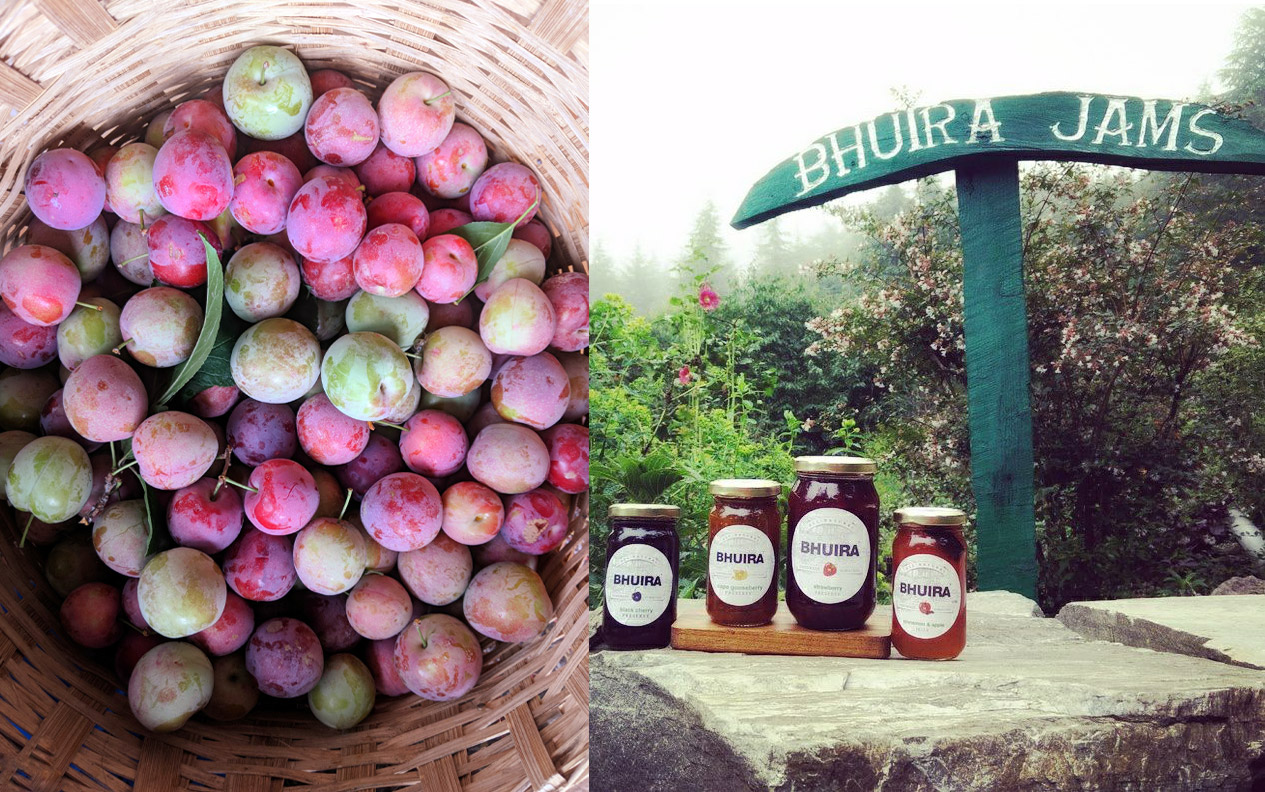
Image – Sudarsan Pattnaik FB Page

Most people might believe writing in stone is better because of its longevity. Those writings on sands are washed away, probably erasing the memory and its significance. However, with sand artists and sand arts increasingly showcasing their skill, the poetry crafted is definitely here to survive the sands of time. 

We all have at some point or the other indulged in sand play. As kids and adults, either by building sandcastles or randomly zigzagging lines on sand. In fact, a visit to the beach is seldom complete without some retrospective ‘sand’ time. It could be passing the sand through our fingers, digging our feet into it, or making mini-mountains for really no reason. The feel and touch of the sand can surely elevate the spirit and its softness and fluidity give a sense of flow and movement. And hence it is no surprise that sand has inspired artists and creative minds all over the world. Sand art has many different techniques and aspects to it. And though the art form has its presence in many parts of the world, Indian sand artists are definitely making a place with their skill and creativity on both the national and international stage. 

What is Sand Art?

What-is-Sand-Art-01

Image Source – Photo by Kit Suman

According to online definitions, sand art is the ‘practice of modeling sand into artistic forms’. These forms include sand sculptures, sand brushing, sand painting, and sand bottles. Each of these forms has its own charm and value. 

Sand sculptures – A sandcastle is a basic sand sculpture. However, artists that make huge sand sculptures on beaches require a bottomless plastic or wood form, into which the sand is poured and mixed with a lot of water. The process is repeated until the sand is totally compact. Similarly, these forms are placed above the base, and sculpting begins from the top, continuing downwards after the top form is removed. Sand sculptures can be made from any type of sand, including quarry and beach sand. However, clay and silt can also be used, so that it’s easier to mold and make the sculpture stand. 

Sand sculptures, unlike stone or bronze sculptures, cannot last for years. In fact, most sand sculptures last only for a few months at most. Several sand sculpting competitions are also held in various places all over the world. One of the finest sand sculptors of India, who has won many accolades and competitions held across the world, is Sudarsan Pattnaik. 

Sand painting – Sand Painting is when colored sand mixed with various pigments are poured onto a surface. The surface can either be fixed or unfixed. Native Americans, Indigenous Australians, and Buddhist Tibetans have mastered the art of sandpainting, which is also often known as dry painting. 

Sand-Painting-India
Sand Painting by Nitish Bharti

Sandpainting has a very rich history and is said to have originated in Native America. Most famous in the Navajo Nation that occupies parts of Arizona, Utah, and New Mexico in the USA. The Navajo sandpaintings are ritualistic and rooted deeply in tribal traditions, customs, and beliefs. The Buddhists in Tibet compose mandalas made from sand painting. This is again a spiritual process where the lamas usually begin the painting ceremony by drawing the outline of the mandala. As days pass the colored sand is layered and poured from the traditional chak-pur or funnel. 

Sand brushing – Sand brushing is the art of ‘brushing’ away the sand grains while creating shapes. It is commonly done in areas where the sand is fine and dry. Animal and human figures and shapes are usually made using this sand art form. 

Sand drawings – These are popular in the South Pacific regions where the sand is volcanic in nature. Artists use a finger to create lines and create abstract art. 

Sand animation – The newest form of sand art to foray into the field is sand animation. A lovely display of a series of images; the artist’s hands alone creates the art. The sand is applied to a surface and the performer uses either a lightbox or overhead projector. The animation is often accompanied by music and a live audience too. 

The Role of Technology in Sand Art

Sand-Arttist-India
Guinness Record for world’s tallest sand castle at Puri beach Sudarshan Pattanaik – Wikimedia

Almost all sand arts are primarily done by hand. Some sculptures may require very basic tools but it is the hands of the artist along with the sand that creates magic. However, due to the very nature of its main ingredient or component, sand arts are hard to withstand the test of time. And thus, one has to acknowledge the role of technology in the spread of sand art. Today, sand artists can click and upload their creations or videos of their animations and their work can easily survive through the years. The longevity of the art is thus propelled by technology which helps it to remain in existence even when the art itself has washed away. 

Social media also plays a big role in generating awareness and pushing sand artists and their creative skills at the forefront for a larger audience to see and acknowledge. Thus, though sand arts have been known to exist in ancient times, technology has a definite role to play in its growing popularity today. 

Sand Art in India – Sudarsan Pattnaik

Sand-Painting-India-Sudarsan-Pattnaik
Image – Sudarsan Pattnaik FB Page

Sand art in India has catapulted and made a place in the hearts of the people. There are primarily two reasons for which sand art is increasingly becoming popular in the country. One is because of the likes of some exceptionally talented sand artists, such as Sudarsan Pattnaik whose sand sculptures have become a medium of expression and creativity. The other is, of course, the use of technology. 

Several sand artists from India are using sand art to create not only aesthetic illustrations but also to express and opine about current social, cultural, and political happenings. A look at Sudarsan Pattnaik’s many works throws light on the artist’s genius. But it also makes it clear that sand art is just not about beautiful figures and castles. His sand sculptures cover a wide range of topics, including pollution, COVID pandemic, saluting police officers, etc. His sand sculptures also center around landmarks, such as the soft landing of Vikram lander on the moon, elections, or commemorating deaths of personalities, such as Sushma Swaraj. In fact, one of the most recent of his works is his tribute to MS Dhoni on the announcement of his retirement. He, of course, holds the record for the tallest sandcastle of the world, in the Guinness World Record at the Puri beach. He has also been awarded the Padma Shri in 2014. 

Sand Art Venues in India

Sand-Art-India
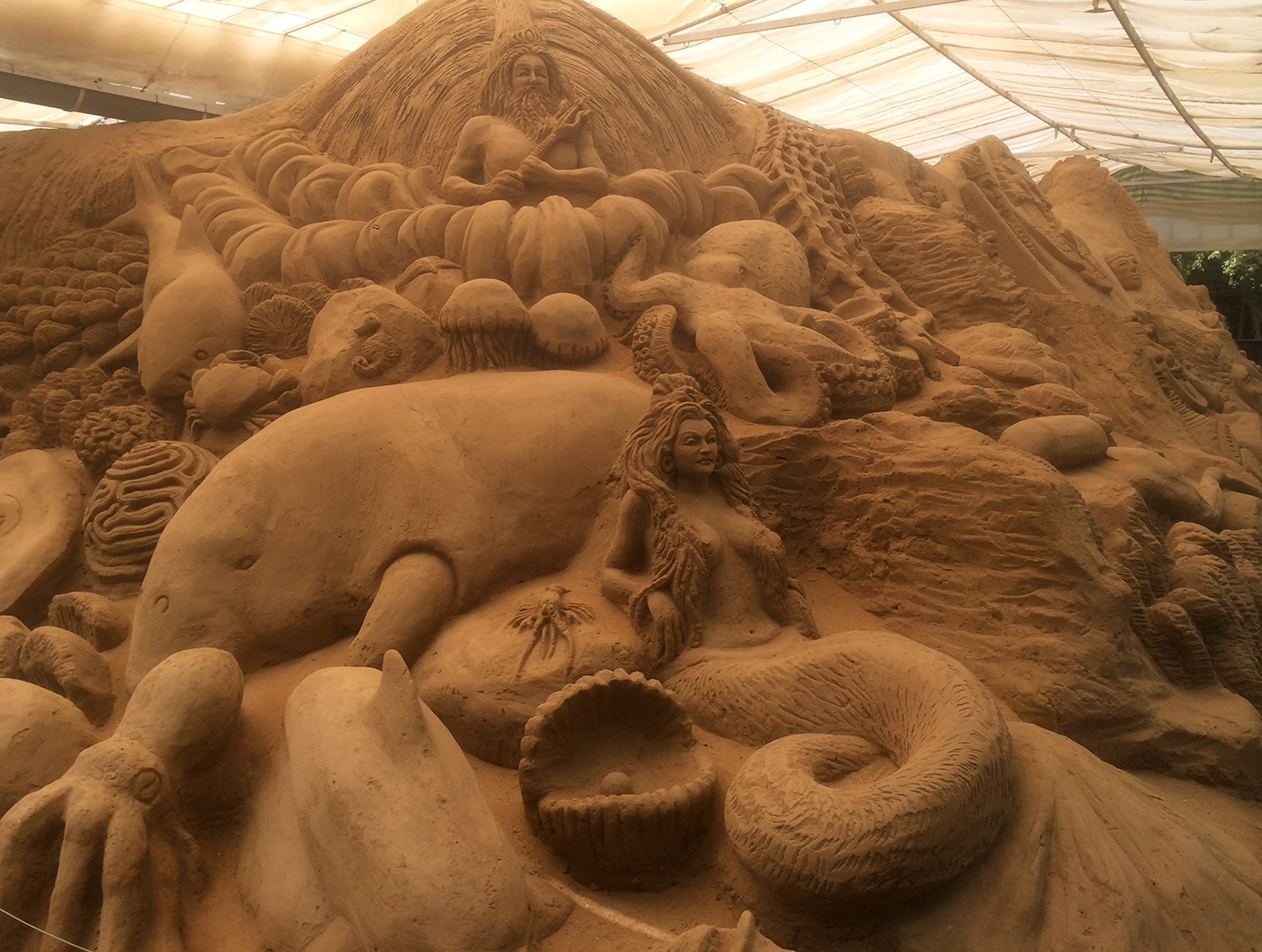
Mysore Sand Sculpture Museum

Where some forms of sand art can be done anywhere, such as sand animation, sand sculptures are usually done on beaches. In India, the two major sand art destinations are as follows:

Puri Beach – The Puri beach in Odisha has become the altar and hub for sand sculpture in India. Sudarsan Pattnaik hails from Odisha and it is here that he showcases his sand arts. He has also opened the Sudarsan Sand Art Institute in Puri. This open-air institute is one of the first in India to train budding sand artists. 

Mysore Sand Sculpture Museum – Located in Mysore, this museum is one of its kind. It is home to several sand models and was founded by M N Gowri. M N Gowri is one of the finest female sand artists of India who has been working on sand art for several years now. 

Sand Art Festivals

Sand-Art-Festival

Besides talented artists and technology, sand festivals can also be credited for highlighting sand arts. Across the world, sand festivals and competitions are regularly held, where sand artists from all over the globe compete and showcase their skills. Some of the prestigious sand festivals and competitions include the Sand Sculpting Festival in Victoria, Australia, the Goa Sand Art Festival in India, the Indonesia Sand Sculpture Festival and also sand festivals held in Canada, Germany, Netherlands, Russia, Portugal, Switzerland, Turkey, UK, and the USA. 

Sudarsan Pattnaik has won many of these competitions, including becoming the first Indian to win the Italian Golden Sand Art Award. He has won accolades in many sand sculpting competitions in Russia, Denmark, Bulgaria, and many more. 

Sand Artists in India

Sudarsan Pattnaik, of course, stands out as one of the leading sand artists in not only India but also the world. However, there are many other sand artists in India, such as Ranjan Kumar Ganguly, Badal Barai, Vivek Patil, Manas Kumar Sahoo, Ronnie Chibber, Nitish Bharti, Manisha Swarnkar, Venugopal, Narayan Sahu, and many more. Most of the younger brigades of artists are exceptionally well versed with sand animation and many more are increasingly finding recognition on social media or throughout media outlets, such as talent shows, etc. 

The sand art forms are thankfully finding recognition as authentic and aesthetic artistic expressions. Sand artists, like other creative minds, are using their skill and imagination to talk about important matters, to address and spread harmonious messages, and using art as means to express, educate and inform people about various issues. However, unlike other major art forms, such as paintings or performing arts, sand art still has a relatively long road to cover in terms of coverage, acknowledgment, and promising new talent. But the future of sand art and its various forms looks exceptionally bright.

Andretta Pottery – Where India Was Introduced To Pottery

1

Even a blind man can appreciate the beauty of pottery

An old Chinese saying

Today, pottery is an established art form in India. If pottery exists today, it is all because of the wear and sweat of one man- Mr. Gurcharan Singh. He is the reason behind its naissance and survival.

Andretta-Pottery
Mr. Mansimran Singh

I was in conversation with the successors of the Master Potter Gurcharan Singh, Mr. Mansimran Singh a.k.a Minni and Shubham Sankhyan who took me back to the early days of pottery where it was still a neglected art form. I was startled by the events that had led to the institutionalisation of pottery in India. It was only after the creation of Delhi Blue Pottery Trust that pottery, as an urban art, culture and profession, found meaning. 

What is the history surrounding Andretta Pottery?

My father Gurcharan Singh was born in 1896, in Srinagar. He had a major in geology which led to his qualitative understanding of ores and minerals. He worked under his father’s old friend, Sardar Ram Singh Kabli, in Delhi who owned a pottery called ‘Delhi Pottery Works’. At first, he was apprehensive to work there; but little did he know that this would become his passionate profession and he would establish the foundation as well as an apex body for studio pottery in India.

The pottery was located on the outskirts of Delhi, where Safdarjang Airport is located today. His visit to Japan to study industrial ceramics stirred his passion to popularize art pottery in India. Although he knew this involved considerable self-sacrifice, he was determined to go ahead. No doubt this involvement and assiduity for pottery earned him the title of Father of Studio Pottery in India.

Andretta-Pottery-01

The first sense of achievement came his way when he started the establishment in the 1950s after Partition. His return to Delhi from Kashmir ignited the launch of the famous Delhi Blue Art Pottery. Over a period of time, he felt the need to get out of Delhi. The reason that caused this inter-state migration was the unchecked and heinous pollution in the capital but also his love for the countryside. He, then, applied to the Central Government for some grants and aid to set up a studio. He received some seed grants from the government to set up a Rural Marketing Center in Andretta, Himachal Pradesh. Better late than never, the State Government and the Punjab government recognised his work and asked him to set up a Pottery Research Laboratory. The Partition repercussions were gigantic, but he knew that he wanted to make pottery available to everyone at affordable prices. 

In 1983, Mansimran, (Gurcharan Singh’s son) and his wife Marry decided to permanently settle in Himachal Pradesh: they started by building the shed to set up Andretta Pottery. They started the Andretta Pottery and Crafts Society, and got engrossed in carrying forward the lineage of pottery by training the local potters. Even though the roots in Andretta were laid in 1961, it was only 1983 onwards that it became an artist’s hub.

This widespread unfurling of pottery won my father some of the most prestigious awards: a silver plaque by the All India Ceramic Society for his services to the pottery industry; he was recognized as the best artist of the year by the Sahitya Kala Parishad; and Padma Shree award from the President of India for his contribution to the field of ceramics in 1991. In 1979, the publication of his book on Pottery in India earned him accolades. 

Andretta-Pottery-02

As an artform in itself, what challenges does Pottery face in India?

The challenges that my father faced were innumerable. His artistic wares remained largely unsold. The Willingdon Airport (now known as the Safdarjung Airport) was constructed and the pottery had to be shifted to the outskirts of the city. The cost of materials was clinging on the higher side because of low market consumption. Raw materials (clay, wheels) were never readily available until my father set up pottery as an artform. It is only since the last 15-20 years that the raw materials have become abundant in availability. However, the rural pottery is on the verge of extinction because the government never pays any heed or any assistance to the village potters. Rural pottery is truly forsaken. 

Shubham added that at Andretta Pottery, every day is a challenge and that’s something that keeps us going. 

What inspires the artwork on the pottery in Andretta?

Shubham revealed that the artwork is inspired by the Himachali Rangoli or the Himachali Kangni Rangoli which is practiced daily in every household. For him his idea of pottery is keeping the local heritage alive by learning the local style of working with the local materials.

Mansimran sir also contributed by telling me about an important element which is the difference between art pottery and commercial pottery. In commercial pottery, each one of the thousand pieces looks exactly alike. In art pottery, each piece is different from the other, it is unique from the others. Andretta pursues the latter.

Andretta-Pottery-03

What is the relation between you and Shubham?

Shubham’s father, Jugal Kishore worked for us. About 5 years back, he died of a massive cardiac arrest. Back then, Shubham was studying aeronautical engineering in Delhi. In the second year of his study, when his father passed away, Shubham started to fend for his family. He became the carrier of the Andretta legacy when his father passed away. He took over and since then he has been a good PRO. He is now doing well for himself. He has been managing this place for over 6 years now.

What materials are used for Andretta Pottery?

Shubham briefed about all the materials that are used in making pottery. He explained that there are different types of rocks which are collected and then turned into the clay for the pottery.

That is just when Mansimran sir revealed the materials that were used by his father included experimentation with glazes such as eggshell white, grey and white and grey slipware and some of the pots made were a recollection of Persian or Middle Eastern pottery models.

Andretta-Pottery-studio

Do you hold workshops? If yes, then when and what are the costs?

We do hold workshops and the following are the details: For a day workshop, it costs one person 2k. We also have an extensive 3 months workshop that would cost you around 1.5 lakh. The two Pottery Studios in Delhi are located behind the Safdarjung Hospital in Delhi Blue Apartments and on MG Road by the name of ‘Sanskriti’ which are, for now, shut till the end of December.

How far has Pottery come?

There was a time when gathering raw materials was tough. Finding students that would want to study the art of pottery was tougher. My wife and I taught our first student in 1987. And now we have come this far that many of our students have set up their own pottery sheds: one is in Dharwad (Karnataka), the other is in Bombay and another one is in Pune. In Pune it is named as the Curators Of Clay. If you want to start your own pottery studio, the initial investment that you would need is around 3-5 lacs.

As an ending note, Mansimran sir spoke of all the efforts of his father who made art exhibitions for pottery a tradition. His father would always say, “The human eye and the human hand are always subject to an element of error, and in this error, is the beauty of creation. The artist’s work will speak for itself-it is signature enough.” His work is also exhibited at the Indian Habitat Center.

Andretta-Pottery-Products

My father and everyone’s ‘Daddyji’ (everyone referred to him by this name at the Delhi Blue Studio) because of his patronising nature and the familial environment he created for everyone, he was the National Potter of India. He was a potter before most of us were born. Anyone who has worked with him would recall his hands that were clay-ed for most parts of the days and this was a metaphor of his resolution and perseverance of staying engrossed in Pottery. He will always be remembered for his entrepreneurial spirit and his creative praxis. His enriching story will live with us in perpetuity. Whenever pottery will be talked of, his name will come up like these two were irreplaceable entities.

Exploring the Exhilarating Art Forms of Kerala

2
Art-Forms-of-Kerala
Image – Anantha Krishnan

Kerala is a land of exhilarating and breathtaking beauty. Composed of paddy fields and lined by coconut trees, with a gentle touch of the forests, it is no wonder that Kerala is recognized as”God’s Own Country.” Set in the southernmost part of India, Kerala is a state where the laws of unity, tranquility, and harmony reign supreme. As a state which reserves high esteem for its rituals and traditions, Kerala has succeeded in preserving its Artforms through centuries. Thus today, Kerala hosts several unique Artforms, which have all passed the test of time and still find audiences among the young and the old alike. From the vibrant Kathakali, which speaks through subtle expressions to the Ottamthullal, which provides social commentary through its lyrical narration, Kerala is home to some of the exuberant artforms of the world.

1. Kathakali

art-forms-of-kerala Kathakali

Any discussion on the art forms of Kerala must undoubtedly begin with the great Kathakali, the symbol of Kerala’s rich heritage. Kathakali is the finest of all art forms prevalent in Kerala and is rightly counted as the icon of the state. Kathakali employs a vibrant mix of exquisite makeup, music, and costumes for its performance. It uses music, mudras, and the facial expressions of the performer. The movements of the eye and the coordination between the music and hand gestures are quite critical in deciphering the meaning of the action portrayed.

The artform narrates stories from Indian epics in a unique manner with the help of specific mudras. Hence to comprehend the meaning of the act performed, one must be well versed in the epics. In this art form, every minute detail is of utmost importance, from the colour of the costume to the subtle facial expressions; every element contributes to the interpretation of the act portrayed onstage. Kathakali is the most distinguishing factor of Kerala and attracts art lovers from every corner of the world.

2. Kalaripayattu

Art-Forms-of-Kerala-Kalaripayattu

Known popularly as the “Mother of all Martial Arts” in the world, Kalaripayattu is believed to be the oldest of all martial art forms. A method of warfare that is said to have originated in Kerala, about three centuries ago, Kalaripayattu is an art form that will keep the viewer thrilled and engrossed throughout the performance. A defensive art form, Kalaripayattu, is said to be an antecedent of popular martial arts such as kungfu. From yoga to healing, it encompasses several disciplines.

Kalaripayattu uses a wide range of weaponry, including sharpened knives, urumi (flexible sword), long staff, sword, and shield, among others, based on the experience and ability of the trainee. Besides being a Martial art, Kalaripayattu also focuses on unifying the mind and the body of the performers. It lays stress on the flexibility of the body and the concentration power of the participants. It is a stunning visual treat and should be experienced by everyone. The quick-paced movements, extreme focus, and the stunts are sure to keep the viewers at the edge of their seats.

3. Ottamthullal

Art-Forms-of-Kerala-Ottamthullal
Image – muffinn via Flickr

Often characterized as “the poor man’s Kathakali,” Thullal has an interesting tale about its origin. Kunjan Nambiar, who had unintentionally dozed off during a performance of Chakyar Koottu, was ridiculed by the Chakyar. In reply to the ridicule, Nambiar created the art form of Ottamthullal, which discusses social and politically relevant issues. Unlike all the art forms discussed till now, Ottamthullal involves only one performer, who gives out a solo performance.

Ottamthullal is a mix of humorous and witty dialogues sung lyrically. This art is a delicate composition of dance, music, vibrant expressions, colourful costume, and light-hearted humour. Unlike the other forms of art such as Kathakali or Kutiyattam, Ottamthullal can be viewed and understood by anyone. Also, unlike the other artforms that take months of practice, Ottamthullal gives the performer freedom to improvise. The lyrical narration that accompanies the dance is greatly coordinated with the latter; the recitation is mostly lyrical and poetical giving the viewer a unique and brilliant experience.

4. Kutiyattam

Art-Forms-of-Kerala-Kutiyattam
Image – Paul Varuni via Flickr

Kutiyattan is an ancient performing theatre art believed to be at least a thousand years old. It is perhaps the only surviving theatrical art form that is based on the ancient Sanskrit theatre. The word Kutiyattan, which means “performing together,” itself gives us a glimpse of its content. The actors of the stage use tenuous makeup, which itself takes quite long to complete and wear elaborate costumes. Like in Kathakali, every single shift in the facial expression or a slight movement can depict the inner thoughts and conflicts of the character on stage.

Due to its universality and rich heritage, Kutiyattan has been recognized by UNESCO as “a masterpiece of the oral and intangible heritage of humanity.” The actors are required to undergo rigorous training of about ten to fifteen years to be deemed a professional. The actors elaborately portray every single situation that the character encounters. Apart from the serious characters like the Chakyar and the Nangiar, Kutiyattam also hosts a comic character named Vishakha, who gives out humorous lines and speaks in Malayalam, while the other characters use Sanskrit. Kutiyattam is one of a kind of drama that should not be missed if one visits Kerala.

5. Theyyam

Theyyam-Folk-Art-Kerala-02
Image – Dhruvaraj S via Flickr

“The Dance of the Gods,” Theyyam is an art form that is said to have been originated from northern Kerala, most specifically from Malabar. It is performed to offer worship and devotion to gods, and hence, it is a kind of a divine art form. The performer usually wears an elaborate costume, mostly coloured red. It is believed that the spirit of the deity is transferred to the performer during the performance. Theyyam is primarily performed in the months between November and December in the north Malabar region mainly, Kannur, Kasargod, etc. The art form is said to be at least 1500 years old and is performed with much reverence and held in high esteem all over Kerala’s state.

6. Mohiniyattam

Mohiniyattam-Information
Image – Ramesh Lalwani via Flickr

Mohiniyattam is a dance form usually performed as a solo performance; it is also based on the subtle facial expression, hand gestures, and body movements, all of which coordinate to narrate deep meanings to the audience. The dancer is usually clad in a simple white sari with golden borders and seeks to represent the usual dressing style of a Keralite woman. Mohiniyattam is an amalgamation of some of the essential elements of Bharatanatyam, Kathakali, Kutiyattam, and Koothu. The musical component of the art form is sung in Manipravalam, a mixture of Sanskrit and Malayalam.

Regarding the other art forms of Kerala, Mohiniattam employs simple and elegant costume and makeup but is not a bit less mesmerizing. The mudras and gestures used in Mohiniattam can signify particular objects and things and are employed to tell a story. Hence, more than just being a dancer, the performer engrosses the audience by narrating the story through her elegant and subtle movements. Mohiniyattam is the soul of all the artforms of Kerala and is one that should never be missed.

7. Chakyar Koothu

Art-Forms-of-Kerala-Chakyar-Koothu-01
Image – Saundarya Srinivasan

The art form is quite ancient but has been successfully transferred from one generation to another. In the olden times, Chakyar Koothu was only performed by the people of the Chakyar community. The Chakyar was the court jester and hence was free to criticize the actions of the king. In modern times, Chakyar Kooth has taken on a new colouring as it represents the mythological and epics in a rather interesting way. Chakyar Koothu embodies humour and uses it to engross the audience to the act. Apart from the solo performer, Chakyar Koothu involves two other instruments, the Mizhav, and the Edathalam. Like Ottamthullal, Chakyar Koothu is also a kind of social criticism and satire of the social situation.

8. Pulikali

Art-Forms-of-Kerala-Pulikali
Image – Saurabh Chatterjee via Flickr

Pulikali is a street art form that is enjoyed far and wide in Kerala at the time of Onam. To perform this art, performers and artists apply black and orange paint on their bodies to resemble a tiger. The other performers will be dressed as hunters. The whole idea behind Pulikai is tiger hunting, and the performers enact the role of the tiger and the hunter in accordance with the music provided. The performance is quite exhilarating and exotic; the viewers are in for a visual threat. Mostly Pulikali takes place on streets and is considered to be a folk art of Kerala. The quick-paced movements and the fast-paced music accompanying the performance add a sense of thrill to the performance. Pulikali is also an art form that is admired by people all over the world.

9. Padayani

Art-Forms-of-Kerala-Padayani
Image Wikimedia

Padayani is a ritual art form performed in the temples of Goddess Badrakali in Kerala. The Artform narrates the story of Goddess Kali’s victory over the Demon, Darika. The performer wears colorful and vibrant masks and Kolams which represent various Gods and Goddesses. Padayani is also performed to thank the Goddess for the harvest. The performance is spectacular and embodies in it, elements from different art forms across Kerala. It bears a considerable resemblance to the Artform of Theyyam.

10. Kummattikali

Art-Forms-of-Kerala-Kummattikali
Image – Wikimedia

The Artform of Kumattikali is mostly performed during the festival of Onam, the state festival of Kerala. The performers wear an outfit that is specially made from a type of grass called Kummattipullu. The colorful and painted masks depict characters from Indian Mythology. The dancers move from house to house, collecting presents from each. Kummattikali is most prevalent in the Thrissur district of Kerala. The performance is accompanied by music from a unique musical instrument named “Onavillu.” .Kummattikali is an art form that is inherent to Kerala and is sure to provide a memorable experience to the viewer.

11. Thiruvathira

Art-Forms-of-Kerala-Thiruvathira
Image – Syam Subramanian via Flickr

Thiruvathira is also an art form that is based in Kerala and performed during Onam. On this particular occasion, women dress in traditional Kasavu saree and dance in a circle around the Nilavilak. The dance is quite graceful and has tender and elegant movements, with the rhythmic clapping of hands. Unlike the artforms discussed above, which require strenuous training and years of experience, Thiruvathira is played by every woman. During the Onam season, each house would host a Thiruvathira in their compound and be considered a quintessential part of Onam celebrations.

Bhuira Women And Their Romanticism With Jams

9

Bhuira-Jams

The charm, the tranquility and the serenity of the mountains, lit up with the titter-tatters, guffaws and squabbles of the women inhabitants describes the quintessence of Bhuira. Amidst the bewitching landscape lives long a history of womanhood and their romanticism with jam.

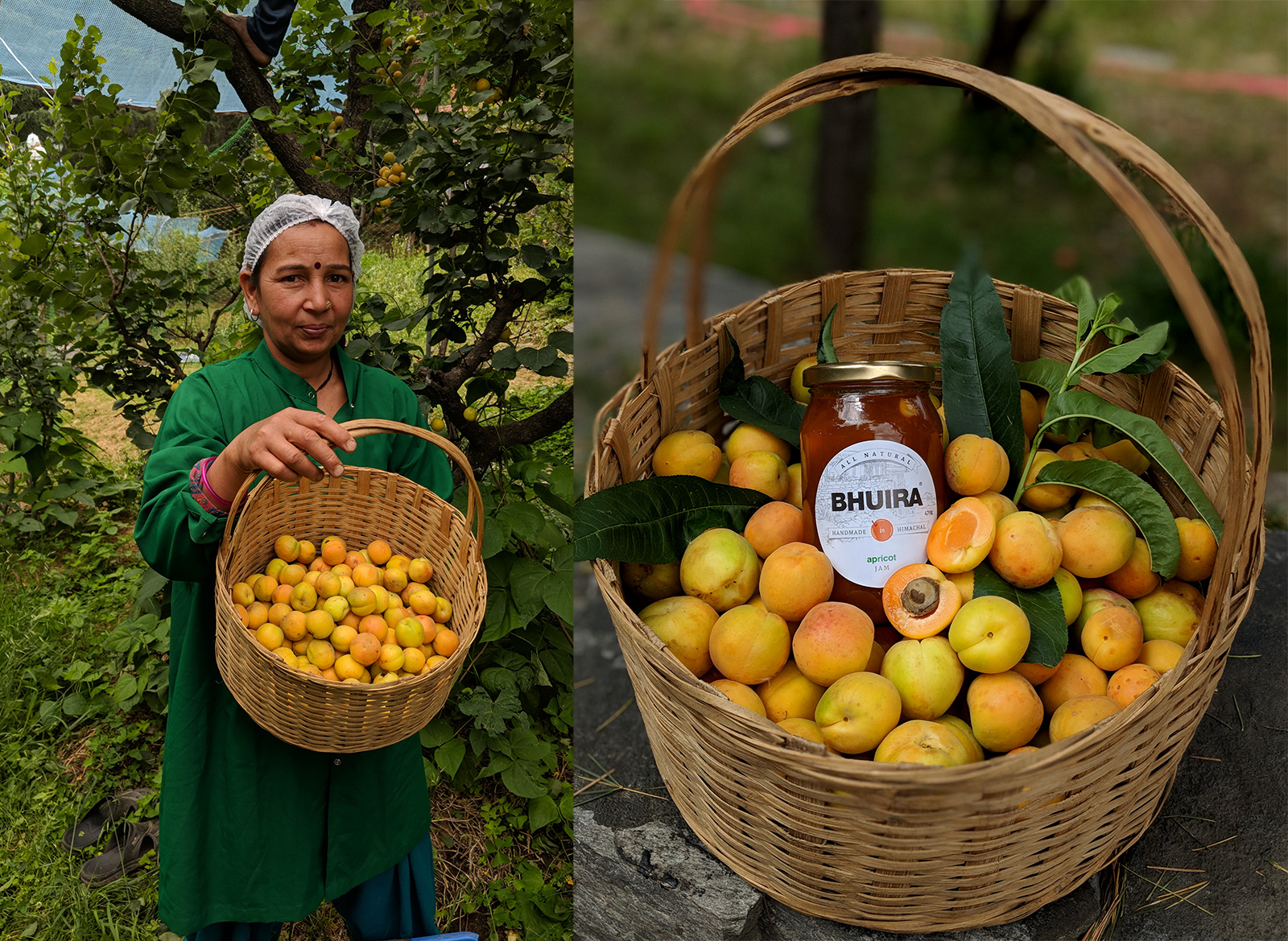
Meet Linnet Mushran, the woman who built Bhuira Jams a success story. She calls herself an accidental jam maker. Originally, she didn’t draw any blueprint to build a business or to empower her fellow village women. It started with a simple concept of saving the Fruit. 6 years ago, Rebecca Vaz Mushran embarked on the journey of managing and preserving Bhuira as Linnet’s successor. She quit and shut down her baking company in Mumbai as it was humanly not possible to run two different businesses in two different states. 

I spoke to Rebecca and learnt that:

What is the story behind Bhuira Jams becoming a household brand?

Linnet Mushran set up Bhuira Jams 22 years ago, in 1999, in the village Bhuira. Linnet who is British by birth met her college sweetheart Viney in Scotland where they were pursuing their education. She came down to India to marry Viney and on her first trip to India, they got engaged. She was a charismatic figure void of any cultural shocks that came her way. She wholeheartedly embraced the culture and immersed herself in its beauty. Her first stay was in Bihar- it was where her husband was posted then. With her uncritical nature, she blended in well.

But she knew something was absent. Linnet grew in the quaint hills and thus, the nostalgia stayed on. When she discovered The Bhuira Family Home in Himachal Pradesh, without much ado, the Mushrans bought it from their relative so that it stayed in the family, forever. At first, the home was in a dilapidated state which needed fixation. Linnet undertook the responsibility and made it a home to feel alive in. 

Bhuira-Jams-Owner
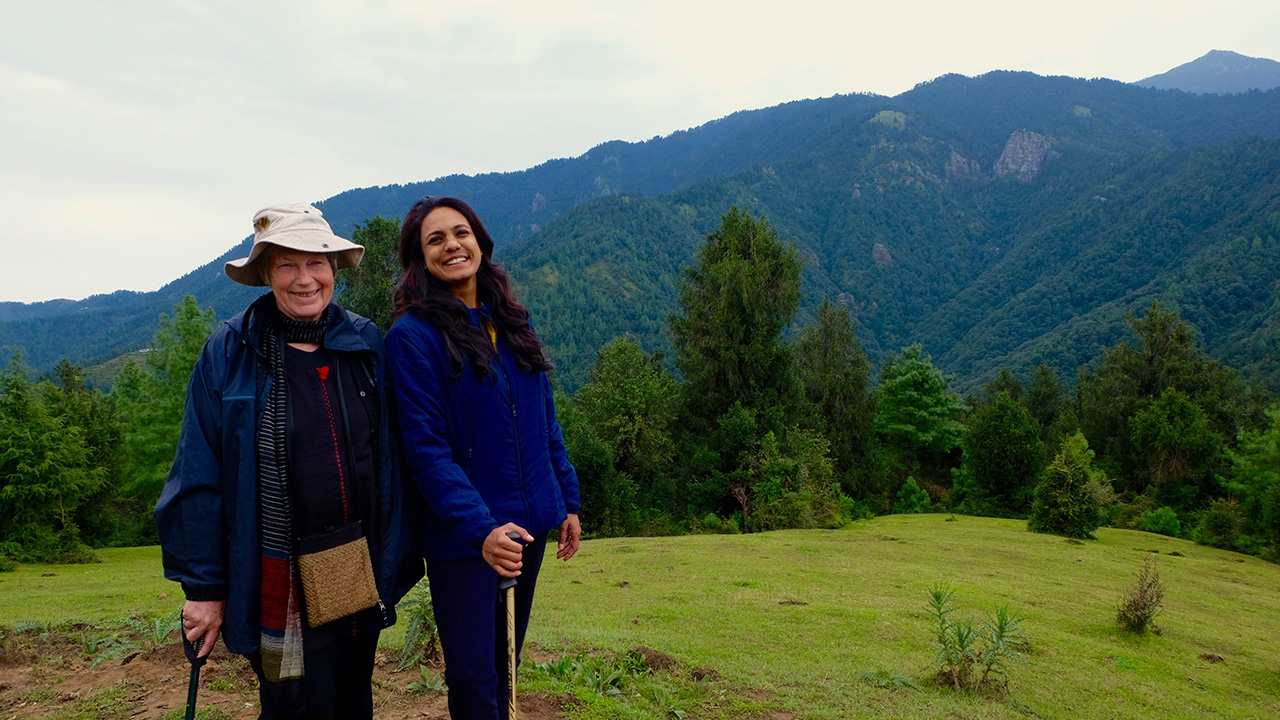
Linnet Mushran & Rebecca Mushran

In her orchard, the apple trees were the apple of her eyes. The windfalls were often neglected so she would collect and restore them to make jellies just as her mother made them when she was young. Hence, the first ever preserve born was an apple jelly. The fondness and nostalgia were the reasons behind the first experimental product.

She found solace in the process and the next thing she knew was that she was unstoppable. The peaches and the plums became her next jam jaunts. She would ask one or two women from the village to come and offer her a helping hand and in return, she would reimburse them for their time and effort. 

We Recommend…
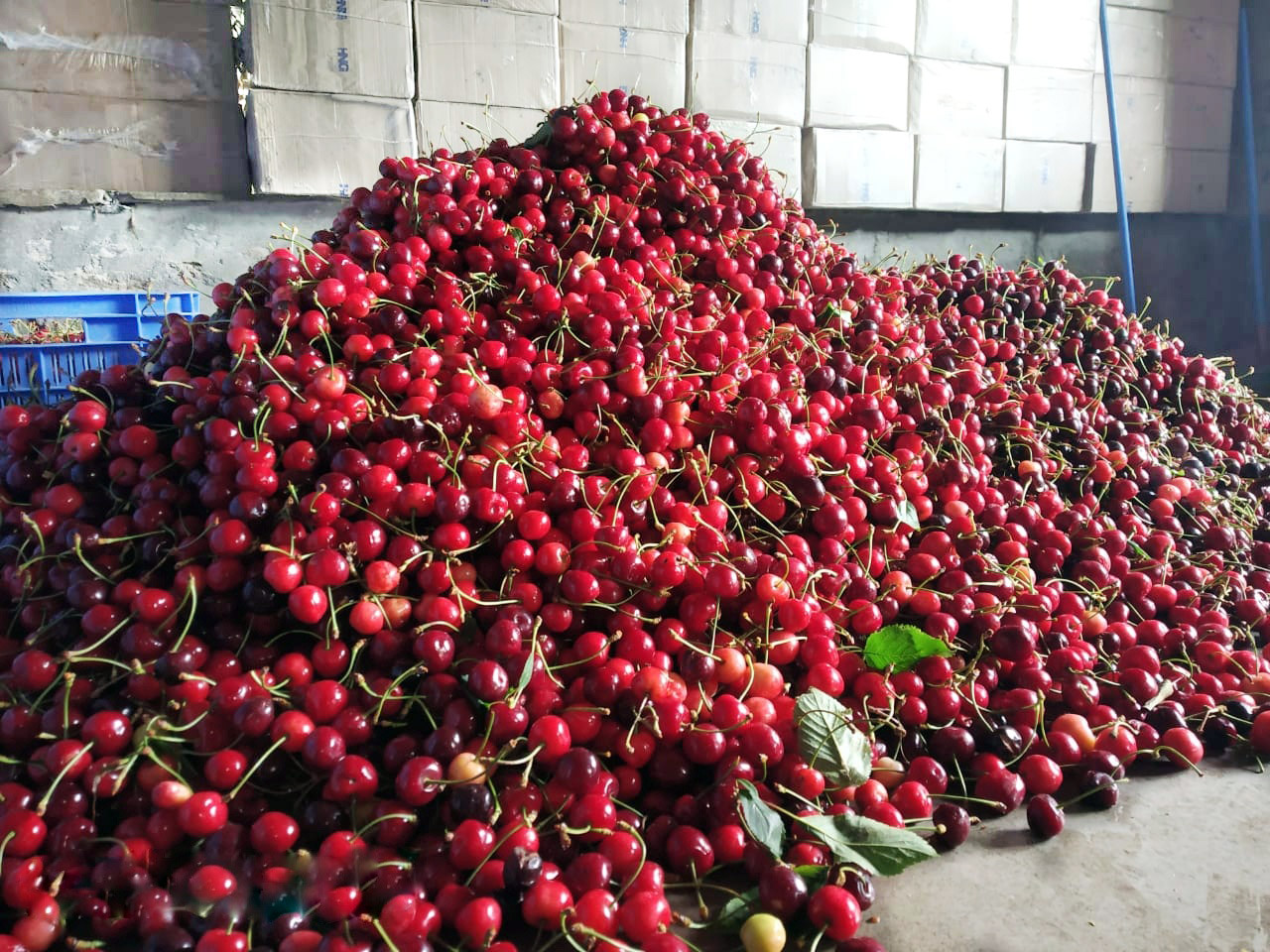
Bhuira Black Cherry Preserve

A few observations changed the course of her homely venture into a business of hope and ownership by these women. 22 years ago, she realized that these women had no separate identity of their own. They were solely dependent on either the sale of their crops or on the incomes of their husbands for even their basic survival. Even with the cash they earned in the jam making process, they spent the money on either their children’s school shoes, books, school fees, a new mattress for the home. Not a single penny was spent in their favour. This compassion was enough for Linnet to embark on a journey of jam making and making them a part of it.

In 1999, she set up her scone factory which was originally a ration shop. The shop’s popularity went for a toss when the villagers got access by the bus to buy a selection of goods from the city. Her first sale was made on a Friday at Kasol’s Gupta Stores and to her surprise, by Sunday all her jam bottles were sold out! This sudden likeness for her jams by the consumers built her confidence and so began the Bhuira Jams’ journey.

Bhuira-Jams-Fresh-fruits

The nearby farmers distinguished the abnormal growth of the jam business and volunteered to sell their fruit to Linnet. Today, all the farmers supply their fruit to us. The transportation cost back then was a hazard for the farmers which is why selling fruits in their village seemed sane. So Bhuira Jams became the point of bridging the gap between these farmers and the marketplace.

This symbiotic relationship between the land, the fruits, the farmers and the women inaugurated the journey at Bhuira Jams. The continuous ripple effect has been behind the success of the business so far. The livelihoods of farmers, the transporters, the postmen, the welders, the electricians, the plumbers and most importantly, the women of Bhuira have been the most benefited from Bhuira Jams. 

We Recommend…
Bhuira Strawberry & Rosemary Preserve

Bhuira has two factories: one just across the house and the other half an hour down the mountain in another village called Himarpur. Women of that village are employed in the factory there so this multiplies employment opportunities for them. Also, Bhuira has now become a tourist sight and has opened an arena of new opportunities. For instance, 5 kms down, there is a resort, a campsite and a center of cultural workshops called Rilung Foundation. 

How do you recruit the women at Bhuira?

Our staff is now 20+ years old. Our women are extremely intelligent, capable, independent, self-sufficient and well-witted. We often recruit young girls, we train them and form a familial relationship with them. But sooner or later, they get married off and mostly are wedded to a groom in another village. Certainly, we are happy for them and we celebrate their new journey, but the replacements are hard to find. They are always so good at what they do, which explains our melancholy! 

Bhuira-Jams-factory

But a sense of achievement is felt when these young, married women return to Bhuira as they didn’t want to stop working here. As they have confessed frequently, jam factory gave them the emancipation that they always looked for. It gave them a sense of social standing in Bhuira and their earnings were a reward to them. They made a pact with themselves: either they get married in the villages close to Bhuira or the partner would move to settle in Bhuira! This may sound paradoxical to an Indian perspective but this actually happens here. Some even move between districts to intern with us. 

The documentary ‘Out Of A Jam’ is a heart-warming ode to the recognition of the confidence, the self-sufficiency and the self-dependence of extraordinary women who found their solace in the fruit of their village. This award winning documentary won awards and accolades at the Indonesia Film Festival and the Los Angeles Film Festival.

What are the challenges that women face at Bhuira?

The remoteness of the place poses the first few major pitfalls. It takes an entire day to reach the factory. Not to forget, the threat of landslides and roadblocks during monsoons add to the complications of these mountainous terrains.

A major challenge for me was to garner the confidence of these women. Linnet’s mystique was unmatchable and I had no intention to replicate it. I wanted to build an altogether new relationship with the women of Bhuira. 

The menacing nature of the investors, bankers and potential partners undermined the spirit of womanhood in Bhuira and rendered it as any other business. The fictitious nature of the investors to modernise the place with swanky new equipment which was something Linnet would never favour. Her desire to blend with the architecture of the place contradicted these inconsiderate proposals. 

But this blunt comment from one such investor gave me sleepless nights and the next morning, the first thing I decided was to install chairs and tables for my women. The criticism was destructive but i knew i couldn’t let this affect my Bhuira family. However, I didn’t want to refashion their age-old practice of sitting on the floor or on haunches so I left them with their choice. One has to understand where they come from which the investors and bankers couldn’t. In conclusion, we decided that we will never outsource or tie up with investors.

We Recommend…
Bhuira Jam Strawberry Preserve

Another challenge was to make the women believe that they are worthy of authority and managerial skills. The installation of empowerment was a big challenge. Back in 2011, when I was diagnosed with cancer, I went to Bhuira for my recovery. I discovered the metaphorical similarities between the women at Bhuira and me: it was our mutual love for the hills and our solace found in the jam process. The sway of fresh air and the connection I developed with the women in Bhuira was crazy because they were not very open to metropolitan mingling. Yet they let me inside their periphery and accepted me at Bhuira. At first, I had no intention to get involved with their operations as I am today, but the small, friendly gestures from their side pulled me in the family.

How do you do your bit towards the empowerment of these women?

Our women are incomparable and invaluable. Bhuira is officially incomplete and dead without their involvement. All one needs is a consolation from someone that someone believes in them, which Linnet assured them 22 years ago. And this explains that despite me residing in Mumbai and Linnet residing in Delhi, Bhuira is well managed and equipped by the women there. I learnt that delegation is an indelible part of the business. It requires you to put your trust in people and give them responsibilities that they are answerable to.

The spark and the enthusiasm in the women to make themselves stand out, the fierce yet friendly competition with one another and the participation in huge numbers is enough to commemorate the empowering force within them.

We Recommend…
Bhuira Jams Bichhua Mango Chutney

Are tourists allowed to visit Bhuira Jam Factory?

We don’t have a huge space for workshops yet, and we also don’t have enough personnel. However, 5 kms down the line there is a beautiful resort named ‘Mist N Meadows’ for a peaceful stay. The glass windows of our factory and the close proximity allows easy viewing of jam making processes. One can see the view from the resort while sipping their tea. Under the aegis of FSSAI, the entry of visitors within the periphery of the factory has been forbidden.  

However, you can have a second-hand, closer look at the packing process and also buy jams, preserves, jellies, marmalades and chutneys on display at a factory discounted price. The visitors take a mindful stroll in the garden of fruits and flowers, through the snowy and incredibly tall mountains and come back to rest at the resort. 

Bhuira-Jams-01

Another reason why visitations have been limited are because of the tourists’ apathy and aloofness to the beautiful surroundings. The act of plucking raw fruits and flowers, extracting plants from the roots and the unsettling behaviour with the women of Bhuira passing unsolicited comments have made us have dogs as our additional family members. Now we are unafraid and more solid than ever! (Chuckles)

What is in store for us in the future?

We are working on a No-Added Sugar Range which will be soon out in September. We will be launching the same through Amazon (pan India). It is a well known fact that the fruit has its own sugar fructose so the sugar element cannot be eliminated completely. Hence, to break the ice, it will not be a non-diabetic range but no additional white sugar will be added. It will be full of fruit, its juice and the pulp with interesting options for you to choose from.  

We Recommend…
Bhuira Jams Bitter Orange Marmalade From Himachal

Linnet and I will forever be indebted to Bhuira for our workforce without whom Bhuira is empty and dead. We would want this companionship to last forever and our romanticism with the jams to bear fruit. We wish to be the powerhouse of empowerment for our women and we also want this movement to expand to every nook and corner of this country. These women’s position from a bread maker to a bread earner have made them realise that they hold a paramount position in their family and in the village. 

You can order a variety of products like jams, jellies, preserves chutney and marmalades from the following links.

https://bhuirajams.com/

The Historical Ruins of Nalanda: Exploring the Ancient University’s Architecture and Philosophy

5

Author – Pranay Dwivedi

History-of-Nalanda-University

The Nalanda trip was my first experience with Bihar. My college fest had ended, I needed a break, and the “let’s go somewhere” idea of my friends, made us catch the 2:30 AM train from Varanasi to Nalanda. I had read about the ruins of Nalanda in my history textbooks in school but hadn’t heard anything about the place after that. I didn’t Google a single thing before embarking on the trip. I wanted to surprise myself and indeed, I got my first one next morning at Nalanda junction.

Perhaps, we stopped at some outer area of the junction, but there was no bridge to cross the track, open fields spread out for kilometers and kilometers, small mud-brick houses, and an isolated railway junction. We crossed the railway track with some local ladies and a narrow route going between the small houses, took us to the highway.

I’ve been to numerous historical places, like Delhi but it was nothing like the capital, at first sight. Fortunately, a well-constructed road and a rickshaw took us to our destination, “The ruins of Nalanda”.

Nalanda-Railway-Station

To my extreme amusement, a friend of mine wondered that since it was not a Sunday, there must be some students and a crowd on the University campus! We all couldn’t help but laugh at his innocence.

So, if you are also like my friend who thought that Nalanda University is housing students and academic facilities, let me tell you that, Nalanda was a prestigious center of learning from the 5th century CE to 12th century CE, often acknowledged as “the first residential university of the world with 10000 students and 2000 teachers residing in the campus”. It was a famous Buddhist monastery, where thousands of Buddhist monks used to live, learn, and practice their religion. It rose to its legendary status due to the emerging power of the Indian subcontinent and its influence on the world. 

nalanda-viswavidyalaya

For travellers who have a thing for historical ruins or architectural masterpieces of our past, Nalanda is a must-visit. The beautiful architecture and history behind it, provide a sense of belonging and splendour, which is unique to this place.

The grand complex (believed, that a large part is yet to be excavated) contains red-bricked monasteries, stupas, temples, classrooms, and hostels of the past.

Every brick of the majestic architecture makes you wonder about how it would have been filled with so many students a millennium ago, and what kind of knowledge, teachings, and lifestyle would have been in practice here. It is believed that students at Nalanda used to learn texts of Buddhism, Vedas, logic, Sanskrit grammar, theology, philosophy, law, astronomy, and even city-planning.

nalanda-university-history
A map of the excavated remains of Nalanda. Cpt.a.haddock

The university flourished, as an establishment, under the rule and patronage of the Gupta Empire and King Harshavardhana of Kannauj. It attracted scholars and Buddhist monks from various kingdoms, and foreign nations like China, Korea, Tibet, Japan, Indonesia, Persia, and Turkey. It is believed that there existed a large library in the complex with hundreds of thousands of volumes of manuscripts. These manuscripts were not only religious, but they also contained texts on grammar, literature, astronomy, astrology, etc.

The university saw its downfall in the 12th century with Turkish invasions and gradually, its buildings were ransacked and set on fire. Many of its monks and scholars were killed, and the rest of them fled the campus.  

who destroyed nalanda university

There are a lot of legends and theories about the destruction of such a prominent site of knowledge, education, and learning. Even today, many buildings and sites have a sign of damage by fire displayed on them. According to a popular legend, when the invaders set the great library on fire, it kept burning for 3 months because it had around 9 million manuscripts at that time! It is thought that the demise of Nalanda, was somewhat predicted by the slow decaying of Buddhism in India. The slow disappearance of Buddhism in the region served as a premonition to the forthcoming demise of Nalanda.

Now, the complex contains ruins of its glorious past. The vast remains of Nalanda expand around 1600 ft. north to south, and 800 ft. east to west. The red-bricked monasteries and temples, pathways, and compounds keep the magnificent history of such a beautiful and prestigious place alive. Even some of the manuscripts that were saved by the fleeing monks, live on today in various museums and cultural centers across the world. 

Nalanda museum is located near the site that contains hundreds of excavated artefacts. Near the ruins, there is a temple of the Black Buddha, where a black-coloured sculpture of Gautam Buddha, which was also excavated from the site, is placed. 

nalanda-university-trip

Nalanda is a mystery and a great symbol in itself. It is a place that witnessed profound knowledge, discipline, and glory and at the same time faced bloodshed, fire, and destruction. All these emotions are present in Nalanda’s air. Pay a visit to this UNESCO World Heritage Site and experience the splendour of its complex, beautiful past. 

And yes! There is a Nalanda University that is packed with students, faculty, and academic facilities. It is located near Nalanda in Rajgir, Bihar. Established in 2014, it has been designated as an “International Institution of National Importance” by the Parliament and commenced classes from September 1, 2014. It was constructed recently and is quite different from the ancient Nalanda University. So, my innocent friend was not that wrong, I guess?

Uramma Heritage Homes – Practicing Diverse Art Forms, Ecological Programmes And Local Crafts

0

Uramma Heritage Homes is named eponymously after the legend of Uramma, the village Goddess. She is considered to be a reincarnation of Devi Durga. While the folktale of Uramma is narrated differently all around India, I prefer to cling to the version as retold by Ms. Shama Pawar, the mastermind behind the Heritage Homes. Uramma was the village goddess and guardian who was worshipped only by a priest in this heritage home. Meanwhile, the inhabitants of her own village critically dishonoured and ignored her. It is believed that this negligence and disrespect made her curse the entire village into a land of retrogression and decline.

25 years ago, when Shama heard the story, she relished it immensely. Next, she knew that she wanted to buy the property and restore it. She knew she wanted to bestow Uramma Devi the respect she never received and simultaneously, foster care for the village where Uramma resided once. And it is safe to say that she achieved it all by the grace of Uramma Devi. 

Ms.-Shama-Pawar
Ms. Shama Pawar

As a social entrepreneur, the first step towards restoration was paying homage to her inspiration. She got the statue of Uramma installed, and thus, the journey  of the Uramma Heritage Homes (UHH) began. UHH is based in the historical settlement of Anegundi and the settlement dates back to the 8th century. The bank of the river Tungabhadra is an irreplaceable sight in itself that people come to visit often. One can find three types of properties in Hampi under UHH: the first being the Uramma Cultural Residency or Uramma Cottage; the second, Peshegaar House Homestay; and third, Uramma House Homestay

Connecting to the Roots

Uramma-Heritage-Homes-Hampi-06

Uramma Residency involves the following disciplines and interesting crafts by master and local artisans and craftsmen: photography, painting, sculpting, working with traditional carpenters, communicating and designing, product designing, architectural conservation and documentation, apparel and lifestyle designing, culinary arts, tailoring, weaving, basketry, folk dance and art, public space concepts and events, ecological interests like local flora-fauna, bird watching, studies of traditional systems in agriculture, irrigation, recycling, organic farming and so on. 

Under the banner of the Kishkinda Trust, Shama, along with her team have been following the vision of social and economic empowerment achieved through self-sufficiency in various R&D programmes in conservation and sanitation; preservation of the cultural, architectural, historical and festive patrimony; and sustainable integration with the people of the land. Also, an in-house crafts boutique exists on the property which showcases the unique items made from woven banana fibre and water hyacinth and local textiles.

Uramma-Heritage-Homes-Hampi-05

A dichotomy is achieved between the sustainable practices at Uramma and the employment of the village locals, who by the way, have received training in hospitality. This has, in due course, built their individual capacities. Women’s self-help groups are also promoted that are engaged in their catering, crafts, garments, culinary etc. An amalgamation of social programmes like a policy of zero plastic, putting in place solid waste management systems and planting and maintaining trees as well as homegrown crops have been put into practice through the utmost dedication of everyone at work. 

These properties balance the unique combination of rural hospitality and modern amenities. She also adds that all the profits earned from the Residency goes towards supporting various creative industries, as well as contributing towards strengthening sanitation systems for the historic settlement of Anegundi.

Uramma-Heritage-Homes-Hampi-03

Best Time To Visit UHH- All Year Round!

Even though Hampi is a hot and humid place and the best time to visit Hampi is from October to February, UHH welcomes tourists all round the year. Summers are, however, not the best peak months except the clean, breathable air. Some tourists bless the place during summers as well so that they can escape the crowd during the busy winter months. One thing that she reassures is that anyone who comes here will immerse themselves in a world of folklore, nature and rural life and detox from the urban galore for a while, no matter when they decide to come.

Uramma-Heritage-Homes-Hampi-07

Facing The Challenges And Overcoming Them

Recently, the challenges have been endless for UHH. Since the last two years, tourism has been badly hit in India. As a last straw, Covid-19 has been no good for the industry as it has hampered movement. However, she agreed that for now this is safe for the villagers nonetheless. Despite all the regulations, she believes that those who want to derive peace would undoubtedly visit UHH. 

The Next Big Steps

Lockdown has also made her more vigilant to the need of better and safer sanitation amenities as major prerequisites. With all the changes that have surfaced the world, she seconds that it is time to reform their methods too as following yesteryear’s practices won’t work anymore. She is also becoming more social media savvy while trying to evoke and internationalise the scope of Uramma. Her future plans are aimed at the practice of organic farming to extend the horizon of activities.

Uramma-Heritage-Homes-Hampi-08

UHH Is Now In Pune!

Apart from properties in Anegundi, UHH also runs a lovely rural destination which is less than an hour’s drive from Pune, which is also Shama’s hometown. It is built on a quiet and scenic road, making it an ideal retreat for a family or a group of friends. The matchless characteristics of the Andeshe Homestay are the Haudi which is a pool with fishes, an organic farm with a few cows and chickens, a vegetable patch and a large covered upper terrace overlooking the landscape in all directions.

A Note Of Thanks

Shama greatly believes that without the involvement of the villagers and their creative inputs, Uramma would’ve never become what it is today. UHH is the backbone of several cultural activities, workshops, not-for-profit donations, provision of residence for the interns, employees and workers alike, and undoubtedly the home where Uramma is never forgotten. 

If you want to visit UHH and contribute, visit their website


We Shall Overcome by Simon Thacker – A Seminal song of hope!

0

Simon-Thacker-and-Raju-Das-Baul,-credit-Orange-Lemur-Photgraphy

Simon Thacker is known for bringing together musical elements from across the world. His widely appreciated compositions have a distinct flavor of a heady, yet seamless mix of rhythm and music that leap over geographic boundaries. In our present times, when the COVID crisis still has a substantial hold, it has become almost necessary to cut across physical and spatial boundaries. And thus, Simon Thacker’s music shines even brighter when his compositions not only resonate, but also showcase the musical symphonies and instruments from different countries of the world.

A number of creative attempts have been made to lift the human spirit and to create positivity and hope. Artists have given expression to their creativity in unique ways using technology as the bridge to lessen the physical distances. Simon Thacker in his trademark way brings to us his latest creation, a ‘revelatory take on We Shall Overcome’ which is now available on YouTube ( https://youtu.be/q9EOKKyKy54 ). An apt rendition of one of the most loved songs across the globe, this wonderful creation strikes a familiarity that is comforting in such times of drastic change. 

We Shall Overcome – Simon’s creation

Simon-Thacker-We-Shall-Overcome

Simon has got together 19 leading musicians from 9 different countries ‘to share the message of solidarity in the time of COVID 19. We Shall Overcome features a vocal lineup of India’s Paban Das Baul, Parvathy Baul and Raju Das Baul, Bangladesh’s Farida Yesmin, from the mystical Bengali Baul spiritual tradition along with India’s much loved singer songwriter Raghu Dixit, Polish world music diva Anna Witczak-Czerniawska, Bangladeshi folk singer Prokash, Pakistani classical masters Javed Bashir and Akbar Ali, and Persian classical singer Farzad Moradi. Each verse in this epic transformation is preceded by breathtaking instrumental interaction between Thacker on classical guitar, Jehad Al Halal (cello) and Salah Alawi Sharakhat (bass) from Bahrain, Bangladeshi flautist Mainuddin Khan Sayonto, Chennai based tabla maestro Praveen Narayan, Rubin Shrestha (flute) and Siddhartha Maharjan (percussion) from Nepal, and virtuoso Iranian qanun exponent Yasaman Najmeddin.

Simon began the composition and collaboration of this musical journey in April. ‘He took inspiration from each of the respective traditions of the performers as well as the immense legacy of a song known around the world in many languages’. 

About We Shall Overcome

We have grown up singing this iconic song, which is as old as 1900, according to some sources. I remember singing it in school in different languages. We Shall Overcome or Hum Honge Kamyaab or any of the different language renditions have stayed with us over the years because of two things. First, the wording of the song is exceptionally motivating and second is its soulful tune. The words sway in harmony as the music soothes, at the same time inspires. When one first thinks about Simon Thacker re-creating this age old song, it might sputter some doubts about whether it would do justice and remain true to the original. But once you start hearing his new creation, the rendition takes a new form. The amalgamation of different languages and voices, the euphony of the multiple instruments and distinct string of Simon’s guitar doesn’t disappoint. Further, the words of this landmark song ring truer in the testing times of the pandemic. 

As Simon himself points out, “For me, this version of We Shall Overcome is a beautiful testament to the force for positivity and unity that music will always be. We hope it will lift your spirits during the time of Covid 19.”