For decades, a million-dollar question arose and turned into a heated argument every once in a while- Which is better? Delhi or Mumbai?
The stage of every political battle in India, Dilwaalon ki Dilli, is a city of rich culture and history. Whereas the financial and commercial capital of India, Aamchi Mumbai, is a city of hopes and dreams.
On the one hand, the roots of Delhi run very deep. The city itself is an icon of India’s glorious past. On the other hand, Mumbai is the mega-city driven by power, fame, and glory. They both have much to offer in their own way.
Let’s dig for the answer to this question by evaluating some characteristics:
Mumbai Climate vs Delhi Climate
Delhi has an extreme climate with intense heat in summer and frosty cold in winter, while Mumbai has moderately hot days with high levels of humidity and severe monsoons.
Delhi has hellish hot summers, and one looks forward to the winter season to kick back and relax with hot chocolate and cozy blankets.
The rains of Mumbai bring out a whole new magical side of the city; a raw clarity of life that is thrilling, edgy, and sublime, all at the same time.
If you love the charm of variety and enjoy different food as seasons change, Delhi is your place but if you love rain, then you would probably enjoy Mumbai’s monsoon.
If there is one debate Mumbai can never win it is regarding the mouth-watering food of Delhi. Sure, Mumbai has vada pav and keema pav but they alone cannot stand against Delhi’s gastronomical paradise.
Trudging the lanes of Old Delhi, you’ll be surrounded by tempting, delicious, good food. Delhi is a hit list for foodies. From Golgappas, Samosas, Paranthas, Chole Bathure to Butter Chicken, Kebab, Biryani, Rolls-it offers everything.
Delhi is truly a perfect place for different appetites, budgets, and the insatiable Indian palette.
SCORE: DELHI- 1 MUMBAI- 0
Mumbai Night Life vs Delhi Night Life
The title “City that never sleeps” is bestowed upon Mumbai and it has no intention of losing it to Delhi. Delhi can compete with Mumbai’s clubs and riveting live music but nothing in Delhi can match up to the dark beauty of the Arabian sea stretching all the way to the horizon, or give a feel of the breeze as you walk along Juhu beach experiencing its serene beauty. Marine Drive, often called Queen’s Necklace is a fabulous place with an aerial view at night that gives Mumbai the look of a dazzling jewel.
SCORE : DELHI- 0 MUMBAI- 1
Mumbai Accommodation vs Delhi Accommodation
In terms of the cost of living, Delhi is 8% cheaper than Mumbai.
Buying a house in Mumbai is beyond the budget of middle-class families, and the houses are smaller. Delhi is better planned and lower priced.
Whether you rent a house or buy one, Delhi seems like your best bet.
The Bollywood superstar Shah Rukh Khan said, “Delhi with all its greenery is where you live, and build your home whereas Mumbai with its high rises and corporate culture is where you build your office and work.”
SCORE: DELHI- 1 MUMBAI- 0
Safety in Mumbai vs Delhi
Undoubtedly, Mumbai scores here. The crime rates in Delhi are around 10.1 %, while in Mumbai it is around 6%. Since the last few years, crime in Delhi especially towards women has escalated. Whereas Mumbai is not only much safer during the day but it is also much safer than Delhi at night and provides more freedom and independence.
Delhi is the city where you always need to be on guard while you enjoy its gardens, museums, and theaters. Precautions are always necessary but in Mumbai, you don’t always have to look over your shoulder.
Old Delhi highlights India’s culture while prominent monuments like Red Fort, Humayun’s Tomb, Qutub Minar, etc., preserve the history of India. Mumbai, on the other hand, bloomed under the British.
Art thrives in Delhi with many scholars, poets, and critics making it a hub of culture while Mumbai can boast of a few art galleries and museums. The Delhi art craze is on the rise and it is home to a vibrant contemporary art scene. Delhi will always stay ahead of Mumbai in terms of history and culture.
SCORE: DELHI- 1 MUMBAI- 0
Nearby Getaways Mumbai vs Delhi
Just a few kilometres outside Delhi, one can experience amazing tourist destinations. The mesmerizing beauty of the Taj Mahal is just 231 km from Delhi. Himachal Pradesh, with its spectacular beauty, scenic landscape, snow-capped view of Manali, and enchanting beauty of Shimla is only 500 km from Delhi.
Mumbai cannot be underestimated in this aspect at all. Goa with its soothing allure is the most popular vacation spot for college students. It is around 500 km from Mumbai. Similarly, Lonavala-Khandala, Mahabaleshwar, Shirdi are some of the best getaways from the monotonous rut of city life in Mumbai.
TOTAL SCORE : 50-50
It looks like a close win for Delhi with 1 extra point. Even then, we have to admit both cities have so much to offer its people and you can enjoy it no matter where you are. So where are you headed? Delhi or Mumbai?
In a nation that is known for its spice and aromas, the capital city gives you tons of options to satiate your taste buds. Restaurants in Delhi are famous for presenting some of the most peculiar flavours from all over the world. The city is home to a host of distinctive luxury restaurants which serves some of the best global cuisines across Delhi. From the traditional to the more modern, Delhi gives you a gamut of restaurants which dishes-up some of the authentic Indian and continental delicacies. In this article, we give you a few of our picks of luxury restaurants in Delhi which are an absolute must-try.
Neung Roi, Radisson Blu Plaza Delhi Airport, Mahipalpur:
Image Courtesy – Neung Roi
Along with being perhaps one of the luxury restaurants in Delhi, Neung Roi is ‘the’ place if you are craving authentic Thai food. Whether it is the spicy or sour tang of the Isaan province, Neung Roi offers you it all. You can even relish the rich food of Central Thailand and the coconut-based curries of the South, and the stir-fry of North Thailand. The home chef here gives you an array of 10 different salads, scrumptious sautéed vegetables, and a bowl of hearty cooked meals throughout the day.
MEGU, The Leela Palace, New Delhi:
A name which pops when it comes to relishing authentic Japanese dishes is Megu by The Leela Palace in Chanakyapuri. Prepared using authentic Japanese flavours, Megu offers you a host of traditional Japanese delicacies. The restaurant also features a Sushi bar which elevates your dining experiences at the Megu. So of the delicacies which you must try are the Tiger Prawns, the Grilled King Crab in Shiro Miso sauce, and the Fried Shrimps in a green pea puree. Megu’s luxury dining in the Kimono is quite an experience.
Indian Accent, The Lodhi, New Delhi:
Image Courtesy – The Lodhi
If you are looking for luxury and flavoursome platter, then the Indian Accent at The Lodhi is a must-try. Their inventive spin on Indian cuisines will take you on a pleasant culinary ride. The complementing flavours are infused with global ingredients and techniques. What is unique about this restaurant in Delhi is the way they have the soul food of India and presented in an elegant way. Their distinctive concept lets you taste the crux of Indian cuisine and comprehend the authentic flavours of India.
India is a potpourri of flavours, tastes, and textures; these restaurants in Delhi are the best way to explore the culinary endeavours of the city.
A postman in Bengaluru delivers mail in the old mail-runner dress | New Indian Express
I sat on the verandah huffing a cheroot. The tinkling of a bicycle bell put a smile on my face. A bulky man in his mid-twenties, sweating profusely through his India Post uniform, handed a letter to me. His sparsely filled bag reminded me of the day when I used to transport my bulging bag of inland letter cards, envelopes, pension money and other miscellaneous correspondence.
I, Selva Raj, after 35 years of service, finally retired in the district of Thirunelveli. My career was glorious in its own way. It was in the small hamlet of Odaikkarai that I began and retired from my beloved career. I was bilingual. Tamil was my mother tongue, and I was fluent in English too. My knowledge of English came in handy as I was the scribe and reader for the folks in my village. In essence, I was the gossip bearer. Often I would take breaks in the verandahs of the houses. Steaming coffee or cold buttermilk used to be offered. The happenings of the village would be passed around.
Back then, communication was synonymous with the postal services. Every single type of postal stationery communicated a message in itself. A telegram was often associated with bad news. To convey a short, crisp message, a postcard was sent. An envelope with a fancy stamp conveyed opulence. For regular correspondence, the inland letter card was popular.
The tinkling of my cycle bell was a tell-tale sign of my arrival. Eager heads would pop out of the doors in anticipation of news. The year was 1989. Major Prakash was in the Indian Peace Keeping Force. His young wife, pregnant with their child, would sit by the window around noon every day. More often than not, I saw the emotions of relief and anxiety war on her face. No news was probably good news yet it did not dissipate her fear. One rainy afternoon, I carried the ill-fated telegram that left her a widow. I had to experience the excruciating pain of reading it to her and watching her crumble right in front of me.
Like all jobs with its ups and downs, I was the proud deliverer to the joyous news too. Young men, who had completed their degrees and waiting for employment, would buy me an extra biscuit to ensure that I came first to them as soon as I received an envelope from Madras or other cities.
I did love my job. In fact, I have my profession to thank for my marriage. My nephew loved to collect stamps. As I delivered the letters, I would request the recipients to hand over the stamps as soon as they had opened the envelopes. One such time, a letter from the United States of America had arrived. Mary’s father, my future father-in-law, had received a letter from his brother. Mary came outside to collect it with a cup of tea in her hand. A few minutes of conversation sparked the beginning of our friendship.
After marriage, I was posted in Gobichettipalayam. My wife couldn’t accompany me, but we corresponded on a weekly basis. She used to effuse about the activities of our little boy and the village gossip. I still possess every letter.
The postman handed over the letter to me. Before he rushed off, I stopped him and invited him in for a tumbler of buttermilk. He looked at me rather strangely. With a sigh, I indicated that he take a seat. I told him that I was a retired postman who wished to pen down his memoirs and write about the contemporary scenario too. He shrugged carelessly. His parents pushed him into taking a government job. Since he had four sisters waiting in line for their marriages, his education had not been given priority. The job was not something he liked to do. It was a routine, meaningless job of cycling in the sun with a nearly empty bag. Someday, he hopes to write the Tamil Nadu Public Service Commission Examination and shed his India Post uniform.
Other than delivering money orders, speed posts or passports, the postman has been rendered redundant. As the postman fades away into oblivion, he is accompanied by the art of writing and the hobby of philately.
My grandson was sitting beside me clicking away to glory on his ‘laptop’. Yes, that was said with a sneer in my face. Since the technological advancement to computers, laptops, cell phones and God forbid its existence- internet, e-mails have become the norm. The mid-90s saw the boom of the internet and e-mails. By the new millennium, the computer and the cell phone had become novelties in my village and I had shed my postal robes. The timing was rather apt as I couldn’t have borne to witness my healthy mail bag reduce to a size zero.
As if the cell phone wasn’t enough, the smartphone came into the picture with various applications. You want to contact somebody, open Whatsapp or Gmail. And the appalling texting language makes me cringe. Ironically, the telegram faded away and morphed into the application Telegram.
There is something so endearing and personal about writing a letter. It makes you want to say some much more. The pen is indeed mightier than the keyboard. The anticipation of receiving a reply after a significant amount of time is a beautiful feeling.
My wife was away to take care of her ailing sister in the neighbouring village. Even after so many years, my wife and I exchange love letters. They are not filled with flattery or ridiculous declarations of undying affection. They are treasures on paper filled with a silent message of love. With a reminiscent smile, I opened the inland letter card. “My Dear Husband, …….”
A Woman On Cloud herself, Shireen Mehrabegan her entrepreneurial expedition in 2009. She was an air hostess with Qatar airways for some time which made travel her way of living. Later, Shireen trained potential air hostesses as well. Additionally, her brother is into travel too which explains all but that travel is in the blood.
Shireen believes that everyone deserves to travel. Women On Clouds (WoC) emancipates women by rejuvenating them from their monotonous routines and building friendships of a lifetime. She also adds that she cannot wait to restart all the adventures that came to a halt because of the pandemic.
Here’s are excerpts from my conversation with her:
How did you come up with the name ‘Women On Clouds’? What is the story behind it?
There isn’t any interesting story behind the coming up of the name. I wanted a name that women could relate to. Given that I was a bit of a rebel myself, I didn’t want to compromise with its name. In the early 2000s, women and their capabilities were still underrated. The idea of women being independent was just picking up. So I wasn’t sure of the name, however, I knew what I wanted to do.
One day, while taking a mindful stroll down the road, I just looked up at the sky out of fatigue. I saw beautiful white clouds and asked myself, “What could I name with women and clouds in it?” And you know what I chose.
Why women?
WoC was an experiment honestly. Back in 2008, I planned a trip with my girlfriends. As a random thought, I asked each one to bring their girlfriends. This made it an exclusive girls trip to Dehradun. And you won’t believe it when I would say this, but it was one of the best trips of my life! There were so many strangers, with their share of stories. The thought of sharing two days with strangers felt liberating. It was such a fun trip despite us being anonymous to each other.
After coming back from the trip, I knew my plan. I knew this company would be the next big thing. And thus, an all-women travel company with all women travellers fuelled with a fresh feminine vibe came into place. But I accounted for all the hiccups as well that would come my way. The safety concerns and dependence on their husbands or families still restricted their travel emancipation. After all, why would a woman want to travel if she didn’t feel independent, adventurous and stress-free? All these factors were taken care of when we came up with WoC.
Also, my trip to Dehradun proved the age-old stereotype of women that do not bond as entirely stupid and baseless. Everyone should have seen the trip that we embarked on! The informal environment bloomed impromptu conversations that we became friends on the very first day. The women come here with a mindset that they are not here to take care of anyone or fear judgements. The need to please anyone is left behind. And the need to have such a travel expedition bloomed.
What are the programmes that women can choose at WoC?
We have various segments. Firstly, we have something called The Classic Trip, which covers domestic and international trips. These include leisure trips as well as business trips. Secondly, we also have something called The Light Pocket Trip, which is easy on the pocket and pretty economical. These trips are specially curated for young women who are in their early 20s and 30s with little disposable income. The third segment is about specialized trips in which we provide experiences such as yoga and art workshops. The last segment is called The White Cloud, which is characterized by one-day programmes and activities for women. It is a one-day adventure around changing car tyres, car maintenance, and cycling. Again, the idea is to have an adventure, bond and befriend, and learn something simultaneously.
Tell me something about the team which includes the chauffeurs and the guides.
In all the trips, we make certain that a female coordinator is present every time. The idea is to pamper women while they enjoy their trip soothingly. One must not get confused between a coordinator and a guide. A tour guide is someone who has a sound knowledge of the location and can show the women around while a coordinator is the one planning and strategizing everything. We, most of the time, try our best to find a female tour guide, but at some places, these female tour guides are not available. Our chauffeurs are primarily men, as I would confess that it is not easy to find female chauffeurs, especially in India. But yes, it is right to say that the presence of a male chauffeur is important and no woman has ever complained about it. However, in the backlog, only women take care of the operations.
Anyone can book a trip these days as there is an abundance of trip makers online. But how often does a woman or a girl get to find a like-minded group where they can have fun and make friends? You know after a certain age, we don’t have the energy to refine our friend circle because we are bound by our standard and tedious lives. WoC offers travel and tour options where women can step out of their comfort zone, and altogether be comfortable.
Moreover, travel is about re-finding yourself and your zen amidst a beautiful landscape. I assure that a woman finds so much about herself when she travels solo or with an unknown group. An observation that I have made is that many women have become such good friends that they now travel together without us. These small achievements make me happy.
Let me narrate a story about a woman who once travelled with us. She is a hard-working government employee. Her standard 9-to-5 job was obviously unadventurous. At the age of 57, (P.S. not saying that age restricts exploration) she took one of the most venturesome treks with us. After finishing the trek, she felt completely different about herself. She felt an air of emancipation and went easy on herself. Most importantly, she started loving life. She even cut her hair short!
What is a piece of advice for the women who are not yet on the seventh sky, or in this case, on clouds?
I would say that the limitations are only within ourselves. Women in India, specifically, live within themselves. We believe that some external factor or circumstance is holding them back, whereas, it is only our thoughts that are holding us back. When you wake up from your reverie is the day you will realise that only you can free yourself from what is limiting you. Identify your strengths and weaknesses. Even when the circumstances limit you, at the end of the day it is only you who can free yourself from them. And if you are aiming to become an entrepreneur, you have to learn to take risks and survive uncertainties.
While you were on enroute of building your enterprise, what were the challenges that came your way?
Many. I started with limited capital and there was not much publicity. I started with word of mouth initially. Word of mouth is more reliable and personal and is an indicator of good service. Another roadblock was the unenthusiasm and hiccups about taking permissions for Delhi women. I am talking about 2009/2010. On a complete other side, women from Bangalore and Bombay were quick to make decisions. They were independent thinkers and also were financially more sound. In Delhi, we had a bigger role than just being travel coordinators. We helped women in taking permissions. We assured the safety of the traveller in front of their families. So we had to tackle this emotional barrier as well. But thankfully, things have changed and women have become quite independent in taking decisions now. The mindsets of families have evolved too and they don’t hold back their women. Last but not the least, safety is our topmost priority. We were in Ladakh, clad in the snow when a major landslide occurred. However, we overcame it. But the best part is the recognition that we receive from women and men alike.
We had many pre-bookings that we were busy scheduling as all the flights got cancelled, and the business came to a halt. We were sorting through a lot of backlogs as a lot of people’s money was on hold. Yes, the pandemic has been inversely favourable to the travel industry. We had to ensure support to our clients too. The team had to plan new strategies in sync with the new regulations. We are hoping to resume our operations from October (keeping our fingers crossed for now)!
Let the traveller in you wing herself. Calling all the Women On Clouds! Visit their site to keep yourself updated about their upcoming programs.
Visit their site: womenonclouds.com
Or find them on facebook: facebook.com/womenoncloudsclub/
Or call them on: +91-9650844470
Or mail at: womenonclouds@gmail.com
Butterflies have hidden lives, and they don’t give up their secretly-held mysteries easily. Observe your surroundings, urban wildlife is full of unknown wonders at every step. You’ll be gazed, i assure you!! I assure you!!
In a town where I live, there are hardly any trees and parks in my society. But for there will always be a space where beauty will reside amidst the chaos. In these lockdown times, I started my day with hopping towards my terrace garden and waiting for the first bright shine of the sun. To see butterflies fluttering flights, you don’t have to wake up early with the birds. They are cold-blooded animals which means they cannot generate their own heat and need sunlight to warm their body. You’ll get to watch them basking late in the morning.
Let’s take a deep dive into the mysteries of fluttering beauties.
Mud-puddling
Ever had the desire to smell wet soil or fresh dung? As a wildlife researcher, I’m now habitual to this smell.
Butterflies are nectarivorous which means they get their nutrients by sipping nectar from flowers. But the nectar is a deficit to provide nutrients like salts. During summer or post-monsoon time of the year, you can easily spot a damp patch full of butterflies, gather to drink water and absorb salts from the mud and dung is called mud-puddling. This action has been seen in most butterflies and a few other insects. Only male butterflies do mud puddles which plays several roles in their ecology. Males seem to be more benefited from sodium and amino acids uptake as it is later transferred to the female during mating which strengthens the chances of eggs survival rate.
As larger numbers start congregating atop on muddy soil, most of the insect-eating birds start coming for a quick meal.
Warning Colouration
Chew me at your own risk!
The shimmering bright orange on the wings of Plain Tiger Butterfly (Danaus chrysippus) is a warning to stay away. The caterpillars of these butterflies feed on the milkweed plant. This plant contains cardenolide toxin which makes the butterfly inedible and stands out fearless among its predators. The caterpillar stores this toxin in their body at a specific part. If the predator attempts to eat the caterpillar they get poison, discouraging them. This defence mechanism is known as aposematism. When the caterpillar is transformed into an adult butterfly, these toxins remain, still able to warn enemies. In our nature trail, we were fully fascinated spotting two dazzling caterpillars of plain tiger butterflies munching on the milkweed plant. Next time you spot them, don’t touch a milkweed plant that causes etching to human skin.
False Target
The striking orange colour of the Common Silverline (Spindasis vulcanus) butterfly has caught your eye in a very first look. The butterfly has a “false head” present to the edge of the hindwing. If you notice the closed wing pattern merge towards the end resembles a head and threads like structure appear as antennae. I was always amazed to see this false head appeared like a true face mostly to fool the predator towards the tail which butterflies can live without.
Tips to make a fluttering friendly garden:
Attracting butterflies includes plants which meet the needs of all butterfly life stages. Insects need egg-laying sites, food for caterpillars, pupa hanging sites and adult nectar sources.
Plant native host plants for butterflies in your garden. Check out Butterflies of India website for more on host plants.
Keep nectar-rich plants in the area where the butterflies get more time under the sun.
Do not use insecticides.
Give them a damp patch for mud-puddling.
NINOX- Owl About Nature in partnership with CEC-BNHS and other 30 partners, celebrating Butterfly Month in September. We are cordially inviting everyone to participate in exciting Butterfly Month contests and other activities. Get in touch with us at ninox.edu@gmail.com to stay updated.
Author Bio: Ashika Talreja is a Master’s student at the Amity Institute of Forestry andWildlife Sciences, Amity University. Works in ‘NINOX- Owl About Nature’- Anature education firm in Delhi, India. She tries to get more people involve innature by nature walks, writing, sharing field stories and through excitingnature games. She is always in search of birds and birdsong, local street foodand a cup of coffee.
West Bengal is a place that is very dear to the heart of all Indians. Though you might never have been to this place, the state would undoubtedly strike you as someplace you’ve known for a long time. The truth is that we’ve all been to this place through the works of Rabindranath Tagore. Haven’t we all traveled along with the Kabuliwalah, as he traveled through Kolkata and haven’t we all waited eagerly with Mini for his return each day?
Image – Prasanta Kr Dutta
Blessed with a rich heritage and mesmerizing beauty, West Bengal has secured itself a unique place in the history of India. Home to some of our country’s greatest intellectuals, such as Rabindranath Tagore, Toru Dutt, Raja Ram Mohan Roy, and many others, the state is a haven for literature and art lovers. Situated in the eastern part of India and blessed with a vibrant culture, Bengal is perhaps the most beautiful part of India. The state has succeeded in keeping alive its past and has treasured the symbols of its heritage with much reverence.
West Bengal is perhaps the wealthiest state in India with regards to its diverse culture, from it’s magnificent literature to the colorful and splendid festivals, the state is home to various interwoven traditions, existing in perfect harmony with one another. Hence, it is no wonder that the capital of West Bengal, Kolkata, is known as the “Culture Capital Of India.”
Any discussion on West Bengal must undoubtedly begin with its splendid array of literature ranging from the folk tales of Thakurmar Jhuli to the poetry of the great Rabindranath Tagore. The state has contributed abundantly to both Bengali as well as world literature. It gave Asia its first Nobel prize when Rabindranath Tagore became the Nobel Laureate in literature in 1912. Literature has always been an essential part of the state, and its poetry has influenced people far and wide to take part in the Indian Independence movement. Today, Kolkata, the capital of West Bengal, hosts the largest Book Fair in Asia, known as the International Kolkata Book Fair, and is attended by people from around the world.
Bengal has a long and ancient history of performing drama, from the Bangali folk theatre Jatras to the Satyajit Ray’s Movies, Bengali theatre has never failed to impress its viewers. Assumed to have originated in the 16th century, the Jatra (roughly translated as yatra, meaning journey) is well known for its distinct musical component and can also be characterized as a musical drama.
The Theatre of Bengal played a vital role during the Indian Independence struggle and helped arouse the spirit of nationalism in Indians and inspired them to join the struggle against the British rule. Bengal Film industry (Tollywood) also has to its credit several talented and widely acclaimed filmmakers such as Satyajit Ray, the first Indian to receive an honorary Oscar Award in 1992. Other innovative filmmakers include Rituparno Ghosh, Nandita Roy, and Aparna Sen, among others.
Bengali Fine Art
Boating by Jamini Roy – Courtesy The San Diego Museum of Art Collection
The state is also credited with being the pioneer of Modern art in the country. Through the paintings of Rabindranath Tagore, Abarentranath Tagore (‘Father of Modern Indian Art’), Jamini Roy, and Gaganendranath Tagore, India became acquainted with modern art. The Bengal School of Art, for instance, was started in Bengal as a rebellion against the academic art style, propagated by the European power. The school emphasized paintings that were based on Indian themes and celebrated the Indian tradition over the Western one.
Kolkata, the capital of West Bengal, is prominently known as “The City Of Palaces.” The buildings in the state show a homogenous mix of elements from various cultures, including British, Terracotta, Indo- Saracenic, and Islam. The state has to its credit several historical monuments that reflect the rich heritage and tradition of the country at large. The state had been the center of rule of different rulers belonging to different parts of the world.
Hence, the buildings in the state reflect the influence of diverse cultures in them. The most popular monuments include Rasmancha temple in Bishnupur, which is noted for its terracotta carved tiles and for its pyramidal shape, Hazarduari palace (which contains a total of thousand doors), Baraduari, Minar in Padua, Radhabinodhe temple in Birbum among others.
Bengali Traditional Dress
Image -Source
In West Bengal, women usually dress up in a uniquely draped saree with broad borders. There a variety of sarees prevalent in West Bengal including the Dhaka Jamnadi sarees, Garad-Koirad, Baluchari Sarees among others. Of these, the Garad-Koirad sarees are the most popular and are worn on religious occasions and at weddings. Men usually wear Panjabi and Dhoti, which is unique to Bengal.
The music of Bengal is a pleasure to listen to for anyone and everyone. It is indeed the jewel of Bengal’s heritage. The traditional Baul singing is perhaps the most popular of all. Mostly sung in praise of God with utmost reverence and focus, the singers can make anyone spellbound with their soothing music. During the performance, the performers shut out the entire outer world by closing their eyes and seem to be lost in a trance.
Gambhira, Kirtan, and Bhawaiya are the other kinds of folk songs. Chhau, a very prominent tribal folk dance form of West Bengal, narrates stories from Indian epics. The performers wear colorful and vibrant masks, which helps them to portray different characters and convey the stories effectively.
Bengali Handicrafts
There are a variety of handicrafts that are made in Bengal. Each village in the state has its own distinct handicraft, which is quite different from the other village. The most notable feature of the handicrafts is that apart from being a symbol of Bengals’ history and culture, they are also Eco-friendly. Some of them, like the Dokhra metal casting, is said to have been preserved for centuries and is said to be one of the oldest forms of metal casting. Bankura district boasts of highly decorated terracotta tiles present in certain temples. Though this art had been in existence since the time of the Harrapans, it was the artisans of Bengal who used them in buildings, thus, adding to the traditional and indigenous beauty of the structures.
Madurkathi, a handcrafted mat, is a vital part of Bengali culture, that every traditional house would undoubtedly possess one of. For them, the mat is a symbol of the hosts’ respect for their guests. Chhau masks, made exclusively for the Chhau dance are also worth mentioning. The masks are elaborately decorated with vibrant colors and are worn by artists in their performance.
The state is known for its unique and tasty cuisine. From the staple rice and fish meal to the really popular Bengali sweets, the state has a lot to offer. Throughout history, the state has always been under different rulers from different parts of the world, and these influences are not only evident in the architecture and culture of Bengal but also play an essential part in Bengali cuisine.
The most common staple of food is fish and rice, added to the fact that the rivers in the state are home to more than forty different types of freshwater fish. The dishes gain their flavor from five spices, Cumin, Fenugreek, Aniseed, Nigella, and Mustard seed. The most popular Bengali delicacies include Shukto, Aam Pora Shorbot, Luchi, Lau Ghonto, Bhapaa Aloo, Baigun Bajaa, among others. Jhalmuri is a very famous street food delicacy. Apart from this, Bengali cuisine is quite famous for its wide variety of sweets, which are quite popular all over the country; they include Rasmalai, Pantua, Roshogulla, Mishiti Doi among others.
Festivals of West Bengal
West Bengal Festivals
As a state which celebrates unity in diversity, the state has several religions and hence fosters a plethora of festivals all year round. The Durga Pooja, which celebrates the victory of Goddess Durga, is one of the most colorful festivals in the state. Poila Bhoishak is another very popular festival that celebrates the Bengali New year. The day is quite special for the whole state and is celebrated with abundant joy, as it marks a new beginning. The state also celebrates Christmas and Eid-ul-Fitr, with as much pomp and joy.
Being stuck indoors for months due to the coronavirus quarantine isn’t very pleasant. Our daily routine is disrupted, and we suddenly feel trapped. Honestly, I’m tired of all the negative news around me. I think we all are. So I thought of sharing my happiest moment that takes us as far away from Coronavirus as possible – to the outer world where we all yearn to be.
My trek to Hampta Pass was full of mixed emotions, but throughout the journey, this was one of the moments that I felt happiest. While trekking it was obvious that we would find nature’s awe-inspiring imagery, self-reflecting one. But being surrounded by that bliss with the people whom you met out of nowhere, were the ones who actually made you feel alive. And that too as effortlessly as they do in the movies – it just works.
Initially, I was slightly nervous if my condition was good enough for Hampta Pass, but I was also uber excited for my first real high altitude trek in the Himalayas. Waking up at 5, breakfast at 6 and beginning at 7 for the next campsite, was the new routine. The experience was so overwhelming that it just cannot be described in words. Our trek started from Jobra to the open grasslands of Chika to picturesque Balu-ka-Ghera where the wildflowers in pink and yellow were strewn all around.
Through the green valley, we made our way to the icy mountains and glaciers, Shea Goru, passing by Hampta Pass which had snow-capped mountains everywhere. I was constantly looking around me so that I don’t miss out on anything. From the lush green of Kullu, we descended to the deserted Spiti. We ended our trip with a drive to Chandratal Lake. Our campsite throughout had a beautiful company of narrow valleys, mountains towering on both sides, lovely meadows, and crystal clear water flowing just next to us.
The whole time I was just moving with my head down, heart-pounding, hustling through, I would rush to the end as a result of sheer doggedness but what I learned was not to forget to look up. It’s easy to become so single-mindedly focused on the destination that we miss the entire journey. The thing that I was constantly trying to do was to stop and look upwards. Take it all in. Sometimes this can be discouraging when you look ahead and see how far you have left to go. When that happens, turn around and look behind you. You’ll be astonished at how far you’ve come.
And I suppose that’s how it is with life. Maybe somewhere in me, I still yearn for that experience hoping that it would fill me up and bring a smile to my heart but till then I am okay to look back and be nostalgic about the past and prep myself for future adventures.
Author – Harshita Jaswani
Hi, this is Harshita Jaswani and I work for an advertising agency in the account management department. I thought of sharing my happiest moment hoping that lesson learned from that trek would calm someone’s heart as much as that experience did to mine.
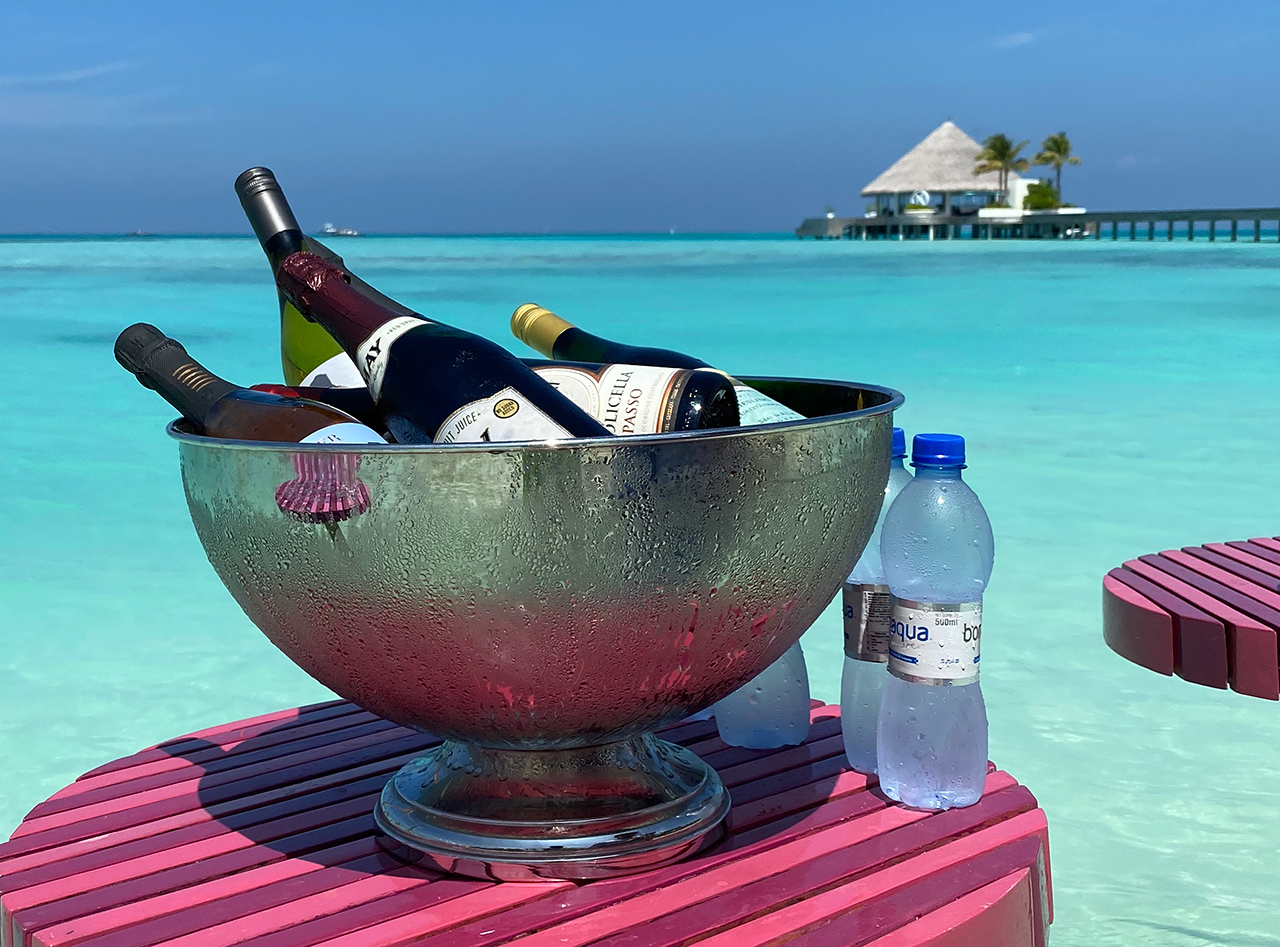
Looking for staycations to explore in Maldives, an island country with 99% water and only 1% land, we stumbled upon the paradise property called Kandima Islands. Much more than our wildest dreams, Kandima is a 3.2 kilometer speck of an island located at a 30 minute sea place journey away from the capital city of Male. A ladder sprawling from our aquavilla straight into the sea was a highlight of the trip. Crystal clear blue waters have never before been so accessible. I enjoyed a variety of watching and snorkeling with a variety of fish in their natural habitat right from my aquavilla. Baby reef sharks, catfish, pencil fish and various other species could be spotted right while I was snorkeling around my aquavilla.
It was my time away from the city. I lounged on the pool chairs on my beige wooden porch as I enjoyed a chilled glass of Prosecco. It being my first ever time trying it, I was quite surprised. I had expected to open a bottle of wine when the cork flew into the air to my surprise, on trying the drink right from the bottle and having it fizzle in my mouth, I realized Prosecco was something between champagne and wine.
Mumbai is not a city from where you can see clear waters because of the immense water pollution which reduces visibility. Looking at the seabed beneath the turquoise blue waters in Maldives was a fantasy come alive. Dolphins, in herds of hundreds were a short ride away from the property, waiting to be spectated in their natural habitat, coming out every once in a while to give us their greetings and do some flips in the air in numbers I had never seen before. The natural live act continued for an hour and a half, while our boat sailed along the Maldivian waves, mothers applied some sunscreen on their children, couples removed their selfie sticks to get a few pictures, the captain just looked around and made some calls to the other boats, the dolphins too jumped out of the water and played energetically all around our boat.
A few years ago, I had been trekking to a mountain in the Himalayas called Roopkund, having been impressed by the sheer height and natural beauty of the place, I had ever since developed a love for trekking. Diversity in the flora and fauna, wide variety and uniqueness of the skies, the camping and the cold had found a way to make me home. I experienced something similar in Maldives for depth when I was snorkeling amidst sea turtles, sting rays, sea cucumbers, nemo fish, multi colored coral reefs, catfish and a variety of beautiful sea creatures, it was home.
Jet skiing at Kandima just created another level of thrill for me, as I controlled the jet ski with my friend holding me behind, roaring with speed, I made eye contact with thrill and almost said “Today is the day I let go of my fears”. The Jet ski crossed baby making island, a bird nestling space where beautiful white birds inhabit the entire island and lay their eggs, soon I entered deep waters on the jet ski where I saw dolphins in the distance, jumping energetically out of the sea while I chased them while controlling my jet ski. Sadly, the guide on the leading jet ski ahead of us instructed me to turn back to the resort, I decided to play with the water and began turning my jet ski around in circles, which was totally safe but still scared my friend who was sitting behind.
At Kandima, I also had the luxury to walk on sprawling open beaches. During a peculiar night walk of mine, I glanced around the ocean to notice a glowing wave afar. I had previously researched a lot about phytoplankton activity which causes the waves to glow and its presence on several Maldivian islands. To me, the glowing light was irrefutably phytoplankton activity. However, most of the people I spoke to this about refused to believe me.
My evening routine involved lounging by the beach club or enjoying some food at Smoked, relatively relaxing compared to my wild adventures of the day. Breeze bar was one of my favorite spots with their wonderful live music which made me feel drunk on that alone. Kandima was truly my kind of place, as the sun rose, as the sun set.
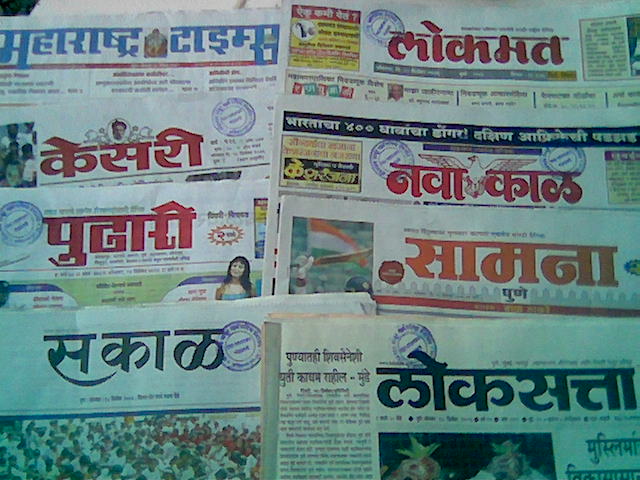
The third-largest state of India, Maharashtra occupies a significant portion of the Deccan plateau and sits along the Konkan coast looking onto the Arabian Sea. The commercial and industrial pivot of the state lies in its capital city of Mumbai, formerly known as Bombay. The most prevalent language of the state is Marathi, the literary endeavours of which has managed to survive despite the plundering and oppression caused during the British Raj.
The Maharashtra Culture is one of the most diverse and brilliant all throughout India. Today we explore the rich heritage, the occasions where the people come together, often regardless of religion and community, the aspects that are unique to the state and their significance in the country of India.
The Maharashtra traditional dress is suited to festive occasions as well as to the prevalent weather conditions. Rich in vibrant colours and unique designs, the women commonly wear the traditional nine-yard long saree called the ‘Nauvari’, along with a ‘choli’ or blouse as the top. These types of sarees have a unique pattern of draping that allows ease in movement, and thus also produces a recognised icon of the Maharashtrian culture. Stunning pieces of jewellery like the ‘nath’ or nose ring and adorning necklaces called ‘saaj’ are worn as accessories by the women.
The men, on the other hand, wear a shirt or kurta paired with the ‘dhoti’, usually made of cotton, which is draped around the waist and extends up to the ankles. Other than the cotton caps called ‘pheta’ or ‘pagadi’ which they put on their heads, a sleeveless jacket called ‘bandi’ is also occasionally worn. During festive seasons, the men wear Ackan, Churidar, and Pyjama.
Being one of the largest cotton-producing states in the country, Maharashtrian artisans and craftsmen extensively use cotton for their fabric-based endeavours. The luxurious ‘Mashru’ and ‘Himroo’ fabrics are made from blending cotton and silk together in a special handloom machine. The Narayan Peth sarees originated in the district of Solapur and are woven from cotton and silk. These are decorated with small motifs across the body which present a striking contrast with its border.
The handmade leather slippers of Kolhapur have been a part of the traditional footwear since the thirteenth century. These ‘chappals’ boast of intricate designs that enhance its basic rustic style and are of immense durability. Kolhapur is also famous for its jewellery like the Saaj, Mohanmal, Bormal, and Putlihaar. In the Sawantwadi style of lacquer crafts, motifs of nature and mythology are deliberately painted on the surface of different objects like furniture, figurines, and showpieces.
Unruffled by the hustle of city life and modernization, the Warli tribe of Thane district still thrives in the very core of nature. Their simplistic wall-paintings are rich with poetic and spiritual imagery, usually depicting the regular lives of the people. Employing basic shapes like triangles, circles, and squares, the artists symbolically represent aspects of nature and creative energy in these paintings which is globally known as Warli Paintings.
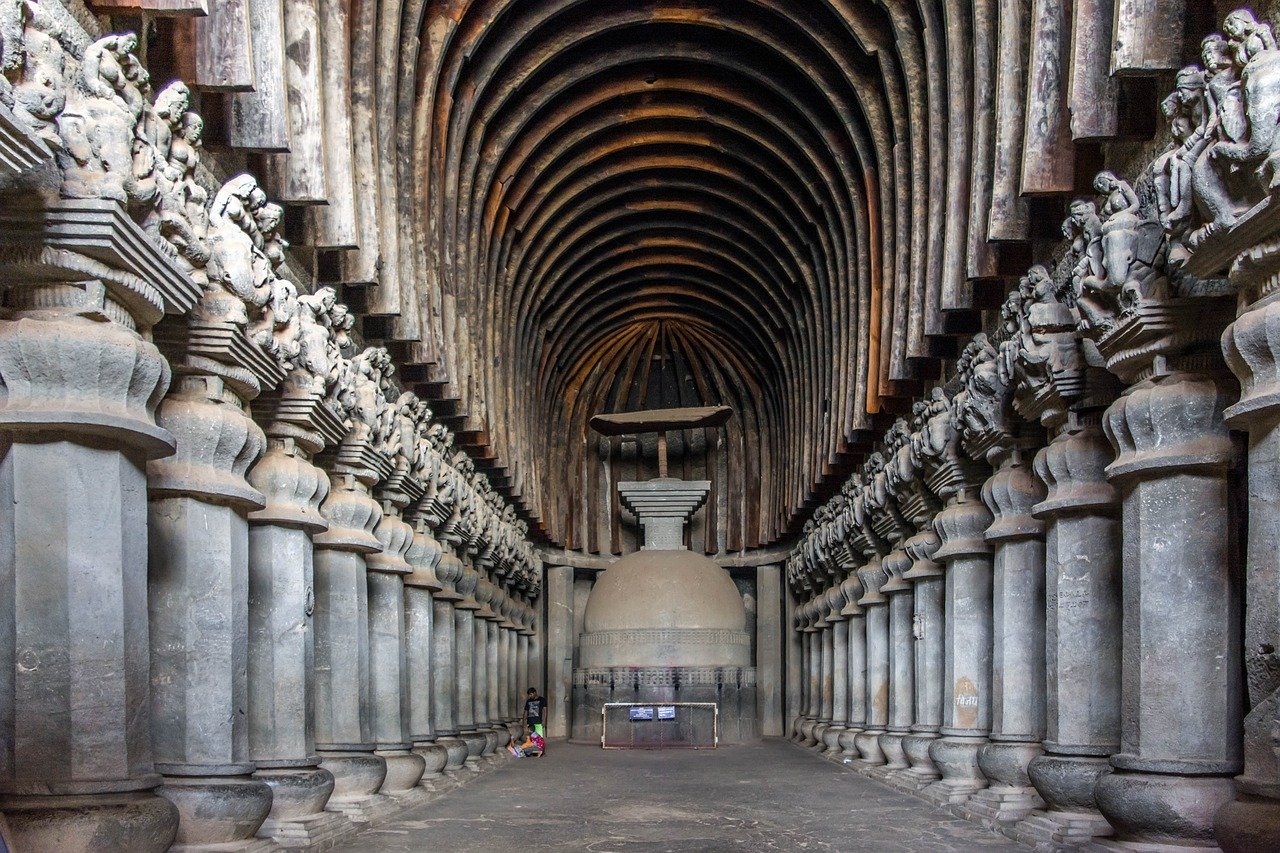
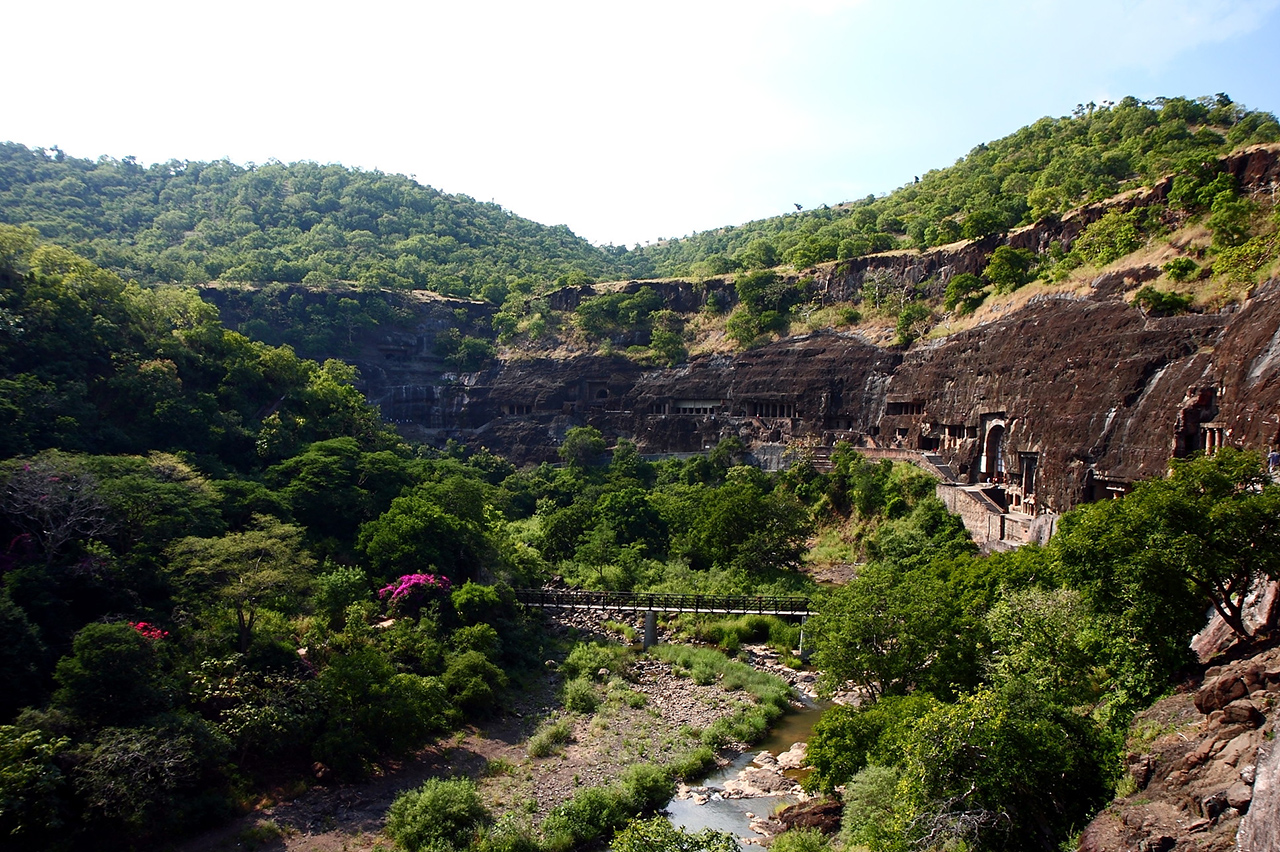
The first caves in Maharashtra that have historical records were found by Buddhist monks in the 2nd century BC during their search for an adequate and peaceful place to reside and meditate. The famous rock-cut carvings which comprise some of the oldest wall paintings are present in the Ajanta and Ellora caves. These Hindu cave temples are regarded as a cultural emblem all over India, and the world.
The Wada architectural style of housing and temple planning encapsulates the proud heritage, culture, and traditions that belonged to the dauntless and tumultuous reign of the Marathas. Shaniwar Wada and Lal Mahal in Pune are also prominent examples of Maratha architecture. Some of the most important fortresses in the state are Raigadi, Vijaydurgu, and Sinhagadi. During the reign of British Raj, Mumbai saw varying styles of architecture that were used to construct its historical structures and buildings, including Gothic, Victorian, Art-Decos, and Indo-Saracenic revival. These are seen in notable monuments like the Gateway of India and the Chhatrapati Shivaji Terminus.
Gateway of India – Pixabay
In a state where people of many religions and cultures thrive, the most notable places of worship include Kalaram Temple, Hazur Sahib, Mount Mary Basilica, St. Thomas Cathedral, Shri Siddeshwar Temple, Bibi Ka Maqbara and Mahalakshmi temple.
Cultural Festivals of Maharashtra
The people of Maharashtra celebrate the festivals that paint in varying and vivid colours the occasion of cultural tribute and merriment. The Maharashtra Day is celebrated on the 1st of May to mark the date when in 1960 the state acquired its status. Nag Panchami is celebrated on the fifth day of the holy month of Shravan where the snake god is worshipped as people offer milk and sweets, praying for the well-being of their family and good harvest.
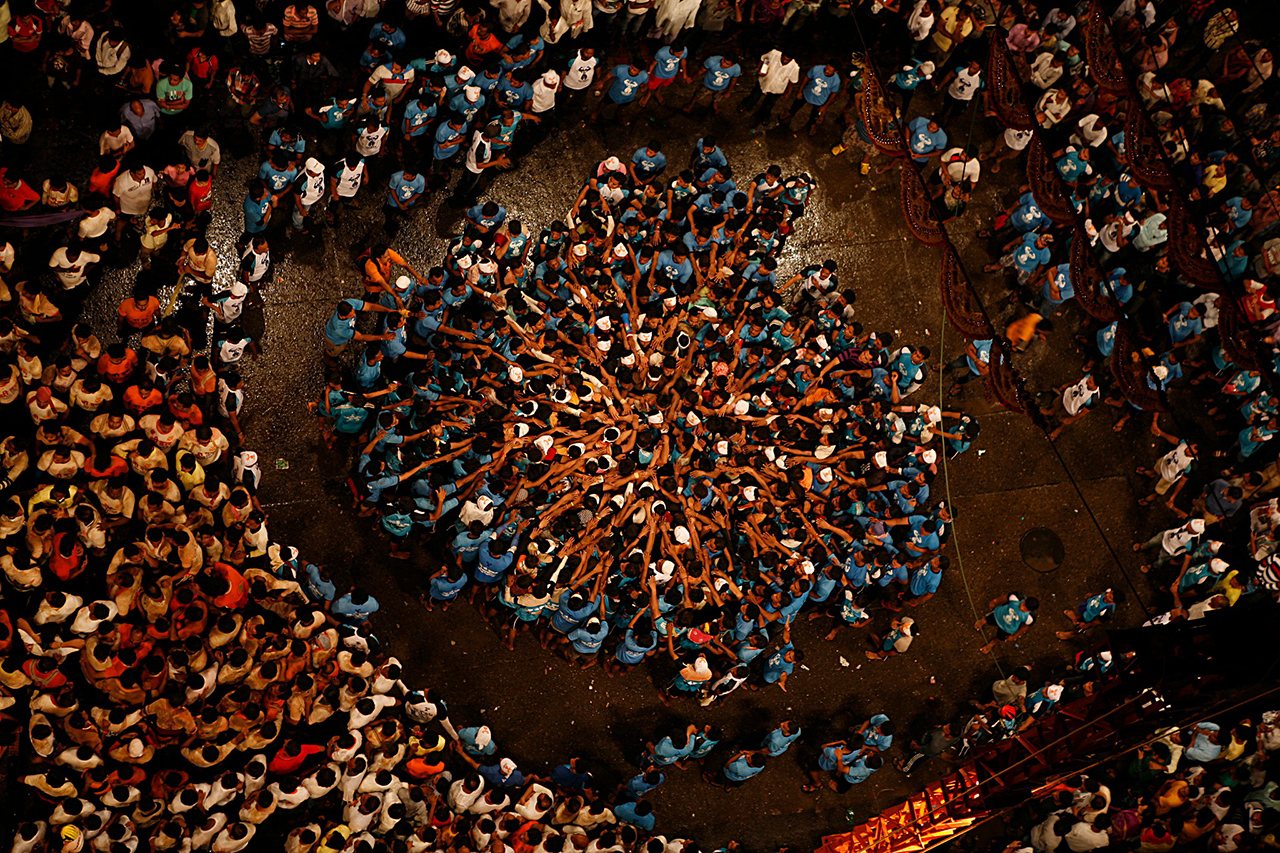
The festival of Janmashti sees people gather up in all their excitement and joy to perform the tradition of breaking the Dahi Handi. Gudi Padwa is regarded as the most auspicious day to mark the first day of the Lunar Calendar. Narali Purnima marks the end of the turbulent monsoon and the beginning of the new fishing season. The fishermen decorate their boats and appease the sea-god with their offerings of coconut and prayers before embarking on their sail. Shivaji Jayanti is an important celebration which honours the heroic determination and victories of the Maratha warrior on his birthday.
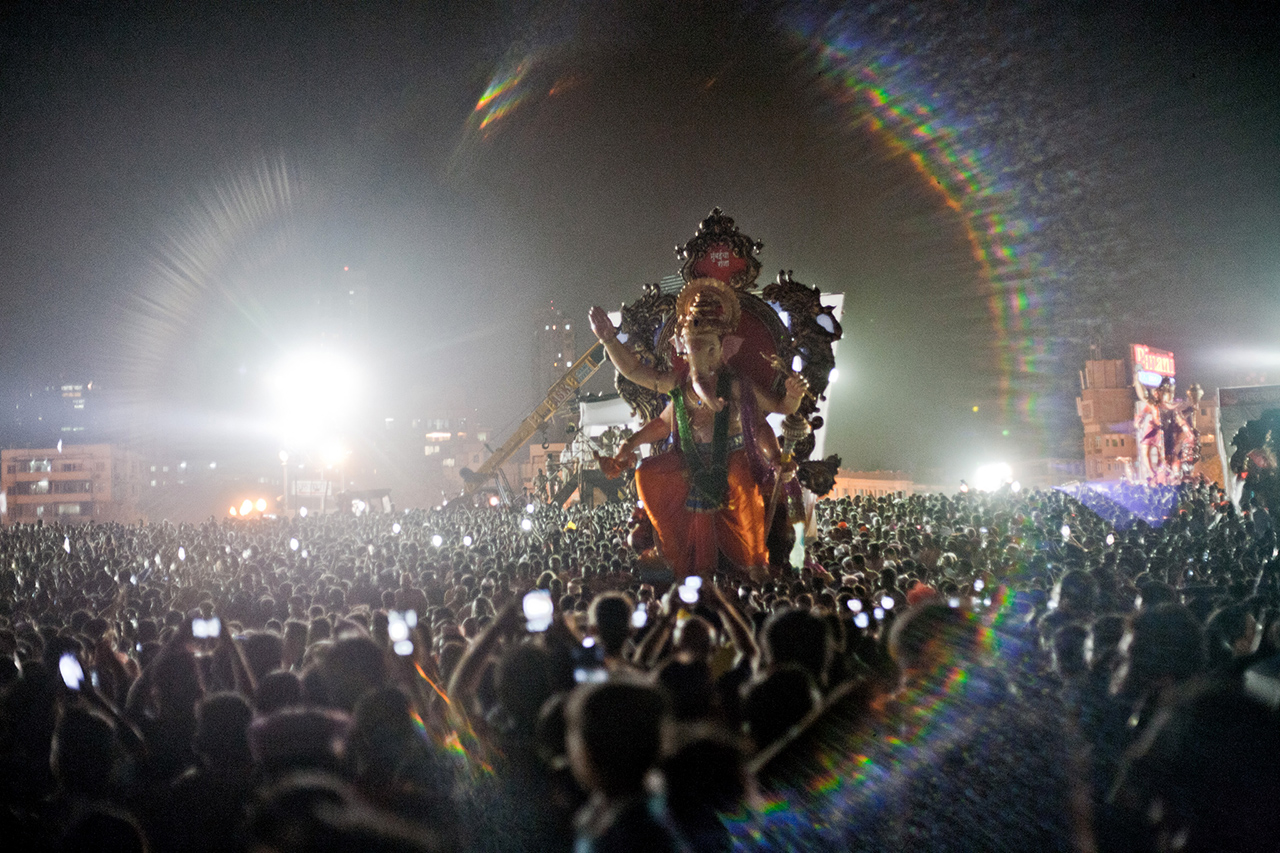
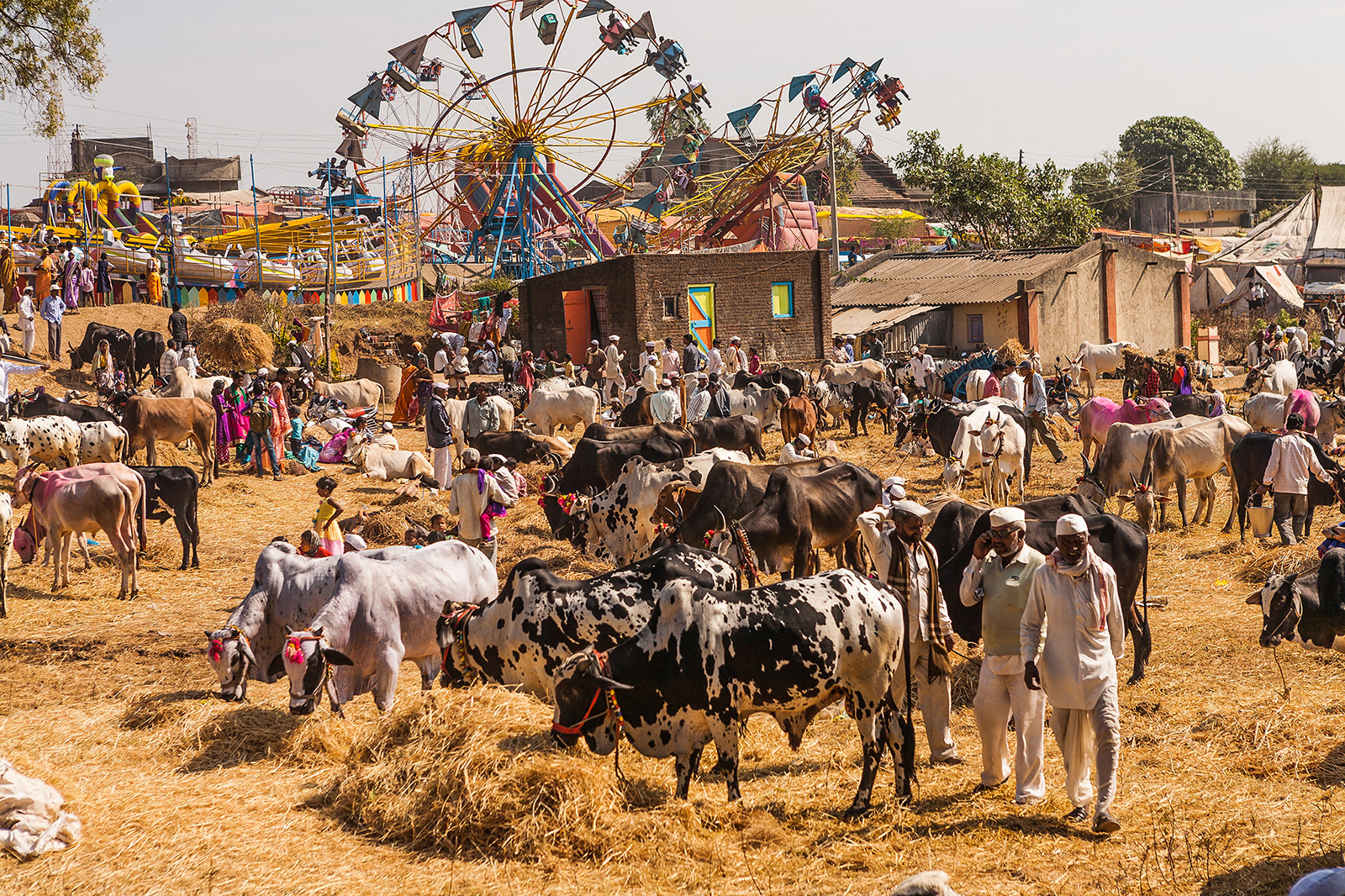
The celebration of Ganesh Chaturthi that goes on for eleven days is arranged on the grandest scale in the entire state of Maharashtra, beginning with the worship of idols of Lord Ganesh in homes and large pandals, which are intricately decorated, portraying religious and social themes. During the harvest festival of Pola, bullocks, the primary helping force in farming, are worshipped.
Bail Pola festival
The Ellora festival, organised by the Maharashtra Tourism Development Corporation, celebrates classical music and dance and the legacy of Indian art and cultural forms at one of the oldest and most historically significant sites in the country. Performers, artisans, and craftsmen from across the country visit this festival to put on display their talent as well as revel in that of others.
Some other notable festivals include the Bangana festival at Malabar Hills in Mumbai, Makar Sankranti, Bhau Beej, Mangala Gauri, Kojagiri Purnima, Vat Purnima, and Ashadhi Ekadashi.
At the heart of Maharashtra’s culture, the primary forms of music that emerged are folk music, the semi-classical natya sangeet or theatre music, and poetry by the saints. Folk music is enjoyed by people from various aspects of the community, each kind sung during certain occasions. The most popular of these are the ballads called Povadas, that sing of the valiant life of the Maratha warrior Chhatrapati Shivaji, the Owi and are written in couplets. They adhere to the responsibilities and joys that women find in their routine lives and also the exciting Bhaleri that adds harmony to the different tasks performed during farming in the fields.
Annasaheb Kirloskar – Image Source
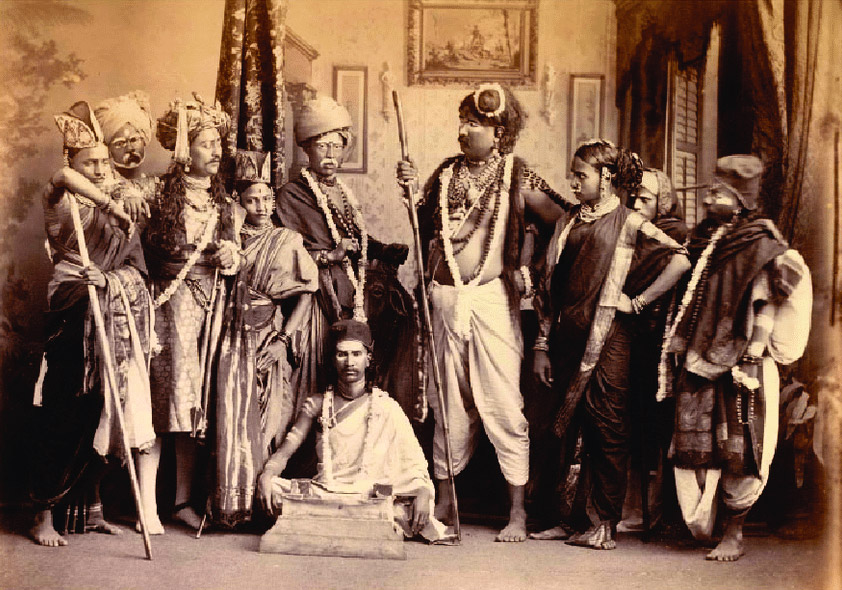
The norm of playing songs on the stage during drama or theatrical performances was heralded by Annasaheb Kirloskar, the father of modern Marathi theatre, and came to be known as Natya Sangeet, or “music of drama”. Some of the poet-saints who preached about devotion and knowledge that brought the soul’s unification with God are Dnyaneshwar, Tukaram, Muktabai, and Soyarabai. Samartha Ramdas Swami’s revered compositions Manache Shlok and Dasbodh are regarded as powerful inspirations even today.
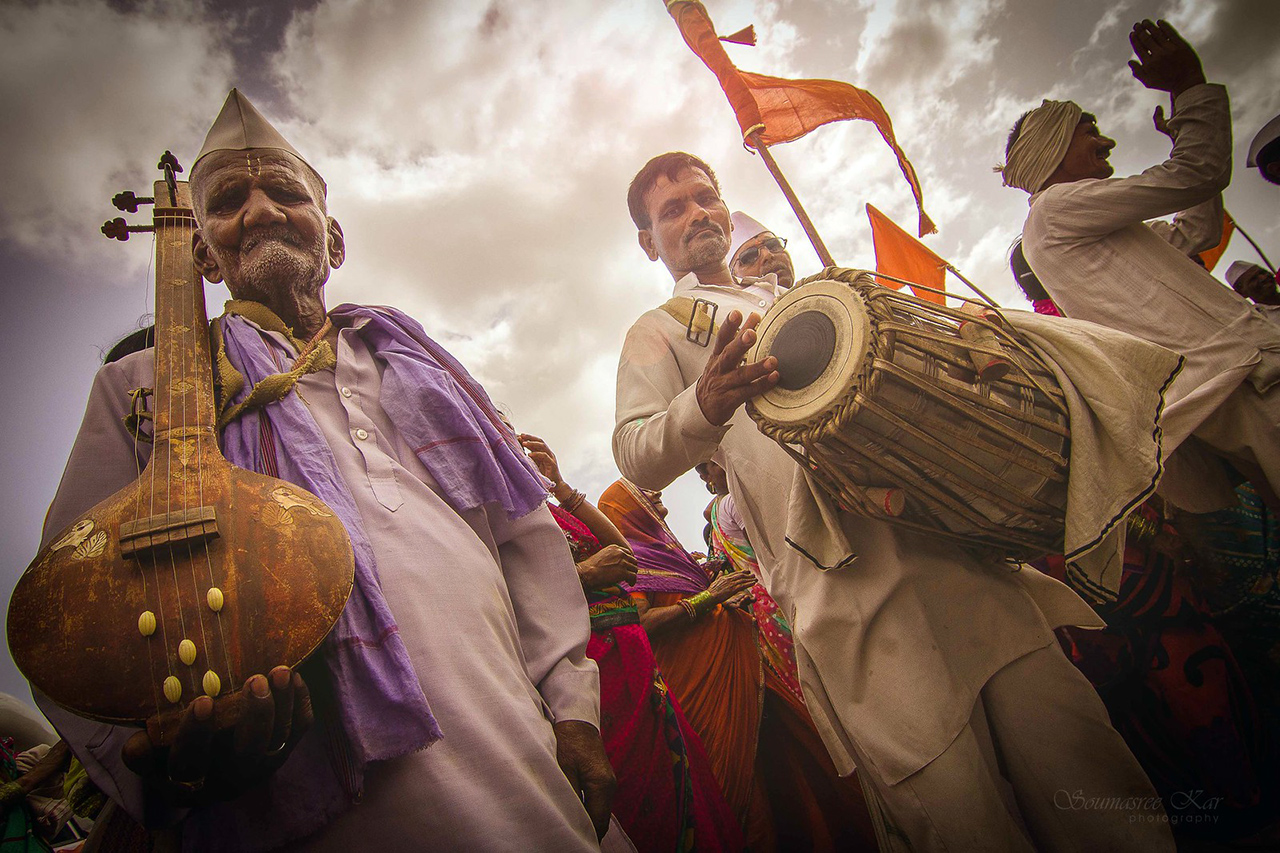
Some of the indigenous dance styles of the Maharashtrian culture are the energetic Lavani dance with its intricate leg movements, the Tamasha form of folk-theatre which was made popular by the Mahar and Kothari communities, the joyous dance form of the Koli fishing community specially performed during the Narali Purnima festival, and Dindi which was popularised by the devotional sect of the Varkaris.
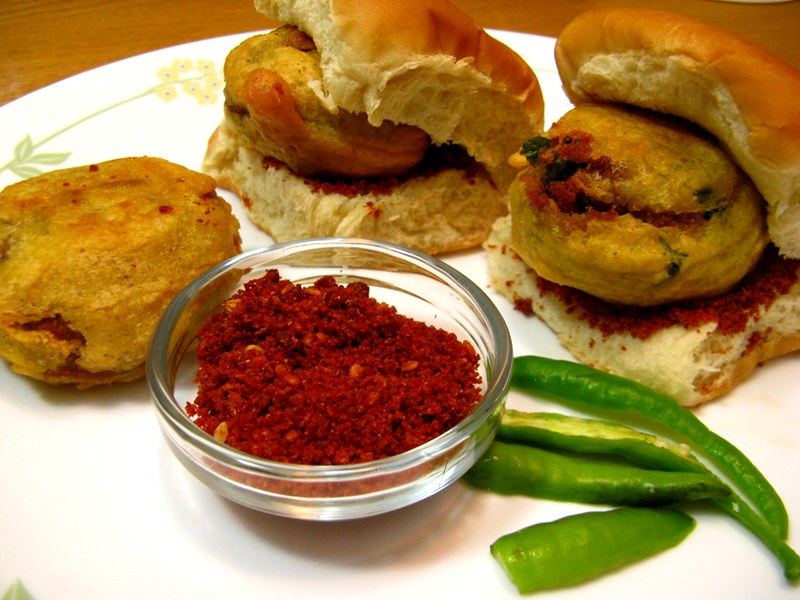
The diversity of Maharashtrian cuisine reflects the multitude of cultures that teem the entire state. Among the wide variety of dishes that appeals to the milder as well as spicier taste buds, the most well known are Vada Pav, Bhel Puri, Sabudana Khichdi, Puran Poli, Kanda Poha, Ragda Pattice, and Misal Pav. Indigenous seafood dishes that are prepared by the fishing communities include the Prawns Koliwada, Maklea cha Kheema (a preparation of squid), and Kolumbi cha Ambat (a preparation of prawns) amongst many others of the Koli community.
The simple and quick cooking styles of the Pathare Prabhus have produced the special Sambar masala which compliments the flavour of the dish depending on the amount used. Towards the interior of the state away from the coastal areas, meat, especially mutton and chicken, are more prevalent, with the dishes getting richer and heavier in flavour.
While the Brahmin community has brought brilliance and popularity to vegetarian dishes, the foreign influences of the Mughals and the Arabs are also present in the gastronomical heritage of the state. Desserts and sweets that are traditionally popular include Shrikhand, Basundi, Aamras, and Modak while Kairi Cha Panha and Soi Kadhi are some of the most refreshing drinks.
Tourism in Maharashtra
Mahabaleshwar
Maharashtra is replete with locations and sites that not only narrate tales of exquisite culture but also serve as gateways to art and nature. The green landscapes, often dotted with age-old fortresses and clear lakes, are sights worthy to be beheld and learnt the history of. Such are the splendid hills of Mahabaleshwar, Panchgani, Lonavala, Igatpuri, and Matheran.
Image – Pixabay
The capital city of Mumbai, where the Gateway of India, the Marine Drive, and the Chhatrapati Shivaji Terminus are located, is the financial and entertainment centre of the state. Pune, the second-largest city, also boasts of many historical sites like the Pataleshwar Cave Temple, Shaniwar Wada, Shinde Chhatri, National War Museum, Saras Baug, and Parvati Hill.
As UNESCO World Heritage Sites, the Ajanta and the Ellora caves are known for the oldest rock-cut sculptures and wall paintings and contain several Buddhist, Hindu, and Jain cave temples. Named after Mughal emperor Aurangzeb, the city of Aurangabad is home to the Daulatabad Fort and the Bibi Ka Maqbara among other heritage locations. The port city of Ratnagiri on the Konkan coast offers beaches, historical monuments as well as temples for the earnest tourist to visit. Shirdi, Nashik, and Ganpatipule are some of the most visited holy sites by pilgrims and devotees.
Religion in Maharashtra
The state of Maharashtra is a microcosm of India itself, harbouring a religious diversity comprising Hindus, Muslims, Christians, Jains, Buddhists, and Sikhs. It’s not a fact of wonder that places of worship that accord to the customs and beliefs of each religion are found throughout the state.
Many flock to Mumbai from other states, cities, and towns alike to join the land of glamour and fame of India’s biggest film industry, Bollywood, that has even extended its roots into overseas cinema.
Marathi and Hindi are the primary languages that are spoken in Maharashtra with English also being used in the urban areas. The Marathi dialect varies from one district to another. Pardhi and Keikadi are examples of local tongues that owe their sustenance to the older years of Marathi language. Konkani and Vardahii are two of the major dialects that are spoken in certain regions of Maharashtra. There are thirty-eight other languages that are spoken by small communities separated from the mainstream, like that of the Adivasis, the tribals, and the nomadic.
Maharashtra occupies the topmost position among the industrial contributors to the country’s economy, yet the agricultural sector is the most dominant in the state, serving as a source of livelihood to thousands of farming families. Along the coastal lines, the fishing communities are as much of an imperative. People engage in services in Government jobs and proletarian professions like mechanics, shopkeepers, transport vehicle drivers, and construction workers.
Have you seen some households that keep flowering plants in their living rooms or bathrooms or selves? Don’t they add up to the grace? Indoor plants are not that hard to maintain like the plants that you grow in the garden. Here are a few plants that you can keep in your bedroom or living room. Don’t worry as you don’t have to go out in this pandemic situation, searching for these flowering plants or seeds. You can order online from Interflora and use trending Interflora promotional codes to get exciting offers on your purchase.
Hibiscus
Also known as China Rose, these flower plants can be found in tropical areas. Many people tend to grow this plant in their gardens, but you can grow this flowering plant indoors too. This vibrant coloured plant not only adds up to the grace but also brightens up your mood. This flowering plant doesn’t need much care, all you need to keep the soil moist throughout the summer season and water it less during the winters.
African Violets (Saintpaulia)
Better known as African Violets. One of the best choices for indoor flowering plants! Unlike many other plants, it doesn’t need much time to germinate and you can see it bloom throughout the year. But there are a few things that you must keep in mind when you stay African Violets in your room. Firstly, cold water can be very harmful to them and secondly, do not allow the old leaves to collect in the pot as they can ruin your plant.
Geranium
These beautiful flowering plants come in different kinds of colour! You don’t have to worry much about caring for this particular flowering plant. All they need is managed watering and a proper pot to keep it! You also have to make sure that this plant gets an adequate amount of sunlight. Better to keep it near the window or by the balcony, because if you keep the plant in a cold and damp place, it will die out soon.
Orchid
Yes, you heard me right. This elegant flower can be grown indoors. All you need is be a little bit careful when it comes to maintaining this sleek beauty; instead of watering them directly, try keeping them moist using a water sprinkler or a spray. You can sprinkle water in the roots and the flower itself but avoid putting water in the above two inches of the plant.
Jasmine
This is as beautiful as the princess, Jasmine! Apart from being beautiful, this flower is the best choice if you want to keep your room scented up all the time. Jasmine is known for its lovely smell. This flowering plant can be grown in the garden as well as kept indoors. All you have to make sure is that the jasmine plant gets the proper amount of sunlight and ample water. You can get the seeds of this plant from Easyflowers and by using the trending EASY FLOWERS Discount code, you can get great deals on your purchase.
Peace lily
Last but not the least, if you want one of its kind flowering plants for your indoors, the Peace Lily should be your first choice. This majestic white coloured spoon structured flower comes with almost zero maintenance. Having this plant in your drawing room doubles the beauty of your place. This plant needs a proper amount of light and moist soil to grow. Once these conditions are met, you can sit back and relax as they stay up years with this little or minimal care!


 The postman handed over the letter to me. Before he rushed off, I stopped him and invited him in for a tumbler of buttermilk. He looked at me rather strangely. With a sigh, I indicated that he take a seat. I told him that I was a retired postman who wished to pen down his memoirs and write about the contemporary scenario too. He shrugged carelessly. His parents pushed him into taking a government job. Since he had four sisters waiting in line for their marriages, his education had not been given priority. The job was not something he liked to do. It was a routine, meaningless job of cycling in the sun with a nearly empty bag. Someday, he hopes to write the Tamil Nadu Public Service Commission Examination and shed his India Post uniform.