Qawwali – Music that Touches the Spiritual Strings

0
Qawwali-Music-that-Touches-the-Spiritual-Strings-1
Abida Parveen – Via Flickr

‘Na dawa chaahiye, Na shafa chahhiye, main mareez e muhabbat hoon, mujhko toh bas aik nazarya habeeb e khuda chaahiye.’

The earning for a ‘nazar’ or look by the Almighty Khuda is the underlying meaning of this qawwali phrase. And there is no better way to understand the essence of this form of art without understanding and acknowledging its definitive spiritual purpose. 

Qawwali is a form of devotional music that finds its roots in the Sufi Islamic culture. Though prevalently performed at the dargahs or shrines of Sufi saints across South Asia, the qawwali has become a part of mainstream music too. 

Thanks to some stalwarts, such as Nusrat Fateh Ali Khan, Aziz Mian and the Sabri Brothers who have released their renditions in albums and stage performances that  made qawwali a very recognizable and known face of music. 

History of Qawwali

History-of-Qawwali
The winter diwan of a Mughal nawab – Source

Amir Khusrow or Amir Khusrau Dehlavi is often called the founder of qawwali. Born in the 13th century, Khusrow is credited with bringing together Arabic, Persian, Turkish and Indian musical influences together to create the qawwali as we know today. Student and disciple of Nizamuddin Auliya of Delhi a Sufi saint of the Chisti order is also one of the most famous saints of India. 

Qawwali Rhythm and Flow

Qawwali-Rhythm-and-Flow
Fareed Ayaz, Abu Muhammad Qawwal Source: last.fm

Qawwali stands out for its powerful impact on the listener. All musical renditions or songs do have an influence on the listener. But qawwali tries to reach a crescendo of passion and involvement where the listener imperatively gets hypnotized and moved by the compositions. 

A party of eight to nine musicians with a lead singer and a few side singers together perform the qawwali. The musical instruments include the harmonium, tabla and dholak. The musicians and singers build up the songs to reach high energy levels. 

The songs themselves follow a sequence or have meaning to the occasion. If a qawwali is sung during the death anniversary or urs of a saint, a Rang or poem by Amir Khusrow is sung, whereas on the birthday the Badhawa is sung. 

The different types of a qawwali song depend on their content. Some of these include the Hamd or thankfulness to the God or Allah, a na’at or song in praise of the Prophet Muhammad, a manqabat in praise of Imam Ali or a Sufi saint, a marsiya that laments on the death of a saint or Imam, such as Imam Hussain. 

Ghazals are also a Sufi origin form of art. And though qawwali also like ghazals, speak of the devotion and love, they are rendered in the style of qawwali as opposed to ghazals which can be poetry and also the way of singing or rendering. 

Qawwali Mannerisms 

Qawwali Mannerisms 
Nusrat Fateh Ali khan

Qawwali is recognized by the way it is performed. The singers and musicians sit crossed-legged and with the accompaniment of the instruments the songs begin. 

As the tempo increases, there is clapping to the beats of the song and slowly but surely the strength and pitch of the song rise. The whole musical ambience turns into each participant and listener finding their beat and rhythm to the rising composition. 

The songs are usually long, ranging from 15 to 20 minutes or more. And though the songs have a distinct Islamic meaning and purpose, they resonate with the listeners of all faiths. This is because the idea is to seek the divine power which is all empowering and all knowing. 

Qawwali – Society and integration

Qawwali-in India
Ajmer Sharif Dargah – Wikimedia

Women were not a part of the qawwali performances earlier as they were not supposed to perform with men. But this has changed in recent times. Women qawwali singers are also well-known today, such as Abida Parveen and The Nooran Sisters (Jyoti and Sultana).

Qawwali is most popular in North India and also in Pakistan and Bangladesh.

For me and I guess for many who have seen a live qawwali performance, understand what its role in a sense of togetherness means. What starts off with a few singers and musicians ends with a large crowd joining in. People clap together, sway together and some even sit next to the qawwals to become a part of the performance. The rhythm moves beyond just musical notes, but encompasses a wide intangible sense of being one. There is a conforming pattern, yet the conformation is not binding. The actual lead singers are in a league of their own, but the listeners who may not even have an understanding of music let alone signing, also are immersed in its being. 

Nooran-Sisters-Qawwali-Society-and-integration
Nooran Sisters (Jyoti and Sultana) Image Source

Qawwali is a reminder of how everyone can come together to help each other elevate themselves in thought and spiritual connect. And perhaps, this is the need of the hour more than ever today.

Why Every Indian Should Watch Modern Love Series

0

Watch-Modern-Love-Series

Modern Love is a show which is available on Amazon Prime. I truly enjoyed the show because it added a new perspective to what love could be. Being an Indian, I have been taught certain moral principles in love and the show made me realise that I need to get free of those moral principles to be able to love deeper. A woman cheating on a man is considered as a sin in the Hindu context, for that is why Sita was asked to do the Agni Pariksha even after accompanying Ram to his banishment for 14 years. In the show, the man gets back with the woman he loves despite her having cheated on him. This event in the show reminded me of a quote by Nietzsche – “Whatever happens in love is beyond good and evil.” The show depicts that love exists beyond the basic moral values which we have been taught. 

Bipolar is a mental disorder in which people feel extremes of emotions due to an imbalance of chemicals in the brain. There is very little mental health literacy in India and stigma regarding mental health is also highly prevalent. In the show, there is a woman who suffers from bipolar but decided to find love in her life regardless. She believes that a man will love her no matter what. In Indian society, where women are often taught to “behave” and “act in ways which don’t trouble the man”, bipolar would be a very stigmatised issue in a woman’s life. Society would force the opinion down on the woman that she would never find a man. The show helps many people break free from that mentality and makes them realise that love can be found no matter the circumstances in this world if you are willing to find it. The loving and joyous nature of the woman suffering from bipolar is also highlighted in the show which makes men realise that there is often a backstory to how women are acting and focuses on the idea of a woman having her own narrative about her experiences. 

The episode where a teenage girl starts crushing on a much older job colleague would be an unimaginable situation in Indian society with multiple repercussions. However, she only likes the older man in the show because she does not have a father and sees him taking a fatherly role. The older colleague however mistakes it for love and tries to make a move on her. In Indian society, we are not allowed to talk about social issues like this openly and often whisper, gossip or talk about it in hushed tones. The show creates an openness about the situation and explains how it can be easy for older people to exploit younger one’s vulnerabilities without understanding them. In Indian society, girls are abused by older men in their households, and are often afraid to talk about it with their own families. Watching the show creates awareness among both younger and older generations about social vulnerabilities and their effects. Though the show does not explicitly have an abusive situation, it highlights how people who are vulnerable can often be misunderstood. 

One of my favourite episodes is the very first one where the female lead has a best friend as the building watchman. The relationship which the woman and the watchman share is unimaginable in Indian society because of classist structures. A woman in India would be advised to keep her distance from the watchman instead of interacting with him. The show sheds light on the relationship which we can share with anyone in society regardless of the social structures which separate us. The show gives a message to the audience to be open minded in every way when it concerns love. 

Since Indians are often rigid about the rules in love, it is essential to watch the show to develop open mindedness and understanding. The show helps us understand the nature of love better and helps us break free from the rules created by society. This show is a must watch for everyone. I really enjoyed watching the show, let me know in the comments if you did too!

Manipuri Dance – Fraught with Grace & Blissful Enchantment

2
Manipuri_dance-Wiki
Image – Wikimedia

India is a land of many classical dances. The Manipuri dance form is one of the classical dances of India originating in the state of Manipur. Manipur is a beautiful and mesmerizing north-eastern state fraught with richness in culture and physical landscapes. Unsurprisingly, the Manipuri dance finds its continuation and a legacy of grace and elegance evolving and nurturing itself in its land origin. 

History of Manipuri Dance

History Manipuri aDance
Image – Public.Resource.Org

The people of Manipur believe themselves originally to be Gandharvas or divine dancers and musicians as referred in Vedic texts. Called Gandharva Desa in many ancient Sanskrit texts, as well as, various references in Mahabharata throw light on the fact that Manipur has always been regarded as an abode of musical creativity. Women have traditionally had a larger role to play in the dance form, since it was believed that the Goddess Usha taught and motivated girls to learn the dance passed down from one generation to another. Other ancient references to the dance form include the performance of the art during the Lai Haraoba or traditional festival by the ethnic locals of the region called Meitei. 

Though ancient history points towards the importance of dance, it was during the medieval periods that the Manipuri dance form evolved to match largely its current style. The dance revolved around Vaishnavism which was practiced by the kings and royalty of Manipur during the 15th century and which was later declared as the state religion. 

Manipuri dance flourished the most during the rule of Maharaja Bhagyachandra in the 18th century. He was instrumental in documenting the Manipuri style and evolving the dance theme on Krishna and Ras Lila. 

With the colonial era, as many other dance forms, Manipuri dance also witnessed a massive decline and ridicule. However, Rabindranath Tagore was introduced to the dance in 1919 and it left him so impressed that he invited gurus to teach the dance at his Shantiniketan center. This gave Manipuri dance a much needed impetus, until it bounced back to its glory and full potential. 

Style and Structure of Manipuri Dance

Style-and-Structure-of Manipuri-Dance
Image – Choo Yut Shing via Flickr

Manipuri dance is essentially a group dance. Though majority of the themes center around Ras Lila, Krishna and Radha the other themes include Shaivism, Shaktism and paying homage to local deities. The dance form is largely performed with a spiritual bend and traditionally the dance was performed in front of temples. The Manipur kings have composed many of the Ras Lilas, whereas, other compositions are by noted poets, such as Vidyapati, Jayadeva and Chandidas. 

Many gestures and movements of the Manipuri dance form find their presence in the Natyashastra, the earliest foundation of almost all classical dance forms in India. The Manipuri dance however, is slightly different from other classical Indian dances on a few counts. The dance is almost always a group choreography and effort. Also, Manipuri dance performers do not wear the foot ankle bells also called ghunghroo or payals. The movement of feet in this dance form is subtle and there are no sharp or sudden deflections of the body. On the contrary, the dance style is elegant, fluid and in case of the women dancers, the feet rarely rise above the knee level. Men on the other perform a more energetic version which also includes acrobatic movements, leaps and jumps. 

Costumes and Music of Manipuri Dance

Manipuri Dance
Image – P. L. Tandon via Flickr

Perhaps the most striking identification of the Manipuri dance for a layman that instantly stands out is the costume. The dance costume is traditional and very unique. The women dancers wear the bridal costume called Potloi. The Kumil is the barrel shaped skirt which is decorated elaborately with gold and silver embroidery. The top consists of a blouse that flowers at the base near the hip, whereas the head is covered with a translucent veil. The women dancers usually also wear garlands or flowers around their waist and hands. The male dancers are dressed in the traditional dhoti. 

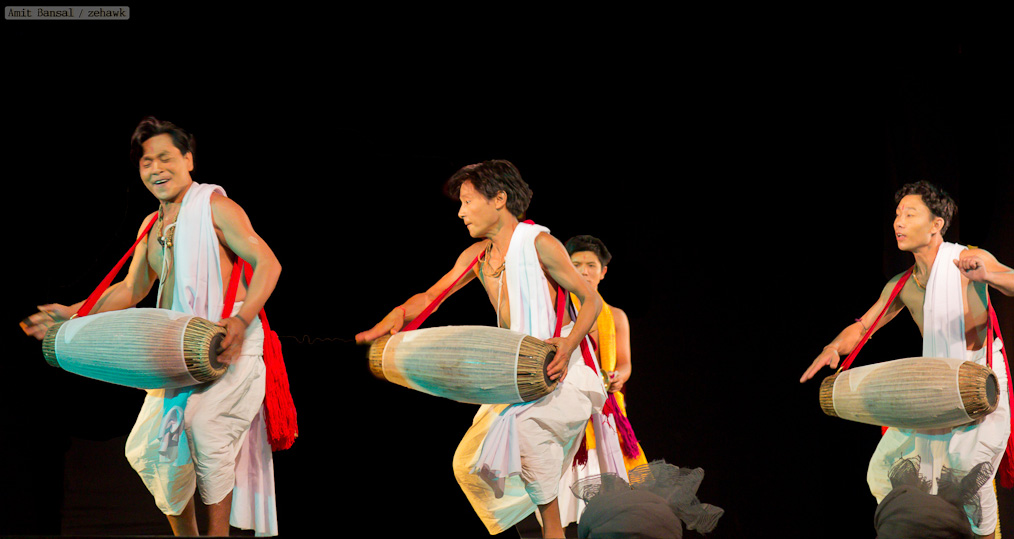
 Musical instruments include the pung or a barrel drum, cymbals or kartals, pena a stringed instrument along with the harmonium, flute etc. 

The drum in fact, is a prominent instrument and various dance forms in Manipur, such as the Pung Cholom are often performed with enthusiasm. 

Some of the most popular artists of Manipuri dance include Guru Bipin Singh, Guru Senarik Rajkumar, Guru Chandrakanta Singh, Bibhaboti Devi, Guru Haricharan Singh, Kalabati Devi, Charu Mathur, the Jhaveri sisters, Devyani Chalia and more.

Recommended Books on Manipuri Dance & Culture

Indian Doctors Who Changed Lives and Brought Many Smiles!

0
Indian-Doctors-Who-Changed-Lives
Image – Wikimedia

Doctors are regarded as healers or saviors. And though the profession has been under the scanner often as medical assistance has become more commercialized and a lucrative means of business, doctors nonetheless are usually looked up to. It is probably because of the years of learning, hard work and the fact that they often work tirelessly to better another life. 

In recent times with the coronavirus scare, doctors have become our frontline warriors, defying various odds to put others before their own self and families. Their relentless efforts in working with patients round the clock in this hour of need have raised them as a force to reckon with. It also provokes us to rewind and learn a bit more about some of the most inspiring and path breaking doctors of our country. Because though the present state of affairs definitely merits a strong recognition of the fraternity, it is also perhaps a good time to acknowledge medical experts who over the years have helped exalt the position of the profession from a mere career option to a truly life changing experience. 

These are some of the best brains of the country who have stepped up to reach out and expand their scope as doctors, moving much beyond the call of the duty and trailing a blaze of inspiration for generations to come. Yet, at the same time, they have done so by bettering, healing, recovering and saving each life, one at a time. 

Doctor with a mind of their own

Dr. Bidhan Chandra Roy in whose memory Doctor’s Day is celebrated on 1 July was a great influence on the profession. He established the Indian Medical Association in 1928 and had a big role in the setting up of the Indian Institute of Mental Health. 

Dr. Upendranath Brahmachari discovered the ‘Urea Stibamine’ a vital key in the treatment of the Kala-azar and was also nominated for the Noble Prize for his outstanding contribution in the field of medicine. 

Dr. Anandi Gopal Joshi was the first Indian female to graduate with a degree in medicine from the USA. This happened way back in 1886 and paved the way for women to venture into the medical field. 

Dr. Kadambini Ganguly was amongst the first women practitioners of India along with Anandi Gopal Joshi. Her revolutionary journey to the realization of her dream is nothing short of tremendously inspiring where she went to London to continue her study after becoming the first woman to get admission in Calcutta Medical College 

Dr. Muthulakshmi Reddy was one of the first Indian women doctors who later went on to establish the Cancer Institute in Chennai. The institute found another stalwart in its realm when Dr. V Shanta decided to join the Cancer Institute instead taking up the more preferred female medical courses of gynecology and obstetrics. 

Where Dr. Padmavati Iyer was the first Indian woman cardiologist, Dr. Ajita Chakraborty was one of the first female psychiatrists of India. 

Dr. Indira Hinduja has delivered India’s first test tube and GIFT baby. Dr. Kamini Rao is another name that has made massive strides in the field of reproductive endocrinology and fertility. 

Dr. Neelam Kler is known for her work in the field of neonatal care or neonatology. Dr. Subhadra Nair is the first gynecologist to be honored with the Padma Shri, whereas, Dr. KM Cherian performed the first successful heart bypass surgery in India. Others include Dr. Sunil Pradhan the neurologist, Dr. Ashok Rajgopal the orthopedic surgeon, Dr. Sundaram Natarajan the ophthalmologist etc. who all have been conferred with various awards, including the Padma Shri. 

The list of renowned doctors who became the front runners in their fields is undoubtedly long, as much as it is also moves beyond the scope of the profession alone. These spearheading personalities fought for the larger causes of girl education, of breaking the glass ceiling and demanding for equality and for finding, choosing and establishing institutes and networks that laid the base for long term treatment and health care. 

Doctors with a heart of gold

Where some doctors have contributed to the field of medicine through their brilliance and understanding of their craft, there are others who have gained huge respect for their selfless services. 

Prakash Amte, son of Baba Amte who has a medical degree is known for his philanthropic work in the Gadchiroli district of Maharashtra. Dr. Abhay and Rani Bang have taken healthcare to the poorest rural areas of Maharashtra and converted the villages into sustainable healthcare centers. Dr. Taru Jindal a gynecologist has spent her best years in the villages of Bihar providing better healthcare to the women and children of the districts. 

Similarly, there are doctors who have been treating the needy for free or who have worked towards making models that help in sustainable and universal medical care. Be it Dr. Bhakti Yadav who has been offering free treatment to her patients since 1948, Dr. Manoj Kumar who doesn’t charge anything for his services in mental healthcare, Dr. Manoj Durairaj a cardiac specialists who treats people from low income families for free, Dr. Abhijit Sonawane who started the ‘Doctors for Beggars’ initiative or Dr. Yogi Aeron a plastic surgeon who treats for free in the remote villages of the Himalayas, the list here is pretty long too. Dr. Nordan Otzer the ‘nomadic doctor’ spreads awareness about different physical ailments in Ladakh, Dr. Bindu Menon travels in her small van to the villages of Andhra on weekends for healthcare services or the only doctor in the Dhadgaon Rural Hospital Dr. Santhosh Parmar who manages everything in the hospital are shining examples of doctors who have crossed and moved much ahead their professional calling, converting their careers into a truly selfless enterprise. 

There are many more doctors, nurses and healthcare professionals who in their own little and large ways have chartered their way into the hearts of those who really needed them. They have flaunted their vast knowledge through humbleness, their experience through selflessness and their calm demeanor through a raging determination to serve as many as they can. We need such doctors who uphold the high standards of the profession. And we hope that those who choose to fall behind or take advantage of their superior understanding find ways to remember that it is indeed a privilege to serve.

Get the Best Luxury India Tour Packages by LIH Tours and Travels

0

Get the best Golden Triangle India Tour by LIH.  

A unique blend of traditional and western culture and architecture is the most popular combination of the three cities- Delhi, Agra, and Jaipur. This strange blend is also known as the Golden Triangle Tour of India. The overcrowded but full of life streets of Delhi city, the heart-pouring beauty of Mughal architecture, and the pure Rajasthani ancient monuments of Jaipur is what makes India the most-admired amongst lordes all over the world. This travel package is a treat for the explorers and a feast to foreign travelers.  

best-Golden-Triangle-India-Tour

The best and unique thing about the Golden Triangle Tour of India is that when these three cities are framed in a circuit on the map of India, it measures equidistant of approximately 200-230 kilometers from each other to form an imaginary triangle in the heart of India. You can travel from one destination to another of Golden Triangle in just 3-4 hours by road journey or trains and buses. If you are planning a Delhi vacation, a romantic holiday in India, or witnessing various festivals of India to explore India’s culture, then Golden Triangle is the perfect travel set for you and your loved ones.

If you’re looking for Golden Triangle Travel packages that will make you witness the traditional culture and lifestyle in the most luxurious way, then book your tour with the best travel agent- Leisure Indian Holidays. LIH tours and travels make sure to provide the customers with every tiniest thing they want in their dream India holiday. LIH offers a 6Days/5 Nights Golden Triangle Tour Package with a minimal amount of USD 335 per person.

Travel Itinerary of 6Days/5Nights Delhi-Agra-Jaipur Tour 

Here we are sharing the complete travel itinerary with you that includes everything you need to know about your journey, including places to visit, popular activities of the three cities, and other relevant information. 

Day 1-2: New Delhi – Heritage & Bustling Markets

After taking a flight from your hometown, you will arrive at the Indira Gandhi Airport in Delhi, which is also famous as the busiest hub that connects all the major countries of the world. Connect to the LIH representative at the airport only and get yourself loaded in a luxurious car. You will reach your pre-booked hotel after a luxury car ride where you will check-in and take some rest before starting your journey. You can do whatever you want to do in India’s capital region as you get to stay for 2 days in the city.

New-Delhi-Heritage-&-Bustling-Markets
Photo by Steven Lasry

You can start your journey by visiting all the famous and must-visit places in Delhi. Start your tour by firstly visiting the magnificent heritage sites like Red Fort (or Lal Quila), Humayun’s Tomb, India Gate, ancient and spiritual monuments like Swaminarayan Akshardham Temple- the biggest temple in Delhi located across a huge area and famous for its pink sculptures and big lush-green and attractive gardens.

Later on in the evening, you can do some shopping in India’s famous markets like Sarojini and Palika Bazaar or explore the largest market of Asia- Sardar Bazaar of Delhi and Chandni Chowk. But don’t forget to relish some spicy but tasty Delhi street food in the markets to make your time filled with flavors. 

Get back to your hotel room and enjoy some quality time with your closed ones before leaving for the next destination Agra the following day. 

Day 3: Agra: Wonder Taj Mahal & Mehtab Bagh

Get up early in the morning, get some delicious breakfast at your luxury hotel and pack your bags as you’ll be going to the next destination of your Golden Triangle Tour. 

Wonder Taj Mahal & Mehtab Bagh

Agra is located around 240 kilometers from Delhi, and you’ll be covering this distance in full royal style by a road trip in an XUV. After you arrive in Agra, check-in to your next pre-booked hotel room and rejuvenate yourself from the travel tiredness by taking a shower. You are now going to visit the most famous sight of India- the Taj Mahal. Agra is famous by another name – the City of Mughal and it got the name because the city is renowned for its luxurious Mughal Renaissance and India’s most exquisite Mughal architecture. Agra is also a home for various UNESCO world heritage sites and the world-famous sweet- Agre ka Petha.

The famous attractions of Agra are Mehtab Bagh, the Taj Mahal, Itmad-Ud-Daulah, and the old town- Fatehpur Sikri. 

Day 4:-5: Jaipur – Heritage Sites & Traditional Markets

Enjoy a peaceful morning in the Mughal’s city and get some breakfast. You are now leaving for the last but an amazing destination of your Golden Triangle Tour Package – the Pink City of India. Get yourself in a luxury car for a road trip from Agra to Jaipur, which are approximately 250 kilometers away from each other. You are now welcomed in Jaipur by our agent, who will take you to the next pre-booked hotel and help you in completing all check-in formalities. After taking some rest in the room, you can start your exploring to places in the Pink City of India.

Jaipur-Heritage-Sites-&-Traditional-Markets
Photo by Annie Spratt

Visit the most adorable and enthralling site of the city- Hawa Mahal, located in the central city. The Palace of Winds is known because of its phenomenal artwork as it is an epitome of Wind and Majesty. Hawa Mahal was built in 1799 by the Rajput Maharaja-Sawai Man Singh and painted it with the bright pink color. Later on, because of the pink color of the Palace, the city was known as “the Gulabi Nagri” or the Pink City of India. Jaipur is home to traditional Rajasthani culture and tradition known for various festivals, including Pushkar Festival, Elephant festival, and Chaksu Festival. 

You can explore the famous Rajput architecture in Jaipur that are famous worldwide, such as Galta Ji, Amber Fort, Jal Mahal Palace, and City Palace, where you can enjoy famous rickshaw rides. At night, you can visit one of the best and prominent cultural sites – Chokhi Dhani. Chokhi Dhani is a well-known Rajasthani style site where you can enjoy delicious cuisines (like Dal Bati Churma), enjoy folk music, and camel & elephant rides to make your visit memorable in Jaipur. 

Day 6: Departure

The next morning and last day of your 6 Days Golden Triangle Tour will come to an end as you leave for Delhi to catch a flight to your hometown. Our representative will take you to Delhi on a road journey of 3 hours. Reach Indira Gandhi International airport and go back to your home city with lots of memories and beautiful experiences.

Highlights of Golden Triangle Tour by Leisure Indian Holidays 

Jaipur-Royal-Food
Jaipur Royal Food – Wikimedia

The travel packages offered by LIH tours and travels will take you to all the famous places and world heritage sites of the three cities- Delhi, Agra, and Jaipur, in the most comfortable and luxurious way. You will get to stay in the most royal palace-turned hotels of India so that you can witness the country’s real culture and tradition. Here are the highlights of your Golden Triangle Tour India: 

  • Adore the most-alluring site of India- the Taj Mahal
  • Shop at the famous markets of Jaipur and Delhi
  • Relish some mouth-watering Mughal and Rajputi cuisines
  • An India tour filled with luxury and royalty 
  • Enjoy activities like camel rides, hot-air balloons, and boat rides in the three cities. 

Conclusion

The Golden Triangle is one of the most-opted trips set by people who want to see the real Indian culture and tourists who visit India for the first time. LIH travels the best tour operator that offers the comfortable and luxurious Golden Triangle Tour India. Get into the fascinating world of the Mughal and Rajput culture and ancient times of Kings and Queens. So what are you waiting for? Get your ideal Golden Triangle travel set online with Leisure Indian Holidays- the best tour operator in India?.

How To Purchase Indian Handicrafts Online

0
Indian Handicrafts Online
Image Source

Indian Handicrafts

As you already know, India is a place of culture. They have a lot of it! Indian handicrafts are one of the most famous souvenirs in this world that one can get. There is a whole group of Indian handicrafts, and we will just mention a few of them: pashmina shawls, pottery, carpet weaving, bamboo handicrafts, leather, shell, and many more…

Indian handicrafts are the heart and the soul of India. All of these products are being made with care and love, and a lot of hard work was put into making them the way they are.

There is no doubt that pashmina shawls are one of the most popular fashion accessories across the world. Pashminas are being made out of a fine type of wool called Kashmir. Kashmir is a super soft fabric. We assume that you did not know that most of the pashminas that are being sold worldwide actually came from India. And, you probably know that every woman that likes or follows fashion even the slightest bit owns at least one of the pashminas in their closet. They are just so soft and a must-have accessory.

Besides the pashmina shawls, Indian pottery is, as many popular magazines say the most sensual form of art that has ever existed. Pottery originally comes from North India. And there are many pottery products that you can find online, all of them are unique, in different shapes, sizes, and colors. You will not be disappointed if you decide to buy some of the Indian pottery.

In this article, we will be giving you a guide on how to find the best Indian handicrafts and which ones are safe to buy online.

Where to buy Indian handicrafts online?

There are many different Indian online stores where you can purchase their handicrafts. Some of them even ship the items worldwide. If you want to find a specific store that is legit and that has many customers, you can visit revExpo to find handicrafts reviews.

But, we will be presenting you with some of the legit stores where you can get yourself a piece of Indian handicraft.

Some of the government-approved Indian handicraft shops are Kala Madhyam, Rajasthali, and Dili Hat. We are sure that these companies are legit, but, we also like to support small businesses so that is why we recommend you search for more stores on the revExpo. You will be amazed at how much of those handicraft stores exist in India, but they have not got the recognition that they deserve.

  1. So, the first store that we find totally safe is the Dastkar Nature Bazaar that is based in New Delhi. You can visit their website on this link here: Dastkar.org. We are sure that you will be finding the best of the best Indian handicrafts in this store. They can offer you many different objects, such as Embroidered bags, Mata-ni-pachedi paintings, and many different sarees.
  2. The next store is the Sambhali Boutique that sells all different kinds of handicrafts. You can get many handicrafts that look really stylish, some of their handbags actually follow all of the latest trends. If you decide to buy from this Sambhali Boutique, you will be definitely getting a unique piece and everyone will look at you and envy you.
  3. Hiralaxmi Memorial Craft Park is a store that can offer you many handmade handicrafts. They make both textile and non-textile crafts. They work with metal, mud, wood, pottery, and even silver. We must say that we adore their tie-die bandhani’s. Just in case if you do not know what a Bandhani is, it is basically a shawl colored in different colors so that it has a unique pattern designed. You can find lots and lots of different handicrafts if you just visit their online store, and you can do so by clicking on the hyperlink above.
  4. And, the last store that we are going to be showing you is the Devrai Art Village. Trust us, their handicrafts are a true form of art. We have never, ever seen handicrafts like these. We must say that it takes a lot of talent, effort, and hard work in order to make something like this. You must see for yourself by visiting their website. They can make anything, any kind of sculpture. Eggs, animals, and even people sculptures. All of them are unique and took a lot of time to make. We simply adore their Buddha and Shiva sculptures as they look absolutely magnificent.

We hope that you will find handicrafts that you like and that you want to buy from one of these stores that we have shown you. All of them are magnificent and wonderful!

Is it safe to buy from these stores?

We think that it is beautiful that Indian people have a rich culture, and we simply adore their handicrafts. Yes, it is totally safe, and you should trust them. As we have previously mentioned, all of these websites are totally legit and professional. These stores are being visited by thousands of people daily. Some of the stores that we have mentioned are even government-approved stores. This means that you do not have to worry about getting scammed or receiving a damaged object.

We can assure you that many people across India and from around the world put their trust in these stores, and we can say that almost all of them were not disappointed. So, if you want to receive a good Indian handicraft object, you should for sure shop at one of these stores online. Avoid getting scammed, and shop safely!

Folk Dance Forms of Central India

0

We have covered the folk dances forms of North Indian and looked at some of the folk dances of Northeast India. In this section lets us explore the folk dances of central India.

Rajasthan, Madhy Pradesh, Maharashtra, Gujarat and Goa are the states that we will look at for the folk dances of central India.

Gujarat

garba dance importance
Image – Restless mind via Flickr

Dandiya and Garba are by far the most popular folk dances from Gujarat that has found mass following across the world. The other folk dances of Gujarat are Tippani, Padhar, Hudo, Aagawa and more.

Madhya Pradesh

Folk-Dance-Forms-of-Central-India-Matki-dance-practiced-in-Malwa
Matkidance Malwa – Source Facebook

The Grida dance is a traditional dance where more than one village joins together to perform the dance. The Maanch is a folk drama rather than a continuous dance from, whereas, the Matki dance practiced in Malwa region is performed usually during weddings with earthen pots over the dancers head. The Phulpati, Jawara, Bhagoria and Tertali are other folk dances of Madhya Pradesh.

Maharashtra

Folk-Dance-Forms-of-Central-India-Matki-dance-Tarpha-Nach
Tarpha Nach – Source Youtube

The Kokna tribe performs the Tarpha Nach using a wind instrument called tarpha or pavri. Lavani is however a popular folk dance of Maharashtra also popularized by cinema.

Rajasthan

Folk-Dance-Forms-of-Central-India Ghoomer Dance
Ghoomer Dance – Koshy Koshy Via Flickr

Ghoomer performed by women in magnificent lehengas as they swirl around is Rajasthan most famous folk dance. The Kalbelia community performs the Kalbelia where the dance movements and costumes resemble a serpent. The other folk dances of Rajasthan are Kachchhi Ghodi and Tera Tali.

Goa

Folk-Dance-Forms-of-Central-India-Fugdi-Dance
Fugdi Dance

The Fugdi is the dance performed by women of the Konkan region during various festivals, such as Vrata and Ganesh Chaturthi.

The Women Behind the Indian Armed Forces

0
The Women Behind the Indian Armed Forces
Image – Army Wives & Fiances

The Indian Armed Forces of India consists of the Indian Army, Indian Navy and the Indian Air Force. It is supported by the Indian Coast Guard and Paramilitary organizations.  The Indian Armed Forces are the second largest military force in the world and the largest volunteer army. In fact, India has never had mandatory military service ever. And that perhaps clinches the strong sense of nationalism and a sense of duty that makes the Indian Armed Forces respected by the entire nation. 

The Central Armed Police Forces refers to seven security forces in India under Ministry of Home Affairs. These include the Assam Rifles (AR), Border Security Force (BSF), Central Reserve Police Force (CRPF), Central Industrial Security Force (CISF), National Security Guard (NSG), Indo-Tibetan Border Police (ITBP) and the Sashastra Seema Bal (SSB). 

Role of Women

Though females are not allowed to serve in combat units, the Indian Army inducted women officers in non-medical roles in 1992. The Indian Air Force on the other hand inducts women in all roles including combat and support roles. As of 2015 there were 1500 women in the air force. In 2016 the government allowed the direct entry of women in the CRPF, BSF, ITBP, SSB and CISF. 

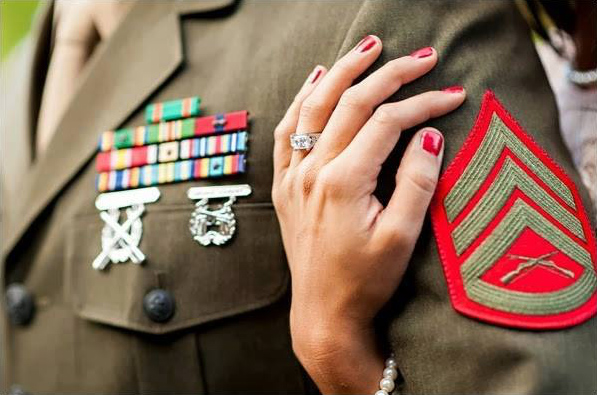
But there are those many women who may not have served in the Indian Armed Forces or Central Armed Police Forces but are brave hearts of the nation. I am talking about the mothers, sisters, fiancés and wives of the martyred soldiers and military personals. The men undoubtedly deserve the highest state and central honors for their sacrifice, yet we tend to forget the women behind the scenes. 

The recent attack in Pulwama shook the nation and the Armed Forces took up the mantle of once again protecting the people of this country. And once again the countless mothers and wives braced themselves for the fear of their loved one’s life. But at the same time, not for once regretted nor complained.

Some Inspiring Stories

Thanks to the social media, a lot of stories of such courageous women were brought forward. The nation watched them stand boldly besides their husband’s coffin, watched them with five months old in their hands, heard of delivering a new born days after their martyred husband’s death. We felt the pain of the mother whose son was to get married in two weeks’ time and the resilience of another on responding to the capture of her IAF son. Yet, it was not the sobs and tears that made these women a symbol of empowerment. It was their pride, their unnerving shouts of ‘Jai Hind’ and ‘Vande Mataram’ and their call for continuing to live their lives honoring the martyrs and the country.

Nikita Kaul and the family of Major Vibhuti Shankar Dhoundiyal – Source

Major Vibhuti Shankar Dhoundiyal’s wife Nikita Kaul bade a powerful yet tearful adieu at the side of her husband’s coffin. Married for 10 months, this widow put up the bravest possible face and stood with dignity and she whispered a final ‘I love you’ message across to her martyred husband. She however, also spoke up in front of everyone addressing her husband to say she was proud to be his wife. She was proud because he fought for the safety of those people that he had never come in contact with. And she with utmost dignity pointed out to not sympathize but honor this man who was a much larger person than anyone else who was present there. She ended with a fittingly ‘Jai Hind’ and saluted her husband’s coffin with grit and determination on her face. 

Wife of Mukut Bihari Meena and daughter Aaru – Source

The wife of the martyr Mukut Bihari Meena carried her 5 month old daughter in her arms as she walked behind her husband’s coffin amidst shivering cries of national slogans. She was in a state of delirium and disbelief and yet in her unbalanced state of mind she raised her hand with the shrill of ‘Vande Mataram’. The state of mind she was in, the truest emotions emanated. These emotions were not about hatred and not about cursing her fate. She did not wail for the injustice but instead let the love of her country take precedence. Her daughter sat on the coffin of her father not knowing the significance of it all. 

Dr. Shobha Varthaman
Dr. Shobha Varthaman – Source

Then there is the mother of IAF pilot Abhinanddan Varthaman who has worked with ‘Doctors without borders’ for a large part of her life and has shown extreme composure and grit during her son’s capture. Both her sons serve in the IAF and she herself has been a brave heart rendering service to the injured in conflict zones across the world. 

Dimple-Cheema-with-Captain-Vikram-Batra
Dimple Cheema with Captain Vikram Batra – Source

Dimple Cheema, fiancé of Captain Vikram Batra who lost his life in the Kargil War, says, that there is not a single day she has not missed him in the last 17 years. Yet she feels proud about his accomplishments and knows he is an inspiration to the youth of today. ‘I know in my heart we are destined to meet again, it’s just a matter of time’, she says.
Gauri Mahadik
Gauri Mahadik – Source

Major Prasad Mahadik was killed in a fire in Arunachal Pradesh. His wife Gauri Mahadik is ready to join the Indian Army as a tribute to her husband. She sees it as the best tribute to him to be wearing his star and uniform. She topped the Service Selection Board exam in the category of widow and will be inducted in the Indian Army by March 2020. Instead of crying over his death, she chose the best way to remember and honor him. 

Stories of such various women are aplenty. Some make it to the fore in the age of digital media and some have been forgotten in the long history of conflicts and borders. Some are told but countless are not. 

On this Women’s Day let us salute the women in the Armed Forces. Let us also salute those women who are the biggest support systems of the men in uniform. The women who are prepared for the worse yet do not deter from facing it. The brave women who in spite of seeing and knowing the grief continue to stand by and push their sons and men to serve the nation. 

These women who are daughters, sisters and fiancés have also given the ultimate sacrifice for the country. There are no medals to honor them, just a life of hollowness and a void that is hard to fill. They are the bravest we know, because they take the hit and a part of them dies from within. Yet, they stand up and live again.


Some Great Books About Indian Armed Forces

We Recommend…
Soldier & Spice: An Army Wife’s Life: 1

The Beats of Different Traditional Drums of India

6

Traditional-Drums-of-India

India is the land of music. Undoubtedly, there are various musical instruments, some traditional, some modern that have been the backbone of all musical endeavors and creative performances. Music is a huge part of the Indian culture and its presence is felt in all aspects and ways of life. During happy or sad, anxious or soothing times, music forms an essential element, for not only the individual, but also for the community essence. That is why during festivals or social occasions music is of paramount importance across regions of the country. 

Though there are a varied number of musical instruments, let us take a closer look at one of the most important instrument that is used in practically all musical undertakings – the drum. Unsurprisingly, there are many different kinds of drums across the country that are used for specific rhythms. 

Categories of drums in India

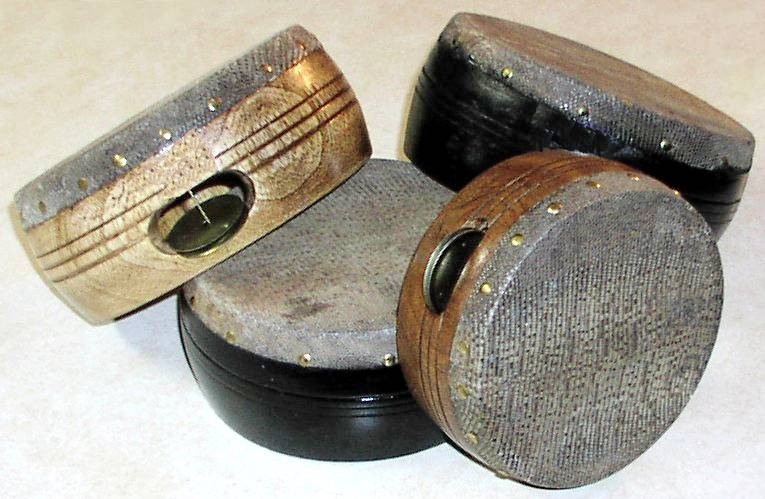
Broadly, we can divide the drums into three basic categories. The hand drums are played using the hand alone, whereas, the stick and hand drums can be played using either the stick or hand. The third type are hand frame drums that look different because of their framed appearance, such as the kanjira and kansi. 

The traditional drums of India

Let us take a look at some of the different types of drums in India. 

1. Tabla 

Traditional-Drums-of-India-Tabla
Tabla – Kaustav Bhattacharya via Flickr

The tabla is one of the most popular classical musical instruments that always consist of a pair. Called the dayan and bayan meaning the left and right drum the tones of each complement the other. The tabla is played with the hands and is considered as one of the most difficult hand drums to play in the world. 

2. Chenda

Traditional-Drums-of-India-Chenda
Chenda – Liji Jinaraj via Flickr

The chenda is used most in the southern state of Kerala. This wooden cylindrical drum is played widely during the Thrissur Pooram festival where a huge number of artists play the instrument in tandem and synchronization. Played on both sides the chenda is played using sticks and is also an important instrument during the performances of Kerala art forms, such as Kathakali, Theyyam, Koodiyattam and more. 

3. Mridangam

Traditional-Drums-of-India Mridangam
Mridangam – Wikimedia

Hailing from Tamil Nadu, the mridangam is an essential component of Carnatic music. It is believed that mridangam is to Carnatic music what the tabla is to Hindustani Classical music. According to various myths and legends, it is also believed that it was the mridangam that was split into two to construct the tabla. The mridangam is placed on the floor and then played on either side.

4. Kanjira

Traditional-Drums-of-India Kanjira
Kanjira – Wikimedia

Again from south India originates the kanjira, an instrument that belongs to the family of the tambourine. Used widely in folk and religious music this framed drum was modified by Manpoondia Pillai by adding a pair of jingles and hence introducing it as a reckoning musical force within classical music. 

5. Dhad

Traditional-Drums-of-India-Dhad
Dhad

Shaped like an hourglass this traditional musical instrument originates from Punjab. Folk singers called Dhadi are amongst the many artists who play and master this instrument. It is small in size and can be played by striking or tapping the fingers on its either surface. 

6. Dhol

Traditional-Drums-of-India-Dhol
Dhol – jasleen_kaur via Flickr

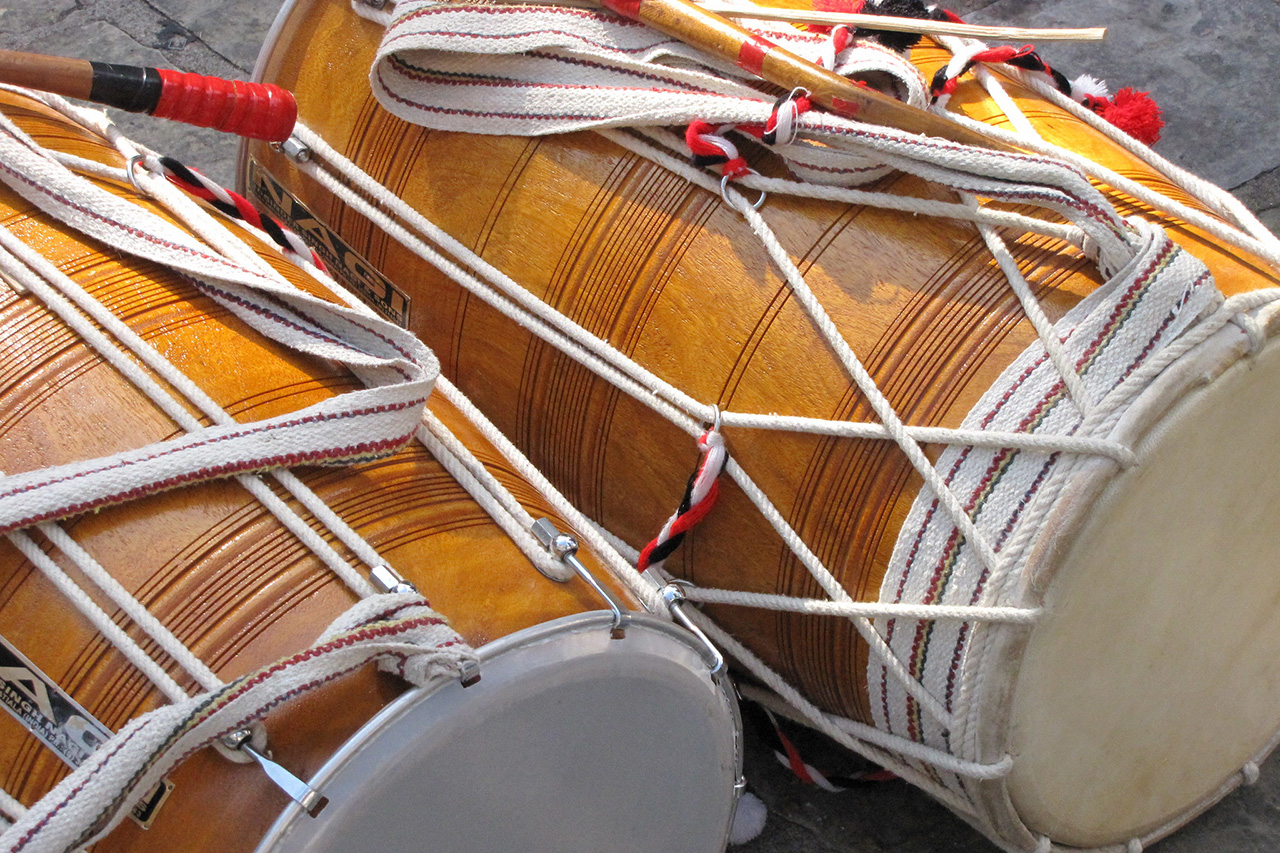
The dhol is a double sided large drum that is laid horizontally or strapped on one’s body. Played with sticks, the dhol has many regional variations throughout the country. Played predominantly in northern India the dhol has been an accompanying instrument for a number of Sufi saints and religious mystics. The dhol is played across various regions, such as during the Bihu festival in Assam, Navaratri celebrations in Gujarat and Ganesh Chaturthi in Maharashtra

7. Dhak

Traditional-Drums-of-India-dhak
Dhak – Ronit Bhattacharjee Via Flickr

The dhak is a variation of the dhol that originates from West Bengal. The beats of the dhak reverberate through Durga Puja celebrations as the instrument is a close associate of the culture and festivities of the land. 

8. Pung

Traditional-Drums-of-India-pung-cholom
Pung Cholom – zehawk via Flickr

The pung originates from Manipur and is associated with the pong cholom a traditional Manipuri dance form. The dancers themselves usually play the drum that starts off in subtle shades and reaches a crescendo of thunderous rhythm. 

9. Khol

Traditional-Drums-of-India-Khol
Khol – Adil113 via Flickr

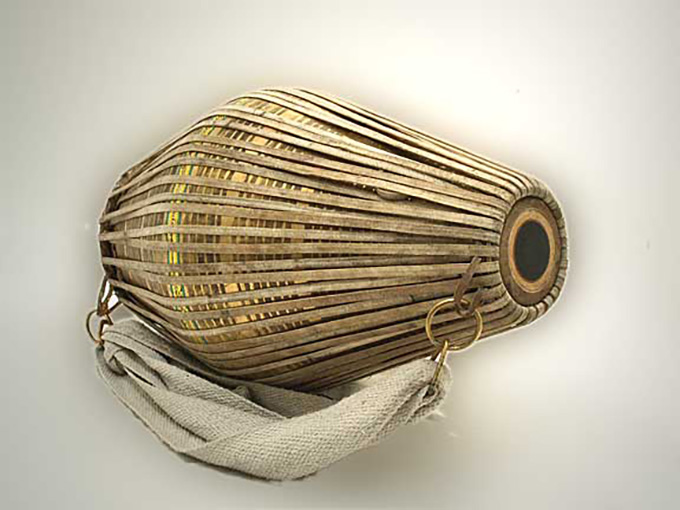
The khol is also called the mridanga and originates in the states of Assam, Manipur and West Bengal. The khol looks slightly different with each side of the drumheads varying in size. One side is smaller than the other and the instrument is played by hand. 

10. Nagara

Traditional-Drums-of-India-Nagara
Nagara – Arun Kumar

Also known as the naqqara, nagada this kettledrum was made famous when it featured in a particular Bollywood song. It can be played both by hand and sticks and its influence is mostly across the northern regions. 

There are of course, a whole bunch of drums including the urumee, sambal, davul, idakka, kansi, duggi, madal and many more. Each has its own make, region of influence and interestingly a very strong connection to the traditions and culture of the area that it originates from. But then that perhaps is the beauty of music, it transcends on one end, but on the other, roots and finds expression in the most local and traditional nuances of the place that it truly belongs to. 

Why Bell Hooks’ “All about love” is Now More Relevant Than Ever

1

Bell-Hooks - All-about-love
Get the Book

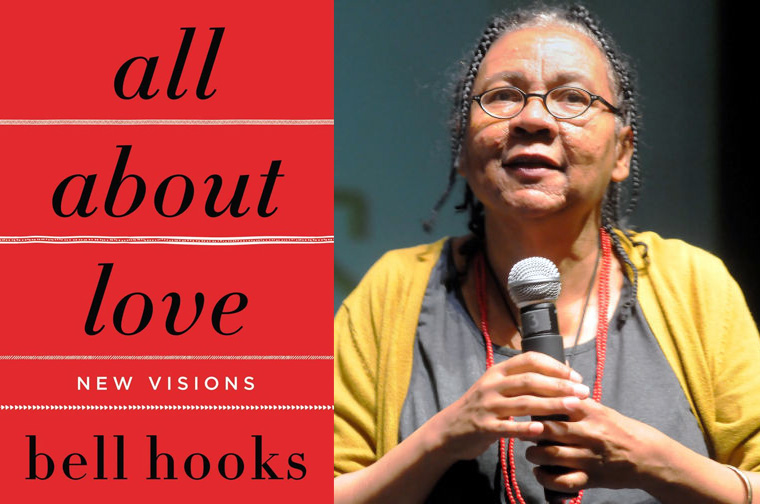
I scrolled on Instagram as I found a book recommendation by Rega Jha (The ex Editor in Chief of Buzzfeed). I was totally intrigued by the title of the book – “All About Love”. I did not want to read yet another cliche book on love and she promised that it wasn’t. This book is the best guide to love which I have read – and it is so for both genders. Especially in the Indian context where men and women are assigned different gender roles, still very prevalent today, the book explains how none of us can really be free when we love. To love freely we need to get rid of the gender roles assigned to us by society. In very few Indian families, people have conversations with each other about issues which affect them, men generally consider it a threat to their masculinity to take a woman’s opinion. The book advises people to break free from such ideology and engage in open communication so that there is better understanding between both parties. 

For those of us who have lost a loved one, the book makes us realise that love is something which cannot just end after death, true love lives on. This is even the case with breakups where you cannot stop loving the person after a break up, you can simply change the nature of your interaction and engagement with them. During the pandemic, break ups and human loss is happening at a greater rate than before, it is necessary to develop an ideology which will build resilience while still keeping our faith in the world. Though the book was published in 2000 (which isn’t a very long time ago), the book is still very relevant today despite changing times. 

Bell-Hooks-quote

Often we are taught that love lacks a definition, and it’s a feeling which cannot be defined. However, Bell Hooks explains that love is not an emotion, it is an action – more like a verb. You can love someone when you are doing the act of loving them. Love exists when there is a healthy relationship between two people who consider each other as equals. It is a meaningful action which incorporates understanding and makes the other person feel understood despite gender roles. Bell Hooks also explains that many of us cannot define love because we do not have it. This is an interesting philosophy which applies to many rural women who continue to be in toxic relationships and claim to love the man. They also believe that the man loves them back despite his abusive behaviour. Society prevents us from knowing love and accepting that many of our relationships lack love. 

The book also makes strong points towards children’s rights and explains that they shall be given a voice to speak just like any other individual. During the pandemic, there has been an increase in cases of abuse against children in families, reading this book makes us realise that the effects of abusing children can be long term in their lives. No matter the segment of society and the situation, the book is very valid from not only a love point of view, but also from a human rights point of view. 

Bell-Hooks-quote-1

Many of us read so many books about love without understanding what love truly is. I think that the book will stay valid for a very long time to come. The book will be relevant till there are violations against human rights in this world, both genders are not treated equally and till long after that. This is one of the most interesting discourses on the idea of love not just romantic, but between partners, families, communities, children and friends which we extend. It gives us a guide to understanding love and ourselves better. Often in schools, when we say our pledges of friendship and love, we are not taught what love means or how to love. The book overcomes that basic gap in education and thereby explains the relevance of loving everyone to the best of our abilities in this world.

Get the Book Here