A lot has been said about the relationship between consumerism and weddings in the contemporary Indian context. A 2017 KPMG report had estimated that the Indian wedding business is worth almost 50 billion US dollars, and it increases every year. Luxurious celebrity weddings, destination weddings, and theme-based weddings further contribute to this big industry.
Social scientists have explored the relationship between the big, fat Indian weddings with conspicuous consumption. Conspicuous consumption has been defined as the unnecessary display of wealth and luxury (Veblen 1899). Indian weddings have become an occasion that brings this conspicuous nature of consumption out.
Forms of popular culture like Bollywood and TV shows have made lavish weddings look attractive and easy. They depict very elaborate wedding rituals that run for three-four days with a variety of functions like haldi, mehendi, sangeet, etc. These elaborate rituals have also now entered cultures that earlier did not have these ceremonies.
‘Assamese people did not have these mehendi and haldi ceremonies earlier. We used to have the juroon (the engagement), a small haldi and then the wedding. It is the impact of the TV’, said Mrs. Renuka Bayan, an owner of a wedding hall in Guwahati.
In many cases, the pressure to host these expensive weddings have meant that families have taken huge loans and faced great financial risks. In fact, in many rural areas, farmers utilize their loan amounts in their daughters’ marriages’ and later, due to non-repayment of the dues, commit suicide. It is because of the pressure of giving dowry and hosting grand weddings that many families do not want daughters.
However, it is not the relationship between consumerism and weddings that we are looking to explore. Our interest lies in looking at the way consumerism has also entered the ‘traditional’ menstruation ceremonies, also known as tuloni biya – in Assam.
This article is based on qualitative data that is essentially collected primarily from two sources – participant observation and interviews. Both of us have been born and brought up in Guwahati and have experienced the rituals associated with menstruation first hand. Thus, participant observation became an important source of our information. The second source was interviews that we conducted with some participants in the process – women, parents, and owners of halls.
Tuloni biya in Assam has revolved around certain rituals that vary regionally but persist. As soon as a girl has her first period, she is kept in a separate room where men are not allowed. The girl is mostly kept on a diet consisting of fruits, rice, and boiled potatoes for a week. After seven days, the girl is bathed with haldi and in some communities, married to a banana tree.
These rituals are not only socially regressive and patriarchal but also traumatic for young girls.
‘I do not have good memories of the time when I had my first period. It was very difficult to deal with all of it – the onset of menstruation, and then all the rituals’, says Rakhi, a student pursuing a BA in a college in Guwahati.
What follows is a celebratory feast in which relatives and friends are invited and the girl is dressed up as a bride. This celebration of tuloni biya, however, onlystarted in the early 2000s, as a product of modernization and changing class dynamics. The rituals and the pomp and show in the celebration have made the occasion both sociologically and economically important.
In many ways, this feast that celebrates menstruation has become a new form of conspicuous consumption.
Just like in the case of weddings, fancy halls are booked, expensive paat silk mekhela chadors and gold jewellery are purchased. Make-up artists are also hired to dress up the girls. Invitation cards are printed and distributed. Grand feasts are planned with plenty of items on the menu.
The associated class symbol in celebration is not hidden. What is funny is, that on the one hand, there is the discomfort of society and the taboos associated with menstruation. And on the other hand, there is this celebration of the occasion to display class status.
Tuloni biya in Assam and its celebration are both symbolic as well as competitive, the display of wealth is important but the urge to do it better than the neighbours is equally significant.
Ramesh from Guwahati is a father of two daughters who wanted the tuloni biya of his eldest daughter to be different from anything the guests had experienced before. He booked a wedding hall and put traditional Assamese food items on the menu to make sure that the celebration was nothing short of a grand occasion.
‘I had decided to keep the menu very traditionally Assamese. This was different because nowadays in Guwahati everyone has either a Chinese or a Punjabi menu,’ says Ramesh.
Ramesh also says that this meant he had to spend more as he had to bring in cooks from his village to make the ‘traditional food’.
‘Not everyone can make authentic Assamese dishes. I brought some cooks from my village to help me. This increased my budget but the food was much appreciated and so it was worth it’.
People who have benefited from the increasingly consumerist nature of menstruation celebratory feasts are owners of wedding halls. Their rates vary from Rs. 1 to 5 lakhs per day, depending on their size and location. What is also interesting is that parents today save for their daughters’ menstruation feasts along with their weddings. Thus, menstruation in Assam is no longer only ritualistic but has also assumed a consumerist nature. It has become an occasion to display wealth and class position.
About the Authors –
Rituparna Patgiri, a PhD researcher in The Centre for the Study of Social systems (CSSS), Jawaharlal Nehru University (JNU), New Delhi. Co-author Ritwika Patgiri, a PhD scholar in the Faculty of Economics, South Asian University, New Delhi.
“As a young girl of five in India, I dreamed of becoming a professional dancer one day. Spotlight on, dancing center stage with joy coursing through my veins, every moment a thrilling experience. As I grew older, this dream gained clarity and focus. Like a magnet, it drew me, compelled me,” says Nayanika Vyas. And perhaps there is no better way to surmise her love and passion for her art!
Learning the art
Nayanika enrolled in a dance school in Delhi at the tender age of 5. But she always wanted to further her knowledge in her chosen art form and chose not to compromise or settle for anything lesser. She became the first native Indian in The University of the Arts in Philadelphia and one of the first Indians in the USA to do her Bachelors in Dance. Trained in various dance forms, including Ballet, Modern, Contemporary and Jazz, Nayanika didn’t find it easy to pursue and learn her art. “An education in Dance for a bachelor’s degree does not currently exist in India. Since I was unable to attend any of the live auditions due to the distance, I rehearsed and recorded videos of me doing my various classes in Delhi. Soon after my applications, I received two couriers from The University of the Arts in Philadelphia, granting me acceptance into their university for a BFA in Dance. The second courier were scholarship letters offering me an International Presidential Scholarship as well as a Dean’s Scholarship for all four years.”
Her determination finally paid off when she was able to sharpen her skills and study her lifelong passion. After her graduation, however, she moved to New York as a performer and a dance teacher.
The performer with a ‘never – quit’ attitude
When Nayanika was 15 she was roped in as the youngest dance member of a Musical called ‘Jhumroo’ at the Kingdom of Dreams. She performed in more than a 100 shows with Jhumroo and credits the musical for giving her unforgettable experience and skill. These were also the crucial years in her academic life and Nayanika did struggle with her grades for a while. However, in the last year of her high school she decided to give it her all and regimented herself to a routine squeezing her dance rehearsals and studies simultaneously and often staying up at nights to let not her academics suffer. Her hard work was rewarded by excellent grades in her school board exams giving her the confidence to prove to herself her true character, mettle and fighting spirit. And it was this very same spirit that helped her later in her career too.
Where on one hand she began performing early, she struggled to gain work and recognition after she completed her graduation in dance. Nayanika’s journey seemed to hit various roadblocks as she worked hard to find a related job. She auditioned for months and yes, she was ‘the most different looking face in the room’, yet, she didn’t choose to give up or feel bitter. Instead she ‘pursued resilience day after day and was determined to be victorious.’ She was usually the only person who was not tall, white and American, but finally her efforts paid off after auditioning for almost fifty companies when she signed a contract with a contemporary ballet dance company called Bloodline Dance Theatre.
This was just the beginning as Nayanika signed her next contract with a company specializing in Indian dance called Ajna. She has various performances under her repertoire including a performance at the Premier of Earth , (a full length dance event that addressed Global Warming) choreographed by Eryc Taylor Dance- a world renowned Modern dance company based in NYC in September 2019.
Some of the other notable performances are Theories and Apologies by Lamont Joseph (Bloodline Theatre) in 2019, Residue by Sidra Bell in 2018, Woven by Gary Jeter in 2017 etc.
The inspiring teacher
“Being the first native Indian in my University pursuing an education in Dance, I was thrilled to have broken boundaries and inspired other young artists back home to build their passion into a career. As the years went by, I received numerous emails from other aspiring dancers who wanted to follow my path”, says Nayanika. It was time she decided to give back to dance what she had so generously received from it. And hence, she started working as a Teaching Artist with prominent organizations, such as Dance Theatre of Harlem, Young Dancers in Repertory and Public schools of New York. She is also a Teaching Artist at DMF Youth, Ajna Dance and a Ballet and Jazz teacher at The Danceworx for kids. In fact, she has also held dance classes every summer in New Delhi since 2015-2018.
And yet she acknowledges that she has a long way to go by saying, “I aim to undergo diverse and rigorous training from performing dance companies around the US and armed with knowledge, experience and confidence return to my own country to begin my own dance company for those who share my passion for dance but remain deprived of technical training due to lack of opportunity or resources as I have experienced.”
It is true that India is the homeland of some of the most wonderful dance forms of the world, yet, Nayanika makes a valid point when she says that “I have grown up listening to people telling me to pick a career that was better recognized, better paid, better respected or just “better”.
It is heartening to know that Nayanika wants to play her part in changing perceptions and opening up avenues for youngsters to pursue different dance forms with passion and confidence. She is silently paving the way for a future of ballet and contemporary dancers who will hopefully not only benefit from her skill and learning, but also, from her spirit, resilience and confidence. For someone who truly believes in chasing her dreams, we hope Nayanika continues to inspire, conquer and excel!
During my school days I had once been at the receiving end of a particularly nasty behaviour of the crows in my locality. Returning from school as I walked a short stretch from my bus stop to home, all the neighborhood crows, who it seemed had come to recognize me, started cawing noisily in unison and creating a raucous. Some of them tried to attack me by pecking on my head. My recourse was to run from the bus stop to my home with my school bag over my head as a shield. As this went on for several days I seriously wondered what had I done to annoy the crow community? Many years later, when I began reading books on animal behaviour I found an answer which explained their strange behaviour.
Books are said to be a person’s best companions and in my case some natural history classics and popular science books proved to be a life line, as I will explain shortly.
Salim Ali (1896 – 1987), nicknamed as the ‘bird man of India’ had once said in an interview, ‘Birdwatching is like measles. You have got to catch the disease’. I caught the disease fairly early and spent a lot of time in the outdoors, watching birds, observing the shapes of seeds, forms of vegetation and visiting the local zoo quite often.
Due to my interest in natural history I decided to pursue biology and enrolled in a suitable course at the university. However, as I soon discovered, biology subjects were not taught in a manner which would generate any interest in life forms, patterns of diversity or the underlying mechanisms. It was at this juncture that my birdwatching hobby, chiefly my association with some fellow birdwatcher’s, came to my rescue. Through them I was introduced to the world of books on science, ecology, conservation etc. Books, which helped me not only to sustain my interest in biology but opened new horizons in my mind—something which would not have been possible by sticking to the prescribed syllabus that was taught to us in the classroom or dissecting biological specimens in the lab. I may also mention that in those days (the 1980’s) reading books was a popular past time, perhaps different from today’s time when information is freely available on the internet though Google, Wikipedia etc and reading books has taken a downturn.
sketch from Lorenz’s King Soloman’s Ring
Among the books in birdwatcher friends collections there were the classics which have inspired several generations of naturalists and scientists, worldwide. For instance, there were all time classics written by scientists who had made significant discoveries, such as Niko Tinbergen’s, ‘Curious Naturalists’, and ‘The Herring Gull’s world’, Konrad Lorenz’s, ‘King Solomon’s Ring’, Gilbert White’s Natural history of Shelbourne. There were other books, the classics of the conservation movement e.g. Aldo Leopold’s, Sand County Almanac, Rachael Carson’sThe Silent Spring, Gerald Durrell’s books on zoo animals (My family and other animals and A zoo in my luggage). One book, Joy Adamson’s Born Free, often talked about was the story of the release of captive bred lions in the wild, which was made into a film. And ofcourse, books, written in a remarkably lucid manner such as Leakey’s books on Physical anthropology and the evolution of hominids.
Returning to my unpleasant encounters with crows, in my boyhood days, reading Konrad Lorenz’s book I got some idea why they used to behave the way they did. Among all birds members of the crow family Corvidae, which includes house crows (commonly encountered in India) and Jackdaws (which Lorenz had studied in Europe) are regarded as highly intelligent, with superb memories.
According to Lorenz crows are highly protective of their young nestlings and associate any black object as their own. Maybe during the period in school when I had cultivated the enemity of local crows, I must have either been carrying a conspicuous black cloth as I tried to shoo them away or done something ridiculous like shooting them with a slingshot. Being highly intelligent birds with sharp memories, they must have remembered me and recognized me, and so attacked me on the way, from the bus stand to my house.
There was another doubt in my mind which Lorenz’s book clarified. How do animals recognize their own kind? This was by a process known as imprinting, something which happens very early in the life of an individual when it is in the egg or embryo stage. For this and other discoveries concerning organization and elicitation of individual and social behaviour patterns, Lorenz, along with Karl von Frisch and Nikolaas Tinbergen, were awarded the Nobel Prize in Physiology or Medicine in 1973.The works of these early pioneers and superb writers, introduced many words and concepts which are today a part of popular lexicon. The ‘pecking order’, for instance.
Soon I was on another trajectory—understanding the significance of territory in the animal world. Whenever we see birds singing or displaying their resplendent plumage, like a proud peacock strutting around with his train expanded like a huge fan, with hens looking on admiringly, we are apt to think that the males of the species do this to attract the females for mating purposes. (Our Bollywood films espouse a similar line- if the hero is handsome and good looking and able to sing or recite poetry….well then he has the girl). But the reality is actually quite different because in the animal world it is not so much as males attracting the females but each male giving a message to rival males about the assets he commands i.e. the territory. In a sense he is telling them to keep off. The females choose those males which successfully ward off rival males and successfully defend an all purpose territory which has all the resources- food, water, nesting sites etc, necessary for survival.
It took me a while to comprehend this.
What really helped in understanding the concept of territory was Robert Ardrey’s famous book ‘The Territorial Imperative’. One thing led to another. Through Ardrey I learnt about an even older, more fundamental author, the actual discoverer of the significance of territory. It was the British ornithologist Eliot Howard who in 1920 had written the classic Territory in Bird Life, where the original idea had been outlined. Eventually, in a second hand book market in Daryaganj in Delhi, I stumbled across a copy of the book and immediately bought it. This led me on to other books, Desmond Morris books on observing humans (Manwatching) in the light of modern biology.
Fractals
All these writers of yester-years created a major impact on biologists and wildlife scientists of several generations all over the world, even though some of them had said pretty controversial things—something which I did not realize then. Some had written things which would be considered politically incorrect today or had proposed theories which were later proved to be scientifically unsound. (One such book was V.C. Wynne-Edwards book ‘Animal Dispersion in Relation to Social Behaviour’ , published in 1962 which propagated the idea of group selection-an unscientific idea). However, even though some of these authors were those who had supported Nazis, Fascists and Racists, about which I came to know later, their books were simply fun to read and hugely informative for a generation hungry for information and with no Google or Wikipedia around. Interestingly, most of these authors (and also those mentioned below) were westerners, white and male. This is a story in itself.
Later when I was pursuing scientific research I was drawn to popular works of well known scientists, particularly their biographies and autobiographies. It was always tempting to read ‘advise’ books—say Peter Medawar’s Advice to a Young Scientist which had the interesting observation, ‘ If politics is the art of the possible, research is surely the art of the soluble. Both are immensely practical-minded affairs’. (Another interesting view expressed by Medawar was that the scientific paper is a fraud. How? Well the manner in which it is drafted, with objectives clearly stated in the introduction, the methods described as if they were to follow in a natural sequence etc- the reality in almost all cases is quite different). Salvador Luria’s A slot machine, a broken test tube was also an inspiring read.
But the one book which was top of the charts was Jim Watson’s, The Double Helix —a most thrilling an exceedingly well written narrative, which had an element of a chase, a race if you like, between the main protagonists of the DNA structure discovery viz. Linus Pauling (of USA), the King’s College group (in London) and ofcourse the Cambridge Cavendish Laboratory group to which Jim Watson and Francis Crick belonged. I thought the highlight of the book was an open admission of sexism (how the male scientists in their mad pursuit to discover the structure of DNA pushed the female participant Rosalind Franklin into the background and even stole her data) and many more things such as offering a glimpse of what professional science is like at the highest level. Feynman’s books Surely You’re Joking, Mr. Feynman, fun to read, also provided a glimpse of what it was like to do science.
Covers of some popular science books
Popular science books on quantum physics were also very much the flavor of the season, particularly John Gribbin’s, In Search of Schrödinger’s Cat: Quantum Physics And Reality. (Later I read an exceedingly well written book Quantum: Einstein, Bohr, and the Great Debate about the Nature of Reality by Manjit Kumar, which had extensive quotes from the correspondence or memoirs of the principal actors in the great debate making the narrative extremely readable and convincing). Similar books could also be found in ecology such as Paul Ehrlich’s The machinery of nature which made a fascinating read as it made a lot of sense about doing modern ecology in the field. Richard Dawkin’s books The Selfish Gene and The Blind watchmaker, proved to be essential to understand evolution.
During the course of my studies I graduated from one university to another and at each phase remained in constant touch with popular science books. At JNU’s School of Environmental Sciences which I attended last, I found the school divided into two camps, with theoretical scientists (all mostly physicists) on one side, and empiricists (biologists, toxicologists and chemists) on the other. I was sharing office space with research scholars working on climate change models and chaos in populations and inevitably the differences in the attitudes of biologists and physics students cropped up. Numerous jokes were doing the rounds. The biologists were castigated for being obsessed with detail and lacking in rigor in what they did; the physicists were scoffed at for the proverbial ‘spherical cow’ syndrome (which goes as follows: Imagine a field with cows. Let us assume each cow to be a sphere with radius r…….).
king solomans sring some sketches
JNU is a great place for pretenses, especially intellectual ones. In the social sciences schools some students would be seen dead than without a copy of Edward Said’s Orientalism, a highly popular work which was a fad among intellectuals in those days and which attempted to evaluate the effects colonialism by the west on the intellectual life and cultures of third world nationals. Among the theoretical minded scientists in our school, the book which was in fashion was James Gleick’s Chaos. Non –linear phenomena was very much a fashion in those days as chaos was discovered in weather data, population cycles etc. The book itself contained a lucid description of all the areas of developments in this field, particularly fractals. In those days I recall my friends becoming excited by papers, say fractals in taxonomic systems as we tried, mostly in vain, to build a bridge between biology and physics. Wasting no time promptly I bought my own copy of the book and thoroughly enjoyed reading it.
Thinking what to know about stocks before investing? There are several basics that you should always know before taking the plunge. If you have considerable experience and expertise then you can always directly invest in equities while if you are a beginner or do not want the hassles of regular tracking and portfolio management, you can choose equity mutual fund investments via SIPs (systematic investment plans). Here are some points that you should always keep in mind before deploying your investments.
10 Things to know before investing in stocks
Stock market investments are not rocket science but there should be a few basic aspects absorbed by you before venturing into the same. Here’s looking at the same:
Allocation to Equity– This is the first and most basic aspect you need to be familiar with. Every investor has a specific appetite/tolerance for risk along with a certain ability to take on risks as well. With regard to investments in equity, you should go by your own abilities to withstand risks. Your allocation towards equity will go up or reduce on the basis of your prevalent need towards wealth creation and also on the basis of factors like your liabilities, age, opportunities present in the market and so on.
Stock or Market Risks– Making investments in stocks will always mean higher levels of risks. There are risks pertaining to macroeconomic aspects such as rates of interest, inflation and movements in currencies along with other risks pertaining to volatility and liquidity among other factors. Then there are risks specific towards business sectors and stocks. The first two risks are systematic risks while the third risk is unsystematic in nature. Whenever you purchase a stock, you should be aware of the risks mentioned above. Index funds are suitable if you are okay with only systematic risks; otherwise, you should decide accordingly.
Stock Volumes in the Portfolio– There is no regulation on the number of stocks that you should possess in your portfolio. The benchmark is usually around 10-12 stocks in the same since if you have too few of them, then you will not benefit from a diversified investment. If you create a portfolio that has too many stocks in it, you will not be able to track the same effectively and they will not have diversification value as well.
Stocks that pay out dividends– You should ask yourself whether you should purchase stocks with higher yields through dividends. People usually buy stocks for gains in the long haul and not majorly for earning dividends. These indicate liquidation (partial) of the company and lowers values of the same as well. Companies that reinvest profits and earn higher returns on investments usually have higher valuations (PE ratio) in India in comparison to those that pay the dividends frequently.
Understanding the stocks in your portfolio– Buy only those stocks which you understand intrinsically. Stick to areas where you have knowledge and expertise or at least a basic idea. When you purchase any stock, you will have to track figures, performance, industry, news and so on. Unless you have a basic understanding of the industry, this will not be possible. You should not purchase random stocks for your portfolio.
Expectations- Whenever you invest money in equities, you should be mentally prepared to incur losses. Historically speaking, even seasoned stock market experts are spot on probably 20-30% of the time. The remainder is usually flat in terms of returns and even losses at times. Whenever you get it wrong, make a fast exit from the stock and do not annualize expected returns. 10% returns in a particular month will not mean 120% returns in a year’s time. Keep your expectations more practical and realistic regarding returns from your investments.
Problematic Aspects of Stocks– These aspects of the problem areas of specific stocks are usually known as red flags and you should evaluate the same carefully before investing. Some of the red flags include continual tax based inquiries from the authorities, losses made on a consistent basis, objections from bodies like SEBI and other regulators, defaulting on bonds or credit default spread and objections linked to audits. Several stocks have often taken sizable hits on valuations/prices whenever any such problem area manifested into a major issue. Such aspects should be warnings for you with regard to not investing in these companies.
Do not go blindly by tips– You will not become rich overnight by purchasing a stock at a price of Rs. 100 and selling at Rs. 300 within a few days. These are mostly one-off or rare scenarios. In most cases, penny stocks are not worth a lot and you should always avoid their temptations as much as possible. Do not go by market rumours and sudden blind tips. Most of these tips and rumours have their own agendas and will serve to distract you from your objectives and goals. Trust only your own judgment, your broker/advisor’s knowledge/research and your core competencies.
Doing homework– It is always necessary to do your homework thoroughly before investing. Carry our research on the stocks to be purchased including leverage, profits, overall efficiency, future prospects, ratings, returns historically generated, margins and so on. You need not always be an industry expert or top-notch analyst. Simple homework and research will help you make decisions that are more practical and informed.
Avoid timing the market– Do not go for timing the market since it is not vital and mostly impossible to perfectly catch the bottom/top ends of the market. If you take your time and deploy investments regularly in diversified and high-performing equity funds and remain financially disciplined/committed for a longer time period, you can create handsome wealth for the future. This should be your core focus at all times.
There are several other aspects worth remembering whenever you invest in stocks. Yet, prior to venturing into the share market, make sure that you do your research and consult financial/market experts accordingly.
India is a country having 40 different forms of embroidery, while it is still hard to find hand embroidery, as most of it has passed on to machines. Yet, a few like chikan stitches and sozni stay alive as they are hard to move to machines. Two sisters, Malyada Goverdhan, a software developer and ex-IAF officer Ramya Rangacharya passionate about these traditional weaving and embroidery started the story of Hands of India in the year 2009.
The collection of antique sarees, stoles, and embroidery clothes in the vastra kothri in their family’s 200-year-old temple exposed them to different weaving and embroidery forms from an early age. The love for the handicraft traditions got the two sisters back together for this project. They travelled to weaver and embroidery pockets of the country to discuss ideas, patterns, and innovations while staying true to the integrity of weaves and textures.
To them, the employment they generated was more important than the craft itself as they mostly work with women artisans who make great use of the money. They were told from these artisans – ‘It’s ok if you pay us less, but pay us regularly’. They knew that the humble artisans were unaware of the real worth of their products, especially with the mass production replicas in the market.
In the course of 8 years, Hands Of India has also trained numerous youth who had dropped out of school in different vocations such as tailoring, photography, modelling, basic computers, accounting and management skills. Their employees are all first-generation salaried workers.
Their customers grew not just because of authentic handloom but because of their fit and designs. When they came for exhibitions, they bought along portable changing rooms, alteration kits and a tailor. The use of the alteration data helped them make changes in their product sizes. One example is when they realized the hip size of their clothes was very narrow since they were based on western sizing and not for Indian women.
They addressed all the lags faced by the handloom sectors. Their prices were nominal (almost close to the readymade clothes we get in shops like max, unlimited, trends!). They mastered traditional designs and delivered them in forms of western-ready to wear dresses, tunics, skirts, waistcoats and Indian ready to wear salwar, churidars, sarees, unlike other brands that don’t have this many choices. Their final collections consisted of hand block printing (from Rajasthan and Gujarat), Bandhani, Aari (Kashmir and UP), Sozni (Kashmir), Kantha and English stitch (West Bengal), Pattiwork, Chikan (UP), Phulkari (Punjab), Kasuti (Karnataka), Sujani (Bihar) and handloom weavings from WB, MP, Orissa, AP, Assam and Rajasthan. They introduced a whole palette of colours to the handwoven cloths. They introduced a whole palette of colours to the handwoven cloths. Finally helping fill our closets with eco-friendly, charming, elegantly fit and colourful clothes along with giving us satisfaction to have helped a weaver.
From the last two years, the brand has gone into the clearance sale and we found out that they are planning to close down the brand due to many other troubles. The corona lockdown has kept the online shop open. Being a person who has a keen eye for handlooms and hand-crafts, I would miss this brand as I could blindly trust its authenticity and that it never hurt my economy, unlike the options I am looking into, in case of replacements now.
‘If you are working on something exciting that you really care about, you don’t have to be pushed. The vision pulls you’ – Steve Jobs
Zainab Limbdiwala has always been passionate about the Indian handicraft and handloom industry. Armed with her love for textiles, she pursued her Masters in Fashion Management from NIFT and went on to work for a private label for a while. However, she felt the need to do ‘something substantial’ and joined a NGO in Kolkata where she got the opportunity ‘to work with several self-help groups and artisans’. Up until here her journey seems pretty straight forward. Yet, where many others would have settled at this juncture, Zainab’s vision pulled her to explore further avenues and ventures.
Zainab Limbdiwala Founder AsalKaar
She decided to take the ‘passion for the craft a step-higher and that’s how AsalKaar was born’. AsalKaar founded by Zainab works closely with the local artisans of West Bengal to create handmade and handcrafted products. AsalKaar’s wide range of products includes tote bags, leather purses, notebook covers, jewelry boxes and much more. Each of the products, carefully handcrafted are embroidered, embossed, painted etc.
Yet, the idea that stands out the most behind this young entrepreneur’s story so far is her ‘initiative to showcase to the rest of the country, what kind of talent lies in our rural communities’. Unlike a lot of others from her generation, Zainab chose to partner with the true local heroes, bringing their skills to the forefront and taking the bold step of moving beyond the comfortable space of a home start-up.
Karigar which translates to an artisan is the true soul of AsalKaar and though a vision that might be in its ‘very nascent stage’, the initiative has definitely huge potential. In conversation with Zainab Limbdiwala who talks about her love for textiles, handicrafts, her association with the artisans and the future of AsalKaar.
Q. What were the challenges that you faced while trying to establish Asalkaar?
A: All my efforts, be it visiting new groups and artisans, sourcing, new development, photographing, marketing and logistics, are aimed at one thing alone – to provide maximum sales through value addition to these hardworking artisans.
With the oversaturated online craft market, our products often get hidden and camouflaged. Still, I believe there is a cluster of audience who are particularly inclined towards hand made products and hold great appreciation for the same. Therefore, reaching the correct audience was important. But once you’ve accomplished that and are sincere in what you’re offering, in terms of quality, aesthetics and functionality one is bound for an uphill journey, and thankfully for me the ride has been slow, steady with a lot of learning yet completely fulfilling.
Q. The crux of Asalkaar is all things handmade. How did you discover the artisans that you work with?
A: Most of the artisans I am working with now have been introduced to me through my travels over time to the local clusters in Bengal. Most artisans are not shy of sharing information about their craft and some would even go out of their way to make the concepts clear in your head by doing a little demonstration on the spot. Sometimes, striking a conversation to learn about their story and where they come from when visiting their tiny stalls in a government funded fair or mela would surprise you how much they can offer to your vision.
Q. Thankfully there is a lot of buzz around supporting local artisans. Yet, this is far from ideal. What are your thoughts generally about the role local artisans play in businesses.
A: There are a lot of businesses and organizations that solely promote artisanal and handmade products, and are doing it commendably so. However, there is still a gap present between an artisan at the grass root level and the end consumer. What is needed is to reduce as many middle men as possible in the chain or to at least ensure that the karigar is getting their fair wage and at the right time, and not after a period of 2 months. We need more stores and shops offering handcrafted merchandise but at an affordable price. I can vouch on the fact that if people are educated about the processes and the hard work that goes into making each piece, they would definitely want to go home with something.
Q. What are the different traditional and local arts that you explore in your products? For example kantha is one. Which are the others?
A: Besides kantha, I also work a lot on hand embossed and painted, tanned leather products. It is said that it was Rabindra Nath Tagore’s daughter in law who first introduced this process of embossing on leather in West Bengal from Java in the year 1940. There are still few extremely skilled artisans who are practicing this art form with immense dexterity. I love combining the leather with a variety of hand block, vegetable dye printed/embroidered or quilted fabrics to create bags, personal and travel accessories for the modern day users. I also work with certain self-help groups who are good with their handwork, and develop textile jewelry and soft toy textile products. Another pride of Bengal is its handloom textile and saree heritage. Even though the main focus of AsalKaar is on handicraft, I try not to restrict my work to just that. My love for weaving also has brought me to work closely with some weavers who work on traditional pit looms and create beautiful motifs in Jamdani and jacquard techniques.
Q. Coming from a city how easy or difficult was it for you to work with the local artisans. How accepting or skeptical were they of your idea?
A: It all depends on your outlook towards them. One needs to work hand in hand with them. There needs to be an unspoken understanding that we are working with them as partners and not means to get job or work done. Another thing that is really helpful is to be able to communicate in their local language. They really appreciate it when someone from the city can speak explicitly in the tongue they are comfortable with. I wouldn’t say it is an easy job, skepticism does exist, but it can be ruled out with time and by gaining their confidence.
Q. What are your thoughts around the demand or market of handmade products versus cheaper machine made goods. Do you think more consumers are open to purchasing authentic local products now than before?
A: When we purchase any product, we buy it for its value. Here the value lies in it being created through a series of processes involving skill, time and effort. Each product is created by hand with great attention to detail right from tracing the designs on fabrics to assembling and finishing all the parts together in making the final product. Any person who values and appreciates this creative process would feel proud to own an AsalKaar product. And thanks to such patrons, our brand is being accepted and liked so much in today’s market.
Q: You are working with artisans from West Bengal, but India is a treasure of many such local arts and handicrafts. Which are your personal favorites and why?
A: I am huge a fan of all kinds of block printing practiced in India, such as Bagh, Bagroo, Sanganeri and Dabu. However, Ajrakh has always been my personal favorite, mainly because of the multiple stages involved, using vegetable and mineral dyes and the unique design characteristics of the blocks. It is an eco-friendly and sustainable craft passed down for generations and exists in harmony with nature.
Q: What are your future plans in terms of marketing, expansion of Asalkaar? Also, where would you ideally want Asalkaar to reach?
A: Thanks to global connectivity and new age technology, it has become a lot easier for us to get in touch with consumers all over the world. It is incredible to learn how many people and places your products can reach without having to step out or having a physical store. I would love to be able to travel more and work with many more artisans from other states, outside of Bengal. More importantly, I hope to continue creating more unique products and that we get a greater/wider audience that loves and appreciates our work.
When you travel, you learn so much about a country’s culture. Not only that, but it’s also almost close to impossible for you to travel without taking photos, especially when you’re an enthusiast.
Photography now forms a big part of travel. There’s that desire to share your experiences and the new culture that you immersed in with your family and friends waiting back home.
Taking photos is also an excellent way to take a still memory and encapsulate cultural events. After all, great stories can often begin through the images that you’ve taken.
As you’ve had the privilege of experiencing other cultures of the world, it’s also your responsibility to take good photos of it. Go beyond just the thought of sharing it on your social media sites. Your photos should bring justice to how beautiful the cultural experience was in real life.
To start with, watch this video also on photography tips, pic resize online, before reading through below.
That said, here are some tips that can bring you towards taking beautiful cultural photos.
1. Get Permission
Even if you’re only going to use the photos for your consumption, you can never go wrong with asking permission of a person, in particular. For example, a native wearing their costume, or a member of a cultural tribe. It boils down to a matter of civility and respect.
Once you’ve gained their full permission to photograph other people, you can also move freely and take your time in whatever angle you deem best. You don’t have to feel afraid that your attention will be called out.
If you wish to catch a particular movement or expression, take the photo right away. Then, remember to ask permission later on by showing them the images and asking if it’s alright for you to keep it in your files. When they smile, you know you’ve got your answer.
2. Never Rely Only On Your Assumptions
When you’ve already taken a photo, it can be effortless for you to make assumptions about what you see in the picture. Especially when you’re going to post this on your blog, never make a story that didn’t exist in the first place. When you have the photo, always ask yourself, “What do I know for certain that’s in this photo?”
Since you’re taking cultural photos, stick only to what’s in the frame and the circumstances that led before you were able to take the picture. Do your research, ask questions, and know deeper about the culture, beyond merely just taking photos.
Click here for more tips as to how to narrate stories through your photos, without creating your own assumptions, as you post photos on your website or social media sites.
3. Be Patient
This tip may seem like an obvious one, but when you’re taking cultural photos, always be patient. Even when you’ve already asked permission, it can still take time for certain tribes, for instance, to warm up. Perhaps even, when a movement is going on, such as a dance, it can be challenging for you to take that perfect photo.
When you’re taking cultural photographs, this isn’t the place for you to be in a rush. Take it easy, and never rush anything.
When you know that you’re going to be traveling to a particular place, it’s expected that you’ll also have in mind a list of cultural experiences or facets that you’d like to become the subject of your photography. When you have this in mind, go even deeper by educating yourself about the culture that you’re going to take photos of.
For instance, even when you ask permission, there may be certain events or rituals wherein it’s always disrespectful to take photos. So, don’t even bother trying. Save your camera’s battery for other cultural events.
5. Shoot Early In The Morning
Shooting early in the morning always brings with it so many advantages that also has to do with the natural light. This is still an asset that’ll make your cultural photos look even better. The rising sun creates that warm glow on the everyday life of people, as they prepare for the day. Hence, you’re able to create more life and drama into an otherwise lifeless still.
As you shoot in natural light, do your best also to preserve the authenticity of the photos, as much as you can. You cal also read more resources about apps that can give you the best, but only minimal edits on your photos.
When you’re invited to the home of another, is it not that you don’t immediately sit in the nicest chair available? The same practice should also apply when you travel and take cultural photos. Remember, that country isn’t your home, and it isn’t your culture.
While the locals will know and see you as a tourist, this doesn’t mean that you should always take the forefront in exchange for beautiful photos.
Keep still and quiet when you’re taking cultural photos. Then, use the flash as sparingly as possible. If you can go without it, then so much the better. Especially when you’re in a sacred and peaceful atmosphere, you wouldn’t want to be the cause of disruption in their cultural life.
Conclusion
All these said and highlighted, the bottom line is in the act of taking photos that are respectful of the culture that they belong to. When beautiful moments are captured around the world, you’ll want to ensure that these stay with the great photos, as frozen memories in time.
In doing so, you’re able to share rich cultural experiences with everyone else that sees your photos. Henceforth, for the very next time that you take cultural photos, keep these tips enumerated above in mind.
Desktop administrators’ responsibilities involve installation, configuration, upgrade, maintenance, and support of desktop systems. They must consider the requests of their customers while carrying out these tasks. That’s why it’s vital that they have adequate skills that will render them helpful. The Microsoft MD-100 exam has been fashioned to suit them. This post takes a closer look at this Microsoft test by explaining what it means to become a desktop administrator and the skills involved in this process. We have also prepared it to guide you through preparing for this assessment using practice tests so that you can be fully equipped to pass it with flying colours. Let’s begin with some critical information about exam PrepAway.com.
Exam MD-100 Critical Details
The Microsoft MD-100 Windows 10 test is fit for you if you wish to clinch the Microsoft 365 Certified: Modern Desktop Administrator Associate badge. You have to get through MD-100 initially before getting to the second MD-101 exam so that you can fulfil the certification preconditions. But in case you had passed 70-698 test before its expiry date in March 2019, then you can skip MD-100 exam and go straight to assessment MD-101. Coming back to MD-100, this exam typically targets candidates who take part in deploying, configuring, securing, and monitoring devices as well as client apps in an enterprise domain. In this case, there are indispensable skills that one should have if they want to successfully do their job visit.
Skills Measured by Exam MD-100
According to the MD-100 exam outline, candidates must be adept with specific desktop administration skills, which include:
Deploying Windows
In this domain, test-takers must demonstrate their deftness in deploying Windows 10. Their competence should also be recognizable in carrying out configuration services once they have performed the installation. For this topic, areas to cover include configuring edge as well as internet explorer, and configuring mobility settings among others.
Device and data management
Certbolt Microsoft MD-100 Practice Test Questionswill determine if you can manage devices as well as data. Some of the tasks involved there include managing local groups, local users, and devices, configuring data access as well as protection, usage of local policies to configure devices, and managing Windows security.
Configuring connectivity
Desktop administrators must be accomplished with configuring connectivity. The skills involved in this domain include configuring networking and remote connectivity.
Windows maintenance
You also need to show you can maintain Windows by passing this MD-100 test. That means that you have to be familiar with configuring systems as well as the data recovery, managing updates, and monitoring Windows Click.
Before you take your MD-100 exam, it’s highly recommended that you prepare adequately for it and take a practice test to be familiar to what is waiting for you at the exam. Past exams are an essential aspect of every test prep process as they reflect the structure and setting of the actual assessment Visit.
Conclusion
Every technical domain, including desktop administration, calls for practical skills. The Certbolt Microsoft AZ-500 Practice Test Questionsoffers you a golden opportunity to pick up these skills. And with effective preparation approaches such as practice tests, you have no excuse not to make this a reality. If you’ve always been dreaming about becoming a desktop administrator, then you now have a chance. Just pick it up and run with it!
A school girl catches another show of Anupama even if it meant lying at home. In her unwavering love for the yesteryear heartthrob, Dharmendra, notions of right or wrong often faltered. She has a girl-next-door look about her. Not peeling her eyes, she stares fondly at the screen as the actor melancholically sings out Ya kil ki suno duniya walo.
Crooning the famed lyrics, she dashes home and stumbles in. Taken aback is her elderly father who was playing a game of chess with himself. Books strewn across the bed, perched upon one is a thick rimmed glass, fresh breeze swaying curtains back and forth in a silent rhythm.
The father breaks into a conversation with her on the wide screen, slowly fading the lines between real and reel. The 1971 blockbuster, Guddi was one of the many evergreen gems amongst a score of surreal directional masterpieces by the revered filmmaker, Hrishikesh Mukherjee. He was credited for pioneering a timeless new age cinema centring regular people.
Mukherjee was a champion of “middle of the road”, light- hearted and humorous takes on the everyday struggles of a middle-class man. He started off his career by working with the great Bimal Roy and later on helmed 40 plus films.
While Mukherjee’s tearjerker, critically acclaimed films highlighting life’s tragedies inspired hope, his comedies emerged out as a separate winner where there was no place for slapstick or vulgar humour.
Instead, they were a simplistic, soulful laugh fest about a bygone era that is years apart from the tech obsessed times of today. These films draw a nostalgia lover in with a relevant social message wrapped in warmth as though coming from a doting grandparent, gently nudging one down an emotional memory lane.
Listed below are some such beloved comedies from Mukherjee.
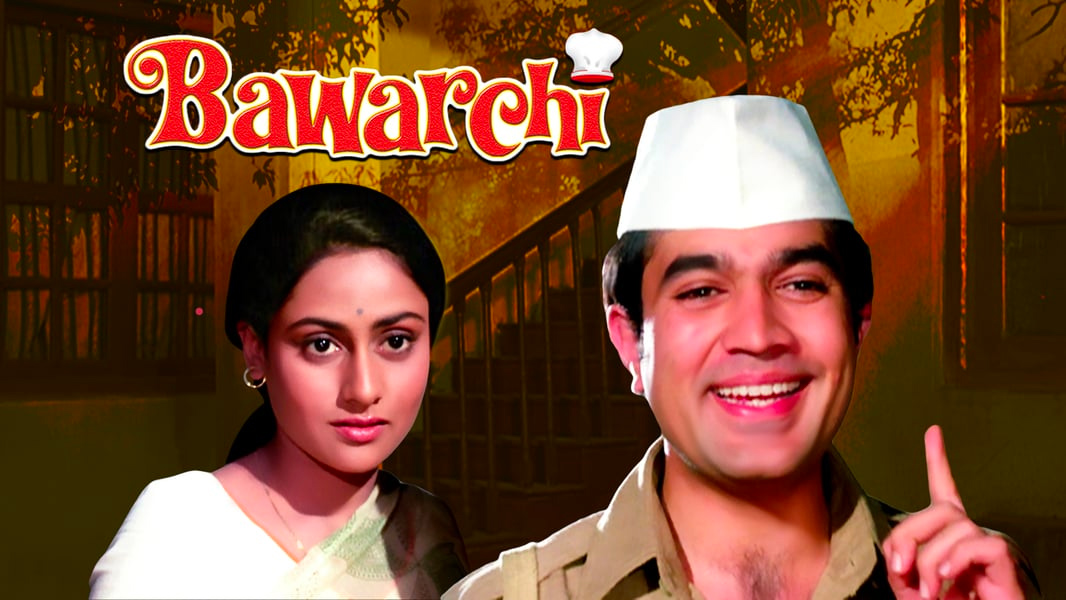
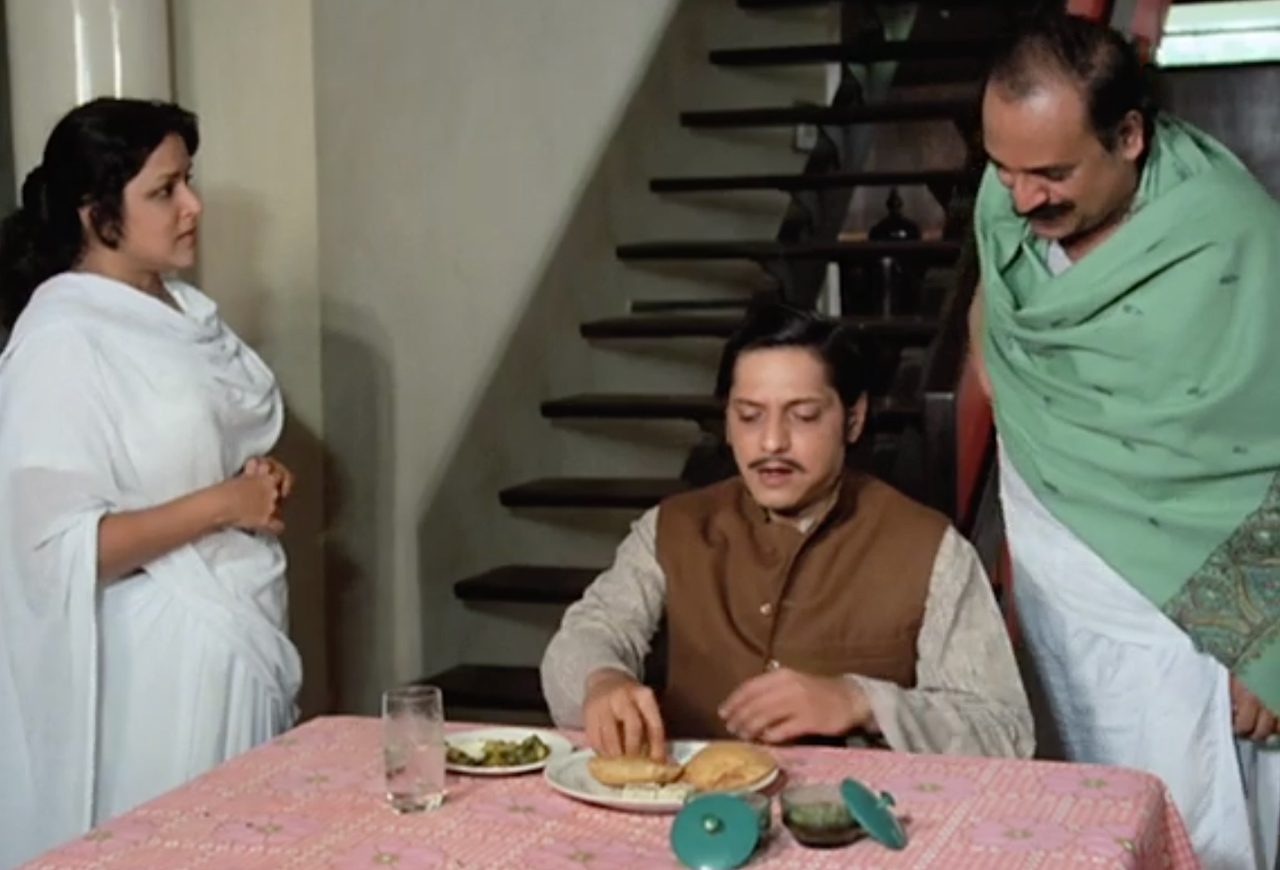
The masterpiece that still holds profound life lessons, is a story of many homes. Outside this residence, it says, Shanti Nivas. Hilariously ironic as it is rather a chaotic household held together by cooks, different each time, till they grow tired of the members’ biddings and run off! The film gives a true taste of an extended family. From every object under their roof to their demeanours, banters, bickering, covert affections, all seem to be plucked out of reality. The sarcastic grandfather constantly tries to straighten his sons out. Chanced upon is their new, multitasking cook, portrayed by the flamboyant Rajesh Khanna, turning their lives around with his charisma.
Guddi (1971)
Crushing on a superstar is almost synonymous with adolescence, but in her first outing in Bollywood as an adult, Jaya Bachchan as Guddi, takes it a up a notch. That strains her relationship with the boy who has lost his heart to her. Utpal Dutt and Dharmendra team up secretly in this feel-good family entertainer to rescue the anguished lover as well the sweet, naïve girl, who is oblivious to the obscured realities of the world behind the camera.
Chupke Chupke (1975)
Much happens on this multi-starrer journey, equipped with wit and quirkiness in the appropriate ratio. Most people have a soft spot for Chupke Chupke, a remake of a Bengali film starring Uttam Kumar, rendering it an ever-growing fan base. Many admirers of Mukherjee’s work, go all praise at the sheer genius of this comedy. With his famous beaming smile, Dharmendra, who is an upbeat professor, resolves to playfully one up his wife’s multitalented brother-in-law, Raghavendra (Om Prakash), who speaks and likes unadulterated Hindi. A few scenes after, Dharmendra enrols as Raghavendra’s driver, chit-chatting in Hindi of a surpassing proficiency, irking the brother-in-law. Amidst the leg pulling, pranks, confusions, Prakash’s exasperation is through the roof when Dharmendra suddenly starts rattling out Urdu, leaving the fans in splits!
Golmaal (1979)
Amol Palekar, the realistic cinema superstar leads this rib-tickling ride in two opposing roles. Unemployment forces Palekar to turn to lies for winning over potential boss Bhavani Shankar (Utpal Dutt). Dutt’s stunning grip on his roles and unmatchable crafty comedy often takes people on a wistful nostalgic journey. Shankar detests westernised thinking and men without moustaches! So, when a pencil moustached Palekar appears for the interview, donning kurta-pyjama and a dislike for sports, he is hired immediately. Trouble in paradise arises after Shankar spots a no moustached Palekar engrossed, all smiles and relishing a game of hockey!
Khubsoorat (1980)
Dina Pathak as Nirmala Gupta, is a stern, overtly disciplined lady of the house who keeps everything under her supreme control. This obsession stems from the concerns for the well-being of her family. Enter, Rekha, a bubbly, happy-go-lucky girl and things begin to tumble. Abundance of never-ending rules catch her off-guard, tickling her rebellious side. She takes it upon herself to help members embrace their hobbies which had died down owing to strictness. Amidst laughs and gasps, somewhere in this film that had an advanced outlook owing to the changing times, Pathak leaves us with a thought-worthy musing. It is not that freedom is bad, but people usually tend to forget the responsibilities that come with it.
Consent has become quite a popular term in the post #MeToo era and Guilty, starring Kiara Advani, reminds us that men of privilege do not think twice before violating women. Furthermore, the film also throws ample light on the fact that a large number of rape cases still go unnoticed. Guilty, directed by Ruchi Narain, throws light on a set of burning questions that are often swept under the carpet.
An Overview:
Less than a minute into the film, we see a college-goer being questioned ( grilled, in some ways) by the cops. The members of a college rock band are questioned after VJ, the band’s lead vocalist, and the son of a powerful businessman, is accused of raping one of his batchmates. All hell breaks loose when Tanu, the victim, posts a tweet targeting VJ. In no time, we see VJ being targeted by various sections of the society, but there comes a point when everybody, even those investigating the case, begins questioning the victim’s claims.
Storyline:
Quite frankly, the storyline is watertight and doesn’t give you much time to think. It took less than 10 minutes for the makers to establish all of the characters. The best part about the story is: it goes about its business without beating around the bush. A large chunk of the film is narrated from Nanaki’s (Kiara Advani) perspective.
There are sequences that make you uncomfortable. For instance: one of the students being questioned tells the cops that the victim is nothing more than a f*ck girl. Furthermore, the viewers are also made aware of the fact that Rani, the victim, had ” trouble written all over her”.
The Film does raise some Important Questions:
Right from frame one, the film succeeds in maintaining a ‘stern’ look and feel. Well, that’s because the director wants the viewers to know that sexual harassment is a serious offence.
Why is a girl called a sl*t if all she wants is attention?
Why are rape cases politicized?
Despite a few minor flaws, guilty has its heart in the right place. The narrative of the film keeps swinging to and fro, much like a pendulum. The first half of the film showcases Tanu as the ‘helpless victim’ who has been raped by a rich and spoilt brat. But victim-blaming shows its ugly head and everybody puts Tanu in the line of fire.
Performances:
Kiara Advani is the star of the show and looks unbearably hot in her ‘punk’ look. She plays the heartbroken lyricist and does so with ease. Also, she comes across as a ‘coconut personality’ and it won’t take long for the viewers to realize that this punk babe has demons running wild inside of her. (Does that remind you of Alan Walker?).
Gurfateh, who plays VJ, the spoilt brat, does everything you could have asked of him. There is that carefree (rather nonchalant) look in his eyes that screams aloud at times. Also, right from frame one, you get a feeling that this guy will get away with the crime unscathed.
Taher Shabbir enters the scene right from frame one as he begins interrogating VJ’s friends. He doesn’t speak much and goes about his business with the utmost sincerity. Unfortunately, he comes across as a stone-faced investigator who has little or no room for emotions. In short, our investigator required a few punchy dialogues to make his presence felt.
Next on the list is Akansha Kapoor, who plays Tanu Kumar, a girl from Dhanbad, one of the country’s mining powerhouses. She is shown as a headstrong woman and doesn’t shy away from voicing her opinion. Despite being raped, she chooses not to hang her head in shame (which comes across as a big positive). Akansha shines right from the start despite having a limited screen presence.
Here’s the biggest problem ailing this film: despite playing the victim, Akansha hasn’t been given enough screen time as most of the film is narrated from Nanaki’s perspective.
Direction:
Ruchi Narain does a fairly decent job behind the camera by handling rape, an immensely sensitive subject matter with a great deal of sincerity and maturity. A 2-hour-long runtime does test your patience (at times), but the film deserves a watch for the powerful message it has in store for its viewers.
‘Guilty’, despite a few minor flaws, ends up holding the viewer’s attention. Watch it for the message it has in store.