Paan Culture in India – Love in a Heart Shaped Betel Leaf

0
The Paan Culture in India
Image – Pixabay

The betel leaf or fondly also known as ‘paan’ is a ubiquitous entity in India, as well as Southeast Asia. Though the leaf itself is used for various purposes and occasions, the paan on the other hand includes the leaf along with other ingredients all coned up together to form the perfect digestive remedy after a good heavy meal

Paan along with many other mouth freshening products is an essential item in many households. It is one of those idiosyncrasies that have defined a special space for itself and its influence is seen in social, economic, as well as cultural backgrounds. 

Paan-Culture-in-Indian-Cinema

From Bollywood songs dedicated to the paan, to the multitude of paanwala bhaiyyas strewn across streets, the appeal of this freshening and distinct flavored green gastronomical delicacy is quite widespread. The chewing of the paan, is however, not only restricted to the Indian subcontinent. In fact, it is believed that the combination of the betel leaf and the areca nut first originated in the Philippines. Both the plants are said to be a native of Southeast Asia and Australasia. 

Medicinal uses of Paan

Medicinal uses of Paan
Image – McKay Savage via Flickr

It is this combination of the betel leaf and the areca nut that form the basic structure of the paan. It is also chewed with slaked lime or chuna along with mukhwas (mouth freshener), gulkand (rose petals) etc. Chewing of the paan along with the nut and tobacco, can lead to oral cancer. However, the betel leaf itself, is considered healthy and has various medicinal properties too. Experts in Ayurveda believe that the betel leaf helps cures diseases of the bile and air. It is a good digestive aid, antiseptic and a natural mouth freshener. In the earlier days, it also gave the lips of women a natural red color.

Betel leaf – Tradition and history

betel-leaf-use in Indian culture
Image -gdiamos.net

In India, the betel leaf has been an exotic yet easily accessible ingredient. Since ancient times the betel leaf has been in use, called Tambolian in Sanskrit. The fondness for the leaf, as well as, paan continued to prosper and reached its most popular phase during the Sultanate and Mughal era. 

Though the paan is more or less restricted to satisfy the taste buds, it is the betel leaves that are rooted in the tradition and culture. The paan patta or betle leaves are used on various occasions across the country as a sign of good omen. In southern India, around Old Mysore, two betel leaves are usually presented to guests on special occasions. A betel leaf along with a coin and betel nut are also offered to priests and saints as dakshina in South India. 

betel-leaf-use-in-Indian-culture-2

The kalash or pot is an important religious and cultural symbol that is used on different occasions, such as housewarming or marriages. Betel leaves are almost always used along with the kalash, even during the festivals of Durga Puja or Diwali. 

In Assam a betel leaf is offered to guests during a meal. In fact, the betel leaf is considered as a token of love across many other Southeast Asian countries too. In North India, as well as many Southeast Asian countries, such as Malaysia and Indonesia, the betel leaf and betel nut symbolize love, loyalty and a strong bond. 

Paan in the cultural milieu

Paan-History-in-India
Image – LexnGer via Flickr

The paan, though not as sophisticated as the advantages and traditions associated with betel leaves, nonetheless, impacts a strong cultural landscape. There are however, two sides to it. On one hand, paan chewing is harmless when done in a limited fashion without adding tobacco or the betel nut on every occasion. On the other, the red stains that are spat while consuming a paan are a huge nuisance in urban and rural areas. There are notifications on walls that request consumers to not spit, but albeit very few actually listen. And hence, on Indian roads, street and even inside buildings, finding paan stains is quite a commonality. Sadly, this is the largest influence that paan seems to have on our society. 

Yet, the large number of paanwalas across streets prove its popularity. The mixing of various ingredients bursts with myriad flavors as soon as the paan is pushed into one’s mouth. The aromatic and therapeutic influence of the paan may seem a bit farfetched, yet those who consume it swear by its craving and refreshing addiction. 

Paanwala
Paanwala – Linda De Volder via Flickr

There are also many different types of paan. Some get their names from the place of origin, whereas, some recent additions are dependent on the ingredients used. Some of the different paans include Banarasi paan, saada paan, mitha paan, fire paan, maghai paan, chocolate paan and so on. 

The betel leaf or paan is also known by different names across India. It is called Tamalpaku in Telugu, Beeda or paan in Hindi, Vetrilai in Tamil, Tamul in Assam, Kavala in Kannada, Naginiche paan in Marathi and so on.

Famous Paanwalas
Image – PaanHouse

Finally, the medicinal properties of betel leaf are a plenty. However, when tobacco and sopari or nut is eaten with the leaf too often, it might lead to health disasters. As long as the paan acts a mouth freshening device that is spat out in a civil way, its presence in the society can in fact, be quite heartwarming. The significance of betel leaves in tradition along with the bonhomie and comradeship that we all share with our paanwalas is perhaps the biggest contribution of this quintessential green leaf. 
Chittorgarh Built on Myths and Legends?

3
Legends-of-Chittorgarh
Chittorgarh’s Jauhar Kund – Wikimedia

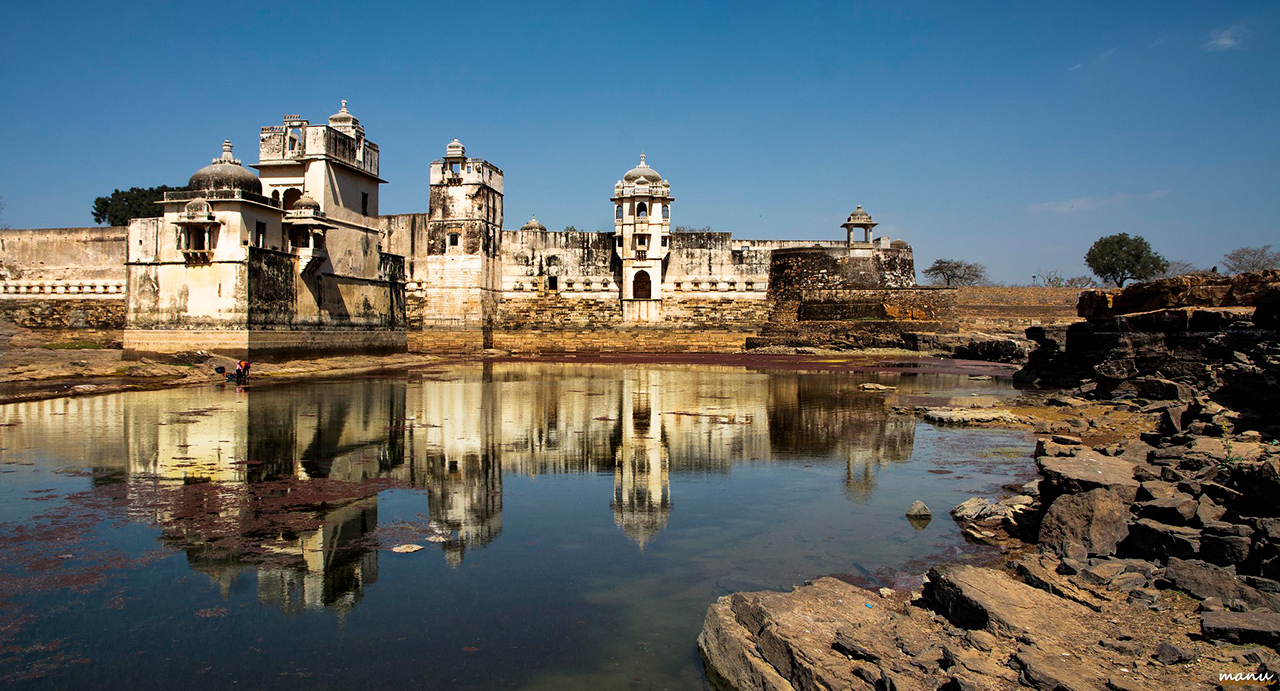
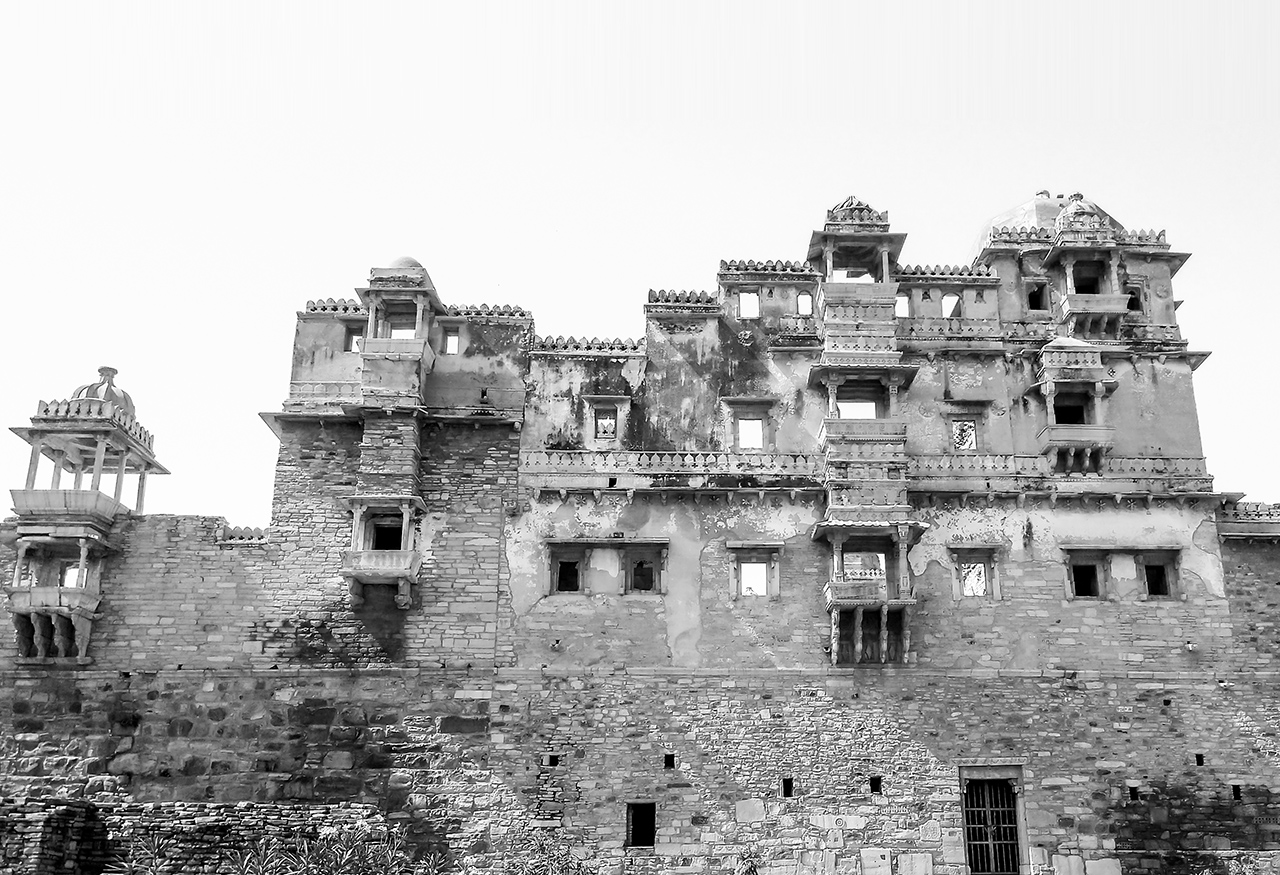
Recently in popular culture a topic of much discussion and controversy has been the fort at Chittor, Rajasthan. Although an important heritage site in India, declared a UNESCO World Heritage Site in 2013, the renown of Chittorgarh is spread far and wide, more so because of the myths and legends associated with its history. Concrete information about the ruins of this fort is surprisingly not sufficient to back up significant areas of speculations about its past. As a result, several historical events that took place there have remained shrouded in mystery and become subject to much fabrication of actual truth. The reason for this however is undoubtedly the fact that the historical facts which can be proven sound much like stories in themselves because of the extraordinary tales of valour and the undaunted spirit of the Rajput clan that primarily inhabited Chittor. 

Chittorgarh-Legends
Rani Padmini palace – Lensnmatter via Flickr

For instance, in 1567 Akbar’s troops defeated Maharana Udai Singh II, the warriors of Chittor collectively marched on bravely to the battlefield although certain of their danger, simply to abide by the principles of honourable death. The women meanwhile committed jauhar, or mass self-immolation, displaying that death was preferred as more noble rather than a life of servitude or death at the hands of the enemy. These heroic ideals of not surrendering to the enemy forces have sparked off the imaginations of several writers and filmmakers and the stories have been retold several times. However, it is often difficult to distinguish fact from fiction.

Rani Padmini Legend
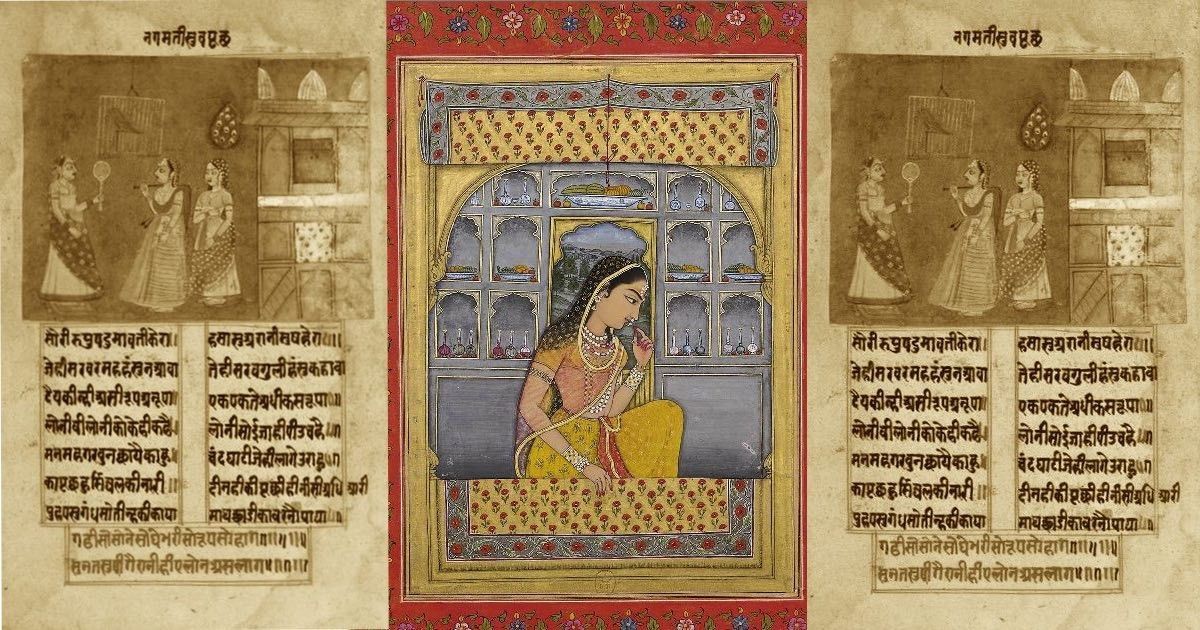
Rani Padmini (Padmavati) – Image Source

One of the most remarkable stories which continue to be the object of songs and motion pictures is the legend of Rani Padmini, said to reside at the Padmini Palace complex at Chittorgarh. The tale is familiar to most – of the exceptional beauty of the queen, which captivated Allauddin Khilji and compelled him to lay the first major siege to the palace. The mirror through which Khilji was allowed to glimpse Padmini is still kept on display at the museum, but whether or not Padmini actually existed as an important monarch and the cause of the siege is debatable. The death of the king during the time at the hands of Khilji’s army can be historically accounted for, as can be the mass destruction that followed the event. Jauhar has been an inextricable part of the history of Chittor and it cannot be questioned that this act was performed by the women and certain soldiers at the prospect of defeat. However, contrary to popular belief, Rani Padmini and her ethereal beauty may simply be a figment of the poet Jayasi’s imagination, as there is not much evidence to her presence in Chittor aside from his epic poem.

Kumbha_Palace legend
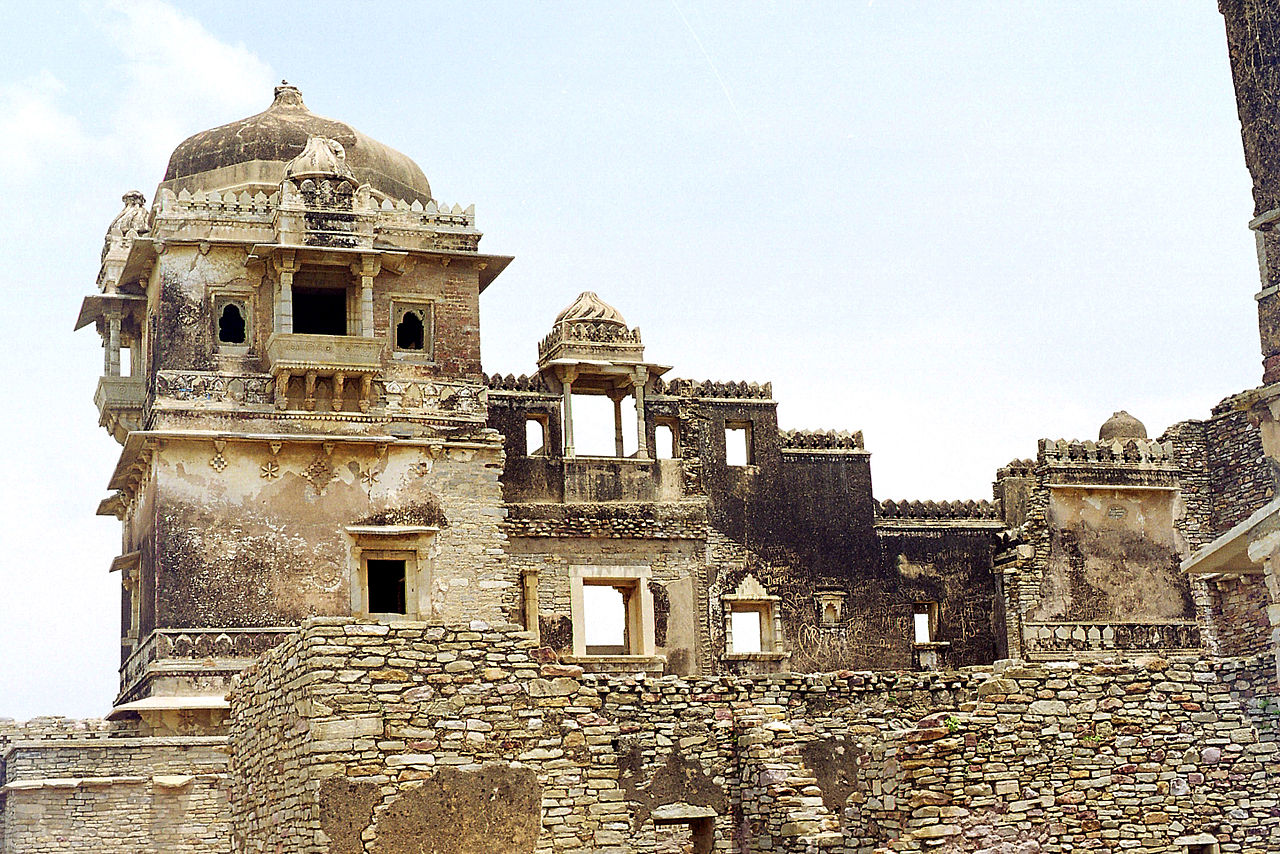
Rana Kumbha Palace via Wikimedia

Kumbha’s Palace is yet another spot surrounding, with several stories that have been created, but unlike the legend of Padmini, there are certain traceable historical evidences which can point to the truth of this event. This area housed the residences for the queen, halls for holding court, and stables. It is near this place that Udai Singh II, the monarch who is responsible for the establishment of Udaipur is believed to have been born. Legend has it that when he was just a baby his nurse Panna Dhai became aware of an internal conspiracy that was being hatched to kill him. In an astonishing display of loyalty, the nurse effectively switched the baby with her own such that her own son was mistakenly killed by the conspirators while Udai Singh was taken away by her to a safe destination.  

Meera-bai-legend
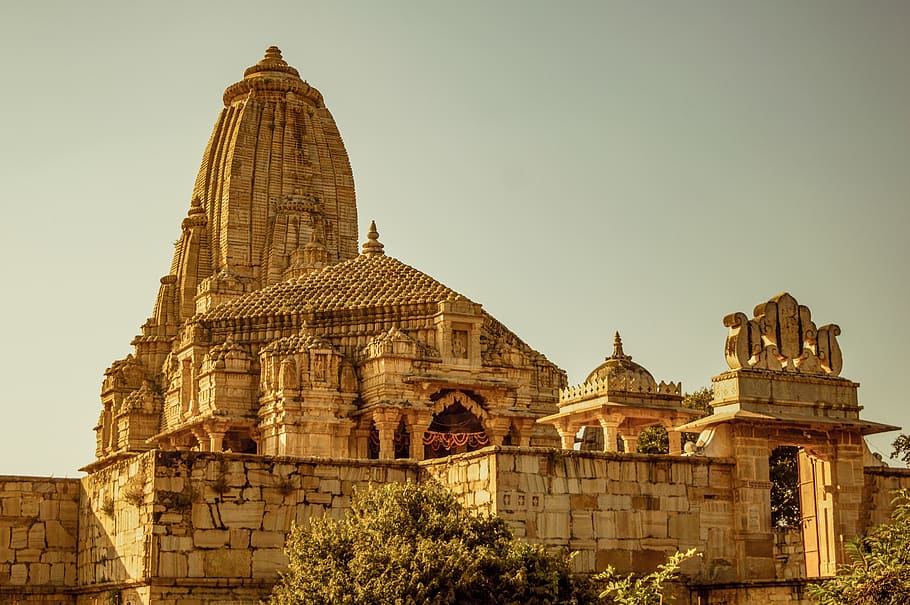
Meera Bai Temple – Image Source

Another legend which attracts several tourists to the spot is that of Meera Bai, an ardent devotee of Lord Krishna, who lived in the palace. She was a Rajput princess and the wife of a Mewar prince but her utmost loyalty lay to her God. Her unflinching faith caused a substantial negative attention and dislike but she remained undeterred in her pursuit of the Lord and a life of faithful worship. The stories surrounding the hardships she had to bear during this time are heart wrenching but are popular legends in Chittor and contributes to the mythical aura of the place. 

The proud heritage and cultural richness of Chittor is unquestionable regardless of the validity of such legends which surround the history of the fort. The city of Chittor in face hosts the largest Rajput festival, the Jauhar Mela, which celebrates the undying courage and fierce spirit of their clan. It commemorates the undoubted historical significance that is laid on the place which cannot be denied, regardless of the specifics of certain myths which cannot be confirmed. 

Discover Sri Lanka’s Best Luxury Hotel & Experiences

0
Places-to-visit-in-Sri-Lanka-02
Panama Rd, Sri Lanka Tomáš Malík

Sri Lanka, the jewel-shaped country, is a heady and enchanting mix of hills, beaches, abundant greenery, wildlife, and ancient ruins. It has something for every kind of traveller. From its tea plantations to scenic train rides, Sri Lanka can guide the vagabond in you to the best of experiences. The friendly locals, beguiling British colonial influence, Buddhist and Hindu temples, along with white sandy beaches and pristine hills, Sri Lanka is an ideal getaway for a peaceful vacation. 

Over the past few years, travellers have started taking notice of this country and its bounties of natural sights. This has increased tourism and has paved the way for excellent quality services when it comes to transport, food, and accommodation. Many luxury hotels in Sri Lanka offer a luxurious and relaxing staying experience. Sri Lanka is a relatively affordable country, and travelling here does not burn a hole in your pocket. Here is a brief Sri Lanka travel guide that can help you plan your travel successfully.

Currency in Use 

Sri Lankan Rupee (LKR)

Visa Information

Travellers need to get an electronic visa beforehand. One can apply for the electronic visa easily through their government website. 

Languages Spoken

Sinhala and Tamil

Best time to visit Sri Lanka

You should plan your travels in Sri Lanka based on seasons. For visiting the west and south coasts of the country, the best time is from December to March. Whereas for visiting the east coast, the best months are April or May. 

Places to visit in Sri Lanka

Ella

Places-to-visit-in-Sri-Lanka-Ella
Ella – Photo by Kirsty barnby

A direct train from Colombo Fort Station can take you to Ella. It is one of the best scenic hill stations in Sri Lanka to get the real experience of this country.

Polonnaruwa

Places-to-visit-in-Sri-Lanka-polonnaruwa
Polonnaruwa Sri Lanka – Image Source

This city is famous for its temples and can give you a peek in the ancient past. Polonnaruwa city should be on the list of a history buff. 

Mirissa

Places-to-visit-in-Sri-Lanka- Mirissa
Mirissa – Image Source

Mirrisa is one of the most alluring beach getaways in Sri Lanka. This tiny village in Sri Lanka will take you away from the crowds and bustle of the city. 
Colombo

Places-to-visit-in-Sri-Lanka-Colombo
Colombo – Image Source

A trip to Sri Lanka is not complete without a visit to Colombo. This capital city of Sri Lanka is filled with cultural places such as the Gangaramaya Temple, Viharamahadevi Park, Jami Ul-Alfar Mosque, Seema Malaka, and much more. 

Anuradhapura

Places-to-visit-in-Sri-Lanka Anuradhapura
Anuradhapura – Pixabay

This ancient city is known for its Bodhi Tree under which the Buddha achieved enlightenment. Anuradhapura also has many other temples and religious sites one can visit. 

Things to Do in Sri Lanka

Experience a tuk-tuk ride

Things-to-do-in-Sri-Lanka-01

Tuk-tuks are the most basic mode of transport in Sri Lanka. If you are someone who does not like crowded public transport, then you can certainly take a tuk-tuk. You can also rent one and ride it on your own. 

Go on a Wildlife Safari

Things-to-do-in-Sri-Lanka-Safari-jeep
Sri Lanka Safari – Image Source

One of the highlights of visiting Sri Lanka is exploring its wildlife as the country has a diverse landscape. One can spot animals such as the Leopard, Elephants, Deer, etc. 

Hop on a Scenic Train Ride

Things-to-do-in-Sri-Lanka Scenic Train Ride ella-landscape-hill
Ella Train Journey – Image Source

The train journey from Nuwara Eliya Ella to Ella is touted as one of the most scenic train rides in Sri Lanka. One can get the views of tea plantations, picturesque mountaintops, and valleys. 

Relax on the Beach

Things-to-do-in-Sri-Lanka-Relax-on-a-Beach
Sri Lankan Beach – Image by Toa Heftiba

Sri Lanka is filled with beach towns where you can check-in yourself in a luxury resort and relax on the sandy beaches. 

Venture on trails to visit Historic sights and Monuments

Things-to-do-in-Sri-Lanka-Visit-Historic-sights-and-Monuments-
Gal Vihara, Polonnâruvâ, Sri Lanka – Image Source

Sri Lanka has a 2000-year-old tradition and culture, and the remnants of this are evident in its architecture and historical sights. One can traverse through the ancient ruins of Sigiriya, Dambulla Cave Temple, or visit the Sacred Tooth Relic in Kandy. 

Places to stay in Sri Lanka

Places to stay in Sri Lanka

Many high-end luxury hotels in Sri Lanka provide an alluring staying experience. Of these travellers can book their stay at Taj Bentota Resort and Spa. This is one of the best resorts in Sri Lanka. It is located at a distance of 60 km from South Colombo and is approximately 90 km from the Bandaranaike International Airport. 

Taj Bentota Resort and Spa: The 5-star Luxury Hotel in Sri Lanka for a Lavish Stay

Discover Sri Lanka's Best Luxury Hotel & Experiences-01

Taj Bentota Resort and Spa offers rooms and suites that have an enchanting view of the beach and the lush landscapes of Sri Lanka. It has European styled living spaces, and all the rooms and suites are designed for delight and thrill. Taj Bentota Resort and Spa is also equipped with banquet halls and Lawn for weddings and other such functions. 

This 5-star hotel in Bentota also houses some of the top restaurants in Sri Lanka. S.H.A.C.K is one of the best seafood restaurants in Sri Lanka the offers guests with fresh catches in the morning and afternoon. At Oriental Pavilion, guests can satiate their taste buds exquisite Chinese cuisines. The Palms and the Sea View are two fine dining restaurants that give you the best views of the Indian Ocean along with delectable multi-cuisine delights. For those who want to have a hip day out can head to tease where exotic cocktails and lively ambiance await. 

Discover Sri Lanka's Best Luxury Hotel & Experiences-02

This resort in Bentota also offers the Jiva Spa that is an Indian rejuvenation technique. It ranges from aromatherapy massages, time-honored treatments, body scrubs, and wraps. The hotel also has a fitness centre. 

Guests who stay at Taj are ushered in with the greetings of ‘Ayubowan,’ a traditional Sri Lankan reception that is then followed by the sips of ‘Nelli’ passion fruit or the famous Ceylon iced tea. Come stay at Taj Bentota Resort and Spa and soak in everything that Sri Lanka has to offer. 

Resonance – An Indian Band for the New Decade

0
Resonance-Indian-Music-Band
Resonance Band

No matter the genre an artist or a group of musicians adhere to, the motive is always the same – to reach out to the largest possible audience who share with them similar ideas and experiences about life, love, and beyond. In its inception in 2015, the Kolkata based band Resonance had started out with nothing less but an ambition to give form to this very vision. Although novices in the music industry, Kausheyo (keyboardist and violinist), Anisha (vocals), Saurav (guitar), and Shinjan (bass) formed a very young group blessed with exemplary talent.

What began as fun jamming sessions over weekends quickly developed into a properly organized and established youth band. Speaking of the choice of name for the group, Kausheyo insists that the name ‘Resonance’ had been the obvious choice because of their single minded purpose in their endeavors – to create and share music that would strike a chord with their audience and resonate with them.  

Resonance-Indian-Music-Band

The current members of the band include Kausheyo, Anisha, Mouli (vocalist), Snehasis (lead guitar), Saikat (bass), Arka (rhythm guitar), and Swarnavo (percussions). In a very short span the band has scaled impressive heights with respect to their performances and their audience base has only increased. In its initial days the band performed, outshined, and came first in numerous college fests. One of the highest points in their achievements during this period was their stint at being the standout band for three seasons consecutively at Oikotaan, organized by IIEST, Shibpur. They slowly built their way up performing at various cafes and restaurants across the city, including the iconic Trincas.

Resonance-Indian-Music-Band-03

One of the highlights of their performances happens to be their contribution in the World Music day program organized by NBB24x7, in which they shared the stage with the likes of Groovers, Subham Moitra, Soumitra Ray(Bhoomi) and Upal Sengupta(Chandrabindoo) to name a few. At present they are focused on creating and recording their original works. They are also working on their EP, which is set to be released soon.

Resonance as a band is different because of their unique take on the iconic songs they cover. The songs that they usually cover are iconic, already having a substantial fanbase following the particular band or artist. There is a signature Indian flavour to the songs which are recreated by Resonance, as they take care to not change the essence of the song but only modify the feel and texture of it.

Resonance-Indian-Music-Band-04

As an example of their original take on canonical songs of western culture – it is not uncommon to hear the tunes of Indian music wafting through the layers of their rendition of one such song. They also frequently use other instruments to introduce a hint of pathos to their soulful cover. In particular, their use of the violin in several musical covers is a remarkable addition which harmonizes perfectly with the music.

The testament to their genius lies in the fact that none of these new techniques or alterations are forced or in discord with the original – in fact, it fits in perfectly with the existing chords of music. Do not forget to check them out at their YouTube channel: Kausheyo Roy Official. Follow the Band on Facebook

Why Kabini is the Most Sought After Nature Destination Near Bangalore

0
Offbeat Kabini River
Kabini River – babá via Flickr

One of the renowned tourist destinations in Karnataka, Kabini, also called Kapila, is among the major tributaries of South India’s River Cauvery. Nestled on the banks of River Kabini, near Kodagu district, it is a haven for adventure enthusiasts for its plethora of things to do here. Back in the days, it is said that Kabini was once a hunting ground for the Britishers during their rule in India. But, things have vastly changed since then. It has now become a spot to indulge in several forms of activities including trekking, jungle safari, boating, and more. While here, you will also get an opportunity to witness wildlife in Kabini like panthers, elephants, monkeys, leopards, and so many more. It is a boiling pot to explore all the flora and fauna. 

Kabini Wildlife
Image – Vinoth Chandar via Flickr

Encompassed by natural and raw setting, Kabini is truly an enchanting location to rejuvenate your mind, body, and soul, as you break free from the monotonous life and come rest in the lap of nature for a while. A perfect retreat in South India, it is no surprise why Kabini is the most sought after nature destination near Bangalore. If you are wondering what we are talking about, keep reading to understand what makes this tributary of India stand apart. 

1. Its Elephant Safari

Kabini-tusker
Source wikimedia

Now, we have all dreamed of taking an elephant ride at least once in our lifetime. And Kabini fulfills this wish by offering an elephant safari tour to all its visitors. A remarkable experience of its own, elephant safari takes you on the terrain route that you necessarily wouldn’t be able to see while choosing another ride. But before planning for this activity, make sure to research everything about it like the dos and don’ts, the best time to visit, etc. 

2. Its Jungle Safari

Kabini-Safari
Kabini Safari – Brian Scott via Flickr

Jungle safari takes you to the heart of the jungle. Here, you will be able to traverse deep into the wilderness as you hitch a ride in an open jeep. You can spot a variety of wild creatures including deer, tigers, leopards, and more. And the best time to spot these animals is between the months of October and June. 

3. Its Trekking Trails

kabini Trekking

Although one of the most challenging activities in Kabini, trekking here is thoroughly enjoyed by avid trekkers, adventure seekers, and nature lovers. Encompassed by lush vegetation, magnificent peaks, and hills, the trails will give you a chance to witness the Western Ghats up close, which is situated right by its side. Before starting with the trekking journey, there are medical tests that are conducted especially for the first-timers. A popular spot for trekking is Tadiandamol, which is also the highest trekking peak with an altitude of over 1,700 meters. 

4. Its Boat Riding

kabini Boating

If you are in the most beautiful tributary of India and you don’t indulge in boating, you don’t really experience the whole beauty of Kabini. Boat riding is in Kabini is also a local form of transport for most of the people residing here. This is also another way to experience the flora and fauna and scenic vistas of nature. The clean and well-maintained rivers of Kabini makes it for a surreal journey, you wouldn’t easily find anywhere. 

And for boating, many Kabini resorts organize this and many other activities that take their visitors on a wonderful journey. One such popular resort being Discovery Village offers the best in class services and activities that let its guests indulge in a plethora of adventure-filled activities, which include different kinds of safaris, trekking, boating, bird-watching, cycling, and more. 

5. Its Bird-watching Activities

kabini-Bird-Watching
Image – Rahul Rekapalli via Flickr

Home to over 250 bird species of different shapes, sizes, and colors, Kabini is a bird-watching paradise for all the bird lovers. The local people co-exist with the birds by taking care of them, feeding, and protecting them. You will see exotic and local birds like cormorants, kingfisher, drongo, wooly-necked story, Malabar pied hornbill, snakebird, and many more. This is a must-do activity for all bird lovers. 

So, if you ever get a chance to explore or take a vacation to Kabini, don’t skip it. This location is not just for thrill-seekers or adventure lovers. It is also a place where people escape and seek peace from the mundane or chaotic life. Taking a vacation to Kabini will open all your senses to a whole another level. Along with offering greenery, wildlife, flora, fauna, etc, Kabini also gives a glimpse into a new culture, food, environment, festivals, and more. So, why not plan a vacation to the sanctuary and indulge in one of the best enthralling experiences?

9 Reasons to Visit Kandima Maldives for a Luxury Weekend Getaway

0

Kandima-Maldives

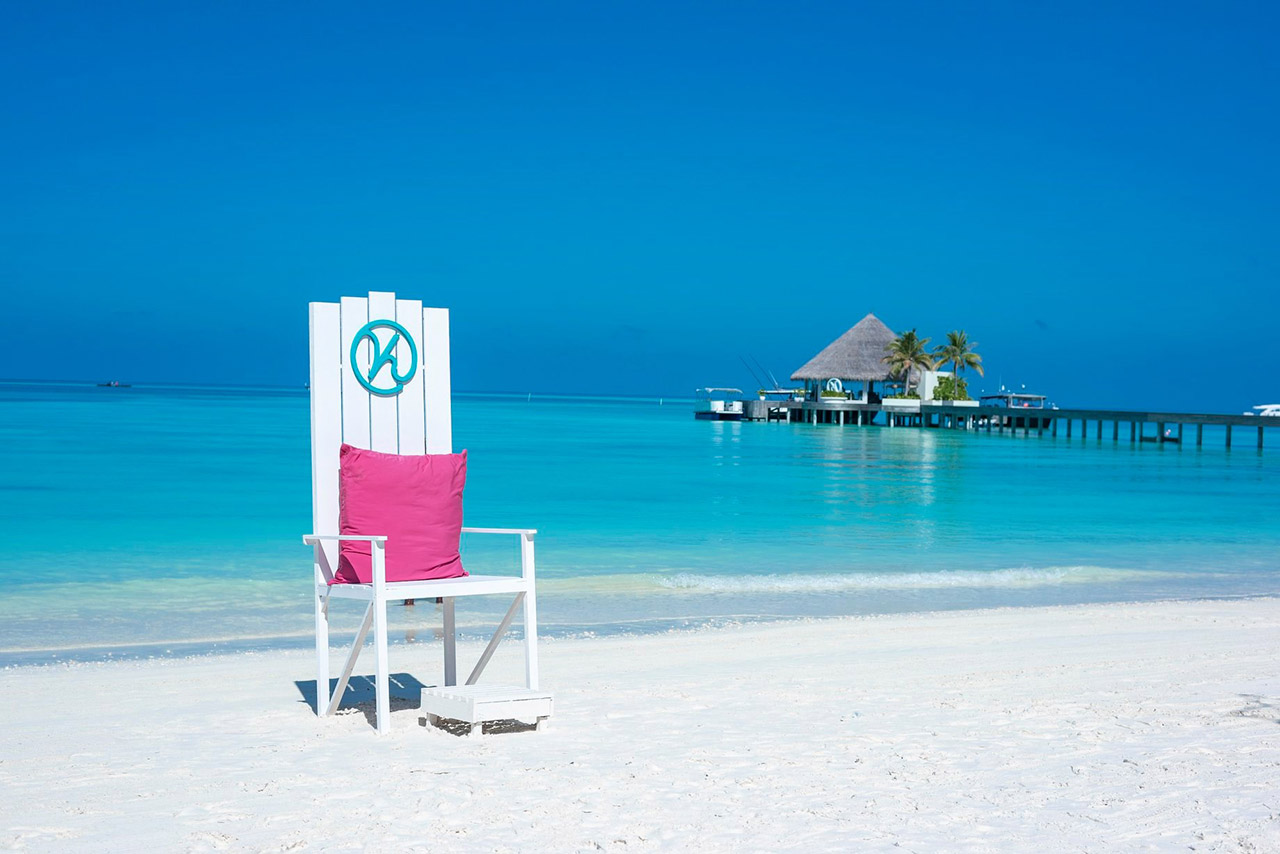
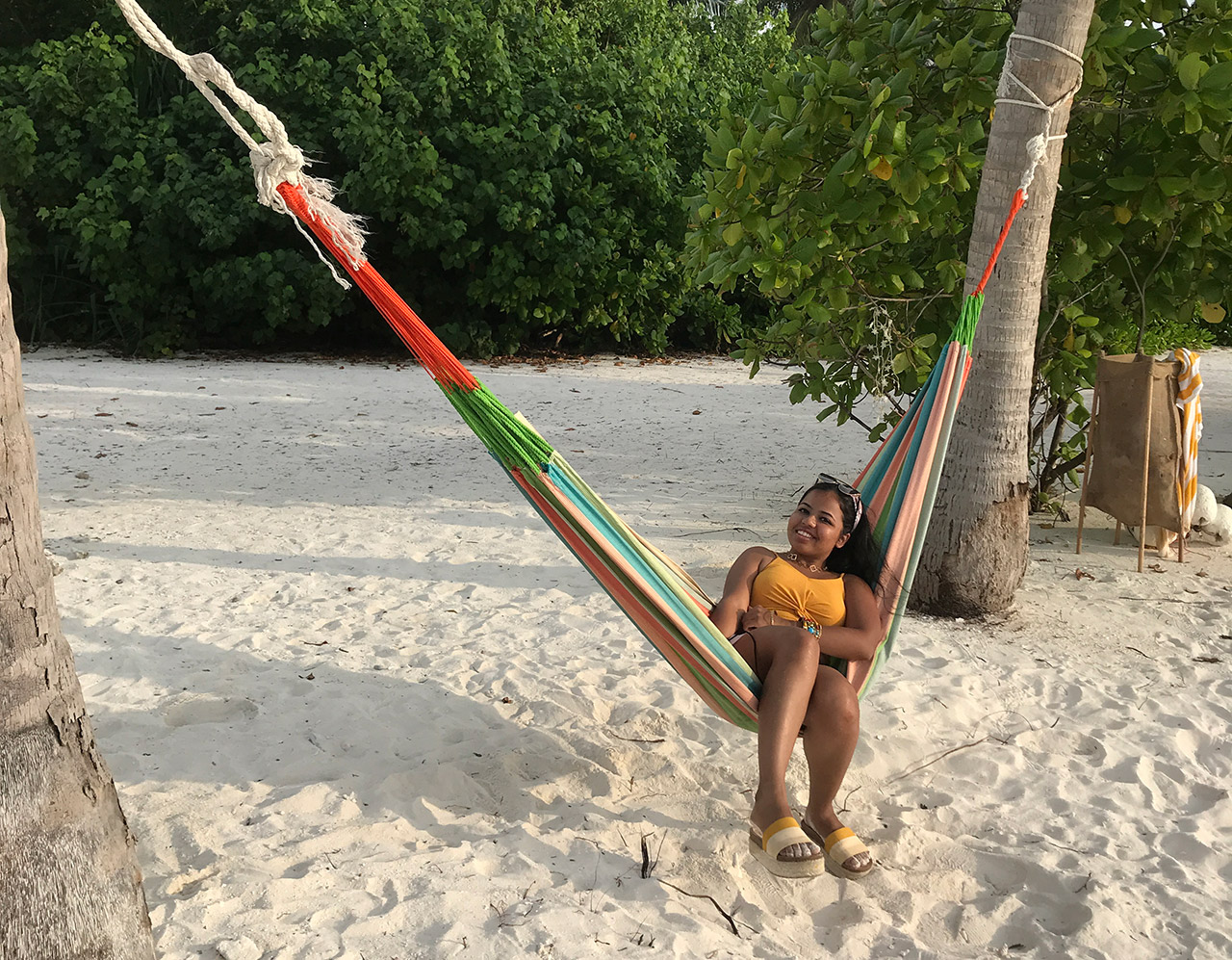
Kandima Maldives is the best luxury weekend getaway you can ever imagine in the Maldives. On a 3.2 kilometer island speck in the middle of the Indian ocean, this affordable luxury island resort was the perfect getaway for me and my friend. This dreamy villas by the ocean with its tasteful decor, private pools and jacuzzi had my heart from the very moment I stepped in through its white sandy beach. I needed my space from the monotony of life and coming here was one of the best decisions I have ever made. If you are wondering how, let me tell you about everything that I did there. This is your virtual tour to this lifestyle resort, Kandima Maldives.

Here’s a list of the top 9 things at Kandima that we indulged in and we recommend you all to do the same.

1. Lounge on some swings in the sea

Kandima-Maldives-11

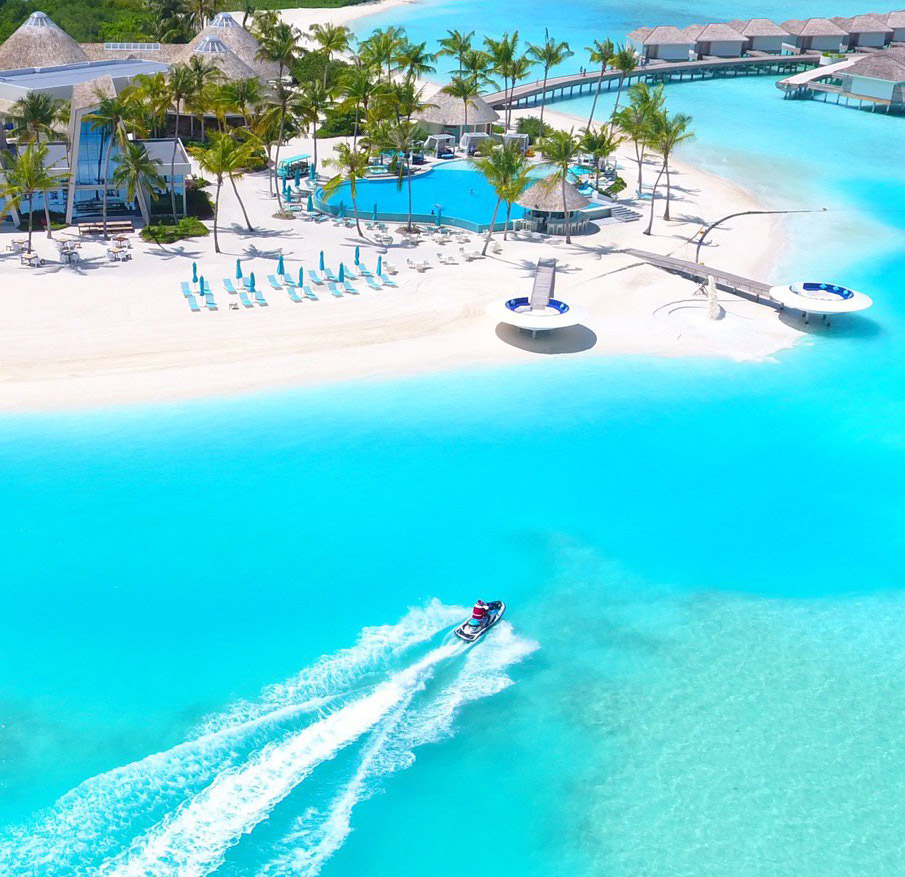
Bright and breezy, this resort is a grown-up playground with a bunch of fun activities. There are 3 water swings built in the turquoise sea which attracted me. You could rejoice in the soft breeze having a fun relaxing time watching the sunset. You could even take your margarita to the swing with you and enjoy watching a few fishes inside the beautiful sea surrounding the property. 

2. Dip into the sea right from your Aquavilla

Kandima-Maldives-08

Our villa was our home, a space we could leisure in after a long day. The room was our escape – a place where we could have fun with a level of luxurious privacy . The walls were painted electric blue, it had a writing desk, and a comfortable bed with its snow white sheets which invited me to jump right in and snuggle my way to dreamland. The bathroom was spacious with all the amenities to refresh after we returned all dusty from our day long explorations. It had beautiful blue lights with a cool bathtub by the glass window, facing the ocean. I could enjoy soft music, turn the candles on and sip into my Prosecco while I lay in the bathtub musing over the sunset. 

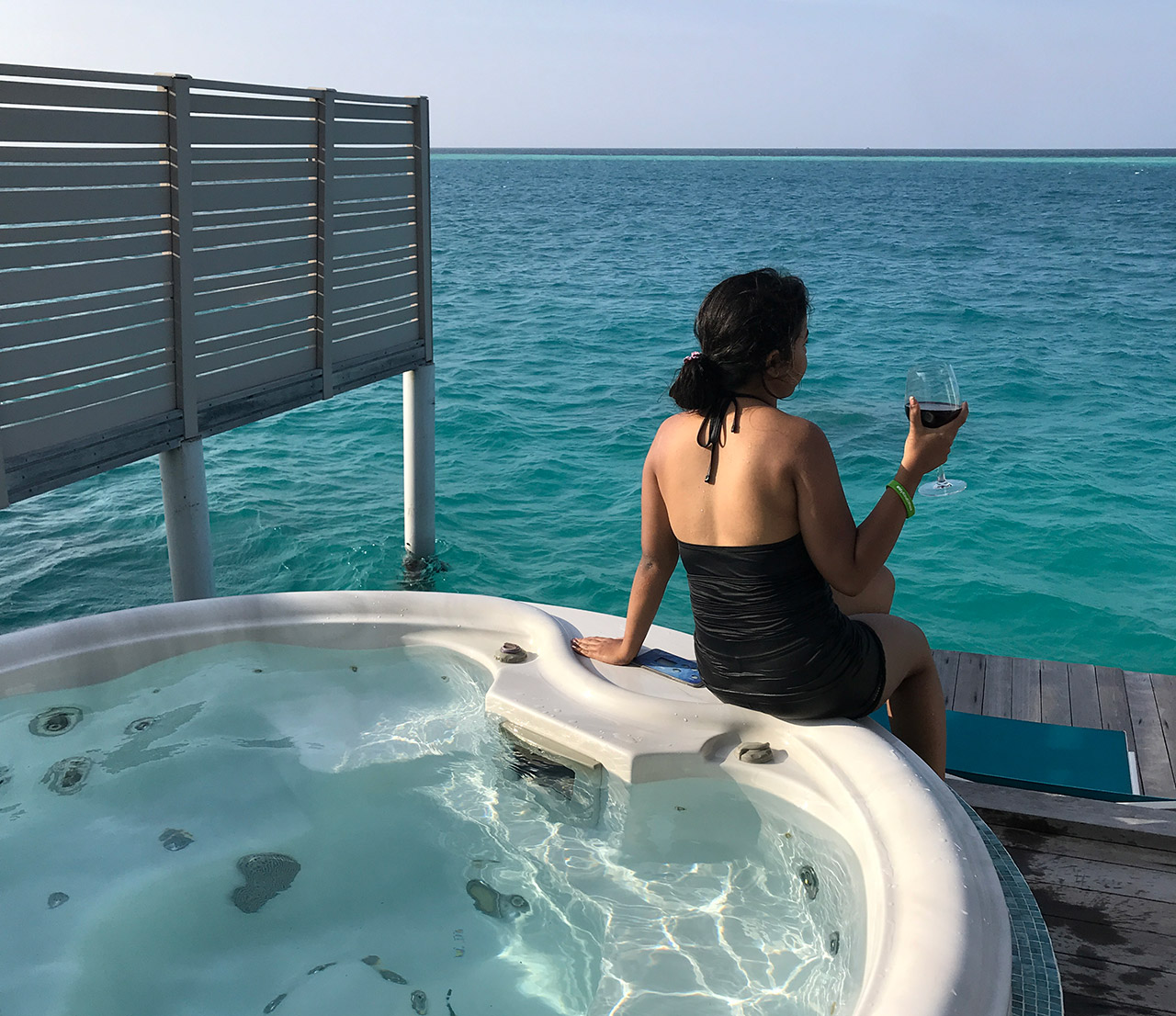
There was a glass door right opposite to the bed and when I opened it to step outside, my  eyes were attracted to the private jacuzzi in the open breeze with sea view. The Aquavilla is a Maldivian style modern villa which is located on the sea, you can dive right in from the ladder which is placed outdoors. You can just get into your swimsuit and jump off from the villa into the turquoise ocean and experience swimming in the salty waters right by your villa.

3. Catch the sunset by the beach club

Kandima-Maldives-07

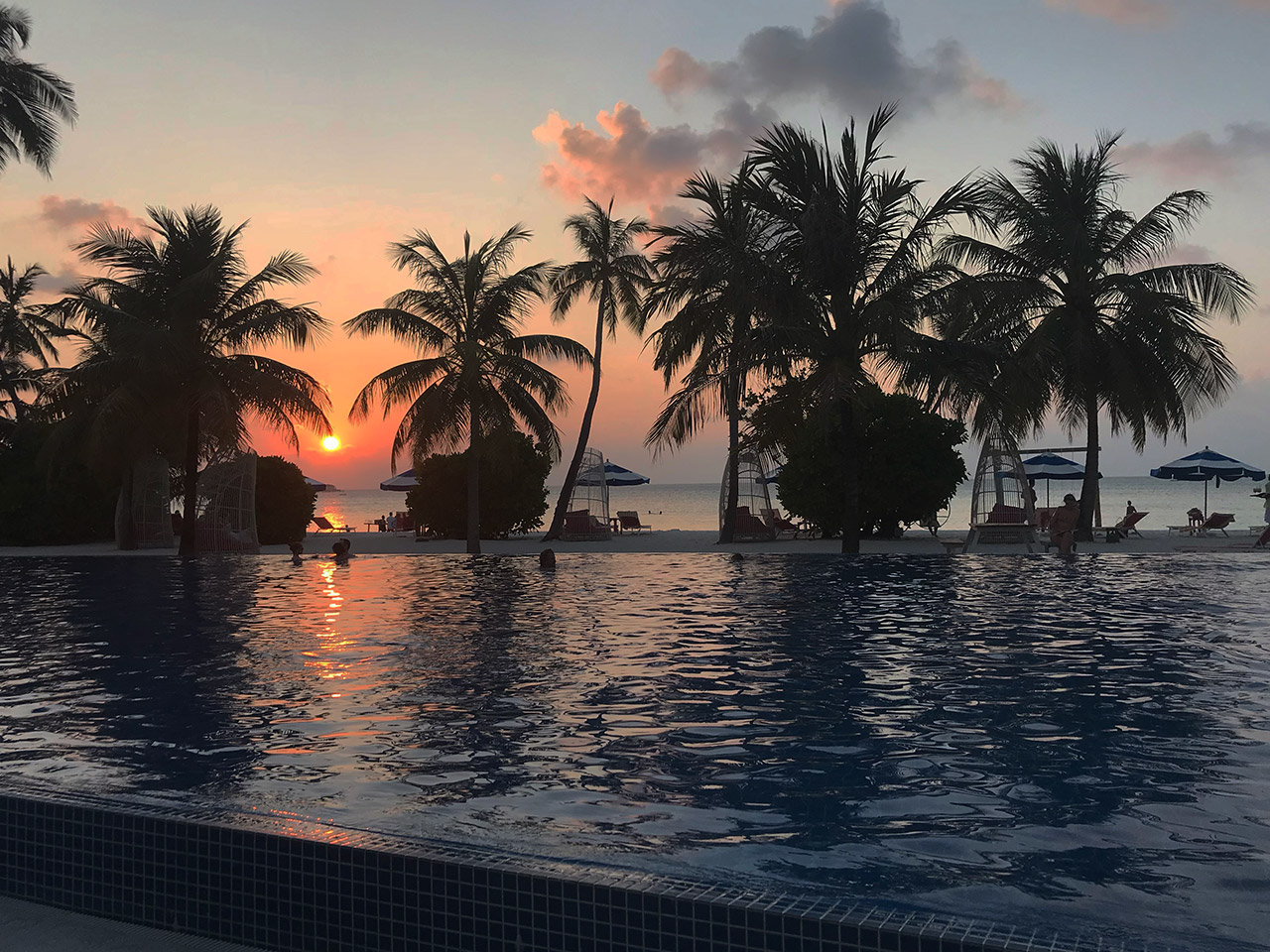
The Beach Club, the perfect hangout spot for families and couples alike, was located near the aqua villas. It has got a perfect laid-back vibe and a spectacular view. One can swim up for some cocktails at the beach club or relax in the stylish cabanas above the pool. There were two elevated round platforms with seating called the UFO’s by the beach club. It was quite mesmerising to watch the sunset across the island sitting in the UFO with a cool breeze around. It was a peaceful evening to hear the sound of the waves clashing. The UFO was an escape spot at night as well – here I could enjoy the twinkling stars without the interference of the city lights.

4. Shop at the Kool shop

Kandima-Maldives-14

The Kool Shop is a merchandise store inside the premises of the resort and it is located at a walkable distance from the HQ. This store is located on the way to the villas in the corner of the sandy lanes. The interiors are white in colour and there is a beautiful window merchandise displayed which attracts people to visit it. The shop has an interesting array of merchandise which included amazing souvenirs, accessories like pendants, earrings, keychains, slippers, bags, beachy gowns and clothing along with a great variety of swimsuits , cute t-shirts with Maldives printed on it, other local clothing with some intricate tropical prints, mementos, etc. I loved the swimming costumes and I bought one immediately. I was also attracted to the local Maldives souvenirs which are limited collection and are hard to find outside the property. 

5. Taste exquisite cuisine at Azure

Kandima-Maldives-15

One can choose from a total of ten unique restaurants and bars offering mouth-watering flavours at this island. Out of which, Azure, located on the beach with indoor and outdoor seating, offers casual dining by day and elegant signature dining on the beach by night. It is the only restaurant on the property which prepares all cuisines free of gluten and alcohol and a lot of vegan options. It offers a mix of Mediterranean dishes, fish, tapas, steaks, oven-baked pizzas and delicious wines. 

We over the course of our visit tasted a variety of signatures at this restaurant. My friend and I had an opportunity to eat a lot of dishes. For starters, we were served gluten free focaccia with salsa. There was baby spinach and walnut salad with cherry tomatoes, Roasted beetroot carpaccio and compressed Melon. Main course included Grilled Local Reef Lobster and duck breast, a vegetarian meal including Gluten free Pasta Arrabiata and Gluten free pizza. In addition to this we had their signature dessert – Dark chocolate flourless cake with passion fruit compote, topped with a scoop of hazelnut gelato and it was yummy to the power infinity.

6. Jet ski your way to baby making island

Kandima-Maldives-16


They have an incredible range of water activities at aquaholics that we enjoyed on their “oh so Kool” island where one can experience speed, excitement, relaxation and discover the marine beauty. We had a fantastic time jet skiing for 30 minutes over the turquoise waters. They let you ride the jet ski by yourself. While riding we discovered a cute tiny island which is called the baby making island nearby the resort in the ocean. It is said that the birds hatch their eggs on that island. We observed a fury of white birds nestling on the island amidst the trees and blue waters. 

7. Take a turtle expedition to swim with sea turtles

Kandima-Maldives-10

There are a range of activities at Aquaholics at Kandima that include jet skiing, kite surfing, parasailing, kayaking, snorkelling, paddle boarding, top cat sailing, turtle expedition, dolphin’s quest, and other fun rides. 

We went on an  amazing turtle expedition in the middle of the ocean. Our excitement knew no bounds. We were taken by the double decker boat. We wore our snorkelling kits and jackets and were ready to dive into the ocean. We were able to spot many turtles and stingrays  along with many other species of fish and beautiful corals underwater. Swimming with the sea species was a beautiful experience.

8. Rejuvenate at the esKape Spa

Kandima-Maldives-17

From exfoliation to healing therapies, esKape has it all. The Spa is located in the mid way between the HQ and the Aquavilla. They also have an onsite steam room and plunge pool. 

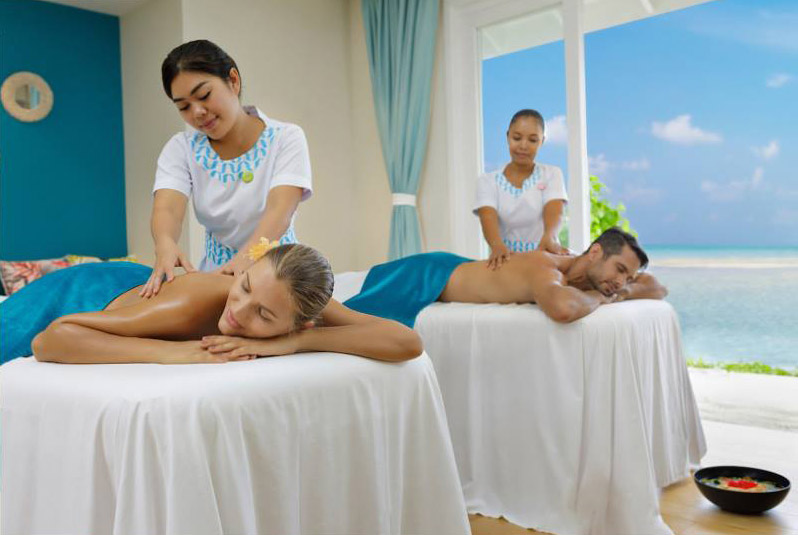
 As we walked in, we were greeted by the refreshing scent of coconuts. They offered us a refreshing tea. We opted to try Aromatherapy at the Spa. It was one hour long and it was super relaxing. There were many different types of spas in their menu like the hot stone spa, full body exfoliation, etc.  I never get the time to try out the spa when I live in the city because I have a lot of work stress but trying the spa at Kandima Maldives was a great experience. They also offer a lot of exciting couples spas which couples can try out together. They also have parlour services at esKape. Getting a spa by a window which opens up to the rough ocean waves by the beach was a great experience.

9. Walk to the end of the island for some great sand banks that take you to Ken’s Cove Island

Kandima-Maldives-06

We walked to the other extreme end of the island where the shuttle does not take the guests. There was a lake at the end of the island where we saw baby sharks. During low tides, one can walk on the sand banks and reach Ken’s Cove Island which is a part of the same property at Kandima. The water was clearer at that end. There were many hermit crabs at the shore.

The Maldives is well known for the pristine luxury which it has to offer. Exploring it on a weekend getaway from home was an exotic experience. Kandima gave us one of the best experiences we could ever hope for. With a wide range of activities and the best level of leisure one can possibly imagine, Kandima is the place where you need to be if you are looking for a pristine getaway. It is your kind of place. 

To know more about the property, you can explore their site:

http://kandima.com/index.php/en/

Vibrant Folk Dance Forms of Northeast India

2

We have elaborated on folk dances and looked at some of the folk dance forms of North India. In this section lets us explore the folk dances of central and southern India. 

Folk Dance Forms in Northeast India

We begin with the Northeast, the Seven Sister states that have prolific culture and traditional dances. The northeast itself, probably has the highest range of variety in its folk dances that reflect the tribal and traditional culture of the region. Lets explore the dance from of each region in north eastern states.

Arunachal Pradesh

Folk-Dance-Forms-of-Northeast-India-Arunachal-Pradesh-Aji-Lamu
Arunachal-Pradesh – Aji Lamu

The various folk dances are often associated with a particular tribe of the region. For example, the Aji Lamu dance is performed by the Monpa Tribe, the Chalo dance by Nocte Tribe and the Pasi Kongi, Ponungg, Popir dances by the Adi Tribe. 

Assam

Folk-Dance-Forms-of-Northeast-India Bihu_dance_of_Assam
Bihu Dance – Wikimedia

The folk dances of Assam include the popular Bihu, Bagurumba and Bhortal dance. Bihu is the celebration at the beginning of the harvest period and sometimes goes on for almost a month. Bagurumba is usually performed by women and is closely connected with nature. 

Meghalaya

Folk-Dance-Forms-of-Northeast-India Shad Suk Mynsiem Meghalaya
Shad Suk Mynsiem – Wikimedia

The popular folk dances of Meghalay are the Shad Suk Mynsiem, Laho, Do Dru Sua, Shad Nongkrem and more. The Nongkrem dance is performed by the inhabitants of the Jaintia Hills in Meghalay as respect for the local deity. 

Mizoram

Folk-Dance-Forms-of-Northeast-India-Cheraw-Mizoram

The Cheraw and Sarlamkai are the folk dances found in Mizoram. In the Cheraw the men move with bamboo sticks and women dance in between them. The pace is rapid and tuneful. 

Nagaland

Folk-Dance-Forms-of-Northeast-India-Chang-Lo-Nagaland

The Chang Lo is the main dance of Nagaland performed by the Chang tribe. The dance form celebrates the victory of good over evil and dancers wear warrior costumes while performing. 

Sikkim

Folk-Dance-Forms-of-Northeast-India-Singhi-Chham-Sikkim
Singhi Chham Dance

The masked dance of Singhi Chham also depicts a snow lion, which is a symbol of the state. Kanchenjunga is Sikkim’s most priced treasure and is believed to resemble a snow lion. The dancers wear furry clothes and masks while performing the dance. 

Tripura

Folk-Dance-Forms-of-Northeast-India-Hojagiri-Tripura
Hojagiri Dance – Joegoauk Goa

Hojagiri is a wonderful folk dance of Tripura practiced by the Reang community. Here the lower half of the body moves in rhythmic stance and dancers also perform acrobatic movements.

Madhuri Kathe – The Abstract, Mysterious & Enigmatic Artist

2

Madhuri-Kathe-Indian-Artist

Any work of art, especially visual art, cannot be taken at its face value. One must dwell on matters beyond the immediacy of the complete work and take note of the factors that influenced it, the thought behind the work, the several layers of meaning and association attributed to it, and finally, the genre the artist adheres to. All this is a part of the artistic ethos of abstract art painter Madhuri Kathe, born in Madhya Pradesh, and currently one of the leading exponents in India of this kind of art. Having cultivated an artistic temperament from a very tender age, she has been trained in art, history, and culture, and in fact holds a doctorate in art history studies. A prolific painter, she has won numerous awards including one from Rashtriya Kalidas Samaroha, and has participated in several national and international conferences and art exhibitions (notably at the Busan International Art Fair in South Korea). 

Madhuri Kathe has been known for the emphasis that her artworks are not premeditated, but are random and inspired combinations and play of colours. She has previously stated that her works are reflective of an unconscious deep rooted philosophy that has developed from her readings of the doctrines of Lord Vithala, Sant Dyaneshwar, and Sant Tukaram. There is thus a very characteristic spiritual aspect to her artistic sensibility. Her artistic and spiritual senses are inextricably linked together, and this is what urged her to move away from figurative works to an abstract style. The unpredictability and fluidity of her strokes can also be attributed to motions of a greater cosmic power. The lack of deliberation is apparent in the spontaneity of her creations, as Kathe has always stressed on the necessity of an appropriate mood and setting as the impetus to paint.

Madhuri-Kathe-Paintings-01

Her specialty lies in mixed media abstract painting, in the realm of the interplay between the natural and the human worlds. Highly unusual and unique tools are what make her paintings stand out – such as the use of the medical gauze. Typically modern methods are her forte, as is the deconstruction of materials to create an organic effect of layers of canvas fabric and paint to create a stunning visual and abstract effect. There is a strong use of symbolism that lends to the mysterious, spiritual tone of her works. The paintings collectively reflect powerful emotions and views on contemporary existence and the life of the soul. A “spiritual exploration” of her own life combined with shapes and forms in nature give credence to her finished artworks.             

 Her passion spills over onto the canvas in abstract forms and shapes, often without a particular direction in mind at the time of the creation. Texture is an important element in all of her works, which acts as a mediating point between two colours, determining how the mixtures are going to stand out on the canvas. While medical gauze features regularly in her painting studios for its unique mesh effect, other materials used frequently include tissues, handmade paper (primarily the Korean kind). Each painting has a delicate balance as several materials are used to bring out a unique texture, and there is no one set pattern that is followed. The materials are artistically ruptured before use, sometimes with its edges burnt off or simply torn by hand. 

Madhuri-Kathe-Indian-Artist-03

The painter firmly believes that each work of art is reflective of a deeper truth, or the motions of the cosmos are evident in it. As an artist the only goal she sets for herself is to make her audience feel the same emotions and convey the exact thought that lies behind the conception of the work. Hence, most of the process of creation is internalized and it the final painting is only the last stage of such contemplation. Since her work is deeply attached to the rhythms of the universe, the paintings are mainly inspired from plants and natural colours. The colours used by her are all fluid, typically earthy hues that are found in abundance in the natural world, such as shades of blue, pale gray or yellow, and deeper ochres. Usually steely or metallic colours are notably absent. Madhuri Kathe’s serene perspective on life and her philosophical beliefs have impacted her style greatly. Herself referring to such influences, she has termed her motto as that of ‘nirankar’, or a belief in formlessness. It is thus of no surprise that abstract art is her preferred mode of painting.

Madhuri’s Instagram page

Bali & Wellness: An Eternal Relationship

0
Fivelements-Retreats-01
Image – Fivelements

Bali is a haven of peace, wellness and tranquility. Visiting Bali gave me unforgettable memories, right from breathtaking sunsets, endless coastline and scenic green landscapes to be soul touching spa treatments and ocean facing rooms. If I could use one word to describe my trip to Bali, it would be –  ‘breathtaking’. I lived at different resorts throughout my stay and realized that all of them were focused on giving me a wholesome experience. 

The Balinese culture gives great importance to harmony between mind, body and soul. The spa treatments that I experienced had the main objective of making me feel lasting relief and re-calibrate my energies through effective age old Balinese techniques. I was ecstatic that I could avail all kinds of therapies that the resorts I was staying at offered because each had their own unique style but were based on the same principle- providing me with lasting wellness and relief. This has been something Bali has consistently values and shares with the world. Through their healing spas and treatments, they want to give everyone fuller lives and an authentic Balinese experience.  

While in Ubud, I stayed at Desa Visesa, Ubud. It welcomed me with lush green rice terraces and a very Balinese vibe. It was eco-friendly and had me excited right from the get-go. Apart from the breathtaking view from the balcony of my room, there was a lot to be explored and loved while I was at this resort. I experienced a fantastic body healing ritual inside a cave. There was a healer who had checked my chakras before the treatment and he advised me drink coconut water everyday. 

Fivelements-Retreats-04

Being used to body massages in a beauty salon, I was overjoyed by the possibility of getting a spa ritual away from the smell of cosmetics and flashy interiors of metropolitan salons. The moment I stepped into the cave to get a 90 minute long Pertiwi spa ritual, I was completely engulfed by quietness and the soothing aura of the cave. My therapist asked me a host of questions before commencing the spa. This was done to remedy any issues I had. At the end of it, I felt like my body was realigned to be its best and mind was clear of any stressful thoughts. I could clearly see why these spas were healing spas. 

W Bali in Seminyak had me starry eyed the moment I set foot on the property. Spread out on a huge area, this resort was photogenic from all angles. My room was right by the beach. I woke up to clear skies and slept with a night sky dotted with stars. W Bali’s spa was modern but still had a very Balinese flavor to it. Encompassed inside the hotel itself, their AWAY Spa felt like a different world with tasteful décor and modern amenities like Hot Stone baths, a Hammam steam room and Cold Plunge Vitality pools. A long list of available treatments stared back at me. 

I received a refreshing spa treatment at the indoor spa and also in a cabana by the ocean. I was so impressed by their services that I also got a facial and my nails done. W Bali pampered me endlessly. I felt loved and taken care of and returned to my room feeling fresh and energetic, much against common misconception that spas can make you sleepy. 

Five Elements Retreat, Badung is one of the most eco friendly resorts in Bali. All their spa rituals were focused on healing and used 100% natural products sourced from the best places. I enjoyed a Sakti ritual spa and a Super Food Facial in a beautiful spa retreat by the River Ayung. It was great to get to know all about the spa and the ingredients from the therapist and sip their special tea at the end of it.

Fivelements-Retreats-wellness

I visited Bambu Indah, a boutique hotel with natural swimming pools, had a great time exploring the property and resting in the deck chair looking at the green water of the pool. Bathing in their natural waters was very healing and made me feel rejuvenated. 

The Balinese take wellness very seriously and that is why these rituals and techniques have been passed down from generation to generation religiously. Not a single resort made me feel like I was an outsider or simply a guest. They were passionate about these services and did not treat them as business. They helped me understand the effects these treatments would have on my wellbeing.

I was made to feel at home and given elaborate spa treatments that positively affected my body and mind. I was able to enjoy my trip with a fuller heart and an energetic body. 

Bali and wellness have an eternal relationship that needs to be experienced through their culture, food and their healing technique. If you plan to go to Bali, make sure you receive at least a couple of such healing spa rituals. Without these, your trip would be incomplete and you would miss out on this very calming color of Bali.

Exploring the Folk Dance Forms of North India

3
Folk-Dance-Forms-of-North-India
Mayurbhanj Chhau artistes – Wikimedia

Dance is a form of expression. With movement, rhythm and energy a dance can be one of the best mediums of communicating both happiness and sadness. Its vitality and vibrancy transcends and flows seamlessly from the dancer to the audience, from the doer do the watcher and creates an atmosphere of musical trance.

India is a land of many classical dances. Each has a structure, style, costume and is deeply influenced by tradition and heritage. On the other hand, a lighter mode of dance is folk dances. Every region or state has its own folk dance whose origins and styles may not be scripted anywhere, nor do they acquire an almost divine undertaking. They are more about the occasion, an almost instantaneous emotion of celebration. Mostly performed in groups, it is hence a platform for bringing together people of the same village or area on occasions that matter to each other. This coming together of the community is the biggest highlight of folk dances, where though there is a definite style, costume and both regional and language commonality, there is also a strong social and cultural undertone that signifies and stresses on the facets of brotherhood and societal bonding. 

Purpose & practice of Indian Folk Dances

Folk-Dance-Forms-of-North-India Costumes
Bhangra Artist – Mani Babbar Photography

Folk dances in India are usually associated with festivals or special occasions, such as birth, marriage etc. These are hence, usually more personal in nature, with the immediate and close community finding happiness in each other’s company and enthusiastically celebrating together. Because the folk dances are associated with festivals or social happenings, their lyrics and style fits the occasion. The songs are about harvest or weddings or birth etc. which resonate with the occasion. They usually are not too philosophical or rooted in scriptures and spirituality as seen in the Classical Indian Dances. 

However, this doesn’t mean that folk dances in India are just ad hoc, instant melodies. These require practice, coordination, sync and understanding of the culture of the region. Folk dances also have specific costumes, sometimes even props and a distinct style of their own. They are also usually passed from one generation to another, or in other words, children grow up watching their community and village members perform the dances and get acquainted and attuned to them naturally. This also means that the dances are open to undergo subtle changes and variations with time and keep acquiring a modern element hence keeping them updated and in tandem with the current emotions of our times. 

In fact, to break up the understanding of Indian folk dances further, we can categorize them as cultural dances, social dances, warrior dances and seasonal dances. Each of these can be defined as one or the other purpose of the folk dances. 

Folk Dances of North India

There are a number of folk dances throughout the country and thus dividing them into the northern, northeast, central and southern folk dances will give us a chance for a more detailed and varied understanding.

When we look at north India, the states that come to mind include Himachal Pradesh, Uttar Pradesh, Uttarakhand, Punjab, West Bengal, Bihar, Odisha, Jammu Kashmir and Haryana. There are various folk dances that are seen around these states of north India, and some even transcend state boundaries to integrate with the culture of the neighboring states. This is of course, extremely natural, looking at the almost similar cultural and societal dependencies of the people across states that are in proximity to each other. 

Dumhal – Jammu and Kashmir

Folk Dance Forms of North India Jammu and Kashmir Dumhal
Image Source

Dumhal is the most popular folk dance of Kashmir. Men with conical caps and colorful robes perform this folk dance with a drum and singing. The dance is conducted on set locations as the men carry a banner around which the dance begins. The other folk dance of Kashmir is the Rauf that is performed by the women of the valley and usually occurs during the spring season. 

Nati – Himachal Pradesh

Folk Dance Forms of North India Himachal Pradesh Nati
Image Source

From the land of Himachal come various folk dances, such as the Nati which is also the largest folk dance. Hikat performed by women while they hold each other’s waist to move round and round and the Namagen danced by both men and women are other folk dances of Himachal. In fact, Himachal has quite a lot of folk dances that differ from region to region and are known by different names too. The Gaddis with colorful woolen costumes and the Charba during Dussehra are other dances of the region. Some of the folk dances are similar for Himachal and Uttar Pradesh, such as the Doms, Dhurang and the Bhotiyas.

Mayur Nritya and Rasleela – Uttar Pradesh and Uttarakhand

Folk Dance Forms of North India Uttar Pradesh Mayur Nritya
Image Source

The Mayur Nritya and Rasleela are related to the stories of Lord Krishna and Radha. However, the other folk dances include Hurka Baul during maize and paddy cultivation, Chholiya from Kumaon region is performed during marriages and the Jhumeila and Chaunfla dances from Garhwal region. 

Dhamyal – Haryana

Folk-Dance-Forms-of-North-India-Dhamyal---Haryana

The Dhamyal also known as Dhup is a popular folk dance of Haryana. Men or women alone can perform it. The Dhup is the drum that is played in the center of the dance. Lahoor is performed by women and is a question answer lyrical dance form, Saang, Ragini, Ghoomar, Jhoomar, Khoria and Rasleela are other folk dance forms performed here. 

Bhangra – Punjab

Folk-Dance-Forms-of-North-India-Bhangra-Punjab
Image – PANJ Bhangra via Flickr

The Bhangra is the face of folk dance in Punjab. Identified by its typical steps, style and costume bhangra is the quintessential folk dance that is associated with all things happy, loud and musical. The other folk dances of Punjab are Gidha performed by women, Luddi, Jalli and Jhoomer. 

Gambhira – West Bengal

Indian-Folk-Dance-Drama-Gambhira-Festival

The many folk dances of West Bengal include the Alkap also practiced in the rural areas of Jharkand. Domni, Gambhira, Jhumair and the popular Dhunachi performed during Durga Puja are some of West Bengal’s best folk dances. 

Bideshiya – Bihar/Chhattisgarh

Folk-Dance-Forms-of-North-India-Bideshiya---Bihar-Chhattisgarh

Some of the folk dances of Bihar are Bideshiya, Fagua performed during Holi, Jhumri, Jhijhian, Jat-Jatin, the popular Bhojpuri Kajaria and Sohar celebrated during child birth. Chhattisgarh’s Raut Nacha and Rasleela both worship Lord Krishna. 

Chhau dance – Odisha/Jharkhand

Folk-Dance-Forms-of-North-India-Chhau_dance-Odisha-Jharkhand
Image – Wikimedia

The best known folk dances of Odisha include the Chhau dance, Goti Puas who are boys dressed as girls, the Tiger Dance or Baagh Nach where the male dancers paint their bodies as tigers. The Dalkhai is performed during Dussehra, the Dhap that is also performed during marriage ceremonies, Ghumra which was originally performed during wars to encourage soldiers and Karma Nach to please the deity. The other dances of Odisha are Jhumair, Keisabadi and the Odishi Nrutya dedicated to Lord Jagannath

Jhumar – Jharkhand

Jharkhand is also a region replete with folk dances, such as the Jhumar, Domkach, Chhau dance, Fagua, Santali dance, Mundari dance and more. 

The long list of folk dances in India is not enough to fit in a single article. Let us discover the folk dances of the Northeast, central and southern India in the forthcoming parts of the continuing series.

Also Read-
Vibrant Folk Dance Forms of Northeast India
Folk Dance Forms of Central India