Indian chat is one of the best street foods you’ll find in India. The tiny stalls scattered hither tither on the long, narrow streets provide mankind the exquisite gift of wholesome shev puris, ragda pattice, Dahi puri, and of course, pani puri. There isn’t a single soul in India who hasn’t tried the dish and who isn’t in love with the miracle that is Pani Puri. As a child, I remember my friends and me indulging a luscious plate of Pani Puri right after school got over. What happy days were those! Undoubtedly, Pani puris have played an active role in making every Indian child’s childhood beautiful. Trust me, there isn’t any greater bliss and thrill in life than to thrust puri after puri in our mouth as the vendor keeps on making new ones at lightning speed. Today, even after having this mouth-watering dish for several years, we avidly tag along with our friends to our nearest pani puri stalls. And why not? This dish, my friend, is evergreen.
Pani Puri, also referred to as Golgappa or Puchka is one of the most common foods found in India. Other than India, this dish is extremely popular in our neighboring countries such as Pakistan, Bangladesh, and Nepal as well. Indian street food resonates with Pani Puri. The dish comprises a deep-fried, ball-shaped flatbread known as puri, which is further enhanced by adding imli (tamarind) chutney, chat masala, potato mash, and onion. In some parts of India, Boondi is added to the dish instead of mashed potatoes. According to sources, apart from Samosas, Pani Puri is the West’s most well-known Indian street food. This is further elevated by the fact that the word ‘Pani Puri’ was included in the Oxford English Dictionary in the year 2005. As it deserves to be.
Now, even though pani puri is regarded as the ‘King of Chat’, it is somewhat dismal that there isn’t any solid evidence that suggests how Pani Puri came to be invented. However, fortunately, unlike the many mysteries of this world, a few uncertain theories are revolving around the question, ‘Who invented Pani Puri?’Who invented Pani Puri?’. Wouldn’t you like to know?
The first and foremost theory goes back to the time of one of our all-time classics, Mahabharata. According to popular legends, after having undergone massive losses in the infamous game of dice between Shakuni and Yudhistra, the five Pandavas, Draupadi (their wife), and Kunti had to retire for a 13 year-long exile. One day during the exile, Kunti gave Draupadi some dough and a small amount of aloo sabzi, she then asked Draupadi to prepare a dish from the limited resources which would quench the hunger of all five brothers. This was when Draupadi used her intellect and prepared Pani Puri. Kunti, pleased with her daughter-in-law’s efficiency, declared that the dish would remain immortal and ever-present in the history of India. While the reasons as to why Kunti asked Draupadi to do the said task remain a secret, some speculations suggest that it was a ruse to identify if she qualified as a good homemaker, while others claim that it was to test if Draupadi would favor one brother over the other. Well, you won this one, Panchali!
Another possible theory contributing to our subject of discussion states that Pani Puri was originated in the erstwhile kingdom of Magadha. Magadha (present-day Bihar) was one of the most important Mahajanpadas of India. It is reported that a dish almost exactly similar to that of Pani Puri was found to be consumed in Magadha. This dish was termed as ‘Phulki’, and differed from our beloved Pani Puri as it was made with smaller puris and these puris were made from Raj Kachori, moreover, it was filled with some unknown form of aloo sabzi. While we know that Pani Puri may have been invented in Magadha, we do not know who exactly we need to thank for discovering this masterpiece.
The last and probably the strangest theory says that Pani Puri was invented in Lucknow. One day, the Nawab Wajid of Lucknow was suffering from a terribly upset stomach. However, the nawab being a nawab, refused to take any medicine to relieve his distress. Worried by the Nawab’s behavior and declining health, a certain someone came up with a plan – they decided to insert the medicine in small balls of crepe along with some spices. And voila! Le Pani Puri!
No matter how ridiculous and hard to digest (no different from our beloved Pani Puri!) these theories may seem to be, they do provide a fun-filled twist to the already tangy dish of Pani Puri. We are waiting impatiently for this pandemic to end. We need to see the face of our regular Pani Puri wala as he dips those puris into the sweet chutney! Needless to say, whether you like your Pani Puri with aloo or bundi, hot or cold, sweet or spicy; it doesn’t matter. Sometimes we resonate oh so clearly with an immobile object than with a real person, and on top of that, the flavorsome dish of Pani Puri already has an irreplaceable part in our hearts. And to the unknown creator of Pani Puri, I think I speak for every Indian out there when I say – good job!
Handicrafts of India are diverse and are rich in history, culture, and religion. They are hand-made crafts without the help of modern types of equipment or machinery. Every state and region has its specific handicrafts that highlight the culture and heritage of the place it hails from. These fascinating and enthralling Handicrafts of India are quite distinct and unique from one another. Even today, many from around the country earn their livelihood through the Handicrafts that they make. Let us take a look at some of the famous handicrafts:
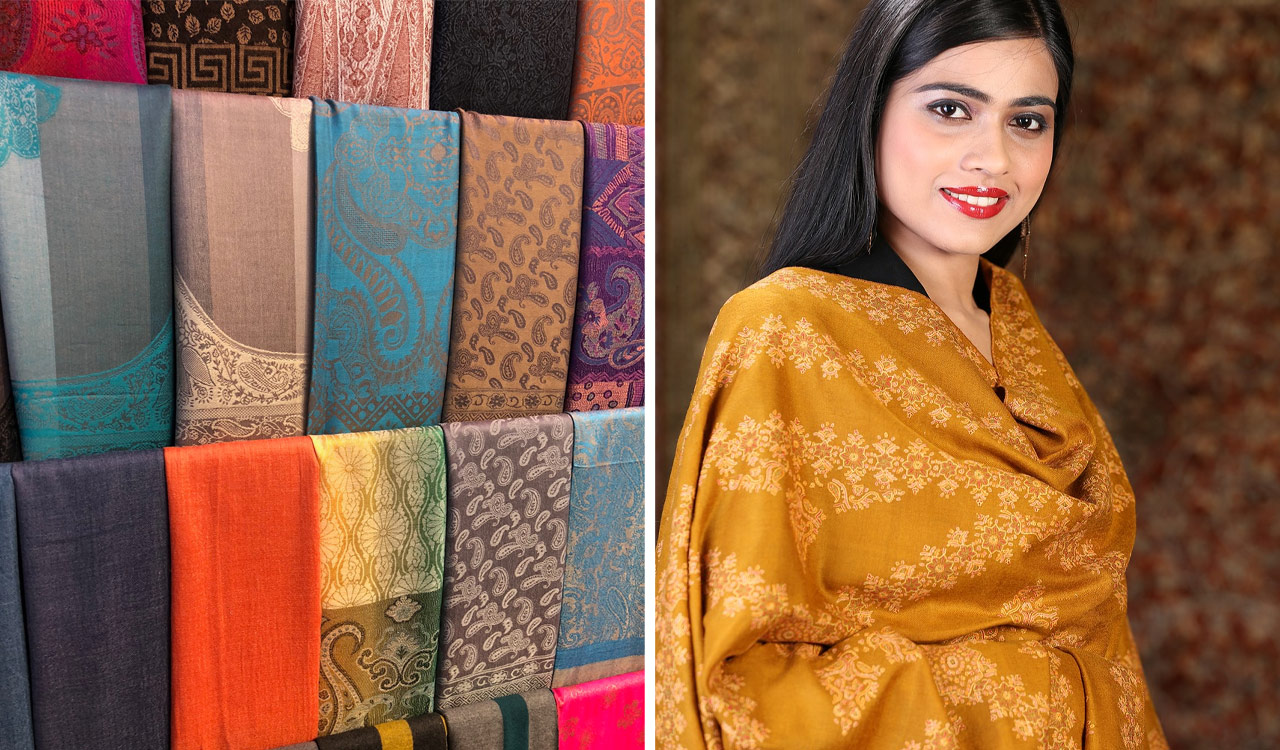
Pashmina refers to a particular type of very fine wool woven into the exquisite and magnificent Pashmina shawls. These shawls also embody a rich and intricately designed embroidery and are aptly known as “The Art of Royal.” The craft of producing these shawls demands undivided attention and patience, and hence it takes several days to complete one shawl.
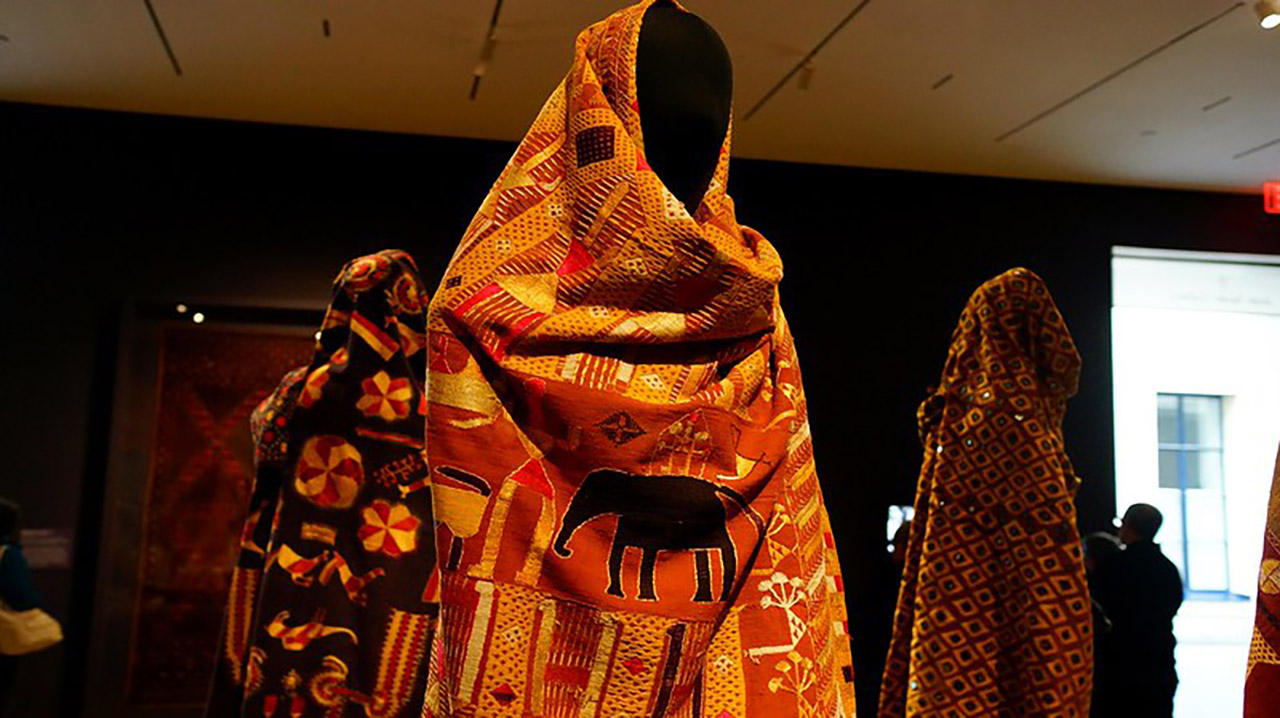
Phulkari means floral work, as the Phulkari embroidery comprises unique and exquisite floral patterns that adorn the fabric. These spectacular and vibrant designs are what make the Phulkari embroidery fabulous and distinct from others. Phulkari embroidery was initially embodied only in garments but today; it is present in bags, jackets, cushion covers, and other items.
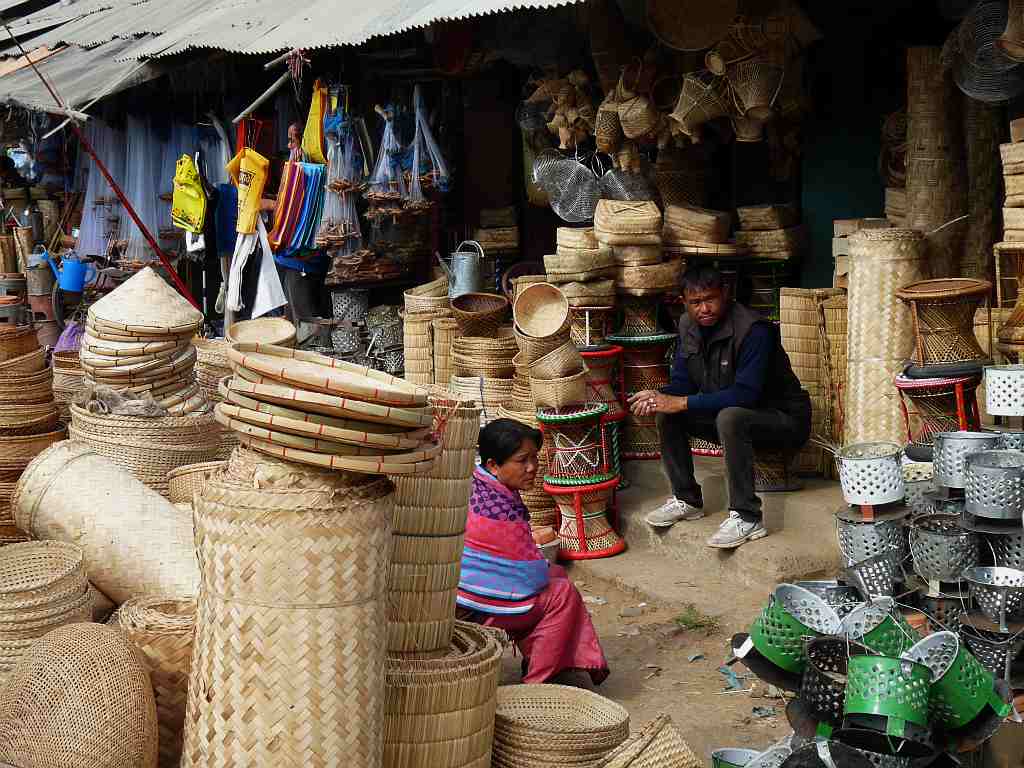
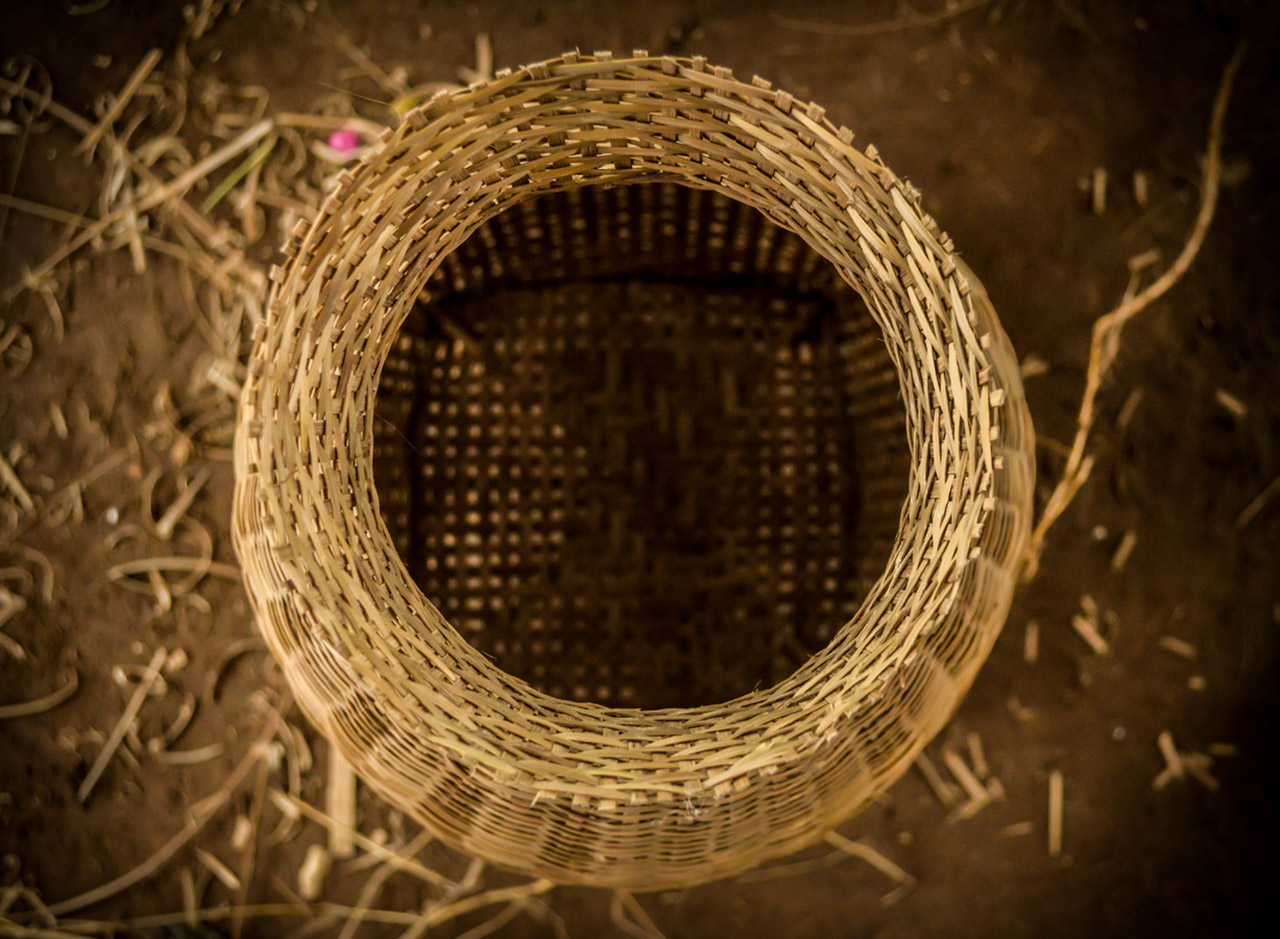
Bamboo handicrafts are prevalent in the states of Tripura, Assam, and West Bengal. These crafts are quite popular as the raw materials used for this Handicraft are eco-friendly. Several items, including baskets, toys, and furniture, can be carved from them. One of the oldest crafts, Bamboo handicrafts, is known for its elegant design and unique charm.
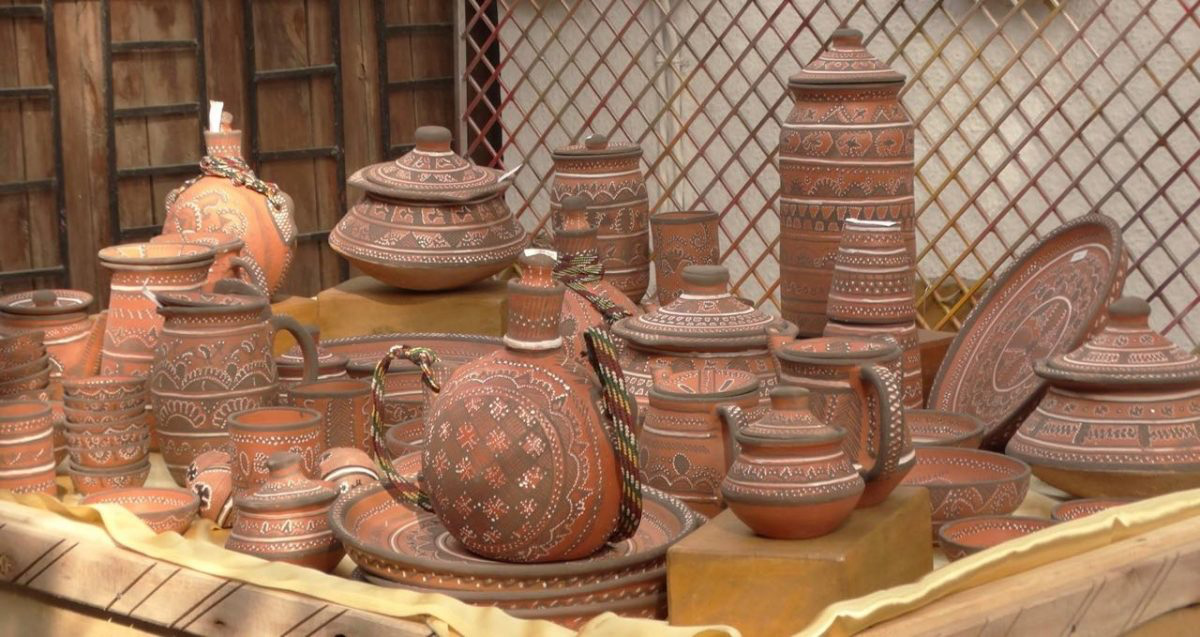
4. Pottery from Gujarat
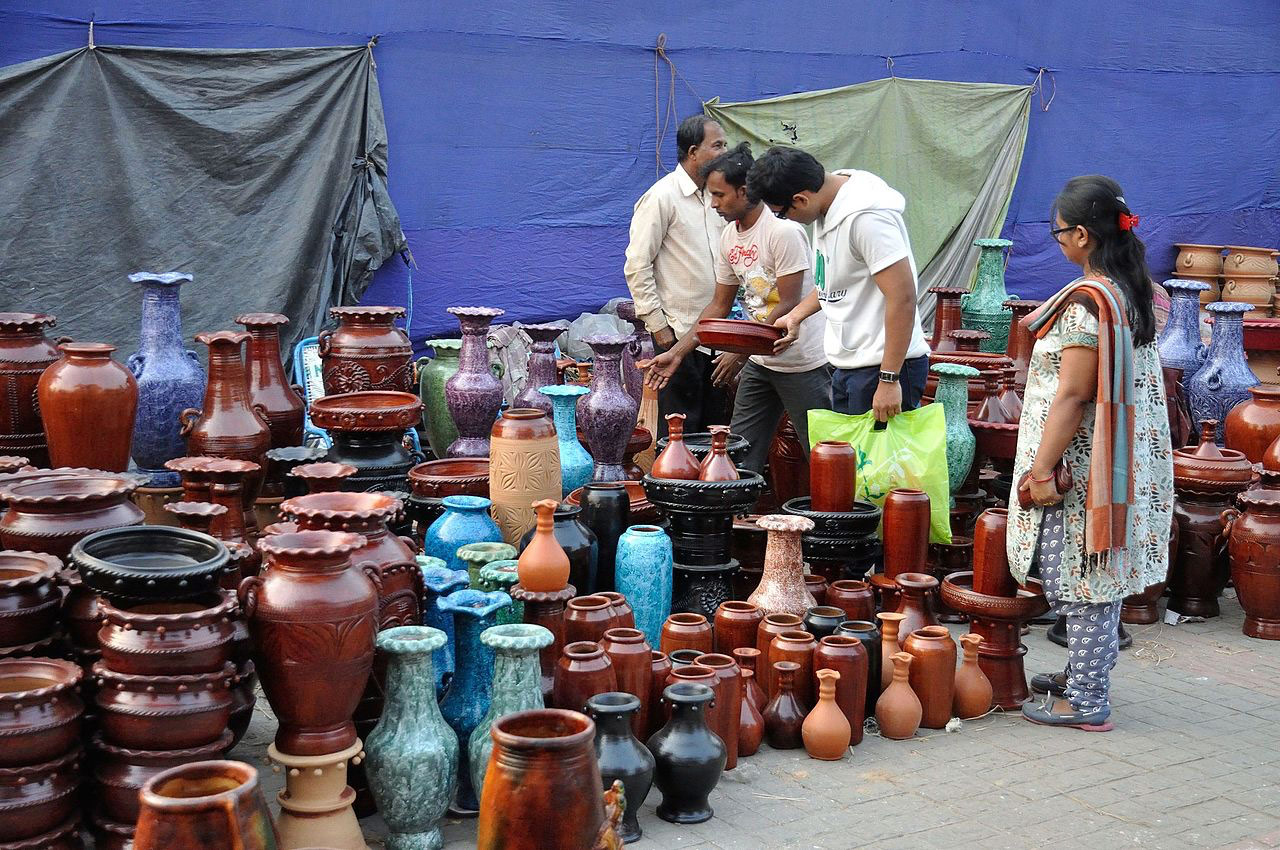
Pottery began with the Indus Valley Civilization. This art of baking and shaping into clay objects continued for years. Pottery is undoubtedly one of the oldest handicrafts prevalent in our country. This traditional art of crafting handmade pottery has been prevalent in India since the Harappan civilization. Pottery is more prevalent in India’s northern states and includes a variety of different sizes and shapes.
Humans have learned to make use of metals more than 5 million years ago. The discovery of Brass has made lives easier. Brass Handicrafts are mostly preferred due to their durability. An alloy of zinc and copper, Brass is mostly resistant to tarnishing and hence is an appropriate material for crafting handicrafts. Ornamental boxes, vases, lamps are some of the most popular brass handicrafts commonly found in households.
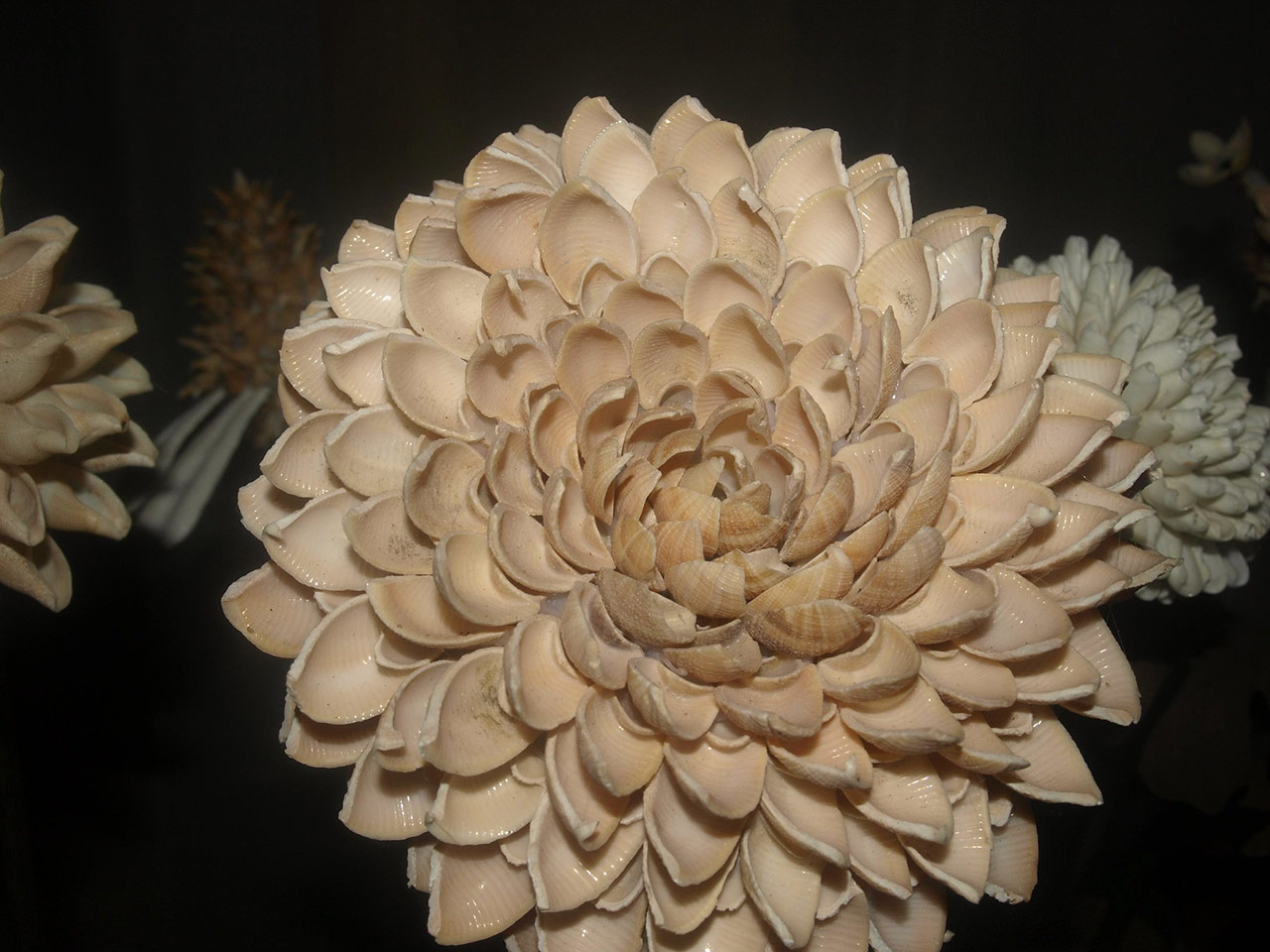
From bangles and lockets to forks and chandeliers, shells are used to craft many things. Conch shells, seashells, and tortoiseshell are used to create these beautiful handicrafts. Odisha, Goa, and the Gulf of Mannar are popularly known for their shell handicrafts.
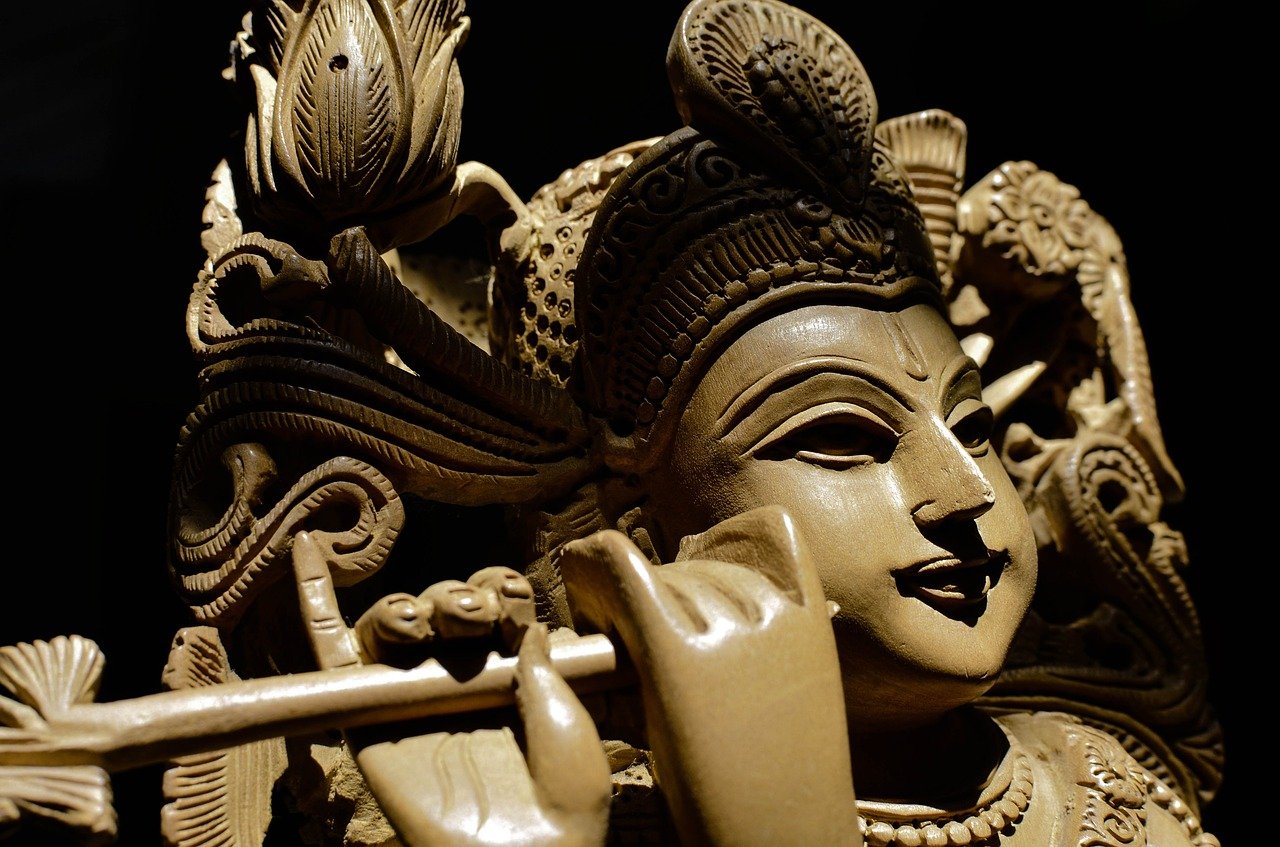
7. Woodwork from Many States of India
Image – Pixabay
Artifacts made of wood are quite common in the northern states of India. The artisans of Kashmir, Punjab, and Chattisgarh are known for their beautiful woodwork in making toys, masks, windows, and sculptures. In southern India, too, woodwork is prevalent, in the states of Andra Pradesh, Madurai, Karnataka, and Kerala are also known for their beautiful works of art crafted from wood.
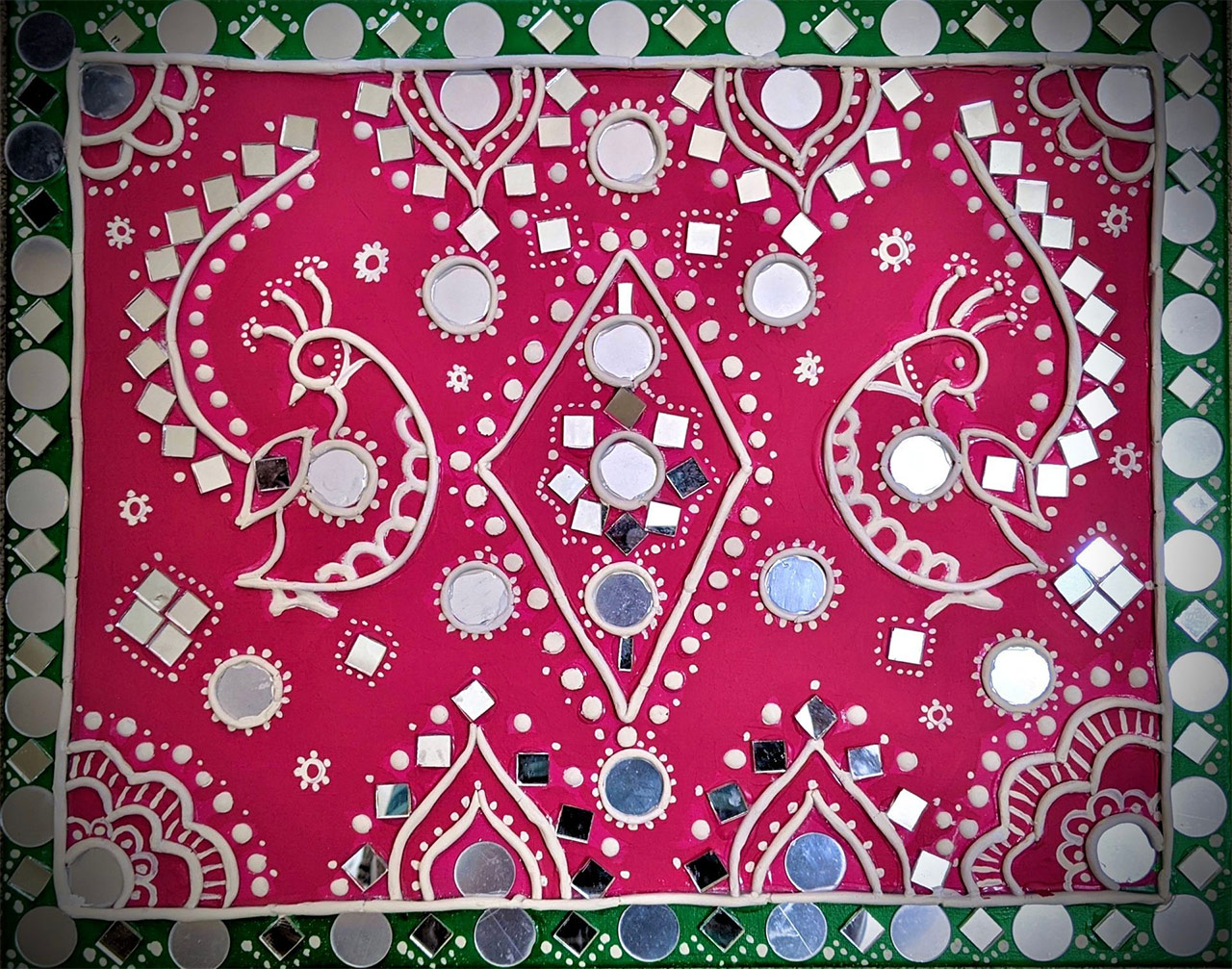
Lipaan Kaam is a mural craft from Kutch. This craft’s beauty lies in its mirror work and the unique designs employed in creating this work of art. Also known as Chittar Kaam, this art is used to decorate the houses’ interior and exterior in Kutch. Lipaan Kaam is made using a mixture of equal proportions of mud and clay.
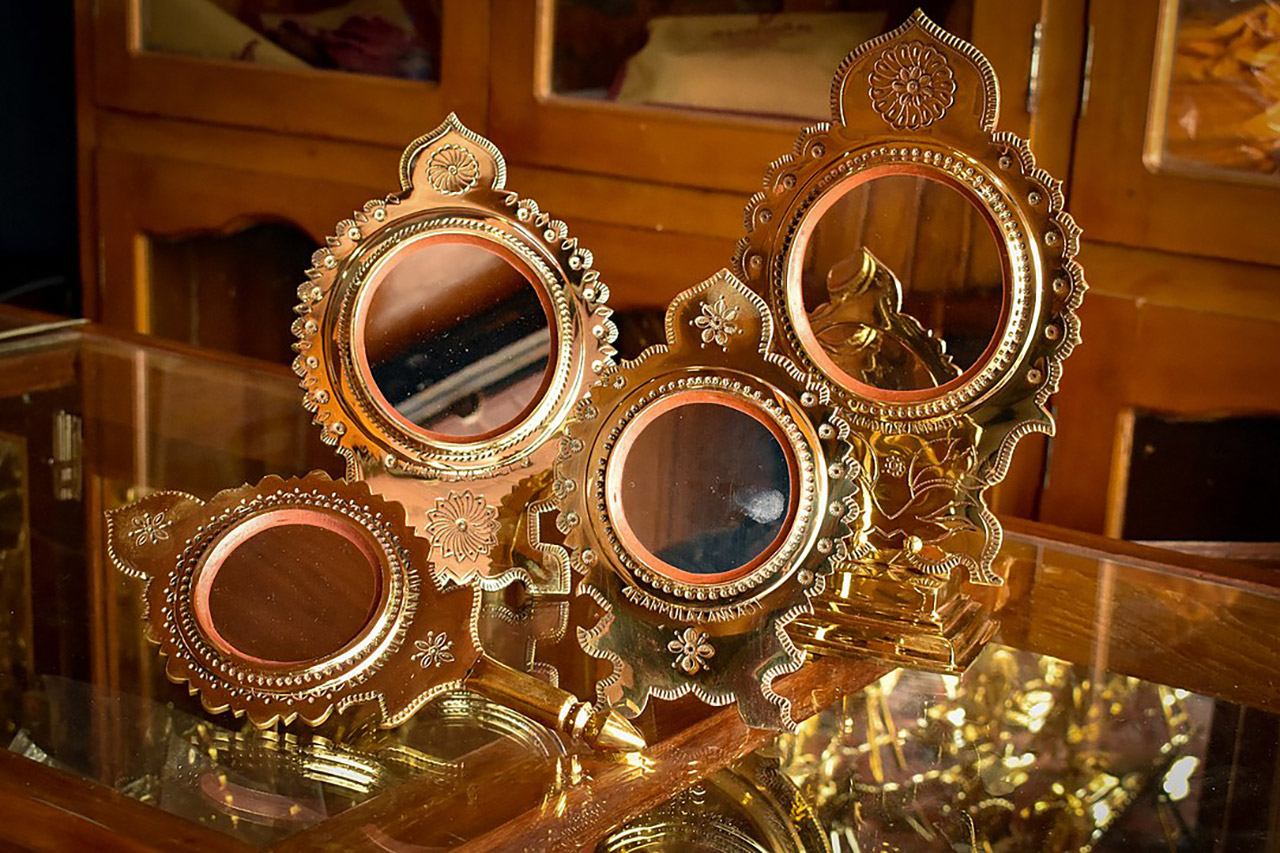
This Handicraft is a pride of Kerala. A handmade mirror, the Aranmula Kannadi, is produced from a town named Aranmula situated in Kerala. Many believe that having an aranmula Kannadi in their home will bring fortune and prosperity. The excellent craftsmanship and the enchanting appearance of the Aranmula Kannadi are what make it exceptional.
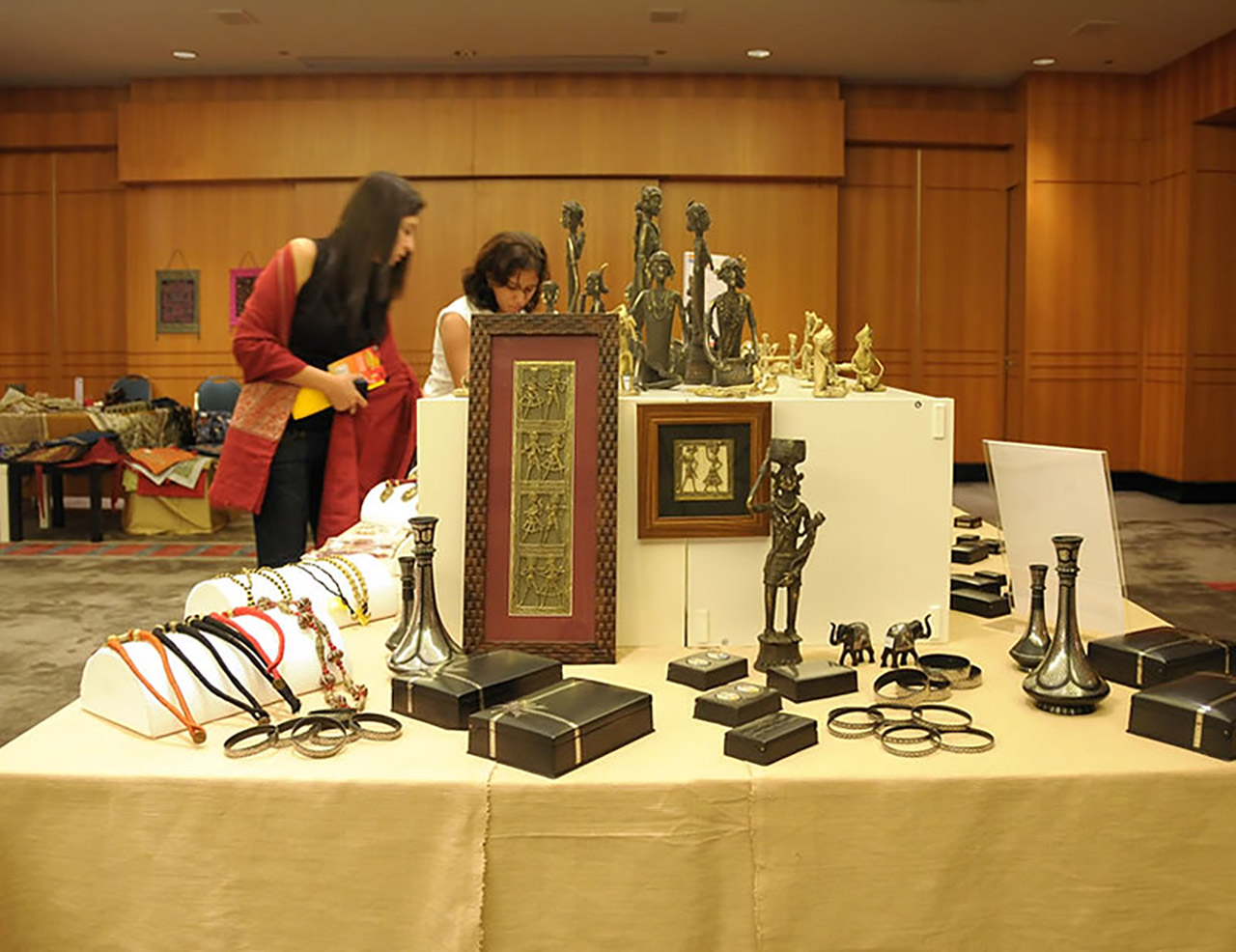
Bidri handicrafts are crafted with a unique metal, comprising an alloy of copper and zinc, and pure silver sheets. Said to be more than two thousand years old, this craft is popular due to its intricate detailing and aesthetic appeal. From bangles and boxes to statues and masks, many amazing items are produced.
Leather is used to craft a wide range of items that are used in everyday life. Shoes and sandals made of leather are available in the country and are exceptionally popular. Kolhapuri chappals, made of leather, from the state of Maharashtra are also quite popular.
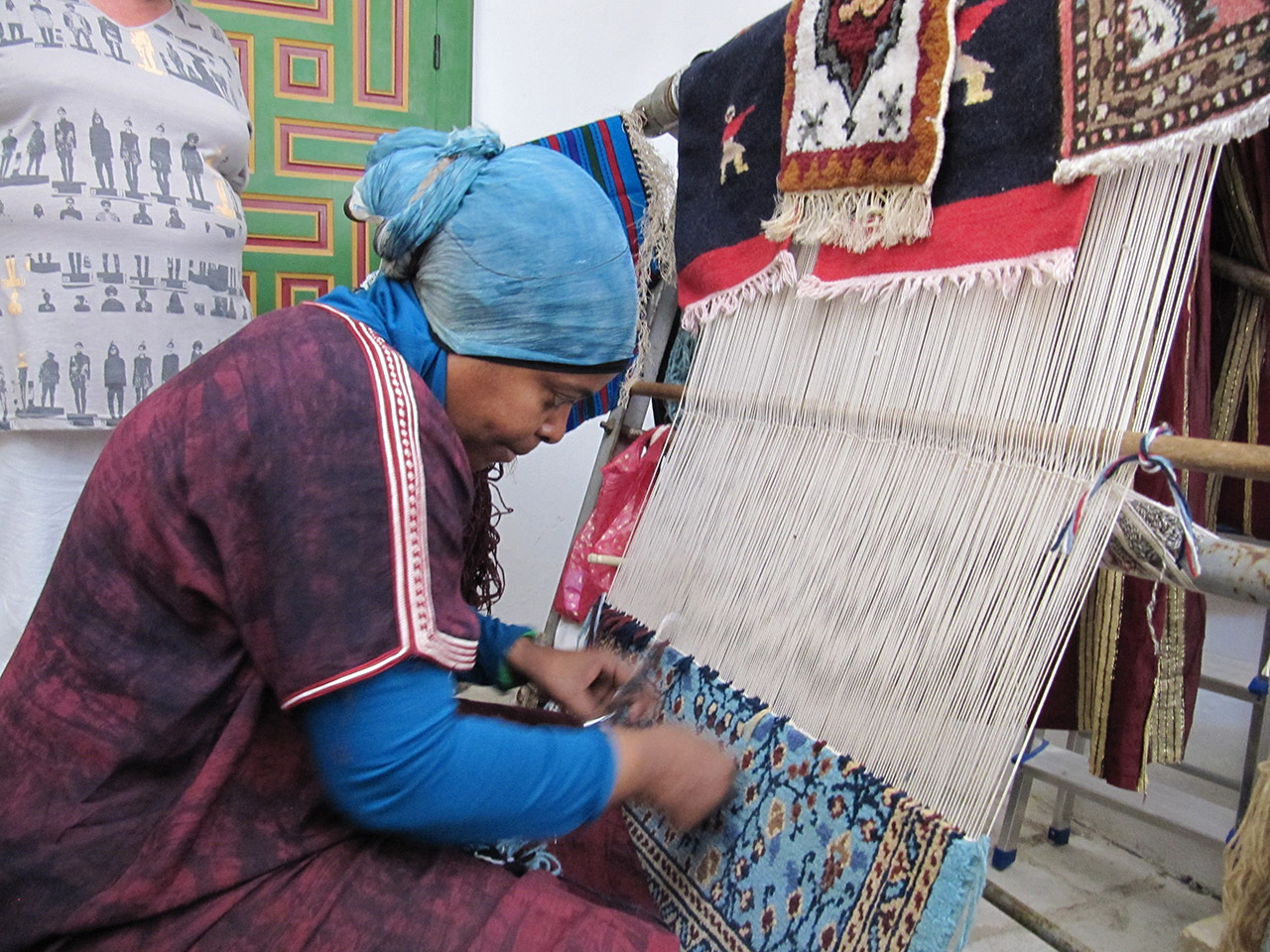
Carpet-weaving is one of the significant crafts that is prevalent in north India. Uttar Pradesh is said to be the central hub of the carpet weaving industry. The beautiful carpets that are weaved here have some incredible designs, such as the Taj Mahal. The silk carpets of Jammu and Kashmir are also quite popular.
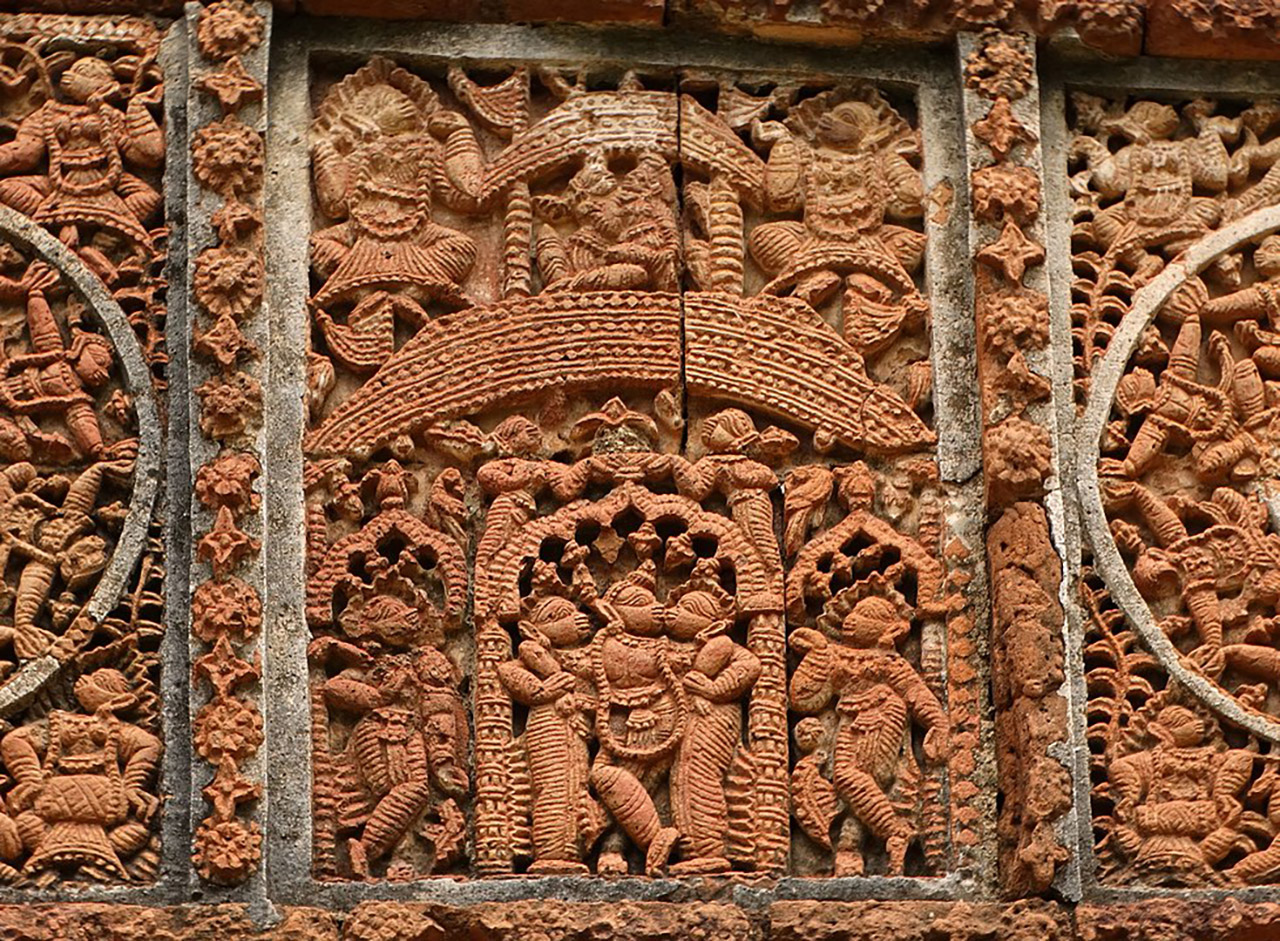
Terracotta crafts are quite popular in the state of Assam. Skilled artisans carefully craft these handicrafts. Terracotta handicrafts include Toys, pots, artifacts, religious symbols, and vases. The village named Dubri in the District of Goalpara in Assam is well known for Its terracotta handicrafts.
14. Jute Works from West Bengal
Image – Desibags
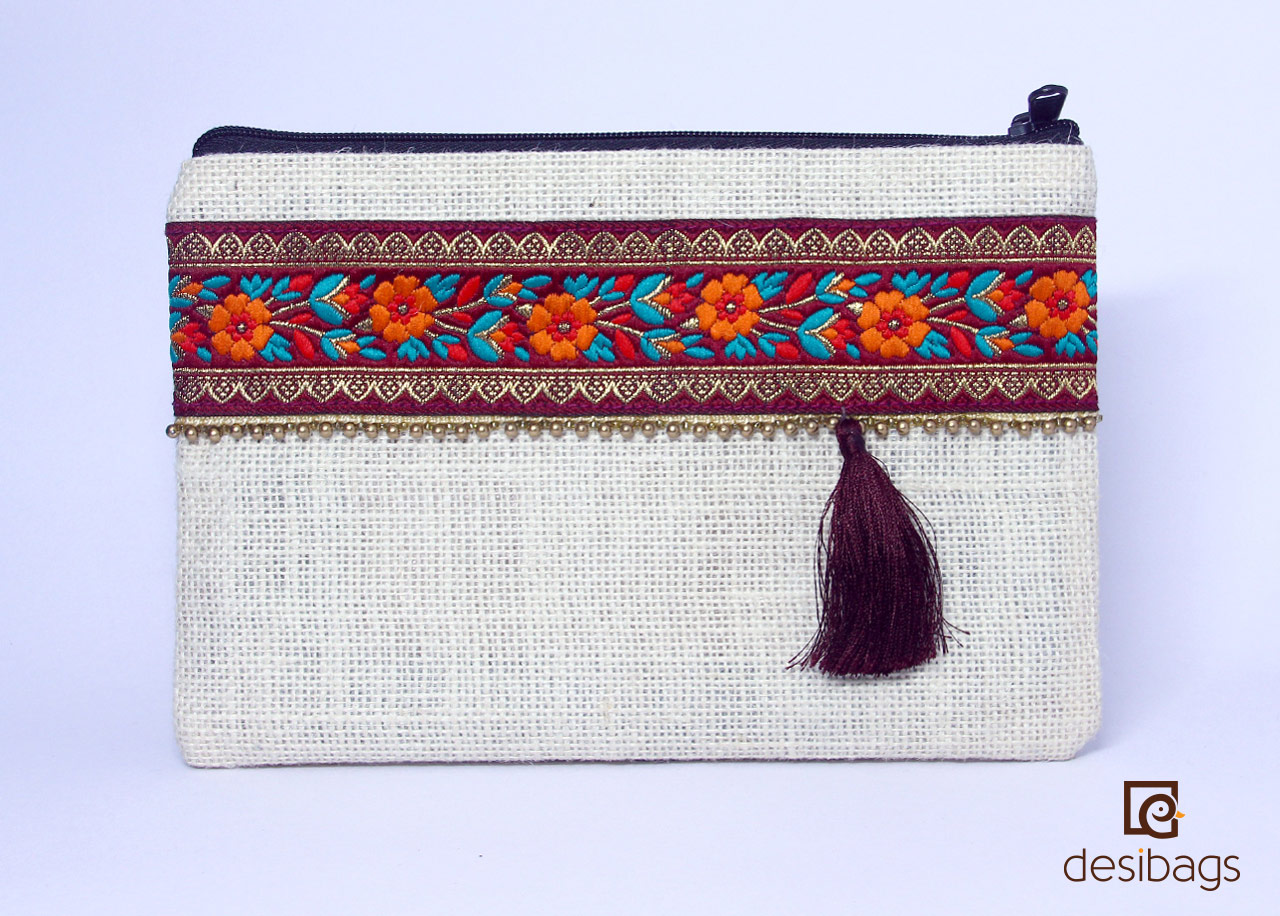
The states of West Bengal, Assam, and Bihar are known for their variety of Jute products. Many Jute handicrafts are prevalent in the country and are famous worldwide. There is a wide range of handicrafts available in the country and includes bags, bangles, footwear, and stationery.
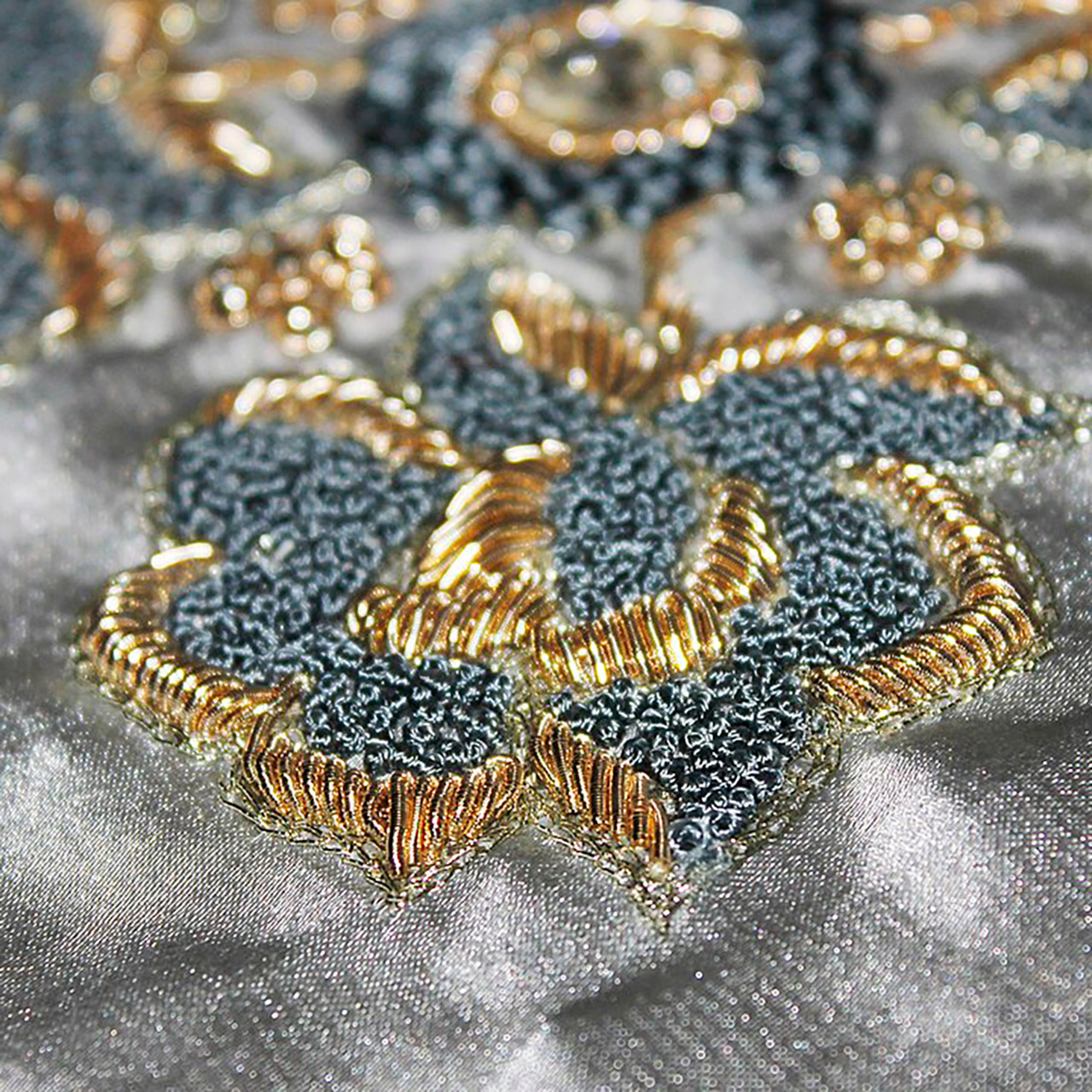
Studded with pearls and other precious stones along with gold and silver threads, the Zardosi embroidery is quite different from any other. This unique embroidery style is popular in Lucknow, Hyderabad, Mumbai, Ajmer, Chennai, and Bhopal. Elaborate designs and unique patterns are a distinguishing factor of this embroidery.
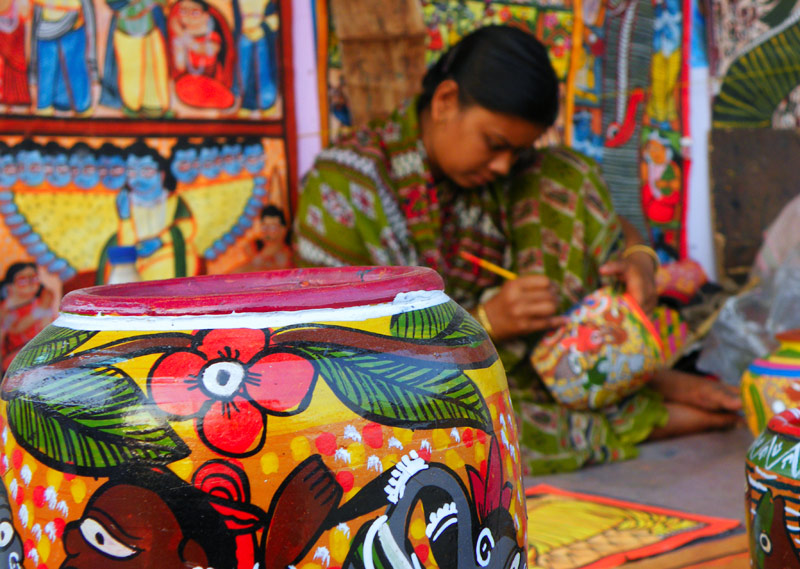
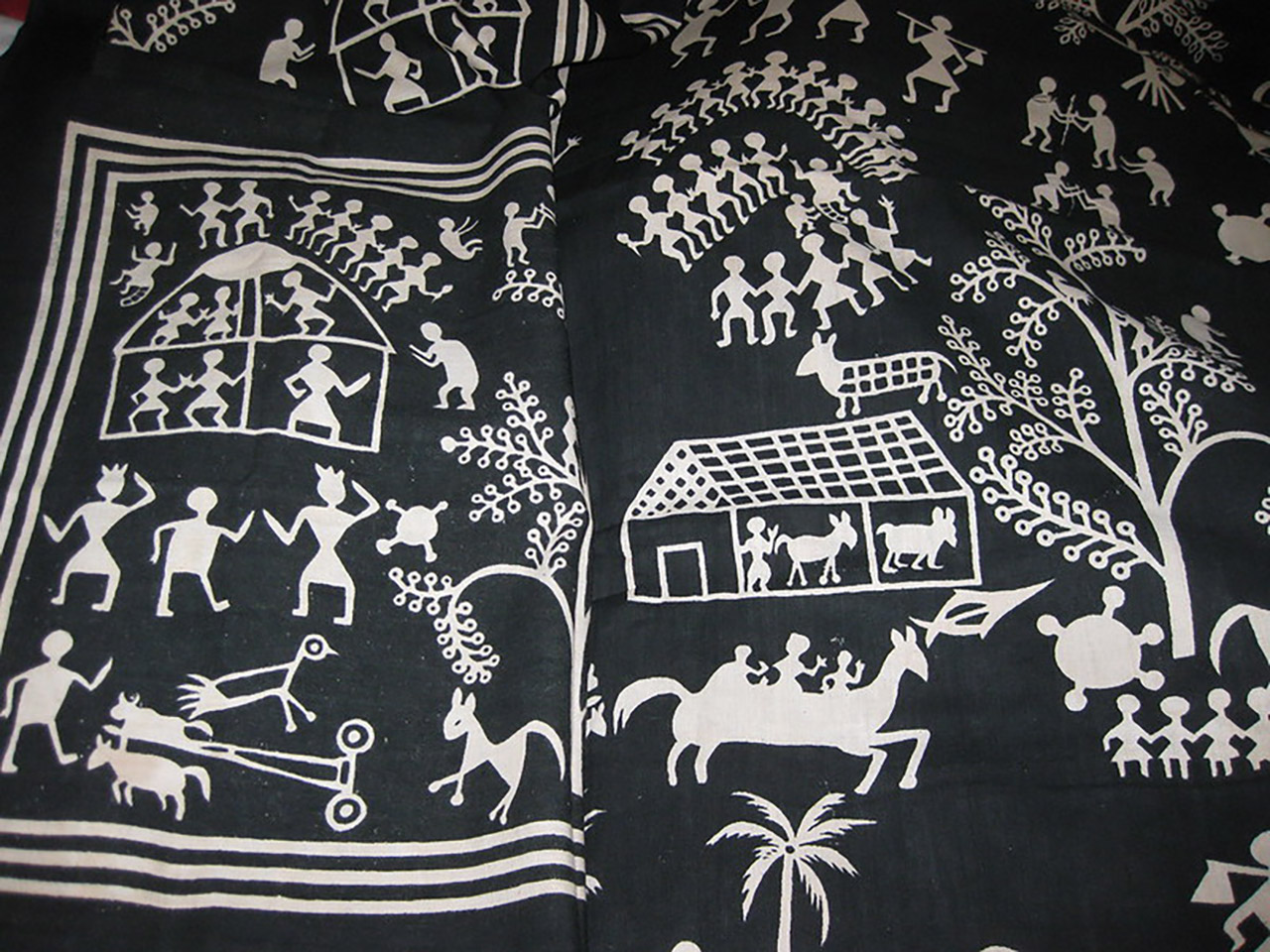
Warli paintings are created by the skilled artists of the Warli tribe. The paintings have a unique design and are quite beautiful and fascinating. The themes used in the painting are usually taken from nature. Sun, moon, trees are some of the common motifs employed in the paintings.
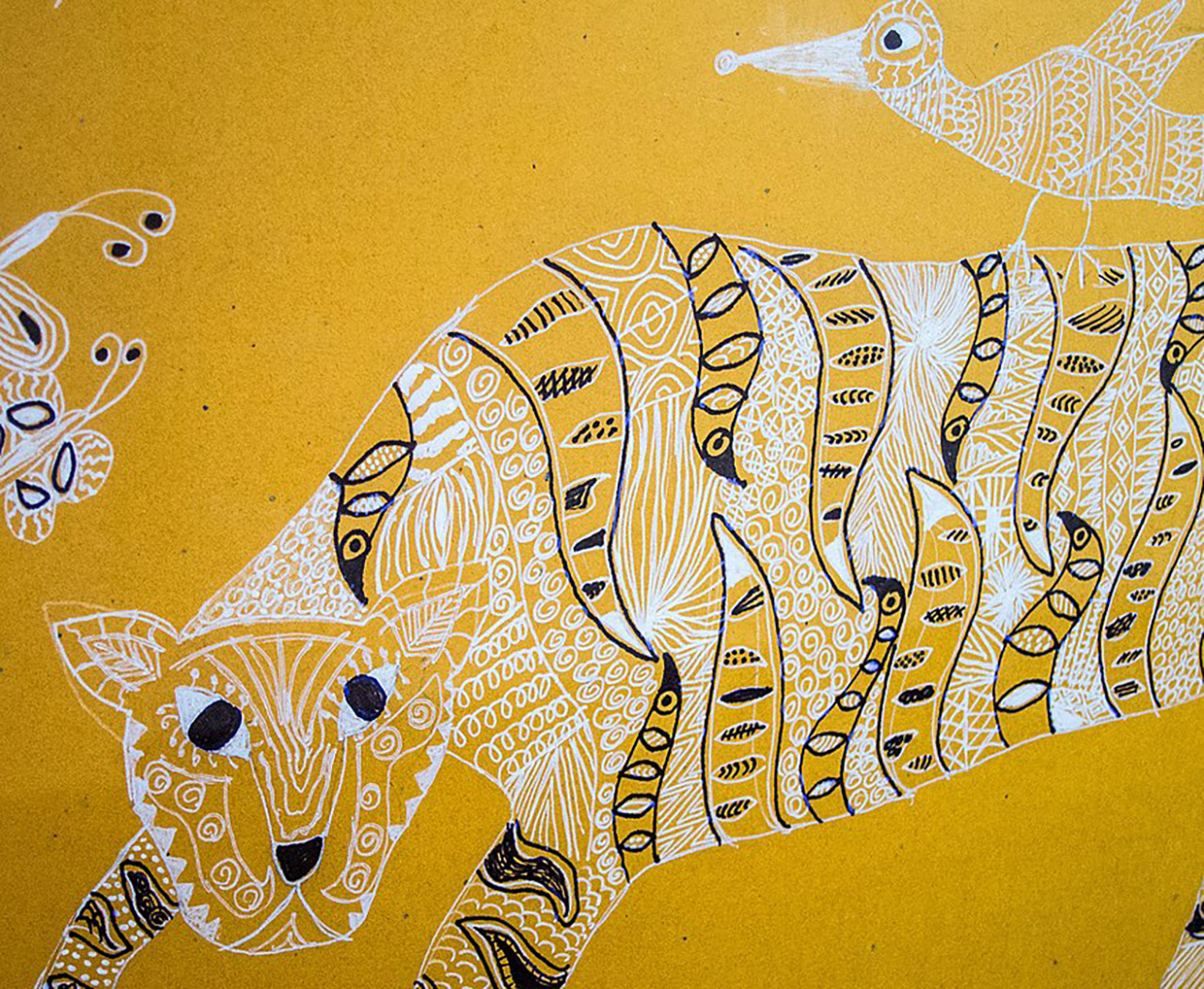
Practiced by the Gond tribe of India, these paintings are unlike any other. These paintings mostly embody a story element in their work of art and are usually rooted in their folk tales. Mostly popular in Madhya Pradesh, Gond paintings are prevalent in Andhra Pradesh, Odisha, and Chattisgarh.
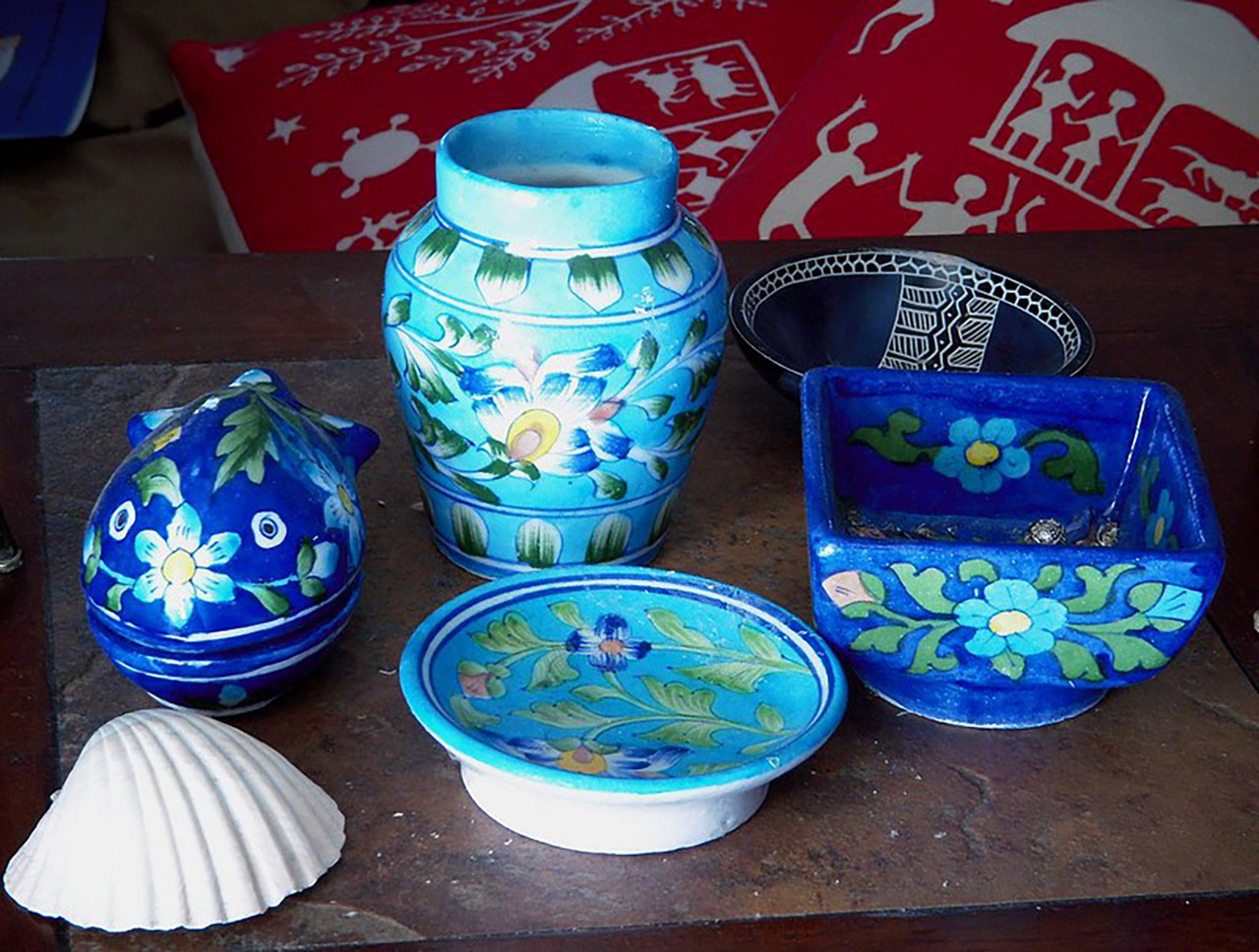
The blue pottery of Jaipur has a unique grandeur and stunning appearance, which sets it apart from others. A prominent craftsman of this world-famous craft is Kripal Singh Shekhawat. Blue Pottery of Jaipur includes a wide variety of products, including cups, saucers, tea sets, jars, glasses, and jugs.
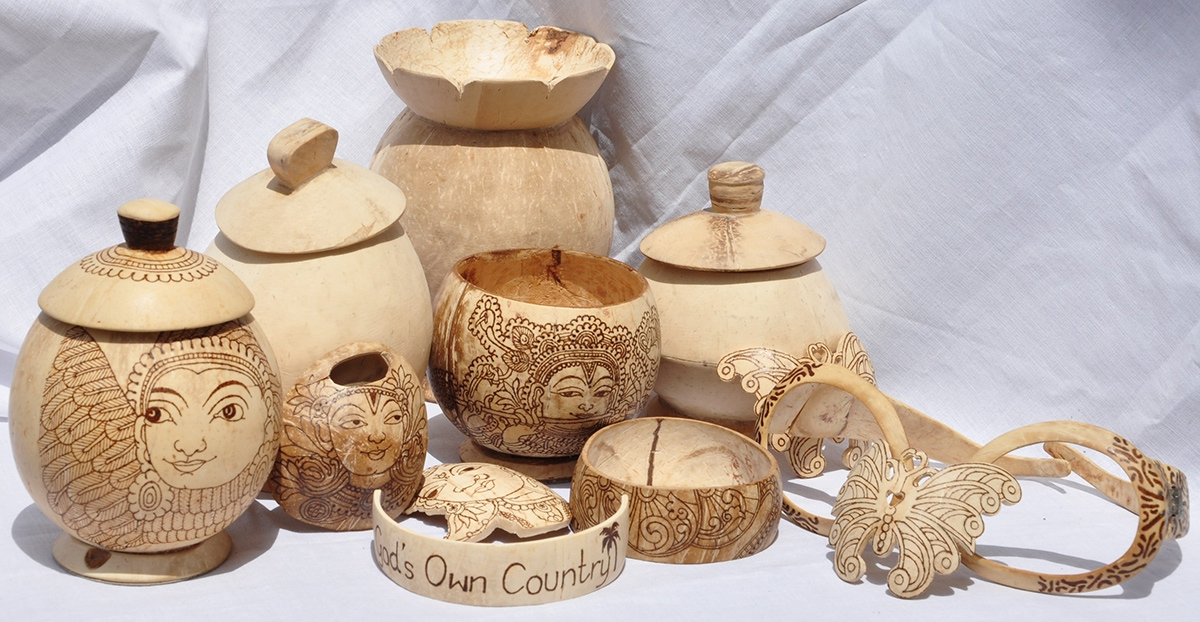
One of the traditional handicrafts from Kerala, the coconut shell craft, has a unique beauty of its own. What makes this craft different from others is its eco-friendly nature and unique designs. Skilled artisans carve a variety of items including cups, boxes, and vases from the coconut shell.
The trunk of the Banana tree is utilized to produce the fiber to create these handicrafts. Wall hanging, mats, bags, and many other items can be made using this unique method. These handicrafts are eco-friendly and can be used to create a wide range of products including, doormats, wall hangings, baskets, bags, among others.
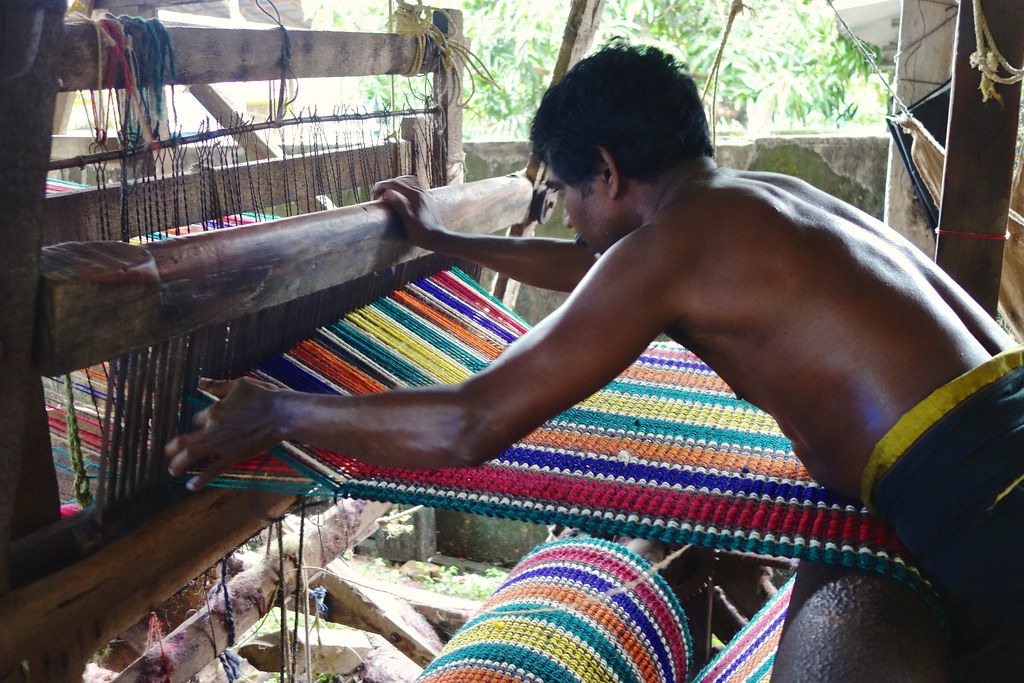
Coir products of Kerala are quite popular throughout the world. These eco-friendly products are extracted from the husk of the coconut. Coir mattresses, mats, and many other items are made through this craft.
22. Lacquerware from Kerala
Image Source
Lacquerware is a distinct handicraft that is produced with a unique blend of woodcraft and metal. These artistic and aesthetic pieces of art are later embellished with precious metals. This eco-friendly lacquer ware is quite popular in the Ernakulam district of Kerala.
Dhokra artifacts are created using an ancient method that dates back to 5000 years ago. Originating from West Bengal, these handicrafts are also popular in Orissa, Chattisgarh, Rajasthan, and Kerala. The Dhokra artifacts are quite popular for the unique style of human or animal figurines made by skilled artisans with precise and intricate detailing.
Ceramic crafts are mostly popular in west Bengal, precisely in Kolkata. This Handicraft has been practiced for a long time, though recently, modern technology has also been used for the same.
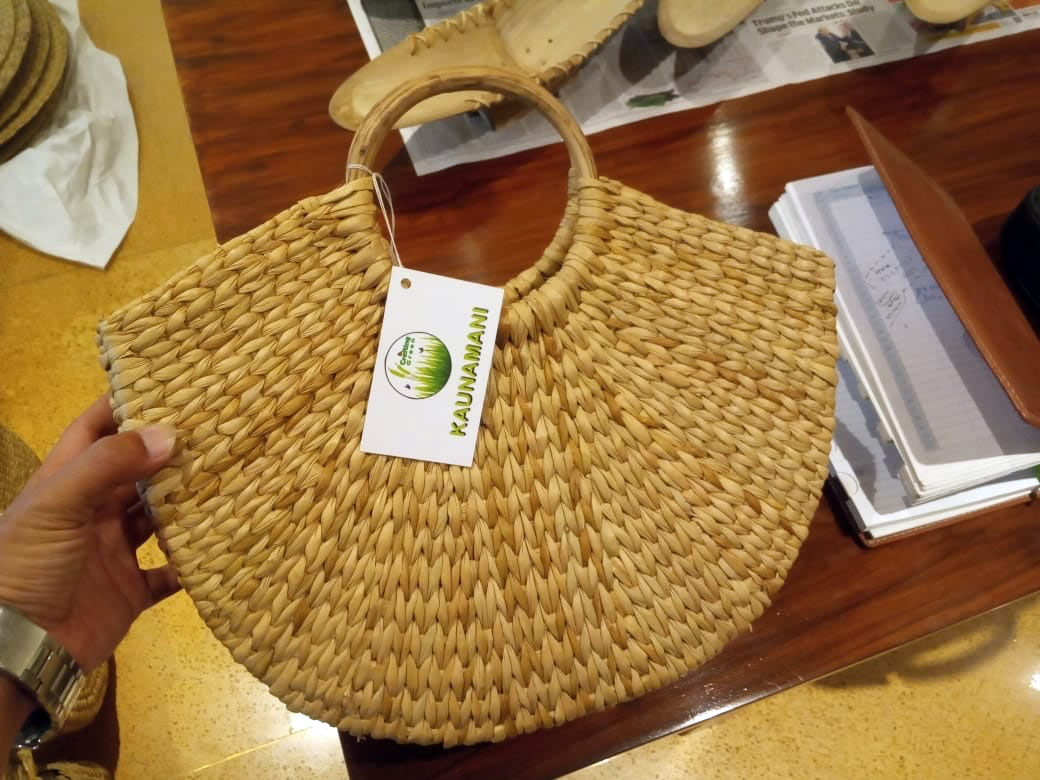
Kauna Grass craft is produced mostly from Manipur using a particular reed called Kauna that grows in water. Handbags and baskets are usually made using this Handicraft. Apart from being a beautiful handicraft, it is also eco-friendly.
Handicrafts have a unique beauty that sets them apart from those produced in bulk with machines. It portrays the creativity and imagination of the skilled artisans who craft it with precision and patience. The Handicrafts of a specific region is an embodiment of the distinct culture and tradition of the place it hails from, and hence it plays a significant role in portraying the heritage of their land.
India has a diverse culture that can be uniquely experienced by trying the culinary delights of each location. Food gives us an insight into the history and character of a certain area. It helps us to realize how various states employ local products differently. Food Festivals of India are one of the most effective methods to get a crash course in our rich culinary history. The impact of social media has made events like these increasingly popular with the second and more people want a part in it. There is arguably no better way to experience one’s soul than by eating. How better than to go to a food festival of Kolkata where you can take part in hands-on cooking events, meet new chefs, mingle with friends, and sample local Bengali food?
You’re missing out on a spectacular experience if you’ve never visited Ahare Bangla before. Thousands of people come together, five days and tons of shops to celebrate food. The food festival, organized by several departments in the government of West Bengal is led by the Animal Resources Development Department. It is all about the promotion and commemoration of local products. This Festival is held annually with authentic Bengali cuisines such as Ilish bhapa, kosha mangsho, tyangrar jhol, bhetki paturi, and mishti doi with new delicacies every year. You will have an opportunity to interact with farmers — those who literally cultivate the food we consume each day. Apart from food, discussion shows, cooking sessions with well-known chefs, notable writers, poets, and other distinguished personalities are also present to keep one engaged.
ABP Ananda Khaibaar Pass is one of Kolkata’s greatest culinary festivals. It has been celebrating the sparkling culture of Bengal’s food with great joy and enthusiasm for the past six years. The particular event brings Bengalis together with local brands and eateries in the state, providing various dishes. Organizations are attempting to embrace West Bengal cultures and ethos through on-the-ground initiatives like these.
There is a vast range of Biryanis, Kebab, simple Bengali meals, seafood, and a lot of desserts and snackable items at this famed food festival. From Mughlai to Chinese and Lebanese, there is an existing variety of cuisines available. Besides the famous local culinary scenes such as Aminia, Arsalan, Nizam, India, Kolkata Restaurant, Saptapadi Restaurant, Chowman Nalini Chandra Sen, etc, it is also a pleasure to see some hidden gems in and outside Kolkata be showcased here. Delicacies from several towns in Bengal, especially Baharampur, Chandannagar, Durgapur, and Rishra are also available in these stalls.
Furthermore, you can not only enjoy the delicious food but also enjoy the cultural performances of different artists and participate in the intriguing carnival games. It has something in store for every visitor. The organizers believe that this culinary festival would rekindle the desire for some of the lost Indian dishes and give visitors a multicultural experience through food and beverages.
3. The River Water Hilsa Festival by Oh! Calcutta
Image – Sayamindu Dasgupta/Flickr
Hilsa or Illish is a prominent river water fish that runs upstream through the Bay of Bengal from the corners of the Arabian Sea. While the Bengali legacy has been maintained, it is now a delicacy sought after and is gradually cherished across the country. It has a robust and tasty characteristic flavor. Of course, without serving Ilish, no event is complete. One may enjoy a traditional preparation of the Queen Of Fish during Oh! Calcutta’s Hilsa Festival. In addition to their typical buffet lunch and dinner, you can order several of these Hilsa special items from their Hilsa menu. This consists of the chef’s special – Bengal’s famous Hilsa Broth or Ilisher Jhol with Mustard –with the simple yet vital mustard (Shorshe). The Smoked Hilsa, a native version of the dish from the British Raj and served with fries and sauteed vegetables. The Mochar Ilish, spicy banana flower, and a fried Hilsa in a unique mixture are other great favorites. And Aam Tel Ilish which is a steamed boneless Ilish which is mango pickle-flavored, wrapped in a pumpkin leaf and served in a clay jar of steamed rice.
The most pleasing thing about Oh! Calcutta is that all ingredients come straight from Bengal. It’s an excellent experience to enjoy all these delicacies. This promotional festival takes place in the monsoon period in July-August at its branches throughout the country.
Kolkata has always been associated with its distinct cuisine and these are just some of the yearly food festivals. Apart from these, the city of joy is almost a year-long food festival on its own and is always open to other local food-based carnivals(such as food stalls during Durga Pujo), or several regional ones that showcase delicacies from all over the state. This popularity inspires and promotes more festivals of the same kind on a national and international level. Keep an eye out for the various events that are always happening from time to time in this bustling city for an exceptional experience!
Some cities are planned, whereas, some have just grown over the years. A lot of old cities of India are unplanned, throbbing with busy lanes, packed roundabouts, and cluttered establishments. Most of them have expanded, off shooting into modern and well-structured layouts as they have panned out from the central core. However, the chaos of the old city is very much the heart and stand-out element of the entire metropolitan.
Ancient Cities vs Old Cities of India
There are two ways of looking at this. There are ancient cities that have been in existence for thousands of years. They are holders of immense history and heritage. And luckily they have survived in modern times too. These cities are steeped in rich ancient history, flaunting architecture and culture of erstwhile kingdoms and tales.
On the other hand, there are the metro and Tier 1 cities. These cities as a whole have their path of growth, but cannot be counted as ancient cities. This is because their role probably came into the limelight, not before the 14th century or so. However, these cities though modern in many ways, have pockets of the old world charm thriving in their heart. In such cities, it is almost like stepping in and out from one era to another, from one culture into another. There is a seamless integration that can often be baffling to an outsider.
Ancient Cities of India
India has a long and deep history. Its ancient cities are repositories of traditions, culture, and glory. Today, some continue to be busy, while others have shifted into being Tier 2 or Tier 3 cities. Here is taking a look at some of the ancient and oldest cities of India.
Up first on the list is Varanasi or Banaras which is one of the oldest inhabited cities of India. the history of Varanasi is estimated to date back to more than 3000 years. It has seen all, from being a spiritual and learning center, pilgrim destination, as well as an artistic hub famous for its brocade and muslin fabrics and weaving. There is something about Varanasi, its chants, the ghats, the Ganga, and the meeting of cultures that makes it an authentic ancient city holding its own even in the modern world.
Another city from Uttar Pradesh, Kannauj is also called the ‘perfume capital of India. With artifacts dating to the prehistoric ages, Kannauj was made capital by King Harsha and was part of the Gupta Empire. Renowned for its attar and rose water, today Kannauj is a historical town that is surviving on its past glory and the skill of making perfumes passed on from generations.
The capital of the Malwa region in terms of culture and history, Ujjain is a ‘temple city. But like many other ancient cities, such as Varanasi its religious fervor is not one-dimensional. There are other historical highlights of the city including taking a stroll along the Shipra River that make it worth a visit.
4. Patna
Ruins of Nalanda
Pataliputra from the Mauryan and Magadha empires, Patna has a lot of ancient history attached to it. Though it is the capital of Bihar, its identity is influenced by its erstwhile days of prosperity. From the Patna Museum to Golghar or the ruins of Nalanda, Patna shows enough evidence of a culture of learning and intelligence.
Records of Madurai date back almost 4000 years ago. Ruled by many, including the Pandyas and Cholas, Madurai has been the place of temples and scholars for a long. Meenakshi Temple its most popular landmark is said to have been built initially in 600 BC.
The ruined city of Hampi has been an attraction for tourists all over the world. Declared a World Heritage Site by UNESCO, Hampi was the capital under ruler Krishnadevaraya of the Vijayanagara Empire. Today the architectural ruins of the town are gorgeous and a photographer and historians delight.
Also known earlier as Tanjore, another southern city of India is one of the oldest cities of the country. Tanjore flourished under the Chola dynasty and its paintings and arts are world-famous to date.
There are many other old cities including Puri, Ayodhya, Dwaraka, Rajgir, Kollam, Pushkar, and more. All of these cities have a history dating back to thousands of years. However, the main point of attraction here is that they have been lived in for all these numbers of years too. They haven’t become relics or ghost towns. Most of them continue to be inhabited in the same spirit. The culture of these places continues to find a home and takers in its place of origin.
Now, we take a look at another aspect of the old city charm. Just as there are old cities that are laden with their specific characteristics, there are also older enclaves within cities. When one thinks of Varanasi and the wisdom of its years, it is about the city surviving its originality over generations. Yes, the modern amenities set in, and over time the relics of the past become the heritage that looms over the city landscape. But the essence and flavor of the city remain pretty much itself. The people who live there are the ones who have lived on from one generation to another. There is not much influx from other states or cities and hence the character of the city is pretty much a retainer of its past.
However, on the other hand, there are a few huge metro cities that house within them the soul and spirit of their yesteryears. These cities have expanded and become hubs of commercial and modern facilities. They have become centers of commerce or social gatherings and have changed in their outward, as well as, cultural nuances. But within all the expansion and migration, there remain areas of the old city. These are reminders of what the city once was.
Here is taking a look at some of the most popular old city enclaves.
Old Delhi is an era on its own. With the Jama Masjid dominating the aura of this area, Old Delhi is much more than what meets the eye. With the narrow lanes, the bustling shops filled with delicacies and cuisines that are hard to beat anywhere, Old Delhi is an oasis of old-world charm. Constructed as a walled city during the 17th century by Shah Jahan, Old Delhi remained the seat of power for the Mughal Empire until the British came over. Old Delhi is a complete mix of ethnic, religious, and social strata. Though New Delhi itself is more than a hundred years old, the difference between the two is palpable.
Hyderabad today is the IT hub of the country. It has expanded and attracted professionals from across the country and also the world. But tucked away in the swarming madness lies the Old City of Hyderabad. The authenticity and heritage of the city that is often identified with the Charminar and Mecca Masjid come alive in the lanes and bylanes of the Old City. The dialect and feel of place shift when one steps in here. The Hyderabadi Biryani and Haleem are perhaps the best as the markets all around buzz with the urgency of business that is so akin to an old city dazzle and glamour. The Old City was also a walled space built by Muhammad Quli Qutub Shah in the 16th century. Though not much of the wall remains today, its cultural finesse remains intact.
Old Ahmedabad is another of the walled cities. Built by Ahmed Shah I in the 15th century it remained an important administrative center for the Gujarat Sultanate. Today it retains the heart of the city in forms of architecture and culture. The Bhadra Fort and Jama Masjid are some of the iconic landmarks here. However, it is the gates and pols that are the main distinguishing characteristics of Old Ahmedabad. Traditional housing communities/clusters or pols are found within gated streets and are a discerning cultural landmark of the city. The pols are named after the community residing within it or also on different animals, deities, etc. The sense of togetherness is strong here and needless to say, the cuisine is authentic Gujarati dishes.
Many other cities would have an old city enclave cornered somewhere or scattered in different neighborhoods that bear testimony to the earlier days gone by. The city, though moved on in many spaces, still holds its roots deep in many others.
Whether it is the ancient cities or old city enclaves, the emotions of history, valor, and richness are strongly felt. Yes, there is chaos and clutter. But there is a definite rawness that stands out. Perhaps, that is why such cities and enclaves are attractions for outsiders. They bring them closer to a reality that is defiant to not fade away. Does it necessarily reflect in its disarray a pride of what might have been? That is of course, debatable. As for now, their old worldliness is enough to forgive the rest.
When it comes to fashion, stylish footwear quite easily tops the list of things that cannot be overlooked. Unlike in the distant past, as our grandparents will recall, footwear was viewed only as a means of protecting your feet; in today’s day, the sheer importance of the right pair of shoes in completing an outfit tastefully along with supporting, cushioning and guarding our feet is unquestionable.
That being so, when putting together outfits for various occasions, be it a house party, casual outing or even something as mundane as work or a grocery store trip, shoes are something we do not dare forget, especially us women. High quality, fancy ladies sandals not only help us express our individuality and elevate an outfit but also make sure that we do not end up with sore feet and an aching back. So do not forget to add Ladies sandals to your shoe rack for all your elegant and chicest looks.
However, we understand that as familiar as you might be with these facts, finding the best ladies sandals is not always the most convenient of tasks. So, here is a list of all the factors that you should consider before choosing the perfect pair:
Material- When looking for ladies sandals, never forget to check the material before swiping the card. Always go for an item that has a synthetic sole, an insole made of a softer material like polyurethane(PU) and a body made of high-quality leather, suede or even fabric. The synthetic material is lightweight, sturdy, durable, water and stain-resistant; PU will let your feet breathe and offer ample softness, keeping any kind of fungal or bacterial infections away, and the body will ensure a snug fit.
Size- This might sound like a very trivial or obvious detail to list, but going for the right size of footwear makes all the difference where comfort is concerned. More often than not, we often end up buying the wrong size of ladies sandals, and our entire body has to face the consequences. A size too small, they end up squeezing the life out of your feet and a size too big, they end up giving you blisters because of excessive friction. Hence, never go for an ill-fitted pair.
Purpose- Keeping the purpose that you are going to use the ladies sandals for a while browsing will help you narrow down the list by a considerable number. For instance, if you want shoes that can be worn at a wedding for a couple of hours, you may go for heeled, embellished sandals. But, if your purpose is to go to work, you should go for something more athletic like strapped, platform sandals. The bottom line, match the purpose with the type of footwear.
Support- The build of the item will tell you if the sandal will offer enough support to your feet or not. Some sandals have insoles that are as straight as a ruler, and because of this, the entire weight of your body falls either entirely on your toes or your heels instead of getting divided evenly. This causes your feet to get tired easily and makes wearing these for prolonged periods an impossible task. Go for pairs of sandals that provide sufficient support to your arches, too.
Turns out, buying ladies’ sandals is not that daunting a feat after all! Now, jot these down, so you do not miss out on the best pieces the next time you go footwear shopping.
Pride Merch 2021 commemorates a coming of age T-shirt series by Label Ankita Jain. The label took off in 2019, and it marked its second anniversary in May 2021. Ankita Jain, the body and brain behind the label, is an alumni of the Pearl Academy. With the companionship of her queer tribe, their thoughts and fashion impressions influenced her to experiment with her design language.
In 2020, when she first launched the Pride Merch, in lieu of releasing merchandise, she and her team went around interviewing non-binary people. This helped them in articulating and understanding their struggles through these conversations. The Pride Merch 2020 was colorful, with an underlying happy and cheery theme.
In contrast, Pride Merch 2021 manifests a real picture of the LGBTQI community through these t-shirt design. There is solitude in a dark place, with a friend by your side, which resonates truly with the emotions and sentiments of the community. There is a calmness and liberation in the artwork that follows. The t-shirt demands ‘Do You Hear Me Now?’ which is then contrasting to the loud roar of the popular rainbow merch in the market.
Ankita Jain envisions her brand to be a safe haven for the community in all possible ways. Beyond her annual Pride Series, her team represents varying members of the community through employment generation. They also actively include transgender models in their campaigns. One such example is Shanaya Tamang.
This annual Pride Series runs in the month of June celebrating how far they have collectively come. This year, Label Ankta Jain has collaborated with queer artist Veer Misra to create a T-shirt that shows an escape, freedom, empathy and above all, love.
Veer Misra is an illustrator from New Delhi. His work attempts to thematically explore love, masculinity, mental health and intimacy as part of queer storytelling. In addition to his illustrative work, Veer also curates and publishes a monthly newsletter of essays and art by South Asian members of the queer community called Mush. He also interviews creative experts for his podcast The Tuesday Wine Club. He says,
“I like creating classically romantic images but through a queer lens. This illustration, at its core, is nothing more than an escape into a dreamscape. At the end of everything, the only thing that makes anyone human is the way we’re able to express empathy, support and obviously, love.”
Most importantly, they are collectively donating 50% of all profits to Santa Khurai’s campaign for helping transgender people in Imphal. The remaining 50% of profits is being equally divided by the artist and the brand.
Ankita Jain is also an artist who loves to paint on jeans fabrics. Parallel to her Pride Merch 2021 series, you can find her Love is Love denim jacket which is based on the principle of upcycling. Similarly, you can find her Equalist jacket collection with ‘Equalist’ embellished on the back.
Ankita mentions a possibility of starting a simultaneous segment dedicated to gender-neutral fashion. She believes that an absence of queer clientele in her present collection may find solace in this Capsule segment. She also states that an Indian brand that inspires her is Huemn which caters to unisex handmade statement clothing.
If you are looking for pride gear this pride month, here is your chance to get your hands on Pride Merch 2021.
The leather industry in India is prolific and historical. And leather products have a huge market both domestically, as well as internationally. The common leather products include shoes, bags, pouches, and more. Leather in India dates back to as early as 3000 BC with references about it made in Vedas too. The leather industry though largely is about manufacturing and marketing. There is a significant amount of artistry and skill that this particular industry merits.
From a creative view, leather products are exceptionally versatile and artistic. There are myriad cultural aspects attached to it too. For example, the leather puppet shows or Shantiniketan leather goods are a case in point of how diversified and culturally significant is the use and creative prowess of leather. Similarly, different states master different artistry producing beautiful footwear, statues, and many other leather crafts.
The man understood the utility of leather long ago. Animal skin was used as clothing and references of those are found in the Indus Valley Civilization. Even earlier, sages and saints were known to wear the skin of deer. However, the usage of leather was not restricted to clothing alone. Leather was used to make bags, sacks, straps, bottles, and also sails for ships. With time the trade of leather expanded and India was a major leather exported via the Silk Route. Whereas north India traded through the Silk Route, southern India’s trade was with Roman and Greek kingdoms in Europe. During the 20th century leather continued to flourish in terms of marketing, as well as skilled artistry.
Leather is a sturdy material and its advantage lies in its multiple uses. Several items are made from leather. It includes footwear, bags, jackets, lampshades, suitcases, cushion covers, saddles, and much more. Each of these products has a distinct place in the market due to its unique texture and design.
Who doesn’t know about the mojaris or the Kolhapuri chappals? Or how about flaunting the Nagra or a Peshwari? Ethnic products from leather are as much a hit as everyday utility items. For example, almost all of us have possessed a leather wallet. Loved the spaciousness of a leather handbag, and enjoyed the comfort of leather shoes.
Leather has carved a niche for itself in both mundane daily items, as well as stamped its authority on various cultural and artistic expressions. In fact, in many cases, it interweaves both to create stylish and artistic utility items. Think about the beautiful mojaris or excellently designed nagras. And again, one can think of the monochrome-shaded leather bags and belts with the same desire for possession.
Regional Expertise in Leather Artistry
Image – vireshstudio/Pixabay
Regionally too the artistry over leather varies and excels. Where Rajasthan and Maharashtra are famous for leather footwear. West Bengal with its own Santiniketan style creates wonderful bags, wallet bags, pouches. Here we are taking a look at some of the regional specialties that are a statement to leather artistry and craft.
The most popular footwear includes the Kolhapuri chappals from Kolhapur in Maharashtra. The chappals are an iconic fashion statement, as well as a symbol of tradition. These chappals have been around since the 13th century. When the then King Bijjala encouraged its production for the upliftment of the cobblers. Also, Kolhapuri chappals are handmade using natural ingredients and hence extremely comfortable.
Similarly, mojris or jootis originated under the Mughals. Decorated with crystals or gems and designed with intricate colors and designs the mojris continue to be eye-catching to date. Rajasthan became the hub of mojris where the chamar community first began to process the rawhide and then dyed them using vegetable dyes. They come in different colors and patterns, some embedded, some embroidered. The craft is evident in the design and perhaps this is one of the reasons that even leading fashion designers to incorporate the mojari on the ramp.
Saddles
Image by Dorian Krauss from Pixabay
Bikaner and Jaisalmer in Rajasthan are most famous for creating lovely saddles for camels and horses. The intricately woven beads and wonderfully done embroidery work adore the backs of the animals. And add a classic look of tradition and culture.
Madhya Pradesh is particularly famous for its different types of leather statues. Usually, sculptures of horses, camels, etc. are a great mix of tradition, culture, and skill. Leather crafts, however, include a whole wide range of products including bags, pouches, and others. Several states and regions specialize in leather crafts, including West Bengal, Tamil Nadu, Andhra Pradesh, Karnataka.
Kop a unique bottle made from camel leather is popular in Bikaner. Whereas, lampshades from leather are beautiful in Andhra Pradesh and Rajasthan. Red leather embroidered items are famous in Madhya Pradesh, whereas leather puppets and toys are found in Andhra Pradesh.
These are mentioned separately because the design and artwork done on these are extremely unique. This art form is practiced in Santiniketan and the adjoining villages in West Bengal. The bags made from Santiniketan leather are very popular and have a huge market in the US and Japan. Vegetable-tanned skins are used in production because they have the quality of retaining the imprints of batiks or various other motifs. Several products are made with Santiniketan leather, such as chappals, handbags, jewelry boxes, eyeglass covers, wallets, cushion covers, and more.
One of the most culturally rich experiences using leather artistry is the leather puppet shows. Though dolls and puppets are made from leather in various parts of the county, Andhra Pradesh specializes in them particularly. Yet, the most mesmerizing usage of these is in the shadow puppetry shows, a trademark of southern states and also Maharashtra and Odisha.
In Andhra’s four traditional forms of shadow, puppetry shows are practiced. The storyline of most of these is centered on tales from the epics of Mahabharata and Ramayana. Also known as Tholu bommalata the shadow puppetry first started as a traditional custom. When wanderers and entertainers moved from one village to another. The show is conducted using leather puppets that are placed in front of light but behind a white screen. The puppeteer performs the entire show which sometimes might carry on for several hours as the shadow puppets move about unfolding the narrative.
The tradition of shadow puppetry is found in Kerala, Karnataka, and also in Maharashtra. The show is accompanied by vocals, music, etc, and is a wonderful coming together of artistic streams and influences.
Animal welfare
Leather, whether for artistic or utilitarian purposes raises concern about the treatment of the animals. There have been reports of cruelty against animals for their hides or skin. Though the Prevention of Cruelty to Animals Act India prevents cruelty towards animals. Unless the animal is used for scientific experiments or human consumption, lapses have been marked. Organizations, such as PETA have raised objections on the need for leather off the animal skin. They have instead encouraged the use of artificial leather.
Besides, the recent beef ban in many states has also led to a decline in the leather industry. Though the industry continues to be one of the largest in India and also in terms of export and trade. It needs to make sure that it does not achieve profits through the ill-treatment of the animals.
Conclusion
Finally, artificial leather is making its way slowly. Which is a relief for animal welfare activists and well-wishers. Yet, the artistic skill that is attached to the leather industry is also hugely responsible for the welfare and employment of many skilled and traditional artists. Perhaps, a balanced approach and sensible line of action are required. To ensure that there is no cruelty towards animals, yet at the same time, the creativity of industry is not killed either.
The ideal place for relaxation and some much-needed me-time, Kerala is a dream destination for many. Visiting Kerala is, indeed, like knocking on the door of God’s own country. Why you ask? Because the soothing atmosphere, wide rolling hills, thundering waterfalls, and pacifying nature is nothing less than divine. Kerala is well known all over the world as one of the best places in India and it is rightly so. As you are probably aware, Kerala is well renowned for its magnificent backwaters, startling houseboats, and of course, the spices which it produces. Being a major producer of spices, Kerala also boasts of a highly flavorsome and unique cuisine. And you know that any foodie like me would be more than elated to grab hold of the mouth-watering dish this fascinating state has to provide.
While the delicious Idiyappam, Dosas, and Puttu curry are most widely regarded as the Malabar cuisine; one popular drink is also enjoyed almost everywhere in Kerala – the Toddy drink. When you visit Kerala, it will be hard for the large placards and boards reading ‘Toddy’ to go unnoticed. Toddy is an alcoholic (can also be nonalcoholic) drink and is essentially palm wine with a sweet flavor. This splendid drink is made from the sap of coconut trees and its counterpart, which is unfermented, is a non-alcoholic drink known as neera.
The Toddy drink is available for consumption throughout the year and its making is extremely interesting to know about. If you are lucky enough to witness the tapping of Toddy, you’ll see that the toddy tappers start by cautiously choosing a good, healthy palm tree. Then, by using a sort of pseudo-ladder, the men climb up the tree and the buds of the flower are cut open. This is followed by beating and pounding the flower bud with the use of a hammer until it is swollen. Then, eventually, a few clay plots are attached to the beaten buds until the milky liquid is collected in the pots. Lime is then added to the drink to prevent the drink from getting fermented. The Toddy is, subsequently, distributed to licensed Toddy shops where they’re sold in bottles. Aside from drinking purposes, this spectacular drink is often used in the kitchen to create traditional recipes as well. Even though the Toddy drink contains alcohol, it is considered to be healthy. It is what is called ‘Natural alcohol’ due to its low percentage of alcohol content.
Toddy tappers have to be healthy and strong to carry out their respective profession. The athletic tasks of climbing numerous trees every single day are certainly dangerous and exhausting and have to be done with utmost caution. Several incidents have been reported stating the tragic death or injuries of toddy tappers who badly hurt themselves while climbing trees. According to statistics, about 40 percent or less of Kerala’s population engages in this trade. The Ezhava (also known as Thiyya), a community from the North of Malabar, most extensively function as the Toddy tappers of Kerala. A daunting career, indeed!
However, while tourists are attracted and excited to try out this alluring drink, there are a few precautions that one must take. To experience the drink in its original form, care must be taken that the drink is unadulterated. Local sellers tend to mix spirit in the drink to increase its toxicity. Therefore, it is recommended to have Toddy from trusted shops or those which are fairly isolated from the cities.
Toddy shops are not frequently found all over Kerala. Right now, while the demand remains high, the supply seems to be decreasing day by day. Hence, do keep an eye out for those tiny Toddy shops. For the longest time, these shops have been structured to be crudely built shack. They are usually visited by men who watch sports on the television in the shop while sipping the Toddy. One of the best places to drink fresh and delicious Toddy is in the backwaters of Alleppey. After taking a relaxing boat ride in the backwaters of Alleppey, do make it a point to stop by one of those tiny Toddy shops and sip the drink.
Toddy tapping has been around in the state of Kerala for quite some time now. The majority of Kerala’s population has been in the profession of Toddy tapping in the earlier times. There is no denying that Toddy tapping has always been an integral part of Kerala’s cuisine and heritage. Moreover, the popularity of the drink is well established by how frequently drink is sought after by tourists and non-residents of the state. Interestingly, since ‘Coconut Vodka’ has been prohibited in several states in India and countries abroad, this makes the experience of tasting the flavors of this magical drink in Kerala even more memorable.
Therefore, it would be sensible to say that by tasting Toddy, you’ll taste the essence of Kerala. After all, the true sense of a place is embedded in its culture and traditions. Whether it may be an impromptu trip or a planned one, a pit stop to drink Toddy when in Kerala is something you definitely won’t regret. That, my friend, is the true identity of Kerala.
Adventure and thrill is something everybody needs and being able to achieve that while in the company of mother nature is something entirely different. Kerala or God’s Own Country shelters a vast assortment of plants and animals attracting nature and wildlife aficionados from all around the country. Of course, that is perfectly natural for a state enclosed by none other than the marvelous Western Ghats which consists of around 44% of the entire state. The thriving forests deliver a flawless environment for the fostering of the ecosystem and house about 14 wildlife sanctuaries. These prime zones consist of more than a thousand species of plants and animals that comprise animals such as the Asian Elephant, Langur, Bengal Tiger, etc. as well approximately 450 species of birds. Let us dive into some of the most pristine wildlife sanctuaries in Kerala.
Located in the Western Ghats surrounded by lush foliage all around, the Chinnar Wildlife Sanctuary becomes a must-visit. The distinct variety of fauna that can be spotted here comprises the Nilgiri Tahr, Hanuman Monkey, tigers, elephants, and vibrant butterflies flying around. The two rivers that go through this sanctuary, Chinnar and Pambar, add to the aura of this wildlife sanctuary. Furthermore, it is a great place for trekkers as well as adventure lovers who can check out the safari offered here.
This beautiful sanctuary in Thekkady is truly a dream come to life. A protected area or haven for tigers and elephants. Amidst this utopia, an artificial lake is situated a century back, which forms a major attraction of this place. Other animals found here include wild pigs, gaur, Indian wild dog, bonnet macaque langurs, and many more. A truly amazing way of exploring this wildlife sanctuary is by safari but this isn’t just your normal jeep safari, this is an elephant safari, quite an appropriate way to discover the wilderness, wouldn’t you say?
Are you a bird-water who would jump at the chance of observing rare and exotic birds? If yes, then congratulations for you have stumbled upon the perfect place for you. This bird sanctuary also seems to be on the route of various migratory birds, originally from areas such as the Himalayas and even, Siberia. There are various activities offered at the sanctuary, the most popular among them being boating, providing you with a sense of peace and calm.
An undiscovered gem of the state of Kerala, Wayanad wildlife Sanctuary is renowned for the world’s largest Tigers and Asian Elephants’ population throughout the globe. This mesmerizing sanctuary also is 8th on the list of the World’s Biodiversity Hotspots. The prominent fauna that can be noticed here are barking deer, sambar, otter, panther and so many more. You absolutely can’t forget to carry a camera because trust me when I say this might just be the most picturesque place you have ever seen.
One of Kerala’s most popular fascinations, the Thattekad Bird Sanctuary’s formation is solely due to the efforts of Dr. Salim Ali who through his survey pointed out the scope the place possessed for the development of avian life. Some tropical species of birds found here include the Malabar Parakeet, Rufous Babbler, Yellow-Browed Bulbul, While-bellied Blue Flycatcher and so many more. Home to over 300 species of birds, this is a breath-taking bird sanctuary that is a must-visit for any bird-watching enthusiast.
This wildlife sanctuary, situated in the Western Ghats is certainly a sight to see. The area is covered with the most exquisite flora, which includes both evergreens and deciduous trees. The wildlife here consists of spotted deer, Nilgiri Langaur, elephants, gaur, and many more. Apart from spotting the diverse variety of fauna here, you can also go for a trek to the nearby Meenmutty falls. The good news for bird watchers, this sanctuary is home to around 188 different species of birds.
Located in Thrissur, this is one of the finest wildlife sanctuaries of Kerala. Characterized by lush green forests, a myriad of animals, plants, and avian life, this wildlife sanctuary has a plethora to offer. Home to rare species of flora and fauna, your experience here will surely be memorable. Other activities that you can partake in here are trekking and bamboo rafting, a must-try. The wildlife here includes the Indian porcupine, small Indian civet, common otter, slender loris, wild buffalo, etc.
At the Idukki Wildlife Sanctuary, you will observe animals roaming around such as the Malabar Giant Squirrel, Barking deer, porcupines, mouse deer, jackal, and many more. On top of this, you get to experience the truly entrancing nature of this sanctuary. Here, surrounded by forests, you will achieve a sense of peace at its very pinnacle. One of the major attractions of this place is the Idukki Reservoir here which is hauntingly beautiful. Furthermore, it is highly recommended to take the safari to explore its complete magnificence.
What could be more thrilling than marveling at the natural beauty of the flora and fauna of Kerala? It’s an absolutely enthralling adventure and when in a wildlife sanctuary, it’s all the more amazing to witness animals roaming around instead of being locked up in a cage and you can actually serve as a witness to the efforts being undertaken for wildlife preservation. It is, after all, rightly said, “All creatures are deserving of a life free from fear and pain.
India has a beautiful talent for narrating and telling stories through various art forms like singing, dancing, sculpting, and even painting. These folk art forms have been a part of our culture and tradition for centuries. Each one of them is very different from the other. Every art form has its origin, history, and uniqueness. India has a rich cultural heritage and a lot of efforts have been put in by the people of this country to keep our culture alive and paintings are a very important part of it.
These traditional and tribal folk painting art styles are being practiced in India for a very long time. They have been passed on from generation and generation. These are a way to express ourselves and our feelings and narrate stories. Through these paintings, we admire and appreciate our nature, our surroundings. In addition, we also give respect to our gods and goddesses and our traditions and cultures. One such Indian folk style of painting is Phad paintings. Let’s take a look to know more about Phad paintings.
Phad painting or Phad art form is an Indian folk painting art form practiced mainly in the state of Rajasthan in India. This art style is a religious scroll painting style. It got its name from the long piece of cloth or scroll it is painted on. We call this long piece of scroll a Phad. This art form is over 700 years old. It was originated by the Joshi family in Shahpura, near Bhilwara district in Rajasthan. These paintings have been passed on for generations in their family. They are the traditional artists of this art form. These Phads most popularly portray and depict the tales of local gods or folk deities of Rajasthan, Pabuji (folk deity), and Devnarayan (folk deity; an incarnation of Vishnu).
The Phad style of painting is a mix of Rajput as well as Mughal style of painting. The lengths of the phads of Pabuji are around 15 feet and of the phads of Devnarayan are around 30 feet. These Phads were used as traveling and portable temples of the local and Hindu folk deities. They were carried along by the Bhopas, the priest-singers of the Rebari tribe in Rajasthan. They are traditionally kept rolled while in transit. The Bhopas carry them and perform in front of them in villages or towns and public places. They use it as a mobile temple and perform especially during times of illness and misfortune. The Bhopas would unfold the Phad paintings after sunset and narrate the stories of the epics and the deities throughout the night in the jagarans. The performance would come to an end only in the early morning.
Along with this, the male priest (Bhopa) sings and narrates stories illustrated in the Phads. His wife (Bhopi) holds an oil lamp putting light on the section of the Phad painting which is being described. She also accompanies by singing some parts of the Phad and dancing. They also use a two-string musical instrument in their performance known as a ‘ravanhatta’.
The Making and Technique of Phad Paintings
National Awardee Sri Shanti Lal Joshi
The Phad paintings are extremely intricate and detailed. These paintings are very complex and the artist drawing them needs to be incredibly skilled and experienced. Traditionally, these paintings are created on handwoven, rough cotton clothes which are first kept overnight soaked in water so that the threads of the canvas thicken. Then starch from rice or wheat flour is applied for it to harden and stiffen. It is then dried in the sun and rubbed with a moonstone. It smoothes the surface and polishes the canvas giving it a shine. The whole process and the making of these paintings take a few weeks or months. The entire procedure involves the use of completely natural fibers and natural and earthen colors or paints.
These are handmade and are extracted from stones, minerals, flowers, herbs, and plants, later, mixed with gum and water. Every available inch of the canvas is used by the artist. He manages to adjust several stories at once in the painting. These paintings consist of a lot of human figures and they always face each other and not the person who is seeing the painting. These narrative scrolls are painted mostly in red, yellow, orange, green, brown, blue, and black colors. Every color has its purpose. Yellow is used for the initial outline, ornaments, and clothing whereas orange is used for limbs and torso. Trees and vegetation are shown by the color green while brown shows the architectural structures. The red color shows thick borders, royal clothing, and flags. Black is at the end of outlines, and lastly, blue shows water and curtains. The canvas is prepared by men while the colors are prepared by women.
Phad Painting by Vijay Joshi
It is believed that as soon as the artist paints the main deity’s eyes, the painting comes alive and is ready to worship which is why the artist paints the eyes in the last. After this, the artist could not work on his painting anymore. Before the first stroke of a brush on the painting, a prayer is offered to a deity such as Saraswati, Pabuji, or Devnarayan and then, the first stroke was always done by a virgin girl of the family.
For a very long time, the art form remained inside the Joshi family, and techniques were taught to only those members who were permanent in the family. After some time, the art form was at a threat of being extinct and needed immediate revival which is why Shree Lal Joshi, a celebrated and renowned Phad artist, and Padma Shree recipient, as well as Shilpguru award winner, decided to open a school ‘Joshi Kala Kunj’ in 1960 where other people and artists could come and learn the Phad art form. It is now known as ‘Chitrashala’. His son, Kalyan Joshi portrayed other stories and characters from the epics Ramayana and Mahabharata, Hanuman Chalisa, Geet Govind, Panchatantra, Ramcharitmanas, Bhagavad Gita, Kumarasambhava, Prithviraj Chauhan, etc.
The Phad art form is now not only nationally but internationally recognized and well–known. Some popular Phad artworks include Devnarayan Ki Phad, Pabuji Ki Phad and there is also a series of 108 Phads on Ramcharitmanas. Some noted Phad artists include Shree Lal Joshi; he kept the art form alive and received many national as well as international awards like the Padma Shree and the Shilpguru award. Pradip Mukherjee is another eminent artist who managed to revive this art form to a great extent. Other known Phad artists are Shanti Lal Joshi, Shri Vijay Joshi, Shamsher Khan, Nand Kishor Joshi, and Prakash Joshi.