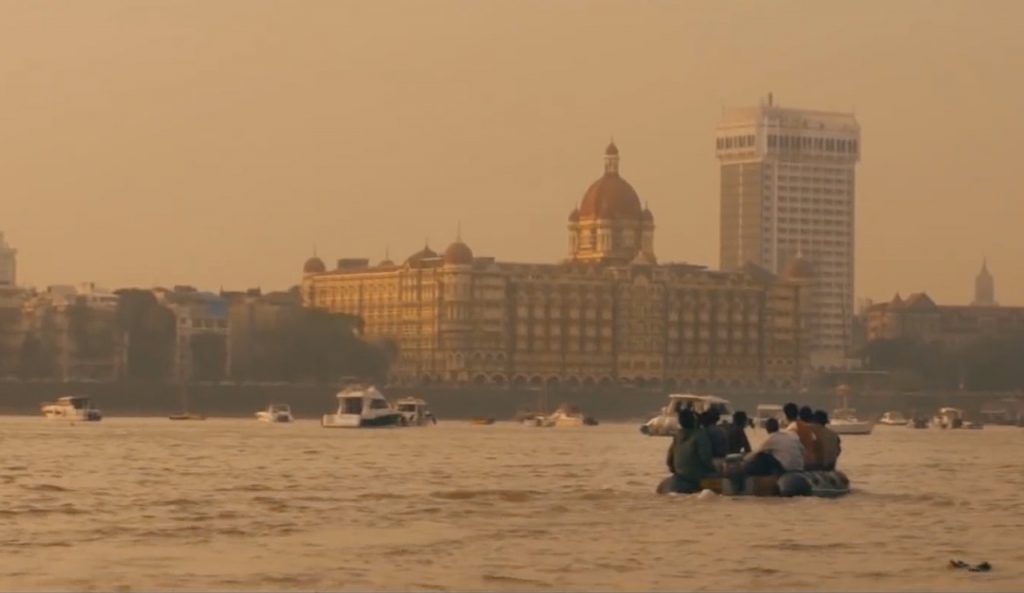
One of the most potent and disturbing memories of the twenty first century are the militant attacks of November 2008 that began on 26 November and carried on till 29 November. Newspaper reports, television footage and firsthand accounts along with the political battles fought on the nature of the killings between India and Pakistan have ensured that this one incident remains firmly etched in the mind of all Indians till this day. Therefore, small wonder that a new film will make its impact on the Indian psyche on this subject.
‘The Hotel Mumbai’ was introduced to me by an office colleague and since the subject is so intriguing, my wife and I decided to watch it. We were not disappointed. ‘The Hotel Mumbai’ has been made by Australian director Anthony Maras. It does mention saying that coming from a white director, the intention and perspective for making the film would have been different from an Indian resident director and this is evident in the film. Throughout the film, the focus is principally on the white foreigner guests incarcerated in the Taj Hotel during the 26/11 attacks. No doubt the depiction of the incidents right from the landing of the militants from Pakistan in Mumbai to their direction given by their spiritual leader across the border to the fear and terror of the guests and the mindless carnage are all captured in a realistic fashion. Among the actors, Anupam Kher playing the role of the chief chef of Taj Hotel, Hemant Oberoi and Dev Patel, acting as a young waiter, make their mark with their consummate performance. However, does Dev Patel, always have to be the choice for a person living in slum conditions as he was portrayed in ‘Slumdog Millionaire’ and ‘The Man Who Knew Infinity?’ Here, the Western bias of showing slums in India is very evident in the film as a waiter could well have come from an area other than a slum.
The guests of the Taj Hotel include British Muslim, Zahra, played by Nazanin Boniadi who has her life spared by one militant because she says an Islamic prayer. The varied incidents of the guests cooped in various locations are movingly shown as well as the human side of the militants who sometimes are faced with moral dilemmas on their own modus operandi as well as their relationship to their families. The heroes of the film are undoubtedly chef Oberoi and Arjun, without whose active intervention, many of the guests would have lost their lives. The film also portrays the monumental security lapse that delayed the arrival of the central commandos to fight the militants. The irresponsible role of some media personnel, a reality of the incident, is also incisively delivered in the movie.
The best part of the film is that there are no unnecessary romantic sequences and songs to pique the attention of the audience. Truth is stranger than fiction and ‘The Hotel Mumbai’ represents that truth, warts and all. The film would have been better if the stories of the Indian guests had been given greater coverage. However, ‘The Hotel Mumbai’ succeeds in the objective of portraying the real events of the 26/11 Mumbai attacks to a large extent. ‘The Hotel Mumbai’ reminds us that humanity still survives in the likes of chef Oberoi and waiter Arjun who have shown exemplary courage in times of tragedy. This is a film well worth watching and reflecting on especially because tragic events can be forgotten and be diluted over a period of time. I remain grateful to my office colleague who recommended it.
Shubhobroto Ghosh is an ex journalist who now works in an international NGO and does freelance journalism.
Want a beach vacation? A cozy, lazy day by the sea, soaking in the sun relishing the pureness of tender coconut and sumptuous seafood, or are you looking for a wild adventure nestled amidst thick, dense forest listening to the merry chirping of birds and a visit from an elephant roaming about? Or is your perfect holiday location a breathtaking hill station blanketed by the coolness of greenery or a stay in a houseboat swaying in the backwaters while savoring some freshly prepared fish?
How about experiencing it all together during a single trip? Might sound like an impossible fantasy? But there is one such mesmerizing beauty located on the southwestern Malabar Coast of India. Popularly known among tourists as God’s own country, Kerala is one of the most naturally enthroned places with an array of landscapes, rich heritage, and vibrant culture. Though the entire place is a wonder on its own, there are few breathtaking spots in Kerala that shouldn’t be missed while there.
Listed below are some of the locations that set Kerala apart from other holiday destinations, and are therefore worth considering bookingKerala tour packages immediately.
1. Munnar
Image – Pixabay
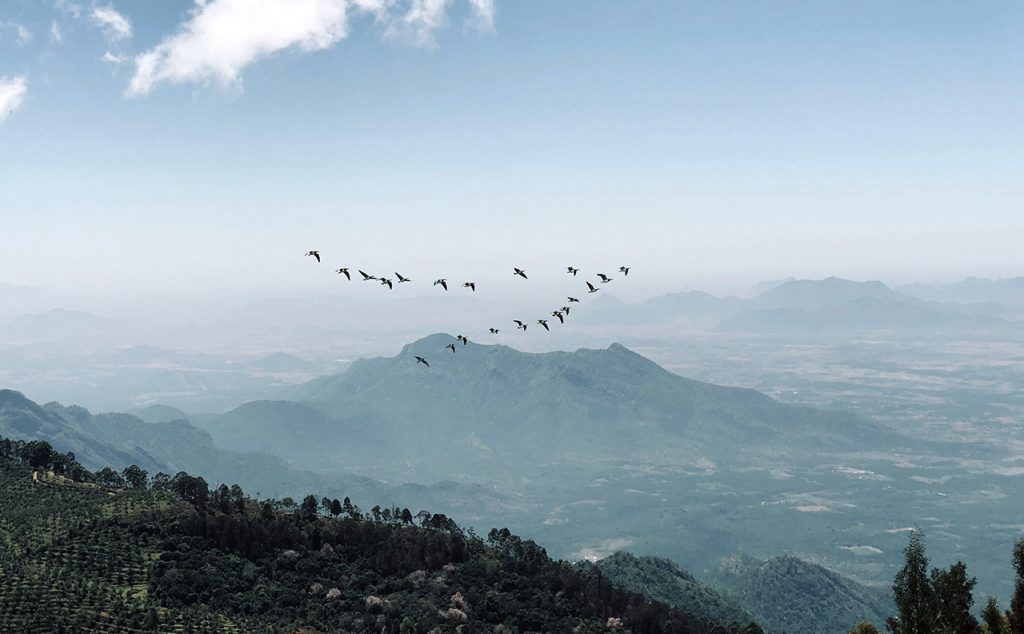
With exotic, ornate greenery, captivating panorama of tea plantations, magnificent forests rich with untamed fauna, bewitching lakes, and enticing climate throughout the year, Munnar is one such place that looks like the one carved out of fairytales. Munnar is known to be the commercial hub of some of the world’s largest tea plantations. This mesmerizing beauty gets its name from “moon,” which translates to three in Malayalam and “aar” to a river.
So it basically is known as the land of three rivers, namely Mattupetty, Nallathanni, and Periavaru. Munnar also houses some of the endemic and endangered species of flora and fauna peculiar to this place like the Nilgiri Tahr and Neelakurinji. Neelakurinji is a very rare species of shrubs that bloom once in twelve years, and scads of tourists visit here to witness this wonder that paints the mountains of Munnar blue.
Popularly known as the Venice of the East, Alleppey is a heart-stopping beauty that is sure to drop jaws. One of the most favorite destinations in Kerala, Alleppey, is loved by tourists for its enthralling backwaters. Visitors can hire a houseboat and go exploring the backwaters and even spend a night or two gliding on water in these traditional and age-old transportation boats.
3. Wayanad
Image Source
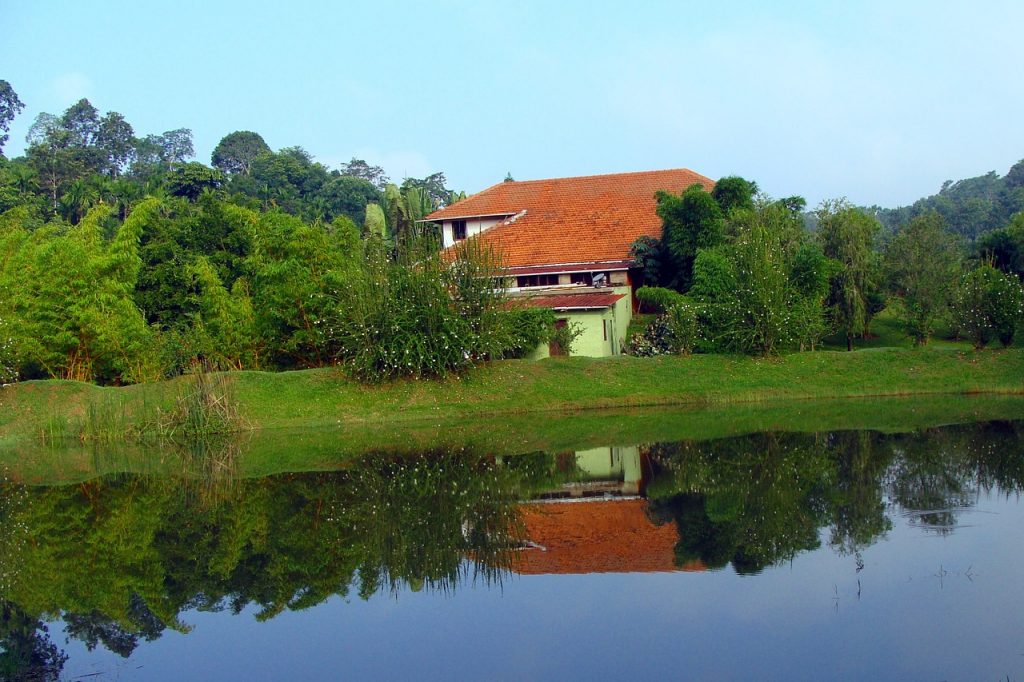
Gushing waterfalls, serene greenery, exotic flora and fauna, caves that shout out history, and the hypnotizing lakes are few of the many wonders Wayanad hides in its trunk. A very popular hill station in Kerala, most of Wayanad is still untouched by the artificiality of development and modernity. It is nature in its purest form. Some of the spots that should be ticked off before leaving are Banasura Sagar Dam, Chembra Peak, Edakkal Caves, Soochipara Falls, Pookode Lake, and Bandipur Forest.
4. Kozhikode
Image Source
In 1498, European Sailor Vasco Da Gama set his foot in the Kappad Beach of Kozhikode, and that was how India started trading with Europe and then later became the spice basket of the world. Located by the soaring Arabian Sea, Kozhikode is a must-visit place to experience a cultural journey that is vibrant and rich, like the hues on an artist’s palette. It is that ideal beach location that can offer the most sumptuous meals one can find in Kerala. A few of the major tourist spots in Kozhikode are Thusharagiri Falls, Kozhikode Beach, Kappad Beach, Kakkayam Dam, Beypore, backwaters of Kallai and Cannoli and Mananchira Square.
Thekkady is one such spot in Kerala that is brimming with tourists throughout the year. Well-renowned for its rich wildlife reserve, Thekkady is the grazing land of many exotic faunae like Sambars, Gaurs, Elephants, and tigers. A bamboo rafting or a trek can make the Thekkady experience even worthwhile. Periyar Tiger Reserve is the key highlight of Thekkady.
6. Fort Kochi
Image Source
Bustling with tourists, Fort Kochi can be referred to as the face of Kerala’s tourism as this is where most of the tourists drop in at first while on a Kerala Adventure. It is literally the gateway to Kerala. Rich with vivid culture and heritage, Fort Kochi is also blessed abundantly with natural beauty. The Chinese Fishing Nets, Jewish Synagogue, Bolgatty Palace, Jew Street, and Mattanchery Palace are few of the spots that have to be visited while here. Fort Kochi is also the ideal shopping haven to take back home some souvenirs to cherish for a lifetime.
7. Kovalam
Image Source
Lying along the coastlines of the Arabian Sea, Kovalam is the beach paradise for most tourists visiting Kerala. With low tidal waves and sunny, calm weather most of the year, Kovalam is the perfect spot to chill and relax by the sea. This place is filled up with Ayurvedic massage centers and treatment centers, which is another reason tourists prefer to spend some quality time here. Kovalam is also the ideal place to engage in watersports.
The serenity of the place is contrasted by the vibrancy of its rich culture. With pleasant weather conditions throughout the year, Kerala attracts tourists from all over the world. Kerala has something for everyone. Be it couples on honeymoon seeking to explore a romantic hill station or a group of youth in pursuit of a backpacking trek or a family with kids looking to enjoy a beach vacation; no one goes back from Kerala disappointed.
For more information related to tourist destinations in Kerala, and the best tour packages available, contact Flamingo Transworld. We will provide you with all the detailed information that you will require to plan your holidays.
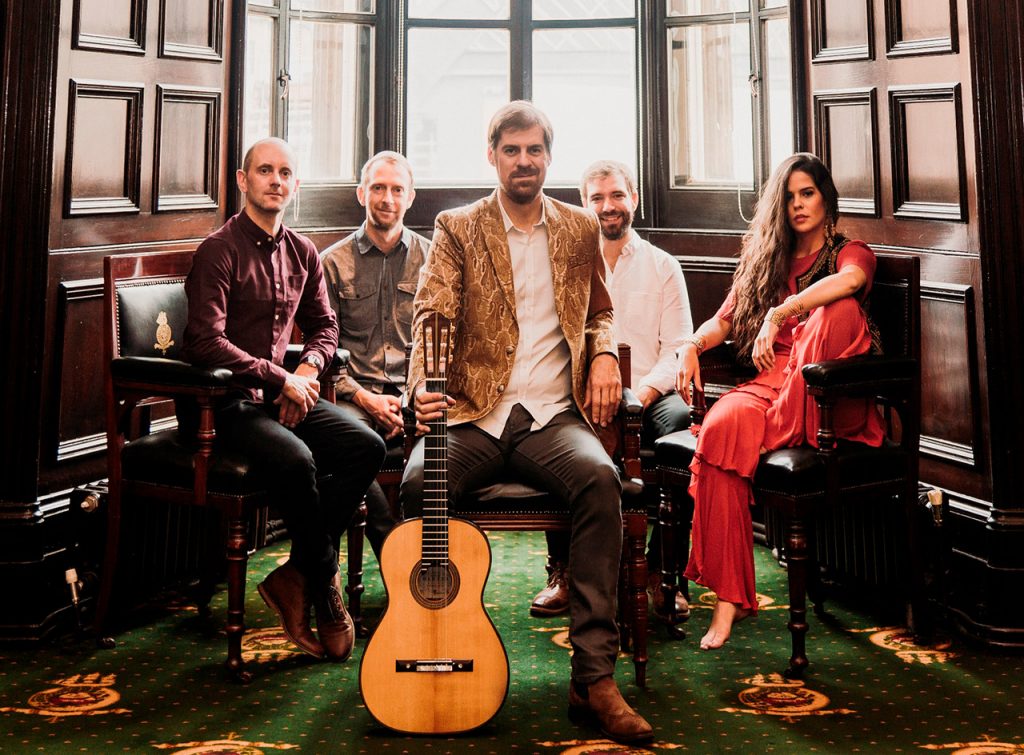
Simon Thacker’s Ritmata with Ángeles Toledano, credit Juliette Lichman
Simon Thacker is back! It was only a while ago that we were still swaying to the rhythmic beats of Trikala from Svara – Kanti, a collaboration of musicians from across the countries and cultures.
Now, Simon Thacker is gearing for his latest album release Taradh, which has been composed with his musical laboratory Ritmata. Coincidently, the release of his album comes at an opportune time when he embarks on his first solo tour of India.
With his new program Pashyanti , Simon has performed at the Goa International Jazz Festival and the Giants of Jazz series in Delhi. He still has few concerts and performances lined up as he tours India on his debut solo musical journey.
India and Simon Thacker
Simon Thacker has a very close and deep rooted connection with the musical and cultural landscape of India. His collaborative group Svara-Kanti has brought out the best from traditional music of the subcontinent. The album Trikala had Hindustani classical, Carnatic classical, Punjabi Folk and Bengali folk Baul musical renditions all interwoven with each other and western music.
Simon Thacker’s continued love and learning from collaborating and blending music across nations continues with his new album Taradh. Already launched on 30th November, Taradh’s centerpiece Quadriga in 5 has been nominated for the Ivor’s Composer Awards, the most prestigious award in the UK.
About Taradh
Simon joins hands with Scotland’s leading musicians and improvisers Paul Harrison (piano), Andrew Robb (bass) and Stu Brown (drums). ‘Taijasa’s ethereal timbres harness the elemental level of nature. Thacker radically reimagines Sephardic song Muero Yo De Amor around the vocal artistry of one of Spain’s greatest young cantaoras (flamenco singers), Ángeles Toledano.’
Solo Tour
However, Simon’s solo tour of India is the main highlight. As Simon says, “I am so excited to present my new program Pashyanti in a country that has given me so much joy and inspiration, and especially that it coincides with the launch of the new album Tàradh”
For the Pashyanti tour, Simon will explore all the different facets of musical instruments, from digital delay driven soundscapes to muscular improvisations in his unique style. His improvisations blend in seamlessly giving birth to a new found musical parody that is stunningly different but surprisingly true to its roots and originality.
The primal, multi-layered sounds from this Scottish maestro can be heard and seen at different venues in India.
Simon has performed at Goa and Gurgaon and will be performing in Mumbai on 21st December. The performance will take place at Varanda Bandra Mumbai 10 pm onwards.
The solo tour performances are a great way for Simon to strengthen his bonds with his fans in India. Here is wishing him luck with his tour and his new album and hoping that he continues to flow music of different places and spaces, making the East meet the West to create a magical musical extravaganza.
Update!
Trikala the acclaimed album by Simon Thacker’s Svara-Kanti was released last year on a CD format. However, for all music buffs, this intercultural collaboration was released on all major streaming platforms worldwide on 17th January 2020. A winner of the Scottish New Music Award, Trikala is the perfect pitch for where East meets West. It features the ‘ancient forms propelled forward to create a new musical future’, the worldwide streaming of the album brings ‘a pivotal moment in history of Indo-Western collaboration to the widest possible audience’.
So wait no more. Tune into Trikala’s musical mysteries, now available on musical platforms.
Sometimes I’m overburdened by the amount of work I have to do, or simply by the daily mundane things in life which is enough to get me feeling stressed. Weather you’re someone who sits behind a laptop for 6 hours a day, or someone who loves playing football for those hours, there are some ways to destress which never change. For me tea is my Red Bull and it is enough to get me going any time of the day.
The simple aroma of tea in my house changes my mood and adds to a fresh start even in the middle of the day. I’m not a traditional tea person, I love green tea. The market now is overcrowded with different flavours and brands of tea. I won’t lie to you, I’m a sucker for tea flavours and I have tried almost every other brand you can imagine. Mostly, I start off swiping on amazon and end up on the green tea tab sooner or later. My favourite section in the grocery store is also the tea section. I judge how boujee a grocery store is based on the different brands and flavours of teas it displays. My 6 year old sibling calls me an “Aunty” because I love tea so much. However, he cannot differentiate between traditional tea and green tea yet.
There are some classics like green tea, lemon honey tea, gold old matcha, lemongrass tea and others. I used to love classics till I began falling in love with some offbeat flavours I tried recently. Tea Trunk manufactures some fantastic flavours like Marigold Green Tea, Charcoal Matcha, Berry Matcha and others. Their Marigold green tea comes with some real marigold flowers. Another tea I absolutely love is Kesar Pista green tea which has a fantastic aroma.
There are many more fancy teas in the market. The one from TGL co. has dessert flavoured green teas. Their Strawberry vanilla takes it so far as to have dried pieces of strawberry inside the tea packet which bloom to look like strawberries once poured in hot water. The tea smells like ice cream but helps you to burn calories instead.
I am very specific about the cups I drink my tea in as well. The cup is placed on my table throughout the day, even at the office and I try to make sure that it is inspiring and is related to something I really care about. I have 3 cups at home and all of them are related to trekking. One of the mugs is black in color and after I pour hot water in it, the mug suddenly displays a picture of me trekking for around 10 minutes, till the water stays hot after which the mug turns black again.
Lately, Matcha has also got me hooked. However, it has caffeine and I try to not have it at night or I can’t fall asleep. I got a special wooden cup to make matcha, the traditional Japaneese way. I also got an electric whisker which is portable and it fits into my bag. I carry it with me wherever I go, and it is always in my purse (Yes, you will be shocked at the things women carry around in their purses). I also have a portable tea infuser which I carry with me wherever I go. This is steel in material and you can put tea leaves in it to infuse it in your water. There is no need to use a strainer after this. The tea infuser acts like a tea bag filled with tea leaves itself.
Drinking green tea is like an art. There are several different ways you can make it, it’s all about what satisfies you the most. For me, I like the traditional old way of making green tea on the gas. But sometimes, I also like to simply heat the water in the kettle and use my infuser. It’s all about mood, but I do feel like an artist when I am picking my teas.
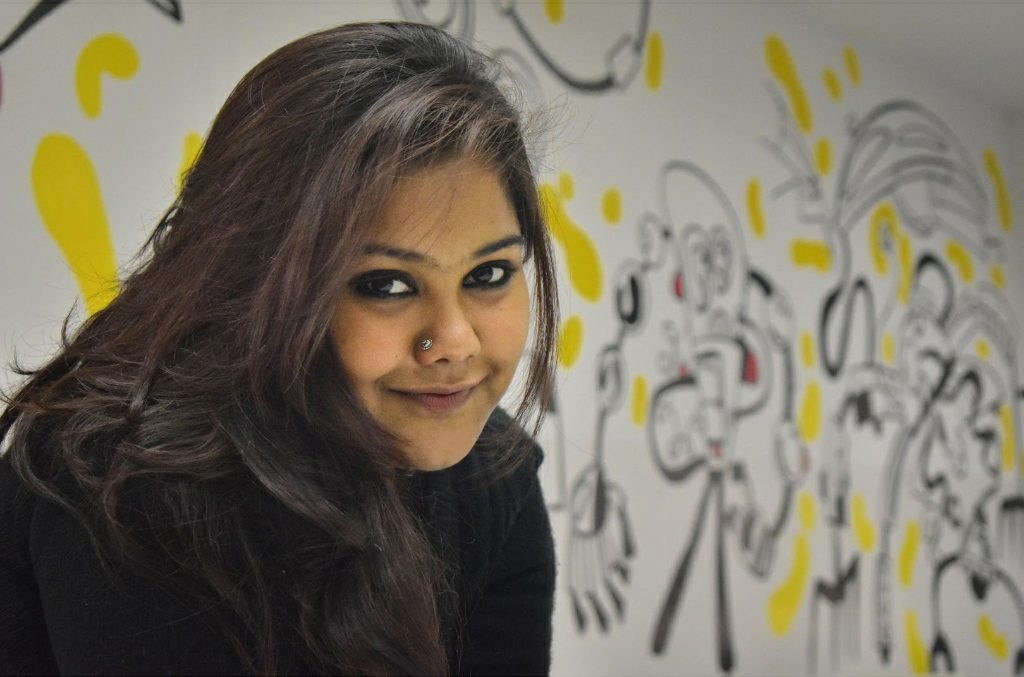
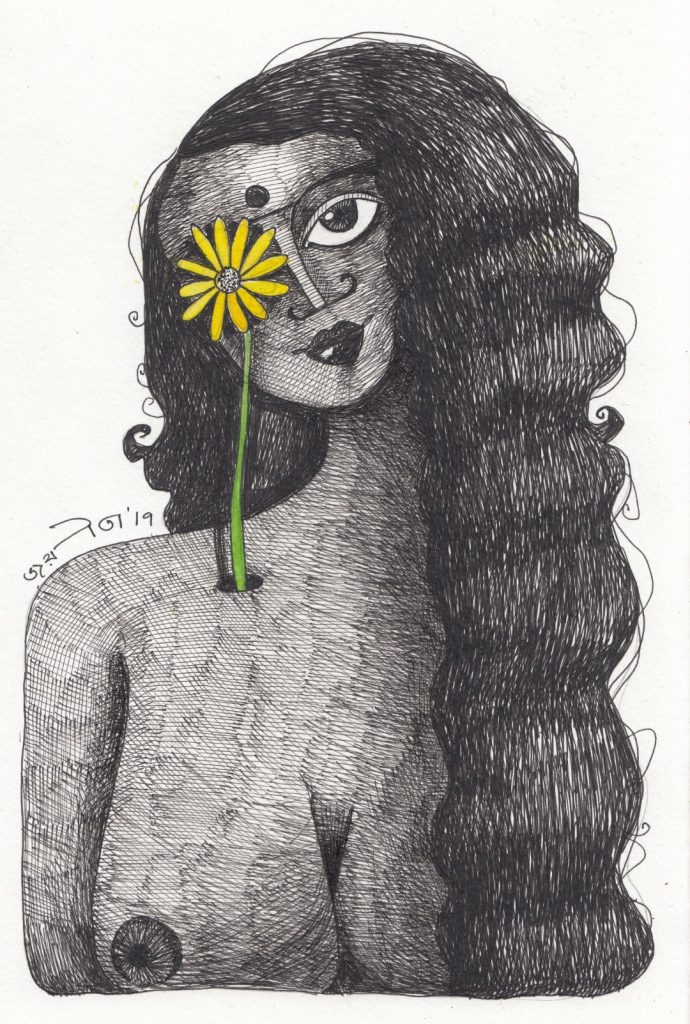
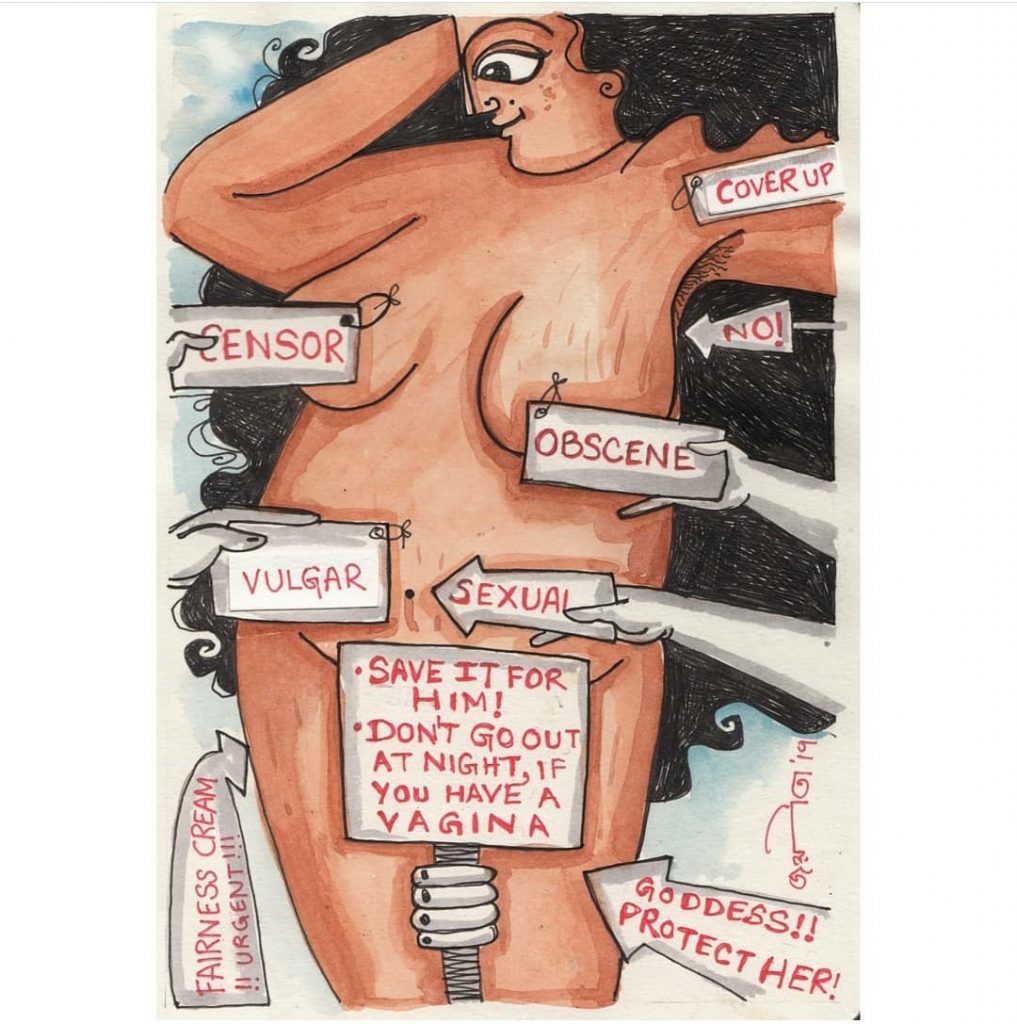
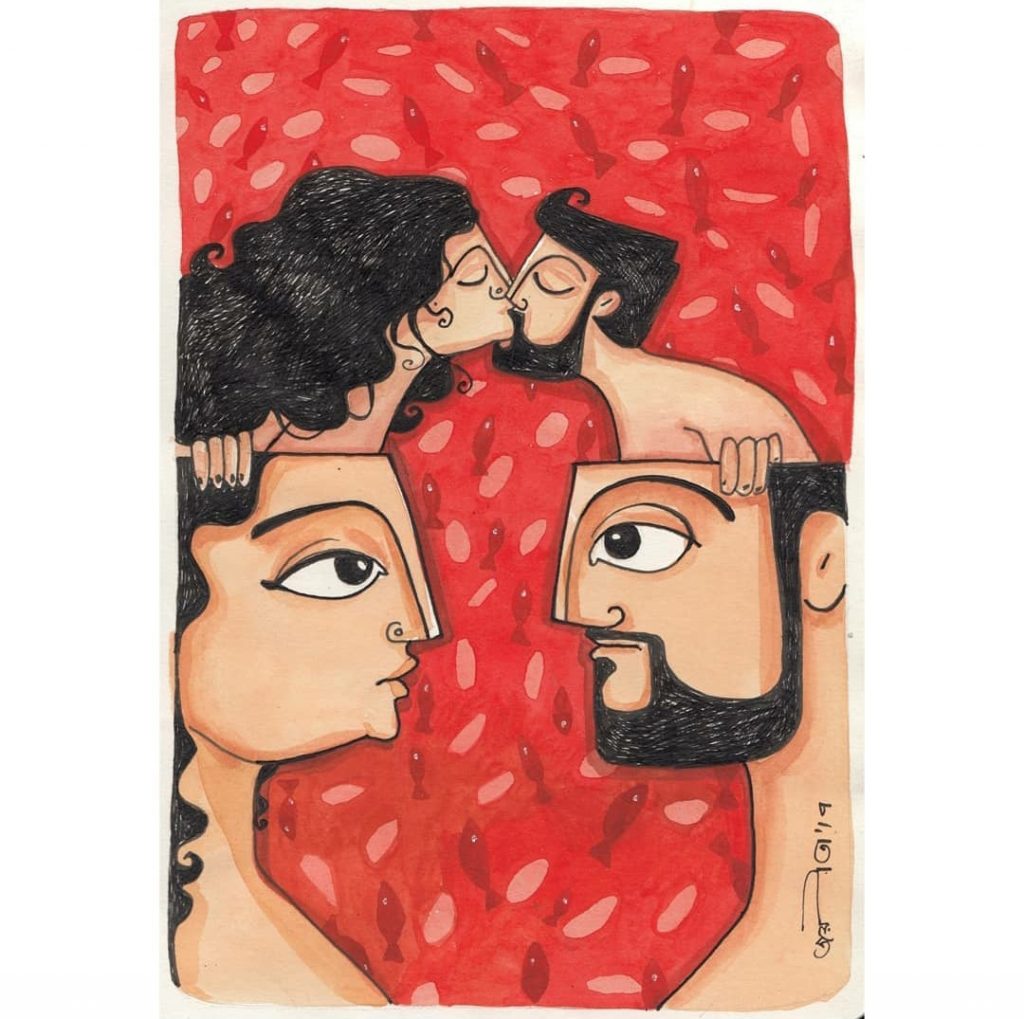
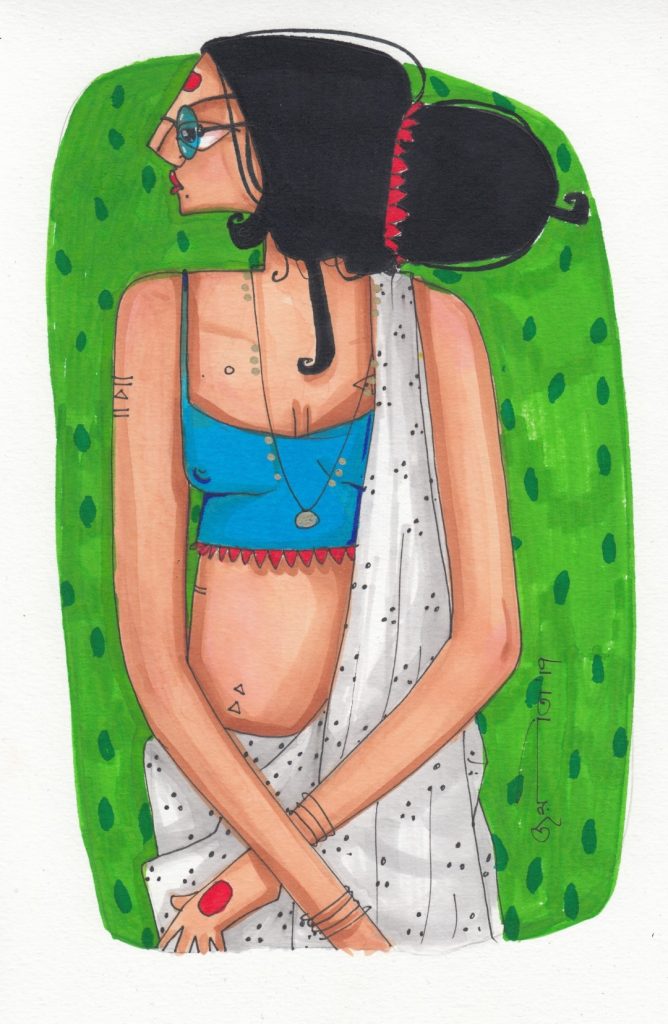
When we think of art, we think of colors and expressions, of the real and abstract. We think of paintings and patterns, of faces and people, of joy and sorrow. We think of bold and beautiful, of being alone or with another. All of this is and much more is found in the art of Joyeeta Bose.A young artist with a mind of her own, Joyeeta has been professionally painting since her college days; however, the artist within her has been around for long.
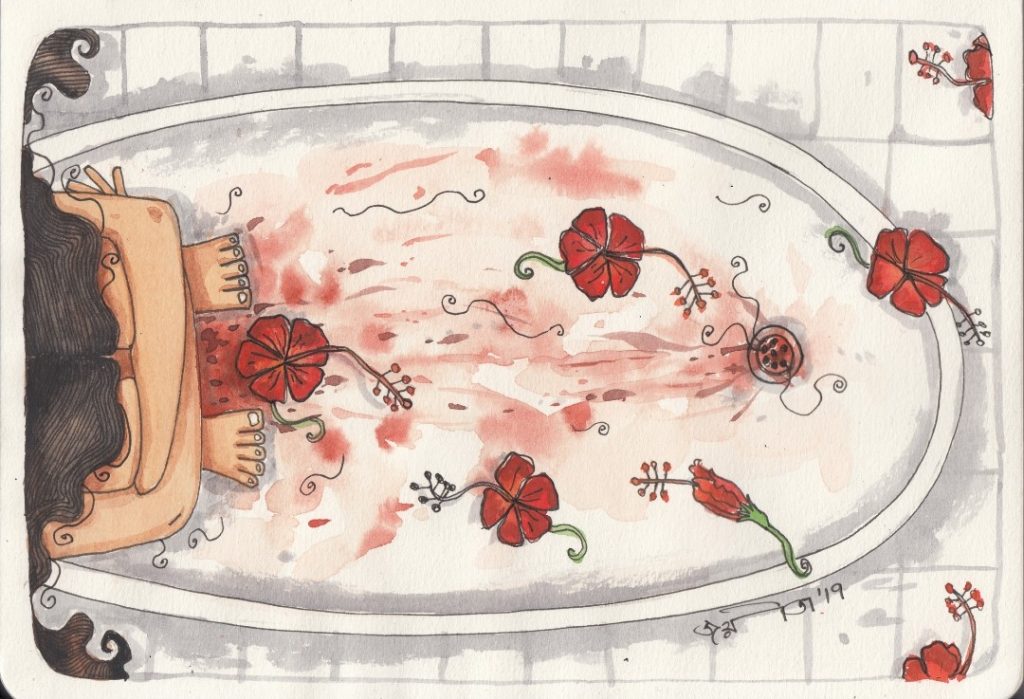
A look through her various works leaves you affixed to the varied women orientated themes, the use of bright colors, the large eyed expressions and the love for one’s body. Today she runs the Studio Joyeeta along with husband Prasenjit Ghosh and they together have started their own label of personalized items that include brooches, bags, notebook covers, mugs along with of course, wall paintings and murals.
In conversation with Joyeeta regarding her love and type of art:
Joyeeta Bose
Q: Tell us something about your style of art? What themes do you enjoying painting on?
A: I have developed this particular style after many years of trial and errors. I love painting people and I wanted to express my people in my own form. I paint my women, their emotions, and even if i paint objects it’s somehow related to our lives. People’s psychology and struggles are the area of my interest.
Q: Where did you learn art? What made you want to pursue it as a subject and later as a career?
A: I did my graduation i.e. bachelor’s degree in fine arts from Indian college of art and craftsmanship (Rabindra Bharati University). I started working professionally from my early college days and it somehow turned out well. I did not get into a job as I felt it could hamper my style and creative expression. I wanted no limits and boundaries set for me. I never had anything else in mind from childhood. I knew which college I wanted to go when I was in the 4th standard. And Art College or nothing was my motto.
Q: Tell us about your collaboration with your husband and the studio that you run.
A: After I finished my college and Ghosh (my now husband) was working in an IT firm. He never wanted to do a job and loved photography and painting too. We were dating from schooldays and somehow one day he was free and said would you do something just for fun? And that fun turned out to be what we now call Studio Joyeeta. We decided we would do this full-time. We woud create things and happiness. We both together look after the management and running of the studio. He has supported me from day one, and is a big reason why people know me.
Q: Which artist(s) have influenced you the most?
A:When I was in Art College I have followed a lot of artist and examined their styles to take inspiration. But slowly I understood that all I had to do was look at their work, learn from it, forget it and then create my own style. There is no other way. Dali, Ramkinkar, Ganesh Pyne, Gustav Klimt, Frida, Egon Schyle – there are many more in the list whose work and ideology I love.
Q: India is home to a lot of traditional painting and art styles, such as, Warli, Kalighat paintings and so on. Which of these do you prefer more and why? Are you influenced by any traditional arts?
A: I am actually not very fond of traditional art forms. I really don’t take inspiration from traditional art form. I like their story telling nature, which I may have adapted partially. Not saying they are not good, rather they are beautiful and absolutely amazing, but they don’t excite my mind for now.
Q: Do you think creative arts have enough scope in India? Would you like to change something about the way arts are perceived or compensated?
A: Yes it does. If one works hard and knows which strings to pull one can do a great deal in art, especially in the day where social media helps you. Yes I want people to look at art not as decorative stuff. I want people not to see art as a utility. Art has played a very important role in molding the society and art should not lack that quality. Your art should speak and express. It should not be there just to lighten up a corner of your home.It should shout out your darkest emotions.
Q:Looking at your creations, it seems that there is a strong connection with social causes. How much of a role can arts play in social changes? Do you have any personal experiences to share regarding this?
A: A lot! It can definitely change perceptions and how people look at themselves and the society. I have all my personal experiences expressed in my art work and people find themselves in my own struggles. That’s the best feeling of knowing how amazingly we are all connected somehow. For example, someone realized she is in an abusive relationship and spoke about it in social media. There have been more incidents like this.
Q: Have you faced any challenges or backlashes for associating your art to social issues?
A: I get that a lot talking about men, women and telling the truth. Sometimes it might seem against a religion maybe, but I don’t believe someone can tell me that I should stop calling myself a Hindu. And with my nude paintings I get it always. I do not care about this. I know if I tell the truth people of privilege will have a problem but that won’t stop me.
Q: What are the different products or forms of the art that you create? (Paintings, murals etc.)
A: Our favorite is the murals. Ghosh is my favorite critic and being a photographer himself, he has a great eye for colors. He has, of course, brought all the beautiful colors in my life. We love doing the murals, then there are my watercolor and ink paintings too. For the products we do not print them on stuff. We have kept it all hand painted. This is something unique that everyone can have.A touch of the studio itself. There are bags, brooches, bookmarks and many more.
Q:Do you think it is a good idea to put art on everyday items, such as, cushions, cups or wall hangings. Can you explain why?
A: No i don’t think so. Not always. I don’t go for very regular items of utility. I create things which can be kept as a memory for lifetime. I don’t go into utility stuff which I could and that would bring a lot of money. But no, that has not been our objective. Yes obviously art is there in everything, even how you live your life, but for our style of painting and art I don’t want to put them on random stuff.
Q: What is your advice for budding artists? What advice would you give them not only relating to their work but also on how to market or promote it?
A: Artists should never ever lose hope. Instant fame overnight is not a thing. Even if it happens, it won’t last long if you don’t work hard. Only thing I would like to suggest is work hard, create something every day, make a strong base, sketch a lot. And everything will follow. And yes go out and show your work to people. Be confident and don’t expect it to be like a fairytale always. Fight and win.
Q: What do you think are some of the qualities one needs in order to be a good painter or visual creator?
A:Keep your eyes open, not those on your face, but the eyes of your mind. Observe even the most negligible thing. Take things seriously. Deal with it. That’s the best suggestion I can give for someone who is starting.
Q: On a lighter note, how long do you usually take to complete a painting or creative piece?
A: It depends. Depends on how it is, how much I want to put there. I cannot put it in an exact time frame, but a month is good to think and do. It takes a day or two to make the creation, but I need to visualize it and visualizing takes the most time.
Q: Which are one or two pieces of art that you wish you had created instead of someone else?
A: The Kiss by Gustav Klimt. I wish i made that painting. That’s my favorite.
Q: What has been your biggest support system? According to you, what motivates you?
A:My best friend and now husband is my greatest support system. He keeps me going. I painted even when he was not there, but I wouldn’t live them if he wasn’t here. He even as a person and we together are the perfect battle to paint. I can’t sleep without creating something. That keeps me motivated. I need to sleep. So I need to create something and then get it.
Q: Any future plans related to your art or studio?
A: To tell the truth, we didn’t plan this journey ever. Even where we are today it wasn’t plan. I want it to be like this. I hate planning; I want it to be like an accident!! A beautiful one hopefully.
To see or order her paintings you can check out her Instagram at or Facebook page
Wishing Joyeeta and Studio Joyeeta lots of joy and let’s look forward for more brave and beautiful art to find a way into our homes and lives.
You’ll fall in love with these beautiful honeymoon places. South India is abundantly blessed with a diverse range of landscapes, and this factor places many South Indian destinations among thebest honeymoon places in India. Consider the top 10 honeymoon destinations in India, and a good majority of them are sure to be South Indian havens. Munnar, Alleppey, Wayanad, and Vagamon are few of the most beautiful places in Kerala that attract a galore of tourists from all across the globe to spend their honeymoon vacation in. Whereas Ooty and Kodaikanal are the most hailed honeymoon paradises of Tamil Nadu and Coorg, Madikeri and Kudremukh are the charmers in Karnataka.
Andra Pradesh also has places like Ananthagiri hills that attract honeymooners like swarms of flies. Apart from the stunning panorama, other factors that captivate honeymooners to South India include a favorable climate throughout the year and the fact that if planned, even the best honeymoon places in South Indian don’t burn a hole in the pocket. There are a lot of sensational honeymoon places in South India that can make the sweetest honeymoon memories even more relishing.
1. Munnar
Image – Vaazdev Pixabay
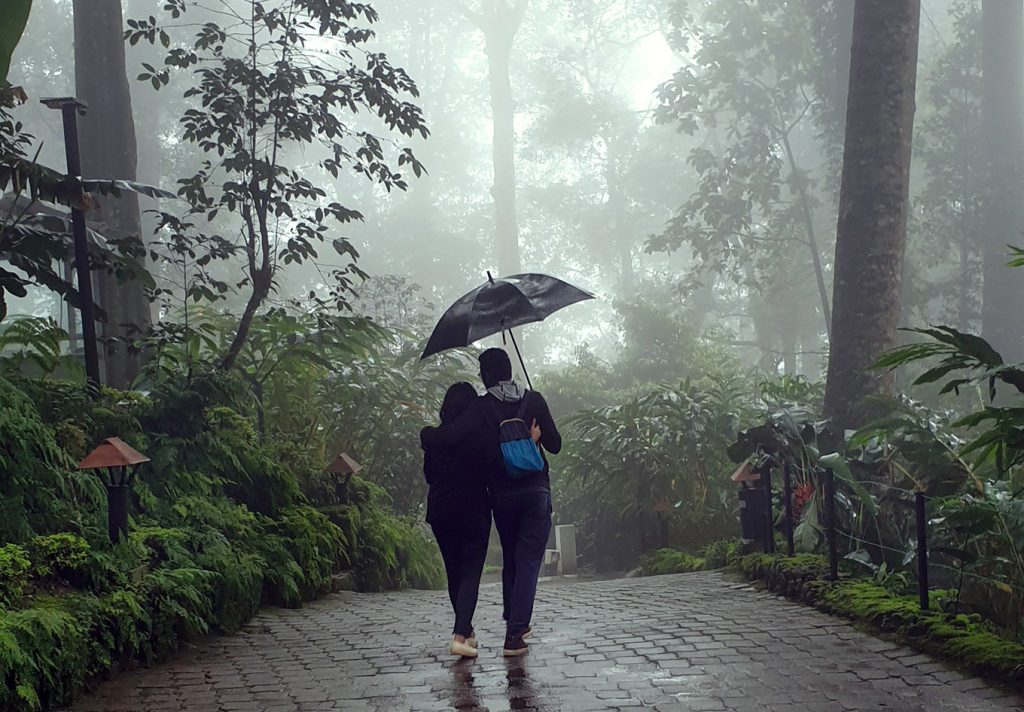
Nestled among the lush greenery, Munnar is a breathtaking beauty situated in the mountains of the Western Ghats in the South Indian State of Kerala. Though there are many hill stations in South India, Munnar is a stunning haven like none other. Blanketed by tea plantations, even the wind that blows in Munnar accentuates the romantic vibe and untold fairytales. Blessed with picturesque lakes that look like the ones straight out of a movie, exotic flora and fauna unique to this place and heart-stopping viewpoints, Munnar tops the list as one of the best honeymoon locations in South India. Ample number of stays are scattered across Munnar from the ones right at the center of the town to very offbeat yet stunning resorts in the outskirts away from the hustle and bustle of tourists. The nearest airport is Cochin International Airport, and the nearest railway station is the Angamaly Railway Station. Eravikulam National Park, Echo Point, Pothamed Viewpoint, Maduppetti River, and Atukkad WaterFalls are few of the spots that shouldn’t be missed while in Munnar.
2. Ooty – Where the Queen of hills sings the songs of love
If an award is given to the most popular honeymoon destination in India, Ooty is sure to bag it. Ooty is an astonishing hill station in the Western Ghats of Tamil Nadu that was turned to a summer palace of the British Raj, and ever since then, the hills of Nilgiri have been attracting tourists from the nooks and corners of the world like bees to honey. Also called the Queen of hills, Ooty seems to have dark, deep secrets hidden in the roots of eucalyptus trees there, and that is one of the reasons why tourists choose Ooty to witness them falling in love. With benign weather throughout the year, Ooty is always filled in with tourists. Dense green forests, quaint lakes, raging waterfalls, captivating gardens, and striking viewpoints, Ooty has it all. The closest airport to Ooty is the Coimbatore Airport. To make the Ooty honeymoon experience even more memorable, take a ride in the Nilgiri Express early in the morning from Mettupalayam. The vintage train slowly swaying through the exotic mountains in itself is an adventure for a lifetime. A few of the places that shouldn’t be missed while in Ooty are Ooty Lake, Pine forest, Ooty Botanical Garden, and Ooty Rose Garden.
3. Alleppey – Come! Swing and dance in a houseboat in the Venice of the East
Tired of the same old hill stations that are in every honeymooner’s story ever? Then take a flight to the beautiful locale of Alleppey or Alappuzha in the South Indian state of Kerala. Spend a night or two swaying in the ravishing backwaters in a traditional houseboat that is no less than a luxury resort. Alappuzha is very popular for its backwaters set in the backdrop of gorgeous paddy fields overlooked by coconut trees. A massage from a traditional Ayurvedic spa can loosen up the minds and help in relishing the entire honeymoon experience better. Houseboats can be rented for a day to cruise through the inter-linking backwaters enjoying a sumptuous and traditional seafood meal and sipping the toddy, or the couples could spend a romantic night nestled in the splendid and serene waters of Alappuzha. Alleppey can top the list to be among one of the top 10 honeymoon destinations in India. Other spots that should be visited while in Alleppey are the Alappuzha Beach, Kumarakom Bird Sanctuary, and Vembanad Lake. The nearest airport is the Cochin International Airport, and Alappuzha has a railway station connecting to almost all the major points in Kerala.
4. Coorg – On a budget? We have a Scotland right here
Located in Karnataka of South India, Coorg is a jaw-dropping locale straight out from a painting that seems to be created while God was on a vacation. Also known as Kodagu, Coorg has stunning weather throughout the year making it an even more perfect honeymoon destination. The smell of enchanting coffee fills in the air of Coorg and can light up any rock-solid soul. Kodagu is one of the best honeymoon places in India. Thick green wilderness enveloping the magnanimous mountains is a sight to behold. The Golden Temple of Kushalnagar, Abbey Waterfalls, Raja’s Seat of Madikeri, White water rafting in Barapole River, and Talacauvery are must-visits while in Coorg. The nearest city is Mysuru, and the nearest airport is Mangalore Airport.
5. Lakshadweep – Love on the Islands
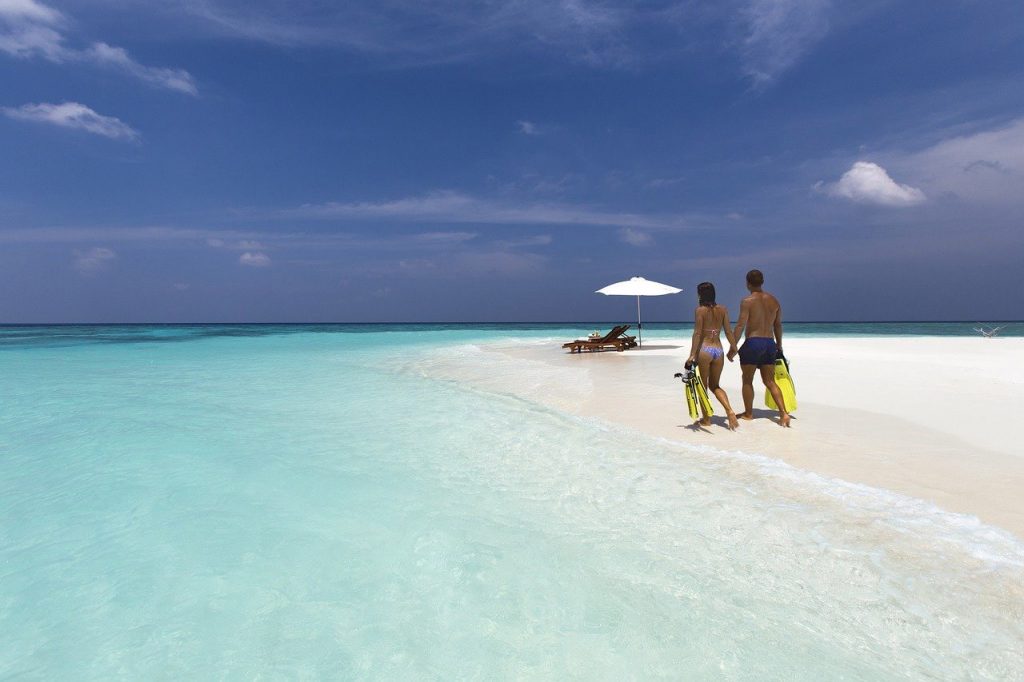
Turquoise blue water and white sand beaches away from the blitz and scramble of the modern and crowded city is what Lakshadweep promises to offer. One of the most jaw-dropping offbeat destinations unspoiled by the overcrowded melee of tourists, Lakshadweep is a group of islands off the coast of Kerala. Lakshadweep is an agglomeration of 12 atolls, 3 reefs, and 5 submerged banks. Not all islands are inhabited, or neither are open to tourists. The islanders are very friendly and always open to welcome the tourists. The charm of Lakshadweep lies in its serenity and aloofness. There are many cruises and ferries from Kochi that can take the tourists to this gem of a place. Scuba diving is an activity that shouldn’t be missed while in the Dweep. South India has many promising tourist destinations that are sure to make even the toughest of hearts melt. Kodaikanal, Wayanad, Kanyakumari, Kovalam, Nandi Hills, and Coonoor are other few stunning jewels in the south of India. For more details, do explore Kerala Tours and packages.
7 years back, our office was giving out books from its library. I randomly picked up a few books out of which was NINE LIVES by William Dalrymple. I was unaware of this author and this book looked a little intense for me to finish reading it quickly. I still picked it up and took it home.
4-5 years later, I found this book while cleaning my cupboard and I started reading it MAYBE because I became a little mature now (lol, I guess) I enjoy these genres now. The cover itself was very intriguing because it has a red painted male (I suppose) face only till his eyes, silver and red headdress, jet black kohl around his intense fiery eyes, a design above his eyebrows and on forehead of a turmeric paste and the remaining face is smeared with an orange turmeric paste. Growing up in India, you get a hunch of a state/culture just by looking at a picture. I had a vague hunch of this image to do something with Kerala despite knowing of only Kathakali and relating it to Kerala! My curiosity further increased in knowing more art forms from Kerala since I knew of only one. I opened the book’s second chapter to know more about this but couldn’t understand much.
A few months back I saw a similar image on Instagram and checked out more posts on this art form. I Googled this art and learned a lot of things about Theyyam and just could not wait to experience this in person!
February 2019
We were near a shrine around 1 pm in Kanahangad, a district in Kannur, Kerala, India. It was the month of February and yet, 30°C. There were some trees here and there to take shelter from the scorching sun. The entire village had gathered to witness Theyaam, a thousand-year-old ritual since the folklore has it that these Human Gods solve all the problems who pray to them.
There was a secluded palm-thatched hut where these dancers were applying makeup. I entered this hut to see a boy applying make up on the dancer’s face which was smeared in orange turmeric. The dancer was wearing a white lungi while his hands and torso were bare. The boy, with the help of a stick and black paint, was drawing loops and spirals on his face.
The palm-thatched hut had a lot of flowers, fruits, camphor, diyas, leaves and mattresses lying around. The dancers, after applying make-up, get ready for the performance. He had two feet mirrored headgear, metal cups on his breasts, fake long metal teeth protruding from both the sides of his lips, orange lips and intense kohl surrounding his eyes!
Some of them start by sinking into a crouching position, their head and body quivering, his hands shaking, his eyes flickering from side to side. Drummers insistently beat the goat hide cenda drums with their hands or wooden drumsticks. As the drummers increase the tempo, the dancers start to dance frantically till the time they are possessed by the Gods.
What is Theyyam?
Theyyam is a ritual/classical dance art form belonging to North Kerala which predates Hinduism (500BCE)! T-rees, plants, and animals are worshipped alongside Hindu gods in Theyyam rituals.
Some rituals involve blood sacrifices. It is predominantly practiced in some districts of Kannur, Kozhikode, Kasargod, and Wayanad
A performance can last from 12 minutes to TWENTY FOUR HOURS (obviously, with a break)
Most of these performers are well versed with Kalaripayattu because it requires an immense amount of strength. Kalaripayattu is an ancient Indian martial art and fighting system that originated in Kerala, origin dating back to the 3rd century BCE! Some of the dance postures require to be in that position for many minutes to hours! Some of the headgears are 40 feet tall! Imagine its weight!
The ceremonious dance is accompanied by the chorus of such musical instruments as Chenda, Elathalam, Kurumkuzal, and Veekkuchenda. There are over 400 separate Theyyams, each with their own music, style, and choreography. The most prominent among these are Raktha Chamundi, Kari Chamundi, Muchilottu Bhagavathi, Wayanadu Kulaven, Gulikan, and Pottan.
Upon asking these Human Gods about their experiences of Theyyam, this is what they had to tell us.
“How do you feel?” It is difficult to describe. I used to get scared earlier. Fear of me not summoning God correctly, properly. It is the intensity of your devotion that determines your intensity of possession.
“Are you aware of what’s happening?” No. The light stays with you the entire time. Voice changes. You become the deity. You are in a trance – the feeling of being divine doesn’t end only when the headgear is removed.
“What do you feel after coming back from the trance?” It is like a feeling. You do not remember anything. What happens during the performance, is not in your hands. It is just a feeling of offloading something.
McLeodganj, a place situated at an altitude of 6,831 feet set on the exquisite Dhauladhar mountain ranges is an epic place to visit. McLeodganj got its name after the Lieutenant Governor of Punjab D.F. McLeod who discovered it in 1848. It is famously remembered as an exile place for Tibetan spiritual leader the Dalai Lama and his followers who came here in the 1960s. That’s the reason why this place is so much influenced by the tradition and culture of Tibet. The Dalai Lama’s Temple also known as “TsuglagKhang” is a holy place which represents the spiritual connection of Buddhism to Tibet.
When it comes to food, McLeodganj has so much to offer to food lovers and is considered to be a paradise for exciting range of cuisine which is inspired by the culture of Tibet. It is the best place to feed the mind and body to feel calmer and most composed to the tune of nature. This place is mesmerizing not only in terms of its beauty and also in terms of astounding flagon of amazing cuisine. Food is considered to be a morsel of any culture and McLeodganj prove this point pretty well. That’s why; this place has so many popular eatables available in each corner of its hub. Let’s take a look at some of the most popular and astounding food items which are inspired from the Tibetan culture and make the place famous for it.
1. Thenthuk
Thenthuk comprises of two words ‘then’ and ‘thuk’ which means ‘pull’ and ‘noodle’ respectively. Thenthuck is a noodles mixed soup which consists of broth, dough and meat. The cuisine is a spicy one which makes it a part of the staple diet for those residing in the hilly regions. It holds the power to make one feel warm even on the most frostiest day of winter. This Tibetan-inspired soup consists of various ingredients like mixed vegetables, cilantro and soy sauce. In the present day scenario, this recipe can be altered to suit the needs of those favouring a vegetarian palate.
This cuisine is very popular in the Himalayan terrain. It has travelled from the mountains to different places and was redesigned to suit the region and the taste of the people involved. Today it is considered to be among the most popular dishes. The stuffing of the momos holds the true essence, giving it the right flavour and taste. The dough is well kneaded and filled with fresh vegetables or meat and finally steamed which brings the dish to completion. It is similar to the ‘Jiaozi’ in China and the ‘Gyozas’ in Japan. Momos can be prepared using a wide variety of stuffing suitable for both vegetarian and non-vegetarian needs.
When it comes to noodles, there is a wide range of variety involved which seems to have been influenced by the Tibetan cuisine. Noodles can be served with soup or without soup and is usually served alongside a mixture of either vegetables or meat. The fried noodles are redolent of China while the noodle soup is of Japan. Just like noodles, bread too has a wide variety right from flat bread to Balep korkun. Both noodles and bread contribute to the unique flavour and texture of a cuisine making it the most sought feature of Tibetan food.
The Bok Choy Soup is predominantly made using Bok Choy which is basically Chinese lettuce. Bok Choy is a plant which looks like cabbage nut is bitter in taste. Bok Choy can be used as a salad in its raw form and can also be added in the preparation of soup. Conglomerated with ginger, mixed vegetables and mushrooms, the soup is prepared in a manner which gives it an assorted flavour.
Thukpa is a form of soup made from fresh hand-made noodles; and can hence also be called as “noodle soup”. Thukpa originates from the eastern part of Tibet. Similar versions of it would be the Amdo Thukpa which is also very famous among the Tibetans. Amdo Thukpa is a Nepalese version of Thukpa and is a bit spicy but the constituents are quite similar in nature. The ingredients of the soup involve meat, flat noodles and an assortment of greens. Without Thukpa and momos, the Tibetan cuisine is said to be incomplete. This is why, they are considered to be the “Liege Lord of cuisine “ by those living in the mountains . It is said to be highly nutritious and is a complete meal by itself. It is the favourite food of the locals during the winter seasons as it helps in keeping the body warm in the freezing weather and thus beat the winter blues.
Traditional events in India are always around the corner. These occasions call for the need to dress in ethnic outfits to blend in with the culture and the theme of the festival or event. Either it is a wedding, Diwali festival, Bhai Dooj rocking your traditional outfit is an important part of the traditional event. As for the ethnic outfits, the designer Lehenga suit and is a must-have piece to any Indian woman. The bride to be, bride’s maid, friends and relatives at a wedding always have a certain type of Lehenga on. The way the Lehenga looks on them is as important as the event they are attending. Below are Lehenga designs that you can try for your body shape and see which one is best for you.
1. A-line Lehenga
Just as the name suggests, this Lehenga has an A-line hem. It forms a perfect A that is visible when you wear it. This Lehenga is tight at the waistline and flares out to the bottom to bring out its design perfectly. It has minimal pleats that are not as visible. Therefore, making it an easy to carry Lehenga. There are varying lengths to this Lehenga and you can find it in various fabrics as well. For instance, brocade, georgette, chiffon, and cotton are some of the common fabrics it’s made from. This elegant Lehenga is ideal for a pear shape and hourglass body shapes. However, those with an apple or rectangle shape should avoid this design for it does not suit them.
2. Lehenga with a jacket
The Lehenga with a jacket is a trendy look in the world of weddings. It is a style that every bride adorns to at least in one of her ceremonies. Also, it is not restricted for weddings and you can choose to wear it to parties and other special occasions as well. To rock this look perfectly keep the look simple but flare and use a long jacket to cover the ensemble. Use a jacket covered with intricate embroidery or delicate weaving if you prefer that in brocade, georgette and new silk fabrics. The special thing about this design is that you can hide the extra fats if you are plump and you can create volume if you are the slender type. You can dress to a rich and elegant Lehenga to a decent and subtle one since only the hem of the skirt can be seen through the jacket.
3. Circular Lehenga
This is another look if you want to look like an ethnic fashion diva to a traditional event. Also known as the flared Lehenga it is a traditional Lehenga design. It is best for those who want to add extreme volume below the waistline. Since it has a broad flare that forms a complete circle with numerous pleats at the hem that diffuse towards the flare. Choose a short choli with a subtle design for this Lehenga design. Plus, select crepe, silk, brocade, and georgette for these fabrics favor several pleats. It is perfect for straight and apple shape bodies as well as hourglass shape too. Avoid too much embroidery for it does not blend well with this Lehenga design. Also, those with slim waists look clumsy with this look.
5. Half saree Lehenga
Do you want a saree look without going through the trouble of tying one? Try the half saree Lehenga to get the virtual saree look and get everyone’s attention. This Lehenga design is inspired by the south Indian half saree look. The look is achieved due to how you drape the dupatta with the skirt. The common Lehenga piece is the low A-line Lehenga but other types can work as well. Avoid this look if you are a petite woman. However, it is perfect for hourglass, apple, and tall body structures. The best fabrics are new silk, cotton, jacquard, and brocade.
6. Mermaid Lehenga
Source
Also known as the fishtail Lehenga it is known for how best it accentuates the hips. It is tight at the knees and then flares to form a fishtail giving a whole look that imitates the mermaids. Although you can wear different types of cholis with this Lehenga design a short halter neck choli always looks elegant matched with it. This design is also perfect for rectangle and hourglass shapes and the best fabrics for this Lehenga design are brocade, georgette, jacquard, and new silk.
7. Sharara Cut Lehenga
The special thing about this design is that the trouser is the type of Lehenga design. This has come about with the many evolving trends in the Indian fashion market. They are stitched from the center of the hem like huge palazzos or trousers but they appear like lehengas as a whole. Long kurtis or short Kurtis is used to pair the Sharara cut Lehenga. Women of an apple shape, pear shape, an hourglass shape are ideal for this Lehenga design. Wear this to any traditional ceremony but petite women and those with slim legs should avoid this look.
8. Paneled Lehenga
Source
If you want a Lehenga design that creates a slimming effect. This one is the best for it has horizontal panels of the material that blend with the flare of the Lehenga. Thus the many panels increase the volume of the flare. Since contrasting fabrics give it the colorful designs the best picks are brocade, georgette, and new silk. Wear this as a guest to a wedding event and pair with short cholis or long ones if you find it more suitable.
8. Straight Cut Lehenga
This is a straight skirt that flows with your body curves. Hence the name straight cut Lehenga for unlike other lehengas it does not flare out. It is a versatile piece that suits well with all body types. However, it does not look as good to pear-shaped and very slender women. New silk fabric is the best for this Lehenga design. It is skin-hugging and flows perfectly with your body curves hence it is important to choose the right innerwear.
Mumbai is the best metropolitan city for foodies. If you love to try different Indian cuisines in one city, then Mumbai is an ideal destination for your food cravings. Mumbai is home to India’s famous restaurants that serve traditional Maharashtrian cuisines and modern dishes.
If you are coming to Mumbai to visit its attractions, don’t forget to check out the best food places here. Let’s walk you through the must-try iconic Indian food places in Mumbai.
We all love the Indian regional cuisines. Bombay Canteen is an ideal restaurant for foodies who are on the lookout for delicious Indian cuisine with a unique twist. Established in 2015, it didn’t take Bombay Canteen a long time to establish itself as the Mumbai’s popular restaurant.
Bombay Canteen is the best café in Mumbai in the morning and the pleasant night bar at night hours. Overall, it is the one-stop platform for foodie travelers.
Serving the Indians since 1956, Gaylord happens to the oldest and most wonderful food place in Mumbai. Gaylord was the first Indian food place to have the open-air bakery. Whether you love Indian dishes or continental cuisine, Gaylord is the perfect restaurant to satisfy your food cravings. The restaurant is divided into two sections i.e. a beautiful open garden space (looks like a patio) and air-conditioned indoors.
The menu of the restaurant was recreated in 2016, but the main cuisines of the restaurant still involve the North Indian cuisines including Lasooni Fish Tikka, Rogan Josh, Chicken, and more.
If you are planning to ditch your keto-diet and enjoy the mouth-watering street food in Mumbai, head over to Marven’s Grant Road. The specialties of the food places in this area are the cutting Chai, Vada Pav, Kathi Roll, and delicious desserts. You can also collect some baked food for your family from this street.
Located at the Mahatma Gandhi Road, Khyber is known for the traditional Northwest dishes. Khyber was constructed and opened in 1958; however, the restaurant was incinerated and redesigned in 1985. The interiors of the restaurant are decorated with beautiful paintings designed by the world’s renowned painters. Furthermore, the restaurant is adorned with a marble staircase that takes the guests to the upper floors.
In addition to the Bollywood stars, the restaurant has received international celebrities. The menu is suitable for vegetarians and non-vegetarians. The popular dish of Khyber is Tandoori Lamb cuisine. For vegetarians, Maa ki Daal and Malai Kofta will make your day.
If you are in a mood of strolling through the Mumbai food streets, then Noor Mohmaddi on Mohd. Ali Road is the first street you should check out. Though the street is full of delicious white Biryani and Kebabs in all seasons, Ramadan is the best time to visit Noor Mohmaddi.
That is when you can spot the celebrities roaming around the street and savoring the delicious North Indian cuisines. The food served here is way too delicious to notice something else other than the well-decorated food platter with so many cuisines and flavors.