Alleppey – Beckoning Backwaters and Banana Fritters

0
Alleppey offbeat travel

I had no compelling reasons to decide on Alleppey as my weekend getaway. This trip with my bosom buddy Navina came about by accident; it was certainly not my intention to travel to a place ravaged by floods. Life doesn’t go always as planned and so are vacations. As Alleppey Express started rolling, so many things I heard and read about Alleppey and its beauty kept my mind occupied. Sooner, three women comprising of a mother and her two twin daughters occupied the seat opposite to us. Their conversation flowed effortlessly, exactly how they wanted it to be. Within an hour they had enlightened me on who had problems with whose mother-in-law and stratagems to outwit everybody classified under the kingdom “in-laws”. Another interesting point is that the seemingly enterprising mother would’ve spent her entire day preparing the full-course dinner she had packed meticulously.

Tired of seeing and listening, I didn’t wait to see when they gulped down that bottle of buttermilk which was inside their family meal bag. A whiff of Zandu Balm followed by nail polish remover filled the compartment as I lay down. No doubt, they had braced themselves for a supposedly long journey. Next morning, I woke up to “Chaaaiiiiiii”. I saw no one but Navina looking out the window with a smile playing on her lips. Sensing my questioning look Navina informed that those three women deboarded at Thrissur with the same brouhaha they boarded. 

Alleppey offbeat travel

Seeing involves more than the eyes is what I realized when caretaker Nibu opened the doors to Bowgain Villa, Heritage home of the Johnson family where we planned my three night stay at Alleppy. My first feeling was one of ecstasy as warm smiles welcomed me to light the hanging brass oil lamps signifying goodwill. Ushering us into the ocean room Nibu got into detailing. Minus the ocean view, this room was replete with a king size bed, ocean themed bed sheets, curtains, towels, doormats and a breath taking handmade lighthouse. Even the powder room didn’t look like an afterthought. Sipping the welcome drink made out of tender coconut water and honey I knew I was going to have one hell of a great time.  After an authentic Kerala lunch, Nibu drove us to Matha boat jetty which was pretty much close to the Alleppey Bus Stand and it was time for a Shikara cruise through the backwaters. The full glory of village life was vivid as Shaji Chetan, the boat operator took us through narrow maze of canals while explaining every detail behind owning Jeevan Jain his shikara boat, weather, stories behind mushrooming resorts and how Alleppey bounced back to normalcy after the recent floods. Being in the business Shaji seemed to know almost every house along the backwaters and what kind of a boat they owned. Every house owned a raft as the only mode of commutation. So lively was our conversation as there were none but only four of us in his 8 seated shikara. Disappointment over the fall in the number of tourists was largely written on his face. Honestly, I don’t remember the number of times Shaji, a man driven with a bigger picture, a mission, requested me to spread word on how Alleppey has recovered in all its splendour to welcome tourists. With pride, Shaji and Nibu told us about the 50,000 volunteers who descended in Kuttanad, the rice bowl of Kerala to help the affected. My General knowledge was a bit brushed up by the cordial boat man when he told me Kuttanad is perhaps the only place in the world where farming is done up to 2 meters below sea level since the area is serviced by 4 major rivers: Pampa, Meenachil, Achankovil and Manimala. Trying to capture a few darter birds also called as snake birds by locals drying their wet feathers was a task. The boat man’s concern shifted towards the dwindling number of parrots that fed on the rice stalks. Destroyed paddy fields reflected the plight and woe of farmers but the way the village people carried and moved on told a different story of resilience.  Throughout the tour, my eyes scanned the waters for a carry bag or empty bottle or some junk in vain.  Having lived for a couple of years in Chennai, I couldn’t help but remain surprised at the clean backwaters and the diligence of the people who inhabit the villages of Alleppey, Ambalapuzha and Kuttand.  After an hour, I was determined to stop over at Kuppapuram to give Shaji a break, especially from talking. Red tender coconut quenched our thirst. Two trained Hawks fascinated me more for their refusal to perch only on my hands. They made a bird whisperer out of me for the sake of a photo after pecking me enough number of times. Back in Jeevan Jain we were told the Nehru Trophy Boat Race that was usually held every year on the second Saturday of August has been postponed for that weekend due to the ravaging floods.  Shaji would have made a better tourist guide than a boatman for he knew at least two sentences not only on every massage centre and toddy shops that lined the evergreen banks of the backwaters but also about Holland and Venice. How many boatmen would’ve heard the name Curzon who called Alleppey the “Venice of the East” and care to know about Holland just because Kuttanad is known as the ‘Holland of the East’? As our boat steered through Punnamada Lake I went into sulk mode thinking how unlucky we were to leave the previous day before the “Vallam Kalli” (Boat race) when I heard “Vanchipaatu “(Boat song).  As I live and breathe! I saw a Chundan Vallam (Snake boat) with “Payippadan Chundan” written on it. Is “What we do see depends mainly on what we look for” true? When I got on my toes to clap and encourage their practice session, few rowers gave away an acknowledging smile that prompted me to pray for their victory in the forthcoming race. Then, I requested Shaji to update me on the race results. Few water hyacinths seemed to race with them. Scattered boathouses on the vast expanse of waters offered the most wanted view of a best backwater village tour. 

Alleppey offbeat travel

Occasionally a woman or a man rowed past a kothumbu vallam (tiny country raft) sharing a smile, a wave or a kind word. They were probably going to the nearby provision stores at the other end of the canal or to a neighbour’s house. I was left to imagine.  It was almost evening as Punnamada Lake led us to Vembanad and the sound of the slicing waters was replaced by the chitter chatter of school children. Far away, I saw children in all age groups walk the narrow banks effortlessly. My motherly instinct didn’t stop me from asking, “what if they slip and fall into the waters” and Nibu jokingly replied,” born by the waters, swimming is a birth right”.  Before I could settle down with the thought that its but natural for natives to boast of their innate survival skills, I saw a small boy with a school bag rowing across. The manner in which that boy rowed effortlessly and tied his canoe to a tree substantiated what Nibu told me minutes earlier. From that kid’s shy smile that revealed his not- fully- erupted central incisors, I knew he should be hardly 7 years old. A floating dispensary, said to be an innovative step of the National Rural Health Mission Kerala allayed my other concerns. Taking leave of the Shikara and Shaji wasn’t easy. His brotherly love that added energy and excitement to our 3 hour tour, invitation to his home, catering to our small needs, polite replies, stopping and starting as per our whims and fancies and how he went an extra mile to give us better views and photographs made him a marvellous person. 

Alleppey offbeat travel

A short drive to the Alleppey Beach relaxed my senses because there is no better feeling in Kerala than having piping hot ‘Pazhamporis’ (Banana Fritters) and tea by a clean beach. Wrecked remains of the 137 years old Alleppey Sea Bridge stirred my imagination. I continued visualizing an incredibly busy port with noise, ships, goods and people till I ate up what I had in my plate. Small Deepams (lamps) welcomed us into Bowgain Villa for a lamp lit dinner. Dining table was well spread with Idiappam, Fried Crabs, egg curry and roasted beef. Joined by a friend, Maria Dolly, who regaled us with stories of many a kind, dinner tasted more spicy and juicy than it was meant to be. 

Exploring this 5 generation ancestral house was another tour in itself. Framed family photos hung on walls told stories of people who lived good lives and did good thinking. The tempo of excitement increased as I explored every room with Navina who spent few years in this house as a small girl. The manner in which she explained every photo, her favourite doll, family tree painted on the wall with photos hung on branches, huge glass and bronze jars her grandfather used to prepare medicines,  wall hangings, and furniture gave me too an intense sense of home, especially the wooden staircase which is so typical of any house of the past. I experienced a déjà vu as I walked across the corridor which led into the century old kitchen, the main hub of Bowgain Villa. In the kitchen Nibu turned a cook who has it all to hit it big, behind the wheels he turned an expert driver, in tourist places he turned a tour guide and with a camera he was as patient and enthusiastic as a professional photographer. Whenever we wanted to explore unknown territories Nibu turned a bodyguard in his own right safeguarding us and our DSLR. One man show at Bowgain Villa was perfect in every way. 

Alleppey offbeat travel

Visiting St. Antony’s Miraculous Shrine after dinner wasn’t in my itinerary. Dolly’s stories of ‘lost and found’ stuff motivated us to take a 5 minute walk to the shrine. After lighting one candle for all women of my maternal lineage who are known for misplacing or losing stuff, I felt the urge to sneak a peek into the Mount Carmel Cathedral that stood majestic just across the road. An octagon shaped baptismal font inside is an attraction apart from a grotto outside. Horror, scary and creepy are the words that always come to my mind when I hear the word ‘cemetery’ because most of them look that way with overgrown shrubs that hide epitaphs, peeling paints, a weathered cross atop tombs and the distant call of some bird.  Still I said yes to Dolly’s enthusiastic request, also as a gratitude to all her wonderful testimonies. To my surprise I saw a well-lit, clean place with plaques on either side of the compound walls that described great events in the Bible. Veneration for the saints as well as ‘The Blessed’ were visibly written on every visitor’s face for they have learnt of the miracles every cathedral is known after. 

Under the warm blanket the entire day replayed in my head. The streets I had never walked, people I had never met, smells of food and drinks my nose isn’t supposed to recognize, this terra incognita- everything and everybody seemed familiar and comforting. Did my photo on the painted family tree cast that magic spell on me! I drifted off to sleep with a head full of plans for the next day. 

Alleppey offbeat travel

On the second day, we woke up to the consistent ringing of a church bell to see the sun shining bright and hot. It was late enough to skip the ‘Puttu and Kadala curry’ (steamed rice flour and chickpea curry) that we badly wanted to have at Avees Puttu House, Alleppey. Home grown plantains were aplenty. So, we grabbed a dozen of them and set out. En route to Basilica of St. Mary, Champakulam, we encountered a traffic jam reason being a horde of people stopping by, dropped at or picked up. And Bingo! We saw a board welcoming us to Kreupasanam Marian Retreat Centre. Curiosity got the better of us and we made our way to the shrine which overflowed with people belonging to different faiths. A chat with a few pilgrims and devotees enlightened me about the purpose and role of this centre also a National Heritage Study Centre. Miracles seen and experienced seemed to spread the good news far and wide. Once again, I lighted one candle for the happiness and peace of everybody present at the centre. To me, lighting a candle at pilgrim centres is a task as I can’t simply walk away seeing other candles flicker and die. Thus, I end up lighting many more candles with the only prayer, ‘Let them all shine’. 

Seated inside a speeding car, my eyes could only catch a glimpse of the soothing place dotted with shrines, temples and churches, big and small. Out of the blue, my eyes caught a road side pottery shop, colourful and welcoming. We pulled over for a quick look of everything. But I couldn’t take my eyes and hands off the clay wind chimes for the entire five minutes or so telling myself that I must come with a bigger bag next time. After a long drive our hungry stomachs growled for a grand buffet. In no time did we reach Marari Beach Resort. My appetite satiated. All waiters sported a goatee with a moustache except Hari who chose to do it a bit differently without a stache. On request, they politely posed for a photo fighting back their pearly smiles. Men in beard have to look tough in a photograph! Post lunch the butterfly garden enticed me, the organic vegetable garden beckoned me, the wooden compost bin and the small dairy farm surprised me, the roots of a tree whose name I’m yet to find out spread on the compound walls invited me to climb and peek over and I knew why Marari Beach Resort has been the choice of who’s who from around the world. 

Alleppey offbeat travel

Post lunch is the right time to go for a stroll around that beautiful place. Under the shade of tall coconut palms we walked and talked till a ripe coconut dropped a few feet ahead.  From then on it was not just walking and talking but watching out for coconuts that might fall anytime. I believed, “The grass is always greener underneath a coconut tree”.

Tea time reminded me of banana fritters. Awaiting our orders in hotel Aryaas, my eyes spotted the Flora Garden plant nursery right across the road. The two friendly nursery staff welcomed us assuming us to be customers. Real conversations aren’t difficult with friendly people. Within few minutes I got to know how nurseries coped up and still coping up with the gut-wrenching experience of the recent floods. It’s crushingly hard for not just homes but every small business to find the wherewithal to rebuild after losing so much. Through the conversation, smiles and laughter they accepted me as another concerned friend wanting to know more about their welfare. The bottom line is I saw people who were not stuck in stasis. 

We stopped by an imposing temple in the heart of Alleppey. The 500 years old Mullakkal Rajarajeswari Temple built by King Devanarayana dedicated to Sree Rajarajeswari, stands as a reminder of the architectural brilliance of craftsman of those days. We were not disappointed about our inability to taste the urad dal vada Prasad or take a look at the sanctum, open roof shrine and Mullakkal Devi because we were already briefed on the puja timings. Neither an architecture enthusiast nor an ardent devotee, the only one I missed so much was Balakrishnan, the temple elephant. When an elephant touches my head with its trunk, I hear the snuffle, stroke its trunk, love the contact and feel trusted and blessed too. Handful of natives was surprised as to why we were there in the middle of nothing. Going by their stories I understood that not being part of the Navrathri or Mullakkal Chirappu Festival is nothing short of missing out on the temple in all its splendour, thousands of lit lamps, ample photographic moments, nine caparisoned elephants, best cultural programs, firework displays and grand feast. A gentle breeze wafting the scent of jasmine flowers got me thinking about the how the temple got its name. For your information, ‘mulla’ in Malayalam means Jasmine.

Alleppey offbeat travel

While at a place with beaches aplenty, nothing beats the pleasure of watching a sunset in one. Show me a beach and I turn a freak! Stroll became a jog, an occasional hop in my step gave way to bounces, a titanic pose at a boat bow and hanging on to an improvised pull-up bar pumped me up further. As we passed by a group of yoga enthusiasts, we heard a “Do you want to join us!”. Half an hour yoga with Christophe Van Campenhout as our instructor on the beach was fun filled. Patrick Platton made us feel so comfortable and belonged by translating every Dutch word of Christophe. It ended with a special applause for us the only two flexible Indians. I guess we received a full charge of admiration from the whole team for a perfect setu bandha sarvangasana. Meeting Christophe Van Campenhout, owner of Act-wise a Belgium travel company was unexpected.  He exactly knows how to give his clients a memorable vacation all around the world. He makes them sing, dance, dress up in their favourite comic, cartoon or jungle book characters and provides them opportunities to explore unlimitedly. Apart from his regular plans, Christophe gives his team enough surprises like Yoga in Cochin, Disco and beach games in Alleppey and lot more. We weren’t sure if we were making new friends until Christophe invited us to join the Act-wise Party at the Club House of Marari Beach Resort that night. The DJ in Christophe made everyone feel like they have got to hit the dance floor. The party ended with nice words, good byes and Neil Diamond’s ‘Sweet Caroline’. Late into the night, tucking myself under the ocean blue quilt, I could still hear the ocean, smell banana fritters, see the magnificent facades of shrines, feel the silence of the Basilicas and realize that good friendships can happen over a few kind words and gestures. 

At the start of another new day, Nibu quickly updated us on the food he would pack for our night journey. Then did I realize we were leaving on that evening. For a moment aapams, coconut milk and honey made me forget that I was in great haste. After breakfast, in a jiffy did we set out to make the most of that forenoon. Alleppey Light House, still a manned station was our first destination. Hugh Crawford, the European engineer behind this vintage and beautiful structure definitely had something in his mind. Queen of chess! May be Alleppey looked like the queen of the Arabian Sea. The spiral staircase took us to a breath taking view of the entire place. Climbing down the 100 odd stairs, I could imagine Alleppey as the commercial capital of Travancore, the hustle and bustle too. No wonder Curzon called Alleppey the “Venice of the East”.  

Known to be primordial shrine, the Kidangamparambu Sree Bhuvaneshwari Temple in Alleppey is known for its majestic Rajagopuram (Entrance Tower). Depiction of Krishna Charitram on walls in the form of statues refreshed my memory of Kuchipudi which I learnt as a school girl. Popular among the tourists as much as the locals, the deity also called as Bhaktadaasi (maid of devotees) is believed to relieve devotees of their troubles. If I were to believe the locals then Alleppey is a place where religions coexist beautifully. Be it the ‘Manava Mythri Sangamam’ (convention for friendship in society) or Onam, people come together. The Muslim call to prayer fell on my ears as I walked out barefoot through the entrance tower and minutes later I found myself in Alleppey Juma Masjid. I found no one around for a chat. So I clicked a photo of the place and moved on. 

Alleppey offbeat travel

I never thought this laid-back place would house an amazing museum until I heard the name Revi Karunakaran Memorial Museum. The grand building fronted by Greco- Roman columns seemed so welcoming with the manager Jagadish CT briefing us on the do’s and don’ts, the reason why photography isn’t allowed inside, collection of crystal, porcelain, ivory, furniture, antiques and artworks from around the world. Background of the museum was an eclectic mix of stories about the objects, three generation families and their passions. The best part is that we were trusted with a DSLR inside the museum and hence we lived up to his trust. A 1946 model steel grey ‘Buick Super’ exhibited the family’s affluence and I knew what more to expect. Inside we made slow progress not only because the museum had stuff of considerable interest and curiosity but because our guide, Akbar explained every painting, tapestry, ivory piece and lot more that treasure trove had assembled over the course of decades by three generations of collectors. When we climbed up or down a staircase, Akbar stopped every few steps to explain the historical background of one thing or the other with his never ending enthusiasm. A 200 square feet mural created by 4160 man hours using only vegetable dye gave me a behind-the-scenes look at the individuals who worked at the meaningful, transformative experiences they have had with art. “Kerala room” took me back in time as I spotted pieces that my parents and grandparents have been using. Now and then, our guide allowed us to look for some time at something before he spoke. With an amazing collection of Swarovski crystals, this museum can easily pass off as Swarovski Crystal World, India. To any visitor, everything the museum housed is beyond price and fortunately to the family also. The fact that the great mind behind this museum Betty Karunakaran’s love for beautiful things began ever since she was 13 years old demonstrated to me how important, enriching, and valuable it is to be exposed to ‘things of beauty’ at an early age. Her love for beautiful masterpieces grew after her marriage with Revi Karunakaran, the doyen of Kerala’s first coir export businesses. However, my mind could take home clear images of just three things; the lovers’ chair, the penny table and Belgian mirrors- love, wealth & beauty. Once the museum tour came to an end I felt as though I had too much to handle. Widely acclaimed creations of celebrated Israeli sculptor Sam Philipe decorated the museum courtyard. Unable to contain my penchant for posing, I attempted a perfect one beside a relatively small sculpture that might skip the attention of any visitor. 

Alleppey offbeat travel

We headed to the International Coir Museum. The word ‘coir’ being synonymous with Revi as much as with Alleppey, thoughts of the Revi Karunakaran museum still lingered on Karunakaran. Soon after I saw Lord Ganapathi figurine with his vehicle, there was so much more to see to enable a different type of experience. Coir figurines, coir artworks, miniaturized versions of the Seven Wonders of the World and coir installations perfectly reflected the art, culture and social life of Kerala and Keralites. But for this visit I wouldn’t have known that coir, which once upon a time was a daily utility to dangle a pail into the well, as a door mat or as a clothesline can be made into beautiful artefacts that would last a lifetime. More than everything, photography for a nominal fee was an added motivation for us to spend a little more time than we actually planned. A mug of cheer! Interns at the coir museum were always ready to explain anything to visitors making them more equipped to handle many a kind of visitor who would want to know what James Darragh was doing before he chose Alleppey to set up his first coir factory in 1859 or if he was the sole reason behind people becoming afflicted with elephantiasis. Meanwhile, I sat beside a seated figurine. She seemed as though she was contemplating alongside me on how a man with big ideas born in Lurgan, Ireland, emigrated to America as a boy, learnt the manufacture of coir mats and matting, sailed to Alleppey, set up a factory, employed thousands of natives, spoke their language, earned the “King of the Coast” title, handled the loss of his two children, decided to go back to New York in 1889, fell ill en route at Cairo, died and buried. Veni, Vidi, Vici suited James Darragh too, I thought. Soon it was noon. We had to literally rush through the souvenir shop to not miss the Kerala Thaali on banana leaf that awaited us back home. So! What! I had saved a beautifully framed picture of mine. In an unaccustomed slow pace did I relish the Ada Pradhaman (Kerala Kheer) and I enjoyed my taste buds falling in love with the dessert over and again. 

My 3 days in Alleppey absorbed me completely also because Bowgain Villa fitted my moods in addition to tantalizing my taste buds with authentic Kerala recipes. Nibu packed our carry away dinner and we our memories. It wasn’t late to click a photo with Nibu, also my courteous caretaker turned untiring photographer.  One last time I wished to light a lamp, swing the tongue of the bell at the door and do a dab.  

The chugging of Chennai Express felt as though I was being taken away from the soothing ocean breeze, painted well, swaying hammock, colourful blossoms in hanging pots and lush green backyard of Bowgain Villa. Settled on my berth, all things bright and beautiful flashed in my mind’s eye lulling me to a good night’s sleep.  

Did I hear someone say, “There’s always a next time!” 

A day after I reached Chennai, Shaji called me to say that “Payippadan Chundan” won the race. After all, earnest prayers are always answered. Even then, I knew mine was an earnest prayer in true faith, from the heart. 

Elsa Joel

Elsa Lycias Joel holds a doctorate in biotechnology.  worked with the new indian express as sub editor for a year. She writes for quite a number of children’s magazines since 2004 in addition to contributing to The Delhi Press, I Quote, Women Exclusive (WE), infinithoughts, couples magazine and other national and  regional dailies. She has authored a children’s book named “Perfect Endings’,  the author’s copy of which was signed by the former president of India Dr. Abdul Kalam

Top Weekend Getaways and Amazing Tourist Destinations Near The Historic City of Amritsar

0

Amritsar is deeply linked with Sikhism, and I heard the city has many treasures for travelers.  Not far from the Indo Pakistan Border- this city appealed to me for its spiritual significance too. I always longed to see the historic Jallianwala Bagh garden -where a horrid mass murder took place all those decades back. I totally loved its ancient charm and rich cultural heritage – but there was more in store. Taking advantage of Amritsar’s strategic location in northwestern India, I headed to some of the enticing weekend destinations.  Some of the popular tourist places near Amritsar I covered are located in the neighboring Jammu and Kashmir, while others fall within the territory of Himachal Pradesh.

These are the top tourist destinations near Amritsar that I covered to satisfy the wanderlust in my soul:

Dharamsala

Dharamsala
Dharamsala by Manuel Menal via Flickr

Nearly 200 km from Amritsar, Dharamsala is a beautiful hill station in Himachal Pradesh, and I recommend it as one of the top places to visit near Amritsar. Located in the picturesque and serene Kangra valley, Dharamsala wooed me with its old world charm and mesmerizing natural sightseeing. I think it is among few places in India to experience Buddhism and Tibetan Culture at its best. I relished visiting the famous Namgyal monastery and Tsuglagkhang monastery. The pretty Dal Lake and the magnificent Kangra Fort- only 20 km away-took up another day but the time spent was worth it. Since I was bitten by the shopping bug- I headed to places like Kotwali Bazaar and the Jogibara Road. Of course, I tried the famous honey ginger lemon tea and found it amazing.

Dalhousie

Dalhousie
Dalhousie by Prashant Ram via Flickr

I was planning for visiting a hill station during weekends while visiting Amritsar and found Dalhousie to be a good choice. Almost 200 km from Amritsar, this pretty hill station with pleasant climate and historical charms is located in Himachal Pradesh’s Chamba district. I was amazed watching its British era colonial buildings, some of which are quite well preserved. The architectural brilliance of edifices like St. Francis’ Church and St. John’s Church got me hooked. The natural sightseeing abounds in and around Dalhousie, and I was spoilt for choice. The amazing Satsdhara falls brought out the shutterbug in me. I could not Trek to the scenic Dainkund peak but will try it next time. For shopping, the best options are Gandhi Chowk, and I also liked the Tibetan market.

McLeod Ganj

McLeod Ganj
McLeod Ganj by Lisa Tully via Flickr

I have always been curious about Tibetan culture and Heritage but did not get a chance to explore much. That’s why I chose McLeod Ganj- almost 205 km from Amritsar- as my next destination. Rated as one of the top places to visit near Amritsar, McLeod Ganj is the abode of His Holiness Dalai Lama (14th). The quiet and pretty town is replete with Tibetan culture, and I saw plenty of Tibetan monks too. The monasteries surrounding the city add to the mystic ambiance. I had a very peaceful time here. The ancient shrines like the 8th century Masroor temple made me amazed with its North Indian Nagra architecture. I also bought some souvenirs for home at the Tibetan Mini Market and enjoyed strolling the local street markets. 

Khajjiar

Khajjiar
Khajjiar by Anirudh Singh via Flickr

Located close to Dalhousie, Khajjiar is a pretty little town I longed to visit. I had to see why it has earned the tag of being ‘mini-Switzerland of India.’ The blend of green pastures, tranquil lakes, and lush forest will make me fall in love with it at first sight. Apart from the green meadows and lakes, I liked exploring its pretty temples. The place is thronged by trekking and paragliding lovers, as I found out. The adjacent Kalatop Wildlife Sanctuary is a must visit, and I also paid a visit to the Khajji Nag temple too.  

Chandigarh

Chandigarh
Sukhna Lake, Chandigarh – Source

Not many people are aware, but Chandigarh was the country’s first planned city, designed by a Swiss-French architect. Now a union territory, Chandigarh has some noteworthy attractions for people seeking a day trip from Amritsar. Upon arrival, I explored the pretty Sukhna Lake and tried the paddleboats too. I recommend you rent a bicycle from adjacent shops if you don’t feel like exploring the lakeshore on foot like me. The amazing rose garden, which is Asia’s biggest rose garden, also left me amazed. At Panchkula, about 8 km away, is a nice 7-acre cactus garden which I visited the next day and the experience was enchanting. 

Palampur

Palampur
Palampur by Raman Sharma via Flickr

A quiet hill town with lush tea gardens and thick pine and deodar forests, Palampur is another popular weekend destination I had in mind. Its tea plantations will be liked by all tourists, but I was absolutely stunned by the city’s lavish Victoria architecture mansions. The majestic Tashi Jong Monastery was a place I loved visiting too. Since I wanted to have a brush with wildlife, I visited the famous Gopalpur zoo.

The Magic of Reading in the 21st Century Visual Age!

0

Author – Urmi Maitra

Reading in the 21st Century
Image – Pixabay

Someone once said, ‘Reading one book is like eating one potato chip. You will keep wanting to go back for more’. In our 21st century world of digitization, a question which often comes up is whether people will still feel the urge to read. For a lot of people, watching movies is a substitute for reading. They get to watch stories come to life and it’s less time-consuming, which makes it seem like a more attractive option than reading.

However, I don’t think watching movies can ever be a substitute for reading. When you read a book, you become lost in a world that isn’t your own. A movie cannot do that to you. When you watch a movie, you are watching someone else’s story on a screen. When you read a book, you yourself become a part of the story. In today’s age of increasing problems and threats to mankind, who wouldn’t want to get lost in a different world for some time? No matter how digitized we become, I think there will always be people who just want a respite from all the technology and all the screens, people who want an escape from this world but have no place to go. It is these people who will always turn to books, people who want to lose themselves in books to find words for things they already know.

An adventure of a lifetime starts with a page, and I believe that Man will read until Man ceases to exist simply because we want to experience something more than what we have. We write in order to express ourselves, and we read because we want to be reassured that we aren’t alone. We read because sometimes, books make us feel things that we cannot feel otherwise, a feeling that is truly magical. As Albus Dumbledore famously said in Harry Potter and the Deathly Hallows, ‘Words are, in my not so humble opinion, our most inexhaustible source of magic, capable of both inflicting injury and remedying it.’ We live in a reality where people go to great lengths to slow down ageing and live a long life. In such a reality, reading is something that enables them to live a hundred lives in one.

Reading doesn’t just have to be restricted to books. A person can read an article in a magazine about a celebrity’s life and feel like that celebrity for a moment. A little boy can read an account of a war written by a soldier and feel like he was a part of it too. At the end of the day, reading makes us feel. It makes us jump in happiness or drown in sorrow. Sometimes we feel like holding a book close to our heart, and sometimes we feel like throwing it at the wall. And what are these feelings if not emotions that make us human?

Our world of numbers, codes and artificial intelligence is a very cold one. And there will always be some people, like me, who will turn to the warmth that reading offers them. As long as there are people who dream, there will always be people who write and people who read. It has stood the test of time, and it will continue to do so. Because John Lennon was right. You may say I’m a dreamer, but I’ll never be the only one.

Trendsetting Bridal Mehndi Design To Wear This Festive Season

1
bridal mehendi designs
Image – Pixabay

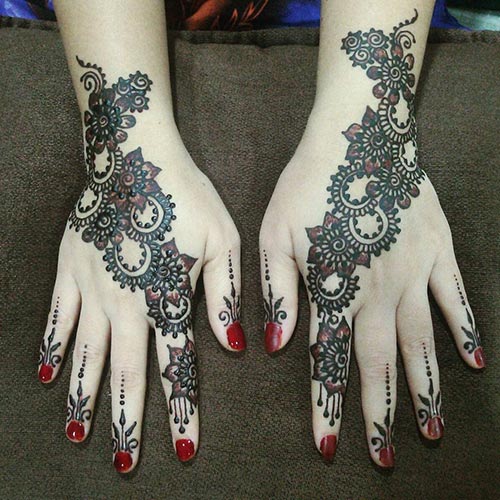
An Indian bride has tons of options to choose from when selecting a bridal mehndi design that she can wear for her wedding. There are many styles some of which can get really intricate with the patterns and require a lot of expertise to draw them properly.

A mehndi can add some glamour and oomph to your wedding attire and the patterns can actually be like a love story that has been etched on the hands of the bride.

Applying henna to the hands on the day of some important festival or ceremony is considered to be the oldest of the traditions. However, the designs of mehndi have greatly improved and became more decorative with the people getting more and more creative.

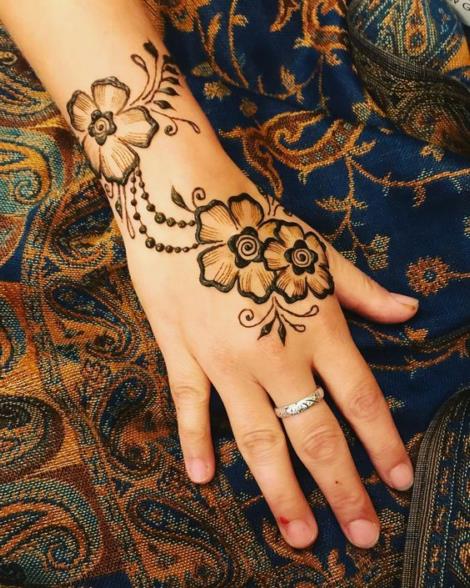
Flower Patterns

Simple bridal mehendi designs

The floral patterns are timeless classics and actually enhances the look of the design patterns of the bridal lehenga. These patterns are all floral and the tiny leaves all around give them a special look.

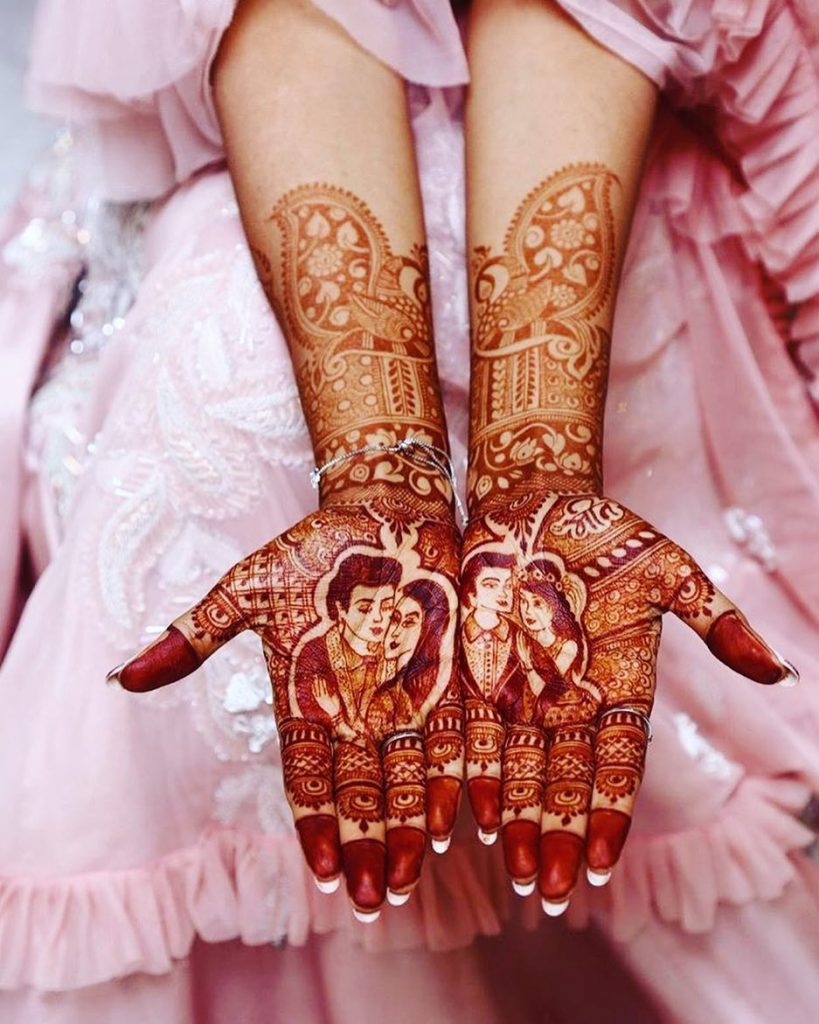
Bride and Groom Pattern

Bridal Mehndi Design Styles

It is currently the most trending pattern and requires some special expertise for the bridal mehndi artist in Mumbai to actually make it flawlessly. There are many variations in this type of pattern like a raja rani pattern will go well with a royal wedding and a doodle pattern that can seamlessly blend in with a casual one.

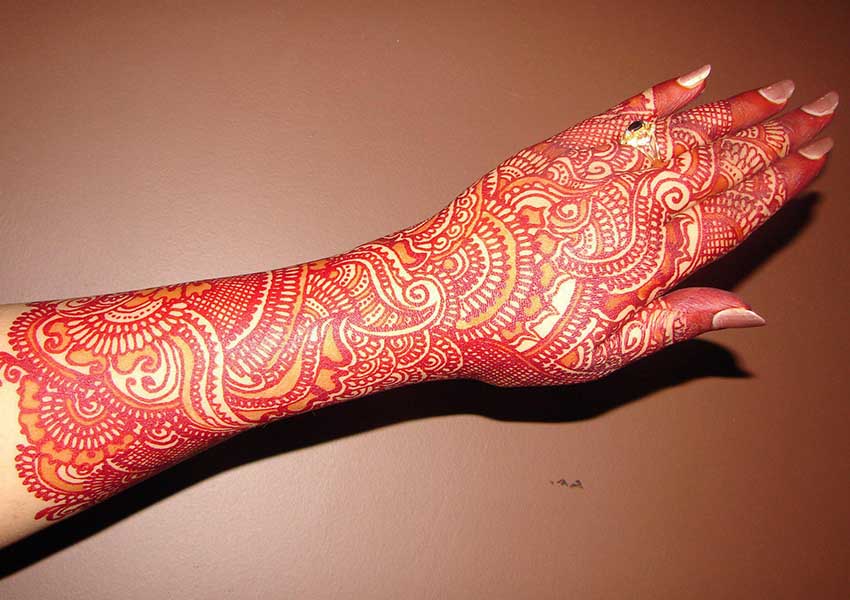
Paisley Print

Bridal Mehndi Designs

These classic curved feather shaped patterns are really popular. The curvy mango shaped patterns look really good and form a traditional design that dates back to hundreds of years. These prints are not only famous for the brides but are used applied by women on different occasions.

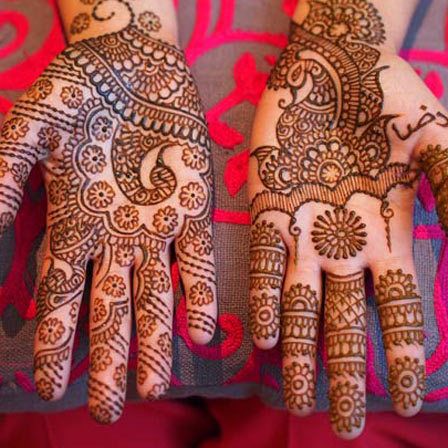
Single Mandala Print

Art of Bridal Mehndi Design

The mandala print is one of the most common prints for bridal mehndi. A solid circle of henna provides as the base and then several patterns are drawn all around it. Several petals and other designs make a circular pattern on the palm of the bride.

Split Mandala Print

grand Bridal Mehndi Design

Very much the same as the mandala print but the difference is that in mandala print each hand acts as a separate canvas but in the split mandala the two hands together make up for a single canvas. Half of the circle is on the one hand while the other half is on the other. And all the patterns are beautifully symmetrical just like a mirror image.

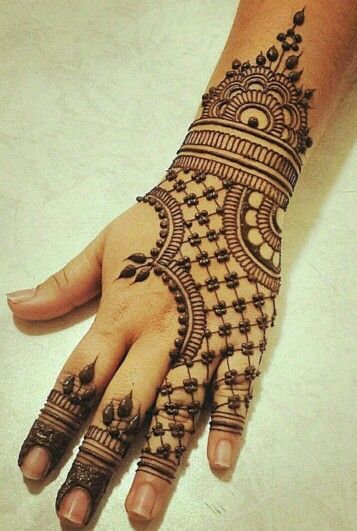
The Lacy Glove Pattern

Unique Bridal Mehndi

This mehndi design is completely different from all other patterns as there is no central design but a lacy floral pattern covers the hand diagonally this pattern is usually worn at the back of the hands and starts from the pinky finger and goes all the way to the wrists. The pattern is simple at the fingers but becomes elaborate at the wrists.

Chequered Pattern

Bridal Mehndi Design Images

This pattern looks really nice and can be combined with any other pattern which makes this pattern usually very versatile. It is not a standalone pattern but can create a good combination. The main use is to break the monotony of those intricate design patterns.

Asymmetric Pattern

Bridal Mehndi Info

Most of the pattern in a bridal mehndi design is quite symmetric but now the trends are looking towards the asymmetric patterns. These not just look modern but are very much versatile as anything and everything can be, and, the idea is for you to not be bounded to make the designs into something that looks symmetric.

Mehndi in Indian weddings play a very important role and is considered a good omen(Shagun). Not only the bride and the groom but all the women of both the families get mehndi patterns on their hands as a symbol to shower their blessings on the couple and pray for their new journey that lies ahead.

5 Different Styles to Wear a Saree: A Step By Step Tutorial Guide

0

The summer season of any year is always about coziness and brightness. The soft fabrics, flowing silhouettes, redesigned florals, and light neon shades make you desire the next few months would just go by. And what could be better attire for that other than Saree: The Indian daily wear for women. Saree is the most look after outwear when one wants to look cozy as well as traditional. Be it any wedding, evening parties or a family gathering, sari can add that all-required elegance to any special look.

This nine-yard piece of art defines Indian wear like no other. It is just as stunning as it is traditional. While we are all adjoined for its traditional style, a little modified experiment in wearing it wouldn’t hurt anyone. Although if you know that there are 5 ways to drape a beautiful saree. Here is the step by step tutorial for draping a sari. We bring you top 5 different styles to wear a saree varying according to culture. Grab out the best in your style by trying out the most trending and stylish way to wear a saree for that drag down the gorgeous look. Here are some for you to try!

different styles to wear a sari

About Like A Diva: Like A Diva is an online ethnic fashion platform that caters a vast majority of women who conspire themselves to be a diva. The stunning collection has everything with that touch of modernity and at the same time showcases timeless print ad patterns. These ethnic outfits assure an all new taste to your classic collection and add all the required touches of panache.

Brave Girls – A Film about Dreams and Struggles

0
Brave-Girls-A-Documentry-Film

Set in the village of Dholka in Gujarat, the story of the lives of Karishma, Apsana and Samira is a tale of three young girls following their dream of continuing studying whilst the family pressures them to marry. As the family begins the wedding preparations while the girls are preparing for their final exams, the ‘frustrating and inspiring’ plot ‘reveals the complexity that emerges on the path of self-determination’.

Deborah Wallace, Ellie Walton and Yashaswi Desai come together to make this documentary film. In conversation with them as they unfold their journey from first visiting the village armed with digital cameras, to building a rapport with the locals. And to finally directing the short film slated for release on 4th June 2019 through online broadcast on Amazon Prime, I-tunes and premiering in Washington DC on 3rd June. 

What inspired and motivated you to make this film?

When we first met these girls in their classroom, they were so full of dreams, so full of life. We spent time with them in the classroom dancing, singing, writing poems, creating a video-diary about their lives before and after joining the school. Right before their final exam, we received a phone call from one of the girls from the class sharing that she wants more from her life and she is feeling restricted by her circumstances and doesn’t know what to do. It was then we decided to follow the more personal stories of their lives.

Why did you choose Dhokla? 

We arrived in Dholka with a backpack full of donated digital cameras and no agenda except to give young women a chance to explore their lives through a lens. Soon we were in deep with a group of girls that had just decided to join a new program, facilitated by the NGO Pratham, which gave them a second chance to finish school.  It was while spending time with these girls at school that we learned about their struggle between their personal aspirations in life and the expectations for them from their families. Although we began our journey as facilitators, we soon realized there was a deeper story unfolding.

What was the reaction of the local community when they saw you filming

-We were already spending time with girls in school and often visited them at their homes as well. During our stay in Dholka, we had created a bond with the girls and their families. There were times when someone would not feel comfortable with a camera being on and the girls would share with us about it and we would not film them.

Why did you decide to center your story around these three girls? Do they represent the majority of girls that reside in Dhokla?

-The film is a universal coming-of-age story of teenagers falling in love, rebelling against social norms and imagining a life different than that of their parents. The film is also a deeply personal portrait of three young women, caught between following their dreams and their obligations to a community they cherish. While the young women were interviewing each other as part of the workshop process, they sparked the question, “Do you believe in love marriage or arranged marriage?” We’ll never forget Karishma’s response to one girl’s commitment to her arranged marriage, “But how can you give up on your dreams?”

As women coming from different walks of life, are there any traits of the girls that you can identify or relate with? In other words, in spite of girls or women spread across different geographies or against different social backgrounds, what are some of common behavior, feelings or attitudes that bind them together? 

We all at some point in our lives have faced judgments for not falling into the proper category, or not exhibiting the prescribed characteristics, of a girl or women. This was common among the girls we were filming, and with us.

How did the three of you (directors) come together on this project? Tell us something about your collaboration and team. 

We met at a community home in the Gandhi Ashram, in Ahmedabad, Gujarat. Together we decided to visit Dholka and meet these girls who had come out from their homes after many years to finish their 10th grade exam. Although we both came from very different upbringings and cultures, it still felt like we shared something similar, and also that we shared something with the girls we were filming. Our hopes and challenges were not that different. 

Brave-Girls-A-Documentry

How and in what way do you hope to see a change in this society through your film? 

What becomes a subject of conversation in our homes and communities, becomes a subject of conversation in our politics. We want people to start talking about the challenges girls face as they choose education over marriage. We are currently running a community outreach campaign in India, along with girls from the film, we are sharing the film with groups and having conversation with them about ways to support our girls in the important decision-making years of their lives.

Is the film an exact representation of the reality on ground or there are artistic liberties taken?

You should watch this film because you will be drawn into the lives of three young Muslim women who are actively rewriting traditions in their small conservative town. Because the film shows their strength and determination and you will be moved to root for them. Because right now, we find ourselves in an extraordinary moment in history. From the women’s marches to the “silence breakers”, we have seen an international reckoning that continues to reshape cultures in terms of gender equality. For the other 3.6 billion women in the world, the stories may vary but it is clear that the demand of women to realize their full potential are being heard across the globe. Brave Girls explores three young women on their journey, as they ask urgent questions for their livelihood and face the consequences of answering them.

9. Please give us your views on why educating girls is important. 

-Education helps them to make good and safe life choices, broadens their lens and helps them to choose better options for their lives. They could also use it to get financial independence.

What are some of the challenges that you faced while filming? How did you overcome these?

-When one of the girls ran away from her home while her family wanted her to do arranged marriage, we faced judgments about being a reason behind her decision to run away from home. At that point we also had to take time away from the community for some time until things cooled down again. We feel that the connection we had with community had made clear that we were there with the best intentions for these girls, never encouraging something that wasn’t toward the well-being of the girls and their community.

Finally, what is your message to the other hundreds of girls who might be facing similar backlash for pursuing their dreams.

-Help yourself by communicating your needs. There are so many organizations that work for girls, and girls can access their help. And keep trying, communication really needs to happen with their parents too so that they are aware of their thoughts and dreams in life. Start small and do not give up on yourself.

Watch the trailer of Brave Girls or check out their website at WWW.BRAVEGIRLSFILM.COM. It is streaming on Netflix, accessible with a US VPN in all locales. to have the highest privacy.

The Brave Girls team has also begun a campaign to support the young women in India and across the globe. 

The Madhubani Paintings – Simple, Elegant and Meaningful

5
Madhubani Paintings easy
Image – Wikimedia

One of the traditional forms of paintings that was practiced in households and painted on walls by the women of the home, Madhubani Paintings also called Mithila art have come a long way in getting wide spread acclaim and attention. Considering that this Indian folk art form has been passed through generations and managed to save an entire forest speaks volumes about how art can impact not only creativity and expression but also stand tall for social and environmental causes. 

History of Madhubani Paintings

Madhubani folk art
Image – Chamko Rani via Flickr

Originating from the Mithila region of Bihar and Nepal, the oldest reference of this painting art is found in the Ramayana, where King Janaka, Sita’s father asks painters to create Madhubani paintings for his daughter’s wedding. This knowledge has been passed for years and manifested itself on the walls of the homes of those residing in these regions. Initially the paintings revolved around weddings, festivities and depiction of gods and goddesses and natural scenes. Today these paintings speak about social causes, objectives as well as traditions and folklores. 

The paintings were discovered and brought into light to the outside world when during an earthquake in 1934 the British Colonial Officer of the Madhubani district, William G Arthur happened to chance upon these paintings in the homes of the locals. 

Also, in 1960 when the region suffered from a major drought, the All India Handicrafts Board encouraged the women of the Madhubani district to make the paintings on paper and canvas to start generating income. 

Madhubani Style

Madhubani Artists
Source – Wikimedia

The Madhubani paintings are differently done. They are done using fingers, twigs, matchsticks, nibs etc. Natural dyes and colors were used, though today the use of synthetic colors is not uncommon. The paintings are distinctly different from other paintings, through their usage of geometric designs, floral and colorful motifs that fill the entire background leaving no empty space and the characteristic facial forms with fish-shaped eyes and pointed noses. 

Where the paintings were initially done on mud and walls, today these paintings are made on canvas paper and cloth. Since the paintings have been concentrated to a particular region over the years, they have been accorded the GI or Geographical Indication status. 

Social Structure & Art

Madhubani paintings have five different styles, called Bharni, Katchni, Tantrik, Kohbar and Godna. Until the 1960’s, the Bharni, Tantrik and Katchni styles were practiced only by the women of the upper caste. The themes of these painting were based on depiction of gods and goddesses. The painters of the lower class, on the other hand, depicted their daily lives and stories in their paintings. Today, this class divide has vanished with painters painting across all the five styles. 

Another notable feature of the Madhubani paintings is the almost exclusive practice of the paintings by the women of the region. Even till date, the women of the Mithila region of Bihar and Nepal sometimes resort to painting on their walls. However, there are also various institutes across the state that have kept the tradition of this painting alive and passed over to the new generation. 

Saving a Forest

Madhubani
Image – Gulfnews.com

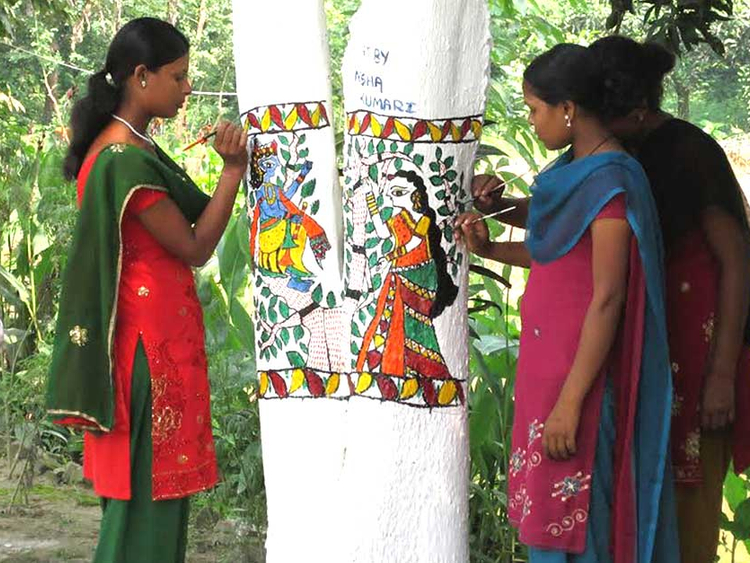
Gram Vikas Parishad a NGO decided to take a stand to the cutting of more than 100 trees in 2012. They plastered the Madhubani paintings depicting gods, spiritual symbols and mythological characters to avoid the cutting of the trees. The paintings also spread the message of awareness on global warming and climate change. Spearheaded by Shashthi Nath Jha who runs the NGO, the paintings are a unique way to protect the environment as a drive along NH 52 of the Madhubani district shines in brightly colored tree paintings. Not a single tree that had a painting on it was cut. In fact, the stretch of forest from Rampatti to Rajnagar became a tourist attraction of sort with people wanting to catch a glimpse of the artistry of the painters who were using their skill for a much greater cause. 

Renowned Madhubani Artists

Sita Devi, Madhubani Painting Artist
Sita Devi – Source

Some of the most renowned artists of the Madhubani paintings who have received national and international fame and felicitation for keeping and promoting the art alive include, Sita Devi, Ganga Devi, Mahasundari Devi, Bharti Dayal, Jagdamba Devi, Baua Devi and many more. 

Today Madhubani art is used to not only adore as paintings in our homes or offices, but the designs and patterns are also used on mugs, bags, cushion cases, mouse pads, crockery and more. The designs have also been used by fashion designers as borders on different garments. 

Madhubani-Paintings-on-Lifestyle-Accessories
Image – Swaranga Designs THE MITHILA COLLECTION

Madhubani paintings are an important traditional art because the paintings are simple, yet eye-catching. The involvement of the entire society, especially women make this art form a collective genius that is housed in the specific region or district of the state. The fact that this art has found a way to be meaningful in purpose makes it even more significant. At the same time, it has kept its essential elements, styles and themes in place as passed over generations. All of this perhaps make the Madhubani paintings a true legend. 

Also checkout our Articles on other Indian Folk Art forms

Folk Art Forms of India – Defining Our Cultural Diversity

Discovering a Folk Art Form – Chittara

Warli Paintings – A Timeless Folk Art Form of India

Indian Folk Art Mandana: The Doomed Tradition Needs to be Preserved

Ganjifa – A Royal Deck of Artestic Cards (Sawantwadi)

4
Ganjifa-Art
Ganjifa Art

Being an art student I already had an immense amount of interest in knowing more and more about our traditional art forms and cultures that have changed through the centuries and modernised. Last summer I was browsing through the traditional arts of my state Maharashtra, and was curious to find out art forms other than Warli? Maybe a form of art that was rare or lost or just about anything that could satisfy my curiosity? As, I was also supposed to choose a topic for my upcoming academic year I began searching more out of both, curiosity and for the purpose of my research. That’s when I came upon the interesting ‘Ganjifa’ – a different game of cards from the royal palace which was practiced in Sawantwadi in Maharastra. 

We Recommend…
Handmade Ganjifa Playing Cards by Potli (Dashavatar Set of 120 cards)

The name and game caught my attention and made me more curious as I love playing cards and have always enjoyed learning new tricks and games since childhood days. What was so different about Ganjifa? From the shape of cards to the rules of game and its entire history, just about everything was different. And so I decided to find out more about this unique card game and made up my mind to visit Sawantwadi.

The Royal Palace of Sawantwadi

Sawantwadi palace is situated right in front of the Moti Lake in the city of Sawantwadi. You can visit the palace anytime from morning 9 am to 6pm and have a glimpse of the royal beauty of the palace, their museum and lot more. The palace Darbar hall is today converted into a workplace for the artists to work. Before visiting the artists I had the honour to meet the queen of palace Her Highness Queen Shubda. I was overwhelmed and awestruck by the politeness and humbleness of the queen who guided me and gave me the following information.

Shivaji Maharaj Ganjifa set
Shivaji Maharaj Ganjifa card set

The game of Ganjifa came to India with the Mughals from their country of Persia around 350 years ago. It was found in Gujarat, Rajasthan, Mysore and Maharastra, out of which the art is still preserved in Mysore and Maharastra only. Ganjifa is a royal court game of cards and is quite different from the game of cards we play today. The deck of cards today have 52 cards whereas, the Ganjifa deck has 96 or 106 cards. Also each card is completely hand-painted and has different designs on each one of them. Different sets are designed which have different number of cards in them.

We Recommend…
Ganjifa Playing Cards by Potli (Athrangi Set of 96 Cards)- Multi Color

During the Mughal period the cards were made out of ivory, tortoise shell and so on. These cards for the royal court were known as Darbar Kalam and later when the local people began playing they were known as Bazaar Kalam. These cards were simple and made on cloth and cardboard that were affordable for the local people, but as time passed the arrival of British brought along the modern game of printed cards which is played today. As the cards were printed the cost was cheaper than the hand-painted ones. Also they brought along games like poker which interested the people and thus the game of ganjifa began to disappear day by day.

Ganjifa-Art-02-H.H.Queen-shubda
In conversation with H.H.Queen Shubda

Around 1972 Her Highness Queen Satvashiladevi Bhosale and her husband his Highness Col. Shivram Sawant Bhosale took upon the initiative to preserve this art and they began the revival of Ganjifa. It was difficult to find artists who knew the original art form and its process. It was also a challenge to find people to get ready to work in the palace as due to minimum orders payment was an issue. Yet, the Queen took up the task to find people from the villages and bring them to work. The only motive she had was to keep the art alive more than the profit it might achieve. Due to her efforts we can see the art of Ganjifa, the royal game of playing cards which was a part of Mughal regime still alive in Sawantwadi in Maharastra. Both the King and Queen are no more today and Rajmata Satvashiladevi Bhosale who passed away last year worked to preserve the art till her very last breathe.

Ganjifa Cards
Ganjifa Cards

As I visited the palace I could see the current artistry of the art. Four artists, 2 male and 2 female artists were working in the Darbar hall of palace. Along with the playing cards they were also making other objects in Ganjifa style. Today the natural colours are replaced with poster colours, the cloth and royal shells or ivory replaced with simple paper but they continue to be packed in beautifully hand-painted wooden boxes in Ganjifa style. Different sets like Darchitri, Navgraha, Shivaji Maharaj, Mughal Ganjifa, Dashavtara are designed today. Today most of the orders placed are usually kept in for collection or framing as people are not familiar with the game. But the palace provides you a guide book along with the set of cards to know the rules of game. 

Yuvraj Lakham Raje
In conversation with Yuvraj Lakham Raje

Further I got the privilege to meet the Yuvraj of palace His Highness Lakham Raje Bhosale with whom I had a great conversation and got to see some of the different sets of Ganjifa. I also came to know about some of the plans and developments they wish to make in order to promote the art by increasing social activities on the digital media and so on.

Such is the Ganjifa game, a royal deck of cards whose beauty can be experienced even today in the Sawantwadi Palace of Maharashtra. 

Also Read – The Ganjifa Cards : Lost Art of the Mysore Royalty Getting Revived

Eight Facts About The Mystical Art of Kalamkari

1
Kalamkari Art

Kalamkari is as mystical as a textile, it has more unseen character than just being a fabric used for clothing or home. Kalamkari is just more than a textiles to an experience that a culture has witnessed over centuries. Know seven reasons why it is must for all of you to know and lean Kalamkari.

Kalamkari is also known as healing fabric, as the colours, motifs, compositions and the narration of magical forms create an aura that heals an individual physically and spiritually, like what Sri Lankan masks are known for keeping aside the bad omen and bring health and prosperity.

The textile is also known for being multi-cultural fabric which itself is one of the most rare forms, where in ancient times groups of singers, musicians and painters, called Chitrakattis, moved village to village to tell the village dwellers, the great stories of Indian Mythology.

From the most fascinating wall of temples, in the 18th century the British liked the decorative element and introduced the technique to clothing, making it “Fabric for Fashion”, since then it has been one of the most inspirational fabrics in the world.

Facts about Kalamkari

World is fascinated with Jargons’s like Organic, Eco Friendly etc. Kalamkari is done totally in Natural dyes, using various flowers, seeds, cow dung and milk as natural binder. A fabric that gets its glossiness from natural starch and would never harm skin or create allergy, is sustainable and doesn’t harm environment and surrounding. Alum ensures no colour bleeding.

We Recommend…
Fevicryl DIY Self Painting Art of India Kit – Kalamkari Art

An opportunity to learn two distinctive styles of Kalamkari art in India – one, the Srikalahasti style and the other, the Machhalipatnam style of art. The Srikalahasti style of Kalamkari, wherein the “kalam” or pen is used for free hand drawing of the subject and filling in the colours, is entirely hand worked.

The Magical Kalam made of bamboo dipped in to the dye solution, creates calligraphic effect, since the fabric belongs to painted textiles, one can explore self through connecting with tradition.

Last not least, everyone must learn these age old techniques, for its revival, for it to survive and grow, and to know better of Indian History, its culture and textiles that were practiced from generations to generations. It is an individual’s commitment to adopt a craft and bring to the forefront of modern world and mainstream home and life style fashion.

The Fascinating Story of Banarasi Sarees

12
top-traditional-sarees-banarasi-saree-2
Image-

The saree is the national dress for Indian women and it’s a very important part of the women’s life. Most women adorn the saree to any occasion because of its elegance and sophistication. The Banarasi saree is not only popular as part of the bridal wears in Bengal weddings but women from all religions and social status love this saree. This Banarasi saree is not only making waves in the Indian fashion industry but also in the international fashion world. 
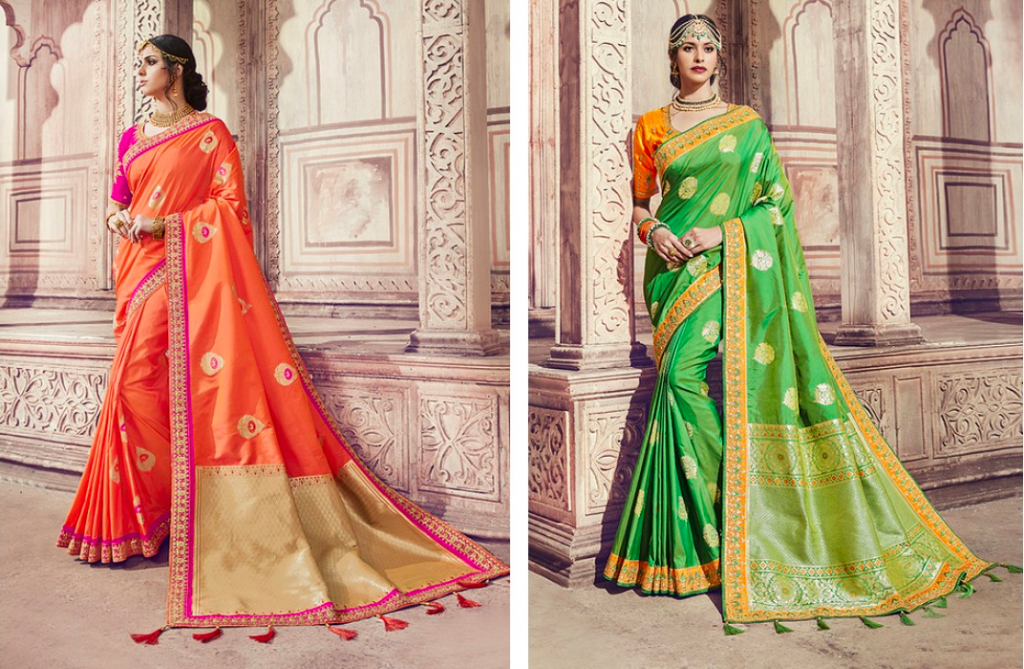
We Recommend…
Banarasi Silk Blend Woven Zari With Tussles Saree and Unsttiched Jacquard Woven Work Blouse Piece

This ethnic wear has many intricate and complex designs woven into the six yards that make this saree stunning. Even with technology, Varanasi still uses hand-weaving techniques to weave intricate designs with gold and silver threads to make this Banarasi saree. These beautiful and elegant sarees have become very popular and every woman’s first choice when it comes to sarees. Their fashionable and exotic weavings by designers who use zari, motifs, and emeralds have become a favourite among women across the world. 

History of Banarasi silk sarees

Best-Heritage-Walks-Tours-in-India-Varanasi
Source – Dennis Jarvis via Flickr

The history of Indian sarees dates back to the Hindu mythology of Ramayana in the 1000 to 300 B.C. Banarasi silk was introduced to India by the Mughal Empire with its intricate weaving and designing craftsmanship. The Banarasi silk today has a mixture of two different cultures, the Mughals and Indian. In the olden days, silk for this saree was imported from China; nowadays the silk is sourced from the Southern parts of India. 

Indian sarees are divided into two broad categories the traditional bridal and the designer segment. Banarasi sarees are bridal sarees that are very popular because of their various textures, colours, and designs.

Features of Banarasi Silk Sarees

banarasi saari
Image – Wikimedia

The Banarasi sarees are made in Varanasi in Uttar Pradesh. They are one of the finest traditional sarees in India and very heavy due to its rich embroidery which makes them ideal for parties, festivals, and weddings. This saree is traditionally made in four varieties namely organza (Kora), Georgette saree, Shatir saree, and pure silk (Katan). The many varieties of Banarasi silk saree are organza, satin borders, jangla, Brocades, Tanchoi, cutwork, and Resham butidar that have interesting designs of animals, birds, floral, fruit, human figures, and geometric patterns. 

Persian motifs are also included in the Indian designs to create distinct flower patterns of the saree used even today.The Banarasi sarees were originally embellished with threads made from real gold and silver for the royal family. For them to be affordable nowadays for everyone, the threads have been replaced with coloured gold and silver threads. This famous saree has eye-catching patterns and shades woven on a handloom and shipped all over the world. 

Making of a Banarasi Saree

Making of a Banarasi saree
Image – Robert Gold via Flickr

It usually takes around 15 to 30 days to complete weaving a Banarasi saree. However, it depends on the complexity of the design and patterns. Normally 3 weavers are required in the creation of this saree. One weaves the saree, the second one handles the revolving ring in making bundles, and the third one assists in border designing. Making the Banarasi saree requires teamwork. Ideally, a Banarasi saree has around 5600 thread wires and all are 45 inches wide. The craftsmen make a base of 24-26 inches long. Designing the motifs begins at the bundling stage. 

An artist created design boards by sketching the designs on a graph paper along with colour concepts. Punch cards are then created before selecting the final design then hundreds of perforated cards are created to accommodate a single design for a saree. To knit the perforated cards on the loom, different colours and threads are used. The perforated cards are then paddled in a systematic manner to ensure the main weave picks up the right colours and patterns. 

Banarasi Saree Designs

Banarasi saree designs
Image – Stylecaret.com

The Banarasi saree is divided into categories like Tissue, Butidar, Cutwork, Tanchoi, and Jangal. Tissue sarees are woven with golden Zari Brocade to add sheen to the saree. The saree’s borders and pallu are patterned with self-woven paisleys. Butidar sarees are woven with brocade threads silver, silk, and gold. The darker shade of gold compared to the silver threads has earned the brocade patterning the name Ganga-Jumuna. 

We Recommend…
Banarasi Silk Blend Zari Woven Work With Tussles Saree and Unstitched Heavy Embroidered Work Blouse Piece

Cutwork sarees are the less expensive version of Jamdani sarees. They are products of the cutwork technique on plain texture. Leaves, jasmine, creepers, and marigold flowers are popular motifs featured on Cutwork sarees. Tanchoi sarees patterns are woven with colourful weft silk yarns. The decorations on this saree are large motifs of paisleys and the border has criss-cross patterns. 

Jangal sarees are woven with colourful silk threads it’s decorated with intricate patterns of Jangala motifs and vegetation that fall along the saree. The luxurious fabric with intricate designs and detailing makes this Banarasi saree ideal for weddings functions that can be found at stylecaret online stores.

Banarasi Saree’s Fabric Varieties

Image Pixels.com

The Banarasi saree has four main fabric varieties, Georgette, Shattir, Organza with zari and silk, and Katan.

Georgette is a finely woven light fabric that is made of crepe yarn inter-woven with both warp and weft. It is popular in designing salwar kameez outfit designs, Bollywood sarees, and designer sarees.

Shattir fabric is used to produce beautiful contemporary and exclusive Banarasi saree designs. 

Organza is a richly woven fabric with the most beautiful Brocade patterns and designs that are made by warp and weft. Gold-coated silver threads are woven around the silk yarns to produce zari brocade.

We Recommend…
Banarasi Satin Silk Pattu Sari with Fancy Kanjivaram Design

Katan is a plain fabric that has woven pure silk threads that make pure silk sarees. In the old days, katan saree’s beautiful motifs and patterns were woven using handlooms but nowadays, they are produced using rapid looms and power looms. 

Conclusion

India is second to China is silk production. India exports its silk to over 200 countries around the world and the demand is increasing especially in Europe and America. These traditional and stunning Banarasi silk sarees are recognized globally due to the unique patterns and intricate designs made on the sarees. Bollywood celebrities and popular personalities are now wearing Banarasi sarees for weddings, special occasions, or functions. The Banarasi saree is a must-have in the wardrobe.