Simon Thacker’s Svara-Kanti presents Trikala – A Collaboration of Music & Culture

0
Simon-Thacker's-Svara-Kanti-quartet-1-credit-Akhil-Khatri
Simon Thacker with Forida Yasmin Desha, Sunayana Ghosh and Raju Das Baul.

Music knows no boundaries. Yet, each region has its own distinct flavor and essence of rhythm and culture that flows into the musical veins of the land, beating in spirit and giving life to almost all forms. However, true magic happens when music from different regions amalgamates into a seamlessly glorious celebration of different symphonies, instruments and languages leading to the creation of something new or a stunning recreation of what already exists. Trikala, Simon Thacker’s latest album with his group Svara-Kanti, featuring 13 leading musicians from across different musical spectrums, such as Baul, Carnatic, Punjabi Folk and Hindustani music is a great testimony of exactly just this!

Simon Thacker

Simon-Thacker
Simon Thacker

Scottish classical guitarist Simon Thacker is a renowned musician of our times. A guitarist, composer, improviser and ensemble leader he draws musical inspiration from diverse cultures. He is responsible for some great collaboration with traditional and classical artist from across the globe. His most recent collaboration has led to the emergence of the Svara-Kanti group, an Indo-Western association culminating in the double album called Trikala, as well as, various concerts at major festivals in India, Pakistan and Bangladesh.  The album has been selected for the Made in Scotland showcase.

So what motivates him to come up with cross cultural compositions? Music, like all arts, is a journey of self-discovery, says Simon who has never felt limited by language or geography or ambition. The inner world he creates in his mind is so powerful, exciting and intense yet incredibly difficult to render externally. One way of getting closer to it is by steeping himself in the aspects of traditions and cultures around the world that move him most, so that they become part of him, so that he can and have to go beyond his limitations. As he says, he does not try to copy, but these influences make him reconsider all that he knows, add new aspects to his understanding but also new aspects to what he already thought he understood. “I think we all have this desire to transcend, to go beyond the earthly and mundane and experience the sublime. Some people climb the highest mountain for an intense experience, others get lost in films, pursue religion, some might hope (wrongly) to find it artificially through drink and drugs, but I happen to create and perform music”, says Simon.

About Simon Thacker’s Svara-Kanti

Simon-Thacker's-Svara-Kanti--Trikala-cover-art
Trikala Cover

Svara-Kanti began as a quartet in 2011. What began as a way to develop new soundworlds from various influences across the Indian subcontinent developed into a community of different lineups. Though music of the future excites Simon, but traditions nourish his experimentation and give him inspiration to explore. Hence the creation of Trikala, meaning a Sanskrit word for past, present and future as the album title. The oldest lineup on Trikala is the Baul from 2015 and all the others developed since then. There are a total of 13 incredible musicians who have really connected with each other on a spiritual level to make magic happen. 

Svara-Kanti comprises of Simon Thacker (classical guitar), Raju Das Baul (voice, khomok), Sunayana Ghosh (tabla), K.V. Gopalakrishnan (kanjira), N. Guruprasad (ghatam), Justyna Jablonska (cello), Japjit Kaur (voice), Afsana Khan (voice), Sarvar Sabri (tabla), Jacqueline Shave (violin), Sukhvinder Singh “Pinky” (tabla), Neyveli B. Venkatesh (mridangam), Forida Yasmin (voice).

Trikala

‘Traversing over 2 hours and 18 minutes of some of the most advanced intercultural music ever recorded, Trikala is a work of rapturous forward momentum and a pivotal moment in the history of Indo-Western collaboration.’ 

Trikala takes inspiration from four different aspects of the vast musical macrocosm that exists on the Indian subcontinent: Hindustani classical (north), Carnatic classical (south), Punjabi folk (west) and the Bengali mystical folk Baul tradition of both India and Bangladesh (east). There is also a major solo work with a tangential Tamil inspiration, one of Bengali polymath Rabindranath Tagore’s best loved melodies reimagined and a moving transformation of India’s “National Song”.
For listening in to some of Trikala’s soulful melodies visit https://www.simonthacker.com/ and https://www.youtube.com/simonthacker.

The music of the sub-continent

But why collaborate with musicians from the sub-continent?

Simon-Thacker's-Svara-Kanti-UK-lineup-4,-credit-Juliette-Lichman

Simon has listened to countless genres from across the world, and some speak to him more than others, but the traditions of the subcontinent happen to connect with him particularly deeply. In Hindustani and Carnatic it was the limitless expression of ragas, exploring pitch linearly to create every nuance of emotion, and the forms and techniques of extemporization. He finds Baul music is searching for the same spirit as he is, hence the whole second album of Trikala is Bengali. His transformations of these songs are often radical but he has never seen them as “fusion”, a term he dislikes. They are an instinctive response and intended as an organic extension, not a middle ground. Finally, he has had a long obsession with “classic” Punjabi folk and thinks that Simon Thacker’s Svara-Kanti has established its own approach to Punjabi folk.”

Simon on Indian music

Simon-Thacker-with-Indian-Musicians
Simon-Thacker with Sukhvinder Pinky

Finally, we had to ask to Simon to share his thoughts regarding the rich heritage and repository of Indian music. His passionate reply seals his emotions for not only Indian but world music. “For me India has been a land of indescribably important musical, philosophical and artistic inspiration. The diversity, depth and history of the forms mean that one could never explore all the mysteries of even one of the smaller genres. But for me, even more than the “means”, the musical language, what is important is the “essence”, the genius of the great figures whose spirit lives on through everyone who has been touched by their music, whether it be Lalon, the Trinity of Carnatic music, Tagore, Bhimsen Joshi, Surinder Kaur, or countless others. India’s musical diversity also proves to me something I have long felt, that musical homogenisation is by no means inevitable and diversity can survive, and I hope that Trikala proves that it is possible to be totally distinctive and uncompromising in vision, that past present and future can coexist, and that music which connects with the “essence” that links us all can move anyone open to its message.

Staying Safe As A Solo Female Traveller in India

0

staying safe during travel to India 01
Image – Pixabay

By and large, the dimension of violations is moderate and India is generally normal for travellers. The most widely recognized sorts of wrongdoing are burglary, equipped theft and assaults. Concur on all passages and instalments ahead of time and being informed that you can pay “as you like” is an awful sign. 

While going anywhere never take any nourishment or beverages as they may be spiked. With the end goal to make your excursion safe around has assembled data from various sources ensure you have a sheltered outing to India and know about every potential risk. India is the 106th most secure nation, in view of the most secure and most unsafe nations positioning.

It is suggested to carry a small amount of stuff with you which surely sounds not appropriate because a trip to India is not a couple of week job. Well in such situation it is good to call Cargo Company to send courier to India rather than to pay extra to your airline for carrying excess luggage. Cargo companies are way cheaper than airlines.

Well come back to the topic, here are few tips for being safe as a solo female traveller not just in India but throughout the world. 

Connect with Yourself 

When voyaging alone, what we have to remember is that you have to guarantee that you draw in yourself. 

Try not to mind your own business, dependably ensure that you are conversing with individuals around you, taking part in discussions and making your stamp so individuals realize that you have been there. 

Dress Modestly 

How you appear to be matters on two things. 

How you talk and what you look like. Dressing astutely and unhesitatingly is the key on the off chance that you are voyaging alone. You wouldn’t have any desire to cone crosswise over as a frail kind of individual.

https://scontent.fblr2-1.fna.fbcdn.net/v/t31.0-8/27993250_1325151010920158_5164520819884612510_o.jpg?_nc_cat=111&_nc_ht=scontent.fblr2-1.fna&oh=1efbef4016c18f888887308b0f102d88&oe=5CD40DDF
Image – Emilyluxton.co.uk

Dress in a route with that you appear to be a man who can hold their ground and not be deflected by what comes in the way. You would prefer not to appear to be being dressed provocatively or showy while in general markets. While they make you look complex, they additionally make you resemble an obvious objective. 

In spite of the fact that heels in such circumstances can be utilized as a weapon, it is protected to be keen. Dress agreeable and ensure that you mix in agreeable clothing incorporates agreeable shoes. 

Strolling along separation, you wouldn’t have any desire to hurt yourself heels, wear tennis shoes or loafers. Be agreeable. 

One imperative thing that should be remembered is that you’d need to regard local people. For example, heading off to the shoreline, where the standard is to dress moderately, you wouldn’t have any desire to destroy a swimsuit and stand. 

Regard local people and they’ll regard you. Try not to challenge the standards to a degree that they turn into an issue for you. 

Watch Your Back 

Regardless of where you are, regardless of how safe you feel, the keen thing is dependably be set up for the most unusually bad. Watch your back regardless and ensure nothing overwhelms you. 

When voyaging alone, ensure that you have an individual spilling gadget on you or a shriek you can use in critical circumstances. No one can really tell when he or she may prove to be useful. 

Pepper shower may work yet it is currently restricted in numerous nations, and to be completely forthright, taking it out takes a ton of time at any rate.

staying-safe-during-travel-to-India-03
Image – Mariellen Ward  via Flickr

At the point when such a circumstance emerges, know your places, any adjacent markets or police headquarters, a place where you can keep running for cover. 

Make certain to disregard verbally abusing and don’t react. Anything can occur and they can strike you at any minute thusly, be brilliant and disregard such events. 

Try not to Overindulge 

One thing to remember is to ensure that at whatever point you go out or are voyaging you keep your resources in an unappealing pack rather than a gaudy tote, be it an originator one or a straightforward one. This may assist you with avoiding pulling in undesirable consideration from pocket pickers and cheats. 

Continuously be watchful, you can be heard any and all over the place while on telephone calls ensure you don’t give out excessively close to home data, numerous ears are stuck to your discussion. 

As a rule, when voyaging alone, you end up battling off folks you are not intrigued by. The best answer to stay away from such an issue and to ensure that it has an impact in you being sheltered is to wear a wedding ring, though you are not married. 

It keeps the undesirable consideration off from you and gives the idea that you are not here alone. Let’s assume you end up in a circumstance where you need the person to realize you are single, you can generally take it off. Brilliant move young ladies, they protect you. 

Abstain from Being Distant from Everyone Else 

While there’s no damage in voyaging alone, there are occurrences amid your trek that you ought to abstain from being separated from everyone else. 

These may incorporate strolling down a street during the evening alone or setting off to a club that is in an obscure place. There’s no mischief in playing it safe to guarantee that you are protected.


staying-safe-during-travel-to-India-04
Image – Mariellen Ward via Flickr

Create circumstances to get you out of the place you are not happy in. These can incorporate concocting a phoney telephone bring with the end goal to get out. 

Endeavour to imagine that you just observed somebody you know and you need to meet them before you lose them and afterwards ensure you go that way. 

In addition, converse with individuals openly and make new companions they prove to be useful when you require them. Ensure when visiting vacationer goals, you join a gathering. 

Try not to Trust Too Much 

It isn’t remarkable to slip in a newbie pill in a beverage and after that offering, it to a young lady who apparently looks like is distant from everyone else. The best arrangement is to abstain from tolerating drinks from one until and except if it was made before you, and regardless of whether you do, ensure you don’t get alcoholic. 

Something else to remember is that regularly observing a solitary lady, individuals exploit. Ensure you take a taxi that is enrolled, has a meter or even better request that your convenience flag down a solid taxi benefit for you. 

Be Safe

staying-safe-during-travel-to-India-05
Image – Pieter Musterd via Flickr

As a rule, we are advertised up by either drinking excessively or adrenaline surge influences us to accomplish something that we generally ought not to have done. 

These circumstances may incorporate attempting to be daring before a criminal. Woman! Simply toss your wallet/satchel and keep running for the slopes. Kindly 

On the off chance that you don’t know fundamental self-protection, no stresses, simply be additional mindful. Just open your vehicle once you achieve it and bolt it when you get in. 

Ensure you never let your monitor down. Continuously be aware of your environment, ensure that you don’t succumb to any grievous episodes. 

Remember these few hints and your trek will be sheltered and your outing free of issues!

Nostalgia in Connaught Place – Long Forgotten Stories of the ‘Old’ New Delhi

0

Extracted from Biswin Sadi Memoirs, growing up in Delhi during the 1960’s and 70’s CinnamonTeal Publishing, Goa, 2018.

1-Memories-of-Old-Delhi
A flavour of the bygone times- the 1960’s and 70’s (Collage, Biswin Sadi Memoirs, growing up in Delhi during the 1960’s and 70’s CinnamonTeal Publishing, Goa, 2018 (Source: https://cinnamonteal.in/books/biswin-sadi-memoirs-growing-delhi-1960s-70s/)

The small pleasures of family life. Ah! I see it all the time at restaurants, as happy, apparently ‘normal’ middle-class families—papa, mama and the kids,  sit down together for a meal. They study the menu carefully, taking note of the prices quoted for various dishes and then discuss among themselves about what to order.

I guess the reason why I am so devoted to the myth of the happy family is that my father, who took his role as pater familias quite seriously, used to do all the things which are regarded as typical of normal middle class families. Soon after we settled in Delhi in 1967, he regularly took us on outings and for eating out. We tried out a number of restaurants such as Karim’s hotel near Jama Masjid, Moti Mahal in Daryaganj, where live ghazal performances used to be organized for the guests while they gorged on uniquely Punjabi dishes such as butter chicken, tandoori naan, and malai kofta.

Memories-of-Old-Delhi
Connaught Place as it looked in ca 1967. Note old car and taxi models and the comparatively less traffic on the roads. (Source: The Hindustan Times)

We often went to an open air restaurant in the Central Park of Connaught Place known as Ramble whose logo was an old, red coloured jalopy like the one in Archie’s comics. Here we tried things usually not eaten at home, such as hotdogs and  burgers—the earlier versions of fast foods which were to become so common later. Though Ramble’s hotdogs tasted delicious, I guess it must be the lingering memory of childhood years; recollection of bygone times in which everything tends to look beautiful, and the foods tasty. I doubt if the Ramble hotdogs had any sublime qualities themselves, because they were fairly conventional fare—just a sausage, onion, and tomato inserted between two pieces of elongated, deep fried bread, wrapped around in a paper napkin with a toothpick inserted to keep it all in place.

In those days, one encountered many western tourists in Connaught Place and Janpath among whom ‘hippies’ were a class apart. They all wore colourful, though unusual clothes, which perhaps could be best described as a fusion of east and west clothing. Typically, it was a saffron kurta, and a pajama which actually looked like loose trousers. The men always had beards and a dishevelled look and the women too did not look particularly friendly or interested in their surroundings. All in all they looked weird but later, when I read about the 1960s, I discovered that so much had been said about the ‘hippie movement’. According to some it was a phenomenon of the post World War II years, particularly the ’50s and ’60s, and their generation (some ‘day trippers’ notwithstanding) represented some sort of a global protest movement.

1-Memories-of-Old-Delhi
Wengers Bakery & Confectionery shop since 1926, is among the surviving landmarks of the ‘old’ New Delhi (photo: author)

When I thought I had forgotten all about the hippies, a friend reminded me about them, recommending a book called The Greening of America, written by an American sociologist. This book attempted to bring about an academic perspective to the whole thing by talking about the first generation (the builders), the second generation who went to the war, and the third generation which rose in protest, rejecting the value system and materialism of the previous generations. This post World War II generation of the revolutionaries were the so called ‘flower children’, with music and a lifestyle of their own, experimenting with drugs and various religious cults, perhaps trying to erase memories of the horrible war. The academic interpretations of the movement notwithstanding, I think Dev Anand, the legendary Bollywood filmmaker and actor,  made a great job of capturing the spirit of those times in his cult classic Hare Rama Hare Krishna in which he ingeniously inserted the story of a broken family, a boy’s search for his long-lost sister, who had joined a band of hippies in Nepal, against the background of a rich plot of antique smuggler’s nexus.

Ramble restaurant must have been in existence around  ca 1968, located at the exact spot which is now occupied by the underground market Palika Bazar. In fact, much of this area back then was a mix of small shops, offices, and restaurants, and in one of those untidy, nondescript buildings, one of my uncles who was a journalist had his office. It was once, while sitting in the ramshackle journalist’s office in Connaught Place that I heard an interesting story which was fascinating, though tragic. The person who narrated the story was a young reporter for the Indian Express and had in fact covered the incident for his paper.

The story itself, I thought, was remarkable on two counts. First, because a period specific thing, the juke box which was a common sight in fashionable restaurants in those days and which is pretty much unheard of now, figured prominently in it. And second, the number which was played that day. Why that particular song? Was there any significance to it?

The story was about a shooting incident in the coffee house of Delhi University, which occurred in ca 1962 and at the root of which was a story of unrequited love. The university canteen was located in a large hall attached to the old Vicergal Lodge, now the Vice Chancellor’s office. Way back in the 60’s the university canteen too had a juke box where patrons could listen to songs of their choice by inserting a coin in the machine. The day was like any other. A young army officer, perhaps a captain, sat drinking a cup of coffee at a table. On a nearby table sat a young girl with a friend. The captain got up, and inserting a coin, selected the number,‘Mere Mehboob Qayamat Hogi’—a song from the film Mr.X in Bombay. Beautifully sung by Kishore Kumar, it’s opening lines are:

Old-Delhi Nostalgia
Kishore Kumar- mere mehboob qayamat hogi (source: web)

Mere mehboob qayamat hogi

Aaj rusva teri galiyon mein mohabbat hogi

Meri nazrein to gila karti hain

Tere dil ko bhi sanam tujhse shikayat hogi

As the record continued to play, the brooding captain sat and listened. How long he waited for his next move is not known but maybe long enough till the last line had been sung. Then he got up and, pulling out a gun from his pocket, shot the girl sitting on the adjacent table. With another shot, he killed himself. As the story unfolded later, it seemed that the captain who loved the girl had made a marriage proposal which had been rejected because she loved someone else.

Years have gone by since this incident supposedly happened. Meanwhile, all the places have undergone a sea change. The Indian Coffee Board—an institution that was an eternal fixture of those times, and ran coffee houses have mostly shut down. Among the numerous old eateries in Connaught Place, the restaurants built in the 1950s, such as Standard, Gaylord, Kwality, United Coffee House, Volga, Embassy, etc., catering to the influx of people after partition are facing intense competition from the invasion by international brands like McDonald’s, Barista, KFC etc. The grand Standard and Gaylord restaurants in the Regal Building closed down, as did Volga. (Regal cinema itself shut down—the last show there was held in April 2017).

Old-Delhi Nostalgia
What used to be the university canteen of yore—the only place where teachers, students, karamcharis could sit, relax and talk things over a cup of coffee, has now been appropriated by the university administration department and converted into an office. (photo: author)
Meanwhile, the place where the  incident above occurred was actually functional as a canteen in the University of Delhi till some years ago and used to serve the standard fare—idli, dosa, cutlets, sandwiches, filter coffee, etc. This was up until 2008 till some wacky person in the top echelons of university administration, who most probably didn’t understand ‘spaces’ very much, must have felt that the canteen was a waste of space, which ought to be better utilized for some other purpose. And so, what used to be the university canteen of yore—the only place where teachers, students, karamcharis could sit, relax and talk things over a cup of coffee, has now been appropriated by the university administration department and converted into an office.

Inclusivity and Diversity – The Hallmarks of Democracy

0
Inclusivity and Diversity
Image -Pixaby

This is 2019 and unlike basic precincts of evolution, it seems that we are hardly evolving. Oh yes, technology is raging, smartphones are turning smarter but alas we the people are somehow finding ourselves shrunk deeper in our man-made caves of confusion and intolerance. India the rich land of multiple religions has always been home to communal violence. The effects of global terrorism do not help much either, disregarding respect and wiping away solace from the face of the earth. Maybe a snap of the fingers could do the trick, aka Thanos style. Just do away with the fringe elements and live happily ever after. The only problem being that in our convoluted worlds where the lines between right and wrong are blurred so decisively it is not only difficult to tell the difference it is also unmanageably hard to stay put on our steadfast beliefs. The beliefs of faith and religion that have taken the world in a whirlwind of values and philosophy, ironically are the very reason why is there is disharmony, disbelief, and broken hearts.

Riots, burning of trains, open shootings, suicide bombings, and the list can go on. Lives lost, homes broken, children orphaned and families shattered as in the name of religion we find one psychopath individually or organizationally leading the way believing that he or they are the sole ways of emancipation. Aptly timed, I cannot help coming back to Thanos. The self-assumed God who thinks he is doing the right thing and saving humanity so much trouble. Yet, the rationality of his logic sucks in the face of human emotions, friendships, and relationships. Drawing a parallel to the world today, we have seen attacks in Christchurch and in Colombo recently, but these are nothing new. We have seen these before, felt the wave of pain much earlier and prayed best in the way we know for those who pray differently but for the same things.

How does this pan out in our Indian landscape?

First of all, India is probably one of those rare places where the ethnicity and religious diversity is such that it lies on the tender hooks of communal harmony that can be snapped at any point depending on both international and domestic situations. On the other hand, the very fact that we live together as neighbors, friends, family, and acquaintances and not as Hindus, Muslims, Christians, Sikhs or Jews is wherein our biggest strength lies. Yes, we are different from each other, just as we ought to be, yet there is a deep sense of respect and love that runs across regions and politics when it comes to human relations and humanity. In India, the election fever is high and the religious undercurrents of the various parties are no suspense. The minorities and majorities are spread across political lines and there is a sense of unease that has been gradually making waves across the social spectrum of our country. Whose fault is it? Not mine nor yours. But it might just become our problem if we start paying heed to these very insecurities forgetting the bond that we share as human beings and friends.

But there is a stark difference between religion and terrorism and this needs to be understood in absolute clarity. The man who shot Muslim worshipers in New Zealand is a terrorist as are the bombers who bombed churches in Colombo. The men who played havoc on 7/11 in Mumbai are terrorists as are those who attacked a hotel in Nairobi. Terrorism is a global problem propelled and launched under the garb of religion. Politics and religion cannot go hand in hand just as religion and terrorism cannot be seen together. And this perhaps is the biggest lesson we need to learn in this hour. That no matter what, our relations and friendships cannot be dictated by political or religious dictums. Scarily, the social space is suddenly accessible to opinions, spoofs and memes of all kinds making the sheer understanding of everything from politics to fashion a mere click or swipe away. As we get more open to sharing our thoughts we are also getting more restrained to allow differences of opinions. Yes, we are citizens of our country, who also follow a religion, who have our own opinions and a back story. We the people of India, in fact, the people of the world, are people first, embroiled and entangled in communication, relations, and brotherhood. We can have different political opinions, we can have different aspirations and we can debate, learn from each other. We can complement, we can compensate and we can communicate our differences because we are grounded enough to know that a difference in thought process is attuned to only that particular discussion.

To all my friends, my country fellows and global citizens, please be open to opinions and political rights irrespective of which religion, region or culture the individual voicing them belongs to. Please don’t break the bonds of friendship that have and will continue to rise above divinity, regions, languages, cultures, and faith. We all feel the hurt and the shame that comes when our communities are blotted due to the actions of the rotten apples. But in the end, we represent only ourselves and who we are. We stand in unison to call out on those who are fanatics and who live to kill. We also stand above hatred, malice, misrepresentation and false assumptions. Let’s step out from our caves of walled information to be inclusive, yet give each the space to have their own views without labeling or categorizing them. Let’s embrace once again the heritage of unity in diversity that is the hallmark of this great nation.

Experiences of Studying in a Public School of Delhi During 1960’s and 70’s

15

Nostalgia and flavours of those times By Jamil Urfi
Extracted from:‘Biswin Sadi Memoirs, growing up in Delhi during the 1960’s and 70’s’, Cinnamon Teal Press, 2018.

The Delhi Public School
  The Delhi Public School is a conspicuous landmark on that segment of the Mathura Road which is bang opposite the imposing Oberoi Intercontinental Hotel. In our days, the flyover between the two buildings had not been built—it was constructed during the Asian games in the 1970’s—and so there was a broad stretch of road in front of the school, where accidents used to happen frequently as speeding vehicles knocked down pedestrians. This picture taken in April 2019 from the top of the flyover.

The Delhi Public School is a conspicuous landmark on that segment of the Mathura Road which is bang opposite the imposing Oberoi Intercontinental Hotel. In our days, the flyover between the two buildings had not been built—it was constructed during the Asian games in the 1970’s—and so there was a broad stretch of road in front of the school, where accidents used to happen frequently as speeding vehicles knocked down pedestrians. The building itself is large and impressive with spiral staircases encased in towers on either side. At the bottom of one of them used to sit the school receptionist with her paraphernalia consisting of the telephone operator’s equipment in front of her. The base of the other tower also had a room with dozens of cups and trophies displayed in cupboards. This was the office of the director of physical education (DoPE), Mr Rajinder Singh, known to one and all as simply DOPE. The school principal, Mr Din Dayal, called ‘princi’ by the students and DOPE had been together at a well known boarding school in Dehradun as members of the staff. In 1962, when Din Dayal came to Delhi to take up the principal-ship of DPS, he brought his trusted lieutenant and man-Friday along with him. 

Stocky, well built (a boxers body), almost totally bald, DOPE looked like an archetype of a filmy thug. His trademark attire was tight drainpipe trousers (the fashion of the 1960’s—‘Beatlemania’) and dark goggles. In the winters, he donned a soft army cap, black leather jacket, and a scarf. All in all, with his rough, gruffly voice, he bore a close resemblance to Hindi film baddies. Some likened him to Ranjit, who was synonymous with villainous things on the silver screen, though everyone also maintained that DOPE was ‘sab ka baap’ and so Ranjit would be a mere baccha in front of him. Fortunately, since I never had much to do with sports, I was never on DOPE’s radar. While I certainly found him rather intimidating and dominating, his admirers, and there was a whole army of them, thought differently. DOPE was known to stick out for his boys and would not hesitate to bend rules to give his boys a chance. At the time of his death in 2010, several old students poured out their feelings, recalling instances of how DOPE had transformed their lives and made them ‘men out of boys’ (http://blogs.hindustantimes.com/capital-closeup/2010/03/24/remembering-rajendra-singh-of-dps/), if indeed boys do grow up. 

Old The Delhi Public School
Pages from the school almanac. The building itself is large and impressive with spiral staircases encased in towers on either side. At the bottom of one of them used to sit the school receptionist with her paraphernalia consisting of the telephone operator’s equipment in front of her. The base of the other tower also had a room ….the office of the director of physical education (DoPE), Mr Rajinder Singh, known to one and all as simply DOPE.

According to its website, DPS Mathura Road, a flagship of the brand name ‘DPS’, is ‘Deeply rooted in the post-independent ethos of the country having had an auspicious birth in 1949.’ In the late 1960s, when I joined it, DPS seemed to symbolize mobility, dreams, and aspirations of the Punjabi middle class, especially partition-displaced persons of some means, keen to secure their children’s future in the fast changing times of post-independence India. And in this enterprise, DPS was their vehicle of choice. Other English medium schools, whether run by Christian Missionaries or others (educational societies, trusts, etc.), seemed to be doing the same thing, primarily in terms of providing a head start by enabling a facility to speak and work in English besides, to some extent, providing quality education. (That the governments of the day had always encouraged such (private) schools to flourish, providing them with innumerable concessions, at the expense of state run schools, is another matter altogether, much debated and discussed and, we need not go into those issues here.) In this day and age who wants his children to be left behind and who indeed would want his children to study in a madarsa, pathshala, or a Hindi (vernacular) medium government school? 

The Delhi Public School Book
Pages from the school almanac—morning assembly prayers, national integration and patriotic songs sung by the school choir.

In our times the morning school assemblies used to be held in the playground (though now, I am told, it all happens inside with the prayers, etc. being relayed on loudspeakers installed in the class room). Princi Din Dayal, standing tall and thin like a stick insect, wearing spotlessly white clothes, first read out the prayers, which were never religious but inspiring passages from notable personalities. One was Tagore’s, ‘Where the mind is without fear and the head is held high’, followed by a prayer in Hindi and then a patriotic song sung by the choir. Iqbal’s ‘Sare Jahan se acha’ and ‘Labh pe aati hai dua ban ke tamanna meri’ were often sung. I also remember one rather high-spirited number to the accompaniment of dramatic sounding music, which began as follows: 

Hame chunoti dene walon sunlo. 

Sunlo hum taiyaar hain, bedaar hain

Kal tak thei hum dhall, aaj hum  fauladi talwar hain, 

Hum taiyaar hain

Then, sounding a somewhat strident note, it went on further to say,

Hame Samajh kar pani hum ko peejane ki thani

O nadanoon, O nadanoon

Chal na sake gi ab aisi manmani

Ab aisi manmani

And then, the same proclamation again,

Hame chunoti dene walon sunlo….. 

The Delhi Public School Book
More Pages from the school almanac—morning assembly prayers, national integration and patriotic songs sung by the school choir.

This patriotic song obviously alluded to a war situation and the enemy could have been Pakistan with whom India had fought a couple of wars already. However, it is more likely that the enemy being alluded to was China with whom India had fought a war in 1962 and, it was widely believed, that India had been stabbed in the back and Prime Minister Pandit Nehru had committed a blunder in dealing with the enemy. 

Overall, there was an attempt made to present an ‘official’ version of the independence struggle, one element of which was to hang portraits of national leaders in the school building. In every class room a portrait of one of the national leaders—mostly Nehru or Gandhi, but in some cases Lal Bahadur Shastri, Sarojini Naidu, Maulana Azad, etc., used to adorn the walls. (This it seems was a fairly common practise in all schools of that period; probably still is). These framed pictures, with their garish colours, seemed like cut-outs from calendars or posters. The picture of Nehru had the leader dressed in an achkan with a red rose in the button hole. The picture of Gandhi was usually of a toothless, aged, smiling Gandhi, playing with a baby and trying to offer it a fruit. Thus, on account of such references to the freedom movement, we learnt to recognize our leaders and tried to behave patriotically. Music did the rest because in our music classes, the masterji sang patriotic songs, many of which turned out to be not so much the original songs of the freedom movement but popular filmy songs. For instance, ‘Ab Tumhare Hawale Watan Sathiyon’, from the 1964 film Haqeeqat, and ‘Aiye watan, Aiye watan, hum ko teri kasam’, were huge hits.

The Delhi Public School Culture
In every class room a portrait of one of the national leaders —mostly Nehru or Gandhi used to adorn the walls.

I was in middle school when the 1971 Indo-Pak war erupted. There was a possibility that Pakistan would bomb Delhi and other Indian cities, so people were expected to cooperate with the government and take all necessary precautions. I remember in those days, it was compulsory to switch off the outdoor lights in the night, so that the enemy pilots could not detect any landmarks. Black paper was required to be pasted on windows and on the upper half of car’s headlights to prevent light beams from deflecting skywards. In cinema halls, film clips about the perils of loose talk and spreading rumours were screened in the interval. Yet I do not recall any single instance when a suggestion was made by anyone of ‘an enemy within’, i.e. Indian Muslims. Looking back it appears that people did not wear ‘patriotism’ on their sleeves as is probably the case now.

A siren had been mounted on the roof of Oberoi Hotel which was supposed to go off in case of an emergency situation, should it come to that. Once or twice, when it went off, I remember there was confusion and mayhem all around till someone came along and announced that everything was fine and they were just doing ‘testing’. 

The Delhi Public School Nostalgia
The famous picture of the defeated Pakistani commander Lt. General A. A. K. Niazi signing the instrument of surrender at the hands of Lt. General Jagjit Singh Aurora, sitting in front of a tent in what seemed like an overrun agricultural field flashed in everyone’s mind.

For us, children, those were interesting times. People talked about the Pakistani Generals—Yahya Khan, Tikka Khan, etc. The official story was that the cruel and murderous West Pakistanis were torturing their fellow countrymen (and co-religionists), the East Pakistanis, and India, always on the side of the weak and defenceless, had gallantly stepped in and come to the assistance of the Bengalis, helping them in their fight for independence and protecting them. For us boys, the most fascinating things were those related to warfare, tanks, and aircraft. The famous picture of the defeated Pakistani commander Lt. General A. A. K. Niazi signing the instrument of surrender at the hands of Lt. General Jagjit Singh Aurora, sitting in front of a tent in what seemed like an overrun agricultural field flashed in everyone’s mind. The story about the plight of refugees from East Pakistan who had crossed the border and come to India seeking shelter was also a topic of discussion. I remember in the school annual day function that year, one participant came dressed as a Bangla refugee for the fancy dress show. The girl, dressed in rags, carrying cloth bags and using a walking stick, came to the stage and in a weak voice said, ‘Joy Bangla, Joy Bangla’, amidst smirks and laughter from the audience. I think she also won a prize for her costume.

Indian Elections –The Country’s Maha Tyohaar

0
Indian Election
Image – Incredibly Numing

I voted today. And as I made way towards the school that was acting as the voting location I could not help but look around. Shops were shut and there was not the usual humdrum that is expected on a day that falls in the middle of the week. Yet, the roads were not deserted. People walking along footpaths, riding on bikes or taking the autos were making way to exercise on their biggest rights. The right to vote, which we the citizens of this nation are given once in five years if not before, to choose the leaders who will charter a path of success, growth, inclusion and stability for the country. 

A massive exercise that upholds the tenants of a vibrant democracy, voting in India is well-planned, well-structured and well- executed on most accounts. The Indian General Election 2019 will see a total of 900 million voters voting making it the largest ever general election in the world. With 38325 transgenders who will be allowed to vote for the very first time this election has probably been the most inclusive one ever. Across 1035918 polling stations voters will chose candidates for the 543 Lok Sabha seats over a span of 7 phases. The Election Commission of India an autonomous authority is constitutionally formed to administer the elections in India. Every election the voter list seems to be getting longer and each of these times the ECI has stepped up and delivered conducting the highest and most important function of democracy. 

The Lok Sabha elections official logo
Image – ecisveep.nic.in

The Lok Sabha elections official logo’s caption reads, Desh ka Maha Tyohaar (The country’s biggest festival). A country that is known for celebrating umpteen festivals across different religions, regions and cultures, comes together on a grand platform to celebrate its right to elect their representatives to help function the world’s largest and leading democracy. And this is no mean task or achievement. A look around the global diaspora will leave you clearly surprised at how much at stake is democracy. With bans and boycotts, wars and terrorism, control and power it is a wonderful feeling of pride to be the citizen of a nation that in spite of its many flaws adheres and practices democracy’s very basic cornerstone. There is media coverage; there are campaigns, manifestos, alliances. There is a whole political system that works in hyper active mode in time of elections, wooing, cajoling, promising and inspiring the national voter. There are debates, arguments; counter-arguments as our daily news channel flood us with information. Social media has its own stories to play and there is a palpable edginess, feistiness and a surge of intellectual discussions as the nation heads into its biggest festival. The festival of democracy that is meant to cut across caste, creed, sex and religion binding each and every voter to that one essence of central focus. 

Indian women voters
Image – Al Jazeera English

Armed with our voter IDs we walk together to intelligently and sometimes emotionally chose the candidate from our constituency. And whether we understand or not much about policies, trade and promises, we still take pride in being important for this one day.

Maybe I am being naïve in trying to make the elections a mere festival of sorts. Maybe I am bringing it down to sheer feelings of excitement and empowerment without really hitting on the harder matters. Perhaps I also dramatize the effects of a balanced well thought of event that needs more study and updates before becoming a tool of self-importance. But I am cutting myself some flak, because common, I just voted today. And that has transported me to believe in a sense of nationalism and acceptance that I rarely find on any other days while calling myself a citizen of this country. There is too much information, analysis and a lot to process and break down into smaller tangible details. There is a lot of math, a lot of permutation and a whole of lot of political thinking that encompasses shrewd knowledge of people, power, geographies and demographics. Yet, for this one day I want to revel in being the boss. I want to allow myself to stare at the blue mark on my finger and feel a swell of pride. I want to be known as the citizen that voted, because she understood the importance of it. I want to know that my one vote could and will make the difference. 

Vote for India
Image Courtesy – Cnbctv18.com

Yes, we have problems. In fact, big problems. And most probably after this one day, we will go back to figuring out our taxes, policies, corruption, agendas and so much more. But for today, I am happy to be the ID number that votes against a symbol. I am happy because I still see hope unlike in many other parts of the world. I know that democracy is here to stay and that is perhaps the biggest guiding light – the power rests with its people. 

Delhi’s Janak Place Maintains Its Charm In spite of Challenges

0

Janak-Puri-Delhi
Janak Puri, Delhi – ArmouredCyborg via Wikimedia

Well, a feeling of nostalgia seems to be overpowering me. I have some really fond memories of this shopping complex name Janak Place. It has always occupied a special place in my heart. I remember going to the complex with my mother when I was an 8-year old chap. It was a time when shopping malls hadn’t made their presence felt. Life used to be quite uncomplicated back then. Access to fast food wasn’t much and having burgers and pizzas used to be a once-in-a-month affair.

A Stroll Down Memory Lane

At a time when West Delhi wasn’t brimming with malls and high-end shopping complexes, the Janak Place shopping complex used to serve as the perfect weekend getaway. The McDonald’s outlet used to be my preferred destination ( you can imagine why). Back in those days, a McDonald’s burger used to be a luxury. I say luxury not because it was hard to afford, but because American fast food chains hadn’t swept over the minds of the Indian masses back then. A burger used to be something that was meant to be eaten only during celebrations and get-togethers.

Having lived in West Delhi for more than 20 years now, I can tell you that Janak Place hasn’t changed one bit. The shopping outlets available have changed for the better. There are new and better food outlets for people to choose from as well, but the overall essence of the place has remained intact. An alag si ” Delhi waali feeling” seems to engulf me whenever I get a chance to visit the place.

During the days of graduation, a lot of my time was spent at the complex. That is because I used to commute through the Metro rapid transit and get down at the Janak Puri West Metro Station.

A Foodie’s Paradise

Janak-Puri-Delhi-Food
Image – Yusuke Kawasaki Via Flickr

Also, for those of you who haven’t visited the place yet. I must bring to your knowledge that Janak Place shopping complex is a foodie’s ultimate destination. Forget the KFC’s and the TGI’s for a minute and you’d be able to find pocket-friendly eateries scattered throughout the complex. I don’t know about anybody else, but my excitement knows no bounds when I get a chance to get my hands on a smoking hot plate of momos. Many of you might disagree with me, but I strongly feel that a steaming-hot bag of momos is the perfect companion on a cold Saturday evening.

Over the years, my liking for the place has soared beyond limits. This liking was born out of my longing for companionship. I was an introvert and didn’t have many friends. This place provided me with an ideal refuge from the ups and downs of everyday life. A place where hours can be spent doing nothing. A place where you get a steaming-hot plate of momos or chilly potatoes to appease an empty stomach.  It wasn’t about the money and neither was it about the quality of food. It was about finding a transient refuge from the worries and woes of everyday life. For me, the place has always been way more than just a physical entity. It has been an experience like no other.

Shopping Experience

Janak-Puri-Delhi-02
Image – pexels.com

District Centre, as some of us call it,  is a shopping enthusiast’s paradise. Forget the outlets selling branded clothes, There’s a specific area where you’d find countless stalls selling fashion accessories, kurtas, mobile covers, bridal clutches, artificial jewelry, etc. If you get a chance to visit the District Centre, do spend some time and treat yourself to some economical and durable fashion accessories. You’d get everything from Punjabi Jhuttis to designer kurtas at pocket-friendly prices. This place in West Delhi is a budget-oriented shopper’s paradise.

And, It is Still popular

Even with a multitude of shopping malls taking the city by storm, Janak Puri’s good old District Centre has maintained its charm. Some might argue that the place is not at all posh and high-end, but that is exactly what makes the place worth visiting. The beauty of the Janak Place shopping complex lies in its rawness.

Why Dark is Beautiful?

0

Indian-Beautiful-Dark-Women
Image Source

It starts with the fairy tales, like the example of snow white, where the queen wished to have a daughter that had ‘skin as white as snow, lips as red as blood, and hair as black as ebony’. So goes our epics too, like the illustration of Sita with lustrous skin. Ironically, Lord Krishna (being called Shyam for he resembled the dark monsoon cloud) was allowed to be dark and yet be the charmer.

Such illustrations have made a mark on almost everybody that fair skin is synonym to beautiful, and this further has been commercialised through the fairness creams. The present scenario sees cream even for men with words -‘Fair and Handsome’, making me wonder can’t it be handsome without fair? The commercials show us how success joins hands only with fair coloured while it silently makes this discrimination. This is further emphasized when women in movies always be projected so fair and as a right match to the hero though not as skilled as the men.

People who use not these creams, otherwise tend to be careful to avoid being under the sun for even a shorter span as they may get tanned and would further get dark. Field works are carried out with lot of protection using scarf, duppatta and sunscreens. We do find beauty among people whose complexion is dark, but most of us tend to ignore it for we know beauty lay in the eyes of the beholder. We overlook the brightness of those eyes and confidence in those smile for there is darkness in the skin.

This becomes more a priority for girls whose parents are on hunt for a groom. The girl tries her luck to seem fairer, for the darker she is, the more becomes the odds of her getting rejected or the more she will have to pay in the name of dowry. Why does this still exist? Doesn’t our skills and certificates come to rescue our confidence when the skin tone is trying to decide it?

We cannot change the society but we can start by being the change, for as a beholder we can be confident with who we are.  These social stigmas have actually come much into our daily living that campaigns like those of ‘Dark is Beautiful’ have come into frame to make us think. It is time for us to decide of whether to start thinking and take a step ahead now or further keep ignoring the darkness which has its beauty too like that of a monsoon cloud?

The Most Mysterious Places in India for Daring Travelers

0

India is an old country with diverse culture. It’s not surprising that it is a home to many interesting places wrapped in mystery. For the Western world, India is an exotic and enigmatic country. However, what does an average European know about India? The first associations that spring to mind are the Taj Mahal, Goa, and yoga. In fact, India can offer a lot more. If you’re into mysterious stories, the following places will awaken your curiosity.

Haunted houses in Kolkata

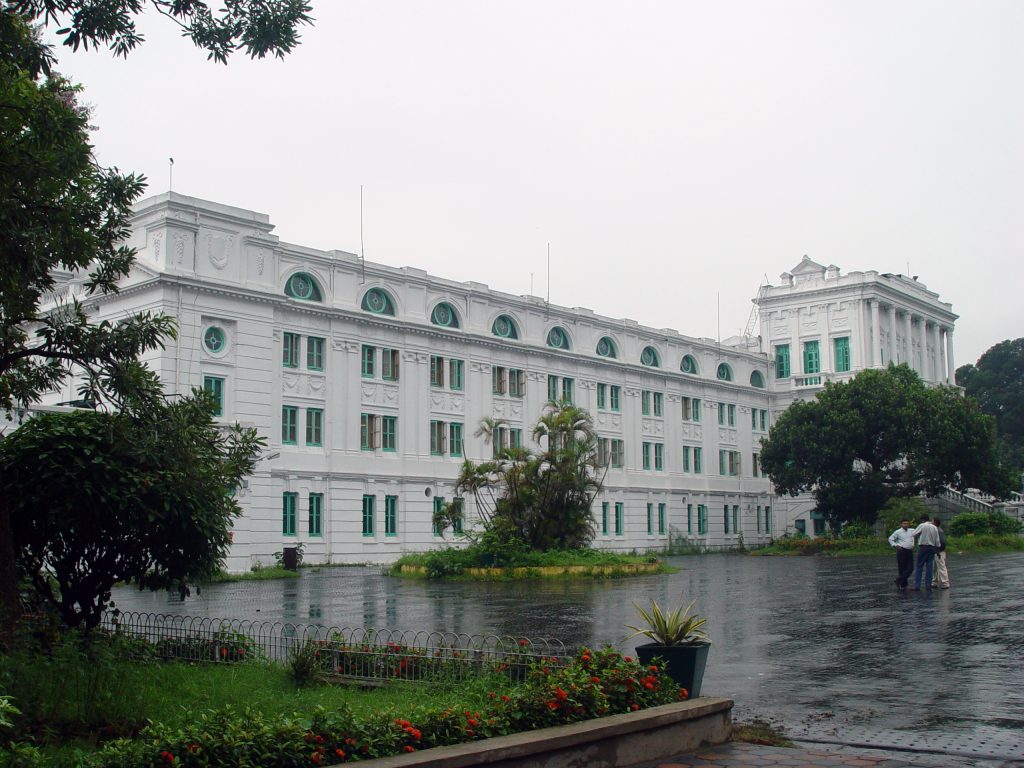
The-Most-Mysterious-Places-in-India-National-Library-Kolkata
National Library, Kolkata – Source

The National Library in Kolkata is said to be haunted. For many centuries, strange things are happening here. In the night, voices and someone’s tread can be heard in the rooms. In the morning, the staff regularly finds the scattered books and archives on the floor. But the most sensational story happened to a student who stayed there to work with archives through the night, gathering information on the Victorian period, and was never seen again.

Alipurduar women’s college (West Bengal) was once the residence of governor-general. In the night, the sounds of a running train can be heard in college halls, and one day a ghostly horsed chariot entered the front door. There was a late governor-general in it. He got into the building and started looking for some documents.

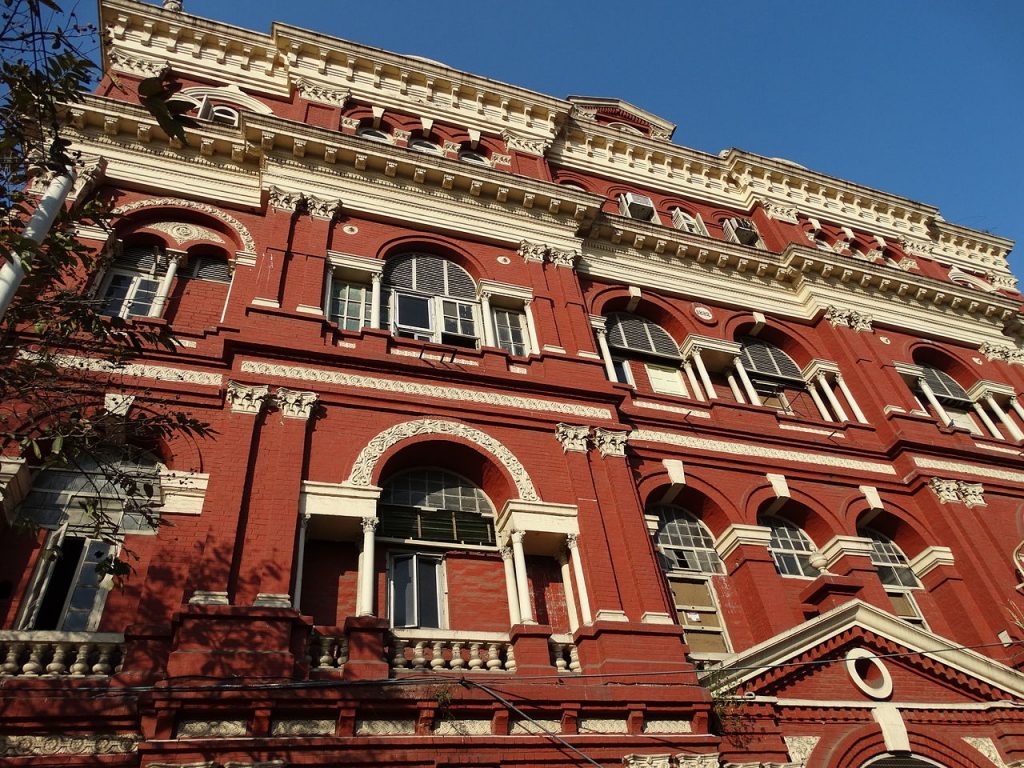
The-Most-Mysterious-Places-in-India-Writers’-Building-Central-Kolkata
Writers’ Building Kolkata – Adam Jones via Flickr

The most famous haunted house is the Writers’ Building in Kolkata, set up by the British authorities. Until recently, it served as an office of the Chief Minister of West Bengal. In 1930, N.S. Simpson, the Inspector General of Police, was assassinated here by three rebels. Since then, the ghost of Simpson has been haunting this building. People who work in this building today try not to stay alone after the sun goes down. Many tourists visit the Writers’ building to enjoy the marvelous architecture and learn its history.

Cursed Places

Agrasen Ki Baoli
Agrasen Ki Baoli

Agrasen Ki Baoli is an ancient temple stepwell in New Delhi. It’s often called a suicide stepwell. The legend says that this place is cursed, and everyone who walks down the step to the black water will be overwhelmed by suicidal thoughts. The location is worth a visit – many Bollywood films were shot here due to its ancient look.

Another mysterious place in Delhi is the Firozabad citadel, or, to be more precise, its ruins. The ruins are said to be home for Djinns (Delhi is often referred to as a “City of Djinns”). This place attracts suicides and the ghosts of those who committed suicide. There are wells on the territory of the citadel where fairies appear every night. According to a legend, if a layman sees a fairy, he will lose his sight. Perhaps, because of it, the nearby houses are built in such a way that the windows don’t face the citadel.

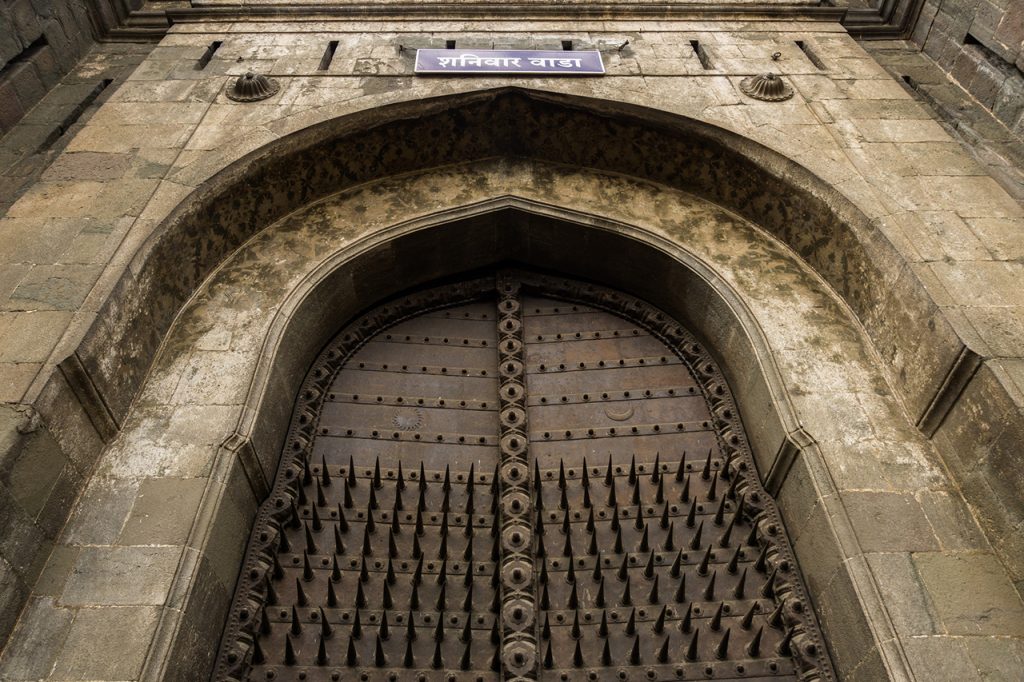
Shaniwar-Wada-Pune
Shaniwar Wada Pune – Stephane Venzin via Flickr

Shaniwar Wada is an old fortification in the center of Puna, a city 150 km away from Mumbai. It served both as a palace and defensive structure. In 1828 it was severely damaged by the fire. The surviving parts attract many tourists these days. The locals try to stay away from walking near the fortification, especially after the sunset and in full moon, fearing to hear the harrowing cries of a ghost of a 13-year-old Peshwa who was murdered by his relatives.

Haunted Hotels

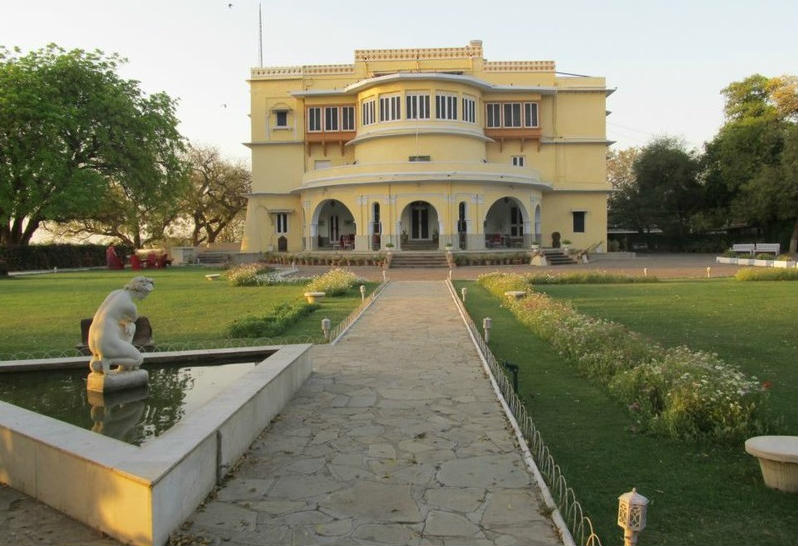
The-Most-Mysterious-Places-in-India-brij-raj-bhavan-palace-Rajasthan
Brij Raj Bhawan Palace Kota, Rajasthan  – Source

The Brij Raj Bhawan Palace, located near the city of Kota in Rajasthan, is said to be haunted by the ghost of Major Charles Burton who once resided here with his family. In 1857 he and his two sons were killed by the mutineers. Today, the palace serves as a hotel. The security guards say that whenever they light a cigarette or fall asleep during their shifts, somebody’s invisible hand hits their shoulders. Guests feel the presence of something supernatural too.

The Abandoned Village

The-Most-Mysterious-Places-in-India-Kuldhara-Village-Rajasthan-2
Kuldhara Village Rajasthan – Mirza Asad Baig via Flickr

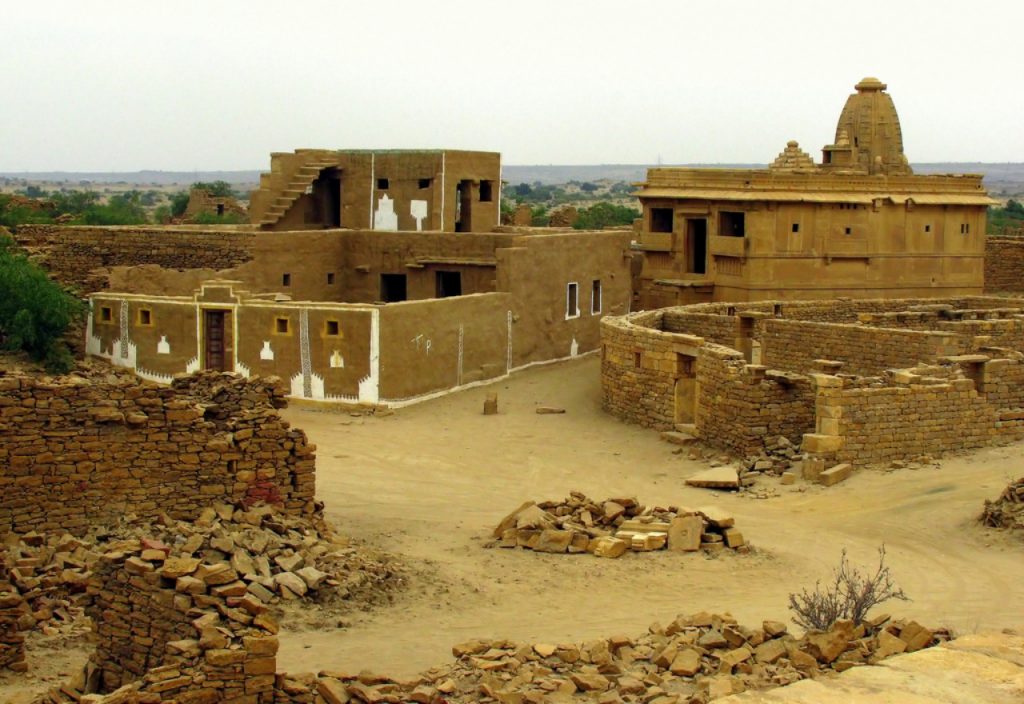
In Rajasthan, near the Pakistan border, there is an abandoned village Kuldhara. For more than 200 years it remains uninhabited. According to a legend, one day, 1500 locals just left their village and never came back. The legend also says that the village was inhabited by Brahmins and ruled by Salim Singh, the minister of Jaisalmer. He got attracted to one of the local girls and demanded the community to hand her over to him. In case of rejection, he promised to kill all of her fellow villagers. The girl’s father found the way out: he asked all the villagers to leave their houses overnight. People abandoned their homes cursing Salim Singh. Since then, anyone who takes a risk to stay in this village will be threatened by death. Those who visit Kuldhara report that they saw the ghosts of the villagers. Strangely enough, the paintings on the walls of some houses haven’t faded over 200 years.

If you’re fond of legends and everything supernatural, you can add these places to your travel itinerary.

Aleksander Pichkur, professional lifestyle writer from Ukraine is a digital marketeer at Datingladies.com One of his interests is curiosity places all around the world.

The Indian Beach Dairies

0
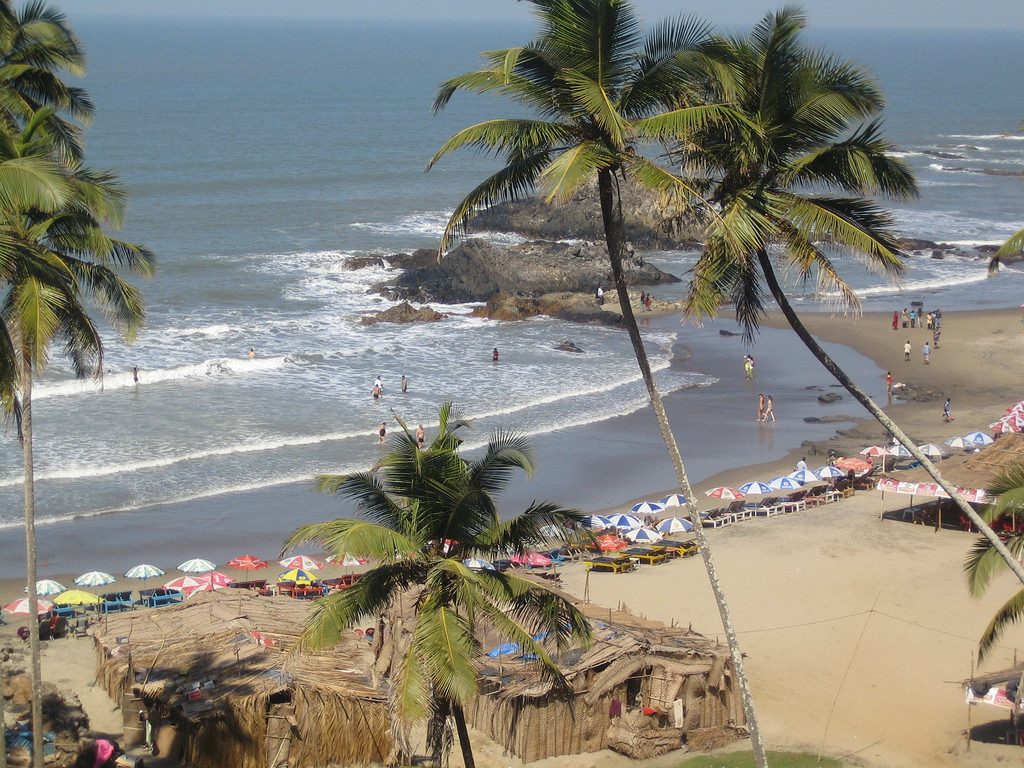
Vagator beach
Vagator beach – Amit Chacko Thomas

India has a long coastline considering it is a peninsula and is bordered by three major water bodies, the Arabian Sea to the west, the Bay of Bengal to the east and the Indian Ocean to the south. It is hence no wonder that beaches dot the peripheral edges of the country and are generously scattered in all the coastline states. 

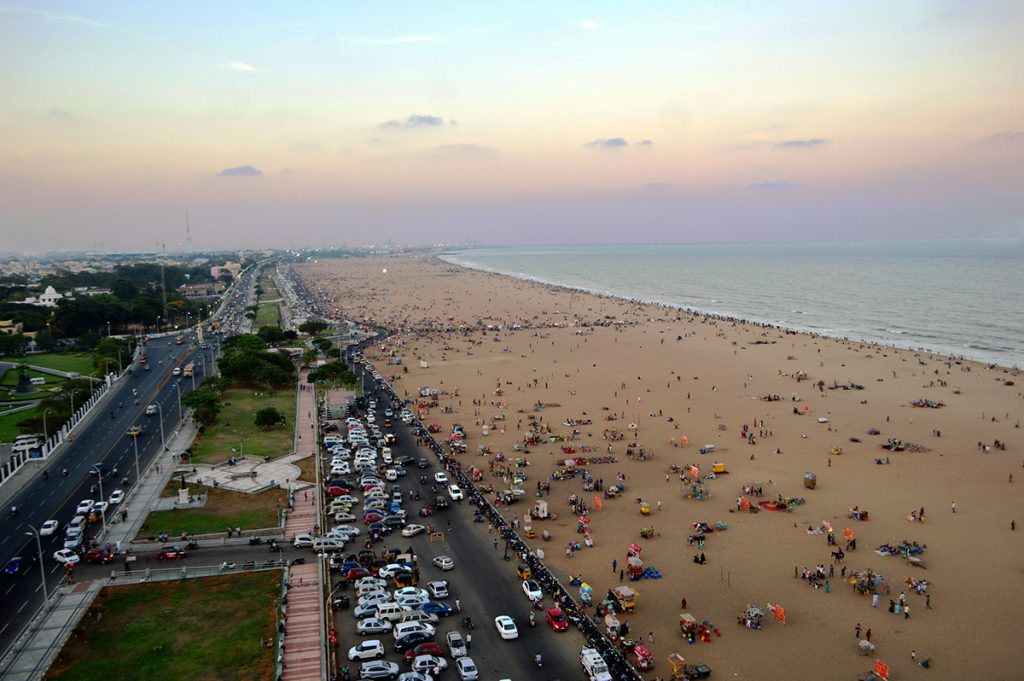
Now the thing about beaches in India are that they come across more like fun fare carnivals rather than quiet pristine havens of nature. The post card picture beaches with fluttering trees on the edge, clear waters and endless surface of undisturbed sand are a reality in some parts of the country, such as, a few recluse beaches of Goa, Gujarat, Daman and Diu and Kerala, however, for most other beaches the picture looks quite different. This is especially true for beaches that are situated in major cities of Mumbai, Chennai and so on. 

Indian-Beach-Dairies-Juhu-Beach
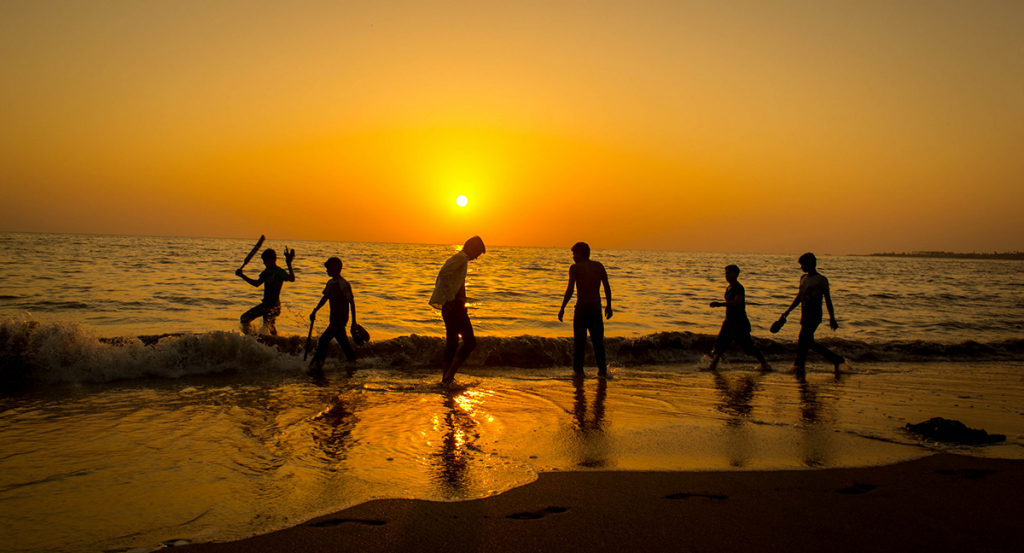
Beach Cricket, Juhu – Rajarshi MITRA

The universal deal to visit any natural spot is to be one with the larger landscape and have a laid back introspective attitude; many beaches in India offer just the contrary. Taking a stroll across the Juhu or Chowpatty Beach of Mumbai can leave you dazed to say the least, if you are looking for some ‘me’ time. Because for many beaches in our country the undisturbed huge terrain with a high potential of tourist influx usually leads to it being converted as a public property combining noise, mirth, shopping and a general vibe of a collective circus.

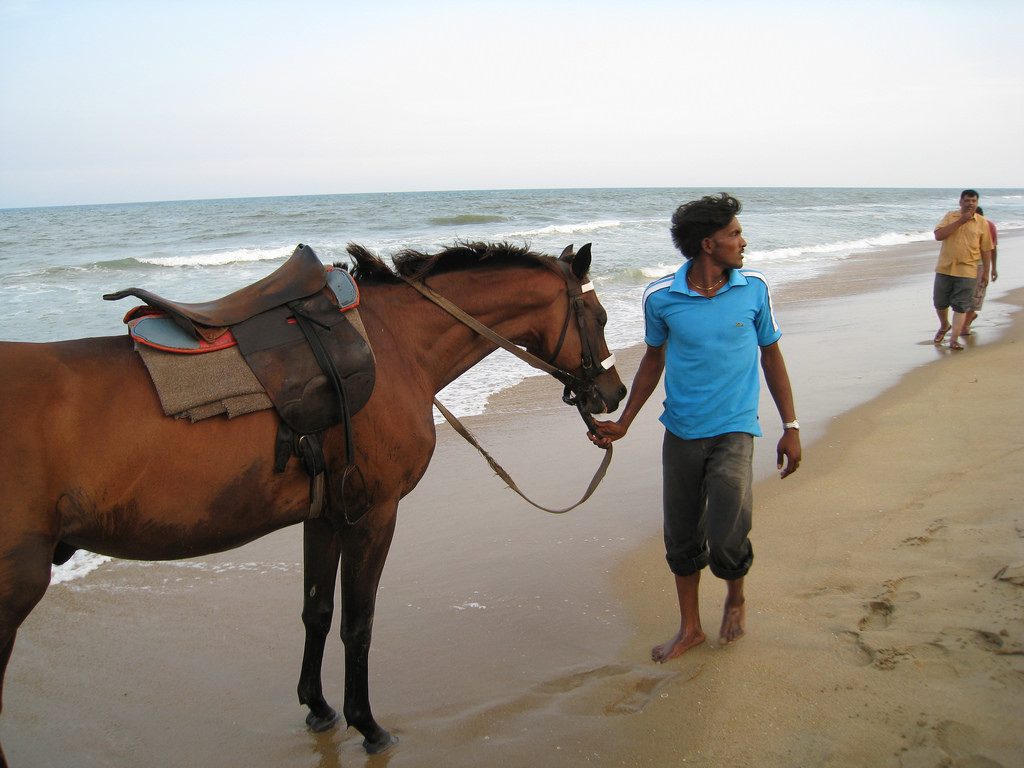
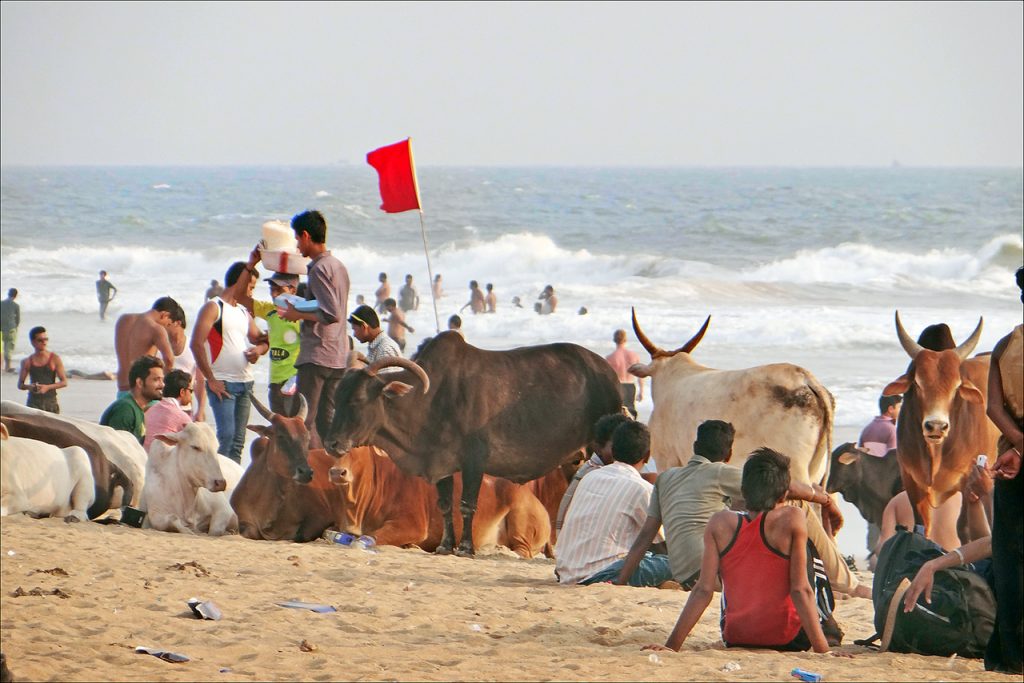
Horse rides are common on many beaches – Jerry Michalski

There is of course nothing seemingly wrong with this. The beach canvas becomes the backdrop to paint a large social and economic milieu that transcends divides of age, sex, caste and creed. The pauper and prince meet the same treatment, kids and adults are on equal footing as the sand, water and moonlight shine and shade all in the same breadth. The twinkling stalls, the musical lights and the aromatic hubs are open for all, and no matter who you are or where you are from you still eat those delicious pani puris waiting your turn in line or suck on the baraf golas making slurping sounds all the time. The common beaches of India are thus a wonderful leveler of sorts.

Marina beach, Chennai – Darshan Simha

Besides, the huge expanse of the tract for public use makes the beaches excellent resources for group activities and discussions. The recent Jallikattu issue saw the Marina beach in Chennai turn into a social and political center where groups of all kinds merged together to find a common ground of protest. On a lighter note, an early morning stroll on any of the beaches, will encounter various fitness clubs, laughter clubs, social gatherings and so on. The fact that people can plan, organize and use the beach space for myriad activities without having to pay compensation or get into too many legal or authoritative permissions, make the beaches a convenient center for low scale collective and group events. 

Very much like central parks or squares in other countries, the beaches act as meeting grounds and the open natural space provides for a fresh insight and outlook.

Beach food – Mathew S Thomas

However, what makes the crowded sweltering and noisy Indian beaches apart from any other types is its countless innovative ways to utilize the area into a commercially viable zone. With numerous hawkers, food stalls and children games the beach often reminds one of a school fest. Forget sunbathing or taking exotic dips in the clear waters, but one is often encountered with floating paraphilia of different kinds as one stands in the cool expanse of the bluish grey waters. The sands are littered with tiny stalls selling toys, favorite street food snacks, hot bhajjis, ice creams and balloon shooting, merry go rounds, Ferris wheels. The squeal of laughter blends with the hawker’s yell of candy floss, and the sparks flying off from the roasted maize sprinkle on the brown sands just as the moon crawls over the dark sleepy sea to rise from its slumber. Yes, the busy beaches of India come to life in the early evenings and after sunset because the heat during the day can get quite unbearable. 

Things-to-Do-in-Andaman-&-Nicobar-Islands
Andaman – Matsography Via Flickr

But it would be unfair to say that if you want to look at clear blue waters, lie on the sand and experience the quiet and tranquility that only a beach can offer, you need to go far. The exotic splendid beaches of Andaman, certain Goan beaches, or the breathtaking beaches of Lakshwadeep as well as some remote beaches in Maharashtra, Diu, Andhra, Kerala and Karnataka are wonderful abodes for sporting activities or leisure walks. The humdrum of humanity ceases considerably and there is much peace and pleasure on the mind. 

Calangute, Goa – Jean-Pierre Dalbéra

However, some of the major city beaches continue to be congested and populated. They also continue to amaze at how seamlessly the economics and social mixes find expression and sustenance. Of course, there are the exotic resorts, the secluded islands and the private beaches, but often what makes the festival of life on our beaches more enjoyable and relatable is the people. These beaches hence in some way symbolize a unique blend of culture and societal mix, churned together with resilience of economic benefits, tossed with family bonding and friends gathering and heavily garnished with plain simple fun.